





































































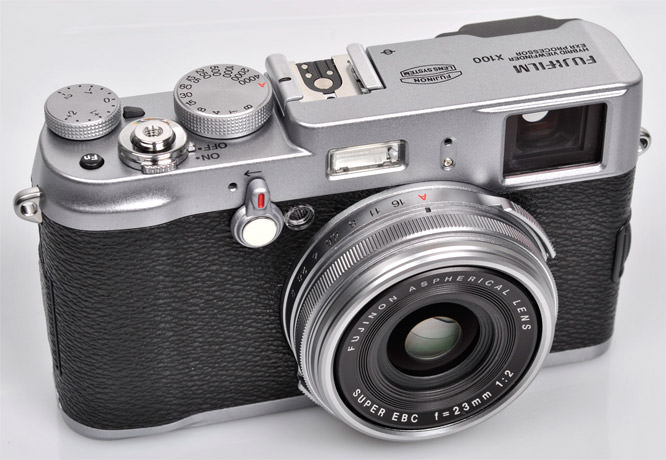

Having experienced and enjoyed the X100, and having read about the new camera the X Pro 1, which would give me a choice of lenses, off I went and bought one. Loved the look and feel of the camera but it did have a few problems, slow focus being the main one. This was much improved in latter updates of the firmware. It gave wonderful images but you had to ”think” a little and work with the camera and around the minor issues it had. Despite its initial problems I personally found it a joy to use and carrying it around all day did not give me any problems.
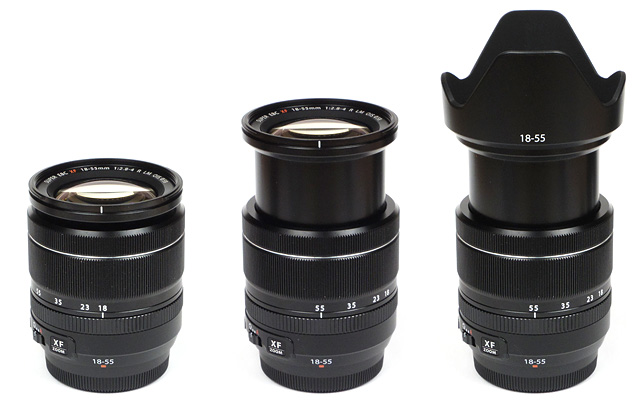
The first lens I picked up with the X Pro 1 was the ”kit les” XF 18-55 IS, what a lens, not like some of the plasticky kit lenses from other manufacturers but an extremely well put together and very capable image maker. I still shoot with it today. It worked well with the X Pro 1 and gave sharp and contrasty images throughout its entire range with the added benifit of image stabalisation (IS).







The Fujinon shows a rather massive amount of barrel distortion at the short end (4.6%) so it is a bit under-designed here, but I have nevr found it to be a major problem and easily fixed in post. Zooming in, the distortion decreases to a slight barrel distortion level at 23mm and a slight pincushion distortion at longer focal lengths.







The second lens I decided upon was the XF 35mm f1.4. A high-performance standard lens with incredible definition, even when shooting wide open. This lens delivers images with amazing clarity, even with the aperture wide open at F1.4. All the lens groups are shifted together during focusing to minimize aberration changes whether working close-up or at infinity. This unique design delivers images in which the focus is blended with smooth bokeh in out of focus areas. Offering a focal length equivalent to 53mm in the 35mm film format.

Then came the realease of the X Pro 2, something many had be waiting for. Same design but with many improvements over the 1.

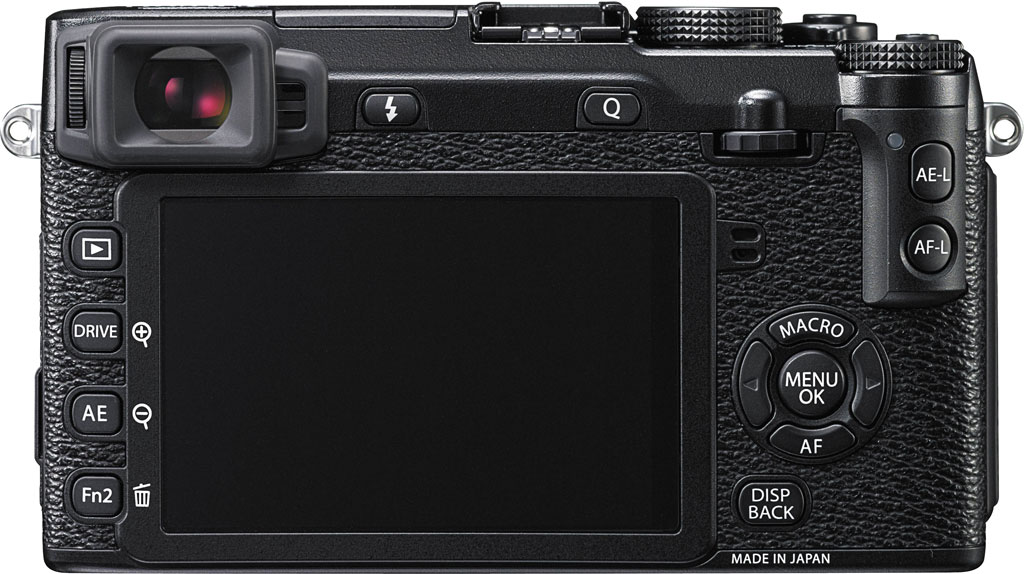
| New X-Trans CMOS III The newly-developed 24.3MP X-Trans CMOS III APS-C sensor boasts the highest ever pixel count for an X-Series camera. Combined with an XF lens, it delivers images with a perceived resolution far greater than the number of pixels used. In addition, the phase detection pixels have been positioned over a larger area for a faster, more precise phase detection AF performance. High ISO sensitivity performance has also been improved to the point that the whole sensitivity range — up to the maximum ISO 12,800 (Extended output sensitivity up to 51,200) — can now be used with confidence.The sensor readout speed is now approximately twice as fast, delivering high-speed continuous shooting, precise AF tracking, playback and higher quality movies. | New X Processor Pro Thanks to the newly-developed X-Processor Pro engine, processing speeds are now approximately four times faster than a conventional model. This maximizes the capabilities of the X-Trans CMOS III sensor to ensure it delivers the highest image quality with super-fast response times. In addition, thanks to the high-speed reading technology of the sensor, the conventional EVF’s display speed of 54fps has been increased to a maximum of 85fps. This substantially reduces the image delay phenomenon when tracking a moving subject. Blackout time after release has also been reduced by approximately half and compressed Raw is supported, improving the ease-of-handling of Raw data.The Fujifilm X-Pro2 features a new CPU for high-speed processing. The Buffer memory has also been increased for an even faster response. | Advanced Hybrid Multi Viewfinder Photographers love looking through a viewfinder to take photos, which is why X-Series models have used finders from the very start. Combining the advantages of both an OVF and an EVF, Fujifilm has perfected the Advanced Hybrid Multi Viewfinder with three viewing options. Now you can return to the roots of photography with the only viewfinder of its kind in the world. | Electronic Rangefinder The EVF is simultaneously displayed as a small window in the optical viewfinder. It can be displayed in three different ways: 100% field of view, 2.5x magnification and 6x magnification. This allows the user to check focus, the angle-of-view, exposure and white balance in real-time, even when taking photos through the OVF. As it can also be used with MF assist, precise MF is possible in the OVF mode. |
| Advanced optical viewfinder system The optical design of the viewfinder has been improved, moving the eye point from 14mm on the previous model to 16mm. A diopter correction dial is also included, which makes the viewfinder even more comfortable to use. | Dual-Function ISO Dial The shutter speed and ISO dials have now been combined into one dial, which is reminiscent of those found on old film cameras. Changing the ISO is done by lifting the outer portion of the dial. Now all exposure settings can be performed with dials. | Film Simulation – New ACROS Using the knowledge gained from accurately reproducing color in film manufacturing, Film Simulation allows the user to change color and tone settings to match the subject, scene and creative intent, just as if shooting with a roll of film. There are a total of 15 modes including PROVIA / Standard, Velvia / Vivid and ASTIA / Soft.The Fujifilm X-Pro2 features the new ACROS Film Simulation mode. Its features include smoother gradation, deep blacks and beautiful textures. Ultra high-quality monochrome images are possible, adding extra creativity to the general monochrome mode. | Grain Effect The Fujifilm X-Pro2 has the ability to reproduce graininess typically unique to film-based images. There are two strengths: Strong or Weak, which can be combined with each of the different Film Simulation modes. The effects are also possible through in-camera Raw development. |
| Focus Lever allows you to instantly change the focus area The new Focus Lever on the back of the camera can be moved like a joystick in eight directions to instantly move the focus area. Now, rapid focus area changes can be made, even when composing an image. Not only is this available to move the AF point during AF mode, but it can also be used during MF mode to quickly move the enlarged display area when using MF assist. | Phase Detection AF area expanded to 7×7 The number of selectable focusing points has been expanded from 49 on previous models to 77. Approximately 40% of the imaging area is now covered by fast, precise phase detection AF pixels, which means focusing speeds when photographing moving subjects have improved dramatically. | Advanced MF Mode The Fujifilm X-Pro2 comes equipped with different types of MF assist including Digital Split Image, which is reminiscent of old rangefinders, and Focus Peaking where color is used to show the parts of the image that are in focus. | Durable magnesium body Tough conditions are no longer to be feared. The Fujifilm X-Pro2 can be relied upon to take a picture at any time in any conditions.Reliability is one of the most important considerations when choosing a camera, so the Fujifilm X-Pro2 needs to work at any moment, regardless of where you are and what type of scene you want to photograph. That’s why the camera body is made from magnesium and features a dust-proof, splash-proof and freezeproof structure, along with a highly durable focal plane shutter and dual card slot. |
| Dual SD Card Slots The Fujifilm X-Pro2 is the first mirrorless camera to offer dual SD card slots for highly reliable data storage. Slot 1 is compatible with UHS-II standards for excellent write speeds. One of three recording methods can be selected: sequential, backup and Raw / JPEG sorting.Images can be copied between SD cards within the camera, making image data backup possible without a PC. | 1/8000 sec. Shutter Speed The Fujifilm X-Pro2 comes equipped with a focal plane shutter boasting a durability of 150,000 shots, a maximum speed of 1/8000 sec and a flash sync speed of 1/250sec. Furthermore, the camera also includes an electronic shutter with completely silent operation and a maximum speed of 1/32,000 sec, allowing users to select maximum apertures even in bright conditions. | Exposure Compensation As it’s used so frequently, exposure compensation has been made into a dual-purpose dial. Compensation up ±3 stops in 1/3 steps is possible even with the camera to your eye thanks to the dial’s knurled shape. But if the C position is selected, exposure compensation of up to ±5 stops is possible using the front command dial. | Fujifilm Camera Remote With the new dedicated ‘Fujifilm Camera Remote’ application, you can focus and trigger the camera release from your smartphone or tablet. The app not only lets you adjust focus, but also control settings like shutter speed, aperture, exposure compensation and ISO sensitivity. You can even apply other settings like Film Simulation, self-timer, and flash while ‘Touch AF’ lets you focus from your phone or tablet, too. Imagine all the situations where this smart assistant will come in handy! Take commemorative group photos with yourself in the shot, capture wildlife photos, or remotely release the shutter for night shots free from camera shake.The photographic possibilities are endless. |














As I rarely shoot in RAW the film simulation bracketing has become my favourite ”gadget” as it save me so much time in post processing.
The Fujifilm X-Pro2 is the long-awaited update to the X-Pro1 and offers a new 24.3MP APS-C X-Trans CMOS III sensor and an ‘advanced hybrid multi viewfinder’ that can be an optical or electronic viewfinder, or a combination of the two. Its new image processor is 4x faster than that of its predecessor and offers a top ISO of 51,200. The autofocus system has been updated substantially, now offering 273 total AF points, of which 77 are phase detection (covering 40% of the frame), and much faster performance.
The X-Pro2’s body is made from four pieces of magnesium alloy with 61 seals, making it splash and dust proof, and functional down to temperatures of +14F. It has dedicated dials for exposure compensation, shutter speed and ISO. It has a maximum shutter speed of 1/8000 sec and an x-sync speed of 1/250 sec.
Other features of note include a 3″, 1.62M-dot LCD, twin SD card slots, interval shooting and a new ACROS film simulation mode. The X-Pro2 can record 1080/60p video at 36MBps and offers a 2.5mm mic input jack. As one would expect, the camera also supports Wi-Fi with remote camera control.
Fujifilm’s X-Pro2, like its predecessor, occupies a unique position in the market. It’s one of the few interchangeable-lens digital rangefinders available with the major competition coming from the Leica M. The Leica has a larger full-frame sensor and native access to a series of legendary lenses, but the Fuji has a hybrid viewfinder, far superior AF especially for continuous tracking, faster burst shooting, longer exposure capability, built-in Wifi and, oh, comes in at about one third of the price. And while the sensor is ‘only’ APSC in size, I have absolutely no complaints with the image quality, nor indeed with Fuji’s growing range of excellent X-mount lenses. Indeed I can’t think of a model that delivers better quality out-of-camera and I reckon you’d be mad to buy a Leica M over an X-Pro2 if you want a digital rangefinder-style camera.
The first internal in-body image stabilization (IBIS) system to feature in an X Series camera, harnesses three axial accelerometers, three axial Gyro sensors, and a specially developed dual-processor. Combined, this achieves the high speed of approximately 10,000 calculations per second. When unified with compensating mechanisms, results in uncompromising image quality and precision with performance.
With Film Simulations, you can apply colors and tones that match your artistic intentions to your pictures, as if choosing different special effect photographic films. The FUJIFILM X-H1 comes with sixteen Film Simulation modes, which Fujifilm has uniquely created based on the color-presentation philosophy and know-how the company has developed through more than 80 years of photo film production.
The very latest digital technologies have been used to develop X Mount lenses, which offer high-precision optical designs to deliver the highest possible image quality. The current line-up of lenses ranges from ultra wide-angle to super-telephoto lenses. These lenses bring out the very best image quality from the FUJIFILM X-H1.
https://fujifilm-x.com/global/support/download/firmware/cameras/x-h1/
I use this printer and can say that it produces superb prints.









Making pictures is for me about learning to see what is going on around you an catching a fleeting moment, anticipating what may happen next, and being ready. If you are messing around with your camera then you will miss the moment.











 a world without pictures is like coffee without cream and sugar, bitter