

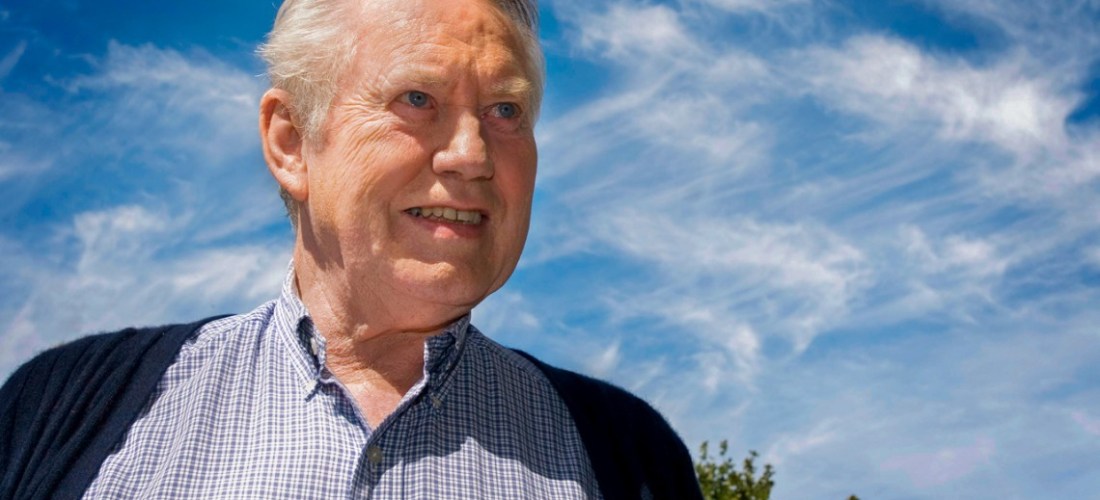
In a world obsessed with accumulation, Chuck Feeney made a quieter, more unsettling choice: he gave it all away.
Not metaphorically. Not eventually.
While he was still alive.
Feeney was the co-founder of Duty Free Shoppers, the airport retail empire that helped invent modern global consumerism. He became a billionaire almost by accident, then spent the rest of his life trying to undo the accident as responsibly as possible.
He called his philosophy Giving While Living. It sounds gentle. It was anything but.
The Radical Act of Enough
Chuck Feeney owned no mansion.
He flew economy.
He lived in rented apartments.
He wore simple clothes and carried a cheap watch.
This wasn’t branding. It wasn’t aesthetic minimalism. It wasn’t a TED Talk.
It was conviction.
Feeney believed money was useful only while it was moving. Sitting still, it corrupted both its owner and its purpose. So he moved it—quietly, persistently, without applause.
Over several decades, he gave away more than $8 billion.
Not to build monuments to himself.
Not to stamp his name on buildings.
Often not even under his own name at all.
Anonymous Generosity in a Loud Age
For years, almost no one knew who he was.
Through his foundation, The Atlantic Philanthropies, Feeney funded:
- Universities and scholarships
- Public health systems
- Peace and reconciliation work in Northern Ireland
- Medical infrastructure in Vietnam and beyond
His anonymity only broke because of legal filings—not because he wanted recognition.
In an age where generosity is often performative, Feeney’s silence was its own kind of protest.
No Legacy Machine
Most billionaires aim for permanence: endowments, foundations, institutions designed to outlive them.
Feeney did the opposite.
He shut his foundation down on purpose.
No eternal board.
No immortal brand.
No philanthropic dynasty.
By the time Atlantic Philanthropies closed in 2020, Chuck Feeney had intentionally reduced his personal wealth to about $2 million—enough to live, not enough to dominate.
He didn’t want to be remembered as a benefactor.
He wanted the work to be done.
The Uncomfortable Question He Leaves Us With
Chuck Feeney didn’t just give money away.
He gave away an excuse.
An excuse to wait.
An excuse to hoard.
An excuse to believe that impact is something we defer until later.
His life asks an uncomfortable question:
How much is enough — and what are you doing with the rest?
You don’t need to be a billionaire to feel the weight of that question. It applies to time. Attention. Energy. Skill. Care.
Feeney treated wealth as temporary custody, not ownership. Then he returned it to the world while he could still see what it became.
A Quiet Ending, a Loud Example
Chuck Feeney died in 2023, aged 92.
No spectacle.
No empire intact.
No fortune left behind.
Just hospitals, universities, peace agreements, and lives improved by someone who refused to confuse money with meaning.
In a culture that celebrates accumulation, Feeney chose release.
And in doing so, he left behind something far rarer than wealth:
A model for how to live lightly — and give decisively.
 a world without pictures is like coffee without cream and sugar, bitter