Volunteering with a Camera

cambodia, nikon, opinons, thoughts, philanthropy, photography, voluntary

A camera can be used to earn a living, record history or satisfy curiosity. It can also be used simply to help.

Some of the most worthwhile photography I have done has been as a volunteer. There was no agency waiting for the pictures, no editor demanding a deadline and no possibility of selling the results. The purpose was quieter: to show what was being done, who was being helped and why the work mattered.
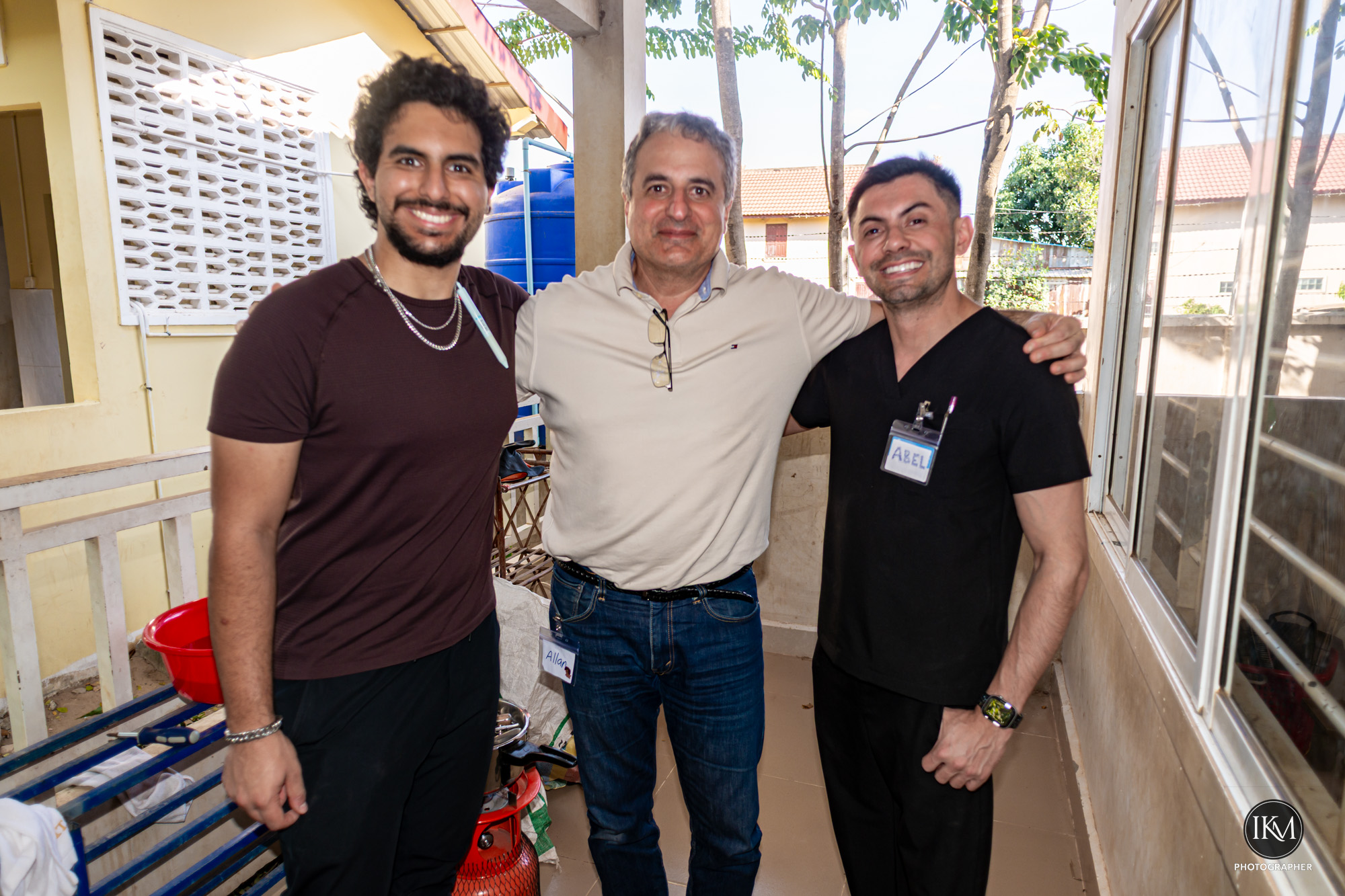

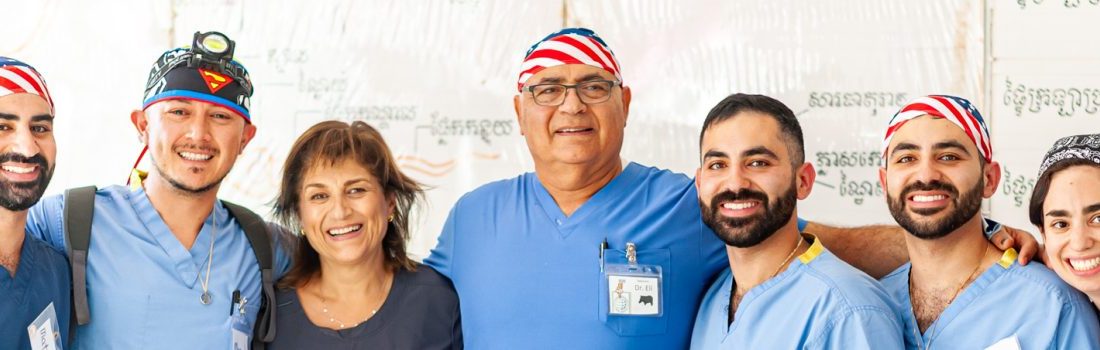
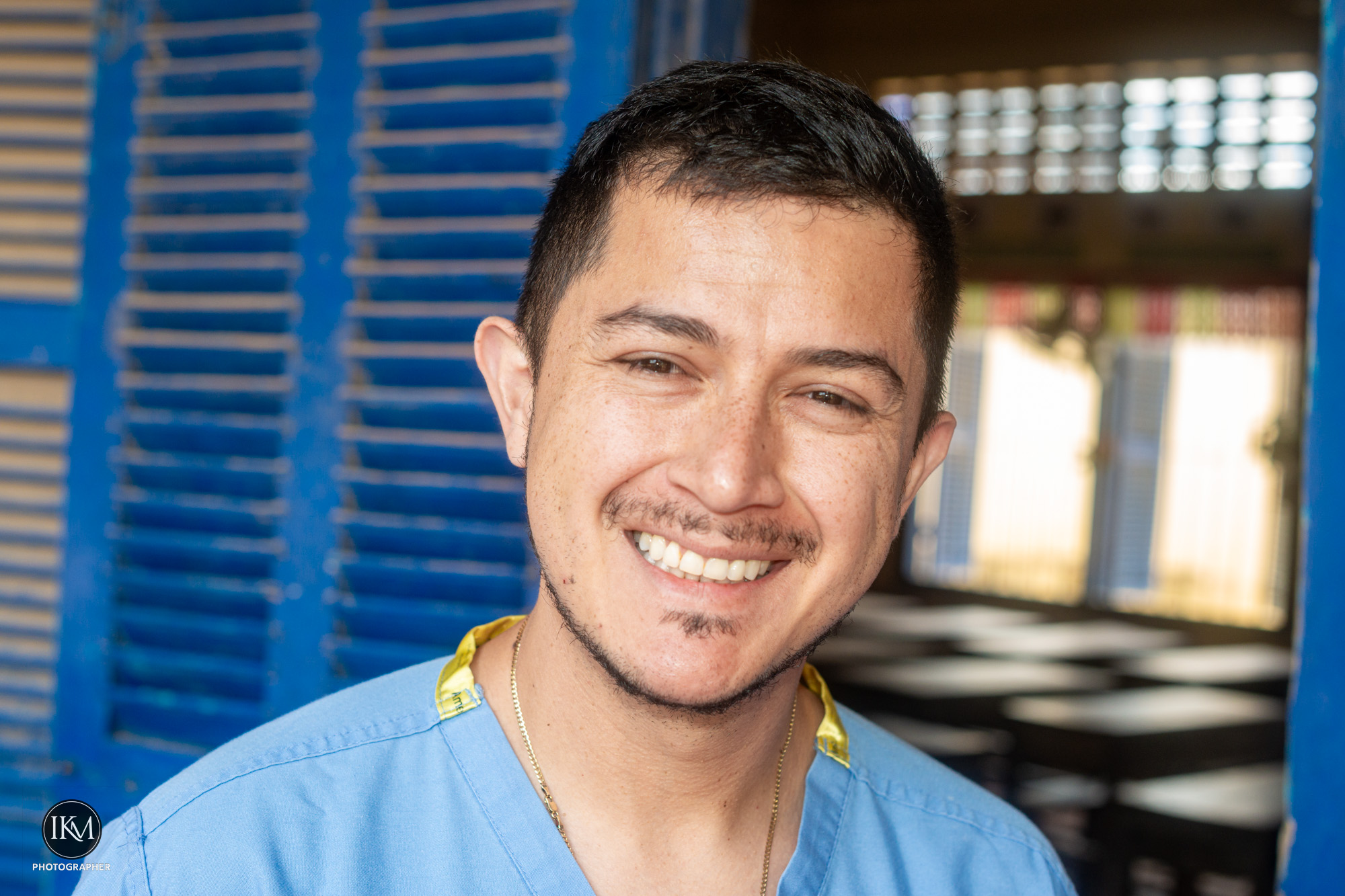
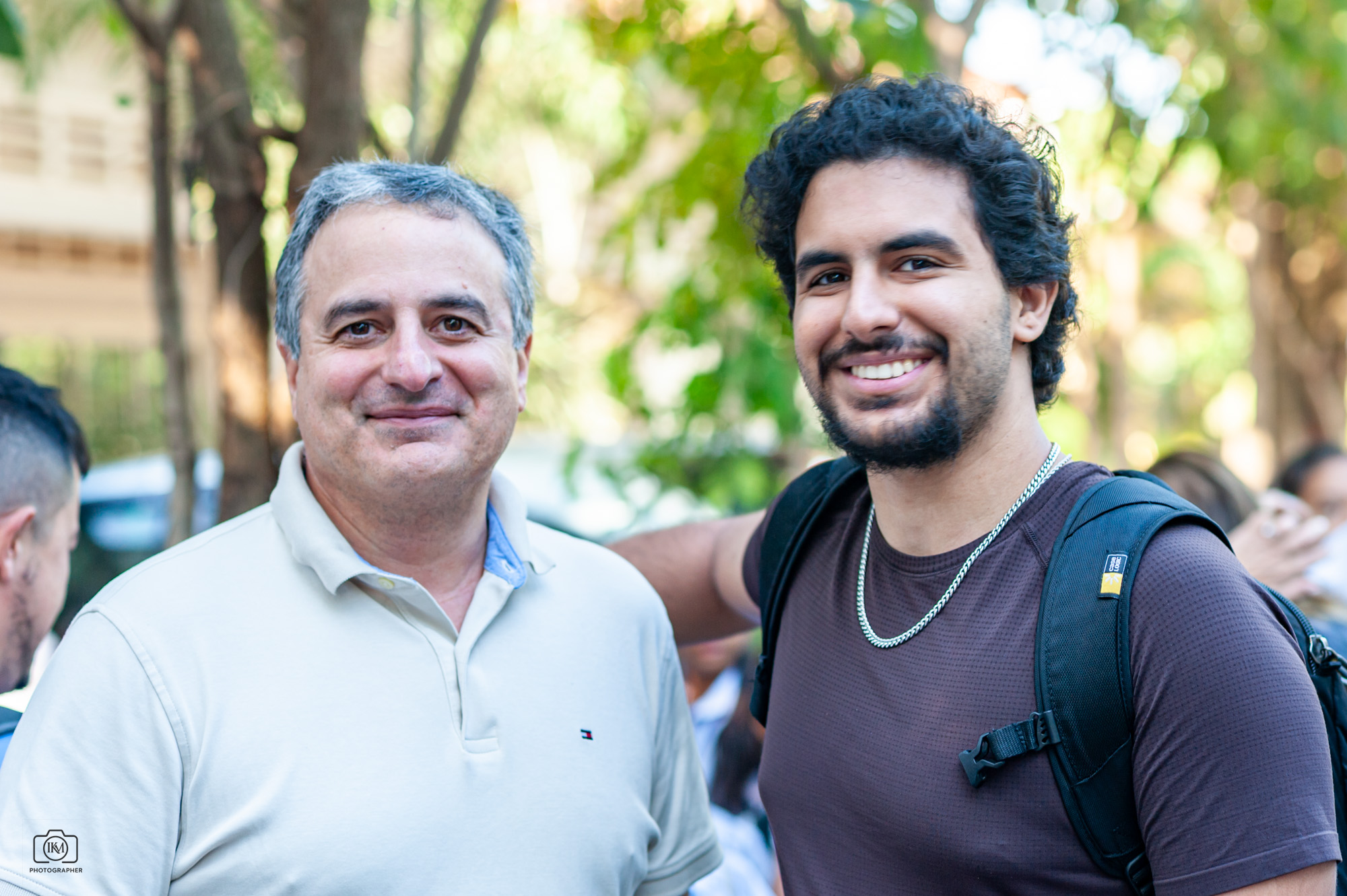
Three men posing together in a casual outdoor setting, with trees and a building in the background. One man is wearing a dark shirt and jeans, another in a light-colored sweater and glasses, and the third in a black medical scrub with a name tag.

Photographing volunteers requires a different attitude from covering news. You are not there to manufacture heroism or turn hardship into spectacle. You are there to observe honestly, work discreetly and produce photographs that the organisation can use without diminishing the people it serves.

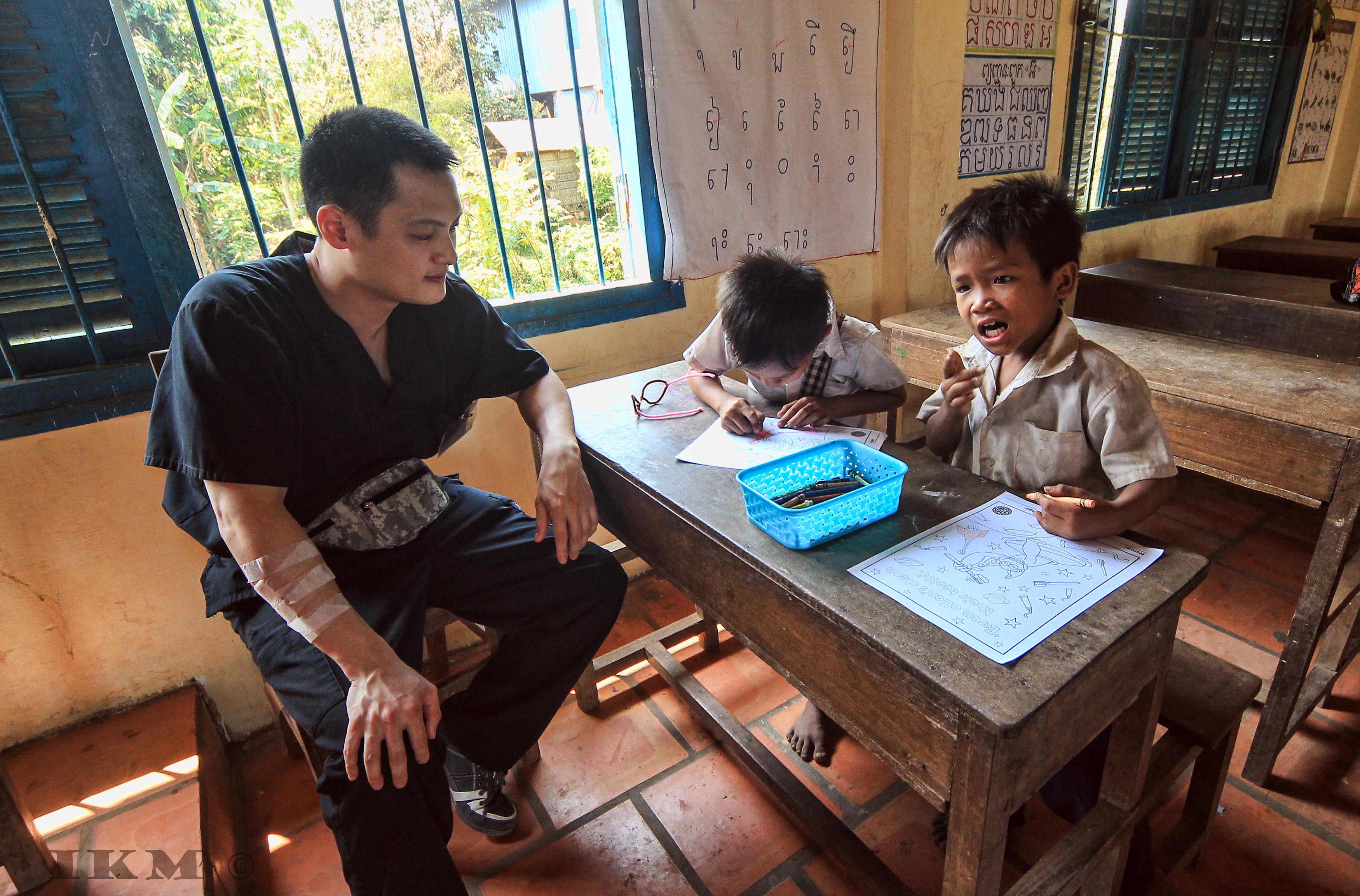
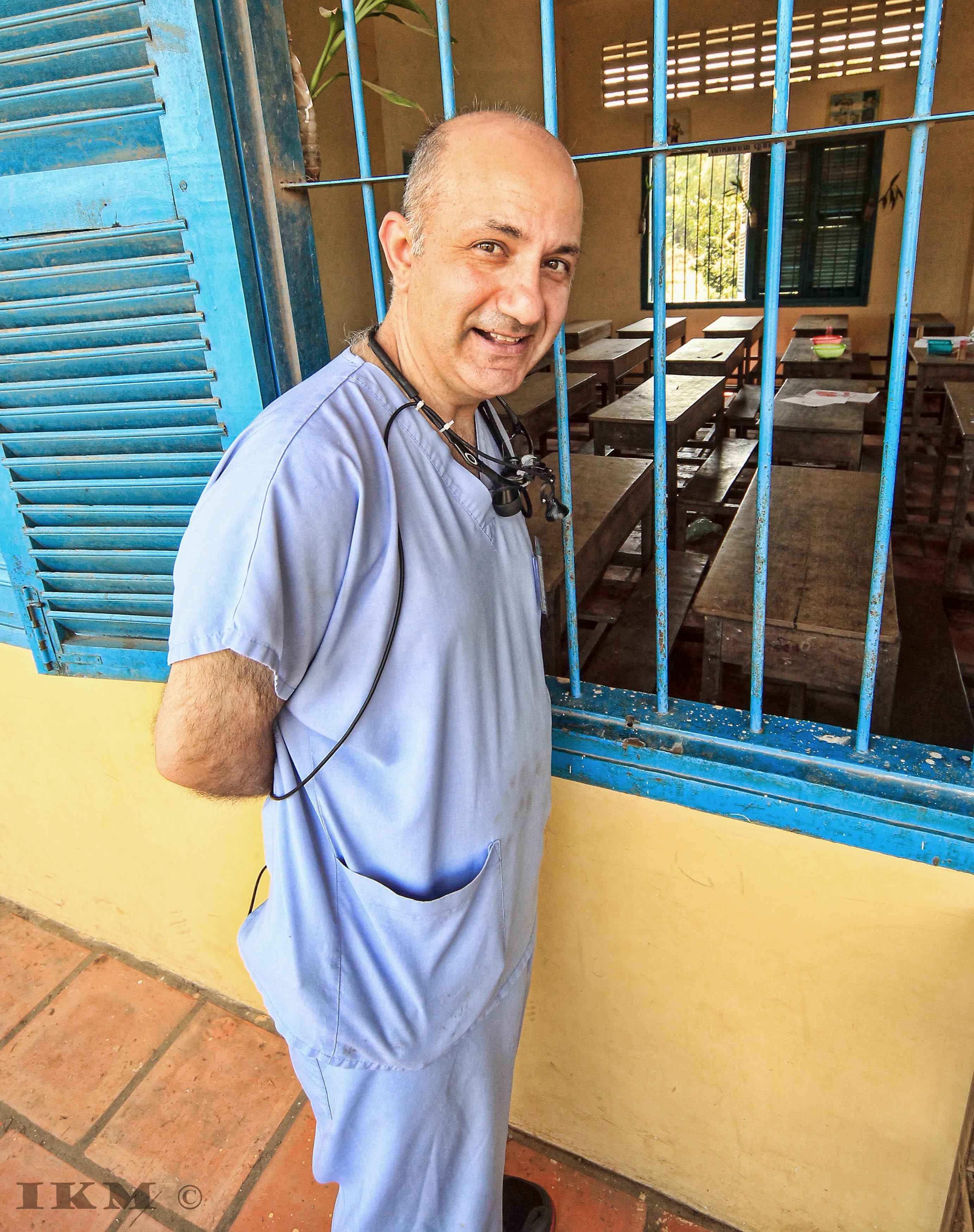
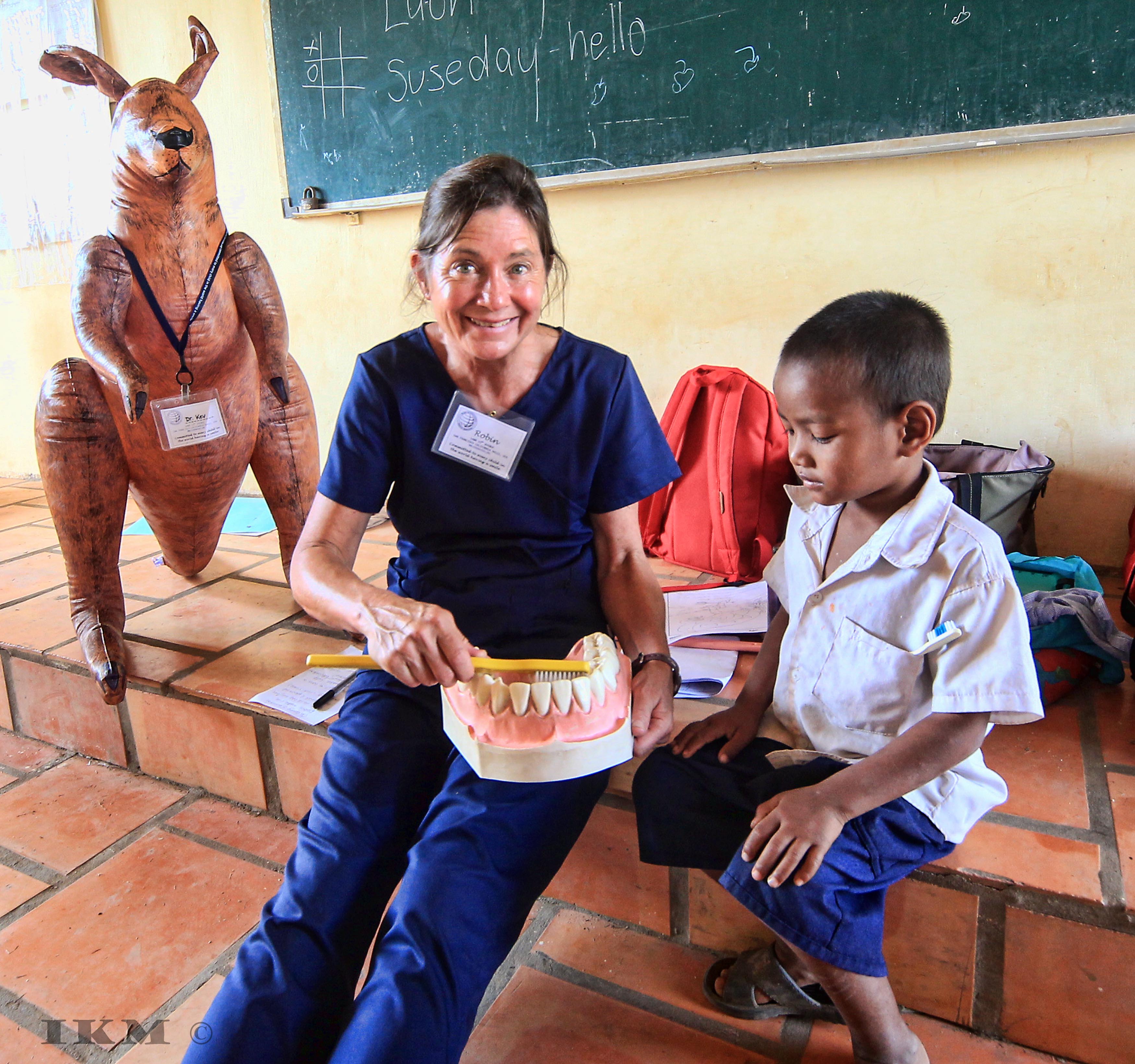
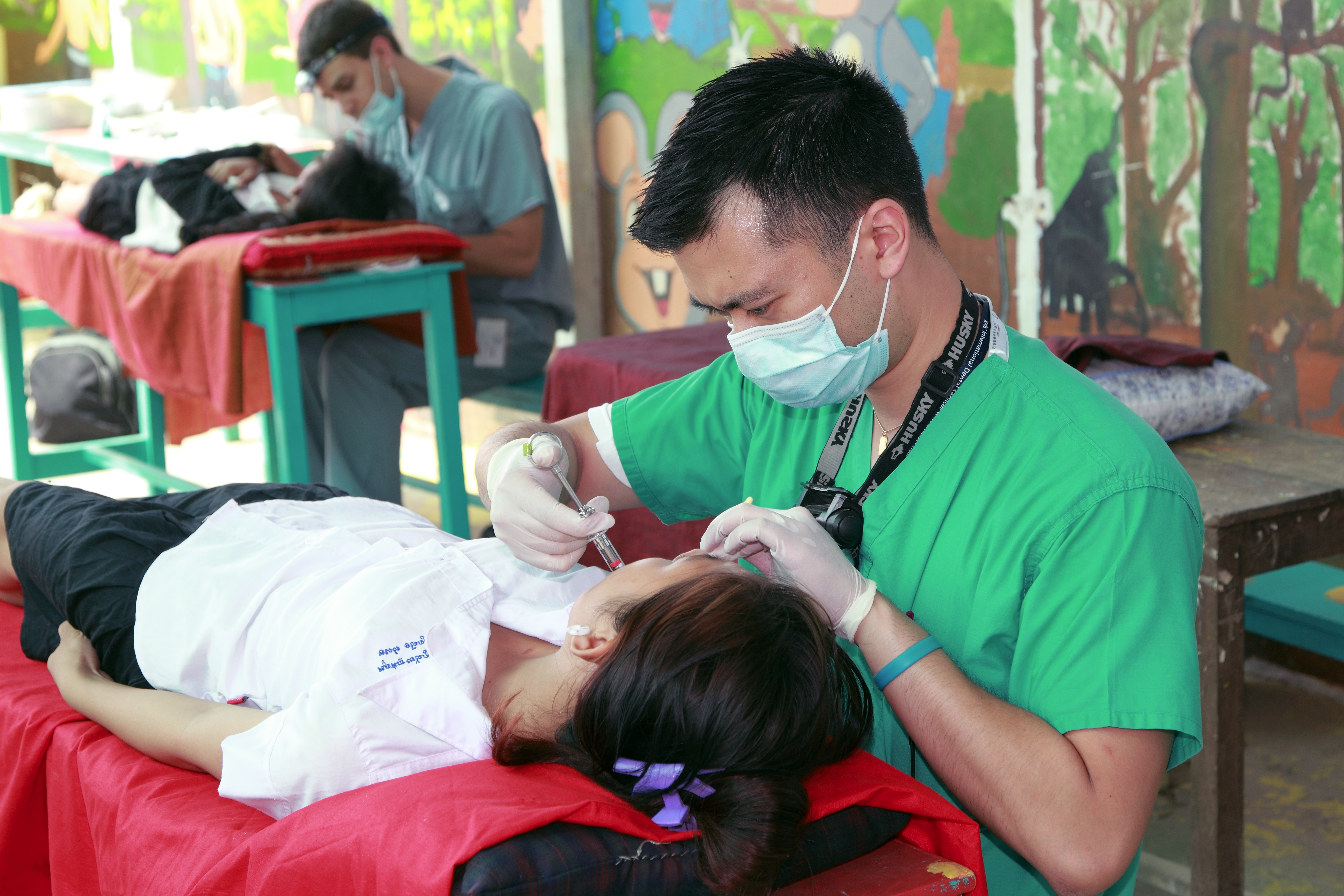
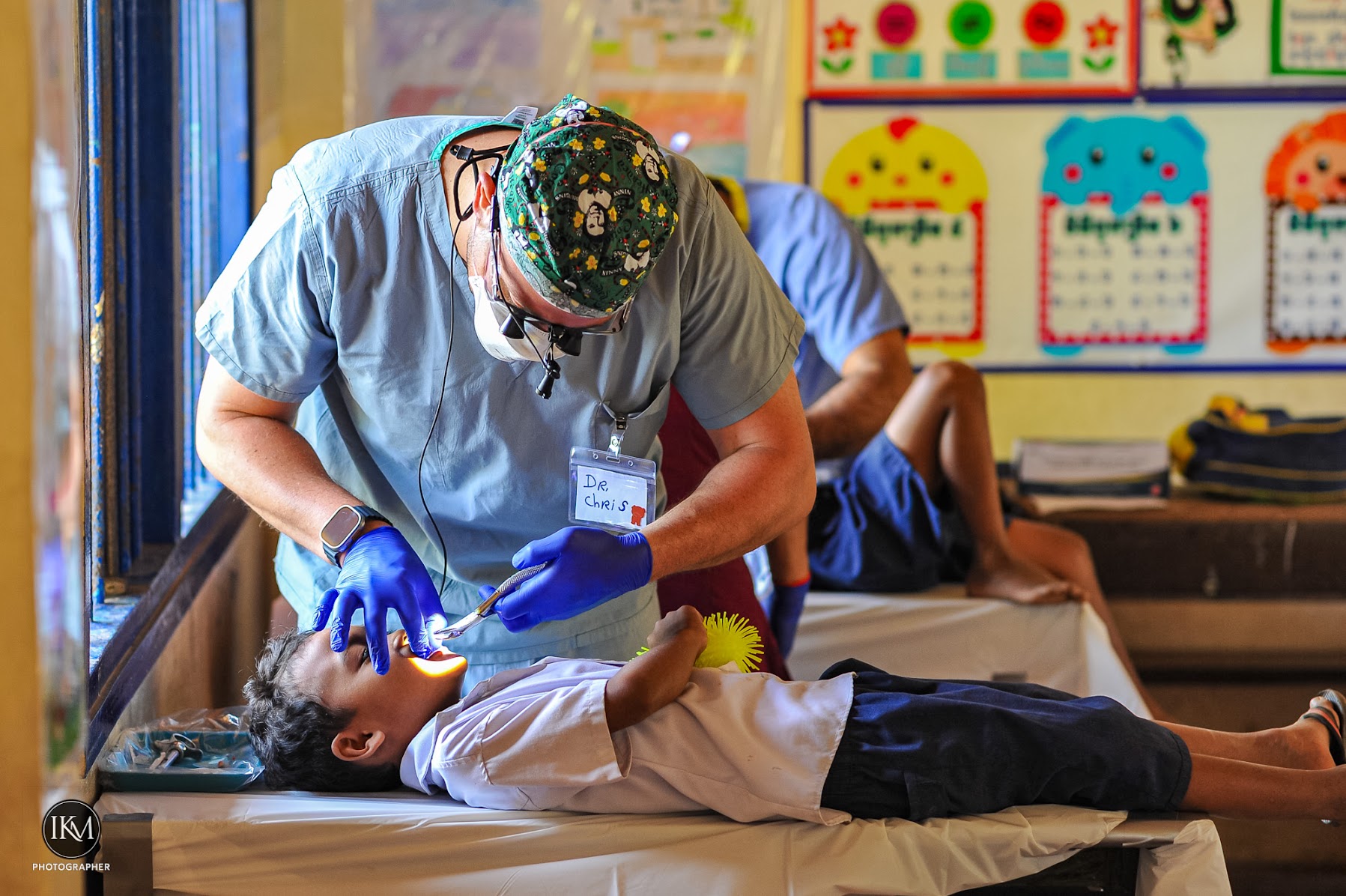
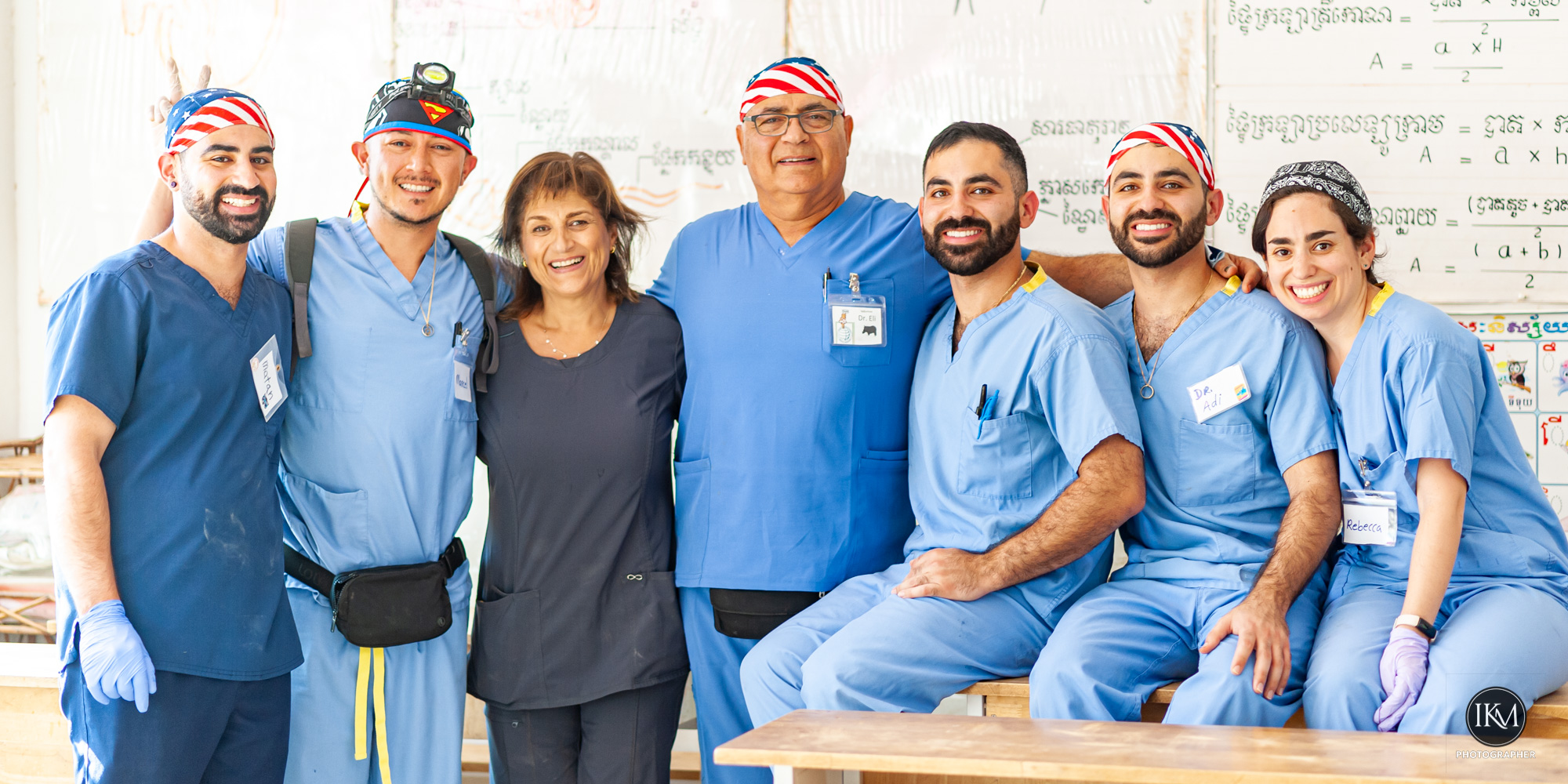
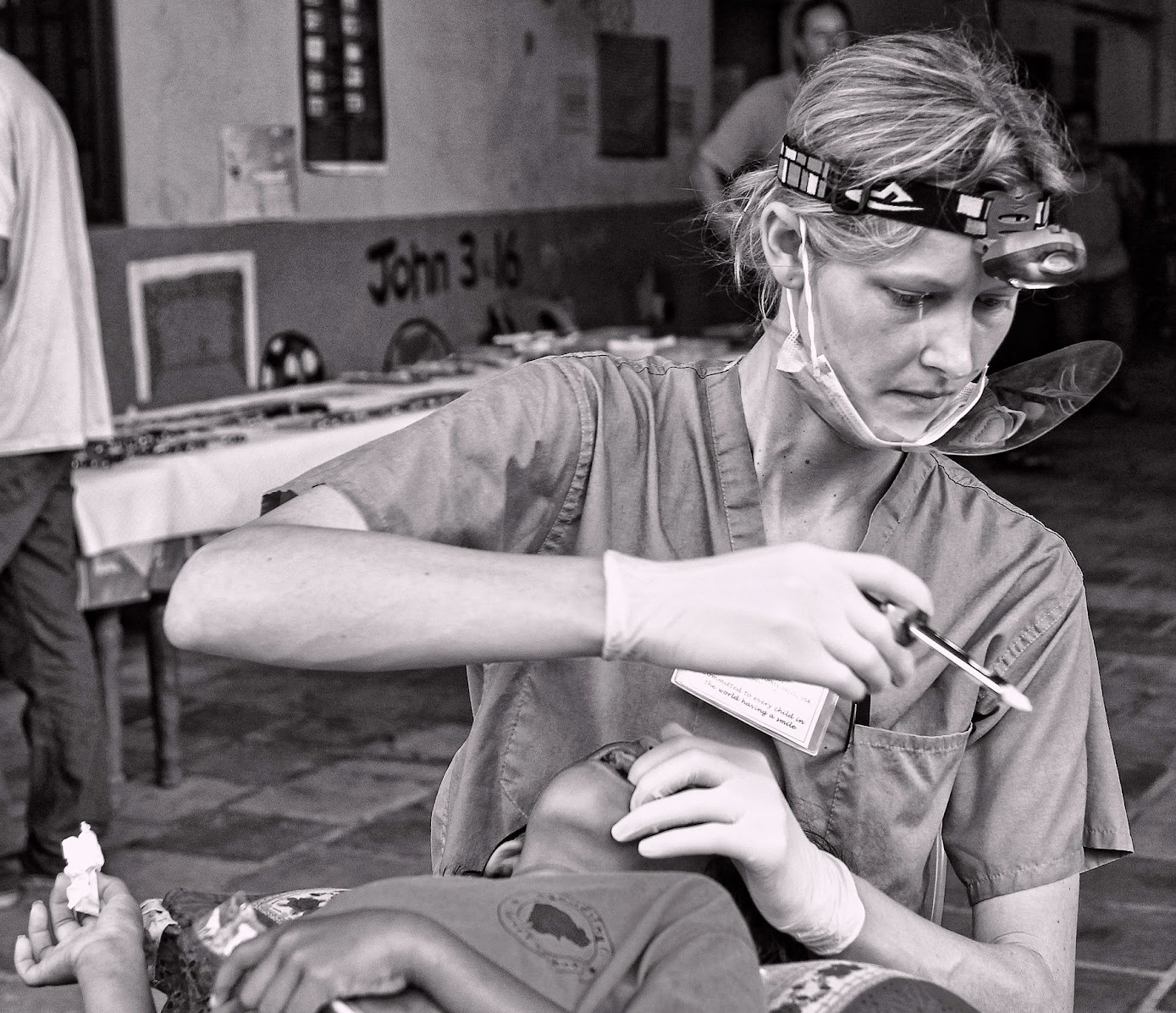
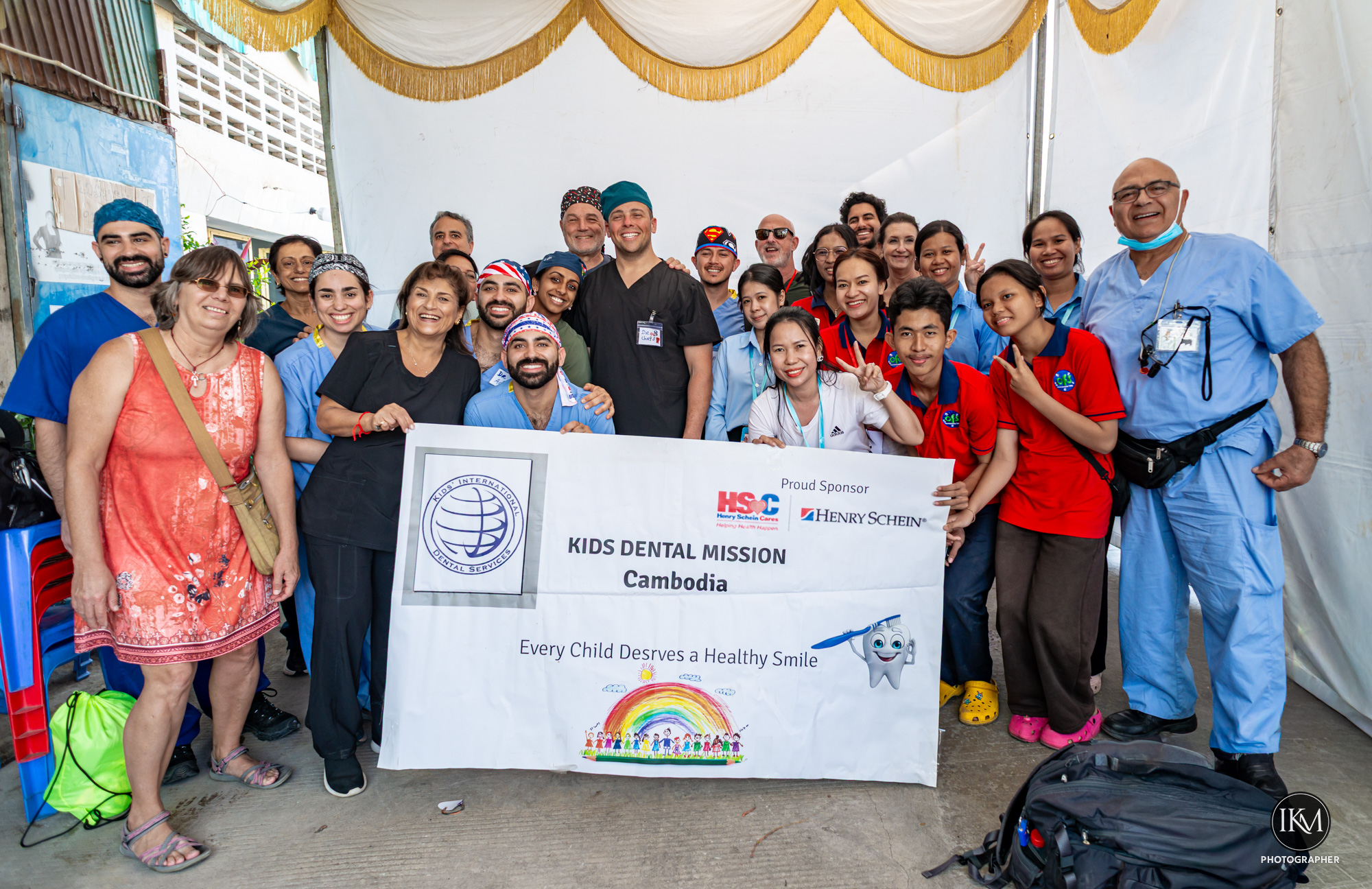
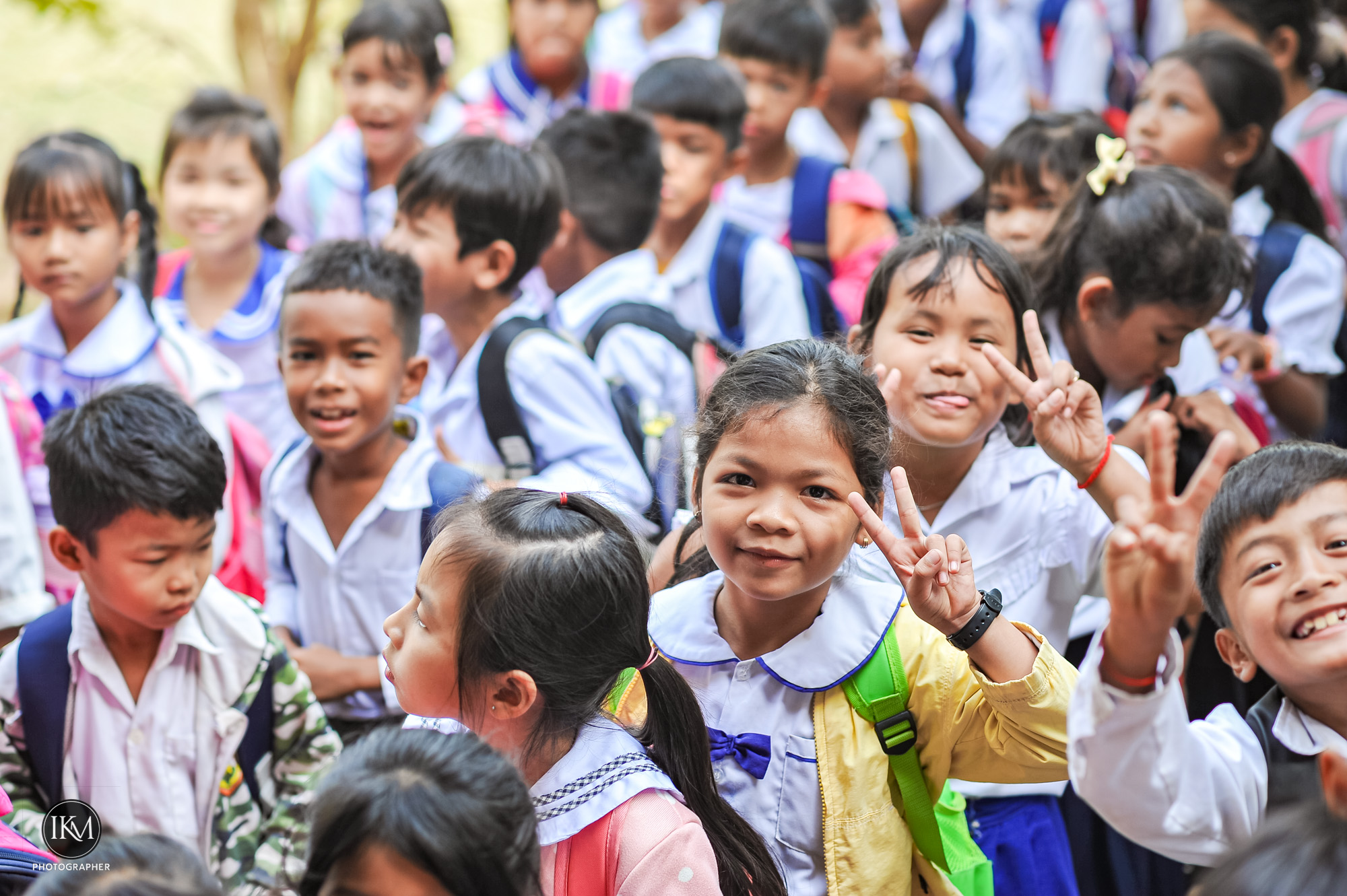
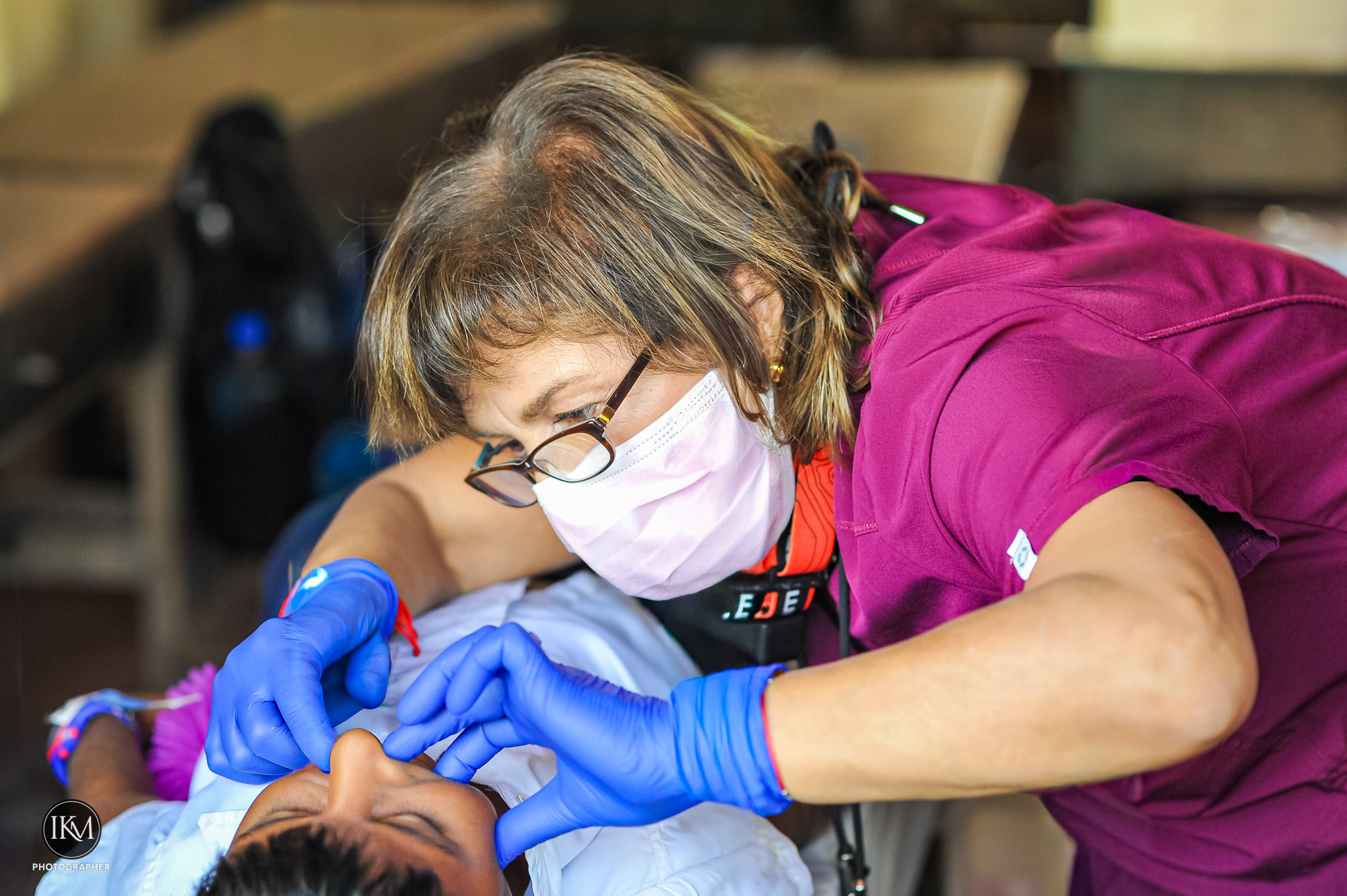
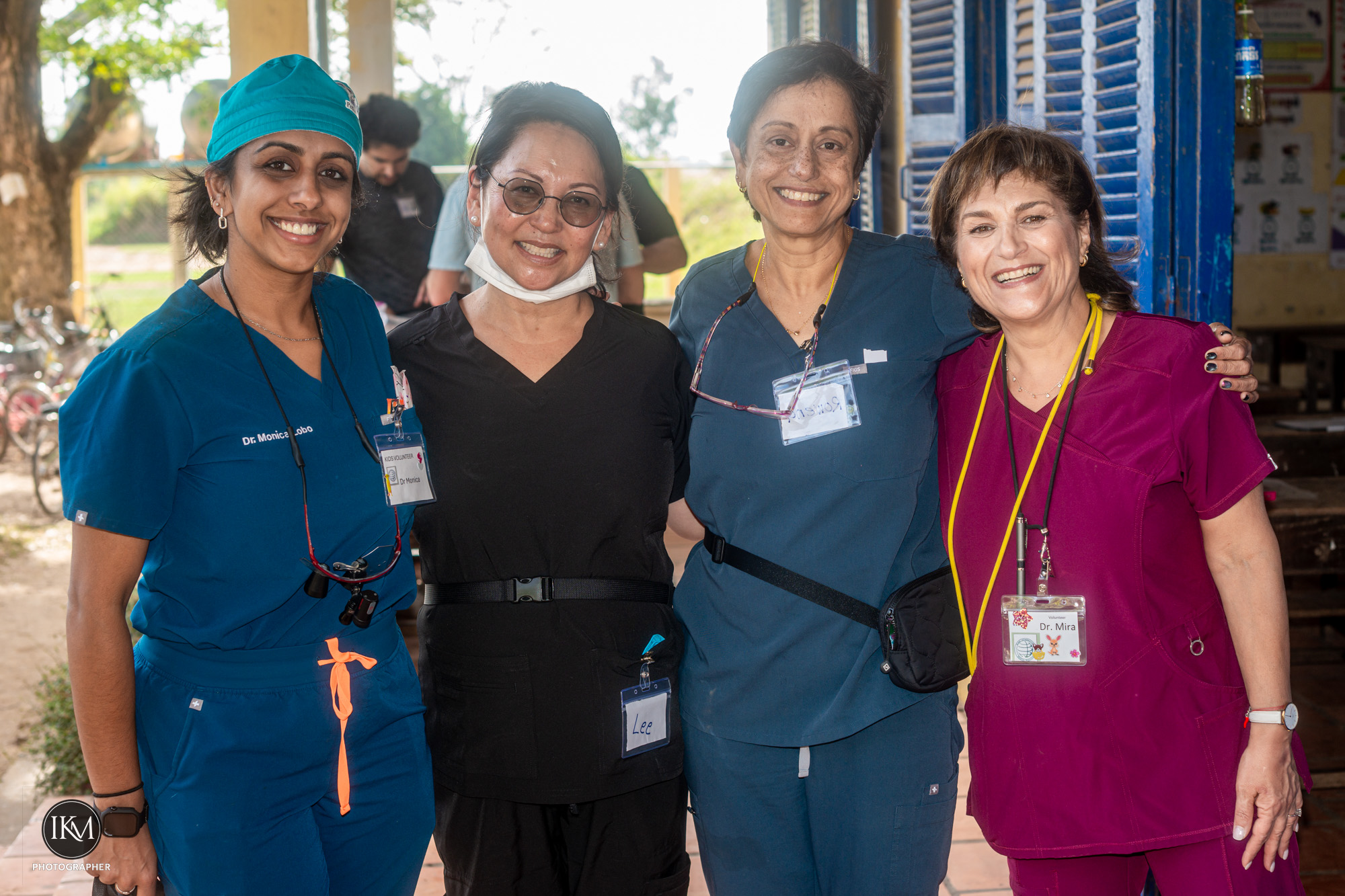
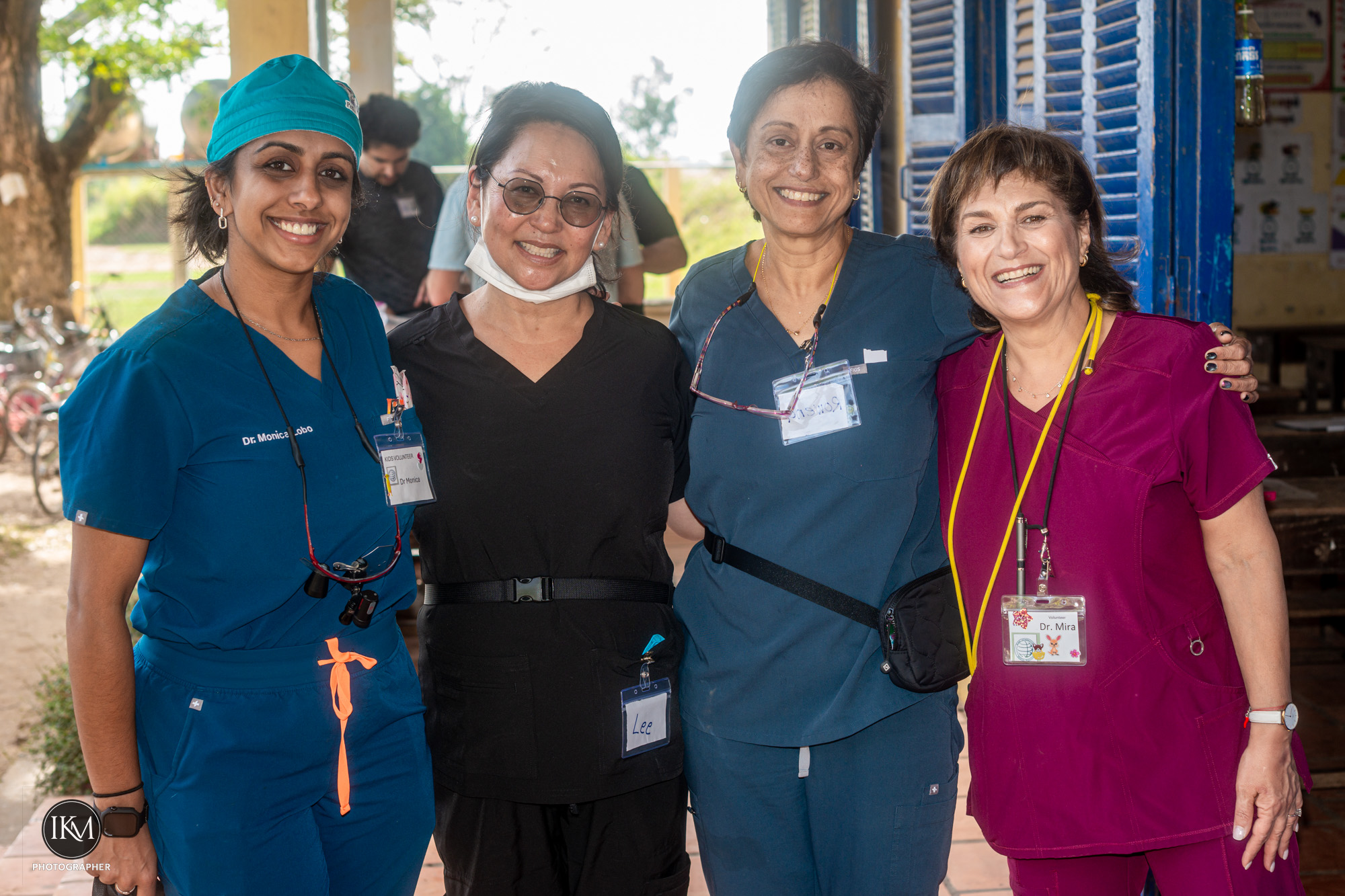
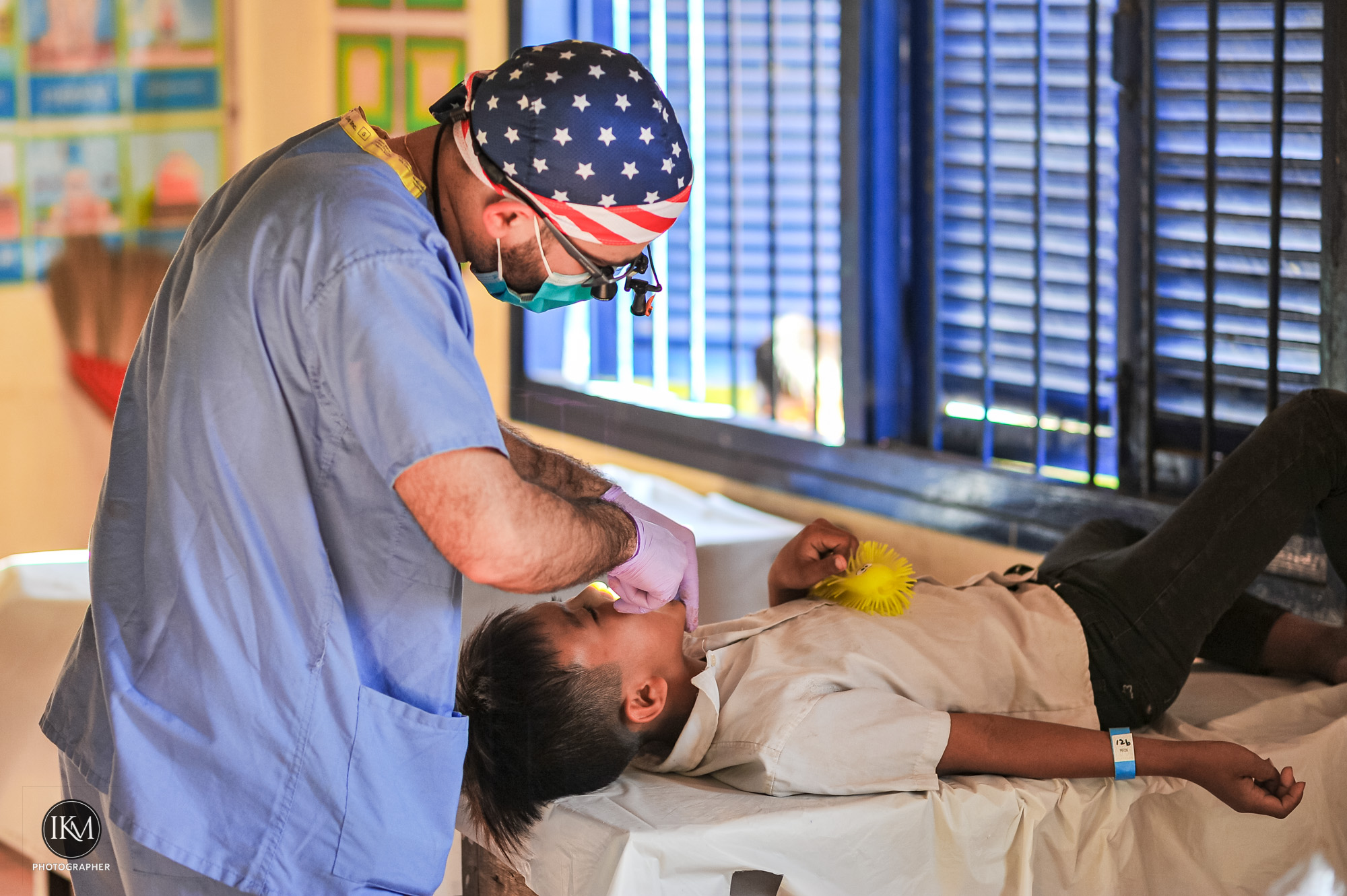
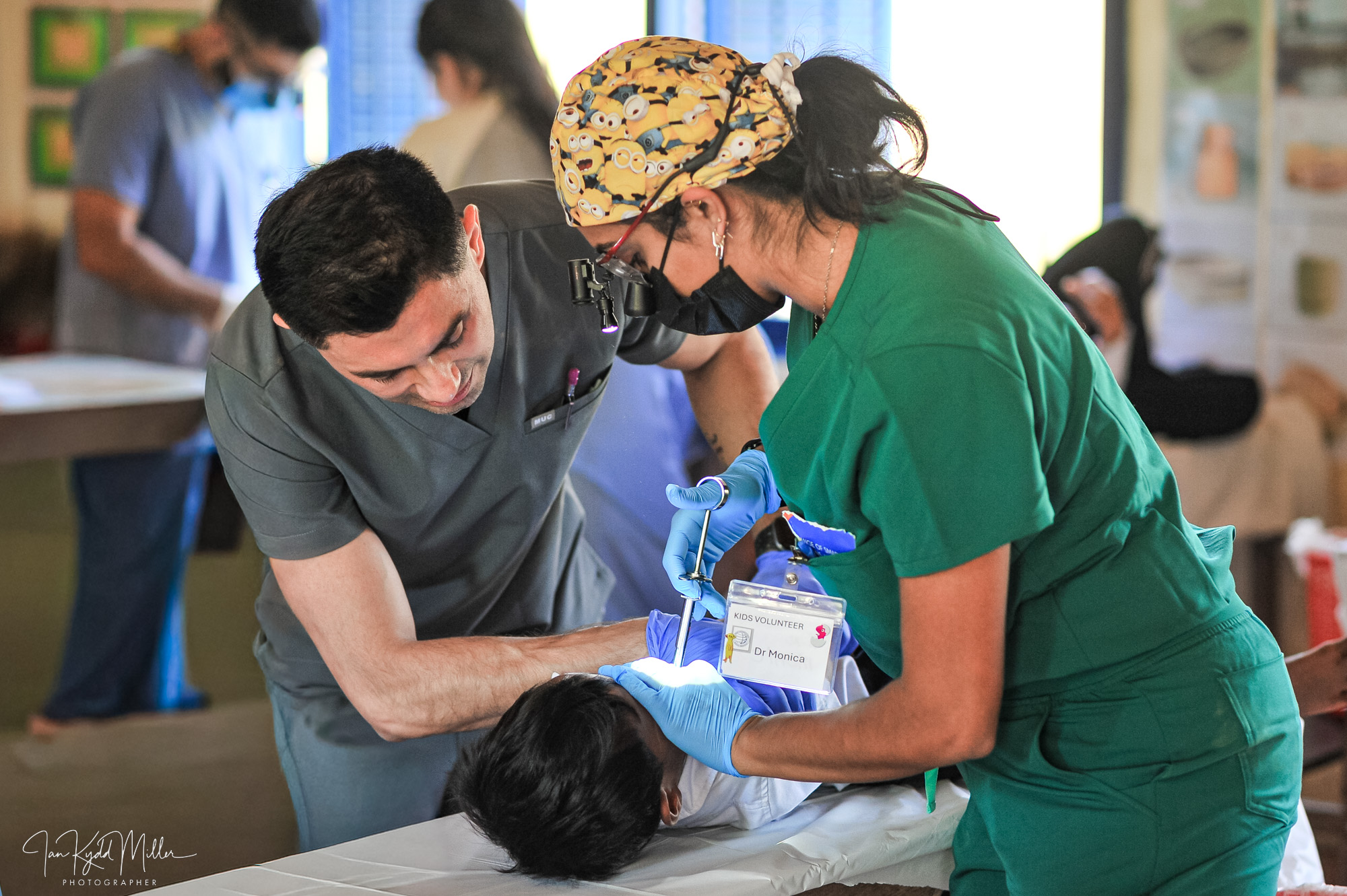
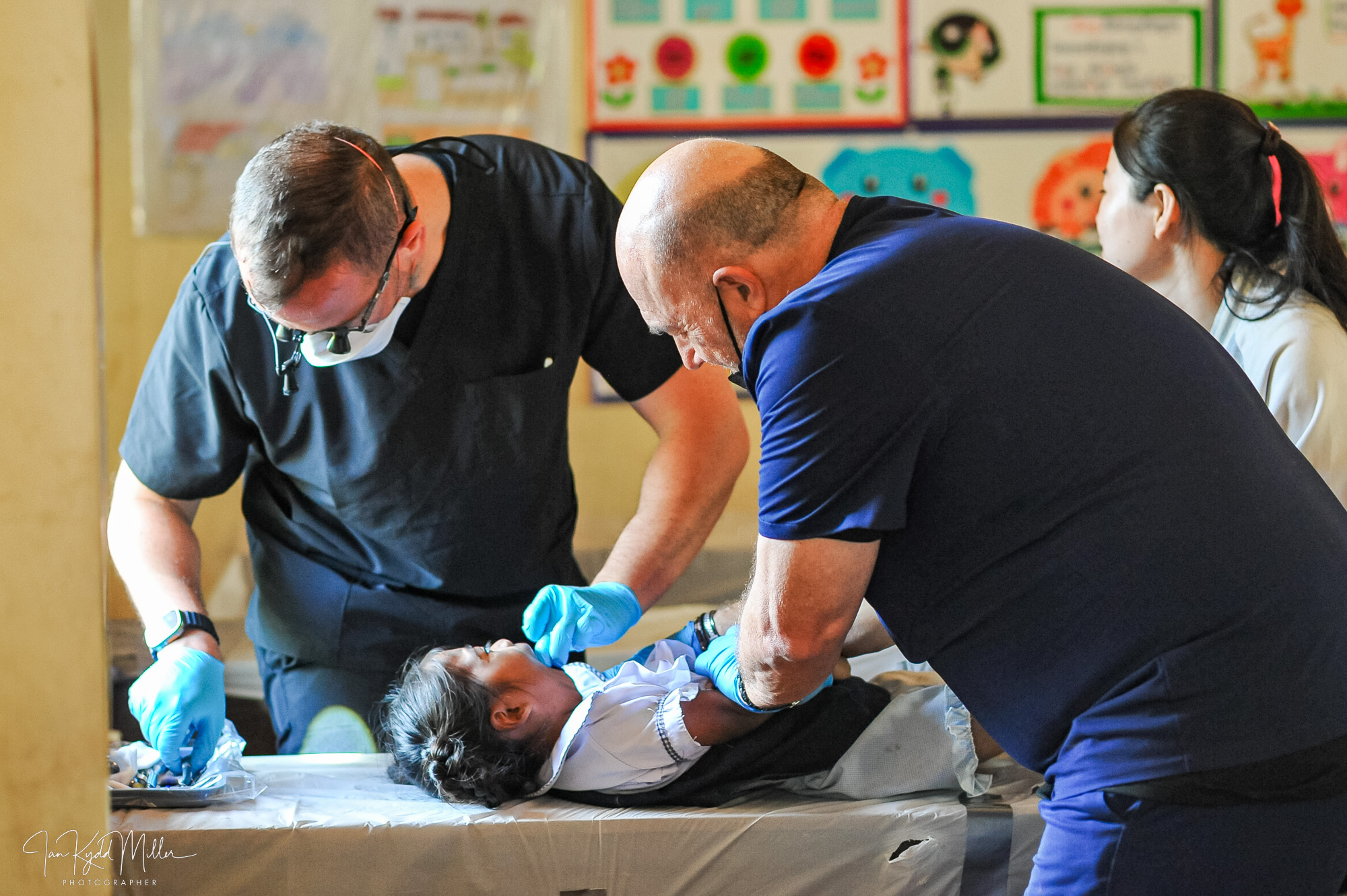
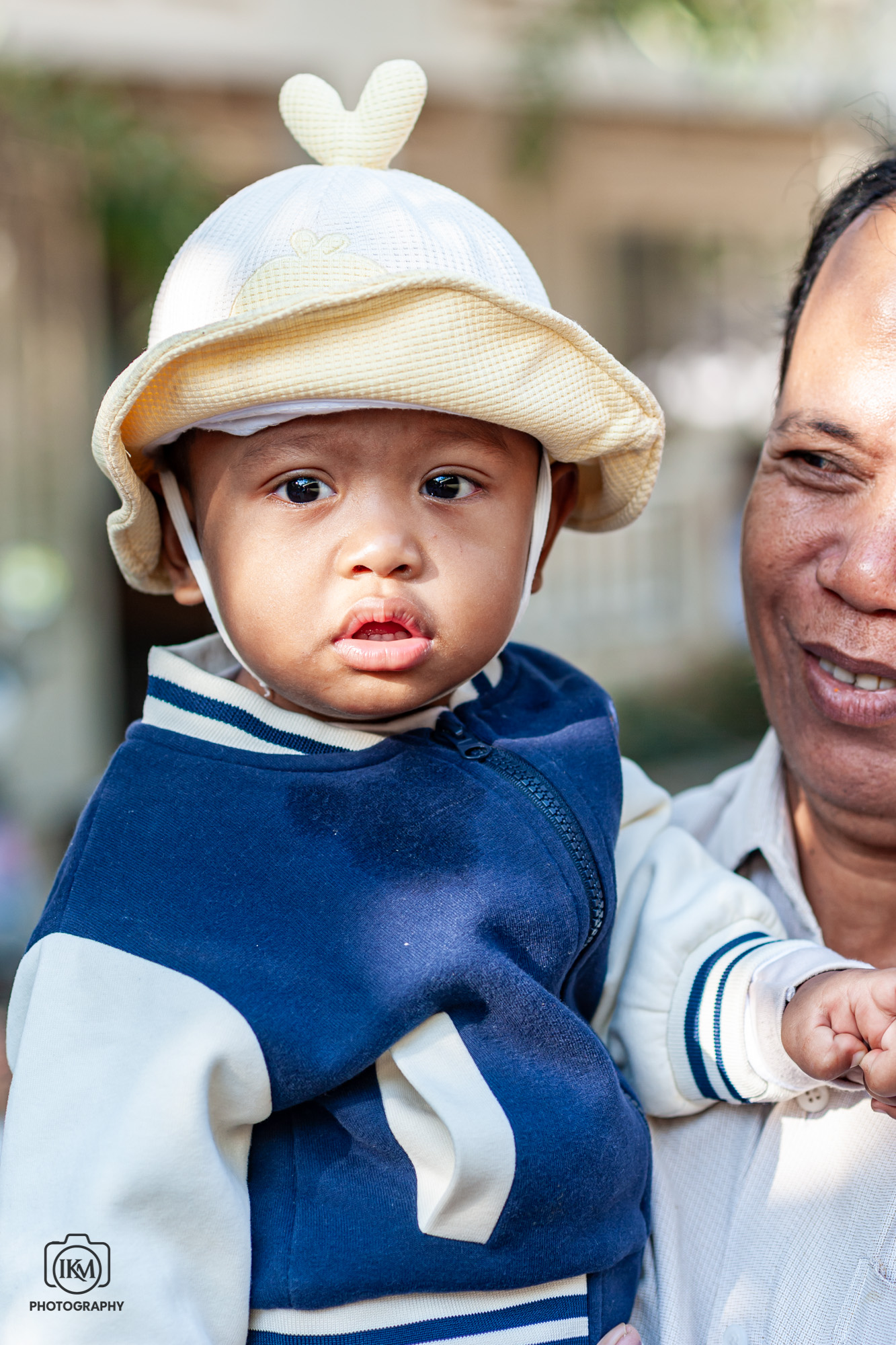
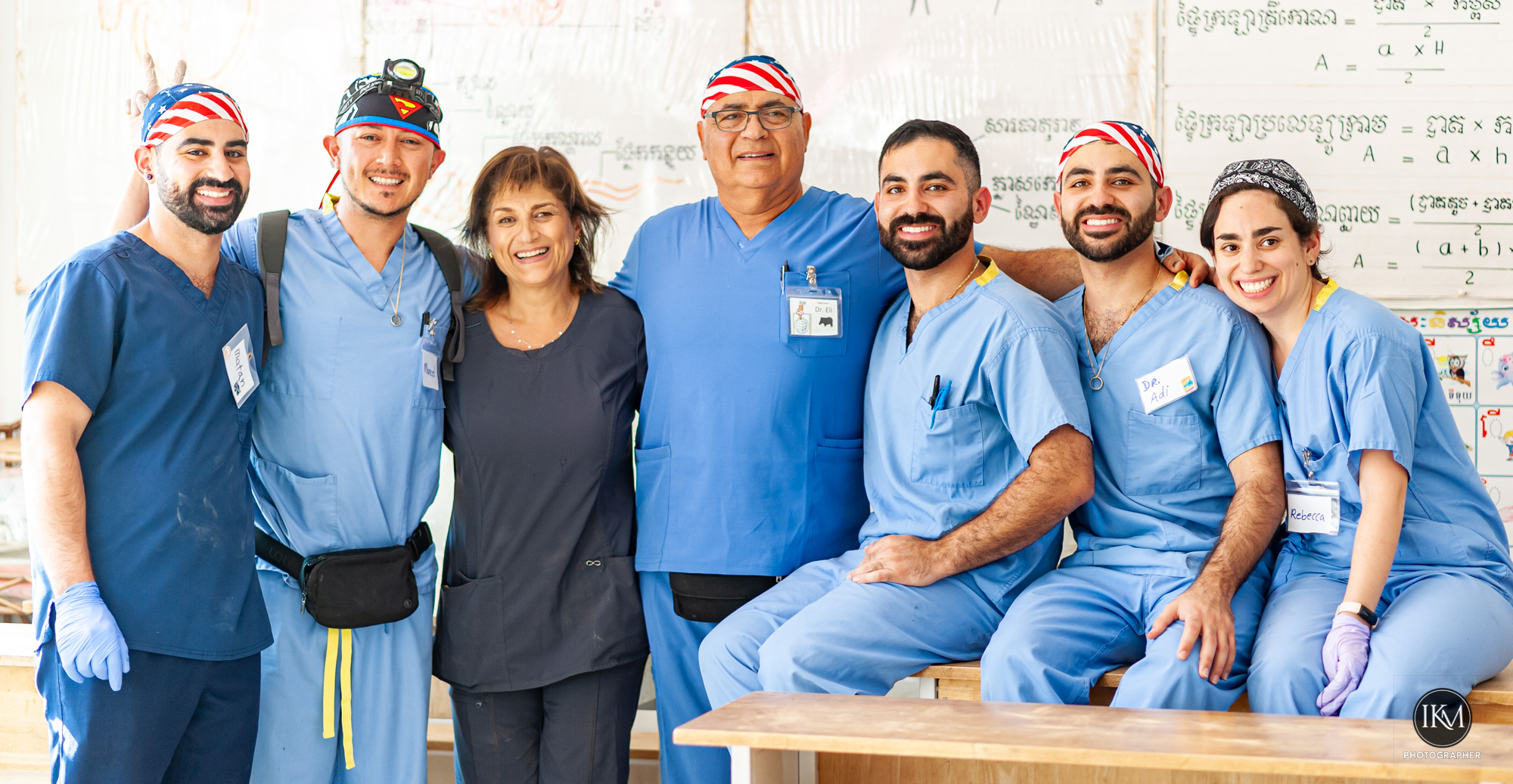
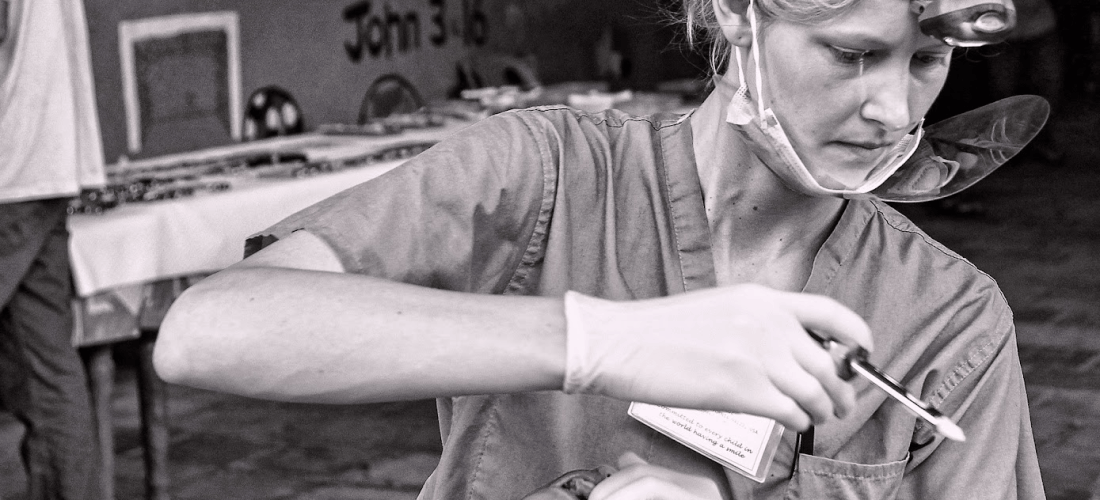
My work with Kids International Dental Services was a good example. Their teams came to Cambodia to provide dental treatment for children who might otherwise receive none. The clinics could be hot, crowded and exhausting. Dentists and assistants worked for long hours while children waited—some curious, some frightened, others trying very hard to appear brave.
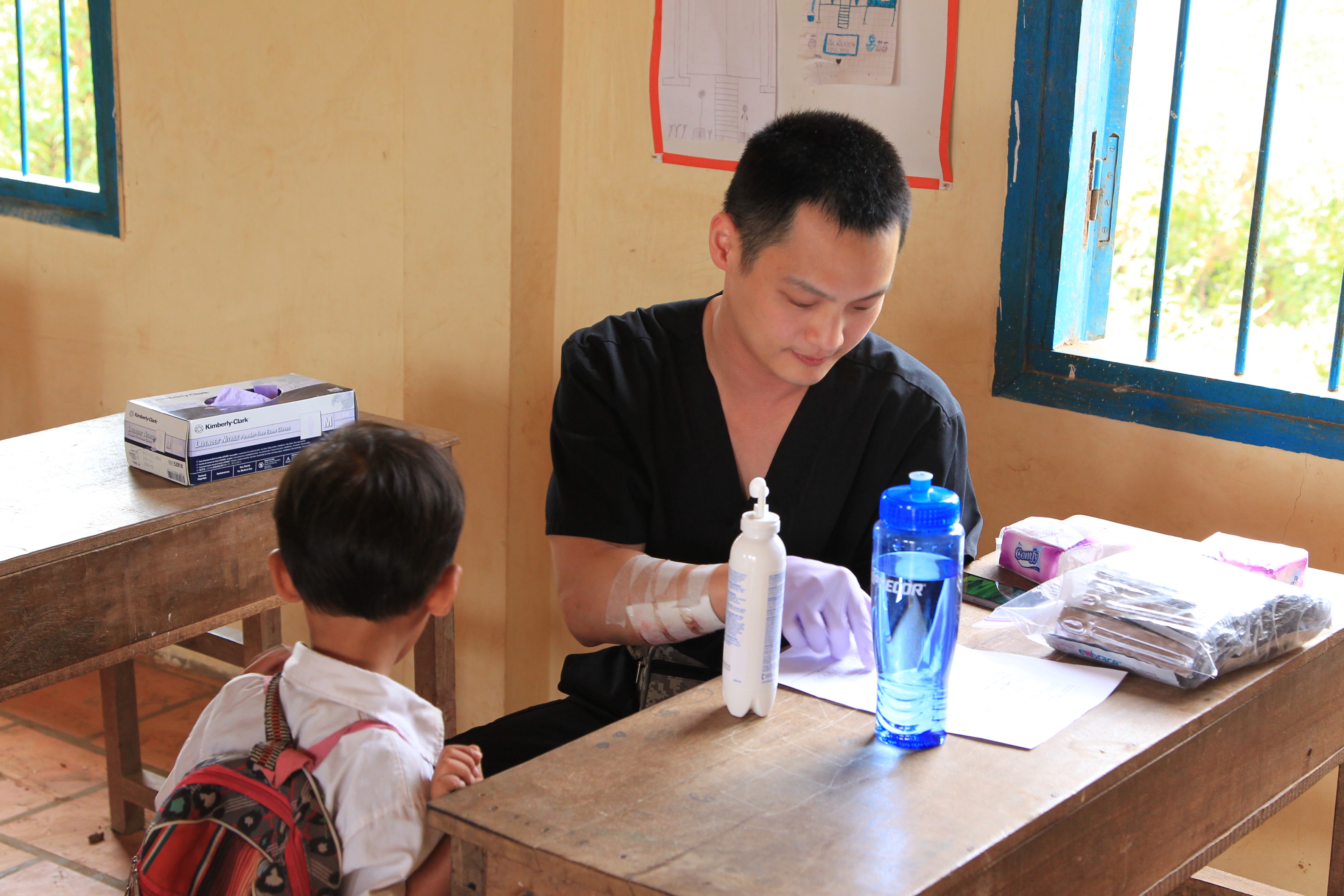
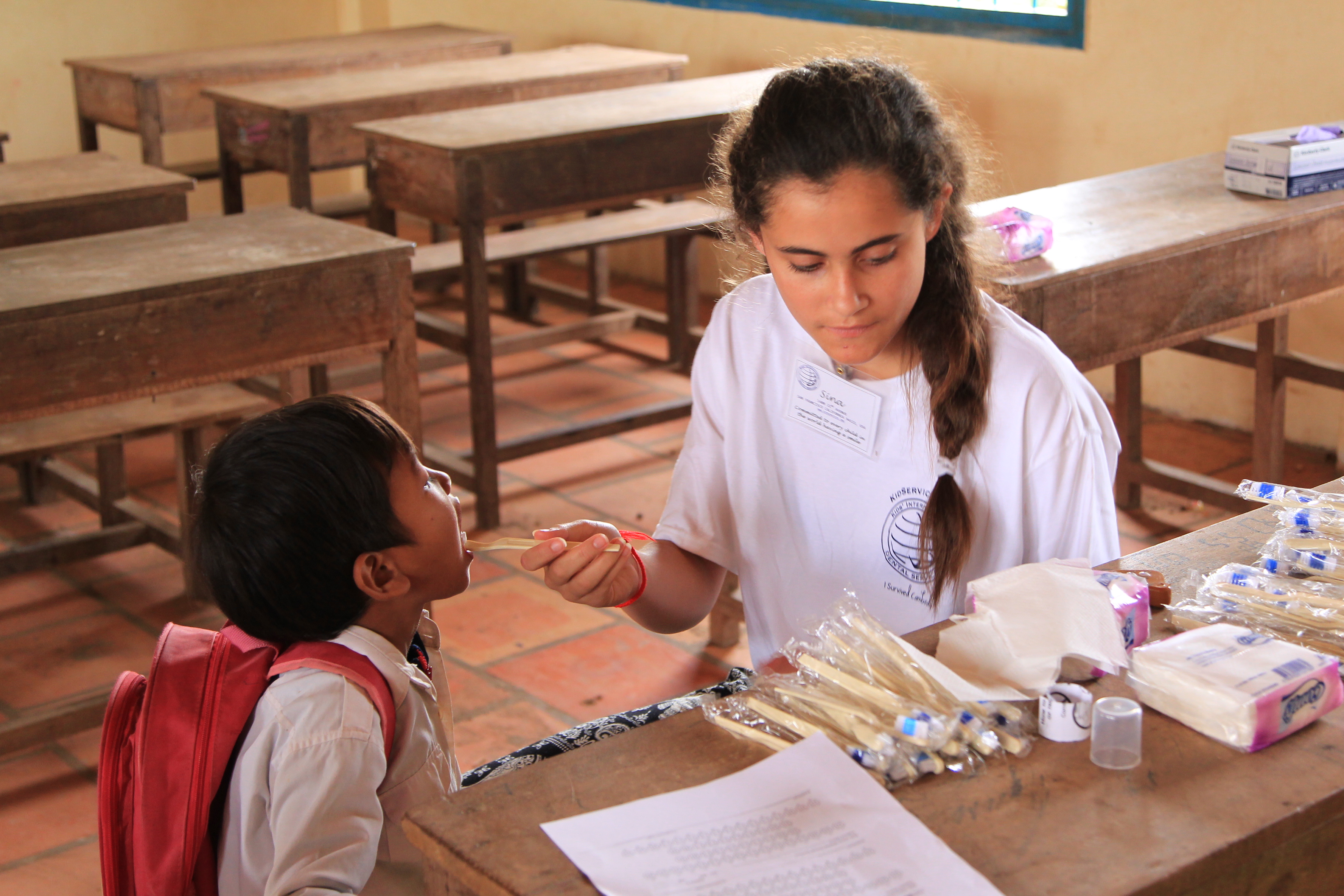
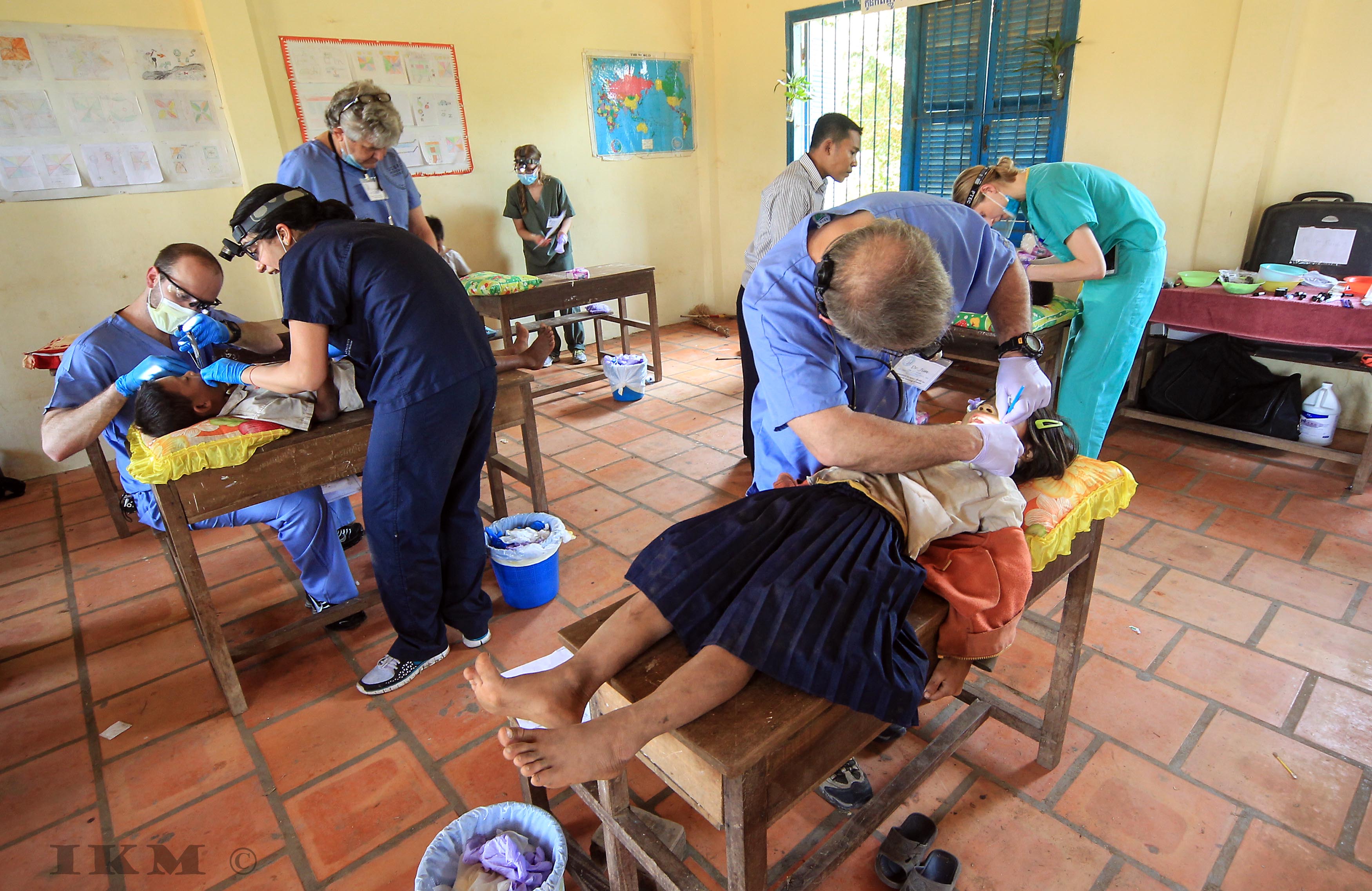
The obvious photographs were easy enough to make: dentists leaning over their patients, instruments arranged on tables, volunteers wearing masks and gloves. But those pictures alone did not tell the whole story.

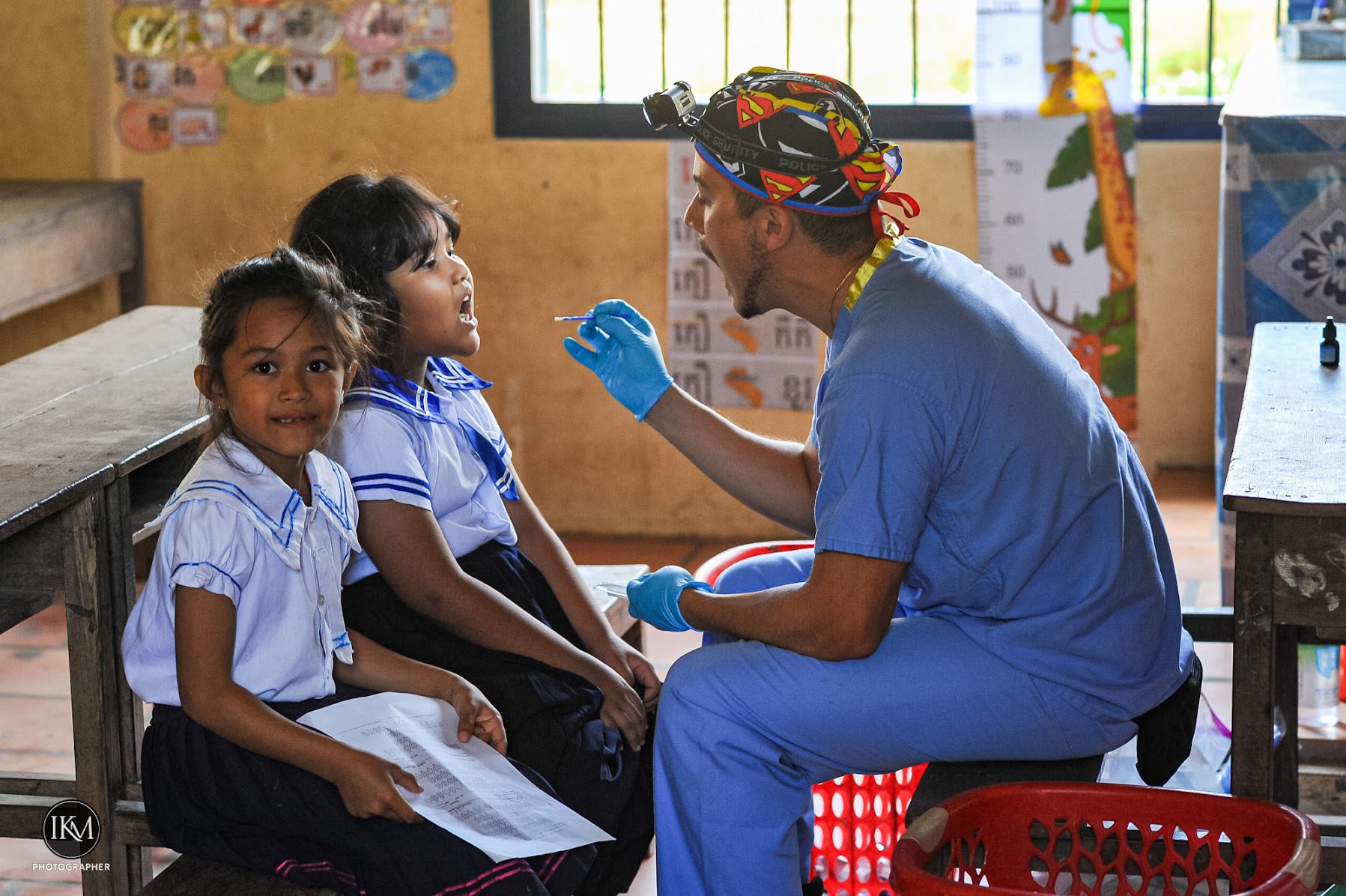
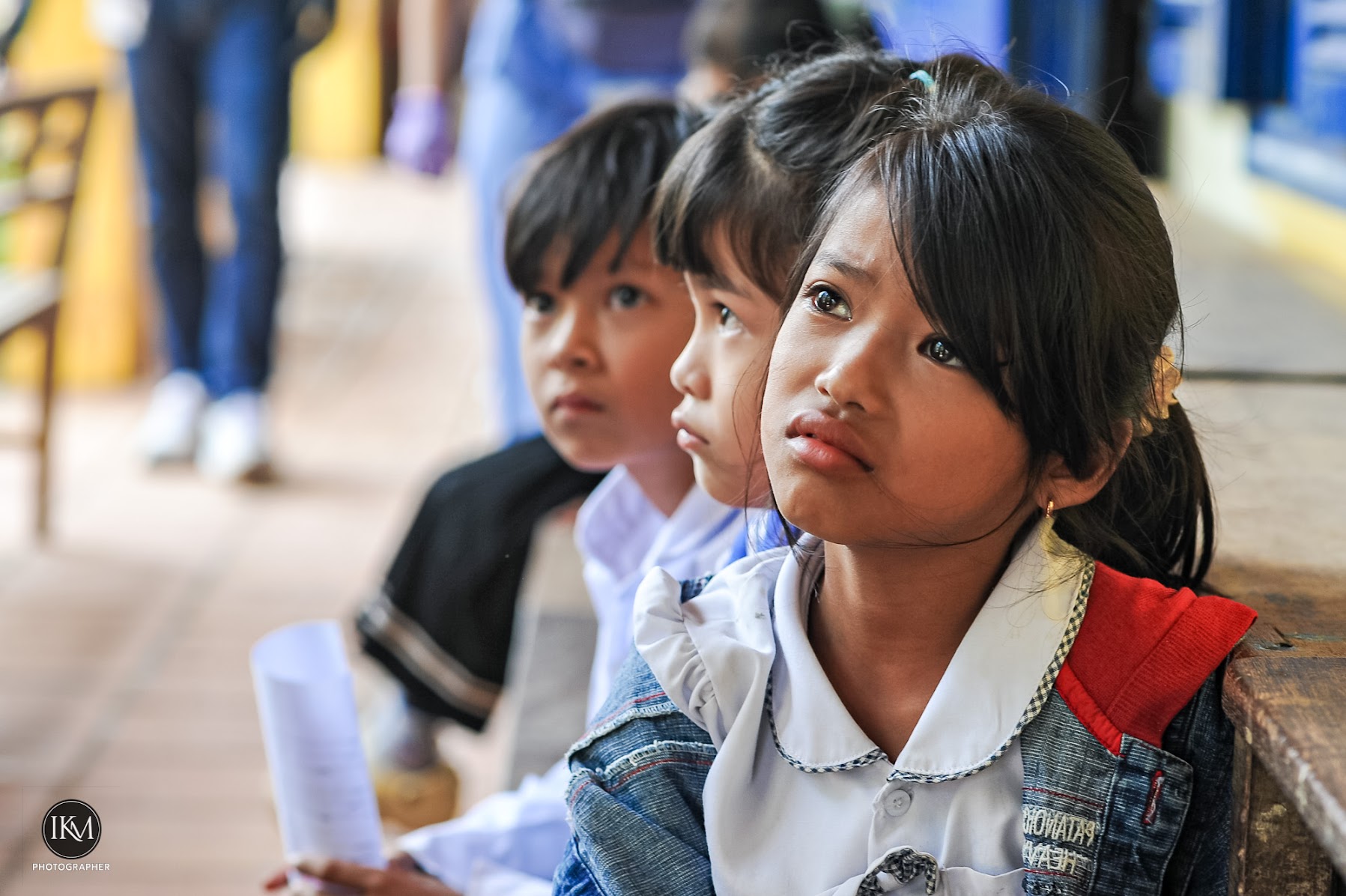
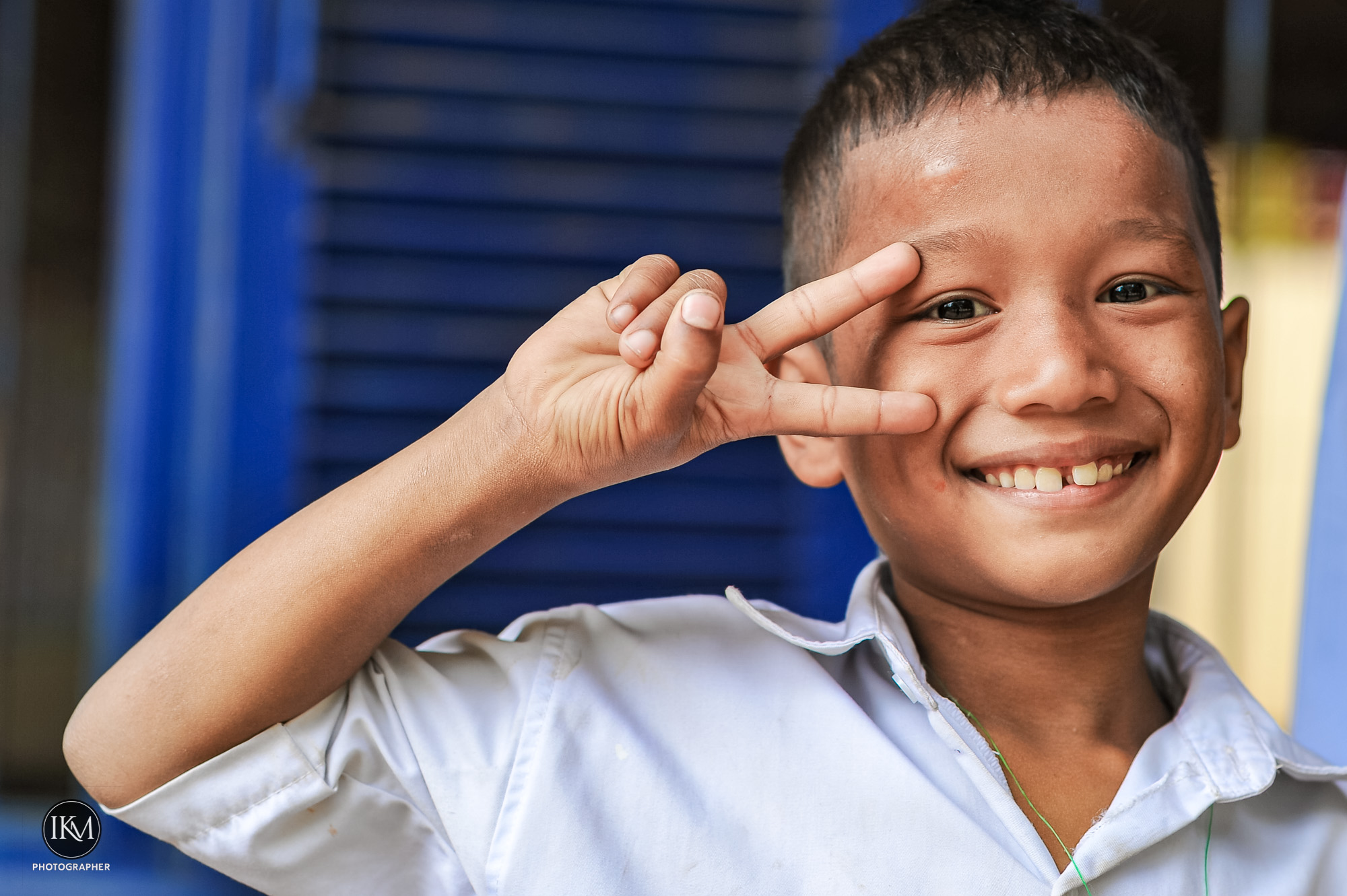
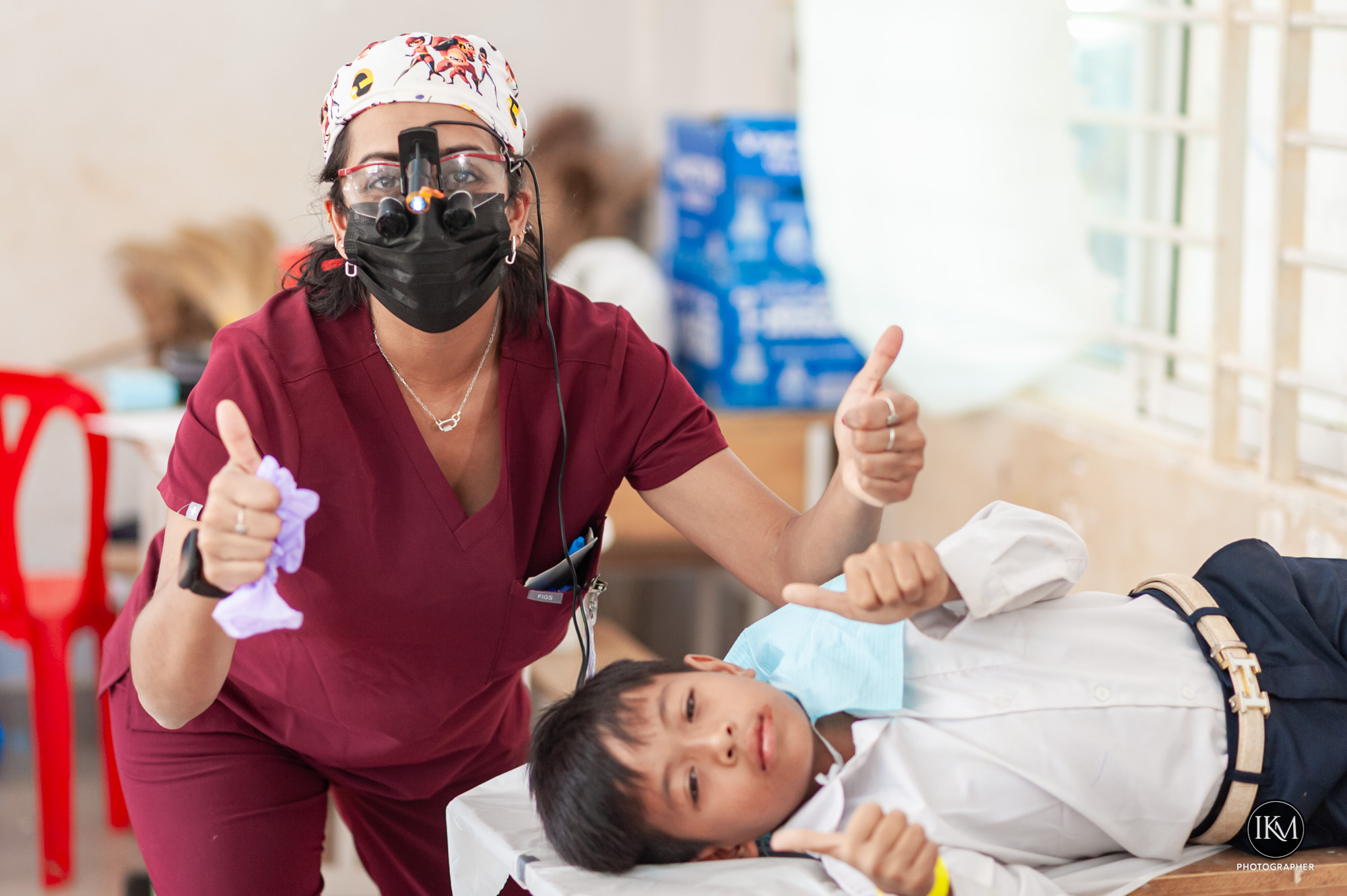
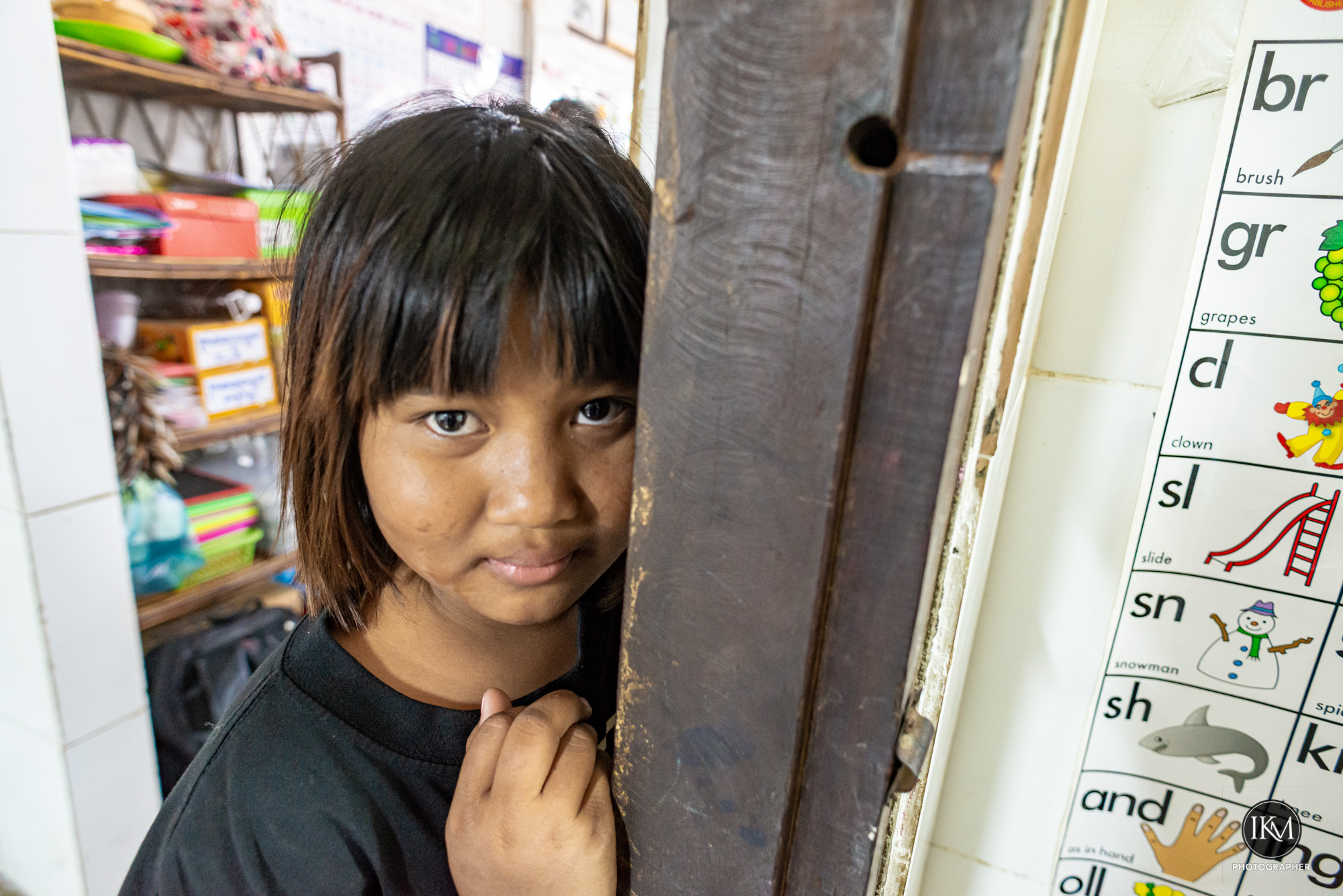
The more important moments were often found around the edges. A girl waiting quietly for her turn. A child holding another child’s hand. A volunteer attempting to reassure a nervous patient despite the language barrier. The expression of relief when treatment was finished. These were the small human details that gave meaning to the wider record.
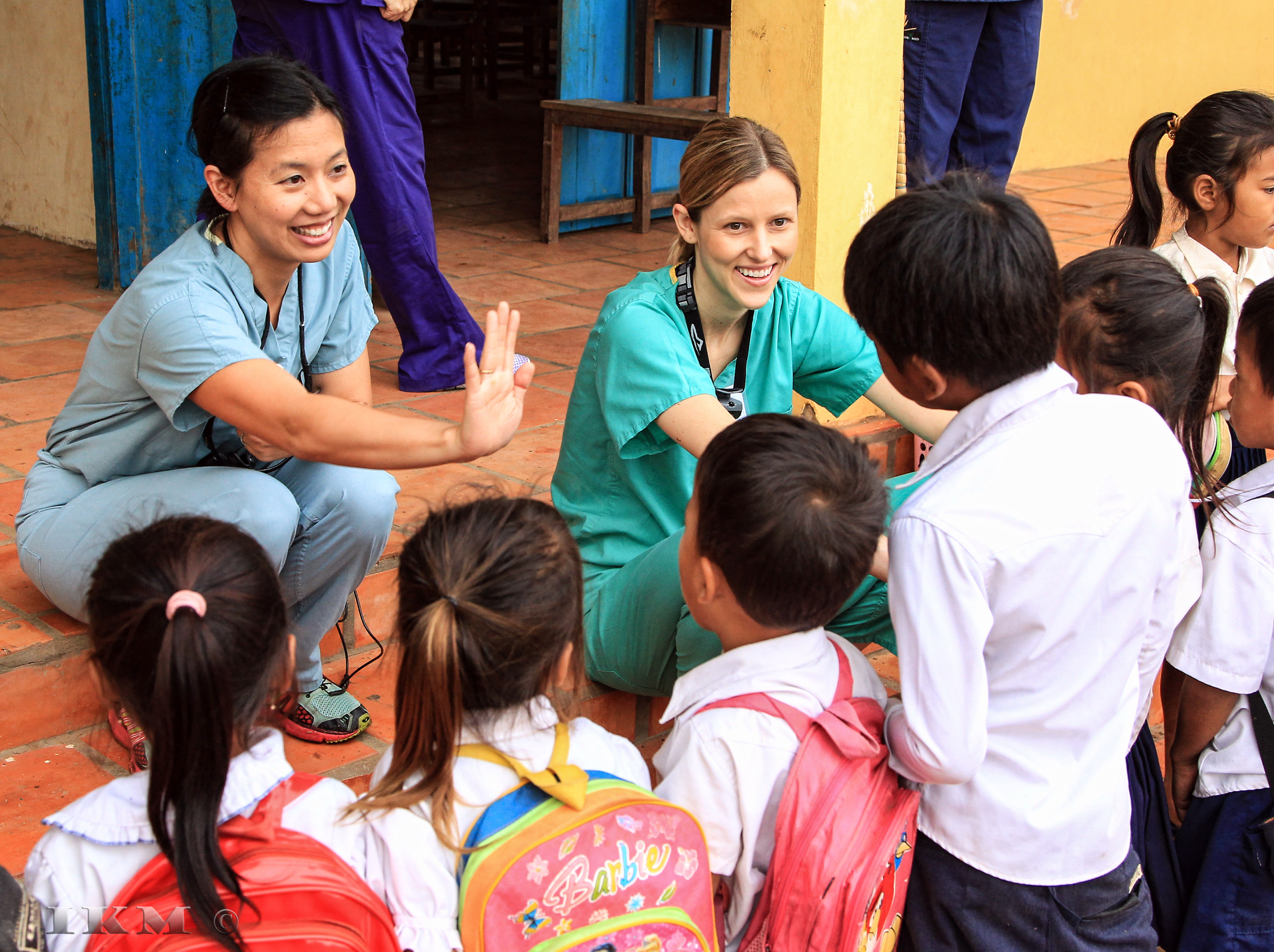

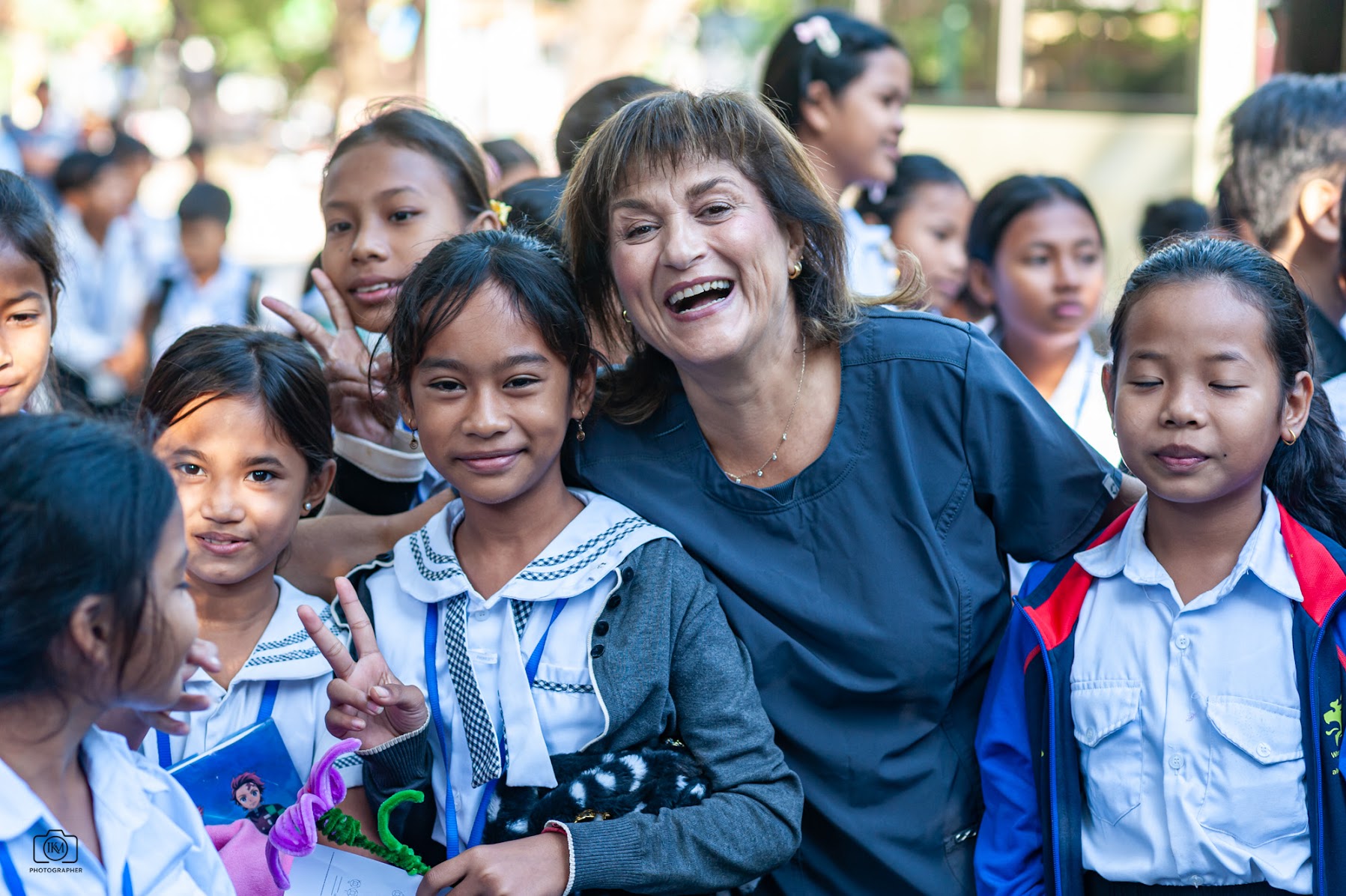
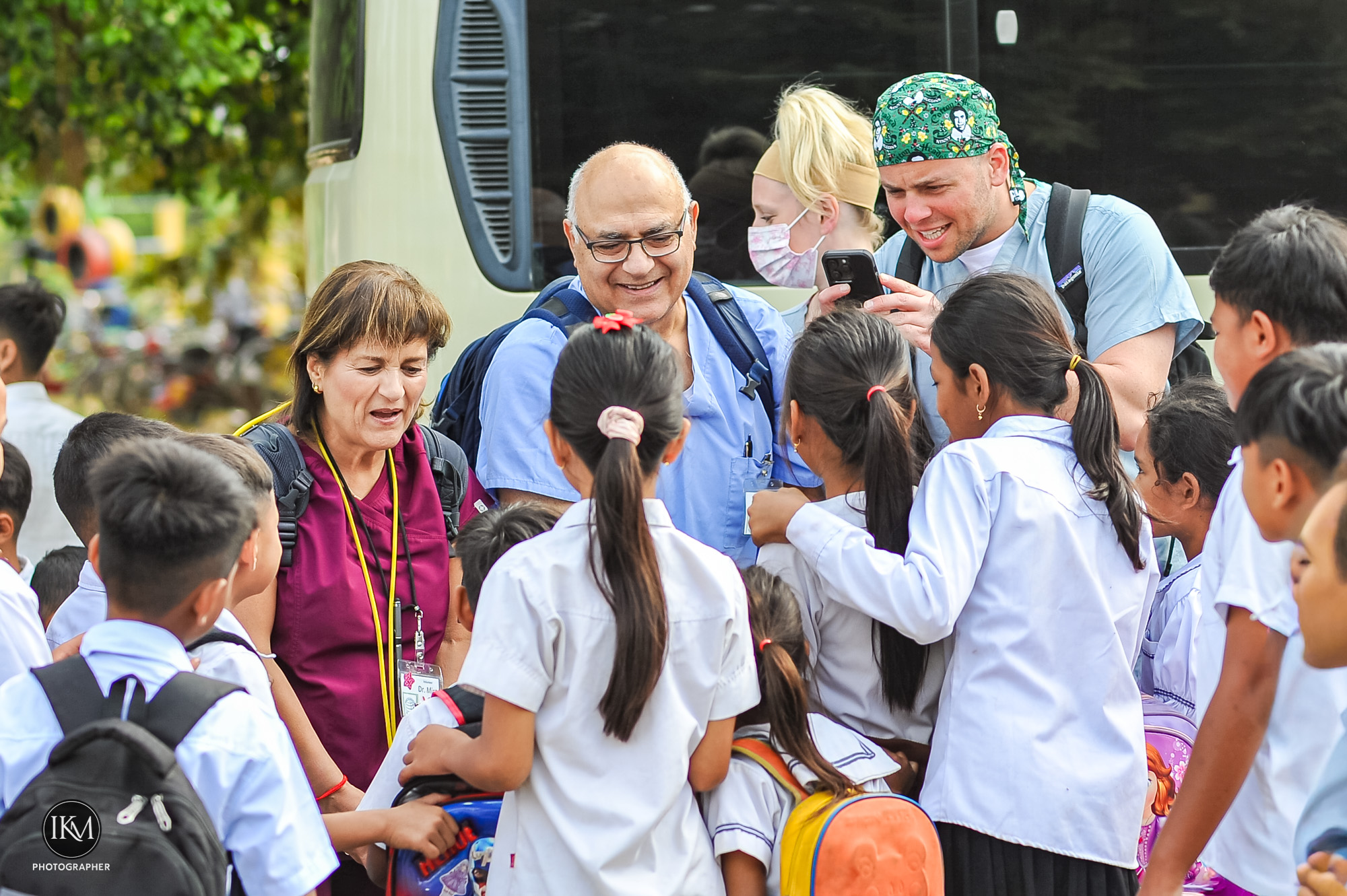
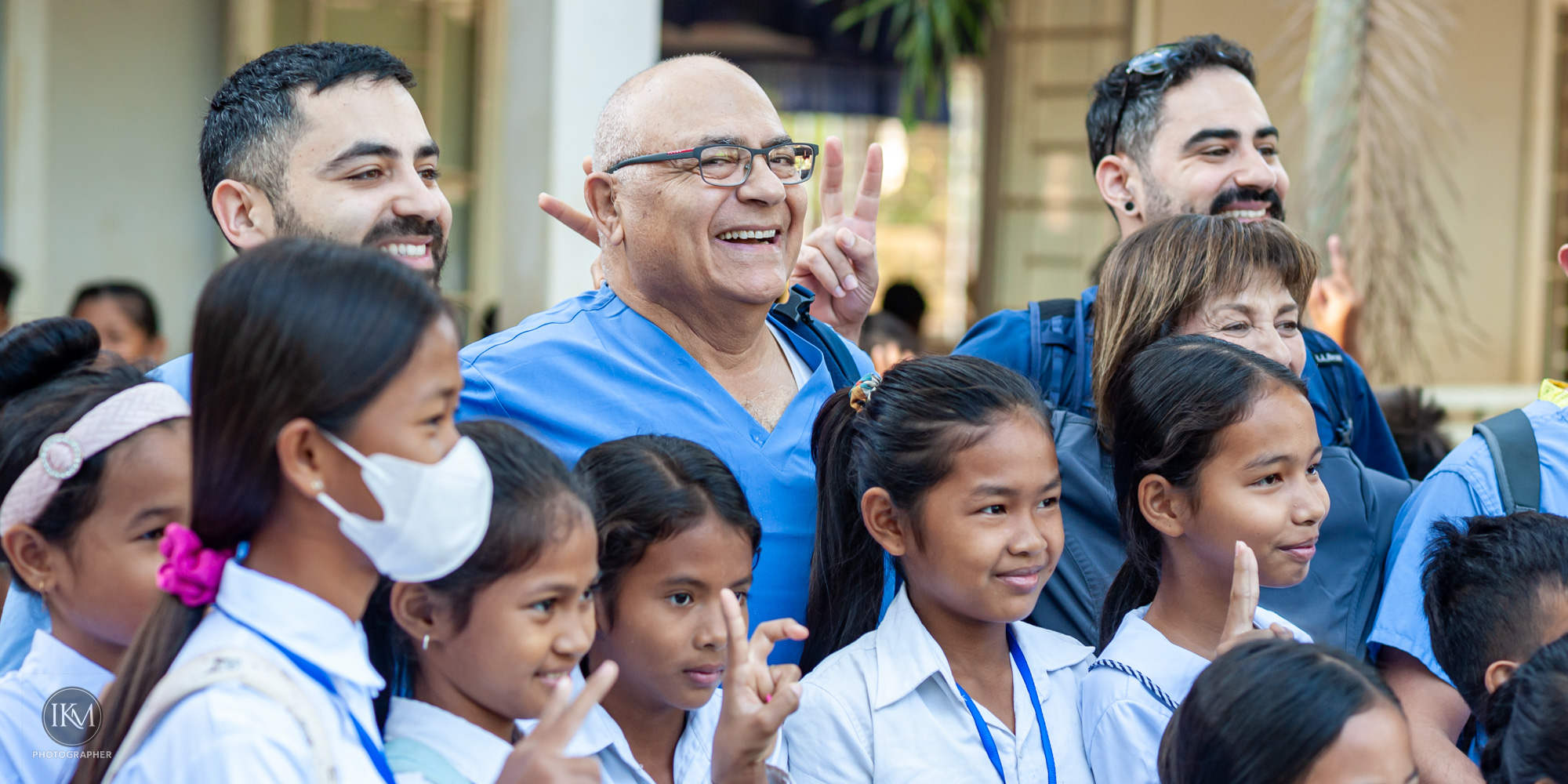
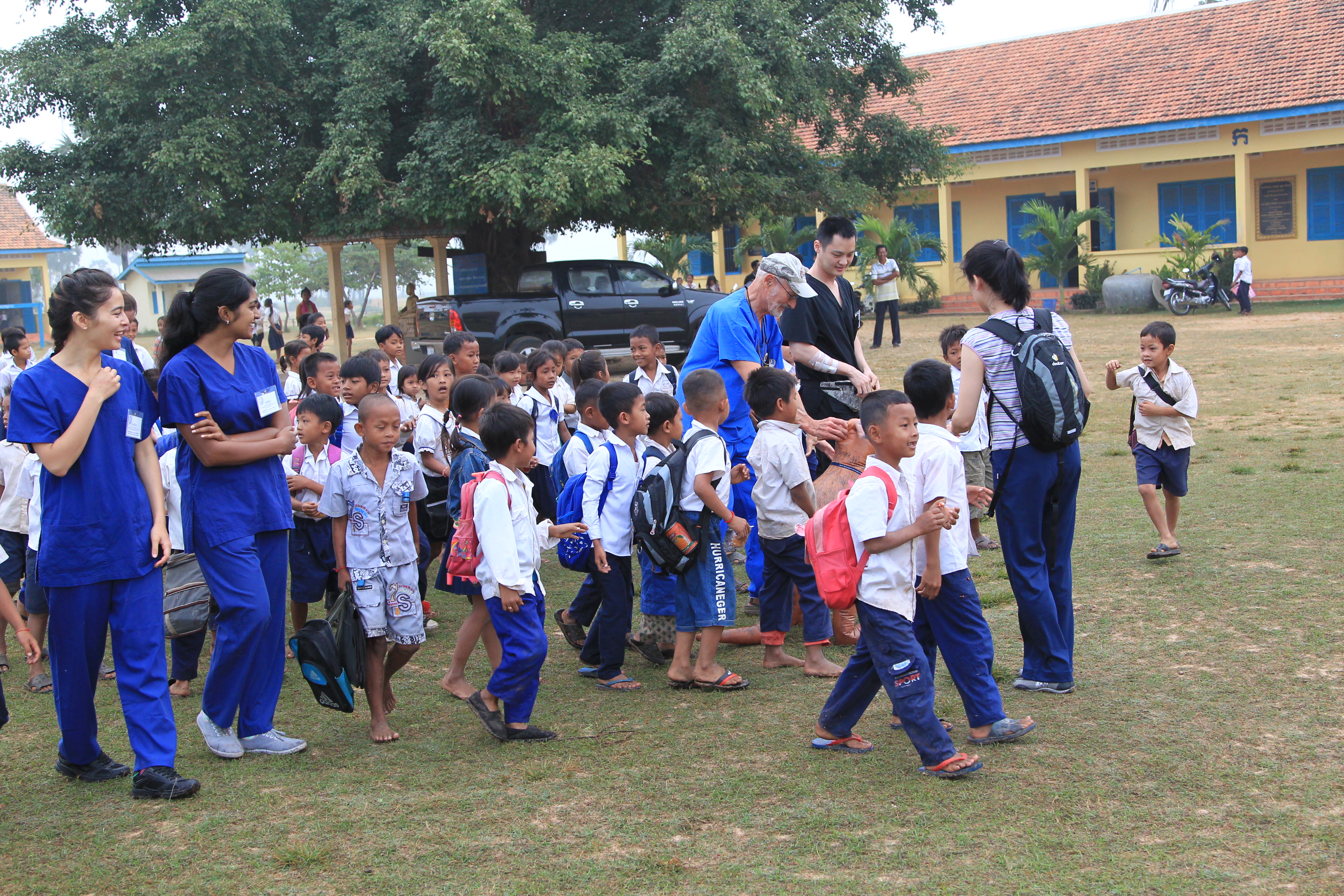
Two healthcare professionals interact with children at a school, smiling and engaging in a cheerful conversation.

A photographer working in such circumstances must know when to step forward and when to lower the camera. Pain, fear and poverty do not remove a person’s dignity. A photograph may be useful to a charity, but that does not automatically make it ethical. The person in front of the lens must remain more important than the organisation’s publicity.

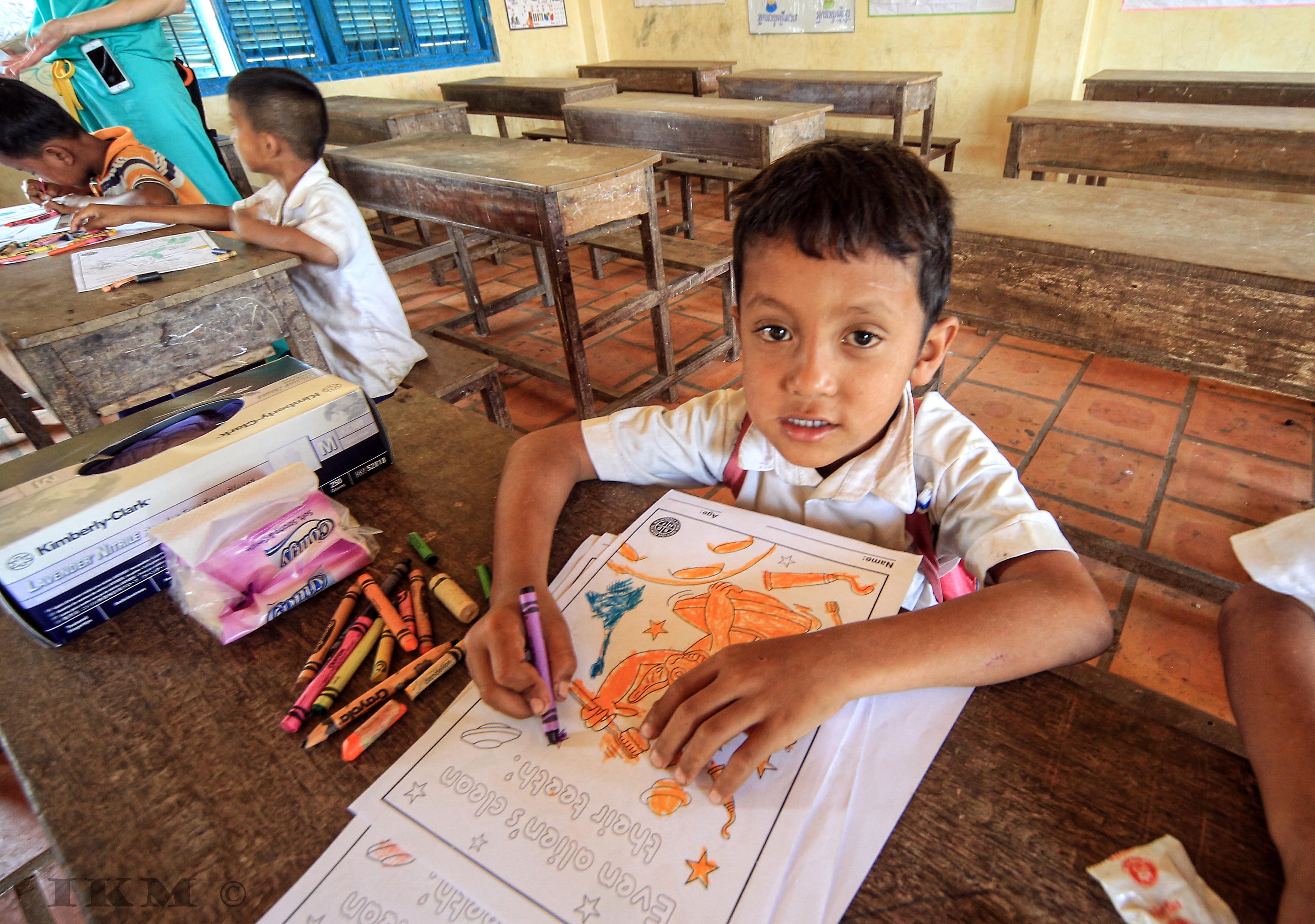
Children require particular care. A frightened child receiving treatment is not merely an interesting photographic subject. They are vulnerable and may not fully understand why they are being photographed. The pictures should never humiliate them or turn their discomfort into emotional advertising.
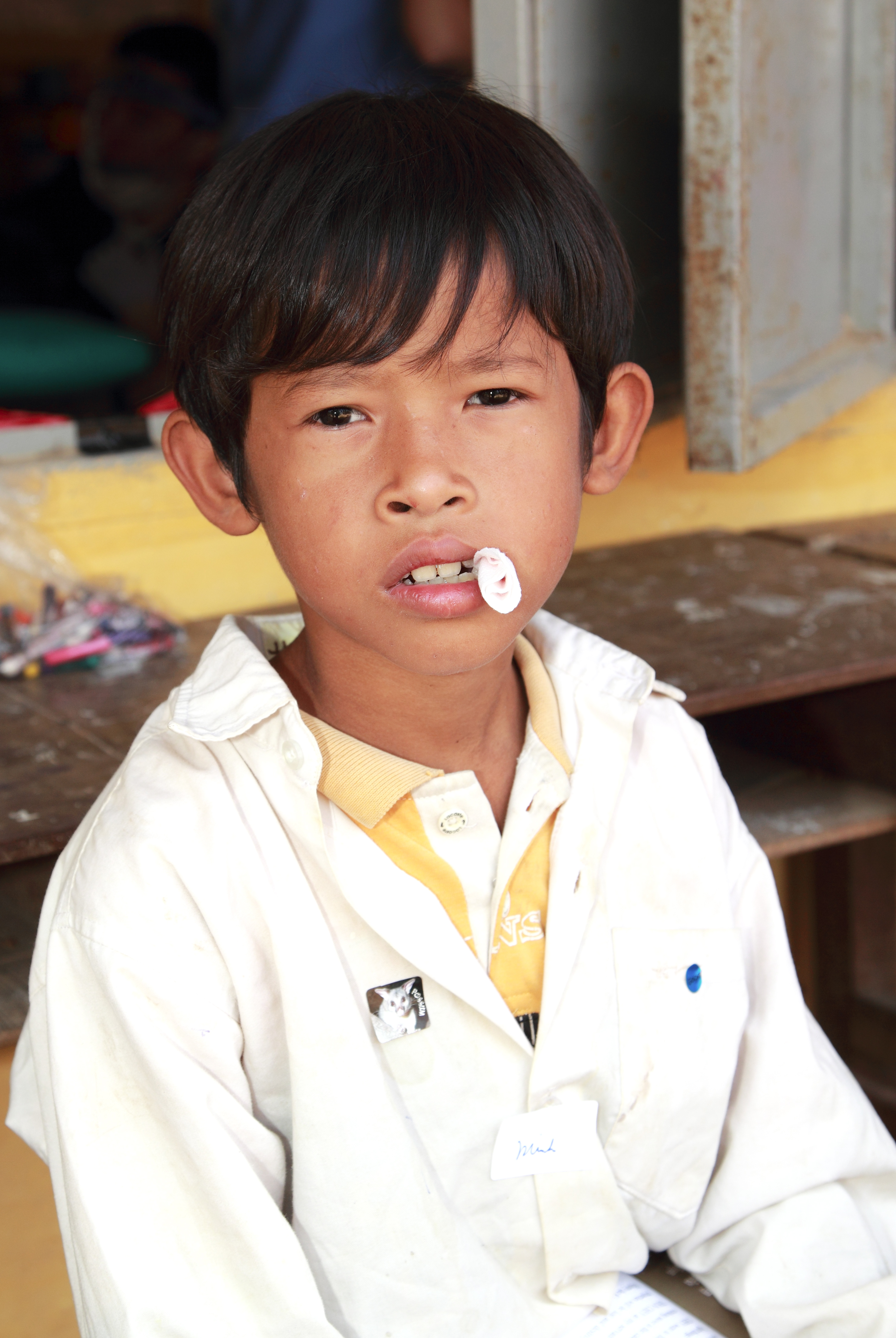
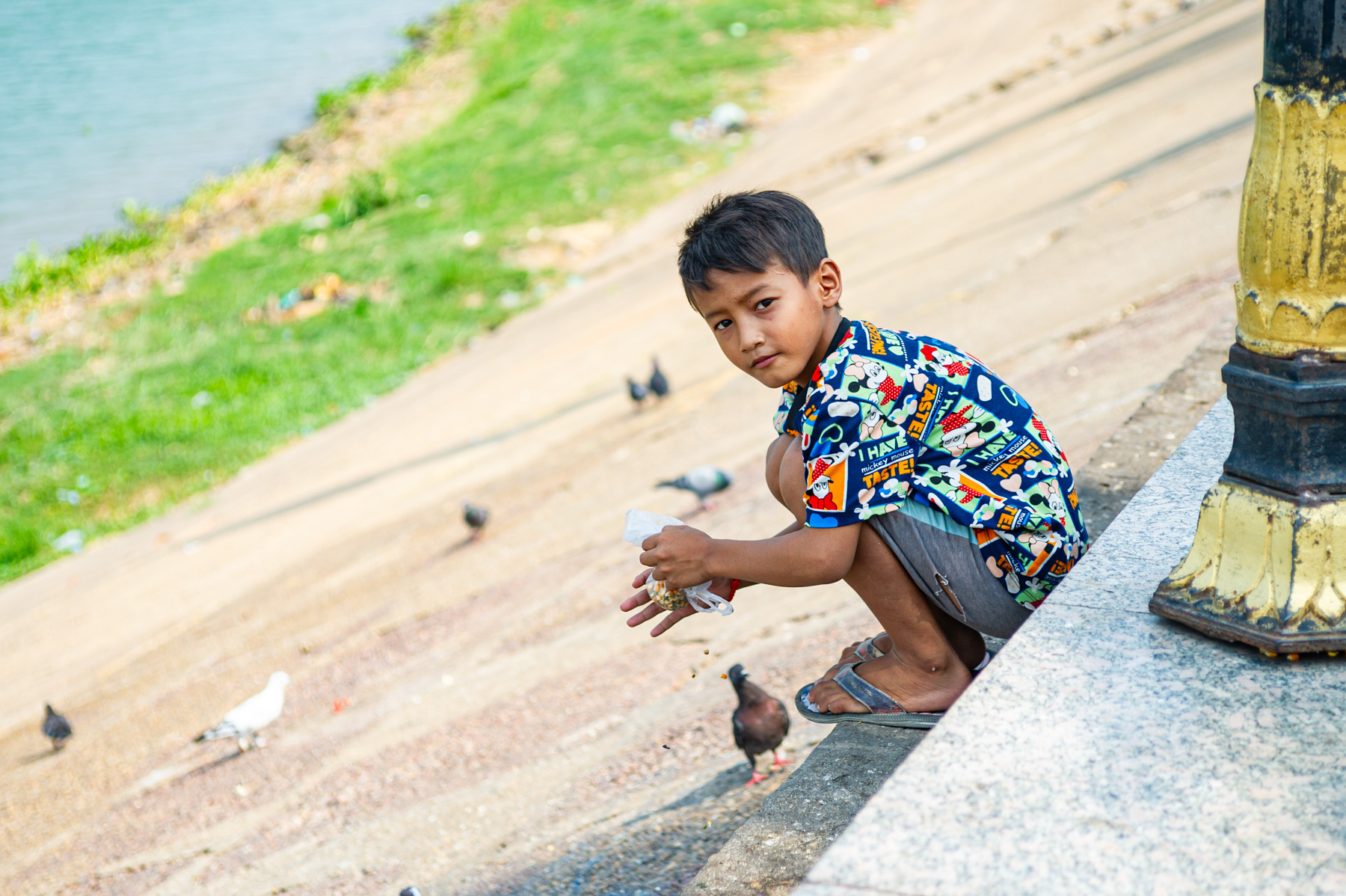
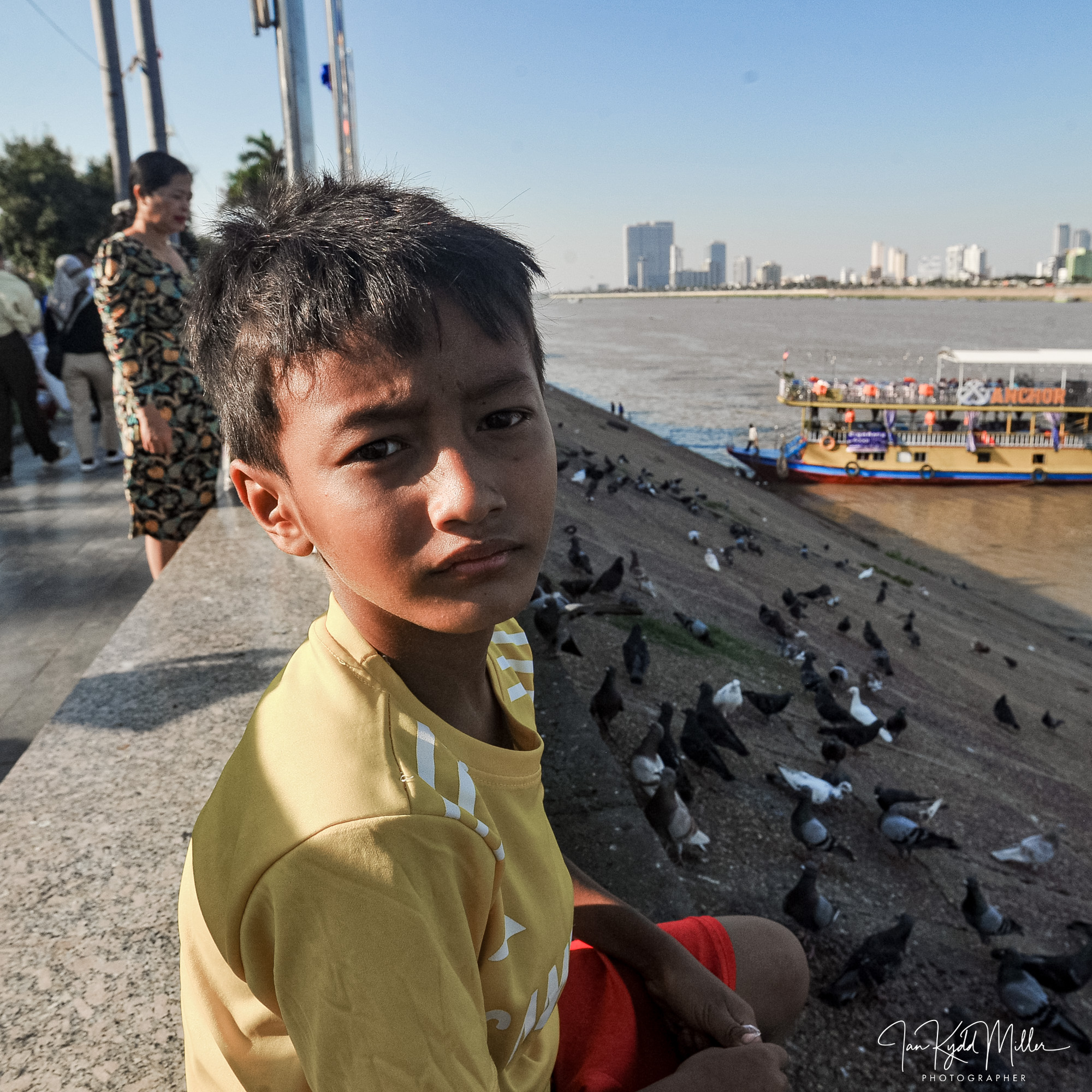
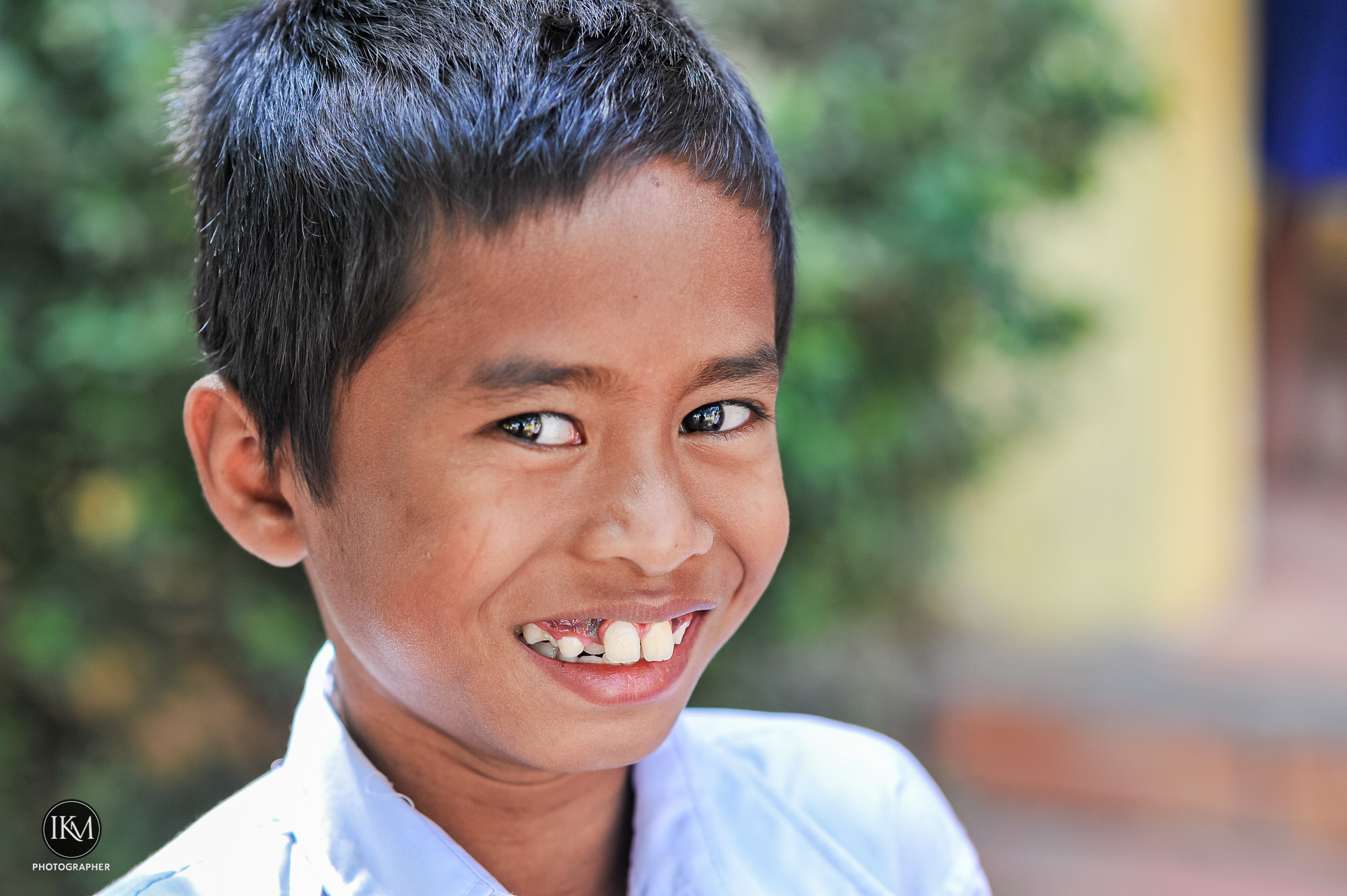
A young boy with black hair sitting outside, wearing a white shirt and a yellow undershirt. He has a piece of plastic in his mouth and looks directly at the camera.

Good volunteer photography does not need to exaggerate suffering. If the work is genuinely valuable, the truth is usually powerful enough.

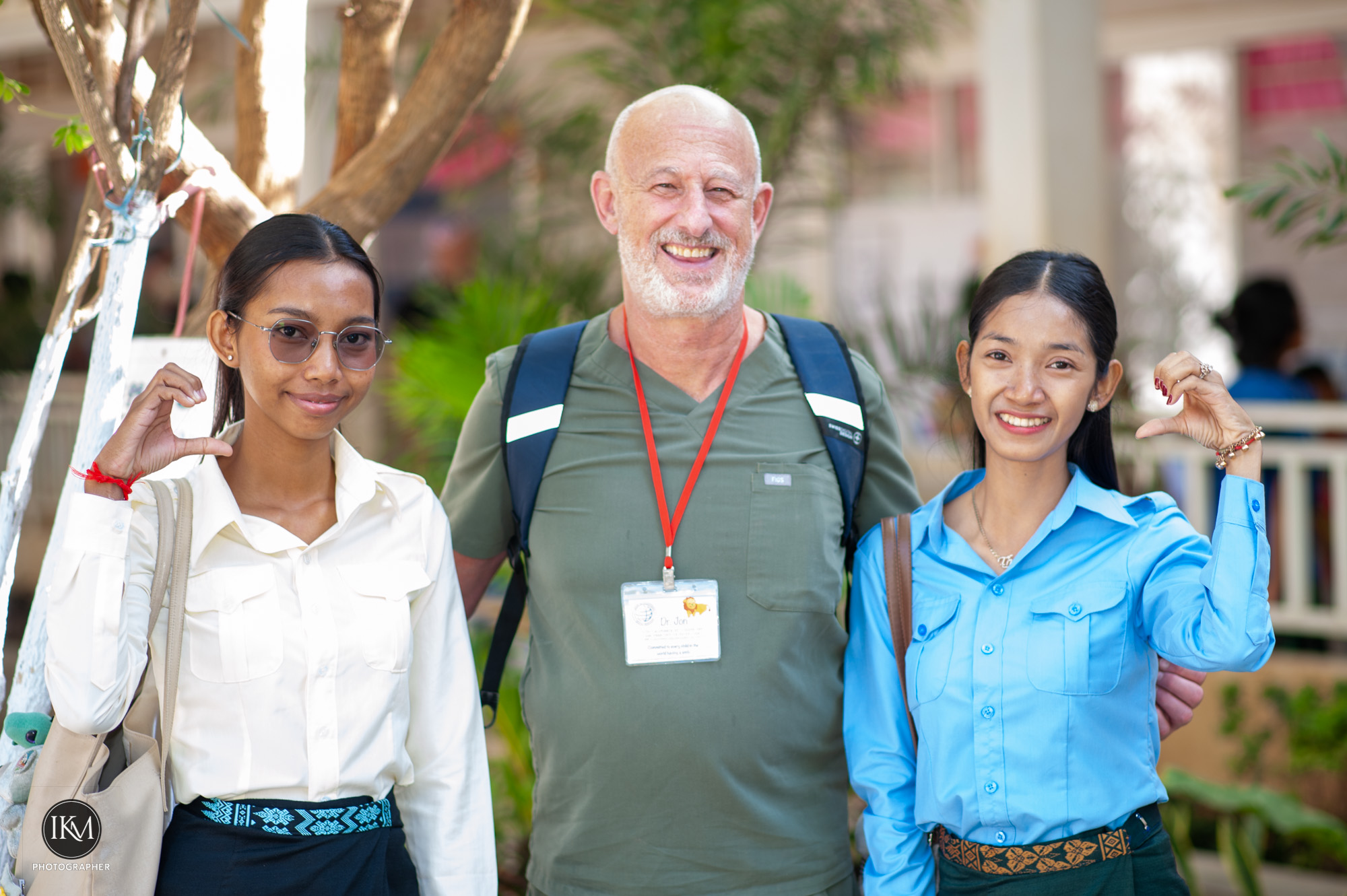
The photographer also has a responsibility to show the volunteers as workers rather than visiting saviours. Most successful projects depend upon local teachers, organisers, translators, drivers and medical staff. Visiting specialists may bring valuable skills and equipment, but they do not operate alone. Leaving local people outside the frame can create a misleading story in which help always arrives from somewhere else.

The camera should reveal cooperation.

Working as a volunteer photographer also means accepting that photography is not always the most urgent task. Sometimes equipment needs carrying, people need directing or a nervous child needs reassurance. There is little value in recording other people’s generosity while refusing to put down the camera and help.

The pictures still matter. Small organisations often struggle to explain their work. A strong and honest photographic record can help them reach supporters, attract volunteers and show donors where assistance has gone. It can preserve the history of a project long after the temporary clinic has been packed away.

But the usefulness of a photograph depends upon trust. The people running the project must trust the photographer not to obstruct their work. The patients must not feel hunted by the lens. The audience must be able to believe that what they are seeing is real.

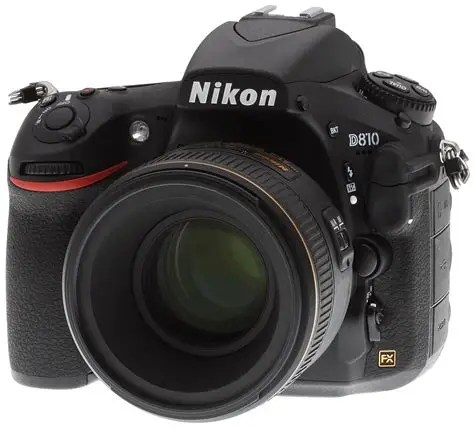
This is one reason I prefer to work quietly. I do not need every person to look at the camera. In fact, the most revealing pictures often happen when people have become accustomed to my presence and returned their attention to what they are doing. An old professional camera may be large and conspicuous, but patience can make even a large camera disappear.
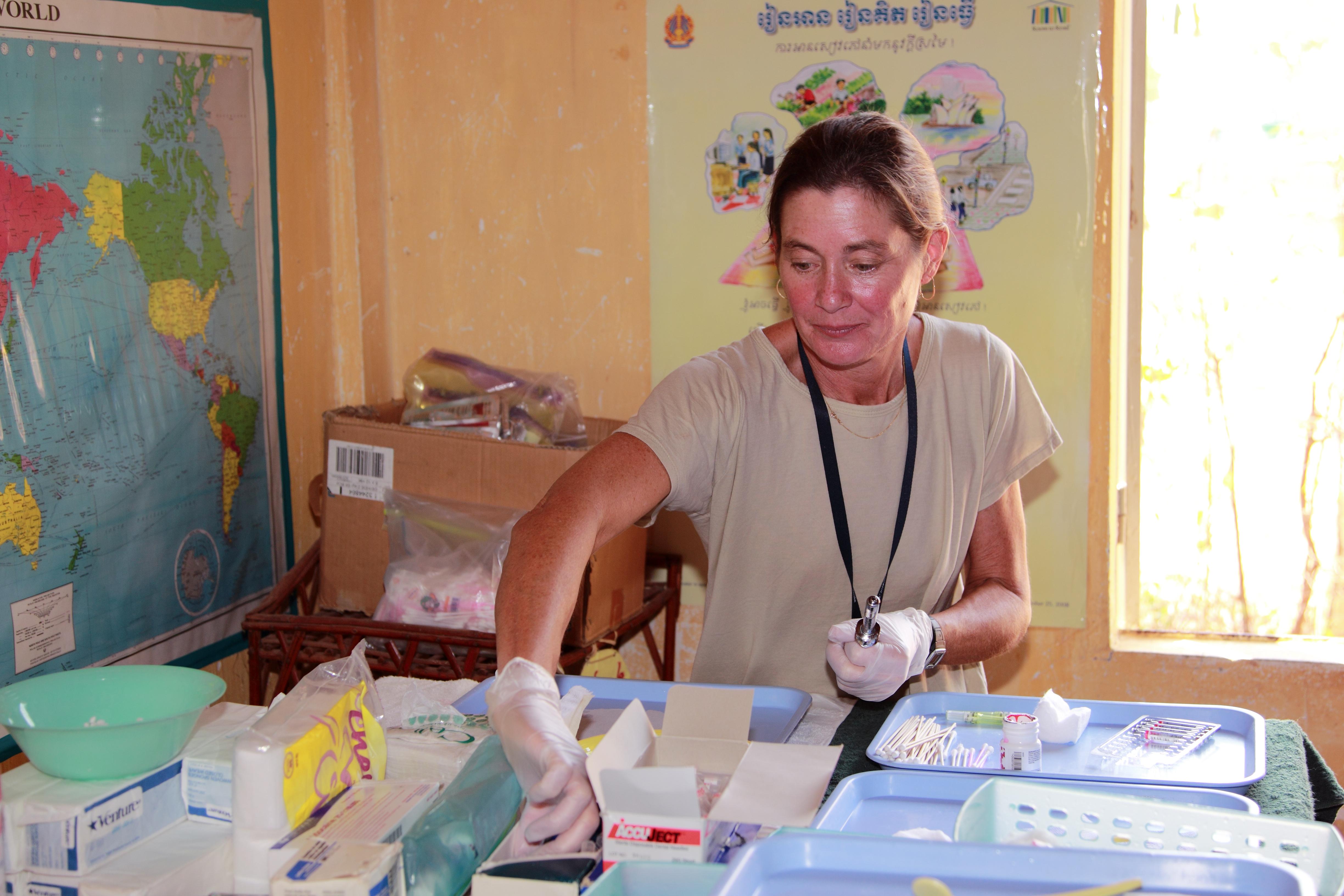
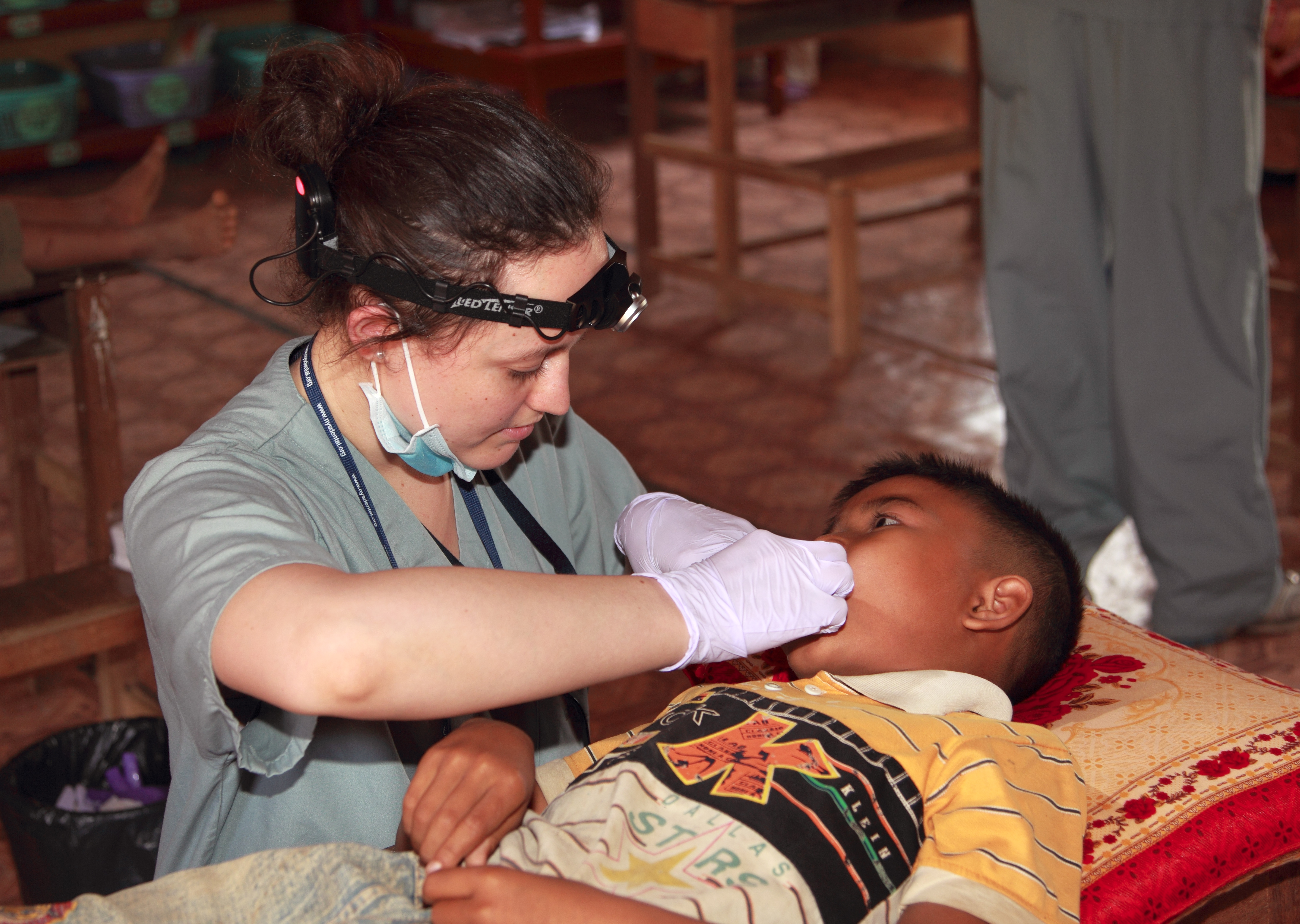
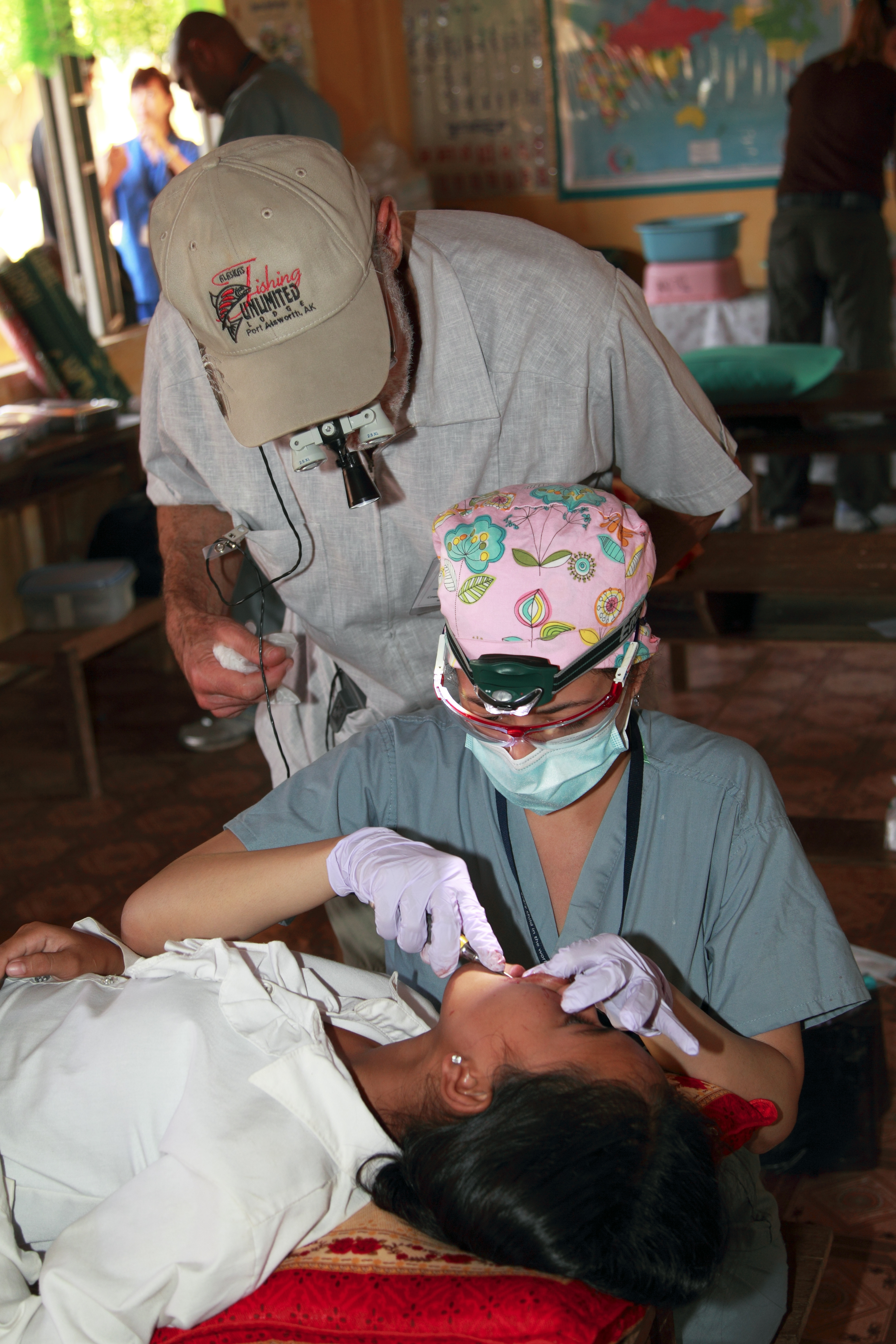
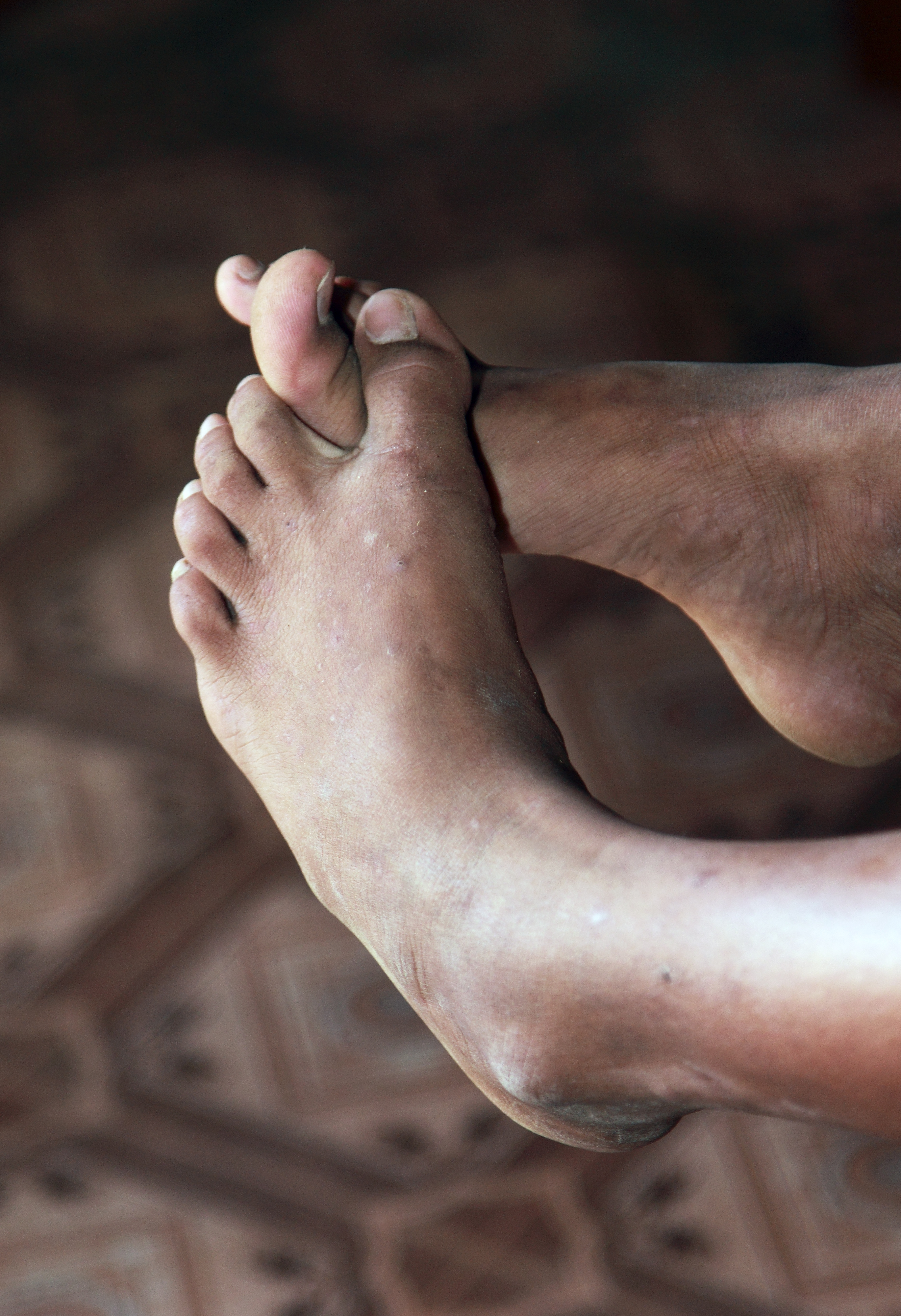
The work is not glamorous. Rooms are often cramped and badly lit. Backgrounds are untidy. Fluorescent lights create unpleasant colour, while masks and lowered faces make expressions difficult to see. There may be little room to move without interfering with treatment.

These are technical problems, but they should not become excuses. You use the available light, choose a position that does not obstruct anyone and wait for the elements to come together. The photograph does not need to be perfect. It needs to be truthful, clear and useful.
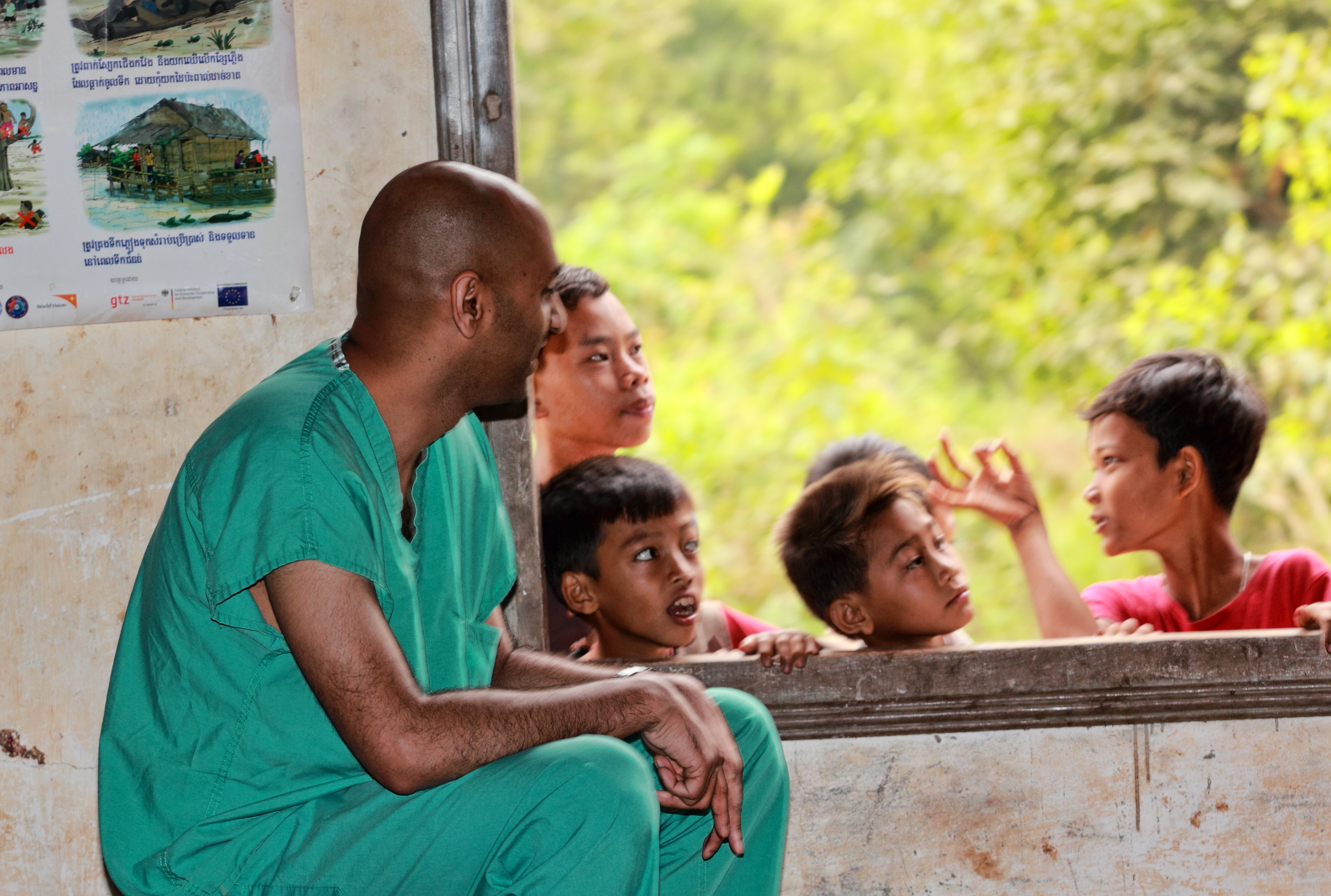
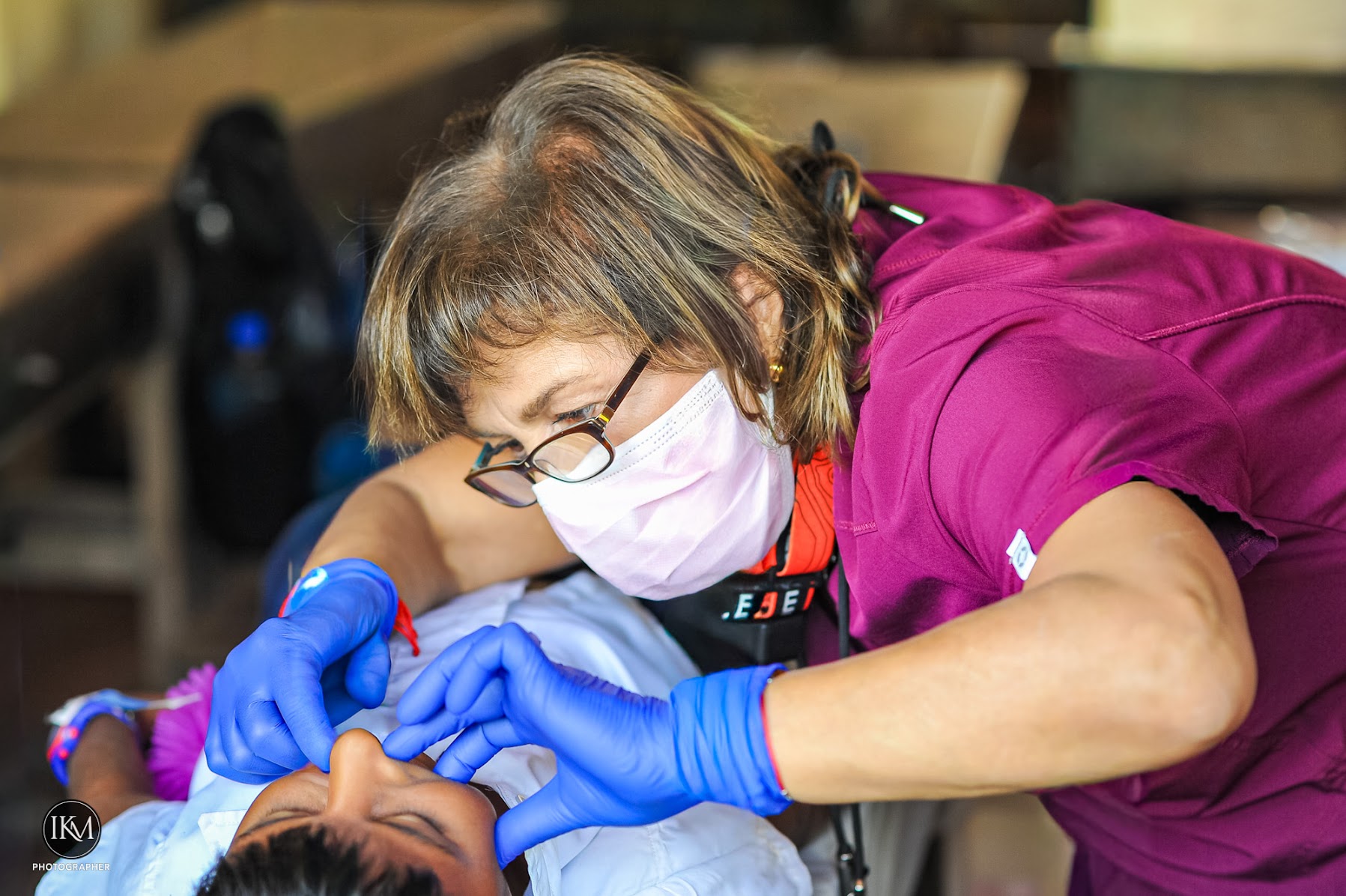
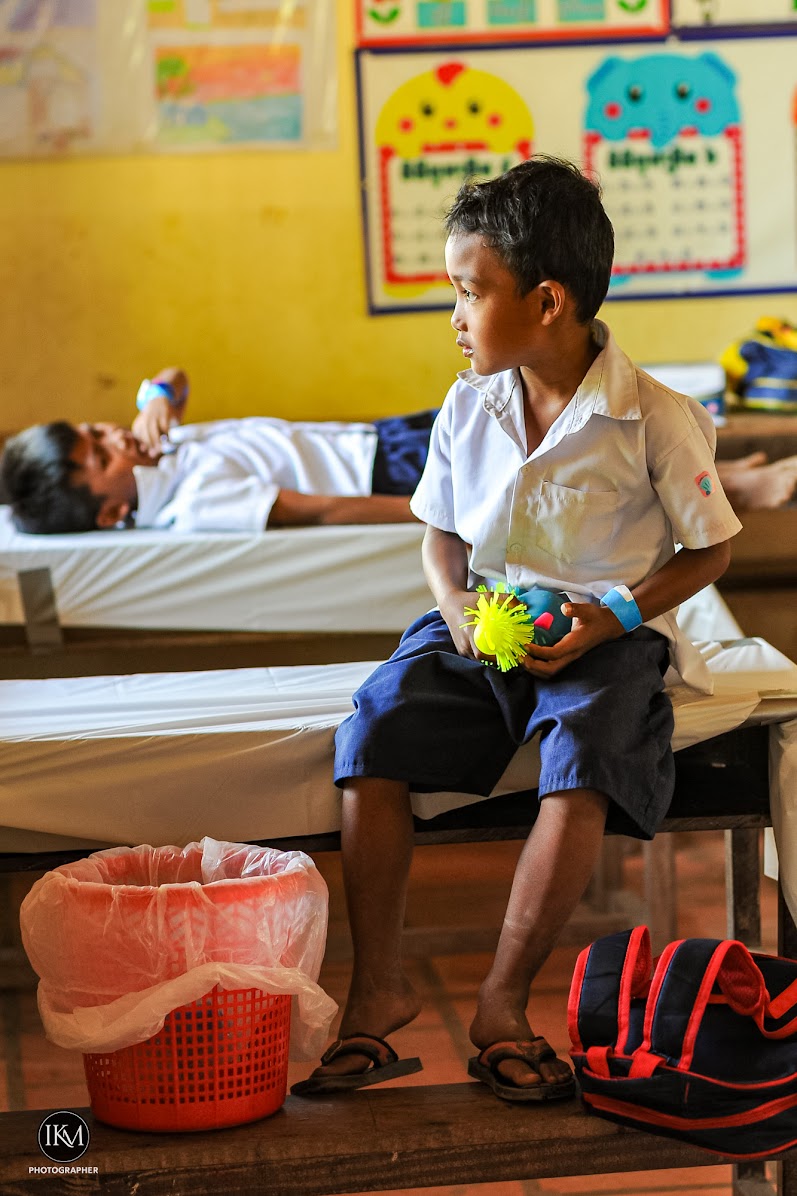
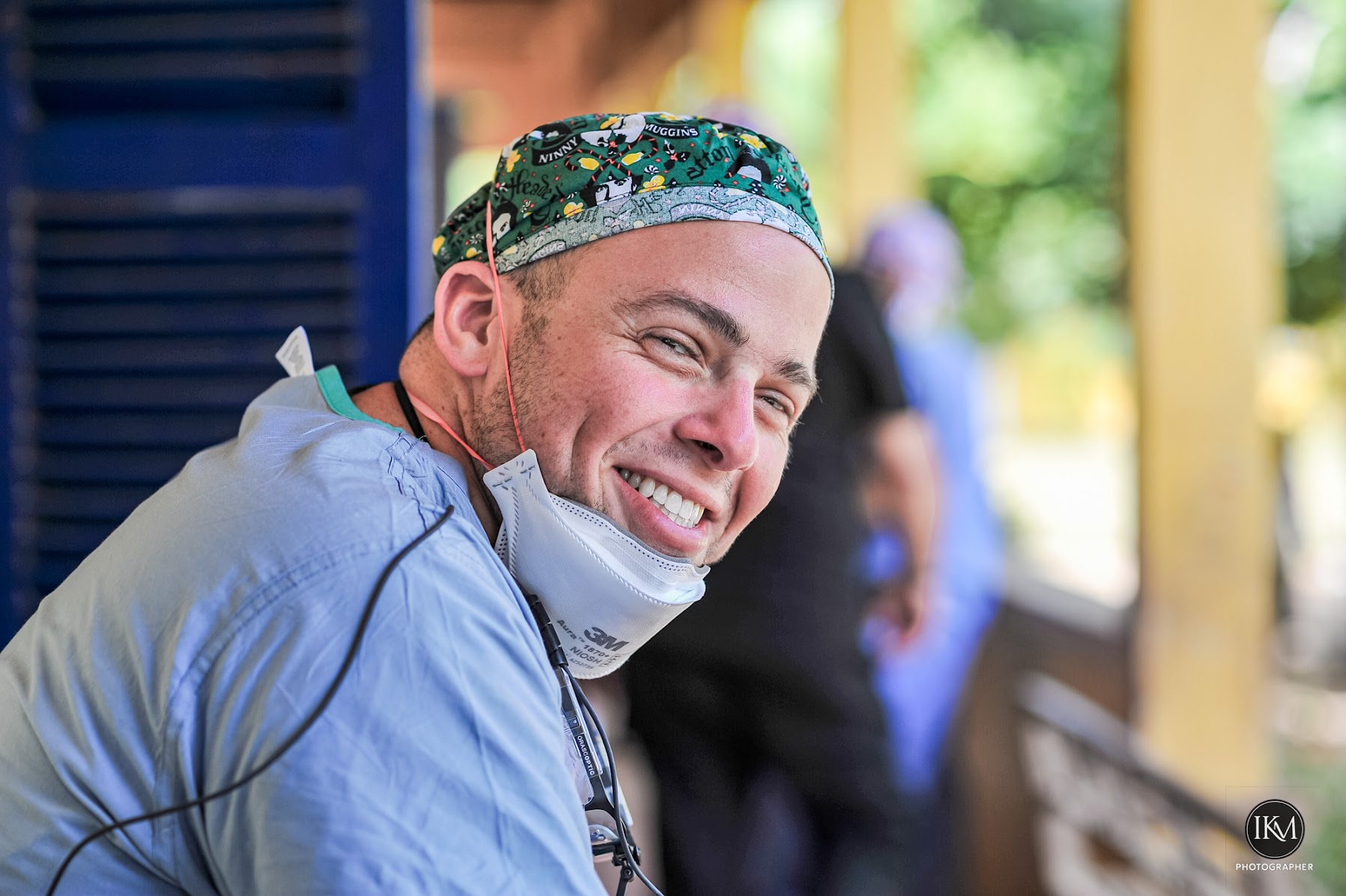
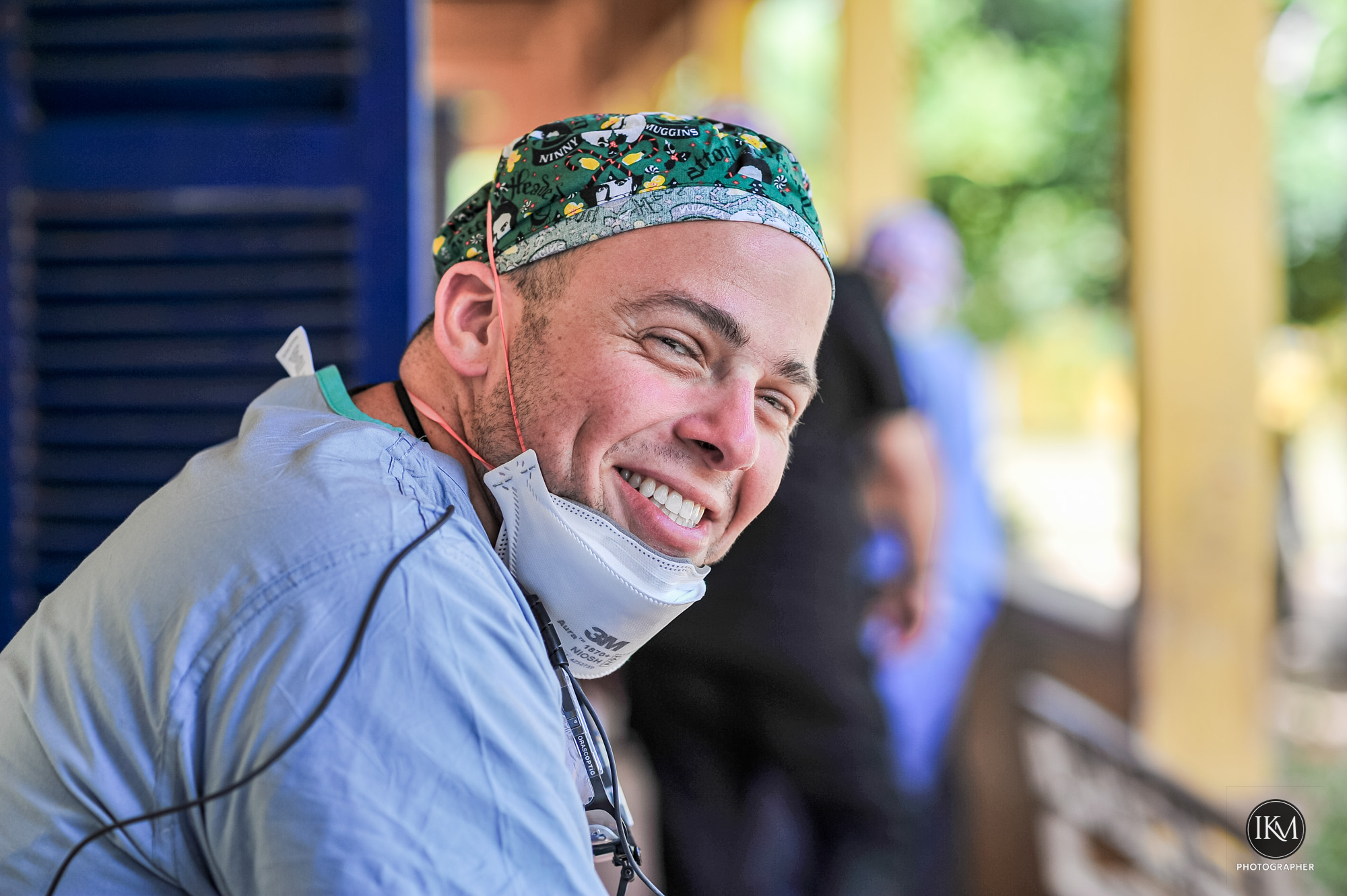
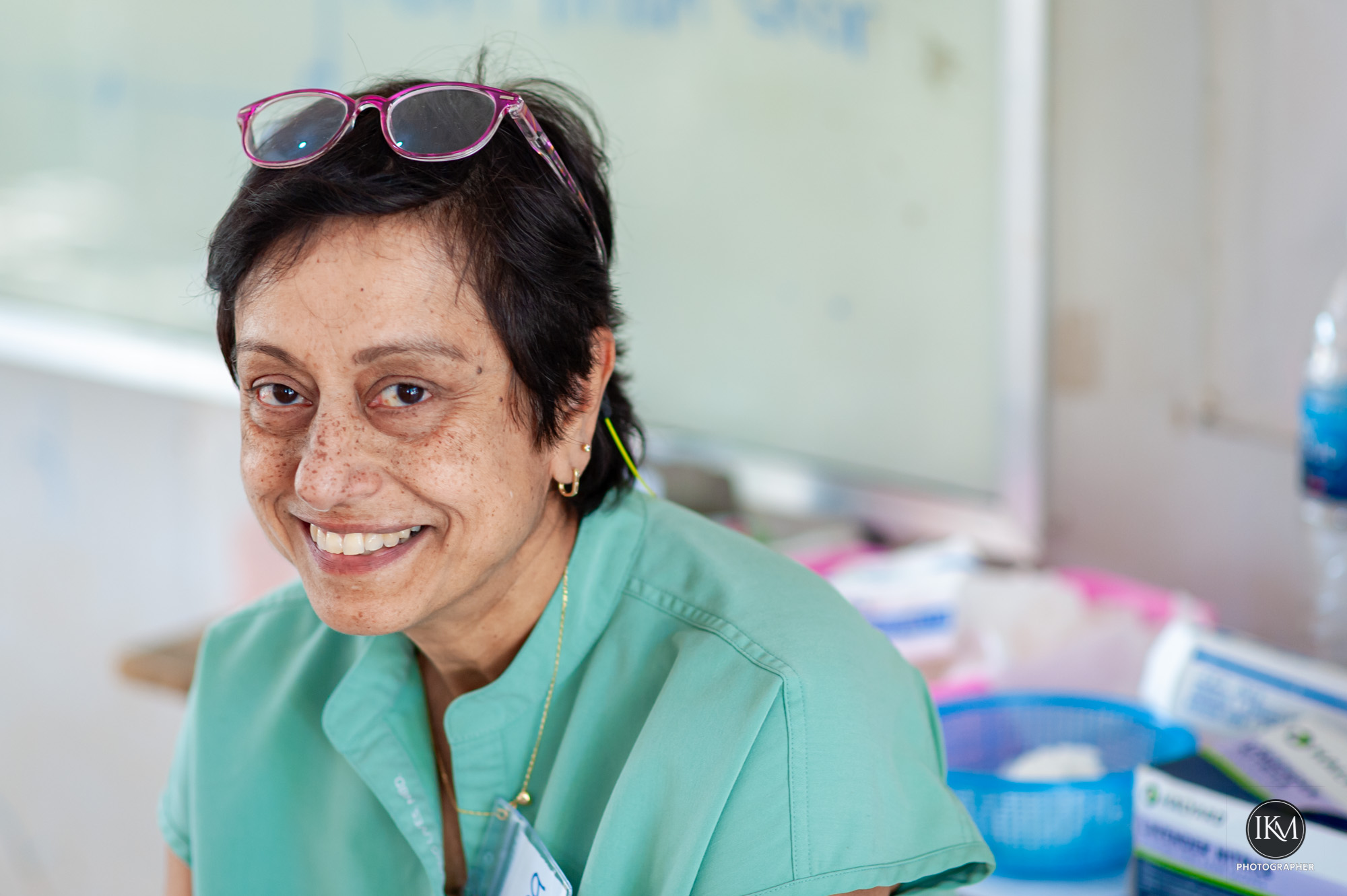
A healthcare worker in green scrubs sits indoors, looking out a window at four children gathered outside, engaged in conversation.

Volunteering with a camera taught me that usefulness can be a better measure of photography than applause. A picture does not have to win a competition or gather admiration online. It may only need to persuade one person to donate, encourage a dentist to volunteer or help an organisation explain what it accomplished.

Years later, the photographs become something else as well. They become a record of people who gave their time, knowledge and energy to strangers. They preserve the faces of the children, the concentration of the medical teams and the atmosphere of those temporary clinics.

They also remind the photographer that being present carries an obligation.

A camera allows us to enter other people’s lives, sometimes at difficult and vulnerable moments. That access should never be taken lightly. We owe something in return: honesty, respect and photographs that serve a purpose beyond ourselves.

Volunteering with a camera is not about being the most important person in the room. It is about understanding that you are not—and making pictures that honour the people who are
Volunteering with Kids International Dental Services

cambodia, cameras, nikon, opinons, thoughts, philanthropy, photography, pictures, voluntary

An Old Photographer’s View

There are assignments where the photographer stands outside the story, observing it carefully and trying not to disturb its natural shape. Then there are days when standing outside feels inadequate.
Working alongside Kids International Dental Services belongs to the second category.

I am not a dentist. I cannot diagnose an abscess, repair a damaged tooth or calm a frightened child with the confidence of someone who has done it a thousand times. What I can do is make a record. I can watch, listen and photograph the human story unfolding around the clinical work.

That may sound like a modest contribution, but voluntary organisations also need witnesses. Treatment helps the child sitting in the chair. Photography can help explain why another team must return next year.

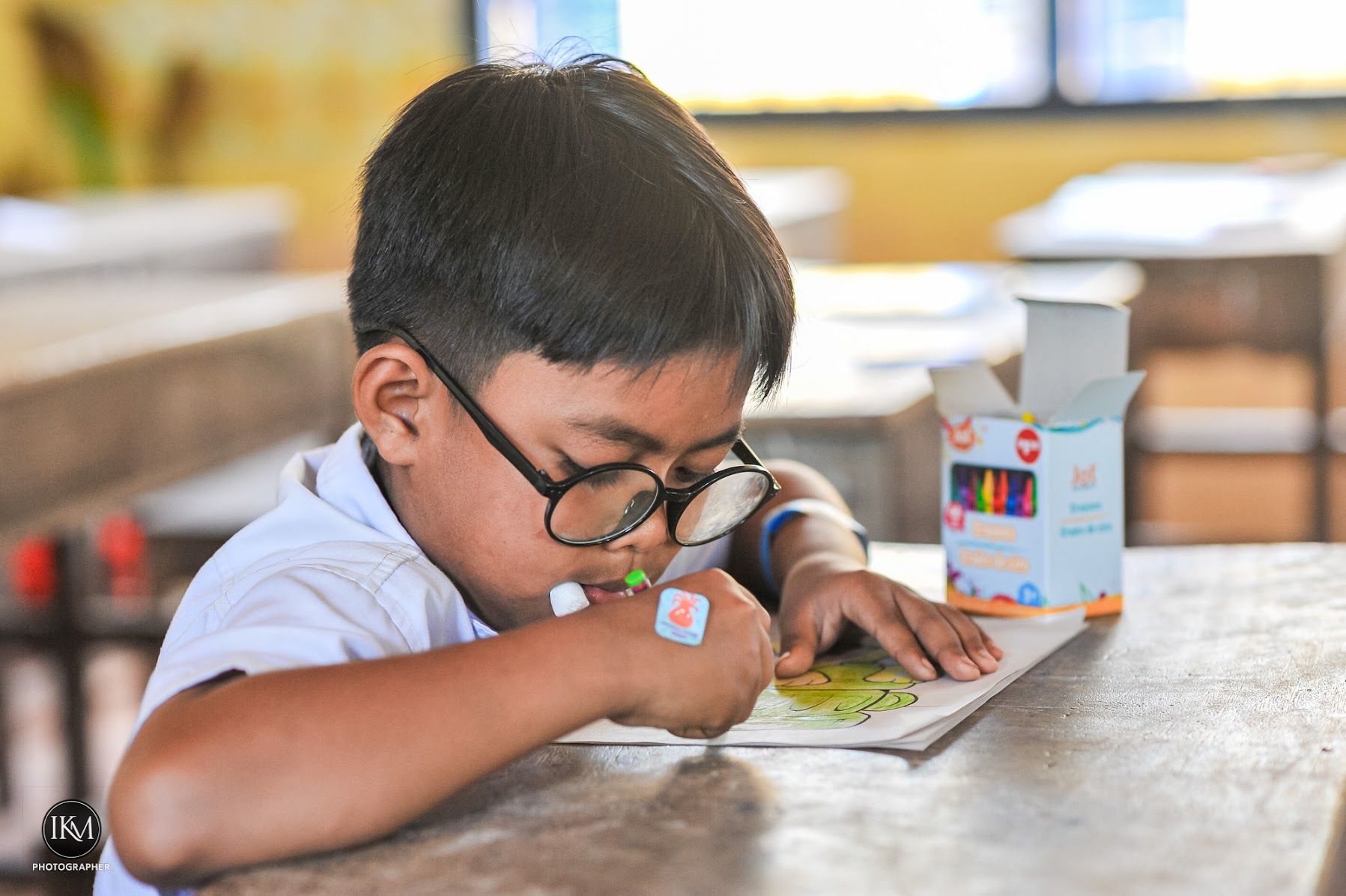
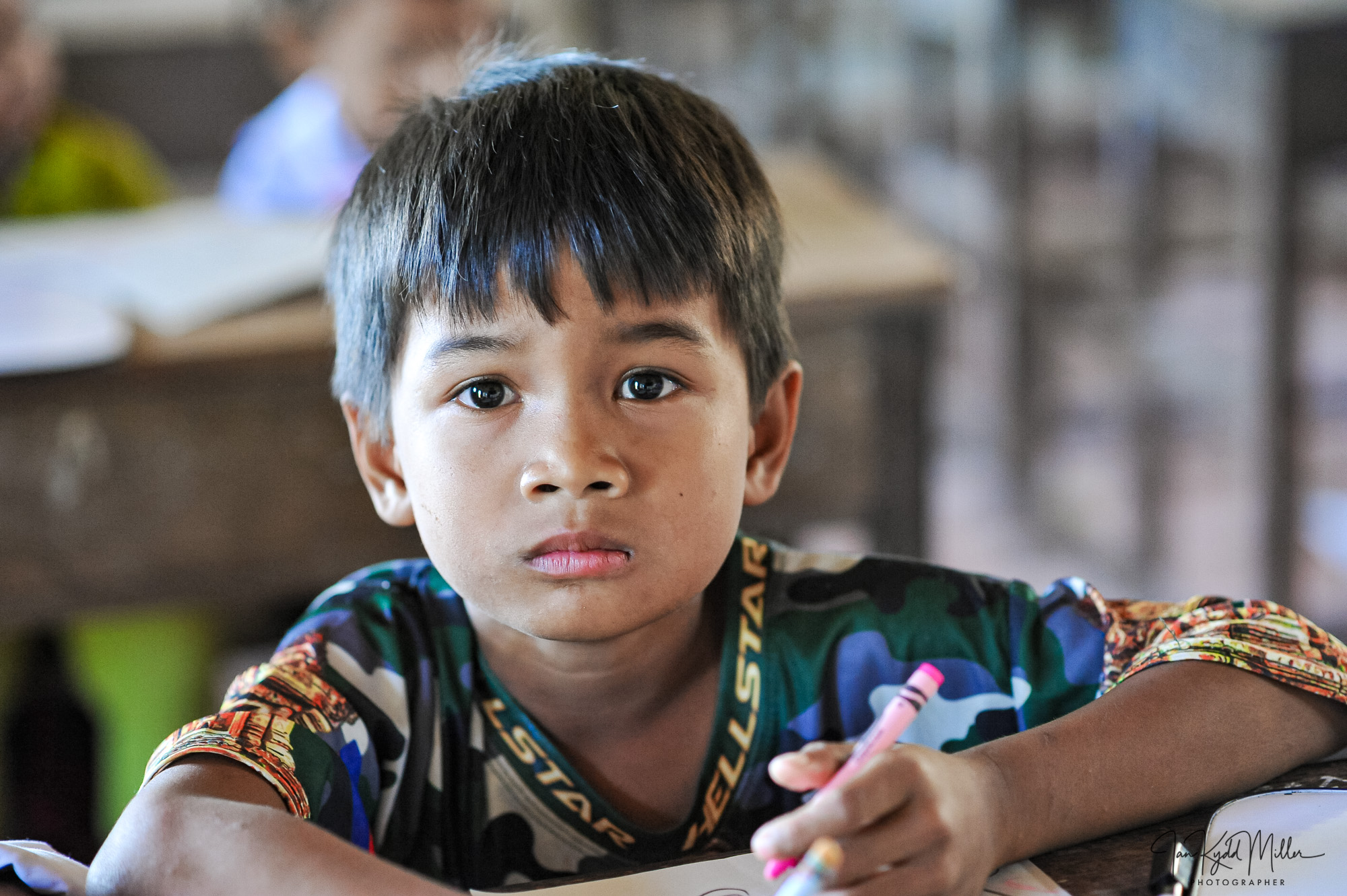
A close-up of a young boy with a serious expression, sitting at a desk, holding a pen, in a classroom setting.

Kids International Dental Services—usually known simply as KIDS—grew from a volunteer dental mission in 2009. A mixed group of dental and non-dental volunteers returned home from that journey convinced that the experience should become something more permanent.
Their idea had two equally important parts. The first was straightforward: provide free dental care to children who would otherwise receive little or none. The second was more ambitious: introduce young dentists and dental students to humanitarian service early enough for it to become part of their professional lives.
It was never meant to be a one-off charitable adventure followed by a few photographs and a sentimental speech. The intention was to build a culture of returning, mentoring and taking responsibility.

The organisation became a registered American nonprofit based in San Francisco. Cambodia, Guatemala and the Philippines were among its original areas of work. KIDS later expanded its missions to Cape Verde, Haiti, South Africa, Mongolia and Morocco. The organisation says that its volunteers have treated several thousand children across eight countries while developing a network of mentors, many of whom first joined as students or newly qualified dentists. KIDS’ official history

There appears to have been volunteer work associated with the KIDS name before the organisation’s formal establishment in 2009. A report on a 2012 Cambodia mission said that some children at Phnom Penh organisations had already been receiving KIDS-supported care for several years. The safest reading is that the organised charity emerged from an earlier tradition of volunteer dental work rather than appearing fully formed on a particular morning.

That is often how these things begin. Not in a grand office with a strategic plan, but with a few tired people coming home from somewhere difficult and deciding they cannot simply forget what they have seen.


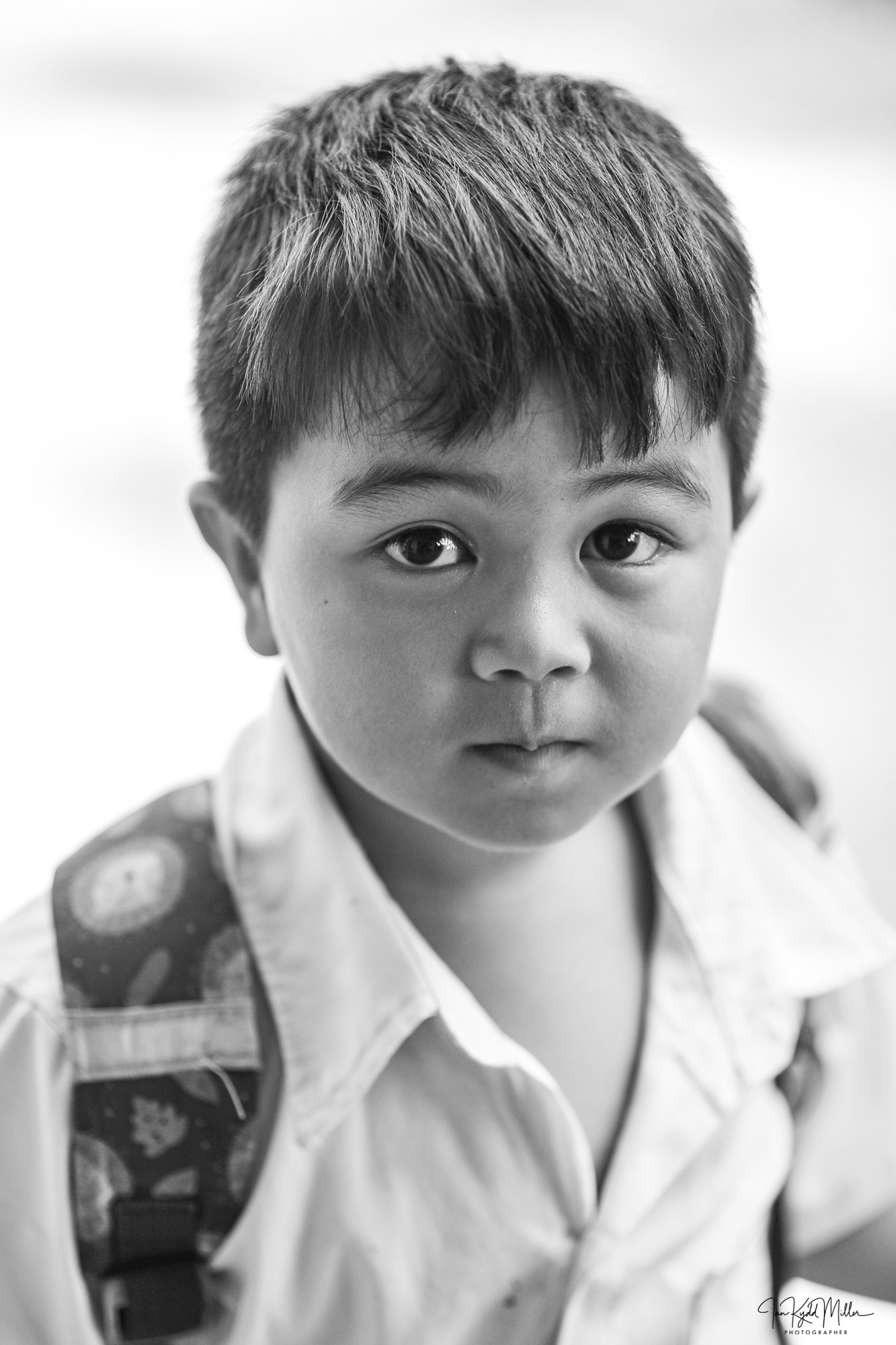
Close-up portrait of a young boy with a serious expression, wearing a white shirt, captured in black and white.

In Cambodia, the need is not difficult to find. Dental treatment remains unaffordable or inaccessible for many poor families, particularly outside the larger towns. A small cavity can be ignored because there is no money, no nearby clinic and sometimes little understanding of what it may become. The cavity grows. Pain arrives. Infection follows.

A child in dental pain does not sleep properly. He may struggle to eat, lose concentration at school and become frightened of a condition nobody around him can cure. What appears on a medical form as “tooth decay” can quietly interfere with his education, confidence and daily life.

KIDS missions bring together dentists, hygienists, students, assistants and general volunteers. Classrooms, community buildings and other borrowed spaces may become temporary clinics. Equipment is unpacked, workstations assembled and children examined in numbers that would exhaust most ordinary practices.

During a 2012 mission, an international KIDS team treated children in Phnom Penh and in Prey Veng province. At a Buddhist monastery near the Vietnamese border, tables were adapted into makeshift dental units and the volunteers reportedly treated as many as 250 patients a day. The work included examinations, restorations, extractions and preventive care. Contemporary report on the 2012 mission

Those figures matter, but they are not what I remember most.
I remember the waiting.


A young boy with short hair and a serious expression is looking directly at the camera. He is wearing a white shirt and has a backpack with a colorful strap.

Children waiting for a dentist have a particular expression. It is part curiosity, part suspicion and part quiet calculation. They watch the child ahead of them. They study the gloves, masks and unfamiliar instruments. They listen for any sound that might confirm their worst expectations.

A photographer has to be careful here. A nervous child is not photographic material laid on for our benefit. Fear should not be exaggerated to manufacture an emotional picture. Poverty is not a studio backdrop, and voluntary work should never become a performance in which the visitor is made heroic and the local child reduced to a grateful recipient.

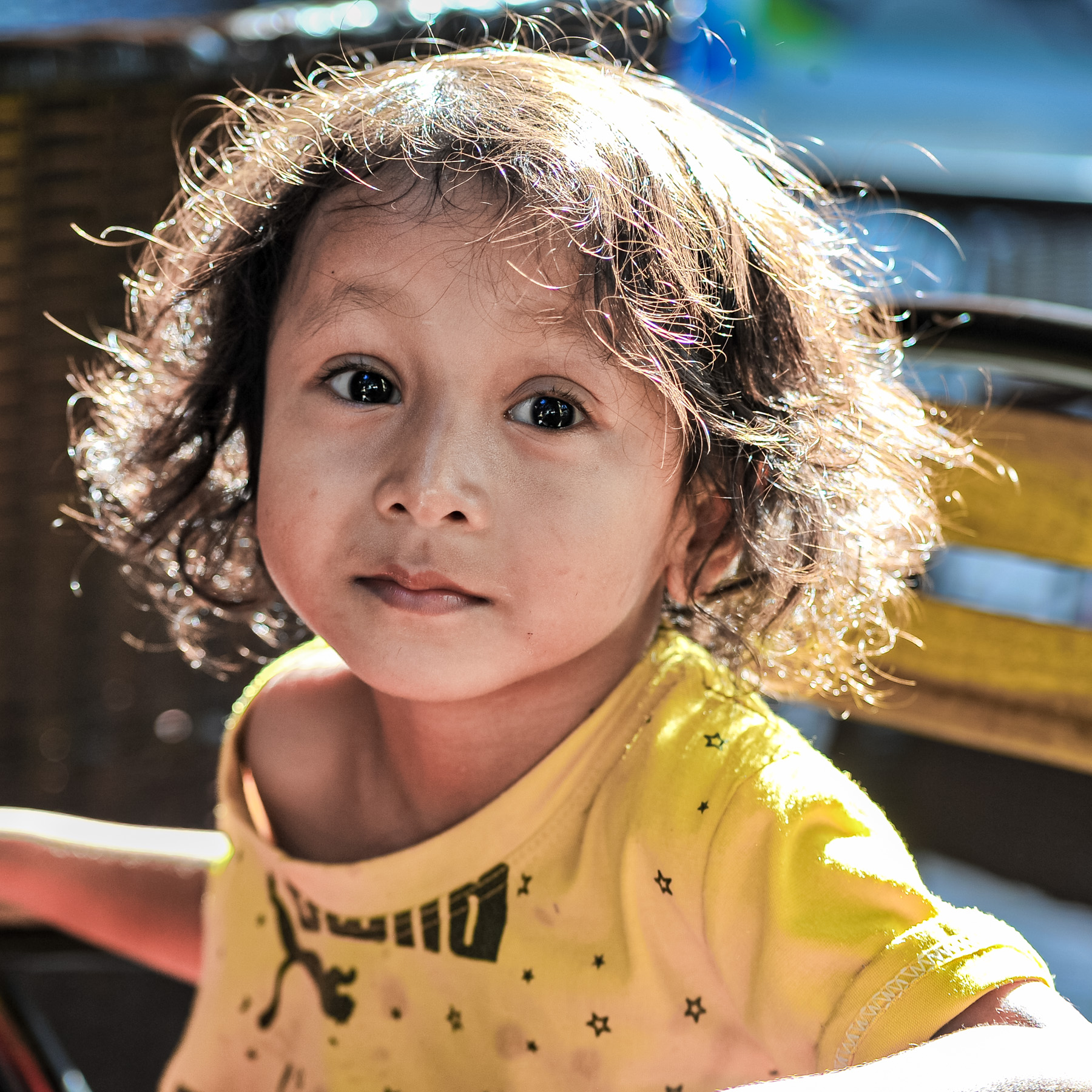
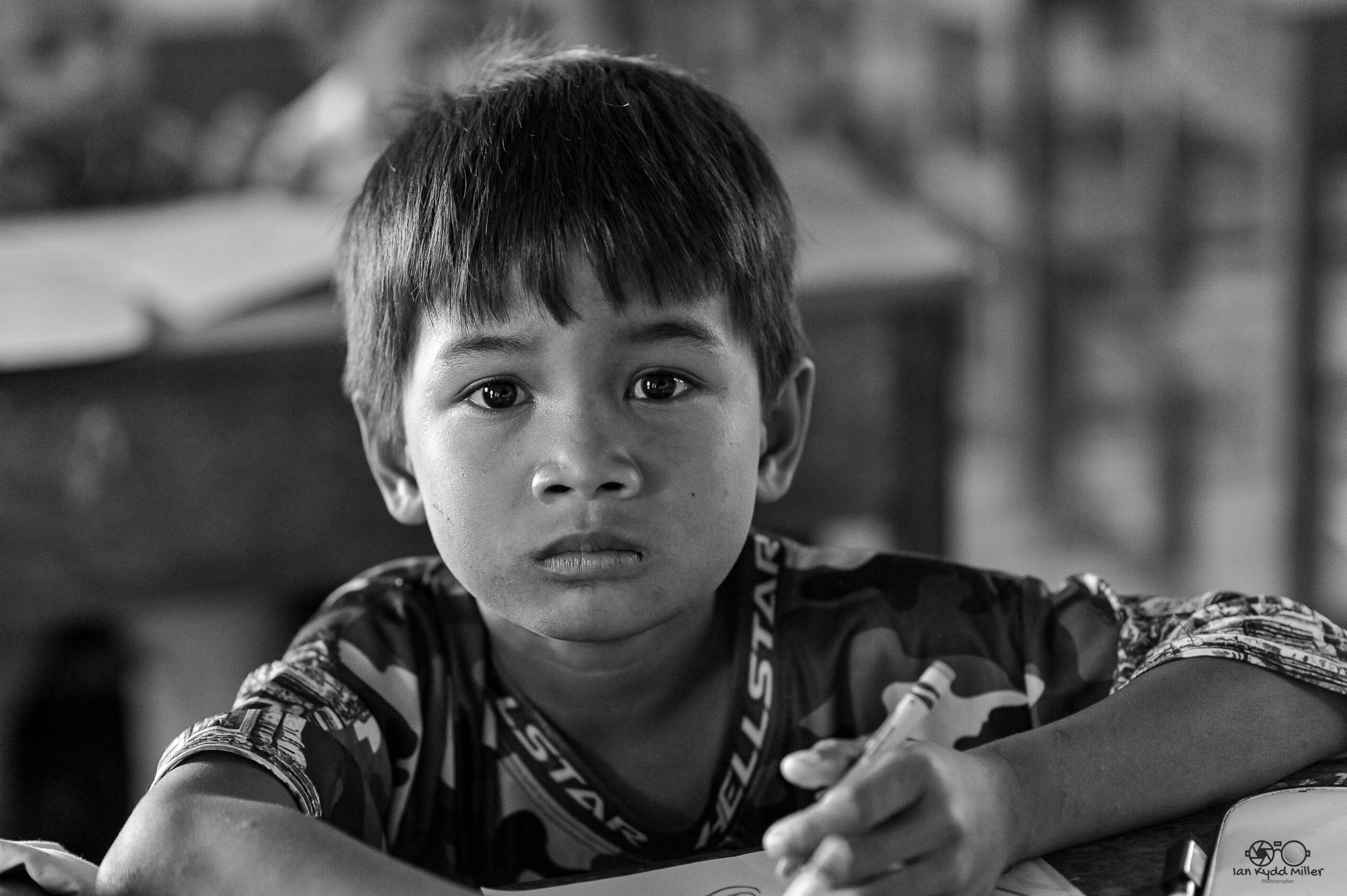
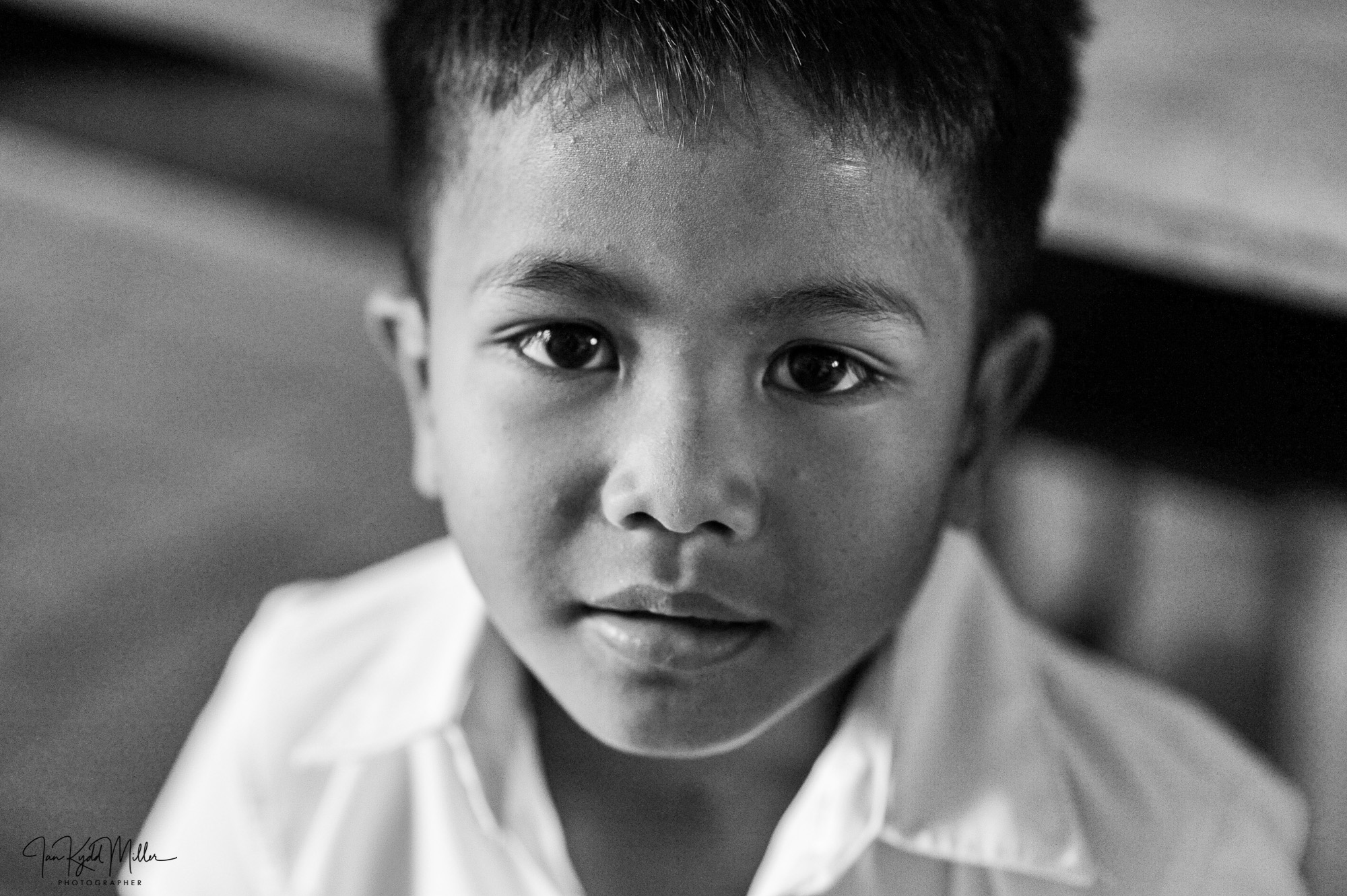
That is why I kept returning to the faces.

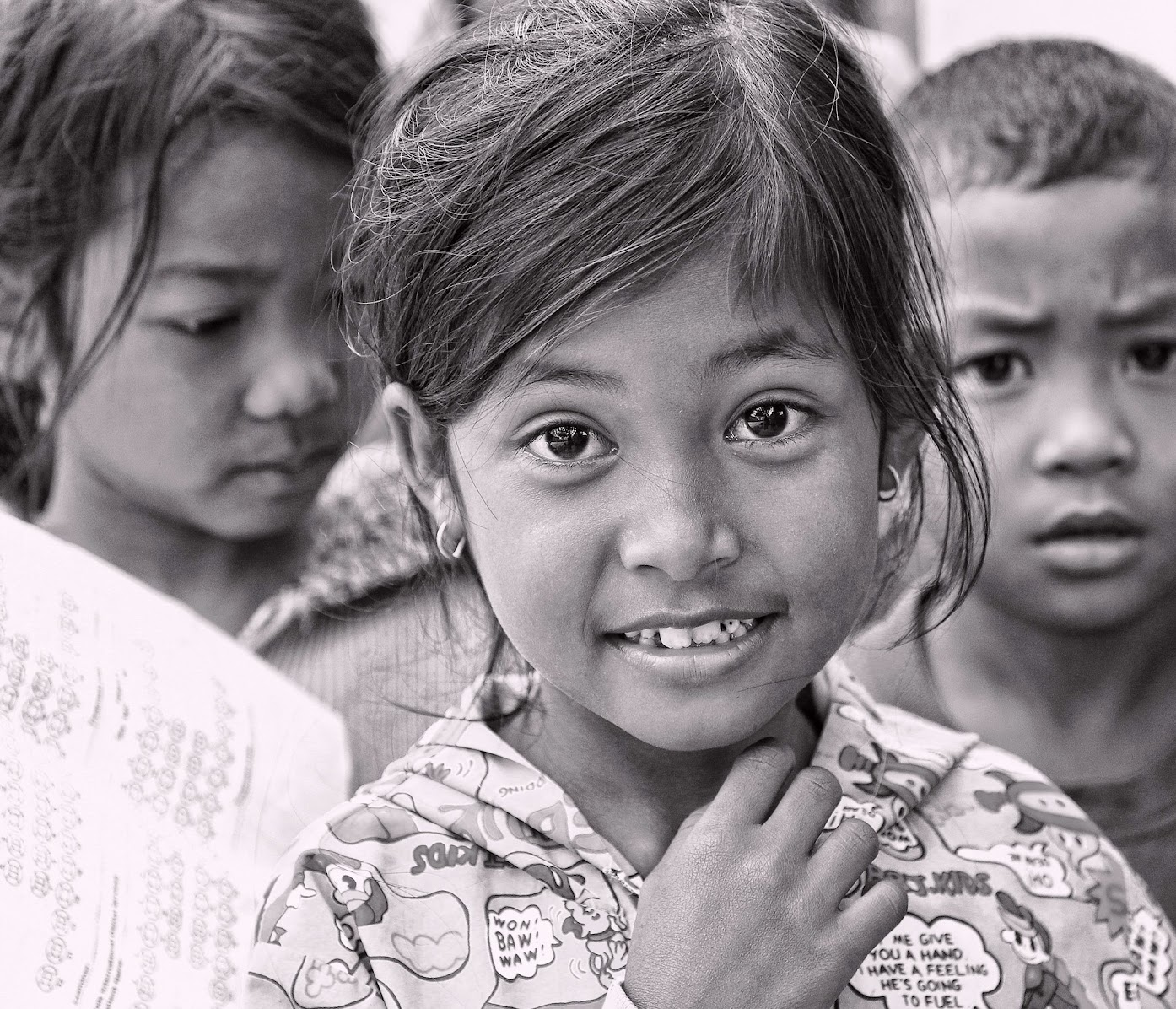
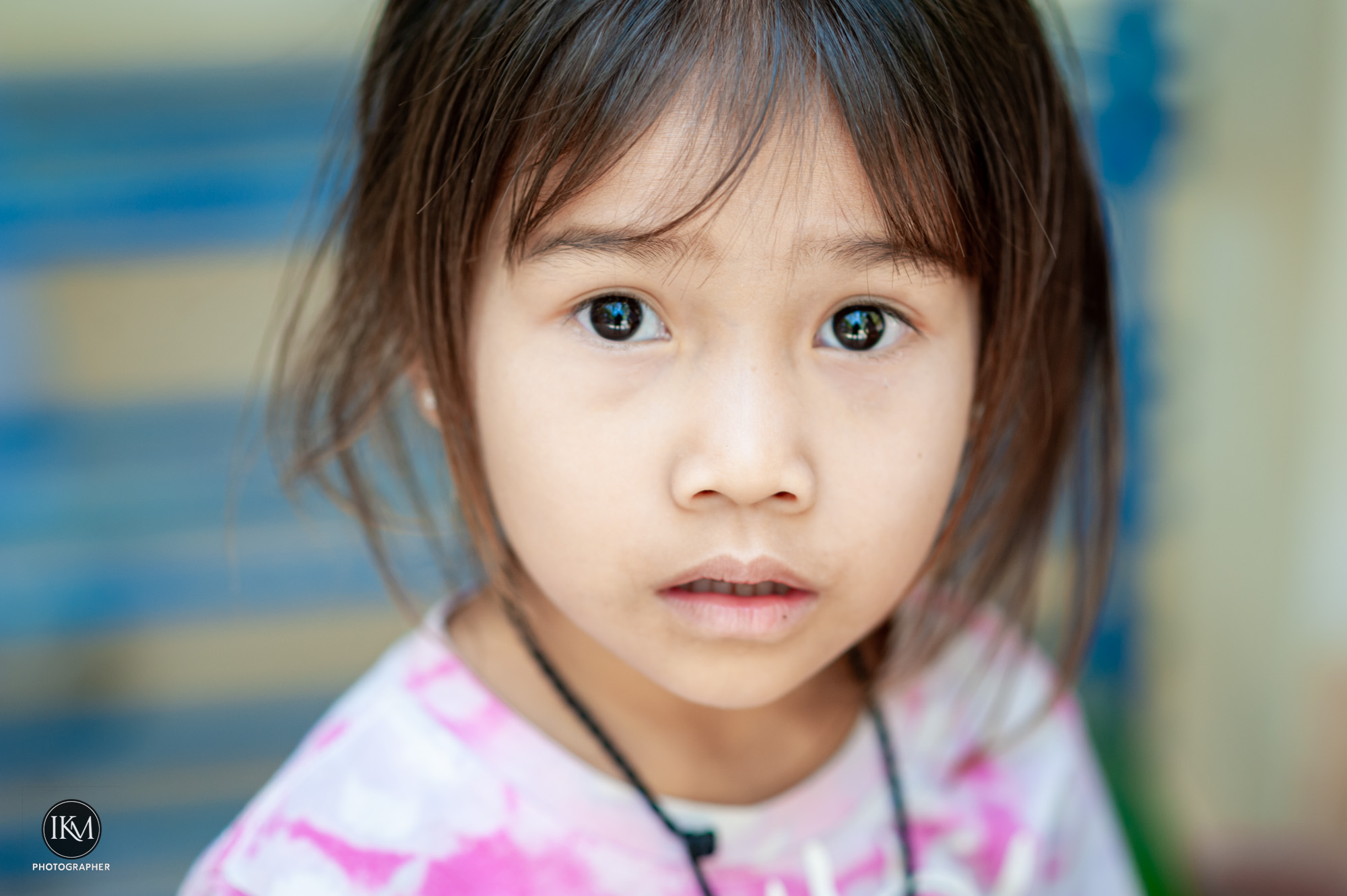
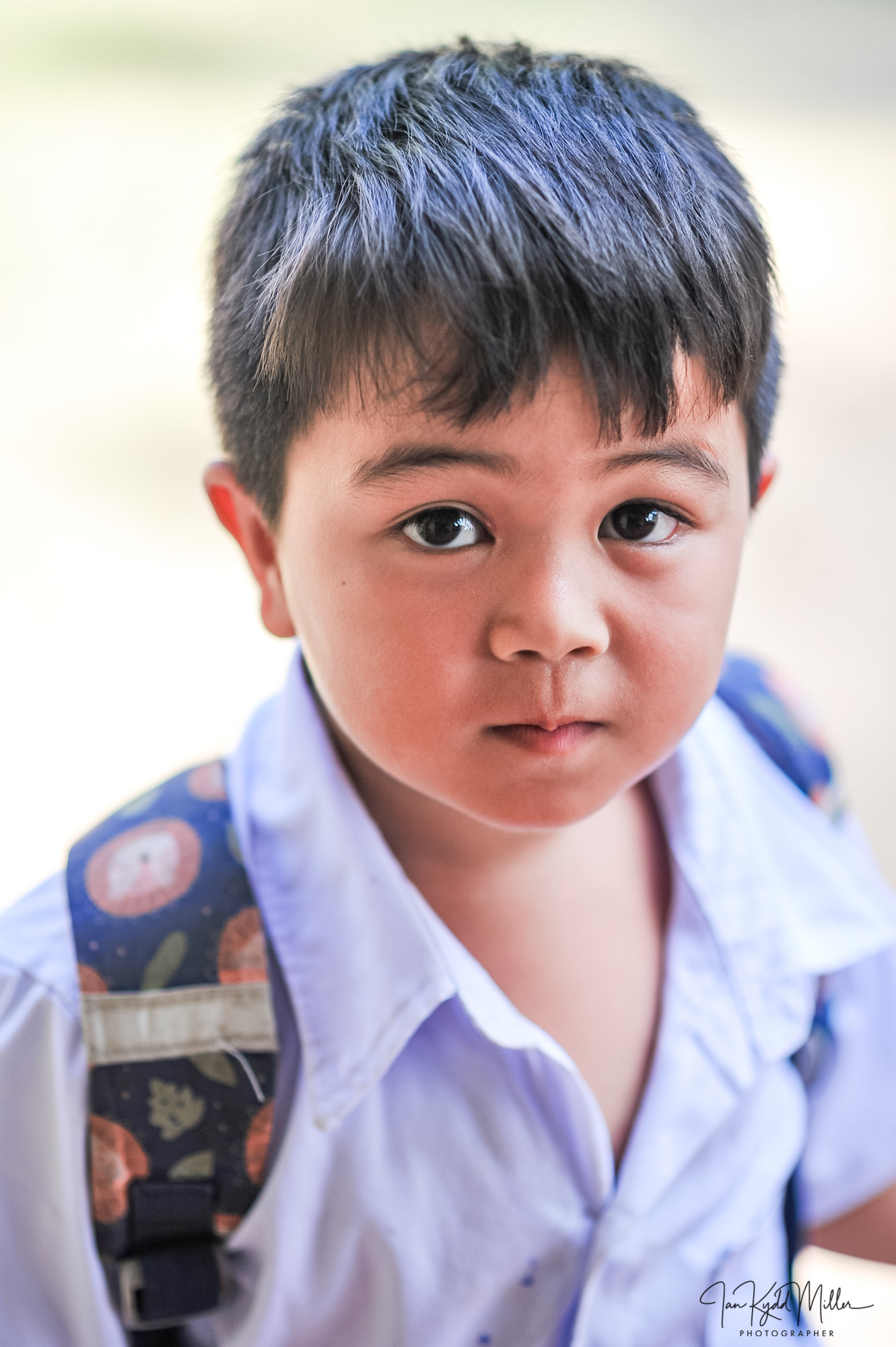
The first three photographs are not pictures of dentistry in the obvious sense. There are no instruments, white coats or open mouths. They show children waiting, looking and thinking. Each face restores individuality to a story that could easily become a parade of statistics.
The camera must not steal their dignity. If a picture depends upon humiliation, helplessness or the child’s inability to object, it is probably the wrong picture.

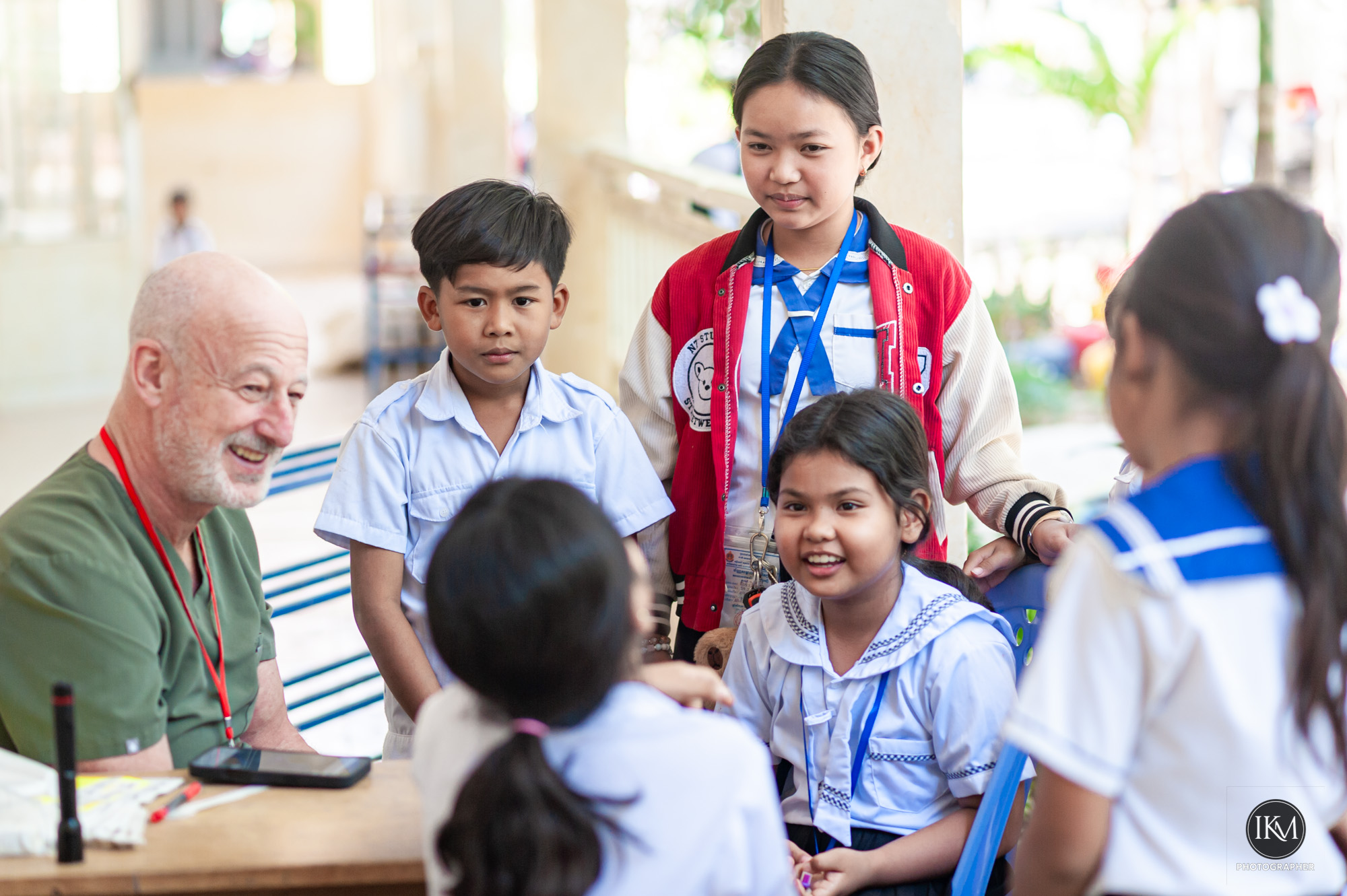
My role was to remain present without becoming the centre of attention. I watched the relationship between the volunteers and the children: a hand placed gently on a shoulder, an explanation delivered through an interpreter, a joke used to break the tension. The best volunteers did not treat the children as units passing through a system. They recognised that reassurance was part of the treatment.


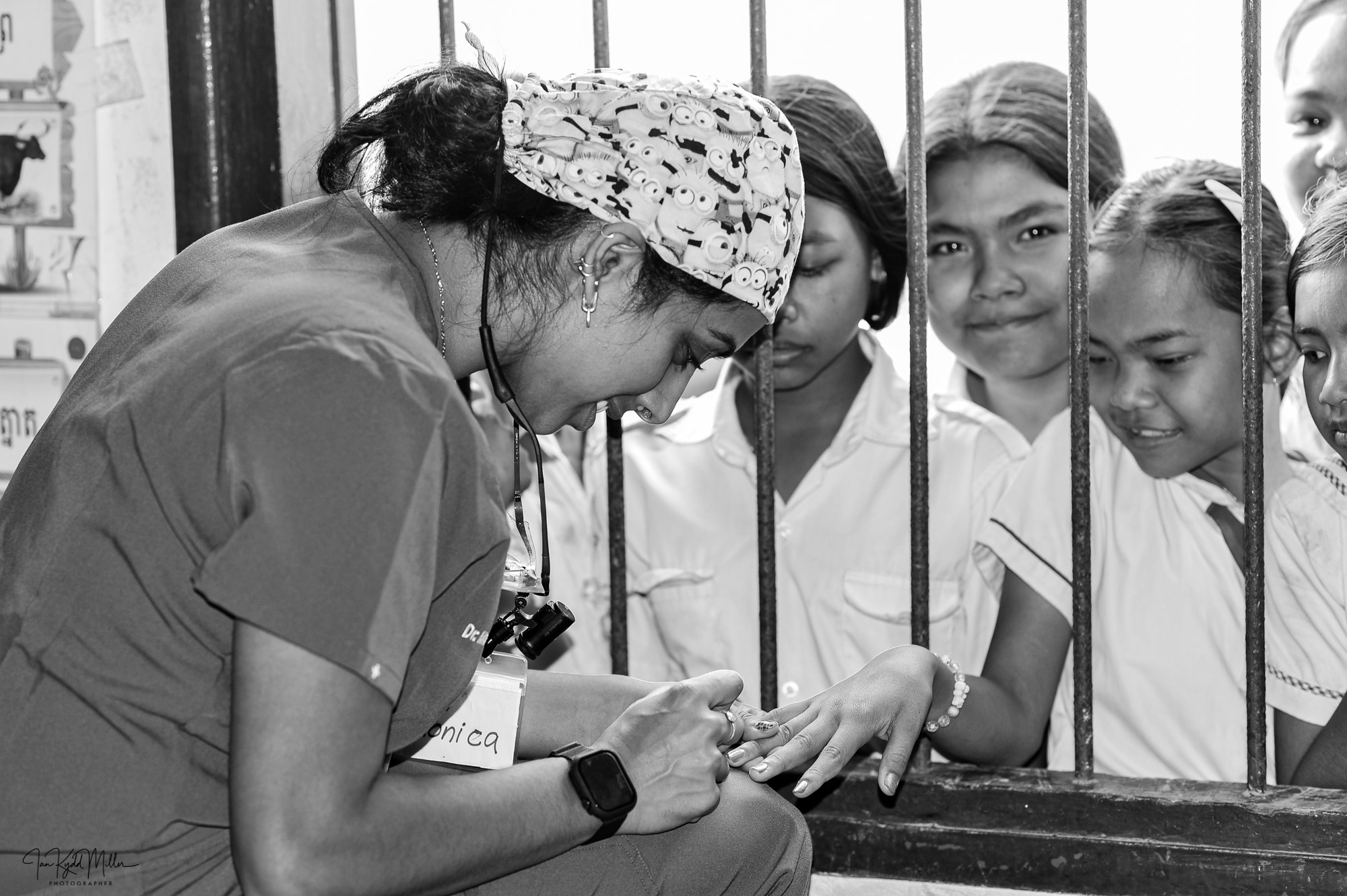
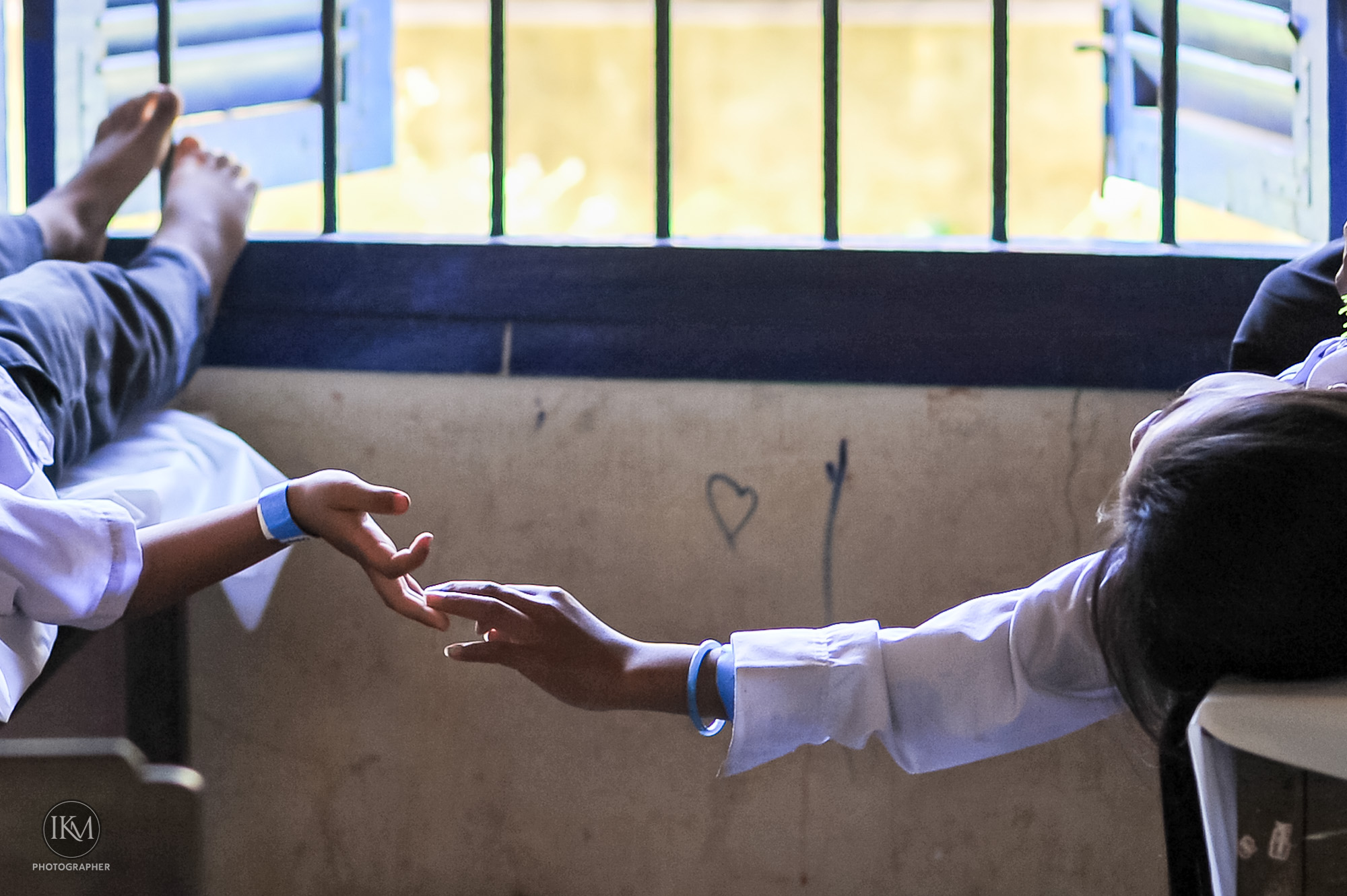
A healthcare worker in scrubs is examining the hand of a child through a barred window, while several other children watch attentively.

One of my favourite photographs from the day is not of dental treatment at all. A volunteer is attending to a girl’s fingernails while other pupils crowd behind the railings to watch. It is a wonderfully ordinary moment amid the organised seriousness of the mission.

That small scene says something about volunteering that official reports seldom capture. Humanitarian work is made from hundreds of gestures that do not appear in the final totals. Someone sorts supplies. Someone translates. Someone keeps the queue moving. Someone notices that a child is frightened. Someone kneels down and talks to her at eye level.

The organisation’s wider purpose reflects this. KIDS describes its goals as educating communities about oral health, empowering them to protect children with the resources available, inspiring volunteers and returning to maintain relationships. KIDS’ mission and goals

Treatment brings immediate relief, but education gives that treatment a chance to last. A filling or extraction may deal with today’s pain. Toothbrushes, fluoride, demonstrations and clear advice may prevent tomorrow’s.

We should still be honest about the limitations. A visiting dental team cannot repair an unequal health system. A week of treatment cannot reach every child, and follow-up care is difficult when families live far from a permanent clinic. Portable equipment, unfamiliar locations, language differences and large numbers of patients all complicate the work.

Volunteer dentistry is not a substitute for accessible local healthcare. At its best, however, it does something real: it relieves pain, treats infection, introduces preventive habits and builds relationships with local schools and organisations. Its value should neither be romanticised nor dismissed.


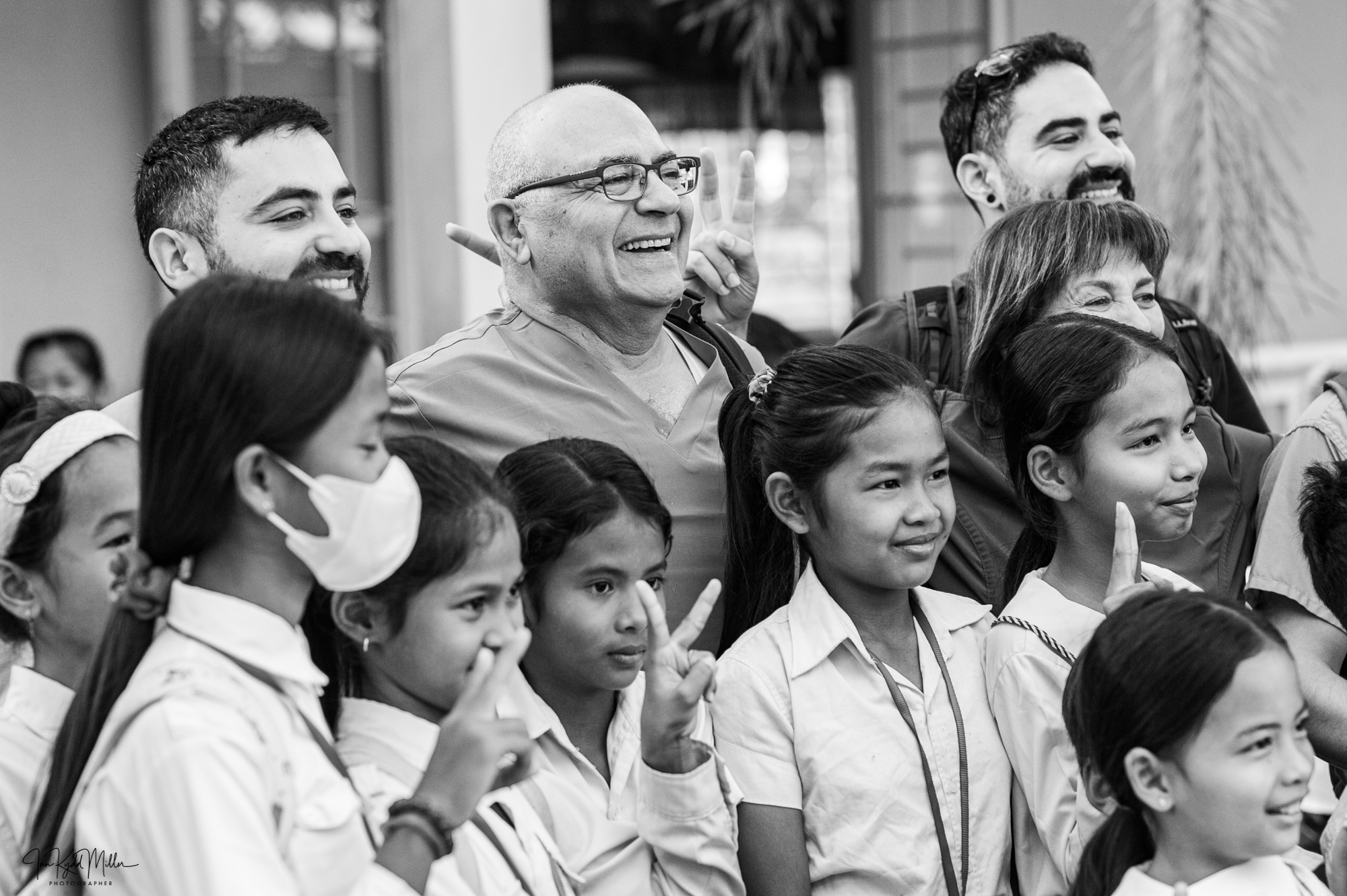
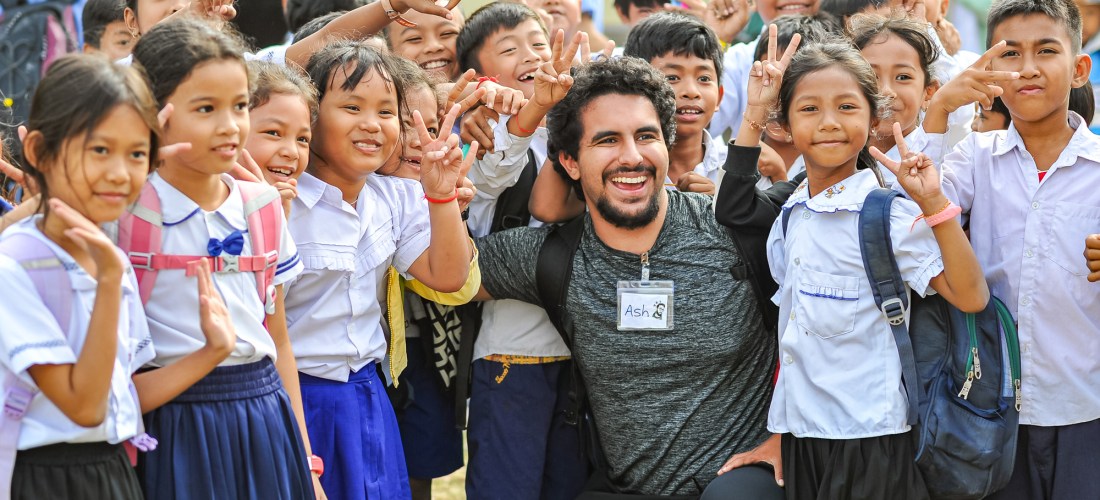
A group of smiling adults and children posing together for a photo, with some individuals making peace signs. The image is in black and white.

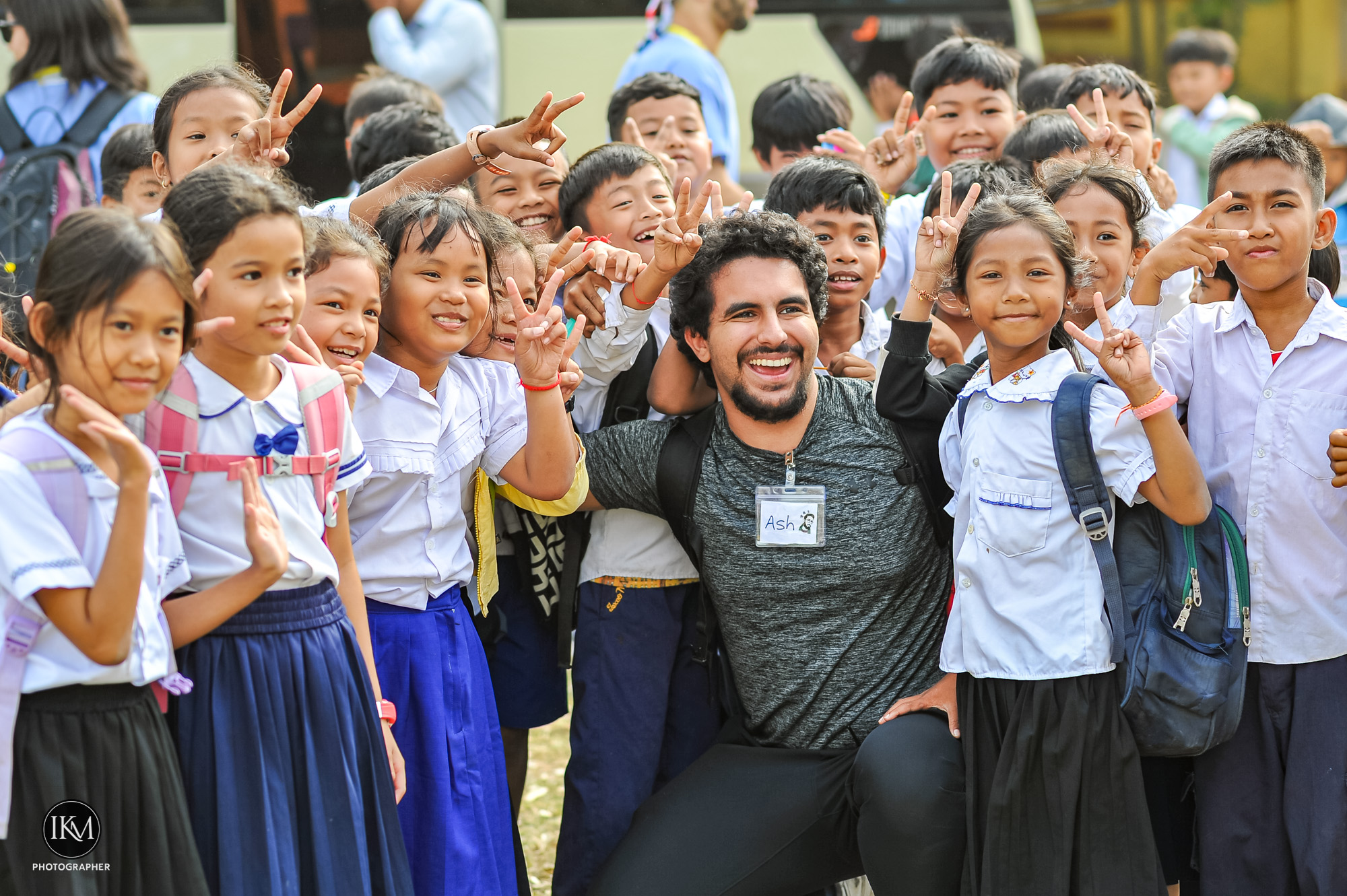
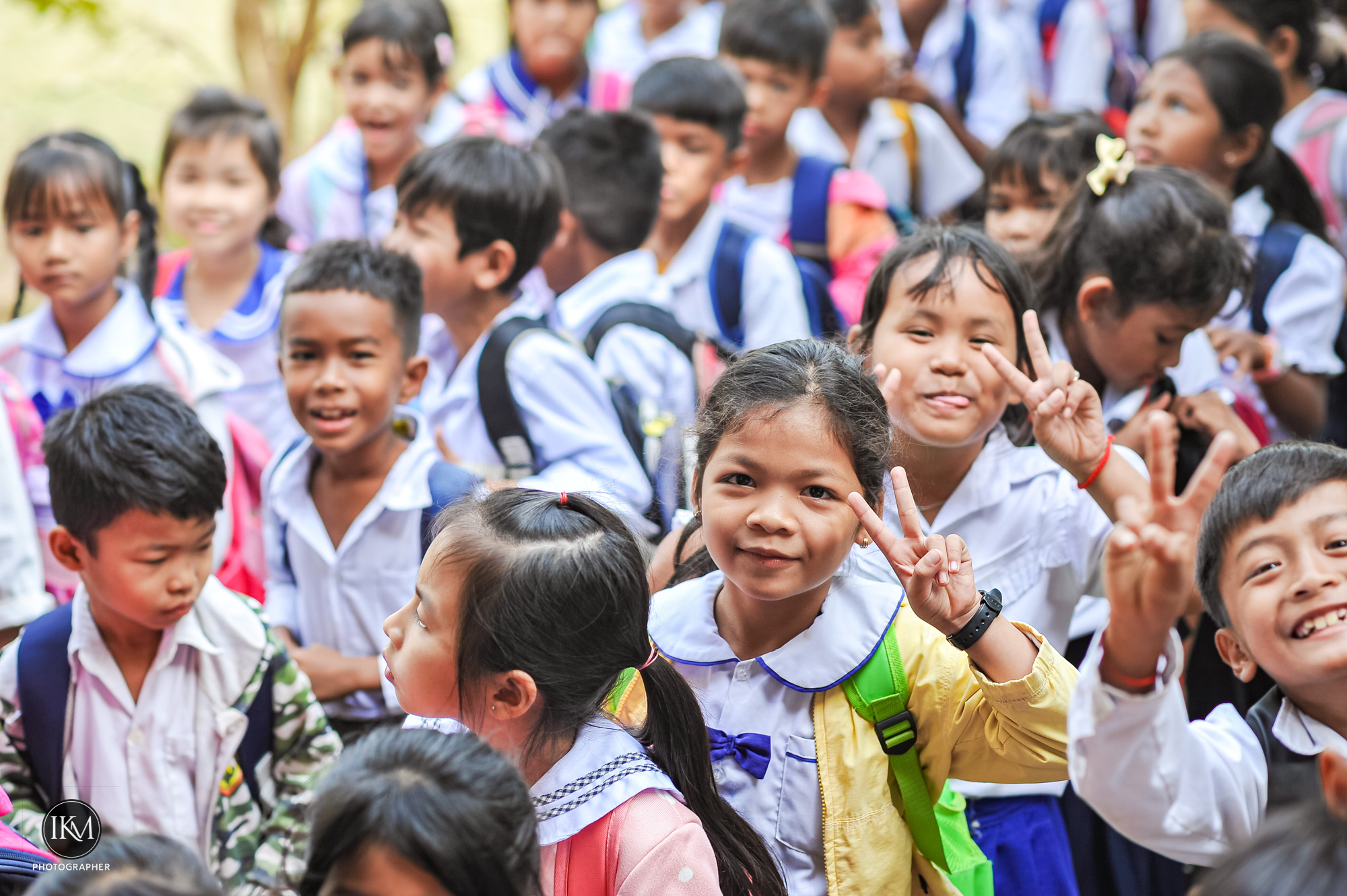
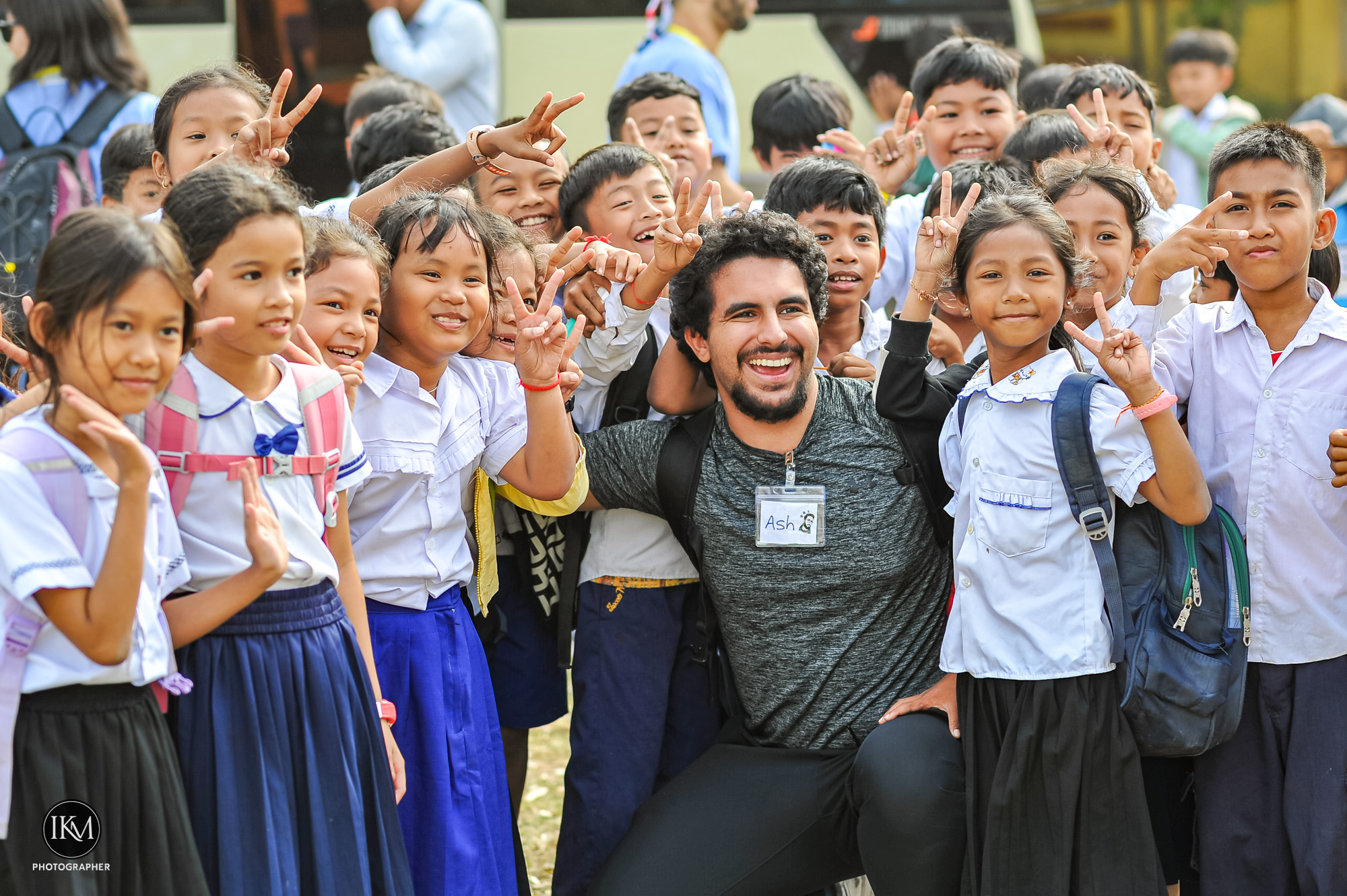
The group photograph carries a different mood. The nervousness has lifted. Volunteers and children are crowded together, laughing and raising their fingers for the camera. It would be easy to call it the happy ending, but documentary photography should be wary of endings that are too neat.

The children will return to homes where money remains short. Some will continue to have limited access to professional care. New children will arrive at school with untreated decay, and others will develop problems after the volunteers have gone.

The photograph does not prove that everything has been fixed. It records a moment when something useful was done.

As an old photographer, I have become suspicious of pictures that congratulate the photographer. The camera can persuade us that being present is the same as being helpful. It is not. We can make a handsome image of suffering, accept the compliments and leave the circumstances unchanged.

Photographing for an organisation such as KIDS must have a purpose beyond filling a portfolio. The pictures should help explain the need, preserve a record of the work and encourage practical support. They should acknowledge the volunteers without turning them into saviours. Above all, they should allow the children to remain children—not symbols of misery and not decorations for someone else’s generosity.

That is why I volunteered with my camera.

I photographed because memory is unreliable and good work can disappear unnoticed. I photographed because a child’s face can make distant need understandable without robbing that child of dignity. I photographed because donors and future volunteers ought to see where the equipment, money and long hours go.

But I also photographed for the children themselves.


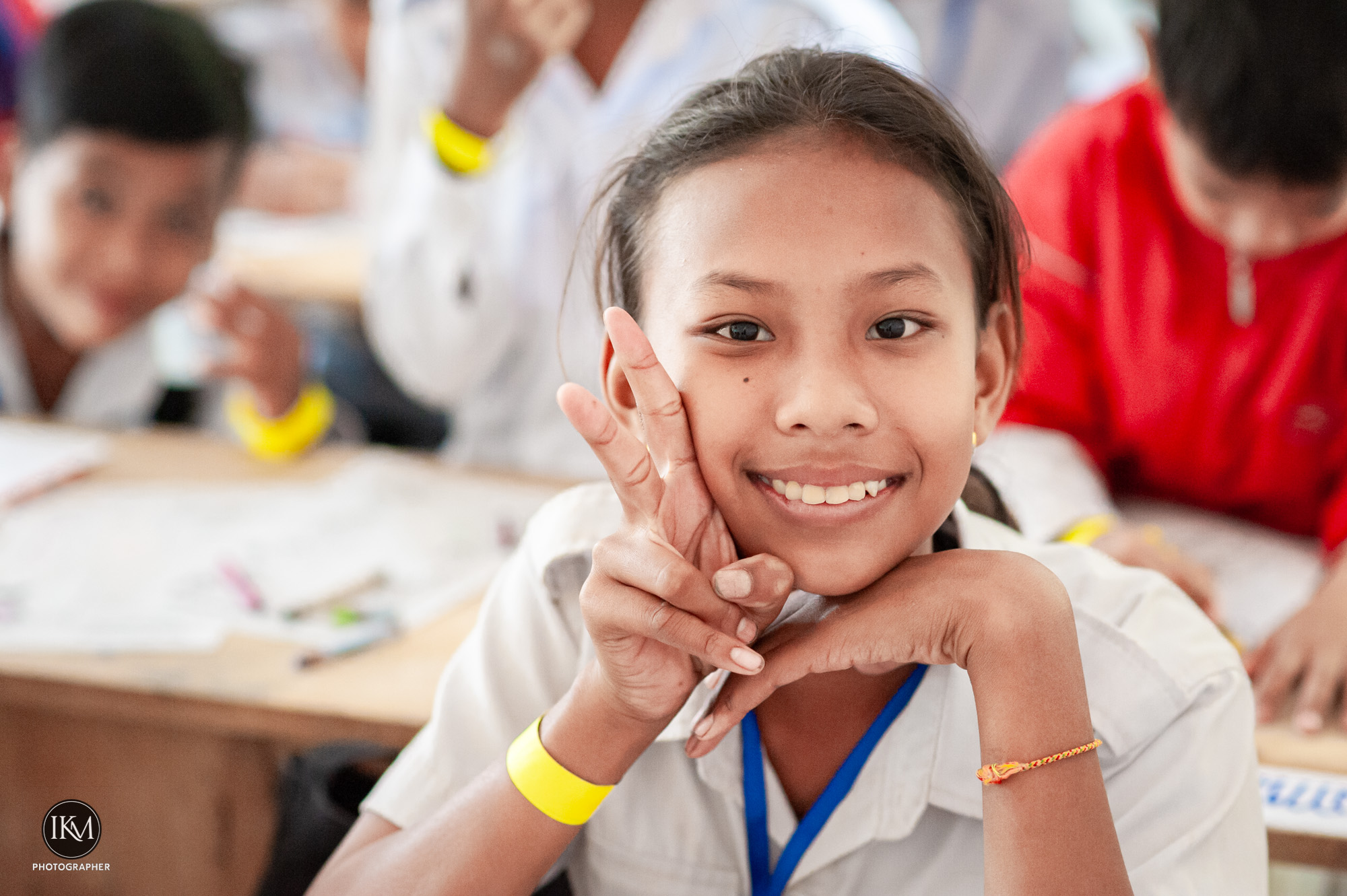
A smiling young girl in a colorful shirt, with dark hair and striking eyes, stands in the foreground, while two other children appear slightly blurred in the background.

For a few hours, they were not an anonymous mass described as poor, disadvantaged or in need. They were individuals with serious eyes, untidy hair, school shirts, nervous expressions and sudden laughter. They were seen.

The dentists dealt with the pain in front of them. My responsibility was to ensure that, once the chairs had been folded and the temporary clinic dismantled, the people did not simply vanish with it.


A healthcare worker in surgical scrubs and gloves, using a medical tool to attend to a child in a clinical setting.

That is the old photographer’s part in the job: not to claim the story, but to carry a truthful piece of it home.

A Good Photograph Does Not Need to Be Beautiful

cambodia, canon, conflict, homelessness, Lenses, nikon, opinons, thoughts, philanthropy, photography, pictures, street, Travel

Old Photographer Series

There is a great deal of beautiful photography in the world. Perhaps too much of it.

Perfect sunsets, wet streets glowing beneath neon signs, elderly faces caught in flattering light and backgrounds softened into creamy nothingness. The colours are polished, the composition balanced and everything is designed to please the eye.

There is nothing wrong with beauty. Light can be magnificent and a carefully composed picture can give genuine pleasure. But beauty alone does not make a photograph good.

Sometimes it merely makes it decorative.

A decorative photograph catches the eye, receives its compliment and is quickly replaced by the next attractive image. Once we have admired its colour, sharpness and clever composition, there may be nowhere else to go.

A good photograph makes us stay.


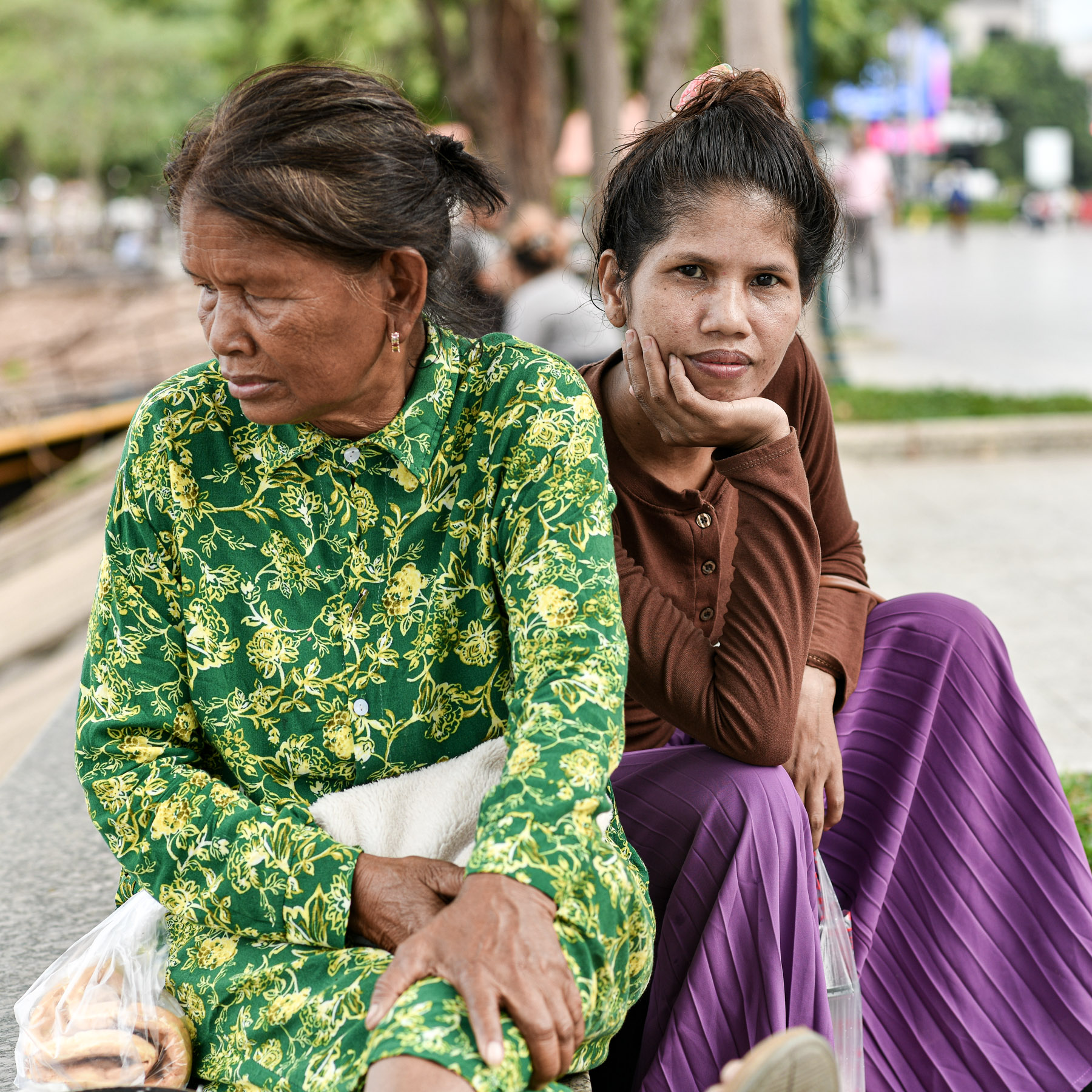
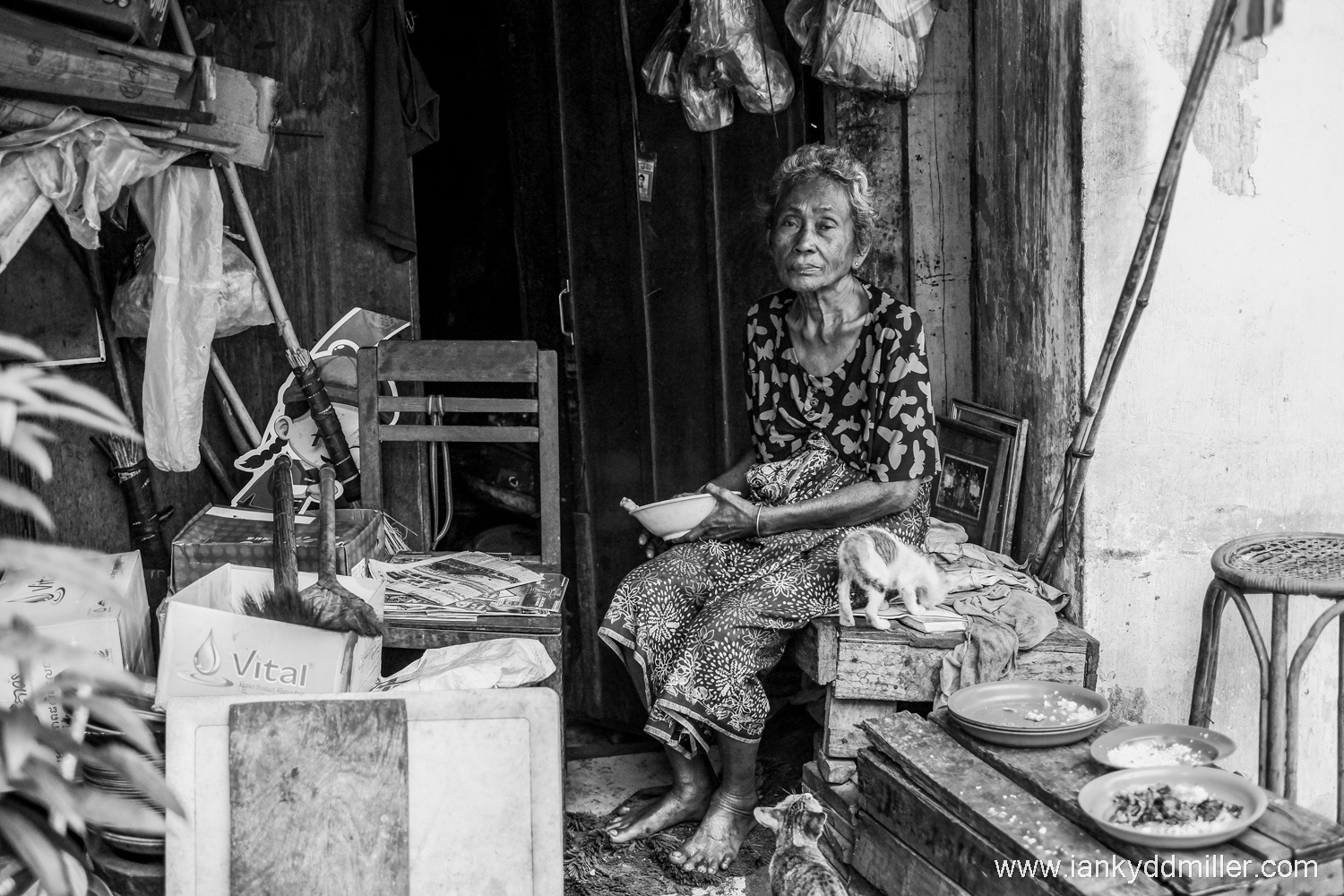
Two women sitting together outdoors, one wearing a green floral dress and the other in a brown top and purple skirt, both looking contemplative.

It may contain something unresolved: a look between two people, a hand gripping an arm, an empty chair or a child watching something beyond the frame. It may be awkwardly composed, poorly lit or slightly blurred, yet possess an emotional weight that technical perfection cannot provide.


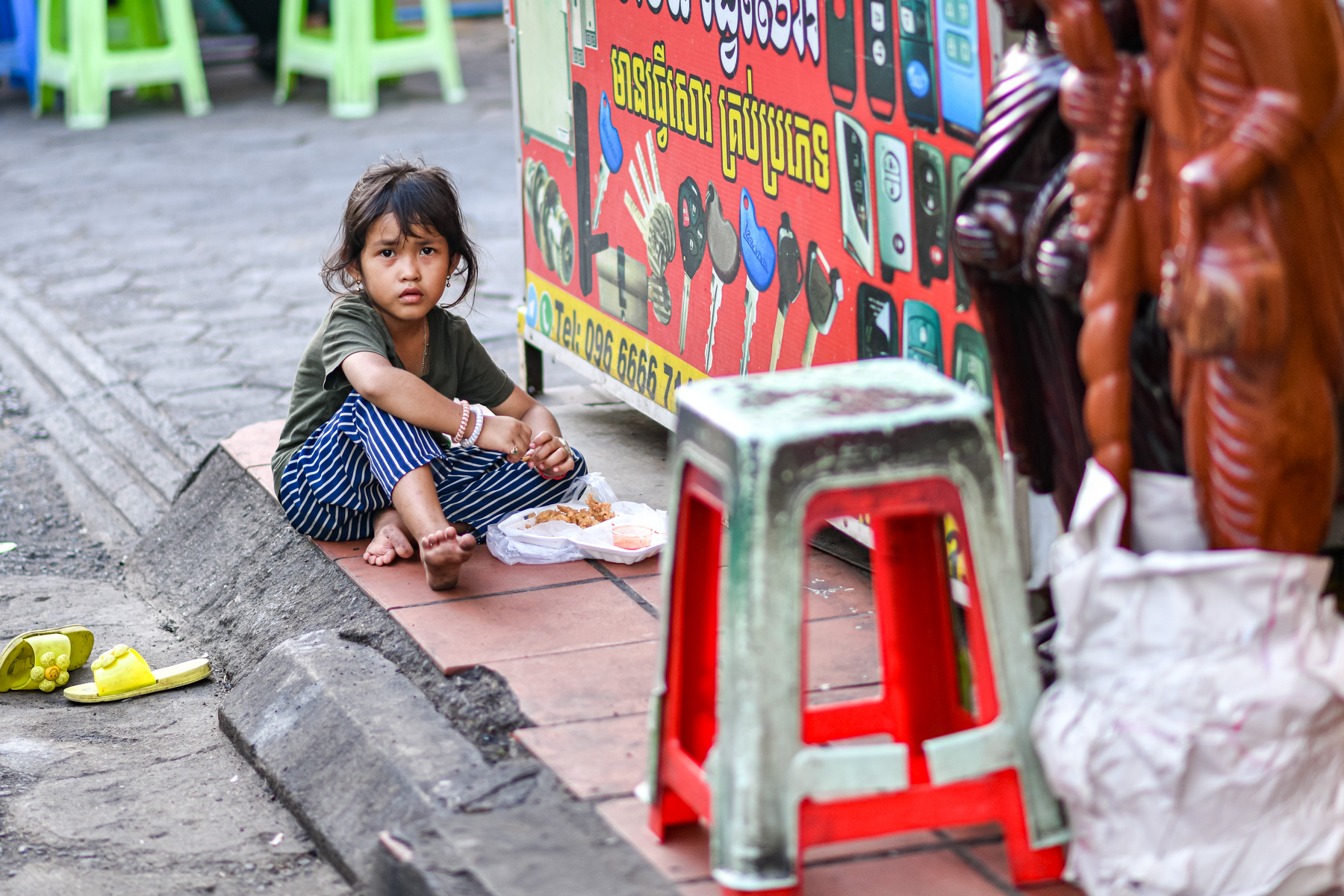
Young girl sitting on the sidewalk, wearing a green shirt and striped pants, with bare feet, looking directly at the camera, next to a small plate of food and a green stool, with colorful shop signs in the background.

These are the pictures that follow us home.

When I was younger, I worried more about whether my pictures looked good. Most photographers do. We learn the rules, straighten horizons, control exposure and wait for flattering light. We are proving that we understand the machinery.

Eventually, another question becomes more important:

What are you trying to say?

A perfectly exposed photograph of nothing remains a photograph of nothing. An imperfect picture containing a moment of truth may stay with us for life.


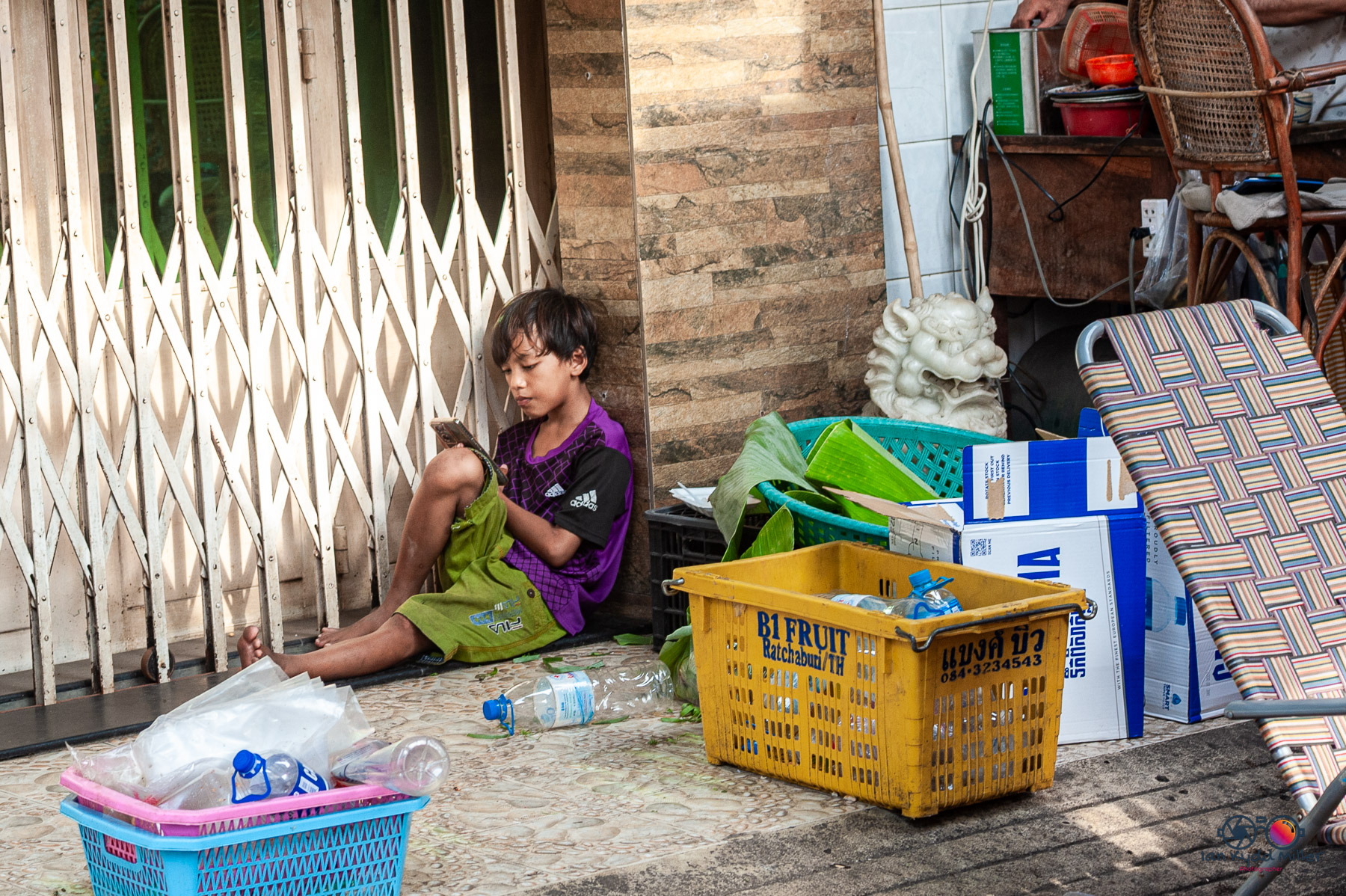
A young boy sitting on the ground against a wall, looking at a smartphone, surrounded by plastic waste and boxes.

Truth in photography is complicated. A camera never records everything. The photographer chooses where to stand, when to press the shutter and what to exclude. Yet a picture can still feel honest.

Honesty may mean refusing to tidy up a difficult scene. It may mean showing poverty without making it picturesque, age without turning wrinkles into decoration, or loneliness without dressing it up as poetry.


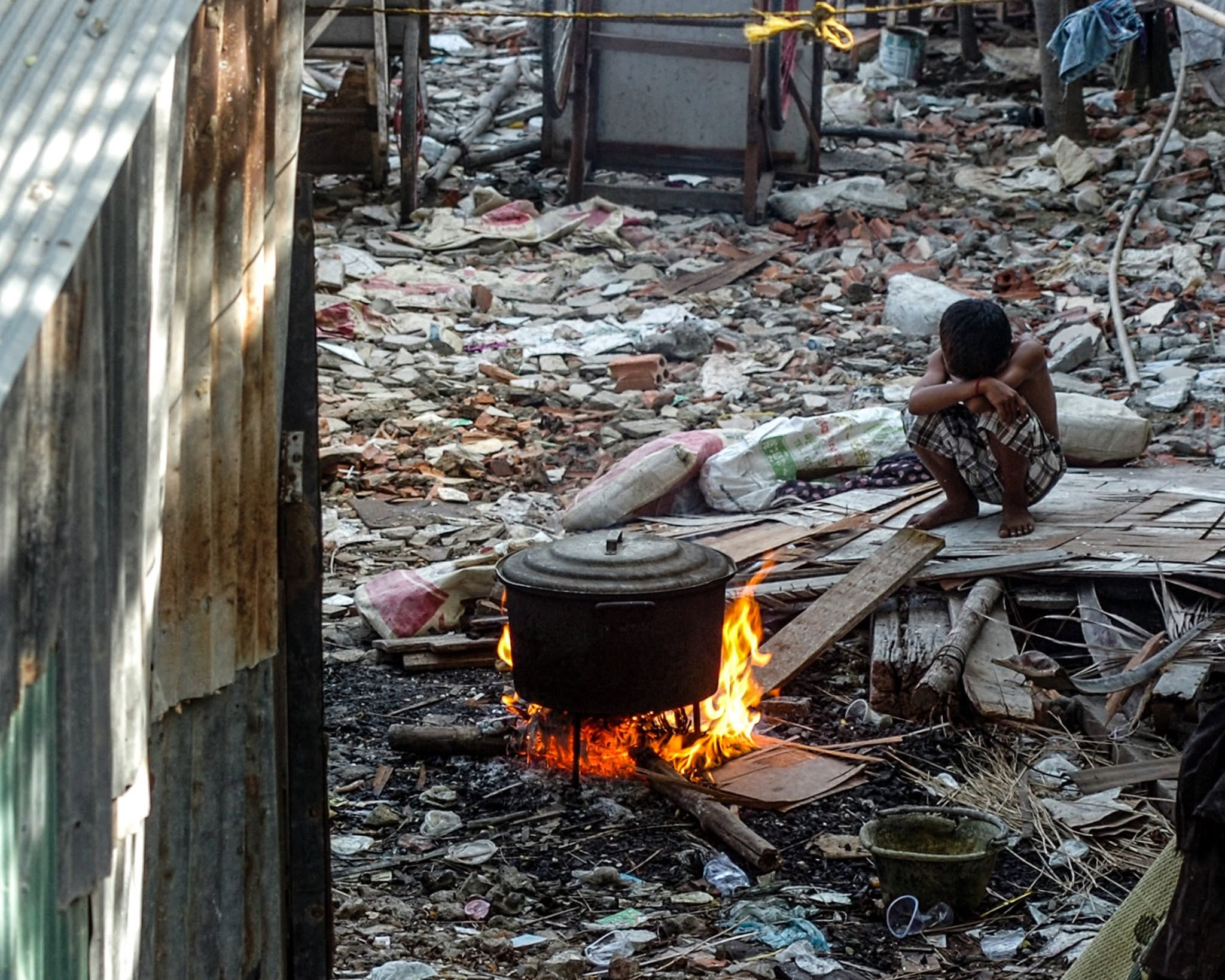
A young boy sitting on the ground in a cluttered, trash-strewn environment, with a pot cooking over an open flame in front of him.

The temptation to beautify suffering is one of photography’s oldest problems. Golden light can make a desperate situation appear magnificent. Strong composition can turn chaos into elegance. The result may be visually impressive—and completely wrong.

Emotional weight does not require war, disaster or public grief. Drama and meaning are not the same thing.

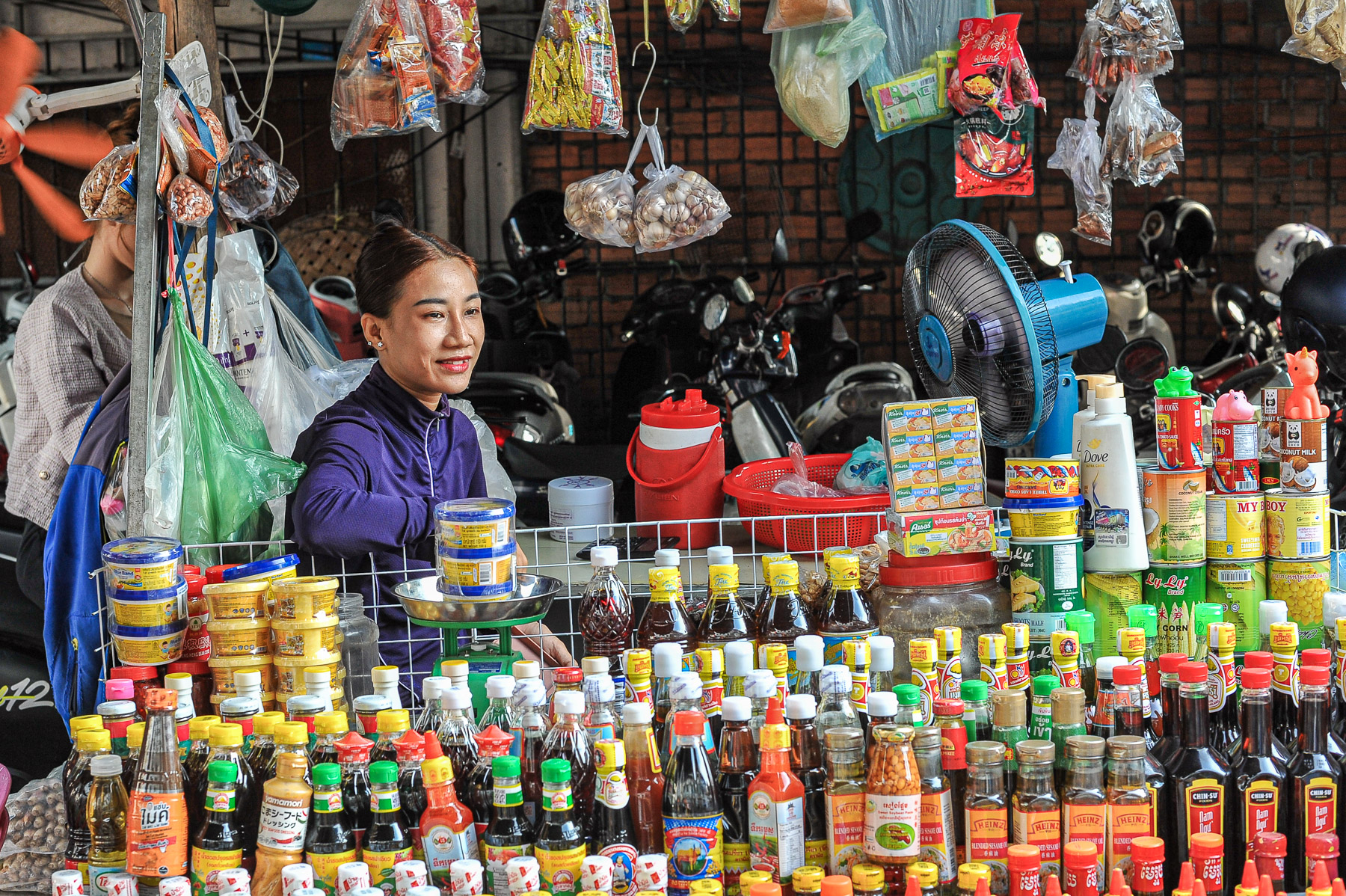
A tired worker sitting alone. A market seller counting the day’s remaining notes. Two people sharing silence. An elderly couple walking at different speeds but still holding hands.


A young child sitting on the ground beside ornate stone carvings, with a bottle of water and some food scraps nearby, in a black and white setting.

Nothing spectacular has happened. That is precisely the point.

Life is mostly composed of these apparently insignificant moments. The photographer’s job is not always to beautify them. Sometimes it is simply to recognise that they matter.

Tension can also hold a photograph together. Wealth and poverty occupying the same frame. A cheerful advertisement hanging above an exhausted worker. One person looking directly at the camera while everybody else looks away.


A young woman gazes thoughtfully out of a window of a wooden house, surrounded by peeling paint and weathered wood. The image is in black and white.

Tension prevents the picture from settling comfortably. It leaves the viewer with a question rather than a neat answer.

The photographs I remember seldom surrender everything at first glance. I notice one detail, then another. My understanding changes as I move around the frame. Perhaps I never understand it completely.

That uncertainty gives the photograph life.


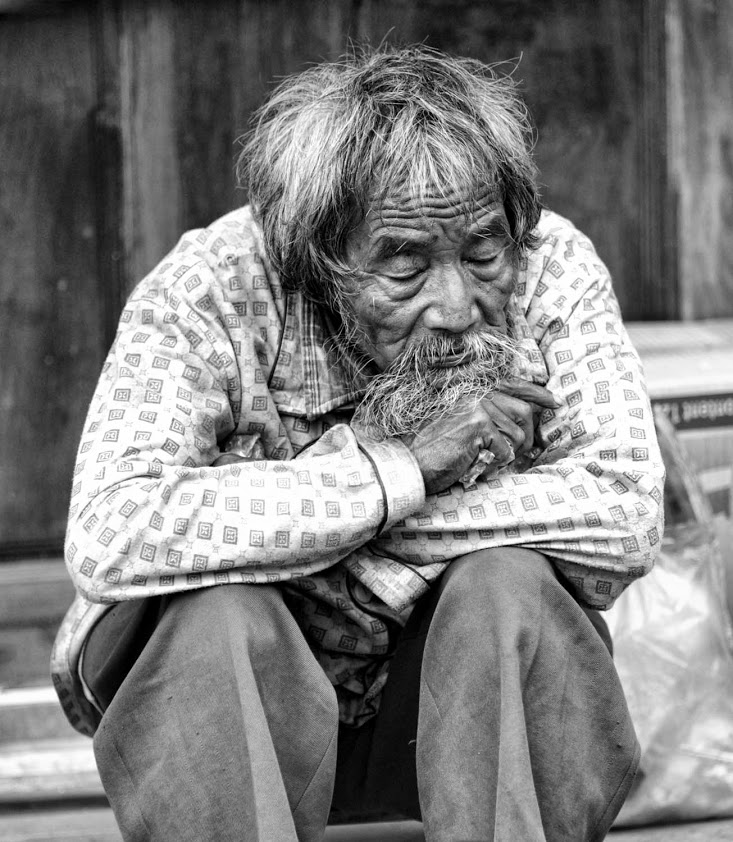
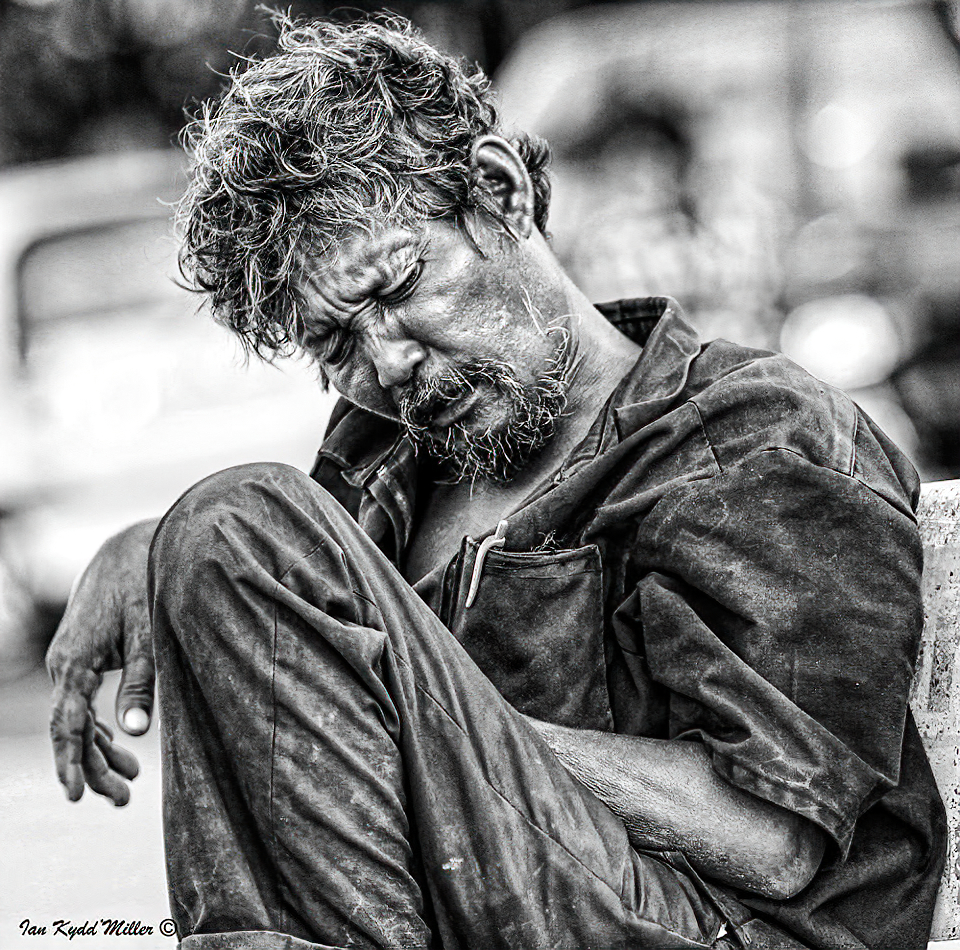
An elderly man with long gray hair and a beard, sitting with his knees drawn up to his chest, looking contemplative in a black and white photograph.

Discomfort also has a legitimate place in photography, provided it is not created through cruelty or exploitation.

Other people’s hardship should never become material for our own reputation. Misery is not made ethical because it has been photographed in black and white. The real question is not simply whether we were permitted to take the picture, but whether the photograph respects the person inside it.

Does it preserve dignity? Does it encourage understanding? Does it reveal something important—or merely invite strangers to stare?

If a photograph depends entirely upon another person’s humiliation, it is not brave. It is easy.

Processing cannot manufacture emotional weight. Converting a weak colour photograph to monochrome does not make it profound. Grain creates atmosphere, not substance.


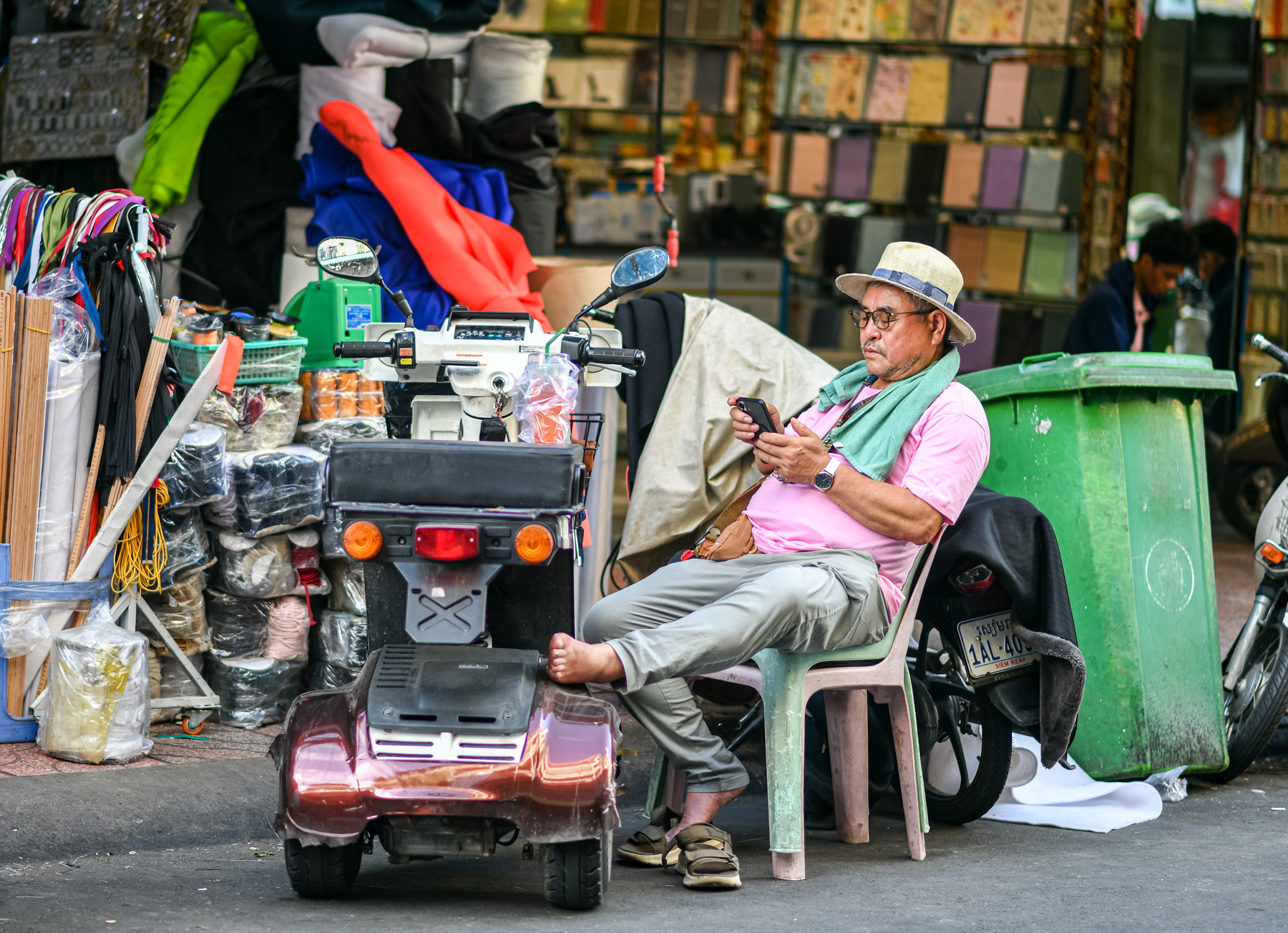
An older man sitting on a plastic chair, using a smartphone, next to a small electric scooter. He is wearing glasses, a pink shirt, and a straw hat. Behind him is a colorful array of fabric and materials, along with a green trash bin.

Sometimes a picture needs ugly colour, damaged walls, tangled cables and unpleasant light. Streets are cluttered and indifferent to our compositional preferences. Removing all that disorder may also remove the truth.

A good photograph does not have to be unpleasant, and serious photographers do not need to reject beauty. The distinction is whether beauty is the destination or the vehicle.

Beautiful light can reveal tenderness. Colour can express joy or anxiety. Strong composition can direct attention towards injustice. The danger begins when beauty becomes camouflage.


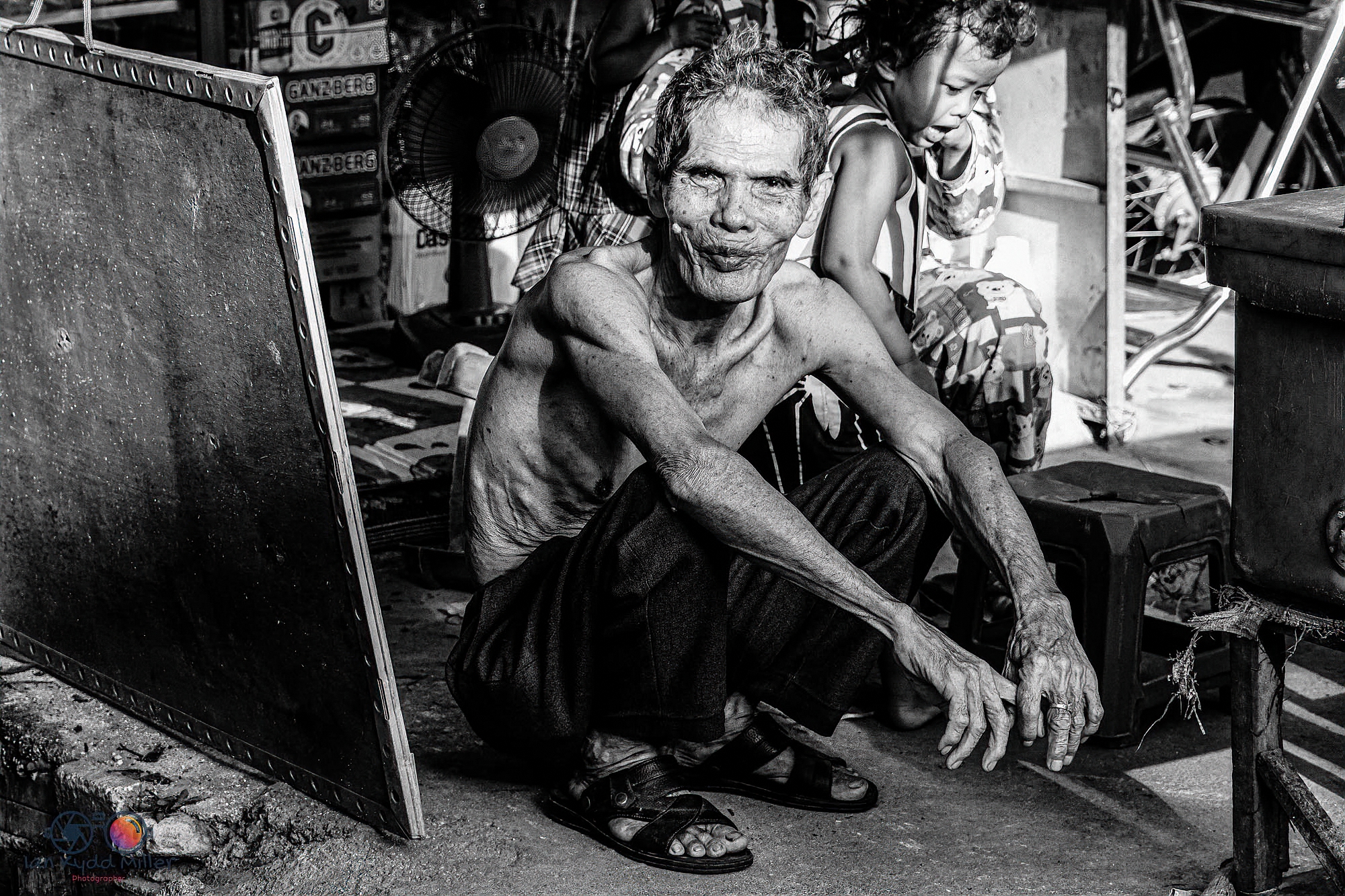
An elderly man sitting on the ground with a slight smile, wearing black pants and sandals, in a cluttered environment. A child can be seen in the background.

The picture must remain answerable to its subject.

After many years, I am less interested in photographs demonstrating what a clever photographer can do. I am more interested in photographs showing what a patient photographer noticed.

When editing my work, I try to ask more than whether an image is sharp and attractive.

Does it hold me? Is there something I cannot immediately explain? Would I still care about it if nobody praised it? Most importantly, does it make me feel anything?

Technical flaws bother me less than emotional emptiness. I would rather keep a slightly soft photograph carrying genuine life than a clinically perfect frame saying nothing.

Craft matters, but craft is the language—not the message.

A good photograph may be beautiful, but it does not need to be. It may be rough, sombre, untidy or uncomfortable. Yet if it makes us look properly—at another person, at the world or at ourselves—it has achieved something greater than decoration.


Photography as Life: Lessons from 45 Years Behind the Camera: Old Photographer Series

cambodia, cameras, fujifilm, homelessness, Lenses, nikon, opinons, thoughts, philanthropy, photography, pictures, street, Travel, voluntary, war

Old cameras have character. But I know perfectly well that the camera isn’t the reason I go out. The camera gives me an excuse. It gives me permission to wander.


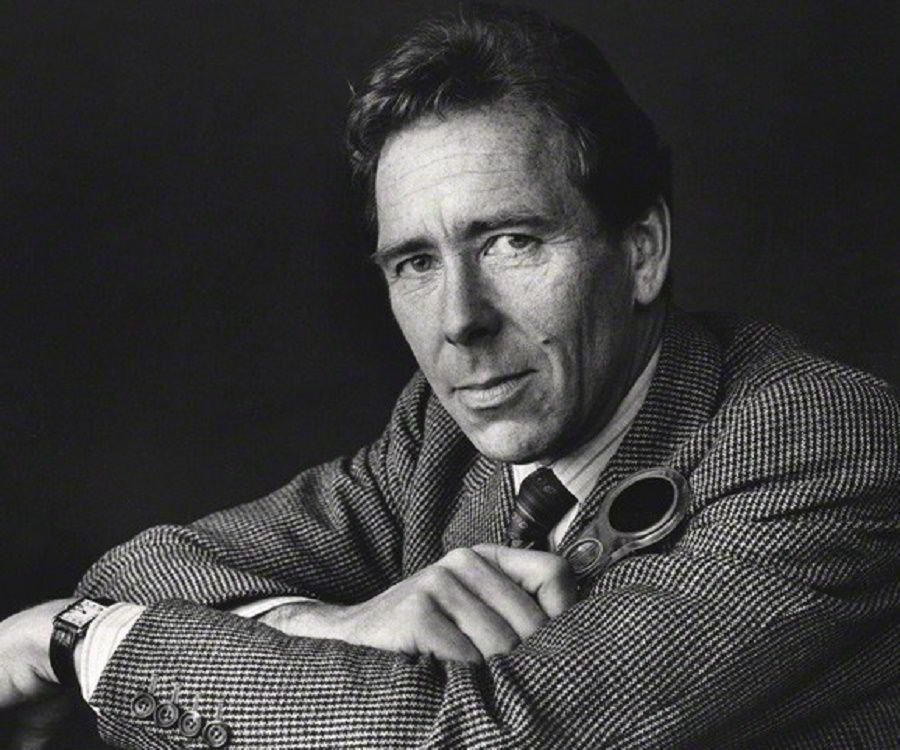
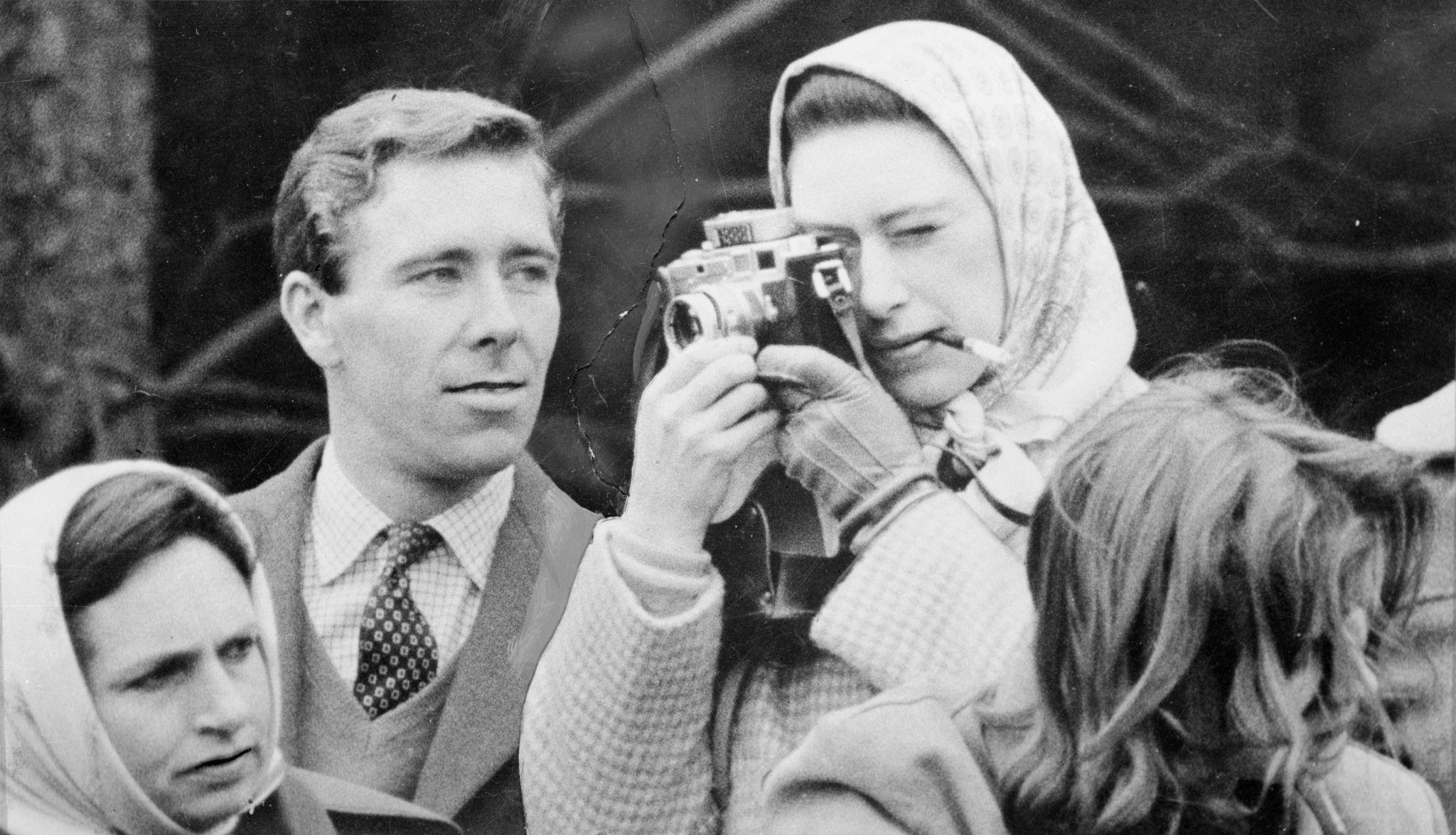
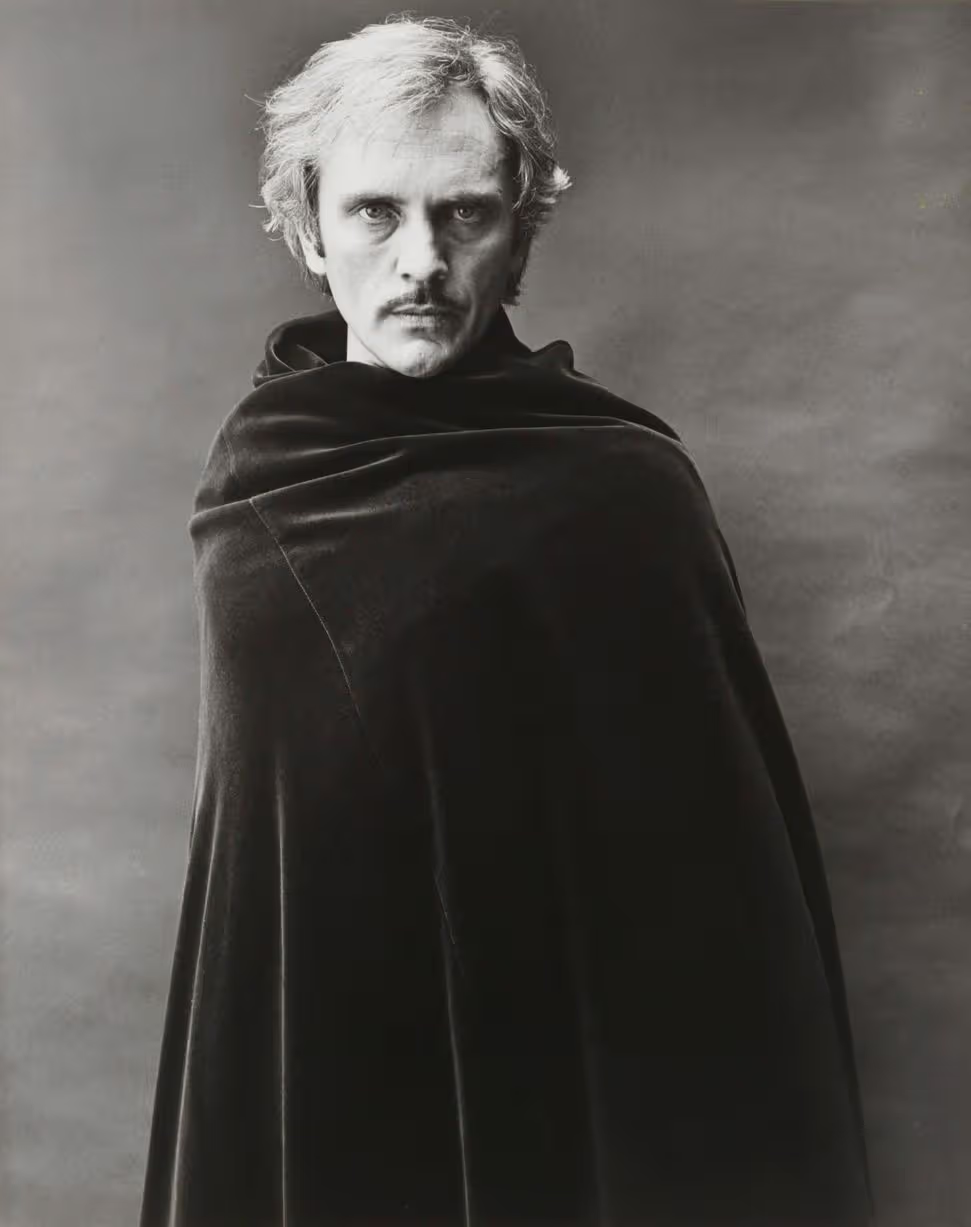
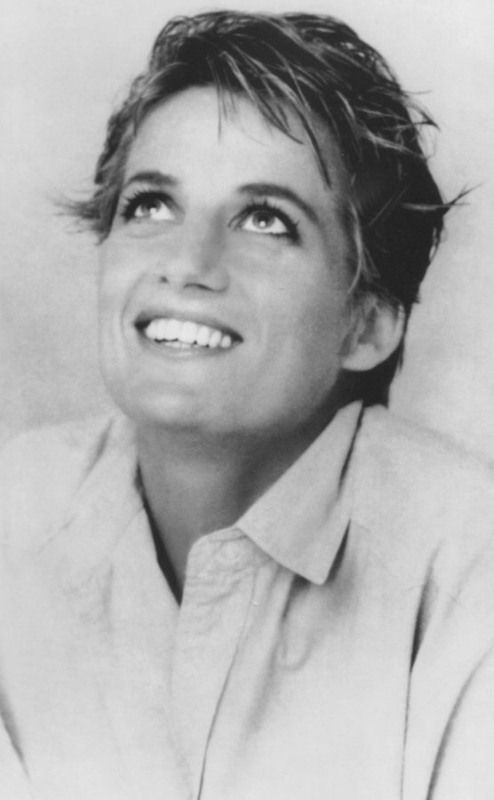
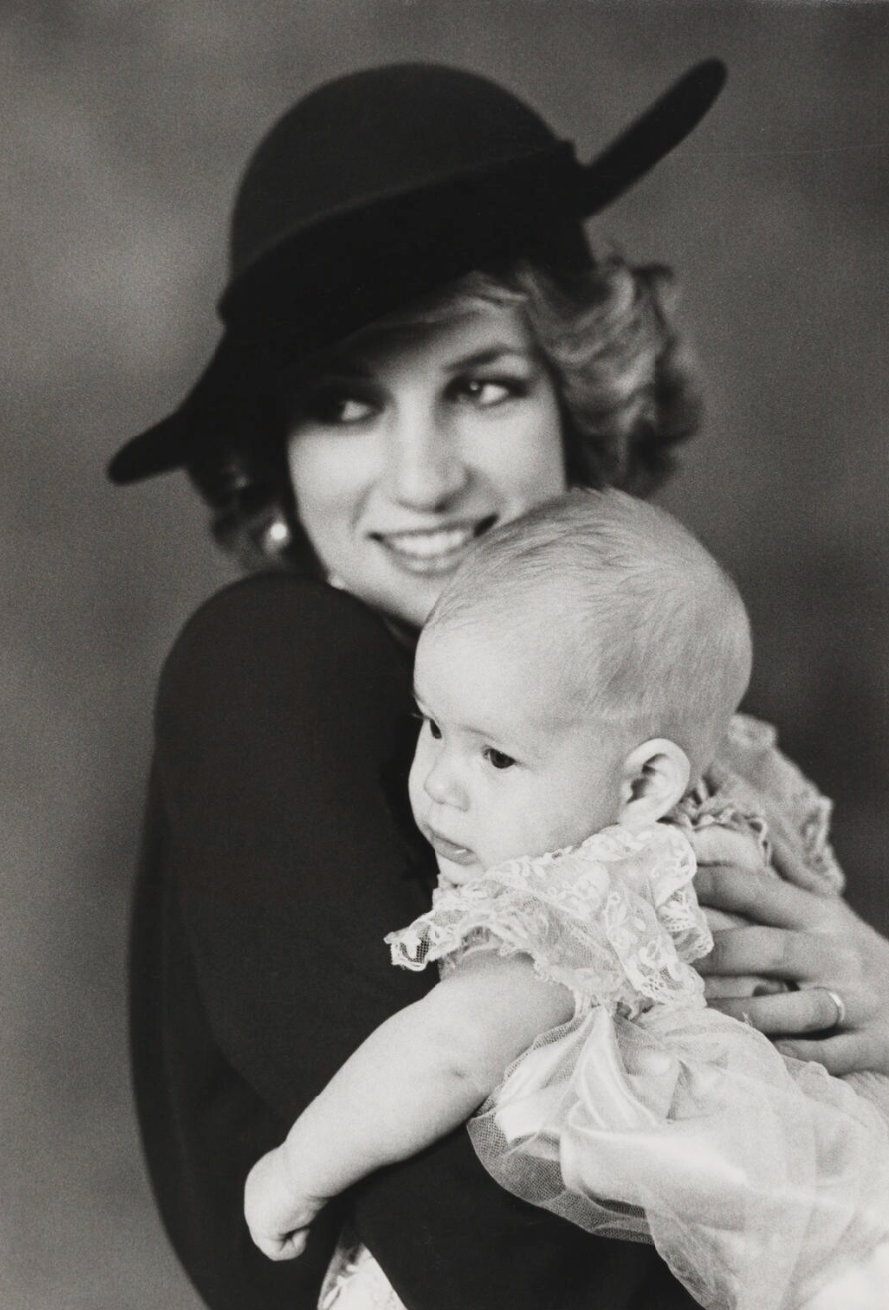
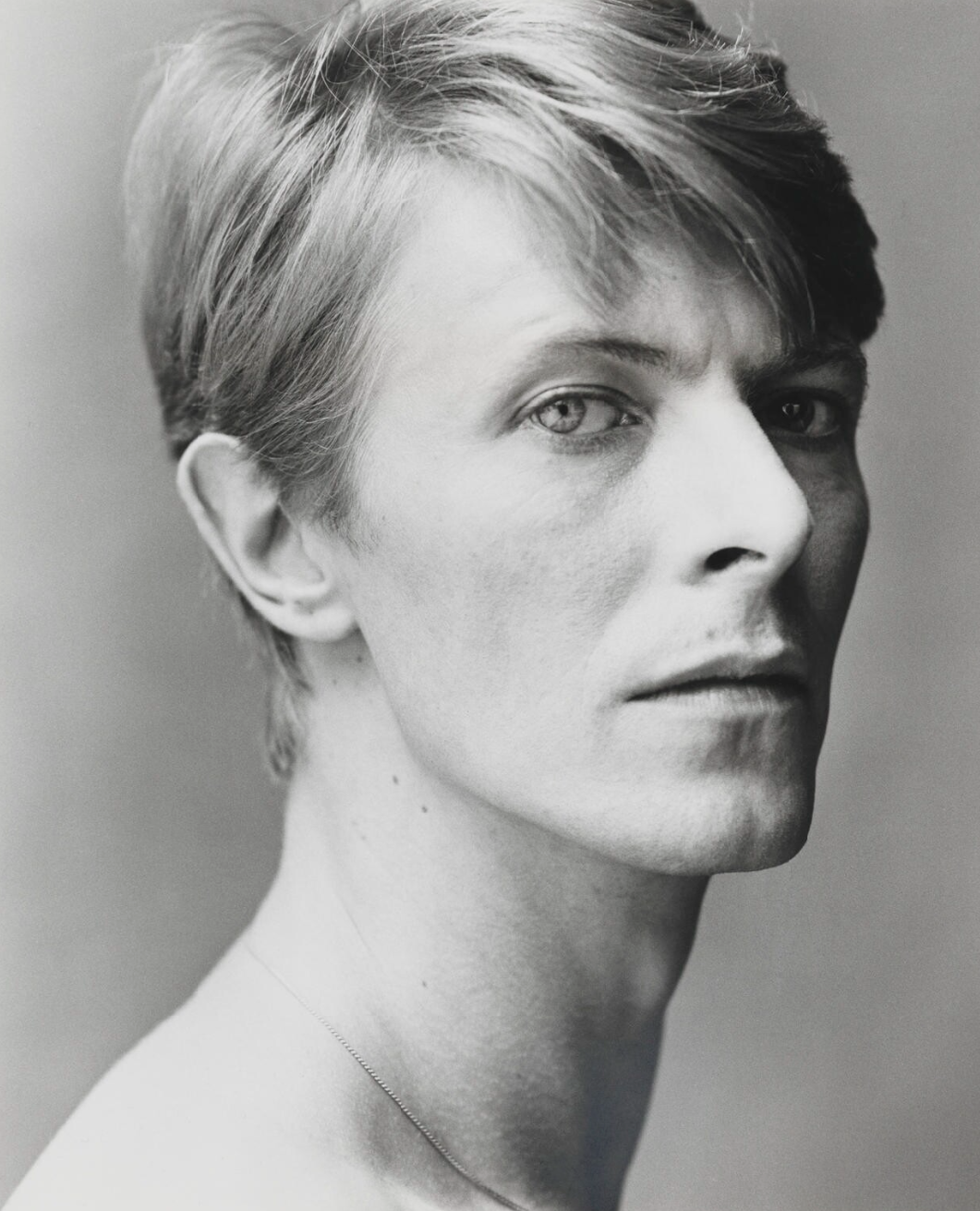
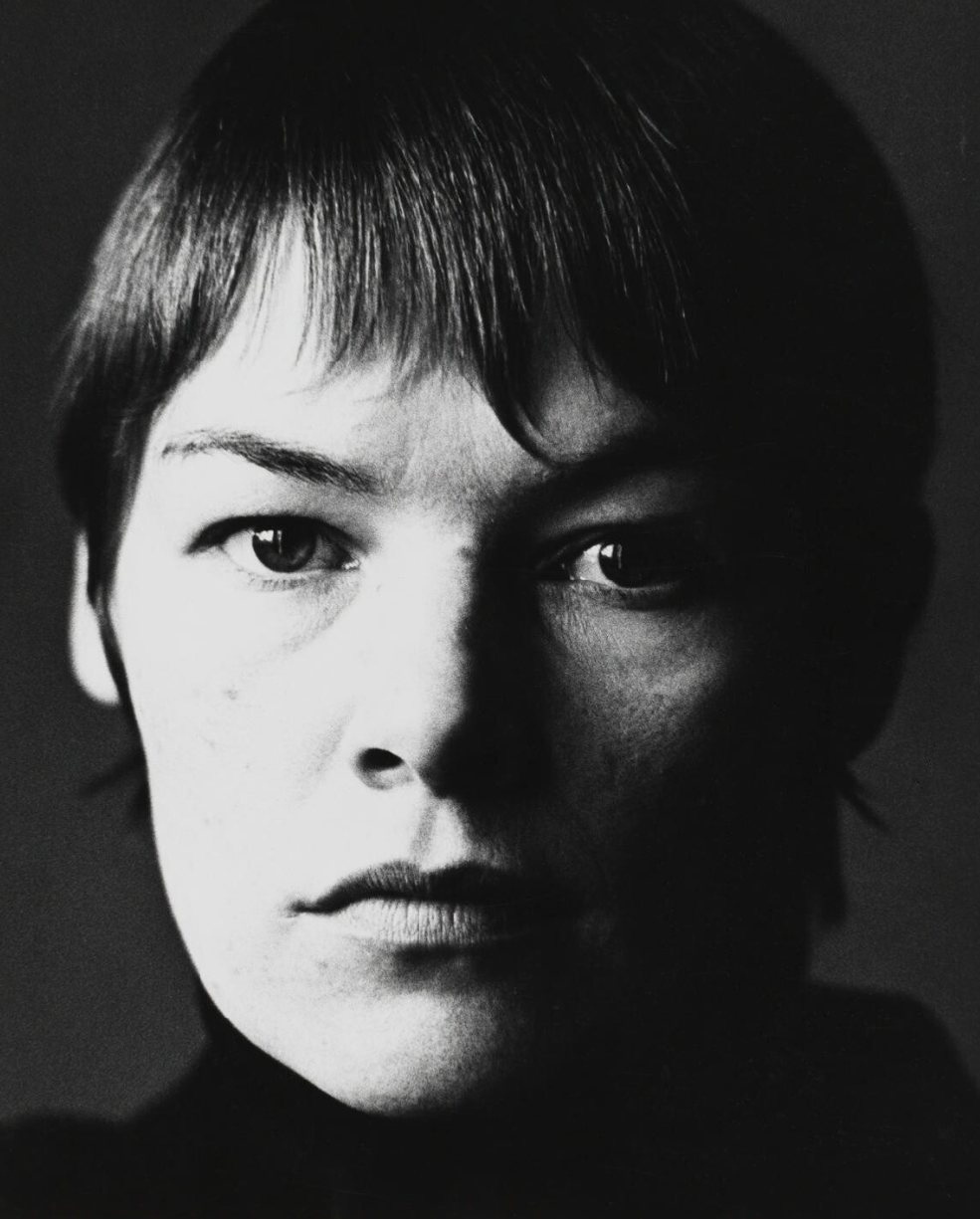
Antony Armstrong-Jones (Lord Snowdon): The Photographer Who Changed Royal Portraiture

opinons, thoughts, philanthropy, photography, pictures


Early Life


Discovering Photography

  • Vogue
  • Tatler
  • The Sunday Times Magazine
  • The Sunday Telegraph Magazine
  • Vanity Fair

The Royal Connection

Their relationship was kept secret until their engagement was announced in 1960.

Their wedding became one of the first royal ceremonies to be televised worldwide, watched by an estimated 300 million people.

In 1961 he was created Earl of Snowdon, becoming Lord Snowdon.

The marriage produced two children:

  • David Armstrong-Jones (later the 2nd Earl of Snowdon)
  • Lady Sarah Chatto

His Photography

Snowdon photographed almost everyone who mattered in British cultural life.

His sitters included:

  • David Bowie
  • Elizabeth Taylor
  • Laurence Olivier
  • Marlene Dietrich
  • Princess Diana
  • Queen Elizabeth II
  • Harold Macmillan
  • Members of the British Royal Family
  • Leading artists, writers, actors and politicians

Unlike many celebrity photographers, Snowdon avoided excessive glamour.


  • simple backgrounds
  • strong directional light
  • careful attention to gesture
  • natural body language
  • psychological intimacy

Beyond Portraiture


Designer and Inventor


Working Method

His pictures frequently use:

  • available light
  • subtle expressions
  • unconventional framing
  • clean compositions
  • restrained printing

The result is work that remains contemporary decades later.


Influence on Portrait Photography

Snowdon helped shift portrait photography away from rigid formality.

His influence can be seen in later photographers such as:

  • Annie Leibovitz
  • Platon
  • Nadav Kander
  • David Bailey (a contemporary with a different style)

He demonstrated that portraits could reveal psychology instead of merely documenting appearance.


Personal Life


Death

Legacy

The Heartbeat of Street Photography: Capturing Human Stories: an Old Mans thoughts.

cambodia, cameras, homelessness, Lenses, nikon, opinons, thoughts, philanthropy, photography, street, Travel, voluntary

🧒✨ What Is Kids International Dental Services : it is a compassionate global nonprofit.

cambodia, opinons, thoughts, philanthropy, pictures, Travel, voluntary

Kids International Dental Services (KIDS) is a U.S.-based 501(c)(3) nonprofit organization dedicated to providing free (pro-bono) dental care to impoverished children in developing countries. Its mission goes beyond treating teeth — it aims to educate, empower, and inspire communities and volunteers.

📍 Headquarters: 1700 California St., Suite 200, San Francisco, CA 94109, USA
🆔 EIN: 94-3477276 (donations are tax-deductible)


🎯 Mission & Goals

The core mission of KIDS is to:

✨ Provide pro-bono dental care so children can be pain-free, healthier, and more active in school and life.
✨ Educate communities about the importance of oral hygiene.
✨ Empower local communities to maintain better oral health with the tools and knowledge they have.
✨ Inspire young dental professionals and volunteers to make service a lifelong part of their careers.
✨ Repeat these efforts by returning to communities year after year to build lasting relationships.

This dual focus on immediate care and long-term impact is what makes KIDS distinctive. It’s not just temporary treatment — it’s education and empowerment too!


🌍 Where They Work

Since its founding in 2009, KIDS has conducted dental mission trips in multiple countries, including:

  • Cambodia
  • The Philippines
  • Guatemala
  • Cape Verde
  • Haiti
  • South Africa
  • Mongolia
  • Morocco

These missions are typically held annually and involve teams of volunteer dentists, dental students, and non-dental volunteers who travel to serve in community settings such as schools and clinics.


👩‍⚕️🧑‍⚕️ Who Volunteers?

Volunteers include:

  • Dentists
  • Dental students
  • Hygienists & other dental professionals
  • Non-dental helpers (interpreters, organizers, support staff)

Volunteers gain invaluable hands-on experience, build cultural understanding, and often form deep personal connections with the communities they serve. Many return to future missions because of the meaningful impact they witness.


🦷 Types of Dental Work Performed

During missions, KIDS volunteers typically provide essential dental services such as:

✅ Dental exams
✅ Filling cavities
✅ Extractions
✅ Fluoride treatments & preventative care
✅ Oral hygiene education for kids and families

They often work in outdoor or temporary clinic setups — like school courtyards or community centers — bringing portable dental equipment to areas with little or no access to care.


💡 Community Focus & Education

A key component of KIDS’s approach is education:

📌 Teaching children and families why dental care matters
📌 Demonstrating how to brush/floss correctly
📌 Helping local staff understand preventive practices
📌 Building long-term oral health habits beyond immediate treatment

Some mission trips also partner with local organizations to address environmental issues (like contaminated water leading to dental problems) and look for broader, lasting solutions.


🤝 Support & How to Get Involved

Donate

Financial or supplies donations help fund travel, equipment, and free care. According to the organization, 100% of donations go directly to support their mission.

Volunteer

Interested individuals can contact KIDS to join a future mission. Volunteers are asked to complete volunteer agreements and follow safety protocols (including COVID-19 procedures).

📧 Email: replytokids@gmail.com


📊 Organization Context & Finances

According to publicly accessible nonprofit data, KIDS is registered and files annual IRS tax forms. Its recent financial information indicates revenue and expenses typical for a small nonprofit mission-based charity.


📌 Summary

Kids International Dental Services (KIDS) is a compassionate global nonprofit offering:

🌏 Free dental care to under served children around the world
👩‍⚕️ Hands-on global mission opportunities for dental professionals
📚 Education and empowerment for communities
🤝 Opportunities for donors and volunteers to make a real impact

Absolutely — here are the direct contact details, ways to donate, and how to volunteer with Kids International Dental Services (KIDS) 😊🦷🌍:


📬 Contact Information

📍 Mailing Address:
Kids International Dental Services
1700 California St., Suite 200
San Francisco, CA 94109
USA

📧 Email:
replytokids@gmail.com — best address to ask questions about missions, donations, or volunteering.

🆔 EIN (Tax-Deductible):
94-3477276 — donations are tax-deductible in the U.S. as KIDS is a registered 501(c)(3) nonprofit.


💖 How to Donate

Your support helps bring free dental care to children in developing countries! 🪥✨

  • 💵 Monetary Donations:
    You can donate via the official site — 100% of your contribution helps provide dental care services and support mission programs.
  • 📦 Supplies Donations:
    They may accept donated dental supplies and equipment — it’s best to email them first to confirm what items they can use.

👉 Since all donations go directly to supporting missions, you’re helping children get pain relief, fillings, extractions, and dental education they wouldn’t otherwise receive.


🙋‍♂️🙋‍♀️ How to Volunteer

KIDS runs dental mission trips every year where volunteers help provide essential dental care and promote oral hygiene education:

📍 Typical Mission Locations

  • Cambodia – usually in January
  • The Philippines – usually in February
  • Guatemala, Nepal/Bhutan, and more on other annual rotations.

👩‍⚕️ Who Can Volunteer

  • Dentists
  • Dental students
  • Dental hygienists & assistants
  • Non-dental volunteers for support roles
    (volunteer roles vary with each mission)

📝 How to Get Started

  1. ⭐ Contact KIDS at replytokids@gmail.com (ask about upcoming mission dates and requirements).
  2. 📄 Volunteer Documentation:
    You need to read and sign the “Volunteer Agreement” and any COVID-19 safety documents before joining a mission. These are emailed to you and then returned to them signed.
  3. ✈️ Travel & Accommodations:
    Volunteers typically arrange their travel to the mission location; details and logistics are coordinated with KIDS after you sign up.

🙌 Tips Before You Go

🧠 Ask about costs — many volunteer missions are supported by donations, but you may be expected to cover your travel, lodging, and basic expenses.

🤝 Reach out early — spots on missions (especially for dental professionals and students) can fill up quickly.


How Chuck Feeney Redefined Wealth and Generosity

opinons, thoughts, philanthropy, voluntary

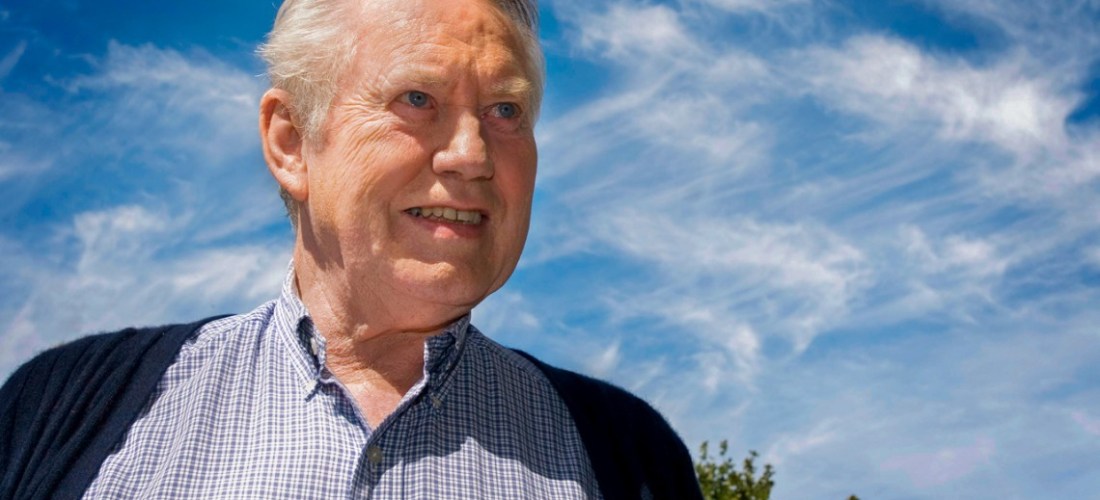
In a world obsessed with accumulation, Chuck Feeney made a quieter, more unsettling choice: he gave it all away.

Not metaphorically. Not eventually.
While he was still alive.

Feeney was the co-founder of Duty Free Shoppers, the airport retail empire that helped invent modern global consumerism. He became a billionaire almost by accident, then spent the rest of his life trying to undo the accident as responsibly as possible.

He called his philosophy Giving While Living. It sounds gentle. It was anything but.

The Radical Act of Enough

Chuck Feeney owned no mansion.
He flew economy.
He lived in rented apartments.
He wore simple clothes and carried a cheap watch.

This wasn’t branding. It wasn’t aesthetic minimalism. It wasn’t a TED Talk.

It was conviction.

Feeney believed money was useful only while it was moving. Sitting still, it corrupted both its owner and its purpose. So he moved it—quietly, persistently, without applause.

Over several decades, he gave away more than $8 billion.

Not to build monuments to himself.
Not to stamp his name on buildings.
Often not even under his own name at all.

Anonymous Generosity in a Loud Age

For years, almost no one knew who he was.

Through his foundation, The Atlantic Philanthropies, Feeney funded:

  • Universities and scholarships
  • Public health systems
  • Peace and reconciliation work in Northern Ireland
  • Medical infrastructure in Vietnam and beyond

His anonymity only broke because of legal filings—not because he wanted recognition.

In an age where generosity is often performative, Feeney’s silence was its own kind of protest.

No Legacy Machine

Most billionaires aim for permanence: endowments, foundations, institutions designed to outlive them.

Feeney did the opposite.

He shut his foundation down on purpose.

No eternal board.
No immortal brand.
No philanthropic dynasty.

By the time Atlantic Philanthropies closed in 2020, Chuck Feeney had intentionally reduced his personal wealth to about $2 million—enough to live, not enough to dominate.

He didn’t want to be remembered as a benefactor.
He wanted the work to be done.

The Uncomfortable Question He Leaves Us With

Chuck Feeney didn’t just give money away.
He gave away an excuse.

An excuse to wait.
An excuse to hoard.
An excuse to believe that impact is something we defer until later.

His life asks an uncomfortable question:

How much is enough — and what are you doing with the rest?

You don’t need to be a billionaire to feel the weight of that question. It applies to time. Attention. Energy. Skill. Care.

Feeney treated wealth as temporary custody, not ownership. Then he returned it to the world while he could still see what it became.

A Quiet Ending, a Loud Example

Chuck Feeney died in 2023, aged 92.

No spectacle.
No empire intact.
No fortune left behind.

Just hospitals, universities, peace agreements, and lives improved by someone who refused to confuse money with meaning.

In a culture that celebrates accumulation, Feeney chose release.

And in doing so, he left behind something far rarer than wealth:

A model for how to live lightly — and give decisively.