There are days when I take a camera out and cannot see a picture. The street is busy enough. The light changes. People pass close by, stop, talk, turn their heads. All the things I normally look for are present, yet nothing seems to hold my attention for more than a second.
I used to think that meant I had lost my motivation. Now I am less certain. A photographer can be willing to work and still be unable to see clearly. The two are often mistaken for the same thing.
Sometimes the problem begins before I leave the house. I have seen too many pictures, including my own. I know what a promising corner looks like, where the light will fall, how far I want to stand from a person. That knowledge helps me work quickly, but it can also make me predictable. I spot a possible frame and dismiss it because I think I know what it will look like. After a while, I am no longer responding to what is in front of me. I am responding to a catalogue of pictures already in my head.
The camera can make this worse. When I am in a lull, I become unusually interested in what to carry. Perhaps another lens will change the way I see. Perhaps the D700 will loosen me up, or the D850 will reward a more careful look. A change of camera can alter my pace and working distance, and that may help. But the question is usually settled within the first few minutes outside. If I am preoccupied, I can fail to see with any camera.
Then there is the weight of expectation. After a productive day, I want another one. After several poor days, I feel I need one. I start a walk with a result in mind: a strong portrait, a frame for an article, something worth printing. The pressure makes me impatient. I watch a scene develop for a few seconds, decide it will amount to nothing, and move on. On another day I might have stayed long enough to find out.
Street photography requires patience, but patience is difficult when you feel you ought to be making pictures. You can spend an hour in one place and come away with nothing. That does not necessarily mean you chose the wrong place. A person may have passed through the frame a minute after you left. Or nobody would have passed through at all. There is no way to know. Much of the work involves giving ordinary life time to do something interesting, without demanding that it do so on your schedule.
A lull can also follow a period of making a great many pictures. I may still enjoy going out, yet feel tired of the decisions that come with it. Where should I stand? Is there a picture here? Should I approach this person? Am I close enough? Have I misunderstood what I am looking at? Photographing people asks for attention and judgment as well as quick reflexes. If I am tired, I can raise the camera, but I may not have much to give the encounter.
That matters because people are not there to cure my lack of inspiration. A stranger’s face can be arresting without my having a reason to photograph it. If I find myself looking for someone unusual simply to make the day feel productive, it is worth putting the camera down. A lull may be telling me that I need to recover some interest in the people around me, rather than hunt more aggressively for a frame.
There are quieter causes. Life outside photography can take up the space in which attention usually works. Worry, poor sleep, physical discomfort and simple exhaustion all follow us into the street. We may expect photography to provide relief, and sometimes it does. At other times, even a short walk asks too much. There is little to be gained from treating every tired day as a crisis in one’s ability to make pictures.
The edit has its own part to play. If I sit down after a day’s work and see fifty ordinary frames, it is easy to think the day was wasted. But editing has always involved finding out that a promising moment did not survive the shutter. Perhaps the gesture was a fraction too late, or a person in the background pulled attention away. That disappointment is useful when it teaches me something specific. It becomes harmful when I turn it into a verdict on all the pictures I might make tomorrow.
Looking too often at other photographers’ work can have a similar effect. A finished photograph arrives without its hours of waiting, missed frames and uncertain choices. See enough excellent work in one sitting and your own contact sheets may look thin. I value looking at photographs; it helps me recognise possibilities I might otherwise miss. But when I begin measuring an ordinary Tuesday against someone else’s best picture from ten years of work, I have given myself a poor reason to stay home.
So what do I do when the lull arrives? Usually I make the day smaller.
I might go out without expecting a photograph. I take the camera because I want it there if something happens, but I allow myself to walk, stop and watch. Sometimes I choose a familiar place and try to see what I have stopped noticing. Sometimes I go somewhere else, even if the light is less promising. A new route is useful because it interrupts the little decisions I make without thinking.
I may give myself one modest task: watch how people enter and leave a particular patch of light; stay with a scene for ten minutes; speak to someone before considering a portrait. These are ways of paying attention, not assignments that require a successful frame. If no picture comes of them, the exercise has still taken me out of my own head.
Or I stay in and work with photographs I have already made. Printing an image can reveal strengths and faults I missed on a screen. Revisiting an older edit can remind me what first interested me in a subject. I have occasionally found a picture I passed over because I was looking for something else at the time. More often, the value is simply in spending time with the work without having to produce more of it.
And sometimes I leave photography alone for a day. There is a strange fear that a pause might become permanent, as though the ability to see were a machine that must be kept running. In my experience, forcing myself out when I am thoroughly spent rarely restores anything. Rest is a practical decision. It gives me a better chance of being present when I go back.
None of this guarantees that the next walk will be good. A lull has no neat ending. It may last an afternoon or several weeks. It may return just when I think I have worked my way through it. I can pay attention to its causes, change a habit, lower the pressure and look after myself. I cannot make the street give me a photograph.
What I can do is remain curious about why I stopped seeing. Was I tired? Was I rushing? Had I decided in advance that I knew the place too well? Was I judging every possible frame before it had a chance to become one? Those questions are more useful than asking whether I have lost whatever once made me a photographer.
Eventually I notice something without trying quite so hard: a brief exchange between two people, a face held in unexpected light, a gesture that changes the meaning of an otherwise ordinary scene. I might make the picture. I might miss it. Either way, I have begun to look again.
I have seen photographers dismiss a picture before they have really looked at it. They learn it was taken on a phone, or with an old camera, and their opinion is ready. The equipment has told them everything they think they need to know.
It is a strange habit for people whose work depends on looking closely.
Photography has always attracted its share of snobs. Some judge by the price of a camera. Some judge by format, brand, lens, film stock or editing method. Others have no interest in equipment but are just as certain that their chosen subject is the only one worth photographing. Street photographers can be dismissive of landscapes. Documentary photographers can sneer at carefully arranged portraits. People who shoot black and white sometimes talk as though colour were a lapse in judgment.
I have preferences of my own. After years of making pictures, it would be odd if I did not. I know which cameras I like carrying and which lenses suit the way I work. I am also perfectly capable of seeing a photograph made with something I would never choose and wishing I had made it myself.
That is the useful test. When the picture is in front of you, can you set aside what you know about how it was made long enough to see what is there?
My Nikon D700 bodies are old. My D850 was bought used with a shutter count that would frighten some people away. The Canon 1D Mark IV was the only camera I ever bought new. None of these facts makes a photograph better or worse. They tell you something about how I buy and use equipment. They do not tell you whether I noticed the gesture, dealt with the background or pressed the shutter at the right moment.
Good equipment can make work easier. A lens may focus more reliably, a sensor may give you more room to recover a difficult exposure, and a camera may let you work quickly without fighting its controls. I appreciate all of that. I also know what happens when the light is good, a person turns towards you and you hesitate. The specifications cannot take the picture for you.
The opposite kind of snobbery exists too. Owning an old camera does not confer wisdom. A battered body is a tool, not a certificate of authenticity. If a newer camera helps someone make the pictures they want to make, I see no reason to hold that against them.
Where snobbery does real damage is in criticism. Someone shows a photograph, perhaps one they are unsure about, and gets told what they should have bought or what sort of photography they ought to be doing. The comment may sound knowledgeable. It rarely helps.
A useful critique begins with the picture. What drew your eye? What gets in the way? Does the framing make the subject clearer? Is the exposure serving what the photographer appears to have seen? If the image is meant to show a person, have we learned anything from their expression or gesture, or have we merely been shown that they were there?
Those questions can lead to a blunt assessment. Respect does not require praise. I have seen plenty of technically perfect photographs that leave me cold, and plenty of rough ones that hold my attention. It is fair to say that an image fails. It is more useful to say where it fails and why.
Experience ought to make us more careful here. The longer I photograph, the more aware I am of how much depends on circumstances I cannot see in someone else’s finished frame. Perhaps they had half a second. Perhaps moving a step would have lost the subject. Perhaps the apparently awkward crop was the only way to keep something distracting out. I can judge what is in the photograph. I should be cautious about inventing the decisions that led to it.
Street photography brings another sort of certainty. People make rules about how close a photographer must stand, whether a subject must know they are being photographed, or how much processing is acceptable. These are serious questions, especially when the person in the frame is vulnerable. They deserve more thought than a contest over who is the “real” street photographer.
The person photographed is not there to settle an argument about style. We have to consider what the picture shows, what it suggests and what publishing it might do. A photographer who is willing to ask those questions has something to teach me, even if their pictures look nothing like mine.
There are pictures I do not like. There are fashions in photography that I find tiresome. I do not intend to pretend otherwise. Taste is part of developing a way of working. The trouble starts when taste hardens into a refusal to look. At that point, a photographer may feel certain of their standards while missing the very thing that makes another person’s work interesting.
It is easy to talk about keeping an open mind. It is harder to do when a picture breaks every rule you would have followed and still succeeds. That is when it is worth staying with the image a little longer. Ask yourself why you stopped to look. You might learn something.
Photography gives us enough difficult decisions without turning cameras and genres into ranks. We choose where to stand, what to include, when to press the shutter, what to keep and what to show. We can argue about those choices. We should. But first we have to look at the picture.
I bought my D850 used, with more than 300,000 shutter actuations. It has since given me some of the finest image quality I’ve seen from a camera I own.
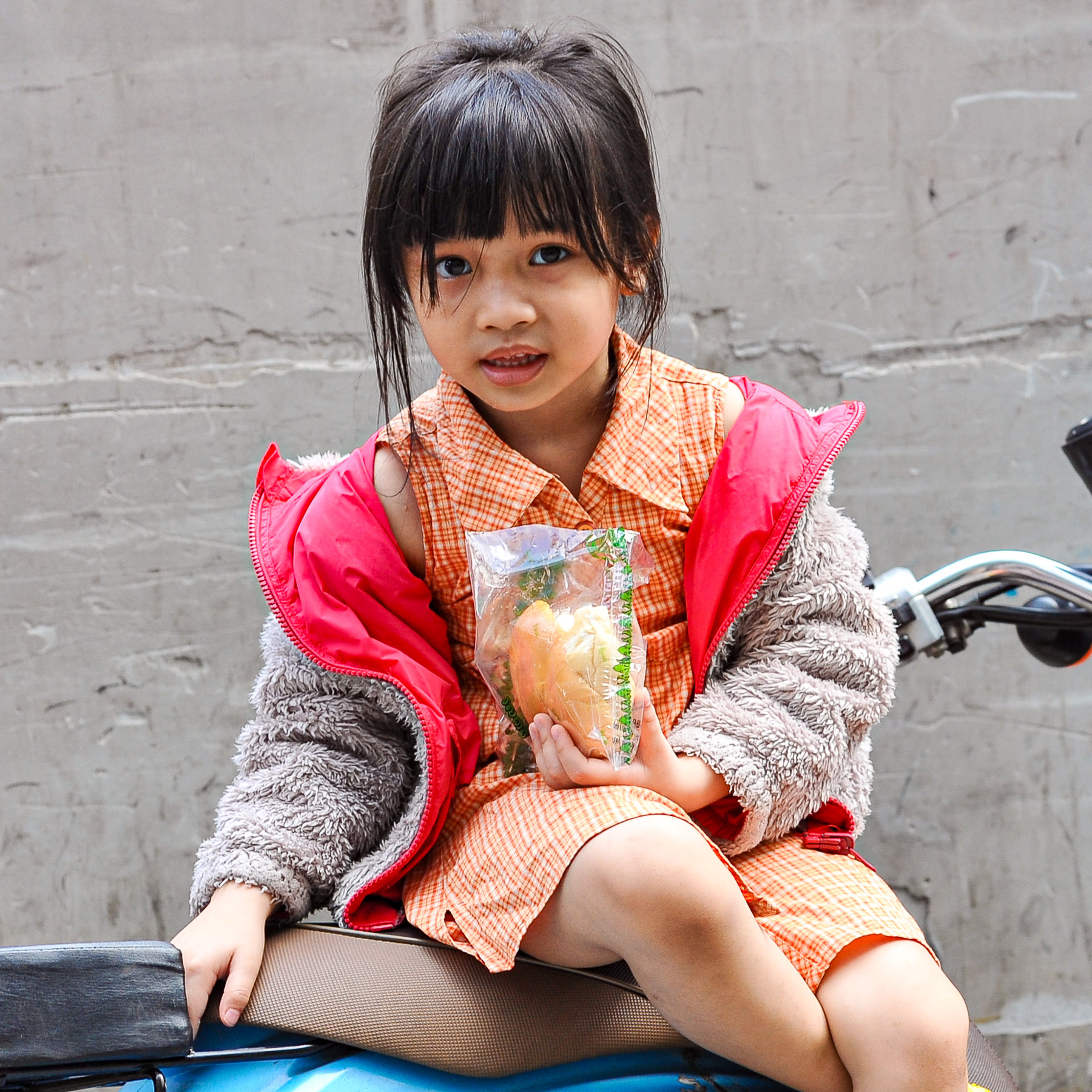
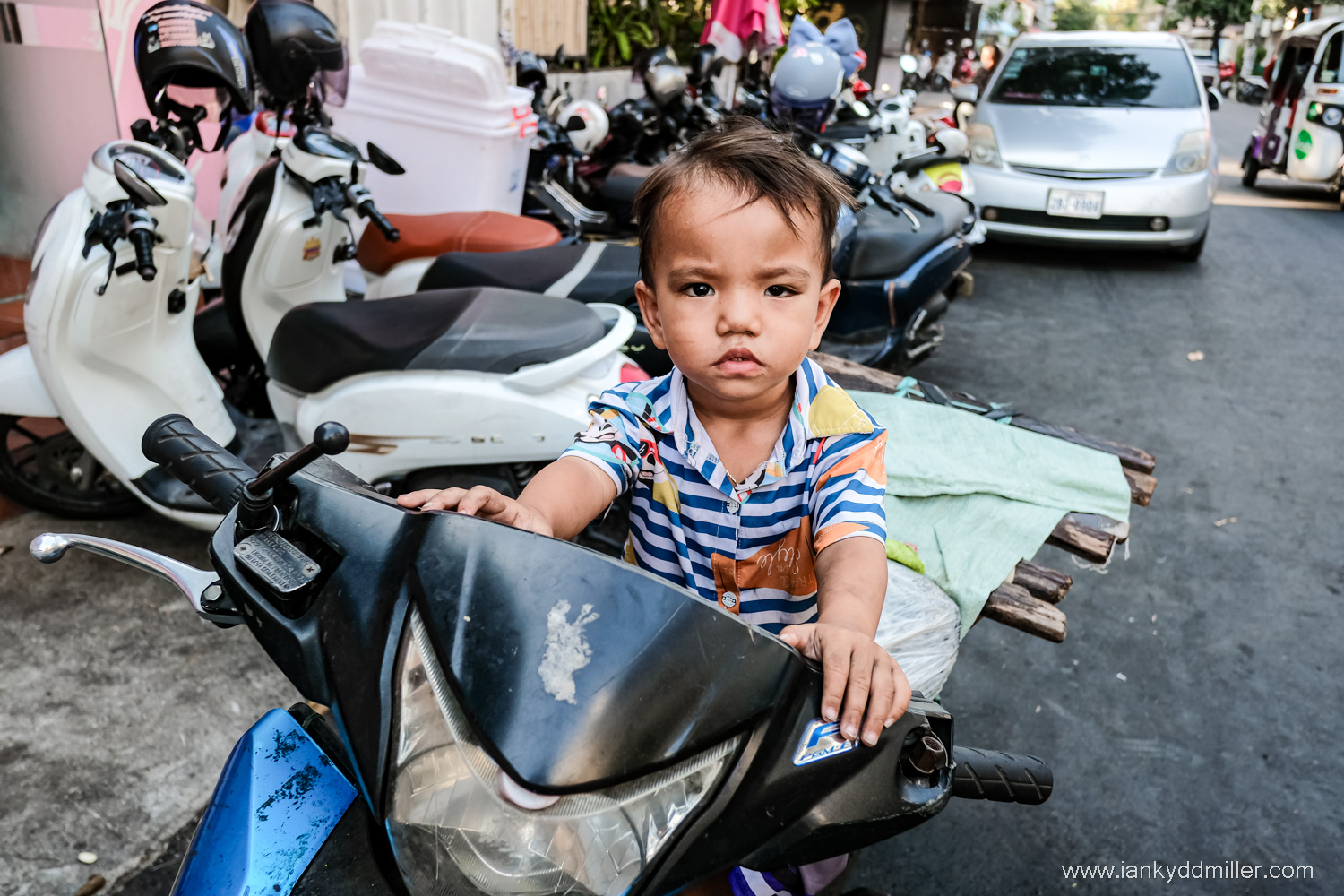
Look at the child turning towards the camera. The fine strands of hair, the texture of the clay pot and the light in the eyes are all there. I noticed the expression first. The detail lets me stay with it.
The D850 records a remarkable amount, but it asks something of the photographer too. A little camera shake can be plain to see if not handled with care, and it is a substantial body to carry all day.
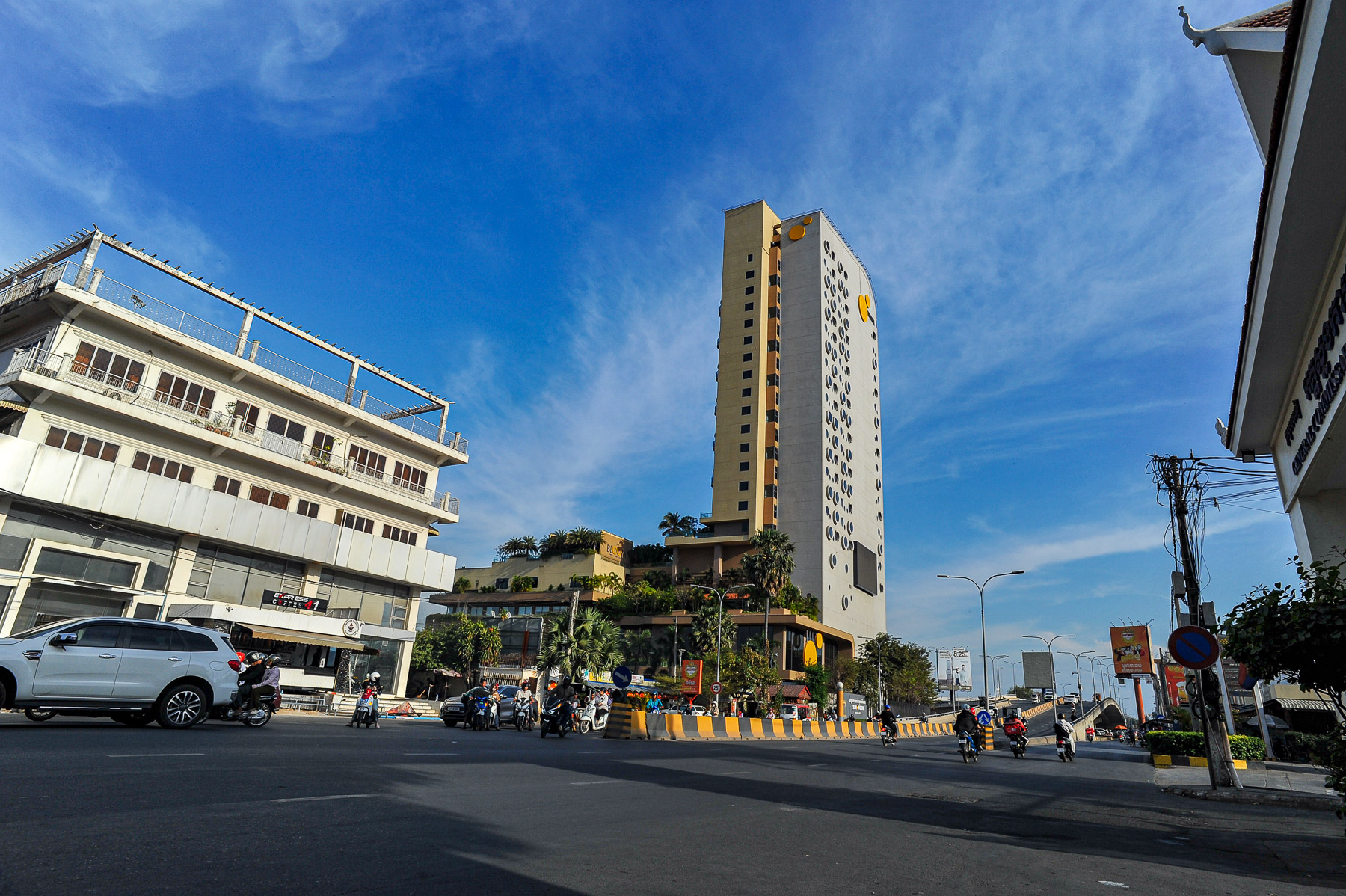
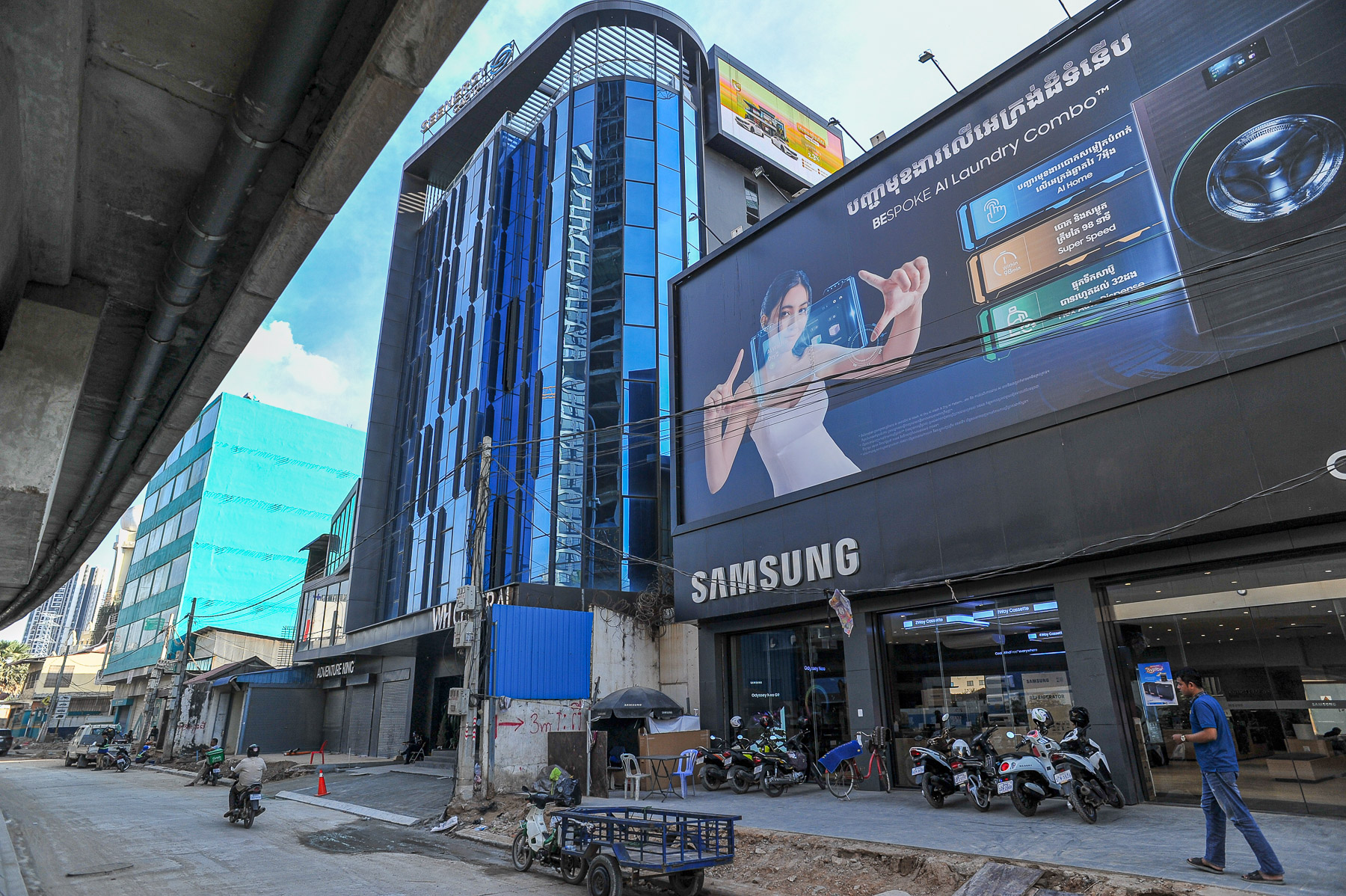
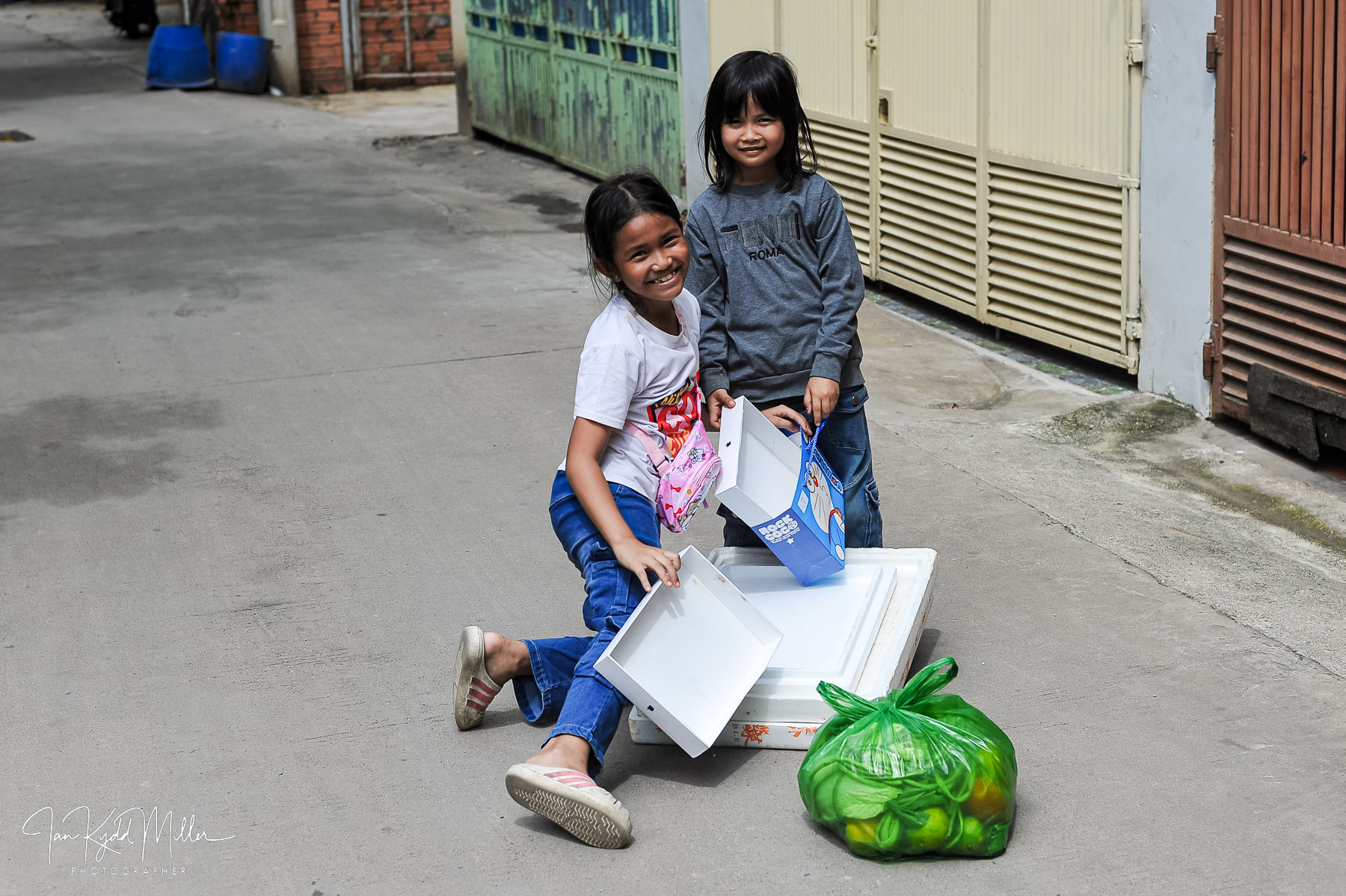
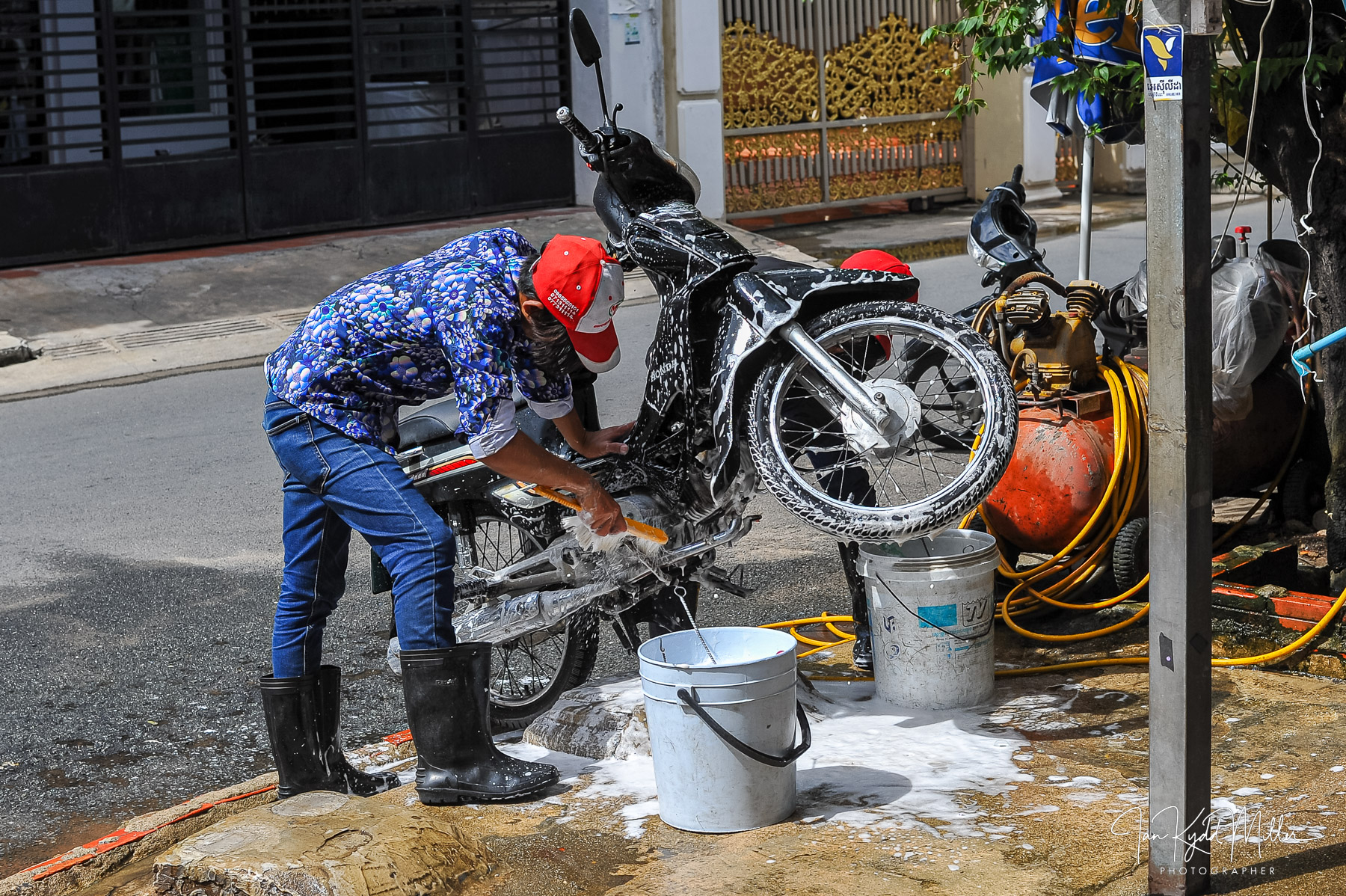
These three pictures were made with the D850. The colour, fine detail and clarity give me plenty to work with, while the children’s expressions give me a reason to care about the frames. I cannot call it the best DSLR for everybody. For the quality of photographs it can produce, though, I think it has a serious claim.
1. Stop hunting photographs. Walk. Watch. Give things time. The moment you start desperately searching for a “great photograph,” you begin imposing yourself on what is happening. Emotional pictures usually arrive before you have decided what they ought to look like.
2. Watch behaviour, not faces. Emotion isn’t necessarily a dramatic expression. Look at hands, posture, distance between people, hesitation, touch, avoidance, fatigue and where somebody is looking. A hand gripping a chair can sometimes tell you more than a face.
3. Photograph the moment around the moment. The obvious instant isn’t always the truthful one. Photograph before the smile. Photograph after the embrace. Stay after everybody thinks the photograph has been made. That little collapse of performance is often where the real person appears.
4. Don’t manufacture emotion. If somebody is frightened, poor, grieving, exhausted or vulnerable, you already have enough. You don’t need darker processing, theatrical angles or selective cropping to make their circumstances more dramatic. If reality isn’t powerful enough, don’t fake the missing power.
5. Get physically close—but know why. Close isn’t automatically intimate. Sometimes three metres tells the story better than thirty centimetres because the surroundings explain what is happening. Distance should serve the photograph, not demonstrate the photographer’s courage.
6. Let awkwardness remain awkward. Don’t tidy everything up. Strange gestures, uncomfortable spacing, imperfect expressions and visual tension may be precisely what makes the photograph human. Life rarely arranges itself into a portfolio.
7. Don’t confuse misery with meaning. A homeless person, crying child or exhausted labourer doesn’t automatically produce an important photograph. Vulnerability isn’t photographic currency. Ask yourself whether you’re revealing something or merely borrowing somebody else’s difficulty.
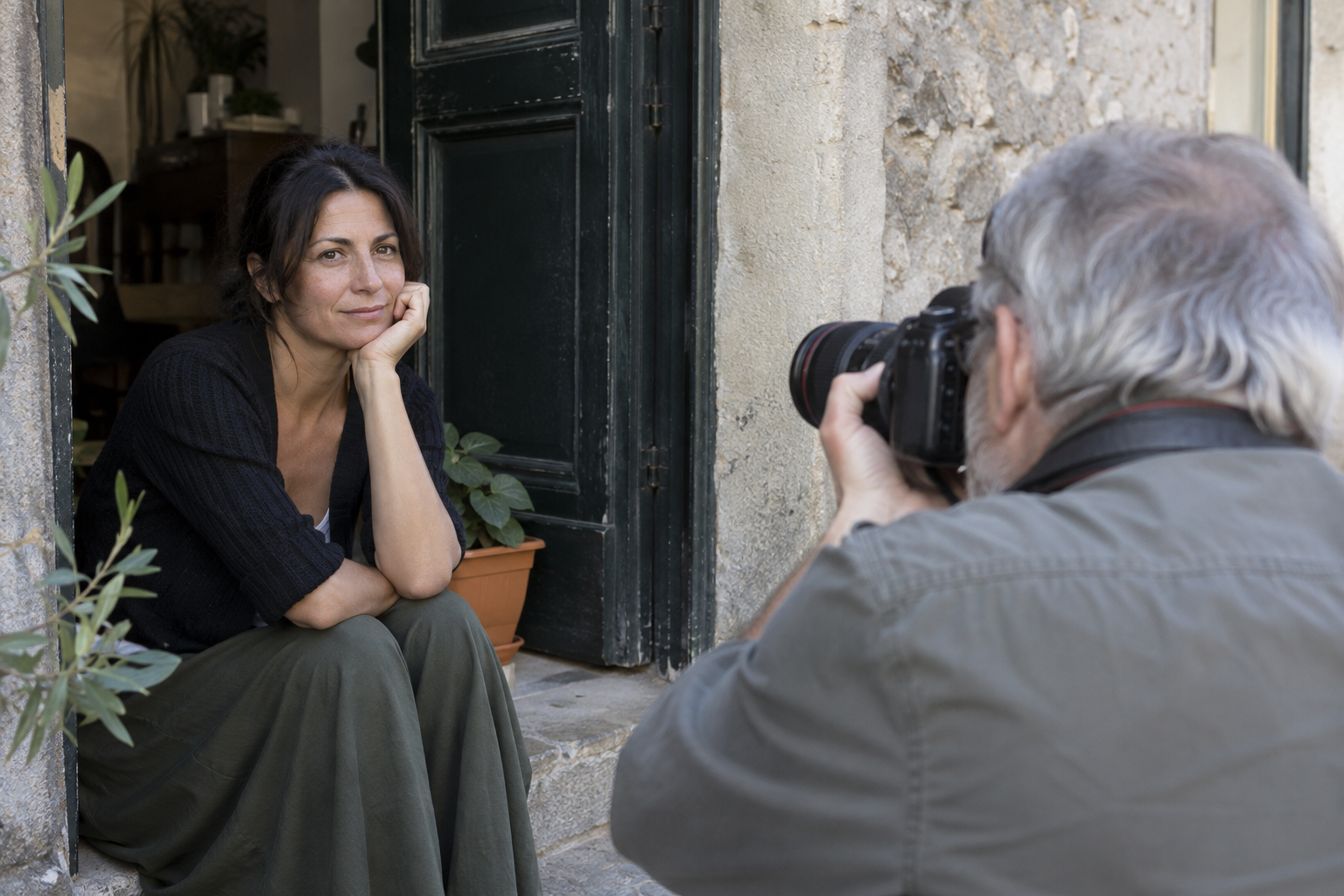
8. Portraits begin when posing ends. Make the expected portrait if necessary. Then keep talking. Lower the camera occasionally. Let the subject become bored with being photographed. Watch for the moment they stop presenting themselves and simply become themselves again.
9. Leave some questions unanswered. You don’t have to explain everything. Strong photographs often contain ambiguity. Give the viewer enough information to enter the picture, but don’t dictate exactly what they must feel.
10. Edit without mercy—but not without conscience. Ask three questions: Is this photograph true to what I witnessed? Have I changed its meaning through cropping or processing? Am I showing this because it matters, or because it makes me look like a serious photographer?
That last question can hurt. Good.
The five-second check
Immediately before pressing the shutter:
What am I actually seeing? What am I feeling? What is the subject doing rather than performing? What will disappear in the next second? Am I photographing this for them, for the story—or for myself?
Then make the picture.
And before publishing it, there is one final question:
Does this photograph preserve the humanity of the person inside it?
If the answer is no, technical excellence doesn’t rescue it.
Put the Tokina AT-X 24–70mm f/2.8 PRO FX onto a Nikon D850 and you’ve got roughly two kilograms of camera hanging from your shoulder. Add a spare battery, perhaps another lens and all the other rubbish photographers convince themselves they need, and by the end of a long day your shoulders know about it.
But pick the thing up and it makes sense.
The D850 is a substantial camera. The Tokina is a substantial lens. One balances the other. Left hand underneath the lens, right hand around that excellent Nikon grip, eye to the optical finder.
That’s how cameras used to be held.
And it still works.
One Lens, Most of the Job
The attraction of 24–70mm isn’t terribly exciting on paper.
That’s precisely why it’s so useful.
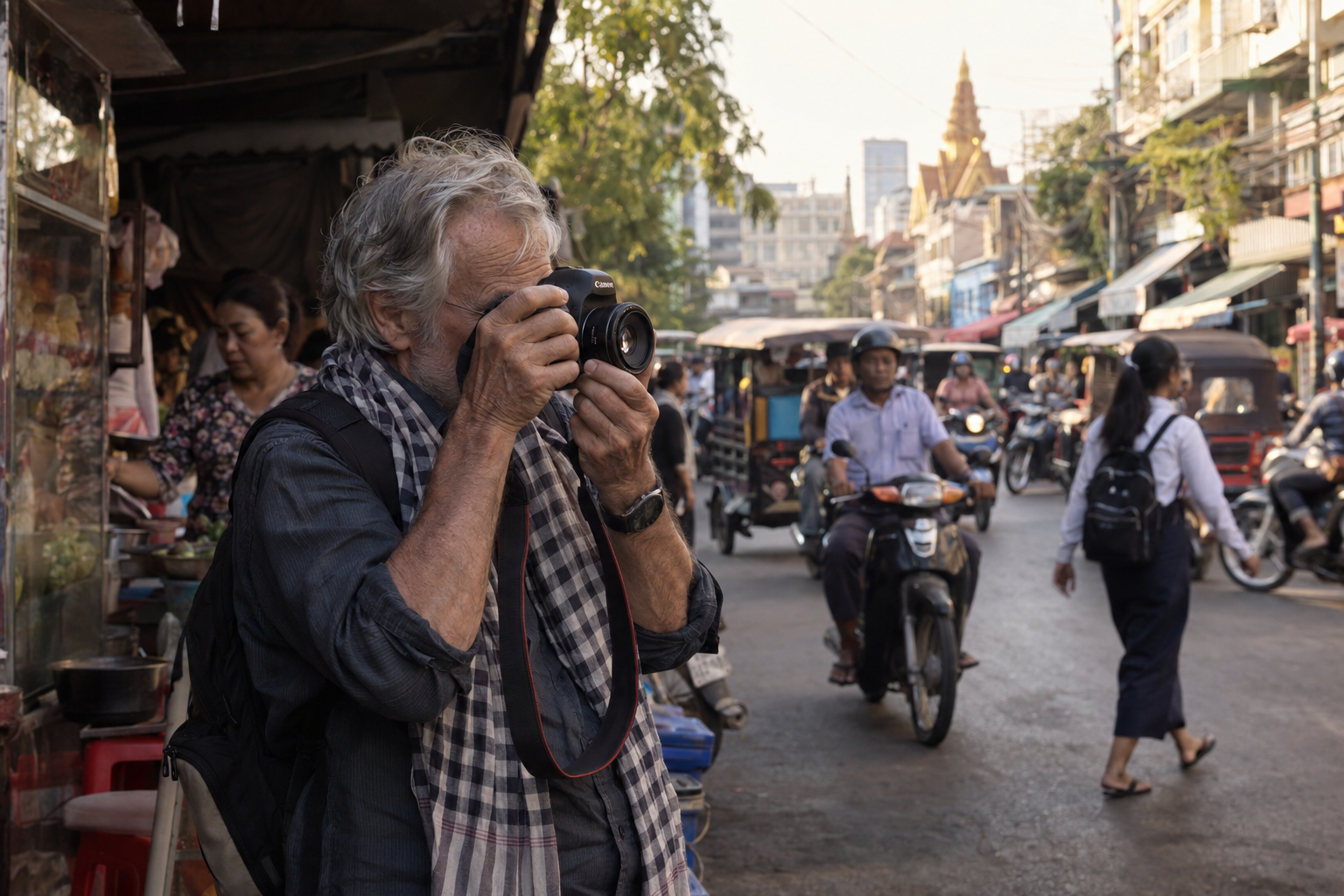
At 24mm, I can photograph somebody and still show where they are. The street, shop, market, workshop or room becomes part of the photograph rather than something turned into anonymous blur behind them.
Move towards 35mm and we’re in classic documentary territory. Enough width to provide context without making everything look stretched and theatrical.
At 50mm, the lens becomes wonderfully ordinary. I mean that as praise. The perspective doesn’t shout. You can simply get on with making the picture.
Then there is 70mm.
Now I can tighten things up. A face, a pair of hands, somebody working, a detail across the street. At f/2.8 there’s enough separation available without turning the background into meaningless mush.
That’s why the old 24–70mm professional zoom became such a standard piece of working equipment.
It isn’t particularly romantic.
It simply covers an enormous amount of photography.
But Can It Handle 45.7 Megapixels?
Yes.
And we can dispense with that argument fairly quickly.
Tokina itself described the optical design as intended to provide sufficient resolution for the emerging 50-megapixel DSLR generation, while independent testing on the D850 has measured strong performance from the combination.
Does that mean every pixel in every corner is perfect at 24mm and f/2.8?
Of course not.
But I’m not photographing test charts.
I’m photographing people.
If someone’s expression is right, the light is right and I’ve caught the moment, I have never looked at the resulting photograph and thought:
Bugger. The extreme lower-left corner could be four percent sharper.
That’s pixel peeping.
Photography has rather different requirements.
The D850 Will Expose Bad Technique
This is the more important problem.
Put 45.7 megapixels behind a lens and suddenly tiny mistakes become remarkably easy to see.
A little camera movement.
A shutter speed that was just slightly too slow.
Focus a centimetre behind the eye.
The D850 records all of it beautifully.
That doesn’t mean the lens isn’t sharp.
It means the photographer wasn’t.
With this combination I’d rather use 1/250 sec at ISO 800 than struggle at 1/60 sec simply because somebody once told me lower ISO means better image quality.
A sharp ISO 800 photograph beats a blurred ISO 64 photograph every bloody time.
Hold the camera properly.
Support the lens.
Watch the shutter speed.
Squeeze rather than stab the release.
The basics haven’t changed because cameras have.
F/2.8 Still Matters
Modern cameras have made high ISO so good that some people wonder whether we still need fast lenses.
We do.
Not simply for exposure.
F/2.8 gives choices.
It allows a faster shutter speed when somebody moves. It gives some control over depth of field. It makes a 70mm portrait quite different from the same picture made at f/8.
And when the Cambodian daylight finally disappears and the streets move into that wonderful mixture of shop lighting, fluorescent tubes, headlights and shadows, f/2.8 becomes very useful indeed.
The D850 already handles difficult light extremely well.
Give it an f/2.8 lens and there’s very little excuse for going home.
There Is a Price
Weight.
There’s no escaping it.
B&H’s hands-on testing reached much the same conclusion: the Tokina is decidedly heavy, but once shooting, they found it a versatile and solid performer with good sharpness.
This isn’t the lens I’d put on the D850 for a gentle six-hour wander when I didn’t know whether I’d take ten photographs or none.
For that I’d rather have a small prime.
The 85mm f/1.8G makes the D850 feel almost restrained by comparison.
But that’s a different sort of photography.
If I’m going somewhere because there may be pictures and I don’t know what those pictures are going to require, the Tokina becomes much more attractive.
Twenty-four to seventy.
F/2.8.
One body.
Get on with it.
And It Isn’t Discreet
Nobody sees a D850 with this thing attached and thinks you’re a tourist carrying a little happy-snap camera.
You’re quite obviously taking photographs.
I’m not convinced that’s necessarily a disadvantage.
Street photography has acquired a peculiar obsession with invisibility. Tiny black cameras, silent shutters and photographing people before they’ve realised you’re there.
Sometimes that’s useful.
But I’ve photographed people for long enough to know that your behaviour matters more than another few centimetres of camera.
Approach people properly.
Don’t behave furtively.
Don’t shove a lens into somebody’s face.
Know when the photograph isn’t yours to take.
And occasionally smile.
It works surprisingly well.
Heavy, Old-Fashioned and Bloody Useful
There are technically better lenses.
There are lighter lenses.
There are newer lenses.
And there are certainly smaller cameras than the D850.
Fine.
But photography isn’t a competition to see who can own the most recently released equipment.
The D850 remains an extraordinary picture-making machine. The Tokina gives it a fast, useful focal range in one solidly built lump of glass.
Put the two together and almost every ordinary excuse disappears.
Too wide? Zoom in. Too tight? Zoom out. Light disappearing? Open it to f/2.8.
Need more shutter speed? Raise the ISO.
Need 45.7 megapixels? You’ve got them.
Now there really isn’t much left to discuss.
There is only the irritatingly difficult bit.
Finding something worth photographing.
And no camera manufacturer has yet found a way of putting that in the box.
I rather like this combination because it runs against the idea that a high-resolution camera demands the latest glass.
It doesn’t.
What it demands is good technique.
At 35mm the lens gives you a useful environmental view for street work. Around 50mm it becomes beautifully ordinary — which is often exactly what you want. At 70mm you’ve got enough reach for portraits and details without carrying a separate short telephoto.
The constant f/2.8 aperture remains genuinely useful. Wide open, I wouldn’t expect the clinically perfect rendering of a modern 24–70mm. That’s rather missing the point. Stop it down to f/4 or f/5.6 and the old Nikkor can produce files with plenty of detail for the D850.
There are catches. It’s a push-pull zoom, which some photographers love and others regard as an invention of the devil. Autofocus is screw-driven rather than AF-S: quite fast on a D850, but decidedly more mechanical and noisy. There’s no VR. Close-focus performance isn’t its strongest characteristic, and individual examples now matter enormously because these lenses are getting old.
But there’s something appealing about putting one on a D850.
You have one of Nikon’s finest DSLRs attached to a professional zoom from another age. No electronic correction wizardry is required to make a photograph. No fashionable lens profile is going to rescue sloppy technique. Hold the thing properly, watch your shutter speed, put the focus where it belongs and make the exposure.
I’d be particularly interested in this combination for black-and-white street photography. The D850 gives you extraordinary tonal information, while the older 35–70 has a rendering that can be a little less brutally clinical than modern glass.
And there is another advantage that shouldn’t be overlooked: these lenses can often be bought for remarkably little money.
For someone already carrying a D850, I’d much rather see $100–200 spent on a clean 35–70mm f/2.8D and the rest spent getting out and making photographs than assume another expensive modern zoom is going to transform the work.
The D850 will certainly show you the limitations of the old lens.
It will also show you just how little those limitations matter when the photograph is good.
Today 4:30 PM
same camera with Nikkor 85mm f1.8G
The Nikon D850 with the Nikkor 85mm f/1.8G is a different proposition from the old 35–70mm f/2.8D. In many ways, I think it is an even better match for the D850—particularly for the sort of people photography you do.
Nikon D850 + 85mm f/1.8G — When Simple Works
There are combinations of camera and lens that don’t require much explanation. Put the Nikkor 85mm f/1.8G on a D850 and you have one of them.
The D850 provides 45.7 megapixels, excellent dynamic range and enough resolution to punish poor technique. The 85mm f/1.8G provides something rather simpler: a sharp, relatively light, fast short telephoto that gets out of the way.
I’ve always liked 85mm for photographing people. It gives me working distance without putting me on the other side of the street. I can isolate somebody from the confusion behind them while still retaining enough surroundings to tell us where they are.
On the D850, the 85mm f/1.8G is exceptionally useful.
At f/1.8, depth of field can become extremely thin at close distances. That’s lovely when it’s deliberate and bloody annoying when it isn’t. With a 45.7MP sensor, slightly missed focus doesn’t hide particularly well.
For ordinary street portraits I’d be quite happy around f/2.8–f/4. There’s still plenty of separation, but you’ve bought yourself enough depth of field to accommodate a slight movement from either photographer or subject.
And I’d keep the shutter speed up.
The old rule suggesting 1/100 second should be sufficient for an 85mm lens doesn’t account for what happens when you inspect a D850 file closely. 1/250 second is a much more comfortable starting point for people, and I’d happily use 1/500 if they’re moving. ISO is cheap; camera shake isn’t.
Where the combination shines
The 85mm f/1.8G doesn’t have VR, but I’ve never regarded that as much of a problem for photographing people. Stabilisation won’t stop the person in front of you moving anyway.
The lens is also wonderfully sensible in size. The D850 is already a substantial camera. Putting a huge f/1.4 prime on the front turns the whole arrangement into something considerably more conspicuous. The little f/1.8G keeps things manageable.
Autofocus is another advantage. Unlike the screw-driven 35–70mm f/2.8D, the 85mm has its own Silent Wave Motor. On the D850 it makes for a responsive, straightforward combination.
But what interests me more is the rendering.
The 85mm gives enough sharpness to exploit the D850 without making every face look as though it has been photographed for a dermatology textbook. At wider apertures the background falls away gracefully. Stop down and there is considerably more detail available than most photographs will ever require.
For street work
This is where things become personal.
Some photographers will immediately tell you that 85mm is too long for street photography. Apparently we’re all supposed to use 28mm or 35mm, get three feet away and demonstrate our courage.
Nonsense.
Focal length determines how you work. It doesn’t determine whether the photograph is street photography.
An 85mm lets me watch before stepping in. It allows expressions and gestures to develop without immediately changing the situation simply by being there with a camera.
There’s a trade-off. You can become lazy with an 85mm. Stand twenty metres away, shoot everything wide open and every photograph becomes a floating head against a pleasantly blurred background.
That’s portraiture by formula.
Move your feet. Look at the background. Sometimes use f/5.6. Include the bloke sitting beside your subject, the market stall, the battered wall, the motorcycle or whatever else explains why this person was worth photographing here.
That’s when the 85mm becomes interesting.
The D850 exposes mistakes
The great strength of the D850 is also its occasional irritation.
It records almost everything.
Poor focus, slight camera movement and careless technique that might disappear in a 12MP D700 file can suddenly become obvious when you’re staring at a D850 image at 100%.
That doesn’t mean the D850 is difficult to use. It means good camera handling matters.
I wouldn’t obsess over pixel-level sharpness. Nobody looking at a finished photograph gives a damn whether an eyelash is resolving perfectly at 200%. But if the whole photograph has that slight softness produced by camera movement, that’s another matter.
Hold the camera properly. Give yourself enough shutter speed. Focus carefully.
Then forget about it.
D850 + 85mm or D850 + 35–70mm?
They’re actually rather complementary.
The 35–70mm f/2.8D is the walkabout lens. It gives flexibility, environmental photographs, groups, street scenes and portraits without changing lenses. Its weight and build give me confidence and with good camera technique can produce really quite decent images.
The 85mm f/1.8G is more deliberate.
With the 85mm fitted, I’m already making a decision about how I’m going to photograph. I’m looking for people, faces, gestures, layers and small pieces of human behaviour rather than trying to cover everything.
And sometimes having fewer choices is useful.
After all these years making pictures, I’m increasingly convinced that one camera and one lens can be wonderfully liberating.
A Nikon D850 with an 85mm f/1.8G isn’t exotic. It isn’t fashionable. And it certainly isn’t small.
But put the strap over your shoulder, walk out the door and spend an afternoon looking for people rather than equipment.
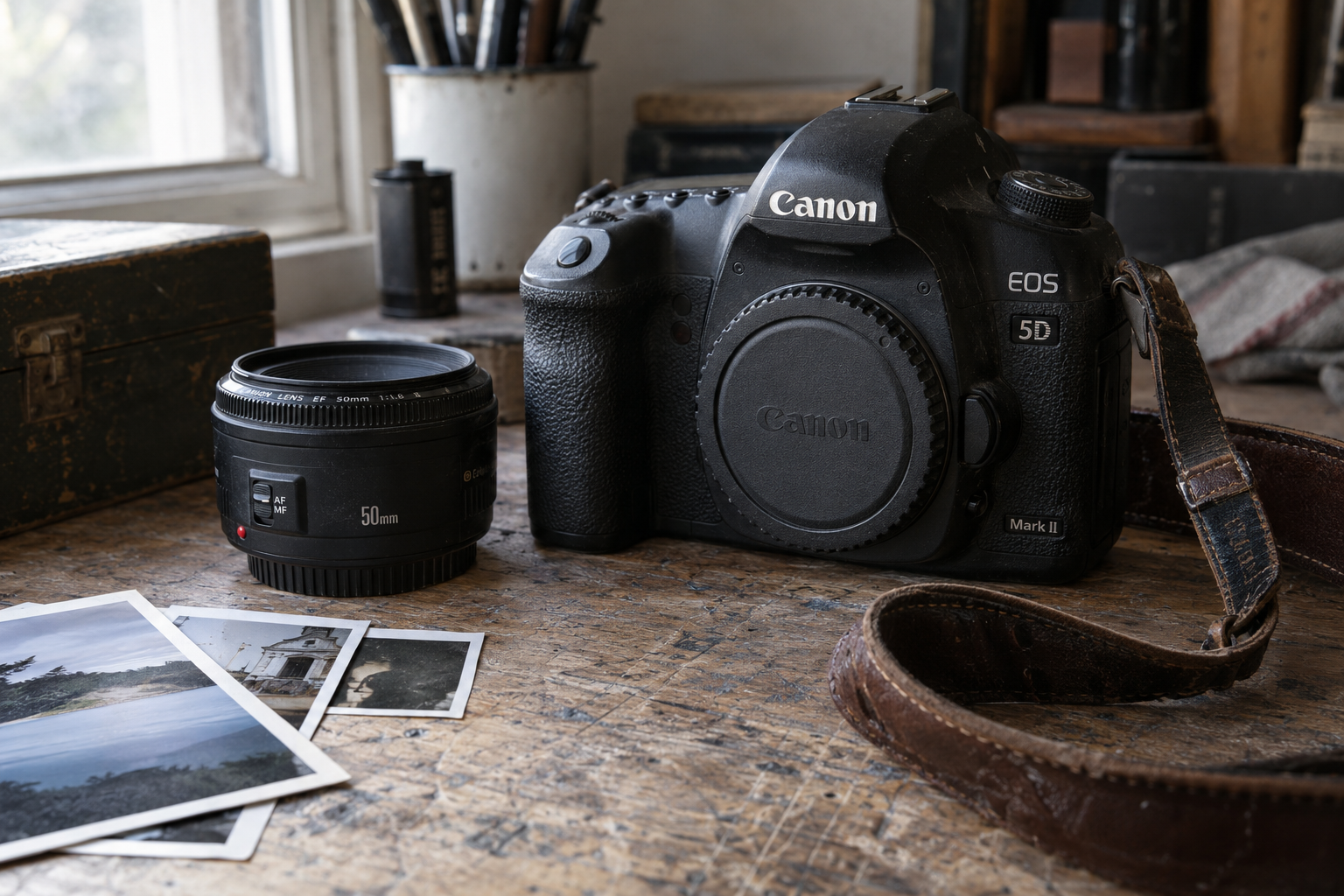
The Canon 5D Mark II arrived in 2008 carrying what then seemed an extraordinary 21-megapixel full-frame sensor. Today, surrounded by cameras offering twice the resolution, rapid electronic shutters and autofocus systems capable of finding an eye in a crowd, it appears rather ordinary.
It is not ordinary.
The 5D Mark II came from a period when digital cameras were becoming genuinely mature but had not yet become computers with lenses attached. It has enough technology to do serious work, but not so much that the photographer becomes a passenger.
There are weaknesses. The autofocus system is primitive by modern standards, particularly away from the central point. Its continuous shooting is leisurely. The rear screen is adequate rather than beautiful, and lifting deep shadows soon reveals the limits of the sensor. Anyone expecting the camera to correct poor timing, careless exposure or uncertain focusing will be disappointed.
That is also part of its appeal.
The 5D Mark II asks the photographer to pay attention. The central autofocus point is the dependable one, so you learn to use it properly. Exposure needs to be reasonably accurate. Highlights require watching because lost detail does not return easily. With moving subjects, anticipation matters more than frame rate.
This is not punishment. It is photography.
The camera feels reassuring in the hand. The body is substantial without reaching the weight of a 1-series Canon. The controls are straightforward, the viewfinder is large enough to work through comfortably, and the rear control wheel remains one of Canon’s finest ideas. Once familiar with it, the camera can be operated without much conscious thought.
Its shutter has a proper mechanical presence. Press the button and something happens. There is no silent electronic whisper and no burst of twenty nearly identical files. One exposure feels deliberate.
The image quality still holds up remarkably well. At lower ISO settings, the files contain excellent detail, natural colour and enough tonal depth for careful processing. Skin tones are especially pleasing. There is a gentleness to the pictures that suits portraits, documentary work and photographs made in ordinary light.
The 5D Mark II does not produce the clinically perfect files of newer cameras. Its shadows can become rough and its higher-ISO images carry visible noise. Yet photographs are not improved simply by having every imperfection removed. A little texture is not fatal. Sometimes it helps a picture retain the feeling of the moment in which it was made.
With a 35mm or 50mm lens, the camera becomes a simple and capable working tool. An 85mm lens turns it into a fine portrait camera. Good Canon L-series lenses suit it, naturally, but it does not require expensive glass to make worthwhile photographs. A modest prime and careful technique will usually achieve more than an impressive lens used without thought.
The camera also changed moving-image work. Its ability to record full-frame high-definition video helped place cinematic-looking footage within reach of independent filmmakers and working photographers. That part of its history is important, although for me its lasting value remains in the still photographs.
Using one now requires a modest change of pace. Batteries, CompactFlash cards and older menus remind us that this is no longer a current machine. There is no tilting screen, no in-body stabilisation and no electronic viewfinder showing the finished exposure before the shutter is released.
You look through the viewfinder, judge the light and make the photograph.
That still works.
The Canon 5D Mark II is cheap on the used market because technology has moved forward and fashion has moved even faster. Condition matters more than age. A heavily used professional body may have lived a hard life, while a carefully owned example can still provide years of service. Check the shutter, card slot, control wheels, autofocus and sensor before buying. Beyond that, it is a straightforward and durable camera.
Would I recommend it to everybody in 2026? No. A photographer needing dependable subject-tracking, silent operation, strong low-light performance or fast action coverage should look elsewhere. Modern cameras make those jobs considerably easier.
But ease is not the only measure of a camera.
For portraits, considered street work, documentary photography and the simple pleasure of making pictures, the 5D Mark II remains entirely capable. Its limitations are clear, but they are honest limitations. You quickly learn what the camera can do and then get on with using it.
It comes from a time when a camera was expected to provide a good sensor, a clear viewfinder, dependable controls and somewhere to attach a lens. The photographer was expected to supply the rest.
The Canon 5D Mark II will not find the photograph for you. It will not rescue every mistake or produce endless variations from which one acceptable frame might be selected.
It simply waits in your hands.
When the light, subject and timing come together, it makes the picture.
That was enough in 2008.
For a photographer who still values attention over automation, it remains enough today.
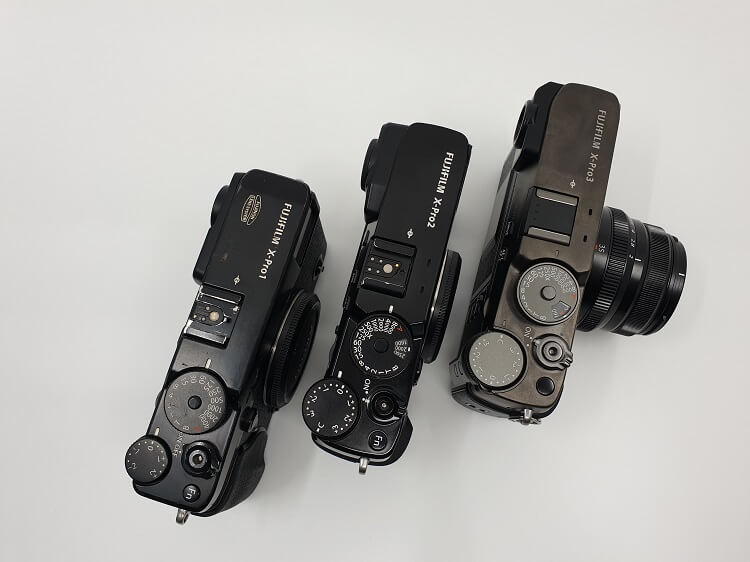
From left to right: the X-Pro1, X-Pro2 and X-Pro3. The family resemblance remained, but Fujifilm changed the experience considerably between generations.
The three Fujifilm X-Pro cameras look remarkably similar.
Place them together on a table and they appear to be variations on one stubborn idea: a rectangular camera, a viewfinder pushed into the corner and proper controls placed where a photographer expects to find them.
Pick them up and use them, however, and the differences become clearer.
The X-Pro1 was an imperfect beginning. The X-Pro2 turned the original idea into a dependable working camera. The X-Pro3 then became more opinionated, hiding its main screen and asking the photographer to accept Fujifilm’s philosophy as part of the purchase.
All three were built around the same question:
Can a digital camera provide modern convenience without constantly distracting us from the photograph?
None answered it perfectly. That is partly what makes them interesting.
The Original Idea
Fujifilm released the X-Pro1 in 2012 as the first interchangeable-lens camera in its X series. It introduced the company’s 16.3-megapixel APS-C X-Trans sensor and combined it with physical controls, film simulations and an unusual hybrid viewfinder.
It arrived when mirrorless cameras were still trying to establish what they were.
Some resembled small DSLRs. Others looked like enlarged compact cameras. The X-Pro1 took a different route. It borrowed the shape and working arrangement of a traditional rangefinder while remaining an autofocus digital camera.
It was not a rangefinder. There was no mechanical focusing patch and no direct connection between the lens and optical finder.
What it offered was a choice between an electronic viewfinder and an optical window with illuminated frame lines.
The electronic view showed what the sensor would record. The optical finder allowed the photographer to see beyond the edge of the frame.
For street work, that mattered.
A person could be seen approaching before entering the photograph. A gesture developing outside the frame did not remain hidden until it was too late. Instead of watching the world through a tunnel, the photographer retained some awareness of the surrounding scene.
That was the idea.
The reality was slower.
The X-Pro1: Beautiful Files, Hesitant Camera
The first X-Pro was not a fast machine.
Its autofocus could hesitate even in reasonable light. In darker streets it sometimes appeared to consider the situation, consult its solicitor and then decide whether focusing was worth the trouble.
Firmware updates improved it, particularly when paired with newer lenses, but they could not transform an early mirrorless focusing system into a modern one.
For portraits, travel, quiet streets and subjects that remained in approximately the same place, it worked. For children, demonstrations or rapidly changing situations, it could become frustrating.
We should not romanticise that.
There is a fashionable belief that a slow camera makes the photographer more deliberate. Sometimes it does. Sometimes it simply misses the picture.
Yet the X-Pro1’s files remain attractive. Sixteen megapixels is modest by current standards, but it is sufficient for good prints, publication and ordinary photographic work. The original X-Trans sensor omitted an optical low-pass filter, allowing it to extract convincing detail from that resolution.
Its photographs have colour and tonal transitions that many photographers still enjoy. They are often described as film-like, although that phrase has been exhausted by reviewers trying to make digital cameras sound romantic.
The X-Pro1 does not produce film photographs.
It produces pleasing digital files without making every face appear clinically inspected. That is enough.
With the small 18mm f/2 or 35mm f/1.4 lenses, it becomes a quiet and satisfying camera. The photographer learns its rhythm, focuses slightly ahead of the moment and stops expecting it to behave like something designed yesterday.
Its limitations are real, but so is its appeal.
The X-Pro2: The Working Camera
The X-Pro2 was the camera the original model had been trying to become.
Resolution increased to 24.3 megapixels. Autofocus became faster and more dependable. The body gained weather sealing, a second card slot and a more developed hybrid finder. The electronic display contained 2.36 million dots, while the optical finder offered two magnifications to suit different focal lengths.
These were substantial improvements, but the important change was not found in a specification.
The X-Pro2 felt ready for work.
It retained the rectangular shape, traditional controls and viewfinder position, but fewer of its quirks stood between the photographer and the picture. It was still slower than the best professional DSLRs of its time, yet it no longer demanded an excuse every time the subject moved.
The files were large enough to permit reasonable cropping without encouraging laziness. Image quality was entirely sufficient for professional publication and substantial prints.
Twenty-four megapixels remains enough now.
New cameras have not reduced the information contained in an older file. They have merely given photographers additional resolution, much of which is spent correcting decisions that should have been made before the shutter was released.
Cropping is a legitimate part of photography. Relying upon it as a substitute for framing is something else.
The X-Pro2 also introduced Acros, Fujifilm’s more sophisticated black-and-white simulation. It could produce restrained monochrome JPEGs with convincing tonal separation, though it could not decide whether a photograph deserved to be black and white.
No simulation can make an empty photograph meaningful.
The Most Balanced of the Three
The X-Pro2 may be the least romantic member of the family, and perhaps the best.
The rear screen remains visible. Photographs can be checked without unfolding anything. The optical finder is there when it suits the subject, while the electronic finder is available when precise framing or exposure matters more.
The camera offers a point of view without imposing a doctrine.
That makes it particularly appropriate for street work. With a compact 23mm, 27mm or 35mm lens, it is unobtrusive without pretending to be invisible. Its shutter is quiet, the body lies flat against the photographer and the essential controls can be adjusted without extensive menu work.
The combined ISO and shutter-speed dial is less convincing. Changing ISO requires lifting and turning the outer collar. It is a handsome piece of engineering that makes a simple adjustment slightly awkward.
Fortunately, Auto ISO works well.
Set an appropriate minimum shutter speed, choose the aperture and use the exposure-compensation dial as the light changes. Then stop fiddling.
The camera has done its part.
The X-Pro3: A Camera with an Opinion
The X-Pro3 arrived in 2019 with a 26.1-megapixel X-Trans CMOS 4 sensor, improved autofocus, a higher-resolution electronic viewfinder and titanium top and bottom plates.
Those were sensible improvements.
Then Fujifilm hid the screen.
The main monitor faces inward when folded against the body. On the outside is a small secondary display that can show basic settings or a graphic resembling the end of a film box. To review photographs or use the main screen, it must be folded down.
Some photographers considered this inspired. Others thought it absurd.
Both positions are understandable.
Fujifilm wanted photographers to stop looking at the last picture and return their attention to the next one. Constantly reviewing every exposure can become a nervous habit. It interrupts observation and replaces confidence with reassurance.
But checking an important frame is not a moral failure.
A working photographer may need to confirm focus, expression or exposure. There is no virtue in returning home with a failed photograph merely because the camera encouraged behaviour resembling 1975.
The hidden screen does not make the X-Pro3 more authentic. It simply changes the inconvenience involved in reviewing an image.
For some photographers, that inconvenience creates discipline. For others, it creates irritation.
Three Cameras, Three Temperaments
Camera
Character
Strength
Compromise
X-Pro1
Slow, original and imperfect
Pleasing files and the purest expression of the idea
Hesitant autofocus and dated operation
X-Pro2
Practical and balanced
Best combination of hybrid finder, controls and usability
Older autofocus and no stabilised body
X-Pro3
Fastest and most opinionated
Improved sensor, finder and responsiveness
Hidden screen and a design that dictates behaviour
All three use APS-C sensors and interchangeable Fujifilm X-mount lenses. None has in-body image stabilisation. Stabilisation, where available, must come from the lens.
That matters less with short prime lenses in good light. It matters considerably more when working slowly in dark interiors or attempting to hold longer lenses steady.
The X-Pro cameras make most sense with compact primes.
A 23mm lens provides a moderately wide view suitable for busy streets and environmental portraits. The 27mm is extremely compact. A 35mm gives approximately the angle of view of a 50mm lens on full frame and encourages a slightly more selective way of looking.
Large zoom lenses can be fitted, but they interfere with the optical finder and disturb the balance of the body.
This is not because prime lenses are morally superior. They simply suit these cameras.
The Optical Finder and the Street
The optical finder is the feature that separates the X-Pro line from most other interchangeable-lens mirrorless cameras.
It permits the photographer to see outside the approximate frame, but that freedom comes with imprecision. The finder does not look through the lens. Framing changes as the camera focuses closer, and parallax becomes more important at short distances.
The photographer must accept that the bright frame is a guide rather than a promise.
That can feel untidy after years of precise electronic viewing. It can also be liberating.
Street photography rarely waits for geometrical certainty. People move. Cars enter the background. Hands rise and disappear. Expressions change before the autofocus box has finished congratulating itself.
Seeing beyond the frame helps the photographer anticipate these changes.
The electronic finder remains better for exact composition, longer lenses, close subjects and difficult exposure. There is no prize for refusing to use it.
The switch between the two finders is not a contest between traditional and modern photography. It is simply a choice of tool.
Discretion and Responsibility
The X-Pro cameras are regularly described as discreet.
They are smaller and quieter than professional DSLRs carrying large zoom lenses. Their rectangular bodies attract less attention and do not announce themselves in quite the same way.
But discreet is not invisible.
People can see the photographer. They may understand what is happening and decide that they do not want to be photographed. A small black camera does not remove responsibility, and rangefinder styling does not confer ethical permission.
The same questions apply with every camera:
What am I photographing?
Why am I photographing it?
Does the frame preserve context, or does it manufacture drama?
Am I recognising another person’s experience, or using their difficulty as decoration?
A camera cannot answer those questions. Autofocus detection will identify an eye, but it cannot decide whether the person should be photographed.
Sometimes the correct response is to make the picture.
Sometimes it is to speak first.
Occasionally it is to lower the camera.
Film Simulations and the Search for Authenticity
Fujifilm’s film simulations are one reason these cameras remain popular.
They provide useful colour and monochrome starting points, especially for photographers who want finished JPEGs rather than an evening spent moving sliders. Classic Chrome, Acros and later Classic Negative can all be effective.
They do not reproduce film exactly, nor do they need to.
A film simulation cannot provide timing, composition or emotional weight. It cannot turn weak light into strong observation. It cannot make a decorative street scene socially important.
Use the simulations because they suit the photograph.
Do not use them to manufacture nostalgia.
An old-looking JPEG of a badly observed subject remains a badly observed photograph.
Which One Would I Choose?
The X-Pro1 is the choice for someone prepared to accept slow operation because they particularly enjoy its files and original character. It is best treated as a deliberate camera rather than an inexpensive route into fast street photography.
The X-Pro3 is for photographers who understand and actively want its unusual screen arrangement. Buying it while hoping to tolerate the design would be a mistake. Its eccentricity is not an incidental detail. It is the camera’s central argument.
The X-Pro2 is the sensible choice.
It preserves the hybrid finder, traditional controls and compact working style without turning inconvenience into philosophy. It is fast enough for most ordinary street work, produces excellent files and permits the photographer to check the rear screen without performing a small ceremony.
That does not automatically make it the most interesting of the three.
It makes it the one most likely to disappear during use.
For a working camera, that is high praise.
Buying Any of Them Used
All three models are discontinued, making condition and price more important than reputation.
Check the hybrid-viewfinder selector carefully. Test both optical and electronic modes. Inspect the sensor, lens mount, command controls, card slots and battery compartment. Confirm that the frame lines respond properly when different lenses are attached.
With an X-Pro3, inspect the folding-screen mechanism and ribbon connection particularly carefully. With an X-Pro1, test autofocus in poor light rather than beneath the flattering illumination of a camera shop.
Budget for batteries. Old batteries can show a full charge and then collapse with the suddenness of a disgraced politician.
Cosmetic wear is not necessarily important. A working camera will collect marks.
But scratches are not proof of character, and age is not proof of quality.
Pay for condition and function—not somebody else’s nostalgia.
What the Three Cameras Got Right
The X-Pro1, X-Pro2 and X-Pro3 are not the fastest, most efficient or most technically complete cameras of their respective generations.
Their importance lies elsewhere.
They were designed around looking.
The corner-mounted finder leaves the photographer’s face less completely hidden. The optical view permits awareness beyond the frame. The physical controls allow the camera to be prepared before it reaches the eye. Small lenses keep the equipment from becoming the event.
The X-Pro1 established the idea but struggled to keep pace with life.
The X-Pro2 refined it into a dependable working camera.
The X-Pro3 pushed it into something more deliberate, controversial and personal.
None will make anybody a better photographer.
They cannot provide curiosity, patience, courage or empathy. They cannot tell us where to stand, when to release the shutter or when another human being deserves to be left alone.
What they can do—once learned—is become quiet.
The controls fall to hand. The viewfinder opens onto the street. The machinery recedes and attention moves outward, towards faces, gestures, light and the brief arrangements that will never occur in precisely the same way again.
The camera is not the photograph.
The best cameras eventually help us forget that they are there.
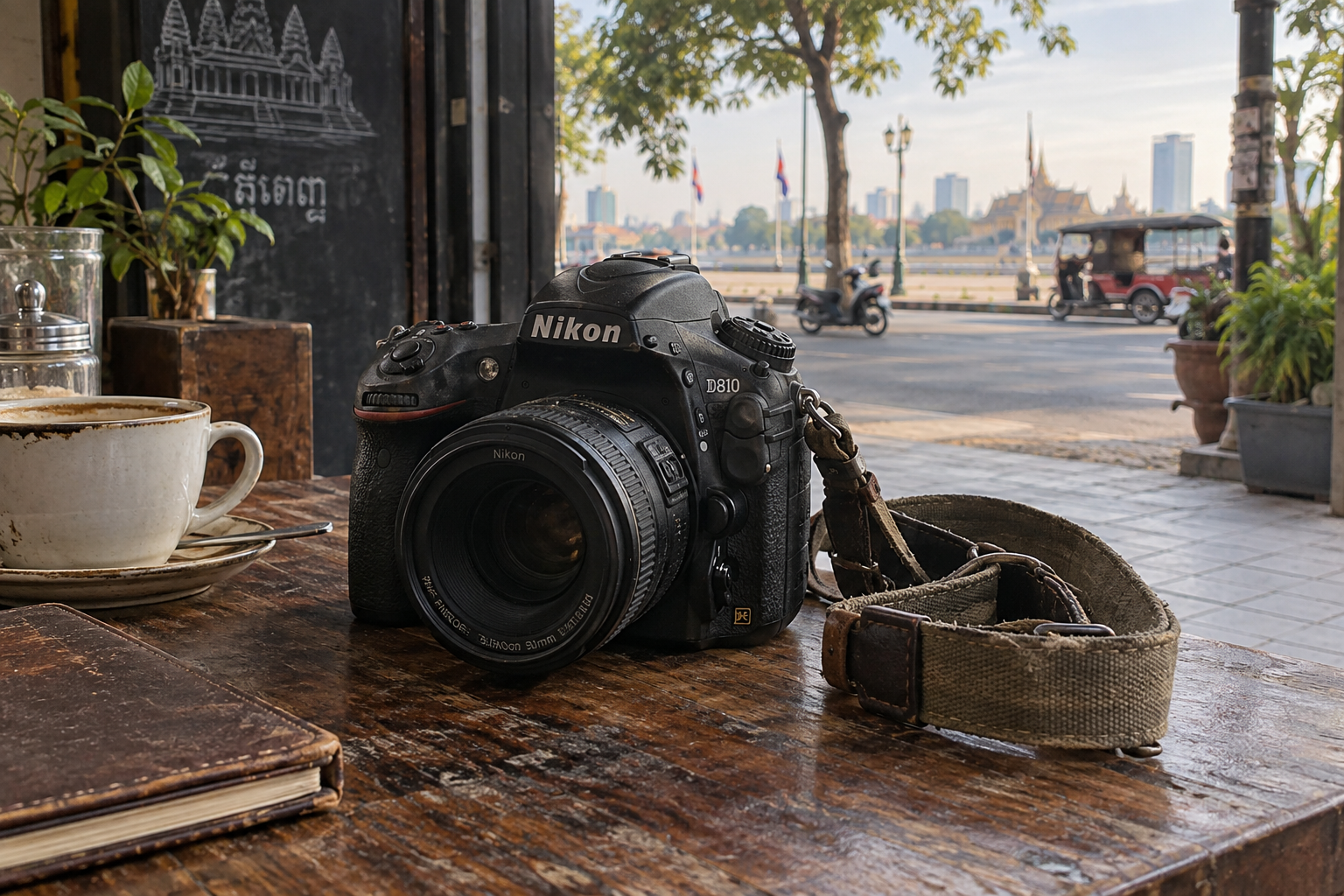
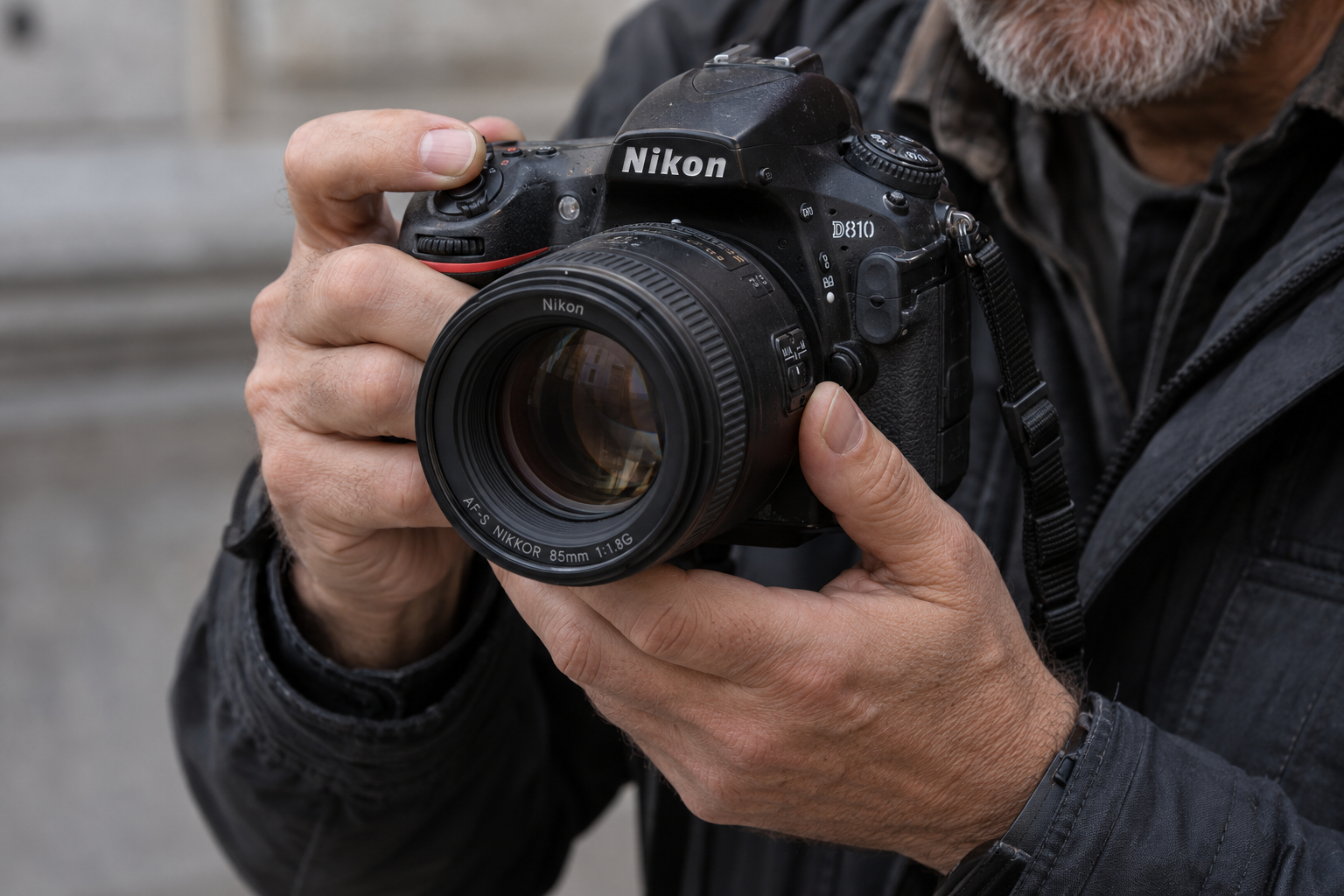
The Nikon D810 arrived in 2014 carrying a formidable reputation. Its 36-megapixel sensor promised extraordinary detail, wide dynamic range and files that could tolerate serious work in post-production. More than a decade later, none of that has ceased to matter. A good camera does not suddenly become incapable because the calendar has moved on.
I bought mine used, as I have bought nearly every camera I have owned. It made sense. The first owner absorbed the painful part of the price, while I acquired a professional camera still capable of producing exceptional photographs.
The D810 is not a small camera, although it sits comfortably in the hands. It feels like a proper Nikon: substantial, sensibly arranged and built for photographers who prefer buttons and dials to endless journeys through menus. With the right lens attached, it becomes a wonderfully balanced working tool.
Its great strength is the sensor. At lower ISO settings, the files contain remarkable detail and allow generous recovery from shadows. Skin, fabric, weathered walls and the fine chaos of a city street are all recorded with considerable precision. The absence of an optical low-pass filter helps extract everything a good lens can provide.
But that resolution demands discipline.
The D810 will expose poor technique with little sympathy. Camera movement that might remain hidden in a smaller file becomes obvious when the image is examined closely. Shutter speed matters. Holding technique matters. The way the shutter is pressed matters. A sharp lens will not rescue a camera that moved at the decisive moment.
That does not make the D810 difficult. It simply asks the photographer to pay attention.
For street photography, 36 megapixels can seem excessive. The files are large, the frame rate is modest and the camera is hardly discreet. Yet it can be an excellent street camera when used deliberately. It suits the photographer who watches, anticipates and makes individual frames rather than spraying a scene with continuous bursts.
A 50mm lens makes it a straightforward walkabout camera. An 85mm f/1.8G gives it reach, separation and a little more working distance—particularly useful for the kind of candid street portraits I favour. The combination is capable of tremendous sharpness, though I generally keep the shutter speed higher than I would with my D700.
That comparison is unavoidable. The D700 remains one of my favourite street cameras. Its files are smaller, its controls feel immediate and it somehow encourages a more instinctive way of working. The D810 is more considered. It offers greater resolution and more freedom to crop, but it expects better handling and more storage.
Neither camera makes the photograph. They merely influence the way I approach it.
The D810 is especially convincing for portraits, documentary work, architecture, landscape and any subject where fine detail matters. Its quieter shutter mode can help in restrained situations, although nobody will mistake it for a silent mirrorless camera. It remains a traditional DSLR, complete with mirror movement, optical viewfinder and reassuring mechanical presence.
Its weaknesses are mostly products of its generation. Live-view autofocus feels slow by modern standards. Video facilities are dated. Wireless connectivity is absent without accessories, and the rear screen does not tilt. Anyone wanting eye-detection autofocus, effortless subject tracking or immediate transfer to a telephone will find newer cameras more convenient.
Those things matter to some photographers. They matter rather less to me.
What counts is the finished picture. The D810 continues to produce files of a quality that would once have been considered astonishing—and still ought to be. A well-exposed photograph made with good light and sound technique does not carry its manufacture date in the corner.
The Nikon D810 is no longer fashionable. That may be one of its greatest attractions. Used examples offer an extraordinary amount of camera for the money, provided the condition and shutter history are checked carefully. Batteries, cards and excellent F-mount lenses remain readily obtainable.
It is not the quickest camera, the lightest camera or the cleverest camera. It is something better: a serious photographic instrument whose abilities exceed the needs of most people carrying it.
In 2026, the Nikon D810 is not obsolete. It is simply used—and so am I. We still have pictures to make.
Fear changes the way we see. It sharpens some details and removes others. Time becomes uncertain. A few seconds can feel prolonged, while an entire sequence of events may pass before we fully understand what has happened.
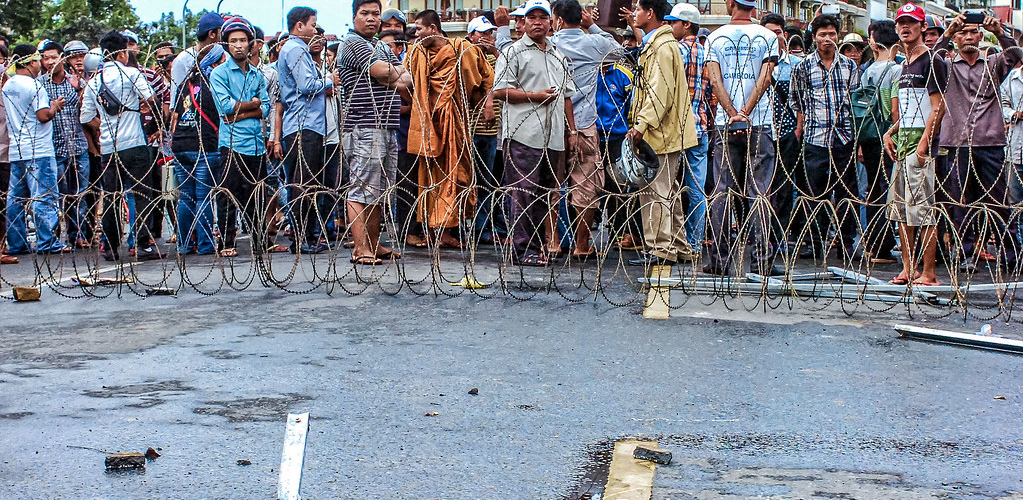
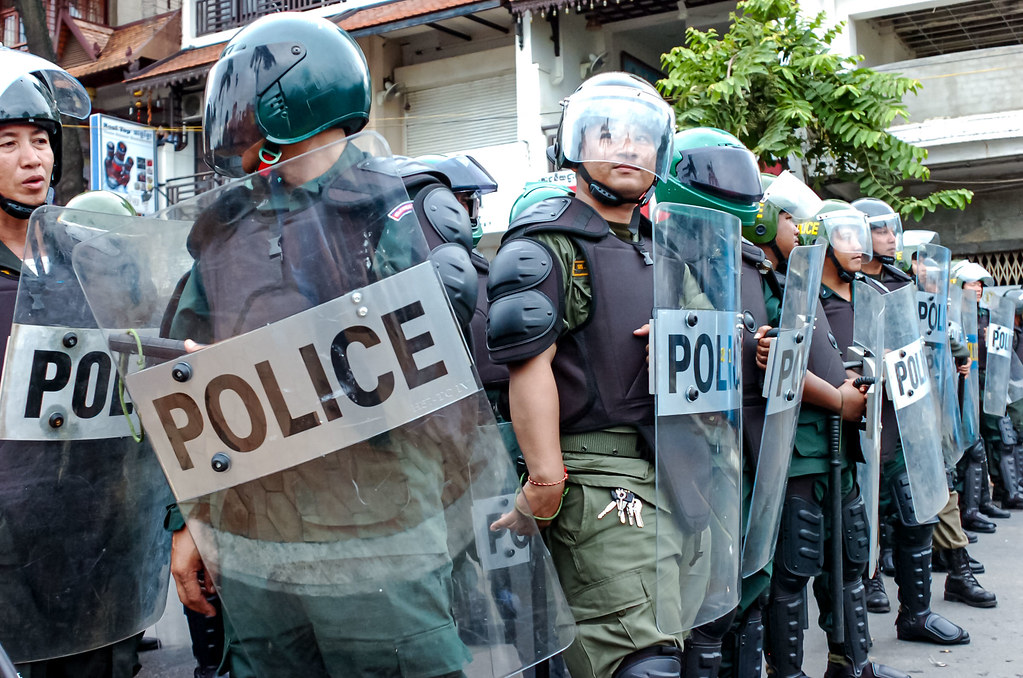
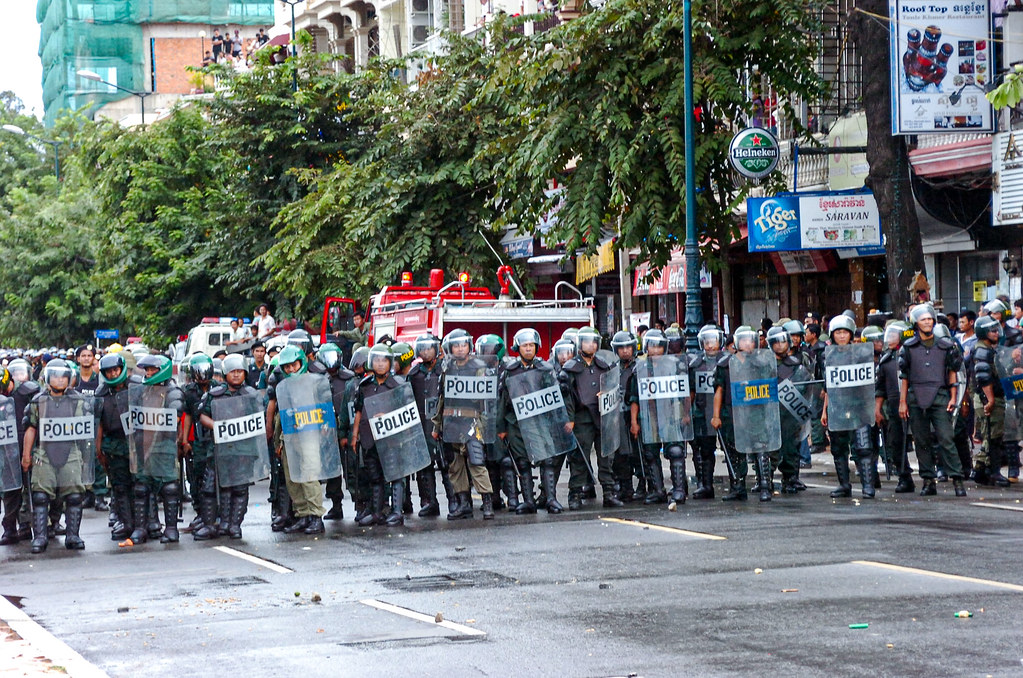
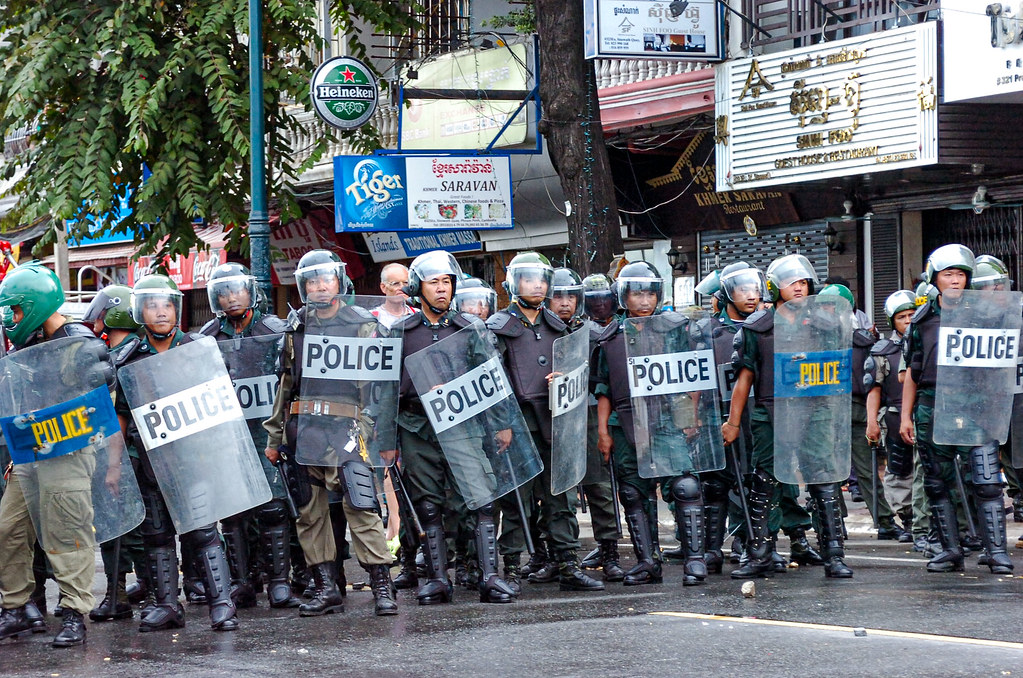
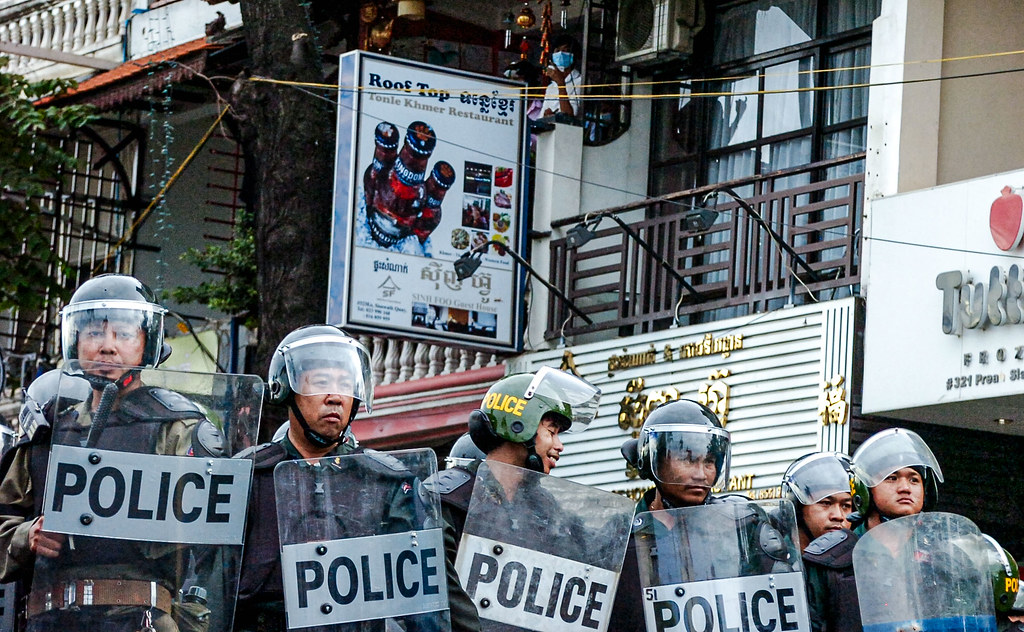
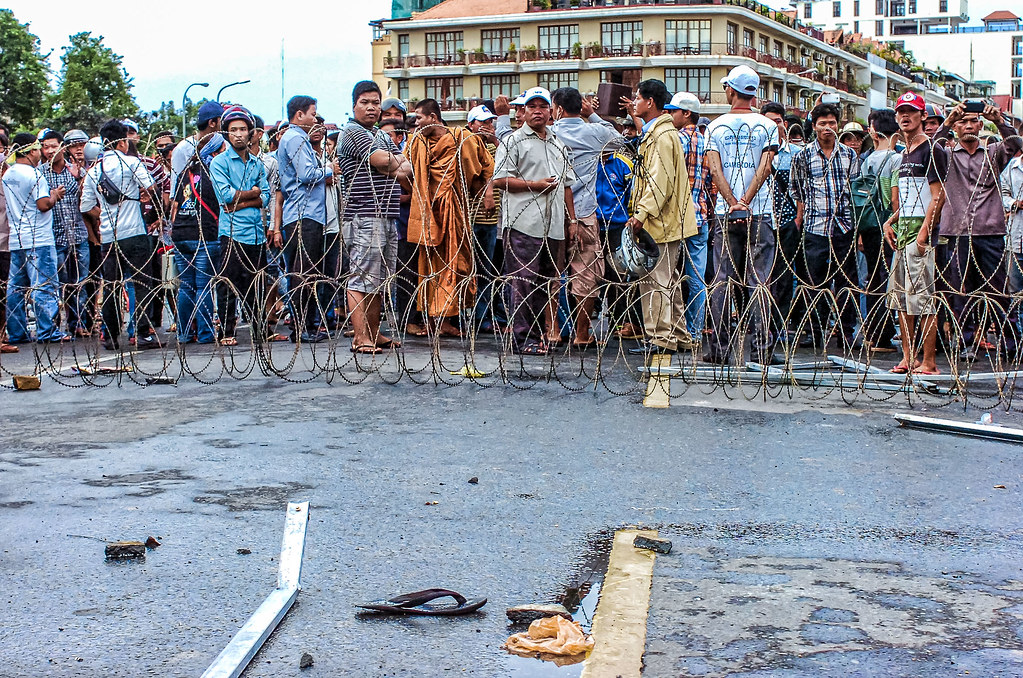
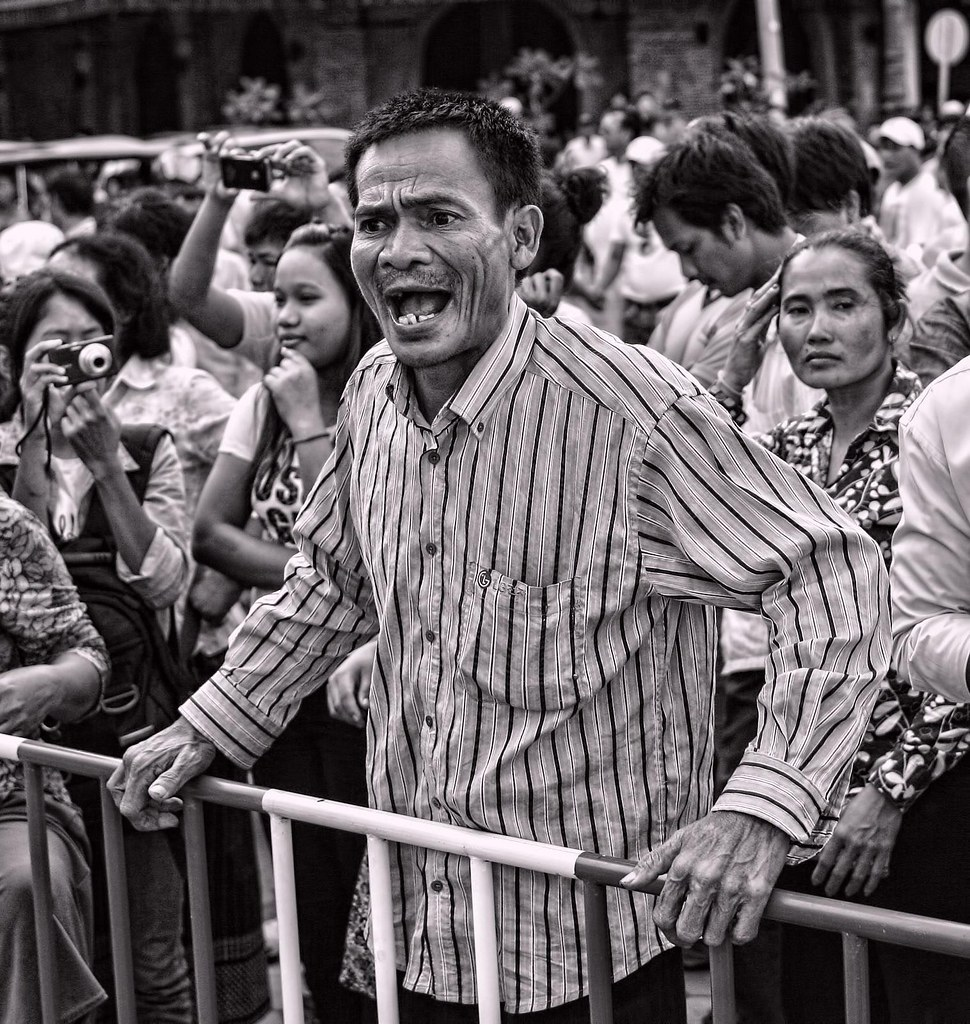
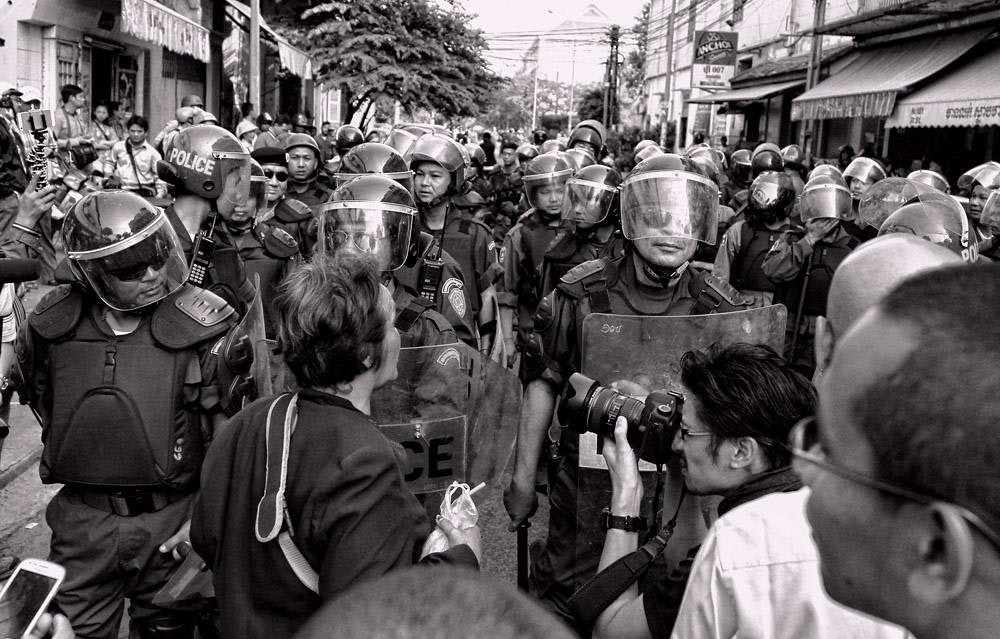
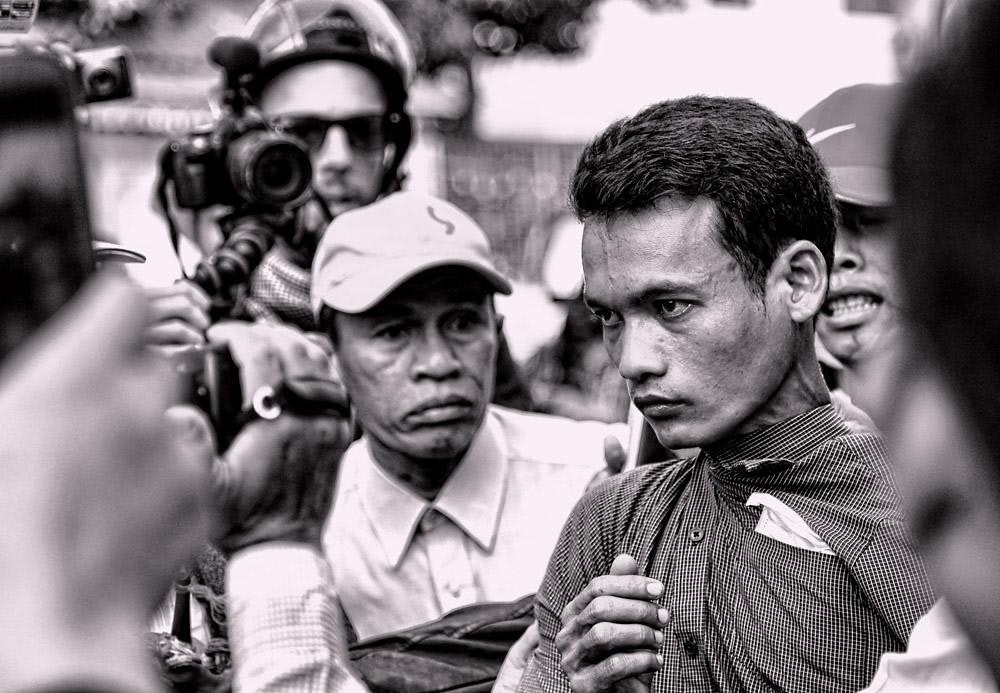
I have photographed fear in several forms. Sometimes it was obvious: police lines, angry crowds, flying bottles and the noise of a demonstration turning violent. At other times, it was almost invisible—a child waiting for dental treatment, watching the instruments being prepared and trying not to show what they were feeling.
The two situations are not the same, but the photographer carries a similar responsibility into both. Fear creates vulnerability. It also creates dramatic photographs, and that is where the moral difficulty begins.
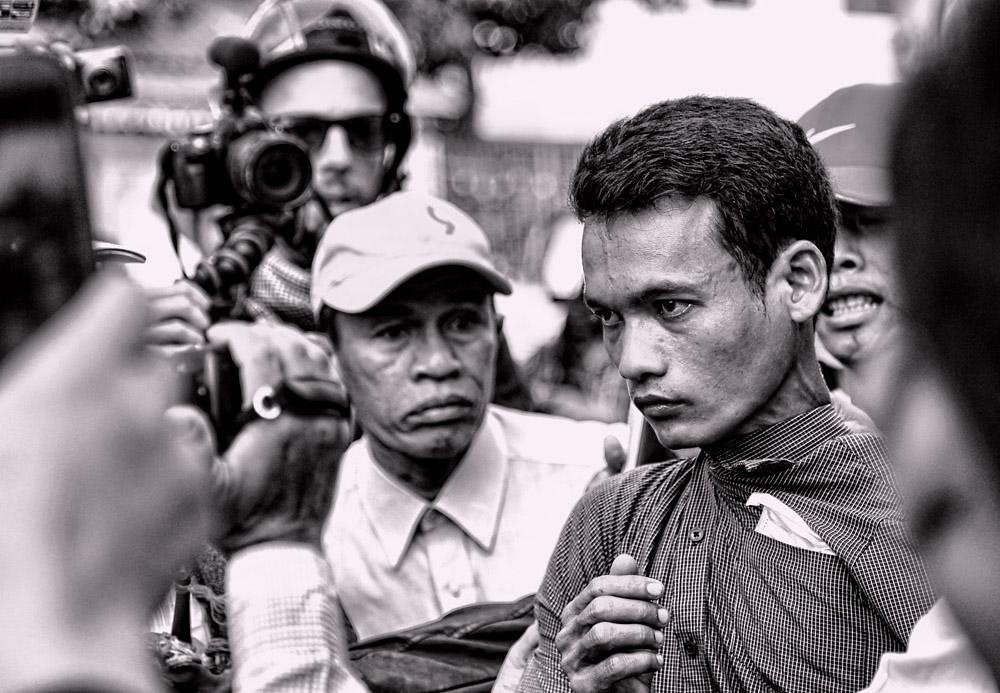
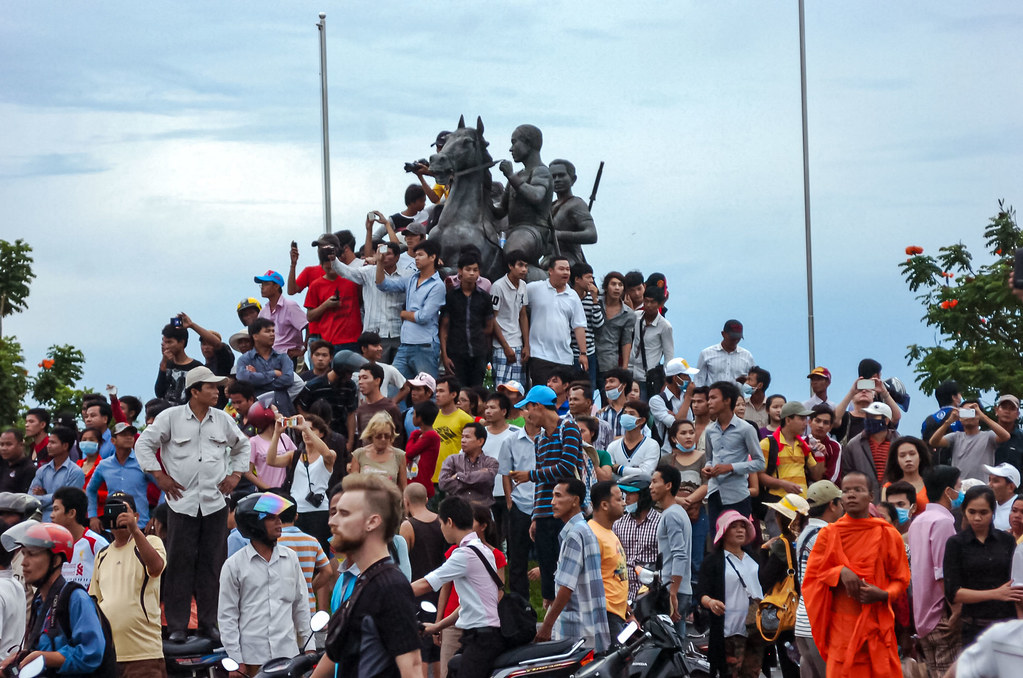
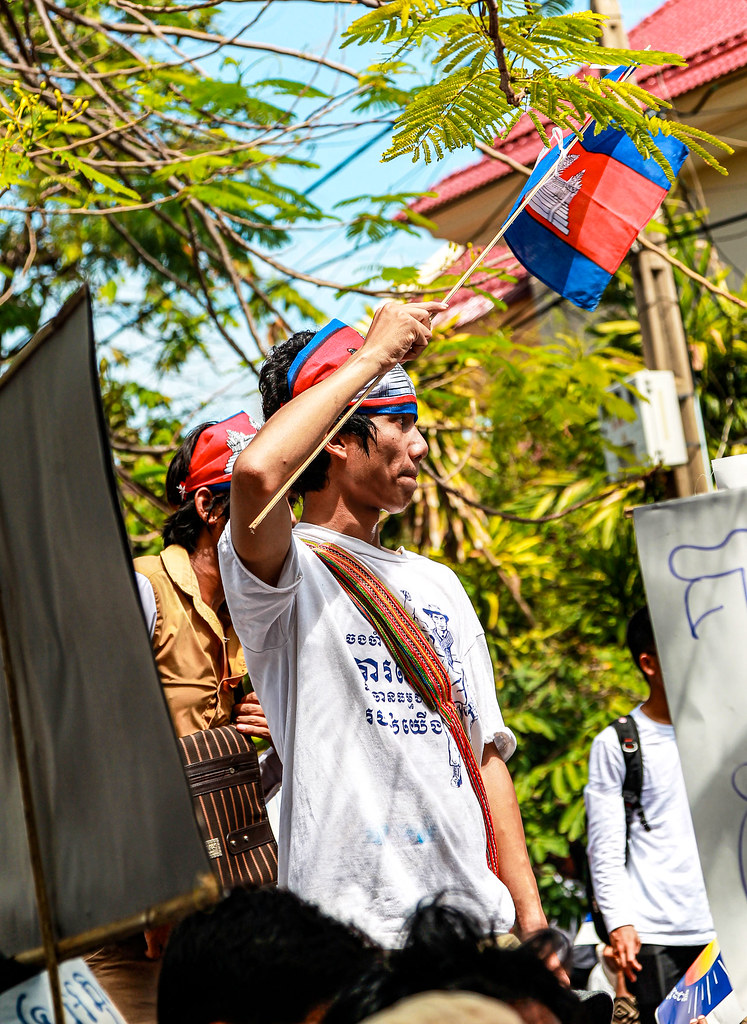
At the political demonstrations around Freedom Park in Phnom Penh in 2013, the atmosphere did not become dangerous all at once. Crowds have moods, and those moods move through them before the cause is always apparent. A gathering may appear noisy but manageable. People talk, listen, watch and wait. Children remain near their families. Photographers move through the edges, looking for faces and gestures that might explain the occasion.
Then something changes.
The sound becomes harder. A police line tightens. People begin looking in the same direction. Those near the front stop behaving like individuals and begin moving as part of the crowd. Experience teaches you to notice these signals, although experience does not guarantee safety.
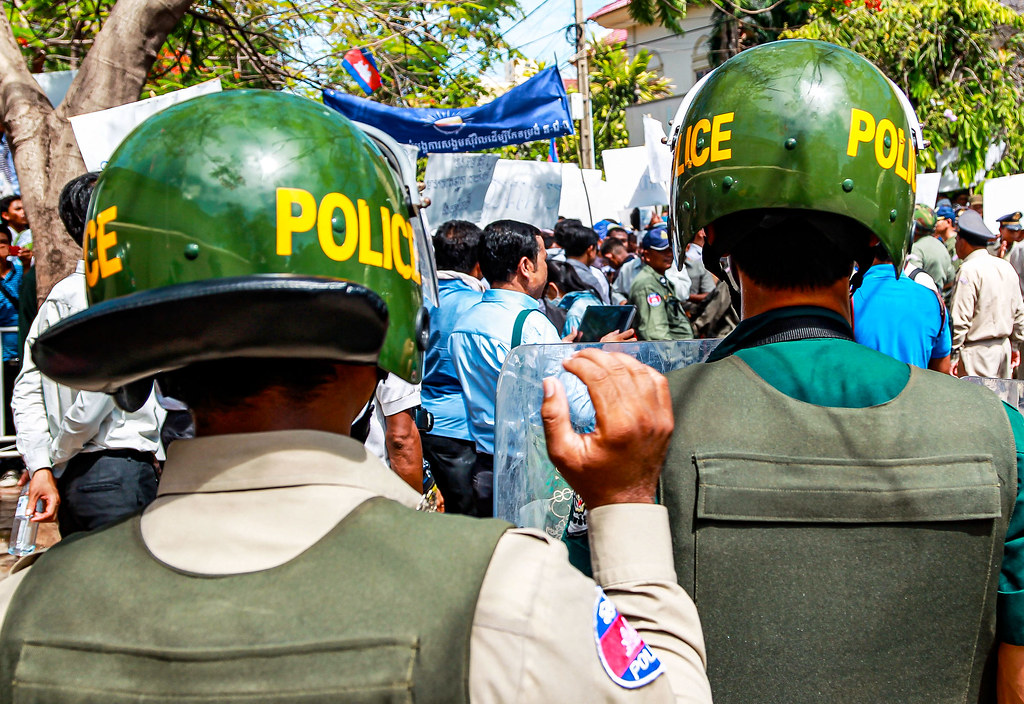
The demonstrators were demanding a change of government. Local and military police faced them. Objects began to fly towards the police lines, and the children who had been present disappeared from sight. The gathering had crossed an invisible boundary.
When the glass bottles started flying, one struck me and a colleague was cut. There was pushing, shouting and the confused movement of people trying to advance, retreat or simply avoid being knocked down. I put on my crash helmet and continued working.
That was the job.
The phrase sounds harder than the reality. Remaining at the scene was not an act of heroism. It was a professional decision that had to be reconsidered every few seconds. Staying did not mean standing still or ignoring the danger. It meant watching the crowd, understanding where the police were positioned and knowing what was happening behind me as well as in front.
A camera can become dangerous because it narrows attention. Through the viewfinder, the world appears contained by four edges. The photographer concentrates on a face, a raised arm or an object in flight and temporarily loses sight of everything outside the frame. In a confrontation, that moment of exclusion can be enough for the situation to change.
You must make the photograph while remaining aware of the world the photograph leaves out.
Equipment needs to be familiar. There is no time to search through menus or look for a control. The camera must respond almost without thought. Raise it, focus, make the frame and lower it again to see what is approaching. Professional cameras such as the Canon 1D bodies and Nikon D2Hs were heavy, but they were built for this sort of treatment. Their strength was not merely technical. It was the confidence that they would work when the photographer had other things to worry about.
Confrontation does not always involve violence. It can exist between a photographer and the person being photographed.
A frightened child in a temporary dental clinic may face a quieter form of confrontation. The room is unfamiliar. The equipment looks threatening. Adults wearing masks speak in voices the child may not understand. The child is expected to sit still, open their mouth and accept that strangers are trying to help.
Then another stranger arrives with a camera.
Fear may appear as crying, but more often it is contained in smaller gestures: hands held tightly together, feet drawn backwards beneath a chair, eyes fixed upon the treatment table or a face turned away from the lens. Children may laugh, become restless or attempt to impress their friends. Bravery and fear frequently occupy the same expression.
A photograph of that uncertainty can explain something important about the work. It can show why patience, reassurance and trust are essential. But the camera must not become another instrument of pressure.
There is a difference between photographing fear and exploiting it.
The fact that a picture may help a charity does not automatically justify making or publishing it. Nor does permission from an organiser remove the photographer’s responsibility. The child may not be able to offer formal consent, but discomfort is still a form of communication. Turning away, covering the face or becoming visibly distressed should never be ignored simply because no one has said the word no.
The strongest photograph is not always the one we are entitled to take.
This is particularly difficult for photographers trained to react. We are taught not to hesitate when a decisive moment appears. News photography rewards presence, speed and the ability to keep working while others withdraw. Those instincts may be necessary near a police line, but they cannot be carried unchanged into a clinic, school or family home.
Professional courage sometimes means continuing to photograph. Ethical courage may mean stopping.
Fear should not be removed entirely from the story. To show every child smiling would be dishonest. Medical treatment can be frightening, and volunteering is not made more valuable by pretending otherwise. But there is a considerable difference between acknowledging a child’s apprehension and displaying their most helpless moment to strangers.
Context decides much of this. A close photograph of a distressed face may reduce a person to their fear. A wider frame can show the volunteer offering reassurance, the parent standing nearby or another child waiting. It allows the viewer to understand what is happening rather than merely react to suffering.
The same principle applies to public confrontation. A photograph of an angry face may be powerful, but without the police line, the crowd or some indication of what produced the anger, it may also be misleading. The photographer decides what is included and excluded. That decision can turn fear into understanding, spectacle or propaganda.
Fear makes people appear at their most exposed. It can also make photographers feel at their most alive. The noise, danger and concentration produce an intensity that ordinary assignments seldom offer. We should be honest about that attraction. Denying it makes us less likely to control it.
The excitement belongs to the photographer. The consequences belong to the people in the pictures.
An old photographer eventually learns that courage is not measured by how close one stands to danger. Nor is honesty measured by how much suffering one is prepared to show. The work is to remain present without becoming reckless, and to record fear without taking ownership of it.
Sometimes that requires the crash helmet, a firm grip on the camera and the decision to stay.
Sometimes it requires lowering the camera.
Knowing which moment you are in is one of the hardest lessons photography can teach.