

Old Photographer Series.
The Nikon D810 arrived in 2014 carrying a formidable reputation. Its 36-megapixel sensor promised extraordinary detail, wide dynamic range and files that could tolerate serious work in post-production. More than a decade later, none of that has ceased to matter. A good camera does not suddenly become incapable because the calendar has moved on.
I bought mine used, as I have bought nearly every camera I have owned. It made sense. The first owner absorbed the painful part of the price, while I acquired a professional camera still capable of producing exceptional photographs.
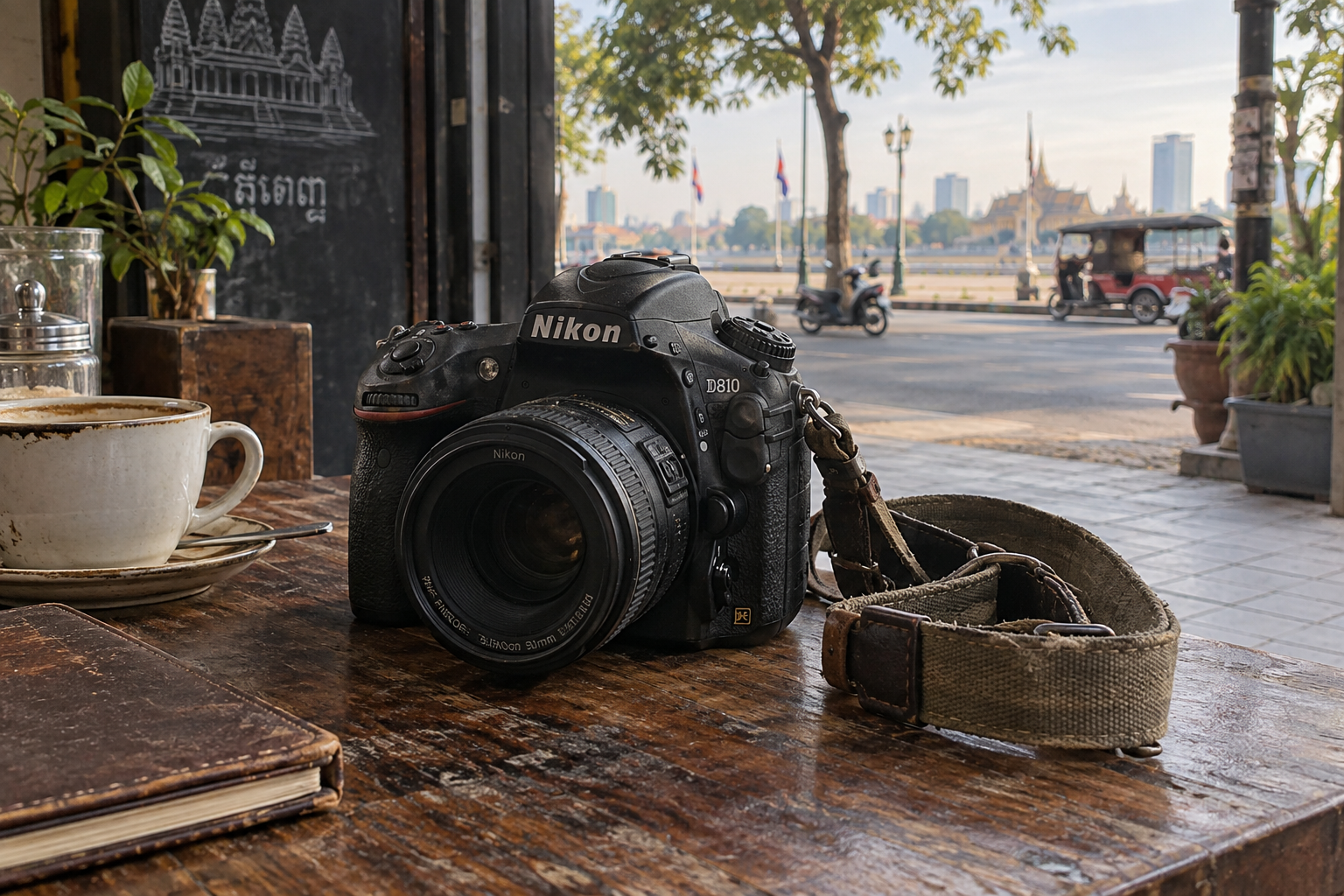
The D810 is not a small camera, although it sits comfortably in the hands. It feels like a proper Nikon: substantial, sensibly arranged and built for photographers who prefer buttons and dials to endless journeys through menus. With the right lens attached, it becomes a wonderfully balanced working tool.
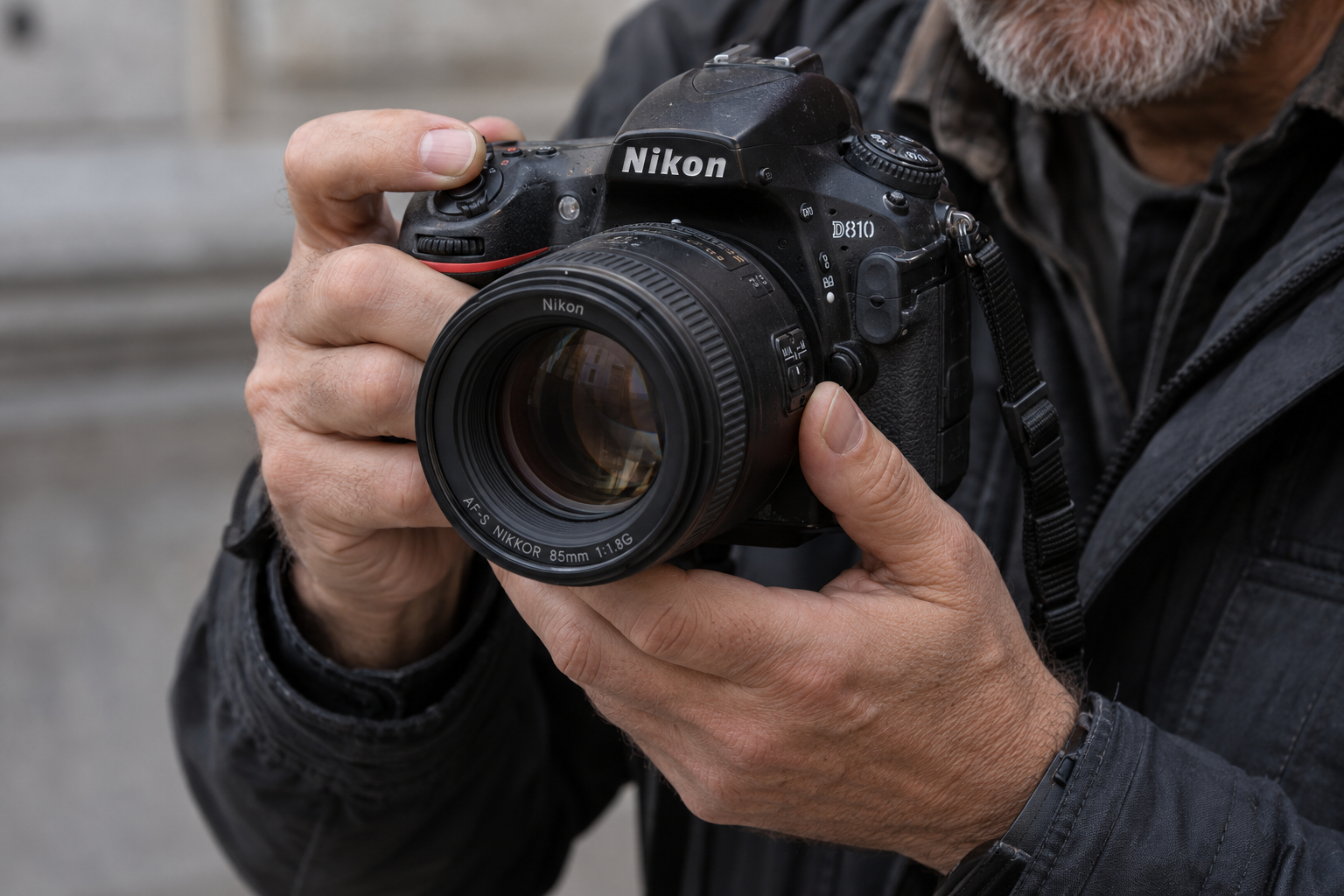
Its great strength is the sensor. At lower ISO settings, the files contain remarkable detail and allow generous recovery from shadows. Skin, fabric, weathered walls and the fine chaos of a city street are all recorded with considerable precision. The absence of an optical low-pass filter helps extract everything a good lens can provide.
But that resolution demands discipline.
The D810 will expose poor technique with little sympathy. Camera movement that might remain hidden in a smaller file becomes obvious when the image is examined closely. Shutter speed matters. Holding technique matters. The way the shutter is pressed matters. A sharp lens will not rescue a camera that moved at the decisive moment.





That does not make the D810 difficult. It simply asks the photographer to pay attention.
For street photography, 36 megapixels can seem excessive. The files are large, the frame rate is modest and the camera is hardly discreet. Yet it can be an excellent street camera when used deliberately. It suits the photographer who watches, anticipates and makes individual frames rather than spraying a scene with continuous bursts.
A 50mm lens makes it a straightforward walkabout camera. An 85mm f/1.8G gives it reach, separation and a little more working distance—particularly useful for the kind of candid street portraits I favour. The combination is capable of tremendous sharpness, though I generally keep the shutter speed higher than I would with my D700.








That comparison is unavoidable. The D700 remains one of my favourite street cameras. Its files are smaller, its controls feel immediate and it somehow encourages a more instinctive way of working. The D810 is more considered. It offers greater resolution and more freedom to crop, but it expects better handling and more storage.
Neither camera makes the photograph. They merely influence the way I approach it.
The D810 is especially convincing for portraits, documentary work, architecture, landscape and any subject where fine detail matters. Its quieter shutter mode can help in restrained situations, although nobody will mistake it for a silent mirrorless camera. It remains a traditional DSLR, complete with mirror movement, optical viewfinder and reassuring mechanical presence.

Its weaknesses are mostly products of its generation. Live-view autofocus feels slow by modern standards. Video facilities are dated. Wireless connectivity is absent without accessories, and the rear screen does not tilt. Anyone wanting eye-detection autofocus, effortless subject tracking or immediate transfer to a telephone will find newer cameras more convenient.
Those things matter to some photographers. They matter rather less to me.
What counts is the finished picture. The D810 continues to produce files of a quality that would once have been considered astonishing—and still ought to be. A well-exposed photograph made with good light and sound technique does not carry its manufacture date in the corner.

The Nikon D810 is no longer fashionable. That may be one of its greatest attractions. Used examples offer an extraordinary amount of camera for the money, provided the condition and shutter history are checked carefully. Batteries, cards and excellent F-mount lenses remain readily obtainable.
It is not the quickest camera, the lightest camera or the cleverest camera. It is something better: a serious photographic instrument whose abilities exceed the needs of most people carrying it.
In 2026, the Nikon D810 is not obsolete. It is simply used—and so am I. We still have pictures to make.

