


The Old Photographer Series
There comes a point in a photographer’s life when numbers begin to matter less.
Megapixels. Frames per second. Dynamic range. Autofocus points. Shutter counts.
I’ve spent more than 45 years taking pictures, and I’ve lived through enough generations of cameras to know that we photographers have a peculiar ability to worry about things that aren’t actually stopping us from making photographs.
And then I bought a Nikon D850 for $380.
There had to be a catch.
There was.
The shutter count was north of 300,000.
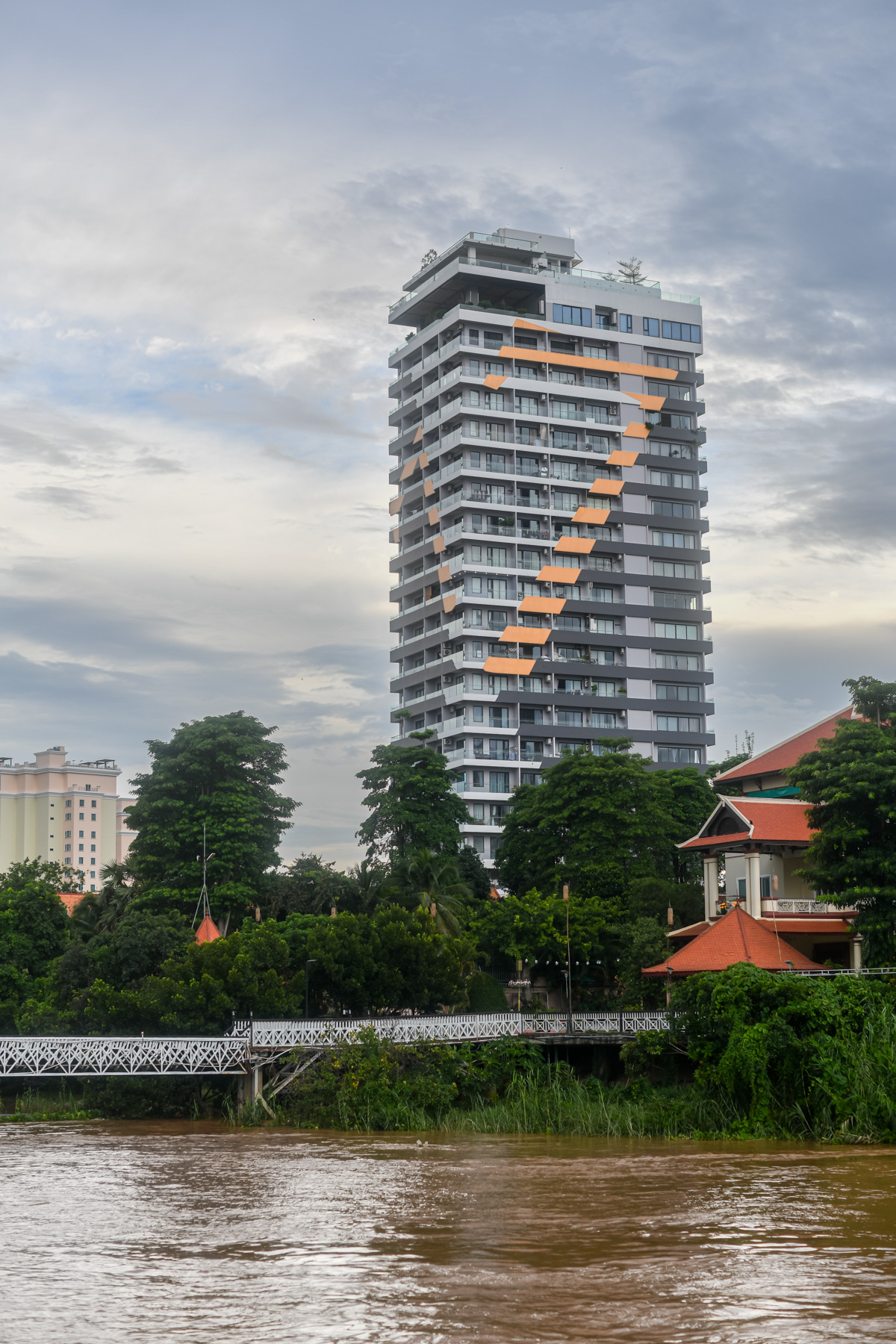
For some photographers, that number would be enough to put the camera straight back on the shelf. Nikon rated the D850 shutter mechanism for 200,000 cycles, so 300,000 sounds rather like buying a car with 300,000 miles on the clock.
Except cameras aren’t cars. And shutter ratings aren’t death sentences.
The camera was sitting there looking almost ridiculously good. Externally I’d describe it as A1. It hadn’t been knocked about, the body wasn’t scarred from years of abuse, and nothing immediately suggested a camera that had already made more than 300,000 exposures.
I picked it up. That familiar Nikon solidity was there. Then I pressed the shutter. It sounded good. Not tired. Not hesitant. No strange metallic noises or anything suggesting the mechanism was preparing to throw itself across the room. Just that wonderfully purposeful D850 shutter. Clack.
A photograph. And suddenly I wasn’t terribly interested in the number anymore.
I’ve owned and used enough cameras over the years to understand that mechanical things eventually wear out. A shutter can fail at 50,000 exposures. Another can carry on well beyond its manufacturer’s rated life. Two hundred thousand actuations doesn’t mean that the D850 shutter self-destructs at exposure number 200,001.
It is a durability rating, not an appointment with the undertaker.
My camera has already proved the point rather convincingly. It’s passed 300,000.
The interesting question isn’t how many photographs the camera has already taken.
It’s how many photographs it still has left in it.
And nobody knows. Perhaps the shutter will fail next week.
Perhaps it will make another 100,000 exposures. That’s the gamble. But at $380, it’s a gamble I’m perfectly comfortable taking.







There was a time when I might have thought differently.
When you’re younger and buying equipment represents a substantial investment, you tend to protect it. Every scratch hurts. Every little mark on the baseplate feels like a personal tragedy. You buy protective screens. Protective filters. Protective cases.
Then you put your expensive camera inside an expensive bag designed to protect the protective things protecting the camera.
Eventually you realise something.
Cameras are supposed to be used.
That’s particularly true of the Nikon D850.
When Nikon introduced the D850 in 2017, it was one of those rare cameras where almost everything came together.
The 45.7-megapixel full-frame sensor delivered extraordinary detail. Dynamic range was superb. Autofocus was inherited from Nikon’s professional D5 generation. It could shoot quickly enough for serious action photography while simultaneously producing files capable of enormous prints.

It wasn’t really a specialist camera. It was a camera that could do almost everything.
Landscape photographers loved it. Studio photographers loved it. Wedding photographers used it. Wildlife photographers used it. Photojournalists used it.
And people like me discovered that despite its size, it could make a formidable street camera.
Nearly a decade later, none of those abilities have disappeared.
That’s something we sometimes forget.
A camera doesn’t become worse because something newer has appeared.
The photographs coming out of a D850 today are every bit as good as the photographs that came out of one when photographers were queuing to buy them new.
Technology moves forward.
Image quality doesn’t move backwards.
And 45.7 megapixels is still an enormous amount of information.
In fact, for most of what I photograph, it’s far more than I actually need.









The great advantage of my particular D850 is that I don’t have to worry about it. That’s worth more than people realise.
I didn’t spend several thousand dollars on it. I spent $380. If I put another scratch on the bottom plate, I won’t lose sleep. If the rubber gets polished from my hands, good. If the paint eventually wears around the edges, even better. That’s what cameras are supposed to look like. They’re tools.
I’ve always had a fondness for old cameras precisely because they develop character. A camera that’s been used carries something of its history with it.
And this D850 certainly has a history. Three hundred thousand photographs.
Think about that for a moment. I have no idea what those photographs were. Perhaps weddings. Perhaps portraits. Perhaps products photographed in a studio. Maybe somebody used it for time-lapse work. Perhaps there are thousands upon thousands of photographs of things completely forgotten now.
I’ll probably never know.
But somebody pressed that shutter more than 300,000 times. Now it’s my turn. There’s something I rather like about that.

The obsession with shutter count has grown alongside the used-camera market.
Mention that you’re looking at a used DSLR and one of the first questions you’ll hear is:
“What’s the shutter count?”
Fair enough.
It’s useful information.
If two otherwise identical D850 bodies are sitting beside each other at the same price and one has made 20,000 exposures while the other has made 300,000, I’d take the 20,000-exposure camera.
I’m an old photographer. I’m not completely daft. But price changes everything. At $380, I’m not comparing this camera with a pristine low-mileage D850. I’m asking a different question.
How much photography can I get for $380?
And the answer is potentially quite extraordinary.
For less than the cost of many modern lenses, I’ve got one of the finest DSLRs Nikon ever produced.
A professional-grade body. A magnificent sensor. Excellent autofocus. Superb handling. An enormous optical viewfinder.
Files with enough latitude to take considerable punishment in processing.
And, perhaps most importantly, a camera that makes me want to go out and take photographs. That’s the bit specifications can’t measure.



I’ve reached an age where I’m increasingly uninterested in owning cameras simply because they’re new.
I’ve watched photography travel from film to early digital cameras, through the DSLR revolution and now into the mirrorless age.
Every generation arrives accompanied by claims that everything before it has suddenly become obsolete.
It never quite happens.
My old Nikon D700 can still make wonderful photographs. So can a D800. So can a D810.
So can the professional Nikon bodies that once sat in newspaper offices and photographers’ bags around the world.
And the D850 sits very close to the summit of that entire DSLR era.
Perhaps it is the summit.
It arrived when Nikon had decades of experience building professional SLRs and nearly two decades of experience making serious digital SLRs.
Everything Nikon had learned seemed to end up inside it. The ergonomics. The viewfinder. The autofocus. The metering. The sensor. The durability.
It feels like the final flowering of a particular philosophy of camera design.
Put your eye to the viewfinder and you’re looking through the lens. Not at a tiny television.
At the world.
There’s still something wonderfully direct about that.
I don’t know when the shutter in my D850 will eventually stop. That’s part of the deal.
If it happens, I’ll make a decision.
If replacing the shutter makes financial sense, I’ll replace it.
If it doesn’t, I’ll have had my money’s worth. But I’m certainly not going to spend whatever life remains in the shutter worrying about its death. That would be rather ridiculous. Imagine buying an old Leica and refusing to use it because operating the shutter might wear it out. Or buying a classic car and never driving it because the engine has already done too many miles.
Objects designed to work should work. Cameras designed to take photographs should take photographs. So this D850 is going into the bag. It’ll walk the streets. It’ll get hot. It’ll get dusty. It’ll probably acquire a few marks. And every time I press that shutter, the supposedly frightening number will increase.
300,001.
300,002.
300,003.
Good. Keep going. Because after all these years, I’ve realised that the shutter count that really matters isn’t the number already on the camera. It’s the number of photographs still inside the photographer. That’s the count I’m interested in now.
And at $380, this battered-in-spirit but beautiful-in-the-hand Nikon D850 and I have made a rather simple agreement.
I’ll keep looking. It’ll keep clicking.
And we’ll see which one of us gives up first.
Old Photographer Series


My old D800 died a couple of years ago, so I went for a D810 with a shutter count of less than 1,500. When that needed a service, I realised that it really was time that I had a back up body, so I bought another D810 with a shutter count of less than 600. In some respects, I got lucky and that’s good, but it also makes me sad that two people obviously had the money to buy really good cameras and yet they couldn’t be bothered to stick with them and use them.
LikeLike
I have a D810 and really like it, only 57000 on the clock when I picked it up for less than $300 US. I know tacking a chance that a camera has heavy use is a thing some would never consider but I take the cost into consideration and its pot luck (my D3S has 560000 and is still going strong (touch wood).
LikeLike