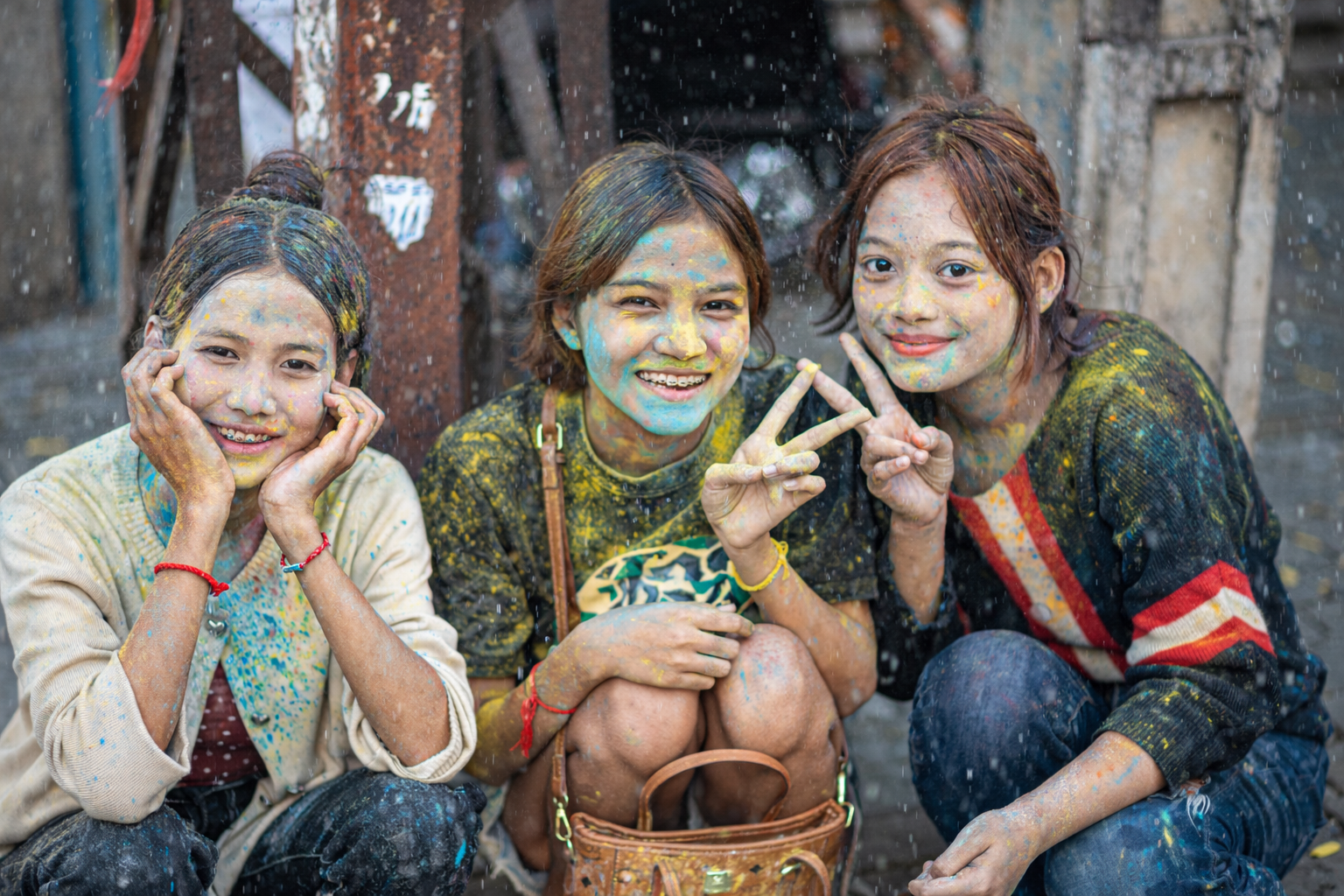

There is a point, sometime in mid-April, when the heat in Cambodia stops being something you endure and becomes something you surrender to. The air thickens, the roads empty, the city slows—then, quite suddenly, it erupts. Buckets appear. Water guns materialise. Talcum powder drifts like a soft, absurd fog. And for three days, sometimes four, the country gives itself permission to behave differently.
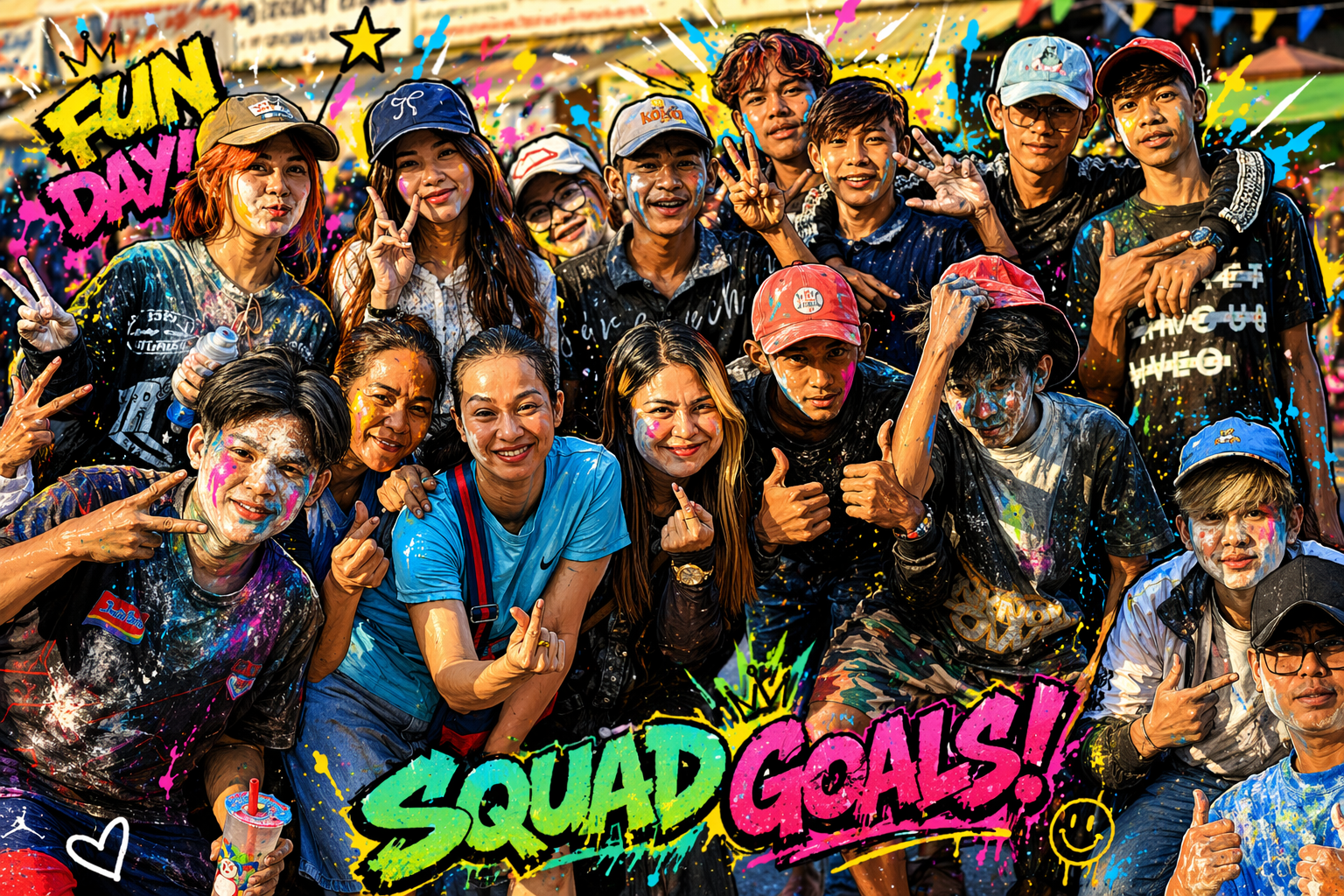
Khmer New Year—Chaul Chnam Thmey—is, on paper, a tidy cultural marker: the end of the harvest, the turning of the traditional solar calendar, a ritualised renewal. In practice, it is something messier, louder, and far more revealing. It is what happens when tradition and release collide in public.
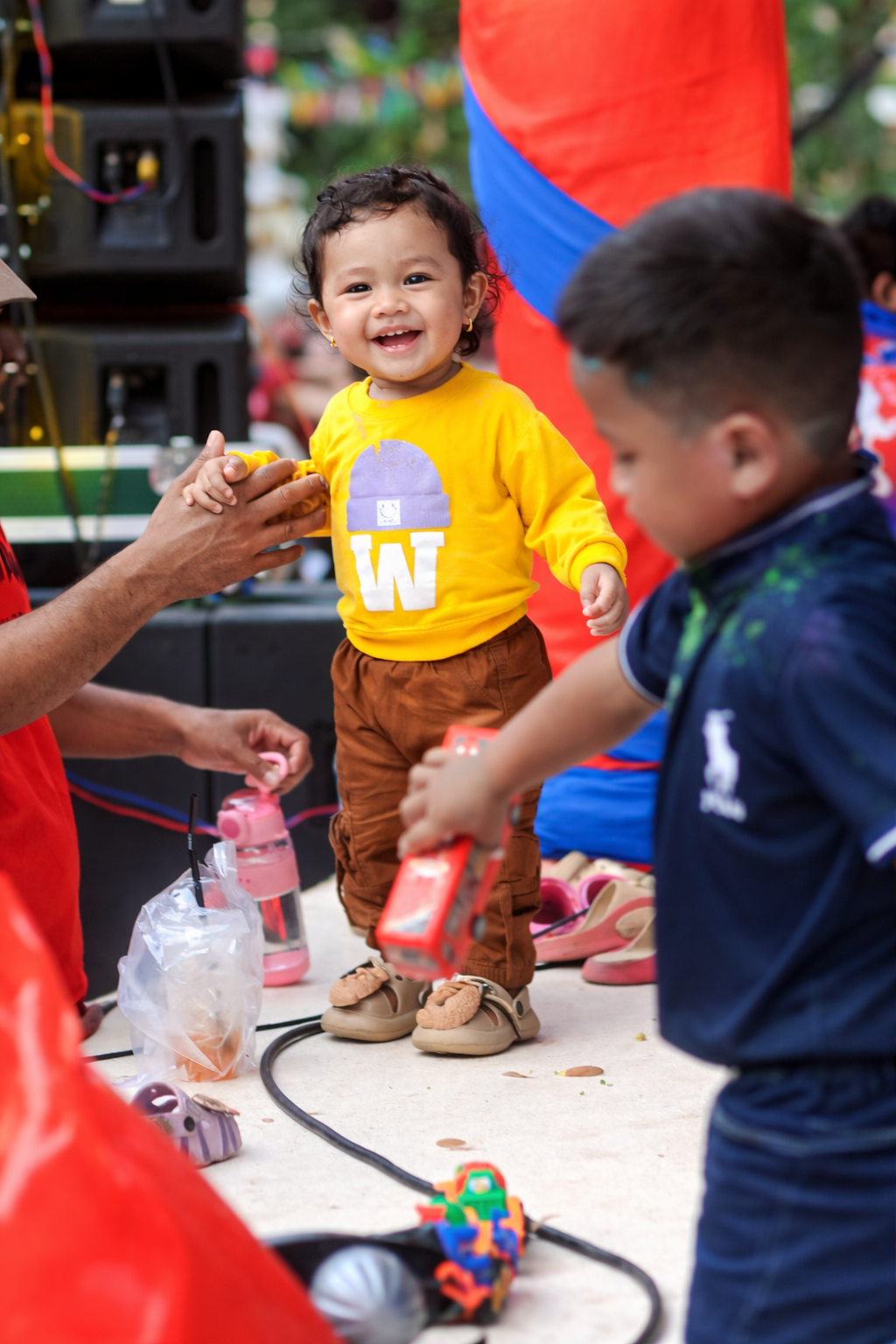
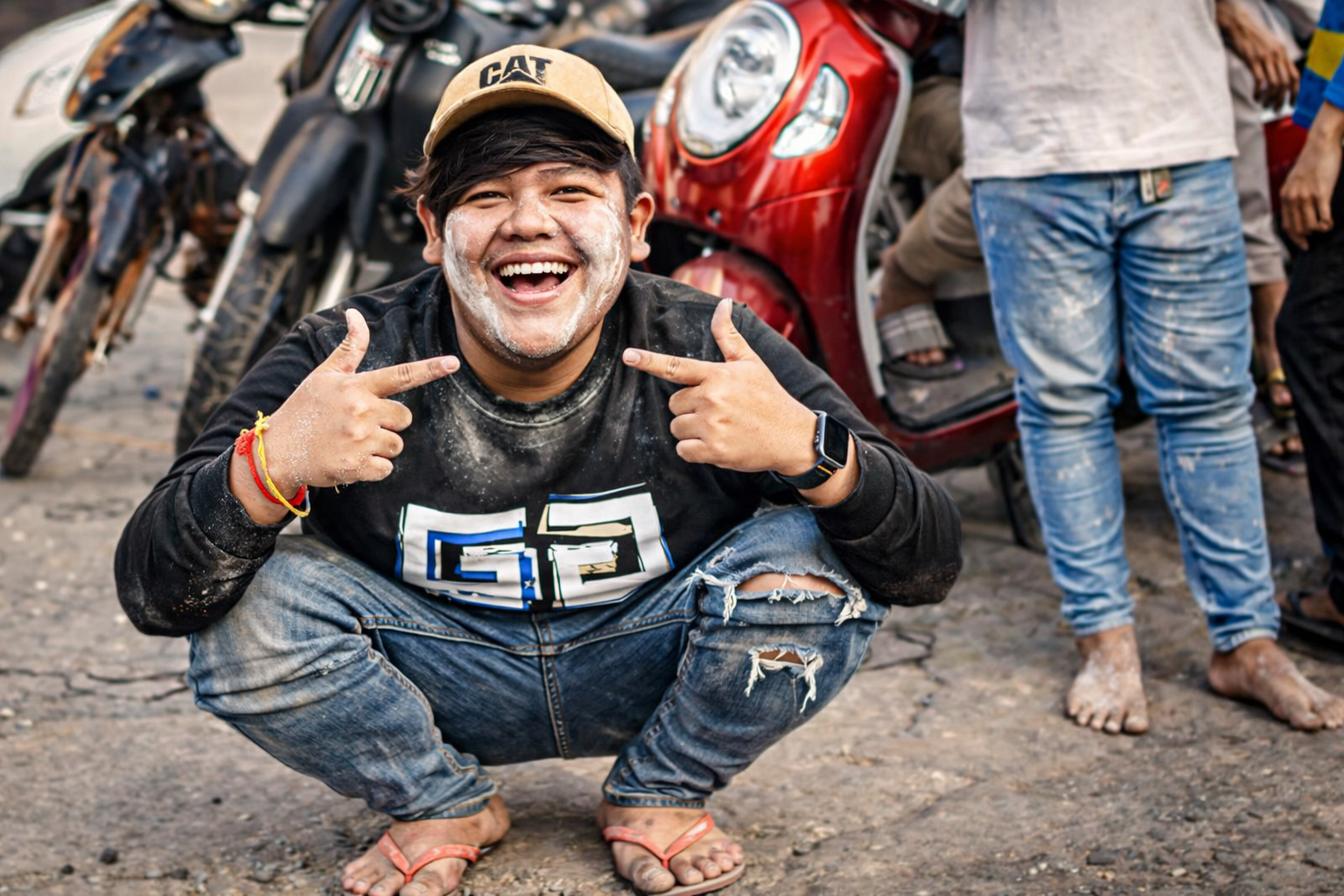
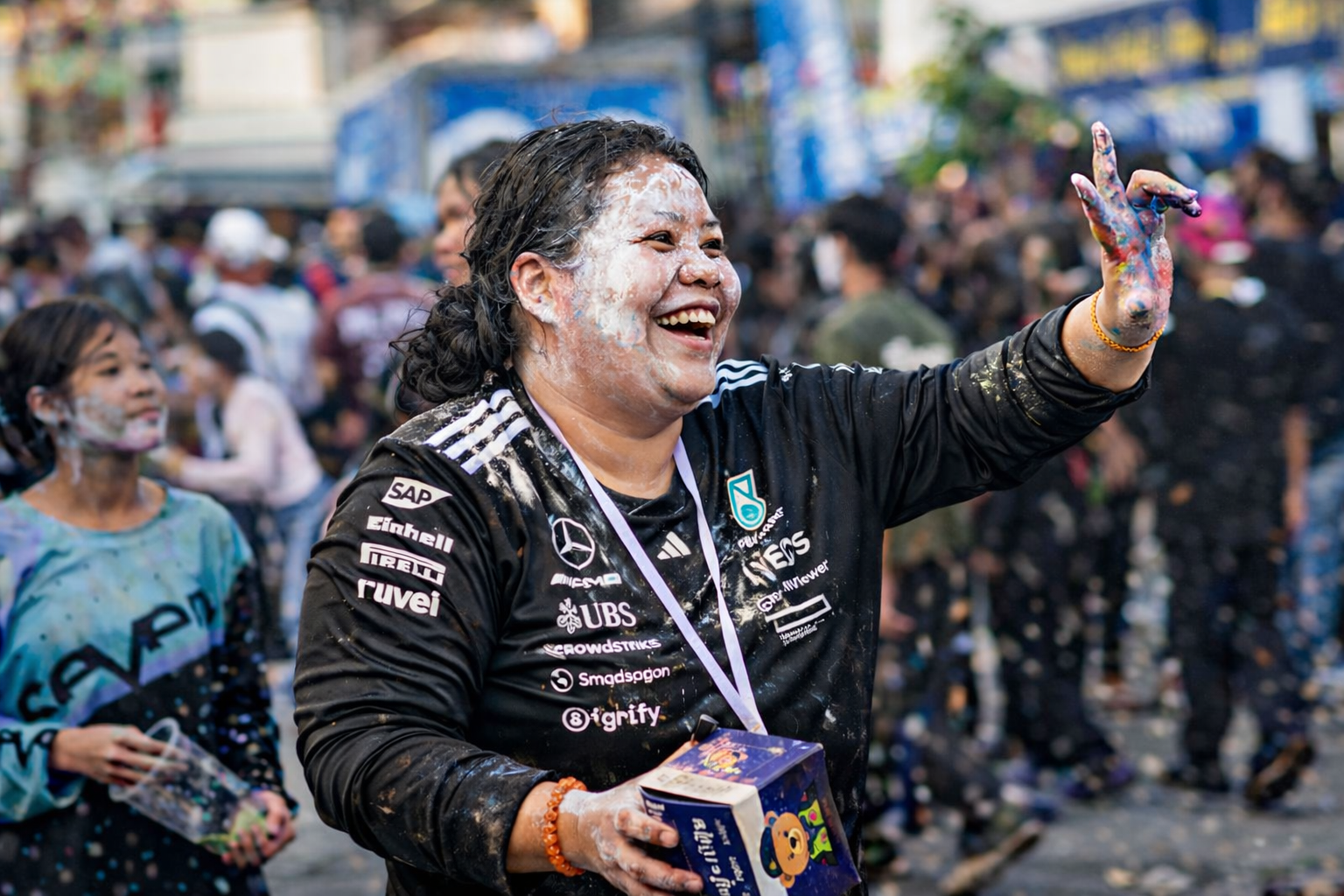
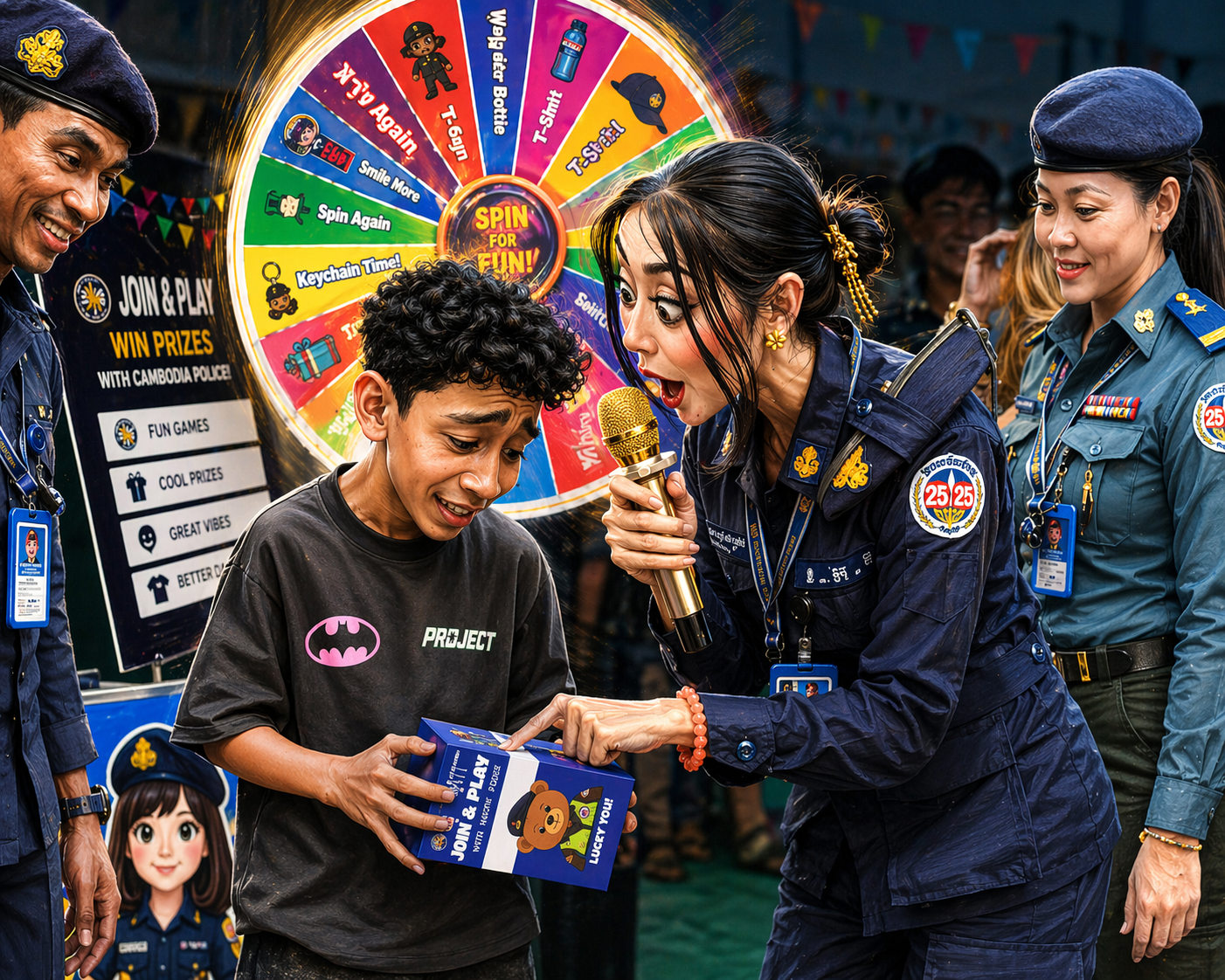
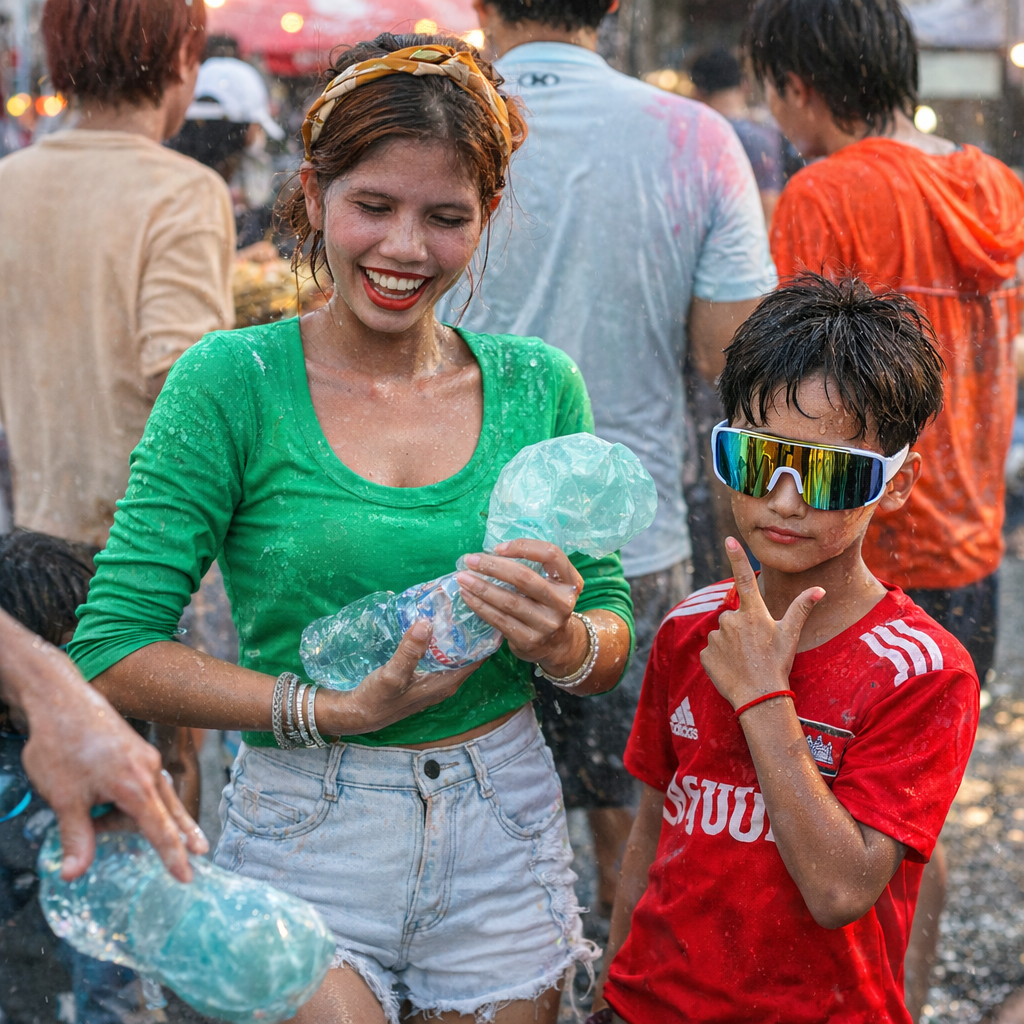
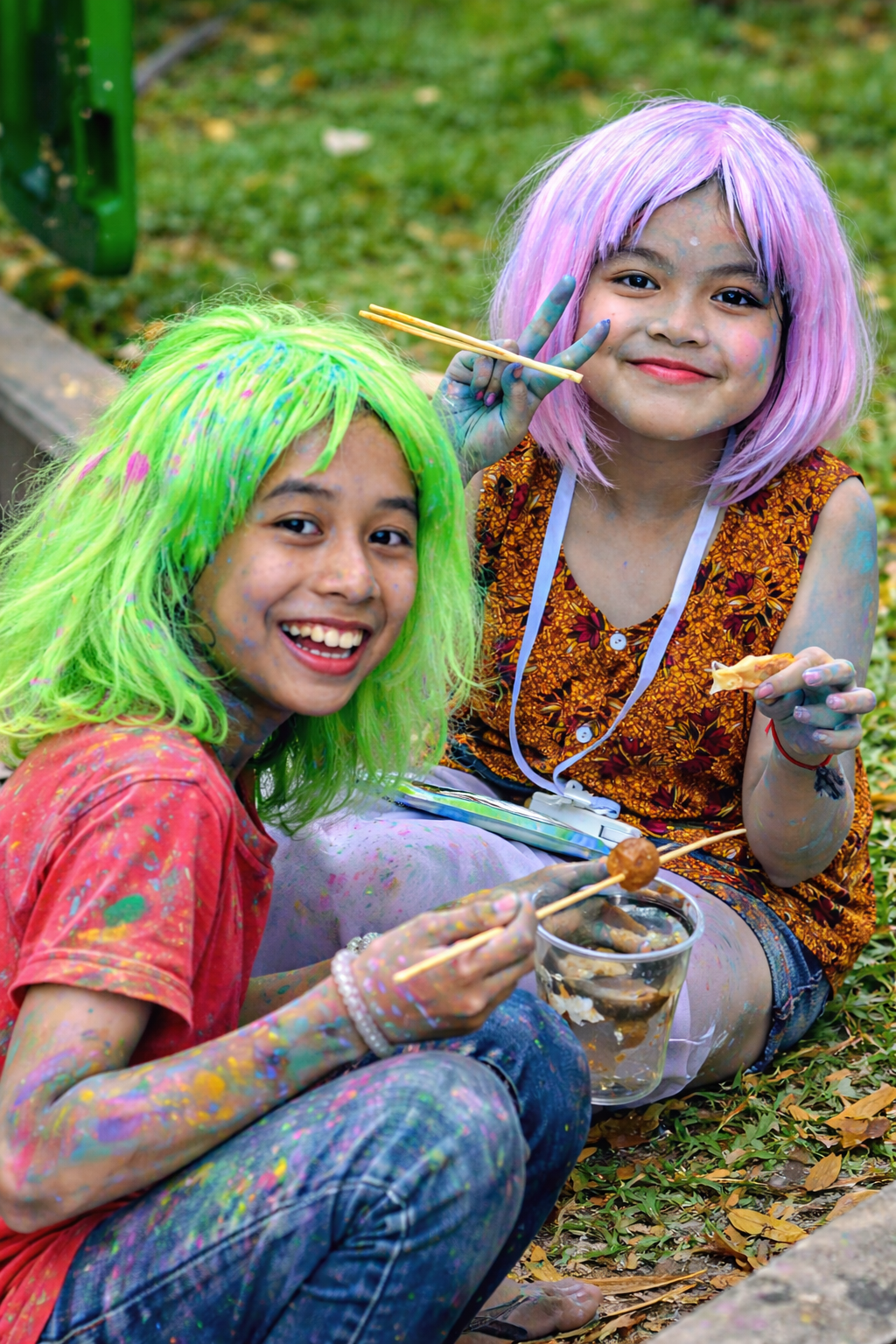
In Phnom Penh, the capital loosens its collar. Offices close. Families travel. Those who remain drift towards the streets, where pickup trucks loaded with teenagers circle like improvised carnival floats, music blaring, water sloshing dangerously close to the edge. Strangers become targets, then accomplices. No one is exempt for long. There is an egalitarianism to being soaked to the bone.
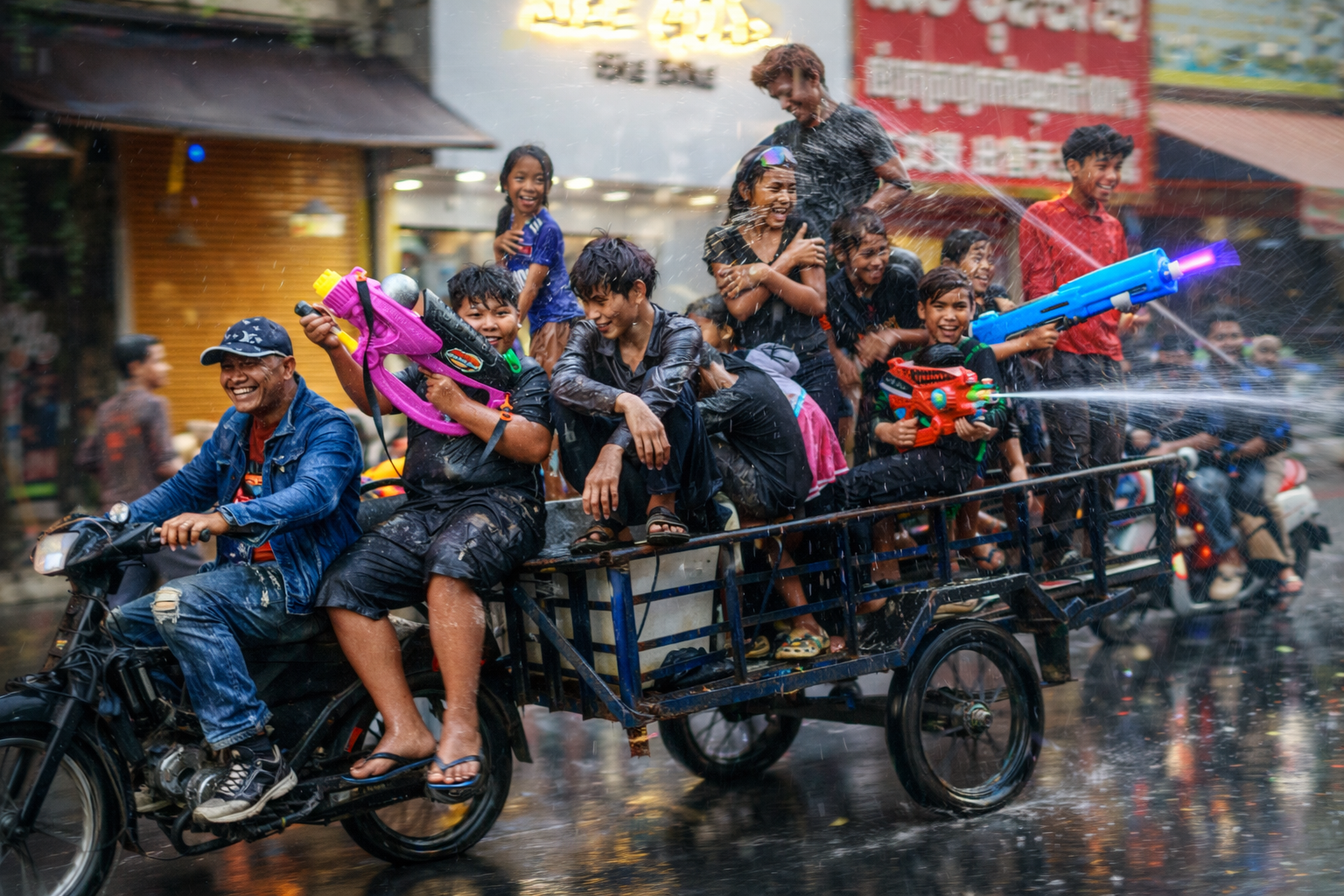
Further north, in Siem Reap, the festival takes on a more curated intensity. The Angkor Sankranta celebrations—part cultural showcase, part organised spectacle—draw crowds that swell into something approaching the uncontrollable. Traditional games are played with theatrical enthusiasm; dancers move with studied grace; and all around them, a less choreographed energy pushes in, demanding space. It is here that Cambodia performs itself, for tourists and for its own younger generation, who seem less interested in preservation than participation.
But to understand the festival solely through its public exuberance is to miss its quieter logic. Khmer New Year is, at its core, an act of recalibration. Homes are cleaned. Altars prepared. Offerings made. At pagodas across the country, sand is carried, shaped into small stupas, and left as a gesture of merit—a symbolic investment in a better future. The ritual is simple, almost austere, and it sits in deliberate contrast to the chaos outside the temple gates.
Inside those grounds, time moves differently. Elders are gently washed with perfumed water, a gesture of respect and continuity. Buddha statues are bathed in the same way, the act less about cleansing than about acknowledgement. These are not grand spectacles but small, repeated gestures, performed with an understanding that renewal is less an event than a habit.
The tension between these two worlds—the reflective and the riotous—is where the festival finds its meaning. Cambodia is a country with a long memory and a young population. Khmer New Year allows both to coexist, briefly, without friction. The past is honoured; the present is loudly, unapologetically lived.
There is also, unmistakably, a sense of release. For a few days, hierarchies soften. The office worker and the street vendor, the local and the visitor, the cautious and the reckless—all are reduced to the same soaked, powdered state. It is not quite equality, but it is close enough to feel like one. In a region where public life is often tightly structured, this temporary suspension carries weight.
Yet the festival resists easy romanticism. The same exuberance that fuels its appeal can tip into excess. Roads become hazardous, crowds unpredictable, boundaries blurred. The line between play and intrusion is not always clearly drawn. As with many large-scale celebrations, what feels liberating to some can feel overwhelming to others. The state tolerates this looseness, even encourages it, but only within an unspoken limit.
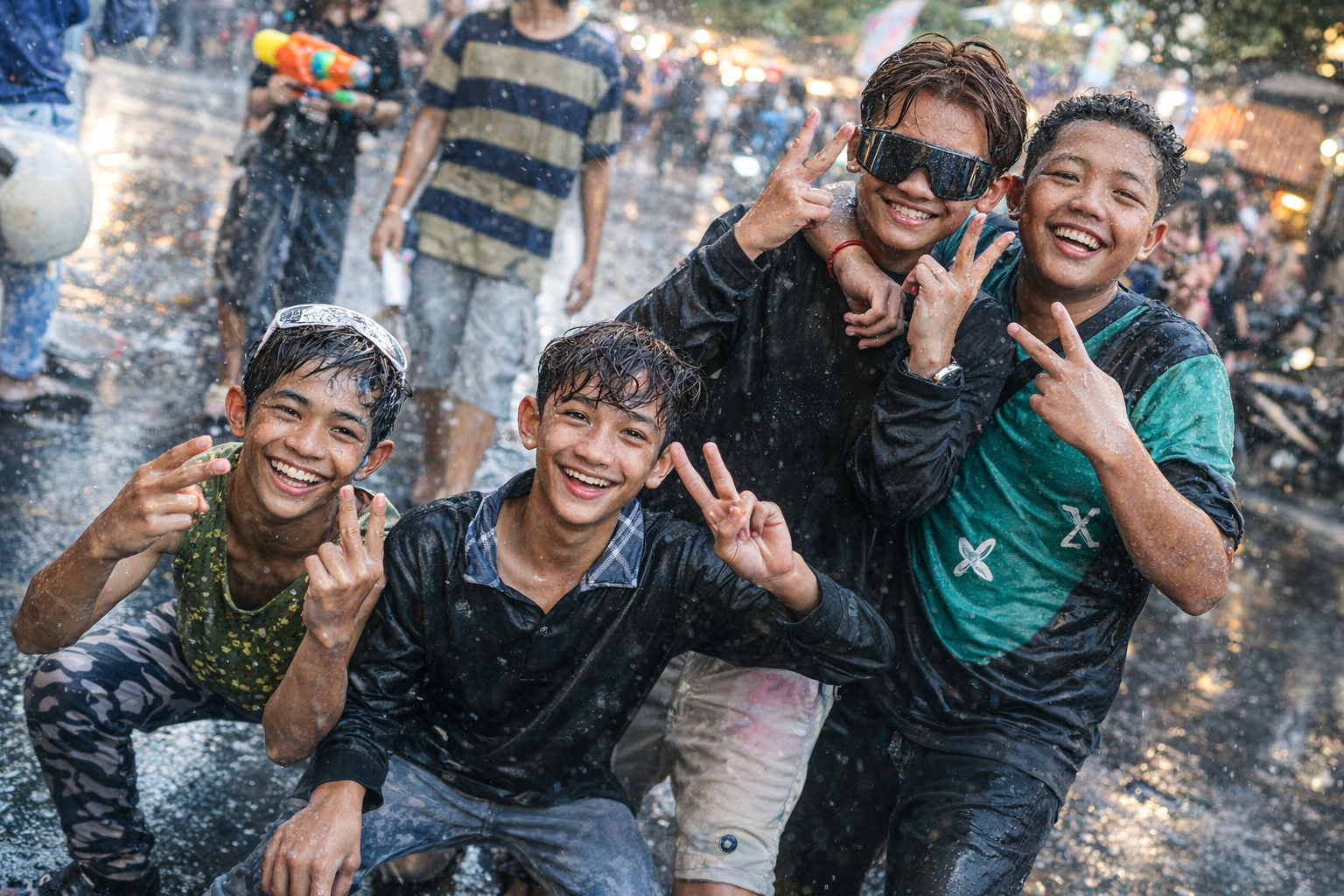
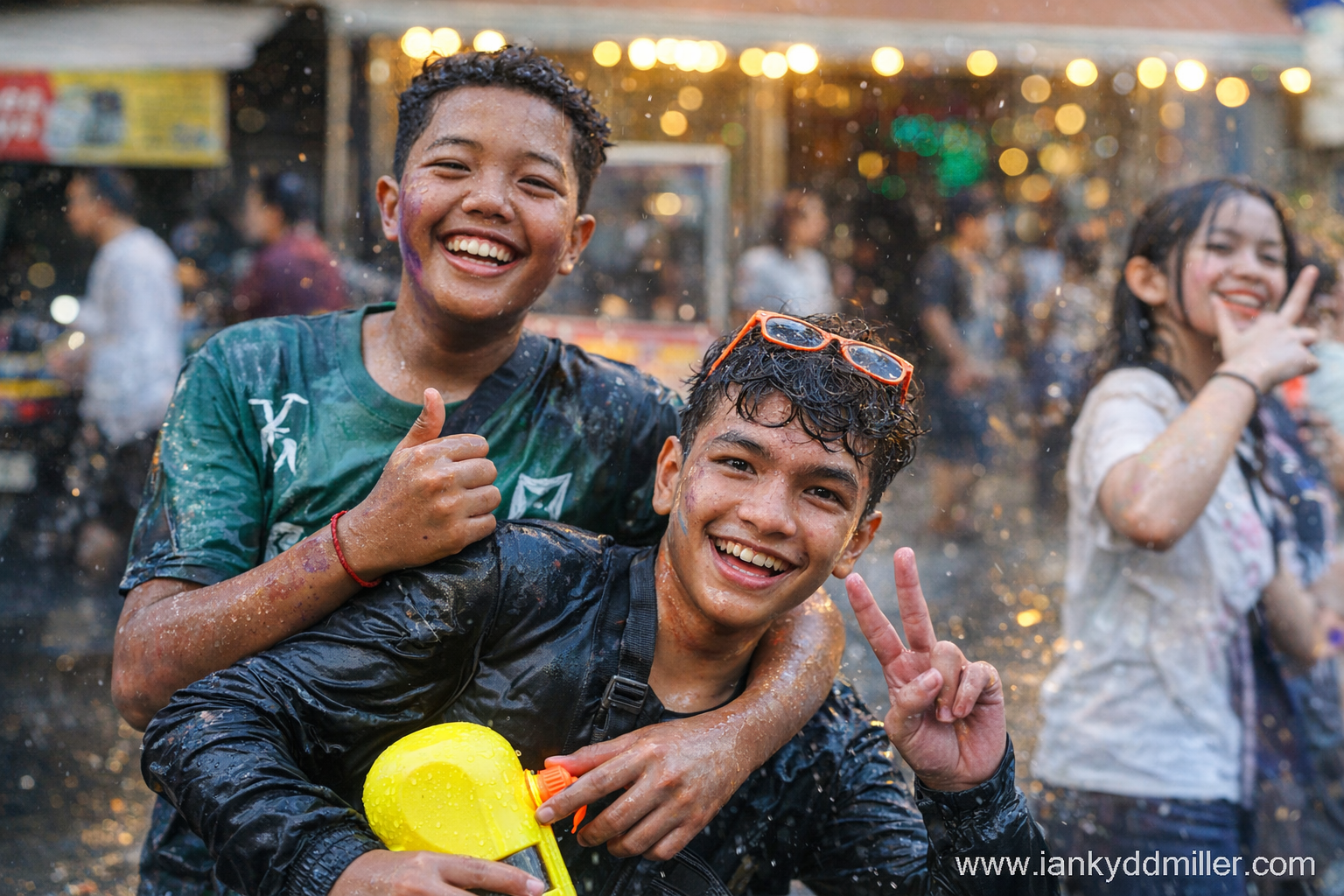
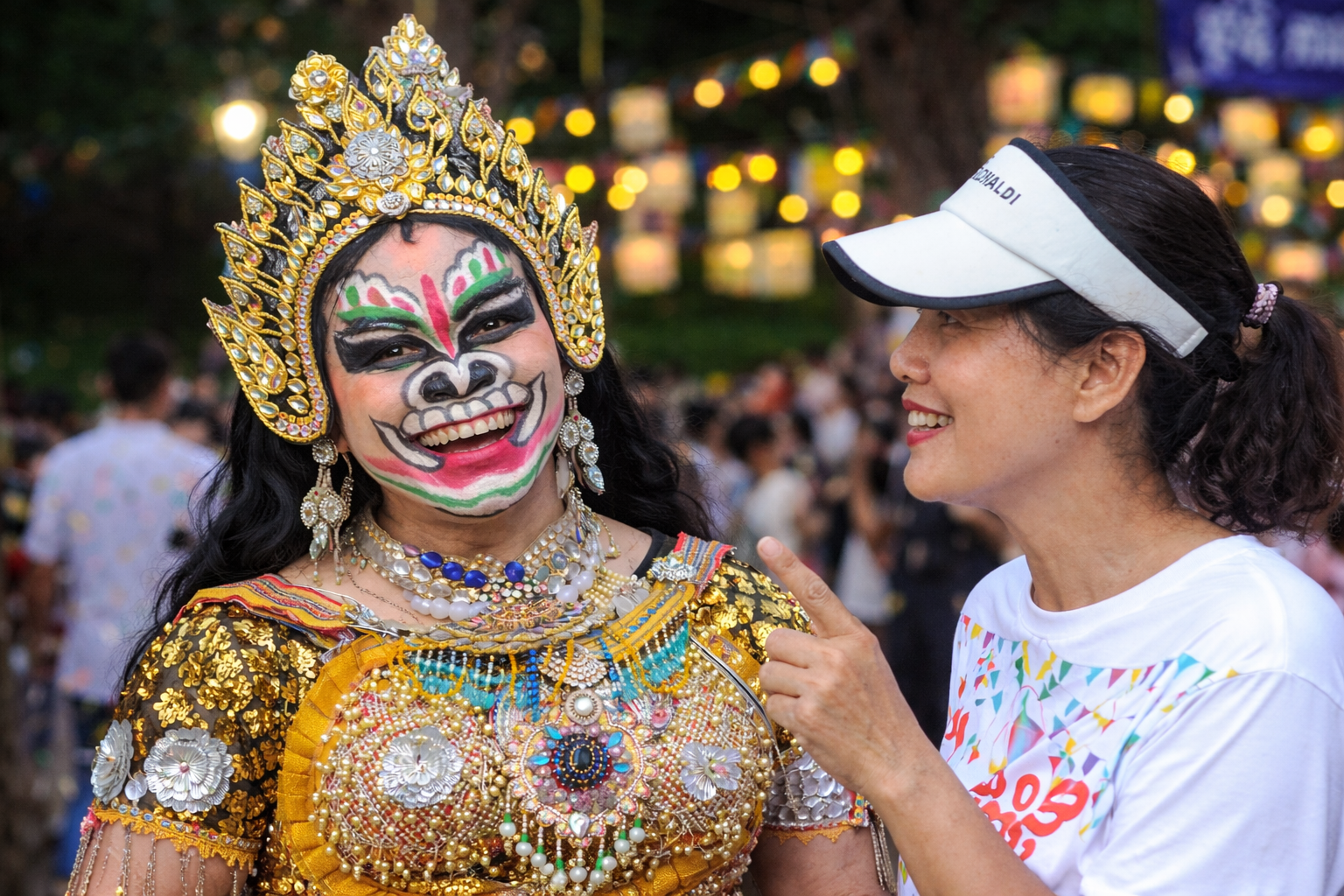
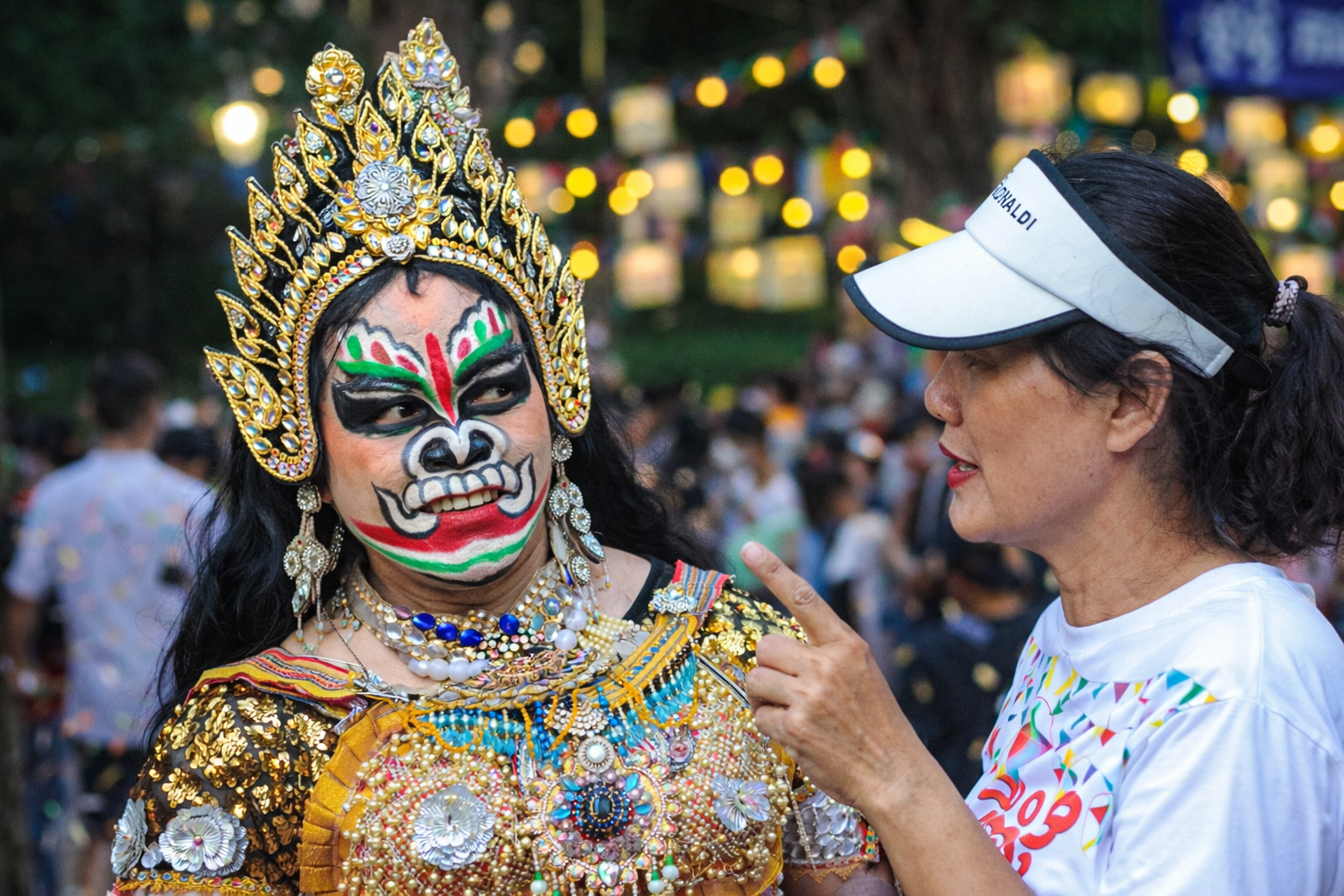
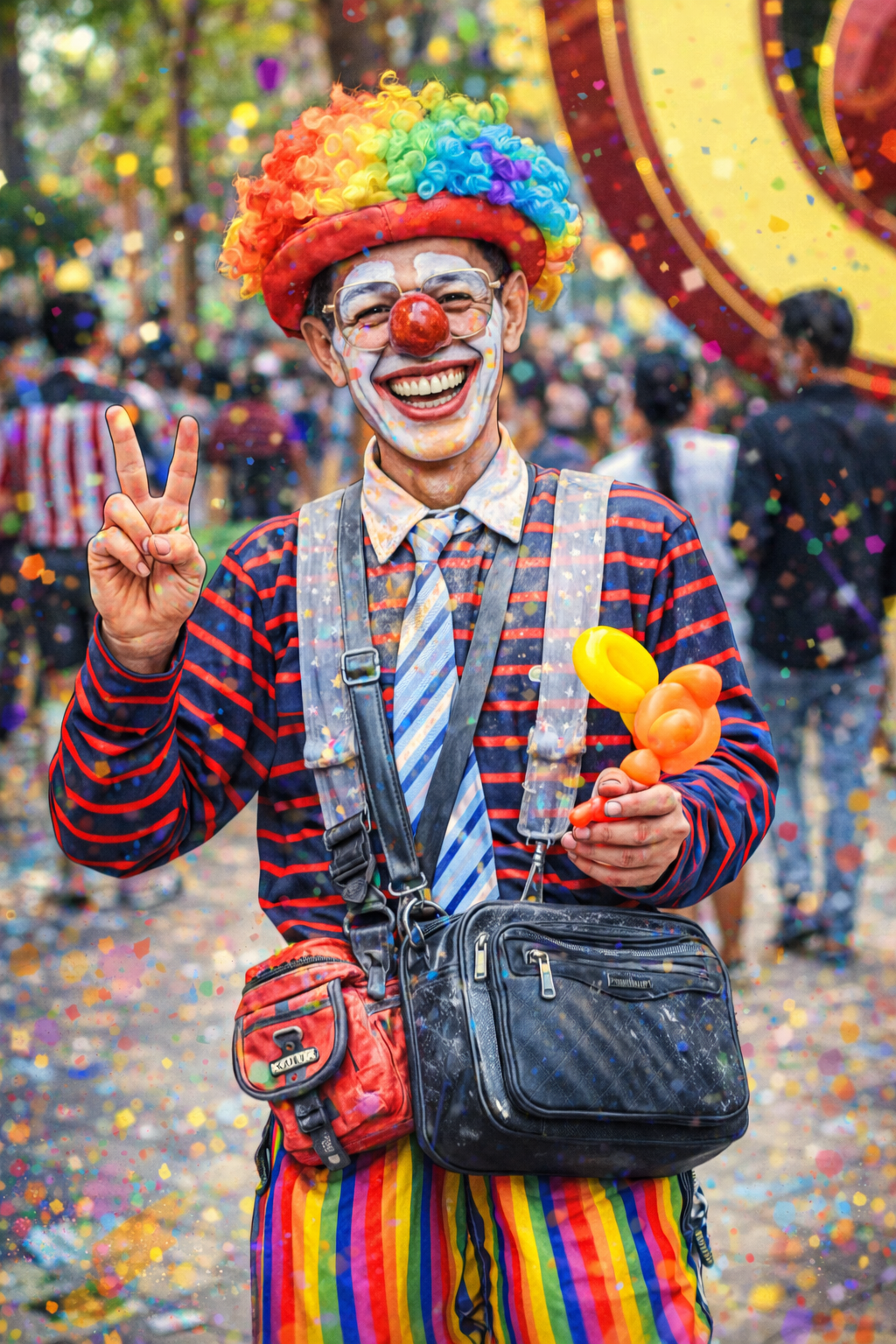
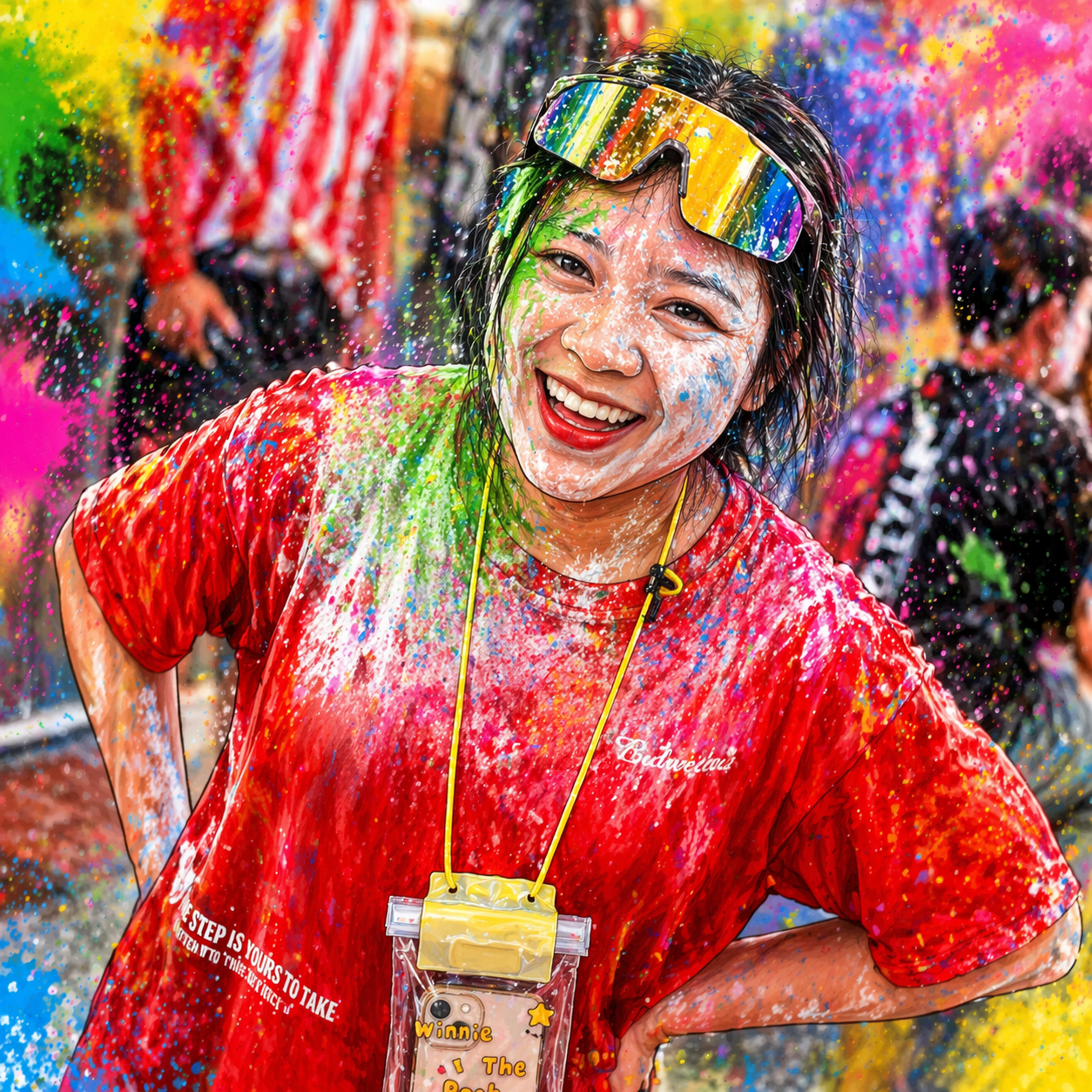
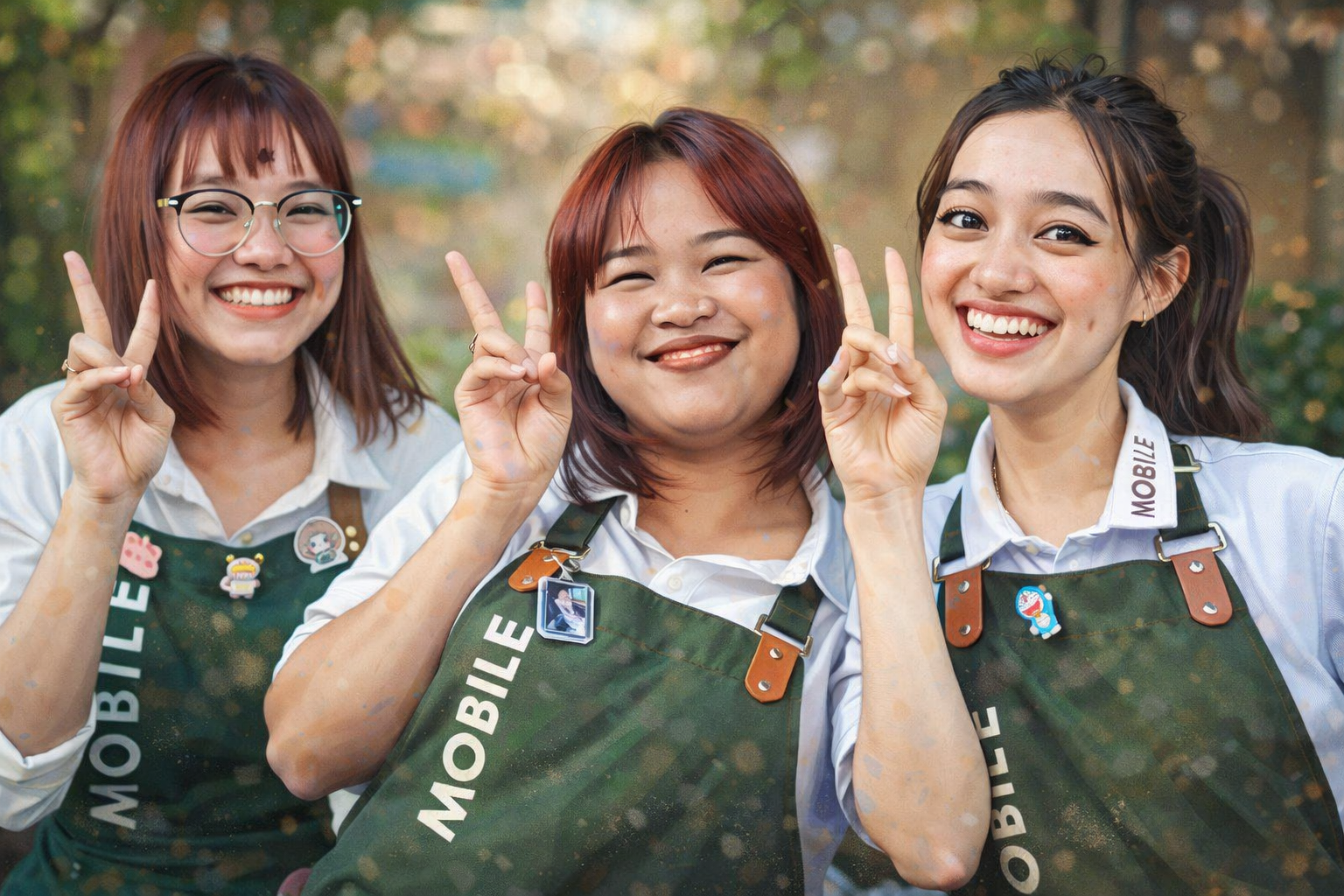
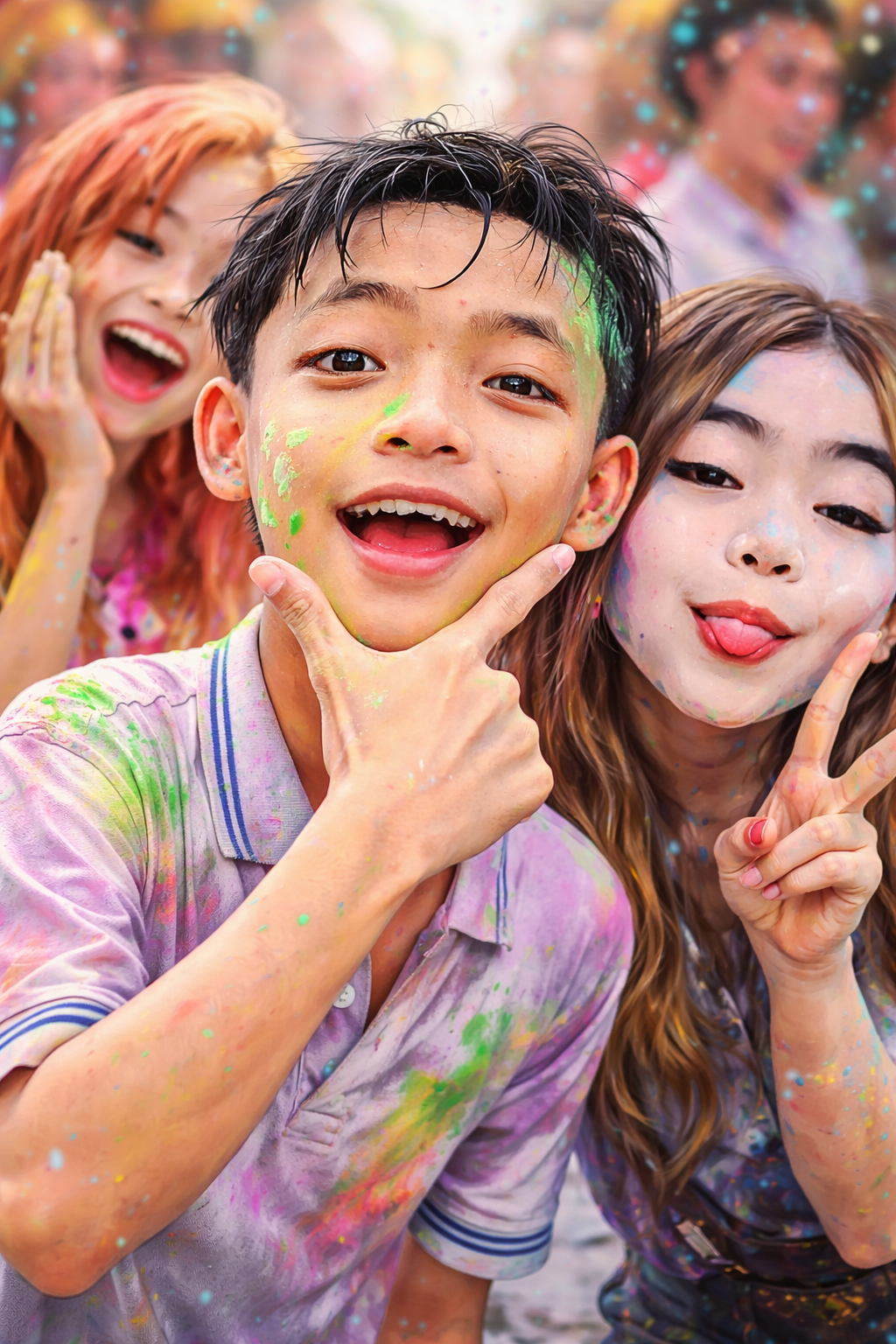
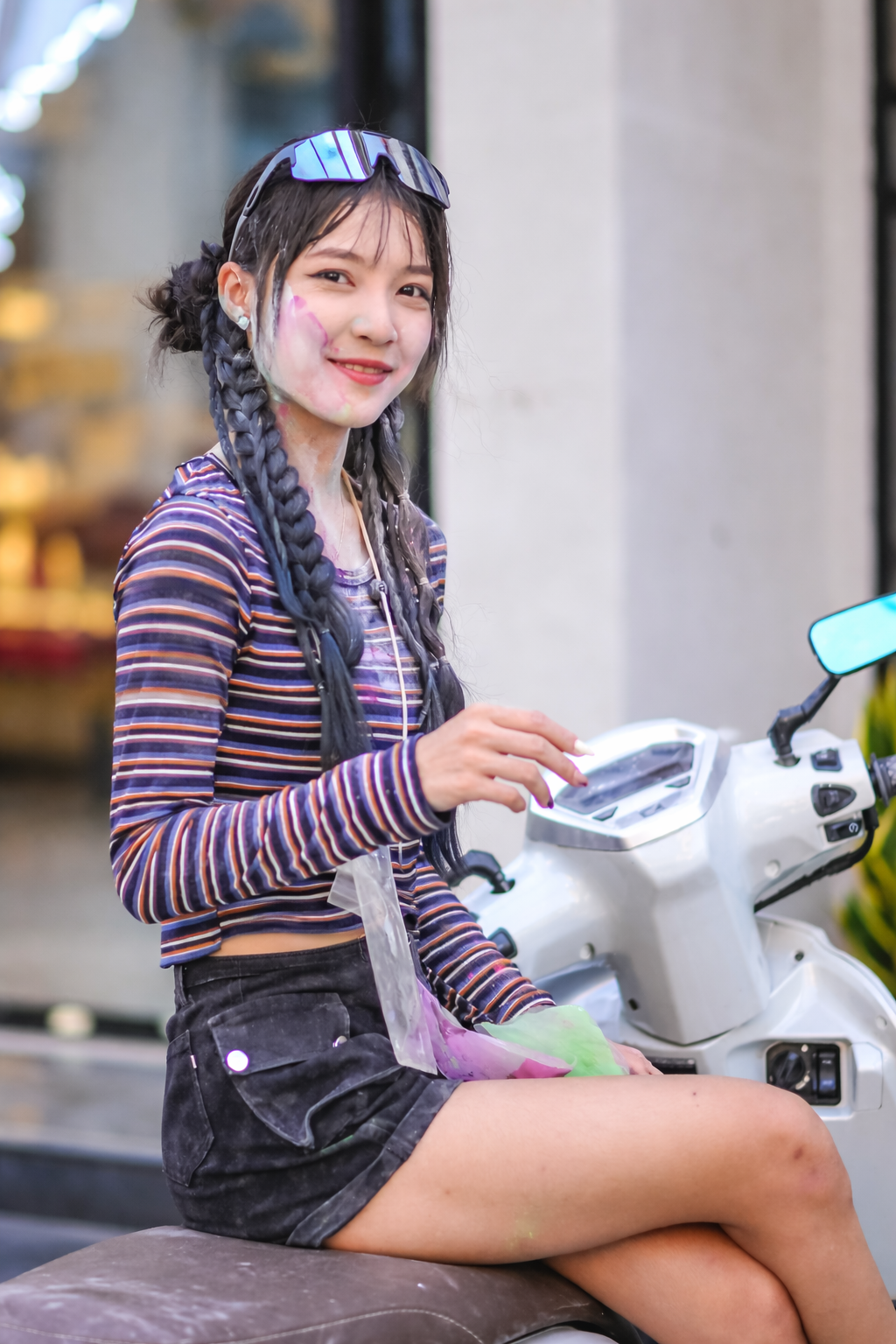
For photographers, the temptation is obvious. This is texture, movement, contradiction—everything that lends itself to an image that feels alive. The midday light is unforgiving, flattening faces, hardening shadows. And yet it works. Water catches the sun mid-air; powder softens expressions; a fleeting glance cuts through the noise. The challenge is not technical but ethical: where to stand, what to take, when to step back. In a festival built on participation, observation can feel like a form of distance.

What endures, long after the streets dry and the music fades, is not the spectacle but the shift. Khmer New Year marks a collective pause—a moment when Cambodia resets itself, not through decree or policy, but through ritual and release. It is imperfect, occasionally chaotic, sometimes contradictory. But it is also, in its own way, honest.
And perhaps that is why it matters. Not because it presents a polished image of national identity, but because it doesn’t. It shows a country as it is: rooted in tradition, restless in the present, and, for a few days each year, entirely willing to let go.