Volunteering with Kids International Dental Services

cambodia, cameras, nikon, opinons, thoughts, philanthropy, photography, pictures, voluntary

An Old Photographerโ€™s View

There are assignments where the photographer stands outside the story, observing it carefully and trying not to disturb its natural shape. Then there are days when standing outside feels inadequate.

Working alongside Kids International Dental Services belongs to the second category.

I am not a dentist. I cannot diagnose an abscess, repair a damaged tooth or calm a frightened child with the confidence of someone who has done it a thousand times. What I can do is make a record. I can watch, listen and photograph the human story unfolding around the clinical work.

That may sound like a modest contribution, but voluntary organisations also need witnesses. Treatment helps the child sitting in the chair. Photography can help explain why another team must return next year.

A close-up of a young boy with a serious expression, sitting at a desk, holding a pen, in a classroom setting.

Kids International Dental Servicesโ€”usually known simply as KIDSโ€”grew from a volunteer dental mission in 2009. A mixed group of dental and non-dental volunteers returned home from that journey convinced that the experience should become something more permanent.

Their idea had two equally important parts. The first was straightforward: provide free dental care to children who would otherwise receive little or none. The second was more ambitious: introduce young dentists and dental students to humanitarian service early enough for it to become part of their professional lives.

It was never meant to be a one-off charitable adventure followed by a few photographs and a sentimental speech. The intention was to build a culture of returning, mentoring and taking responsibility.

The organisation became a registered American nonprofit based in San Francisco. Cambodia, Guatemala and the Philippines were among its original areas of work. KIDS later expanded its missions to Cape Verde, Haiti, South Africa, Mongolia and Morocco. The organisation says that its volunteers have treated several thousand children across eight countries while developing a network of mentors, many of whom first joined as students or newly qualified dentists. KIDSโ€™ official history

There appears to have been volunteer work associated with the KIDS name before the organisationโ€™s formal establishment in 2009. A report on a 2012 Cambodia mission said that some children at Phnom Penh organisations had already been receiving KIDS-supported care for several years. The safest reading is that the organised charity emerged from an earlier tradition of volunteer dental work rather than appearing fully formed on a particular morning.

That is often how these things begin. Not in a grand office with a strategic plan, but with a few tired people coming home from somewhere difficult and deciding they cannot simply forget what they have seen.


Close-up portrait of a young boy with a serious expression, wearing a white shirt, captured in black and white.

In Cambodia, the need is not difficult to find. Dental treatment remains unaffordable or inaccessible for many poor families, particularly outside the larger towns. A small cavity can be ignored because there is no money, no nearby clinic and sometimes little understanding of what it may become. The cavity grows. Pain arrives. Infection follows.

A child in dental pain does not sleep properly. He may struggle to eat, lose concentration at school and become frightened of a condition nobody around him can cure. What appears on a medical form as โ€œtooth decayโ€ can quietly interfere with his education, confidence and daily life.

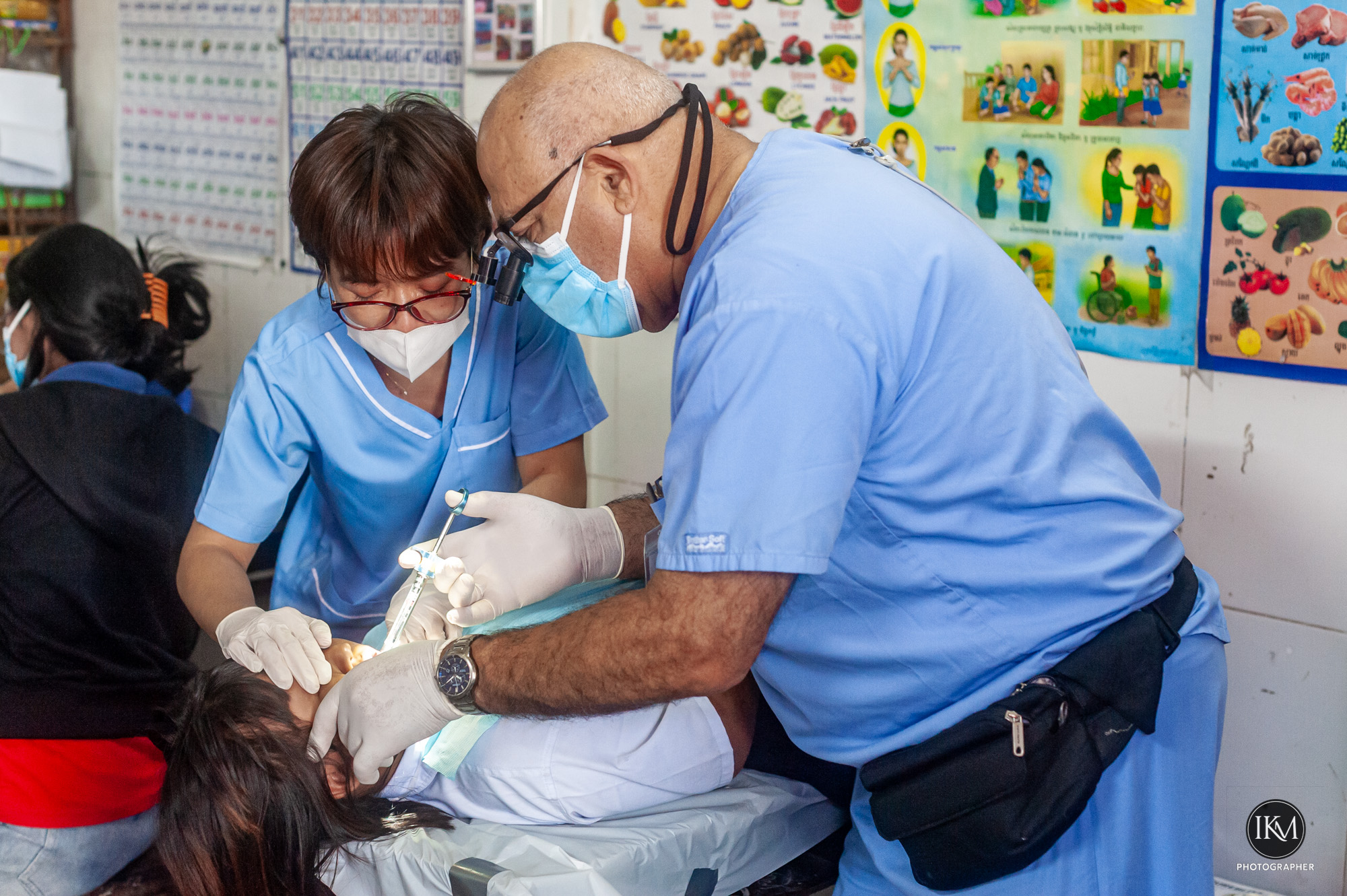
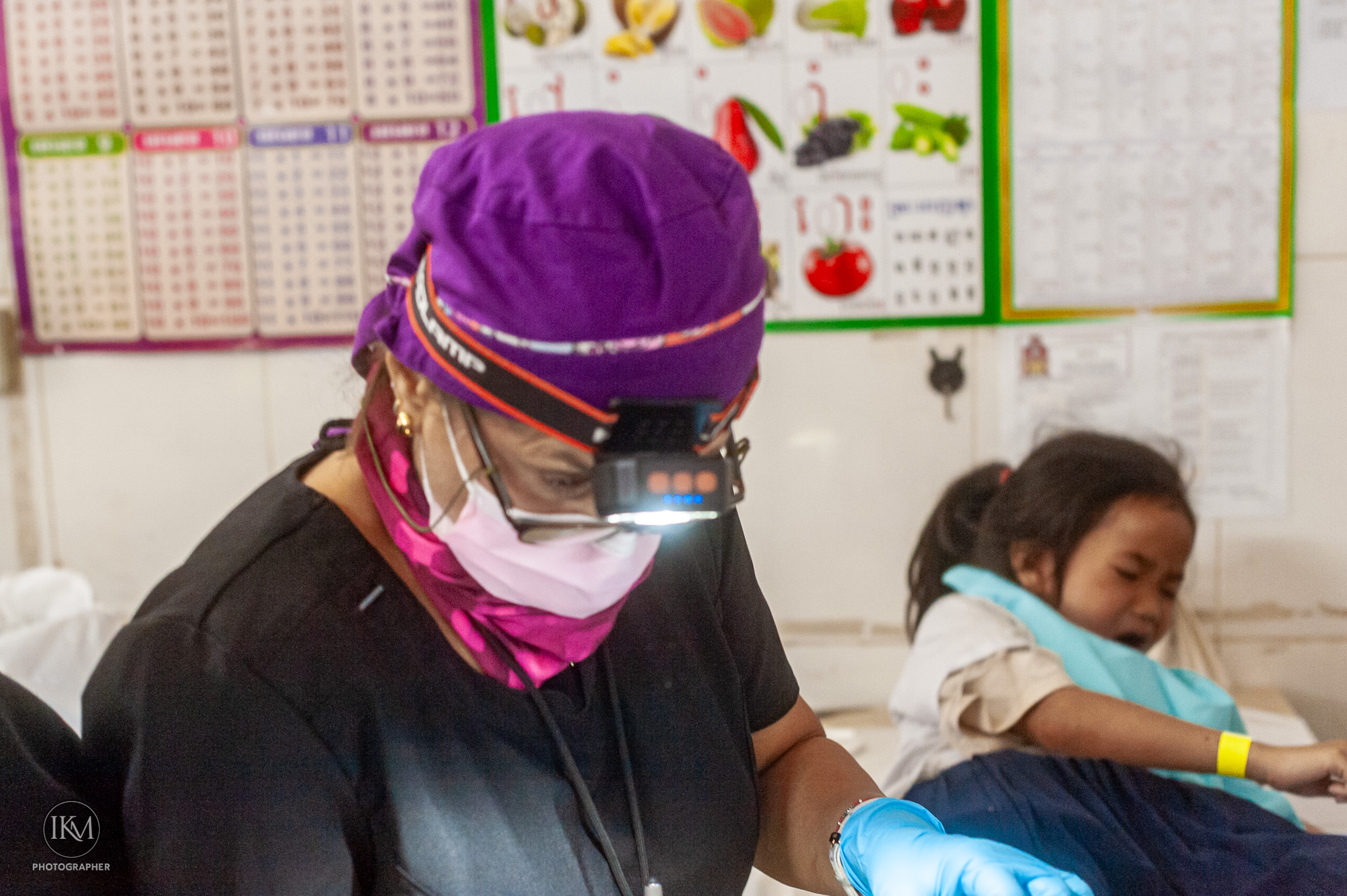
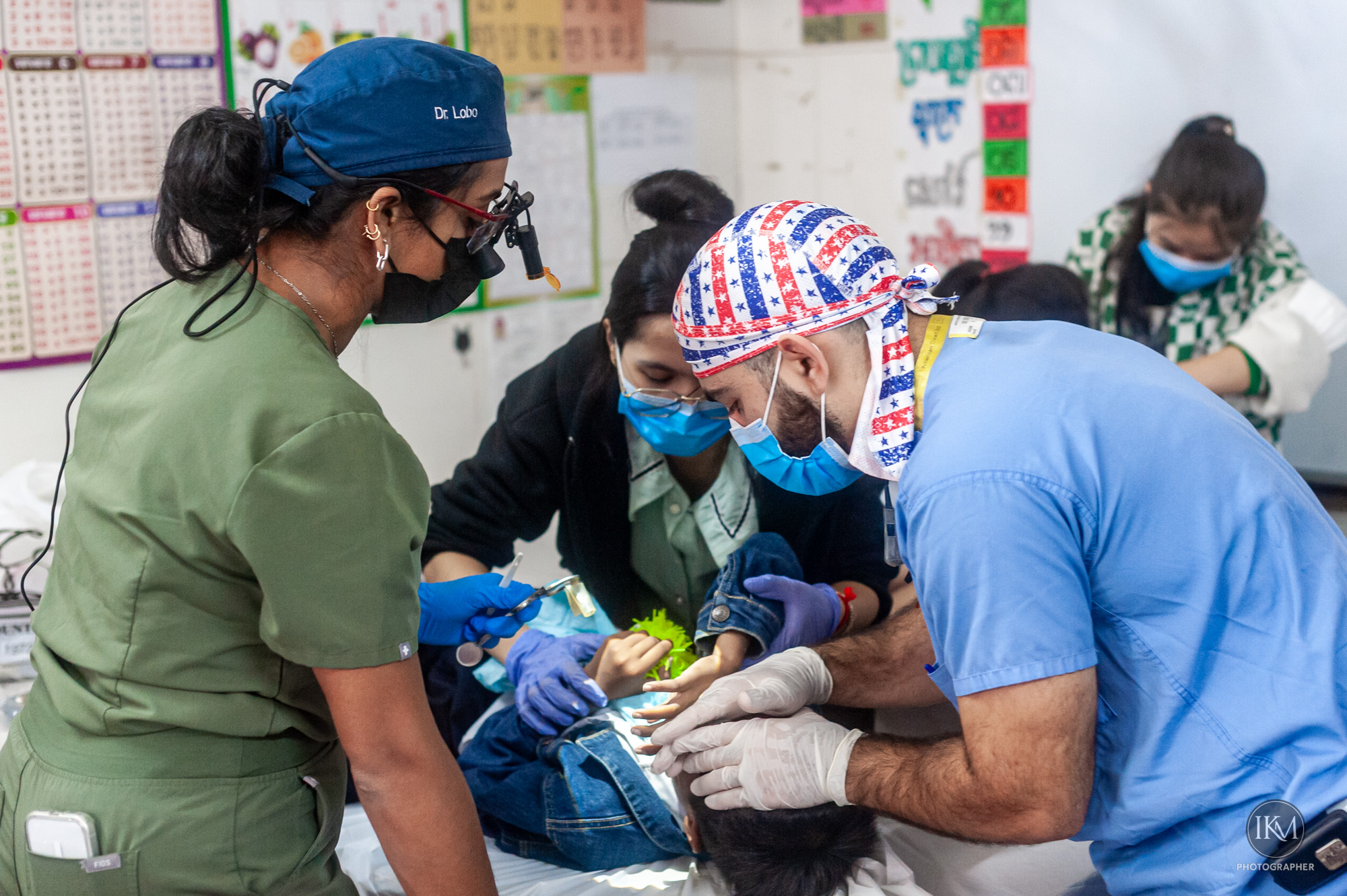
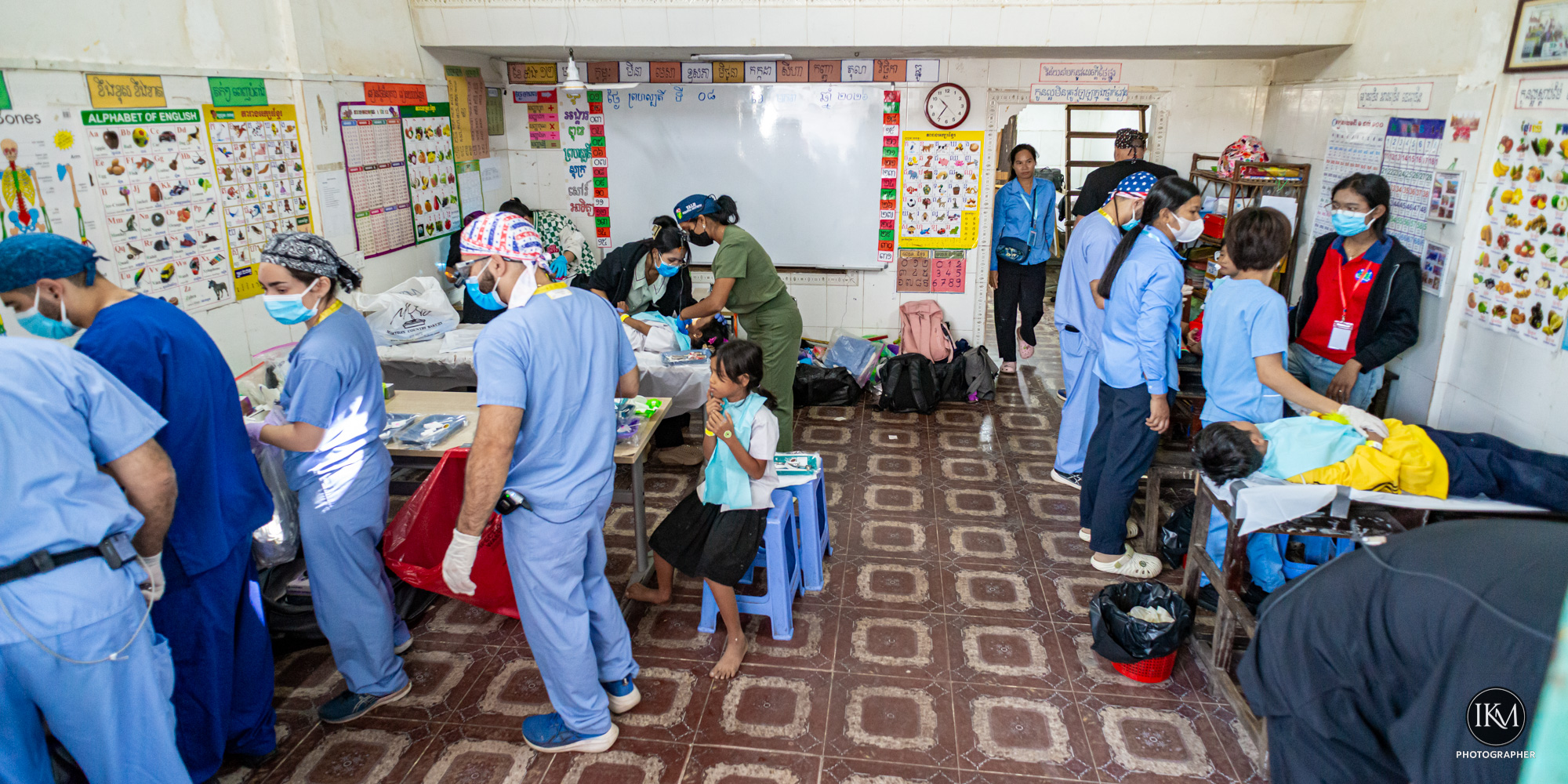
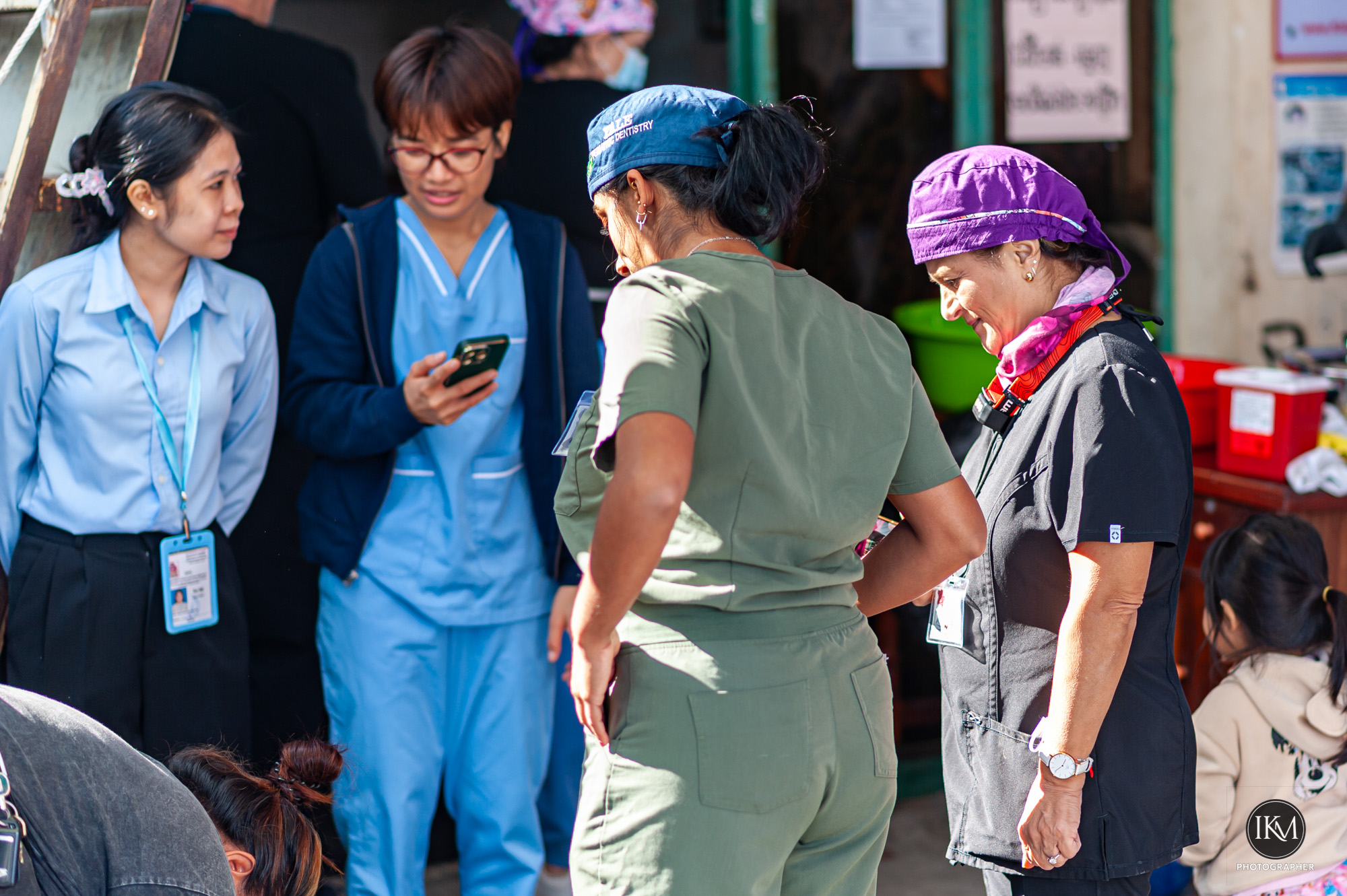
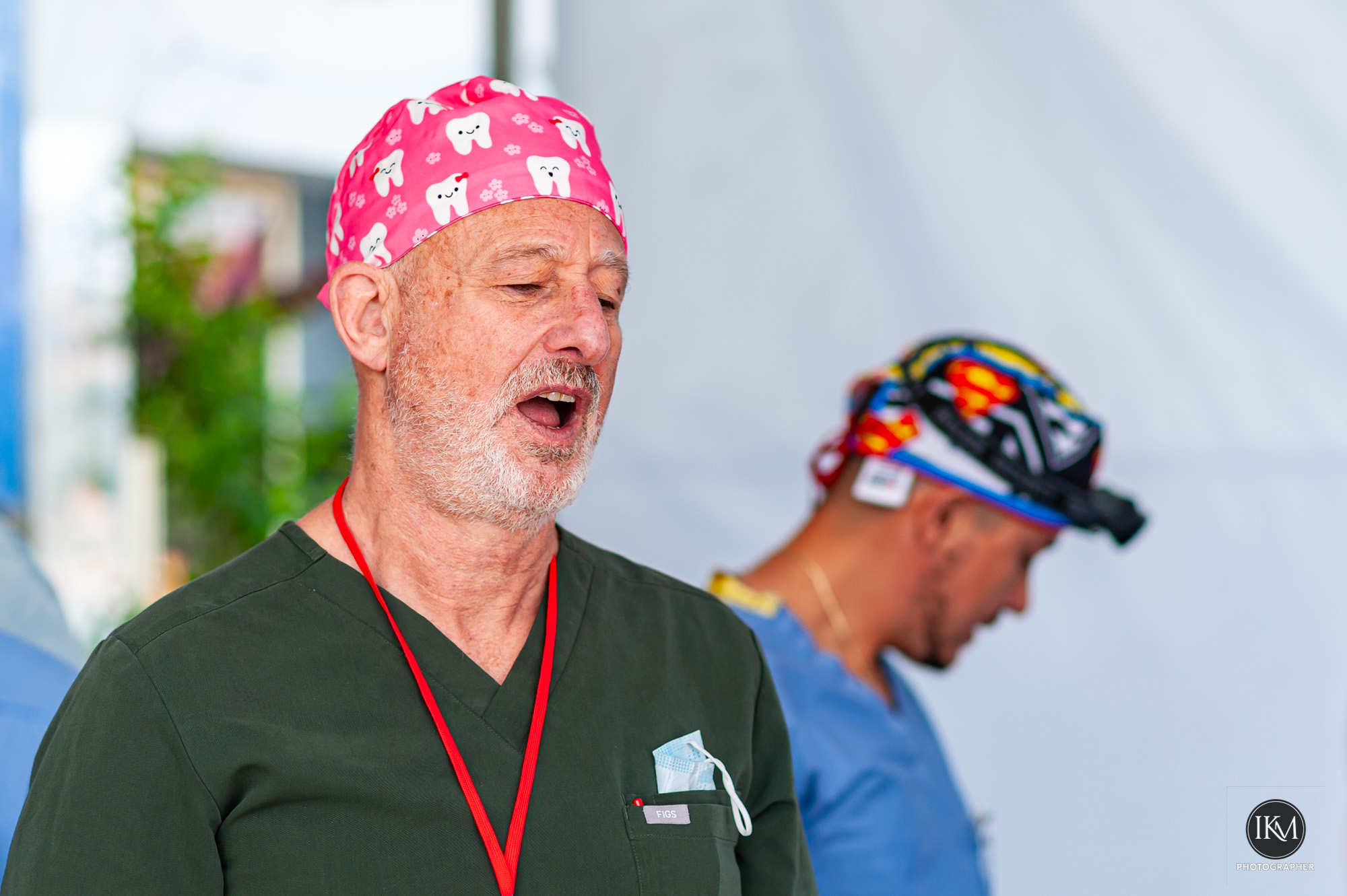
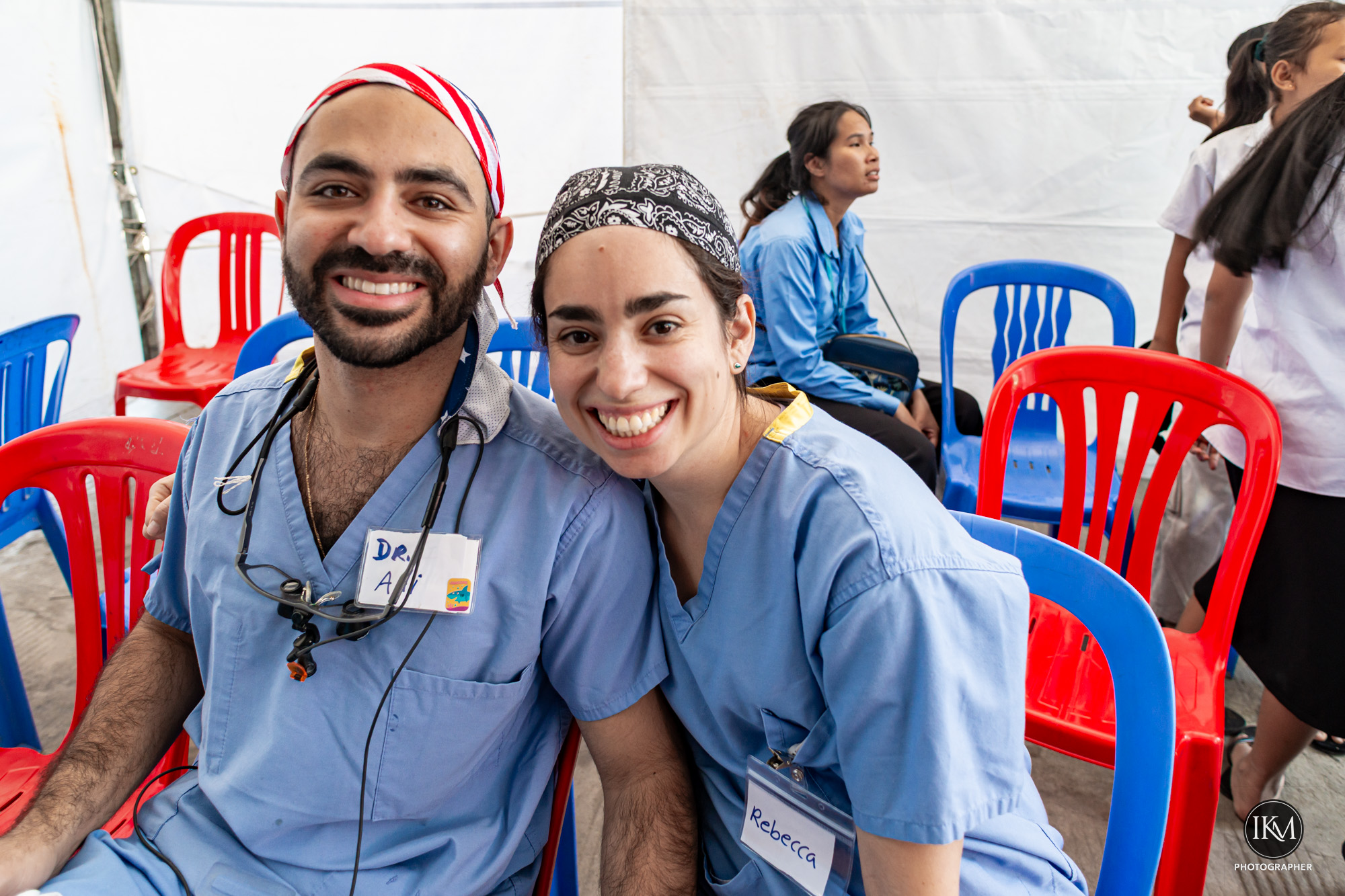
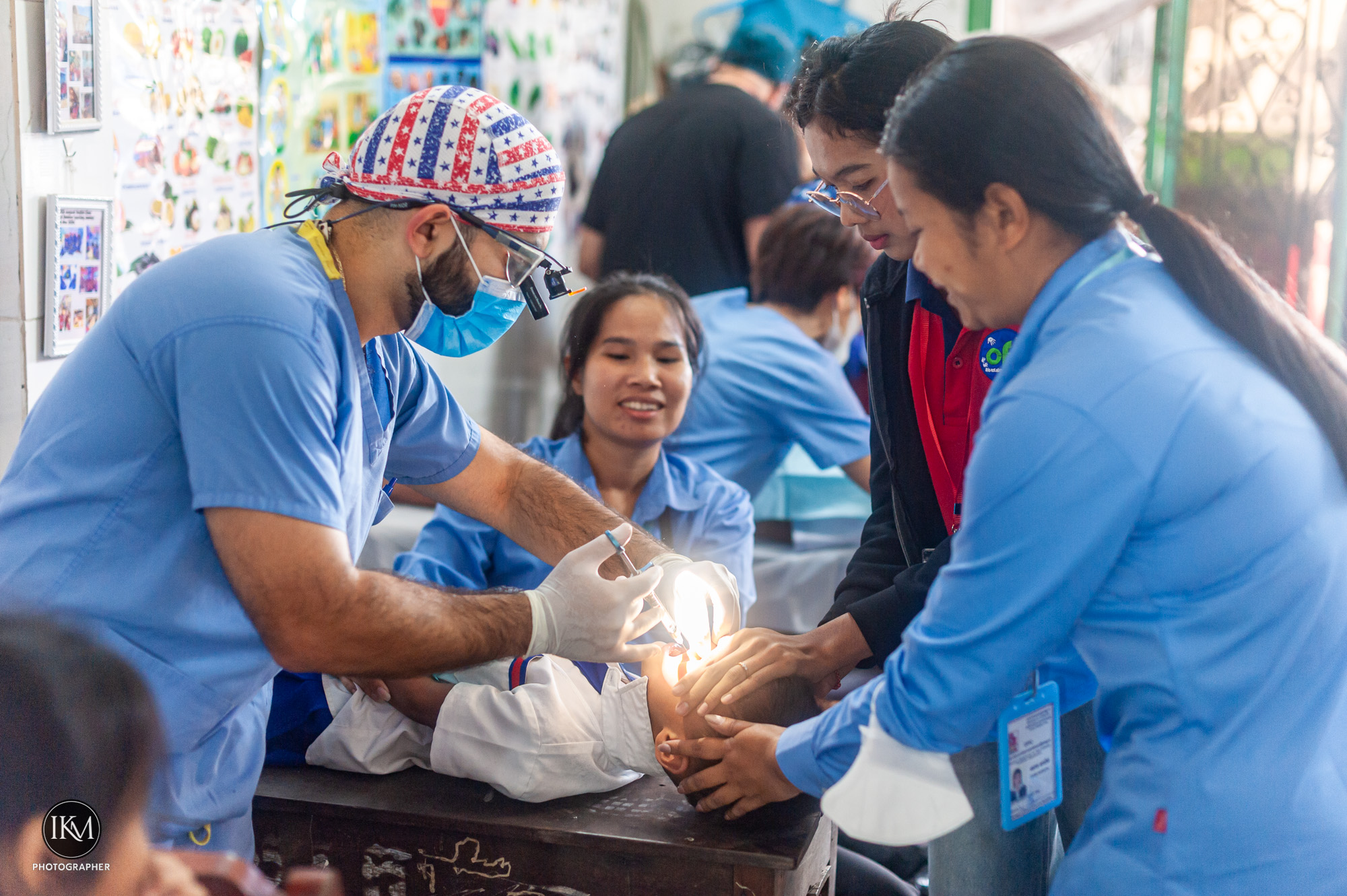
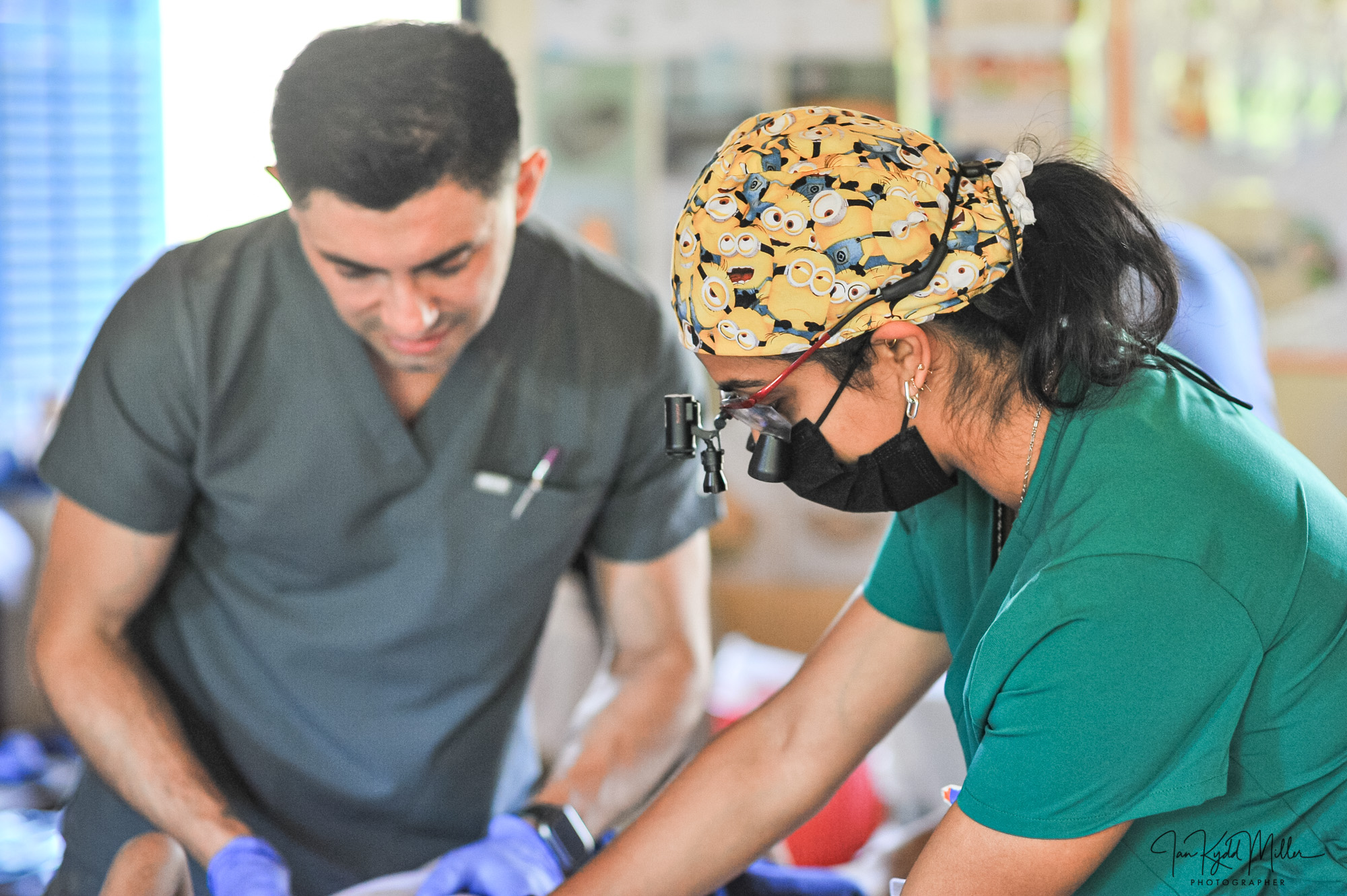
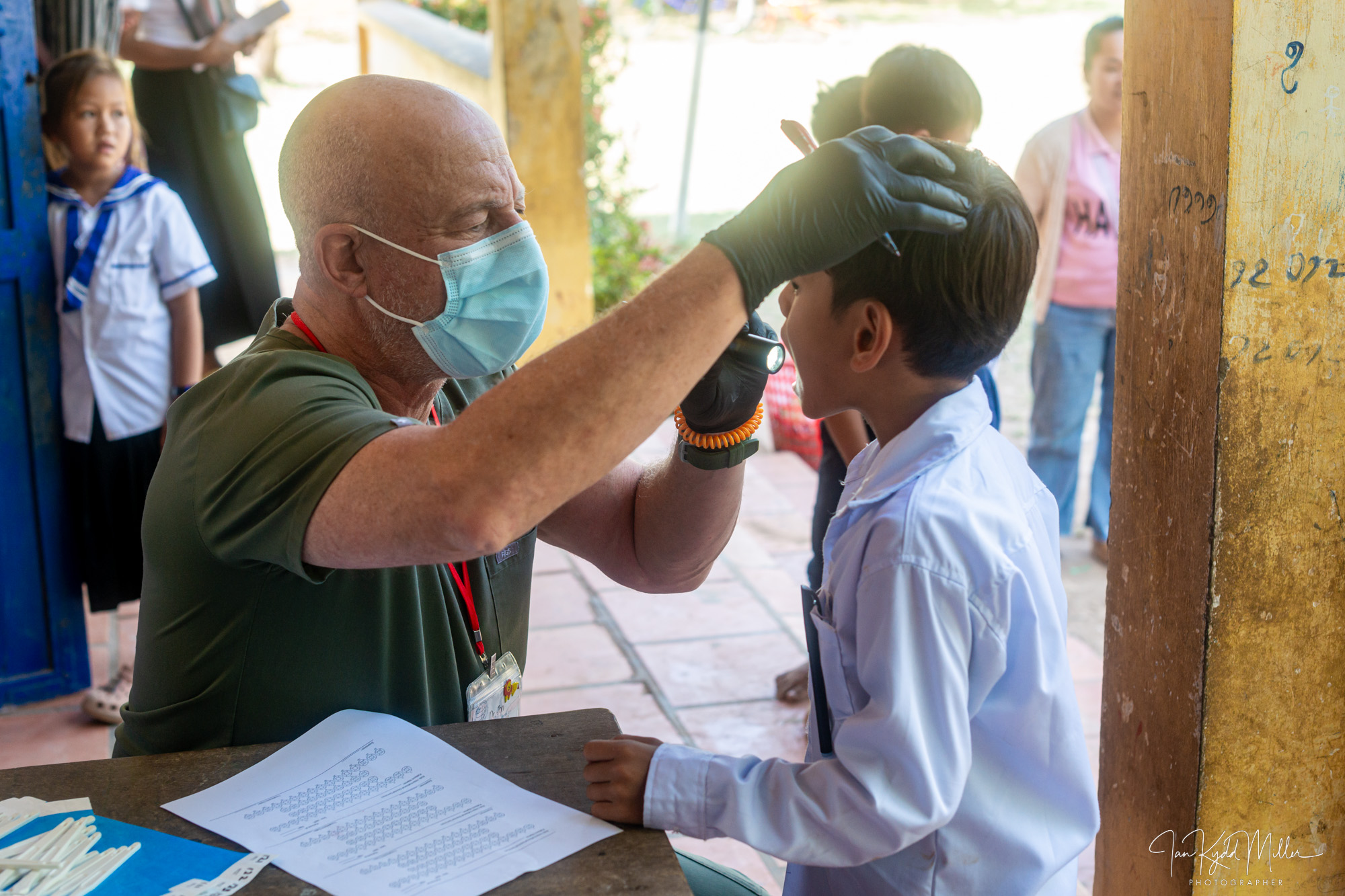
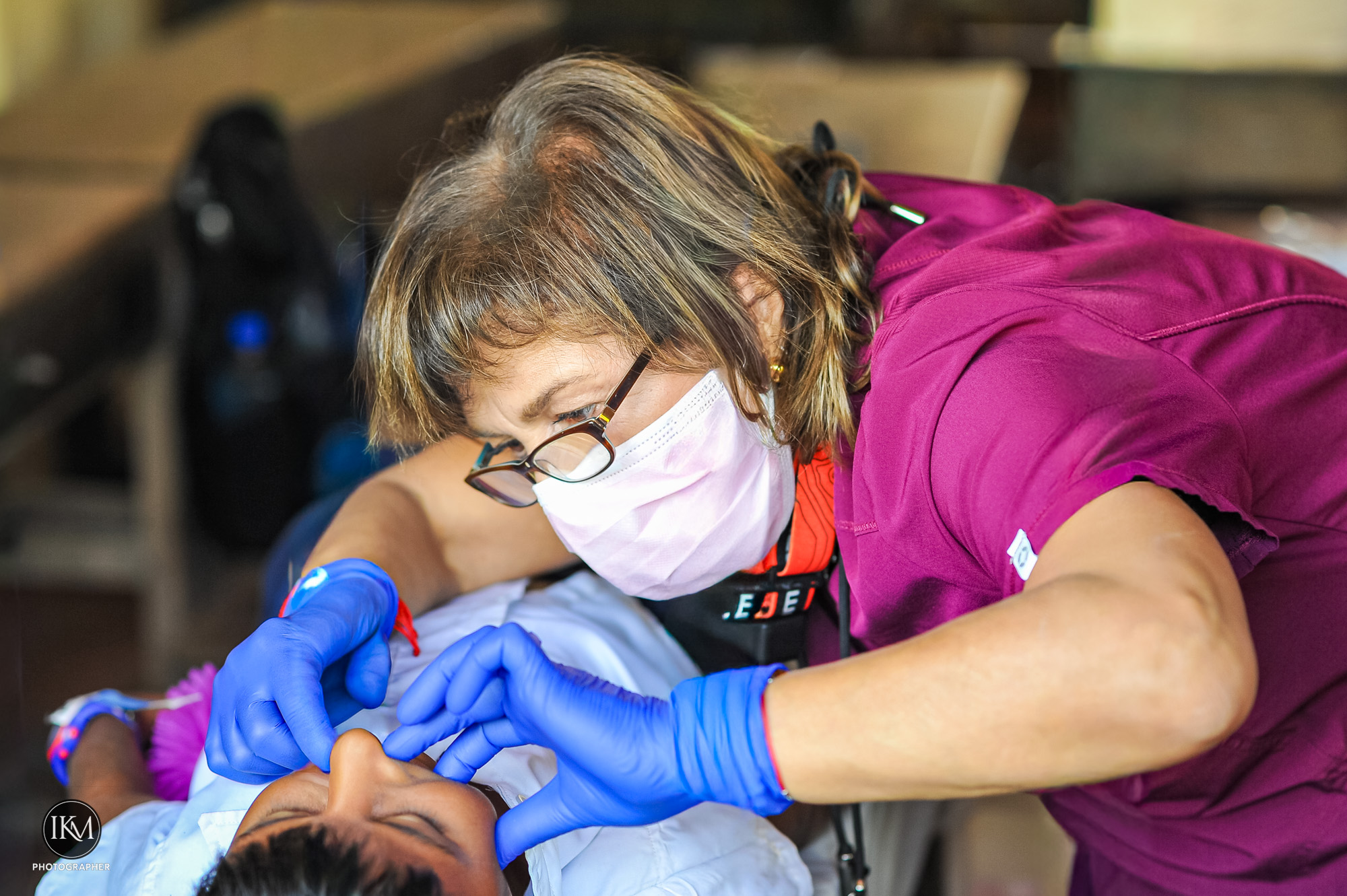
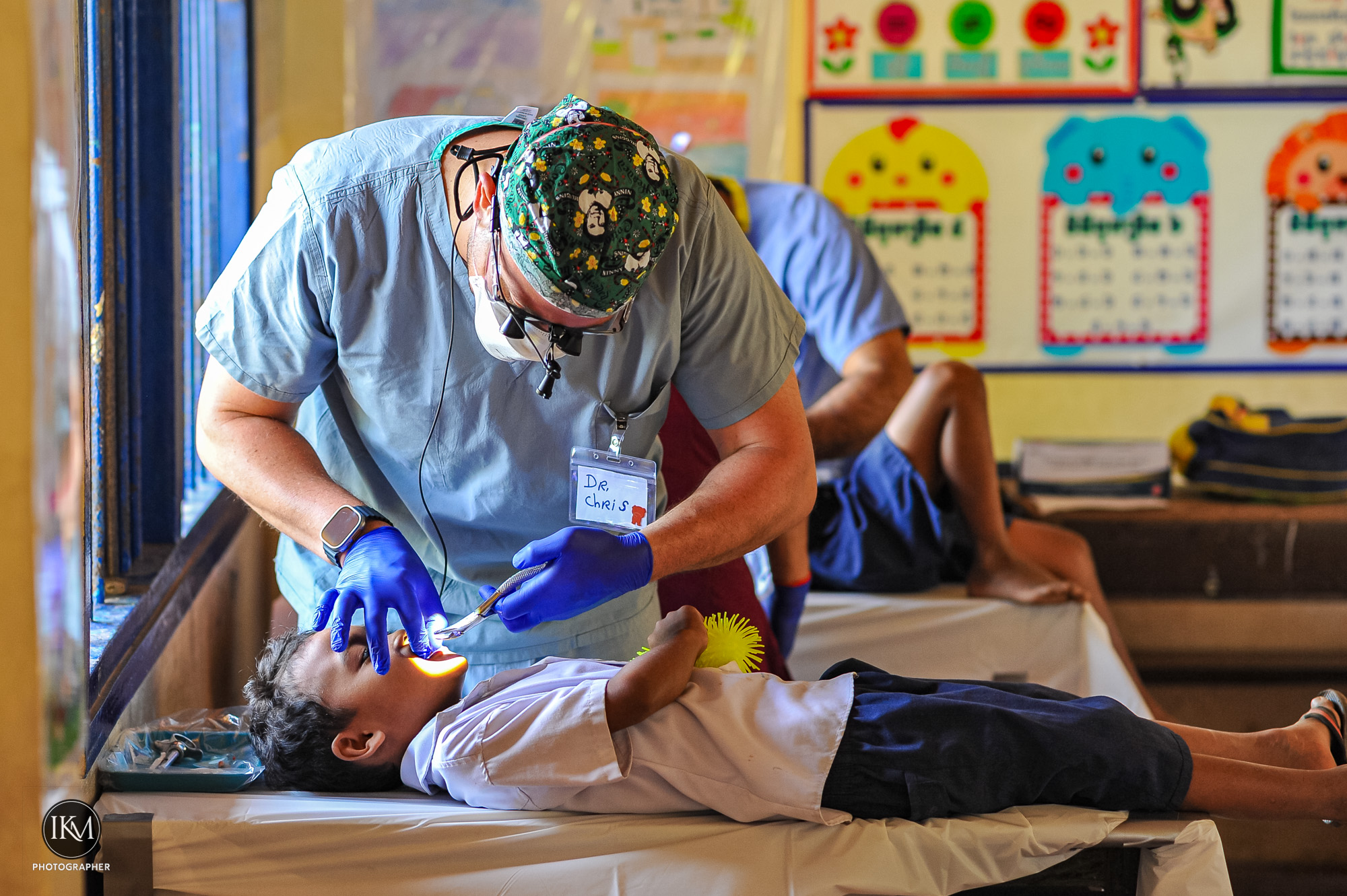
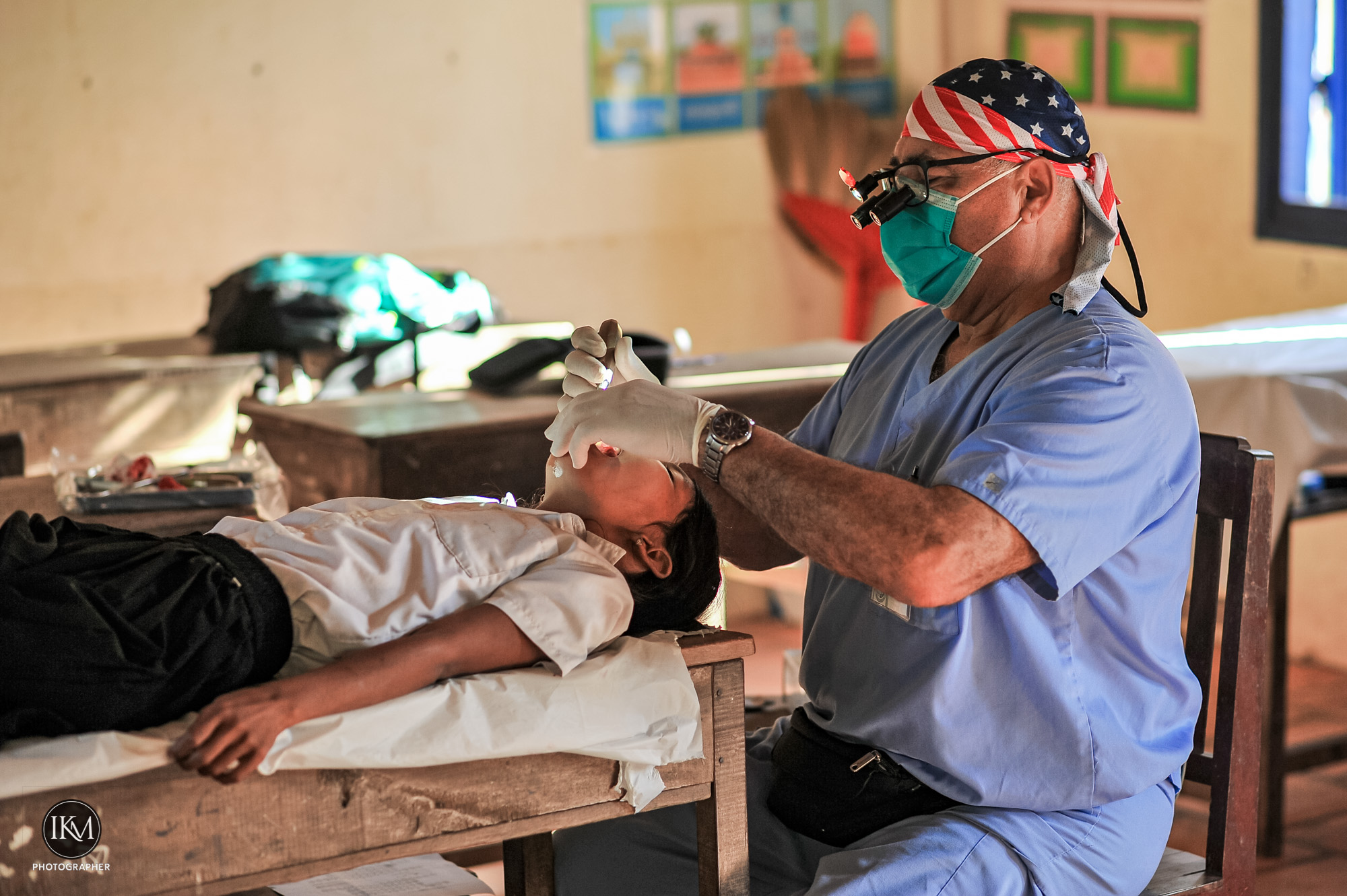
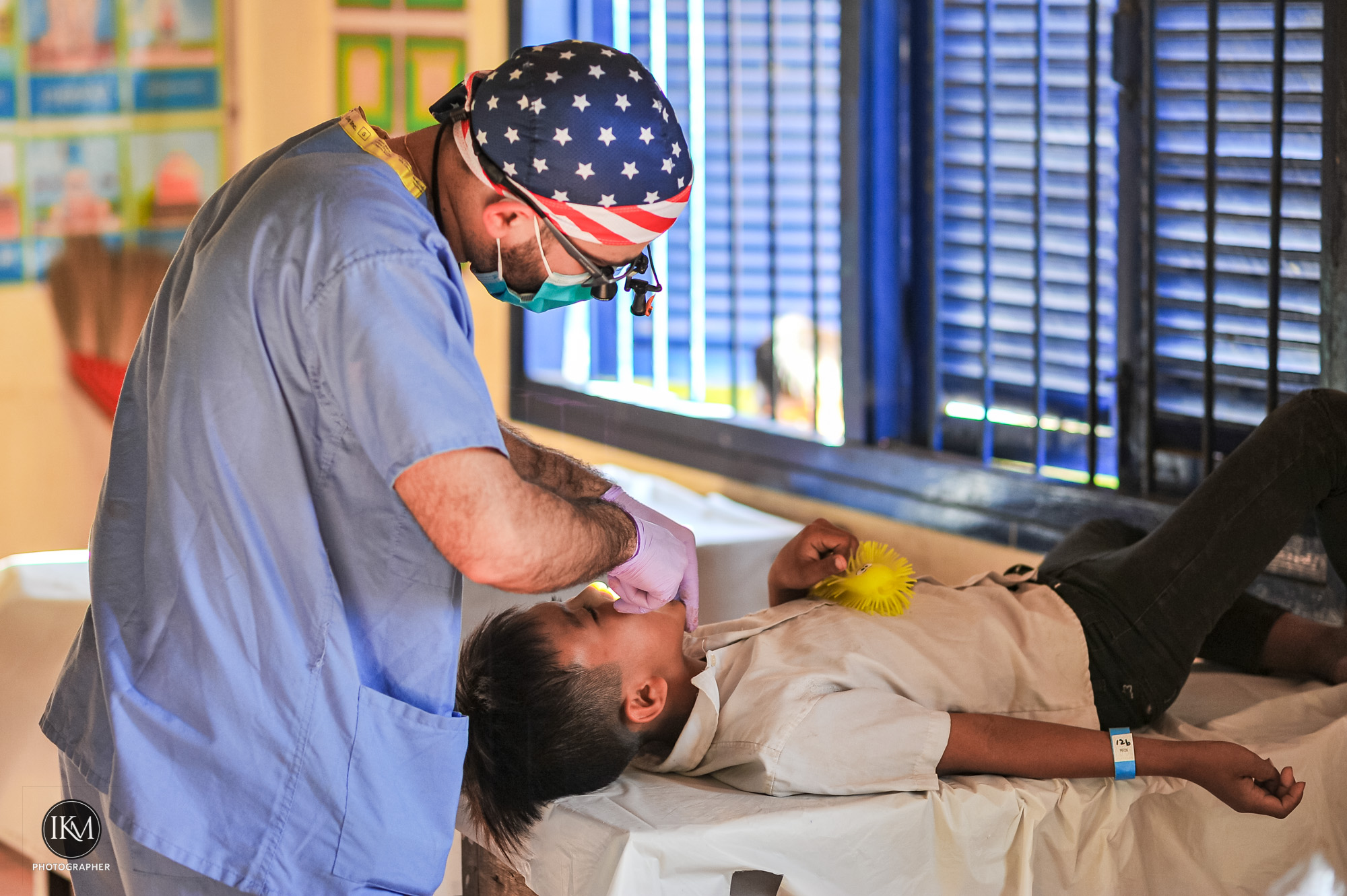
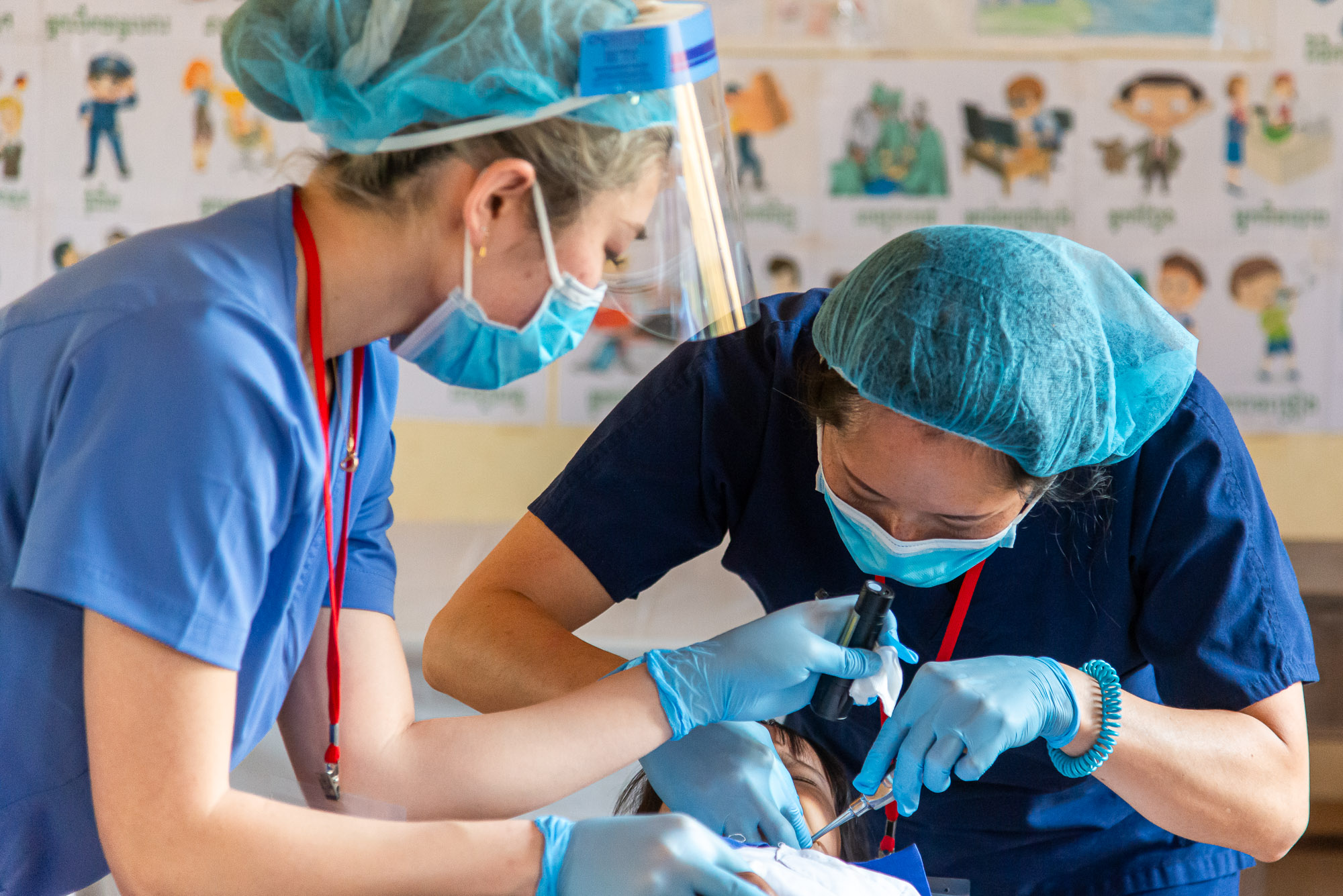
KIDS missions bring together dentists, hygienists, students, assistants and general volunteers. Classrooms, community buildings and other borrowed spaces may become temporary clinics. Equipment is unpacked, workstations assembled and children examined in numbers that would exhaust most ordinary practices.

During a 2012 mission, an international KIDS team treated children in Phnom Penh and in Prey Veng province. At a Buddhist monastery near the Vietnamese border, tables were adapted into makeshift dental units and the volunteers reportedly treated as many as 250 patients a day. The work included examinations, restorations, extractions and preventive care. Contemporary report on the 2012 mission

Those figures matter, but they are not what I remember most.

I remember the waiting.


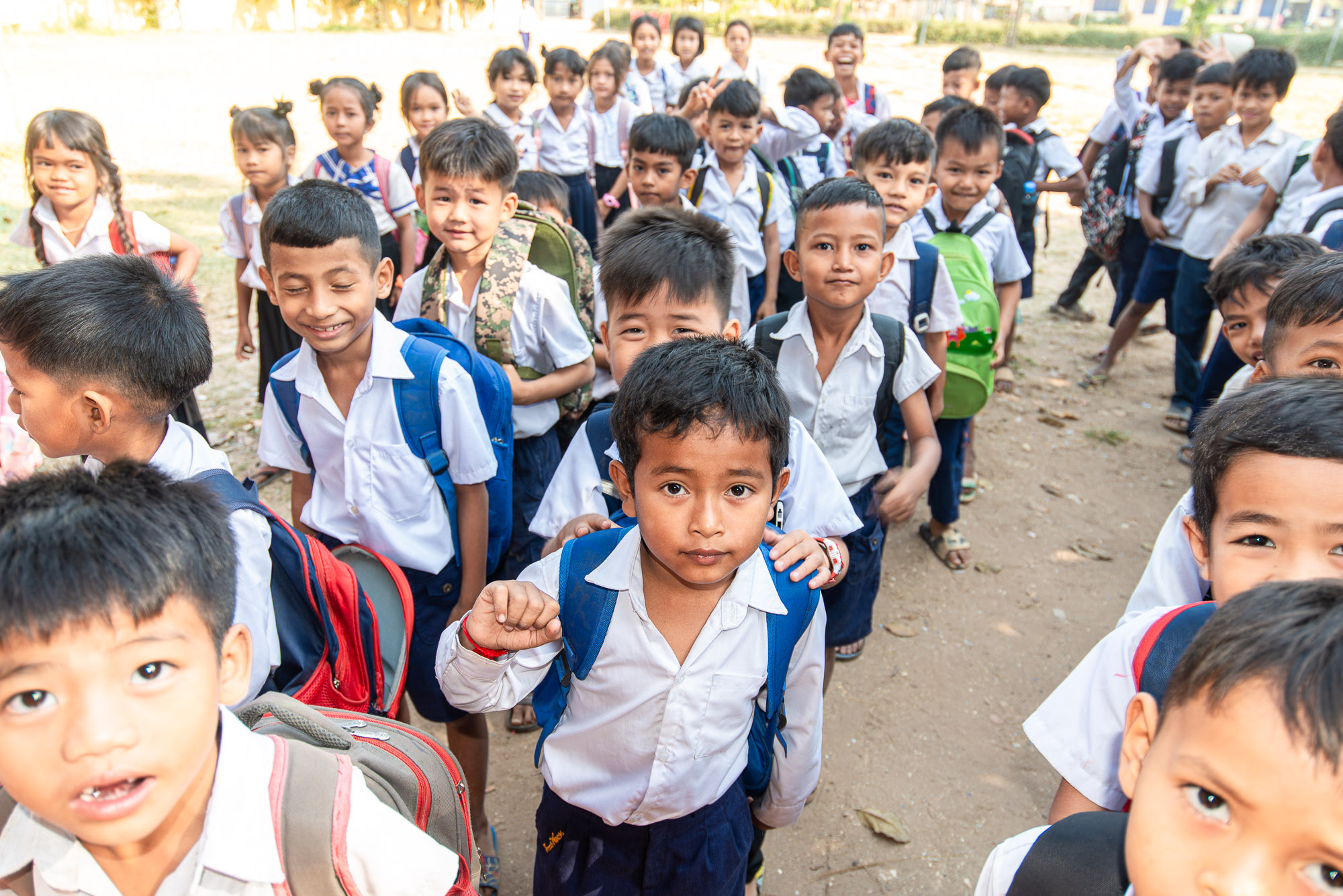
A young boy with short hair and a serious expression is looking directly at the camera. He is wearing a white shirt and has a backpack with a colorful strap.

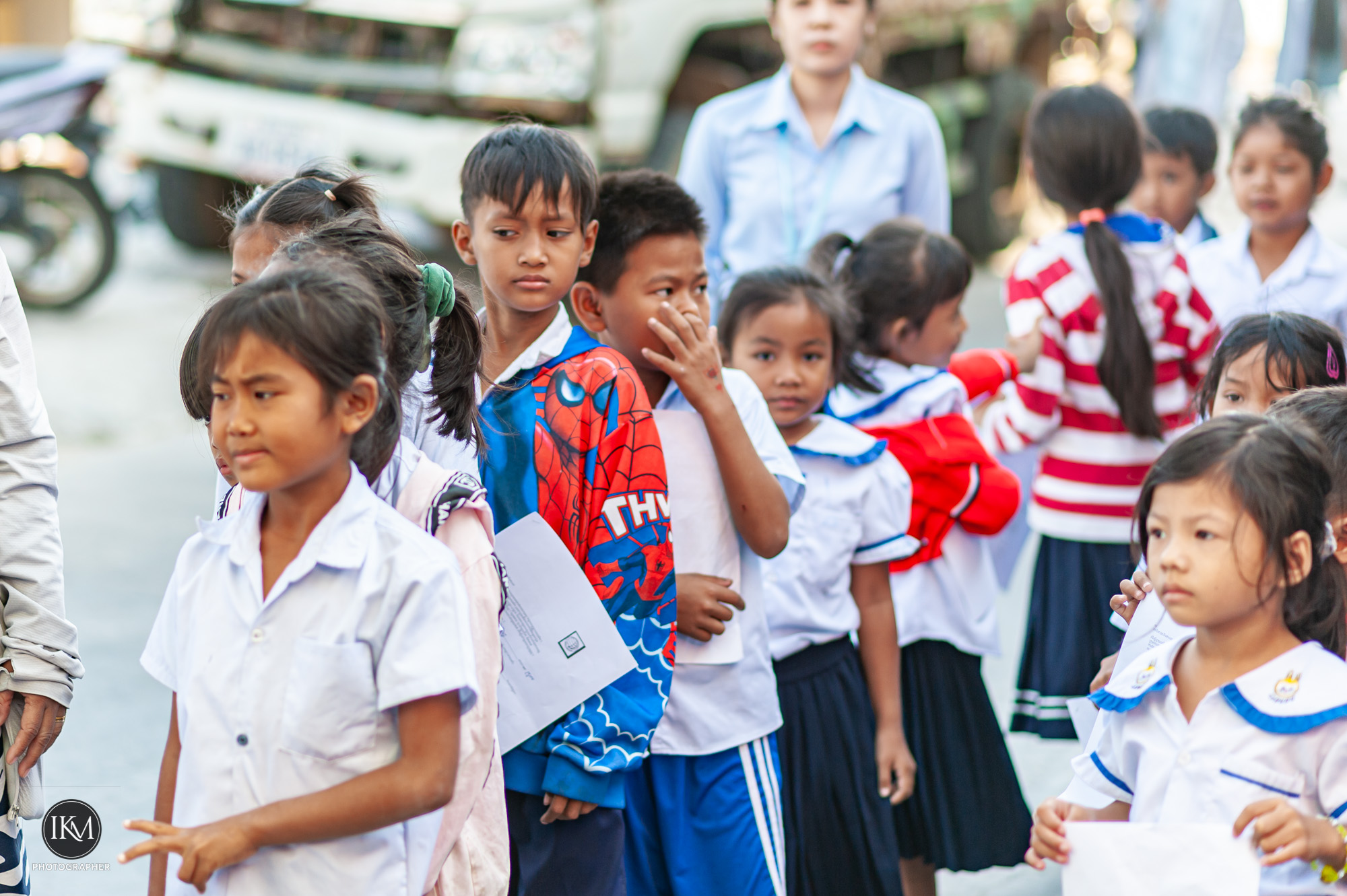
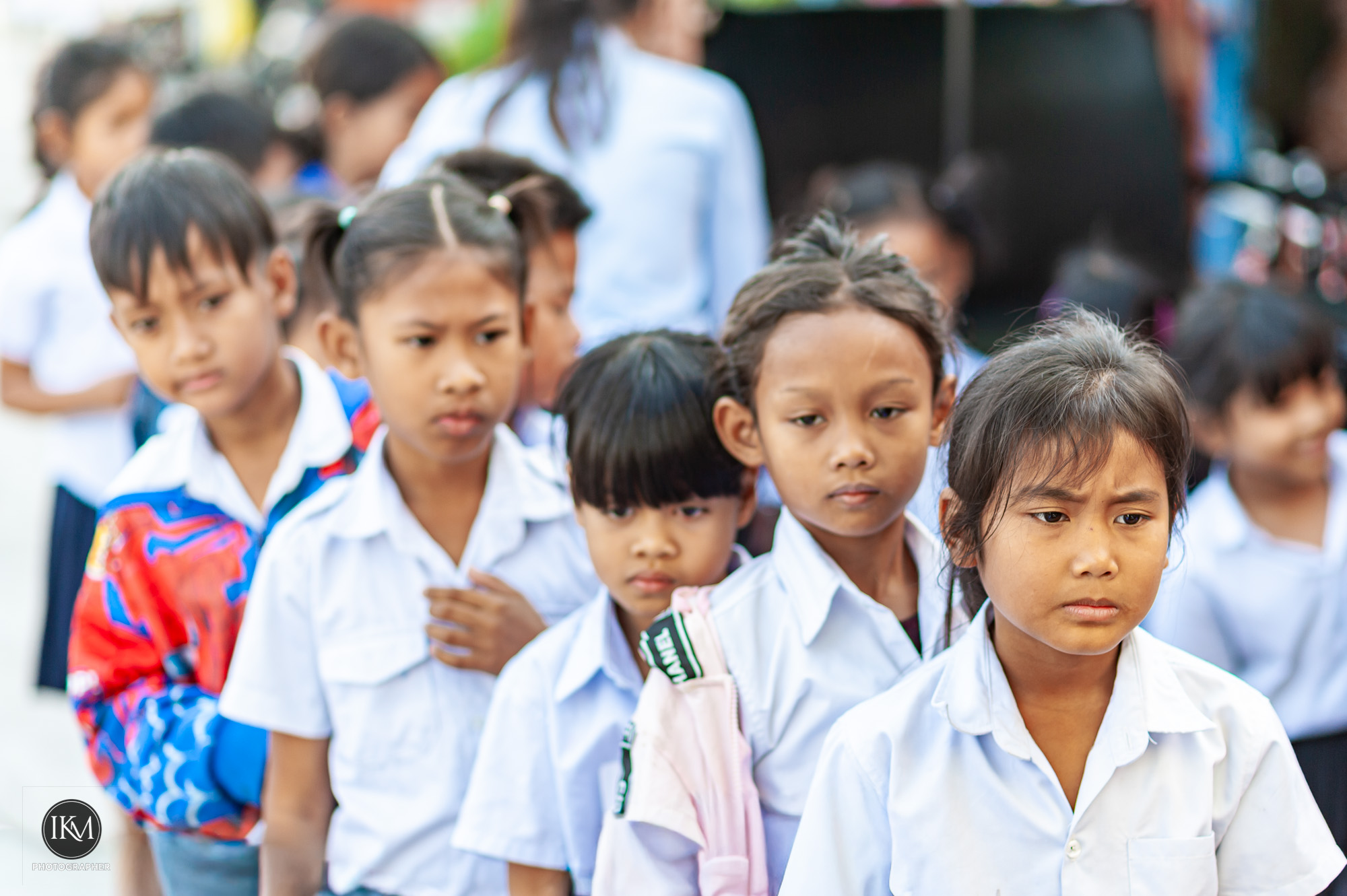
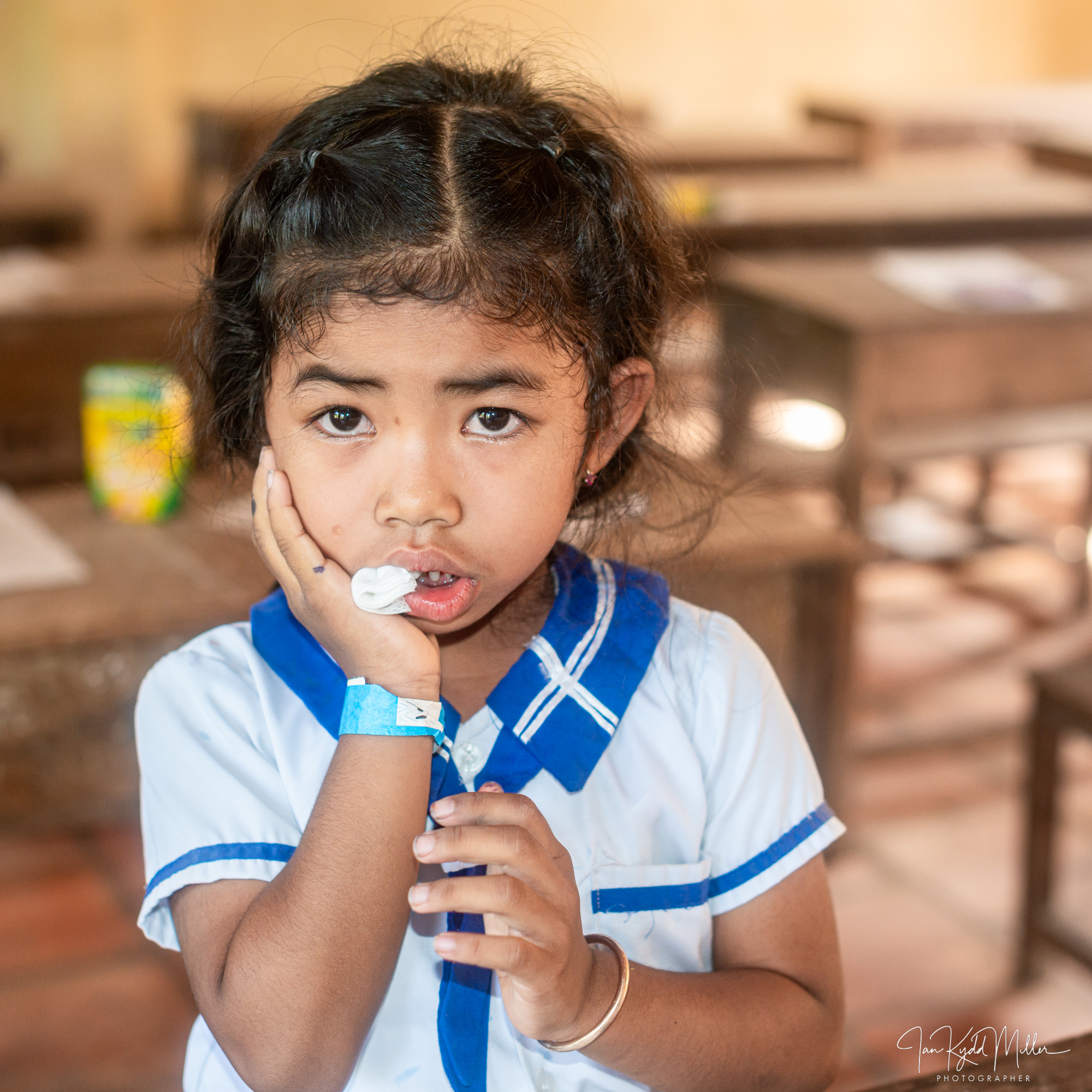
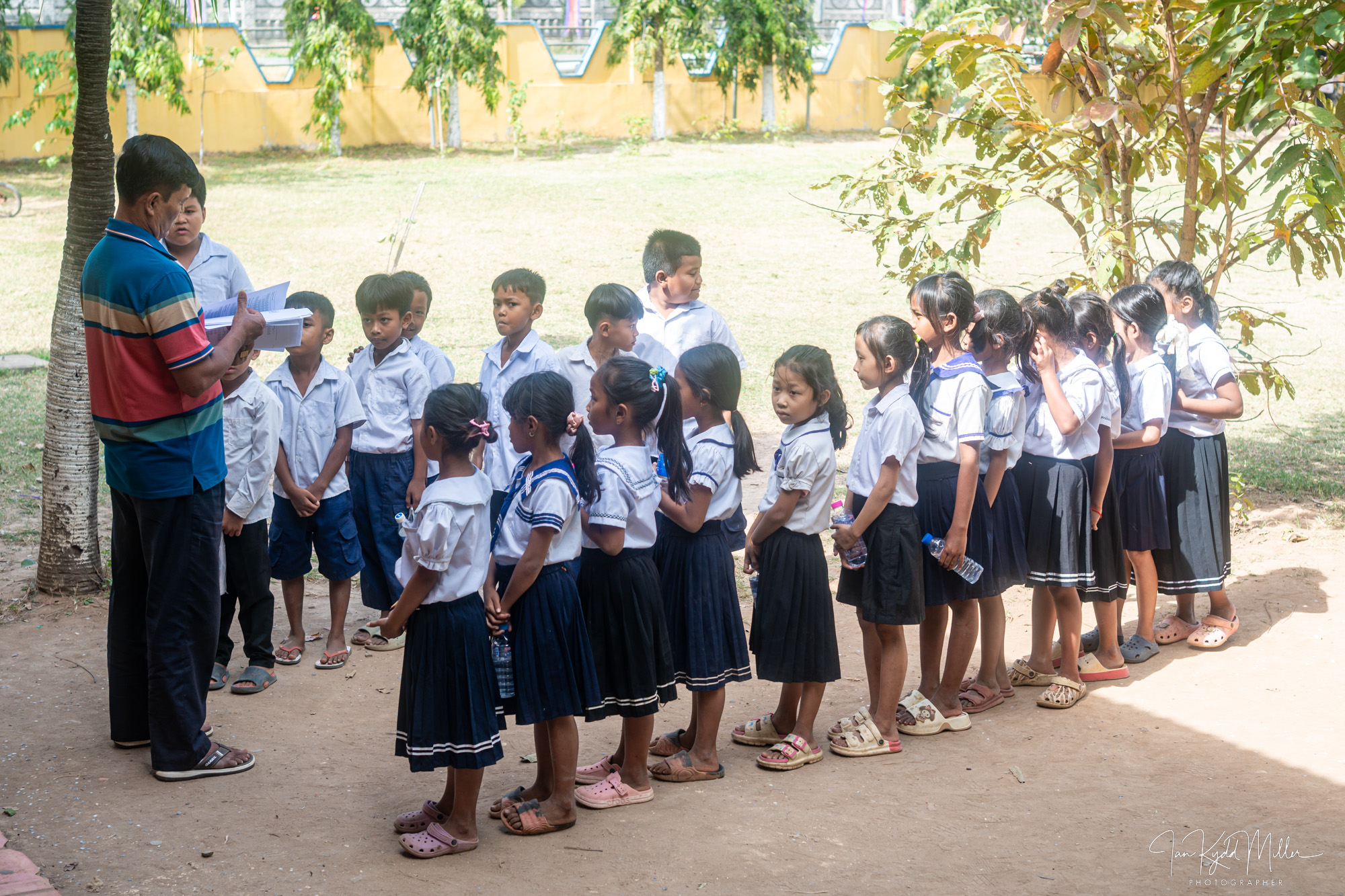
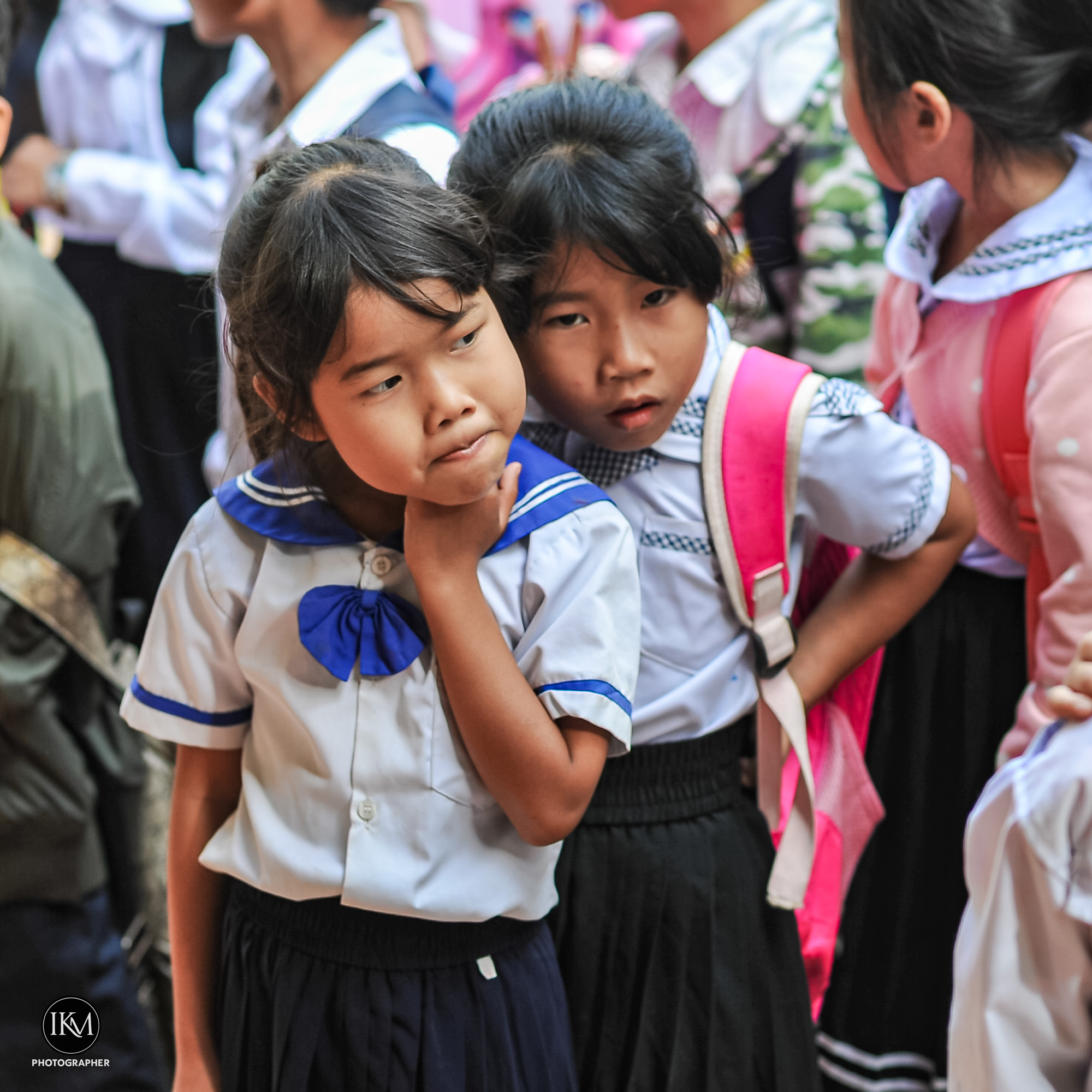
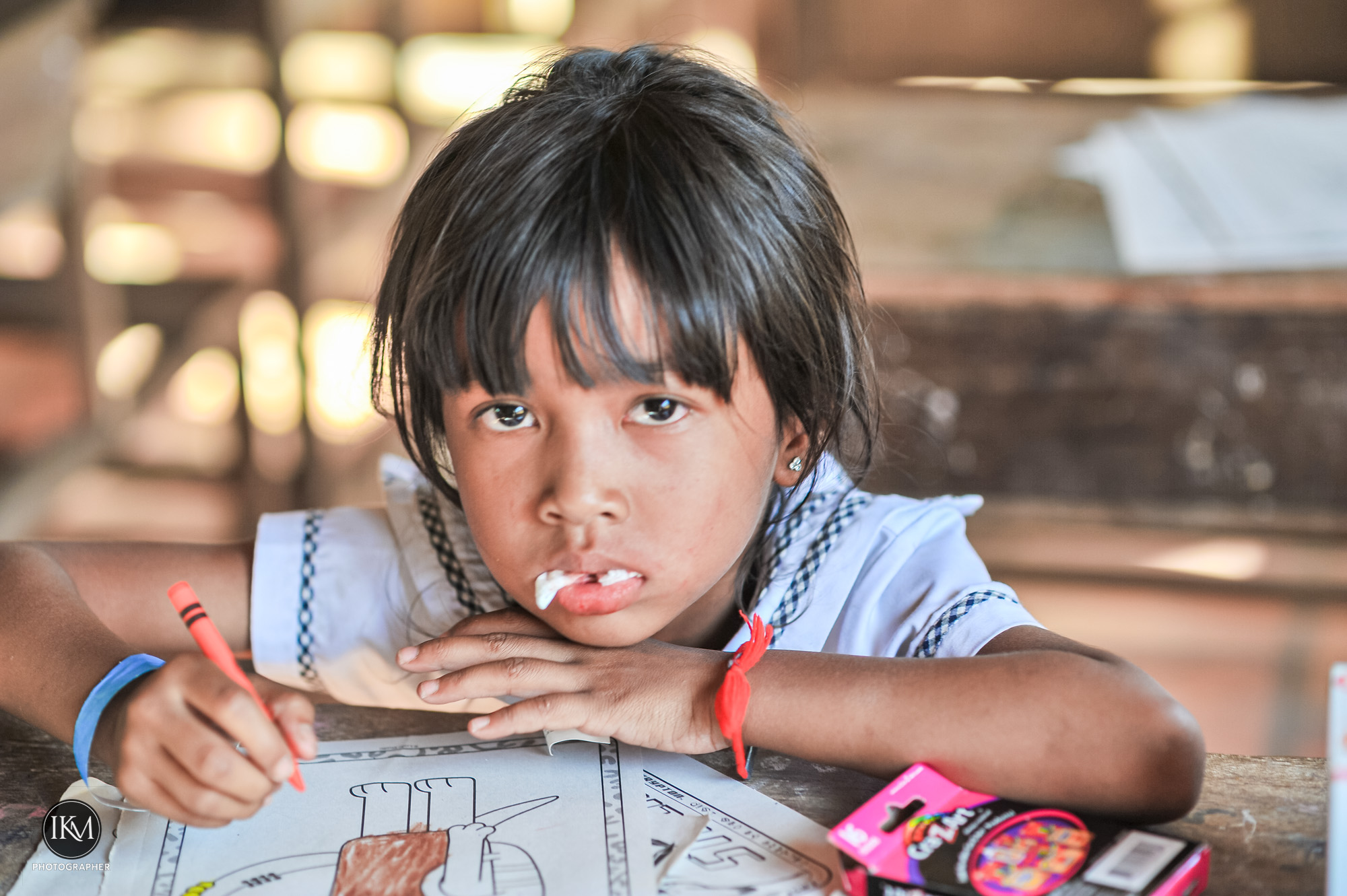
Children waiting for a dentist have a particular expression. It is part curiosity, part suspicion and part quiet calculation. They watch the child ahead of them. They study the gloves, masks and unfamiliar instruments. They listen for any sound that might confirm their worst expectations.

A photographer has to be careful here. A nervous child is not photographic material laid on for our benefit. Fear should not be exaggerated to manufacture an emotional picture. Poverty is not a studio backdrop, and voluntary work should never become a performance in which the visitor is made heroic and the local child reduced to a grateful recipient.

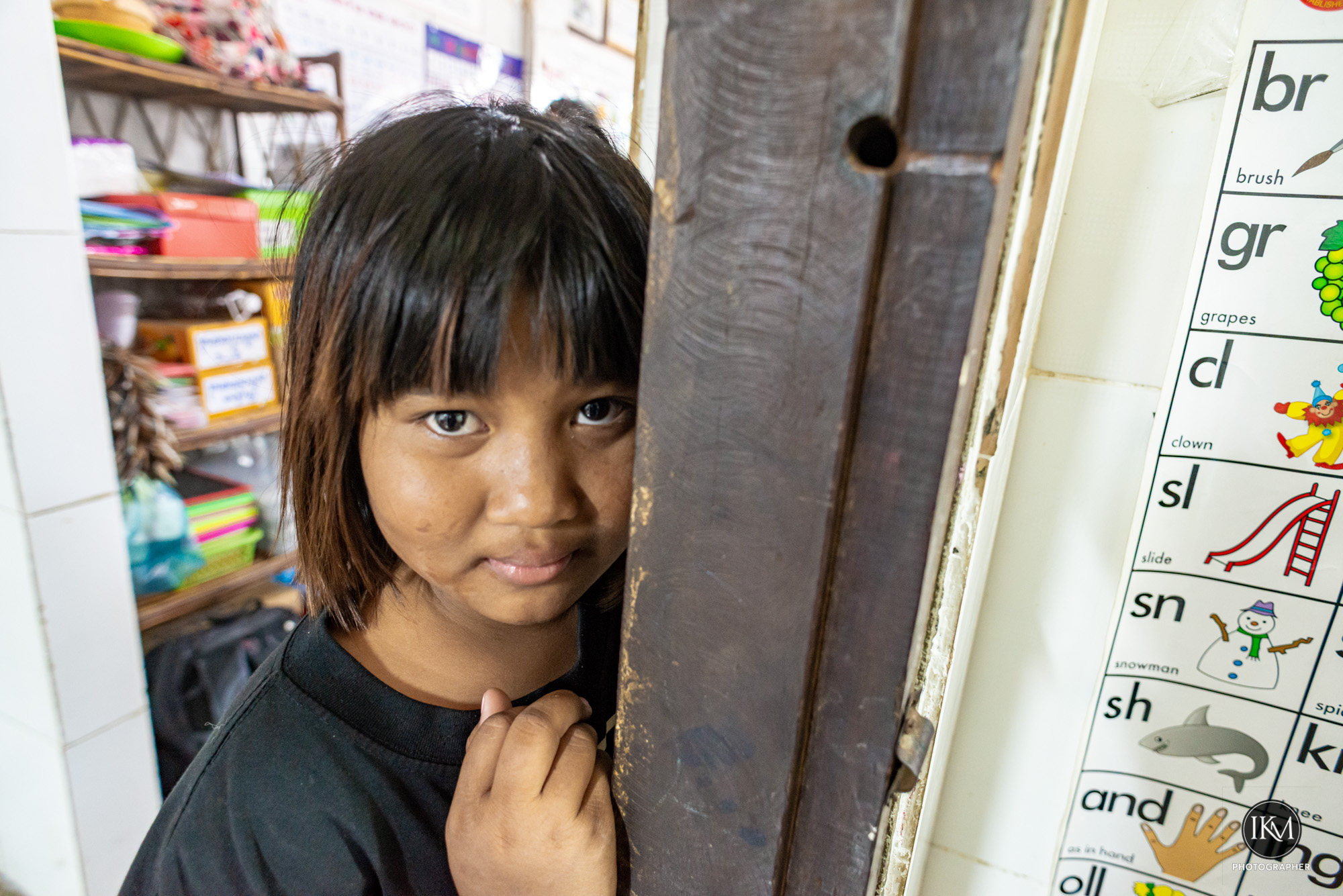
That is why I kept returning to the faces.

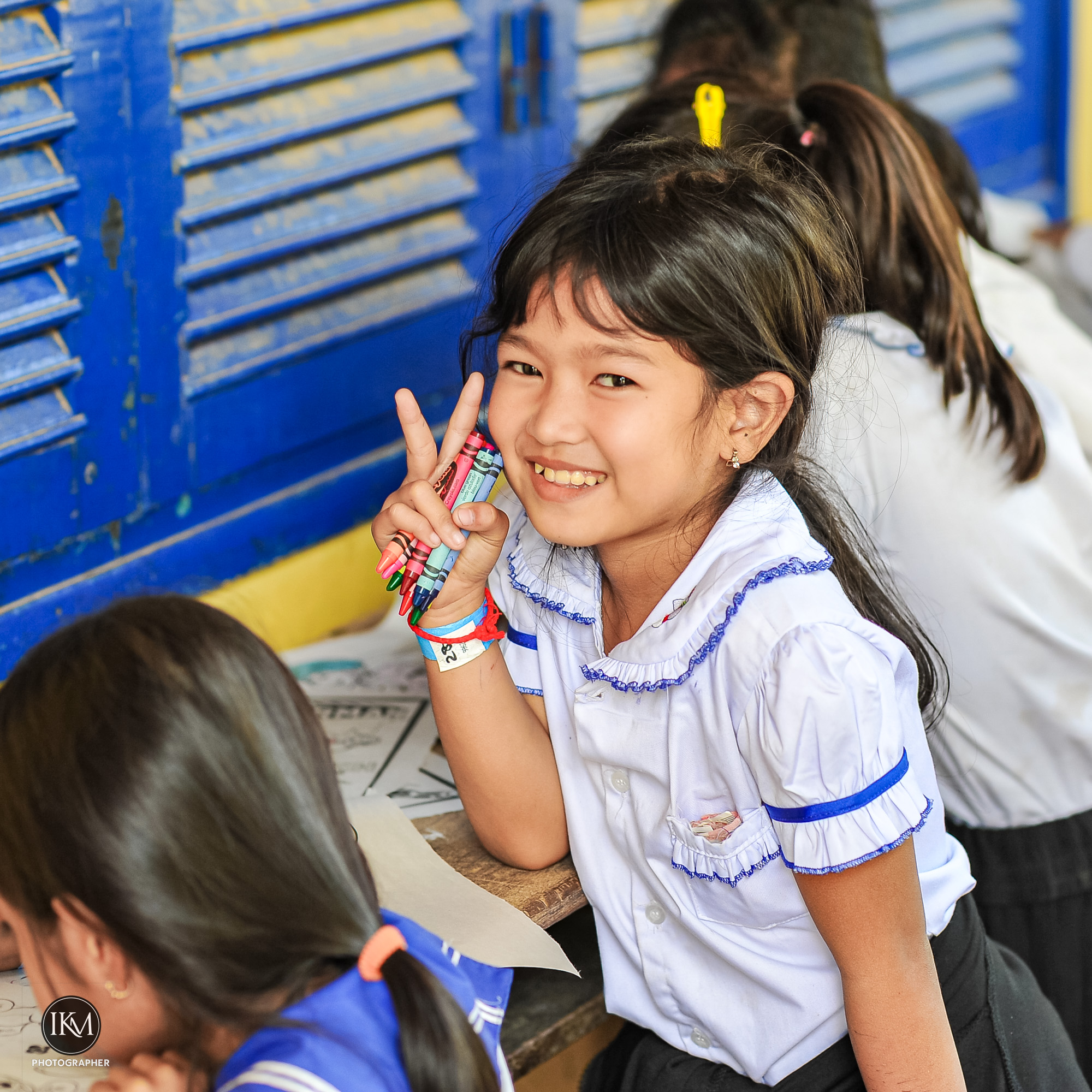
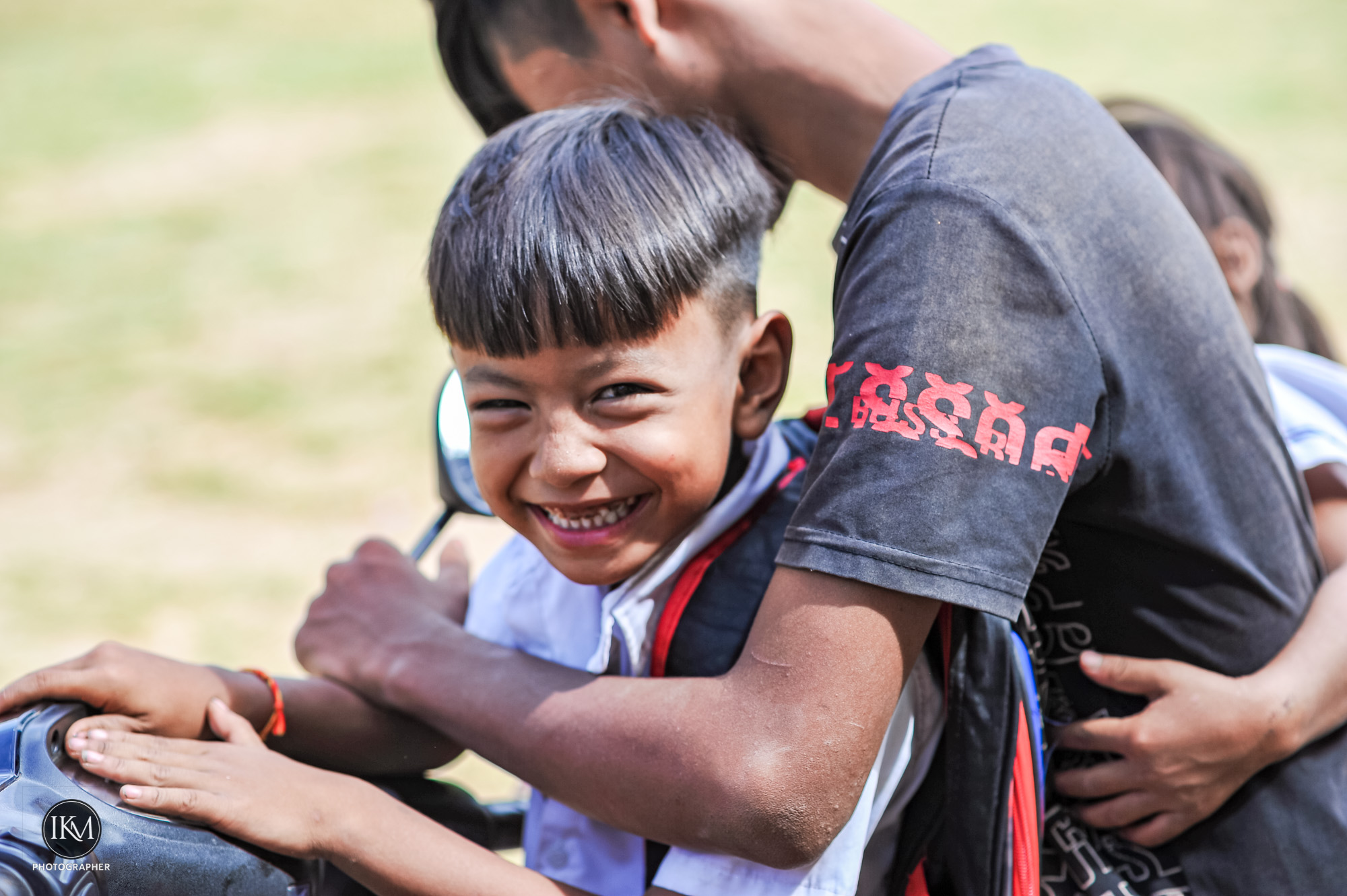
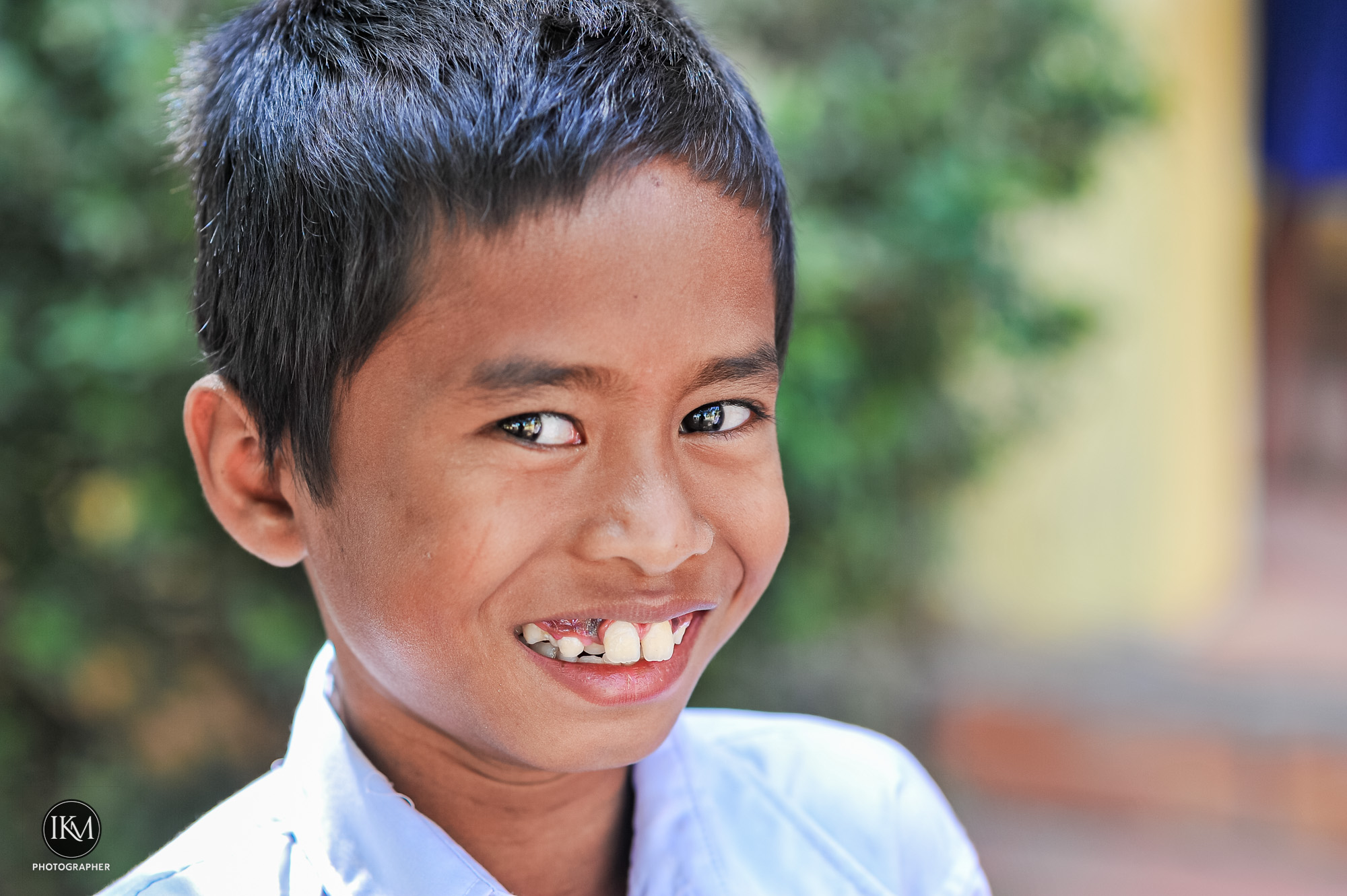
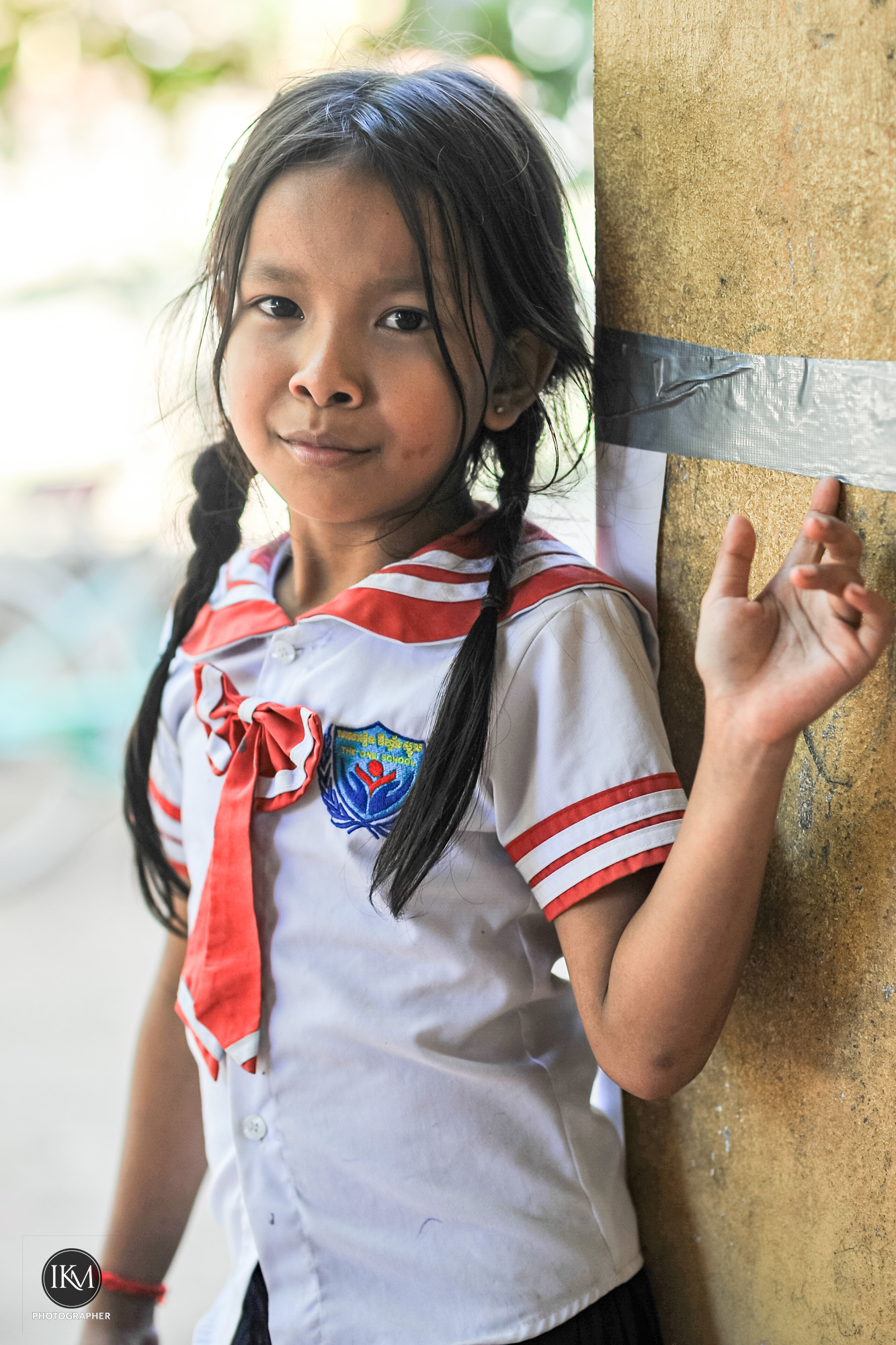
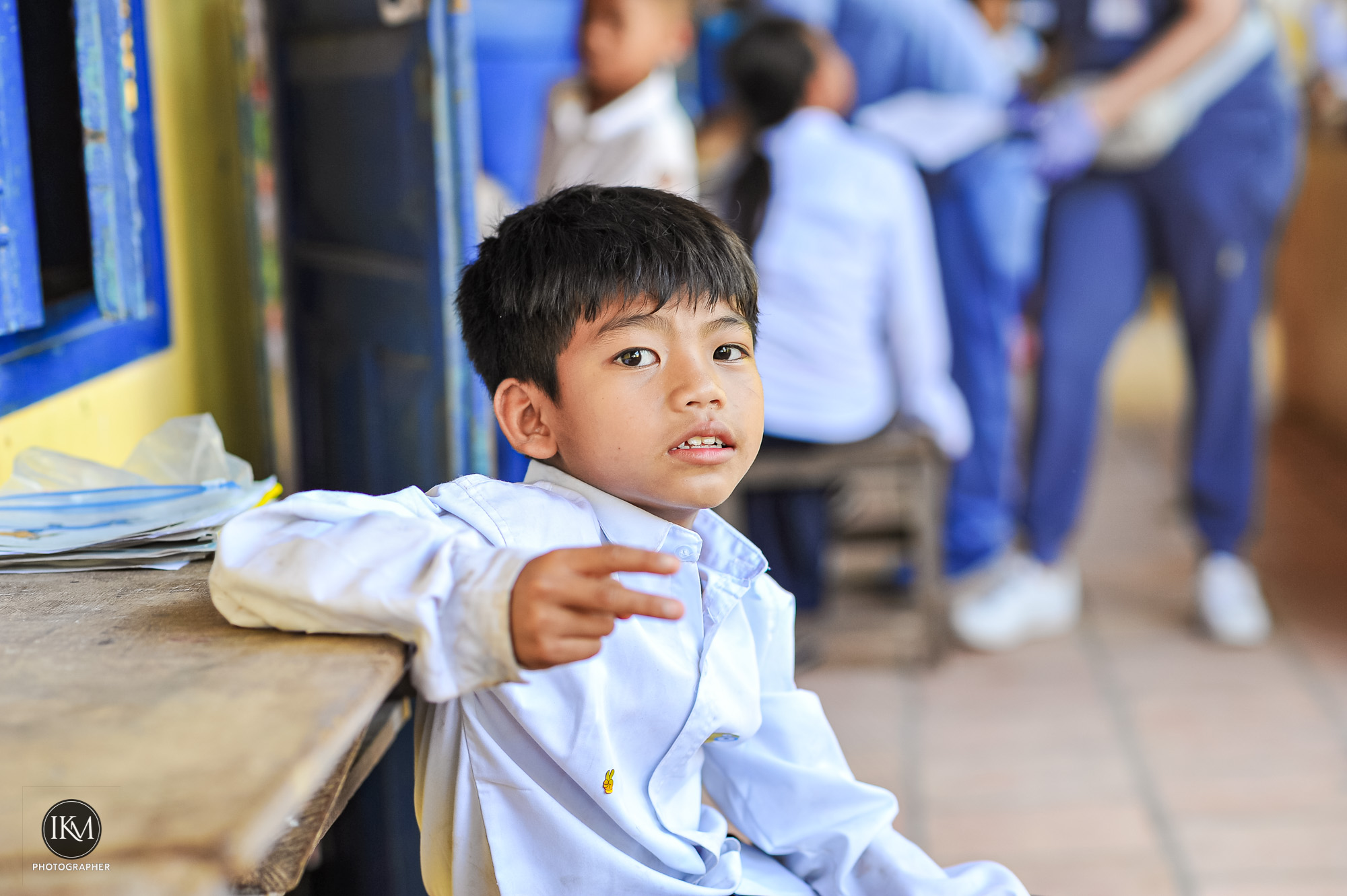
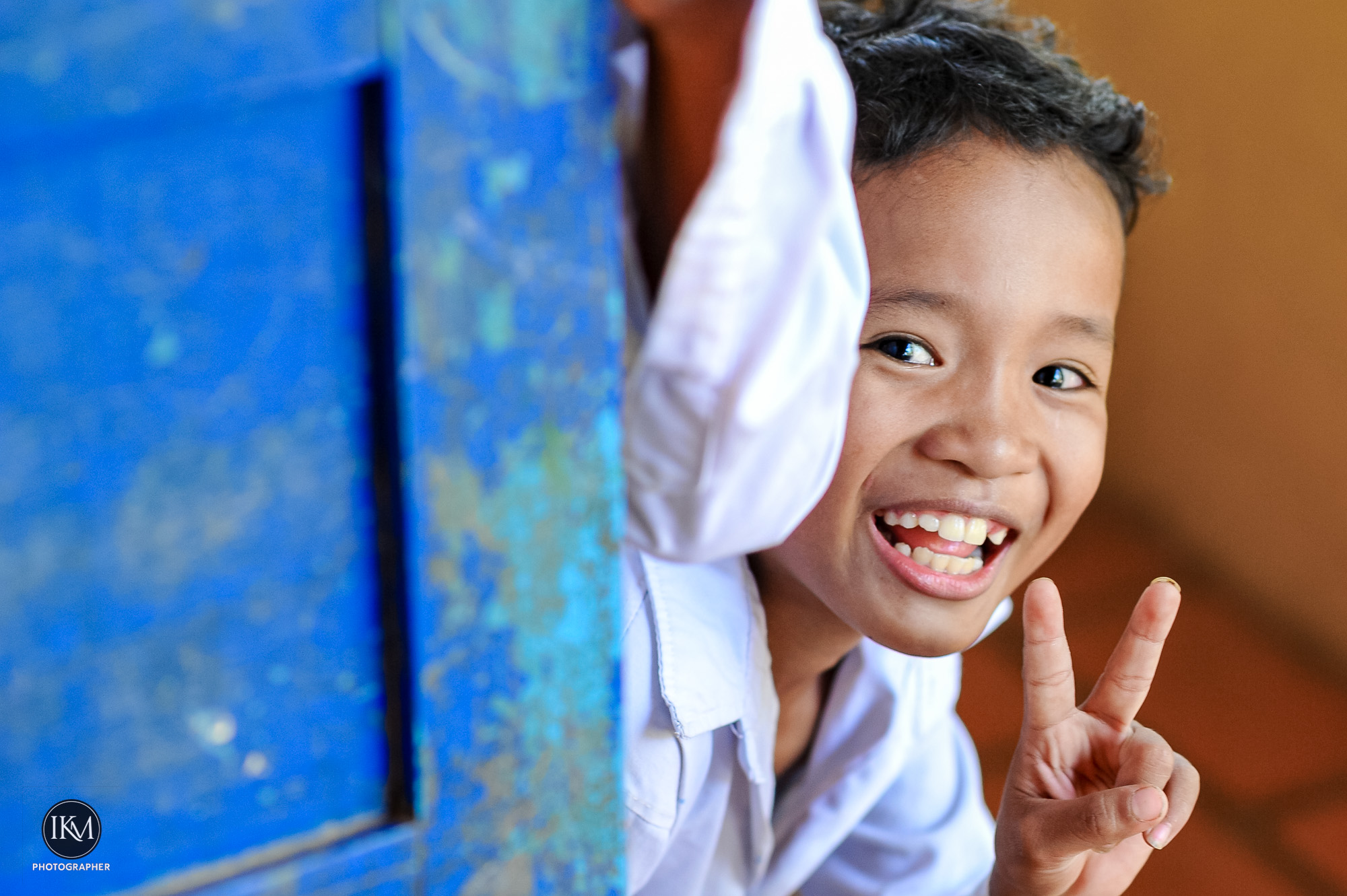
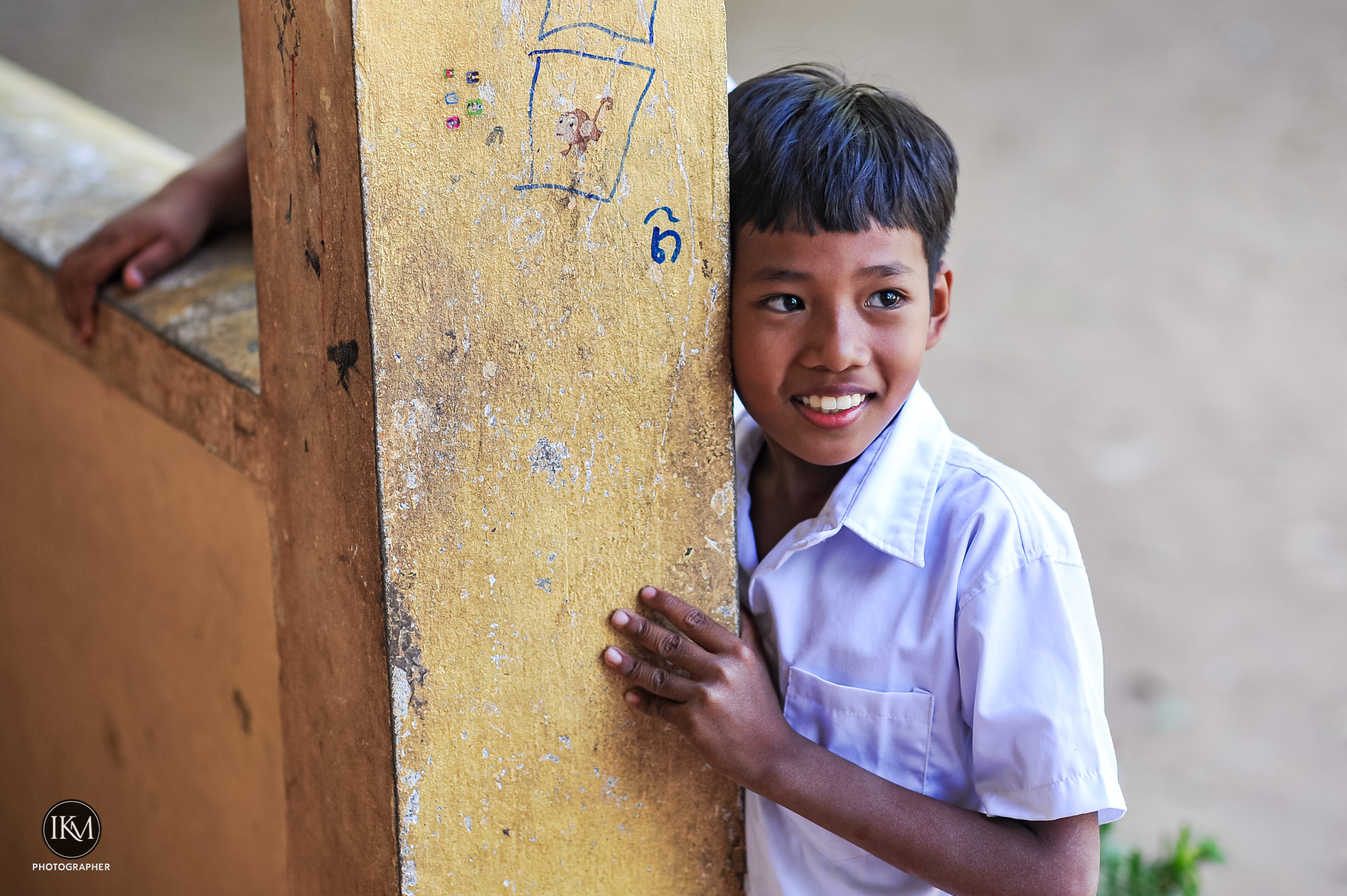
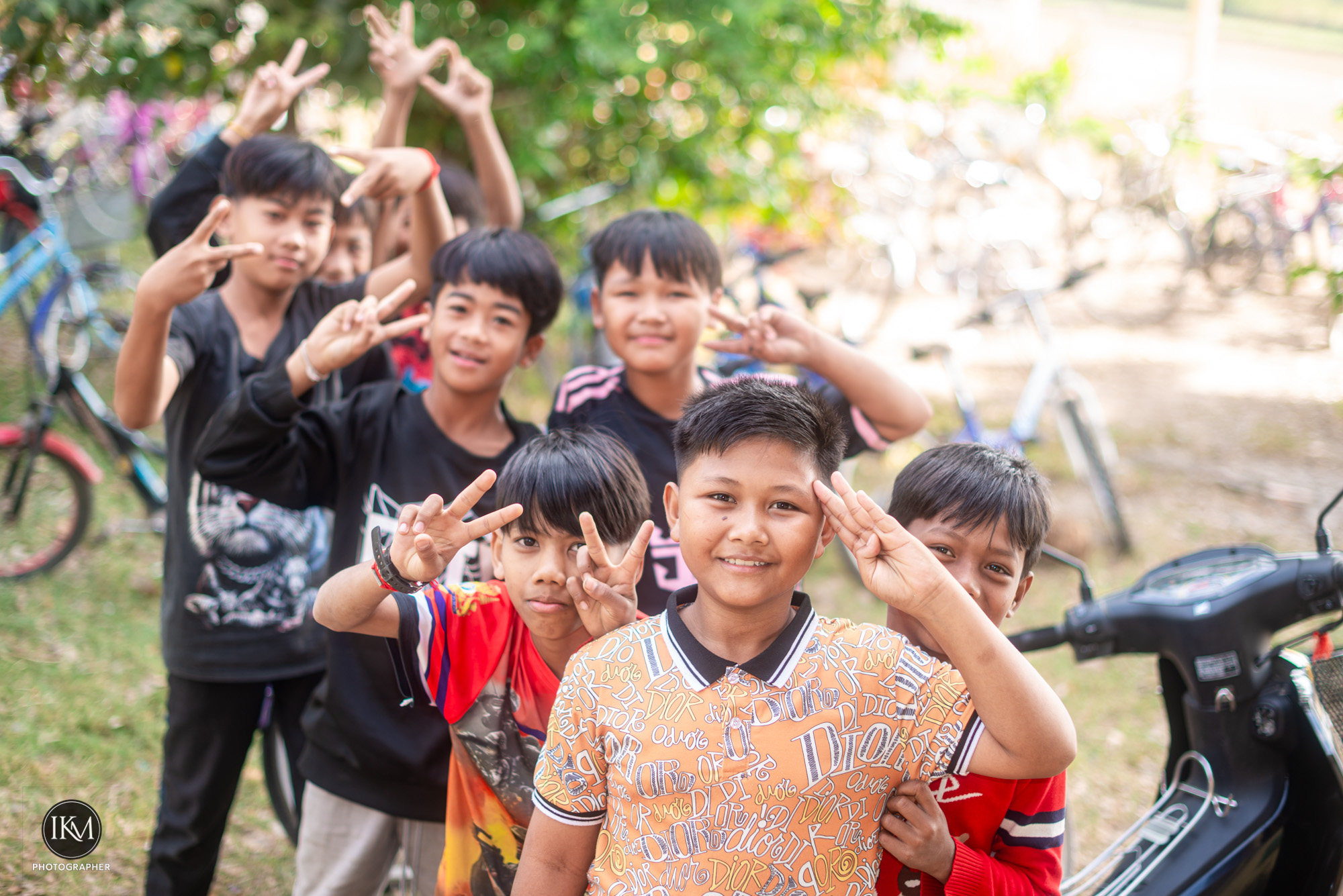
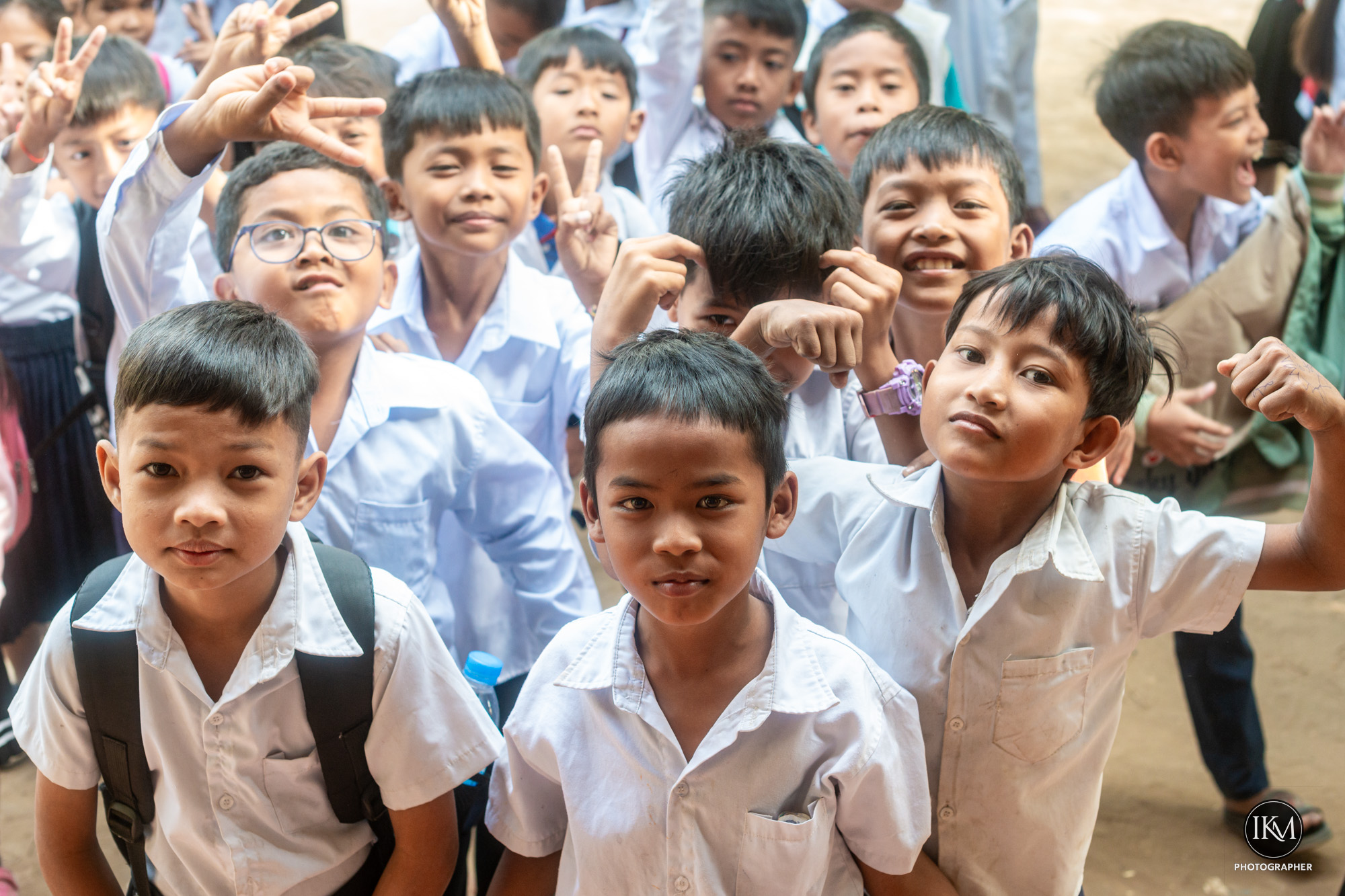
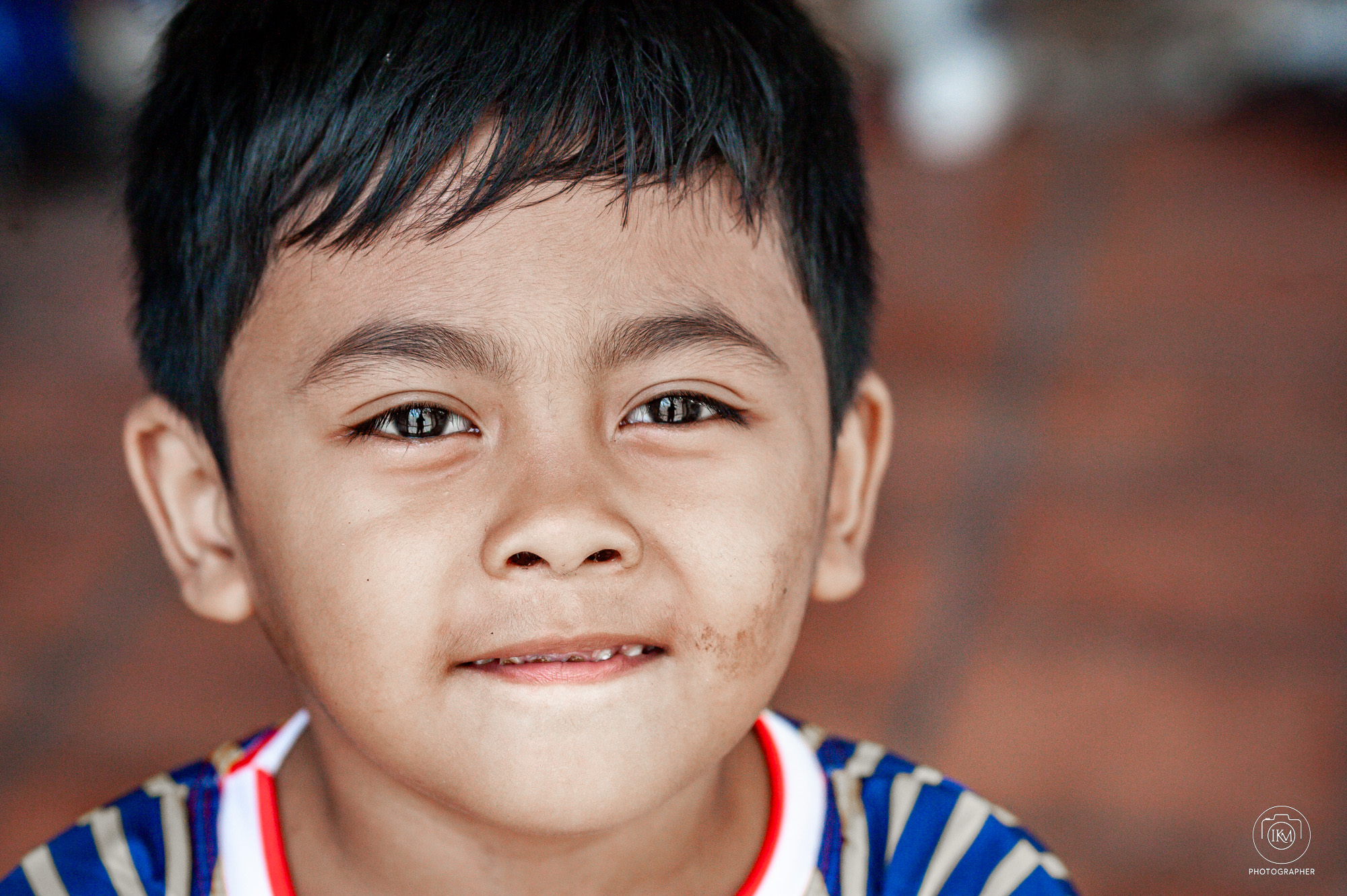
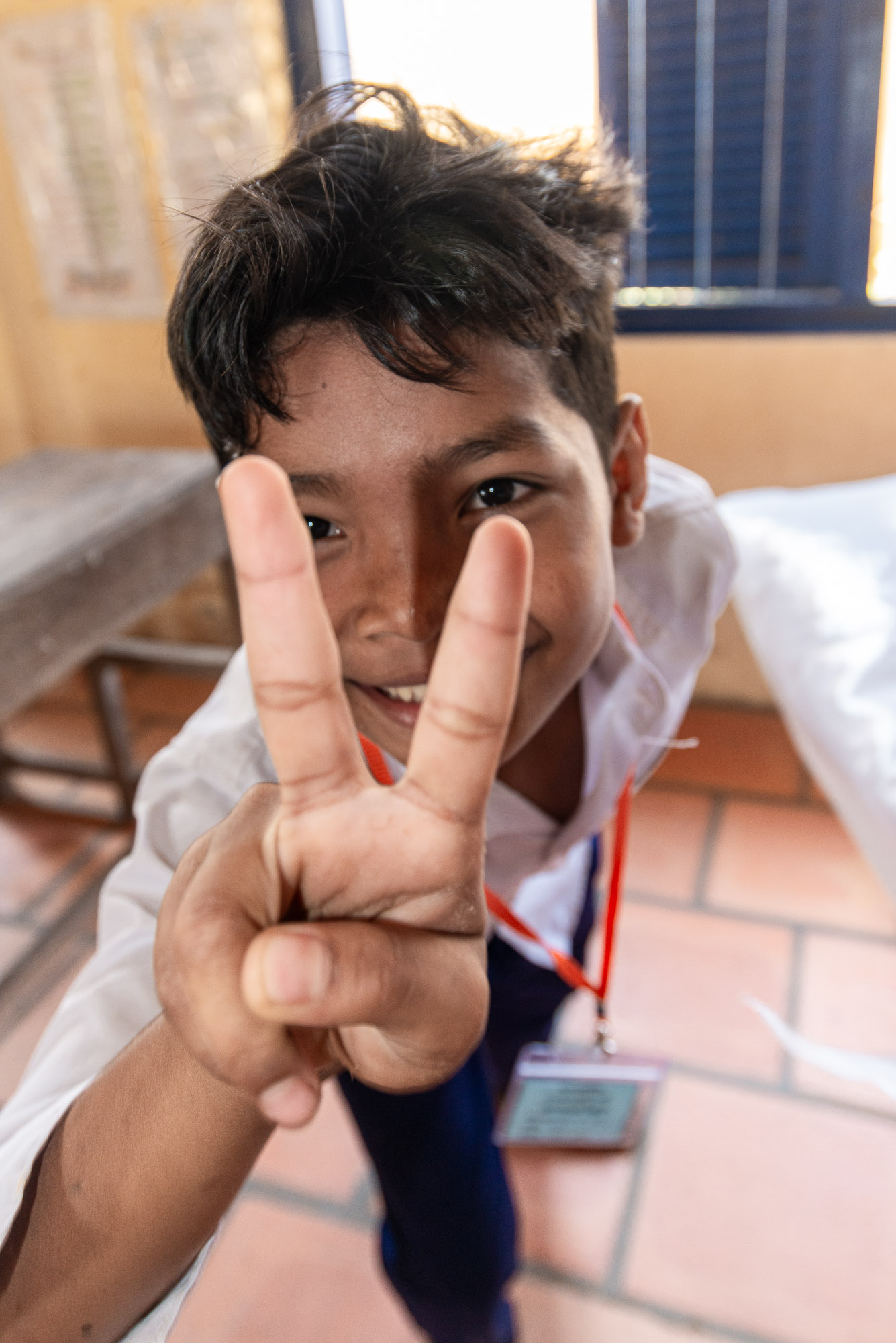
The first three photographs are not pictures of dentistry in the obvious sense. There are no instruments, white coats or open mouths. They show children waiting, looking and thinking. Each face restores individuality to a story that could easily become a parade of statistics.

The camera must not steal their dignity. If a picture depends upon humiliation, helplessness or the childโ€™s inability to object, it is probably the wrong picture.

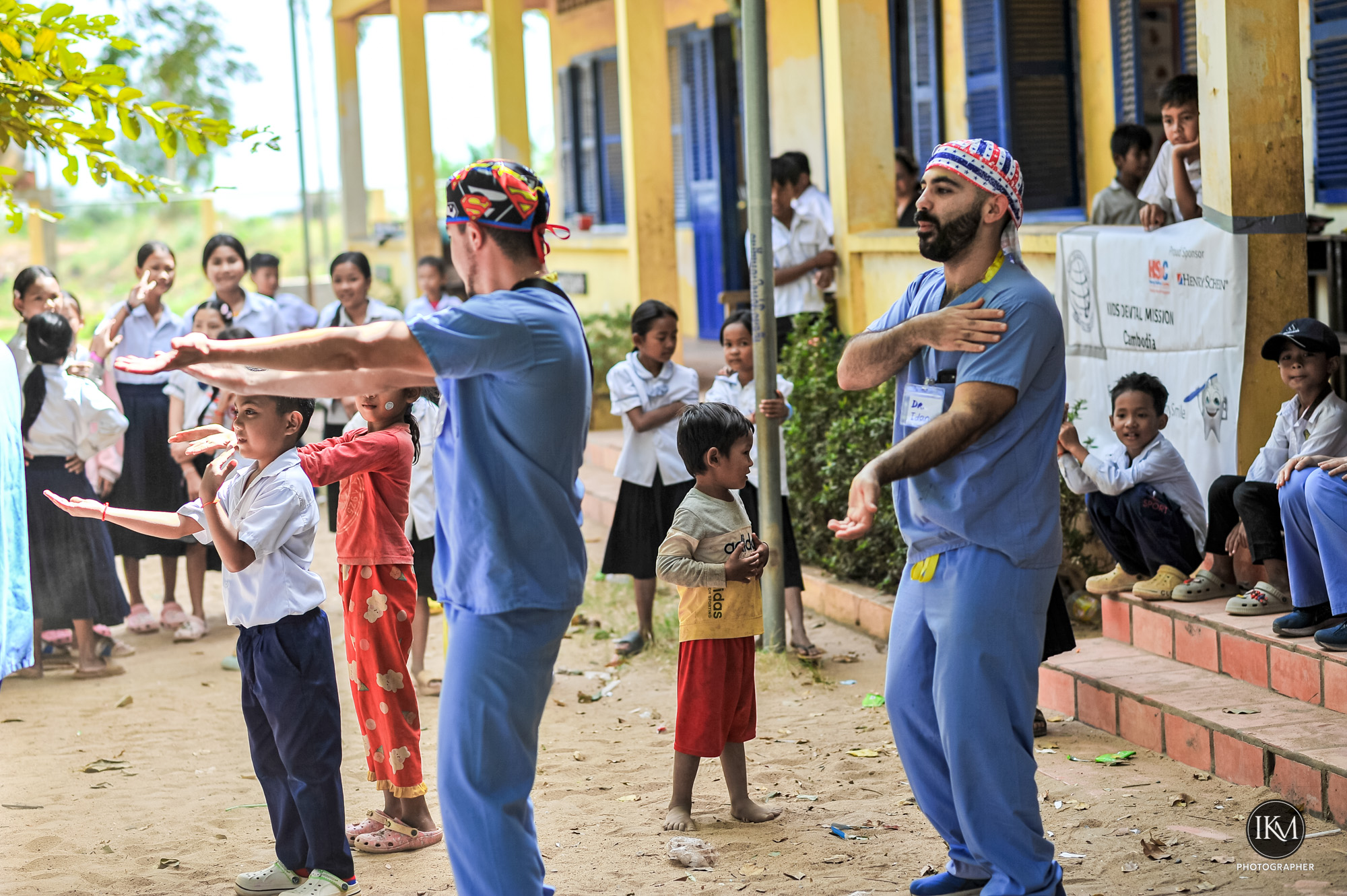
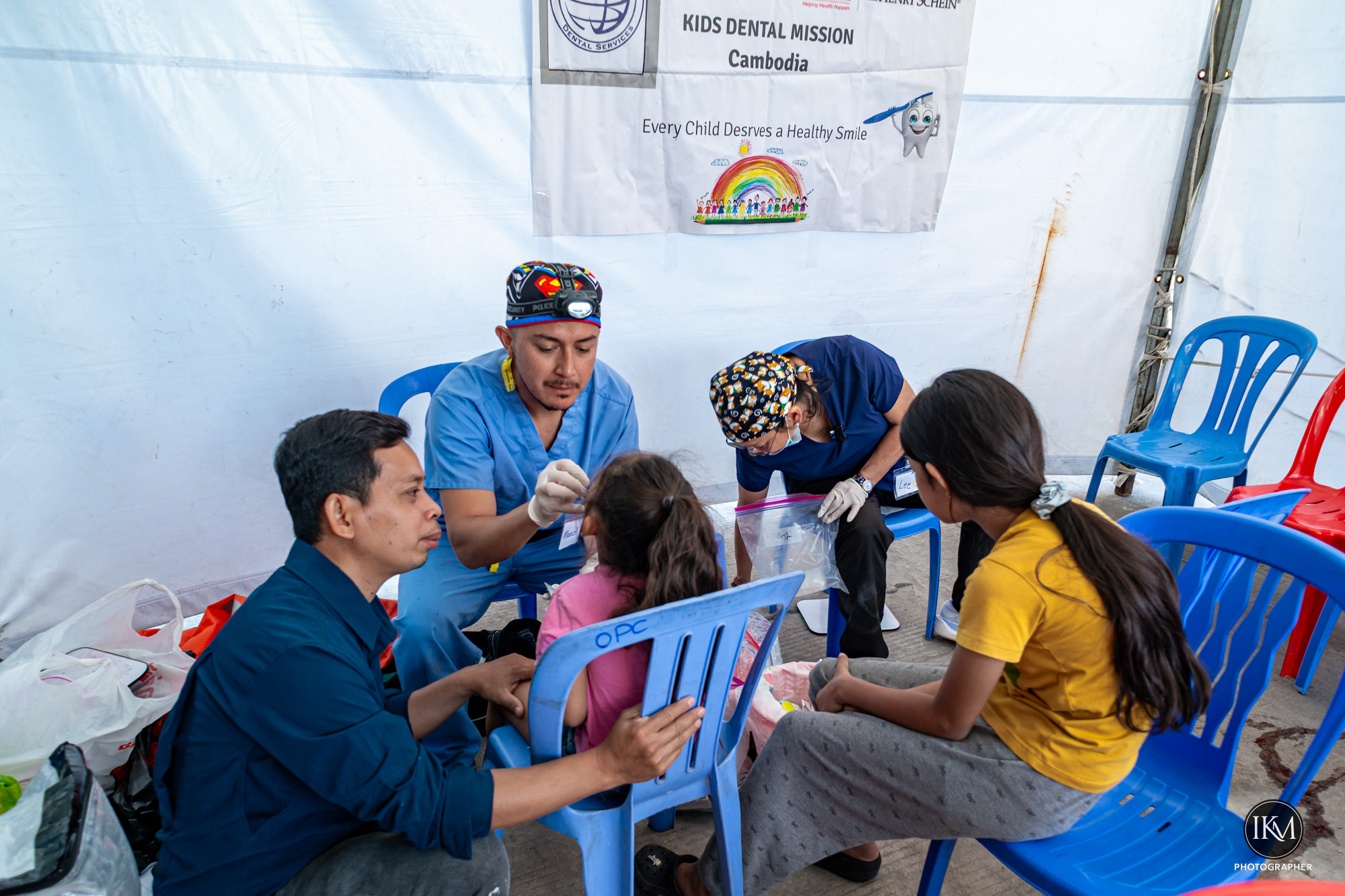
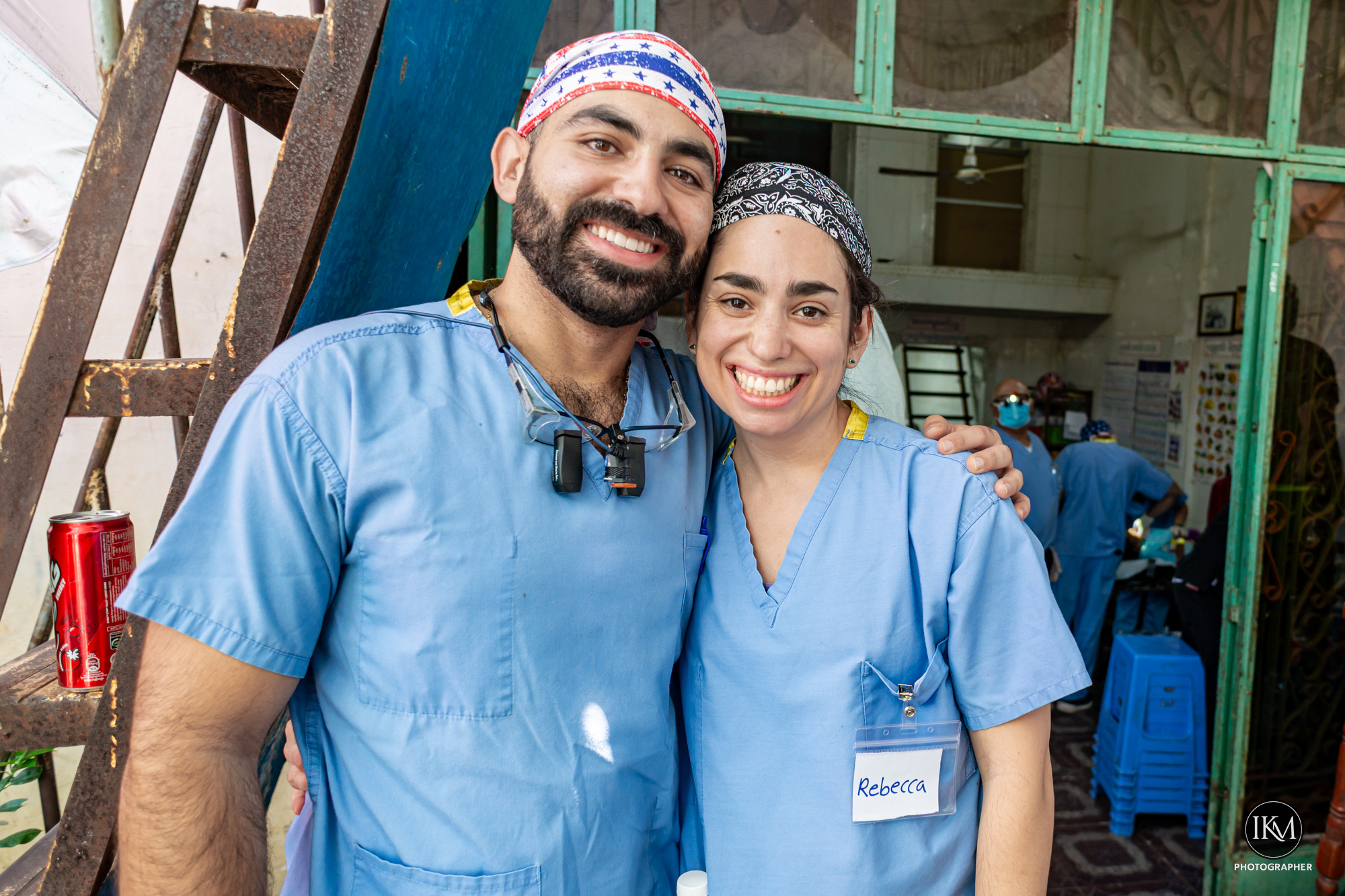
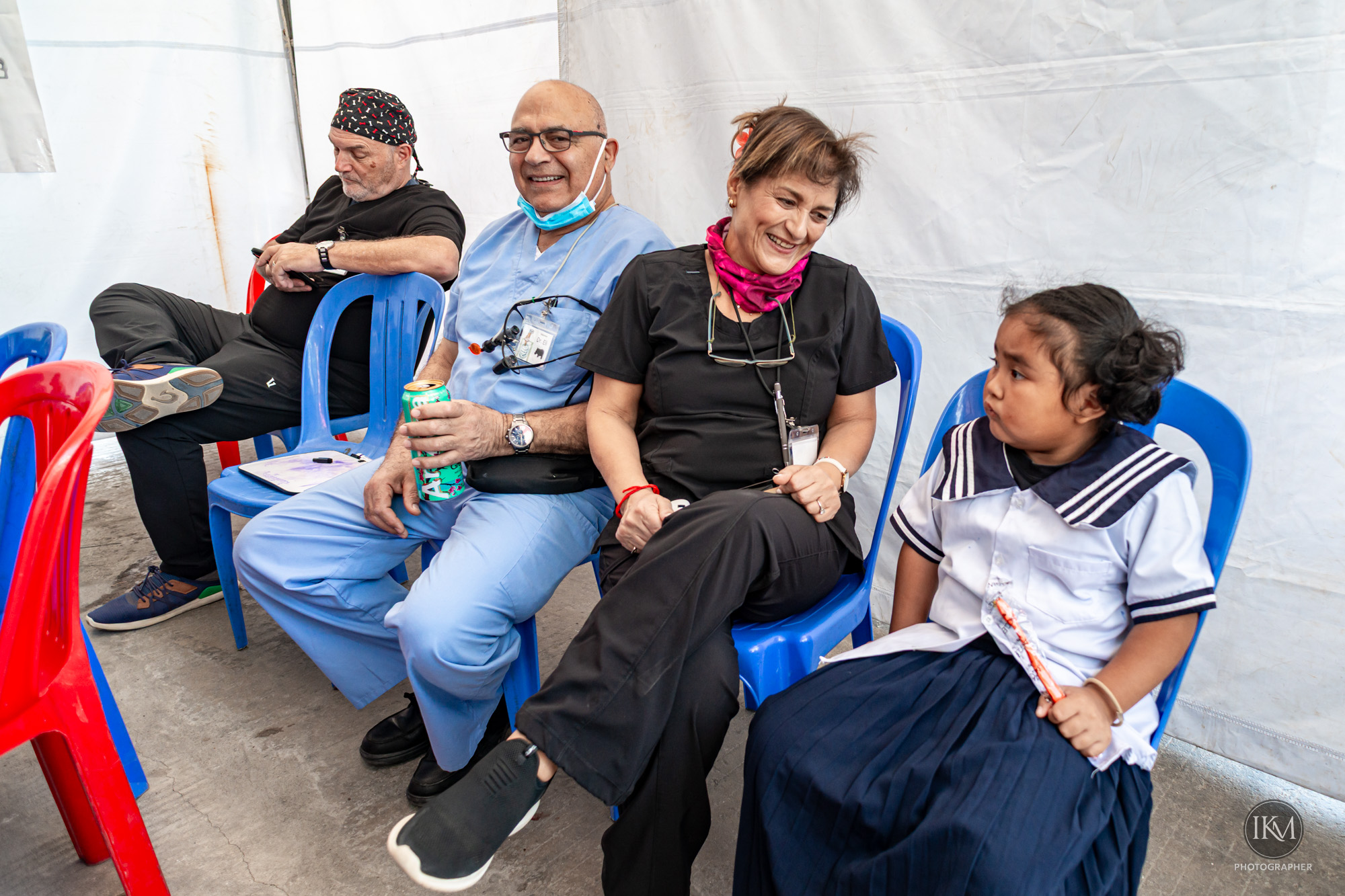
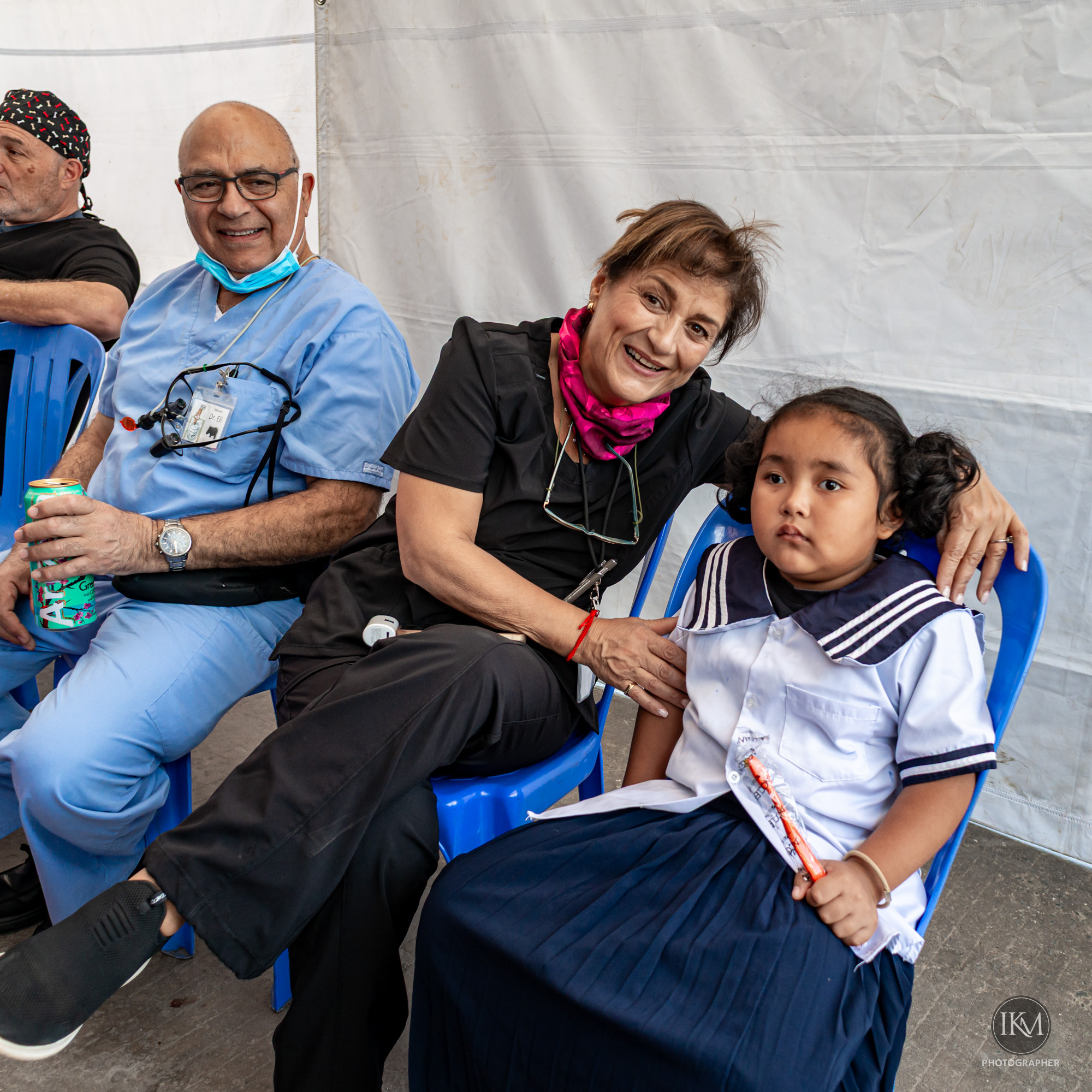
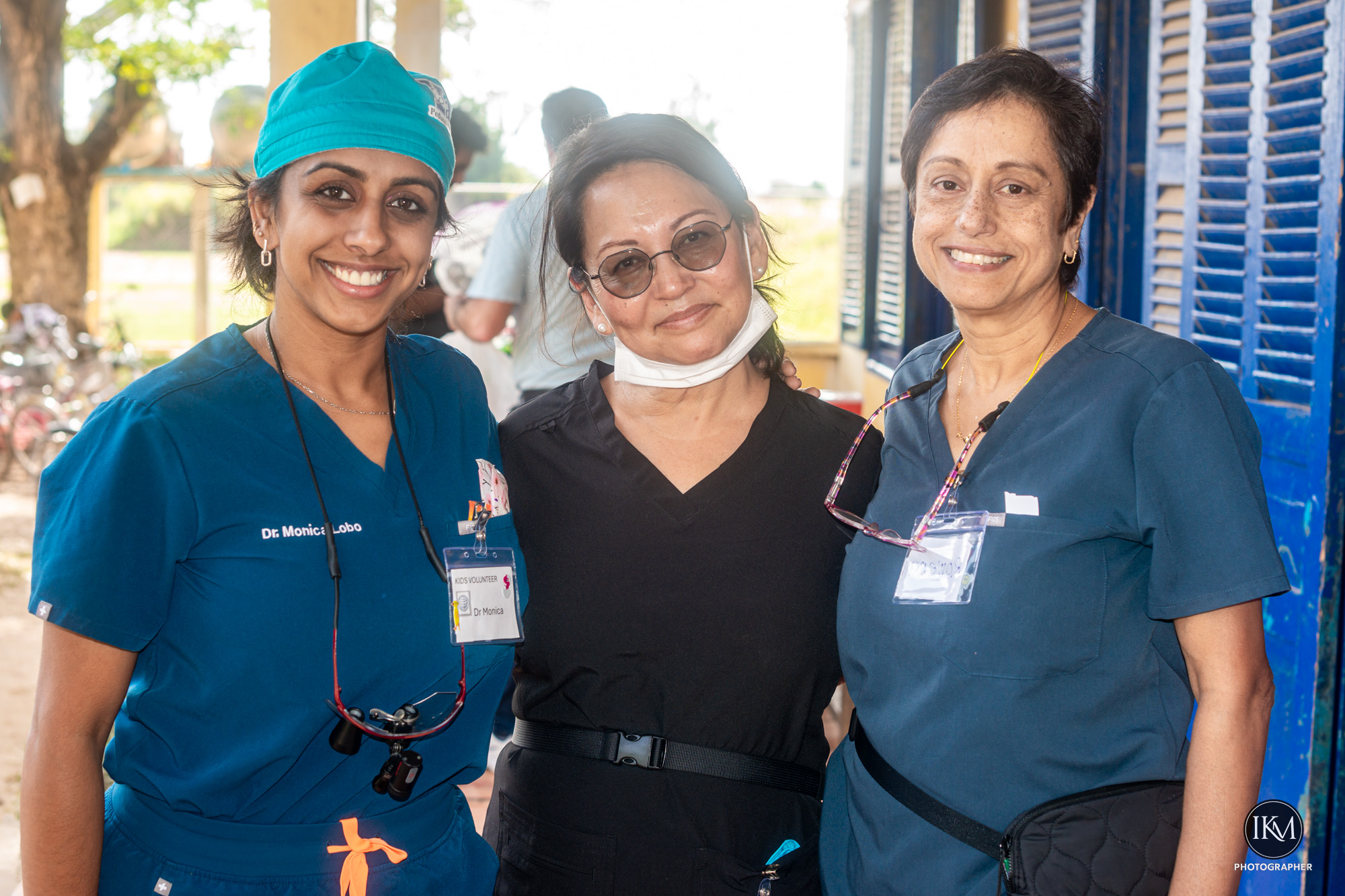
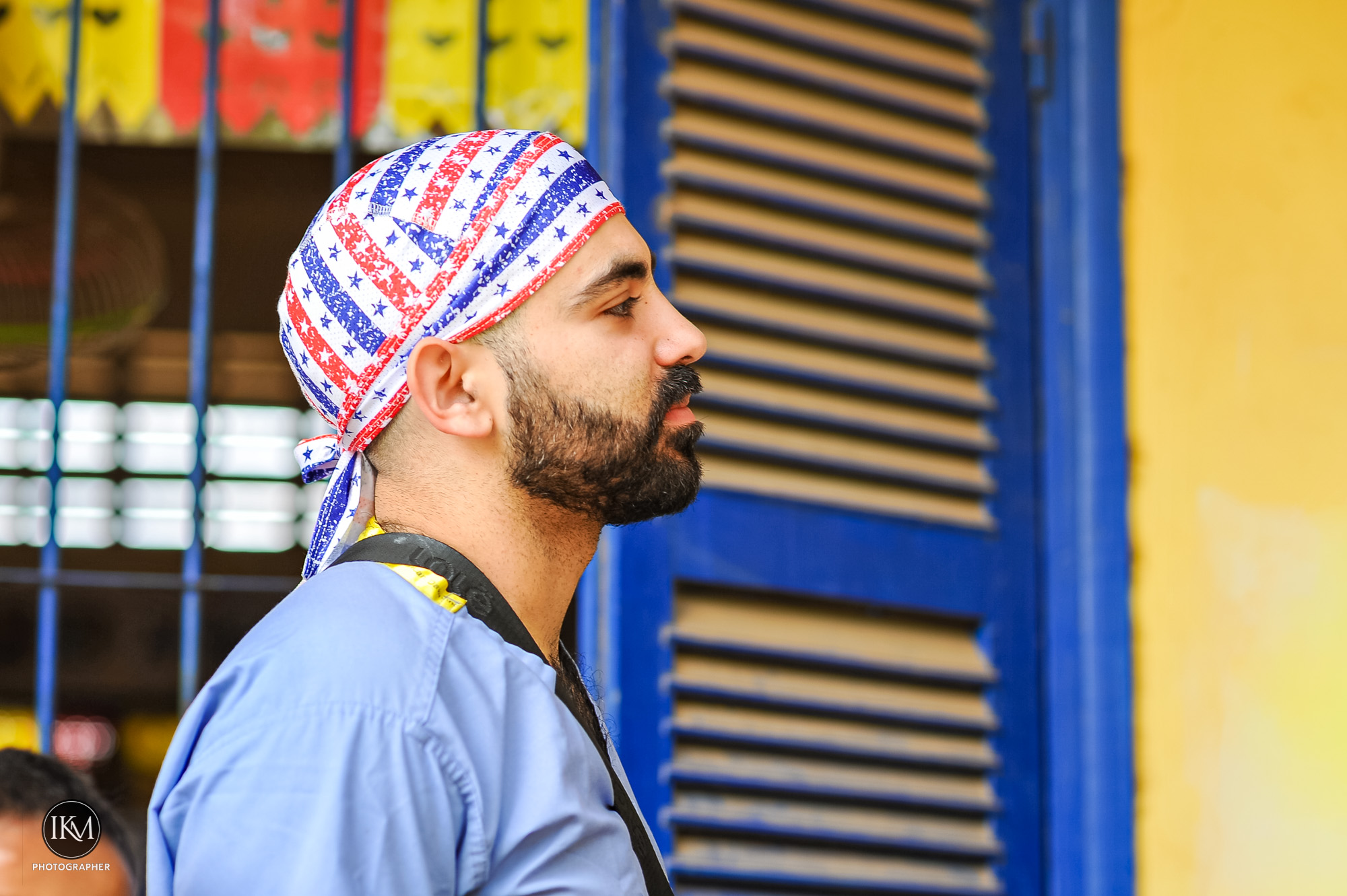
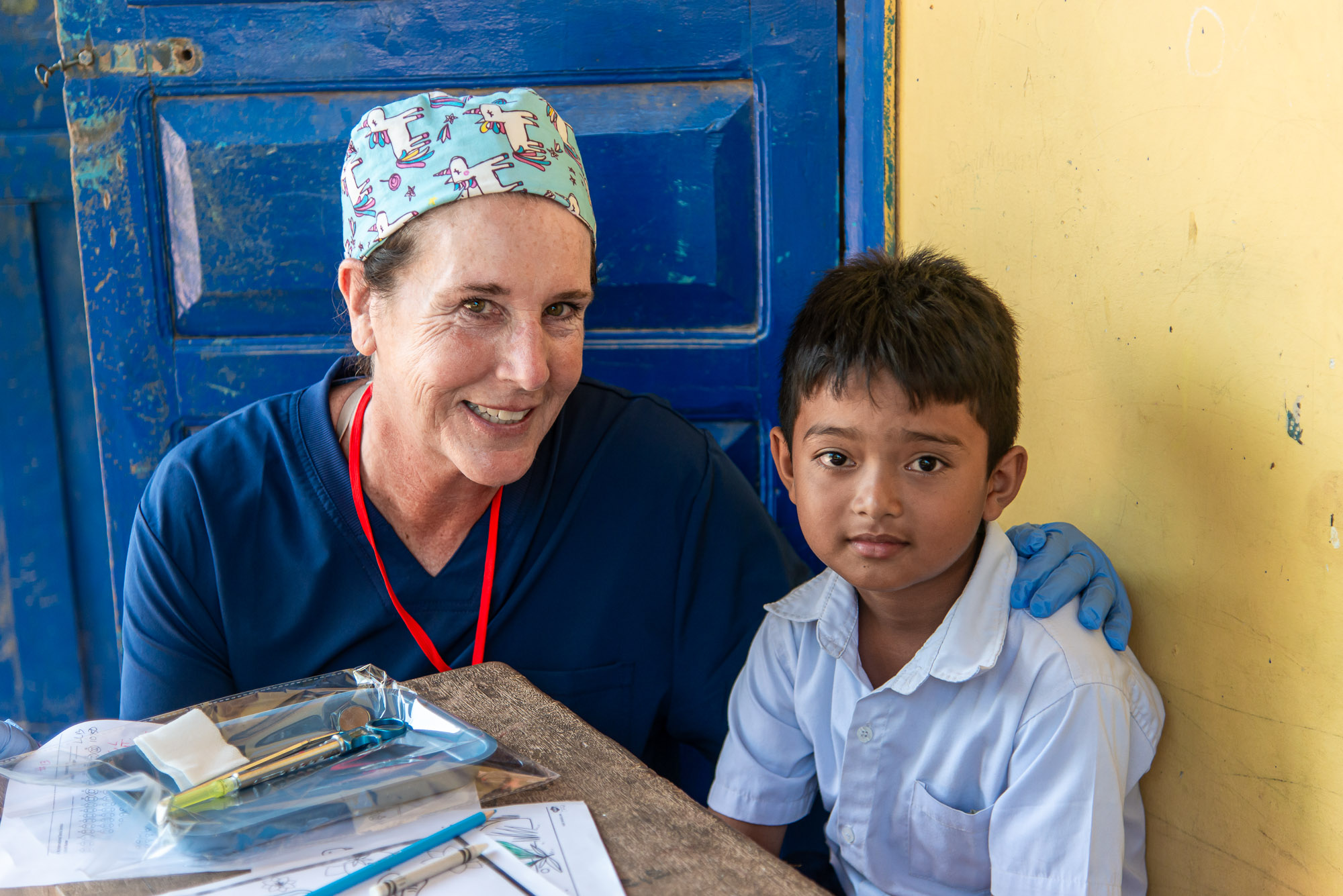
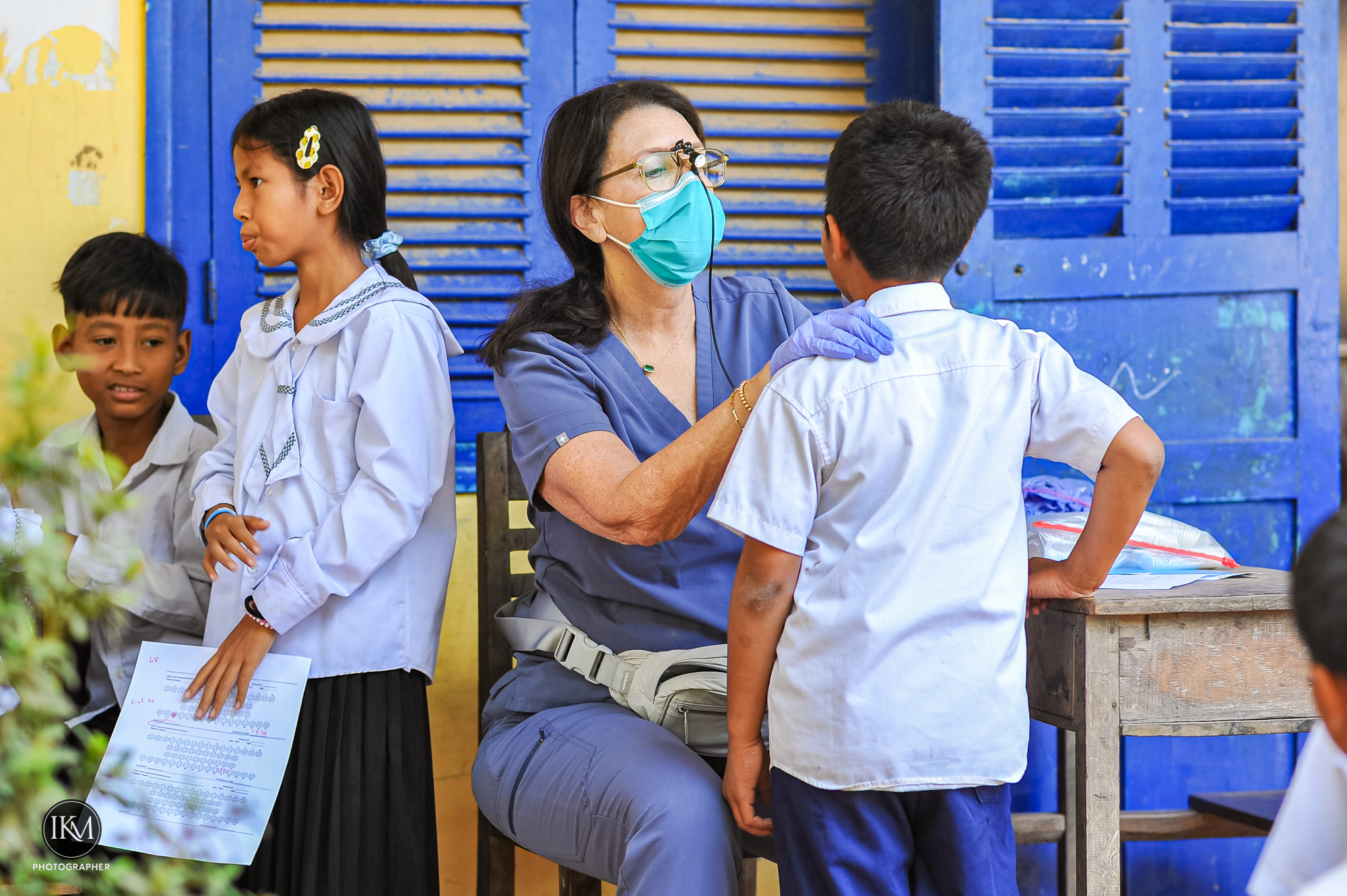
My role was to remain present without becoming the centre of attention. I watched the relationship between the volunteers and the children: a hand placed gently on a shoulder, an explanation delivered through an interpreter, a joke used to break the tension. The best volunteers did not treat the children as units passing through a system. They recognised that reassurance was part of the treatment.


A healthcare worker in scrubs is examining the hand of a child through a barred window, while several other children watch attentively.

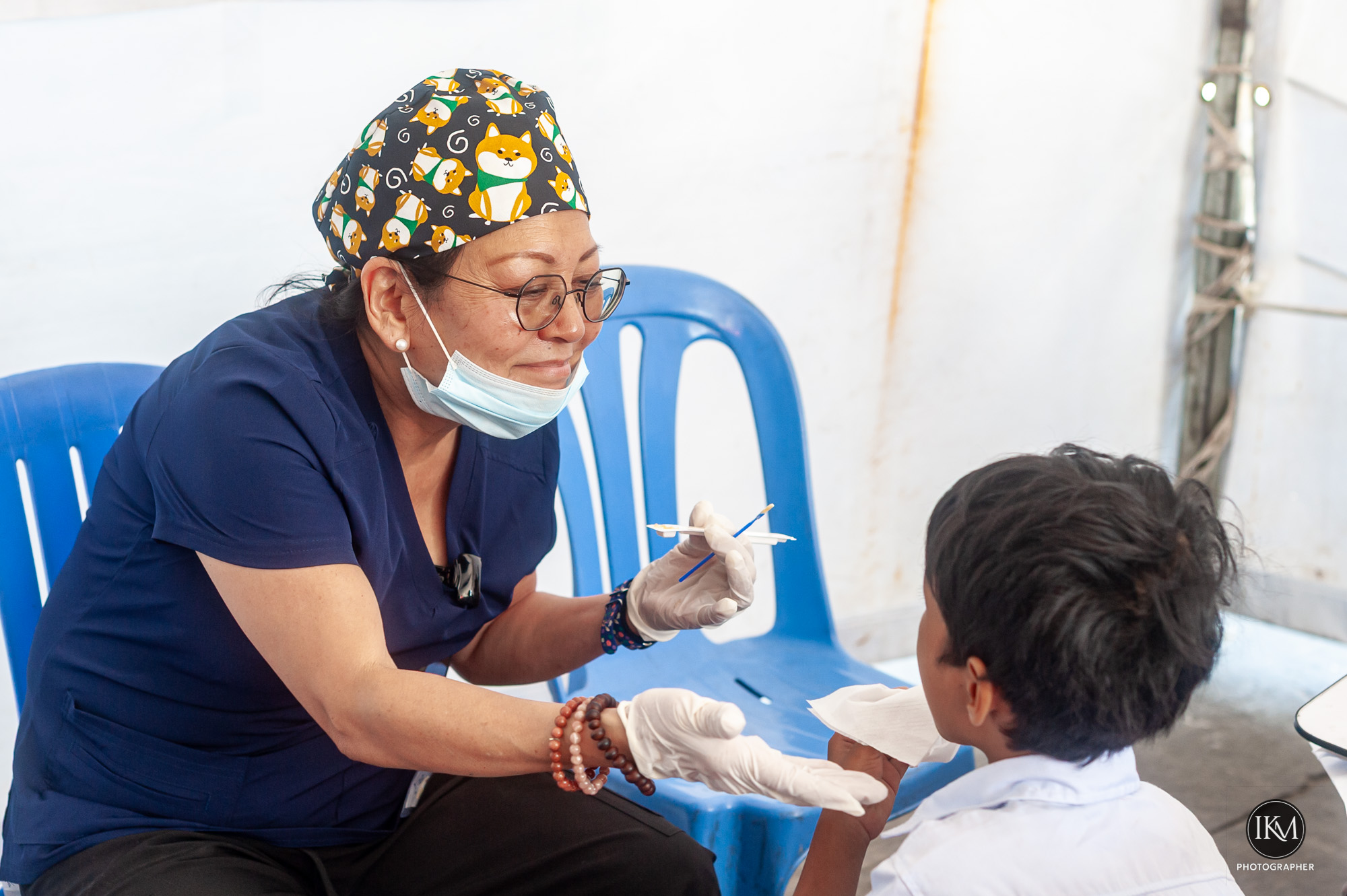
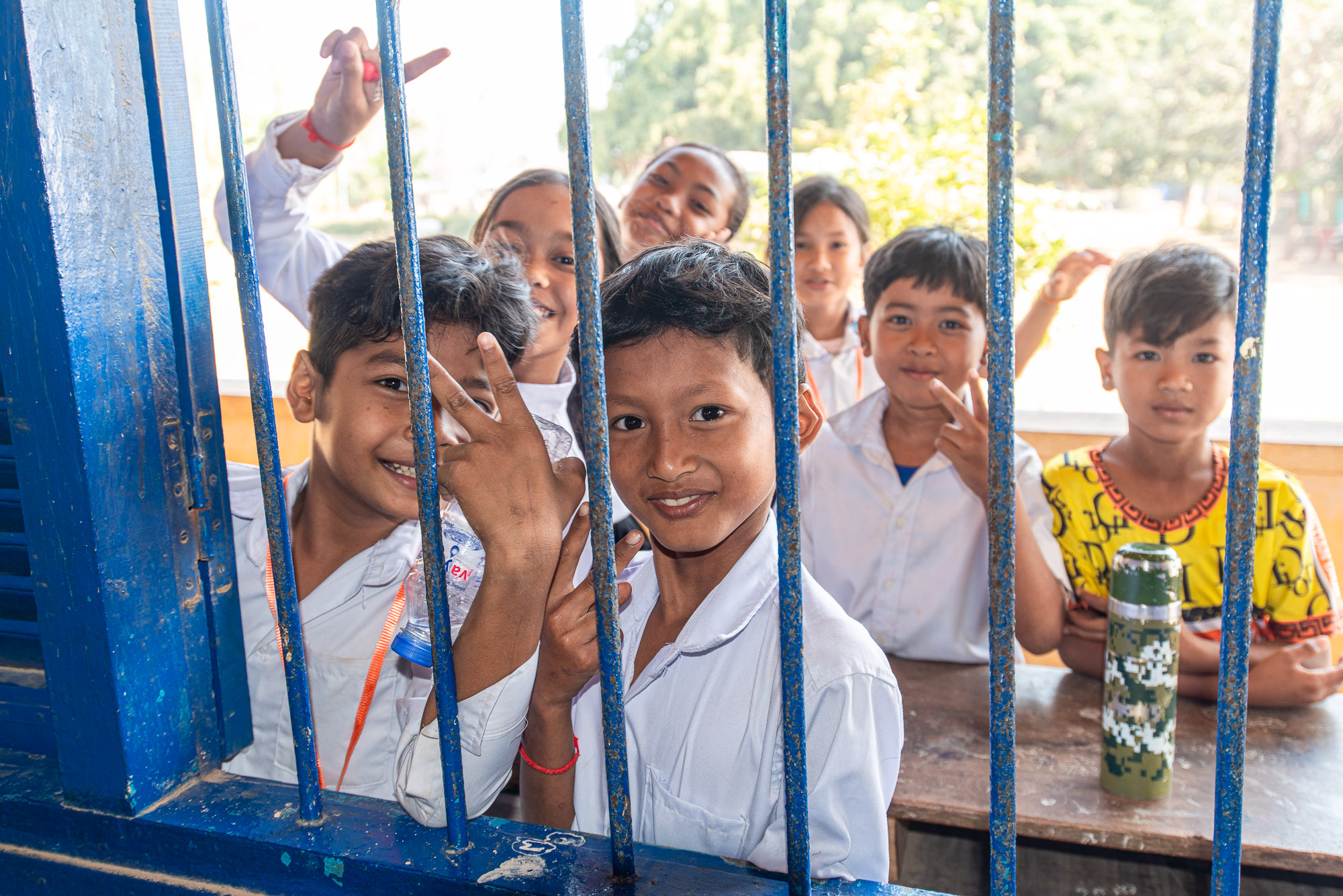
One of my favourite photographs from the day is not of dental treatment at all. A volunteer is attending to a girlโ€™s fingernails while other pupils crowd behind the railings to watch. It is a wonderfully ordinary moment amid the organised seriousness of the mission.

That small scene says something about volunteering that official reports seldom capture. Humanitarian work is made from hundreds of gestures that do not appear in the final totals. Someone sorts supplies. Someone translates. Someone keeps the queue moving. Someone notices that a child is frightened. Someone kneels down and talks to her at eye level.

The organisationโ€™s wider purpose reflects this. KIDS describes its goals as educating communities about oral health, empowering them to protect children with the resources available, inspiring volunteers and returning to maintain relationships. KIDSโ€™ mission and goals

Treatment brings immediate relief, but education gives that treatment a chance to last. A filling or extraction may deal with todayโ€™s pain. Toothbrushes, fluoride, demonstrations and clear advice may prevent tomorrowโ€™s.

We should still be honest about the limitations. A visiting dental team cannot repair an unequal health system. A week of treatment cannot reach every child, and follow-up care is difficult when families live far from a permanent clinic. Portable equipment, unfamiliar locations, language differences and large numbers of patients all complicate the work.

Volunteer dentistry is not a substitute for accessible local healthcare. At its best, however, it does something real: it relieves pain, treats infection, introduces preventive habits and builds relationships with local schools and organisations. Its value should neither be romanticised nor dismissed.


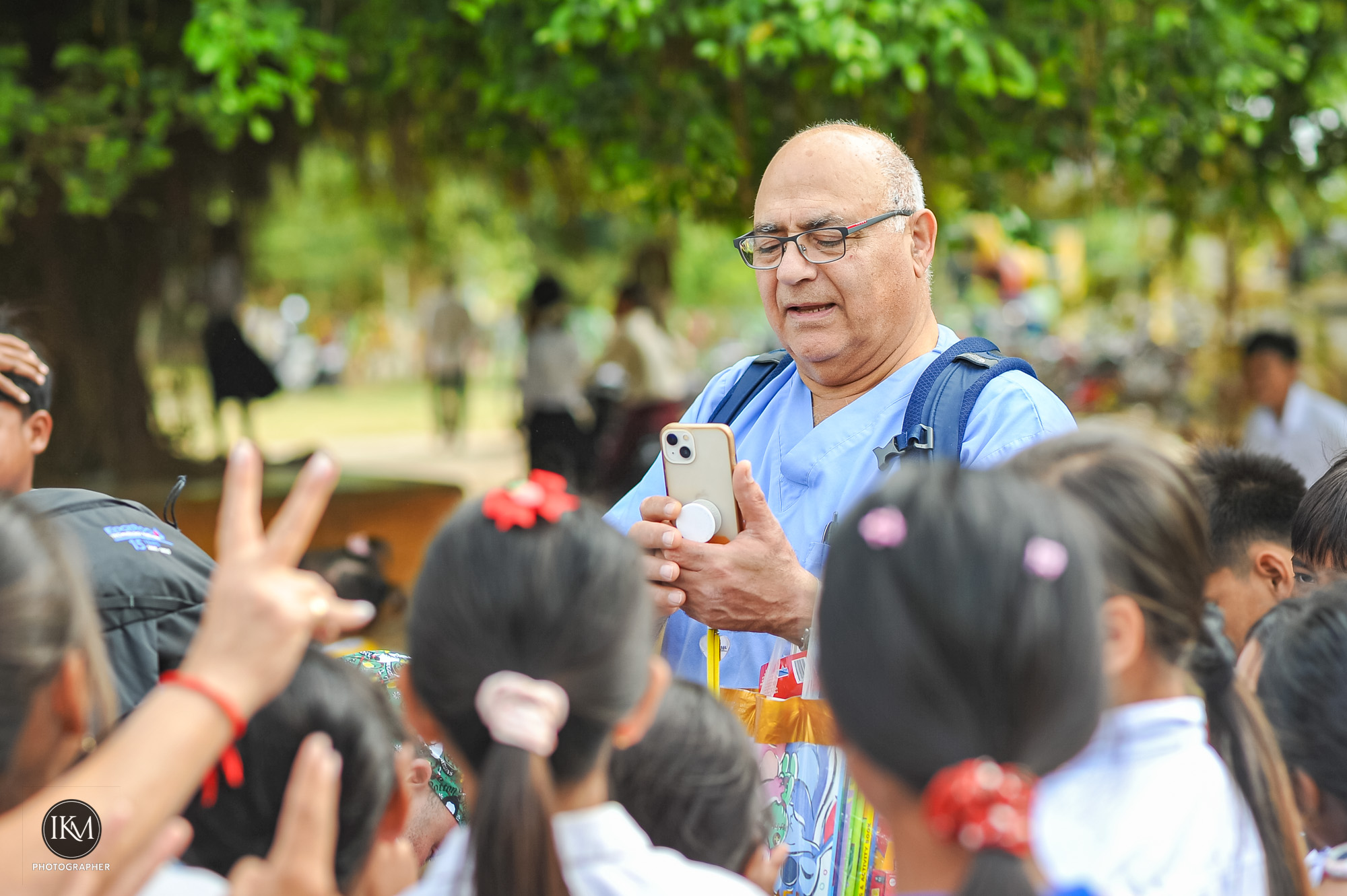
A group of smiling adults and children posing together for a photo, with some individuals making peace signs. The image is in black and white.

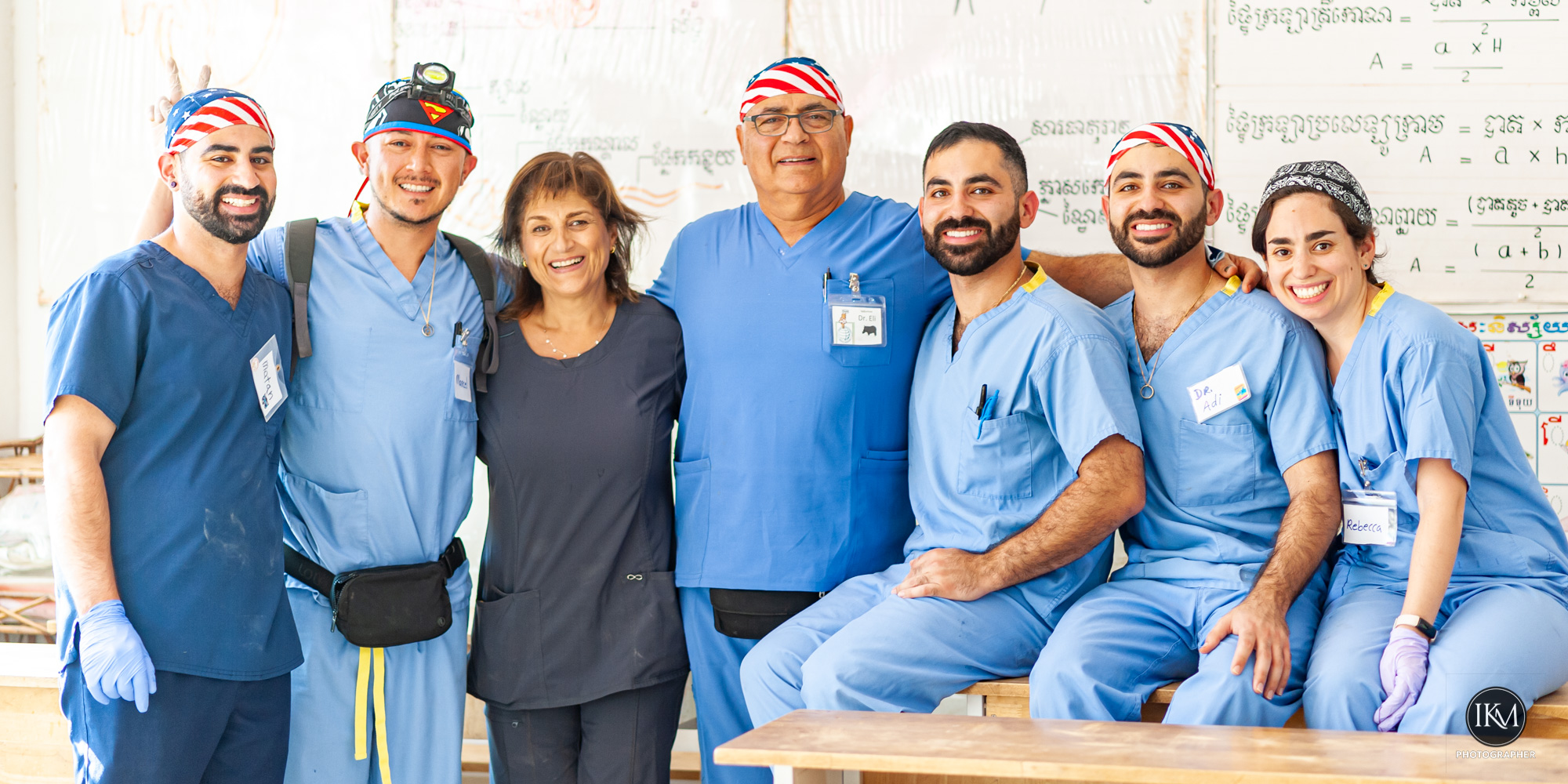
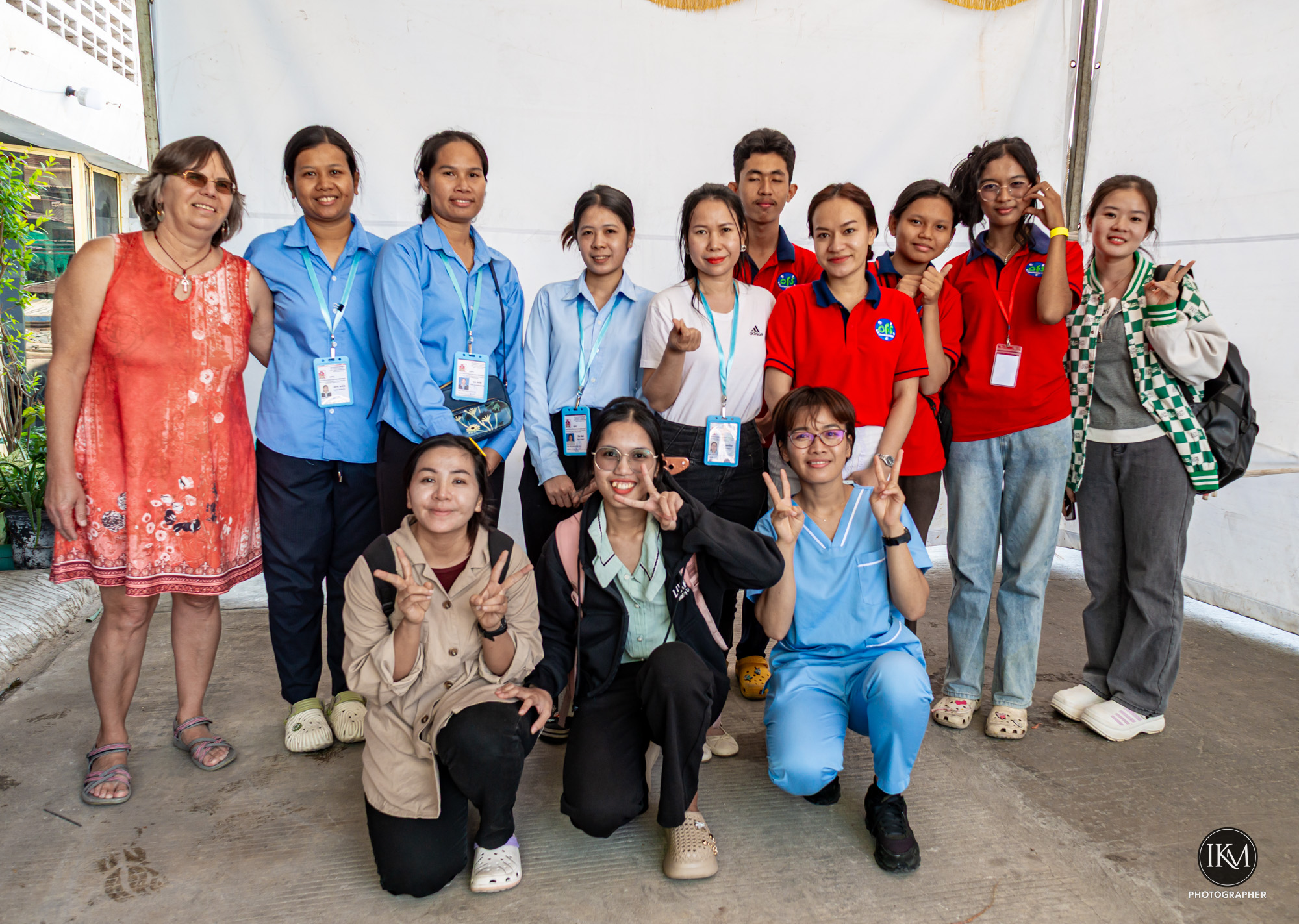
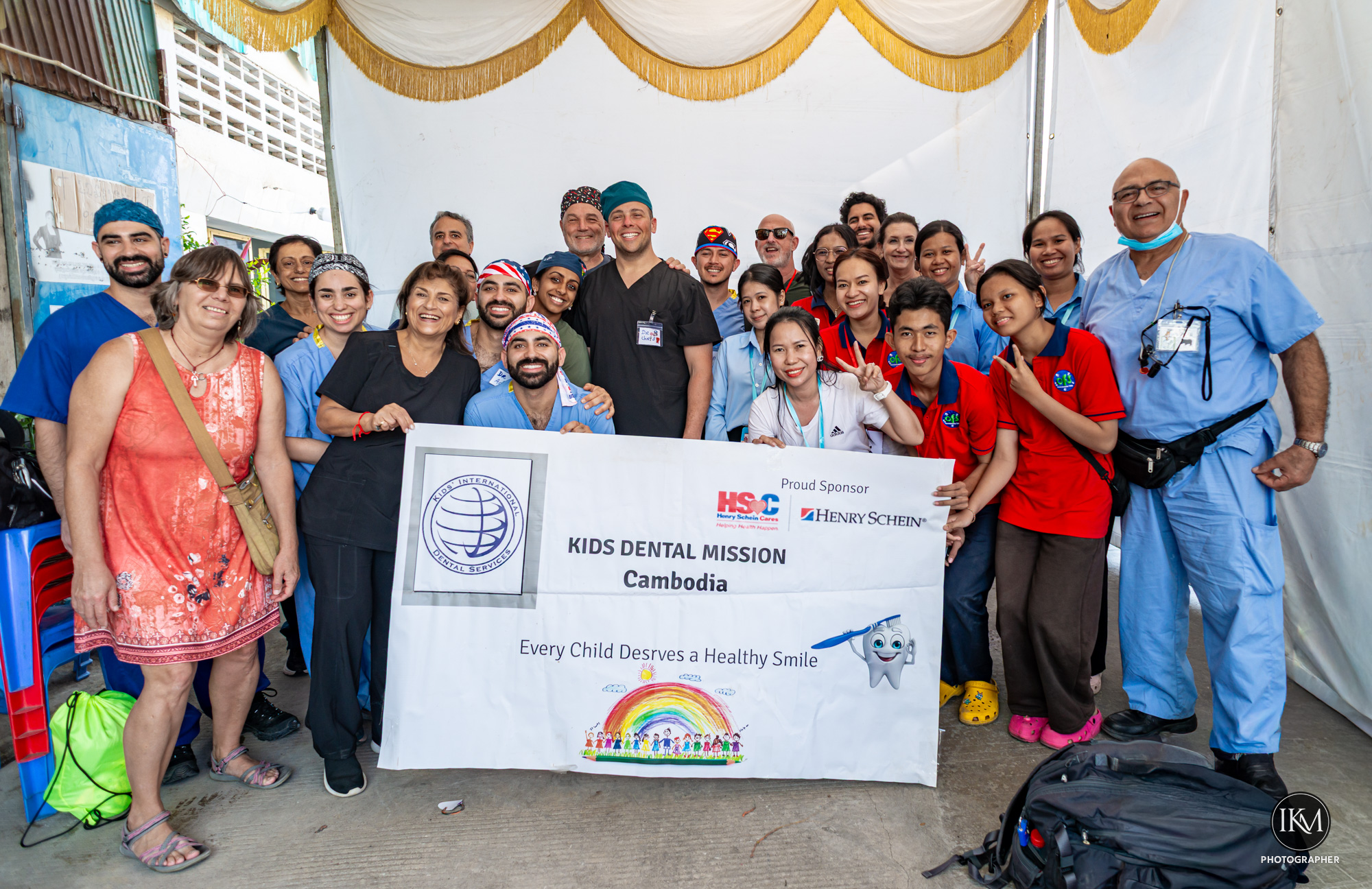
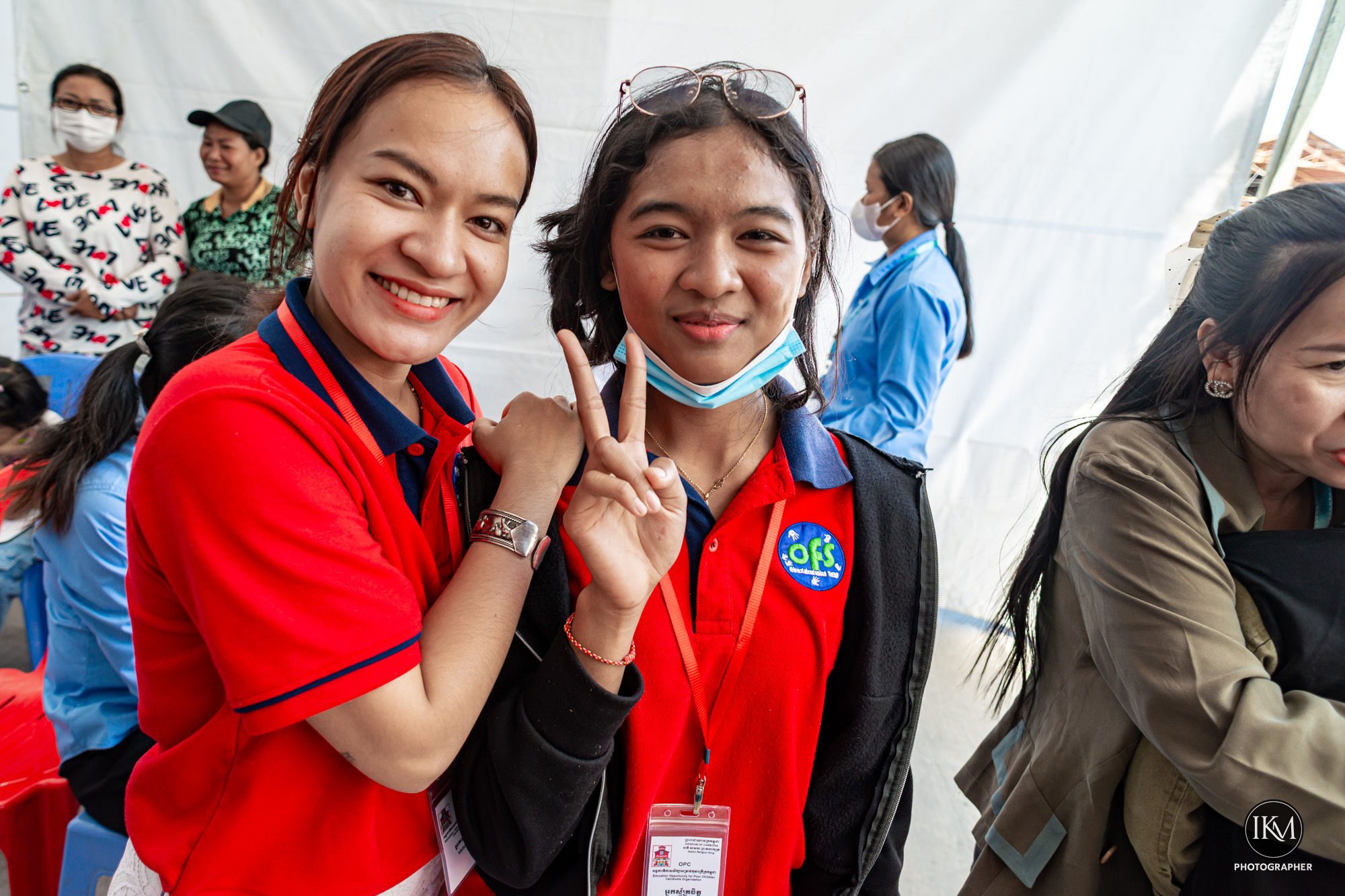
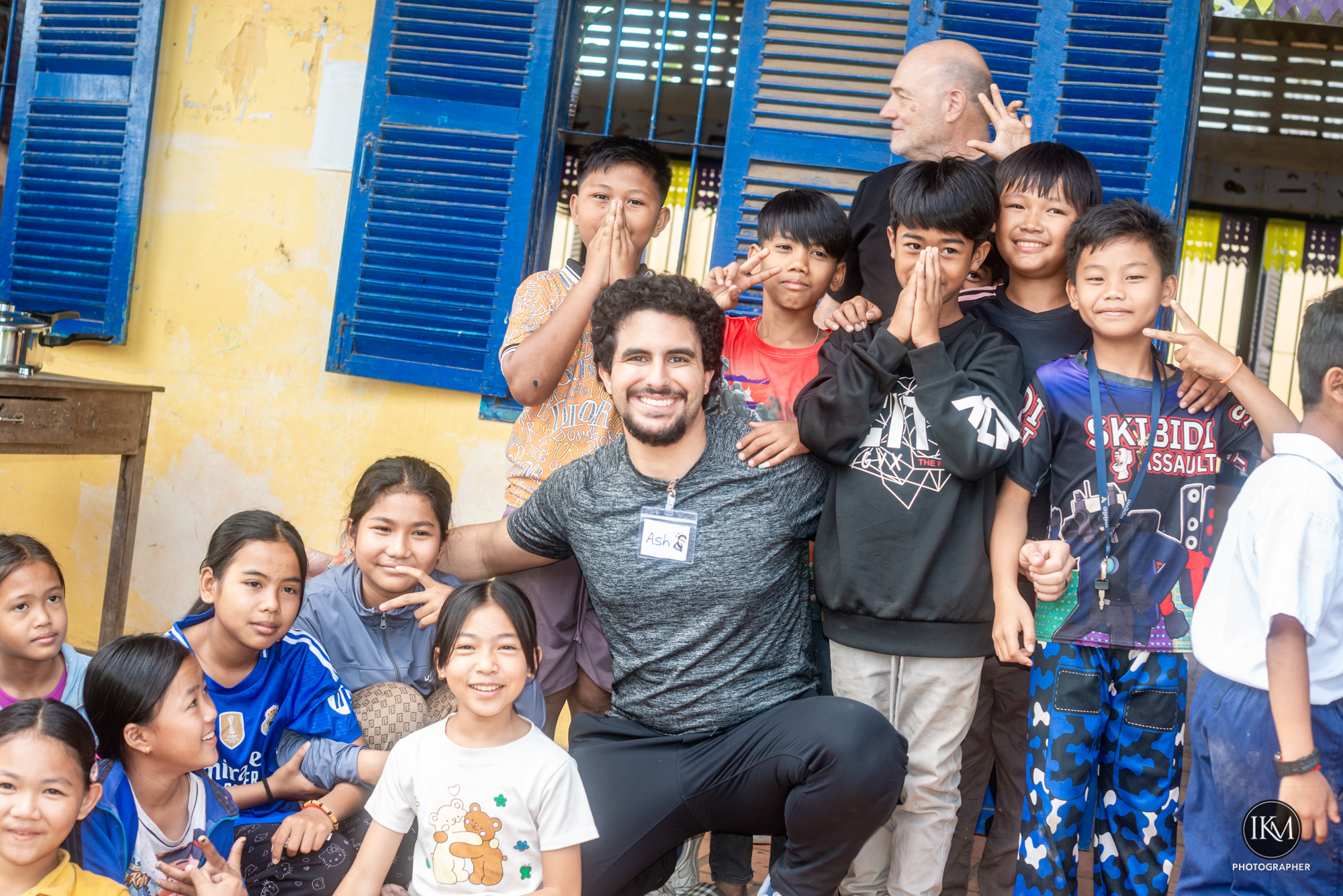
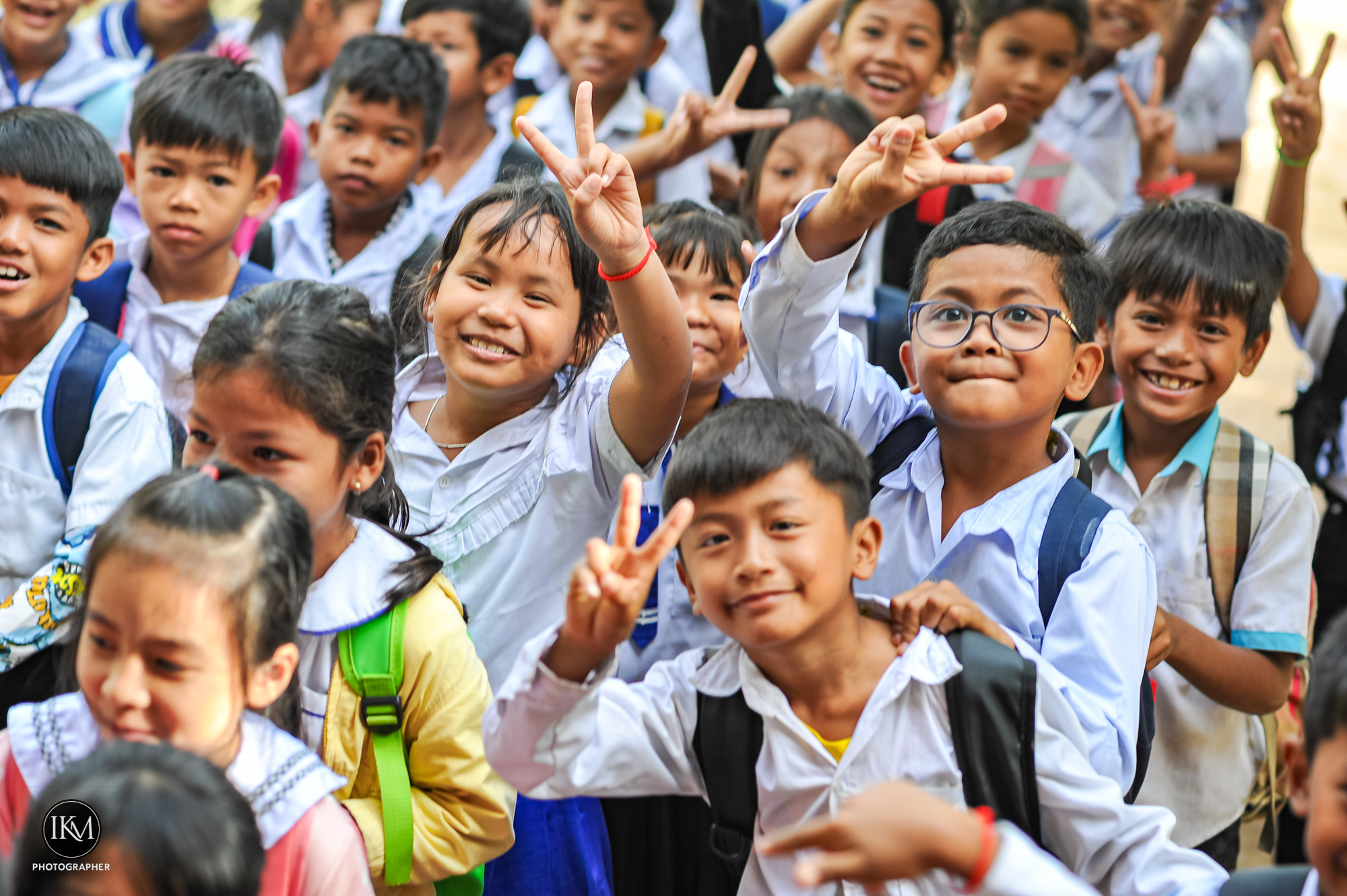
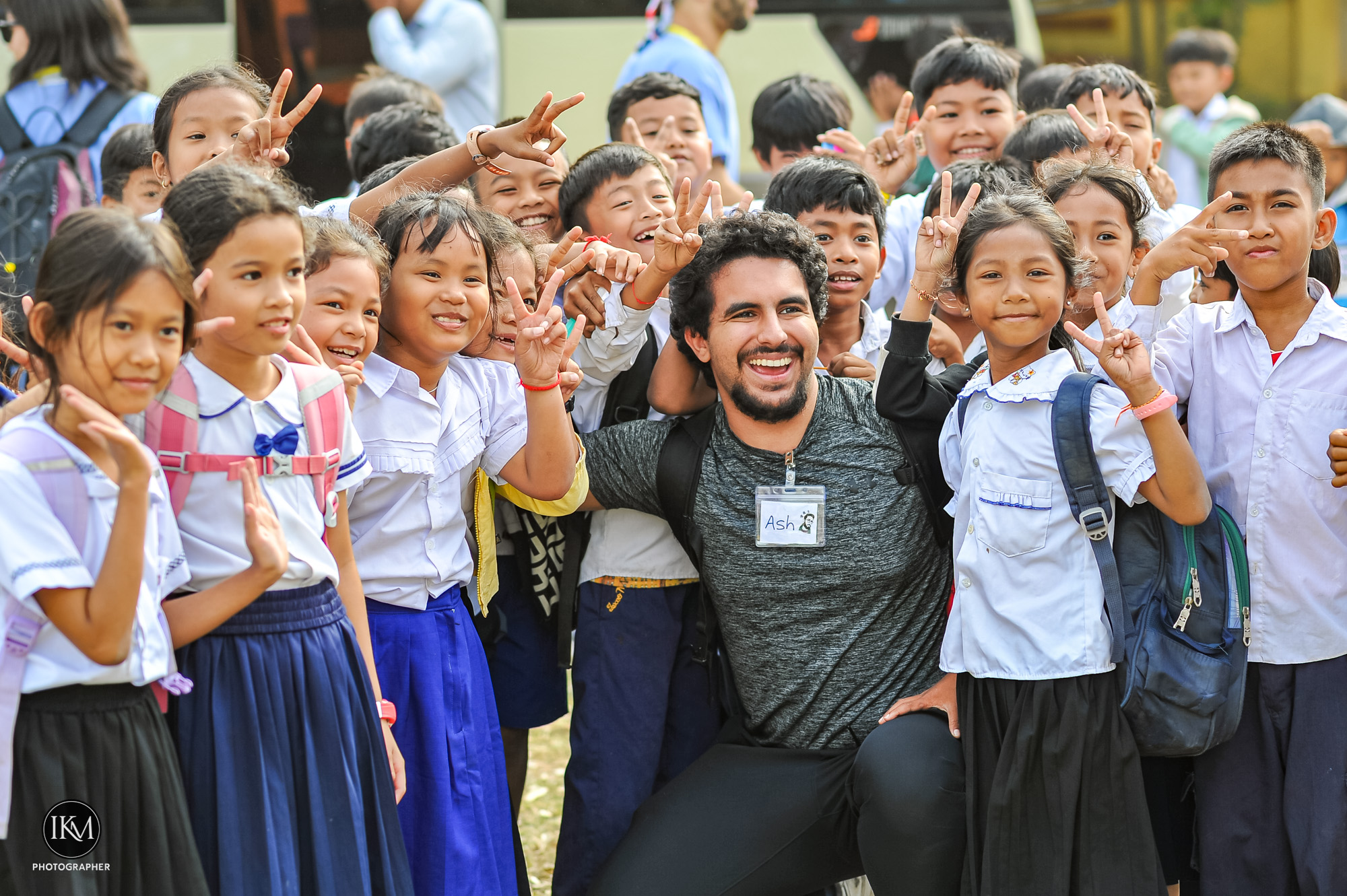
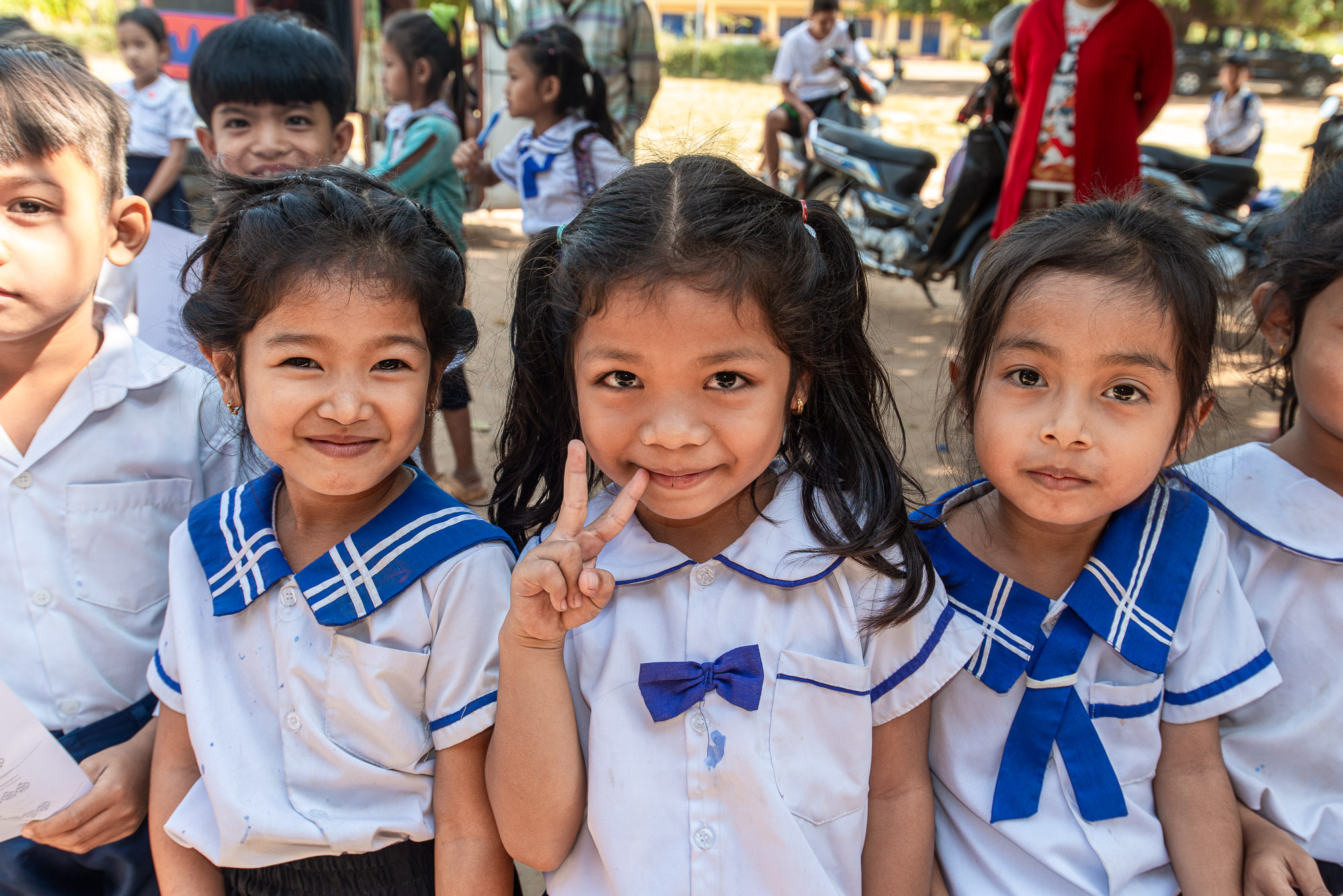
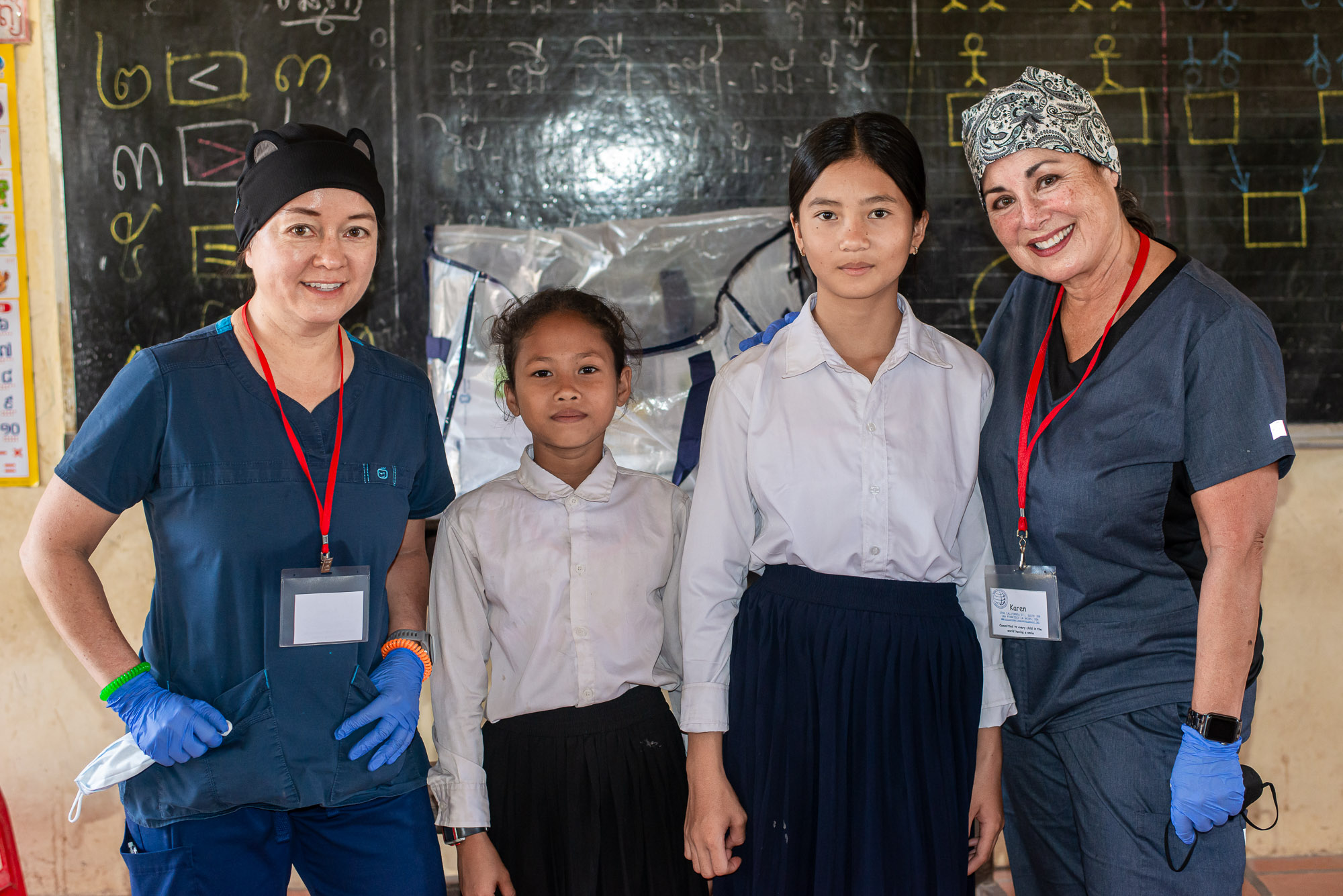
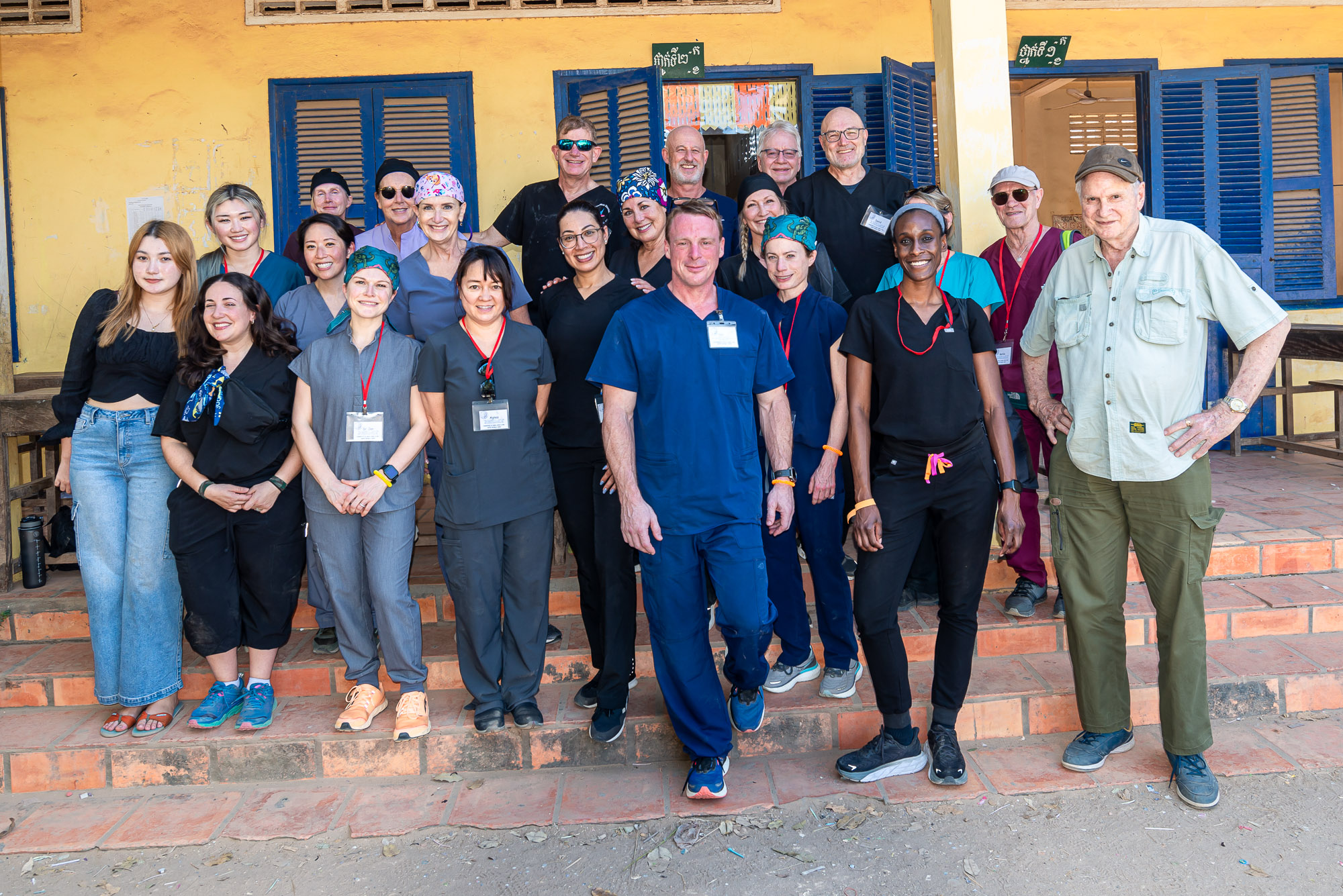
The group photograph carries a different mood. The nervousness has lifted. Volunteers and children are crowded together, laughing and raising their fingers for the camera. It would be easy to call it the happy ending, but documentary photography should be wary of endings that are too neat.

The children will return to homes where money remains short. Some will continue to have limited access to professional care. New children will arrive at school with untreated decay, and others will develop problems after the volunteers have gone.

The photograph does not prove that everything has been fixed. It records a moment when something useful was done.

As an old photographer, I have become suspicious of pictures that congratulate the photographer. The camera can persuade us that being present is the same as being helpful. It is not. We can make a handsome image of suffering, accept the compliments and leave the circumstances unchanged.

Photographing for an organisation such as KIDS must have a purpose beyond filling a portfolio. The pictures should help explain the need, preserve a record of the work and encourage practical support. They should acknowledge the volunteers without turning them into saviours. Above all, they should allow the children to remain childrenโ€”not symbols of misery and not decorations for someone elseโ€™s generosity.

That is why I volunteered with my camera.

I photographed because memory is unreliable and good work can disappear unnoticed. I photographed because a childโ€™s face can make distant need understandable without robbing that child of dignity. I photographed because donors and future volunteers ought to see where the equipment, money and long hours go.

But I also photographed for the children themselves.


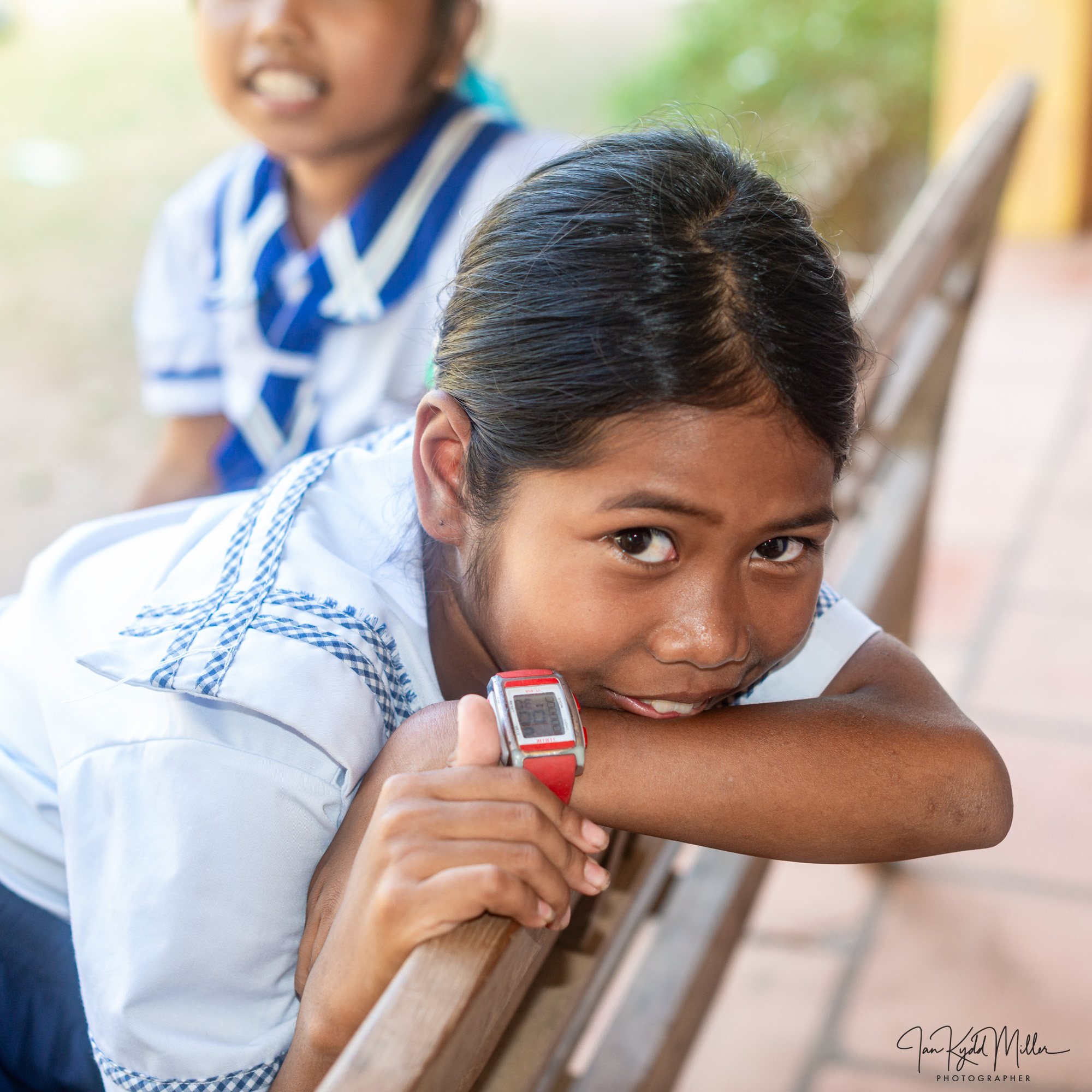
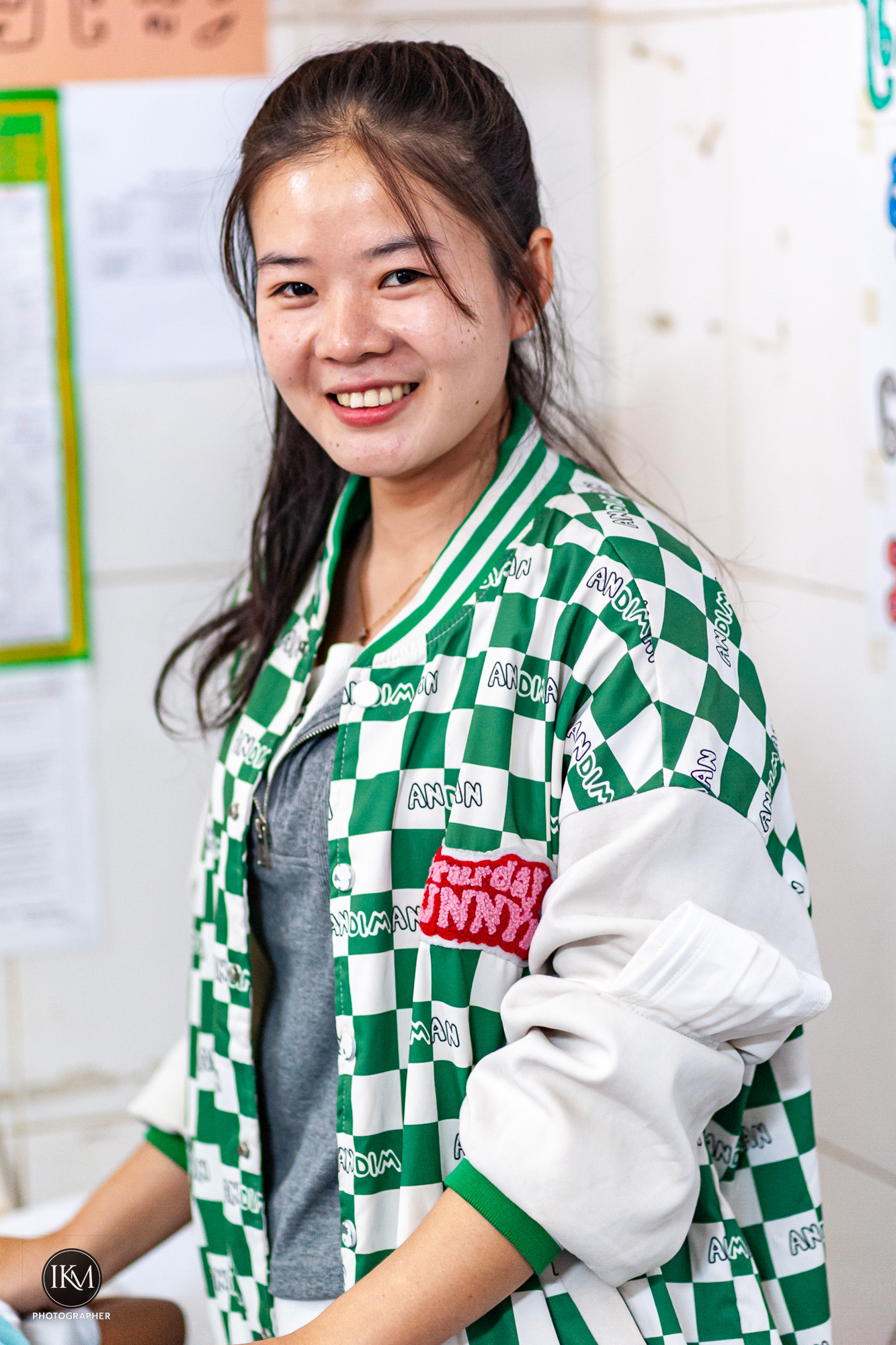
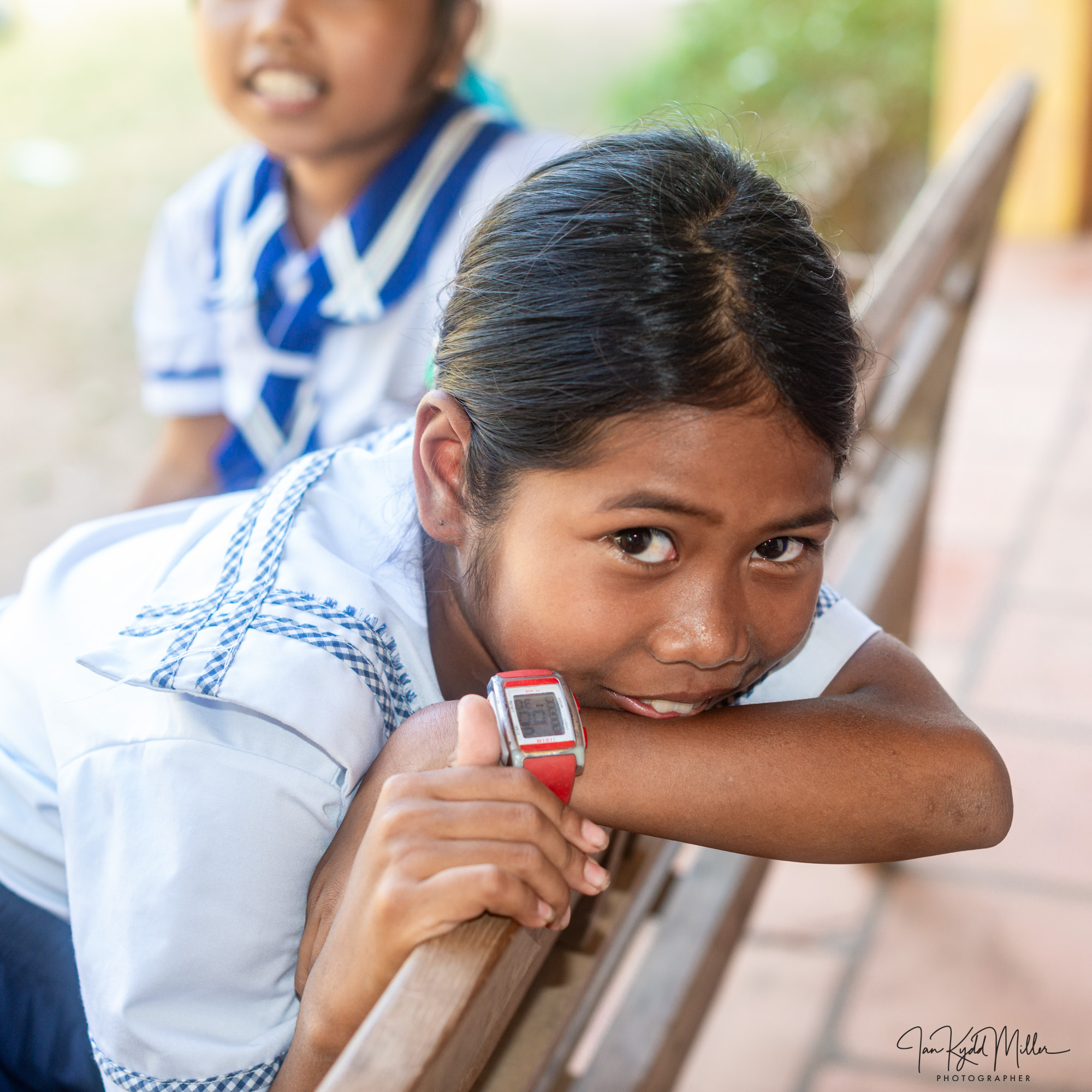
A smiling young girl in a colorful shirt, with dark hair and striking eyes, stands in the foreground, while two other children appear slightly blurred in the background.

For a few hours, they were not an anonymous mass described as poor, disadvantaged or in need. They were individuals with serious eyes, untidy hair, school shirts, nervous expressions and sudden laughter. They were seen.

The dentists dealt with the pain in front of them. My responsibility was to ensure that, once the chairs had been folded and the temporary clinic dismantled, the people did not simply vanish with it.


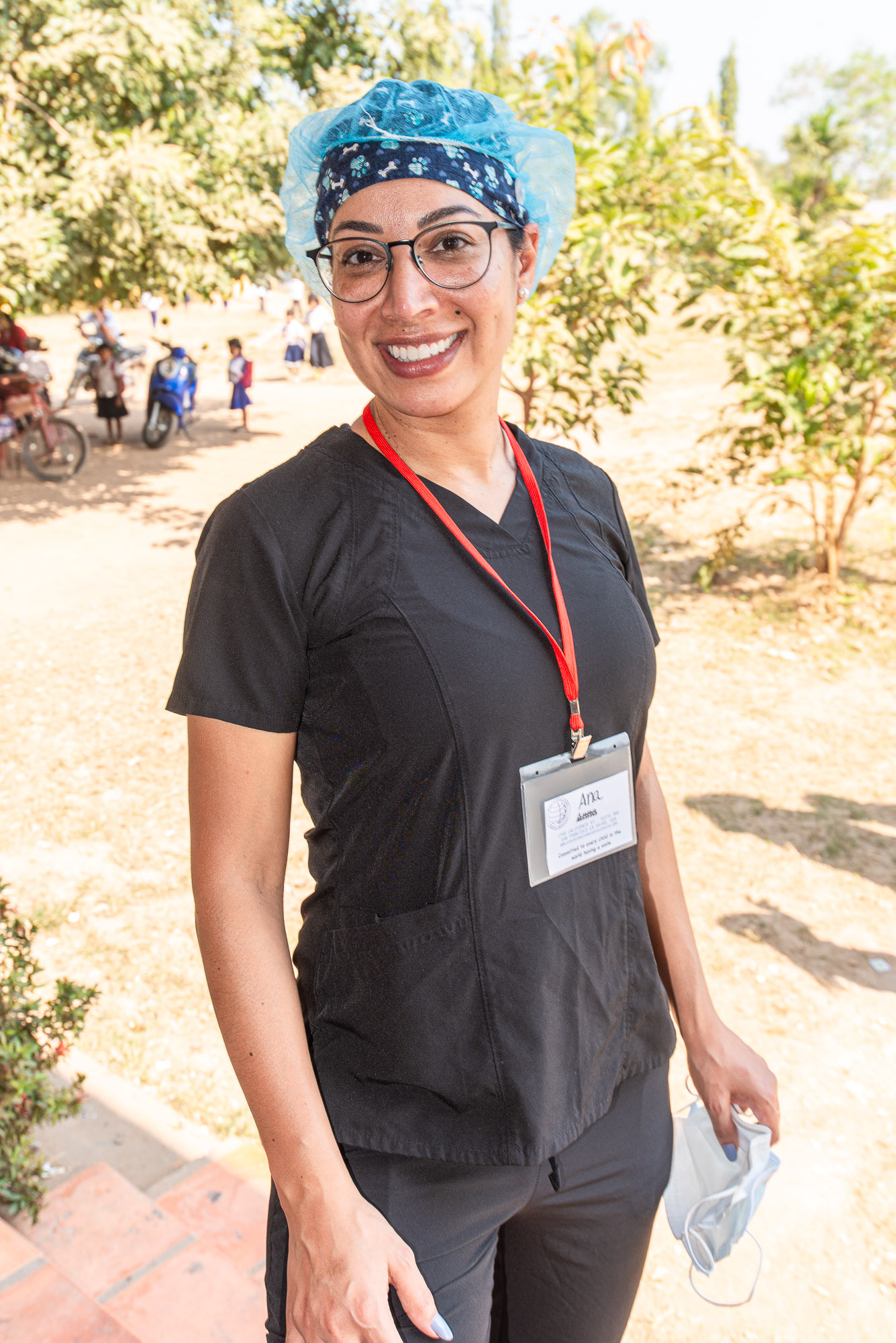
A healthcare worker in surgical scrubs and gloves, using a medical tool to attend to a child in a clinical setting.

That is the old photographerโ€™s part in the job: not to claim the story, but to carry a truthful piece of it home.

๐ŸŒ Why They Come: The Volunteers of Kids International Dental Services

cambodia, opinons, thoughts, Travel, voluntary

I. A Call Beyond Borders

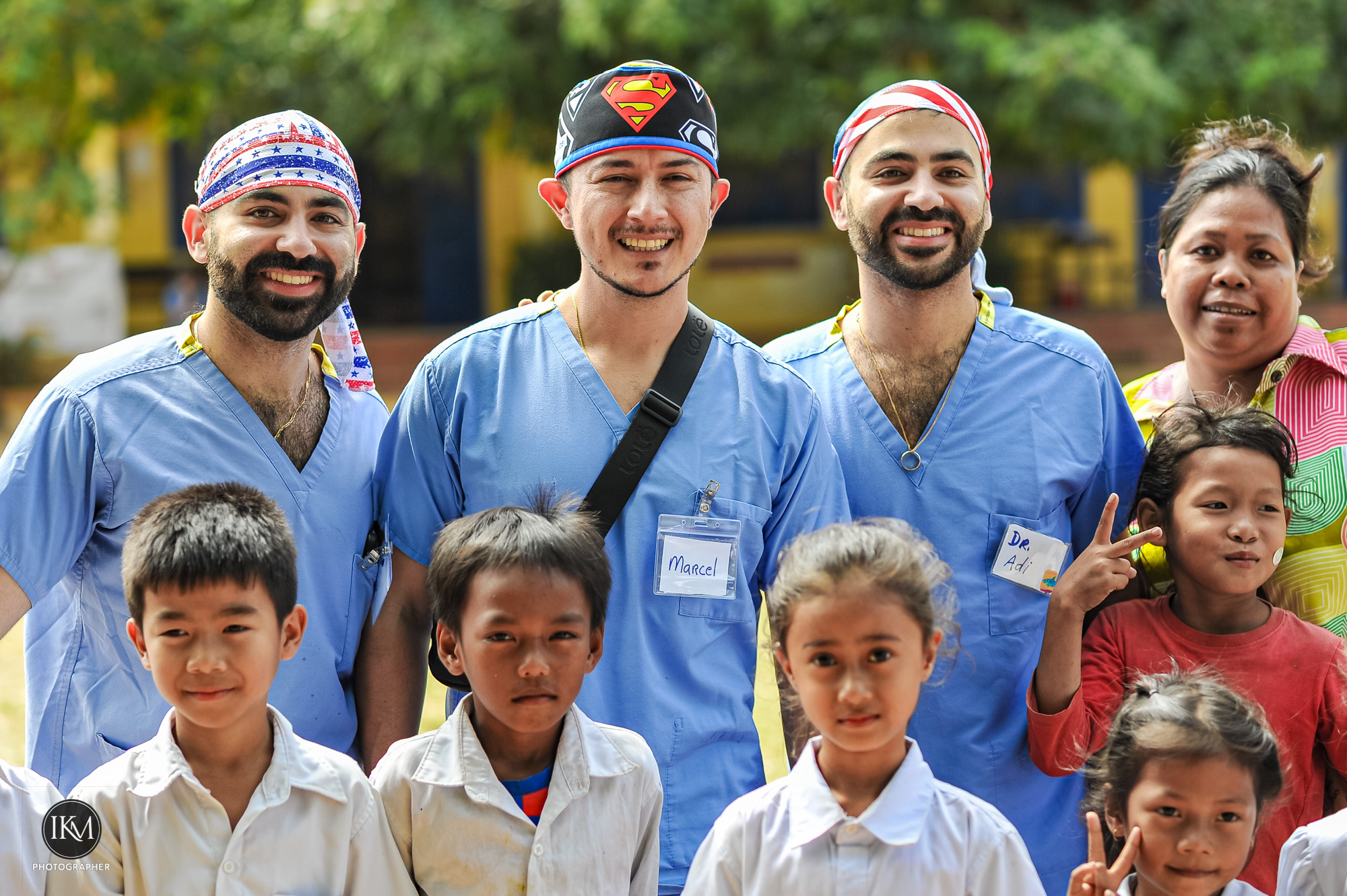
Every year, dentists, dental students, and young adults pack their bags and travel thousands of miles to join Kids International Dental Services (KIDS) missions. They arrive in Cambodia, the Philippines, or other underserved regions not for profit, but for purpose.

The question is simple: why do they come? The answer is layered โ€” a mix of compassion, professional growth, and the search for meaning.
II. Compassion in Action

For many volunteers, the motivation begins with empathy. They know that untreated dental pain can rob a child of sleep, appetite, and education.

  • Immediate impact: A single extraction can end months of suffering.
  • Visible change: Volunteers witness children smile freely for the first time in years.
  • Human connection: Holding a childโ€™s hand during treatment, they feel the bond of shared humanity.

III. Professional Growth

KIDS missions are also a proving ground for young professionals.

  • Handsโ€‘on experience: Dental students gain practical skills in challenging environments.
  • Adaptability: Working without the comforts of modern clinics teaches resilience and creativity.
  • Mentorship: Experienced dentists guide students, creating a cycle of service that continues long after the mission ends.

For many, these missions shape their careers. They return home not just as better clinicians, but as advocates for global health.

IV. The Search for Meaning

Beyond skill and service, volunteers often describe a deeper pull.

  • Perspective: Witnessing poverty and resilience reframes their own lives.
  • Purpose: Missions remind them why they chose dentistry โ€” not just to treat teeth, but to care for people.
  • Community: Volunteers form bonds with each other, united by shared challenges and triumphs.

The experience becomes more than a trip; it becomes a chapter in their personal story of meaning and responsibility.

V. Challenges They Embrace

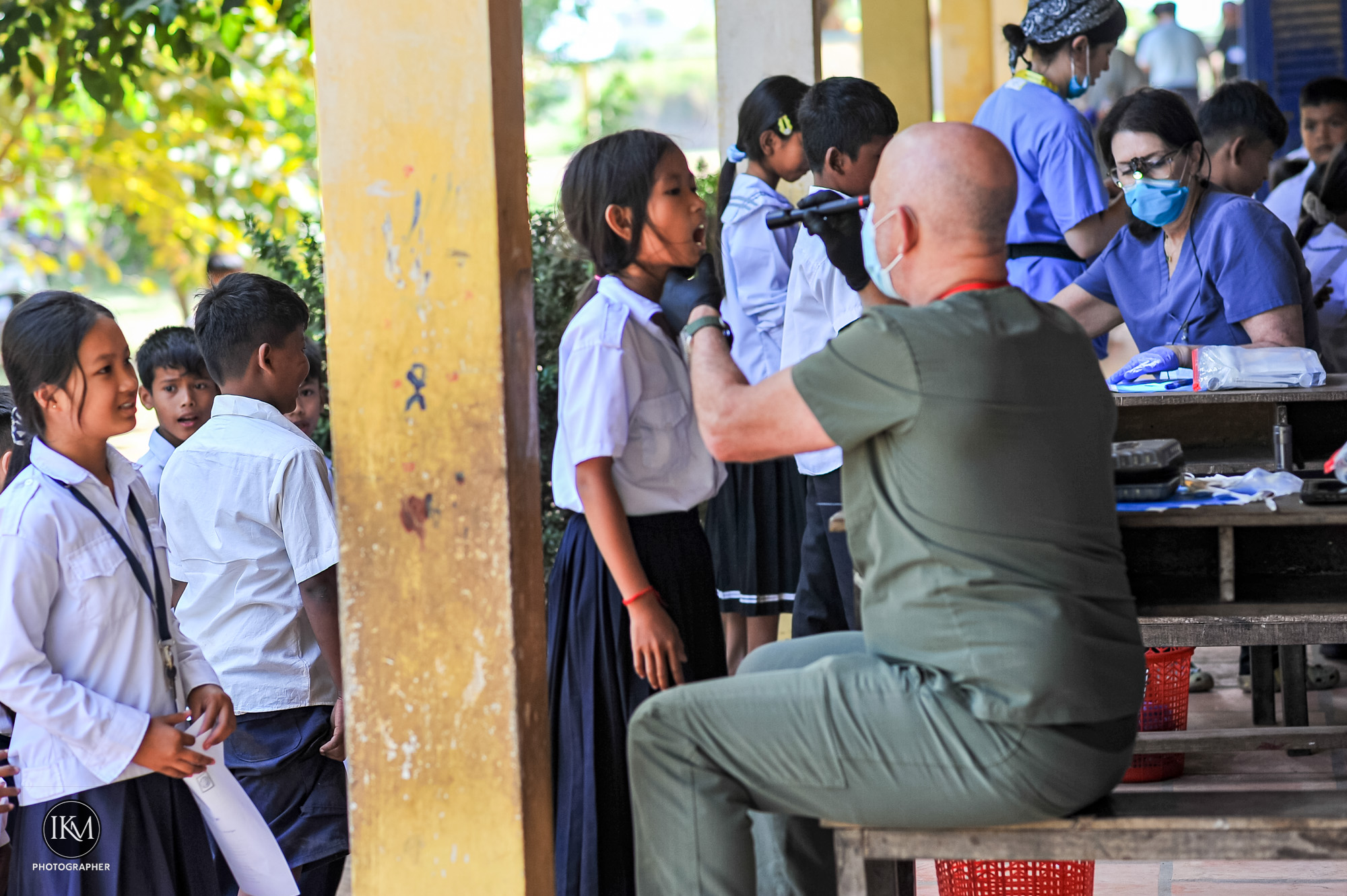
Volunteers face long days, relentless heat, and limited resources. Yet these challenges are part of the appeal.

  • They learn to improvise when equipment falters.
  • They discover patience when children are afraid.
  • They find joy in small victories โ€” a childโ€™s laughter, a parentโ€™s gratitude, a smile restored.

VI. Why They Keep Coming Back

Many volunteers return year after year. They speak of unfinished work, of children they want to see again, of communities that feel like family.
โœจ Conclusion

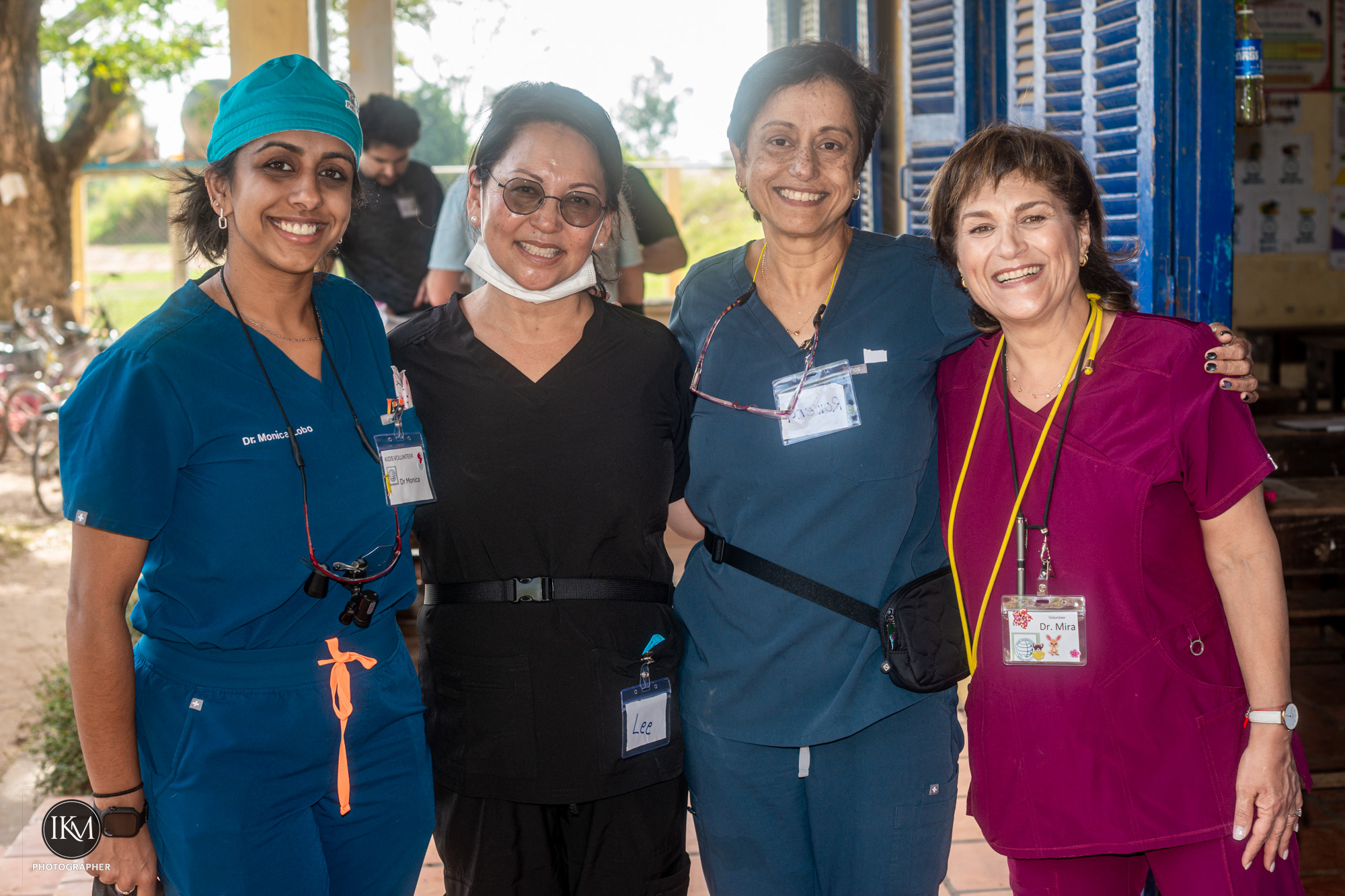
The volunteers of Kids International Dental Services come for compassion, for growth, and for meaning. They leave with stories, skills, and a renewed sense of purpose.

Under the Tamarind Tree: Kids International Dental Services in Cambodia

cambodia, nikon, opinons, thoughts, Travel, voluntary

A Mission Born of Need

KIDS stepped into this gap with volunteer teams of dentists, students, and young adults, bringing portable equipment, fluoride varnish, and a commitment to care that costs families nothing.

The Courtyard Clinic

On a humid morning in Kampong Thom, the school courtyard transforms into a clinic. Folding chairs line up under the shade of a tamarind tree. Children gather, whispering and giggling, some curious, others nervous. For many, this is their first encounter with a dentist.

Inside a classroom, desks are pushed aside to make space for cleanings and fluoride treatments. Posters of the Khmer alphabet hang on the walls, and a rooster wanders in, eliciting laughter. The atmosphere is both serious and joyful โ€” a blend of medical precision and community warmth.

Faces of Change (names changed and places)

  • Vuthy, seven years old, climbs into the chair with a shirt two sizes too big. He has lived with tooth pain for weeks. Minutes later, he sits up blinking, surprised that the pain is gone. His cautious smile grows wide.
  • Srey Leak, eight, has missed school because of an infected molar. A gentle extraction relieves her suffering. Later, she returns with her younger brother Dara, terrified but reassured by her whispers. He leaves grinning, a sticker on his shirt, his fear replaced by pride.
  • Groups of siblings receive fluoride treatments, learning to brush with oversized models of teeth. Their laughter fills the room, but the lessons will last far longer.

These are not isolated stories โ€” they are the daily reality of KIDS missions. Relief is immediate, dignity is restored, and education plants seeds for healthier futures.

The Volunteersโ€™ Perspective

For the volunteers, the work is demanding. The Cambodian sun is relentless, the equipment portable but limited. Yet the rewards are profound.

โ€œDental pain steals childhood,โ€ one dentist explains. โ€œIf we can give even one child a night of peaceful sleep, itโ€™s worth everything.โ€

KIDS also serves as a platform for mentorship. Dental students gain handsโ€‘on experience in challenging environments, learning not just clinical skills but empathy, resilience, and the value of service.

Strengths and Challenges

Strengths

  • Direct relief: Immediate treatment for children who would otherwise suffer silently.
  • Education: Oral hygiene lessons empower communities long after the mission ends.
  • Mentorship: Inspires young dental professionals to integrate humanitarian service into their careers.
  • Community trust: By working in schools and orphanages, KIDS builds lasting relationships.

Challenges

  • Scale: Cambodiaโ€™s rural population is vast; missions reach only a fraction of children.
  • Continuity: Without permanent clinics, followโ€‘up care is limited.
  • Funding: As a lean nonprofit, KIDS depends heavily on donations and volunteers.
  • Infrastructure: Remote areas often lack electricity or clean water, complicating procedures.

Why Cambodia Matters

Cambodia illustrates both the urgency and the promise of KIDSโ€™ mission. Dental decay is widespread, fueled by sugary diets and limited access to care. Untreated pain keeps children out of school, undermining education and wellbeing.

By relieving pain and teaching prevention, KIDS helps restore not just smiles but futures. Each mission is a reminder that small, volunteerโ€‘driven interventions can have outsized impact.

Conclusion: Smiles That Last

As the sun sets over Kampong Thom, children walk home along dusty roads, showing their parents clean teeth, stickers, and new toothbrushes. The courtyard is quiet again, but the smiles remain.

๐ŸŒ Slowing Down in a Fast World

cambodia, cameras, fujifilm, homelessness, Lenses, nikon, opinons, thoughts, photography, street, Travel

Introduction

We live in an age of acceleration. News cycles refresh by the minute, feeds scroll endlessly, and even creativity is pressured to produce faster, louder, more. Yet in the midst of this speed, there is value in slowing down โ€” in reclaiming attention, rediscovering meaning, and reconnecting with the world around us.

The Case for Slowness

  • Depth over breadth: When everything is consumed quickly, little is truly absorbed. Slowness allows us to linger, to notice details.
  • Presence over distraction: Slowing down means being present โ€” whether in conversation, in work, or in art.
  • Sustainability over burnout: Constant speed drains energy. Slowness restores balance, making creativity and living sustainable.

Rediscovery Through Attention

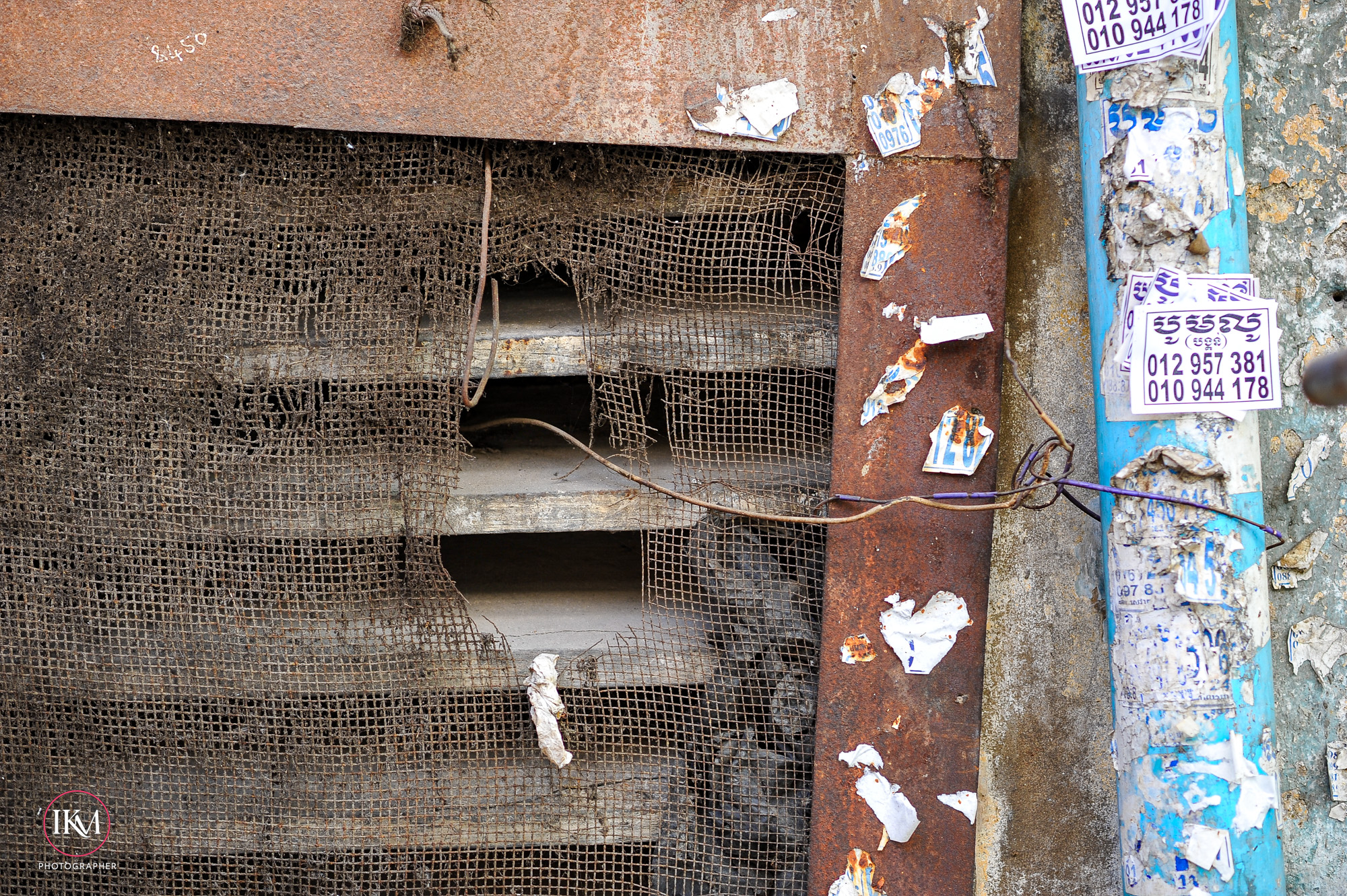
  • Objects: Everyday things reveal character when looked at closely โ€” a weathered wall, a handโ€‘written note, a shadow at dusk.
  • People: Listening deeply, rather than rushing to respond, uncovers nuance in relationships.
  • Places: Streets, parks, and cities hold layers of history and atmosphere that only patience can reveal.
  • Returning again and again: Revisiting the same subject or place allows new layers to emerge. Each return reframes the familiar, showing how time and perspective reshape vision.

Reclaiming Vision

  • Against noise: Slowness cuts through distraction, sharpening what matters.
  • For clarity: It allows us to see not just what is in front of us, but what lies beneath.
  • As practice: Slowness is not passive โ€” it is an active choice to resist speed and reclaim vision.

Using Technology When Itโ€™s Useful

  • Tool, not master: Technology should serve attention, not dictate it.
  • Selective use: Embrace tools that extend vision โ€” editing software, digital archives, or cameras โ€” but resist the pull of endless feeds.
  • Balance: The slow archive doesnโ€™t reject technology; it uses it deliberately, when it amplifies meaning rather than dilutes it.
  • Agency: Choosing when and how to use technology is part of reclaiming vision in a fast world.

Harnessing Speed to Anticipate

  • Machine as ally: Cameras and devices can operate faster than human reflexes.
  • Anticipation: Using burst modes, predictive autofocus, or rapid shutter speeds allows the photographer to anticipate and catch fleeting gestures.
  • Integration: Slowness is about vision, but speed is about execution โ€” together they form a rhythm of patience and precision.
  • Lesson: Technologyโ€™s speed is not about rushing; it is about being ready when the moment arrives.

Conclusion

Slowing down is not about rejecting progress. It is about reclaiming agency in how we see, feel, and create. Technology can be part of that process โ€” but only when it is useful, intentional, and aligned with vision. Returning to a subject or place over and over again reminds us that meaning is not found in novelty alone, but in patience, repetition, and rediscovery. And when the decisive moment comes, the speed of a machine can help anticipate and capture it โ€” ensuring vision and execution meet.

Verdict: Slow down, return often, use tools wisely, harness speed โ€” and the world reveals itself anew.

Srei Crieat. Day 1 to Finish.

cambodia, opinons, thoughts, photography, pictures, voluntary

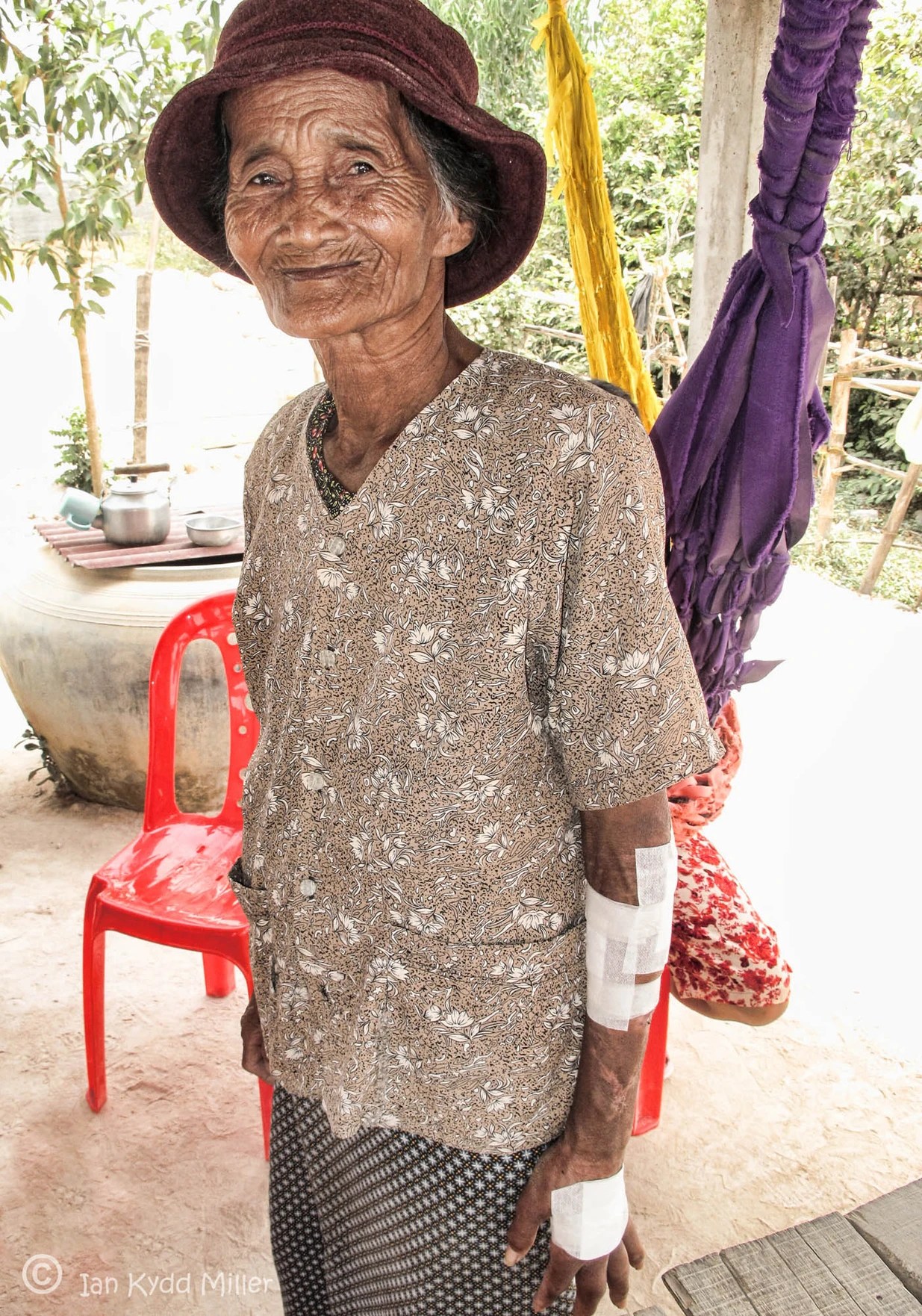
This story started about 7 weeks ago when a friend of mine mentioned an old lady (Srey Crieat), who lives in the same village as she and had recently been bitten by a snake. What snake was not known but it certainly did some major damage.

She showed me some pictures on her telephone and I was very shocked about the state of her hand and arm. She looked to be in a lot of distress.

I asked her how long ago this had happened and she informed me that it was about two weeks earlier and that Srey Crieat had been seen at the local village hospital who had suggested she be sent to Phnom Penh for the arm to be amputated. She did not want this and was after about a week was sent home, little or nothing was done about the arm, she was given some antibiotics.

At the invite of my friend it was decided that I would go out and see Srey Crieat as soon as possible, initially to assess the damage that could not be seen in the phone pictures and to see if there was more that could be done.

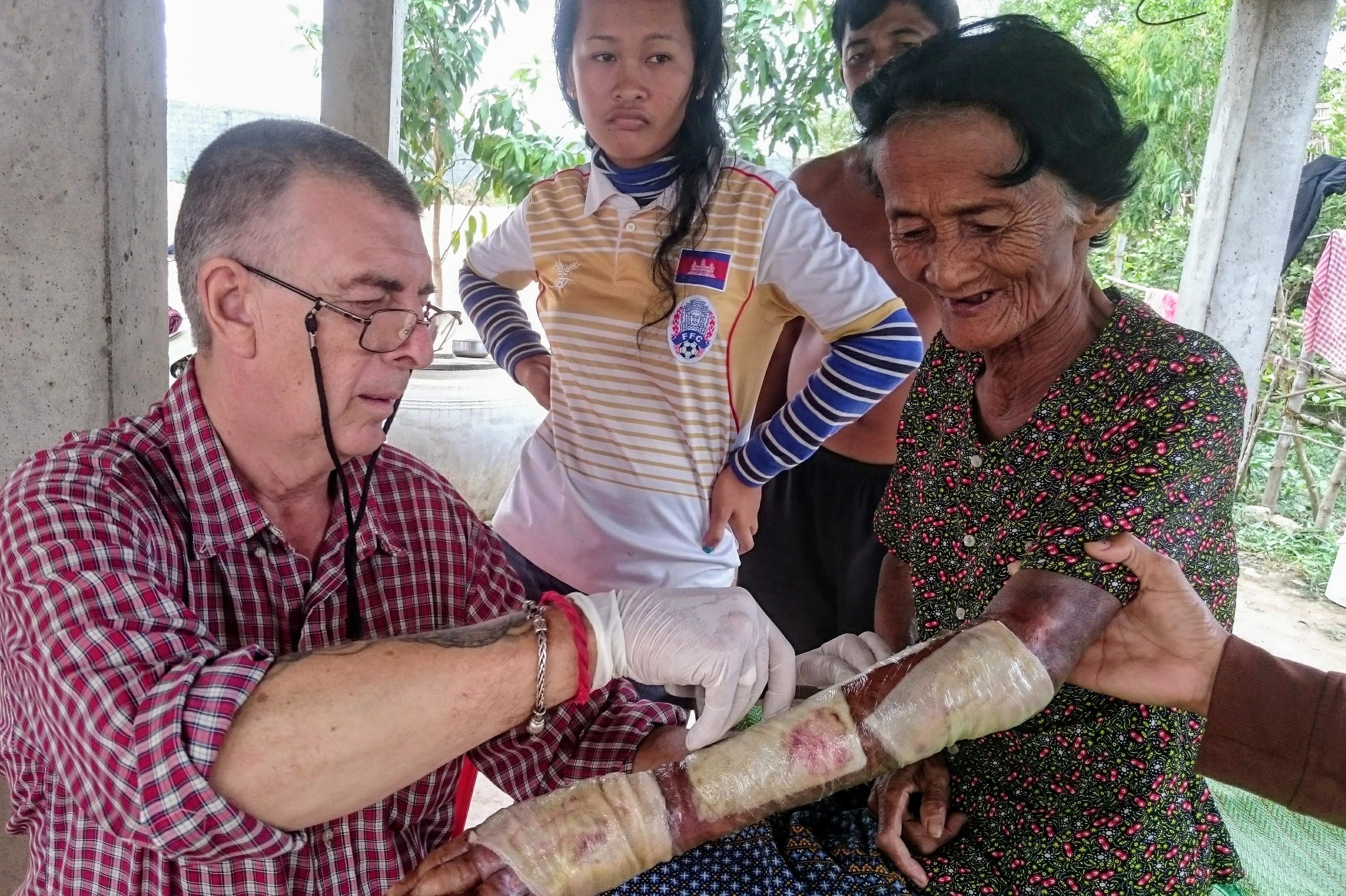
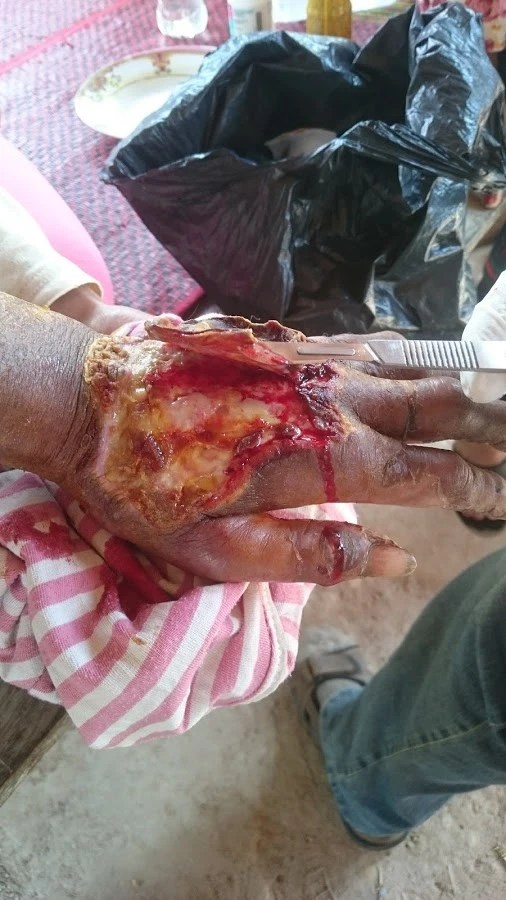
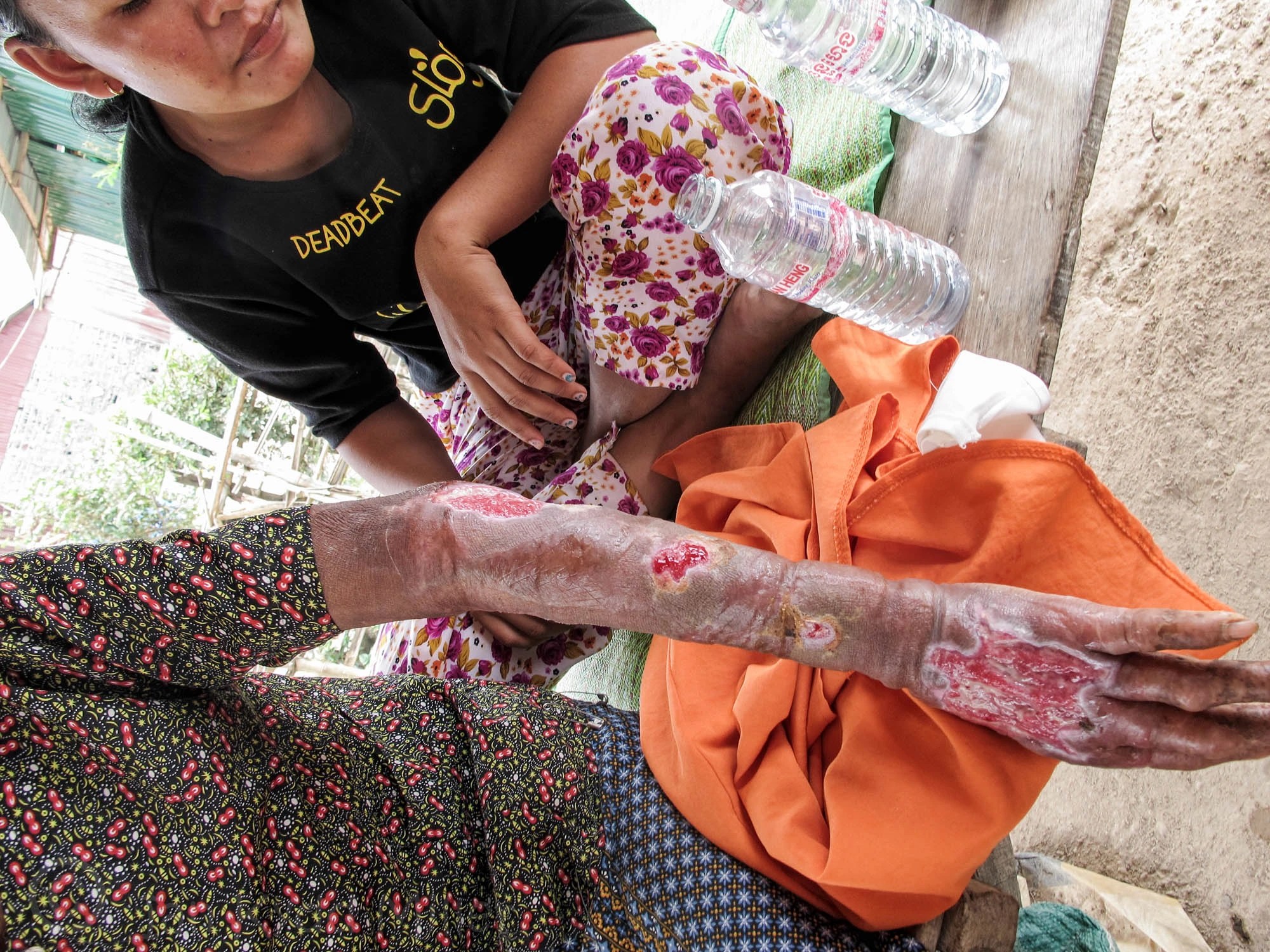
This is what we found the next day. The hand and arm were in a pretty terrible state and to all intents and purposes looked like it had never been cleaned and hand been left exposed since she had left hospital. It was quite badly infected and showed lots of necrosis on both the hand and arm, the primary bite site looked to be the hand although extensive damage up to the elbow could be seen.

As can be seen in the picture above the upper hand was extremely damaged and with a full thickness skin necrosis. The fingers were extremely swollen and tender but had good pulse showing blood flow present. This certainly was going to take time and commitment if anything was going to be done to improve the situation for this lady. It did not help that it would be a 70Km trip just to get there each time and 70Km back.

There was no way I could leave anyone in this state, the hand was badly infected and damage extended to the elbow. I had to accept that there were risks of further systemic infection and this was discussed with Srey Crieat. She just was so sad and wanted somebody to help and accepted the process may be long and maybe painful. She wanted to go ahead.

First things first I had to get the area clean and with the limited supplies I had with me I began that process.

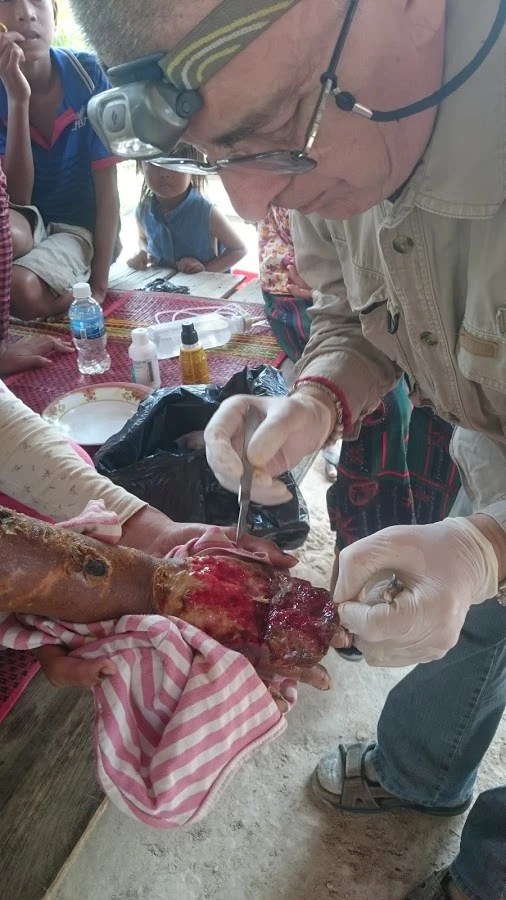
Using a mixture of Povidone and Hydrogen Peroxide I soaked the hand and removed most of the dirt, that I could see and also many insect eggs. The upper arm I decided to leave until I visited the next day, with the correct equipment to complete the cleaning process. The hand and arm would need more than just cleaning though it was in need of extensive debridement, but I did not have the gear with me to start that process.

A temporary covering was applied to the hand and arm and arrangement made to return the next day giving me time to gather and buy the gear I would need to begin this job. She did not appear to be in much pain, probably due to the damage done by the venom and she was not needing, at this point and analgesia.

Day Two

On returning the next day another extensive clean of the whole arm, fingertip to axilla was completed, using the same solution. The hand was in need of a sharp debridement but the necrosis was hard and very difficult to work with so I decided to dress the hand and lower arm in ”fresh wild honey” and dress it with ”cling film” (yes ordinary kitchen film) to soften and clean the areas of necrosis so that they could be more easily dealt with. I arranged to return in three days to begin the debridement.

Day Five

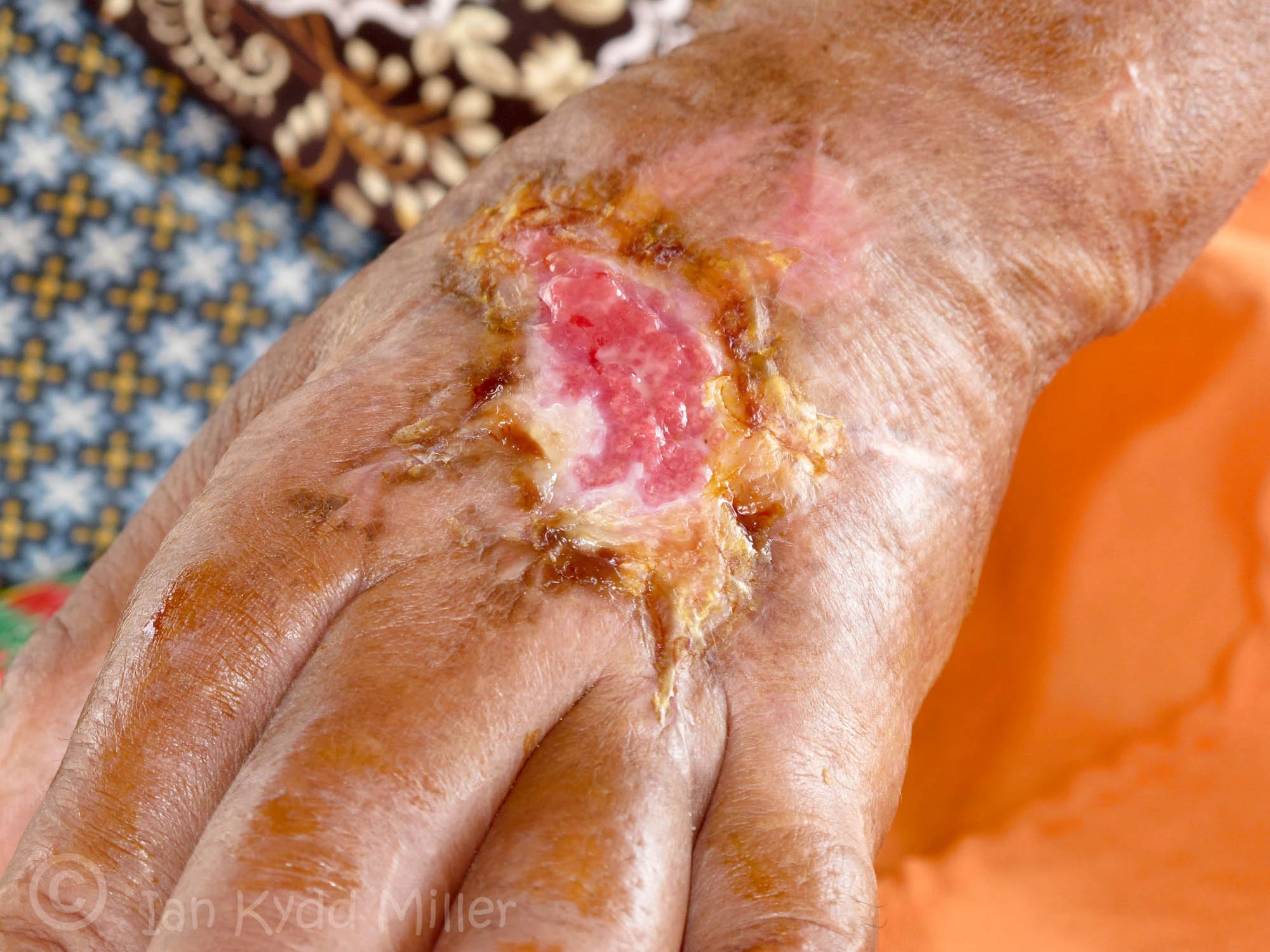
On my return the bandages and cling film were removed (as seen above) and the hand was much more manageable and ready for the necrotic tissue to be removed. It was quite extensive and not going to be a simple job, and care was need not to damage the underlying structures. I was prepared to use local anaesthetic but she said she did not have any real pain and so we went ahead without (slowly).

After about 30 minutes of work, with very little bleeding, we were able to remove the necrosis down to nice pink tissue with good blood flow.

This was enough for her for one day but she showed no pain. The other areas on the arm also need to be removed but there was no rush, the main area of potential infection on the hand was off and I was please to return to the other areas in a few days. The hand and arm were again redressed with Honey (lots of it) and cling film and I would return in three days to continue giving the hand and the lady time to recover.

Day Eight

On returning I set to work removing the other necrotic areas on her forearm. After this we continued for another week (twice weekly visits) with honey and cling film dressings. She was given another course of antibiotics as a precaution and because of the difficult conditions she lives in. After this no more antibiotics were needed.

The improvements began to come quite quickly once the area was fully cleaned of necrosis and other detritus. I used plain white sugar mixed with Vitamin D ointment on the hand for the next week and continued the honey application to the forearm. This seemed a good combination and worked well.

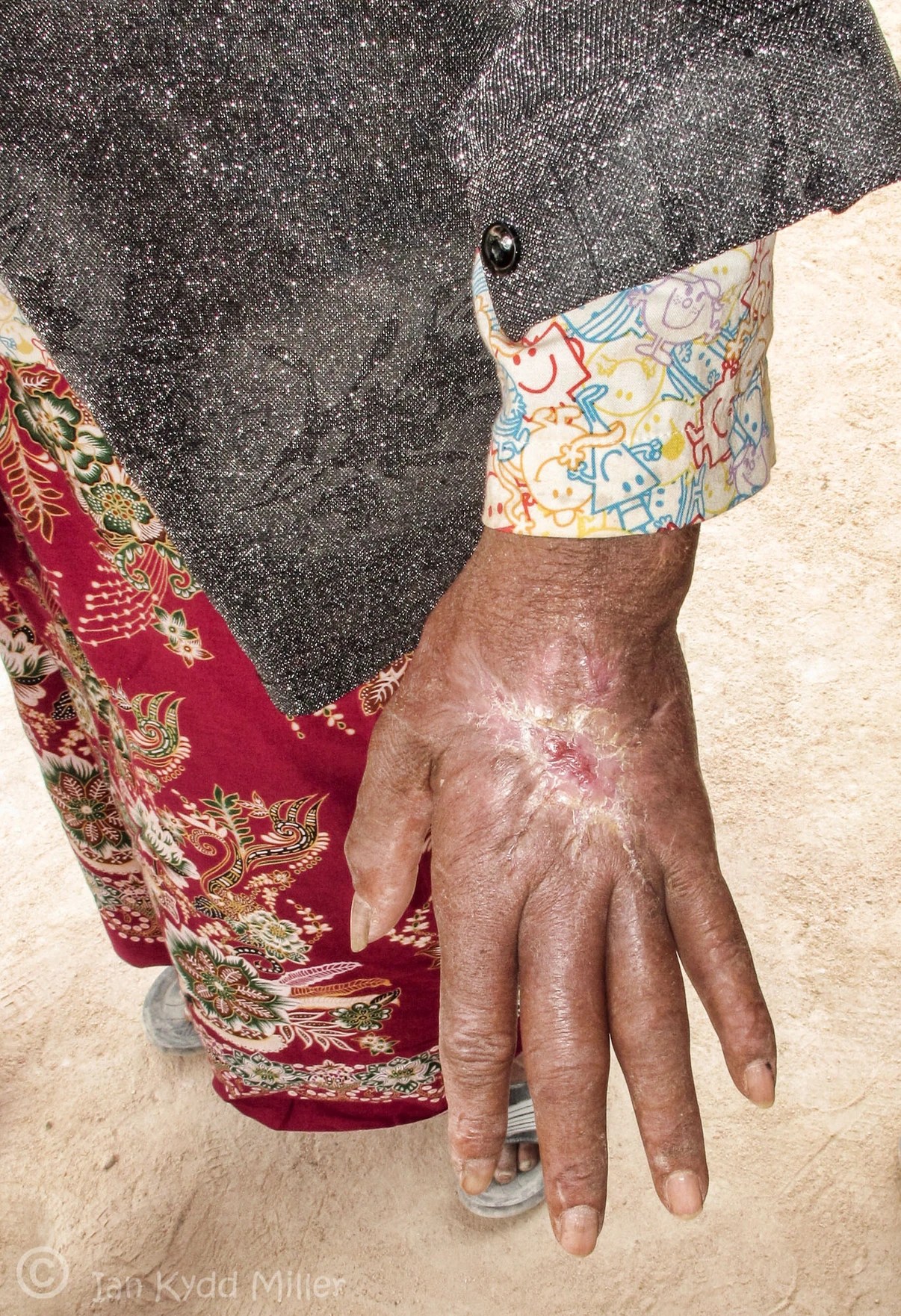
This was the back of her hand after four weeks, showing pretty good healing and no infection present. I continued with sugar and vitamin ointment.

After another three days even more improvement noted.

Day 11

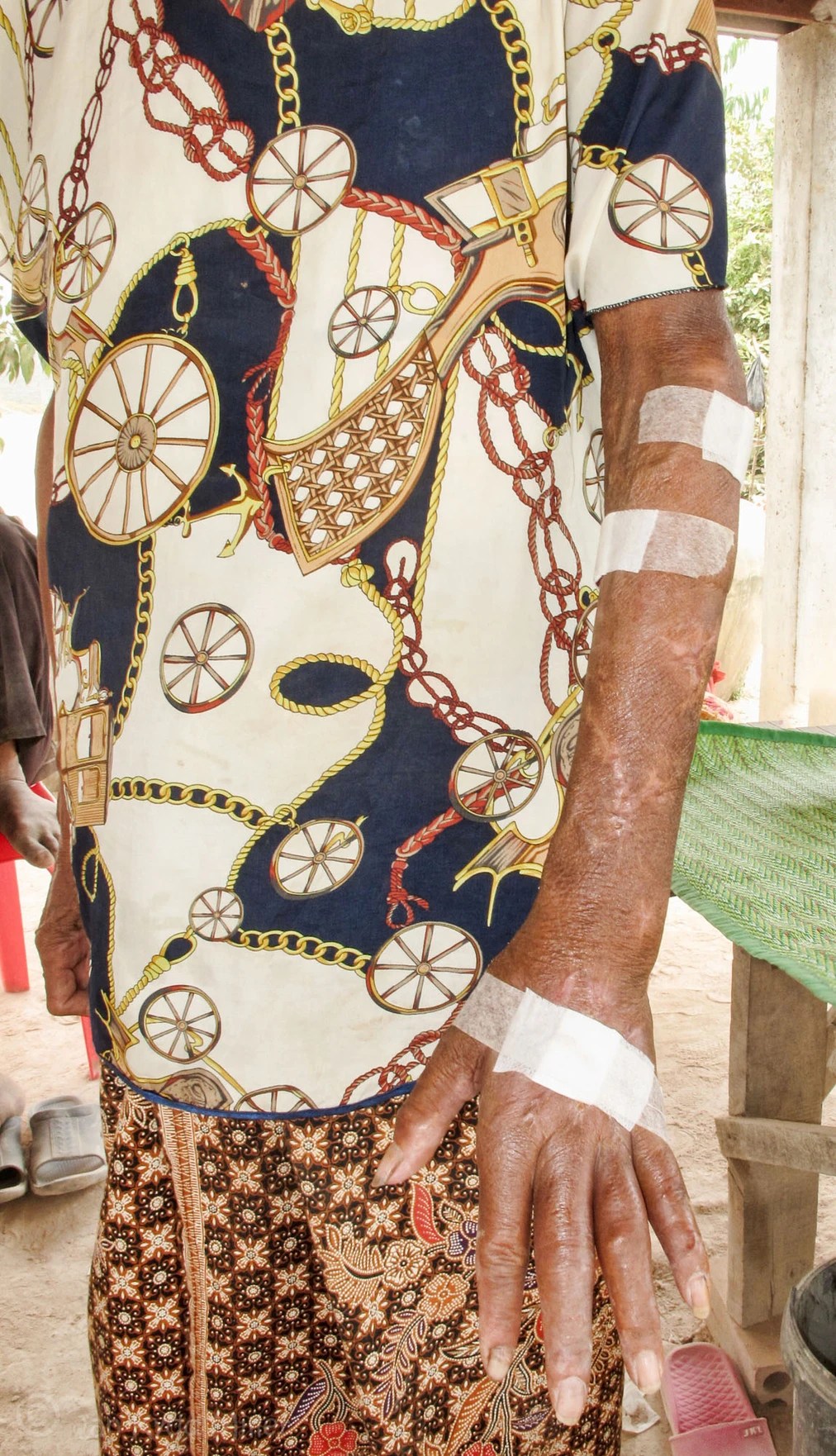
We continued with the same treatment for the next week, the wounds continued to get smaller until the point came over the last two weeks that some of the areas were ready to begin the process of scabbing. For the next week we dressed all areas with no stick dressings brought in by a friend from Bangkok, until such a point than we only needed dry protective dressings.

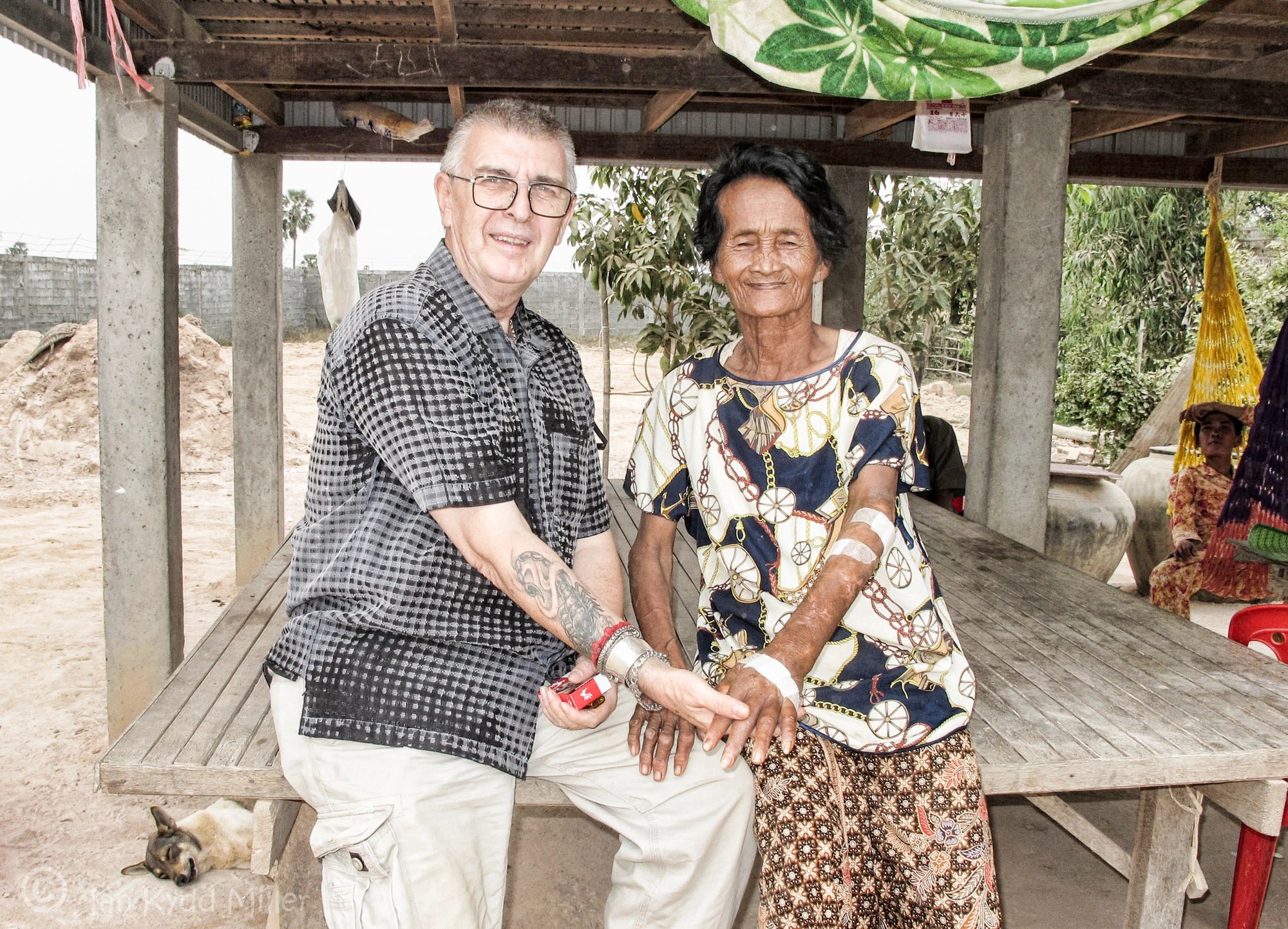
As can be seen on the last pictures there is certainly some scar tissue but much less than I expected. She has a reasonable amount of movement in her hand and her fingers will become less swollen as her hand movement increases.

Simple dry dressings now until the remaining areas scab over. One very happy and feisty lady now, such a pleasure to see. Just over seven weeks total to get to this point. Such a brave lady, well done …..

BIG THANKS GO OUT TO BILL FOR HIS GETTING ME SAFELY THERE WHEN NEEDED AND HIS SUPPORT IN GENERAL. TO ALL THOSE WHO MADE THIS POSSIBLE (YOU KNOW WHO YOU ARE) I APPRECIATE IT AND SO DO THOSE IN NEED

#firstaid #asia #medical #sick #charity #snakebite

Kids International Dental Services

cambodia, opinons, thoughts, photography, voluntary

Kids International Dental Services (KIDS) is a remarkable nonprofit organization dedicated to providing pro-bono dental care to children in need across various developing countries.

Established in 2009, KIDS has been on a mission to not only offer essential dental services but also to inspire young dental professionals to embrace volunteerism as a core part of their careers. With a focus on education, empowerment, and inspiration, KIDS operates with the belief that every child deserves access to dental care, which is crucial for their overall health, academic performance, and future opportunities.
The organization has served thousands of children in countries like Cape Verde, The Philippines, Cambodia, Haiti, South Africa, Mongolia, Guatemala, and Morocco, emphasizing the importance of dental health and hygiene in community development. By collaborating with local communities, KIDS also works to create sustainable practices that can continue to benefit children long after the volunteers have left.

Moreover, KIDS fosters a cycle of giving by mentoring volunteers and establishing lasting relationships with the communities they serve, ensuring a continuous impact. For those interested in contributing to this noble cause, KIDS welcomes volunteers and supporters from all walks of life, offering a platform for individuals to make a significant difference in the lives of children who need it the most.