

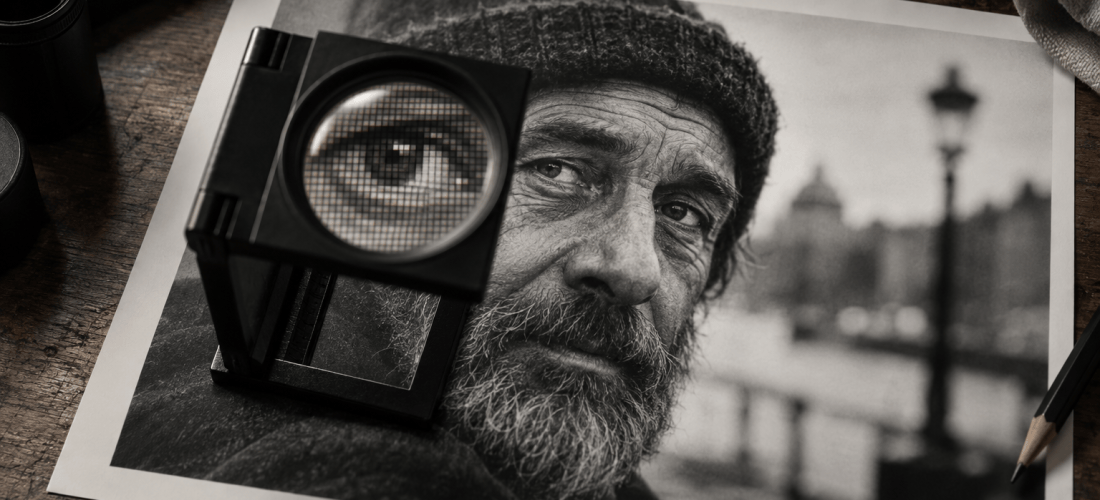
There are days when colour tells the story. There are others when it talks over everybody in the room.
A bright shirt, an advertising board, a red motorcycle parked behind someone’s shoulder. Each demands attention, whether it deserves it or not. Black and white changes that arrangement. The eye begins to follow light, expression, gesture and the relationship between a person and the space around them.
That is where the Nikon D700 still earns its keep.
I have no interest in pretending that an old camera possesses some mysterious ingredient unavailable to a newer one. The D700 does not make a photograph meaningful. But it is a camera I can settle into, and familiarity matters when the subject is a person whose expression might change before I have finished thinking.
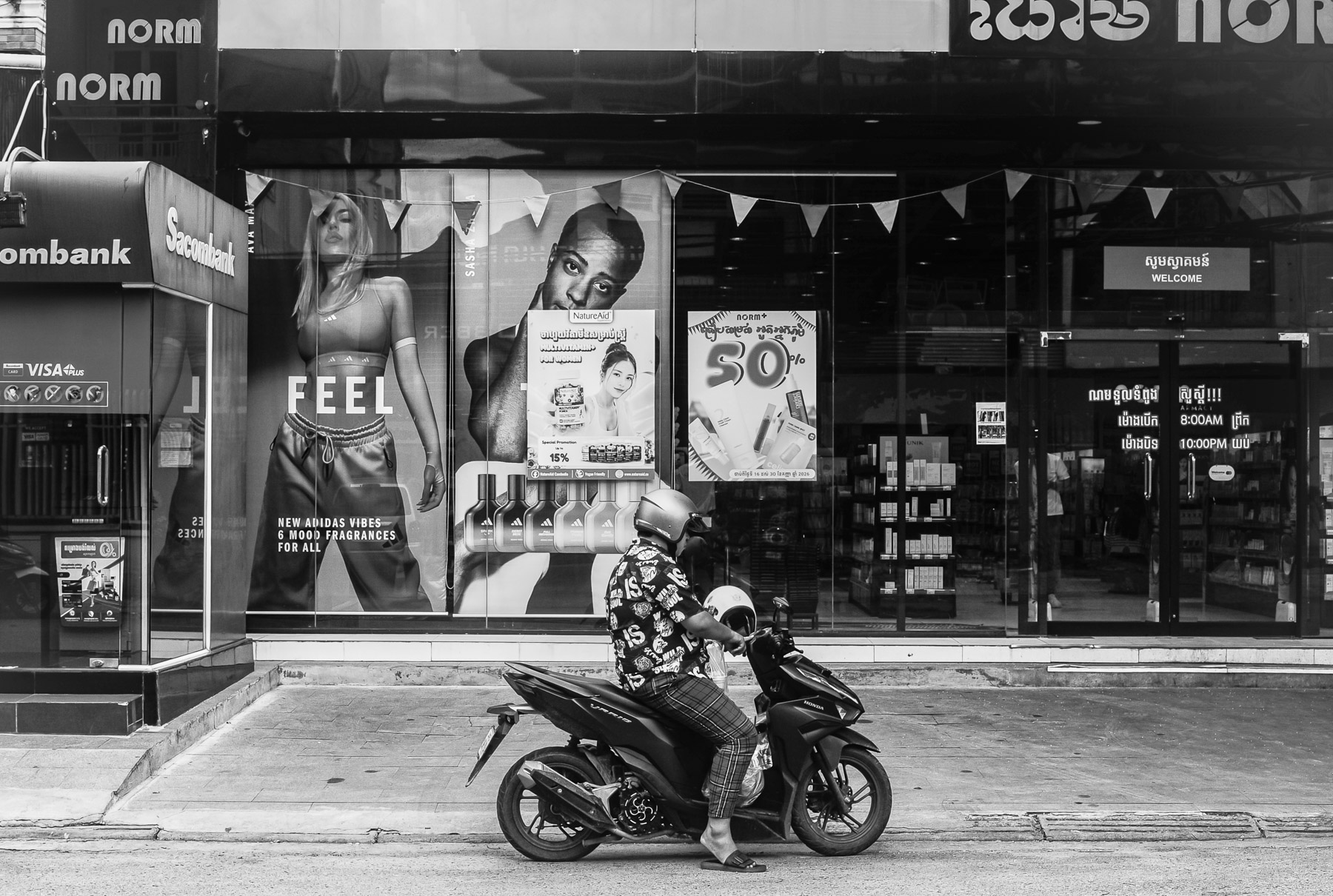
For monochrome, that confidence is useful. It leaves me free to look.
The practical beginning is straightforward: in the shooting menu, choose Set Picture Control, then Monochrome. The important decision comes alongside it: JPEG, NEF raw, or both.
A monochrome JPEG has its black-and-white appearance baked in. A NEF retains the colour information while the camera displays a monochrome preview. Shooting raw therefore lets me judge the picture in black and white on the rear screen while keeping control over the eventual conversion. Raw plus JPEG gives me both an immediate monochrome photograph and a file I can interpret more carefully later.
The D700’s optical viewfinder still shows the world in colour. Changing Picture Control does not change the view through the glass. The work of imagining the photograph remains mine.
And that work begins before pressing the shutter.
A red shirt against green foliage may stand out beautifully in colour, then become two surprisingly similar greys. Removing colour can simplify a scene, but it can also remove the separation that made the scene readable. I look for a face catching light against a darker doorway, a pale hand resting on dark fabric, or a figure crossing a patch of sun.
Those relationships give monochrome its structure.
On the streets of Phnom Penh, strong sunshine can produce striking arrangements of light and shade. It can also leave a face with empty eye sockets and a bright forehead. Hard light is not automatically good light. Sometimes moving a few feet, or waiting until someone reaches the edge of an awning, does more for the photograph than any adjustment afterwards.
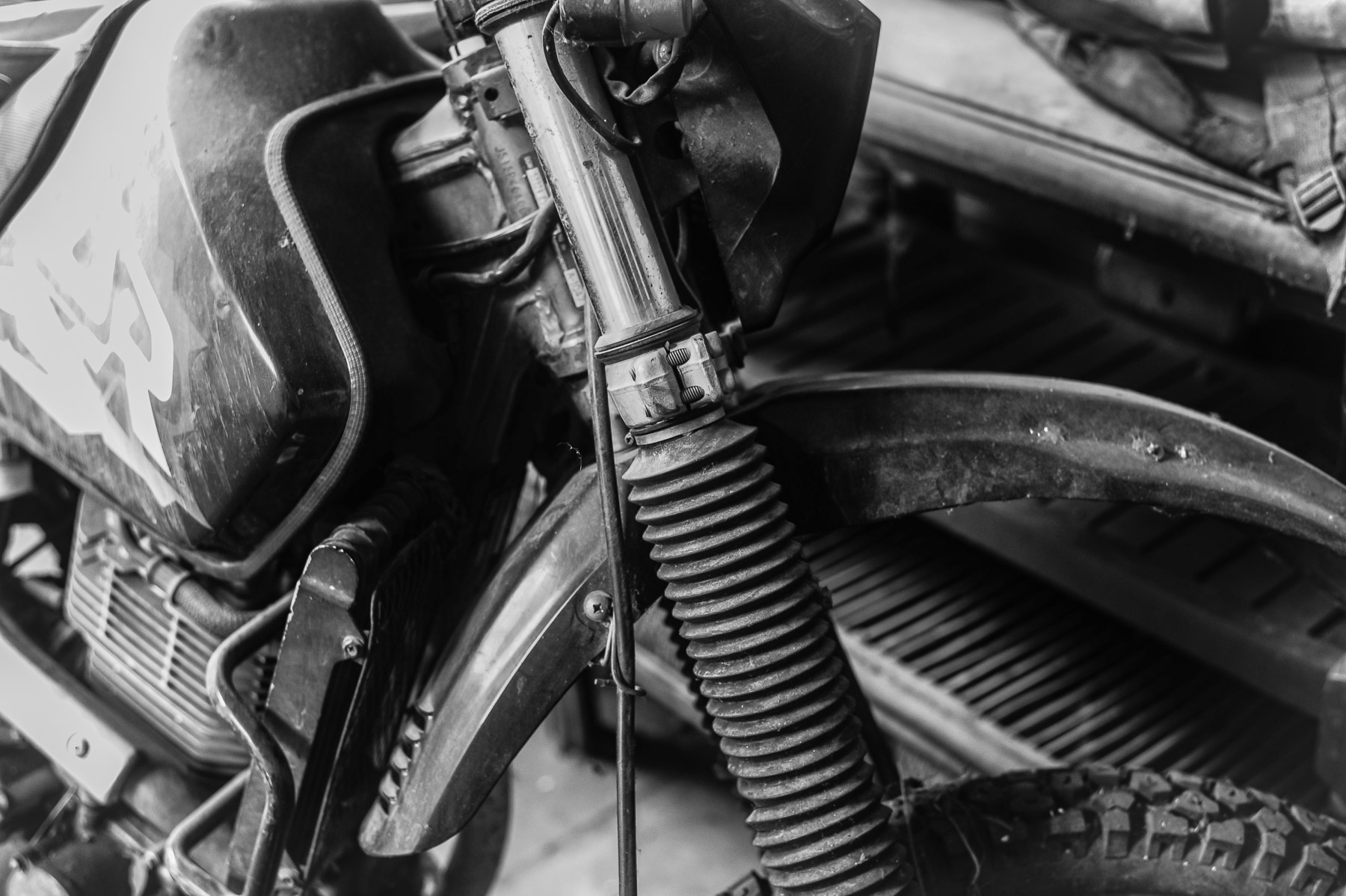
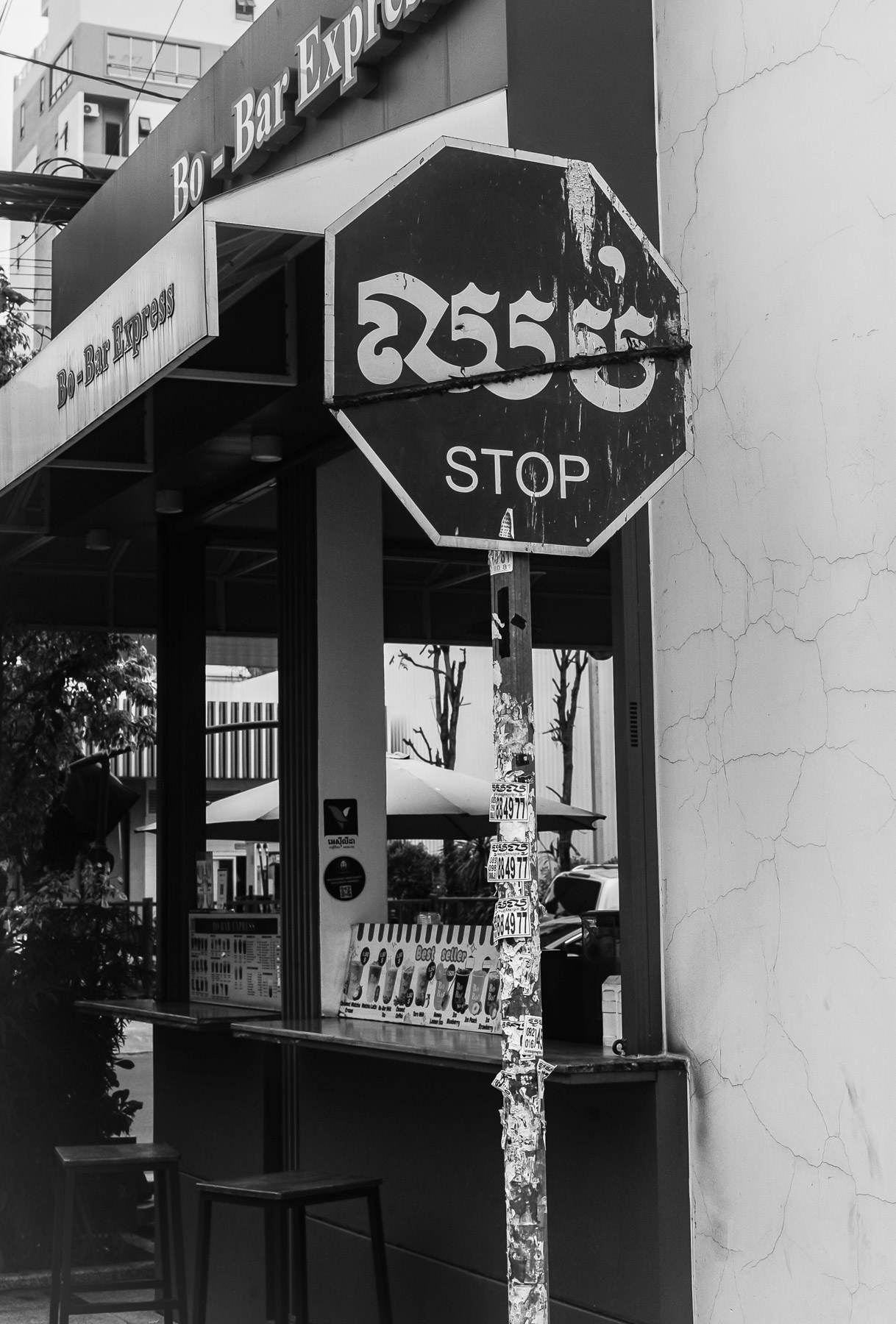
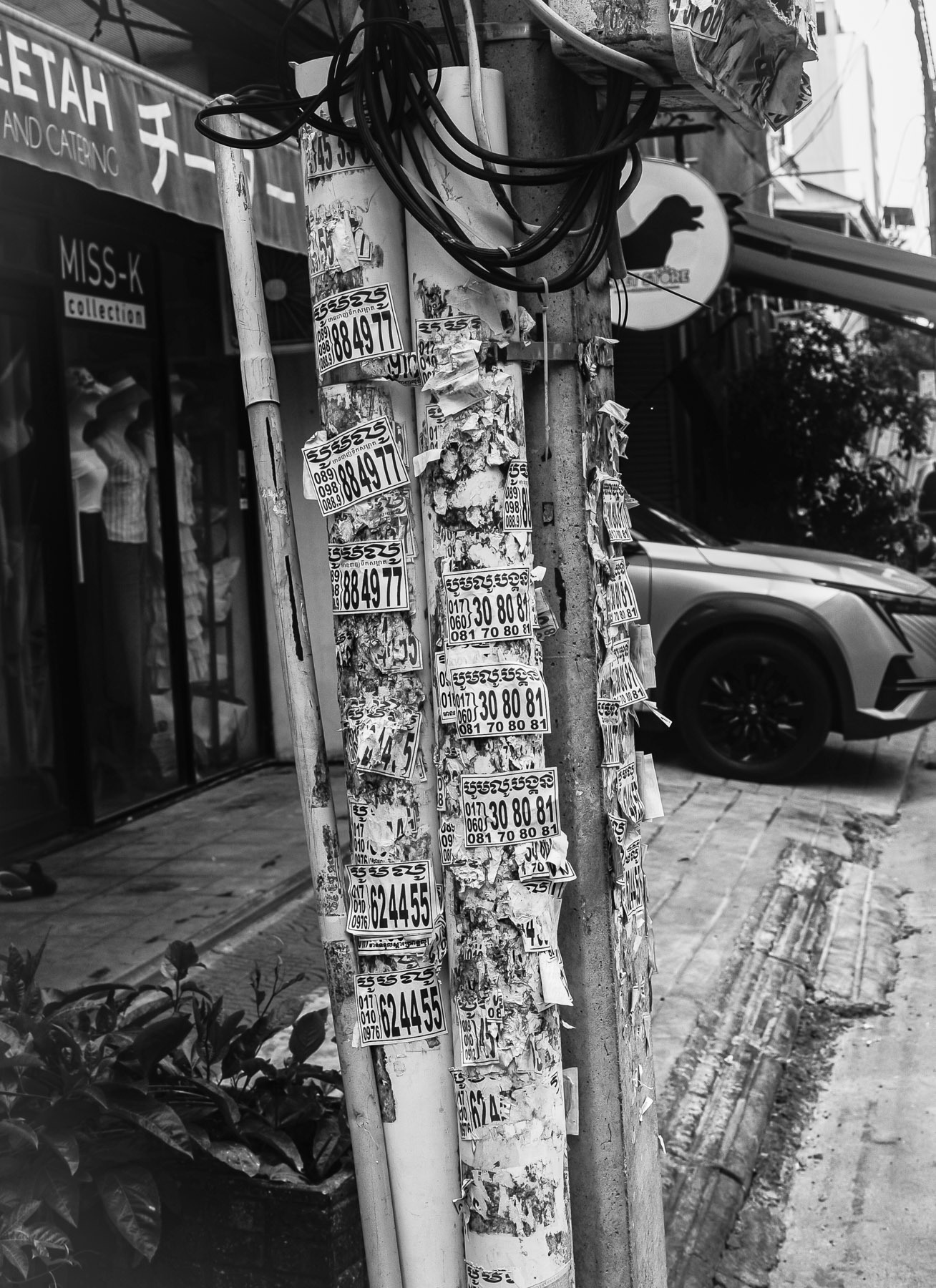
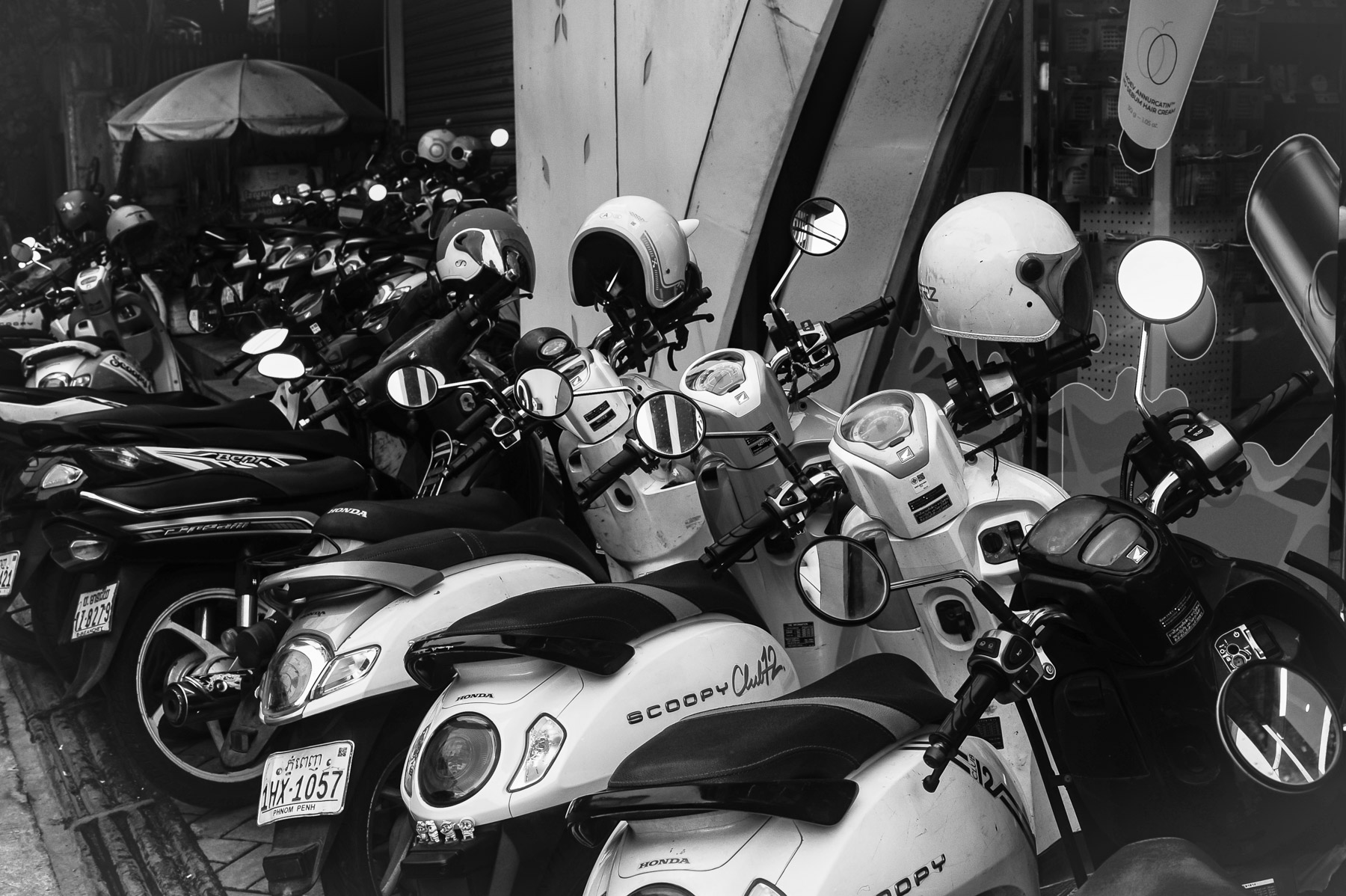
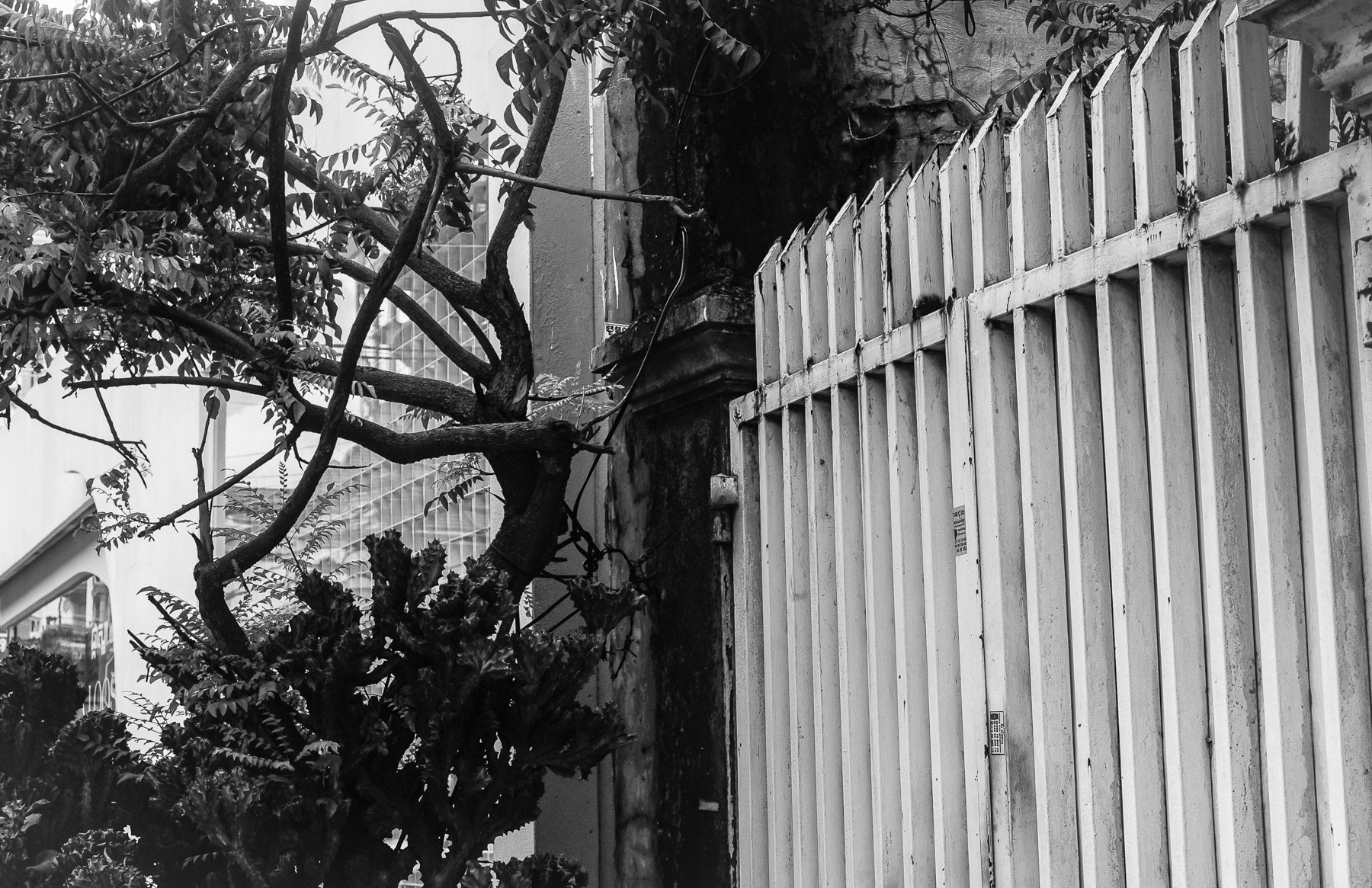
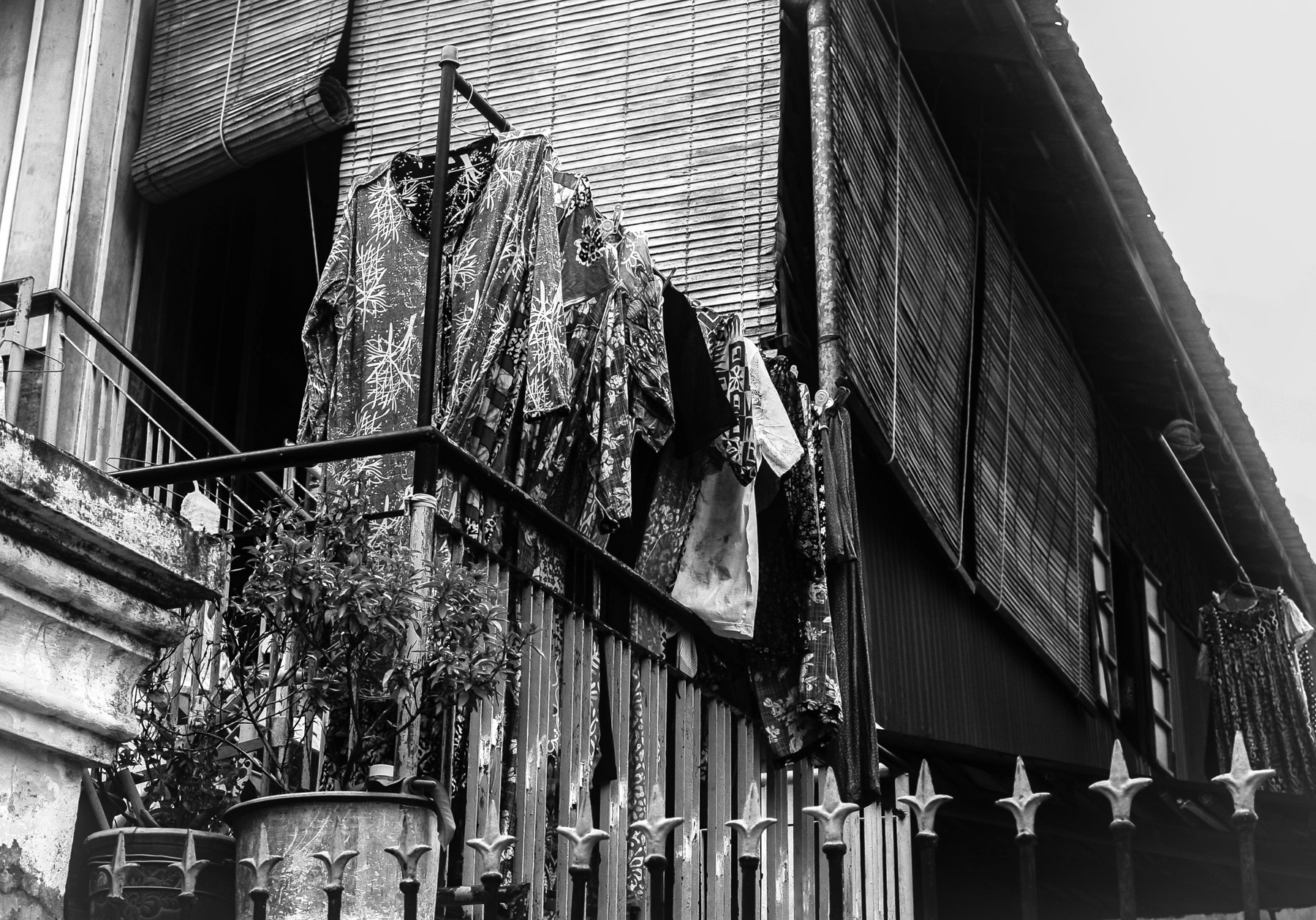
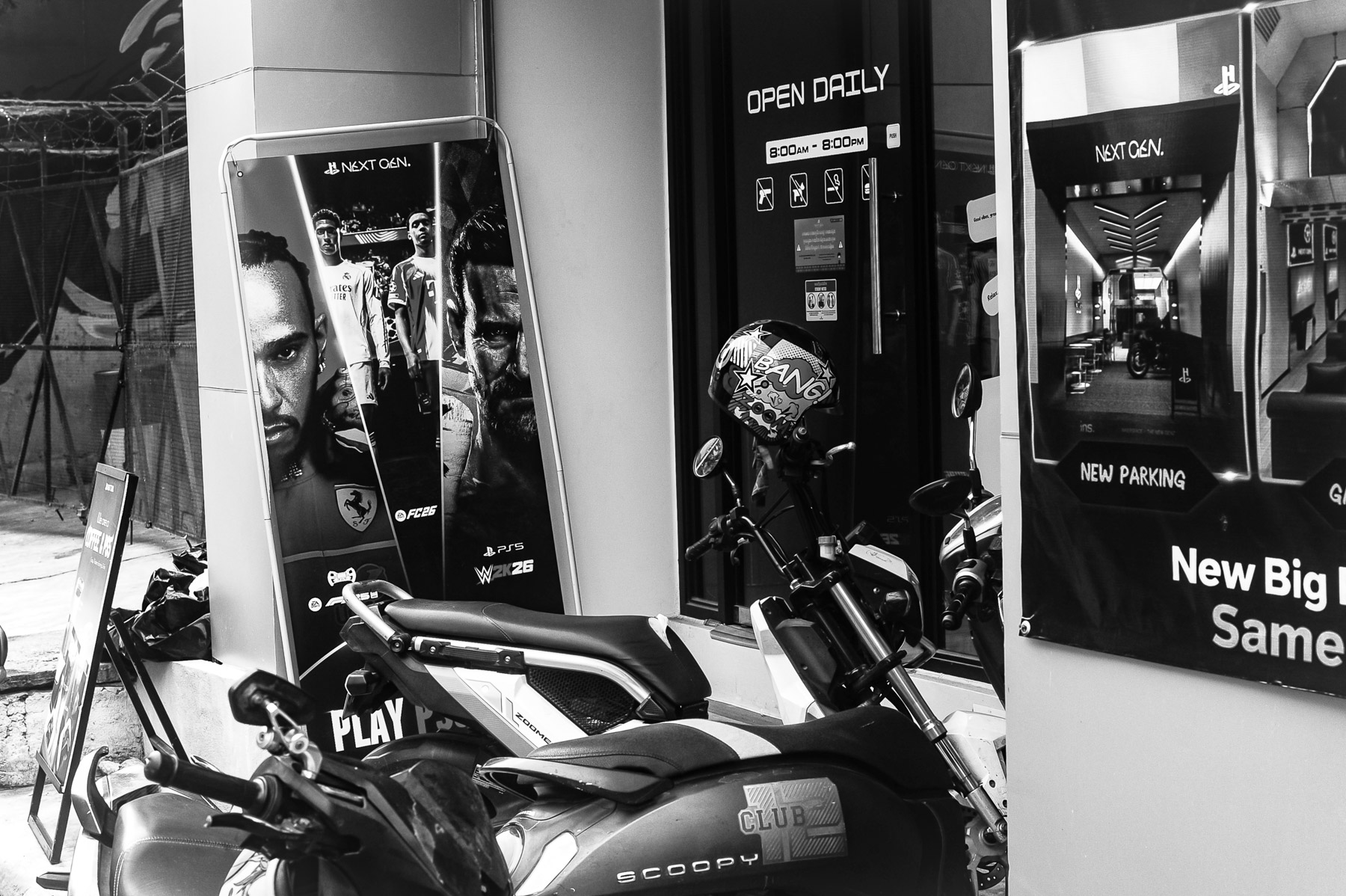
Open shade often gives me what I want: enough modelling to describe the face, enough detail to preserve the surroundings, and eyes I can actually see.
I would begin with a restrained Monochrome Picture Control. Moderate sharpening, ordinary contrast, no dramatic toning. The D700 offers simulated yellow, orange, red and green filter effects, which alter how colours are translated into tones. They are useful tools, but I would judge them against the subject rather than choose the strongest effect by habit.
A red filter effect may give a blue sky considerable weight. It may also change the rendering of skin and clothing in ways I do not want. Drama has consequences.
Exposure deserves the same restraint. Black and white does not excuse a burnt-out forehead or a white shirt stripped of all texture. I watch the highlights that matter and adjust exposure when necessary. There is no universal instruction to underexpose every monochrome photograph.
Equally, I do not sacrifice shutter speed merely to keep the ISO low. For people walking, around 1/250 second is a sensible starting point; quicker movement may require more. A little noise is usually easier to live with than an unintentionally blurred expression.
But digital noise is not film grain simply because the photograph has no colour. I do not need to invent a romantic explanation for it. If the picture works, the noise can stay. If it interferes, I deal with it.
At the computer, the raw file may initially appear in colour, depending on how the software interprets Nikon’s settings. That is normal. The monochrome preview was an interpretation, not the removal of the original colour data.
When converting, I pay particular attention to the midtones. Skin, worn clothing, pavement, walls: much of the human world lives between pure black and pure white. Crush those tones too aggressively and a photograph can acquire impact while losing description.
I want blacks with weight, highlights with life, and enough between them for a face to remain a face. A little local adjustment can guide the eye. It should not make every wrinkle look carved into stone.
Then, where possible, I print. Paper has a useful way of exposing processing that looked impressive on a bright screen.
What I enjoy about the D700 in black and white is the working relationship. I know the camera well enough to stop consulting it constantly. I can watch the person, the background, the light arriving across a shoulder.
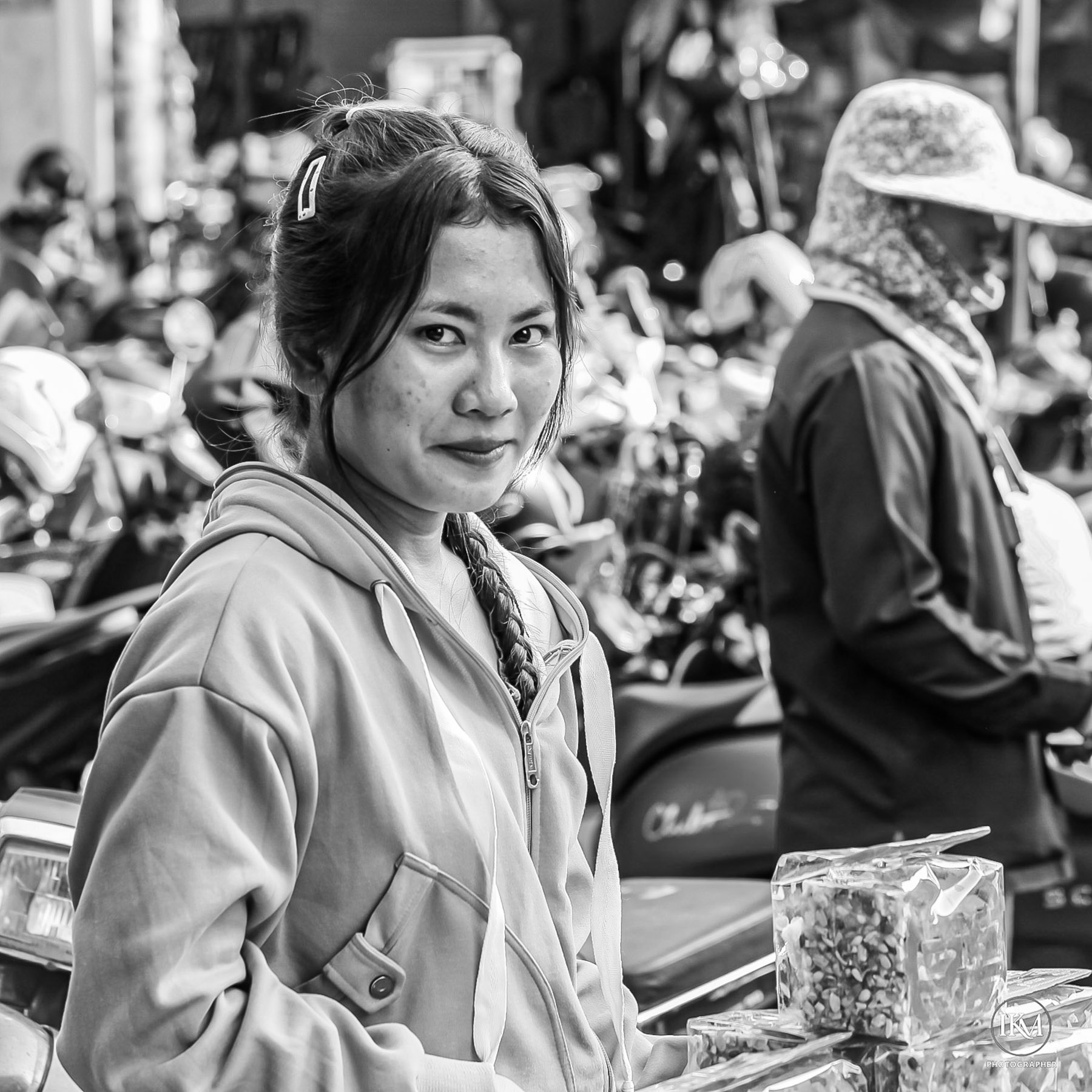
Monochrome asks me to be more deliberate about those things. It offers no guarantee of seriousness, honesty or emotional depth. A dull photograph remains dull without its colour.
But when the expression is there, when the light gives it shape and the surrounding world belongs in the frame, the D700 gives me everything I need.
The rest is paying attention.

