
An Old Photographer’s View
There are assignments where the photographer stands outside the story, observing it carefully and trying not to disturb its natural shape. Then there are days when standing outside feels inadequate.
Working alongside Kids International Dental Services belongs to the second category.
I am not a dentist. I cannot diagnose an abscess, repair a damaged tooth or calm a frightened child with the confidence of someone who has done it a thousand times. What I can do is make a record. I can watch, listen and photograph the human story unfolding around the clinical work.
That may sound like a modest contribution, but voluntary organisations also need witnesses. Treatment helps the child sitting in the chair. Photography can help explain why another team must return next year.
Kids International Dental Services—usually known simply as KIDS—grew from a volunteer dental mission in 2009. A mixed group of dental and non-dental volunteers returned home from that journey convinced that the experience should become something more permanent.
Their idea had two equally important parts. The first was straightforward: provide free dental care to children who would otherwise receive little or none. The second was more ambitious: introduce young dentists and dental students to humanitarian service early enough for it to become part of their professional lives.
It was never meant to be a one-off charitable adventure followed by a few photographs and a sentimental speech. The intention was to build a culture of returning, mentoring and taking responsibility.
The organisation became a registered American nonprofit based in San Francisco. Cambodia, Guatemala and the Philippines were among its original areas of work. KIDS later expanded its missions to Cape Verde, Haiti, South Africa, Mongolia and Morocco. The organisation says that its volunteers have treated several thousand children across eight countries while developing a network of mentors, many of whom first joined as students or newly qualified dentists. KIDS’ official history
There appears to have been volunteer work associated with the KIDS name before the organisation’s formal establishment in 2009. A report on a 2012 Cambodia mission said that some children at Phnom Penh organisations had already been receiving KIDS-supported care for several years. The safest reading is that the organised charity emerged from an earlier tradition of volunteer dental work rather than appearing fully formed on a particular morning.
That is often how these things begin. Not in a grand office with a strategic plan, but with a few tired people coming home from somewhere difficult and deciding they cannot simply forget what they have seen.
In Cambodia, the need is not difficult to find. Dental treatment remains unaffordable or inaccessible for many poor families, particularly outside the larger towns. A small cavity can be ignored because there is no money, no nearby clinic and sometimes little understanding of what it may become. The cavity grows. Pain arrives. Infection follows.
A child in dental pain does not sleep properly. He may struggle to eat, lose concentration at school and become frightened of a condition nobody around him can cure. What appears on a medical form as “tooth decay” can quietly interfere with his education, confidence and daily life.
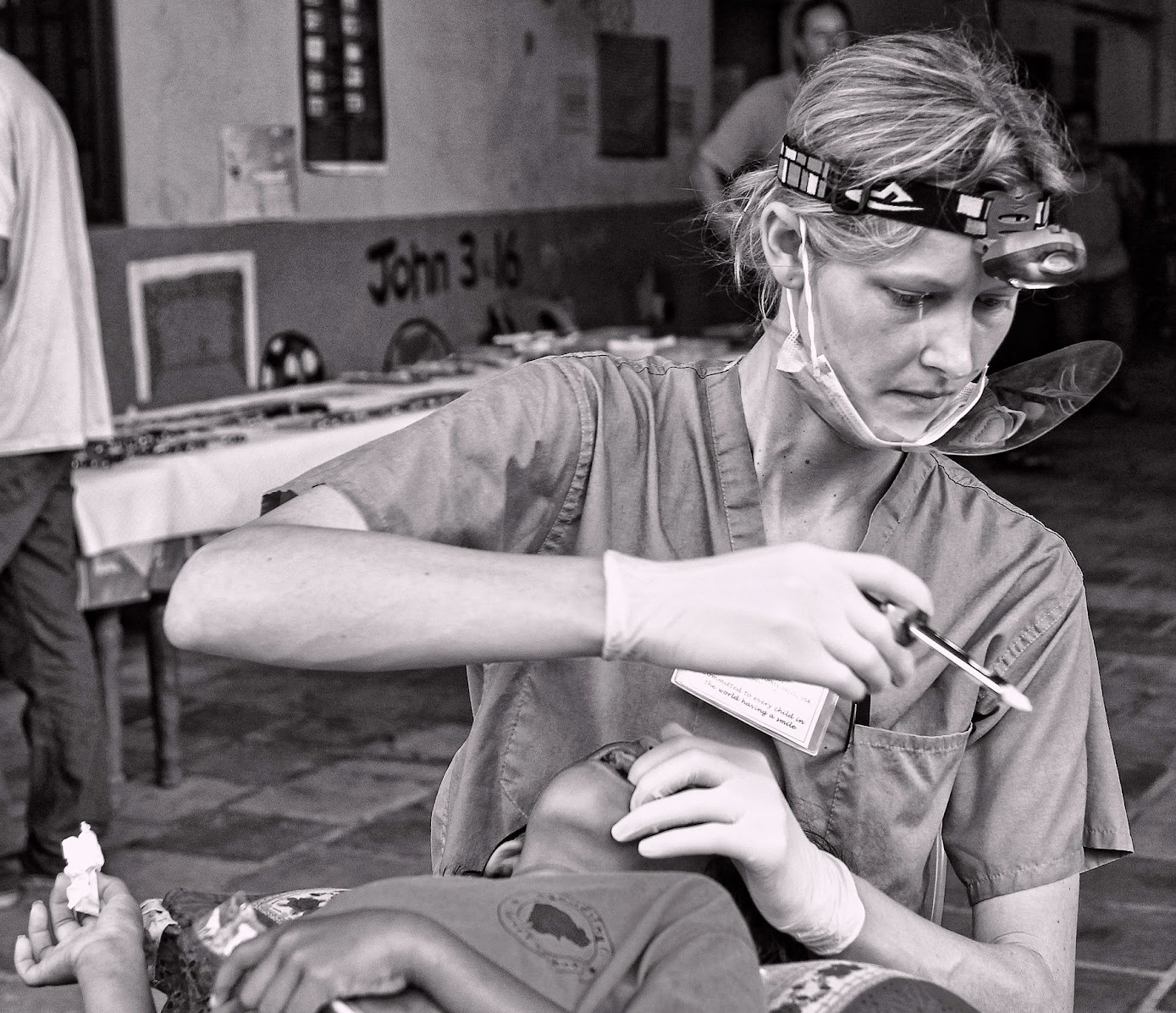
KIDS missions bring together dentists, hygienists, students, assistants and general volunteers. Classrooms, community buildings and other borrowed spaces may become temporary clinics. Equipment is unpacked, workstations assembled and children examined in numbers that would exhaust most ordinary practices.
During a 2012 mission, an international KIDS team treated children in Phnom Penh and in Prey Veng province. At a Buddhist monastery near the Vietnamese border, tables were adapted into makeshift dental units and the volunteers reportedly treated as many as 250 patients a day. The work included examinations, restorations, extractions and preventive care. Contemporary report on the 2012 mission
Those figures matter, but they are not what I remember most.
I remember the waiting.
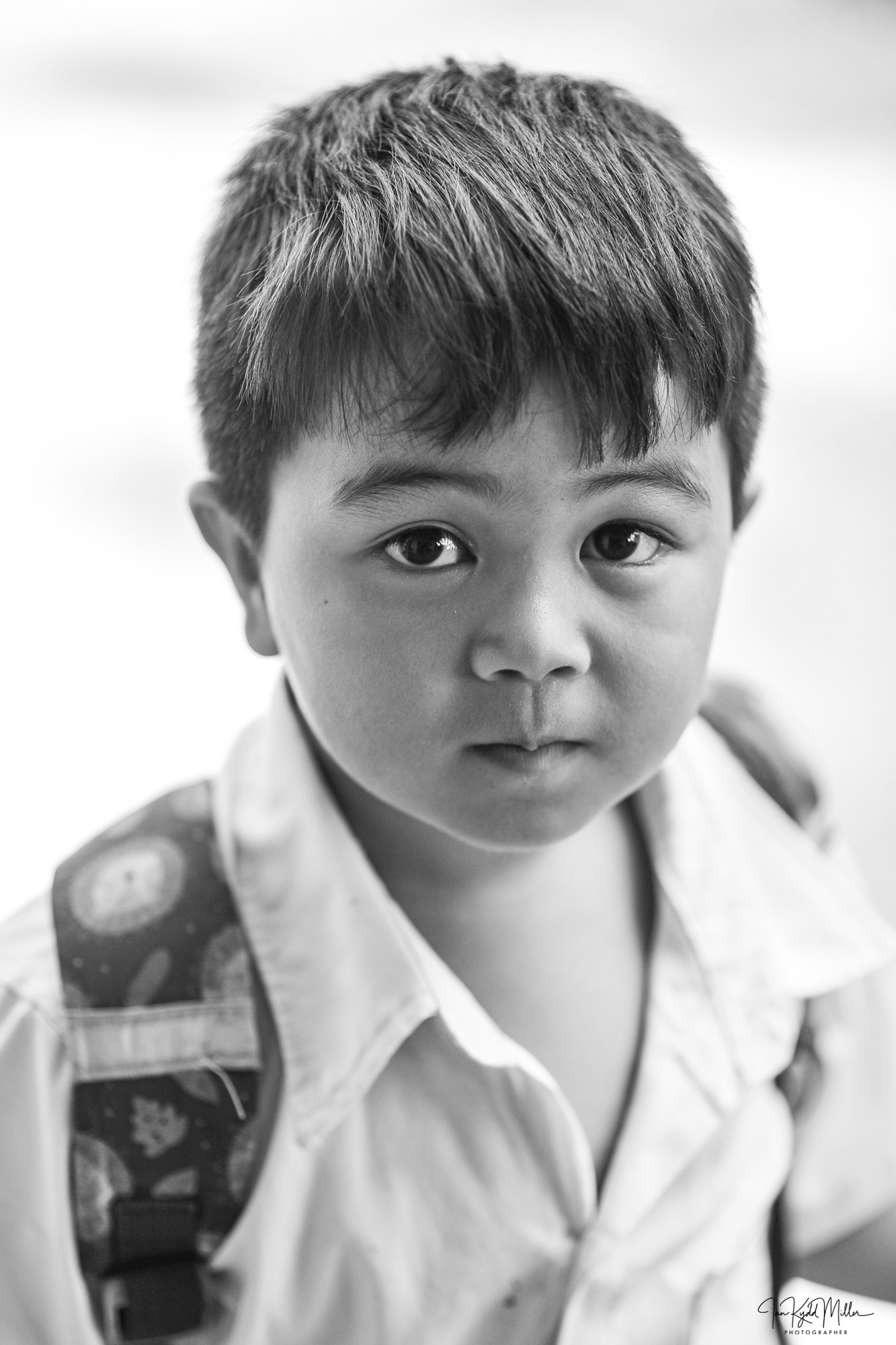
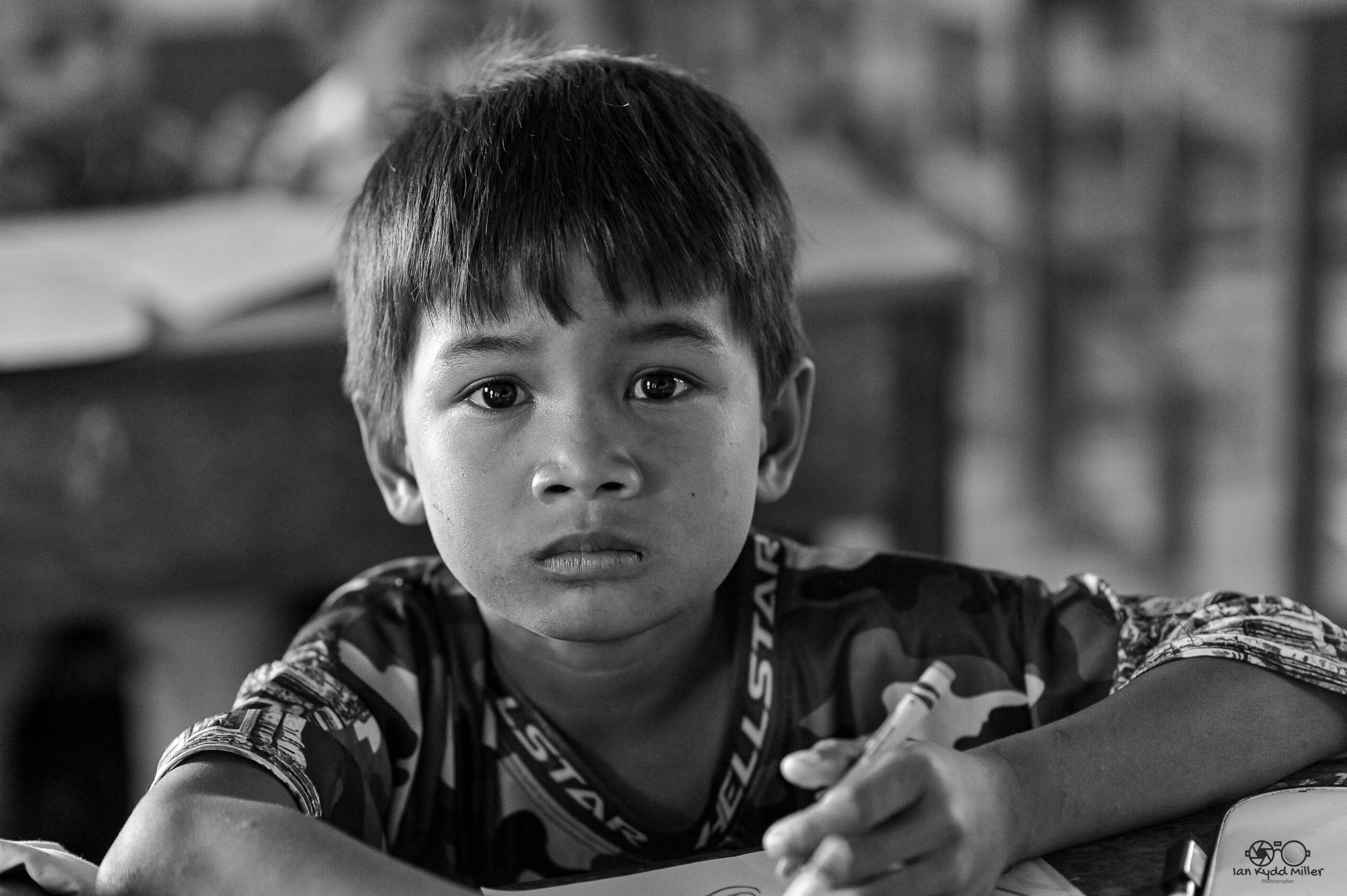
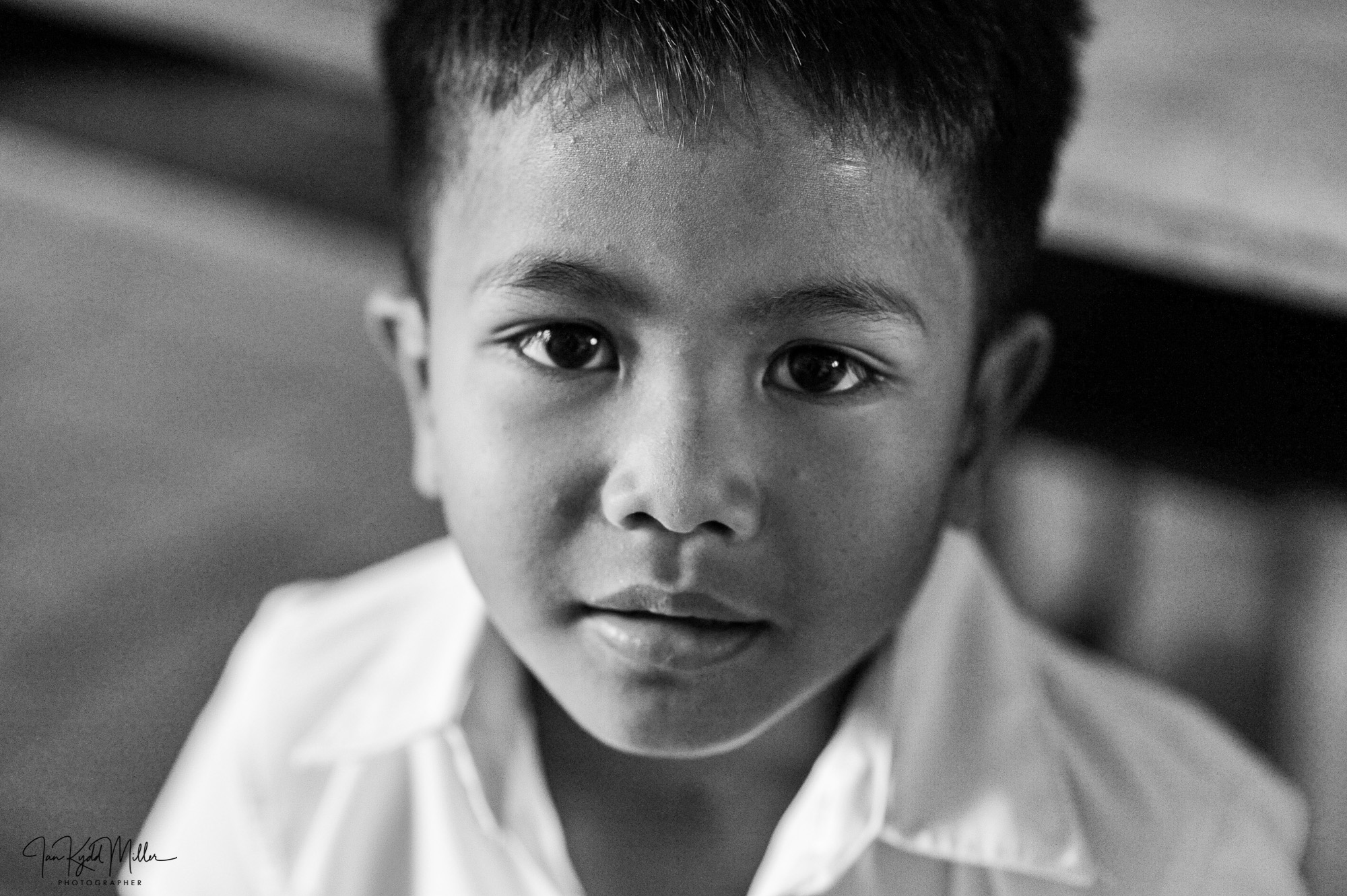
Children waiting for a dentist have a particular expression. It is part curiosity, part suspicion and part quiet calculation. They watch the child ahead of them. They study the gloves, masks and unfamiliar instruments. They listen for any sound that might confirm their worst expectations.
A photographer has to be careful here. A nervous child is not photographic material laid on for our benefit. Fear should not be exaggerated to manufacture an emotional picture. Poverty is not a studio backdrop, and voluntary work should never become a performance in which the visitor is made heroic and the local child reduced to a grateful recipient.
That is why I kept returning to the faces.
The first three photographs are not pictures of dentistry in the obvious sense. There are no instruments, white coats or open mouths. They show children waiting, looking and thinking. Each face restores individuality to a story that could easily become a parade of statistics.
The camera must not steal their dignity. If a picture depends upon humiliation, helplessness or the child’s inability to object, it is probably the wrong picture.
My role was to remain present without becoming the centre of attention. I watched the relationship between the volunteers and the children: a hand placed gently on a shoulder, an explanation delivered through an interpreter, a joke used to break the tension. The best volunteers did not treat the children as units passing through a system. They recognised that reassurance was part of the treatment.
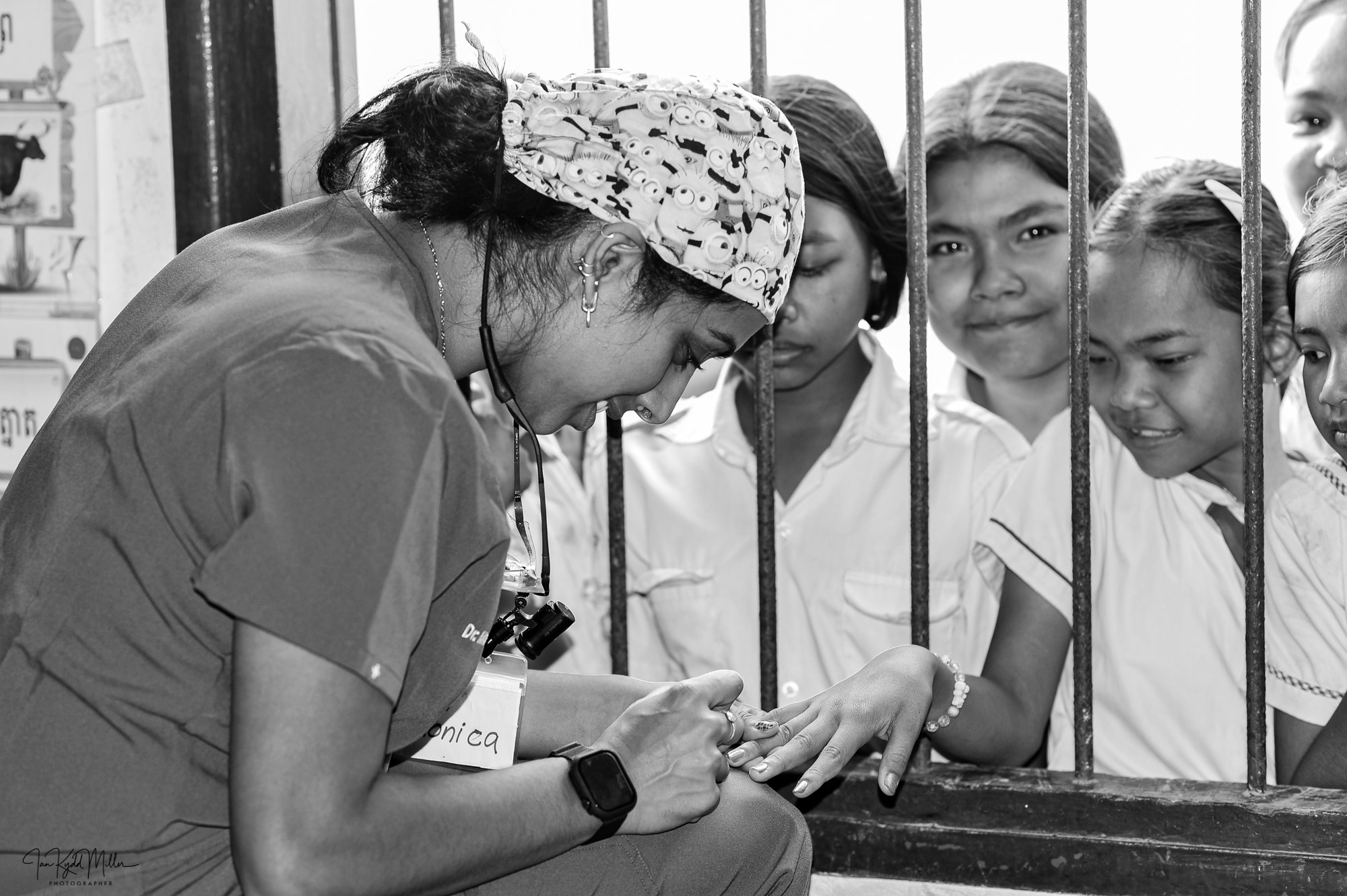
One of my favourite photographs from the day is not of dental treatment at all. A volunteer is attending to a girl’s fingernails while other pupils crowd behind the railings to watch. It is a wonderfully ordinary moment amid the organised seriousness of the mission.
That small scene says something about volunteering that official reports seldom capture. Humanitarian work is made from hundreds of gestures that do not appear in the final totals. Someone sorts supplies. Someone translates. Someone keeps the queue moving. Someone notices that a child is frightened. Someone kneels down and talks to her at eye level.
The organisation’s wider purpose reflects this. KIDS describes its goals as educating communities about oral health, empowering them to protect children with the resources available, inspiring volunteers and returning to maintain relationships. KIDS’ mission and goals
Treatment brings immediate relief, but education gives that treatment a chance to last. A filling or extraction may deal with today’s pain. Toothbrushes, fluoride, demonstrations and clear advice may prevent tomorrow’s.
We should still be honest about the limitations. A visiting dental team cannot repair an unequal health system. A week of treatment cannot reach every child, and follow-up care is difficult when families live far from a permanent clinic. Portable equipment, unfamiliar locations, language differences and large numbers of patients all complicate the work.
Volunteer dentistry is not a substitute for accessible local healthcare. At its best, however, it does something real: it relieves pain, treats infection, introduces preventive habits and builds relationships with local schools and organisations. Its value should neither be romanticised nor dismissed.
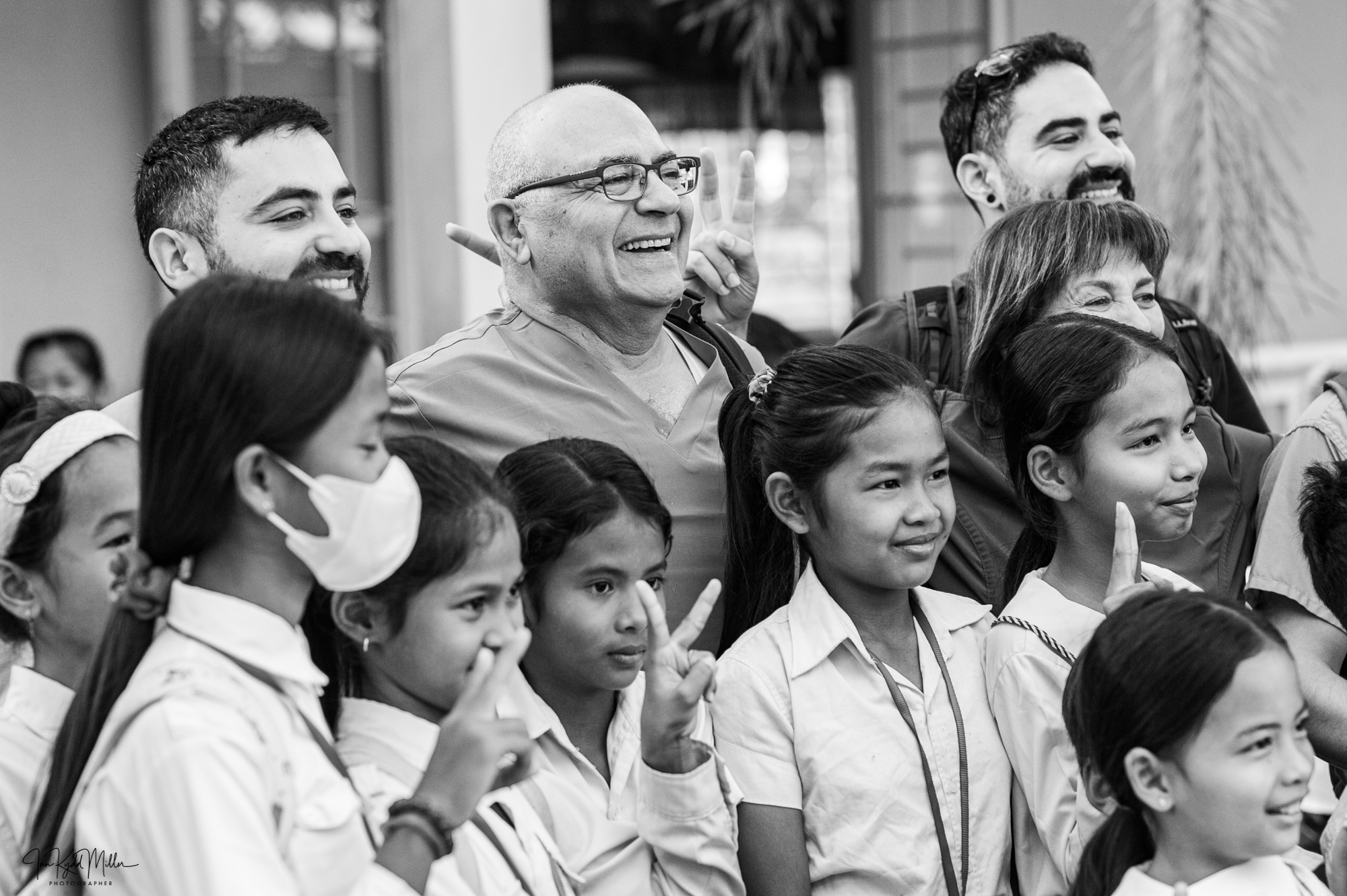
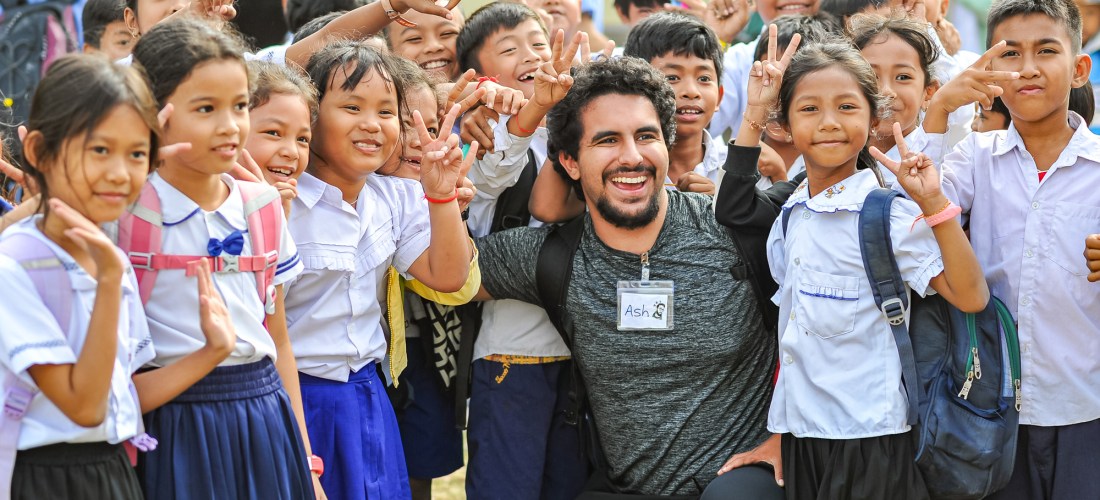
The group photograph carries a different mood. The nervousness has lifted. Volunteers and children are crowded together, laughing and raising their fingers for the camera. It would be easy to call it the happy ending, but documentary photography should be wary of endings that are too neat.
The children will return to homes where money remains short. Some will continue to have limited access to professional care. New children will arrive at school with untreated decay, and others will develop problems after the volunteers have gone.
The photograph does not prove that everything has been fixed. It records a moment when something useful was done.
As an old photographer, I have become suspicious of pictures that congratulate the photographer. The camera can persuade us that being present is the same as being helpful. It is not. We can make a handsome image of suffering, accept the compliments and leave the circumstances unchanged.
Photographing for an organisation such as KIDS must have a purpose beyond filling a portfolio. The pictures should help explain the need, preserve a record of the work and encourage practical support. They should acknowledge the volunteers without turning them into saviours. Above all, they should allow the children to remain children—not symbols of misery and not decorations for someone else’s generosity.
That is why I volunteered with my camera.
I photographed because memory is unreliable and good work can disappear unnoticed. I photographed because a child’s face can make distant need understandable without robbing that child of dignity. I photographed because donors and future volunteers ought to see where the equipment, money and long hours go.
But I also photographed for the children themselves.
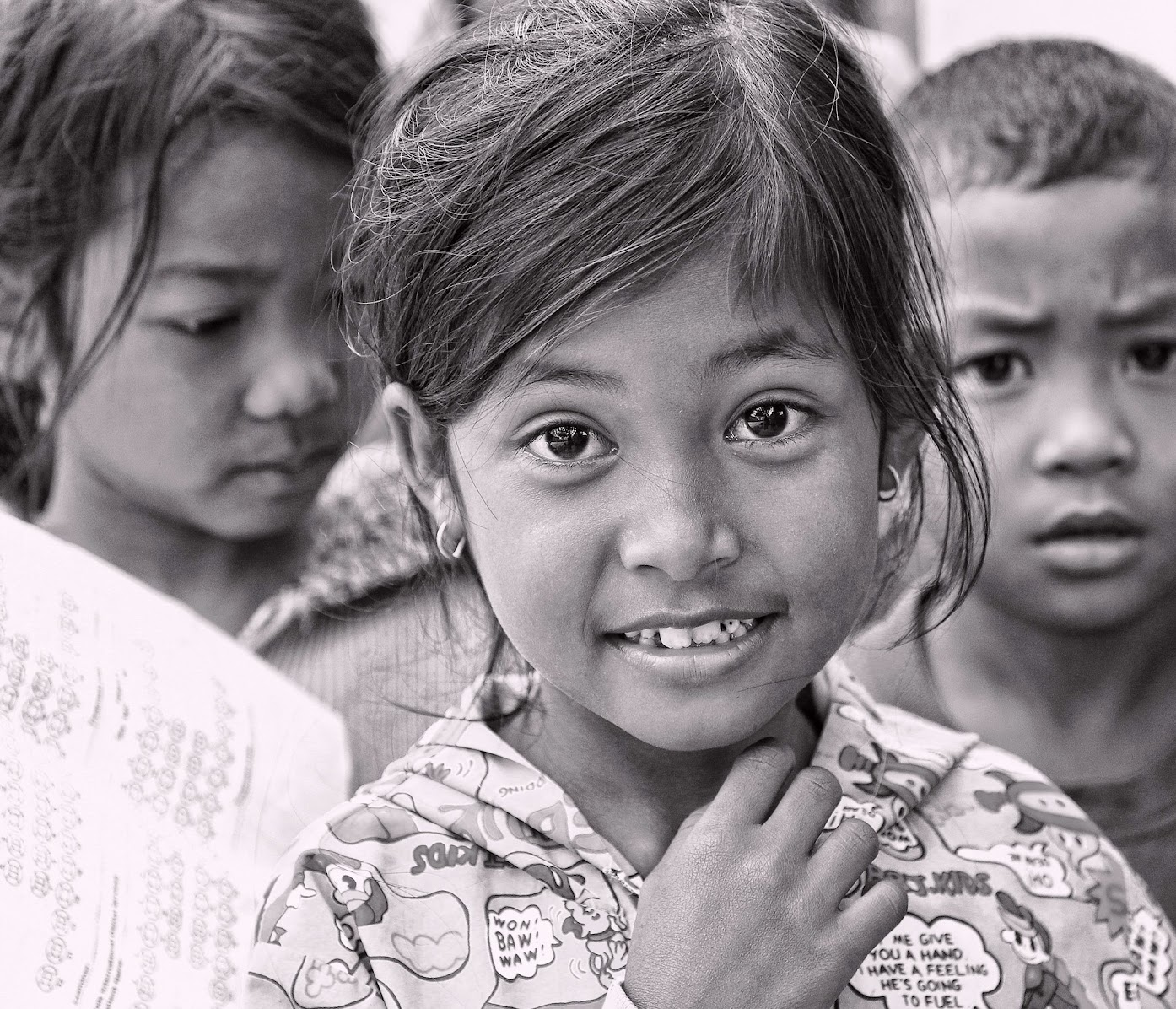
For a few hours, they were not an anonymous mass described as poor, disadvantaged or in need. They were individuals with serious eyes, untidy hair, school shirts, nervous expressions and sudden laughter. They were seen.
The dentists dealt with the pain in front of them. My responsibility was to ensure that, once the chairs had been folded and the temporary clinic dismantled, the people did not simply vanish with it.
That is the old photographer’s part in the job: not to claim the story, but to carry a truthful piece of it home.

