

A Short History of a Photojournalist Who Risked Everything to Show the Truth
Robert Capa’s name is synonymous with frontline photojournalism. He didn’t just photograph war—he lived it, crawled through it, and bore witness to its brutality with a camera in hand. His images are not just records of history; they are emotional testaments to the people caught in its crossfire. He was a legendary war photojournalist whose images captured the raw human cost of conflict.
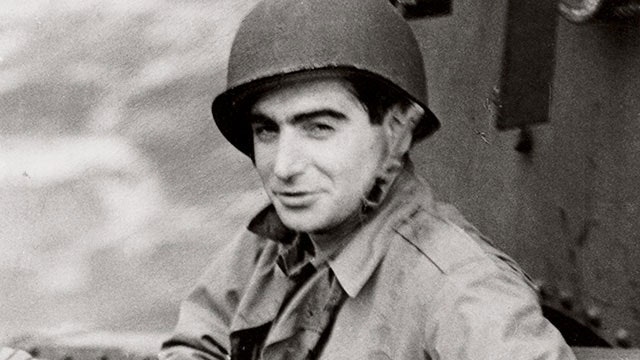
🧭 Early Life and Identity
Born October 22, 1913, in Budapest, Austria-Hungary, Capa fled political repression as a teenager and moved to Berlin. As Hitler rose to power, he relocated to Paris, where he adopted the pseudonym “Robert Capa” to sound more American and marketable. He partnered with fellow photojournalist Gerda Taro, and together they began documenting the Spanish Civil War.
📰 War Coverage and Iconic Work
Capa covered five major conflicts:
- Spanish Civil War (1936–1939): His photo The Falling Soldier became one of the most iconic war images ever taken.
- Second Sino-Japanese War
- World War II: He landed with American troops on D-Day, capturing blurry, visceral images under fire at Omaha Beach.
- 1948 Arab–Israeli War
- First Indochina War: Where he was tragically killed by a landmine in 1954 while on assignment in Vietnam.


His approach was simple: “If your pictures aren’t good enough, you’re not close enough.” He believed in proximity—not just physical, but emotional.
🖋 Magnum Photos and Legacy
In 1947, Capa co-founded Magnum Photos with Henri Cartier-Bresson, David Seymour, and others. Magnum became a cooperative agency that gave photographers control over their work—a revolutionary idea at the time.
Capa’s legacy includes:
- A new standard for human-centered war photography
- A commitment to ethical witnessing
- A body of work that continues to educate and move viewers worldwide
🧭 Final Thought
Robert Capa didn’t glorify war—he exposed it. His images are grainy, imperfect, and often chaotic, but they pulse with truth. He showed that photography could be more than documentation—it could be resistance, empathy, and remembrance.
 a world without pictures is like coffee without cream and sugar, bitter