

## Nikkor 85mm f/1.8D Lens Overview
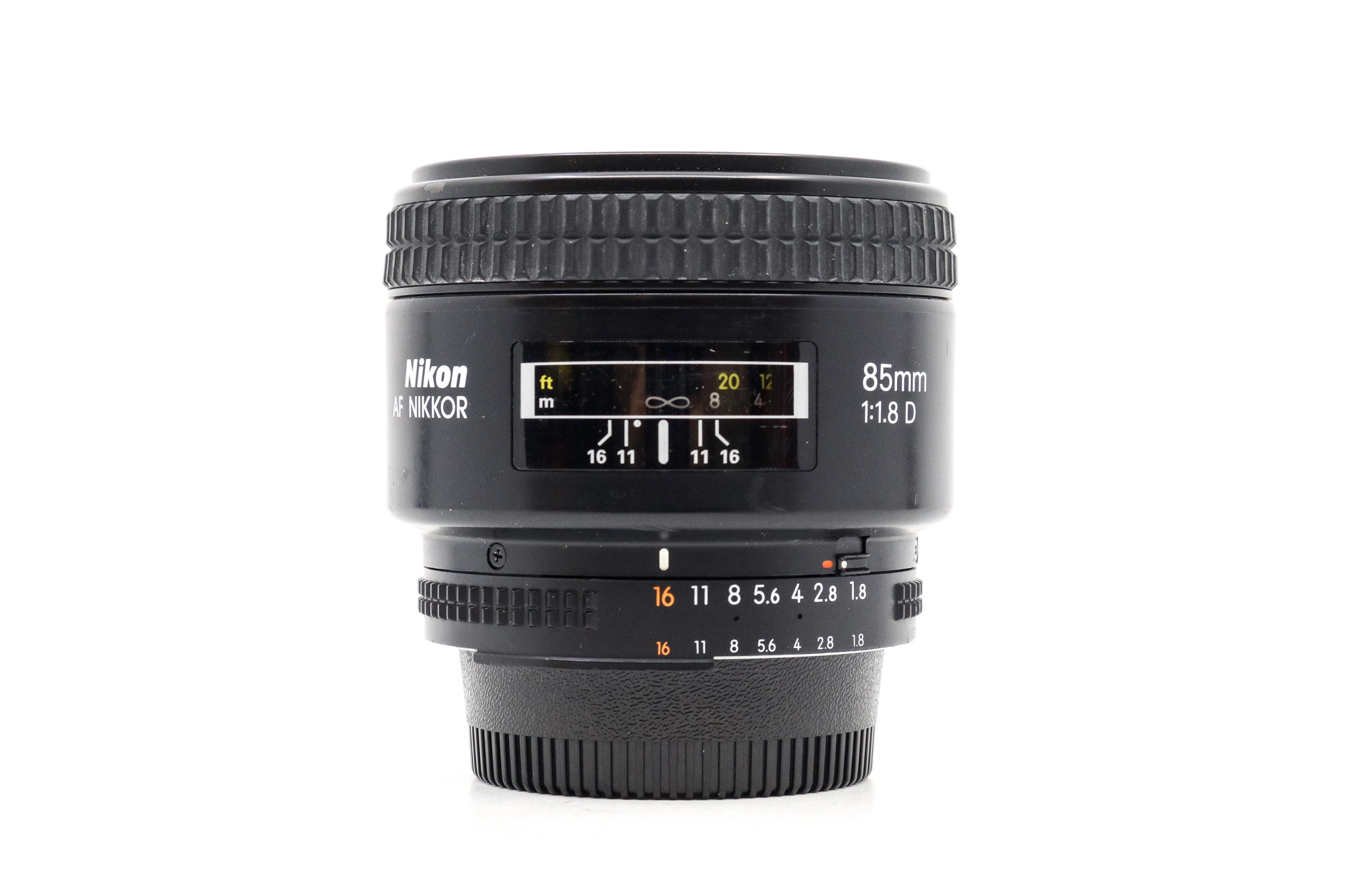
### Optical Quality:
1. **Sharpness:** The lens is highly regarded for its exceptional sharpness, particularly when stopped down to f/2.8 and beyond. Even at its widest aperture of f/1.8, it delivers impressive sharpness.

2. **Bokeh:** Equipped with a 9-blade diaphragm, the lens produces smooth and aesthetically pleasing bokeh, making it an excellent choice for portrait photography.

3. **Color and Contrast:** The lens offers excellent colour reproduction and contrast, resulting in vibrant and true-to-life images.

### Build and Design:
1. **Construction:** Featuring a robust build comprising a mix of metal and high-quality plastic components, the lens exudes durability and longevity.
2. **Size and Weight:** Relatively compact and lightweight at around 380 grams, the lens is easy to carry and handle, making it a practical choice for various shooting scenarios.
3. **Manual Focus:** The lens includes a manual focus ring that offers smooth and precise control, enabling photographers to make fine adjustments easily.
### Autofocus:
1. **Speed and Accuracy:** The lens’s autofocus system is known for being both fast and accurate, owing to its rear focusing design. However, it lacks the silent wave motor (SWM) present in newer lenses, which may result in slightly noisier operation.

2. **Compatibility:** Compatible with a wide range of Nikon cameras, both film and digital, the lens may not autofocus on entry-level Nikon DSLRs lacking an in-body focus motor.
### Performance:
1. **Low Light Capability:** With a wide maximum aperture of f/1.8, the lens excels in low-light conditions, allowing for faster shutter speeds and lower ISO settings.
2. **Portraiture:** The 85mm focal length is ideal for portrait photography, offering a flattering perspective and excellent subject isolation.

### Conclusion:
The Nikkor 85mm f/1.8D is a versatile and high-performing lens that has stood the test of time. Its combination of sharpness, bokeh quality, and robust build make it a favourite among photographers, particularly for portrait work. While lacking some modern features, its optical excellence and reliability continue to make it a valuable addition to any photographer’s gear collection.
 a world without pictures is like coffee without cream and sugar, bitter