Travel with a Camera

Uncategorized

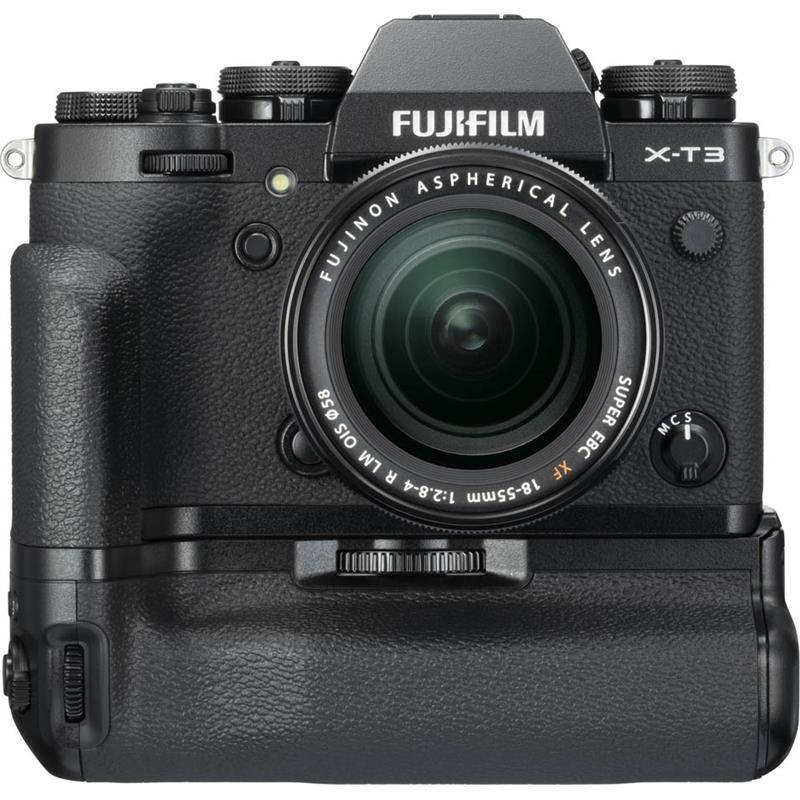
Travelling with a camera is one of the most rewarding and exciting experiences you can have. Whether you want to capture the beauty of nature, the culture of a new place, or the memories of your adventure, a camera is an essential tool for any traveller. But what is important when travelling with a camera? Here are some tips to help you make the most of your photography journey.


  • Choose the right camera for your needs. There are many types of cameras available, from compact point-and-shoots to DSLRs and mirrorless cameras. Each one has its own advantages and disadvantages, depending on your budget, skill level, and preferences. Think about what kind of photos you want to take, how much weight you can carry, and how much control you want over your settings.
  • Pack the right accessories. A camera alone is not enough to take great photos. You also need accessories to enhance your shooting experience and protect your gear. Some of the most useful additions are: a spare battery or three, memory cards, a tripod, a lens cleaning kit, a camera bag, and a filter. These items will help you avoid running out of power or space, stabilize your shots, keep your lens clean, store your camera safely, and improve your image quality.
  • Learn the basics of photography. No matter how good your camera is, it won’t do much if you don’t know how to use it properly. Before you go on your trip, take some time to learn the basics of photography, such as exposure, composition, lighting, and focus. You don’t have to be an expert, but knowing some simple rules and techniques will help you take better photos and avoid common mistakes.
  • Be respectful and responsible. Travelling with a camera gives you the opportunity to document and share your experiences with others, but it also comes with some responsibilities. You should always respect the people and places you photograph, and ask for permission before taking someone’s picture. You should also know the local laws and customs regarding photography, and avoid taking photos of sensitive or restricted areas. And of course, you should never harm or endanger yourself or others for the sake of a photo.

  • Have fun and experiment. The most important thing when travelling with a camera is to have fun and enjoy yourself. Don’t be afraid to try new things and experiment with different angles, perspectives, and settings. You never know what you might discover or create. Remember that photography is not only about capturing what you see but also about expressing what you feel.

Travelling with a camera is a wonderful way to explore the world and express yourself creatively. By following these tips, you can make sure that your photography trip is a success and that you return home with amazing photos and memories.

Back button AF

cambodia, cameras, fujifilm, Lenses, opinons, thoughts, photography, pictures, public, street, Travel

Using the back button AF is a technique that allows you to focus on your subject without having to press the shutter button halfway. It involves assigning a different button on the back of your camera to activate the autofocus system, instead of using the shutter button. Normally, when you press the shutter button halfway, you activate the autofocus system and lock the focus on your subject. When you press it fully, you take the picture. However, if you move your camera after locking the focus, or if your subject moves, you may lose focus and end up with a blurry image. By using a separate button for focusing, you can avoid this problem and have more control over when and where to focus. This way, you can lock the focus on your subject and recompose the frame without losing focus. Using back button AF can be useful for situations where you want to have more control over the focus point, or when you are shooting moving subjects and want to track them continuously. Some of the benefits of using back button AF are:

  • You can avoid accidental refocusing when you press the shutter button fully.
  • You can switch between single and continuous autofocus modes without changing the settings on your camera.
  • You can prevent focus hunting when shooting in low light or low contrast scenes.
  • You can use manual focus and autofocus interchangeably without switching modes.

To use the back button AF, you need to assign a button on the back of your camera to activate the autofocus system. The exact procedure may vary depending on your camera model, but generally, you can find it in the custom functions menu. Once you have assigned the button, you need to disable the autofocus function from the shutter button. This way, the shutter button will only be used to take the picture, and the back button will be used to focus. To use the back button AF, you simply press and hold the back button to focus on your subject, and then release it when you have achieved focus. You can then recompose the frame and press the shutter button to take the picture.

Why do some photographers get noticed and others don’t.

cameras, fujifilm, homelessness, Lenses, opinons, thoughts, photography, printing, processing, public, street, Travel, voluntary

Why do some photographers get noticed and others don’t. What is the trick?

This is a question that many aspiring photographers ask themselves, and there is no easy answer. Photography is a creative field, and different people have different tastes and preferences. What appeals to one person may not appeal to another. However, there are some general tips that can help you improve your chances of getting noticed as a photographer.

  • Find your niche. Don’t try to copy what others are doing, but instead focus on what makes you unique and passionate. What kind of photography do you enjoy the most? What kind of stories do you want to tell with your images? What kind of style and mood do you want to create? By finding your niche, you can develop your own voice and vision as a photographer, and attract people who share your interests and values.
  • Be consistent. Once you find your niche, stick to it and be consistent in your work. This doesn’t mean you can’t experiment or try new things, but it does mean you should have a clear direction and purpose for your photography. Consistency helps you build your brand and reputation and also helps you grow as a photographer. People will recognize your work and trust your quality.
  • Be visible. If you want to get noticed, you need to put yourself out there and show your work to the world. There are many platforms and channels where you can showcase your photography, such as social media, websites, blogs, magazines, galleries, contests, etc. Choose the ones that suit your goals and audience, and be active and engaging. Share your work regularly, but also interact with other photographers and potential clients. Give feedback, ask for feedback, join communities, network, collaborate, etc. The more visible you are, the more opportunities you will have.
  • Be persistent. Getting noticed as a photographer is not easy, and it takes time and effort. You will face challenges, rejections, criticisms, and competition along the way. Don’t let that discourage you or stop you from pursuing your passion. Keep learning, improving, creating, and sharing your work. Keep trying new things and reaching out to new people. Keep believing in yourself and your vision. Eventually, you will find your audience and your success.

Too Much Gear.

Uncategorized

Ian Kydd Miller's avatara world without pictures is like coffee without cream and sugar, bitter

I definitely have too much gear but I can’t see myself getting rid of any any time soon. I am running three systems at the moment, Nikon, Fuji and Canon and I use them at different times and for different reasons as they all have their strong points. Most of my gear is not new, the last new lens I bought was a Vitrox 13mm f1.4 for Fuji.

Nikon D3s and a few lenses I bought recently for great prices used. I still enjoy using a DSLR, especially of this quality. Other Nikons I have and still use are the Nikon D2HS, and Nikon D1. I am definitely a hoarder.

The Canon 1D Mk IV has been my main work camera for the past 10 years and it has never put a foot wrong, always giving me the images I required, but like the Nikon D3s it heavy and you…

View original post 487 more words

Is being able to shoot manually a real requirement

cambodia, cameras, Lenses, opinons, thoughts, photography, pictures, street, Travel

Do I have to learn to shoot manually before I can consider myself a photographer? That’s like asking if I have to learn how to drive a stick before I can consider myself a driver. Sure, it might make you feel more in control and impress some people, but it’s not a requirement. There are plenty of amazing photographers who use auto mode and still capture stunning images. Manual mode is just a tool, not a badge of honour. It can help you in some situations, but it can also hinder you in others. The most important thing is to know your camera, your subject, and your vision. And to have fun, of course. Photography is supposed to be fun, not stressful. So don’t worry about what other people think or what mode you use. Just go out there and shoot!

One of the best ways to capture stunning portraits is to use the aperture priority mode on your camera. This mode allows you to adjust the depth of field, which is how much of the scene is in focus. By using a large aperture (a small f-number), you can create a shallow depth of field that blurs the background and makes the person stand out. This way, you can emphasize their facial features, expressions, and emotions. Aperture priority mode is great for people’s pictures because it lets you focus on the person without worrying about other settings. You can simply point and shoot, and let the camera do the rest. Aperture priority mode gives you more creative control and flexibility than auto mode and helps you achieve professional-looking results with ease. Whatever mode you use its is just a tool to help you get the picture you see.

The Fujifilm X100

cameras, Fujichrome, fujifilm, opinons, thoughts, photography, pictures, street, Travel

Back in September 2010, Fujifilm unveiled the prototype of its new flagship compact camera. The styling was reminiscent of an old rangefinder, while internally it was said to feature an APS-C-size sensor. This combination of classic looks and potential for DSLR-quality images was a surefire winner, and without knowing much more photo enthusiasts the world over needed one. Natural comparisons can be made between the Fuji FinePix X100 and the Leica X1, and even the M9, although it is also worth noting its features and performance against the recent spate of compact system cameras (CSCs), particularly the APS-C-format models from Samsung and Sony.

Aside from its looks, the Fuji FinePix X100 had plenty to please the photo enthusiast, from the Fujifilm-branded film effects to the hybrid viewfinder with the impressive-sounding, reverse-Galilean optical viewfinder, capable of either a full electronic or a standard optical view.

There is also the new combination of high-sensitivity CMOS sensor and EXR processor to consider that, with the fixed-focal-length lens, should be able to produce impressive results in terms of resolution, sensitivity and dynamic range.

The X100 is a popular camera model that offers high-quality images and a sleek design. However, some users have reported slow focusing problems with their X100 cameras, especially in low-light situations. This can be frustrating and affect the performance of the camera.

The main cause of the slow focusing problems is the contrast-detection autofocus system that the X100 uses. Contrast-detection autofocus works by measuring the contrast of the image on the sensor and adjusting the focus until the contrast is maximized. This method is accurate but slow, especially when there is not enough contrast in the scene. Contrast-detection autofocus also struggles with moving subjects, as it has to constantly refocus to keep up with the motion.

There are a few ways to fix the slow-focusing problems on the X100. One option is to use manual focus instead of autofocus. Manual focus allows you to adjust the focus manually using the focus ring on the lens or the focus lever on the back of the camera. Manual focus gives you more control and precision over the focus, but it also requires more skill and practice. You can use the focus peaking feature or the magnification feature to help you achieve sharp focus.

Another option is to use zone focusing instead of autofocus. Zone focusing is a technique where you pre-set the focus distance and aperture to cover a certain range of distances in front of the camera. For example, if you set the focus distance to 3 meters and the aperture to f/8, everything between 2 and 5 meters will be in focus. Zone focusing works well for street photography or situations where you don’t have time to adjust the focus for each shot. You can use the distance scale on the lens or on the screen to help you set the zone.

A third option is to update the firmware of your X100 camera. Firmware is the software that controls how your camera operates. Sometimes, firmware updates can improve the performance and functionality of your camera, including the autofocus speed and accuracy. You can check if there is a firmware update available for your X100 camera by visiting the official website of Fujifilm and following the instructions there.

The X100 is a great camera that can produce stunning images, but it also has some limitations that can affect its usability. By understanding what causes the slow focusing problems and how to fix them, you can enjoy your X100 camera more and take better photos.

If you’re looking for a camera that can fit in your pocket, take stunning photos, and make you look like a hipster, you might be tempted by the Fuji X100. This little gem has been around for a decade, and it still holds up as a great choice for enthusiasts and professionals alike. But don’t be fooled by its retro charm and simplicity. The X100 is not a camera for beginners. It has a fixed lens, a quirky autofocus system, and a steep learning curve. You’ll need to master the basics of exposure, composition, and manual controls before you can unleash its full potential. And even then, you might find yourself frustrated by its limitations and quirks. The X100 is not a camera that will hold your hand and do everything for you. It’s a camera that will challenge you, inspire you, and reward you with amazing images. But only if you’re willing to put in the work and embrace its flaws. So if you’re looking for a fun and easy way to snap some pictures, the X100 is not for you. But if you’re looking for a camera that will make you a better photographer, and make you laugh along the way, the X100 might be your perfect companion.

Nikon D3 still a great camera in 2023

cameras, opinons, thoughts, photography, street, Travel, war

The Nikon D3 was a game-changer – the first full-frame Nikon DSLR. Nikon dubbed its new sensor ‘FX-format’, a name that would continue into its mirrorless Z cameras. Designed for professionals, the D3 used the new EXPEED processor to deliver 9fps continuous shooting. The D3 also introduced live view mode, allowing photographers to see what the camera was seeing in real-time via the rear LCD screen.

The D3 was a workhorse camera, with a focus on speed – even at the time, the 12MP resolution was considered a bit low, but it helped the processor keep up with the action. The D3’s magnesium-alloy body is rated for an impressive 300,000 shutter actuations, so you can be more forgiving when assessing whether a used body is offering good value for money.

The Nikon D3 is a legendary camera that still holds up well in 2023. It has a full-frame sensor, a fast autofocus system, and a rugged body that can withstand harsh conditions. The Nikon D3 can capture stunning images with great dynamic range, colour accuracy, and low noise. It is also compatible with a wide range of lenses, from ultra-wide to telephoto. The Nikon D3 is a great choice for anyone who loves photography and wants to experience the joy of using a classic camera. Even in 2023, the Nikon D3 is a usable camera that can deliver amazing results.

If you’re wondering whether the Nikon D3 12 MP is too small to make good images, you might want to reconsider your priorities. The Nikon D3 is a 12MP beast that can capture stunning photos in any lighting condition, with its fast autofocus, high ISO performance, and rugged body. It’s not the size of the sensor that matters, it’s how you use it. And the Nikon D3 knows how to use it well. So don’t let the megapixel myth fool you into thinking that bigger is always better. The Nikon D3 is more than enough for most photographers, and it will make you laugh with joy when you see the results. Trust me, you won’t regret buying this camera. Unless you have tiny hands, then you might need a grip.

You can find examples with considerably fewer actuations for around 450 USD. Honestly, the Nikon D3 is an amazing camera to pick up for less than four hundred pounds, even though it may be old it is still a dream to use.

I just picked one up with less than 140,000 shutter count, for less than 340$ US from Japan

Fujifilm JPEGS are not just ordinary JPEGS, they are works of art!

film, Fujichrome, fujifilm, opinons, thoughts, photography, street, Travel

Fujifilm JPEGS are amazing! They have a unique look and feel that many photographers love. They are rich in colours, contrast and detail, and they capture the mood and atmosphere of the scene very well. For example, you can use the Classic Chrome film simulation to create a vintage and cinematic look, or the Velvia film simulation to enhance the vibrancy and saturation of your landscapes. Fujifilm JPEGS are so good because they use proprietary film simulations that emulate the characteristics of different types of film. These film simulations are based on decades of experience and research by Fujifilm, and they give the JPEGS a distinctive and artistic touch. Fujifilm JPEGS are also very versatile and customizable. You can adjust various settings such as sharpness, noise reduction, highlight tone, shadow tone, colour and white balance to fine-tune your JPEGS to your liking. You can also apply different film simulations to the same image to create different effects. For instance, you can switch from Provia to Acros to turn your colour image into a stunning black and white one, or from Astia to Eterna to change the mood from soft and gentle to dramatic and intense. Fujifilm JPEGS are a great option for those who want to save time and storage space, or who prefer to get their images right in the camera without much post-processing. They are also fun and inspiring to use, as they encourage you to experiment with different styles and moods. Fujifilm JPEGS are not just ordinary JPEGS, they are works of art!

I love the Fujifilm Provia film simulation so much! It gives me such vibrant and realistic colours in my photos. It’s my go-to choice for most situations. The only other film simulation that comes close is chrome, which has a nice contrast and saturation. But Provia is still my favourite by far!

The Fuji 27mm f2.8 (first version)

cambodia, cameras, Fujichrome, fujifilm, Lenses, opinons, thoughts, photography, pictures, street, Travel

If you are looking for a versatile and compact lens to pair with your X Pro3, you can’t go wrong with the Fujifilm 27mm f2.8. This lens is a gem for general and street photography, as it offers a fast aperture, sharp image quality, and a lightweight design. The 27mm focal length is equivalent to 41mm on a full-frame sensor, which is close to the classic 35mm field of view many photographers love. It allows you to capture many scenes, from landscapes to portraits, without distortion or cropping. The f2.8 aperture lets you shoot in low-light conditions and create beautiful bokeh effects. The lens also has a quick and silent autofocus system that works well with the X Pro3’s hybrid viewfinder. The best part is that the lens is so tiny and light that you can easily carry it around in your pocket or bag. It barely adds any bulk to the X Pro3’s sleek and retro body. The Fujifilm 27mm f2.8 is a great lens for anyone who wants to enjoy the simplicity and creativity of photography with the X Pro3.

I have owned it for quite a while but never really used the Fujifilm 27mm f2.8 lens until recently, and I have to say I’m blown away by its performance! It’s so compact and lightweight, yet it delivers sharp and crisp images with beautiful colours and contrast. It’s perfect for street photography, landscapes, and portraits. It has a fast autofocus and a smooth aperture ring that lets me control the depth of field easily. I love how it makes my camera look sleek and discreet, and how it fits in my pocket when I’m on the go. This lens is a gem and I’m so glad I finally gave it a chance!

Restricted on face book

cambodia, opinons, thoughts, photography, pictures, public, street

My account has been restricted on FB for 2 days for displaying this picture which they say goes against FB rules

How anyone could find this image to be offensive or sexual in any way is certainly beyond me.