As someone who carries both the Nikon D700 (12MP) and D810 (36MP) in the same bag, I’ve had the rare privilege of comparing resolution not in theory, but in lived experience. Here’s how they differ—and where they converge.
🧠 Resolution vs Resilience
D810 (36MP): Offers incredible detail and cropping flexibility. Ideal for large prints, archival work, and scenes where texture and nuance matter—like surgical documentation or architectural studies.
D700 (12MP): Delivers robust files with beautiful tonality and low-light performance. Perfect for street work, portraits, and moments where speed and emotional clarity take precedence over pixel count.
🖼️ Print Reality
Both cameras produce exhibition-worthy prints up to A3 with ease. Beyond that, the D810 holds up better under scrutiny—but the D700’s files often feel more “finished” straight out of camera.
🧘 Teaching Moment
I use the D700 to model restraint and intentional framing. With fewer pixels to “fix” later, students learn to trust their eye and commit to the moment.
The D810 becomes a lesson in creative flexibility—how resolution can serve story, not ego.
🧳 Archival Insight
Revisiting old D700 files reminds me: emotion trumps resolution. Some of my most resonant images were shot at 12MP, yet they carry more weight than any technical upgrade ever could.
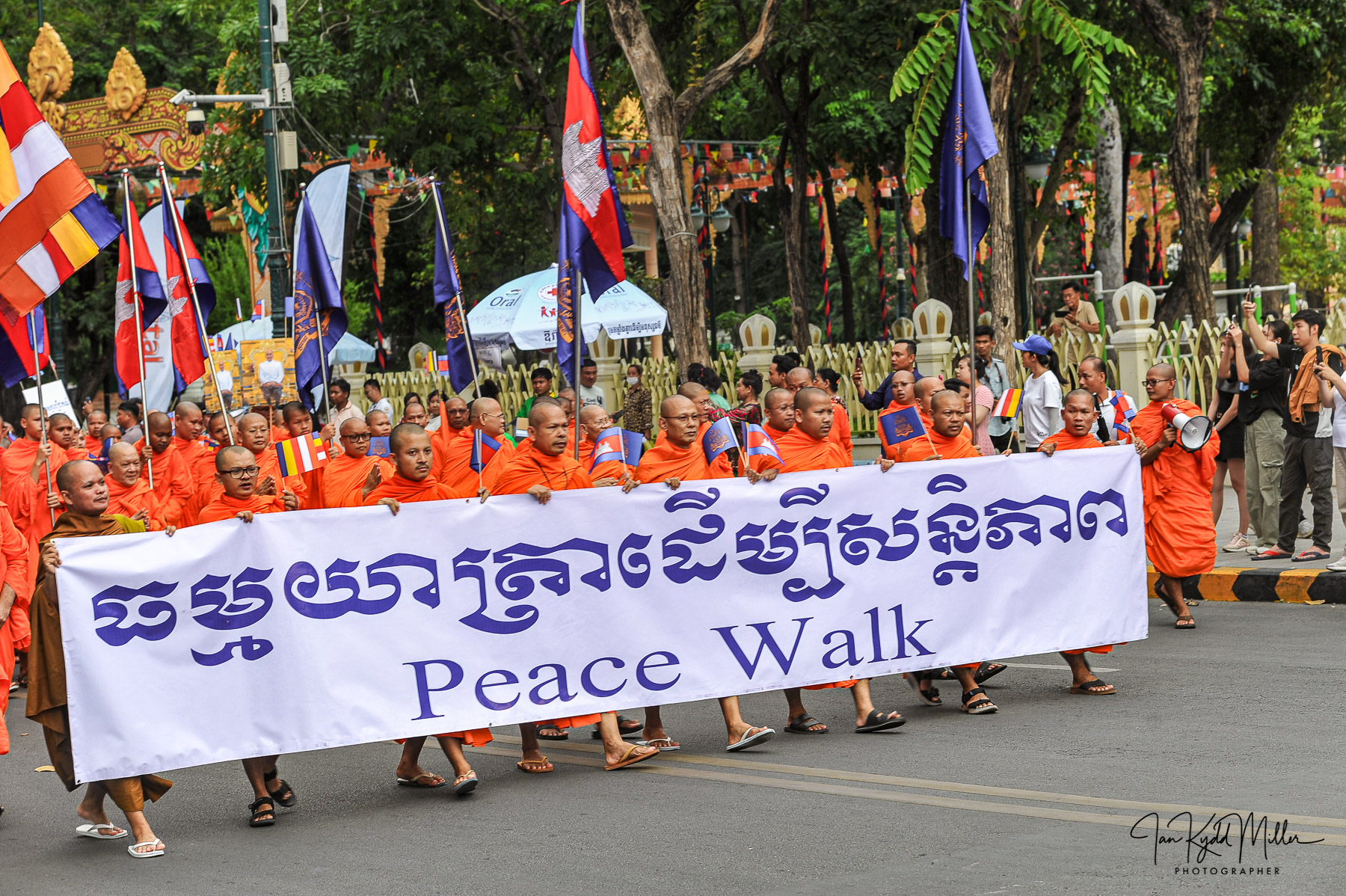
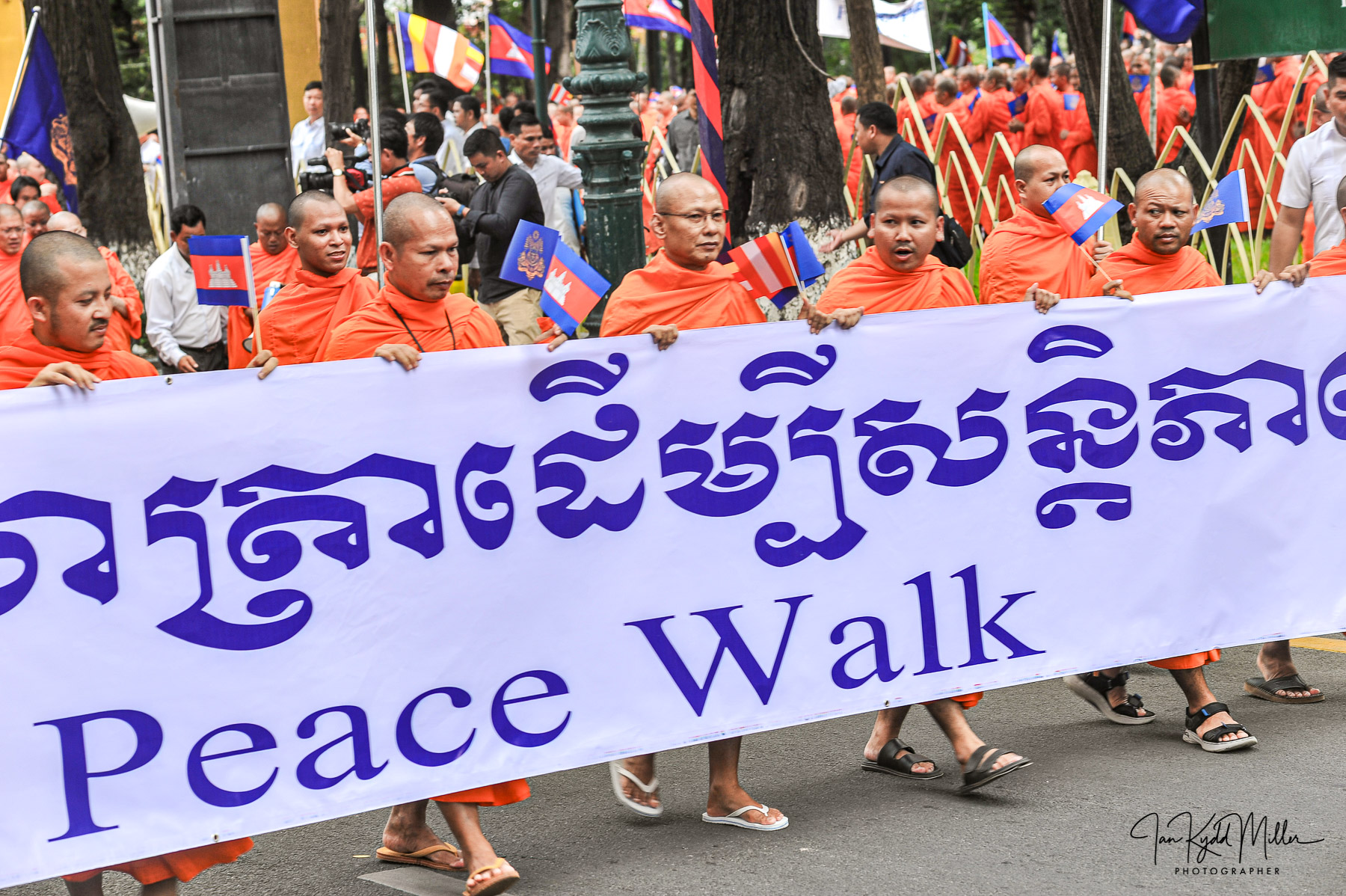
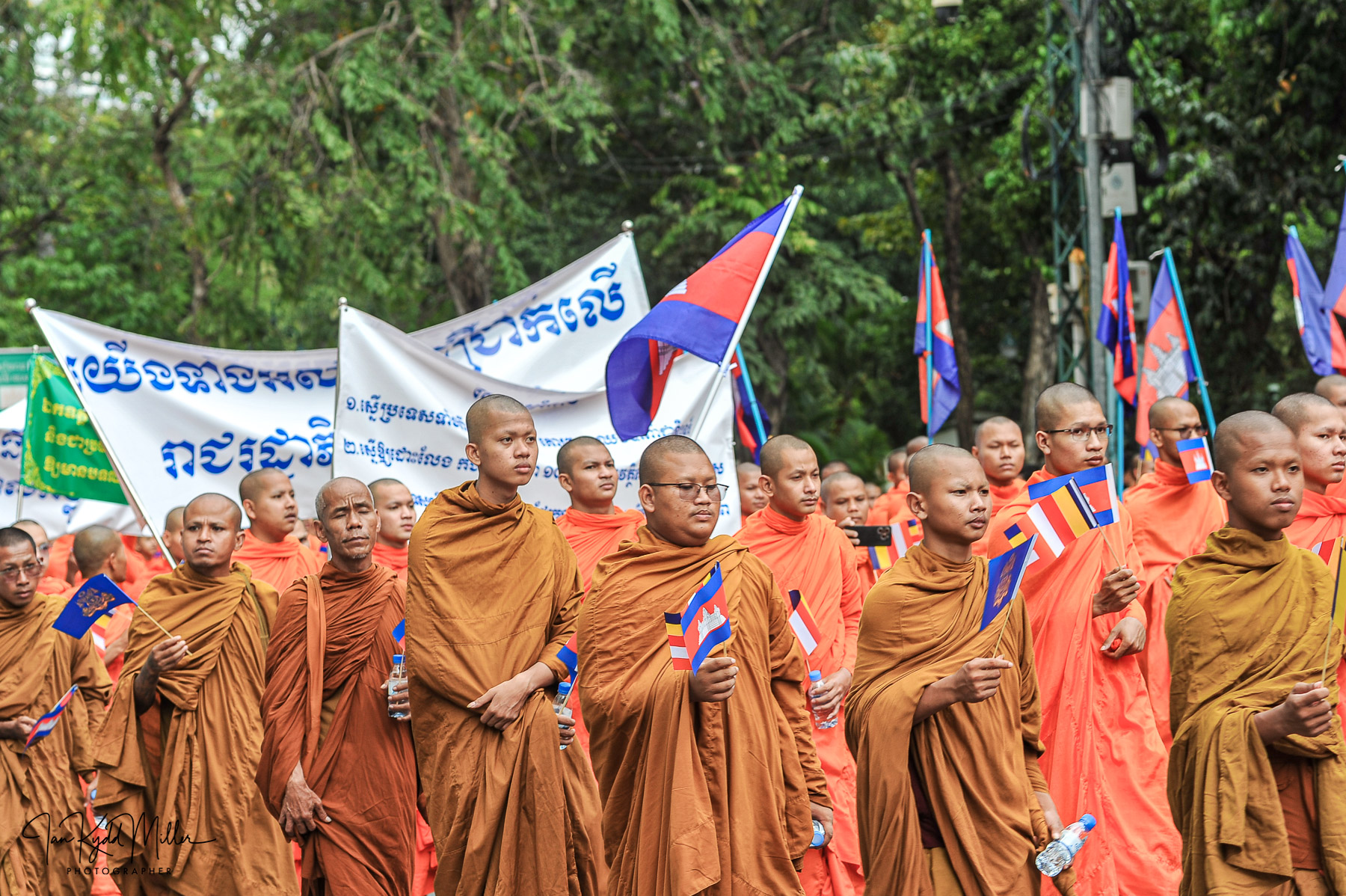
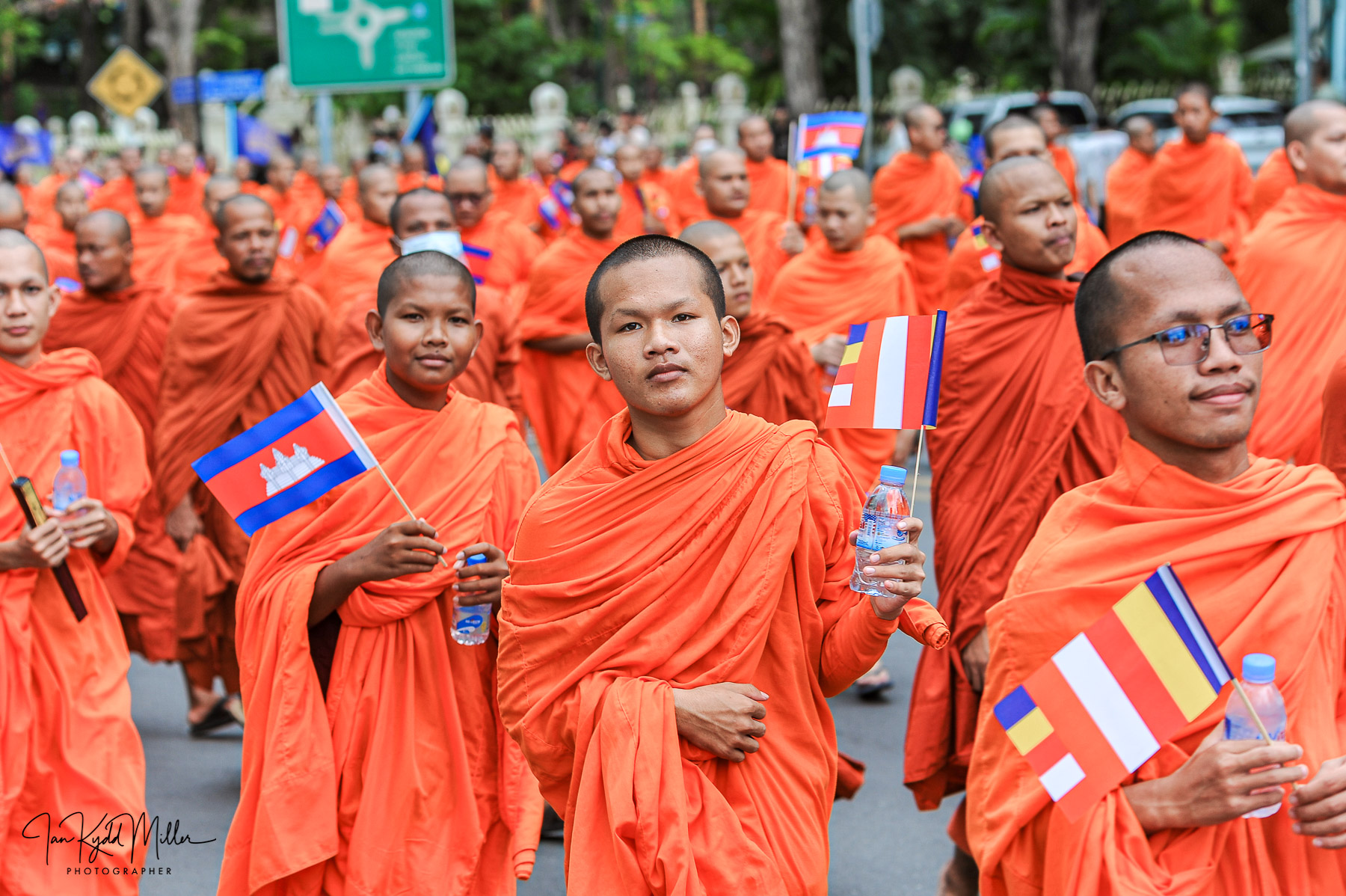
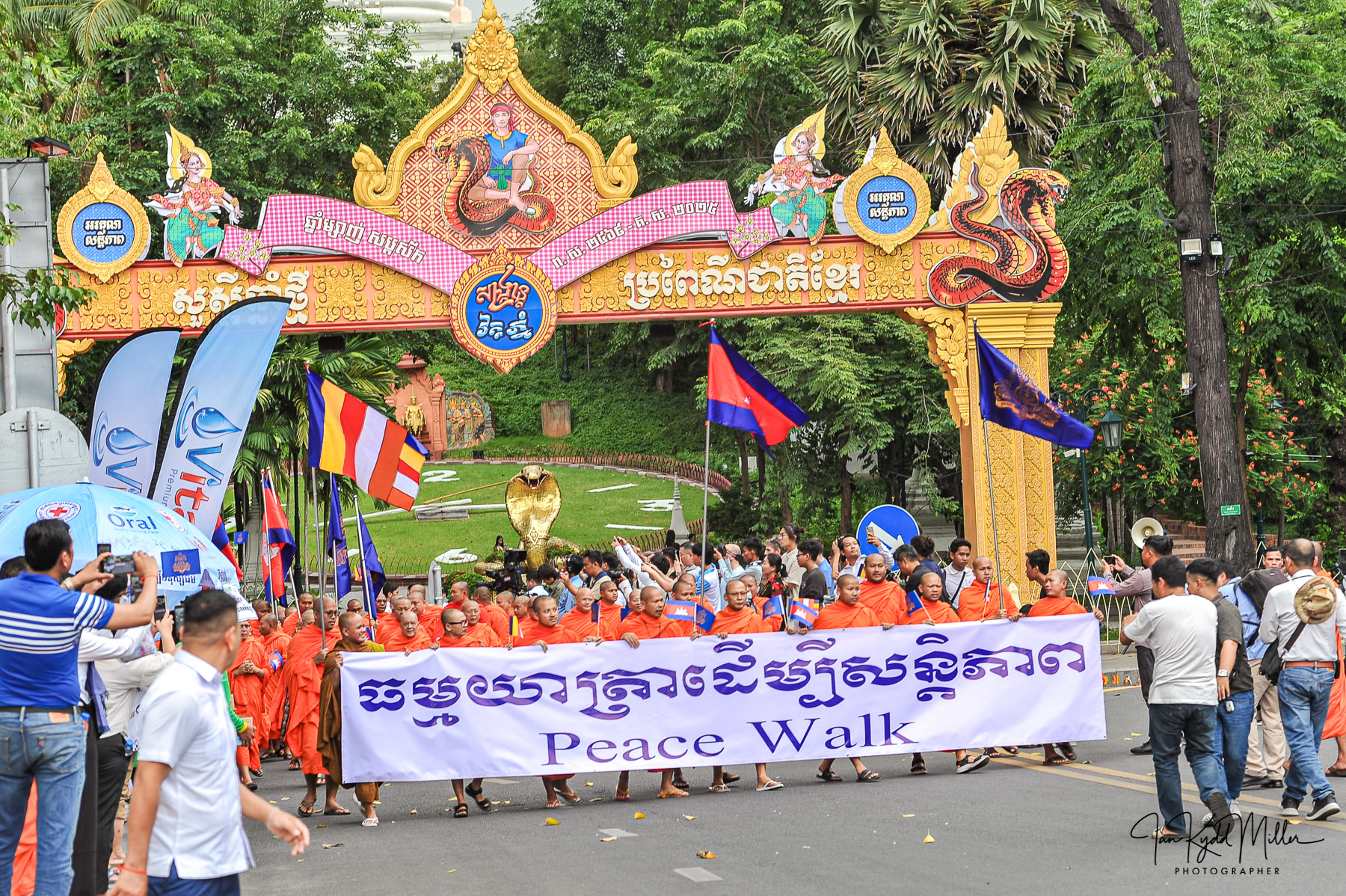
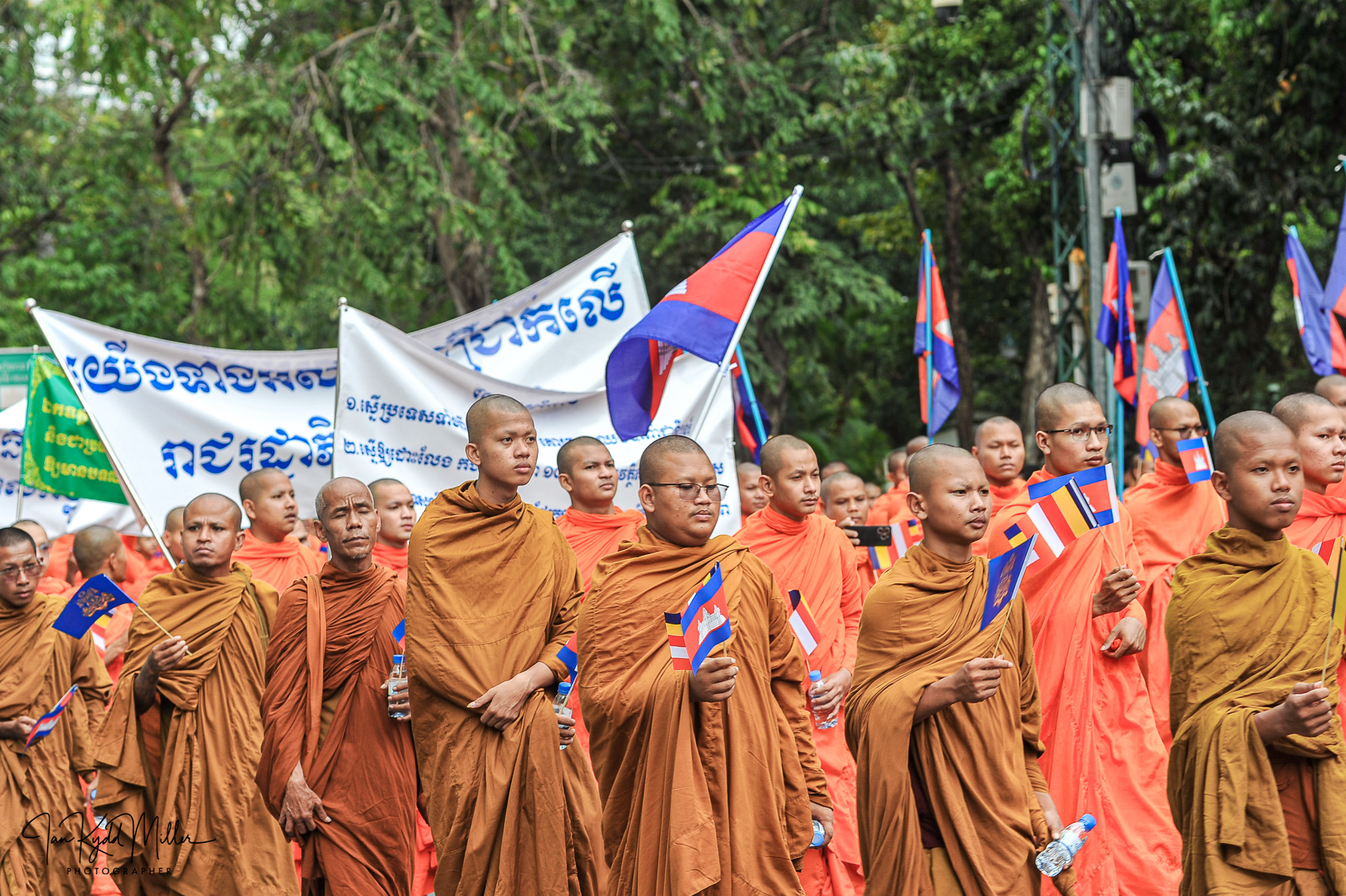
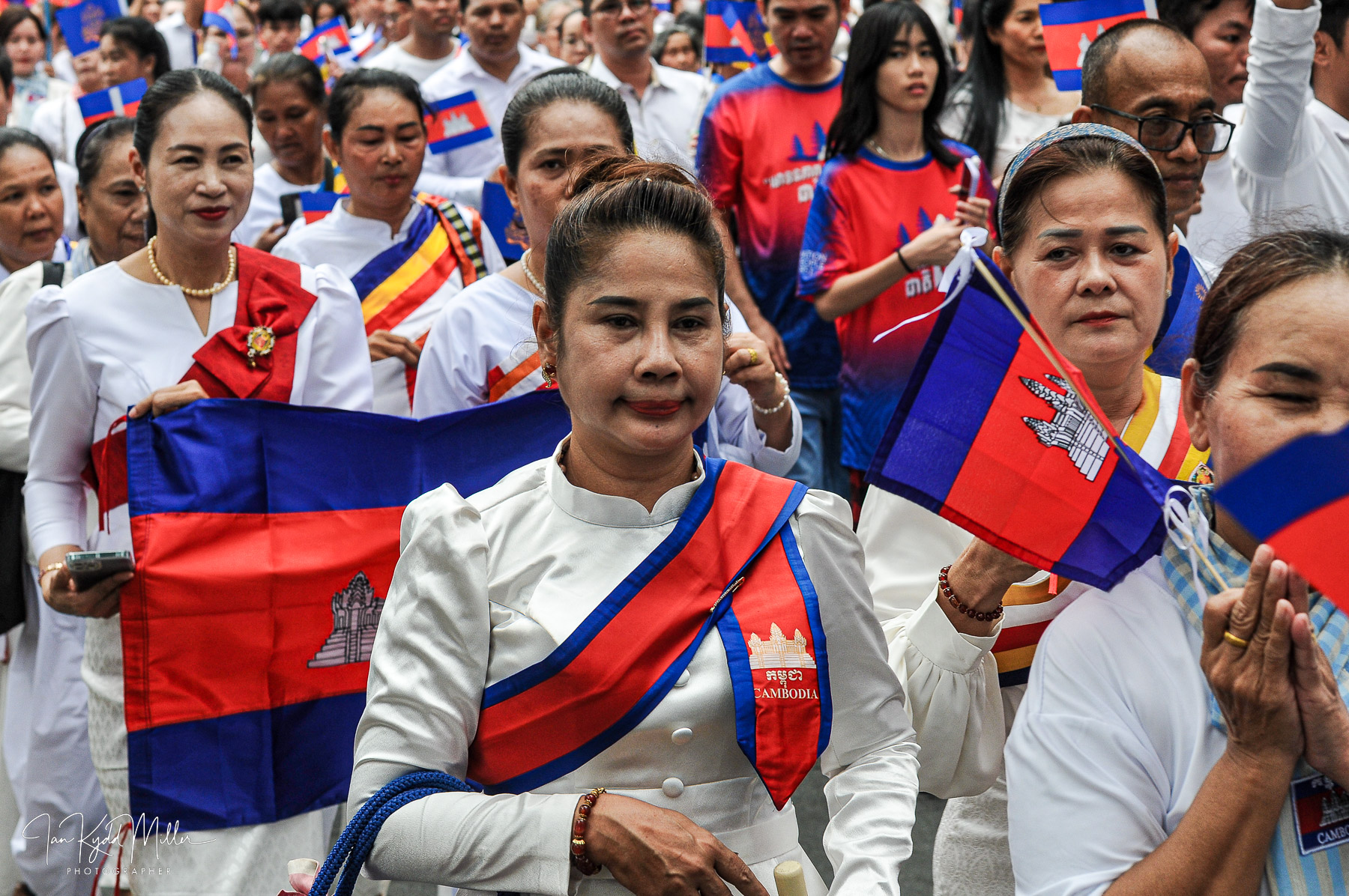
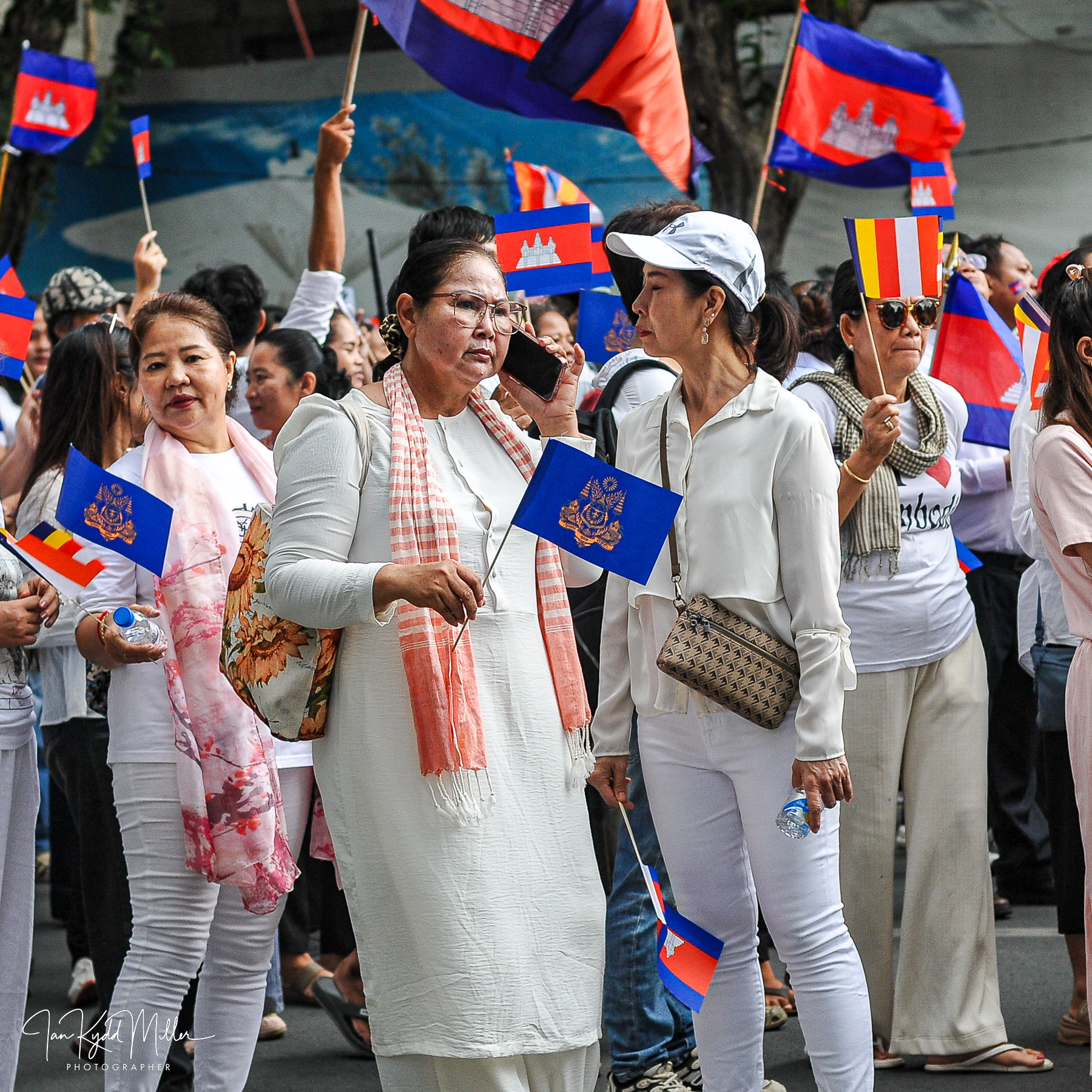
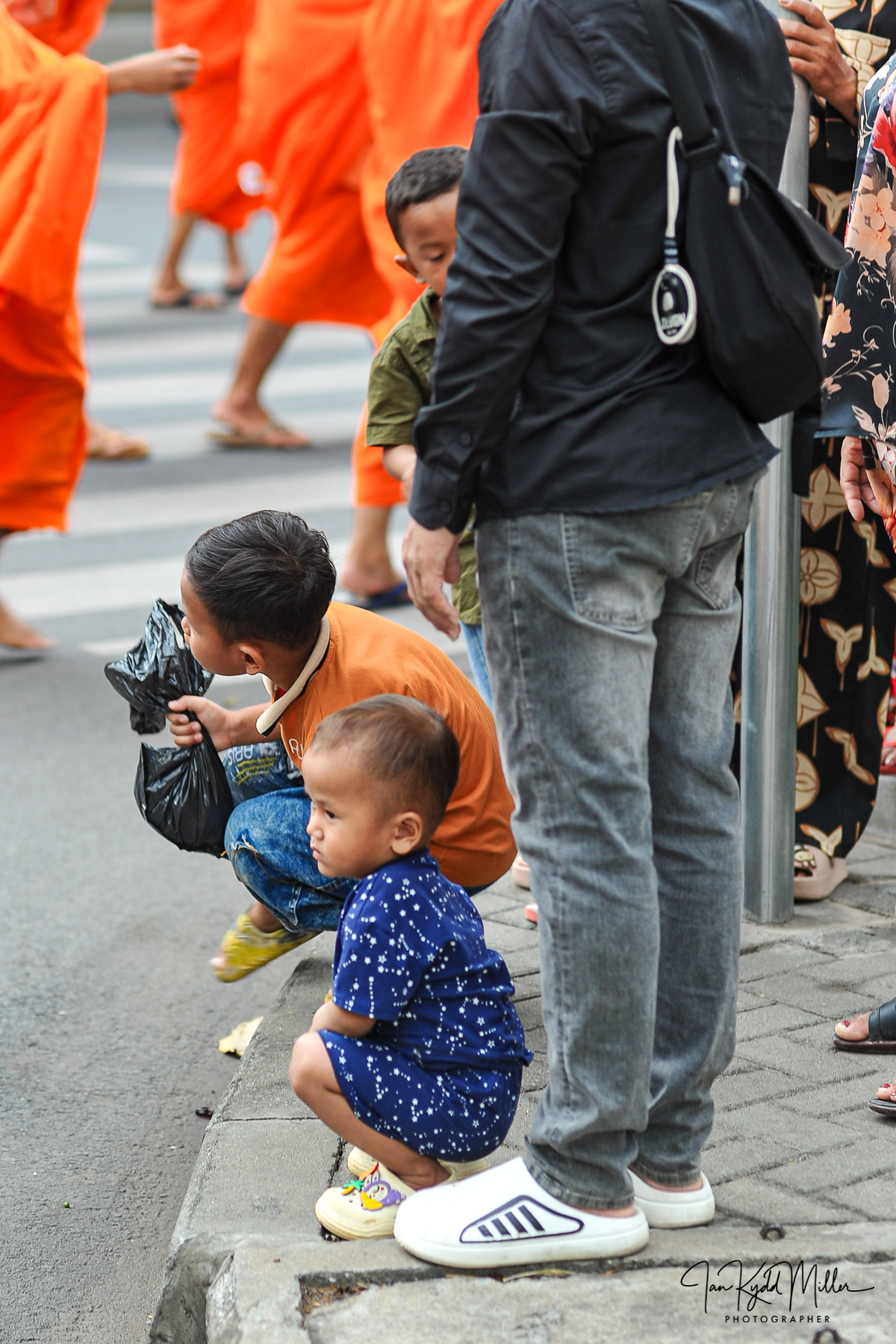
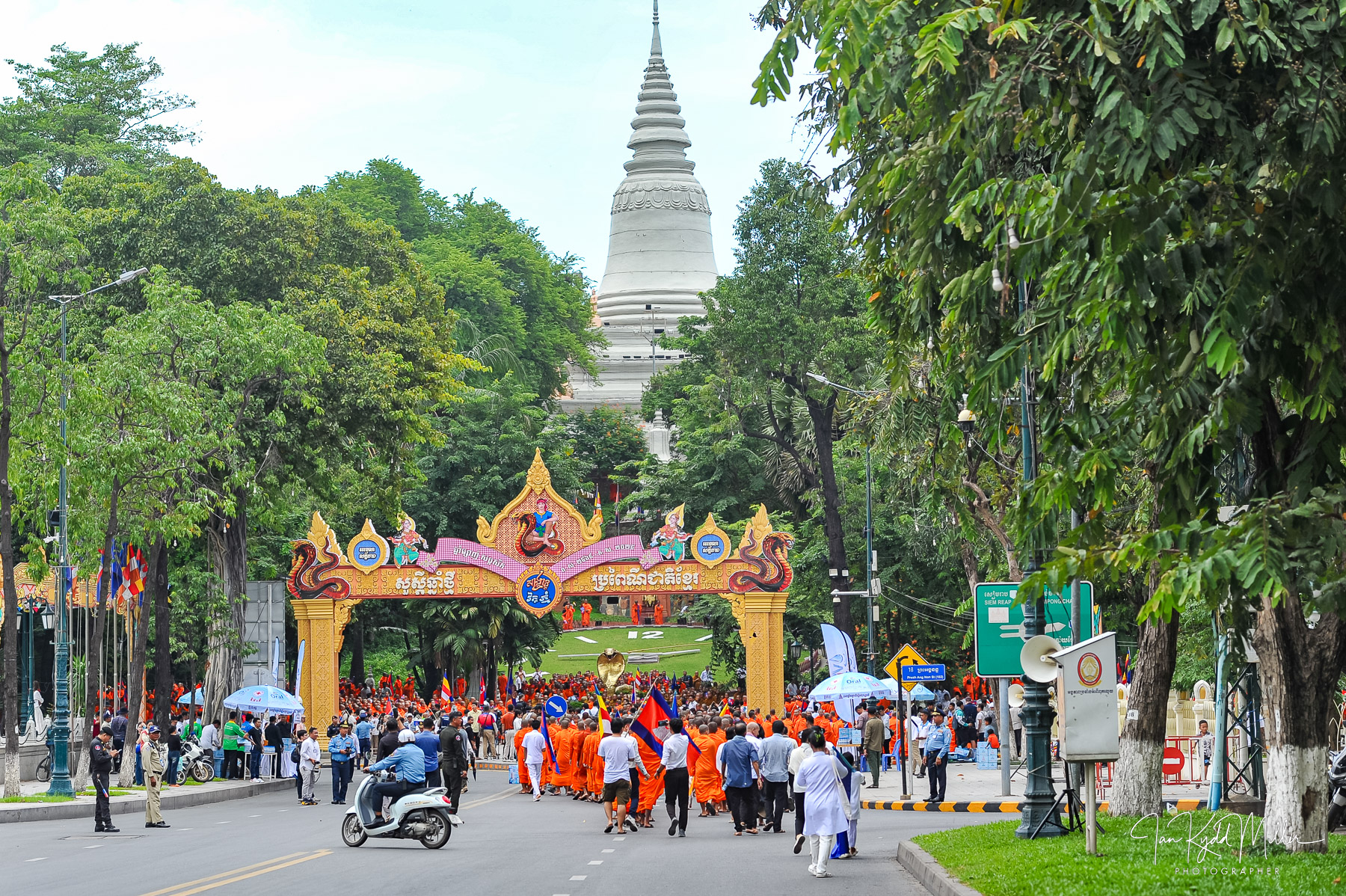
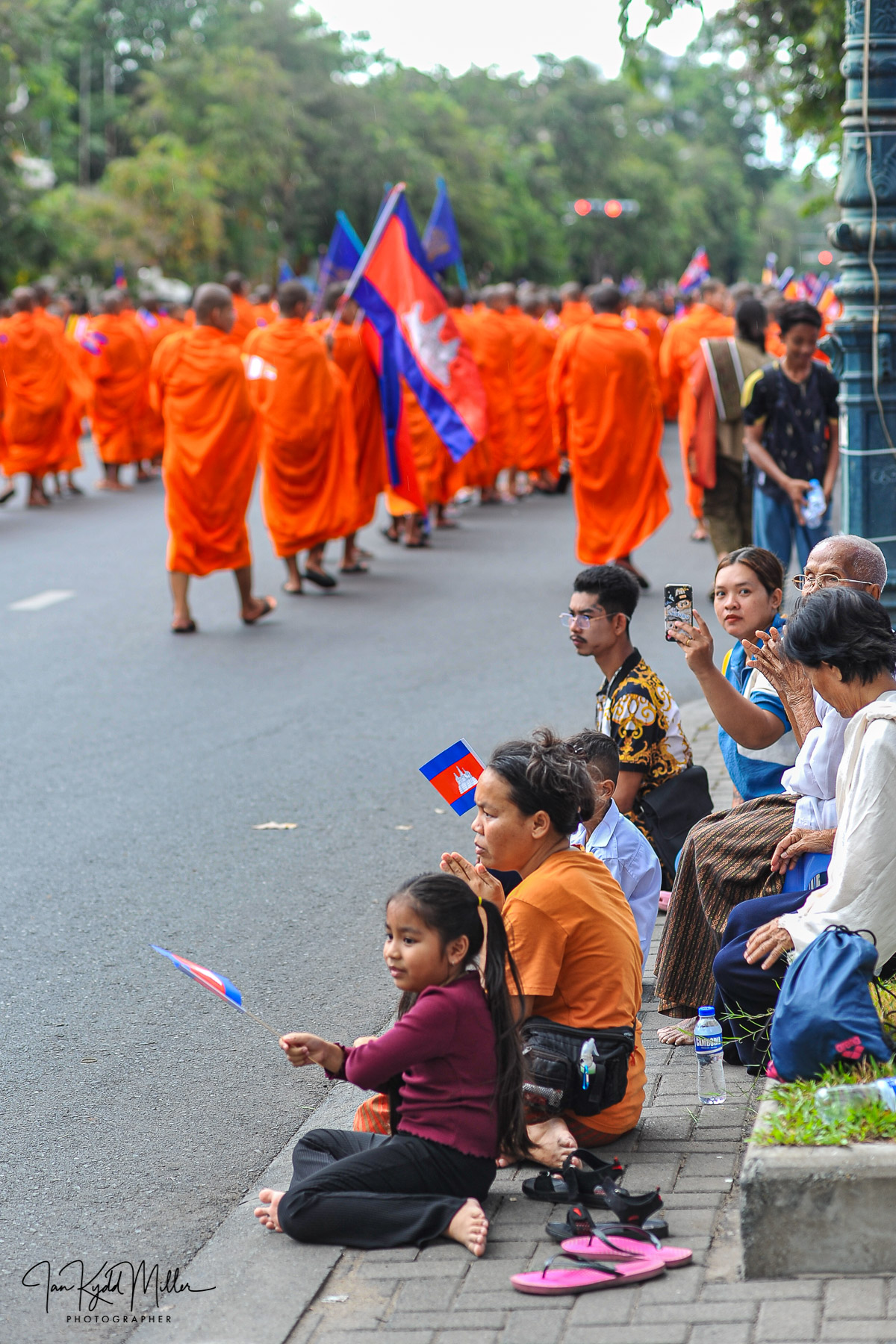
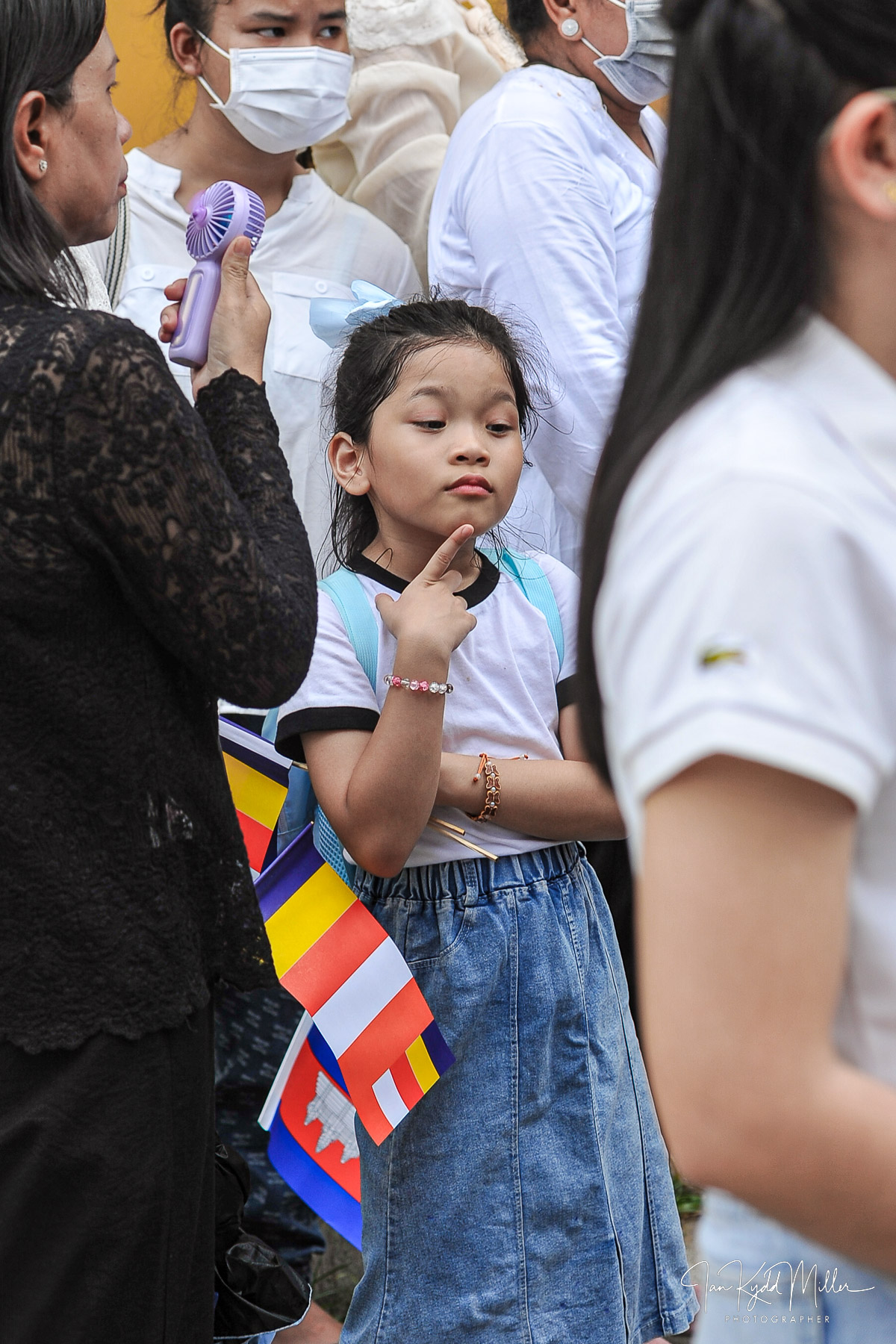
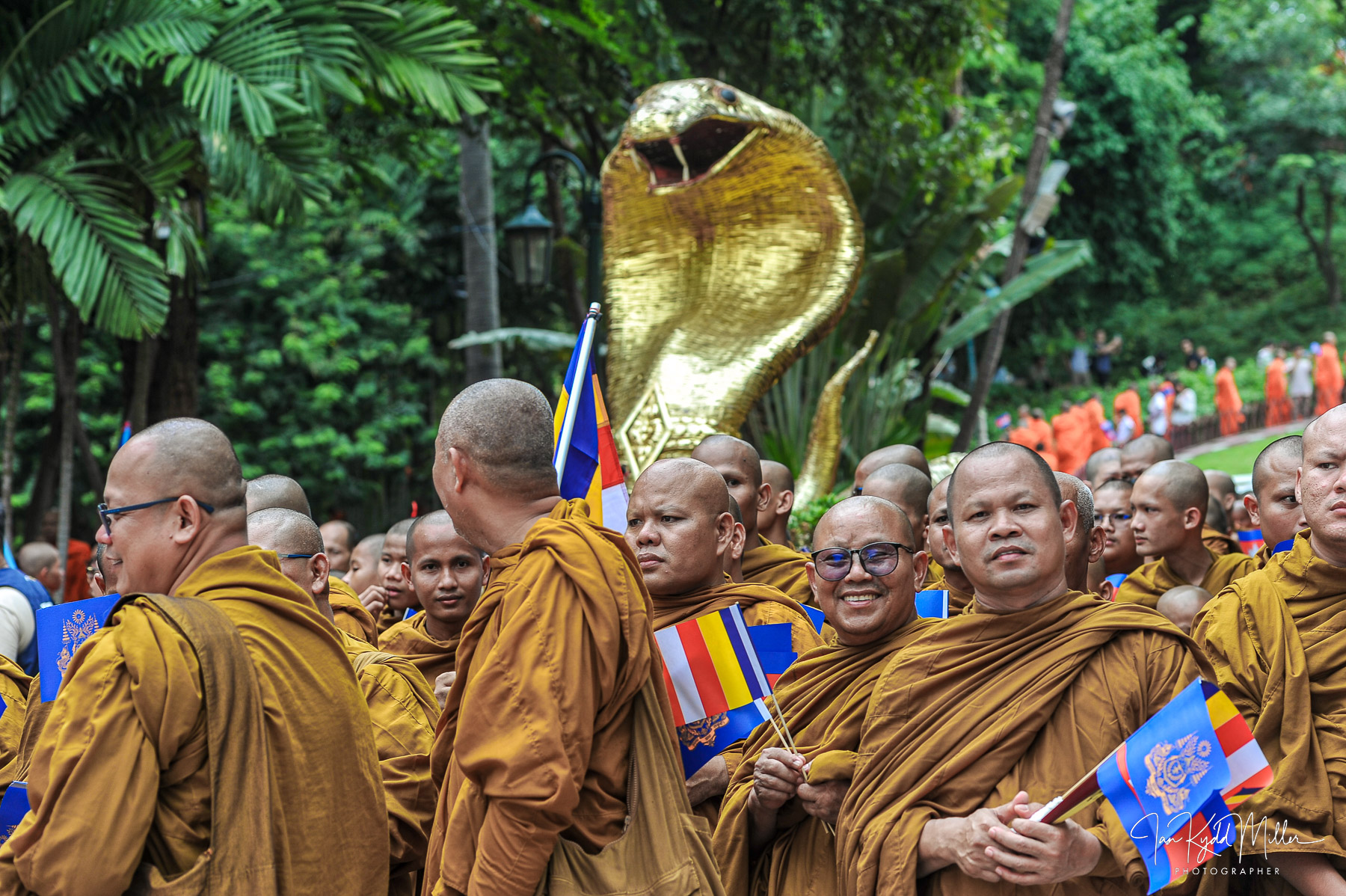
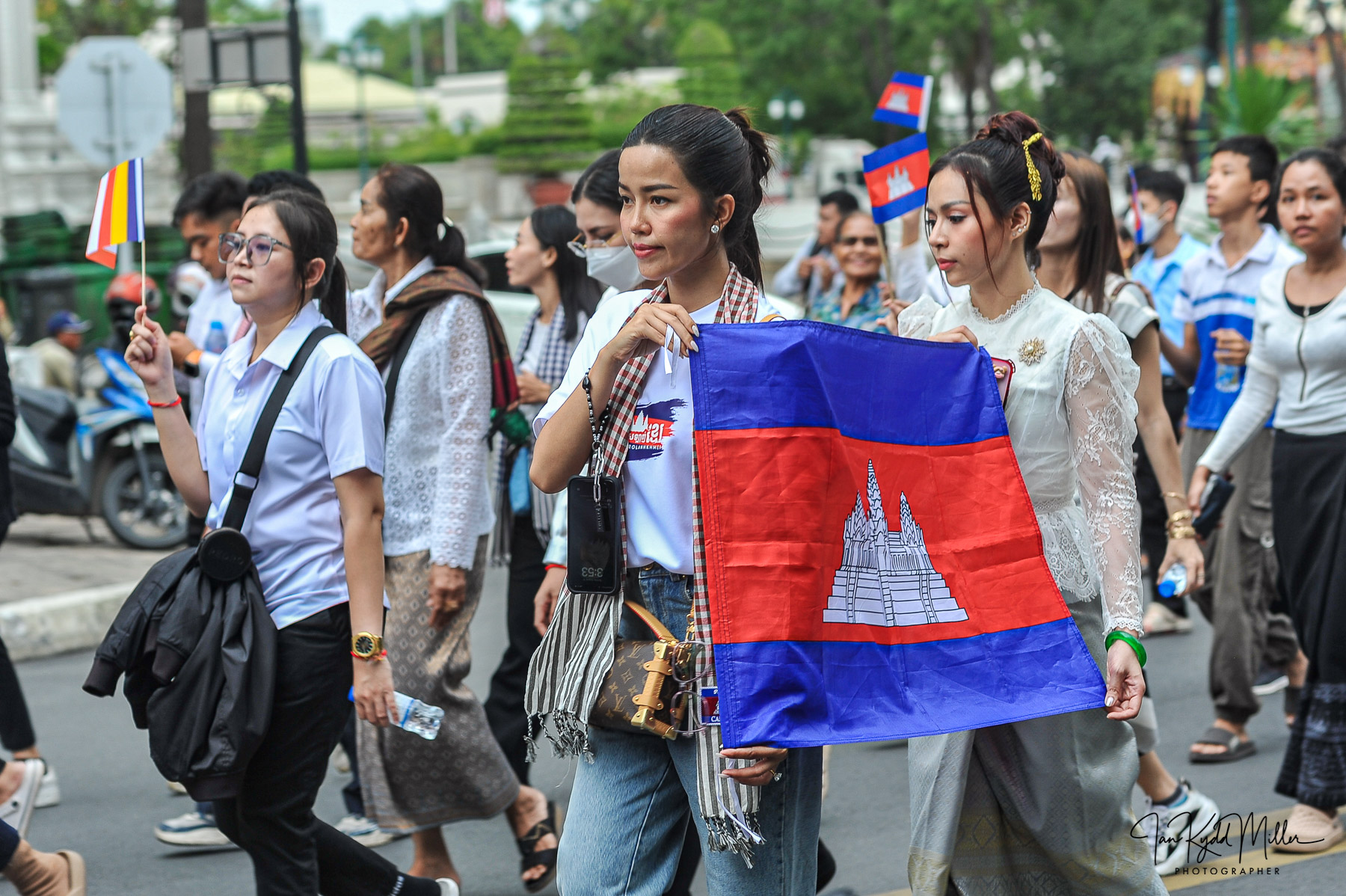
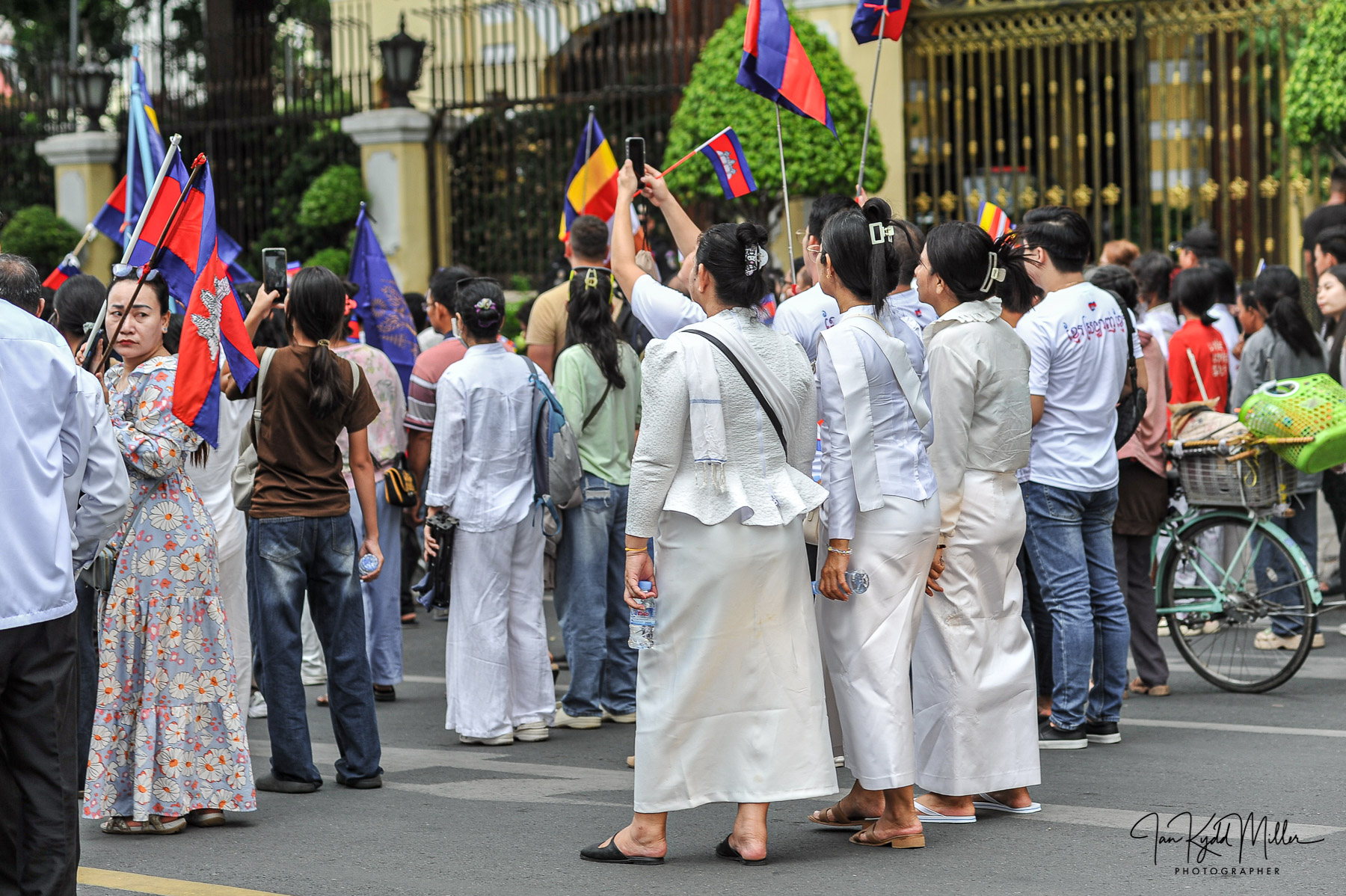
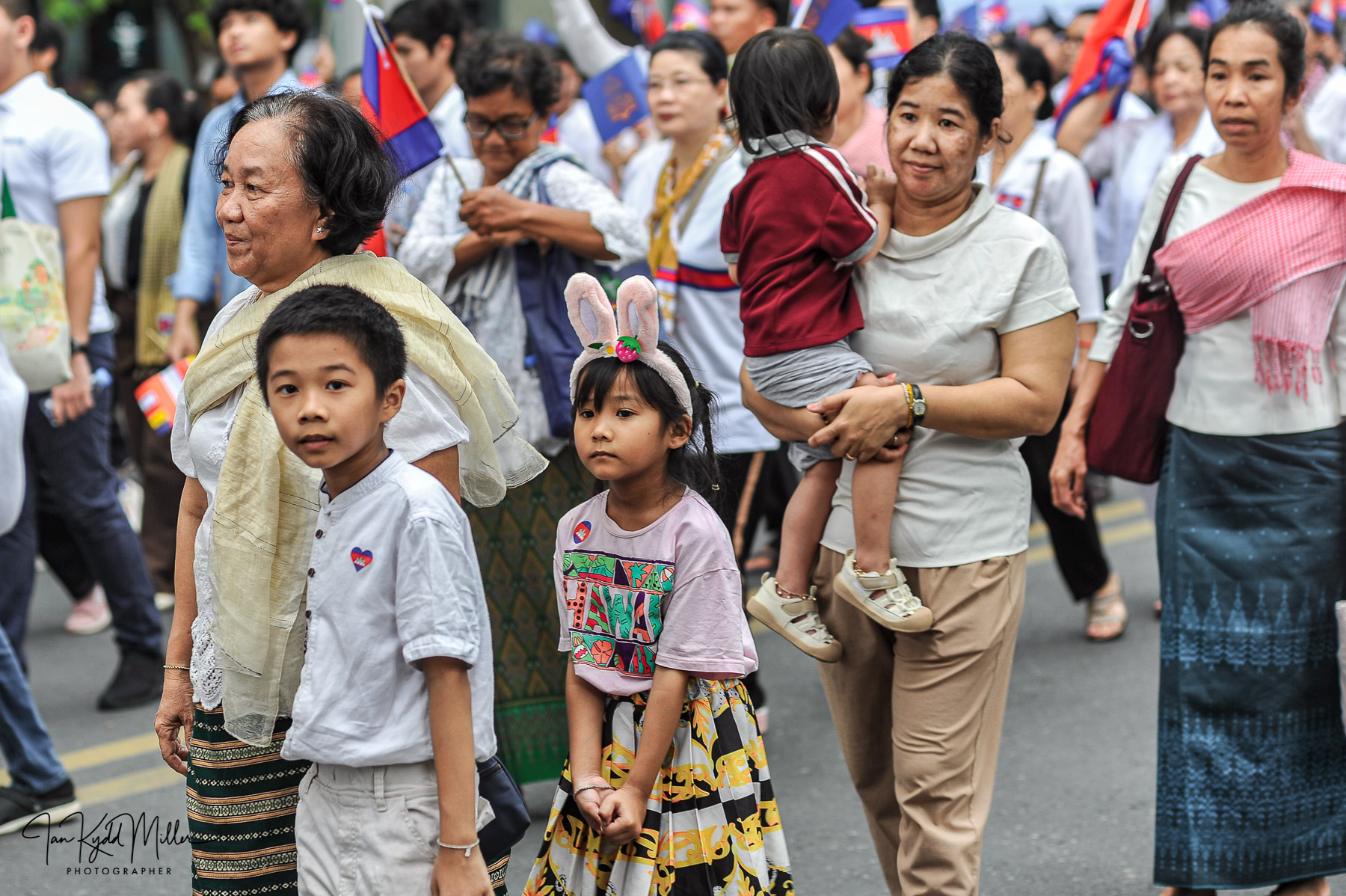
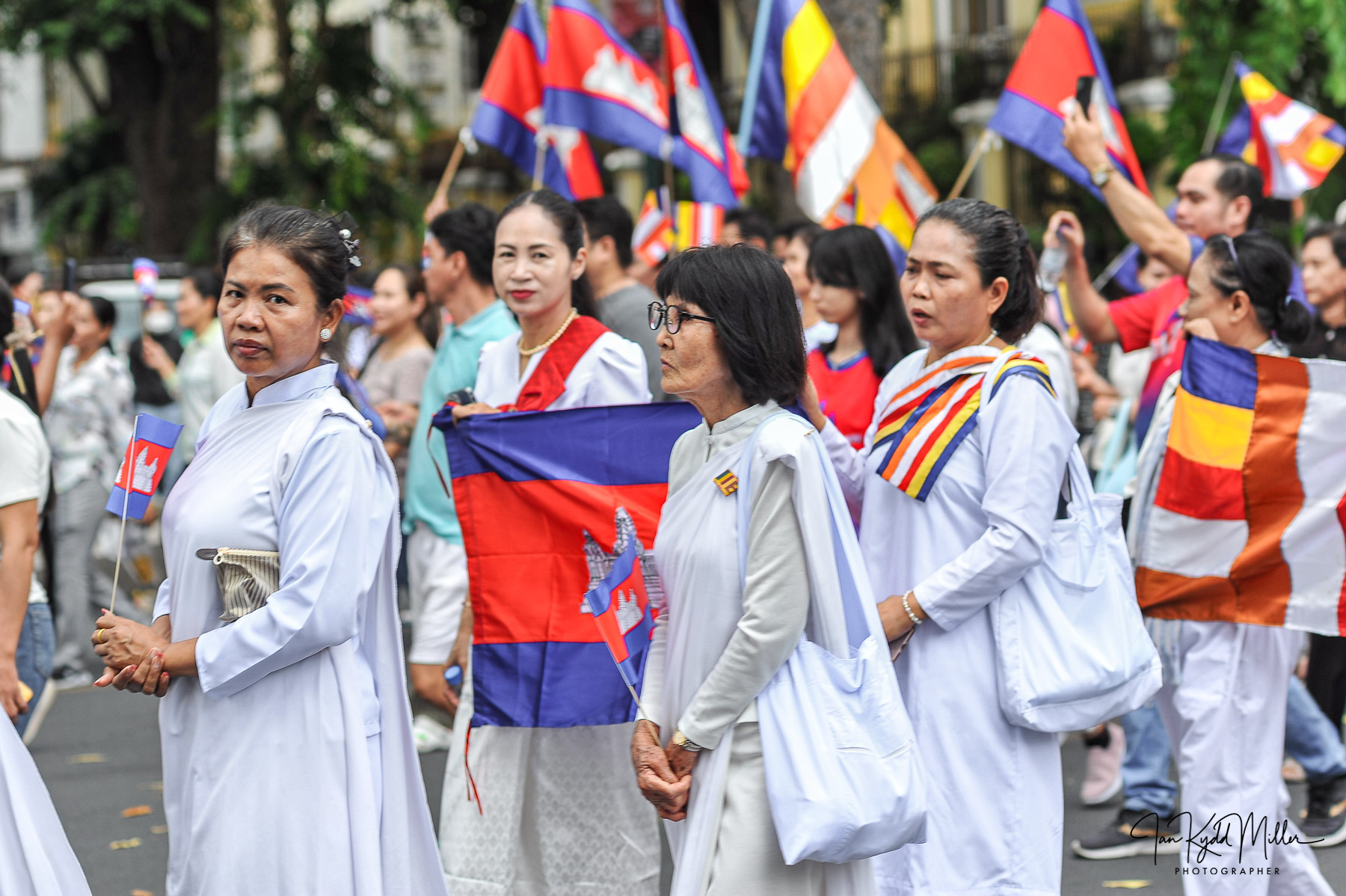
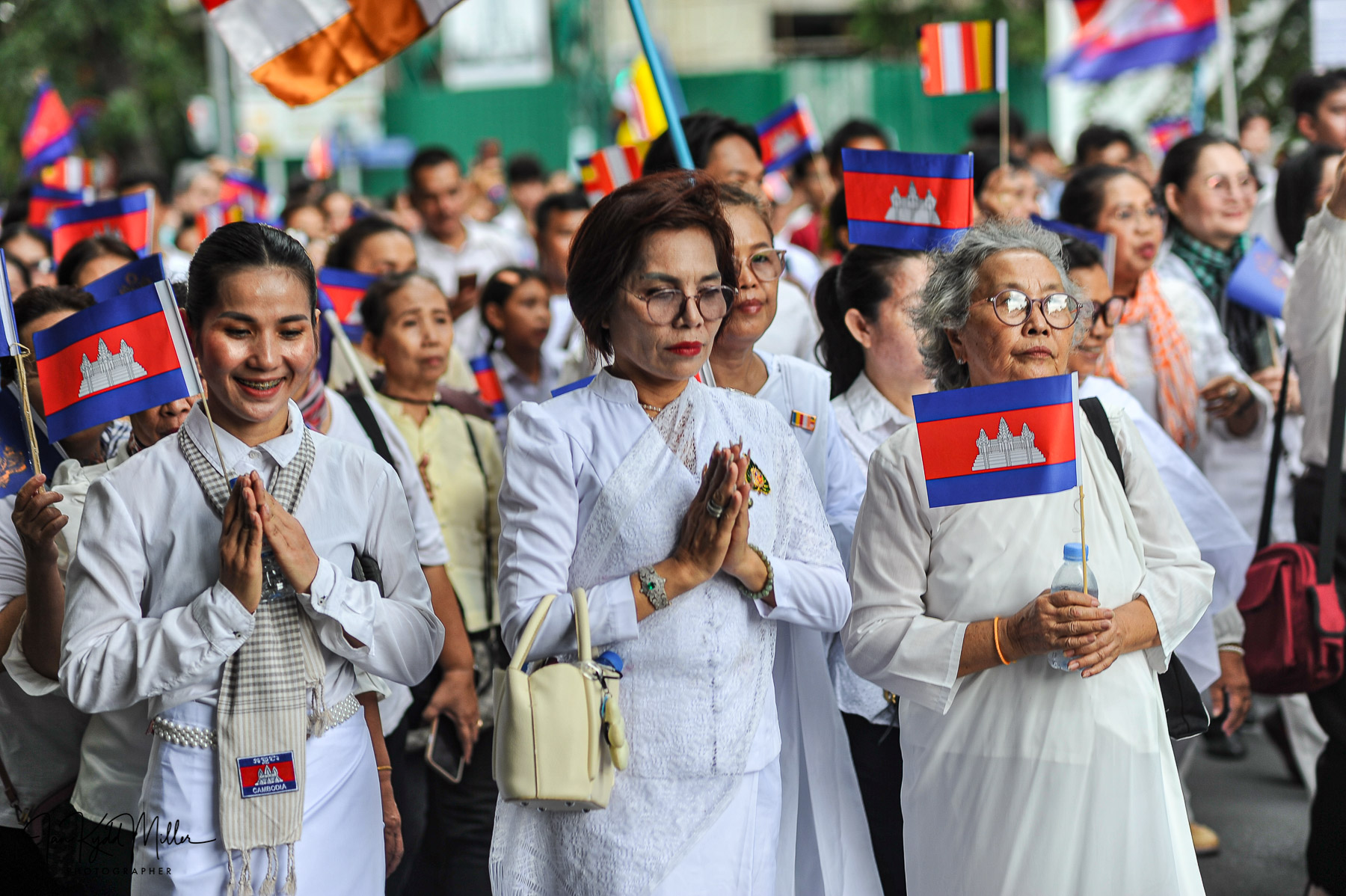
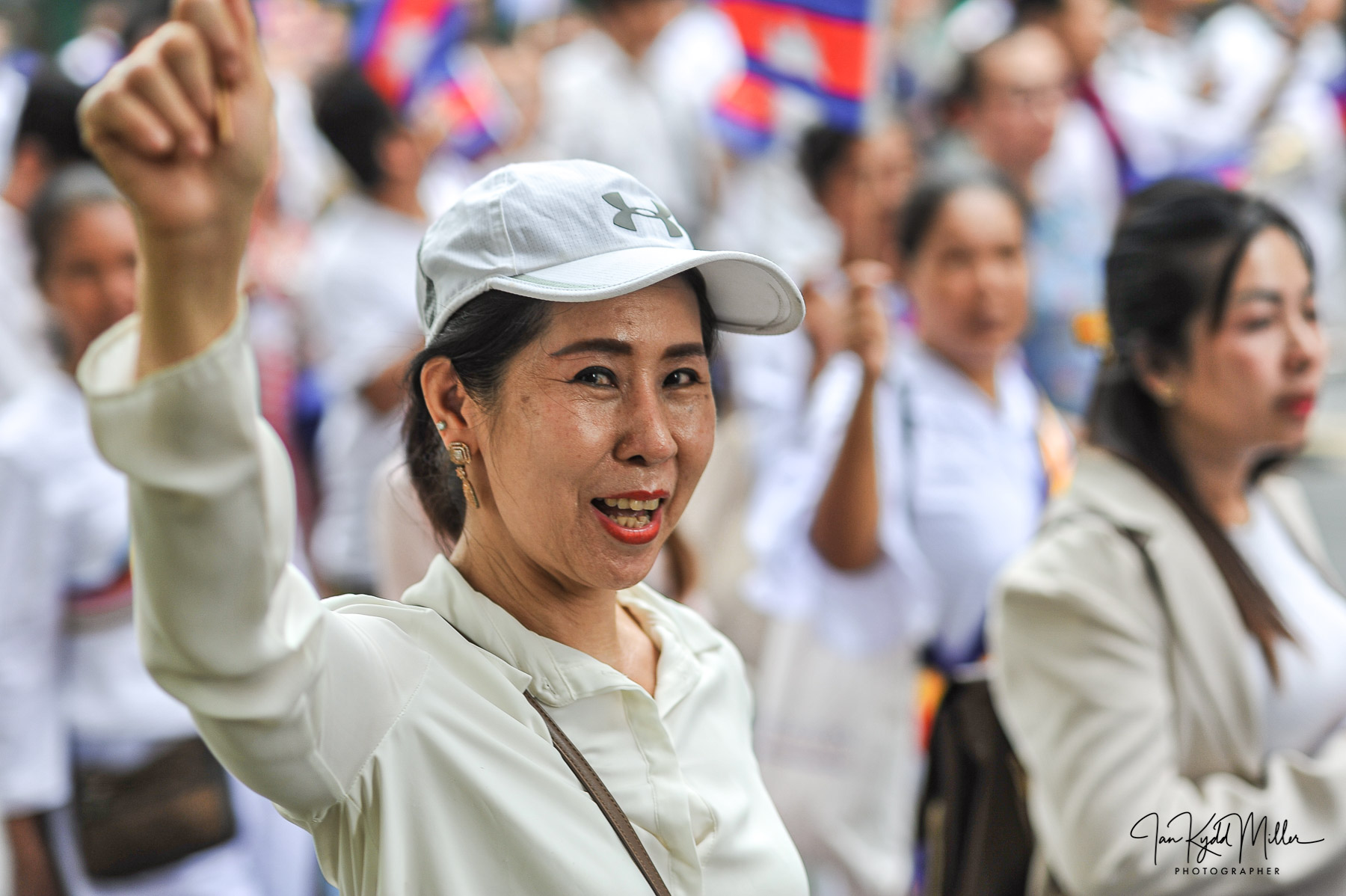
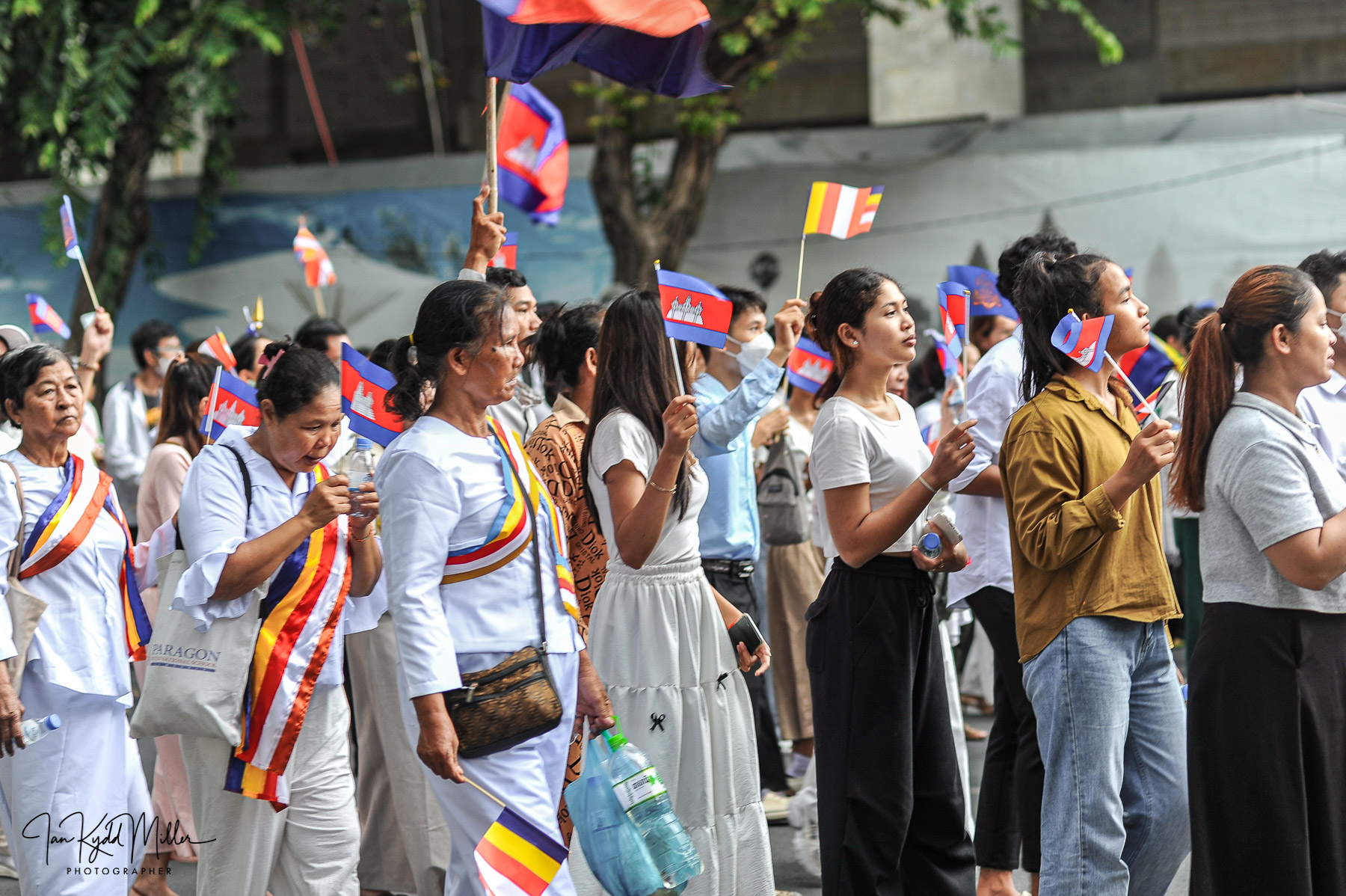
In a powerful display of unity and spiritual resolve, 2,569 Buddhist monks from across Cambodia took to the streets of Phnom Penh on Sunday afternoon, leading a solemn Walk for Peace that stretched from Wat Phnom to the Independence Monument. Clad in saffron robes and carrying banners that read “Cambodia does not need war” and “Peace brings development,” the monks were joined by nuns, laypeople, and curious onlookers who lined the route in quiet reverence.
The march, organized in response to recent border clashes between Cambodian and Thai forces, aimed to reinforce the fragile ceasefire agreement signed on July 28 and to call for the release of 18 detained Cambodian soldiers still held by Thai authorities. The monks’ message was clear: peace is not merely a political negotiation—it is a moral imperative rooted in shared faith and humanity.
“The peace-loving hearts of Cambodian leaders and people, as well as those of the international community, are a strong foundation for sustaining the effective implementation of the Ceasefire Agreement,” said H.E. Pen Bona, Head of the Royal Government Spokesperson Unit.
The procession paused briefly at the U.S. Embassy, where monks offered prayers of gratitude to President Donald Trump, whose diplomatic efforts were credited with initiating the ceasefire. The gesture underscored Cambodia’s appeal to global powers to act not as arbiters of conflict, but as stewards of peace.
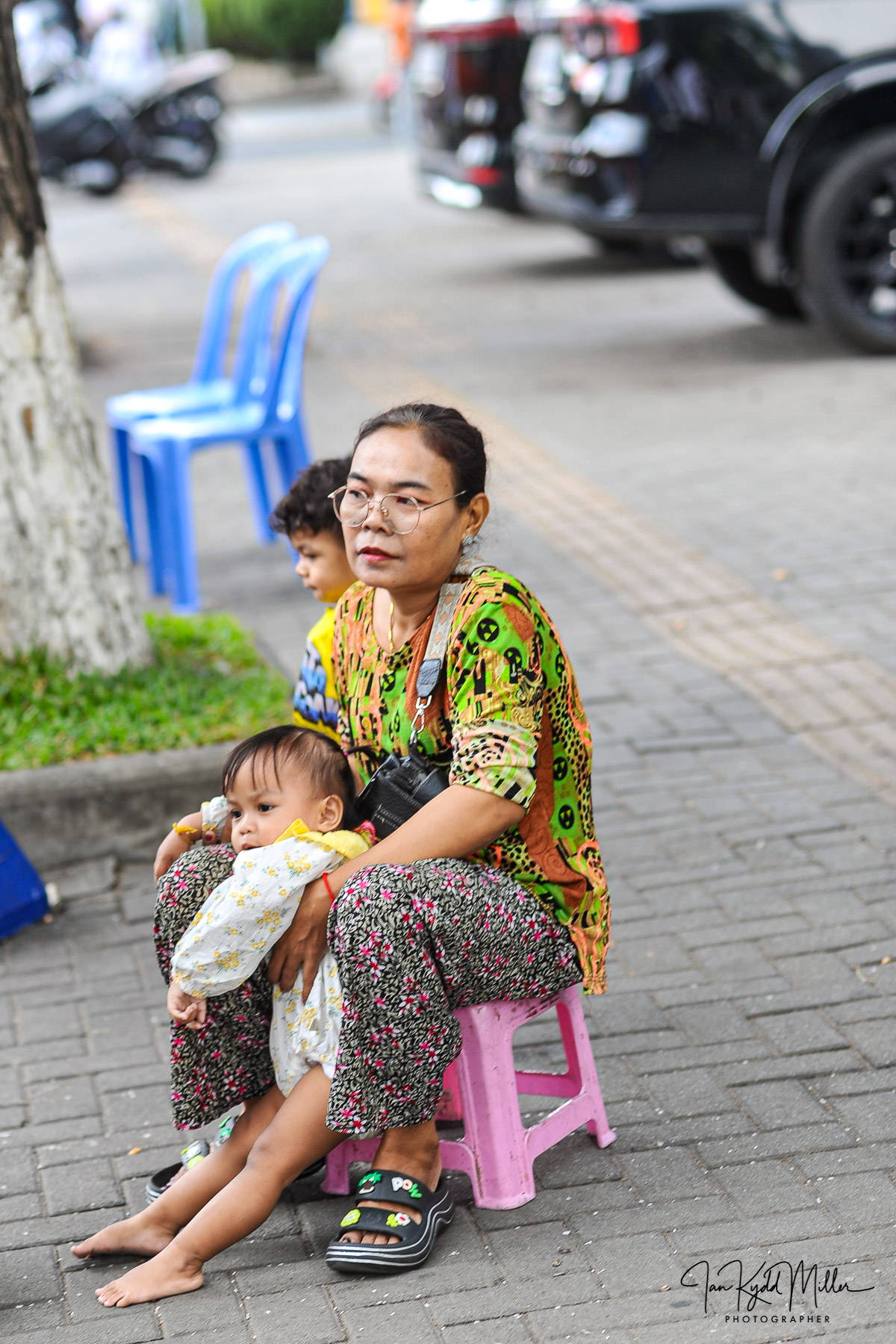
Among the crowd were young novices, elderly monks from both the Maha Nikaya and Dhammayuttika Nikaya sects, and residents displaced by the recent fighting. Some prostrated as the monks passed, others offered alms or simply stood in silent solidarity. The atmosphere was one of solemn hope—a collective yearning for stability, dignity, and healing.
Inside nearby temples, photographs of fallen soldiers were displayed as monks chanted prayers for their souls. The walk was not only a call for peace, but a ritual of mourning and remembrance.
As Cambodia continues to navigate the aftermath of conflict, the Walk for Peace stands as a reminder that the path forward must be walked together—with compassion, conviction, and the courage to choose reconciliation over retaliation.
A Farewell to a Workhorse That Never Asked for Praise
For a decade, the Canon 1D Mark IV was my companion. Not my tool. Not my gear. My companion.
It didn’t flatter. It didn’t fail. It simply showed up—day after day, shoot after shoot—with a kind of quiet reliability that modern cameras often forget in their race for relevance.
🧱 Built Like a Promise
The 1D Mark IV was never sleek. It was solid. Magnesium alloy, weather-sealed, unapologetically heavy. It felt like commitment in the hand.
16MP APS-H sensor with a 1.3x crop—perfect for reach without sacrificing tone
Dual DIGIC 4 processors that never blinked, even at 10fps
Autofocus that tracked motion like instinct, not algorithm
I shot with one AF point. The center. Always. Because the camera didn’t need tricks—it needed trust.
📷 What It Gave Me
Color rendering that felt like memory, not measurement
Files that breathed—not just pixels, but presence
Low-light performance that surprised me, even in candlelit homes and monsoon dusk
Battery life that outlasted the day, and sometimes the doubt
It wasn’t perfect. But it was predictable. And in documentary work, that’s gold.
🧘 Why I Stayed So Long
Because it never asked me to rush. Because it never distracted me with features I didn’t need. Because it taught me to anticipate, to listen, to wait.
I shot weddings, markets, protests, and quiet portraits with it. I traveled with it across borders and into stories that didn’t need spectacle—just presence.
✍️ The Shift to Nikon
Eventually, I moved to Nikon. Not because the 1D failed me, but because my rhythm changed. I wanted different tonal nuance. Different ergonomics. A different conversation with the frame.
But I didn’t leave the 1D behind. I graduated from it. And like any good teacher, it still echoes in my practice.
🖼️ Closing Thought
The Canon 1D Mark IV wasn’t just a camera. It was a decade of trust. And in a world of constant upgrades, trust is the rarest feature of all.
GAS is practically a rite of passage in photography circles. And let’s be honest: when your work is built on rhythm, presence, and storytelling, it’s easy to convince yourself that just one more lens might unlock a new way of seeing.
But here’s the twist: GAS isn’t always about greed—it’s often about curiosity, possibility, and the thrill of rediscovery. Especially in your case, where older gear like the D300S and legacy primes aren’t just tools—they’re collaborators.
Still, if you’re feeling the gravitational pull of that next “must-have,” here are a few gentle antidotes:
🧠 GAS Management for the Ethically Curious Photographer
Walk with one lens for a week: Let limitation sharpen your vision.
Revisit your archive: You might find that your best work came from your “least impressive” gear.
Write before you buy: Draft a post about why you think you need it. If the story feels thin, maybe the gear isn’t the missing piece.
Shoot with intent, not inventory: The camera doesn’t see—you do.
And hey, if you do cave and pick up something new, just promise me you’ll walk with it slowly, listen to what it says, and let it earn its place in your rhythm.
In a world obsessed with specs, upgrades, and the latest releases, there’s a quiet rebellion happening—one that values function over flash, intuition over innovation, and tools that serve the moment rather than dominate it.
I call it “Tuned, Not Trendy.”
It’s the mindset that led me to pick up a Nikon D300S in Phnom Penh for $140—body, grip, and three batteries included. Not because it was new. Not because it was popular. But because it felt like it could do the job. And after a few walks with it, I realised: it’s not about what a camera can do. It’s about what it lets you do.
🛠️ Function Earns Trust
Modern gear is packed with features—eye-detect AF, 8K video, AI-driven exposure. But how many of those features actually serve the kind of photography I do? Street scenes, market rhythms, quiet gestures in harsh light. I don’t need a camera that thinks for me. I need one that responds to me.
The D300S doesn’t try to impress. It just works. Fast autofocus. Gritty rendering. Familiar controls. It’s tuned to the kind of shooting I do—not trendy, but trustworthy.
🎯 Features Don’t Make Meaning
Sharpness doesn’t equal story. Dynamic range doesn’t guarantee depth. I’ve seen images from $5,000 setups that feel sterile, and frames from a beat-up D2Hs that carry the weight of memory. The difference isn’t in the gear—it’s in the relationship between photographer and tool.
When a camera is tuned to your rhythm, it disappears. You stop thinking about settings and start responding to light, movement, and emotion. That’s where meaning lives.
💡 The Freedom of Simplicity
There’s also a kind of freedom in using older gear. No pressure to pixel-peep. No temptation to chase firmware updates. Just you, the camera, and the moment. It’s a slower, more deliberate way of working—and for me, it’s more honest.
Why spend thousands on features I’ll never use, when I can spend a fraction on a tool that fits my hand, my eye, and my purpose?
Tuned, Not Trendy isn’t just about gear. It’s about philosophy. It’s about choosing tools that serve your vision, not distract from it. It’s about trusting your instincts more than marketing. And it’s about remembering that the best images aren’t made by specs—they’re made by presence.
In an age of mirrorless marvels and AI-enhanced everything, I still reach for two cameras released over a decade ago: the Nikon D3 and D3S. Not out of nostalgia, but because they still deliver—quietly, reliably, and with a kind of tactile honesty that newer gear often lacks.
Built Like Tools, Not Toys
The D3 and D3S were Nikon’s first full-frame DSLRs, and they were built like they meant it. Magnesium alloy bodies, weather sealing, and a shutter rated for 300,000 actuations. These cameras were made for war zones, not weddings. And yet, they’ve handled both with grace.
I’ve used them in the heat of Phnom Penh’s markets, on the water at Tonlé Sap, and in quiet moments with people whose stories deserve dignity. They’ve never flinched.
The Files Still Sing
Yes, they’re “only” 12.1 megapixels. But those pixels are rich, clean, and full of tone. The D3S in particular still surprises me with its low-light performance—ISO 6400 feels like ISO 800 on some modern sensors. And the color rendering? It’s got soul. Not sterile perfection, but something closer to memory.
Speed and Simplicity
9 fps on the D3, 11 fps on the D3S. Autofocus that locks on like a bloodhound. No menus buried in submenus. No touchscreen distractions. Just a camera that lets me stay present, anticipate, and respond.
Why I Still Carry Them
Because they don’t get in the way. Because they’ve become extensions of how I see. Because they remind me that photography isn’t about megapixels or marketing—it’s about presence, patience, and purpose.
And maybe most of all, because they’ve earned my trust.
The Sigma 20mm f/1.8 EX DG lens is a wide-angle prime lens designed for full-frame and APS-C digital SLRs. It was announced on December 1, 2000, and remains popular for its combination of good build quality, a fast aperture of f/1.8, and decent optics.
Here are some key features of the lens:
Focal Length: 20mm
Maximum Aperture: f/1.8
Minimum Aperture: f/22
Minimum Focus Distance: 20cm (7.87 inches)
Weight: 520g (1.15 lbs)
Length: 90mm (3.52 inches)
Lens Mounts: Canon EF, Nikon F (FX), Pentax KAF, Sigma SA Bayonet, Sony/Minolta Alpha.
The lens incorporates a Dual-Focus (DF) mechanism, which makes it easy to hold the lens since the focusing ring does not rotate during auto-focus. It also provides adequate focusing torque during manual focusing. The use of aspherical lens elements in both the front and rear lens groups effectively compensates for distortion, spherical aberration, and astigmatism.
However, the lens has some drawbacks. It is known for having strong vignetting, especially at f/1.8, and the corners can be quite soft at wider apertures. The lens is sharp in the center at f/4 and even sharper at f/5.6
Overall, the Sigma 20mm f/1.8 EX DG lens is a good option for those looking for a wide-angle prime lens with a fast aperture, but it may not be the best choice for those who require edge-to-edge sharpness at wider apertures.
Sebastião Salgado was a renowned Brazilian social documentary photographer and photojournalist, celebrated for his striking black-and-white imagery that captured the dignity and struggles of people around the world. His work focused on themes of migration, labor, and environmental conservation.
Early Life & Career
Born in 1944 in Aimorés, Brazil, Salgado initially trained as an economist before transitioning to photography in the early 1970s. His travels to Africa while working for the International Coffee Organization sparked his passion for visual storytelling. He later joined Magnum Photos and eventually founded his own agency, Amazonas Images, with his wife, Lélia Wanick Salgado.
Genesis (2013) – A tribute to untouched landscapes and indigenous cultures.
Amazonia (2021) – Highlighting the beauty and fragility of the Amazon rainforest.
Legacy & Impact
Salgado was deeply committed to environmental restoration. He and his wife founded Instituto Terra, an organization dedicated to reforestation efforts in Brazil. His life and work were featured in the documentary The Salt of the Earth (2014), co-directed by Wim Wenders and Juliano Ribeiro Salgado.
Sadly, Salgado passed away at the age of 81 on May 23, 2025. His legacy continues to inspire photographers and storytellers worldwide.
The Khmer New Year, or Choul Chnam Thmey, is Cambodia’s most significant holiday, celebrated from April 14 to 16 each year. It marks the end of the harvest season and the beginning of a new year according to the traditional Buddhist lunisolar calendar2.
The celebration lasts three days, each with its own traditions:
Moha Sangkran – The first day, when families clean their homes, visit temples, and make offerings.
Vanabot – The second day, dedicated to charity and honoring ancestors.
Leung Sakk – The third day, when people wash Buddha statues and elders with perfumed water as a sign of respect and renewal.
During this time, Cambodia comes alive with festivals, traditional games, and water fights, similar to Thailand’s Songkran. If you’re planning to experience it, Phnom Penh, Siem Reap, and Battambang are great places to join the celebrations
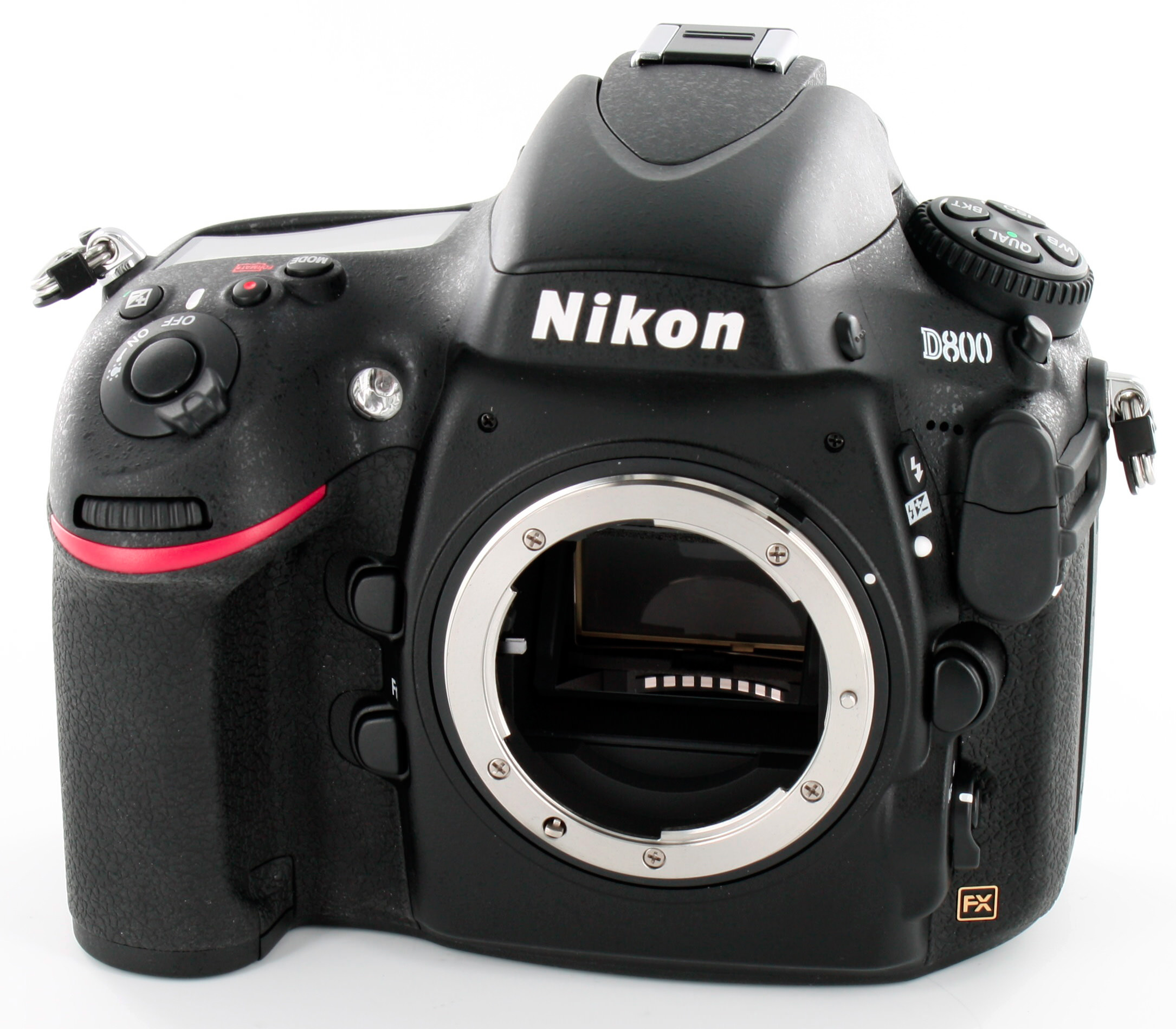
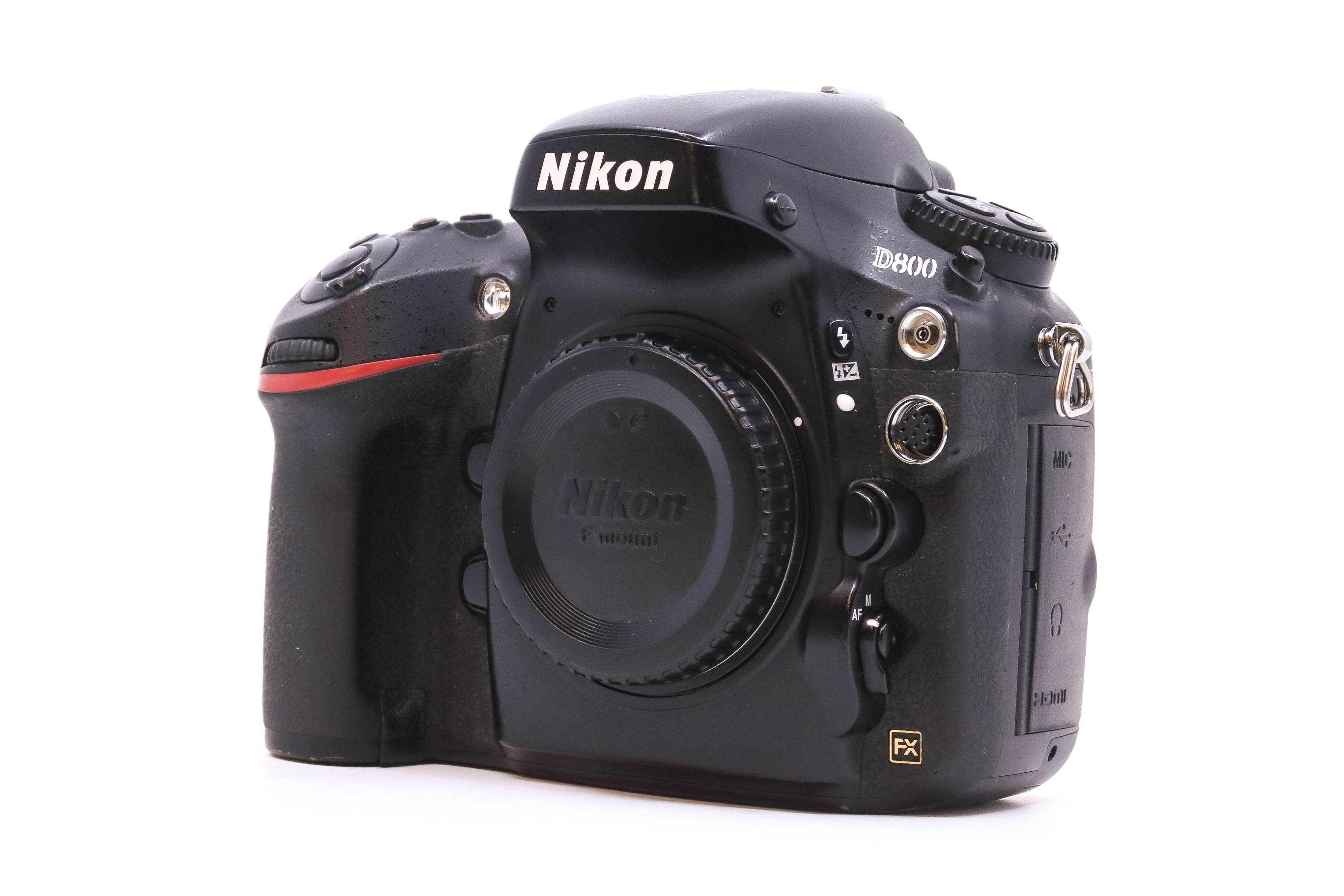
The Nikon D800 is equipped with an impressive sensor that contributes to its renowned image quality. Here are some key details:
Resolution: The D800 features a 36.3-megapixel full-frame CMOS sensor, providing exceptionally high resolution for detailed and large prints.
Sensor Size: The sensor measures 35.9 x 24 mm, which is a standard full-frame size.
Dynamic Range: The sensor offers a wide dynamic range, capturing a broad spectrum of tones from shadows to highlights.
ISO Range: The native ISO range is 100-6400, expandable to 50-25600, allowing for good performance in various lighting conditions.
Pixel Pitch: The pixel pitch is 4.87 µm, which helps in capturing more light and detail.
Processor: The sensor is paired with the EXPEED 3 image processor, enhancing overall performance and image quality.
This sensor makes the Nikon D800 an excellent choice for photographers who need high resolution and exceptional image quality.
Nikkor D lenses are compatible with the Nikon D800. These lenses will work well with the D800’s autofocus system, as the camera has a built-in autofocus motor that can drive the autofocus mechanism in D lenses. Here are some key points:
Autofocus: The D800’s built-in autofocus motor ensures that Nikkor D lenses can autofocus properly.
Metering: The D800 supports full metering with Nikkor D lenses, allowing for accurate exposure settings.
Aperture Control: You can control the aperture directly from the camera body, which is convenient for adjusting settings quickly.
Overall, Nikkor D lenses are a great match for the Nikon D800, providing excellent performance and compatibility.






















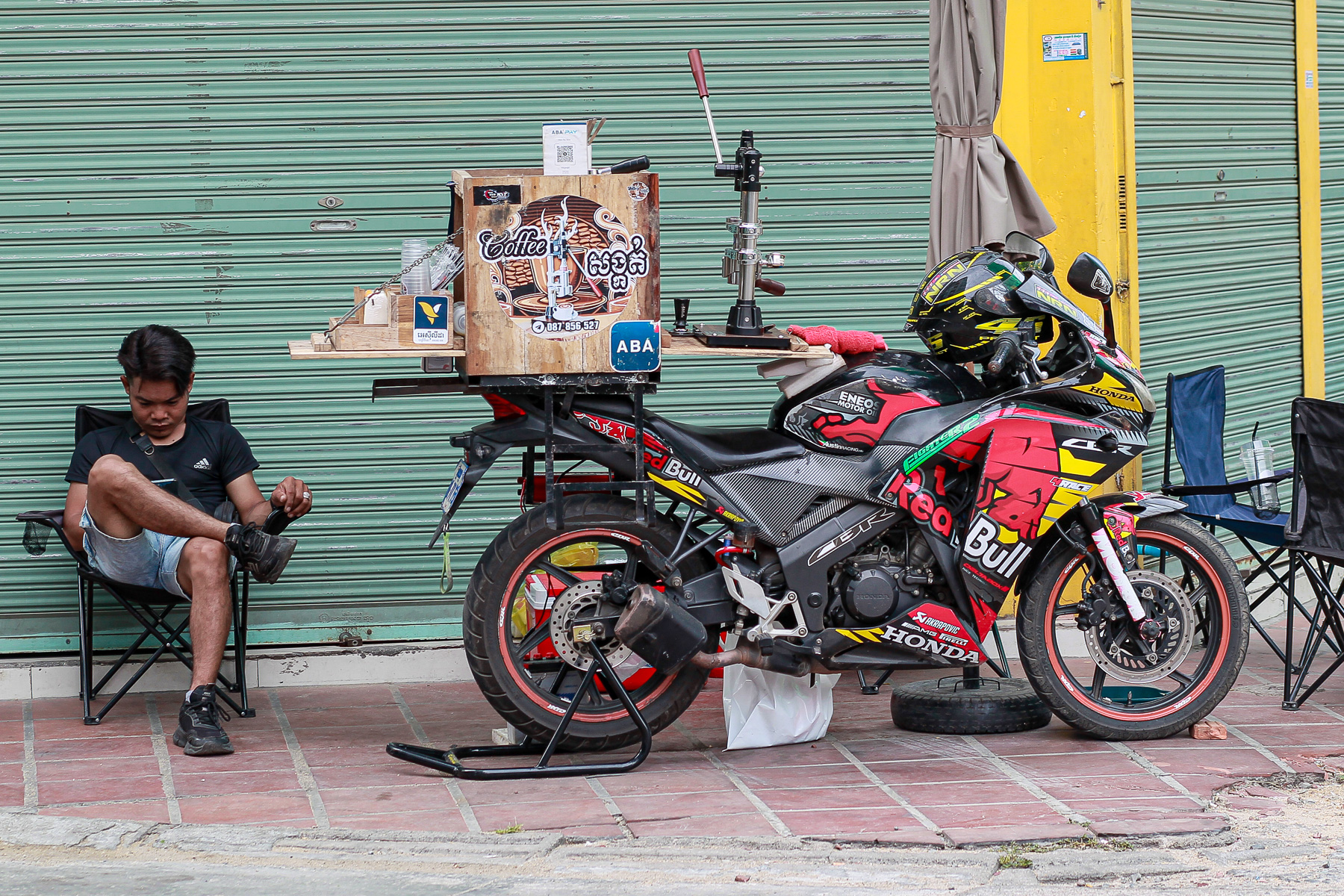





































 a world without pictures is like coffee without cream and sugar, bitter