Older DSLR cameras have a unique charm that modern cameras often struggle to replicate. The sensors in these cameras, with their larger pixels, have a certain way of rendering light and colour that can produce images with a distinct, almost tangible texture. This quality is something that many photography enthusiasts and professionals alike appreciate, as it adds character and depth to the photographs. The tactile experience of adjusting the dials and pressing the shutter button also contributes to the overall enjoyment of using these cameras. Moreover, the process of working with older technology can teach valuable lessons about the fundamentals of photography, such as exposure, composition, and the importance of light. It’s a blend of art and science, where understanding the limitations and capabilities of the equipment can lead to a more intentional and satisfying creative process.
The Nikon D2HS is a camera that stands out in the realm of sports photography. Launched as an upgrade to the Nikon D2H, the D2HS brought with it a suite of improvements that catered to the needs of action and sports photographers. With its ability to shoot at 8 frames per second, this camera was designed to capture the peak moments of fast-paced action, ensuring that photographers never miss the critical shot.
The D2HS is equipped with a 4.1-megapixel JFET-LBCAST sensor, optimized for high frame rates rather than high resolution, which is a trade-off that sports photographers are often willing to make for the sake of capturing action without blur or delay. The camera’s high-speed performance is complemented by its robust build quality, making it a durable choice for photographers who work in challenging environments.
One of the key features that set the D2HS apart from its predecessors was the improved battery life, capable of thousands of shots on a single charge. This is a significant advantage for professionals who need to shoot for extended periods without the opportunity to recharge. Additionally, the camera’s incident light sensor aids in achieving accurate auto white balance, a crucial factor in maintaining color consistency across a series of fast shots.
The D2HS also supports the sYCC color profile, which allows for a wider range of colors to be reproduced when printing JPEG data, compared to the conventional sRGB color profile. This feature is particularly beneficial for photographers who need their prints to match the vibrancy and detail of their digital images closely.
Despite being succeeded by newer models like the Nikon D300 and D3, the D2HS remains a valued tool for many photographers, especially considering its affordability in the used market. It represents a balance between professional-level performance and budget-conscious accessibility, making it a noteworthy option for those entering the field of sports photography or for seasoned professionals seeking a reliable backup camera.
In conclusion, the Nikon D2HS may not boast the highest resolution or the latest technology compared to modern cameras, but its focus on speed and reliability continues to make it a relevant choice for capturing sports and action. Its legacy in the Nikon lineup is a testament to its design philosophy, prioritizing the needs of photographers who require fast, consistent, and dependable performance in the heat of the moment. Whether it’s for the thrill of the game or the pursuit of the perfect action shot, the Nikon D2HS has proven to be a solid performer in the world of sports photography.
Street photography, a genre that often captures the raw essence of society by snapping candid moments of strangers, has long been a subject of ethical debate. Is it a form of art that celebrates the spontaneity of life, or is it an exploitation of unsuspecting individuals?
The art of street photography lies in its ability to document the unposed, the unplanned, and the unexpected. It’s a visual diary of human nature, a way to preserve fleeting moments that, once gone, are lost to time. The streets become a canvas, and the people, unwitting subjects that tell a story. Some of the most iconic images that define historical eras or social movements are the products of street photography, serving as powerful reminders of our collective past.
However, the act of photographing strangers without their consent raises important ethical questions. The line between public interest and personal privacy is often blurred. While photographers may argue that the public domain is fair game for capturing life as it unfolds, the individuals on the other side of the lens may feel their privacy has been invaded. This tension is further complicated by the potential for these images to be shared widely in the digital age, often without the subject’s knowledge or control over how they are represented.
The ethics of street photography are not black and white. They require photographers to navigate the murky waters of moral responsibility. Some photographers adopt a stealthy approach, using discreet methods to avoid disturbing the scene, thereby minimizing the impact on their subjects. Others engage directly with the people they photograph, sometimes building rapport and seeking consent, which can lead to more intimate and telling portraits.
Legal frameworks vary widely across the globe, and what is permissible in one country may be forbidden in another. In many places, the law permits photography in public spaces, recognizing it as an extension of freedom of expression. Yet, ethical considerations often extend beyond the realm of legality. Photographers must weigh their right to capture images against the rights of their subjects to privacy and respect.
Ultimately, street photography is not inherently exploitative, but it demands a high degree of sensitivity and ethical consideration from the photographer. It’s about finding a balance between the pursuit of artistic expression and respect for the dignity of those captured in the frame. As the debate continues, it’s clear that the responsibility lies with the photographer to make ethical choices that honor both their art and their subjects.
Checking out an old Nikkor 35-135 f3.5/4.5 zoom lens that I had lying about the office. It’s not a bad old girl from these test shots. Heavy and built like a brick, it goes well with my D3s. I used to have 2 of these lenses, I wonder where the other one has got to.
Nikkor 35-135mm 3.5/4.5 AF: A Versatile and Affordable Zoom Lens for Nikon DSLRs
If you are looking for a zoom lens that can cover a wide range of focal lengths, from wide-angle to telephoto, without breaking the bank, you might consider the Nikkor 35-135mm 3.5/4.5 AF. This lens was introduced in 1987 and discontinued in 1995, but it is still widely available on the used market for a very reasonable price. In this blog post, I will review the features, performance, and image quality of this lens, and show you some sample photos I took with it.
Features
The Nikkor 35-135mm 3.5/4.5 AF is a full-frame lens that can be used on both FX and DX Nikon DSLRs. On a DX camera, it will have an equivalent focal length of 52.5-202.5mm, which is still very useful for portraits, landscapes, and general photography. The lens has a variable aperture of f/3.5 at 35mm and f/4.5 at 135mm, which is not very fast, but acceptable for most situations. The lens has a macro mode that can be activated by pulling the zoom ring past the 135mm mark. This allows you to focus as close as 0.28m (11 inches) at any focal length, with a maximum magnification of 0.25x.
The lens has an autofocus system that is driven by a micro-motor in the lens body. This means that the lens will not autofocus on entry-level Nikon DSLRs that do not have an AF motor in the camera body, such as the D3xxx and D5xxx series. You will have to manually focus the lens on these cameras, which is not very difficult thanks to the large and smooth focus ring. The autofocus speed and accuracy are decent, but not very impressive by today’s standards. The lens also has a manual aperture ring that can be locked at f/22 for compatibility with modern Nikon DSLRs.
Performance
The Nikkor 35-135mm 3.5/4.5 AF delivers good image quality for its age and price range. The lens is sharp across the frame at most focal lengths and apertures, with some softness at the corners wide open and at the long end of the zoom range. The lens has good contrast and colour rendition, with minimal chromatic aberration and distortion. The lens also handles flare and ghosting well, thanks to its multicoated elements.
The lens has a nice bokeh (the quality of the out-of-focus areas) that is smooth and pleasing, especially at longer focal lengths and wider apertures. The lens has seven rounded aperture blades that create circular highlights in the background. The lens also produces some nice sun stars when stopped down to smaller apertures.
Conclusion
The Nikkor 35-135mm 3.5/4.5 AF is a versatile and affordable zoom lens that can serve as a good all-around lens for Nikon DSLR users who do not need very fast apertures or cutting-edge autofocus performance. The lens offers good image quality, macro capability, and solid build quality for a fraction of the cost of newer lenses with similar focal lengths. If you are looking for a budget-friendly zoom lens that can cover most of your photographic needs, you might want to give this lens a try.
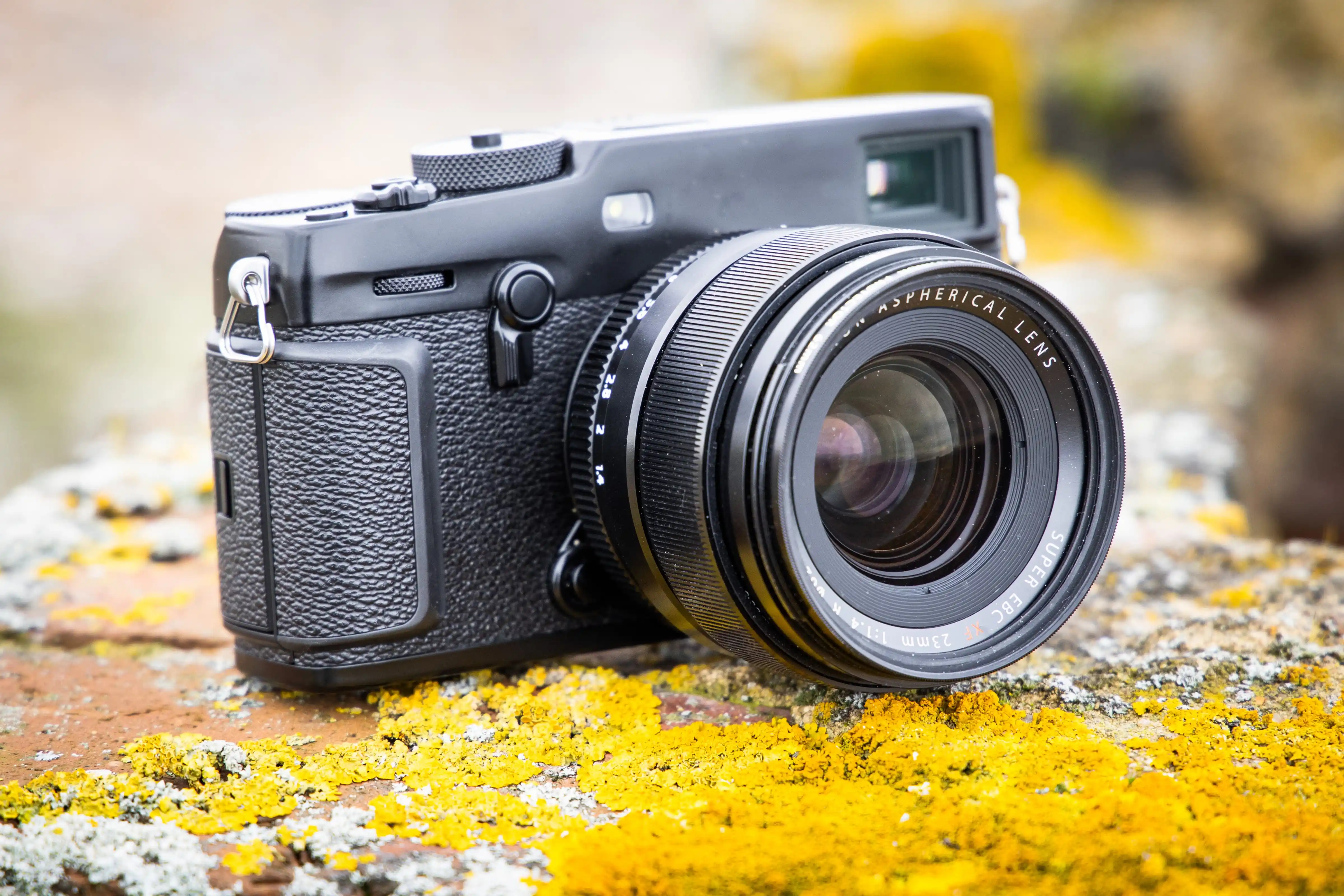
The Fujifilm X-Pro3 emerges as a fascinating blend of traditional photography and cutting-edge technology, designed for photographers who appreciate the tactile experience of shooting. This camera is a testament to Fujifilm’s commitment to innovation while respecting the classic aesthetics and ergonomics of film cameras.
Crafted with a durable titanium body, the X-Pro3 is not only robust but also exudes a timeless charm. Its unique design features a hidden LCD screen, which encourages photographers to focus more on the scene through the viewfinder and less on reviewing images immediately, (no chimping), after capture. This design philosophy harkens back to the days of film photography, where each shot was carefully considered.
The heart of the X-Pro3 is the fourth-generation X-Trans CMOS 4 sensor and X-Processor 4, delivering 26.1MP resolution and an expanded dynamic range. The camera’s autofocus system is remarkably advanced, capable of functioning in near darkness at -6EV, ensuring that not even the most challenging lighting conditions can hinder a photographer’s vision.
For those who revel in the nuances of colour and monochrome photography, the X-Pro3 offers an array of Film Simulation modes. These modes are Fujifilm’s digital tribute to its legacy in film manufacturing, allowing photographers to achieve classic film looks straight out of the camera. The addition of the Classic Negative Simulation and monochrome adjustments broadens the creative possibilities for users.
The hybrid viewfinder is another standout feature, seamlessly switching between an optical viewfinder (OVF) and an electronic viewfinder (EVF). The OVF provides a natural view of the scene, reminiscent of rangefinder cameras, while the EVF offers real-time image preview with high clarity and contrast. This flexibility is invaluable for street and documentary photographers who need to stay immersed in the moment.
Despite its retro-inspired design, the X-Pro3 does not shy away from modern capabilities. It supports 4K/30p video recording and is equipped with a weather-resistant structure, making it a reliable companion for photographers on the move. The feather-touch shutter release is a subtle yet significant enhancement, ensuring that the act of capturing an image is as intuitive as recognizing the moment worth capturing.
In conclusion, the Fujifilm X-Pro3 is a camera that appeals to both the nostalgic and the avant-garde. It is a tool that invites photographers to engage with their surroundings, trust their instincts, and enjoy the pure essence of photography. With its fusion of heritage and innovation, the X-Pro3 stands out as a distinctive choice for photographers who desire a camera with character and performance.
For those interested in exploring the Fujifilm X-Pro3 further, detailed reviews and user experiences can be found across various platforms, offering insights into the camera’s real-world performance and capabilities. Whether you are a seasoned professional or an enthusiast, the X-Pro3 is a camera that deserves consideration for its unique approach to photography in the digital age.
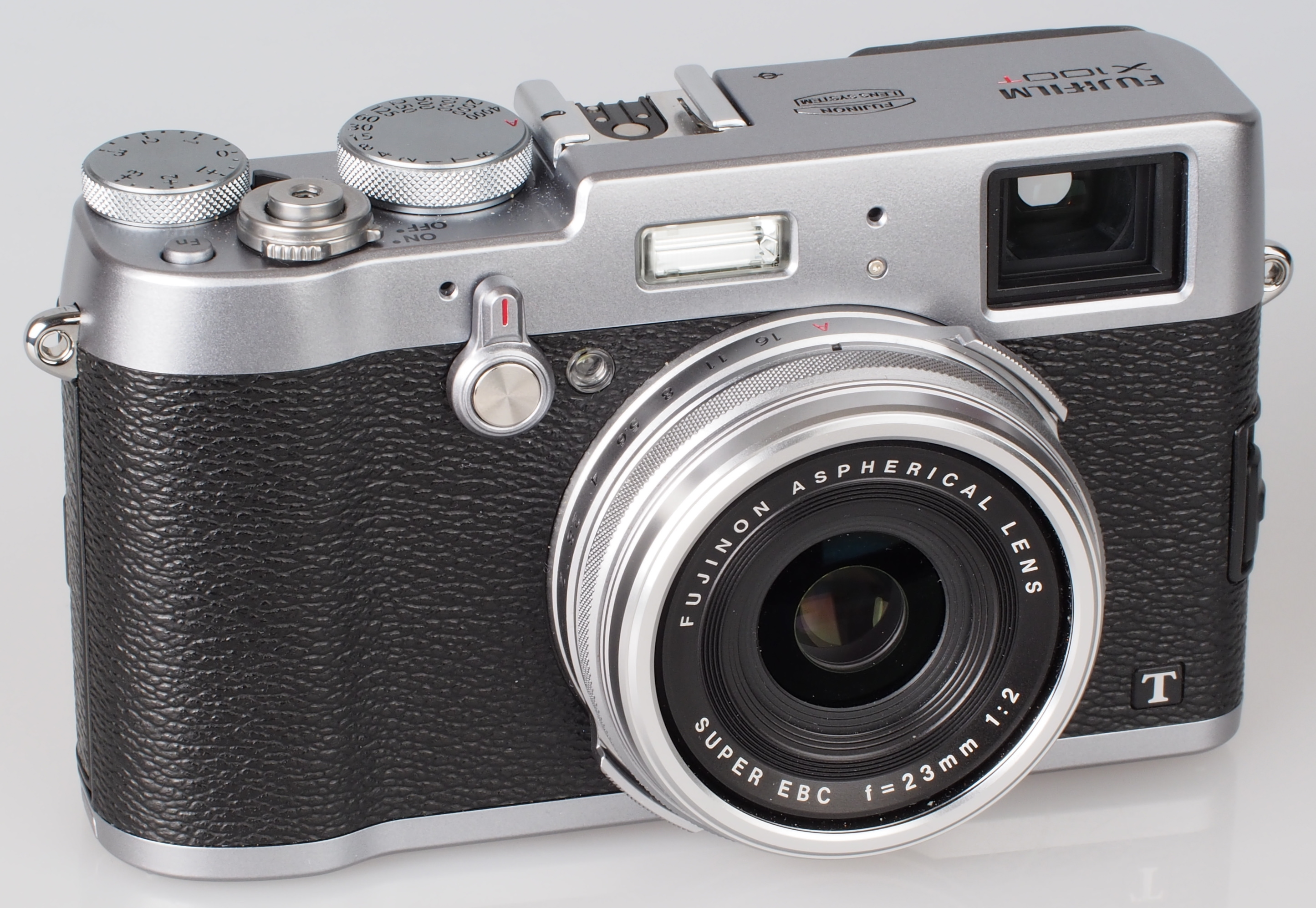
In the world of photography, where the latest technology often overshadows older models, the Fujifilm X100 Original stands as a testament to timeless design and enduring quality. It’s been over a decade since the X100 series first captivated the hearts of photographers around the globe, and yet, the original X100 remains a beloved piece of equipment that continues to inspire creativity.
The Fujifilm X100 Original was a game-changer when it was released. It offered a unique combination of a retro aesthetic, a fixed 23mm lens with an f/2 aperture, and a hybrid viewfinder that allowed photographers to switch between optical and electronic modes. Its APS-C sensor delivered exceptional image quality that rivalled that of larger DSLRs, all packed into a compact body that felt just right in the hands.
What truly sets the X100 apart is its ability to connect with the photographer. It’s not just a camera; it’s a companion on the journey of capturing moments. The tactile controls, the satisfying click of the shutter, the intuitive layout – every aspect of the X100 was designed with the user experience in mind. It encourages you to slow down, to consider your composition, and be more deliberate with each shot.
For many, the X100 is not about having the latest specs or the most megapixels; it’s about the experience of photography. It’s about how the camera feels in your hands, how it renders light and shadow, and how it captures the world as you see it. The X100 excels in street photography, portraits, and everyday snapshots, proving that the photographer’s vision is far more important than chasing after the newest gear.
The X100’s impact on photography is undeniable. It paved the way for a series of successors, each building upon the foundation of the original while staying true to the essence of what made the X100 so special. Photographers who have used the X100 often speak of it with a sense of nostalgia and affection, a clear indication of its significance in their creative lives.
As we look to the future of photography, the Fujifilm X100 Original remains a shining example of what it means to create a camera with soul. It’s a reminder that in a fast-paced world, there are still things worth holding onto, worth returning to, and worth celebrating. So here’s to the Fujifilm X100 Original – a camera that never fails to bring out the best in us, a true classic that continues to stand the test of time. 📷✨
The Fujifilm X100, released in September 2010, marked the inception of the renowned X100 series. It was a trailblazer, combining a retro aesthetic with advanced technology, featuring a 23mm f/2 fixed lens and a 12-megapixel APS-C sensor. Its hybrid viewfinder was a standout, offering both optical and electronic views, a feature that endeared it to photography enthusiasts. Despite its initial firmware issues and autofocus performance, the X100’s design and image quality set a high standard for its successors. Over the years, the series has evolved with significant upgrades in sensor resolution, autofocus points, and video capabilities, culminating in the latest X100VI model. The original X100 remains a beloved classic, appreciated for its blend of old-school charm and modern functionality.
In the world of photography, where gear often garners as much attention as the images produced, there exists a lens that has quietly captured the hearts of many photographers: the Fuji XF 50mm f2. This lens, often described as underrated, has become a steadfast companion for those who have discovered its virtues.
The Fuji XF 50mm f2 is part of Fujifilm’s esteemed X-series line of lenses, known for their compact size, robust build, and exceptional image quality. Released in January 2017, it joined the ranks of its f/2 series siblings, the XF 23mm and 35mm, offering a 76mm full-frame equivalent focal length—a perfect sweet spot for portrait and street photographers alike.
What sets the XF 50mm f2 apart is not just its focal length, but its construction. Weighing in at a mere 200 grams, this lens is a marvel of engineering, providing weather-sealing, fast autofocus, and a tactile manual aperture ring—all encased in a metal body that feels both solid and luxurious in hand.
Image quality is where the XF 50mm f2 truly shines. Photographers rave about its sharpness, even when shot wide open at f/2. The bokeh produced is creamy and pleasing, lending a professional look to portraits and isolating subjects with ease. It’s a lens that performs admirably across a variety of photographic scenarios, from intimate weddings to expansive landscapes.
Despite its prowess, the XF 50mm f2 remains surprisingly affordable, especially when compared to its larger sibling, the XF 56mm f1.2. This cost-effectiveness does not come at the expense of image quality, making it an attractive option for both amateur and professional photographers.
For those who prefer a tactile experience, the XF 50mm f2 does not disappoint. The aperture ring clicks satisfyingly into place, and the focus ring glides smoothly, allowing for precise manual focus adjustments—a feature that videographers will appreciate for its quiet operation during filming.
In conclusion, the Fuji XF 50mm f2 is a lens that deserves more recognition. It’s a testament to Fujifilm’s commitment to quality and a reminder that sometimes, the best tools are the ones that don’t demand attention but rather, quietly excel at their task. For many photographers, the XF 50mm f2 is not just an underrated lens; it’s a beloved workhorse that rarely leaves their camera. And for good reason—it’s a hidden gem that continues to prove its worth with every click of the shutter.
The Fujifilm X-Pro3 stands as a testament to the camera manufacturer’s dedication to combining classic design with modern technology. This camera has sparked discussions among photographers, with its unique features that some may love or dislike, yet it consistently delivers exceptional image quality.
At the heart of the X-Pro3 is a 26-megapixel APS-C sensor, ensuring that the images captured are of high resolution and detail. The camera’s design harks back to the film era, with a hybrid viewfinder that allows photographers to switch between optical and electronic modes. This feature caters to those who appreciate the tactile experience of traditional photography while still enjoying the benefits of digital technology.
One of the most talked-about features of the X-Pro3 is its hidden LCD screen, which encourages photographers to focus more on the moment and less on reviewing every shot—a practice known as “chimping.” This design choice aims to foster a more immersive shooting experience, reminiscent of using a film camera, where one does not see the results until the film is developed.
The X-Pro3’s body is constructed with titanium, offering durability and a premium feel. It comes in three finishes: standard black, and two Duratect-coated versions that are more scratch-resistant. The Duratec coating also gives the camera a distinctive look, whether in Dura Black or Dura Silver, though it does tend to attract fingerprints.
Image quality is where the X-Pro3 truly shines. It inherits the excellent image processing capabilities seen in its sibling, the X-T3, and adds an in-camera HDR mode. The ‘Classic Neg’ film simulation mode is another highlight, providing images with a nostalgic and timeless aesthetic.
Autofocus performance is robust, though it requires a bit more user input compared to some of its peers. For video enthusiasts, the X-Pro3 can capture impressive footage, despite its primary focus on still photography.
The X-Pro3 is a camera that may polarize opinions with its design choices, but it cannot be denied that it is a powerful tool for photography. It is a camera that challenges the norms and encourages photographers to engage with their subjects and the environment, rather than the camera itself.
For those who value a camera that offers both a connection to photography’s past and the technological advancements of the present, the Fujifilm X-Pro3 is a compelling choice. It is a camera that reminds us that photography is not just about the gear but the vision and experience of the photographer.
Photography is an art form that captures moments, tells stories, and expresses emotions through images. It’s a powerful medium that has evolved significantly with technological advancements. The question of whether anyone can learn to take good photographs surfaces frequently in the world of photography. The answer is a resounding yes, with a caveat: learning photography, like any skill, requires patience, practice, and a willingness to learn.
Understanding the Basics The journey to taking good photographs begins with understanding the basic principles of photography. This includes learning about exposure, composition, lighting, and the rule of thirds. Exposure is the amount of light that reaches the camera sensor, and it is controlled by the aperture, shutter speed, and ISO settings. Composition involves arranging elements within the frame in a pleasing manner. Lighting is crucial as it can dramatically alter the mood and feel of a photograph. The rule of thirds is a compositional guideline that suggests dividing the frame into nine equal segments for a balanced composition.
Embracing Technology In today’s digital age, cameras have become more accessible and user-friendly. From smartphones with advanced camera features to professional DSLRs and mirrorless cameras, there’s a wide range of tools available for budding photographers. Understanding your equipment and its capabilities is essential. Many cameras offer automatic modes that handle the technical aspects, allowing you to focus on framing your shot. However, to truly excel in photography, learning to use manual settings will give you greater control over the final image.
Practice Makes Perfect Practice is key to improving your photography skills. Regularly taking photos and experimenting with different techniques will help you understand what works and what doesn’t. Analyzing your photos critically and seeking feedback from others can provide valuable insights into areas of improvement. Additionally, studying the work of renowned photographers can serve as inspiration and a learning tool.
The Creative Process Photography is not just about technical proficiency; it’s also about creativity and personal expression. Developing a unique style and perspective is part of the learning process. This involves experimenting with different subjects, perspectives, and editing techniques. Post-processing software like Adobe Lightroom and Photoshop can enhance your photos and bring your creative vision to life.
Learning Resources There are numerous resources available for those interested in learning photography. Online tutorials, workshops, books, and photography courses can provide structured learning and hands-on experience. Joining photography communities and participating in photo challenges can also be beneficial for growth and motivation.
In conclusion, photography is a skill that anyone can learn. It combines both technical knowledge and creative expression. With the right mindset, tools, and resources, you can embark on a journey to capture the world through your lens. Whether you aspire to be a professional photographer or simply want to improve your hobby, the path to taking good photographs is open to all who are willing to explore it. Remember, every great photographer starts as a beginner, so pick up your camera and start shooting!


















































































































 a world without pictures is like coffee without cream and sugar, bitter