

The Nikkor 50mm f/1.4 is one of Nikon’s longest‑running and most influential lens designs. Its lineage stretches back to the 1960s and the classic Nikkor‑S normals, through Ai/Ai‑S updates and the AF‑D era, to the later AF‑S f/1.4G. Across generations the optical formula and photographic role remained remarkably consistent: a fast, characterful “normal” lens that balances low‑light utility, subject isolation, and an approachable size and price. Below is a comprehensive history, technical outline, and practical guide to the various versions and what each brings to the bag.
Origins and design pedigree (mid‑1960s → 1970s)
- Nikon’s early fast 50mm normals (Nikkor‑S Auto family) established the basic optical character: a relatively simple symmetric/near‑symmetric optical formula with emphasis on center sharpness, smooth midtones, and a pronounced but pleasing rendering of out‑of‑focus areas.
- These lenses were aimed at serious amateurs and professionals who wanted a versatile, fast standard that performed across reportage, portrait, and everyday work.
- The pre‑Ai and Ai updates in the 1970s modernized aperture coupling and metering compatibility with newer Nikon bodies while retaining the core optical layout.
The D‑series era (AF 50mm f/1.4D) — 1990s design continuity

- Optical lineage: the AF‑D version carried forward the same basic optical formula as its predecessors, refined for modern coatings and production tolerances.
- Mechanical character: compact, lightweight, and optically efficient. The D version was built with a focus on speed and simplicity rather than feature density.
- Autofocus: mechanical‑drive AF that relies on a camera body motor; as a result it performs very well on pro and semi‑pro Nikon bodies with built‑in AF motors but will not autofocus on entry‑level bodies lacking that motor.
- Rendering: generally snappier and more contrasty than early manual versions, with a slightly busier bokeh compared with later rounded‑blade designs. Strong center performance, usable edges that sharpen when stopped down.
Practical note: the D‑series is beloved for its compactness, price on the used market, and fast, reliable AF on compatible bodies. It’s a classic choice for photographers who want a straightforward, light, and speedy 50.
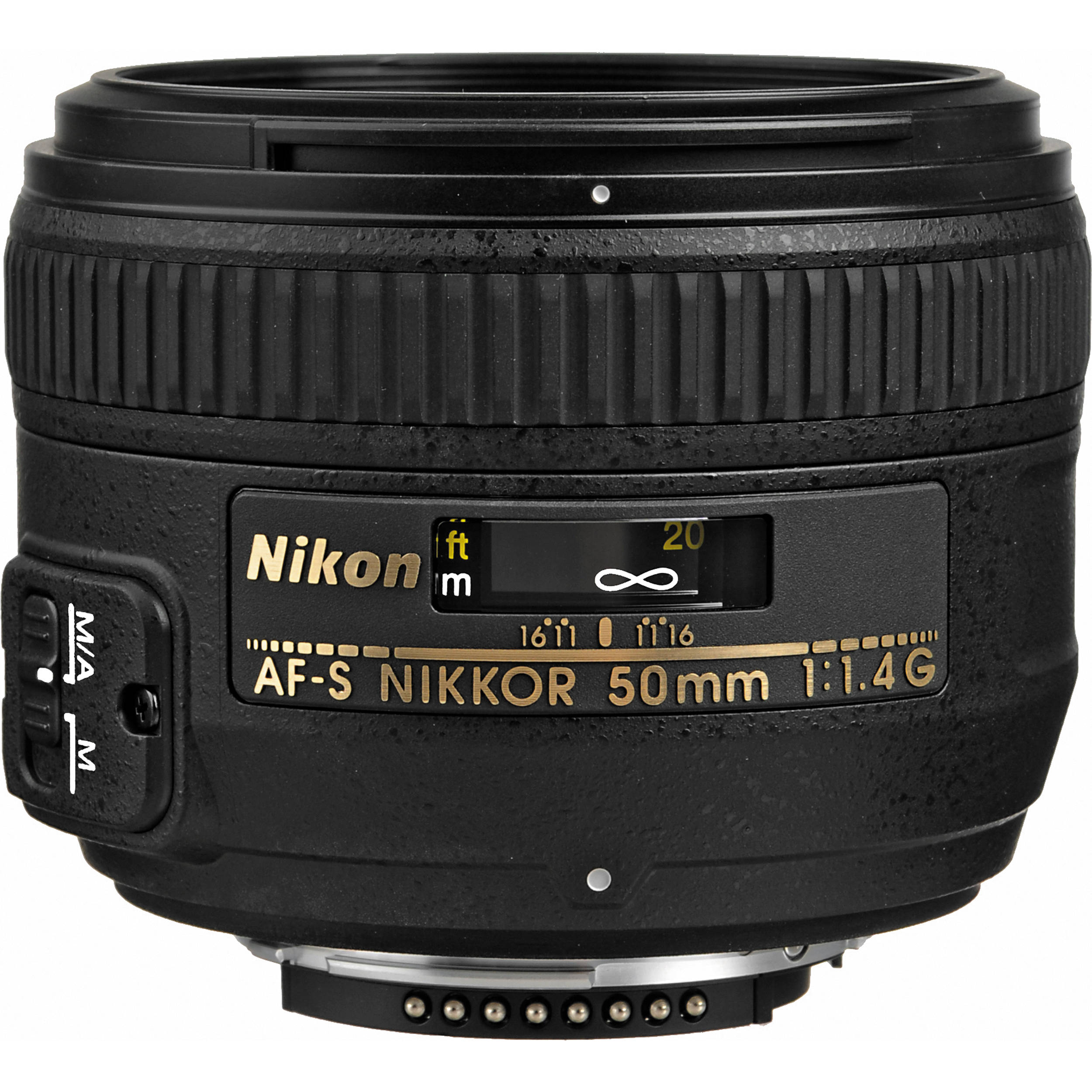
The AF‑S f/1.4G era (2008 onward) — modernization and different character
- Introduction of Silent Wave Motor (SWM): internal AF motor provides autofocus on all Nikon DSLRs and produces quieter operation suitable for video and mirrorless adaptation.
- Optical and aperture design: the G version uses a rounded‑blade diaphragm and coatings tuned for smoother out‑of‑focus highlights and more pleasing bokeh. The optical formula remains related to the historical design but glass and coatings produce a softer, more filmic rendering wide open.
- Handling and feel: heavier and larger than the D, with a more modern external finish, internal elements arranged for SWM operation, and improved resistance to flare in practical shooting.
- Rendering tradeoff: the G version is often described as moodier wide open—softer at f/1.4 but more flattering for portraits—while the D version appears a little crisper at the same aperture on bodies that can make full use of its AF motor.
Practical note: the AF‑S f/1.4G appeals to users who need compatibility across Nikon’s entire DSLR line, quieter AF, and a more romantic rendering for portraits and low‑light mood work.
Optical constants that stayed the same
- Focal length and maximum aperture: 50mm at f/1.4 across all major iterations. This kept the lens squarely in the “normal” class with the same compositional role throughout decades.
- Core optical layout: all versions use a relatively traditional formula optimized for even illumination, pleasing midtones, and a priority on usable center sharpness at large apertures. Differences between versions are largely the result of updated coatings, diaphragm geometry, motor arrangements, and manufacturing tolerances rather than wholesale optical redesign.
What changed between versions — a practical checklist
- Autofocus drive: mechanical drive (D) → internal SWM (G). This affects compatibility and AF feel.
- Diaphragm shape: fewer, more rounded blades in newer models → smoother highlight bokeh.
- Coatings and glass quality: improved coatings in later models reduce flare and control contrast; subtle changes in microcontrast alter perceived sharpness and subject rendering.
- Build and weight: later AF‑S bodies are generally heavier and larger to house the SWM and updated mount mechanics.
- Image character: older designs tend toward slightly more clinical center sharpness wide open; newer G variants favor tonal rendering and smoother defocus at the expense of absolute f/1.4 edge resolution.





Strengths that persisted across the family
- Versatility: ideal for portraits, street, low‑light, and general use.
- Speed: f/1.4 aperture gives real low‑light advantage and creative shallow depth of field.
- Accessibility: historically priced to appeal to a wide range of photographers, and widely available used.
- Character: each version has a recognizable “50” look—neutral enough for documentary work, characterful enough for portraiture.
Weaknesses and practical trade‑offs
- Wide‑open edge softening: most versions show less-than‑stellar corner performance at f/1.4; stopping down improves uniformity.
- Chromatic aberration: fast 50mm designs from earlier eras exhibit longitudinal CA in high‑contrast scenes; modern raw converters reduce the pain but it remains a behavior to watch for.
- Competing modern optics: newer 50mm designs, especially mirrorless Z‑mount optics, surpass older 50mm f/1.4s in edge resolution, flare control, and aberration correction—tradeoffs that matter for high‑pixel sensors and critical technical work.
Use cases by version (practical guidance)
- AF‑D 50mm f/1.4: choose if you value compactness, snappy AF on motorized bodies, and a lighter carry‑weight. Great for street, reportage, and photographers on pro DSLRs who appreciate classic handling.
- AF‑S 50mm f/1.4G: choose if you need full compatibility across Nikon bodies, quieter AF for hybrid use, and a smoother portrait rendering. Better for video work and photographers who prefer more forgiving wide‑open character.






Modern relevance and adaptation
- On newer mirrorless bodies (with adapter) both lenses remain useful, but the older D version will rely on camera AF‑motor emulation or slower contrast‑based AF performance with some adapters; the AF‑S G version typically adapts more gracefully and often supports faster AF on current bodies.
- Photographers who prize character and a specific “look” still reach for vintage Nikkor 50 f/1.4s. Those who demand pixel‑level edge performance or want the smallest, lightest option for razor‑sharp editorial work may prefer newer designs or Z‑mount alternatives.
Closing thought
The Nikkor 50mm f/1.4 family is a study in continuity: the same photographic idea—an accessible, fast, characterful “normal” lens—repeated and refined across eras. Each iteration answers slightly different needs while keeping the same creative soul. For photographers who value restraint, presence, and an honest optical character, any 50mm f/1.4 from Nikon’s lineage can be a reliable companion—choose the version whose compromises best serve your practice.






























































 a world without pictures is like coffee without cream and sugar, bitter