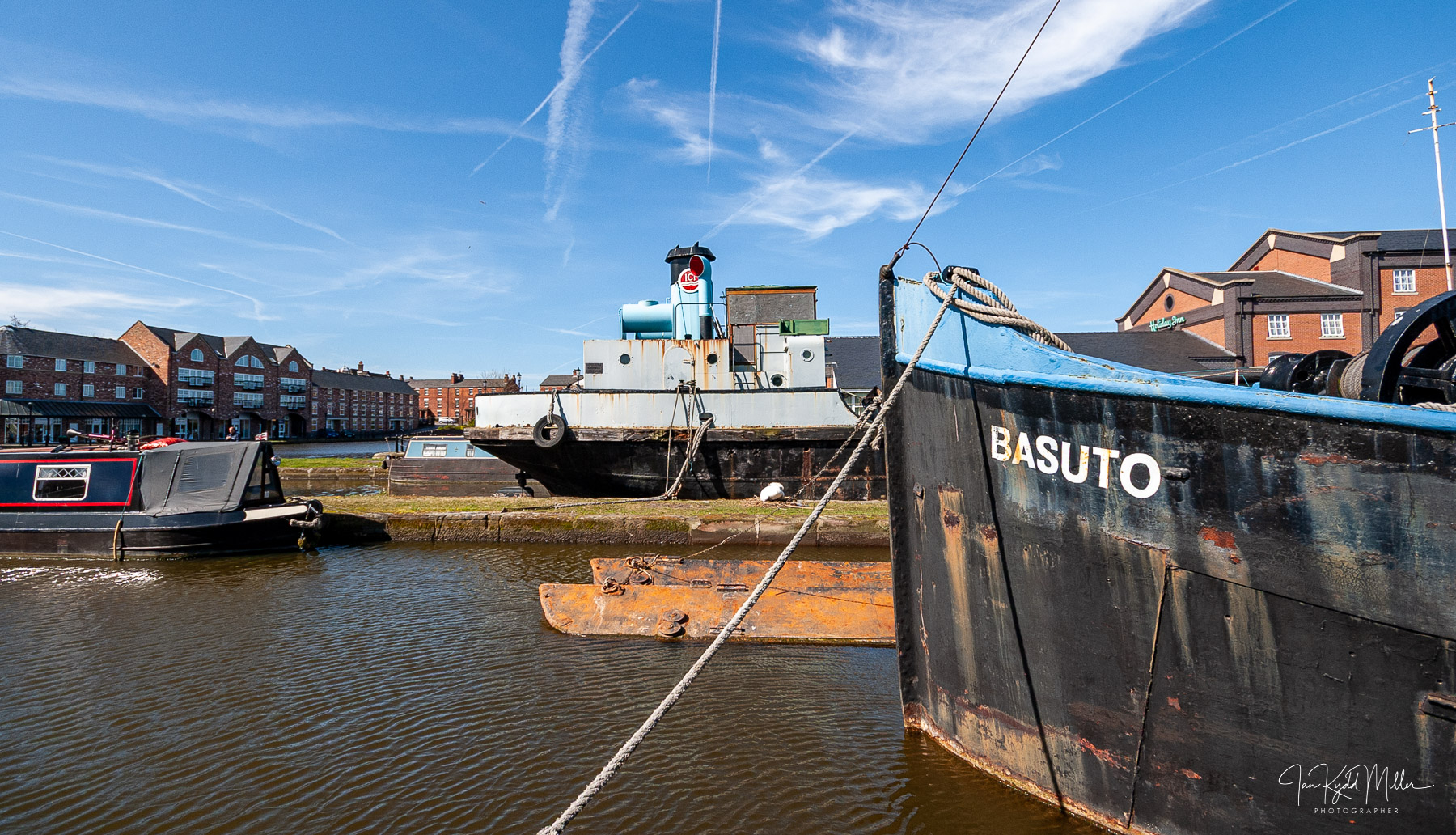
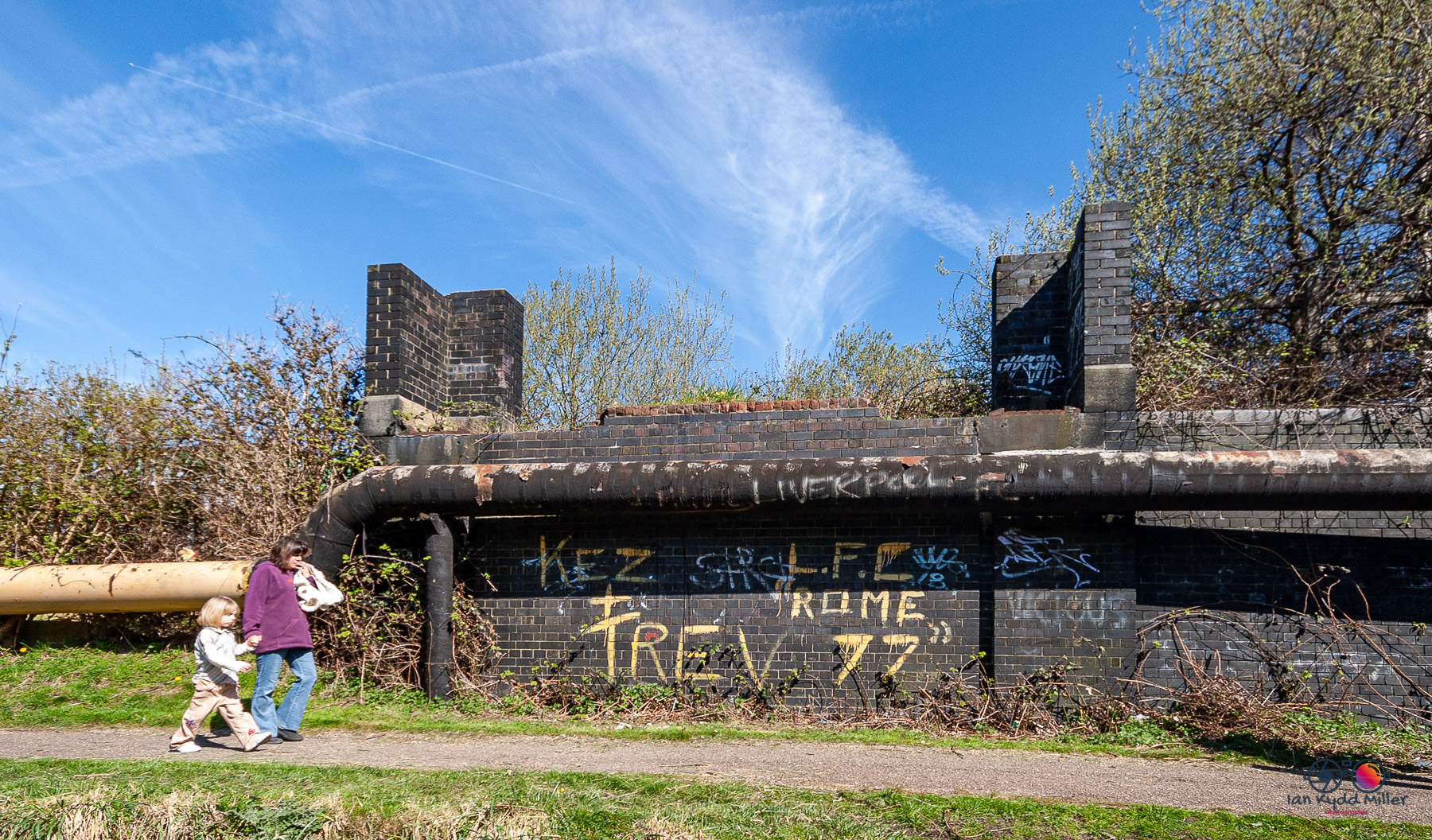
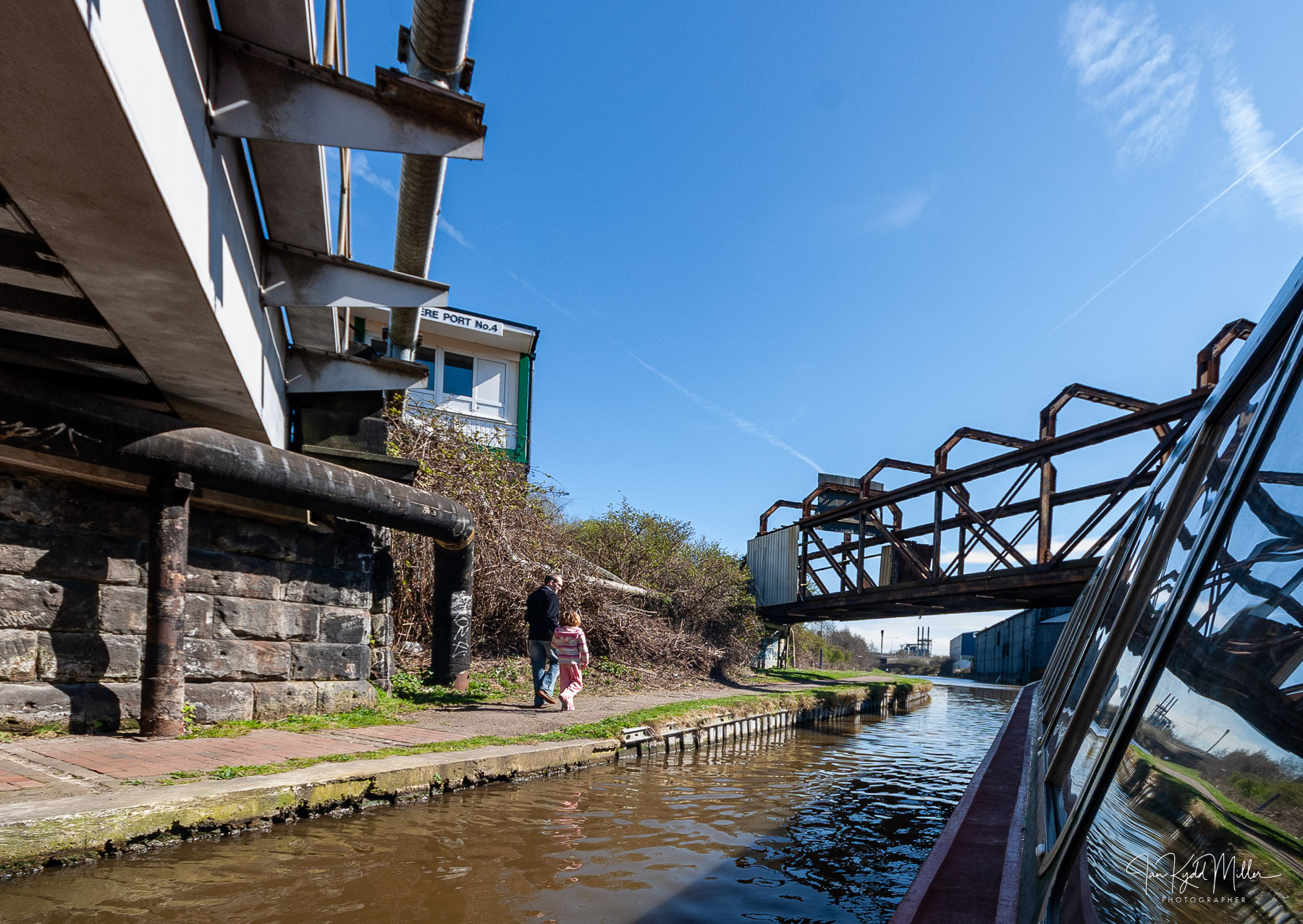
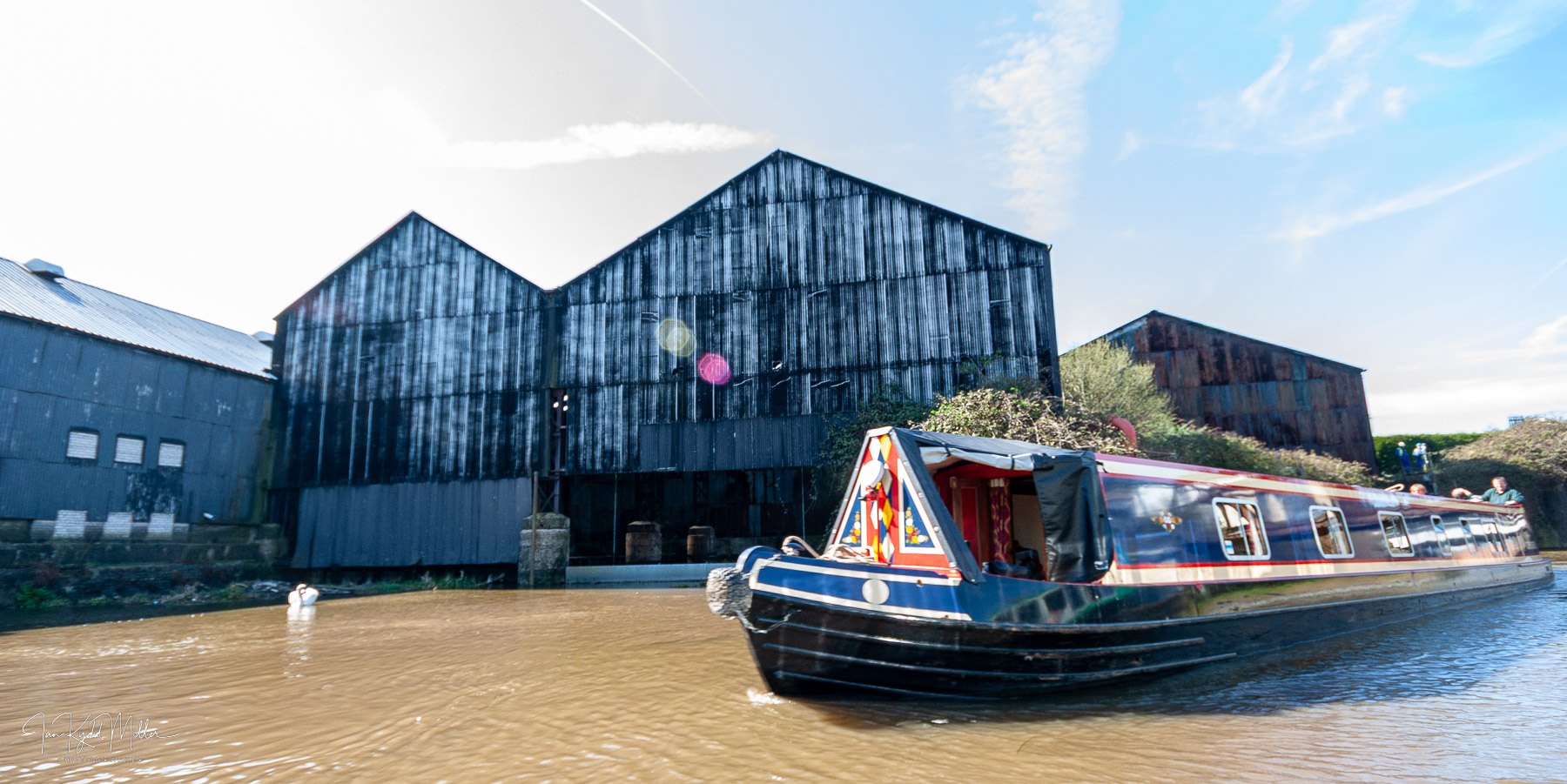
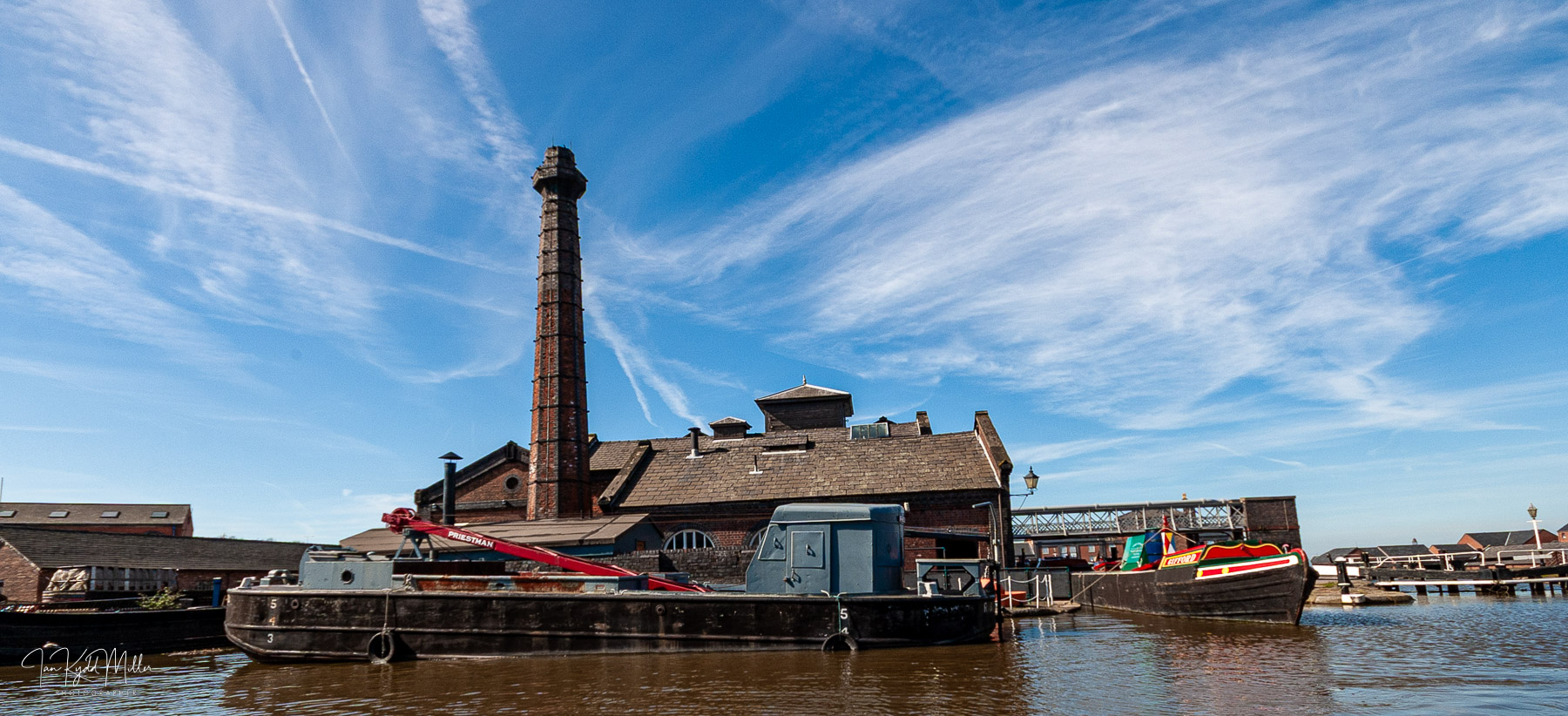
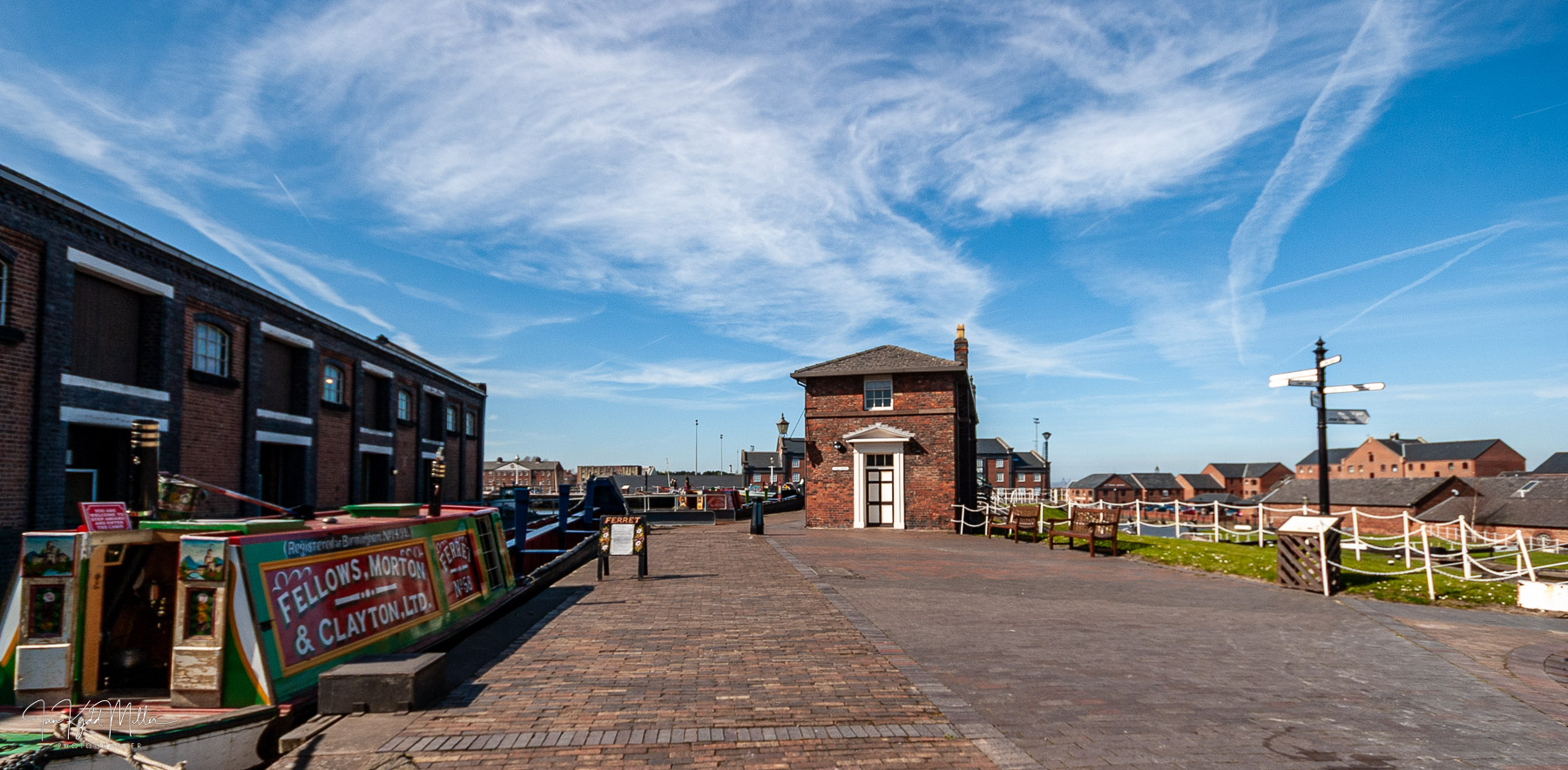
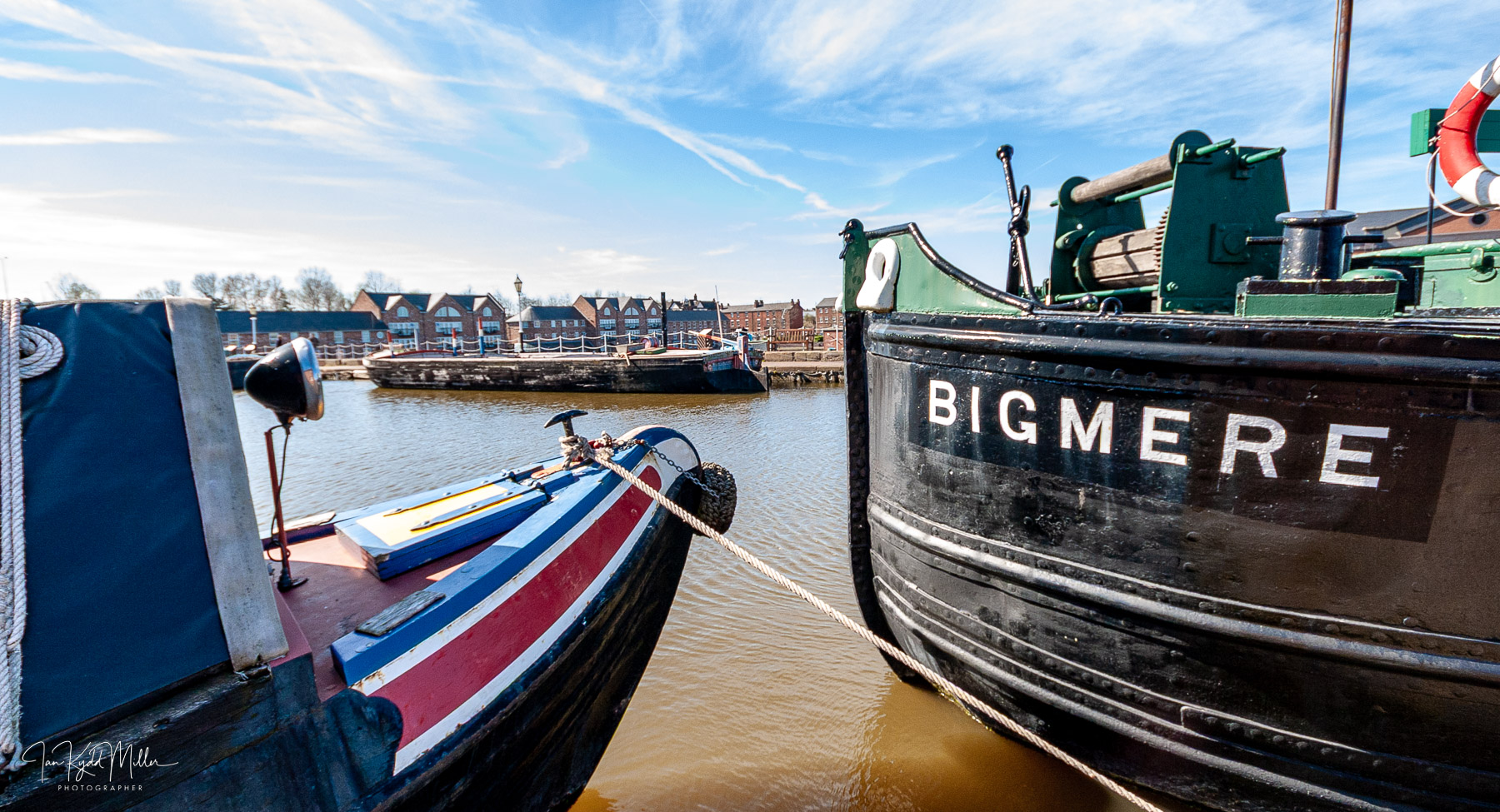
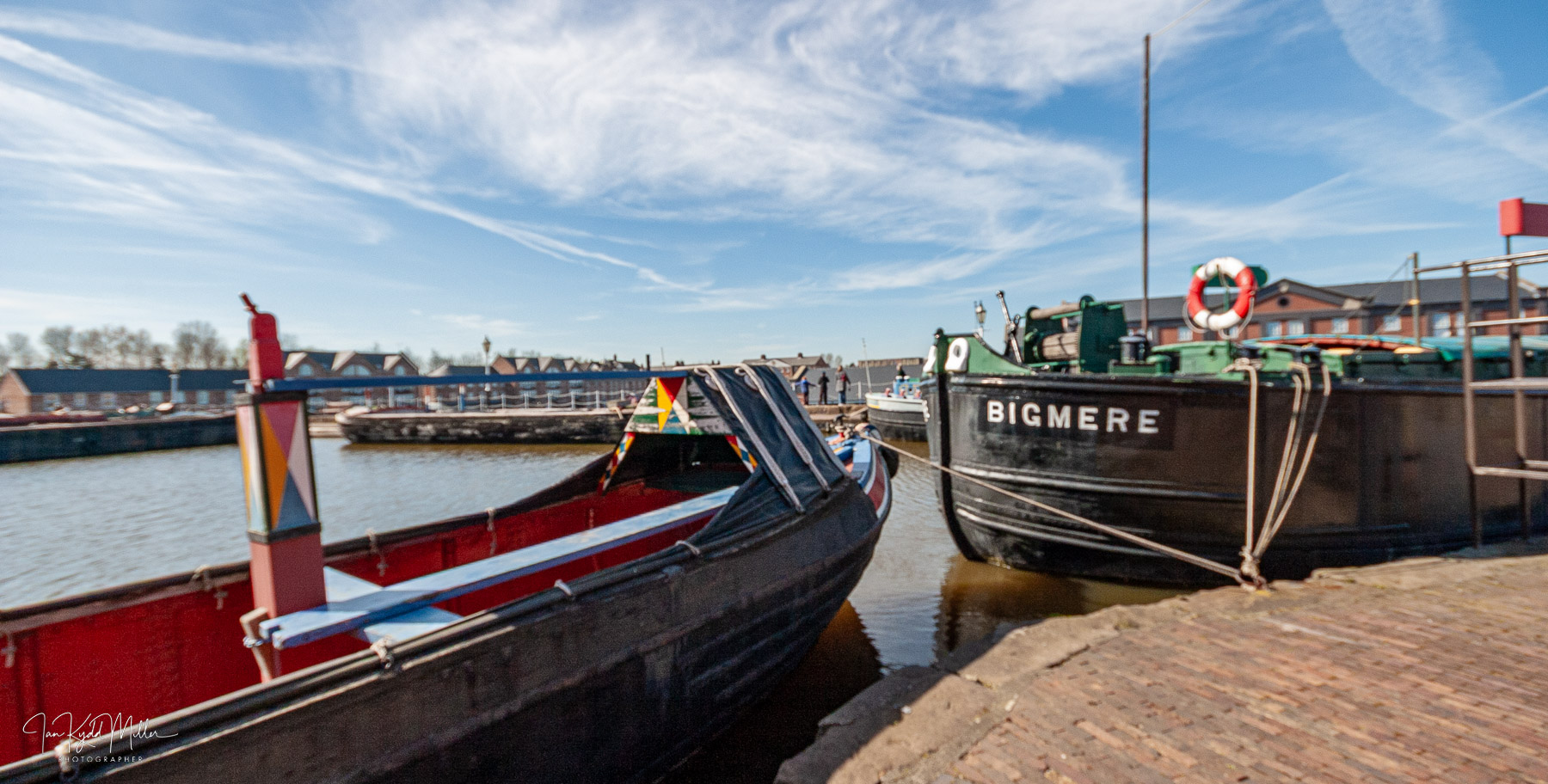
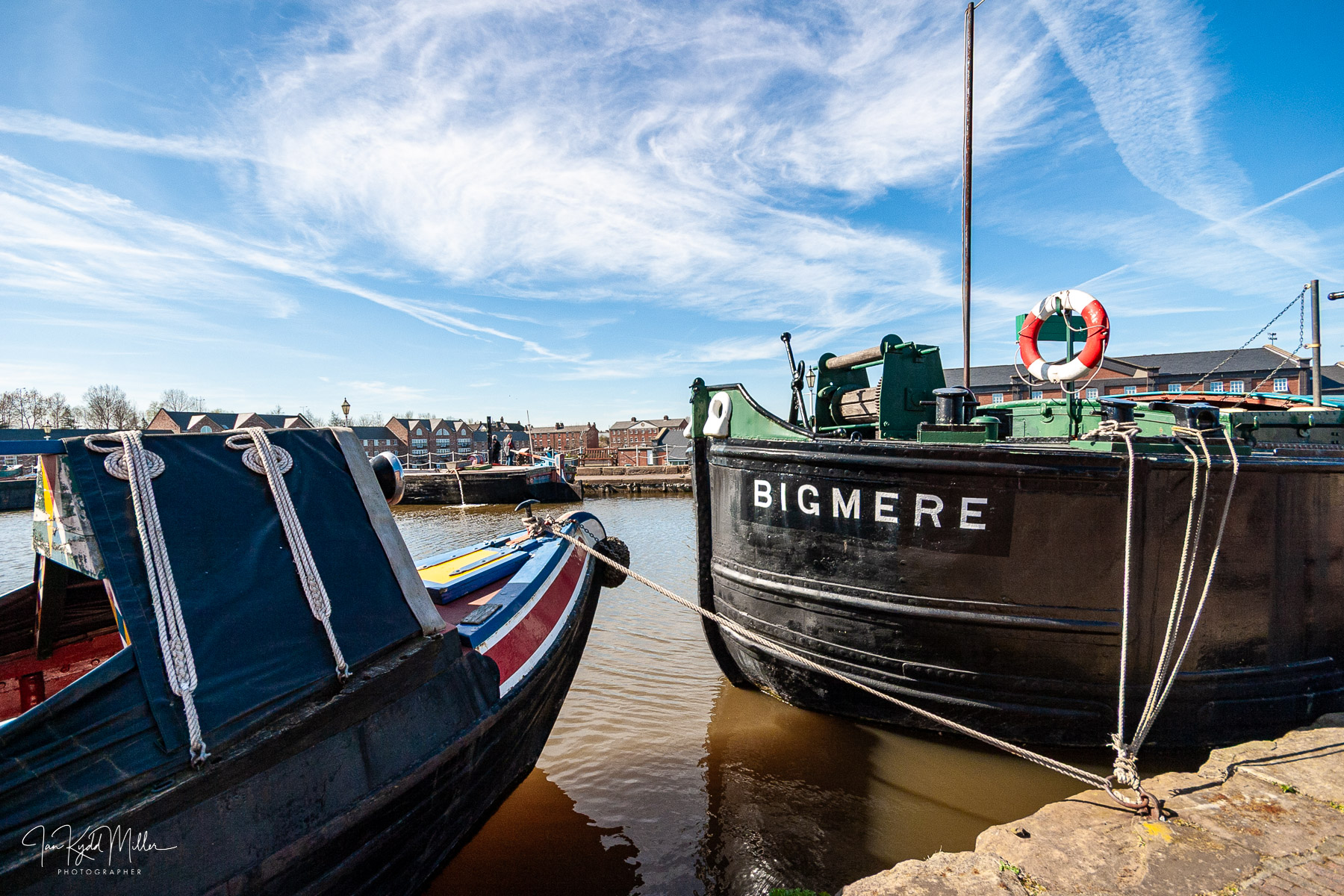
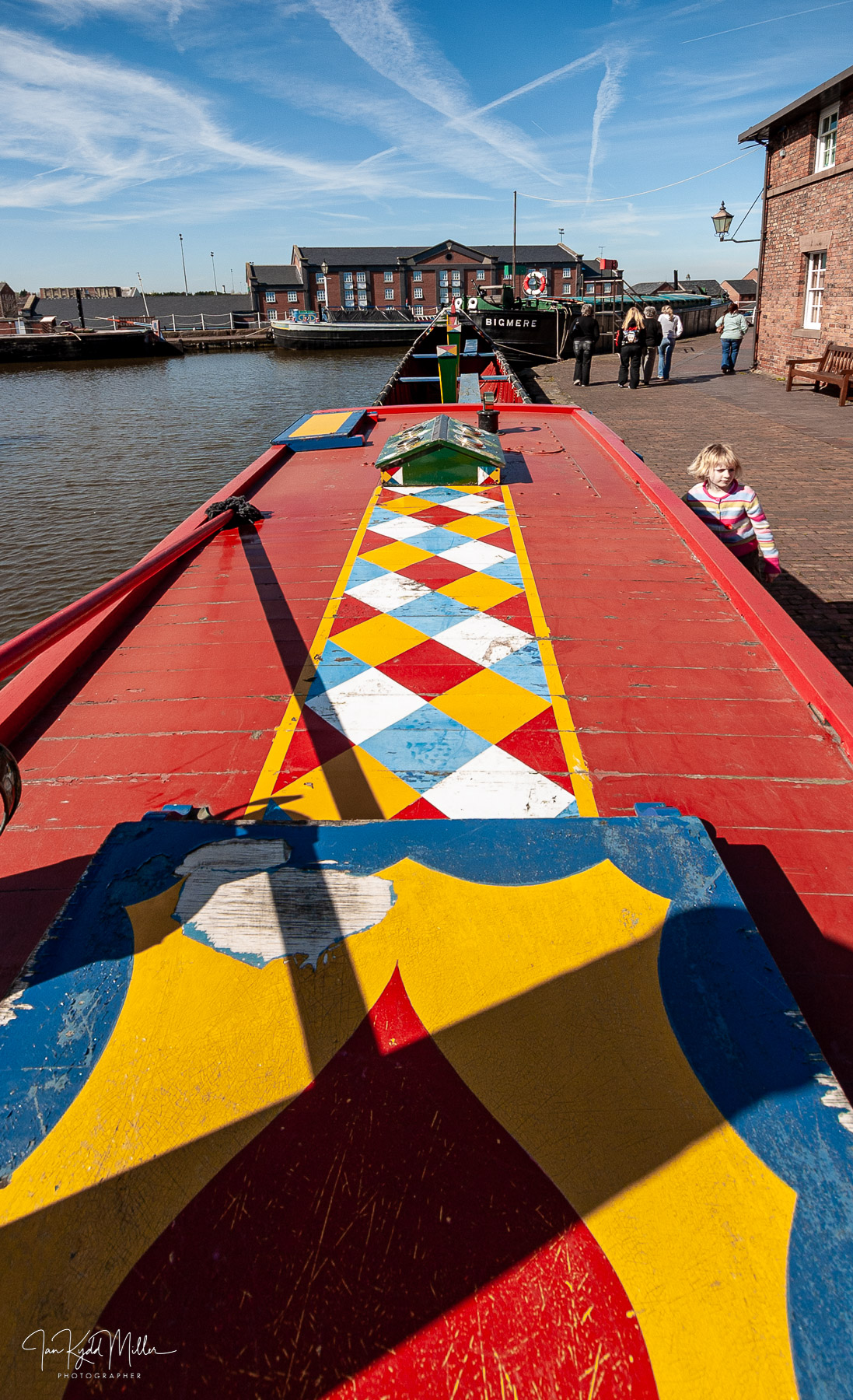
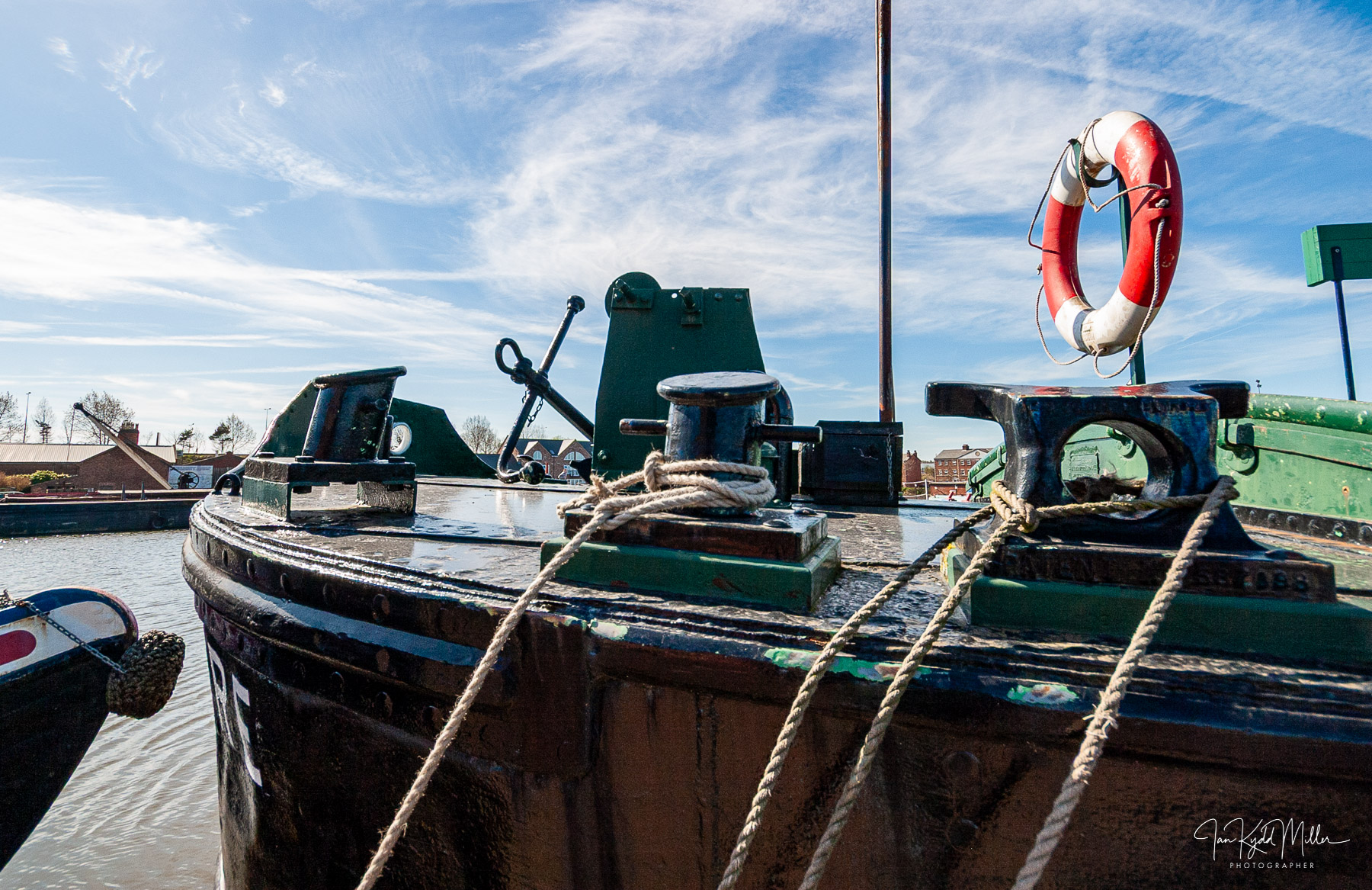
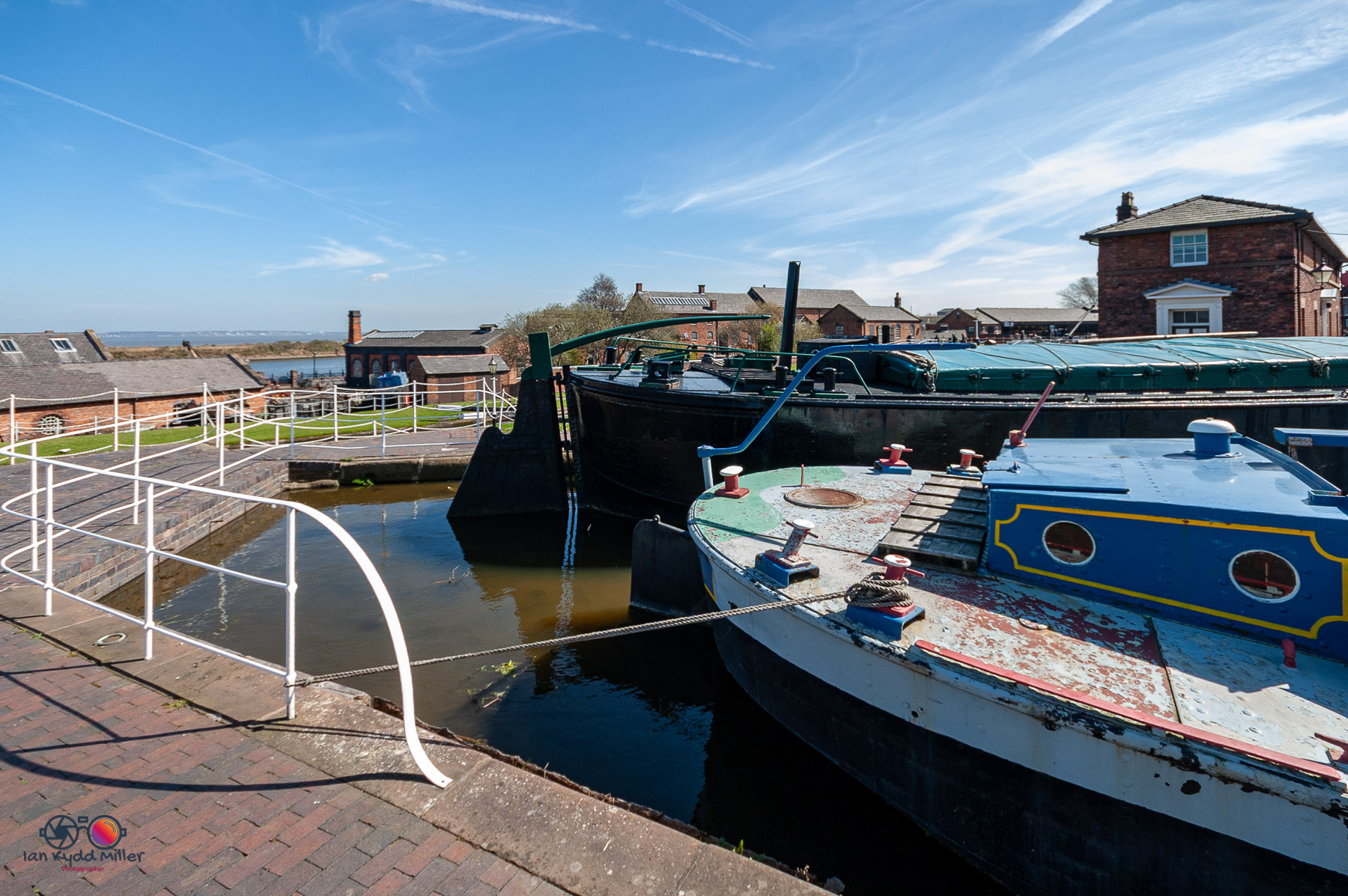
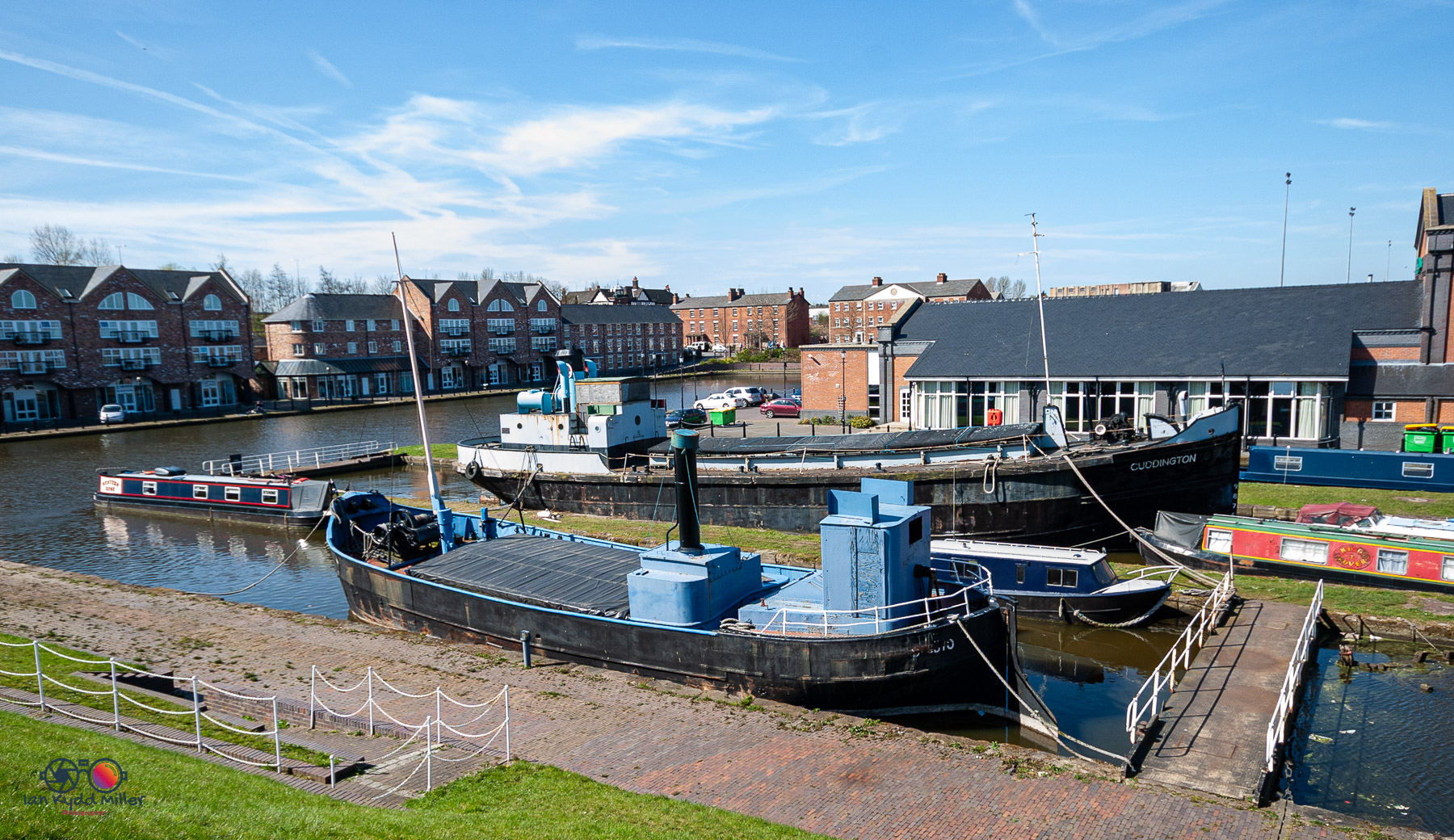
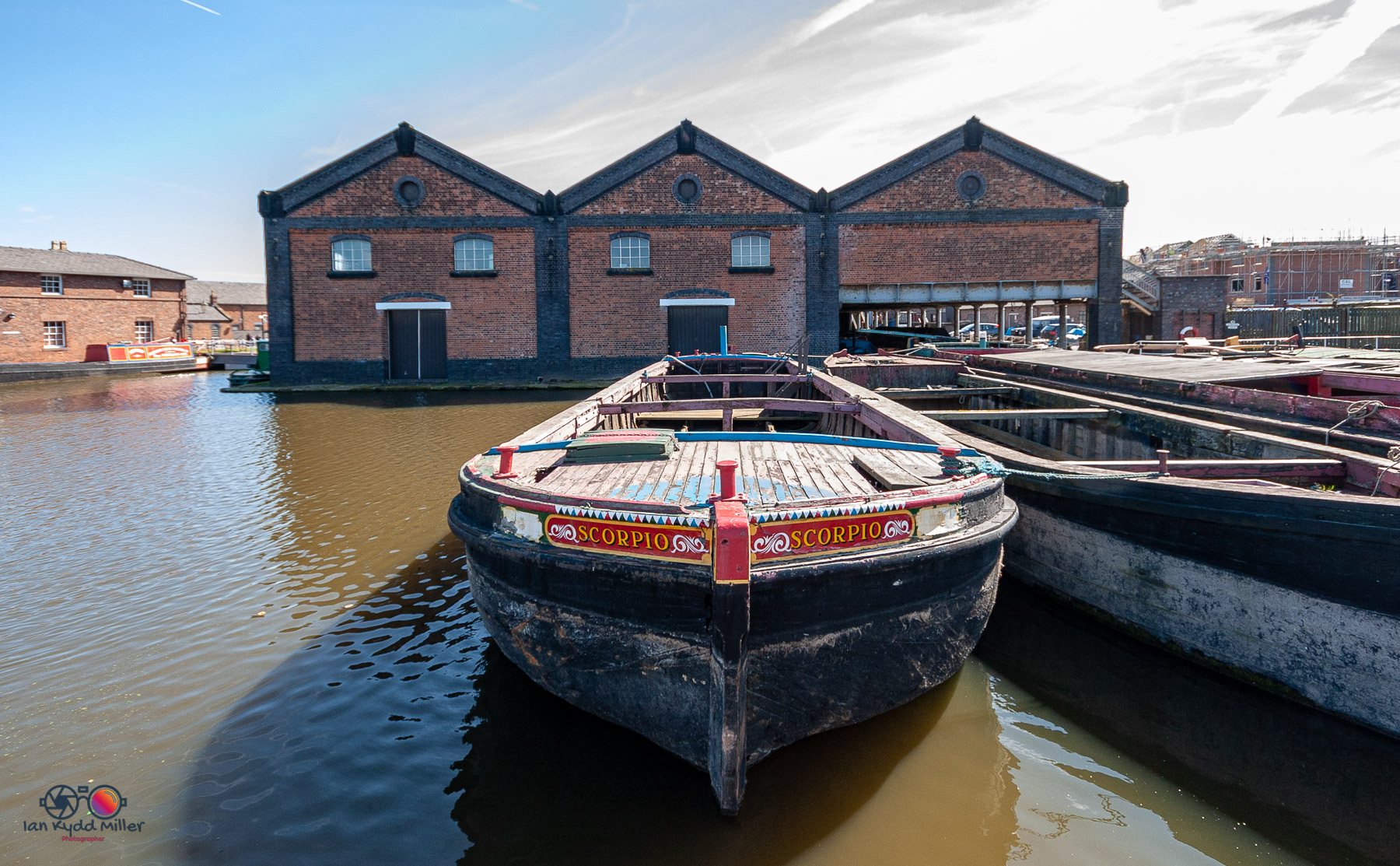
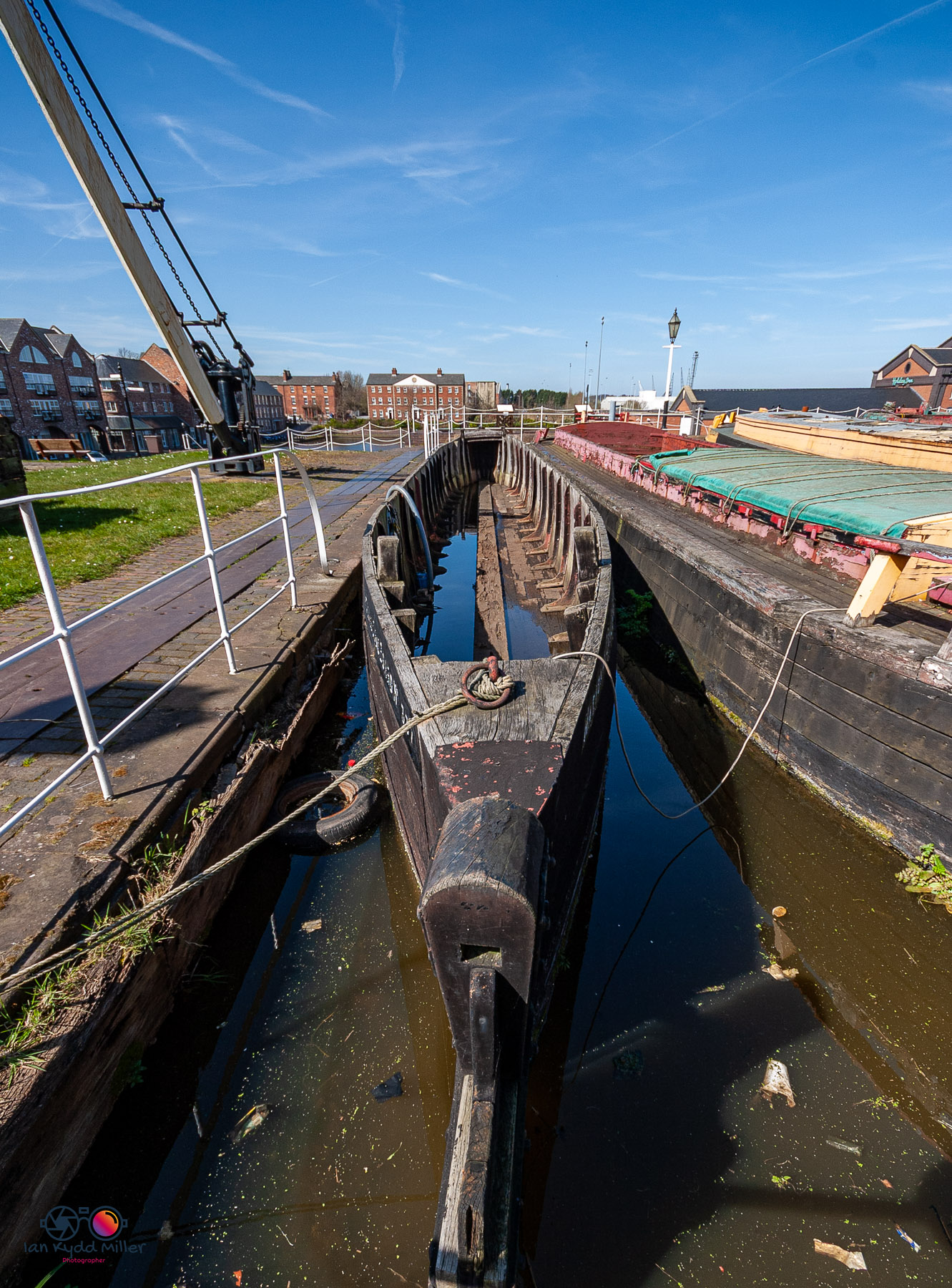
There’s something poetic about photographing history with history. On a quiet day in Ellesmere Port, I wandered the grounds of the National Waterways Museum with a Canon EOS 10D slung over my shoulder—a camera that, like the boats it documented, once defined a turning point in its field.
🏛️ The Museum: Where Britain’s Canal Life Comes Alive
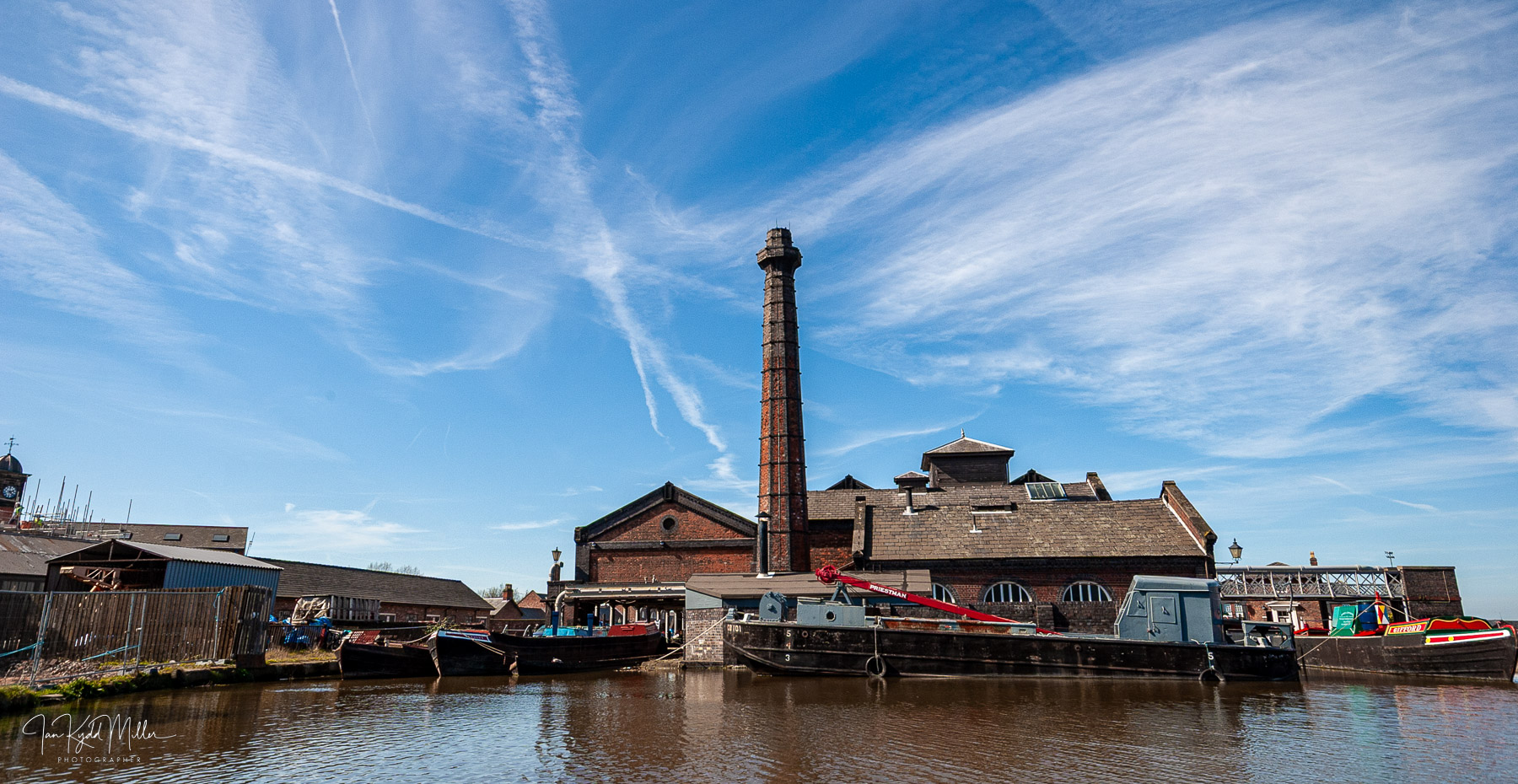
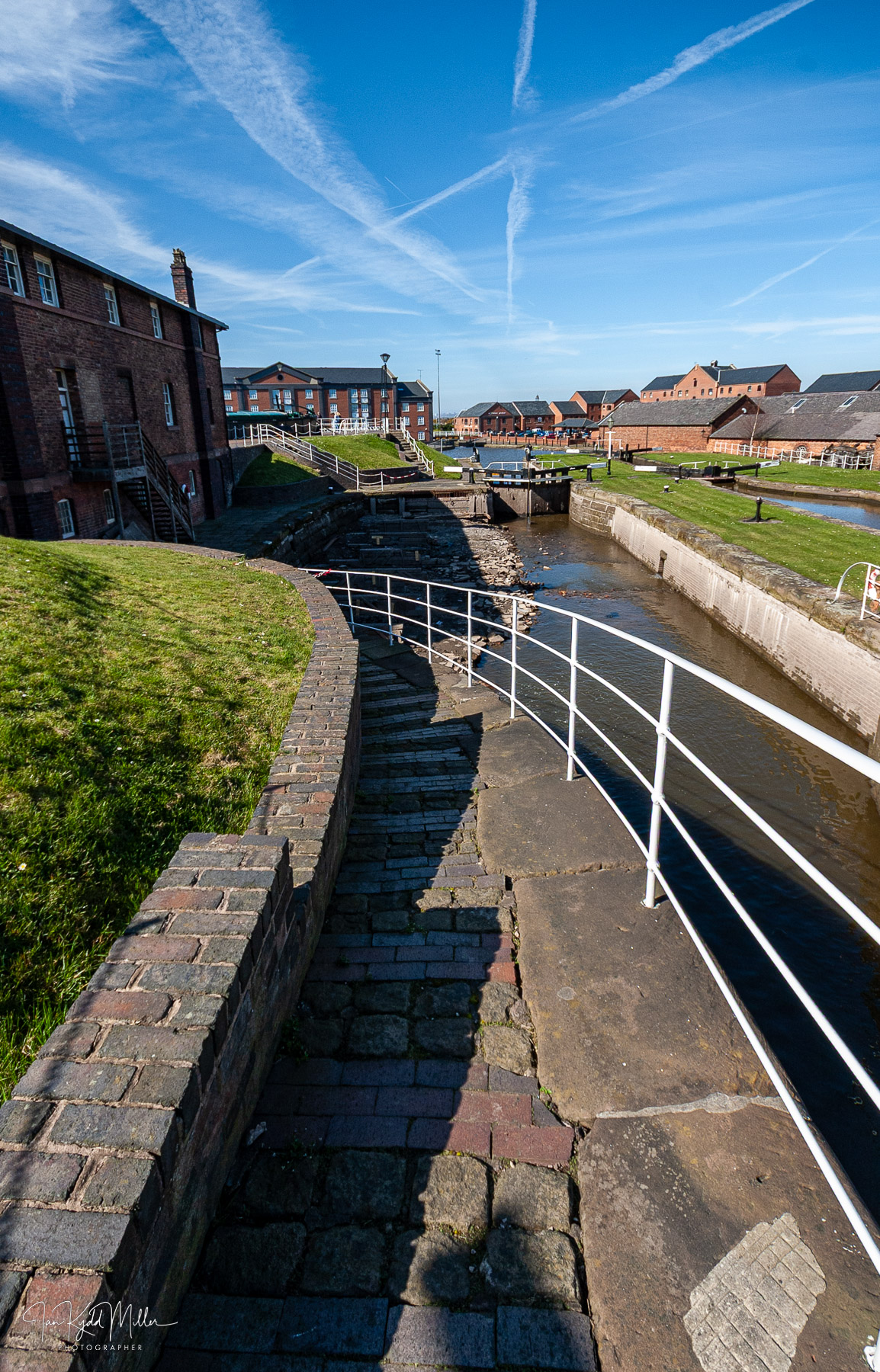
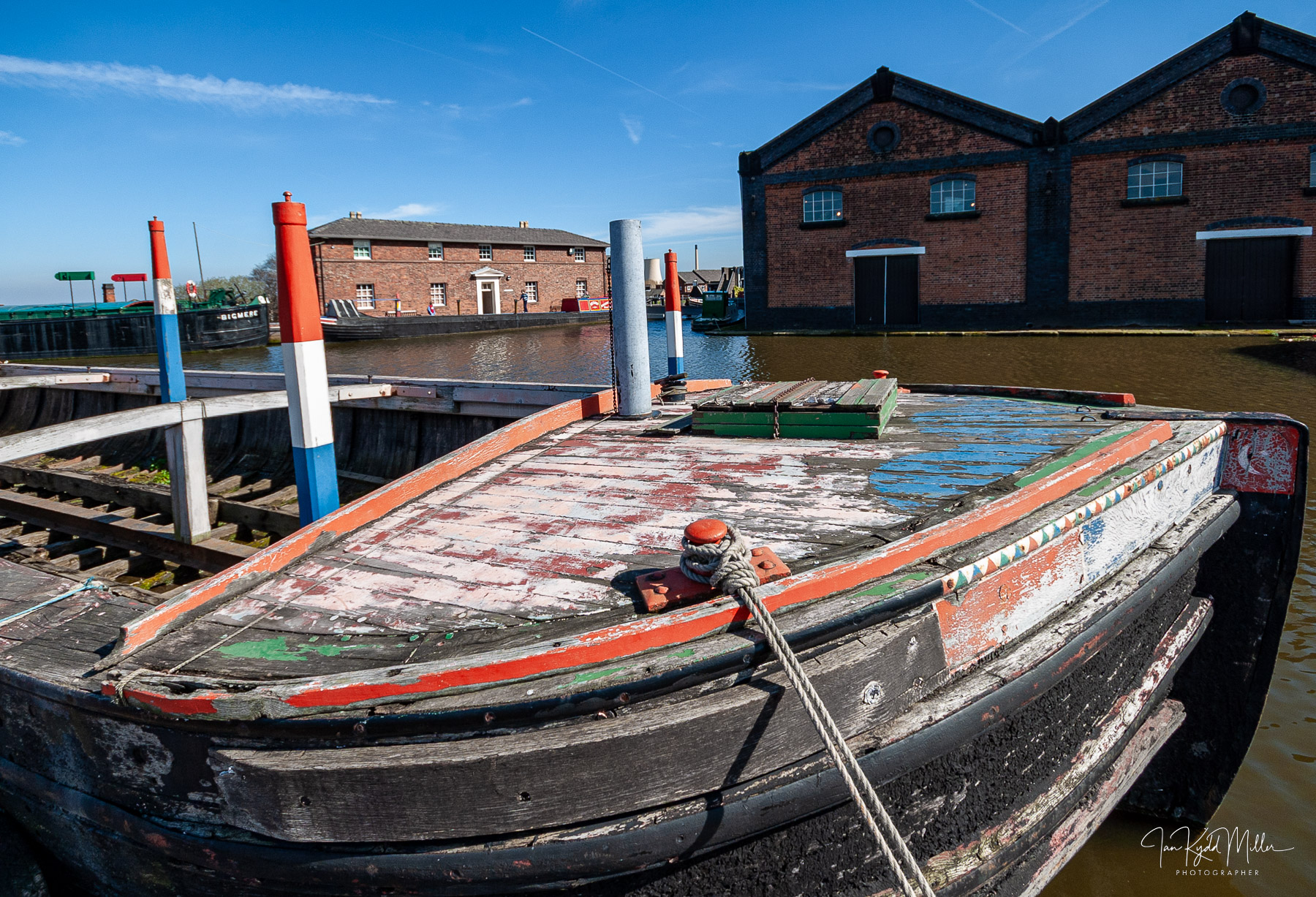
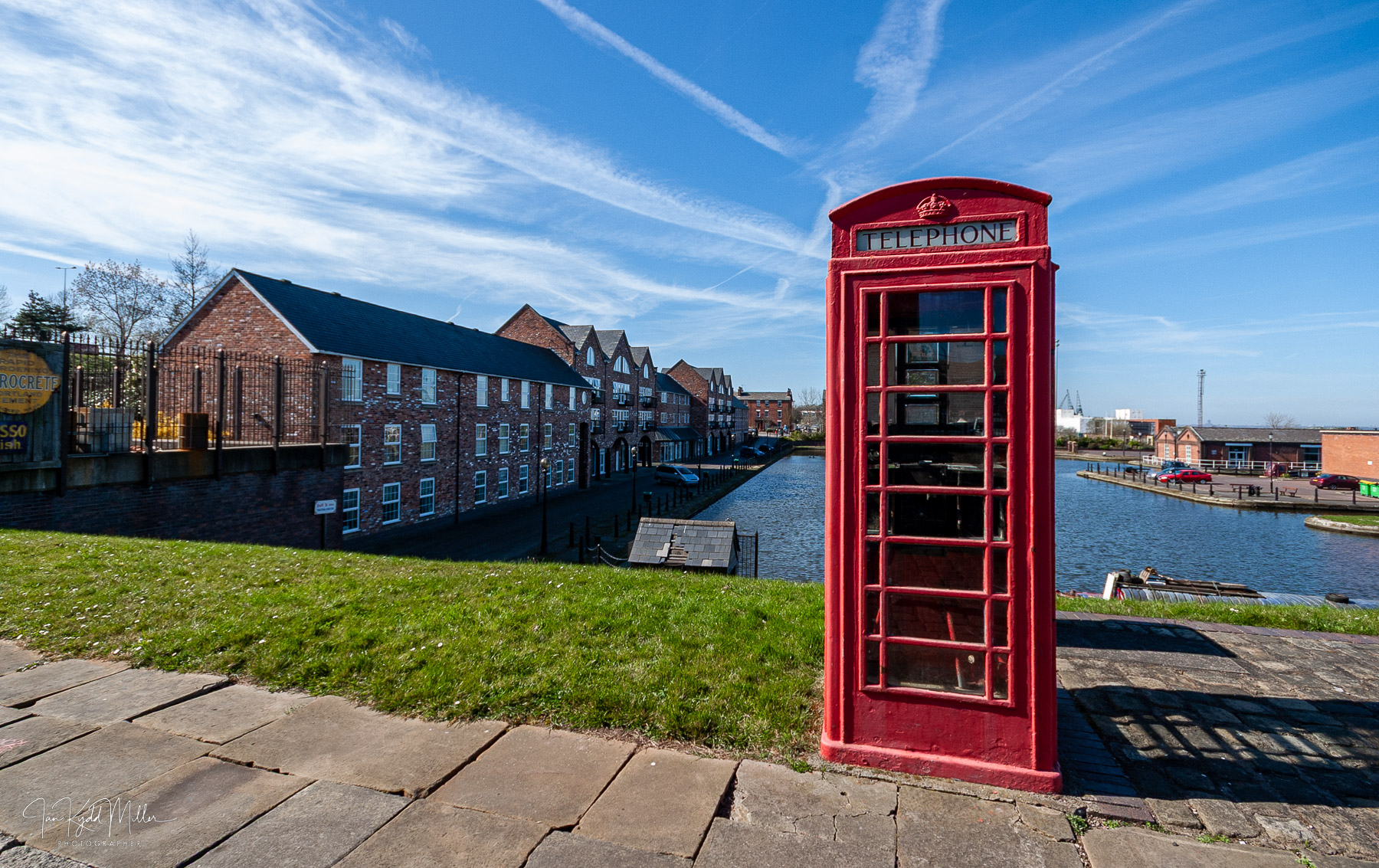
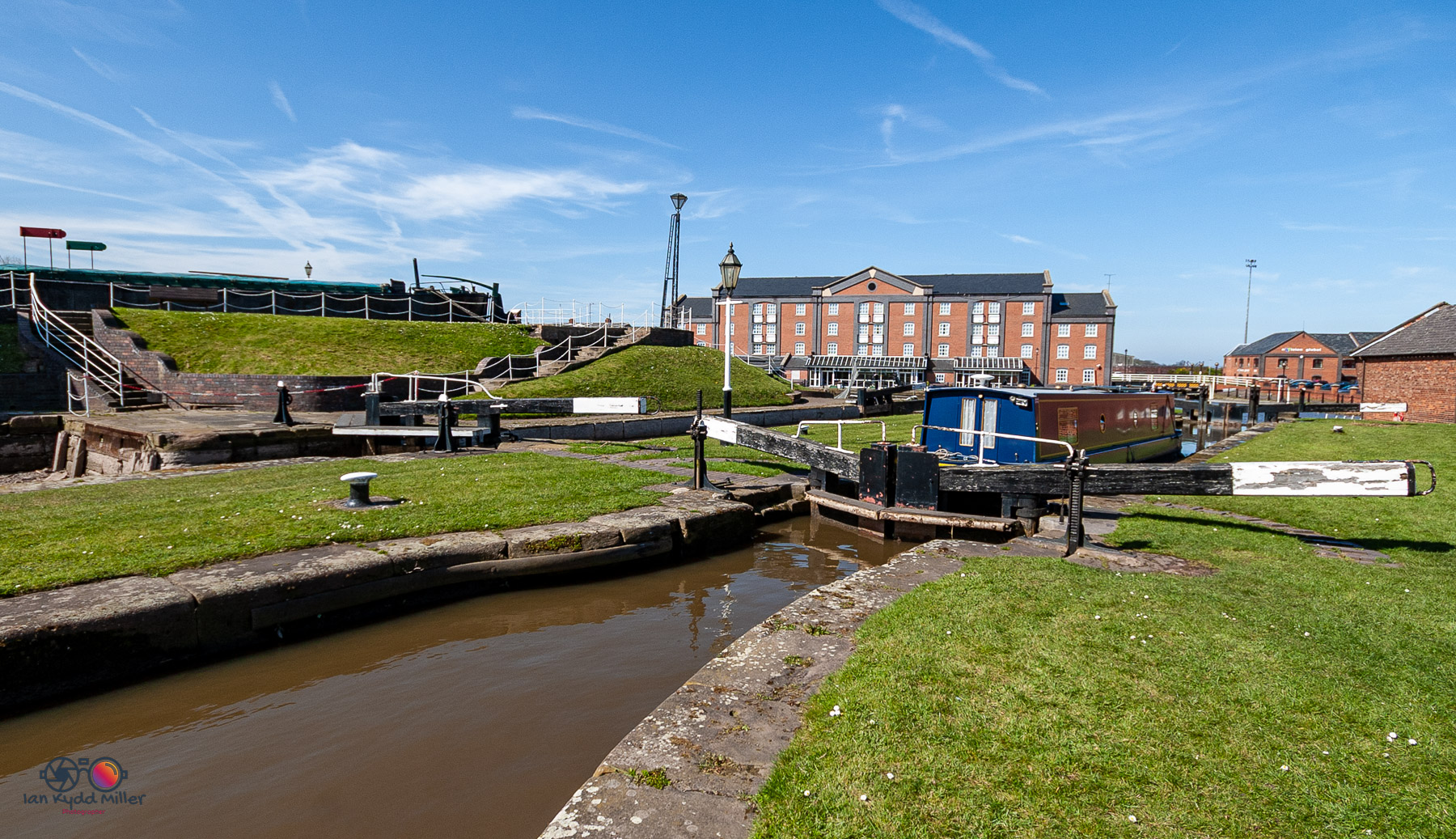
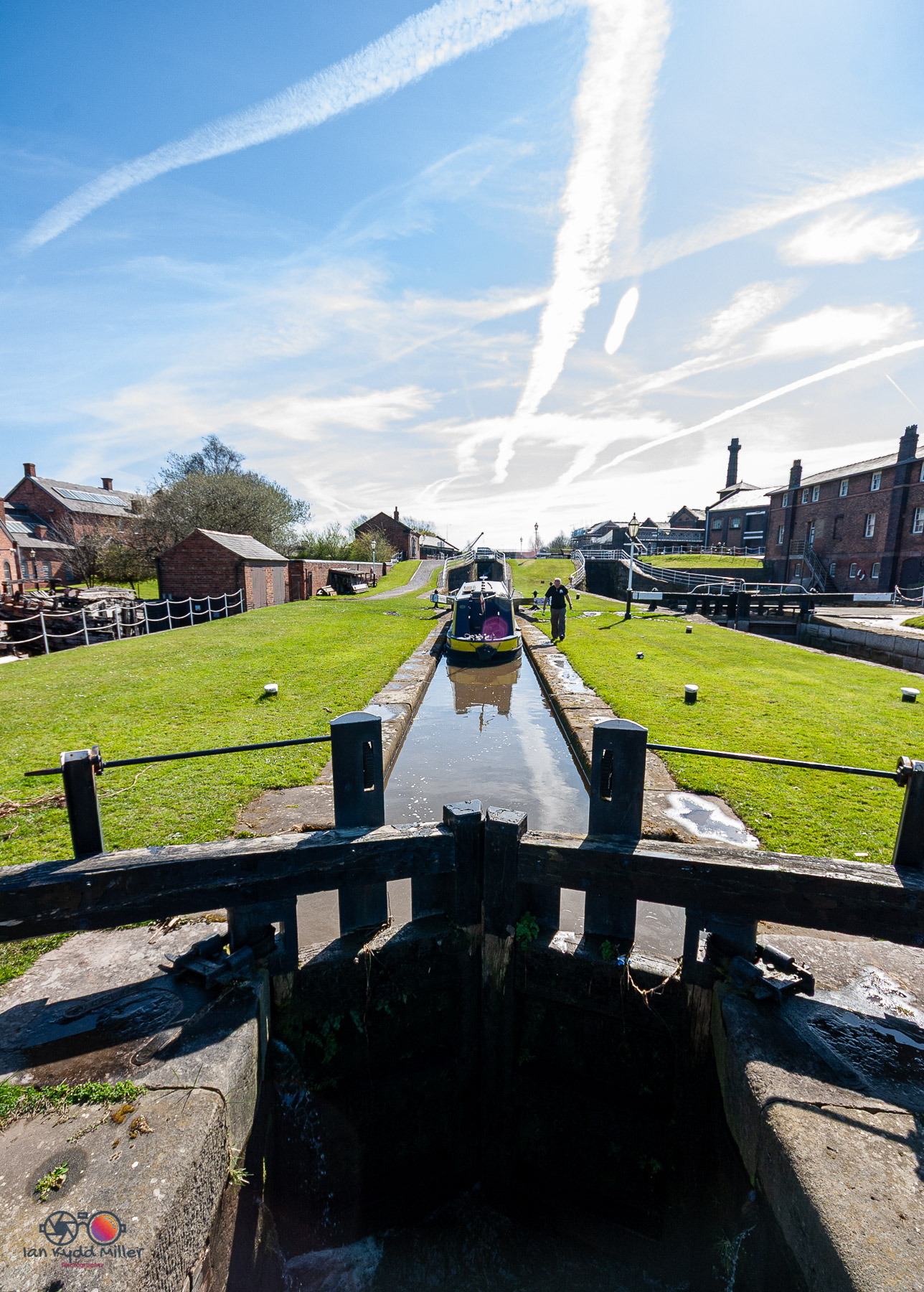
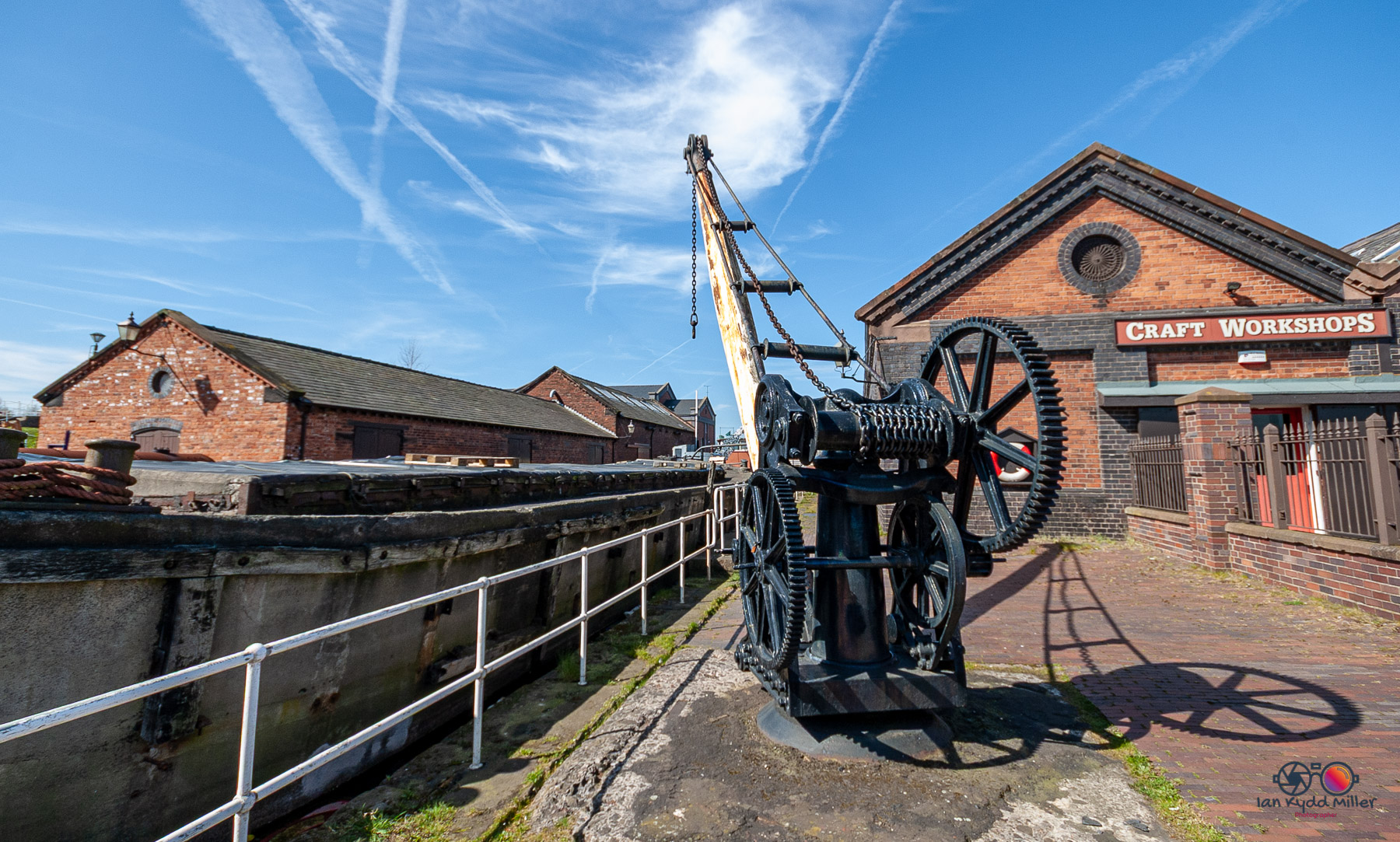
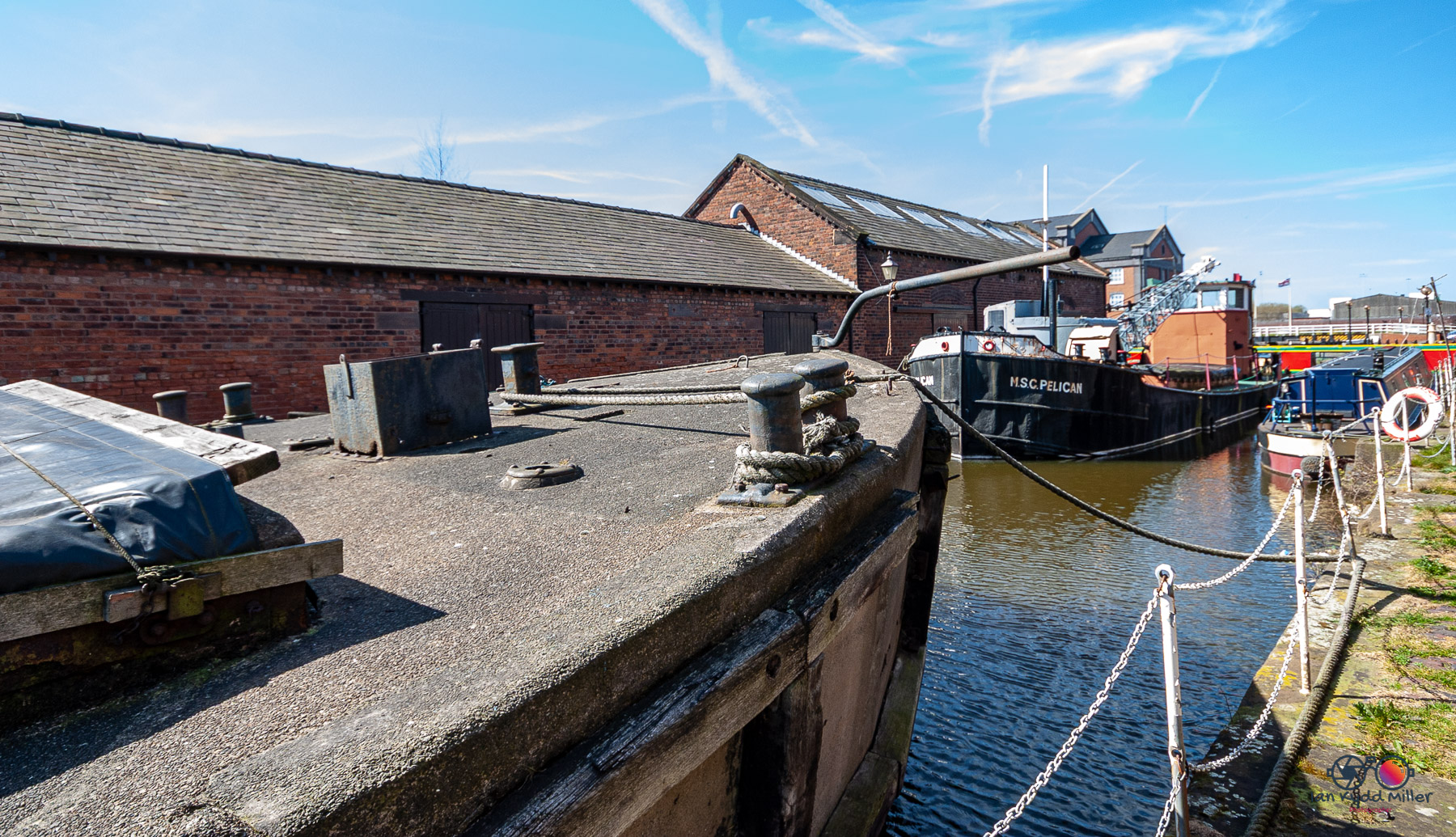
Nestled at the northern end of the Shropshire Union Canal, the National Waterways Museum is a living archive of Britain’s inland navigation history. The site itself is a story—designed by civil engineer Thomas Telford, the docks were active well into the 1950s.
Walking through the museum feels like stepping into a working time capsule:
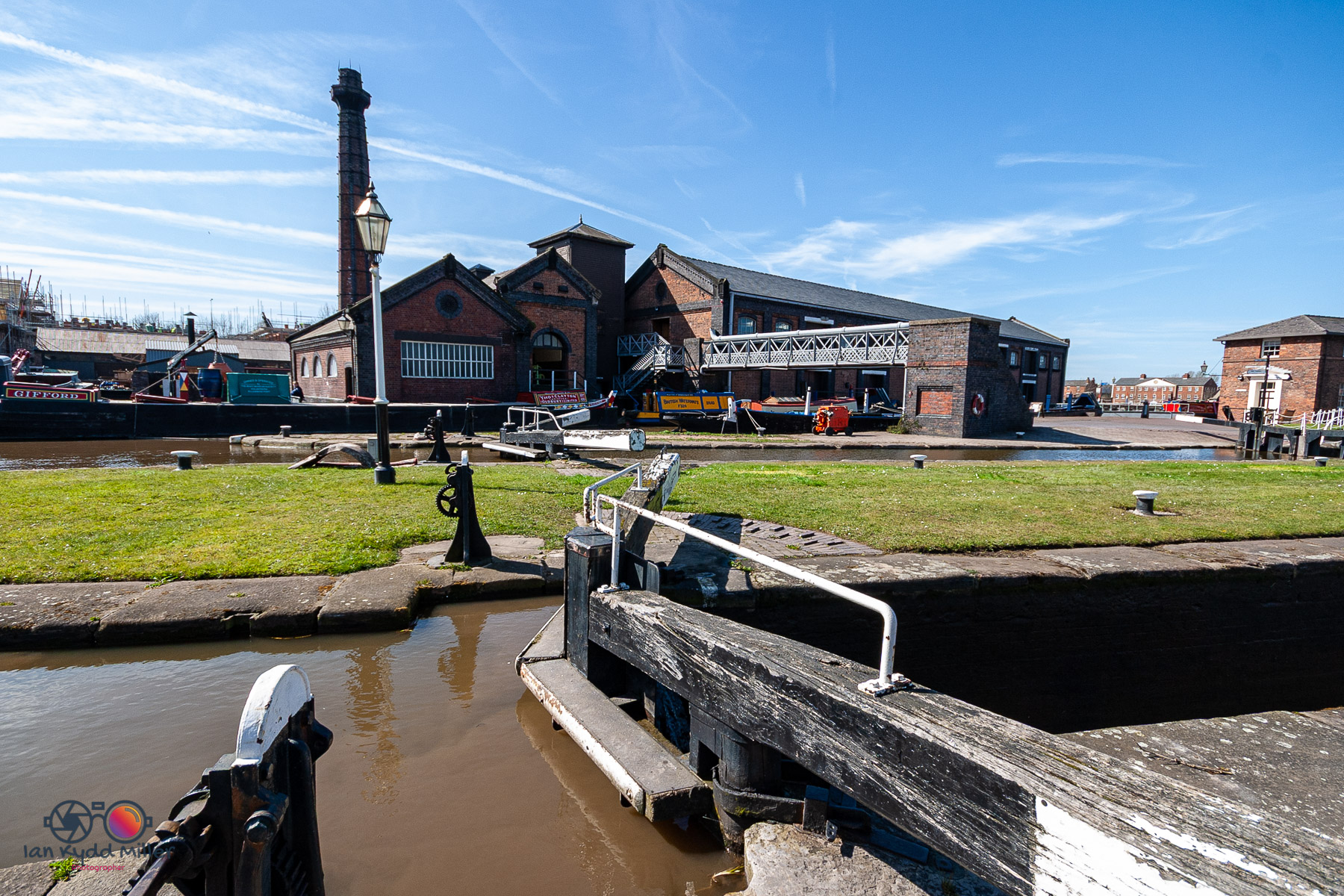
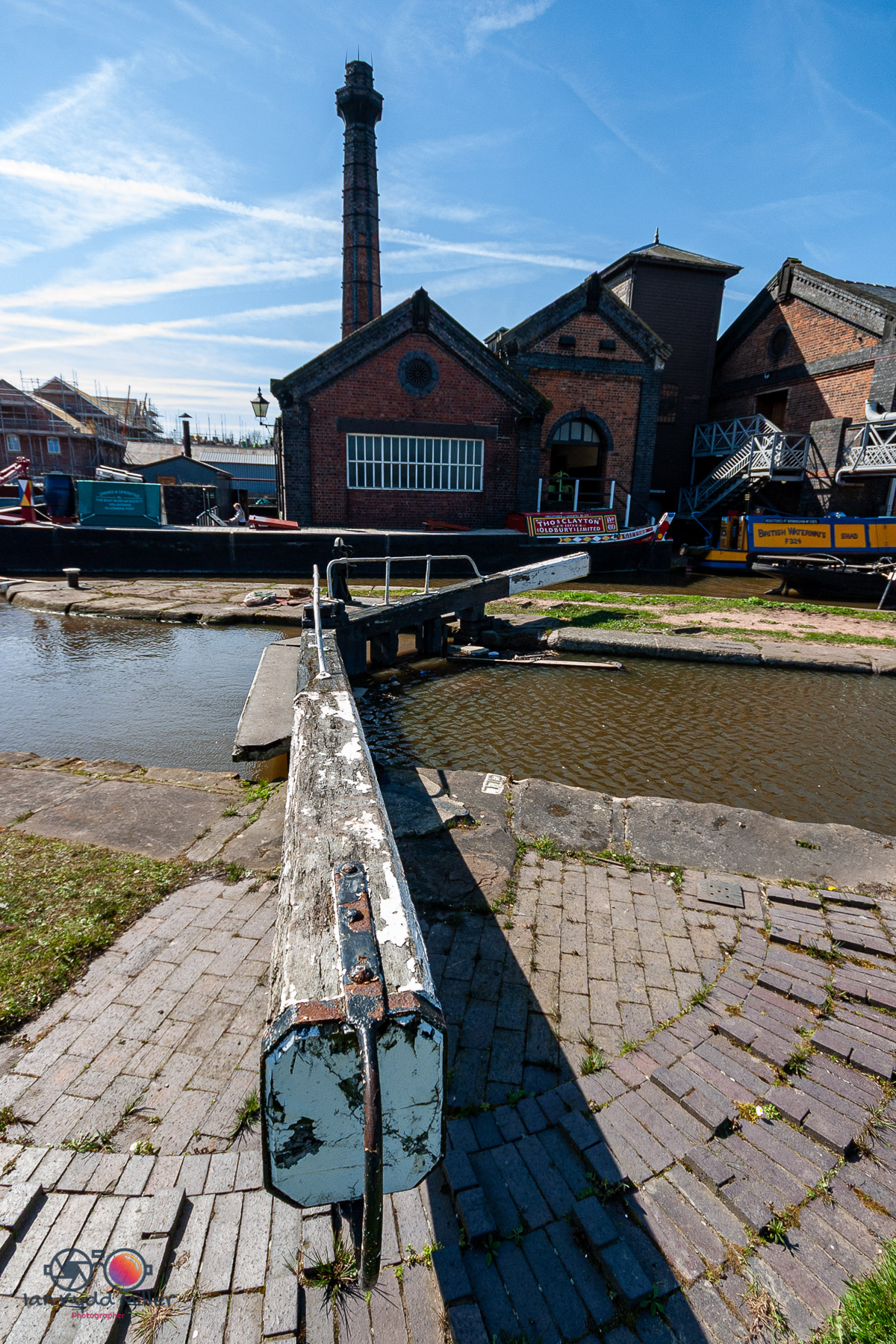
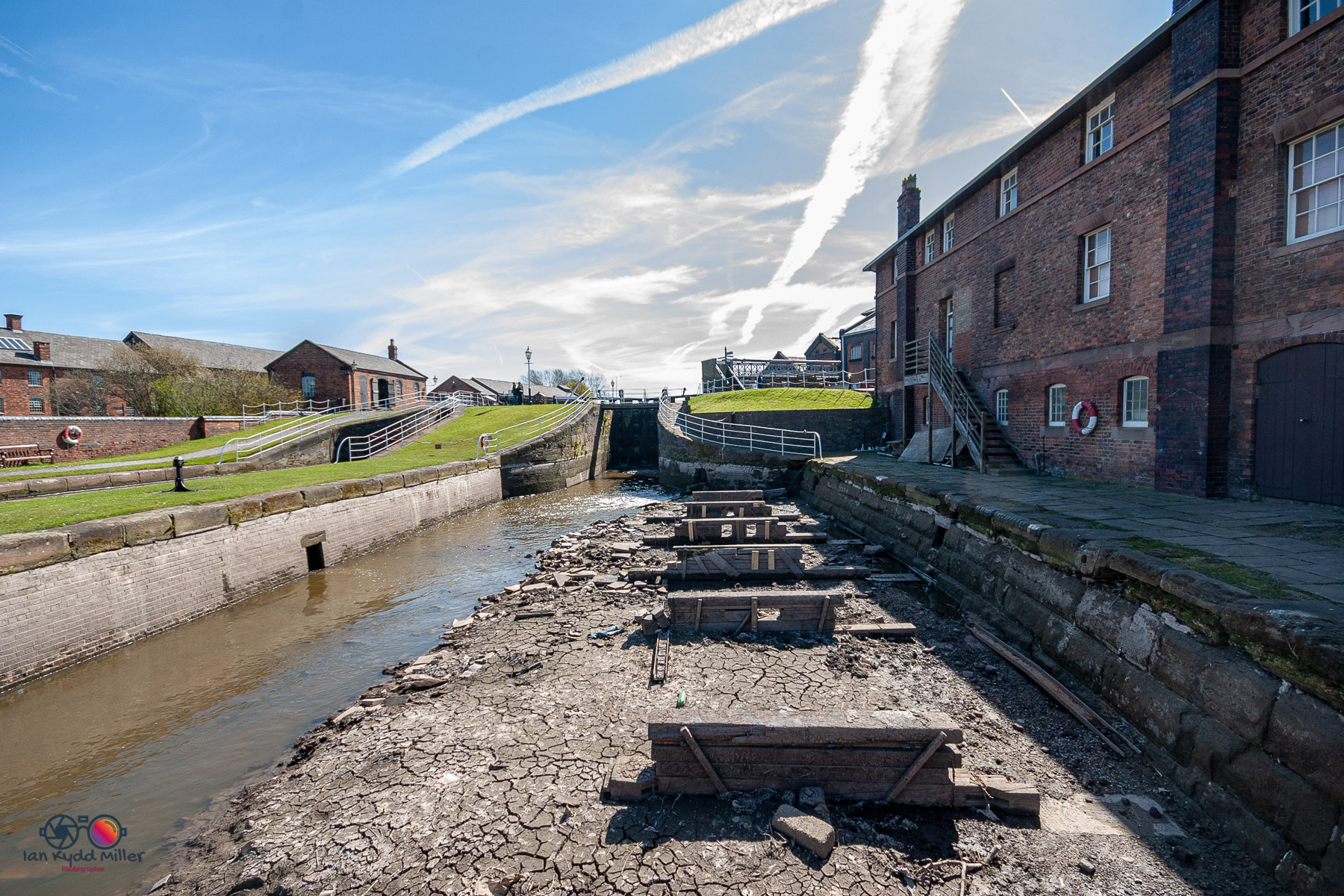
Grade II listed Victorian buildings house exhibits on canal life, engineering, and trade.
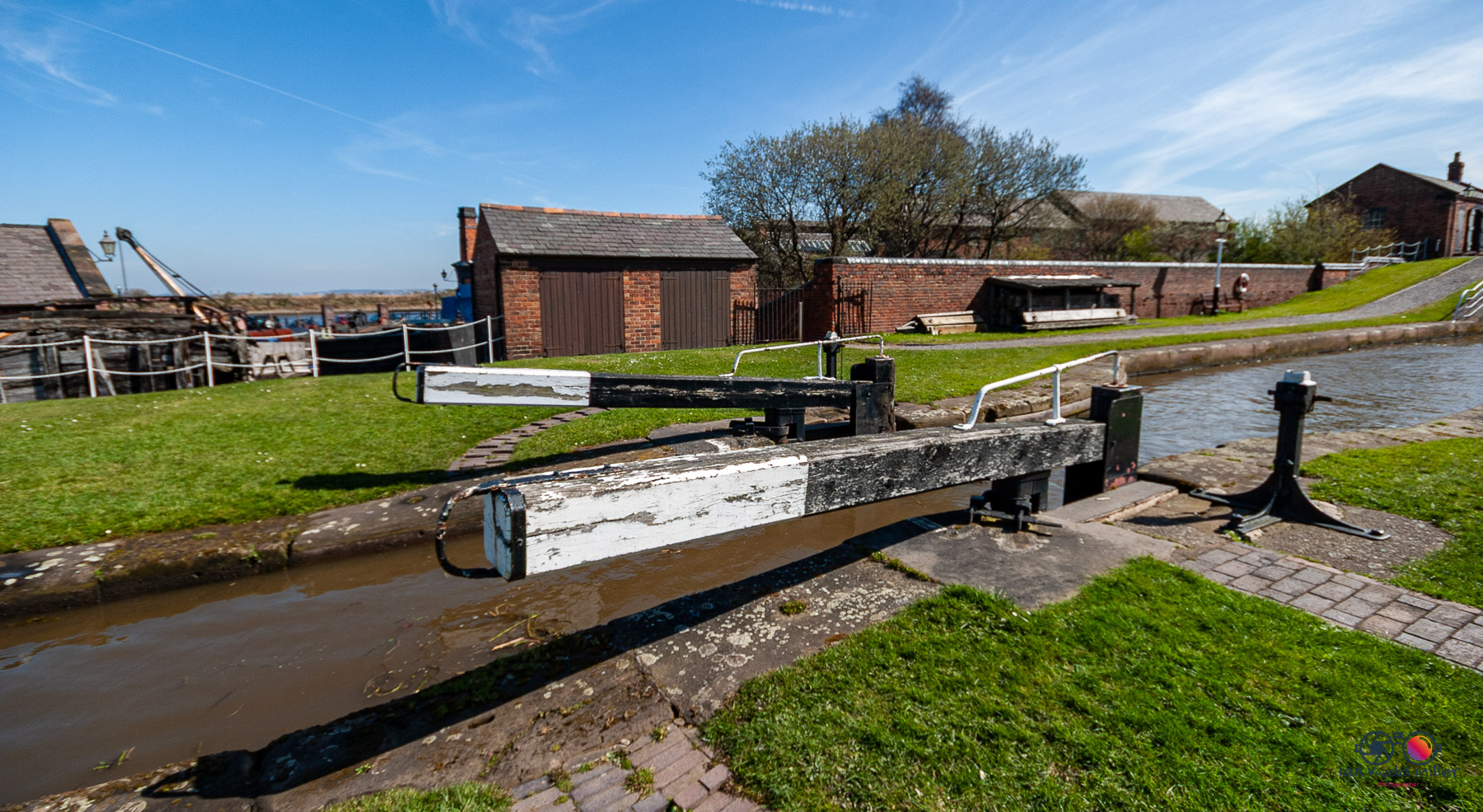
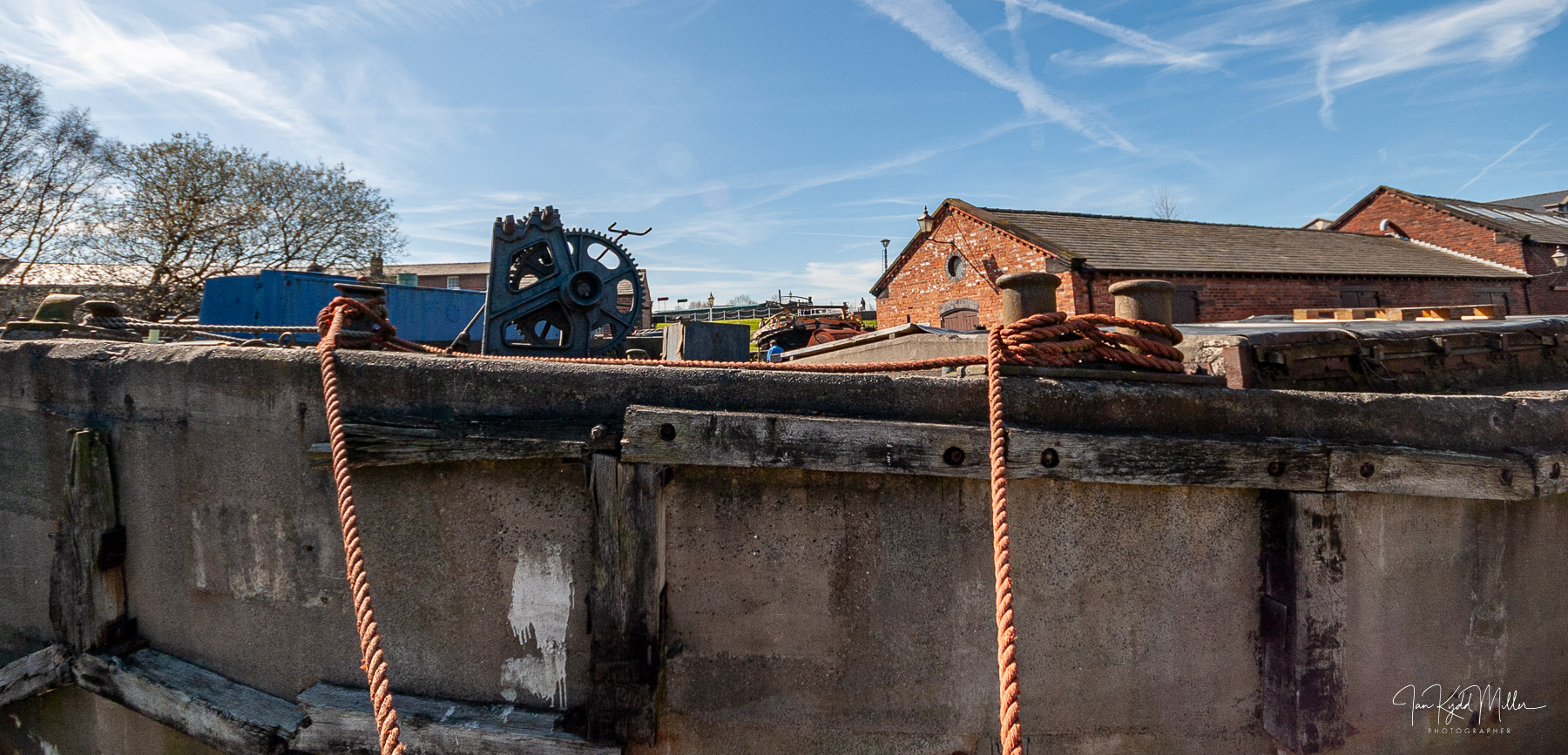
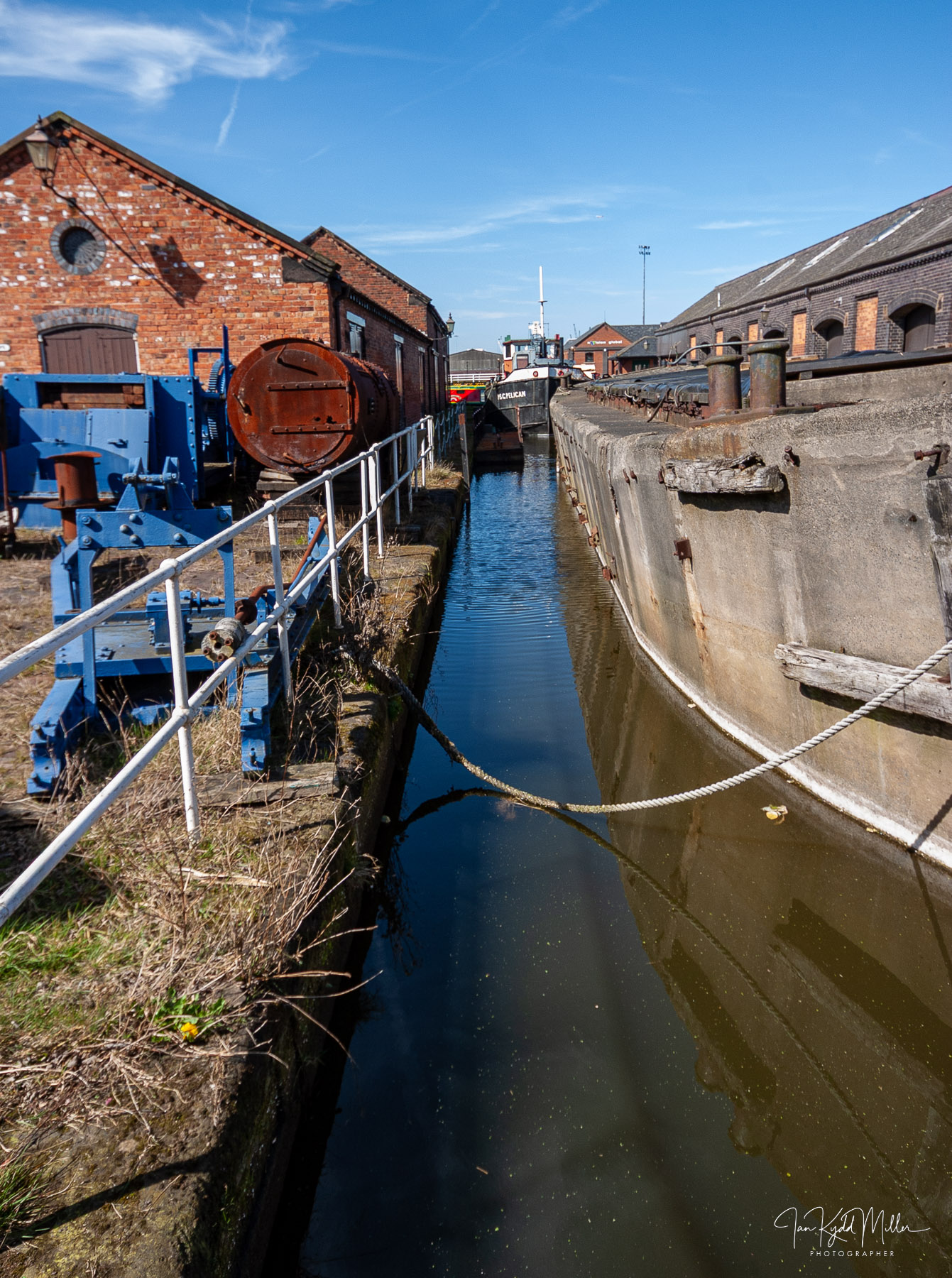
Historic locks and docks stretch across the site, still echoing with the rhythm of industrial labour.
Restored narrowboats and barges sit moored, their hulls weathered but proud.
The Waterside Café offers a quiet view of the canal, perfect for reflecting on the day’s images.
It’s a place where rust meets reverence, and where every bolt and beam tells a story.
📷 The Camera: Canon EOS 10D—Digital’s Early Workhorse
Released in 2003, the Canon EOS 10D was a landmark in DSLR evolution. It offered:
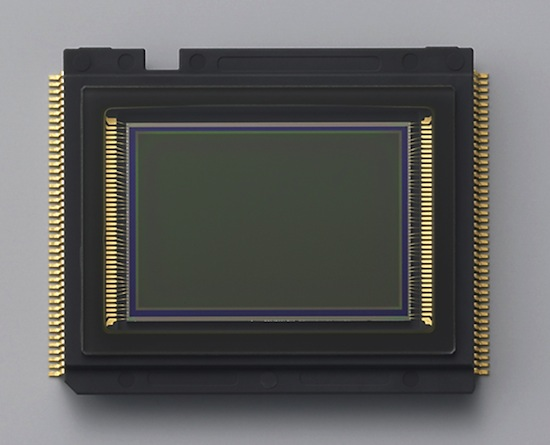
6.3 megapixel APS-C CMOS sensor—modest by today’s standards, but rich in tonal character
ISO range of 100–1600 (expandable to 3200)—surprisingly capable in low light
7-point autofocus system—responsive enough for dockside detail and candid moments
CompactFlash storage—a reminder of digital’s early days
The 10D doesn’t rush. It invites you to compose. To wait. To feel the frame before you click. And paired with a prime lens or a classic zoom, it renders scenes with a softness and sincerity that suits the museum’s mood.
🖼 What I Saw, What I Felt
I photographed:
The curve of a tiller against brickwork
A rusted chain coiled like memory
Reflections of narrowboats in still water
A volunteer’s hands restoring a wooden rudder
The files weren’t perfect. But they were honest. And when printed, they carried the weight of both the subject and the tool.
🧭 Final Thought: Documenting History with a Camera That Has Its Own
A day at the National Waterways Museum is a reminder of what endures—craft, care, and the quiet dignity of labor. Shooting it with the Canon EOS 10D added another layer: the joy of using a camera that, like the museum, still has stories to tell.
Because sometimes, the best way to honour history is to slow down and see it through something that remembers.
In a world chasing megapixels, mirrorless speed, and AI-driven autofocus, the Nikon D3S stands quietly in the corner—unbothered, unbroken, and still deeply capable. Released in 2009, it was Nikon’s first full-frame DSLR to truly master low-light performance. Today, it’s more than a relic. It’s a reminder: that restraint, reliability, and character still matter.
I’ve used the D3S in clinics, on the street, and in moments of care. It’s never asked for attention. It’s just done the work.
🧠 What Made the D3S Special
12.1MP Full-Frame Sensor Not flashy by today’s standards, but beautifully tuned. Files are clean, balanced, and emotionally honest. The lower resolution encourages intentional framing and thoughtful printing.
ISO Performance That Changed the Game At the time, ISO 12,800 was revolutionary. Even today, the D3S holds its own in low light—especially in documentary work where grain isn’t a flaw, but a feeling.
Tank-Like Build Magnesium alloy body. Weather sealing. Shutter rated to 300,000 actuations. This camera was built for war zones, operating rooms, and long nights in the rain.
Dual CF Slots Redundancy and reliability. For those who print, archive, and teach, this matters more than speed.
No-Nonsense Ergonomics Everything falls to hand. No touchscreens. No distractions. Just tactile control and muscle memory.
🪞 Why It Still Matters
1. It Slows You Down—in a Good Way
The D3S isn’t about rapid-fire bursts or eye-detection AF. It’s about presence. You compose with care. You anticipate. You listen to the scene.
2. It Honors the Print
The files from the D3S print beautifully. Tonal transitions are smooth. Highlights roll off gently. Blacks hold depth. For those who see printing as completion, the D3S delivers.
3. It’s a Teaching Tool
For students learning restraint, the D3S is ideal. It forces intentionality. It rewards patience. It teaches that gear doesn’t make the image—vision does.
4. It Carries Legacy
This camera has seen things. It’s been in the hands of photojournalists, volunteers, and quiet documentarians. Using it feels like joining a lineage—not chasing a trend.
🧭 Who Is It For Today?
Documentarians who value reliability over novelty
Educators who want to teach presence, not presets
Street photographers who prefer quiet strength to flashy specs
Archivists and printers who care about tonal integrity
Anyone who believes that interesting pictures come from how you see, not what you shoot with
🕊 Final Thought: Enoughness in a Shutter Click
The Nikon D3S isn’t just relevant—it’s resonant. It reminds us that photography isn’t about chasing perfection. It’s about showing up. Seeing clearly. Printing with care.
In a time of constant upgrades, the D3S whispers: You already have enough. Now go make something that matters.
A Farewell to a Workhorse That Never Asked for Praise
For a decade, the Canon 1D Mark IV was my companion. Not my tool. Not my gear. My companion.
It didn’t flatter. It didn’t fail. It simply showed up—day after day, shoot after shoot—with a kind of quiet reliability that modern cameras often forget in their race for relevance.
🧱 Built Like a Promise
The 1D Mark IV was never sleek. It was solid. Magnesium alloy, weather-sealed, unapologetically heavy. It felt like commitment in the hand.
16MP APS-H sensor with a 1.3x crop—perfect for reach without sacrificing tone
Dual DIGIC 4 processors that never blinked, even at 10fps
Autofocus that tracked motion like instinct, not algorithm
I shot with one AF point. The center. Always. Because the camera didn’t need tricks—it needed trust.
📷 What It Gave Me
Color rendering that felt like memory, not measurement
Files that breathed—not just pixels, but presence
Low-light performance that surprised me, even in candlelit homes and monsoon dusk
Battery life that outlasted the day, and sometimes the doubt
It wasn’t perfect. But it was predictable. And in documentary work, that’s gold.
🧘 Why I Stayed So Long
Because it never asked me to rush. Because it never distracted me with features I didn’t need. Because it taught me to anticipate, to listen, to wait.
I shot weddings, markets, protests, and quiet portraits with it. I traveled with it across borders and into stories that didn’t need spectacle—just presence.
✍️ The Shift to Nikon
Eventually, I moved to Nikon. Not because the 1D failed me, but because my rhythm changed. I wanted different tonal nuance. Different ergonomics. A different conversation with the frame.
But I didn’t leave the 1D behind. I graduated from it. And like any good teacher, it still echoes in my practice.
🖼️ Closing Thought
The Canon 1D Mark IV wasn’t just a camera. It was a decade of trust. And in a world of constant upgrades, trust is the rarest feature of all.
GAS is practically a rite of passage in photography circles. And let’s be honest: when your work is built on rhythm, presence, and storytelling, it’s easy to convince yourself that just one more lens might unlock a new way of seeing.
But here’s the twist: GAS isn’t always about greed—it’s often about curiosity, possibility, and the thrill of rediscovery. Especially in your case, where older gear like the D300S and legacy primes aren’t just tools—they’re collaborators.
Still, if you’re feeling the gravitational pull of that next “must-have,” here are a few gentle antidotes:
🧠 GAS Management for the Ethically Curious Photographer
Walk with one lens for a week: Let limitation sharpen your vision.
Revisit your archive: You might find that your best work came from your “least impressive” gear.
Write before you buy: Draft a post about why you think you need it. If the story feels thin, maybe the gear isn’t the missing piece.
Shoot with intent, not inventory: The camera doesn’t see—you do.
And hey, if you do cave and pick up something new, just promise me you’ll walk with it slowly, listen to what it says, and let it earn its place in your rhythm.
In a world obsessed with specs, upgrades, and the latest releases, there’s a quiet rebellion happening—one that values function over flash, intuition over innovation, and tools that serve the moment rather than dominate it.
I call it “Tuned, Not Trendy.”
It’s the mindset that led me to pick up a Nikon D300S in Phnom Penh for $140—body, grip, and three batteries included. Not because it was new. Not because it was popular. But because it felt like it could do the job. And after a few walks with it, I realised: it’s not about what a camera can do. It’s about what it lets you do.
🛠️ Function Earns Trust
Modern gear is packed with features—eye-detect AF, 8K video, AI-driven exposure. But how many of those features actually serve the kind of photography I do? Street scenes, market rhythms, quiet gestures in harsh light. I don’t need a camera that thinks for me. I need one that responds to me.
The D300S doesn’t try to impress. It just works. Fast autofocus. Gritty rendering. Familiar controls. It’s tuned to the kind of shooting I do—not trendy, but trustworthy.
🎯 Features Don’t Make Meaning
Sharpness doesn’t equal story. Dynamic range doesn’t guarantee depth. I’ve seen images from $5,000 setups that feel sterile, and frames from a beat-up D2Hs that carry the weight of memory. The difference isn’t in the gear—it’s in the relationship between photographer and tool.
When a camera is tuned to your rhythm, it disappears. You stop thinking about settings and start responding to light, movement, and emotion. That’s where meaning lives.
💡 The Freedom of Simplicity
There’s also a kind of freedom in using older gear. No pressure to pixel-peep. No temptation to chase firmware updates. Just you, the camera, and the moment. It’s a slower, more deliberate way of working—and for me, it’s more honest.
Why spend thousands on features I’ll never use, when I can spend a fraction on a tool that fits my hand, my eye, and my purpose?
Tuned, Not Trendy isn’t just about gear. It’s about philosophy. It’s about choosing tools that serve your vision, not distract from it. It’s about trusting your instincts more than marketing. And it’s about remembering that the best images aren’t made by specs—they’re made by presence.
In an age of mirrorless marvels and AI-enhanced everything, I still reach for two cameras released over a decade ago: the Nikon D3 and D3S. Not out of nostalgia, but because they still deliver—quietly, reliably, and with a kind of tactile honesty that newer gear often lacks.
Built Like Tools, Not Toys
The D3 and D3S were Nikon’s first full-frame DSLRs, and they were built like they meant it. Magnesium alloy bodies, weather sealing, and a shutter rated for 300,000 actuations. These cameras were made for war zones, not weddings. And yet, they’ve handled both with grace.
I’ve used them in the heat of Phnom Penh’s markets, on the water at Tonlé Sap, and in quiet moments with people whose stories deserve dignity. They’ve never flinched.
The Files Still Sing
Yes, they’re “only” 12.1 megapixels. But those pixels are rich, clean, and full of tone. The D3S in particular still surprises me with its low-light performance—ISO 6400 feels like ISO 800 on some modern sensors. And the color rendering? It’s got soul. Not sterile perfection, but something closer to memory.
Speed and Simplicity
9 fps on the D3, 11 fps on the D3S. Autofocus that locks on like a bloodhound. No menus buried in submenus. No touchscreen distractions. Just a camera that lets me stay present, anticipate, and respond.
Why I Still Carry Them
Because they don’t get in the way. Because they’ve become extensions of how I see. Because they remind me that photography isn’t about megapixels or marketing—it’s about presence, patience, and purpose.
And maybe most of all, because they’ve earned my trust.
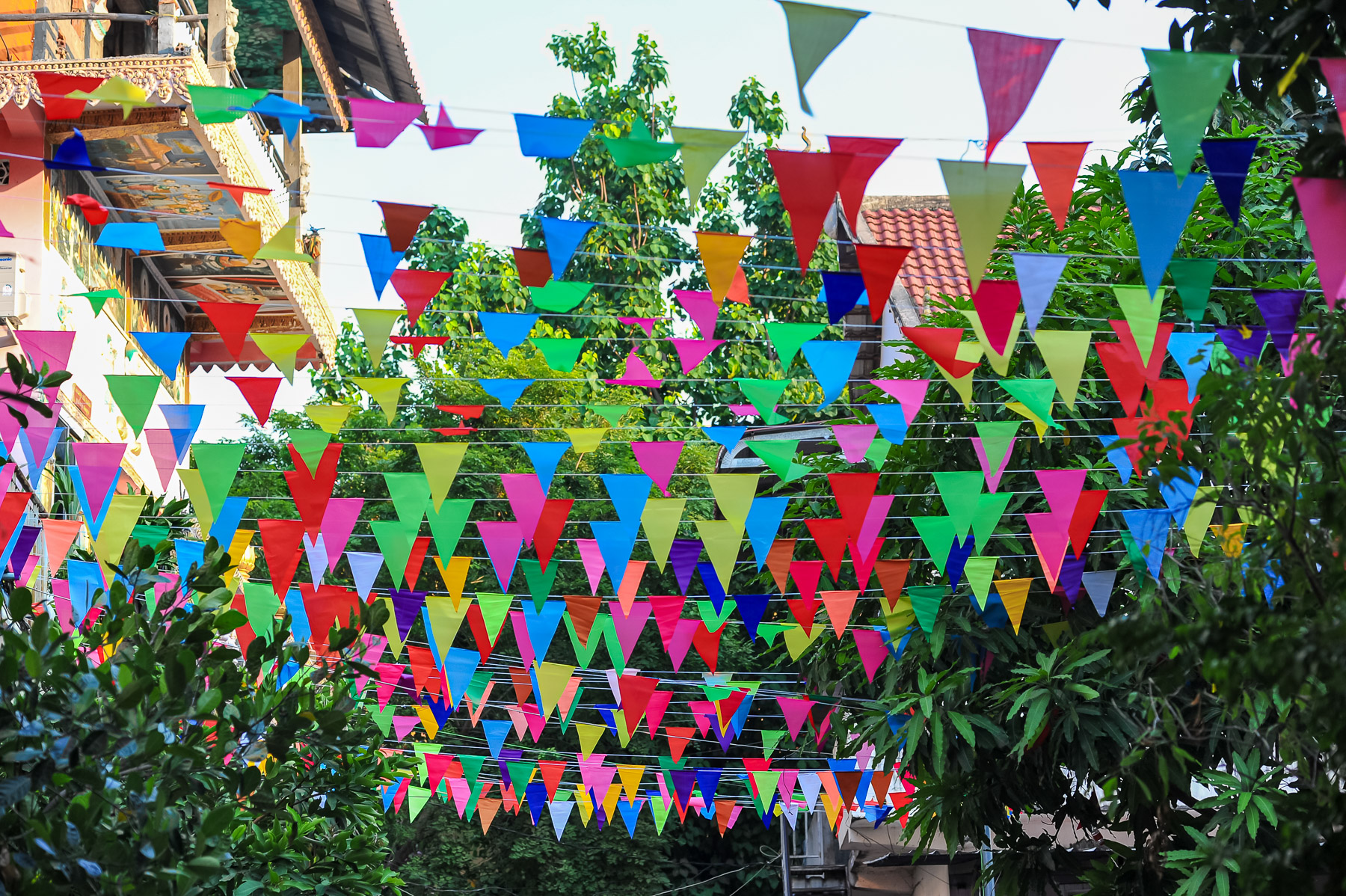
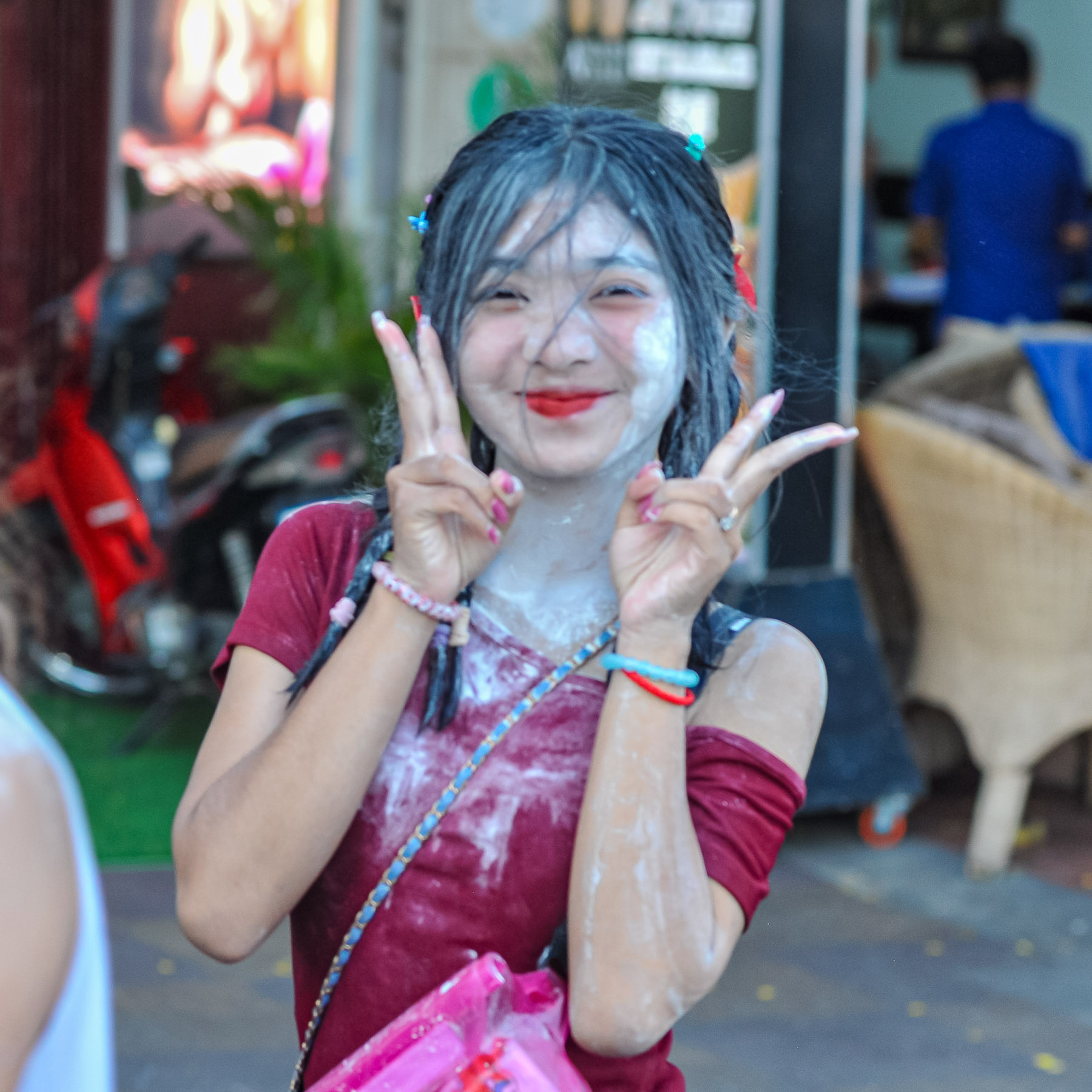
The Khmer New Year, or Choul Chnam Thmey, is Cambodia’s most significant holiday, celebrated from April 14 to 16 each year. It marks the end of the harvest season and the beginning of a new year according to the traditional Buddhist lunisolar calendar2.
The celebration lasts three days, each with its own traditions:
Moha Sangkran – The first day, when families clean their homes, visit temples, and make offerings.
Vanabot – The second day, dedicated to charity and honoring ancestors.
Leung Sakk – The third day, when people wash Buddha statues and elders with perfumed water as a sign of respect and renewal.
During this time, Cambodia comes alive with festivals, traditional games, and water fights, similar to Thailand’s Songkran. If you’re planning to experience it, Phnom Penh, Siem Reap, and Battambang are great places to join the celebrations
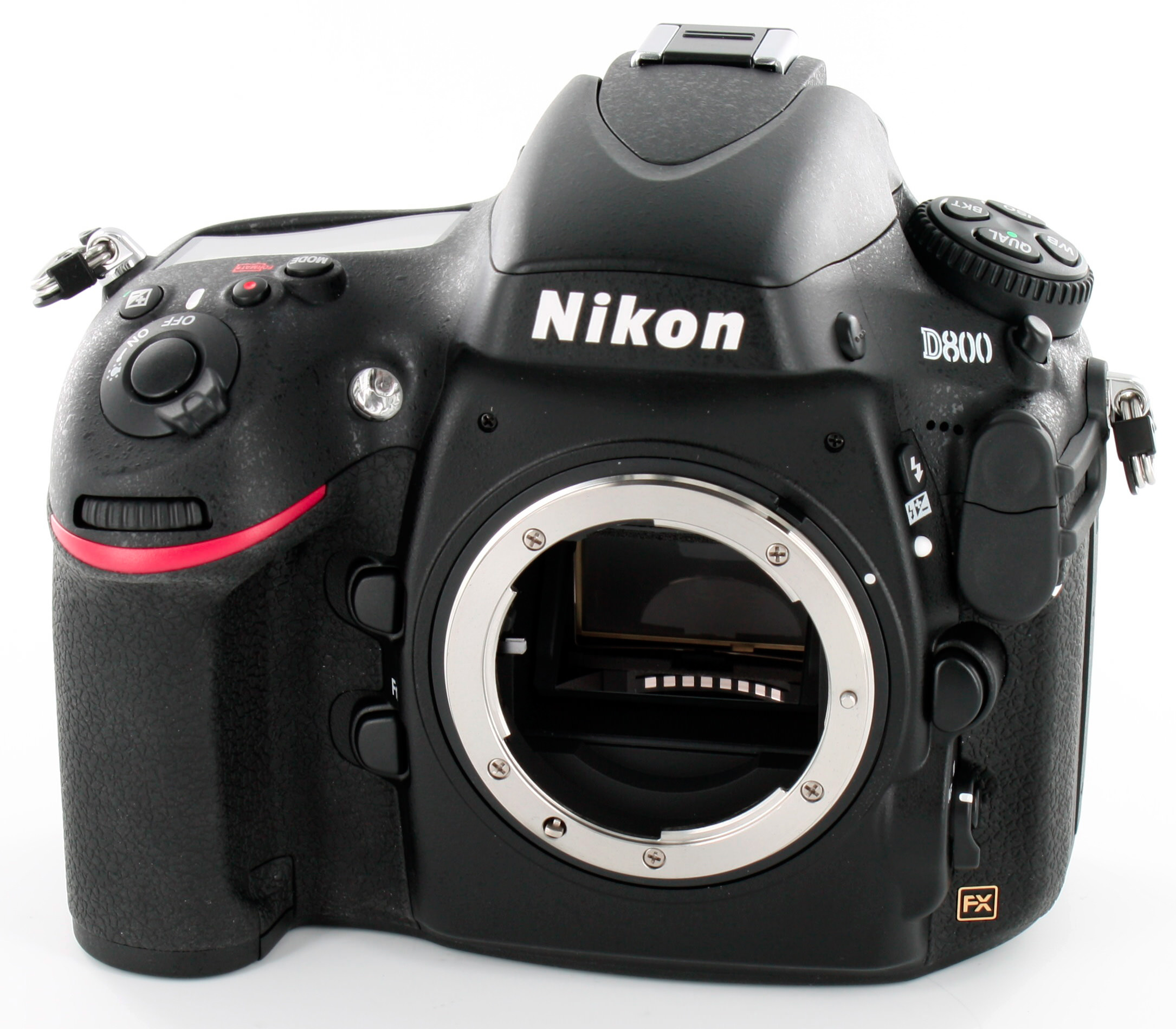
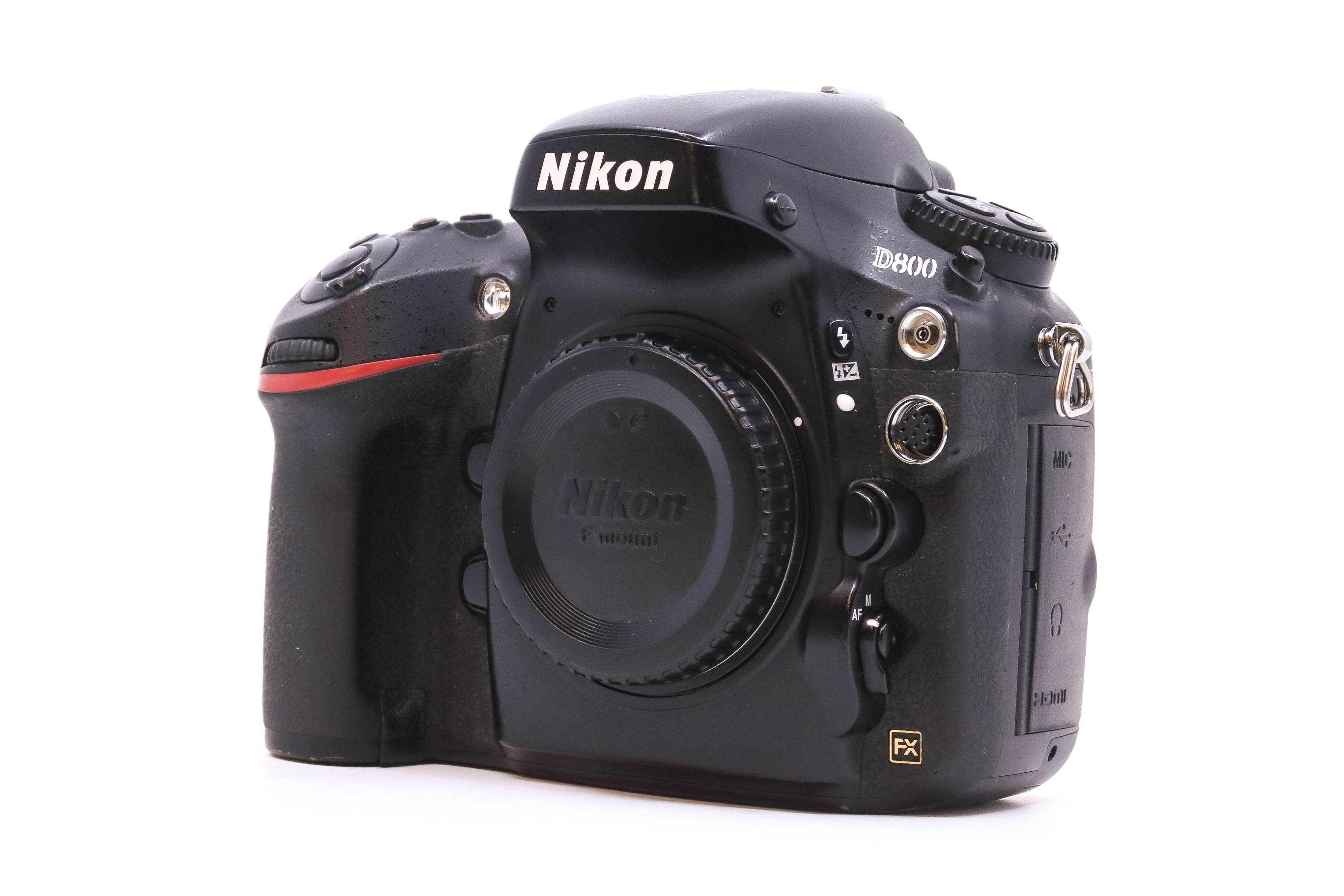
The Nikon D800 is equipped with an impressive sensor that contributes to its renowned image quality. Here are some key details:
Resolution: The D800 features a 36.3-megapixel full-frame CMOS sensor, providing exceptionally high resolution for detailed and large prints.
Sensor Size: The sensor measures 35.9 x 24 mm, which is a standard full-frame size.
Dynamic Range: The sensor offers a wide dynamic range, capturing a broad spectrum of tones from shadows to highlights.
ISO Range: The native ISO range is 100-6400, expandable to 50-25600, allowing for good performance in various lighting conditions.
Pixel Pitch: The pixel pitch is 4.87 µm, which helps in capturing more light and detail.
Processor: The sensor is paired with the EXPEED 3 image processor, enhancing overall performance and image quality.
This sensor makes the Nikon D800 an excellent choice for photographers who need high resolution and exceptional image quality.
Nikkor D lenses are compatible with the Nikon D800. These lenses will work well with the D800’s autofocus system, as the camera has a built-in autofocus motor that can drive the autofocus mechanism in D lenses. Here are some key points:
Autofocus: The D800’s built-in autofocus motor ensures that Nikkor D lenses can autofocus properly.
Metering: The D800 supports full metering with Nikkor D lenses, allowing for accurate exposure settings.
Aperture Control: You can control the aperture directly from the camera body, which is convenient for adjusting settings quickly.
Overall, Nikkor D lenses are a great match for the Nikon D800, providing excellent performance and compatibility.
Choosing a potentially dangerous profession like photojournalism requires preparation, resilience, and a deep passion for storytelling. Here’s a guide to help someone navigate this path safely and effectively:
1. Develop Strong Skills and Portfolio
Master the Craft: Enhance photography skills through courses, workshops, and hands-on practice. Street photography, capturing candid moments, is a good starting point.
Build a Portfolio: Create a compelling portfolio showcasing a variety of work, with an emphasis on impactful, human-interest stories.
2. Gain Relevant Experience
Internships and Freelance Work: Start with internships at media outlets or freelance assignments to gain practical experience.
Network: Connect with other photojournalists and professionals in the field. Attend industry events, join photography groups, and participate in exhibitions.
3. Understand the Risks
Safety Training: Take courses on safety in conflict zones and hazardous environments. Organizations like the Rory Peck Trust offer such training.
Stay Informed: Research and stay updated on the regions and situations you will be covering. Knowledge of the political, social, and environmental context is crucial.
4. Equip Yourself Properly
Right Gear: Invest in durable and reliable photography equipment. Consider cameras like the Nikon D3S or Canon 1D MkIV which have proven performance.
Safety Gear: In dangerous areas, gear like bulletproof vests and helmets might be necessary.
5. Develop a Support System
Mentorship: Find a mentor in the field who can offer guidance and support.
Mental Health Support: Dealing with traumatic events can be challenging. Have access to mental health resources and support networks.
6. Legal and Ethical Considerations
Understand Legalities: Be aware of the legal implications and regulations in the areas you are working in.
Ethics: Maintain ethical standards in journalism. Respect the dignity and privacy of the subjects you photograph.
7. Be Persistent and Adaptable
Stay Determined: The path to becoming a successful photojournalist can be challenging and competitive.
Adaptability: Be open to different styles and methods of storytelling.
SflyProxyVersion 1;
The journey to becoming a photojournalist is both demanding and rewarding. It requires a balance of technical skill, safety awareness, and a profound commitment to telling human stories.
If you’re eager to start, why not practice your skills by capturing compelling stories in your local area? Street photography often provides a rich tapestry of human experiences and can serve as excellent preparation for more intense assignments.
For a burgeoning photojournalist like yourself, focusing on specific photography skills can elevate your work and help you capture impactful, story-driven images. Here are some key skills to hone:
1. Composition and Framing
Rule of Thirds: Understand how to compose images by dividing the frame into thirds, placing points of interest along these lines.
Leading Lines: Use lines to guide the viewer’s eye to the main subject of the photograph.
Framing: Experiment with natural frames within your environment to highlight the subject.
2. Exposure and Lighting
Manual Mode Mastery: Get comfortable shooting in manual mode to have full control over shutter speed, aperture, and ISO.
Low-Light Photography: Practice capturing sharp and well-exposed images in low-light conditions, a crucial skill for photojournalists.
Natural Light: Learn to use and manipulate natural light to enhance your images.
3. Focus and Depth of Field
Selective Focus: Understand how to use selective focus to isolate your subject from the background.
Depth of Field: Play with different apertures to create depth in your images. Use a shallow depth of field for portraits and a deeper one for environmental shots.
4. Candid and Street Photography
Spontaneity: Capture un-posed, genuine moments. This is essential for telling authentic human stories.
Discreet Shooting: Develop techniques to shoot discreetly, so as not to disturb the scene you photograph.
5. Post-Processing
Editing Software: Gain proficiency in photo editing software like Adobe Lightroom and Photoshop.
Ethical Editing: Learn to enhance images while maintaining their authenticity and integrity. Avoid excessive manipulation.
6. Visual Storytelling
Narrative: Each photo should contribute to the overarching story you aim to tell. Think about how your images work together to convey a message.
Sequencing: Practice creating a photo series that guides the viewer through a visual narrative.
7. Technical Proficiency with Gear
Camera Handling: Be familiar with your camera’s functions. Practice changing settings quickly and efficiently.
Lens Selection: Understand which lenses to use for different scenarios. Prime lenses are great for low light, while zoom lenses offer versatility.
8. Research and Contextual Knowledge
Background Research: Always research the context of the stories you are documenting. This ensures your images are informative and respectful.
Cultural Sensitivity: Be aware of and sensitive to cultural norms and practices in the regions you photograph.
9. Resilience and Adaptability
Patience: Sometimes the perfect shot requires waiting for the right moment.
Adaptability: Be prepared to adapt to changing conditions and unpredictable situations.
10. Ethical Journalism
Code of Ethics: Familiarize yourself with the ethical standards in journalism. Always prioritize the dignity and safety of your subjects.
Consistent practice and a willingness to experiment and learn from each shot will help you develop these skills. Documenting your local area can be a great way to start building these competencies.
Is there a particular technique or skill you’d like to dive deeper into?
Enhancing your visual storytelling in photography involves more than just capturing beautiful images—it’s about conveying a narrative that resonates with your audience. Here are some techniques to elevate your storytelling:
Define Your Story Purpose: Clearly define the purpose of your story. What message do you want to convey? What emotions do you want to evoke?
Subject: Identify the main subject or theme of your story. It could be a person, a place, or an event.
Research and Plan Background Research: Gather information about your subject. Understanding the context helps in capturing more meaningful images.
Storyboarding: Plan your shots in advance. Create a storyboard to visualize the sequence of your story.
Capture Emotions and Moments Expressions: Focus on capturing genuine emotions and expressions. They add depth to your story.
Moments: Look for decisive moments that highlight the essence of your narrative.
Use Composition Effectively Visual Hierarchy: Guide the viewer’s eye through the image using composition techniques like leading lines, framing, and the rule of thirds.
Juxtaposition: Use contrast and juxtaposition to highlight differences or similarities within the frame.
Play with Light and Shadows Natural Light: Utilize natural light to create mood and atmosphere. The quality of light can significantly impact the emotional tone of your images.
Shadows: Incorporate shadows to add depth and drama.
Incorporate Symbolism and Metaphors Symbols: Use objects or elements that symbolize broader concepts or themes. They can add layers of meaning to your story.
Metaphors: Create visual metaphors that represent abstract ideas in a tangible form.
Create a Sense of Place Environmental Shots: Capture the environment and setting to provide context. It helps the viewer understand the surroundings and the story’s backdrop.
Details: Pay attention to small details that contribute to the overall narrative.
Sequence Your Images Chronology: Arrange your images in a sequence that makes sense chronologically or thematically.
Pacing: Vary the pacing by mixing wide shots, medium shots, and close-ups. It keeps the viewer engaged.
Post-Processing Consistent Style: Maintain a consistent editing style that complements your story. It helps in creating a cohesive visual narrative.
Enhancements: Enhance colours, contrast, and sharpness to draw attention to key elements without over-editing.
Engage with Your Audience Captions and Context: Provide captions or context to accompany your images. It helps the audience understand the story behind the shots.
The Nikon D700 is a beloved camera among photography enthusiasts and professionals for several reasons:
Full-Frame Sensor: It features a 12.1-megapixel FX-format CMOS sensor, which provides excellent image quality and low-light performance.
Build Quality: The D700 is known for its robust and durable build, making it suitable for various shooting conditions.
Autofocus System: It has a 51-point autofocus system with 15 cross-type sensors, ensuring precise and fast focusing.
High ISO Performance: The camera performs well at high ISO settings, allowing for great shots in low-light environments.
Continuous Shooting: It offers a speed of up to 5 frames per second. An optional battery grip can increase this to 8 frames per second.
Versatility: The D700 supports a wide range of Nikon F-mount lenses. Including older AI/AI-S lenses, making it a versatile choice for photographers.
Overall, the Nikon D700 is praised for its combination of image quality, build, and performance, making it a reliable choice for many photographers.
What is so good about its sensor ??
The Nikon D700’s sensor is highly regarded for several reasons:
Full-Frame Sensor: The 12.1-megapixel FX-format CMOS sensor provides excellent image quality with a wide dynamic range and rich colour depth.
Low-Light Performance: The sensor performs exceptionally well in low-light conditions, producing clean images with minimal noise even at high ISO settings.
Detail and Sharpness: The sensor captures fine details and sharpness, making it ideal for various types of photography, from landscapes to portraits.
Versatility: The full-frame sensor allows for greater control over depth of field, enabling photographers to achieve beautiful background blur (bokeh) and more creative compositions.
Overall, the sensor in the Nikon D700 is a key factor in its reputation for delivering high-quality images in a variety of shooting conditions.
The Nikon D700’s autofocus (AF) system is highly praised for its performance and reliability. Here are some key features:
51-Point AF System: The D700 features a 51-point autofocus system, which includes 15 cross-type sensors. This ensures precise and fast focusing across a wide area of the frame.
3D Tracking: The camera’s 3D tracking feature allows it to follow moving subjects accurately, making it ideal for action and sports photography.
Low-Light Performance: The AF system performs well in low-light conditions, maintaining accuracy and speed even in challenging lighting situations.
Customizable Settings: The D700 offers various AF modes and settings, allowing photographers to customize the autofocus performance to suit their specific needs.
Overall, the AF system in the Nikon D700 is one of its standout features, providing reliable and accurate focusing for a wide range of photography scenarios.
The Nikon D700’s shutter is indeed rated for 150,000 actuations, which is a realistic estimate for its lifespan. However, it’s important to note that this is an average figure. Some shutters may fail earlier, while others can exceed this number significantly. Many users have reported their D700s lasting well beyond the 150,000 mark2. If the shutter does wear out, it can be replaced, allowing the camera to continue functioning.
So, while 150,000 actuations is a good benchmark, individual experiences may vary. If you’re a heavy shooter, it’s always good to keep an eye on the shutter count and be prepared for potential maintenance down the line.















































































 a world without pictures is like coffee without cream and sugar, bitter