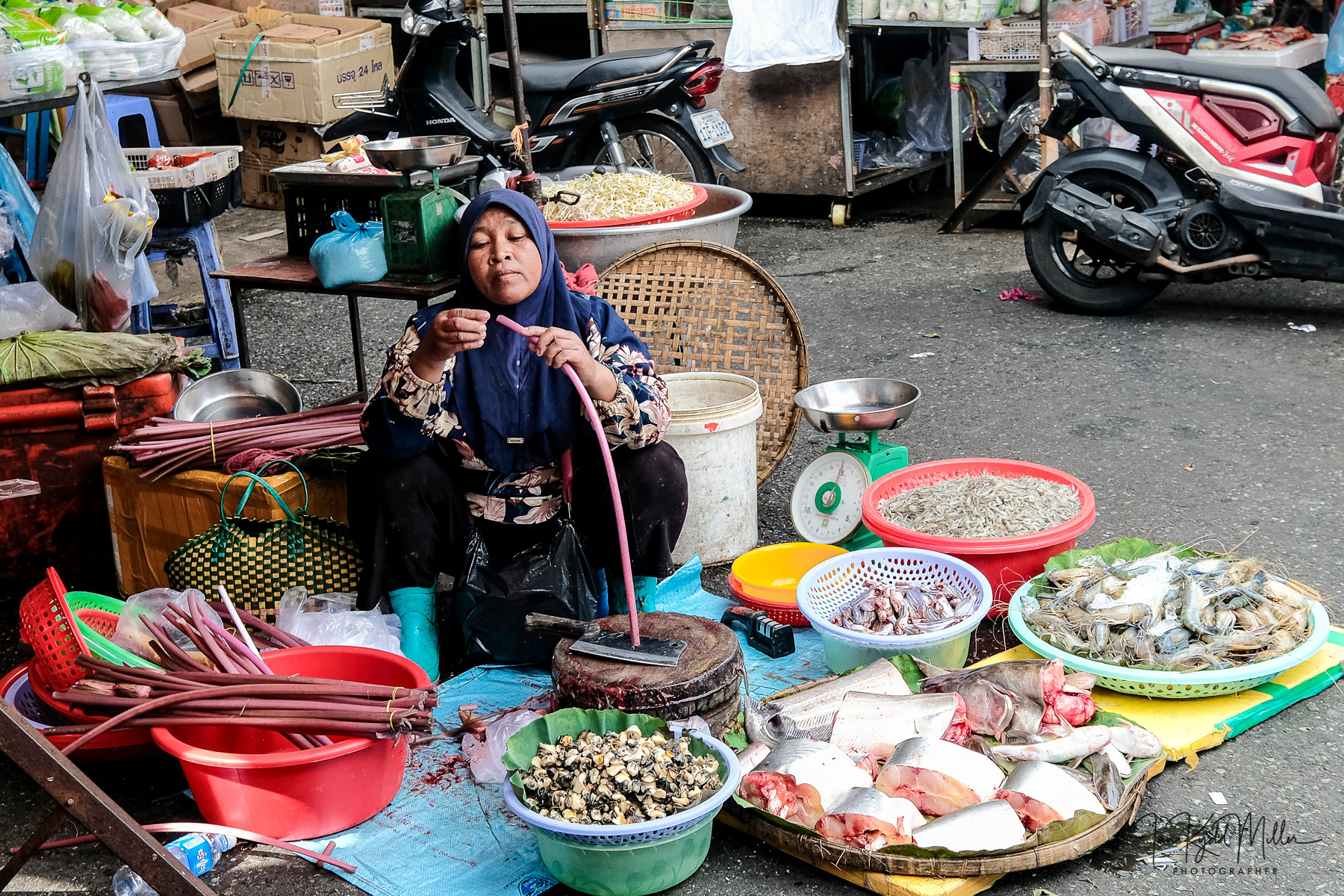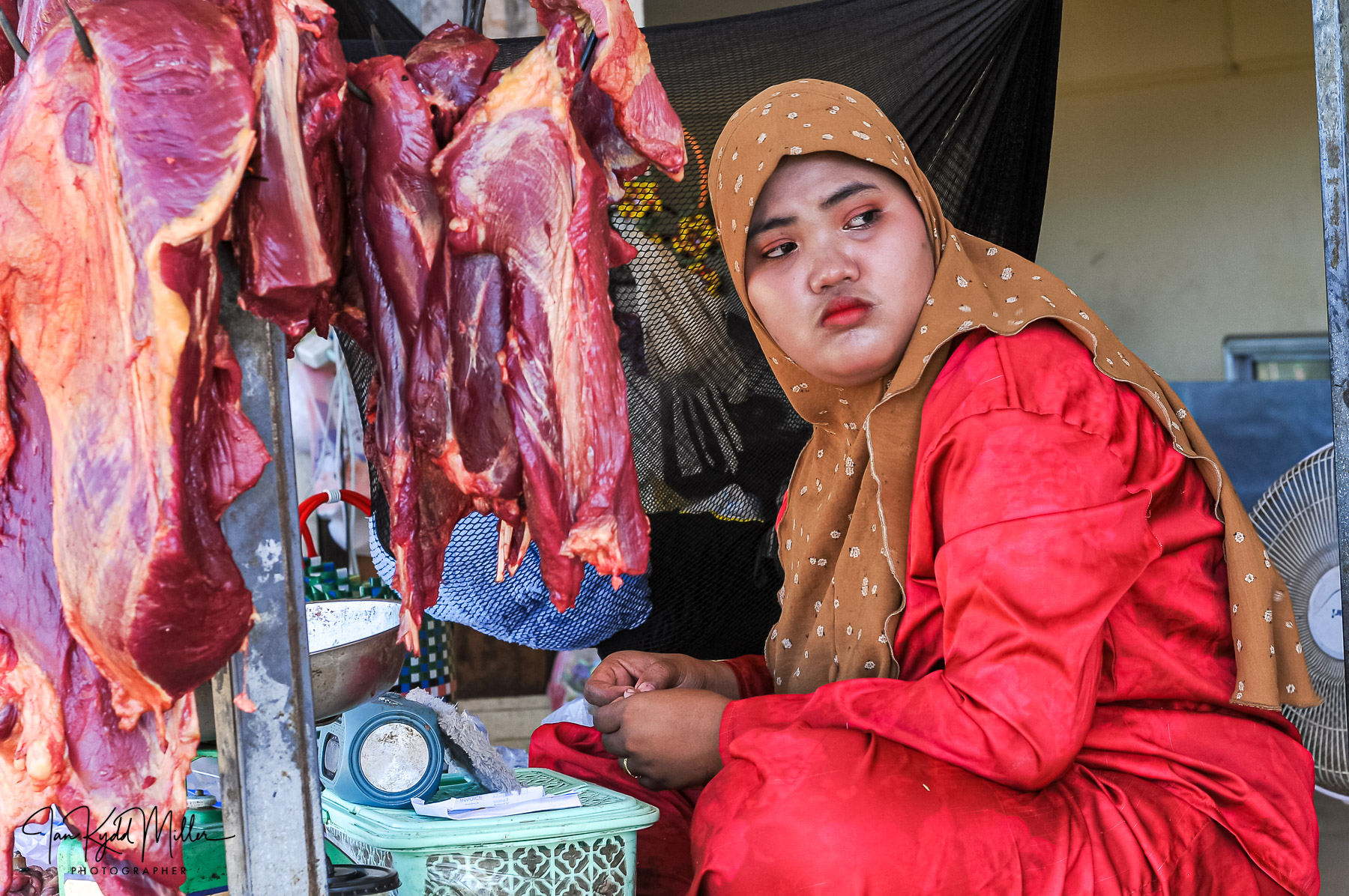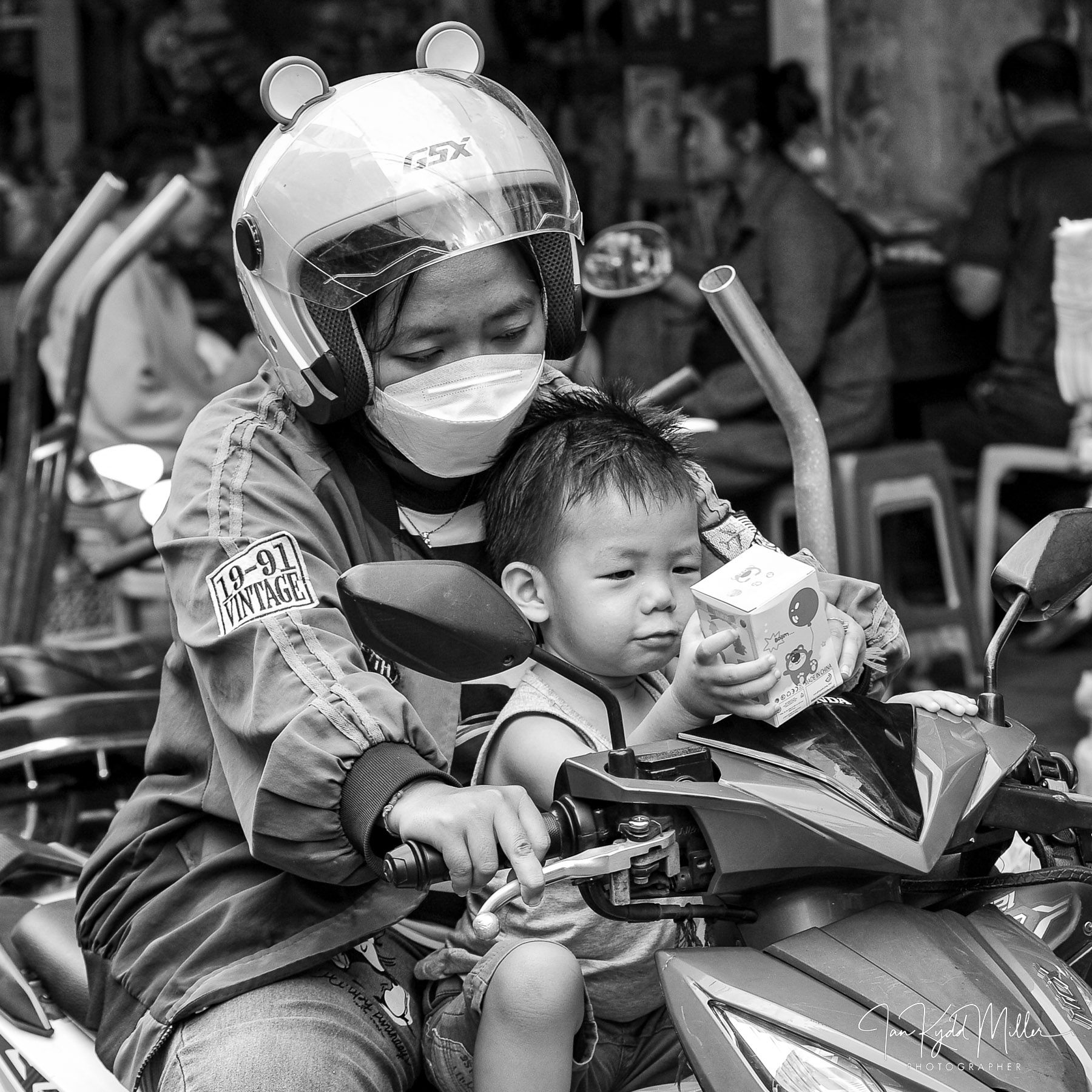
The Ethical Dimensions of Photojournalism

conflict, copyrights, opinons, thoughts, photography, pictures, street, Travel, war

Photojournalism sits at the intersection of truth-telling and human consequence. Every frame carries the power to inform, persuade, and move audiences β€” and every decision a photographer makes shapes who is seen, how they are seen, and what the world believes. This post explores the core ethical tensions photojournalists face, practical principles for navigating them, and concrete strategies to minimise harm while preserving journalistic integrity.

Truth and Representation

Truth in photojournalism is not a single objective stamp but a practice: choices about framing, timing, captioning, and editing all influence how reality is represented.

  • Framing and context matter. Where you stand, what you include, and what you exclude create a narrative. A photograph isolated from context can mislead, even if the image itself is accurate.
  • Manipulation undermines trust. Cropping to change meaning, compositing, staged scenes presented as documentary, or selective captioning that distorts facts breaks the contract between photographer and viewer.
  • Captioning is part of the image. Clear, factual captions that name who, what, when, where, and how protect accuracy and reduce misinterpretation.

Ethical practice: favor minimal, transparent edits; always document what you changed; and pair images with honest captions that situate the photo within its broader factual context.

Sensitivity and Dignity

Photographing human suffering, grief, or vulnerability raises acute ethical questions about dignity, consent, and exploitation.

  • Consent is context-dependent. In public spaces, consent may not be legally required, but ethical consent is often still appropriate β€” especially when photographing children, the injured, or traumatized people.
  • Dignity-first framing avoids sensationalism. Prioritise images that preserve a subject’s humanity rather than exploiting pain for shock value or virality.
  • Power dynamics shape the encounter. Consider your role: are you a witness, a rescuer, an intruder? That role should guide how you engage, whether you ask for permission, and how you present the resulting images.

Practical rule: when in doubt, err on the side of protecting the subject. Blur faces, withhold identifying metadata, or delay publication when harm is possible.

Impact and Consequence

Images change things. They can catalyse aid, influence policy, or, conversely, endanger individuals and communities.

  • Assess downstream risks. Could publication expose someone to retaliation, stigma, or legal jeopardy? Could it retraumatize survivors or their families?
  • Consider community outcomes. Photojournalism about marginalised groups should aim to amplify voice and context, not reduce people to symptoms of a problem.
  • Balance immediacy and care. The pressure to publish quickly must be weighed against the potential for irreversible harm.

Decision checklist: identify likely harms, consult peers or local stakeholders when possible, and include mitigation steps (anonymisation, delayed release, contextual reporting).

Conflicts of Interest and Independence

Maintaining editorial independence from subjects, funders, and platforms preserves credibility.

  • Avoid advocacy masquerading as reportage unless clearly labelled. If your work has an advocacy purpose, make that explicit.
  • Be transparent about funding and collaboration, especially in crisis reporting where NGOs, governments, or activists may influence access or narrative.
  • Resist platform pressures that reward sensational imagery; prioritise ethical criteria over clicks.

Policy habit: disclose relevant relationships in captions or credits and keep editorial decisions separate from commercial or advocacy impulses.

Practical Tools and Protocols

Ethics scale best when embedded in routine practices. Adopt simple, clear protocols that make ethical choices automatic.

  • Consent templates. Carry a brief, translated consent card or app-ready text explaining use, distribution, and rights.
  • Harm-assessment rubric. For every sensitive shoot ask: Could this image expose or endanger? Is consent informed? Is context adequate?

  • Metadata policy. Decide whether to strip geolocation for vulnerable subjects and standardise how you store consent forms and release notes.
  • Editorial peer review. For sensitive images, run a quick internal review with an editor or trusted colleague before publication.

These tools reduce ad-hoc decisions and create consistency across projects and platforms.

Ethics as Creative Constraint

Ethical limits refine creativity rather than stifle it. Constraints push photographers to find new visual languages that honour subjects and strengthen storytelling.

  • Seek dignity-rich compositions that communicate powerfully without exploitative detail.
  • Use silence and restraint. Sometimes withholding an image, or choosing an image that hints rather than shows, tells a stronger, more ethical story.
  • Invest in relationships. Long-form engagement with communities yields deeper, less extractive imagery and greater mutual benefit.

A reputation for ethical stewardship becomes a creative and strategic advantage: it builds trust, access, and long-term story opportunities.

Closing Thought

Photojournalism’s ethical challenge is ongoing and situational. There are no perfect rules that fit every moment, but a consistent ethic β€” grounded in truth, sensitivity, and accountability β€” gives photographers the tools to make defensible choices. Ethical practice protects subjects, preserves public trust, and ultimately strengthens the impact of images in service of public understanding.

Shooting in RAW β€” A Practical Guide

cameras, film, opinons, thoughts, photography, street, Travel

Shooting in RAW means saving the sensor’s unprocessed data so you can shape the final image later. RAW files act like a digital negative: they keep maximum detail, tone, and color information that in-camera JPEG processing would otherwise compress or discard.

What RAW actually contains

  • RAW stores linear sensor data with higher bit depth than JPEG, preserving more tonal steps between shadows and highlights. This gives you extra headroom when correcting exposure, recovering highlights, or pulling detail from shadows.

Advantages of shooting RAW

  • Greater dynamic range and recovery β€” You can recover more detail from highlights and shadows because RAW keeps more tonal information.
  • Flexible white balance β€” White balance is not baked into the pixel data the way it is for JPEGs, so you can change it non-destructively in post.
  • Superior colour depth and grading β€” Higher bit depth means smoother gradients and more room for colour grading without banding.
  • Non‑destructive edits β€” RAW editing writes instructions instead of permanently changing pixels, so you can always revert to the original capture.
  • Better noise handling β€” RAW processors can apply more sophisticated noise reduction because they have access to the sensor’s full data.
  • More control for critical workflows β€” Commercial, landscape, and fine-art work benefits from the latitude RAW offers for exacting color and tone control.

Disadvantages of shooting RAW

  • Larger file sizes β€” RAW files are significantly bigger than JPEGs, which increases storage needs and backup complexity.
  • Slower workflow β€” RAW requires post-processing, which adds time to editing and delivery compared with straight-out-of-camera JPEGs.
  • Compatibility and portability β€” RAW formats vary by camera brand and model; some software or older devices may not read every RAW without updates or converters.
  • Longer write times and smaller burst buffers β€” On some cameras, RAW capture can slow burst rate or fill buffers faster than JPEGs, affecting action shooting.
  • Need for consistent color management β€” RAW gives flexibility but demands disciplined color pipelines (calibrated monitor, managed profiles) to get reliable outputs.

When to choose RAW vs JPEG

  • Shoot RAW when: you need maximum image quality, plan heavy editing, require reliable highlight/shadow recovery, or are producing work for clients or prints.
  • Shoot JPEG when: you need instant turnaround, extreme file economy (long events with limited cards), or when images are destined only for quick social sharing with minimal editing.

Practical workflow tips

  • Use RAW+JPEG if you sometimes need immediate, shareable files but still want RAW for archives and editing.
  • Cull JPEG previews to speed selection; reserve RAW for final edits.
  • Invest in fast, large-capacity memory cards and a reliable backup routine to handle RAW volumes.
  • Create camera-specific presets or base edits to speed RAW processing while keeping non‑destructive flexibility.
  • Keep your RAW converters updated and standardize on one or two tools (Lightroom, Capture One, or your camera maker’s software) to ensure consistent color and metadata handling.

Short checklist before you shoot

  • Do you need maximum dynamic range and color control? β†’ RAW.
  • Do you need immediate delivery with no editing? β†’ JPEG or RAW+JPEG.
  • Do you have storage and backup planned? β†’ If yes, RAW is safe; if not, plan for it before shooting large volumes.

Shooting RAW is about trading convenience for control. If your work values tonal fidelity, color precision, and future-proof archives, RAW is usually worth the extra planning and processing time.

Ethical Photography β€” Core Principles

Uncategorized

Ethical photography centers on respect for people, honesty in representation, and responsibility for how images are used. It asks you to balance creative intent with the dignity, autonomy, and cultural context of subjects while honoring legal and professional norms.

Key Pillars

  • Empathy: Prioritize understanding your subject’s situation and perspective; listen before photographing and let context guide consent and framing.
  • Autonomy: Seek informed consent where possible and respect a subject’s right to refuse, withdraw, or set limits on use.
  • Honesty and Transparency: Avoid misleading captions, staged contexts presented as documentary, or manipulations that change the truth of an image.
  • Fair Use and Copyright Respect: Know and follow copyright and licensing rules; credit collaborators and negotiate clear usage terms.

Practical Guidelines (Pre-shoot, On-site, Post-shoot)

  • Pre-shoot: Research cultural norms and legal constraints; prepare clear consent language; plan for safe, private spaces when photographing vulnerable people.
  • On-site: Ask permission clearly and quietly when you can; explain how images will be used; observe non-verbal cues; stop if subjects appear distressed or coerced.
  • Post-shoot: Edit responsiblyβ€”avoid cropping or retouching that misrepresents; choose captions that provide context; secure storage and distribution aligned with agreed uses.

Typical Ethical Dilemmas and How to Approach Them

  • Photographing strangers in public: Legally often allowed, but ask whether the shot respects dignity and purpose; avoid exploiting pain or vulnerability for aesthetics.
  • Working with children or vulnerable groups: Always get guardian consent, minimize intrusiveness, and consider anonymising identities when needed.
  • Photojournalism vs. Advocacy: Be explicit about your roleβ€”documentarian neutrality differs from advocacy storytelling; state intent to avoid audience confusion.

Checklist You Can Use Before Publishing

  • Did I obtain informed consent or reasonably assess that consent wasn’t required?
  • Would publication harm the subject’s safety, reputation, or dignity?
  • Is my caption accurate and non-sensationalist?
  • Are rights, credits, and usage terms clear and recorded?
  • Have I minimized identifying details when risk is present?

πŸ“Έ Nikon D810: Detailed Assessment of Capabilities and Character

cameras, homelessness, Lenses, opinons, thoughts, photography, pictures, street, Travel

πŸ—οΈ Build and Ergonomics

  • Body: Magnesium alloy, fully weather-sealed, designed for professional use in demanding environments.
  • Handling: Classic Nikon DSLR ergonomicsβ€”deep grip, tactile dials, and intuitive button layout.
  • Weight: ~980g (body only), substantial but balanced with pro lenses.
  • Shutter: Redesigned for quieter operation and reduced vibration, enhancing sharpness in long exposures.

πŸ“· Sensor and Image Quality

  • Resolution: 36.3MP FX-format CMOS sensor, no optical low-pass filter for maximum detail.
  • Dynamic Range: Among the best of its generationβ€”excellent highlight recovery and shadow depth, ideal for landscapes and studio work.
  • ISO Performance: Native ISO 64–12,800 (expandable to 32–51,200). At ISO 64, it produces exceptionally clean, detailed files.
  • Color and Tonality: Natural, nuanced rendering with wide latitude for post-processing.

Character: The D810 is known for its β€œmedium-format feel” in a DSLR bodyβ€”files are rich, detailed, and flexible, rewarding careful technique.

⚑ Performance and Autofocus

  • AF System: 51-point Multi-CAM 3500FX, reliable and accurate, though not as advanced as later Nikon AF modules (e.g., D5/D850).
  • Continuous Shooting: 5 fps (7 fps in DX crop with grip)β€”adequate for portraits, weddings, and landscapes, but not a sports machine.
  • Buffer: Limited compared to modern bodies; RAW bursts can fill quickly.

Character: The D810 is deliberate rather than fastβ€”best for photographers who value precision over speed.

πŸŽ₯ Video Capabilities

  • Resolution: 1080p Full HD at up to 60 fps.
  • Features: Flat picture profile, uncompressed HDMI output, headphone/mic jacks.
  • Limitations: No 4K, and video AF is slow compared to mirrorless systems.

πŸ”‹ Battery and Storage

  • Battery Life: ~1,200 shots per charge (EN-EL15 battery).
  • Storage: Dual card slots (CF + SD), offering flexibility and redundancy.

βœ… Strengths

  • Exceptional image quality with 36MP detail and wide dynamic range.
  • ISO 64 base sensitivity for ultra-clean files.
  • Rugged, professional build with weather sealing.
  • Quiet shutter and refined vibration control for long exposures.
  • Dual card slots for pro workflows.

❌ Weaknesses

  • Slower burst rate and buffer limit action/sports use.
  • AF system is reliable but dated compared to newer Nikon DSLRs and mirrorless.
  • No 4K video, making it less appealing for hybrid shooters.
  • Heavy files (36MP RAWs) demand strong storage and processing power.

🎯 Best Use Cases

  • Landscape photography: Dynamic range and ISO 64 base make it a landscape legend.
  • Studio and portrait work: High resolution and tonal depth excel in controlled lighting.
  • Weddings and events: Excellent image quality, though buffer and AF may limit fast action.
  • Fine art and commercial photography: Files rival medium format in flexibility and detail.

✨ Verdict

The Nikon D810 is a camera with soul and discipline. It rewards careful shooting with files of extraordinary richness and depth. While it lacks the speed and modern conveniences of newer bodies, its character lies in precision, tonal subtlety, and reliability. For photographers who value image quality above all else, the D810 remains one of Nikon’s most iconic DSLRs.

The Nikon D850 is the natural evolution of the D810β€”it keeps the D810’s legendary image quality ethos but adds higher resolution (45.7MP vs 36.3MP), faster burst rates, vastly improved autofocus, and 4K video. The D810 remains a superb stills camera with a more deliberate, slower character, while the D850 is the more versatile all‑rounder.

πŸ“Š Nikon D810 vs Nikon D850: Side‑by‑Side Breakdown

FeatureNikon D810 (2014)Nikon D850 (2017)
Sensor36.3MP FX CMOS, no OLPF45.7MP FX BSI CMOS, no OLPF
Base ISO64 (expandable 32–51,200)64 (expandable 32–102,400)
Dynamic RangeExcellent, especially at ISO 64Even better, with deeper shadow recovery
Autofocus51‑point Multi‑CAM 3500FX153‑point Multi‑CAM 20K (same as D5)
Continuous Shooting5 fps (7 fps with grip in DX mode)7 fps (9 fps with grip + EN‑EL18 battery)
BufferLimited for RAW burstsLarger buffer, better for action
Video1080p Full HD (60 fps)4K UHD (full sensor readout)
LCD3.2″ fixed, 1.23M dots3.2″ tilting touchscreen, 2.36M dots
Viewfinder100% coverage, 0.7x mag100% coverage, 0.75x mag
Battery Life~1,200 shots~1,840 shots
Weight980 g1,005 g
Release Price~$3,300~$3,300

πŸ”Ž Key Differences in Character

  • Resolution & Detail: The D850’s 45.7MP BSI sensor delivers more detail and better low‑light efficiency than the D810’s 36.3MP sensor. Both are superb, but the D850 files have more cropping flexibility.
  • Speed & AF: The D810 is deliberateβ€”great for landscapes, portraits, and studio work. The D850 adds speed (7–9 fps) and a pro‑level AF system, making it viable for action and wildlife.
  • Video: The D810 is stills‑only focused, while the D850 is a true hybrid with 4K video.
  • Handling: Both share Nikon’s rugged build, but the D850’s tilting touchscreen and improved viewfinder make it more modern and versatile.
  • Battery Life: The D850 lasts longer per charge, despite its higher resolution.

βœ… Verdict

  • Choose the D810 if you want a pure stills camera with extraordinary tonal depth, a slower, more contemplative shooting style, and you don’t need 4K or cutting‑edge AF. It’s also a bargain on the used market.
  • Choose the D850 if you want the ultimate all‑round DSLRβ€”high resolution, speed, advanced AF, and 4K video. It’s the more versatile tool for professionals who need one body to do it all.

Nikon D700 detailed breakdown: The cult-classic FX workhorse

cameras, Lenses, opinons, thoughts, photography, pictures, street, Travel

The Nikon D700 (2008) bridged flagship performance from the D3 into a more compact, affordable body. Its 12MP FX sensor, robust build, and reliable AF earned a long-standing reputation for β€œfilm-like” files, clean high ISO, and professional handling that still holds up for many shooters today.

Core specs and what they mean

  • Sensor and processor: 12.1MP FX-format CMOS with EXPEED image processing for natural color, smooth tones, and strong high‑ISO performance. This resolution prioritizes dynamic range and cleaner files over sheer detail.
  • ISO range: Native ISO 200–6400, expandable to 100–25,600β€”remarkable for its era and still usable in many low‑light situations with thoughtful exposure and noise control.
  • Autofocus: 51‑point Multi‑CAM 3500FX system with reliable tracking and accuracy, inherited from Nikon’s pro lineage.
  • Speed: 5 fps natively, up to 8 fps with the MB‑D10 gripβ€”enough for events and moderate action, though not a sports specialist by modern standards.
  • Build: Magnesium‑alloy, weather‑sealed body and a bright optical viewfinder (95% coverage, 0.72x). Classic pro ergonomics and durable controls encourage confident, all‑day use.
  • LCD and video: 3.0″ 920k‑dot screen; no video recordingβ€”the D700 is a pure stills camera.

Image quality and rendering

  • Low‑light performance: Clean, pleasing files up to ISO 3200–6400 with balanced noise character; the extended modes are situational but workable. The sensor’s tonal response and color make it feel β€œorganic,” contributing to its cult status among photographers who value presence over pixel count.
  • Dynamic range and tonality: Mid‑ISO files have strong highlight roll‑off and natural skin tones. The 12MP resolution is limiting for heavy cropping, but it rewards careful framing and gives a classic, cohesive look.
  • Lenses and pairing: The D700 pairs beautifully with fast primes (e.g., 35/1.8G, 50/1.8G, 85/1.8G) and older AF‑D glass; its AF module handles dim interiors and mixed light well.

Autofocus, speed, and handling

  • AF reliability: The Multi‑CAM 3500FX is decisive for portraits, events, and general street, with dependable single‑point focus and robust 3D tracking for human subjects. It’s less sticky than modern flagship AF on erratic sports but more than adequate for most work.
  • Burst and buffer: 5 fps covers ceremonies, street, and reportage; adding the MB‑D10 grip unlocks 8 fps for action sequences. Buffer depth is modest by today’s standards, so RAW bursts should be paced.
  • Ergonomics: Nikon’s classic control layout, deep grip, and OVF clarity foster a connected shooting flow. The optical viewfinder and battery efficiency also mean fewer interruptions in long sessions.

The good

  • Image character: Files have a timeless, film‑like quality that many photographers prefer over ultra‑clinical modern sensors.
  • Low‑light competence: Usable high ISO and pleasing noise profile, especially for events and ambient street scenes.
  • Build quality: Rugged, weather‑sealed magnesium shell with professional ergonomics that still feel right in 2025.
  • AF system: Proven 51‑point module that’s fast and trustworthy for people and everyday action.
  • Value: On the used market, the D700 delivers pro‑grade handling and rendering at a fraction of modern body prices.

The bad

  • No video: Pure stillsβ€”if you need hybrid work, this is a hard stop.
  • Resolution limits: 12MP constrains heavy crops and large commercial prints; landscape and studio shooters may prefer higher‑res alternatives.
  • Age factors: Older LCD, 95% viewfinder coverage, and smaller buffer feel dated compared to later bodies; shutter counts on used copies can be high.
  • High‑ISO extremes: Expanded ISOs are situational; usable results depend on light quality and tolerance for grain.

Best use cases

  • Events and reportage: Reliable AF, strong high‑ISO, and classic color make it excellent for weddings, NGO work, and street/documentary.
  • Portraits: Natural skin tones and pleasing tonality; pair with fast primes for characterful rendering.
  • Travel and everyday: The OVF and long battery life create a frictionless experienceβ€”ideal for photographers who value presence over tech novelty.

Alternatives to consider

  • Nikon D3/D3S: Similar 12MP performance; D3S adds cleaner extreme ISO and deeper buffer in a tank‑like bodyβ€”better for sustained action but larger and heavier.
  • Nikon D750/D780: Higher resolution, improved DR, and modern features (video, better live view AF) while keeping great low‑light performance.
  • Nikon D850: If resolution, DR, and 4K video matter, the 45.7MP D850 is the modern all‑rounderβ€”but it changes the shooting feel entirely.

Verdict

If you want a DSLR that disappears in your hands and produces files with soul, the Nikon D700 still delivers. It’s not for spec chasers or hybrid shooters, but for photographers who value presence, dependable AF, strong low‑light performance, and the tactile confidence of a pro‑grade body, it remains a compelling buy. The weaknessesβ€”no video, modest resolution, aging bufferβ€”are clear, yet the D700’s strengths create a shooting experience many modern cameras can’t replicate.

πŸ“Έ Fuji X-Pro2 + 18mm f/2: A Street Photography Combo That Honors Presence

cambodia, cameras, fujifilm, Lenses, opinons, thoughts, photography, pictures, street, Travel

Street photography thrives on intuition, timing, and connection. The gear you choose should disappear in your hands, allowing you to focus on the fleeting gestures and subtle interactions that define urban life. The Fujifilm X-Pro2, with its rangefinder-inspired design, and the XF 18mm f/2, Fuji’s compact wide-angle prime, form a partnership that embodies this philosophy.

πŸ™οΈ The X-Pro2: A Tool for Storytellers

  • Hybrid Viewfinder: The X-Pro2’s optical/electronic hybrid finder is its signature feature. It allows you to see beyond the frame lines, anticipating action before it enters your compositionβ€”a gift for street shooters.
  • Discreet Design: Its rangefinder styling is understated, drawing less attention than a DSLR. On the street, invisibility is power.
  • Image Quality: The 24MP X-Trans III sensor delivers rich tones, excellent dynamic range, and Fuji’s renowned film simulations (like Classic Chrome and Acros) that give images a timeless, documentary feel.
  • Customization: With tactile dials for shutter speed, ISO, and exposure compensation, the X-Pro2 encourages a hands-on, mindful shooting process.

🎯 The XF 18mm f/2: Compact and Characterful

  • Field of View: Equivalent to 27mm on full-frame, this lens strikes a balance between wide context and intimate framingβ€”perfect for capturing both environment and subject.
  • Size and Weight: At just 116g, it’s a true β€œpancake” lens. Mounted on the X-Pro2, it creates a slim, unobtrusive package that slips easily into a jacket pocket.
  • Rendering: While not clinically sharp like Fuji’s newer primes, the 18mm f/2 has a characterful renderingβ€”slightly imperfect, but soulful. Its gentle vignetting and contrast lend images a filmic quality.
  • Speed: The f/2 aperture is fast enough for low-light alleys and night markets, while still keeping the lens compact.

πŸŒ† Why This Combo Works for Street Photography

  • Presence, Not Distance: The 18mm encourages you to get close, to step into the scene rather than observe from afar. This fosters images that feel immersive and authentic.
  • Quiet Confidence: The X-Pro2’s shutter is discreet, and the small lens doesn’t intimidate subjectsβ€”ideal for candid moments.
  • Fluid Workflow: Physical dials and compact ergonomics mean you can adjust settings without breaking eye contact with the street.
  • Timeless Aesthetic: Together, they produce images with a classic lookβ€”clean, contrasty, and cinematic.

✨ The Philosophy of Presence

Street photography isn’t about perfection; it’s about being there. The X-Pro2 + 18mm f/2 combo honours this by stripping away excess. It’s not the sharpest or fastest setup, but it’s one that encourages awareness, patience, and connection. With this kit, you’re not just photographing the streetβ€”you’re part of it.

βœ… Final Thought: If you value discretion, character, and the ability to move fluidly through the city, the Fuji X-Pro2 with the XF 18mm f/2 is more than just a camera and lensβ€”it’s a philosophy of presence, a reminder that the best street photographs come not from technical perfection, but from being fully alive to the moment.

🚲 Street Life in Phnom Penh: A Living Tapestry

cambodia, cameras, fujifilm, homelessness, Lenses, opinons, thoughts, photography, pictures, street, Travel, voluntary

Walking through Phnom Penh is like stepping into a living mosaic of Cambodia’s culture. The streets are not just roads for transportβ€”they are markets, kitchens, playgrounds, and social spaces all at once.

🌞 Morning Rhythms

  • Markets come alive at dawn: wet markets bustle with vendors selling fresh fish, vegetables, and fragrant herbs.
  • Street-side stalls serve noodle soups, grilled meats, and iced coffee, fueling workers before the day begins.
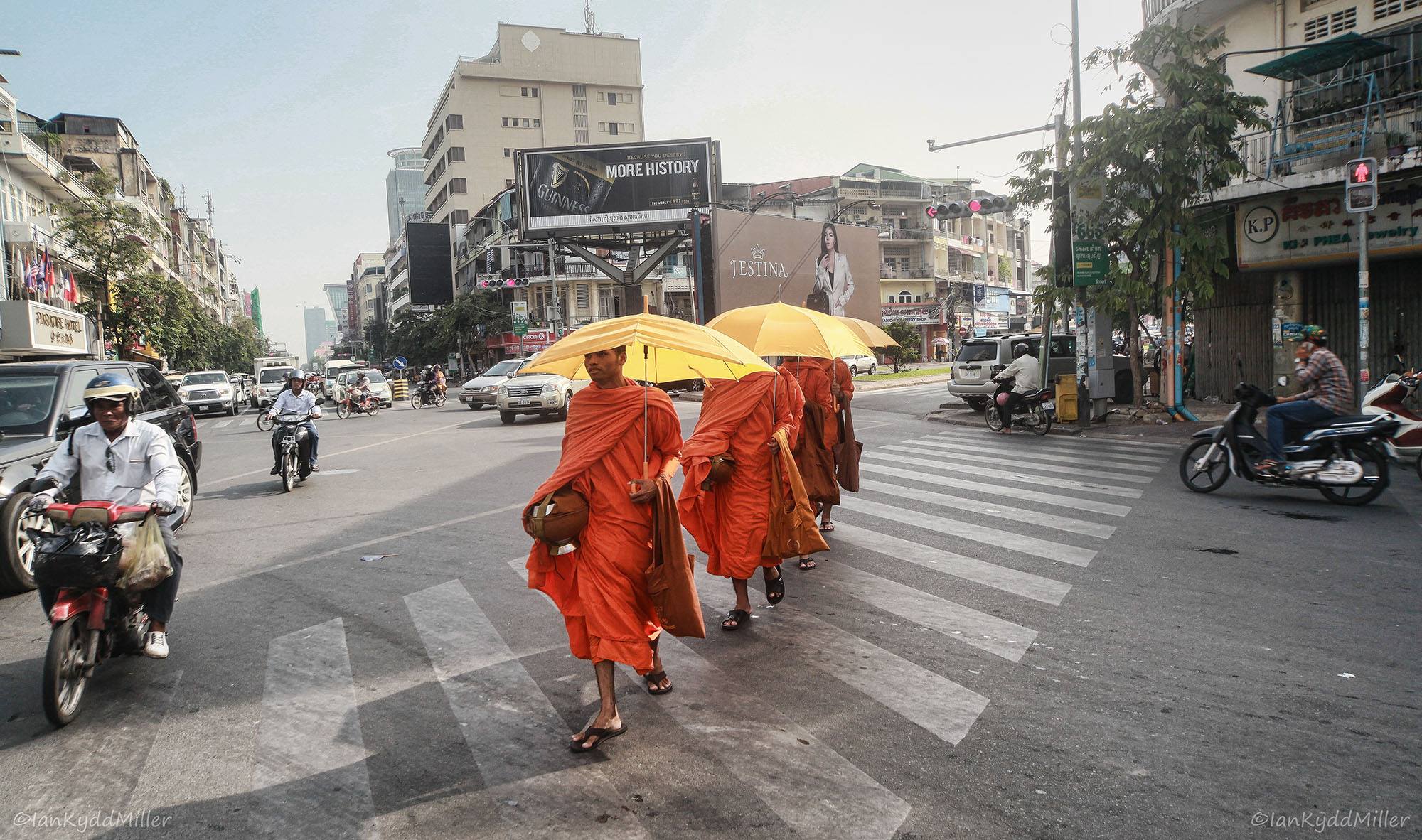
  • Monks in saffron robes walk barefoot through neighborhoods, collecting alms in a centuries-old ritual.

🚦 Midday Hustle

  • Traffic is a sensory overload: motorbikes weaving between tuk-tuks, bicycles, and the occasional Lexus SUV.
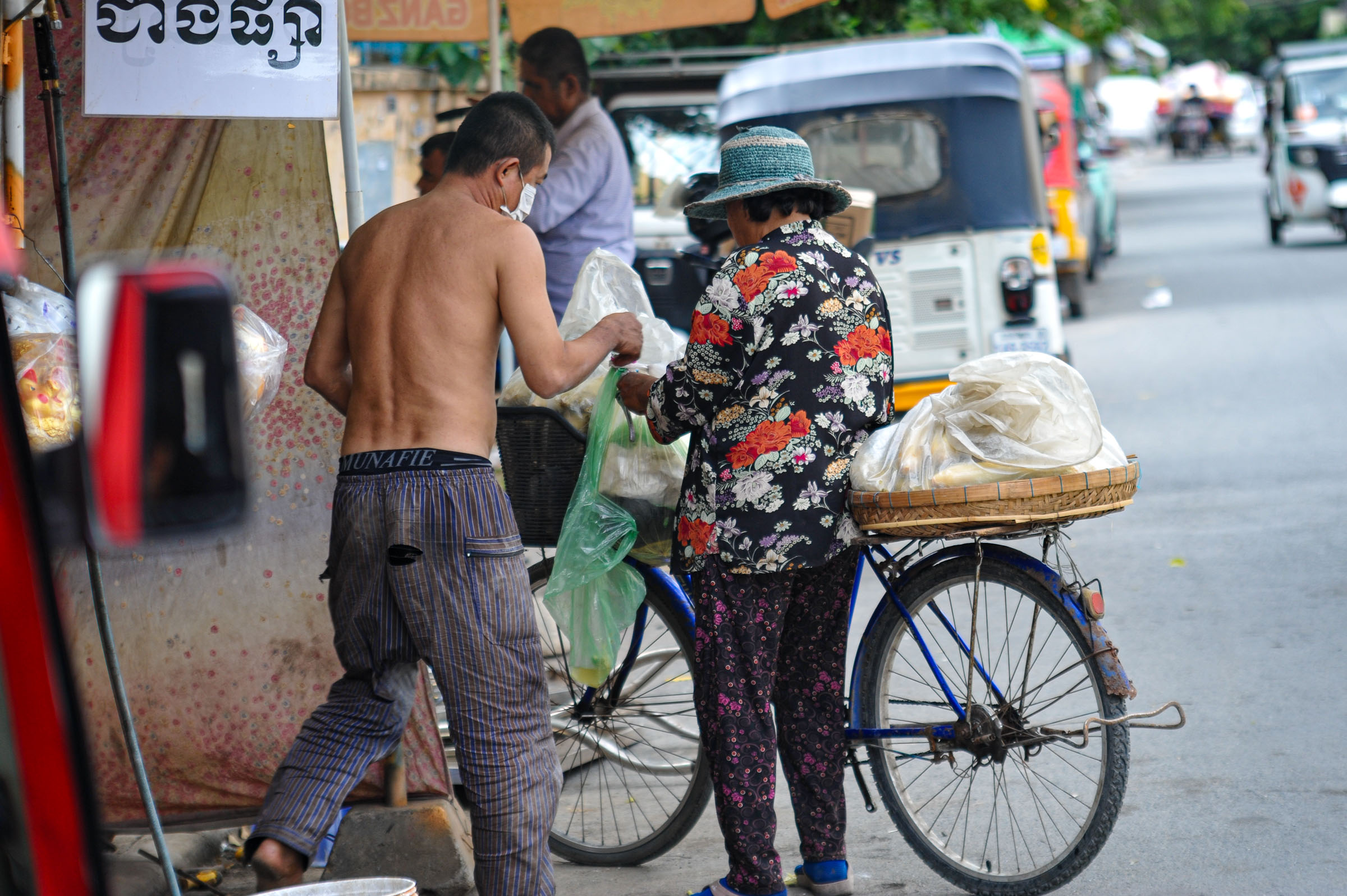
  • Sidewalks double as workshops and storefrontsβ€”tailors, mechanics, and barbers set up shop in open air.
  • Children play in alleyways, while families gather under umbrellas to escape the midday heat.

πŸŒ† Evening Energy

  • As the sun sets, Phnom Penh’s streets transform into night markets and food havens.
  • Skewers of beef, fried noodles, and fresh sugarcane juice fill the air with irresistible aromas.
  • Riverside areas like Sisowath Quay become social hubs, with locals strolling, exercising, or enjoying street performances.

🎨 The Character of Phnom Penh’s Streets

  • Contrasts everywhere: gleaming malls stand beside crumbling colonial buildings; luxury cars pass hand-pulled carts.
  • Colours and textures: laundry strung across balconies, neon-lit karaoke bars, and murals reflecting Cambodia’s youthful creativity.
  • Community spirit: despite the chaos, there’s a sense of rhythmβ€”neighbours chatting, vendors calling out, children laughing.

πŸ“· Why It’s Photographically Rich

For photographers, Phnom Penh’s street life offers:

  • Dynamic light and shadow in narrow alleys and open boulevards.
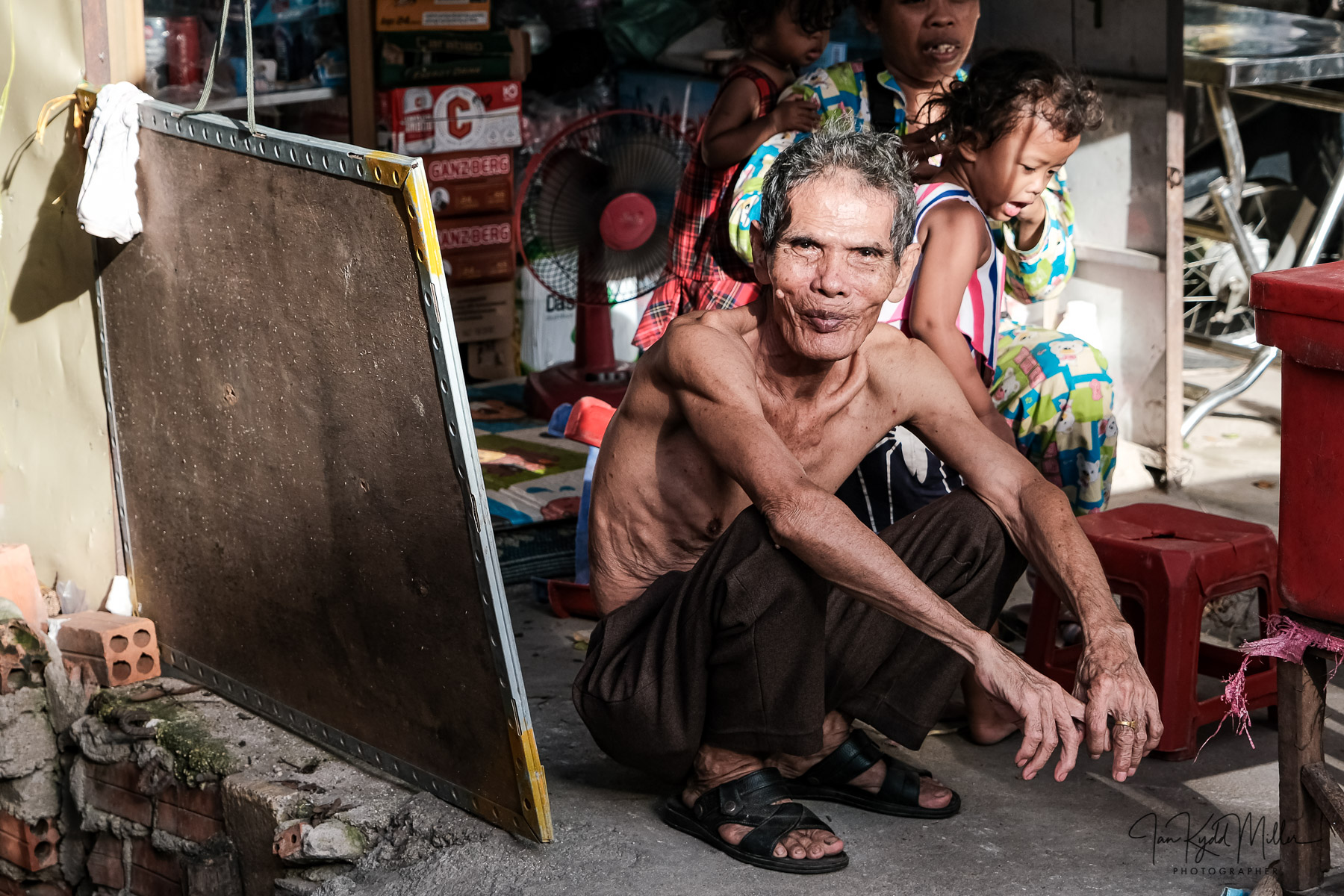
  • Faces full of character, from weathered elders to energetic youth.
  • Stories in motionβ€”every corner reveals a narrative of resilience, adaptation, and joy.

βœ… In essence: Street life in Phnom Penh is not just about movement and commerceβ€”it’s about connection, survival, and culture lived in public view. It’s messy, colourful, and endlessly fascinating, making it one of the most compelling urban experiences in Southeast Asia.

πŸ“Έ A Photographer’s Guide to Street Life in Phnom Penh

cambodia, cameras, fujifilm, homelessness, Lenses, opinons, thoughts, photography, pictures, street, Travel

πŸŒ… Best Times of Day

  • Early Morning (5:30–8:00 AM): The city wakes up with monks collecting alms, markets buzzing, and soft golden light.
  • Late Afternoon to Evening (4:30–7:00 PM): Streets cool down, families gather, and riverside areas come alive with food stalls and social activity.
  • Night (after 7:00 PM): Night markets and neon-lit streets offer vibrant colours and contrasts, perfect for low-light experimentation.

πŸ™οΈ Key Locations

  • Central Market (Phsar Thmey): Iconic art-deco building with bustling vendors inside and street life spilling outside.
  • Russian Market (Phsar Toul Tom Poung): Narrow alleys, food stalls, and a mix of locals and expats.
  • Sisowath Quay (Riverside): Evening strolls, street performers, and Mekong river views.
  • Olympic Market & Stadium: Everyday Cambodian lifeβ€”vendors, students, and sports enthusiasts.
  • Backstreets of Daun Penh & Toul Kork: Less touristy, more authentic glimpses of daily life.

🎨 Style and Approach

  • Wide-angle storytelling: Capture the energy of markets and traffic chaos.
  • Portraits with consent: Many Cambodians are open to being photographed if approached politelyβ€”smiles go a long way.
  • Details and textures: Street food, tuk-tuks, signage, and architecture all add layers to your visual story.
  • Motion blur and panning: Great for showing the constant flow of motorbikes and tuk-tuks.

🀝 Ethical Considerations

  • Respect privacy: Always ask before photographing children or vulnerable individuals.
  • Support locals: Buy a coffee or snack from vendors you photographβ€”it builds goodwill.
  • Be discreet: Avoid being intrusive; blend in and let moments unfold naturally.
  • Tell the truth: Aim for authenticity, not staged or exaggerated scenes.

πŸ› οΈ Practical Tips

  • Gear: A 35mm , 50mm or 85mm prime lens is ideal for intimacy; a small zoom (24–70mm) adds flexibility.
  • Settings: Use aperture priority (f/2.8–f/5.6) for portraits and shutter priority for motion shots.
  • Backup: Carry extra batteries and memory cardsβ€”street life is unpredictable and fast-moving.
  • Safety: Keep gear close and minimal; Phnom Penh is generally safe, but petty theft can happen.

βœ… Final Thought: Phnom Penh’s streets are a living classroom for photographersβ€”full of light, colour, and human connection. The key is to move slowly, observe deeply, and engage respectfully. The reward is not just strong images, but meaningful encounters.

πŸ“Έ Nikkor AF-S 50mm f/1.8G

cameras, Lenses, opinons, thoughts, photography, pictures, street, Travel

When Nikon released the AF-S NIKKOR 50mm f/1.8G in 2011, it was designed to replace the older 50mm f/1.8D. This wasn’t just a minor updateβ€”it was a complete redesign that brought the 50mm into the modern DSLR era. With its Silent Wave Motor (SWM), aspherical element, and rounded diaphragm blades, the lens quickly became a favorite among both beginners and professionals.

πŸ—οΈ Build and Design

  • Compact and lightweight at just 185g, making it easy to carry as an everyday lens.
  • Plastic exterior with a metal mountβ€”not as rugged as pro lenses, but durable enough for regular use.
  • Weather sealing is absent, but the lens is reliable in most conditions if handled with care.
  • The focus ring is smooth and allows for full-time manual override, a big improvement over the older D version.

πŸ” Optical Performance

  • Sharpness: Excellent center sharpness even wide open at f/1.8, with edges improving significantly by f/2.8–f/4.
  • Bokeh: Thanks to its 7 rounded aperture blades, the out-of-focus areas are smooth and pleasing, making it a great portrait lens.
  • Chromatic Aberration: Some longitudinal CA (color fringing) is visible at wide apertures, but it’s well controlled compared to older designs.
  • Distortion & Vignetting: Minimal barrel distortion; vignetting is noticeable at f/1.8 but reduces quickly when stopped down.

⚑ Autofocus and Handling

  • The Silent Wave Motor (SWM) provides fast, accurate, and nearly silent autofocus, a huge step up from the screw-drive AF of the 50mm f/1.8D.
  • Works seamlessly on all Nikon DSLRs, including entry-level bodies without an in-body AF motor.
  • Manual focus override is smooth and responsive, making it easy to fine-tune focus for portraits or close-ups.

🎨 Creative Applications

  • Portraits: On full-frame (FX) cameras, it delivers natural perspective and beautiful background separation. On APS-C (DX) bodies, it acts like a short telephoto (~75mm equivalent), perfect for headshots.
  • Street Photography: Its discreet size and fast aperture make it excellent for low-light, candid shooting.
  • Everyday Use: From food photography to travel, the 50mm focal length is versatile and intuitive.

πŸ’° Value and Longevity

  • Priced affordably (around $200–250 new, less on the used market), it offers exceptional value for money.
  • While Nikon’s 50mm f/1.4G and f/1.2 lenses exist, the f/1.8G hits the sweet spot of performance, portability, and price.
  • Even in the mirrorless era, with Nikon’s Z-mount lenses, the 50mm f/1.8G remains a relevant and reliable choice for F-mount shooters.

βœ… Final Verdict

The Nikkor AF-S 50mm f/1.8G is a lens that proves you don’t need to spend a fortune for professional-quality results. With its sharp optics, smooth bokeh, and dependable autofocus, it’s a must-have prime for any Nikon DSLR user. Whether you’re shooting portraits, street scenes, or everyday life, this lens delivers consistent, beautiful resultsβ€”and it’s one of the best bargains in Nikon’s lineup.

🎯 Nikkor 85mm f/1.8D on the Nikon D3

cameras, Lenses, opinons, thoughts, photography, pictures, street, Travel

When Nikon introduced the AF Nikkor 85mm f/1.8D in 1994, it quickly became a go-to portrait lens for professionals and enthusiasts alike. Fast forward to the Nikon D3 era (2007), and this lens found a natural partner in Nikon’s first full-frame DSLR. While newer optics have since surpassed it in coatings, autofocus speed, and edge-to-edge sharpness, the 85mm f/1.8D remains a compact, affordable, and character-rich lens that shines on the D3.

πŸ—οΈ Build and Handling

  • Compact and lightweight at just 380g, making it easy to carry compared to the heavier 85mm f/1.4.
  • Solid construction with a classic Nikon designβ€”metal mount, smooth focus ring, and a no-nonsense aesthetic.
  • On the D3’s robust body, it balances well, offering a comfortable shooting experience for long sessions.

πŸ” Optical Performance

  • Sharpness: Wide open at f/1.8, the center sharpness is already strong, though edges soften slightly. By f/2.8–f/4, sharpness across the frame improves significantly.
  • Bokeh: The 9-blade diaphragm produces smooth, pleasing background blurβ€”ideal for portraits. While not as creamy as the 85mm f/1.4, it still delivers a natural separation between subject and background.
  • Distortion & Vignetting: Very minimal barrel distortion. Vignetting is visible at f/1.8 but reduces quickly when stopped down.
  • Chromatic Aberration: Some longitudinal CA (color fringing) can appear in high-contrast areas wide open, but it’s manageable and often correctable in post.

⚑ Autofocus and Usability

  • The lens uses Nikon’s older screw-drive AF system, meaning autofocus relies on the D3’s in-body motor. On the D3, this results in fast and accurate focusing, though not as silent or refined as modern AF-S lenses.
  • Manual focus is smooth, with a well-damped ringβ€”useful for fine adjustments in portraiture.

🎨 Creative Applications

  • Portraits: This is where the lens shines. On the D3’s 12MP full-frame sensor, it produces flattering compression, excellent subject isolation, and a timeless rendering.
  • Low Light: The f/1.8 aperture combined with the D3’s strong high-ISO performance makes it a capable lens for indoor or evening shoots.
  • Versatility: While primarily a portrait lens, it also works well for detail shots, street photography, and even event coverage where discretion and speed matter.

πŸ’° Value Today

  • On the used market, the 85mm f/1.8D is very affordable, often a fraction of the cost of the 85mm f/1.4 or newer AF-S versions.
  • For photographers using a Nikon D3 (or similar FX DSLR), it remains a cost-effective way to achieve professional portrait results without sacrificing too much in optical quality.

βœ… Final Verdict

The Nikkor 85mm f/1.8D on the Nikon D3 is a pairing that proves older gear can still deliver professional, emotionally resonant images. While it lacks the modern refinements of newer lenses, its sharpness, bokeh, and reliability make it a classic portrait tool that continues to earn its place in a photographer’s bag.