


An Old Photographer assessment
The Fujifilm X-Pro2 deserves a stronger argument than the usual praise for its appearance. Plenty of cameras look handsome hanging from a leather strap. Their usefulness becomes clearer when somebody walks through a patch of light, a face turns, and there is half a second to decide what belongs in the photograph.
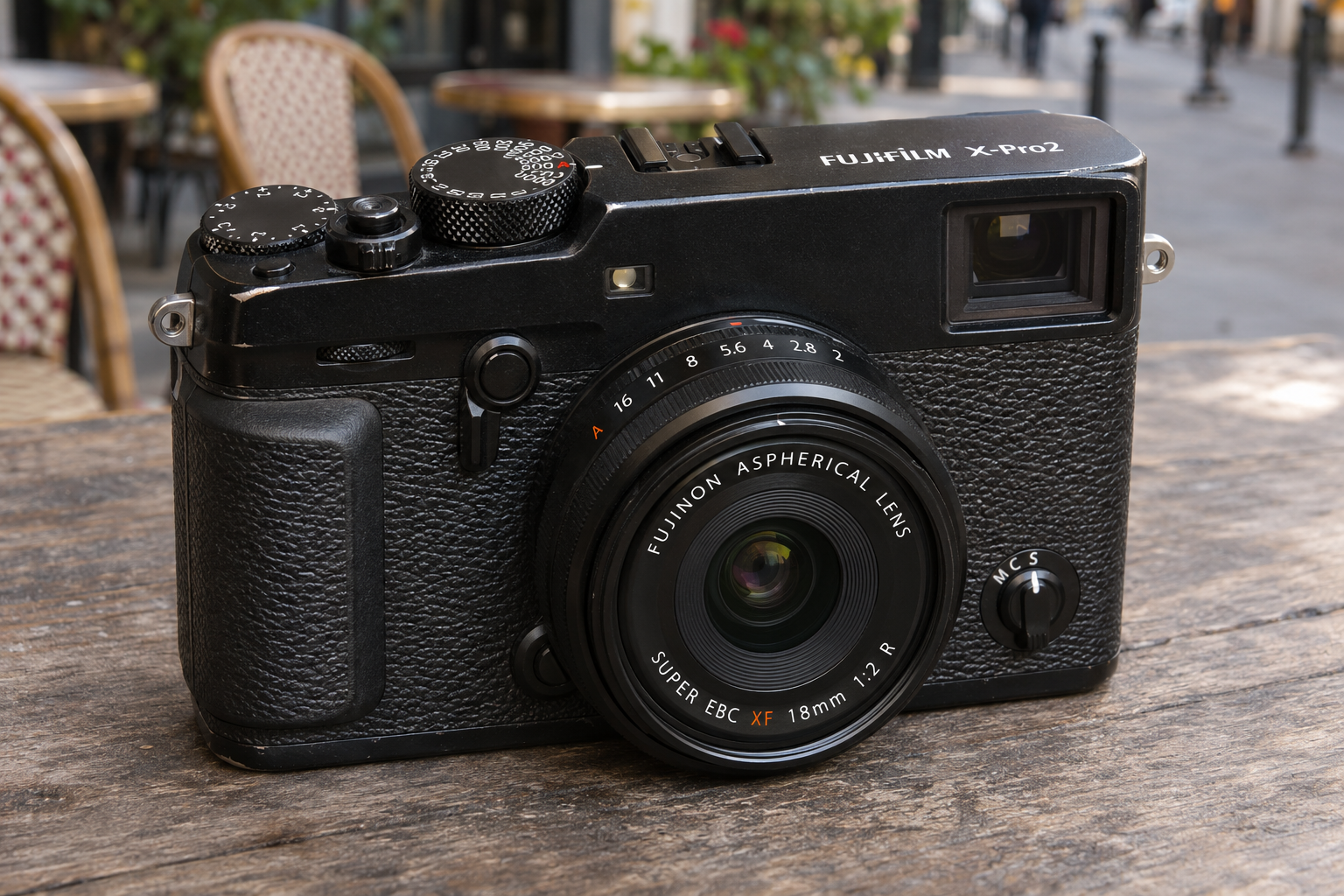
That is where the X-Pro2 earns its place. It gives the photographer a choice of how to look, puts the essential exposure controls within reach and works particularly well with small prime lenses. Its limitations are substantial enough to matter, but they are also understandable. Once understood, most can be worked around. A few cannot.
My assessment is that it remains an excellent camera for deliberate, observant street photography. It is less convincing for photographers who depend on automatic tracking, regularly work from low angles or expect one camera to handle every kind of moving subject with equal confidence.
The distinction matters. Street photography includes everything from a quiet portrait outside a shop to a demonstration moving rapidly through an intersection. Being good at one does not prove a camera equally good at the other.
The size is useful; the shape needs trying
At approximately 495g with battery and card, the X-Pro2 offers a worthwhile reduction in carrying weight compared with a substantial DSLR outfit. It is nevertheless a fairly broad camera, rather than a genuinely pocketable one. The benefit is most apparent when it wears a modest prime lens. Put a large, heavy lens on the front and both the handling and the argument for carrying it become less persuasive. [1]
Weight matters over a long walk. It also matters before leaving home. A camera that feels manageable is more likely to come along on an ordinary outing, when there is no assignment and no promise of anything worth photographing.
The relatively shallow grip is more divisive. Some hands settle around the body immediately; others spend the afternoon holding it more tightly than they should. An accessory grip may help, but it adds bulk. There is no prize for enduring uncomfortable handling because a camera has a good reputation.
For an older photographer, the sensible test is quite plain: can you carry it comfortably, bring it to your eye without rearranging your hand and operate it without fighting your fingers? That answer matters more than whether it resembles a celebrated camera from another decade.
The hybrid finder is the real reason to consider it
The X-Pro2 offers an optical finder, an electronic finder and an optical view with a small electronic focus-check window. In optical mode, you can see beyond the bright frame lines. That surrounding view can help you anticipate somebody entering the composition. The electronic finder shows the view through the taking lens and can preview exposure and colour treatment. [2]
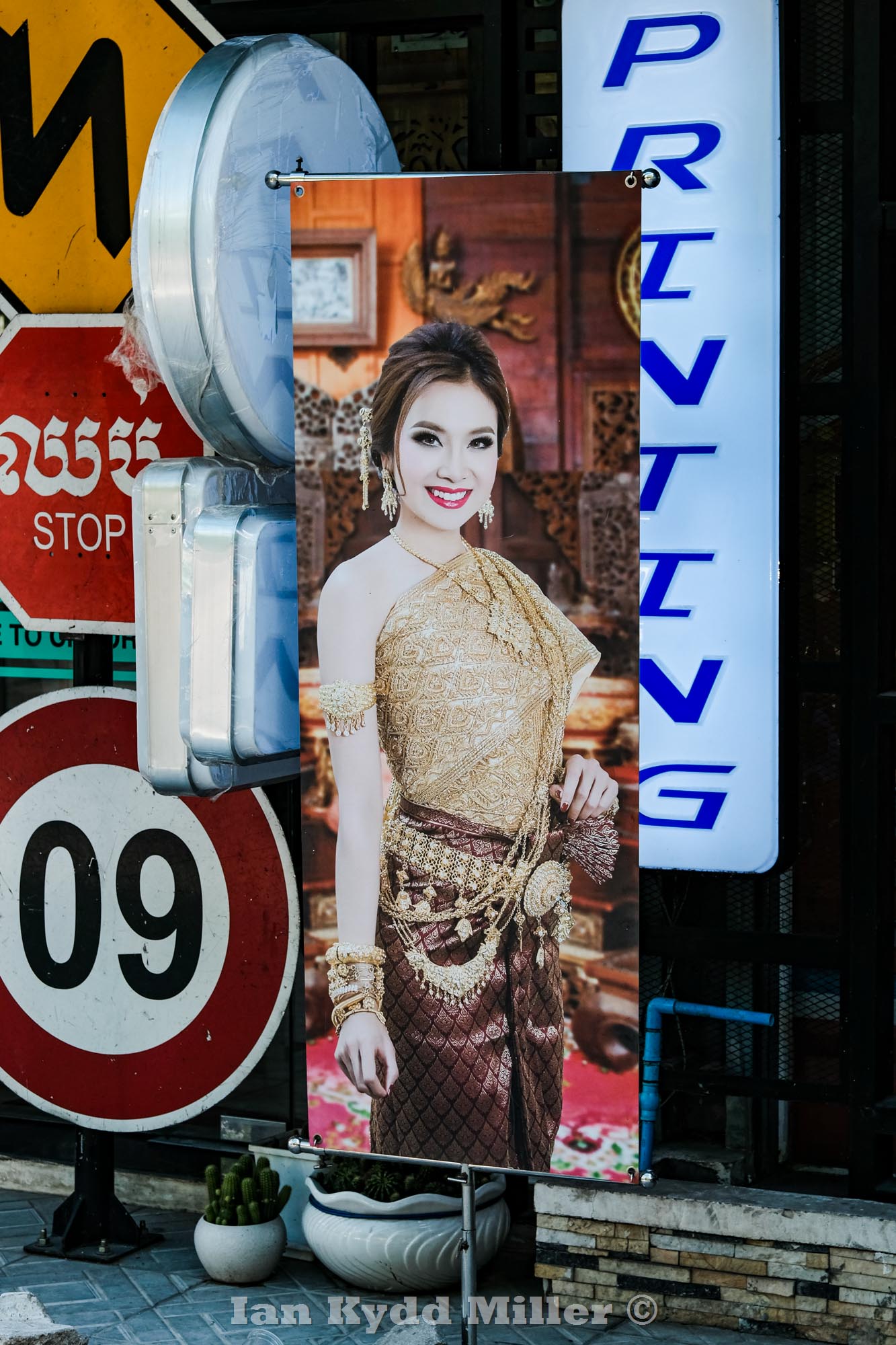
These are different ways of gathering information.
Through the optical finder, the world retains its ordinary brightness and continuity. You watch relationships develop: somebody approaching a doorway, two people separating, a hand beginning to rise. The view outside the frame can be particularly valuable when a composition depends on an arrival rather than a subject already standing in place.
It will not give you anticipation. You still have to notice what is happening. But it provides information that a tightly bounded electronic image may conceal.
There are costs. The optical finder is offset from the lens, so close subjects introduce parallax. Its frame lines compensate as focus changes, but precise framing still takes attention. The lens or hood can intrude into the view. Longer focal lengths leave a smaller area within the frame lines, making the optical experience less satisfying. [2]
It is also worth clearing up the terminology. The X-Pro2 has rangefinder styling and an optical finder; it does not use a mechanically coupled rangefinder focusing system. Calling it a rangefinder without qualification can give the wrong impression about how focusing actually works.
The EVF becomes the sensible choice when exact edges, close focusing or the effect of exposure adjustments matter. Switching to it is part of using the camera properly. Optical viewing is an option, rather than a test of photographic seriousness.
For a photographer accustomed to a DSLR, the distinction is especially important. A DSLR’s optical finder looks through the taking lens. The X-Pro2’s optical finder does not. Enjoying one will not automatically mean preferring the other.
Image quality that can support serious work
The camera uses a 24.3-megapixel APS-C X-Trans CMOS III sensor. Its full-resolution 3:2 files measure 6000 by 4000 pixels. That provides substantial scope for publication and printing without producing especially cumbersome files. [1,3]
At 300 pixels per inch, those dimensions give a print approximately 20 by 13.3 inches before cropping. Larger prints are possible at lower pixel densities, depending on the image and viewing distance. That is arithmetic, rather than a guarantee: focus, exposure, camera movement and processing still determine how much useful information reaches the paper.
For street work, 24 megapixels remains a practical amount. It allows a modest crop when something at the edge weakens a picture, while rewarding careful framing. Severe cropping will consume the available detail quickly, especially if the original subject occupied only a small part of the frame.
Colour and tonal response offer plenty of room for interpretation. The more useful question is what the file allows you to describe: separation between faces and background, texture in a wall, a convincing transition from sunlight into shade. Those qualities deserve attention at normal viewing sizes and in prints.
I would be cautious about claims that this sensor generation possesses a special quality newer sensors have somehow lost. Comparisons are easily influenced by different lenses, exposure, sharpening and JPEG settings. The X-Pro2 needs no mythology to justify its output.
Its files are capable enough to expose weaknesses in the photograph itself. A poor arrangement of people remains poor at 24 megapixels.
Autofocus: capable, provided you take responsibility
The autofocus is a legitimate working tool, but it should be assessed with realistic expectations. The camera provides single-point, zone and wide/tracking options. Fujifilm also improved autofocus through firmware, including tracking behaviour and low-light phase detection. An assessment based entirely on the camera’s original launch behaviour can therefore be misleading. [3,4]
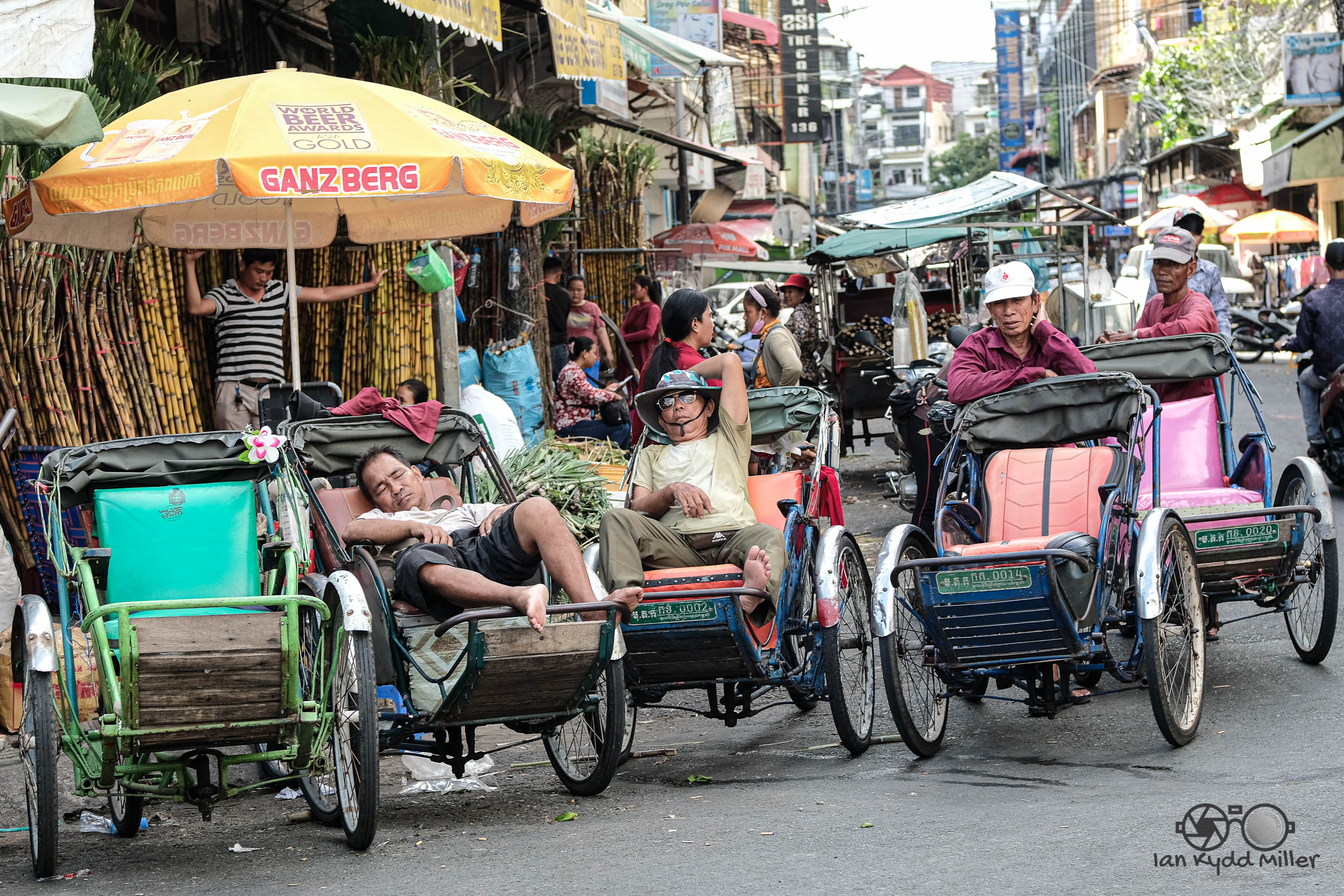
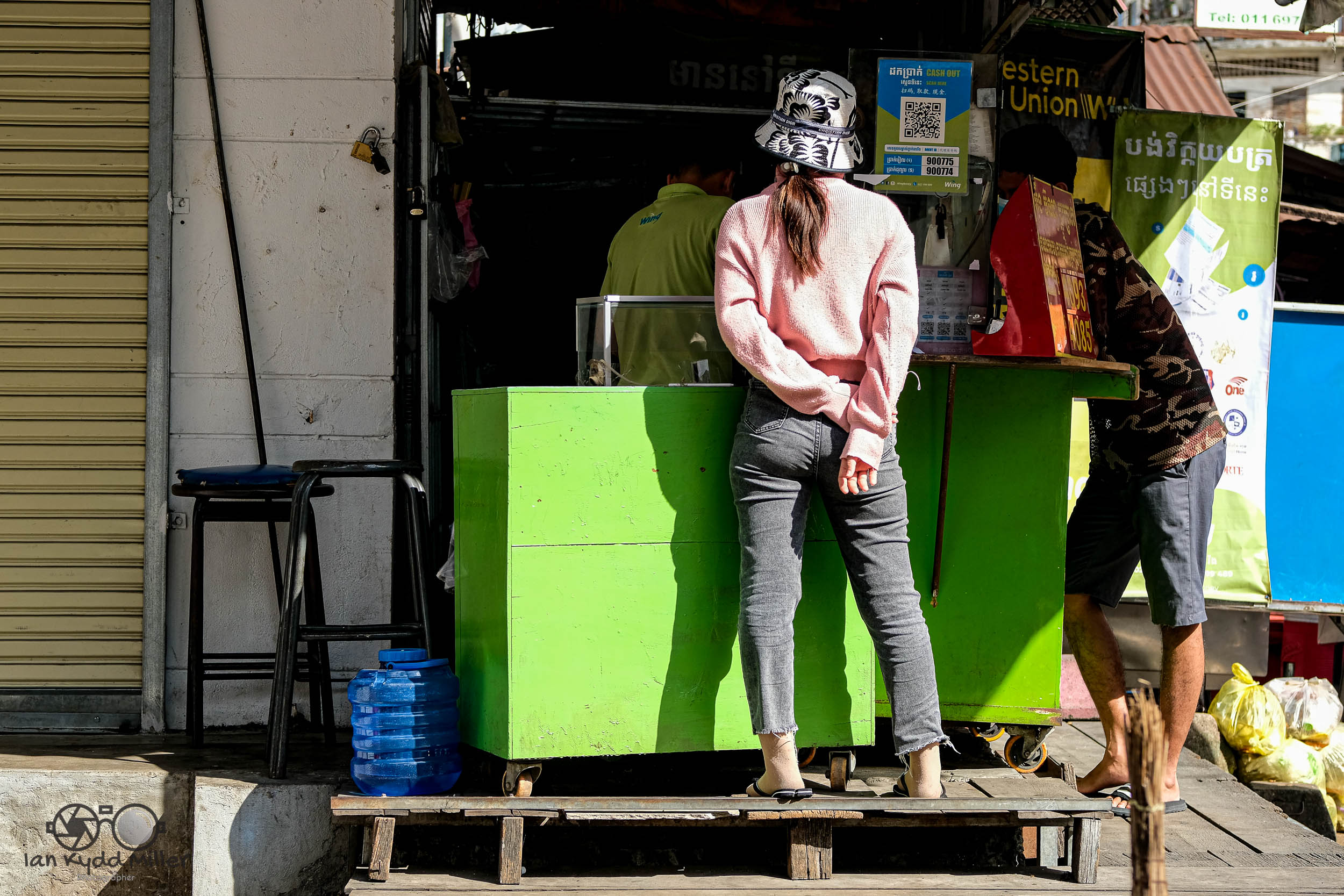
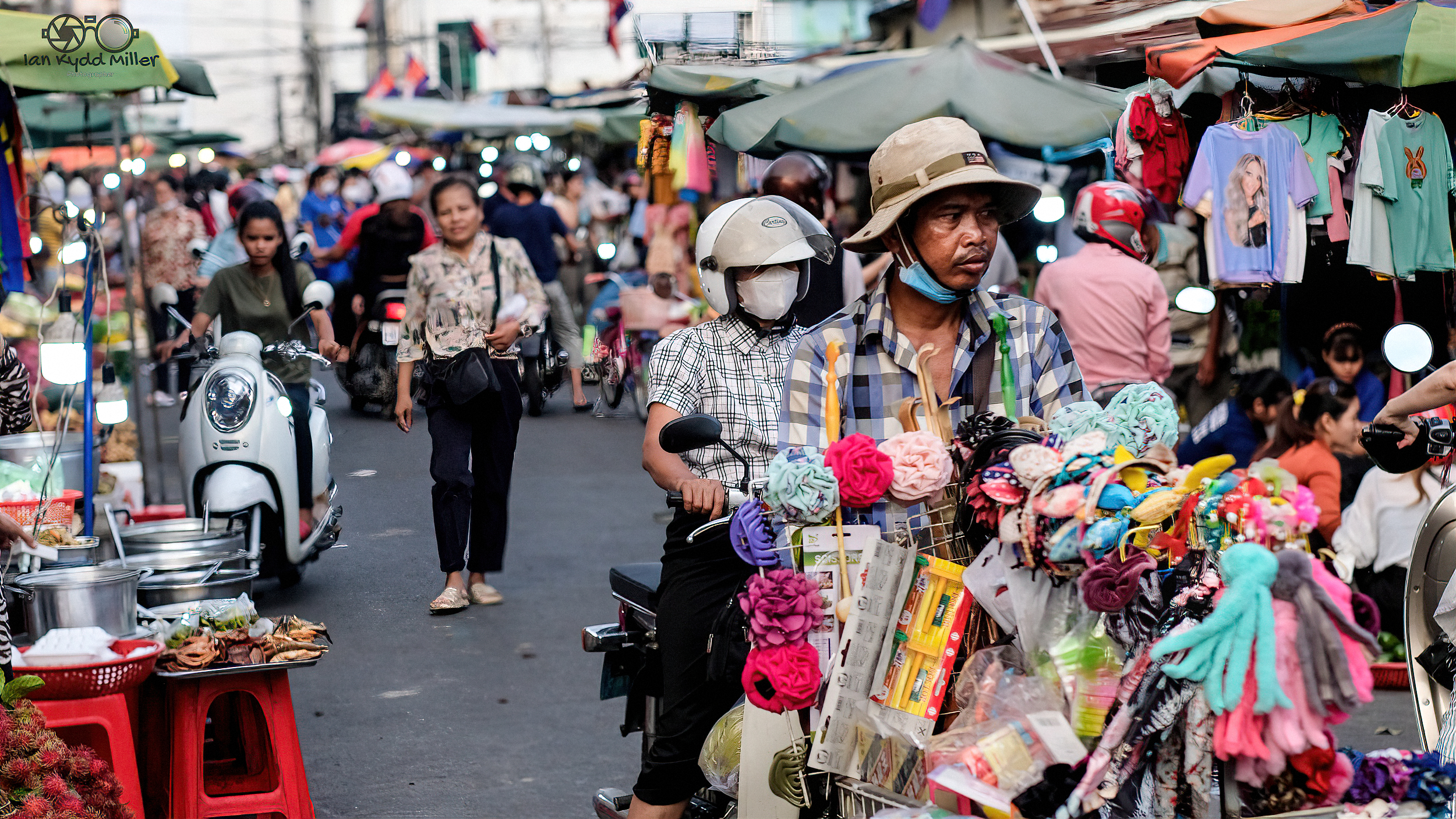
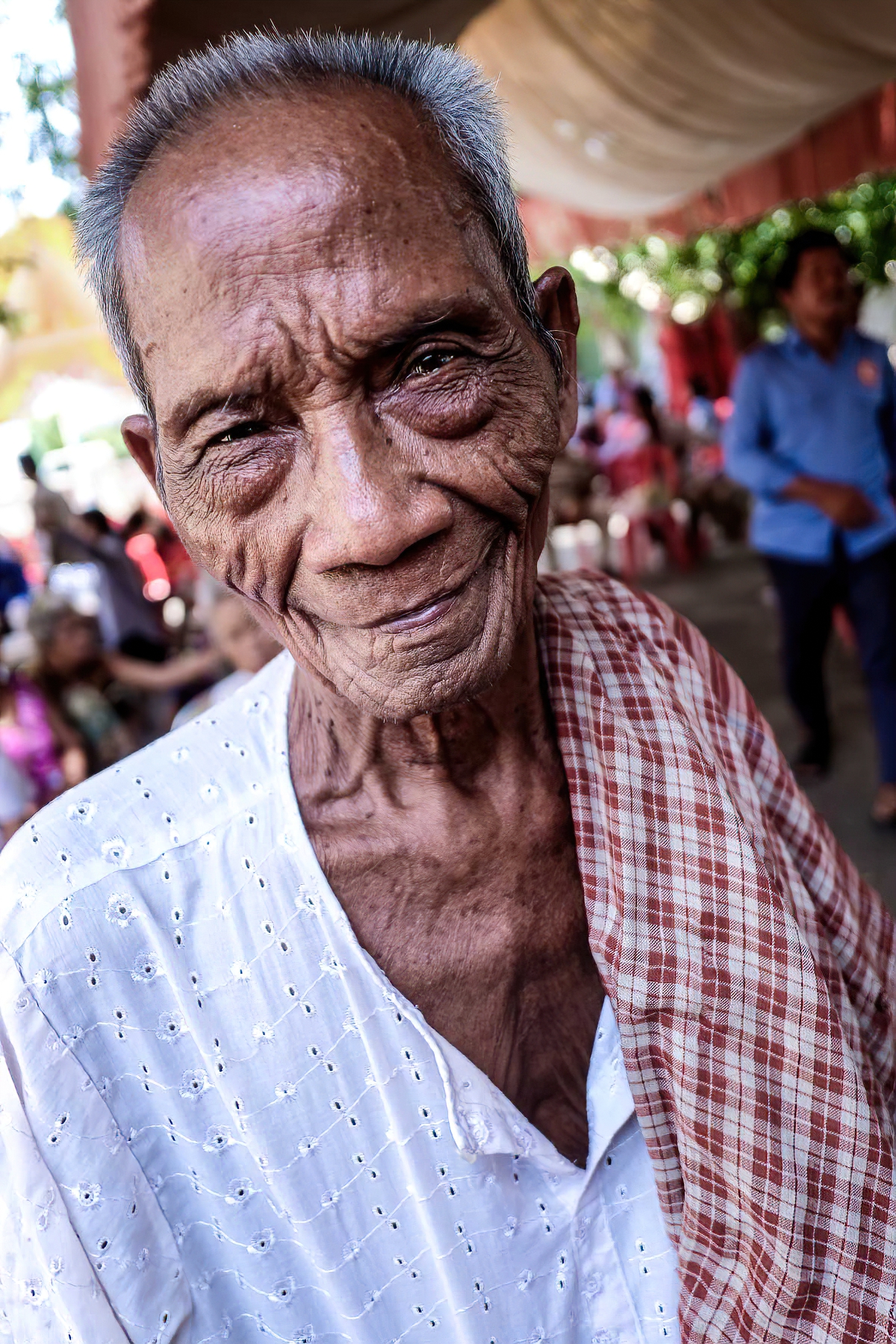

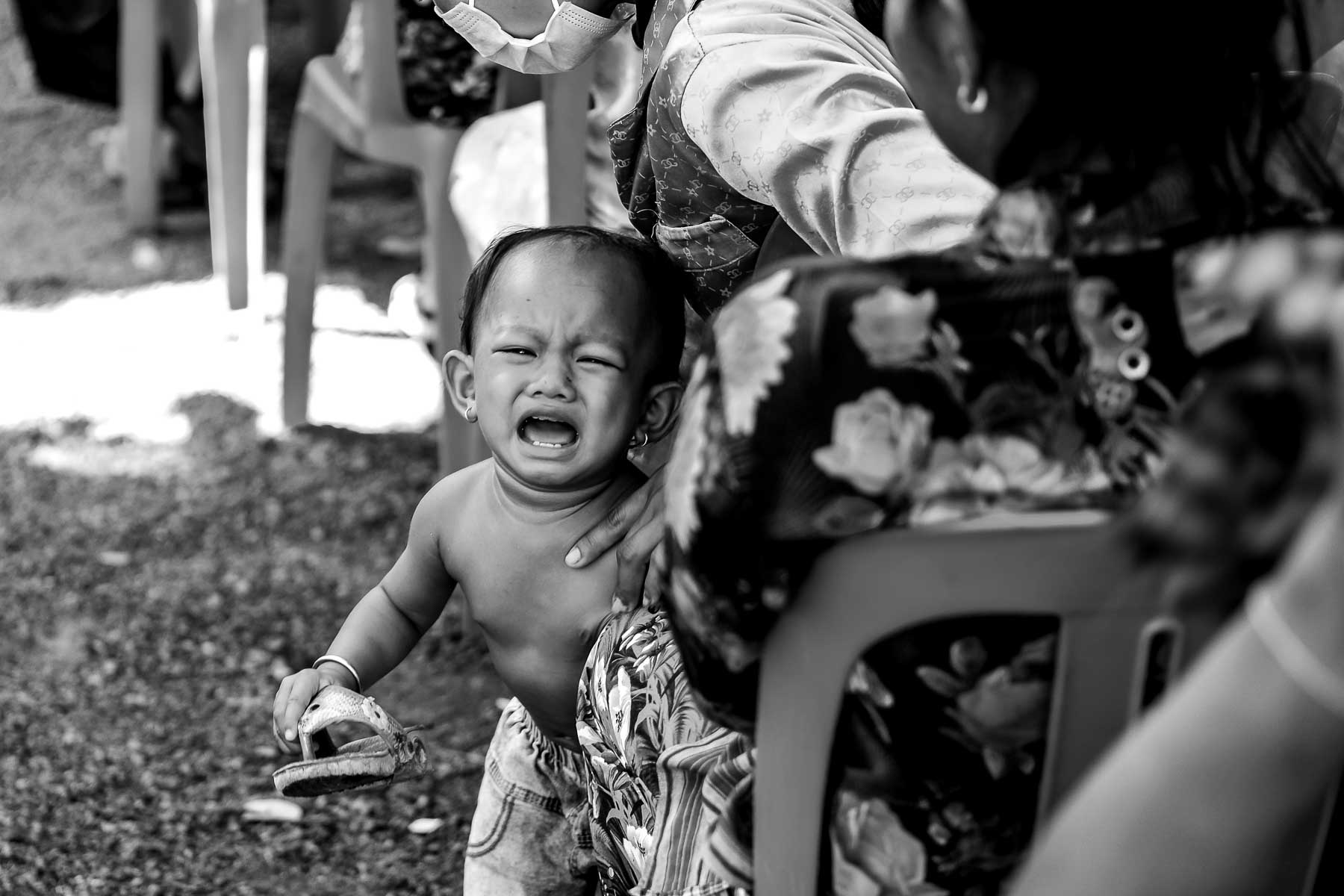
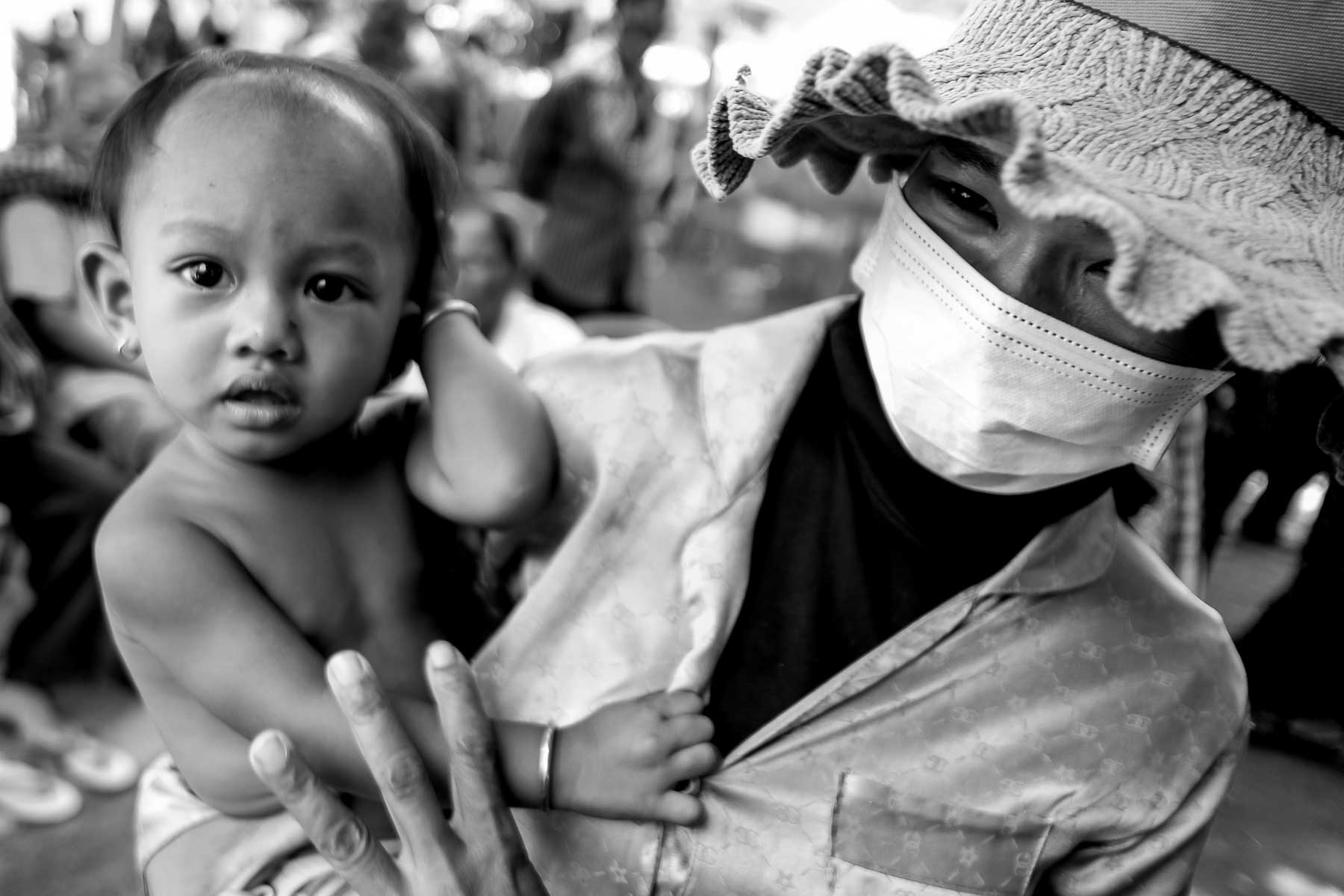


For a person who has stopped, a street portrait or a composition with a clear subject, single-point AF is a sensible starting place. Choose an area large enough to acquire a useful target, place it deliberately and confirm the result. A tiny point is helpful for some precise subjects, but it becomes an unnecessary burden when it keeps slipping away from a moving face.
For someone walking towards you, AF-C with an appropriate zone deserves practice. Lens behaviour, light, subject contrast and the position of the subject within the frame all affect the outcome. Expecting every combination to behave identically will lead to frustration.
Do not confuse the presence of face detection with a guarantee that the camera has chosen the right person. In a busy street, the most prominent face may belong to a passer-by rather than the subject whose gesture matters. Review critical work closely enough to discover what the system is doing.
For rapidly changing, overlapping movement, my judgment is less generous. If your work depends on the camera finding and retaining the intended subject with minimal intervention, this is a substantial reason to consider a newer alternative. Anticipation remains valuable, but unreliable acquisition does not become a virtue because it makes the photographer work harder.
The X-Pro2 is strongest when you give the autofocus a clear task. It becomes less dependable when asked to infer your intention from a complicated scene.
Lens choice determines the character of the outfit
The interchangeable lens mount makes the camera adaptable, but a street outfit benefits from restraint. Choose the lens for where you want to stand and what you want to include. Changing focal length changes the working relationship with the subject; it is more consequential than adding another attractive object to the bag.
| Lens | Approximate full-frame angle-of-view equivalent | Main street use | Main compromise |
|---|---|---|---|
| XF 18mm f/2 R — your favourite | 27mm | Close, inclusive street work; people and their surroundings | Requires careful edges and attention to camera-to-subject distance |
| XF 23mm f/2 R WR | 35mm | People within their surroundings; layered compositions | Background and edge clutter need discipline |
| XF 35mm f/2 R WR | 53mm | General observation; individuals and small interactions | Less expansive in cramped spaces |
| XF 50mm f/2 R WR | 76mm | Street portraits; gestures and selected details | More working distance and a narrower view |
Equivalence here describes angle of view. It does not change the actual focal length or turn an f/2 lens into a different exposure aperture. [5]
For this particular setup, the XF 18mm f/2 deserves first consideration: it is your favourite lens on the X-Pro2. Its approximately 27mm equivalent angle of view and 116g weight help explain why it makes such a persuasive street combination. It adds relatively little weight or projection to the body while including a generous account of the surroundings. [9]
The 23mm offers a slightly tighter alternative when surroundings still carry a large part of the story. It can hold a person, the shopfront and the activity around them in the same frame. Both lenses include enough unwanted material to punish inattentive composition. A wide lens provides room; the photographer must organise it.
The 35mm gives a more selective view without demanding the distance of a short telephoto. It suits small interactions and individual figures particularly well. For someone wanting one lens to learn thoroughly, it is an excellent place to begin.
The 50mm deserves a stronger defence than street photography convention sometimes allows. Its approximately 76mm equivalent view suits photographers who prefer a little distance and want a face or gesture to dominate. It can separate an individual from a visually confused street while retaining some indication of place.
For your preference for an 85mm lens on full frame, the XF 50mm f/2 is especially relevant. It is somewhat wider, but occupies a similar practical territory. There is no reason to abandon that way of seeing simply because another photographer regards 35mm as compulsory.
The cost is space. In a narrow market aisle, there may be nowhere to step back. At greater distances, people can pass between you and the subject, and the relationship with the person being photographed may become less direct. Those are working compromises to judge picture by picture.
The XF 18mm f/2: the lens that makes this your setup
The 18mm changes the emphasis of the assessment. A camera paired with a short telephoto encourages selection from a little distance. With the 18mm, you can work nearer and retain more of the space around the person. That makes the X-Pro2 an especially useful tool for photographs in which the street contributes to the meaning of the portrait.
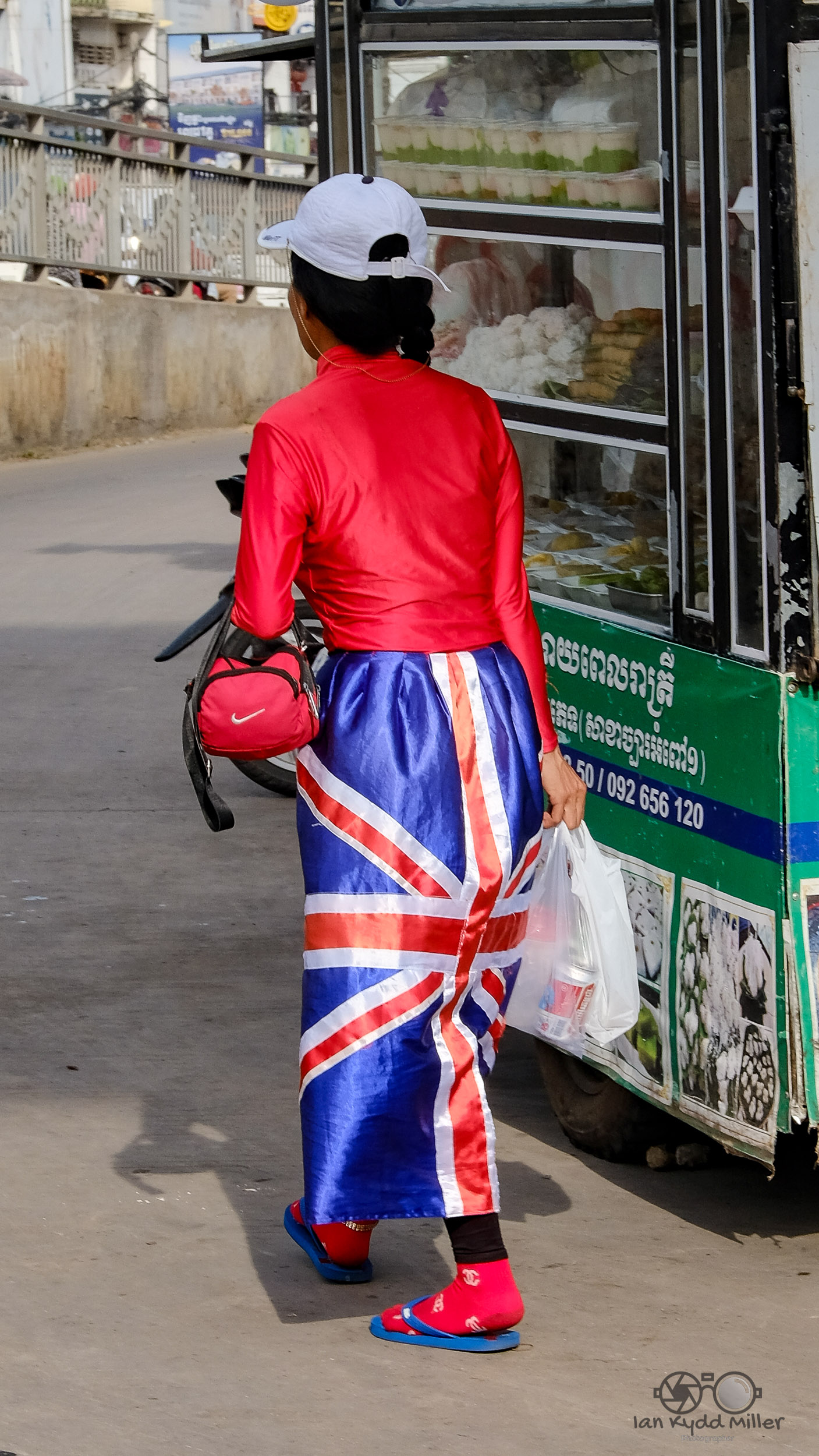




A face may be the first thing we notice, but the hands, the doorway, the goods on a stall and the people behind can tell us why the frame deserves attention. The wider view gives those elements room. It also makes their arrangement your responsibility.
There is a tendency to describe wide lenses as forgiving. They can offer useful depth of field, but composition is often less forgiving. A bright bag near an edge can compete with the face. A half-visible passer-by can look accidental. A foreground hand can become disproportionately prominent when it is much closer to the camera than the head.
That last point concerns distance and perspective. Move very close to somebody and the nearer features grow relative to the farther ones. For a more restrained portrait, give the person room and allow the surroundings to remain in the photograph. Be particularly attentive to faces placed near the frame edges.
The maximum aperture of f/2 is useful when the light falls, though there is no obligation to spend a bright afternoon using it. At f/5.6 or f/8, the lens can support photographs that depend on several distances remaining legible. A background with enough definition to explain the setting may be more valuable than a soft wash of colour.
Prefocusing is also worth exploring. Establish a working distance, choose an aperture for the depth you need and release when the subject reaches the intended position. Check the results at your normal output size; a broad depth-of-field indication should not be mistaken for equally precise focus everywhere.
With the optical finder, the wide framing also leaves less surrounding space outside the frame lines than a longer lens. Judge how much anticipation that view actually gives you. Switch to the EVF when exact edges become important.
Your preference gives the assessment a firmer centre. The XF 18mm f/2 is a lens you already favour on this camera. Familiarity with its framing can reduce hesitation: you begin to recognise where to stand before raising the camera. That is a practical advantage worth taking seriously.
Exposure controls: direct, occasionally fiddly
The shutter-speed dial, exposure-compensation dial and lens aperture ring make exposure choices physically accessible. You can establish a working approach before raising the camera and adjust it without treating every change as a menu operation.
That arrangement is especially helpful when moving between direct sun and covered walkways. Exposure compensation can make a quick correction when the meter’s preference differs from the picture you intend.
The combined shutter-speed and lift-to-turn ISO control is more contentious. It is neat engineering, but not necessarily the quickest arrangement for frequent ISO changes. Test it with your own hands. Small controls become less charming when they interrupt a picture.
Auto ISO can reduce the need to handle that dial repeatedly. Its settings still require thought. A minimum shutter speed appropriate for holding the camera steady may be too slow for a moving person, and the camera can fall below that minimum after reaching the selected ISO ceiling. Watch the actual exposure rather than assuming the configuration has solved every problem.
For ordinary walking figures, around 1/500 second is a useful starting point when light allows. For faster movement, try 1/1000. For a relatively still person, 1/250 may be enough. These are starting points; direction, distance, focal length and the movement you want to show all matter.
Low light: spend your exposure where it helps
Night work brings the compromises into focus. A bright lens helps, but opening it fully reduces depth of field. Raising ISO can protect shutter speed, but reduces flexibility in the file. Slowing the shutter admits more light while increasing the risk of movement.
My preference would be to accept some noise before allowing an unintended smear to destroy a face or gesture. Noise can coexist with a convincing photograph. Accidental motion blur may remove the very detail on which it depended.
As a working starting point, ISO 3200 or 6400 can be reasonable when needed, provided you assess the result at the intended output size. This is a practical judgment, not a promise that every scene at those settings will look equally good. A well-exposed face and a deeply underexposed face subsequently brightened in software ask very different things of the file.
The X-Pro2 has no in-body stabilisation. Stabilisation is available with suitable OIS lenses, but the compact f/2 primes discussed above do not provide it. More importantly, stabilisation cannot stop a person moving during the exposure. [3,5]
For a stationary architectural detail, stabilisation can change the available choices considerably. For a person turning or walking, shutter speed remains central.
JPEG, RAW and the temptation to let a look do the work
The X-Pro2 offers ACROS and Classic Chrome among its film simulations. They are useful starting points for a consistent working treatment, with ACROS particularly relevant to photographers who like making monochrome images in camera. [3]
A monochrome EVF preview can help you concentrate on brightness, separation and shape. It can also conceal a colour relationship that might have made the better picture. Choosing black and white should remain a decision about the photograph.
JPEG is entirely reasonable when exposure and treatment are settled. RAW provides greater freedom when light is difficult or a final interpretation remains uncertain. RAW+JPEG is a practical compromise: immediate finished files alongside material for later adjustment.
There is a risk in becoming so occupied with recipes that every street begins to receive the same treatment. A warm cast can flatten meaningful differences in light. Heavy contrast can erase the surroundings that explain a person. Attractive colour can make a weak frame pleasant without making it more informative.
Choose a restrained treatment, then edit the photographs. Consistency should help the work hold together; it should not excuse including pictures that say very little.


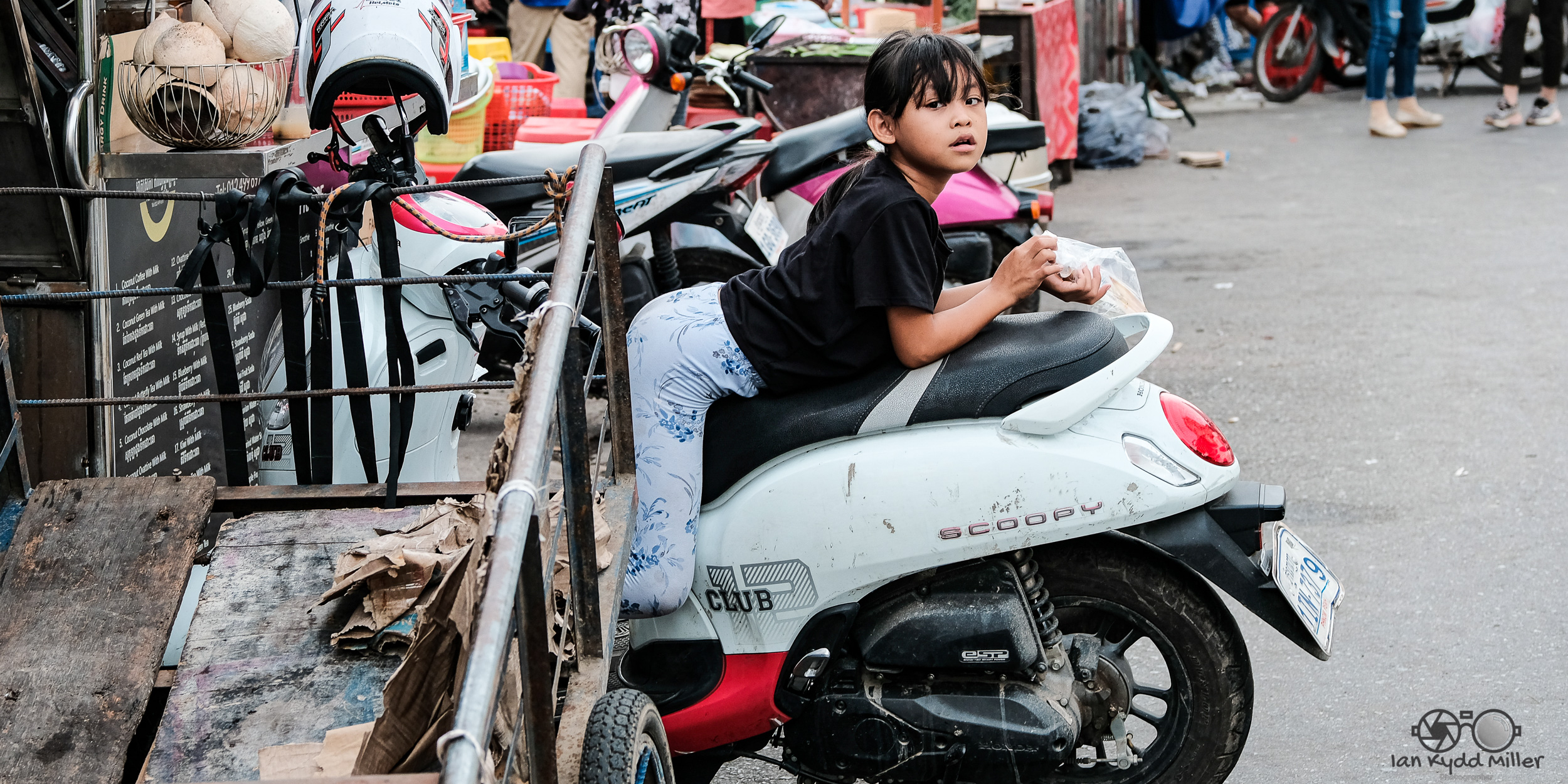
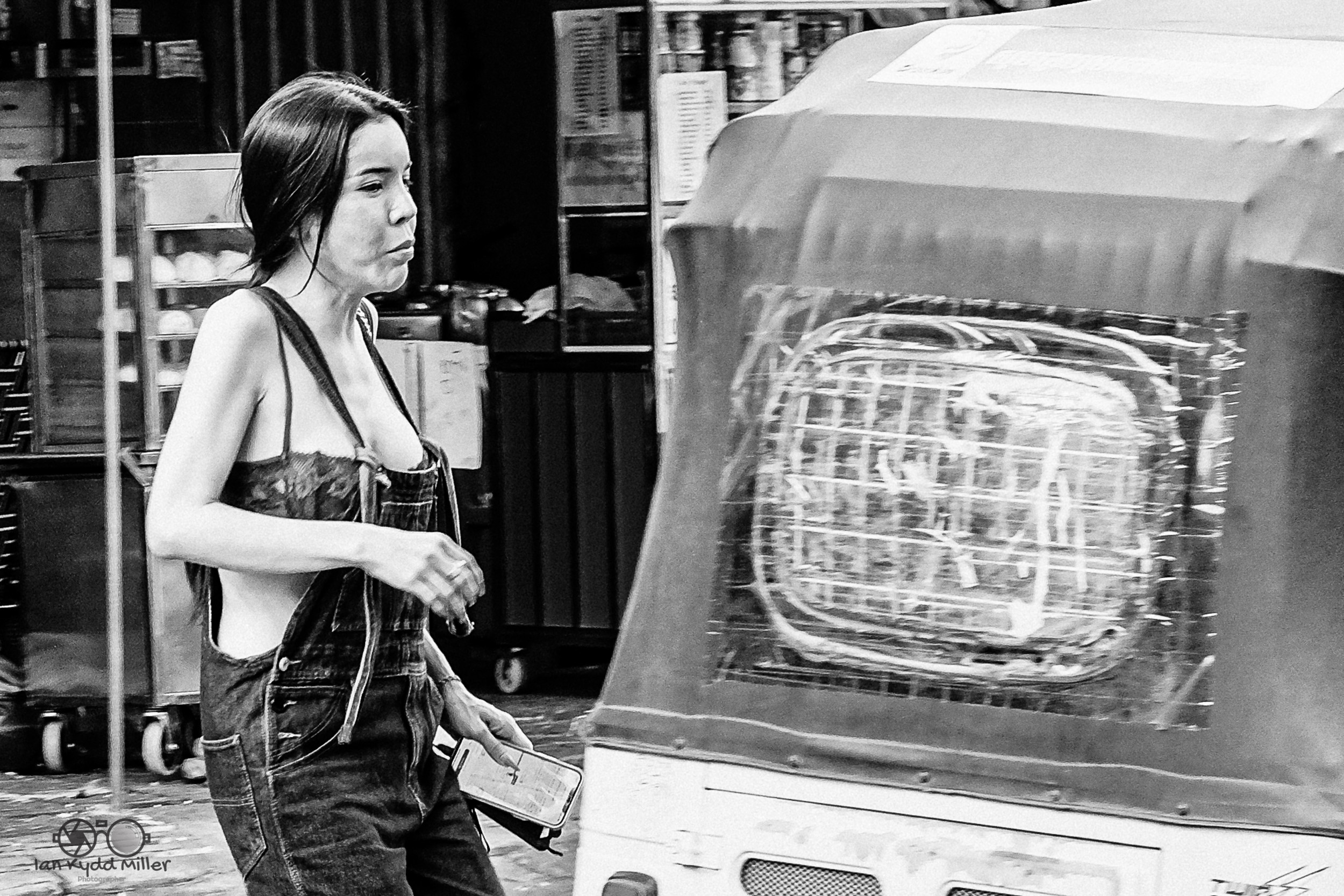
The shutter: quiet has consequences
The mechanical shutter reaches 1/8000 second and the electronic shutter 1/32000. The electronic option allows silent exposures, but Fujifilm warns of distortion with moving subjects and banding under flickering artificial light. [1,6]
That makes the mechanical shutter a sensible default for general street work. Silence is useful in some circumstances, but a passing vehicle or certain shop lights may reveal the cost later. A fast displayed shutter speed does not mean the electronic sensor readout is instantaneous.
A quieter camera also changes the encounter less than some advertising suggests. People notice where you stand, how you look at them and how long you remain. Silence provides discretion; it does not provide consent or make a photograph harmless.
The weaknesses that affect an ordinary walk
The rear screen is fixed. That is a real disadvantage for low viewpoints, overhead pictures and working discreetly from waist height. It also affects physical comfort. If kneeling is difficult, the absence of a tilting screen can prevent pictures that would otherwise be straightforward. [1]
Battery endurance requires planning. Fujifilm’s standard-mode CIPA figures are approximately 250 frames using the EVF and 350 using the OVF, with actual endurance depending on use. Carrying charged spares is sensible, especially with an ageing battery. [7]
The twin card slots are welcome for work you cannot repeat. Configure them for backup if duplicate recording is what you need; simply inserting two cards does not establish the intended workflow. The second card protects against some failures, not every loss or operating mistake. [1]
The body is weather resistant, but that should never be translated into permission to soak an old camera. Lens sealing, closed doors and the condition of the individual body all matter. In Phnom Penh, rain is only part of the problem: humidity and condensation also deserve attention. Let cold equipment acclimatise when moving from strong air conditioning into hot, humid air. [8]





None of these shortcomings automatically disqualifies the X-Pro2. Together, they explain why loving its viewfinder may coexist with reaching for a different camera on a particular day.
Buying used: judge the specimen in front of you
An appealing model name does not compensate for a failing shutter, unreliable card slot or damaged finder. Test both finder modes and the selector mechanism. Check focus-stick movement, command dials, buttons, dioptre adjustment and the ISO control. Make files on both cards, examine them and try the mechanical shutter at several speeds.
With a familiar lens, check autofocus at both near and distant subjects. Inspect the sensor, mount, battery compartment and card door. Ask about moisture exposure, repair history and the return policy. Cosmetic wear alone tells you surprisingly little about what is happening inside.
Confirm firmware against Fujifilm’s support page, following the manufacturer’s update instructions where necessary. Its update history includes meaningful operational changes; this is worth checking rather than assuming. [4]
I would not attach a universal bargain label to the X-Pro2. Used prices, condition and repair options vary. Compare the actual asking price with alternatives available to you. If the hybrid finder is central to the way you want to work, it has practical value. If you expect to leave the camera permanently in EVF mode, investigate what else the same money buys.
The judgment
The X-Pro2’s strongest qualities are coherent. A compact prime, accessible exposure controls and the choice of optical or electronic viewing make a persuasive outfit for someone who watches closely and works with intention. Its image quality is ample for serious street photographs, editorial use and substantial prints.
Its weaknesses are equally clear. The fixed screen limits viewpoints. Battery life needs managing. The optical finder asks you to understand its framing compromises. Autofocus rewards deliberate direction and gives fewer reasons for confidence when movement becomes complicated.
For your setup, the X-Pro2 with the XF 18mm f/2 belongs at the centre of the assessment. It is your favourite pairing, and its compact size and wide view make a strong case for photographing people within the life around them. The 50mm remains a useful alternative when you want a more selective view, but the 18mm establishes the starting point: close observation, space for context and careful attention across the frame.
The deciding question is whether its way of viewing helps you make pictures you value. If the optical finder helps you anticipate an arrival, if the handling lets you set exposure without hesitation, and if the files hold what you intended to describe, the camera is doing its job. Its age gives you no reason to retire it. Its reputation gives you no reason to overlook a limitation that repeatedly costs you photographs.
Technical sources
- Fujifilm X-Pro2 manual: specifications
- Fujifilm X-Pro2 Quick Start Guide: hybrid finder
- Fujifilm X-Pro2 product specifications
- Fujifilm X-Pro2 firmware and update history
- Fujifilm lens guide and equivalents
- Fujifilm X-Pro2 manual: shutter type
- Fujifilm X-Pro2 specifications: power and battery endurance
- Fujifilm X-Pro2 official brochure
- Fujinon XF 18mm f/2 R specifications

