


Old Photographer Series — Ian Kydd Miller
There is something pleasing about a camera and lens that look as though they belong together. The Fujifilm X-Pro2 and the XF 50mm f/2 have that quality. The lens does not overwhelm the body. The body does not demand a substantial bag and a serious expression. Put them together and you have a compact outfit that makes the prospect of going for a walk rather inviting.
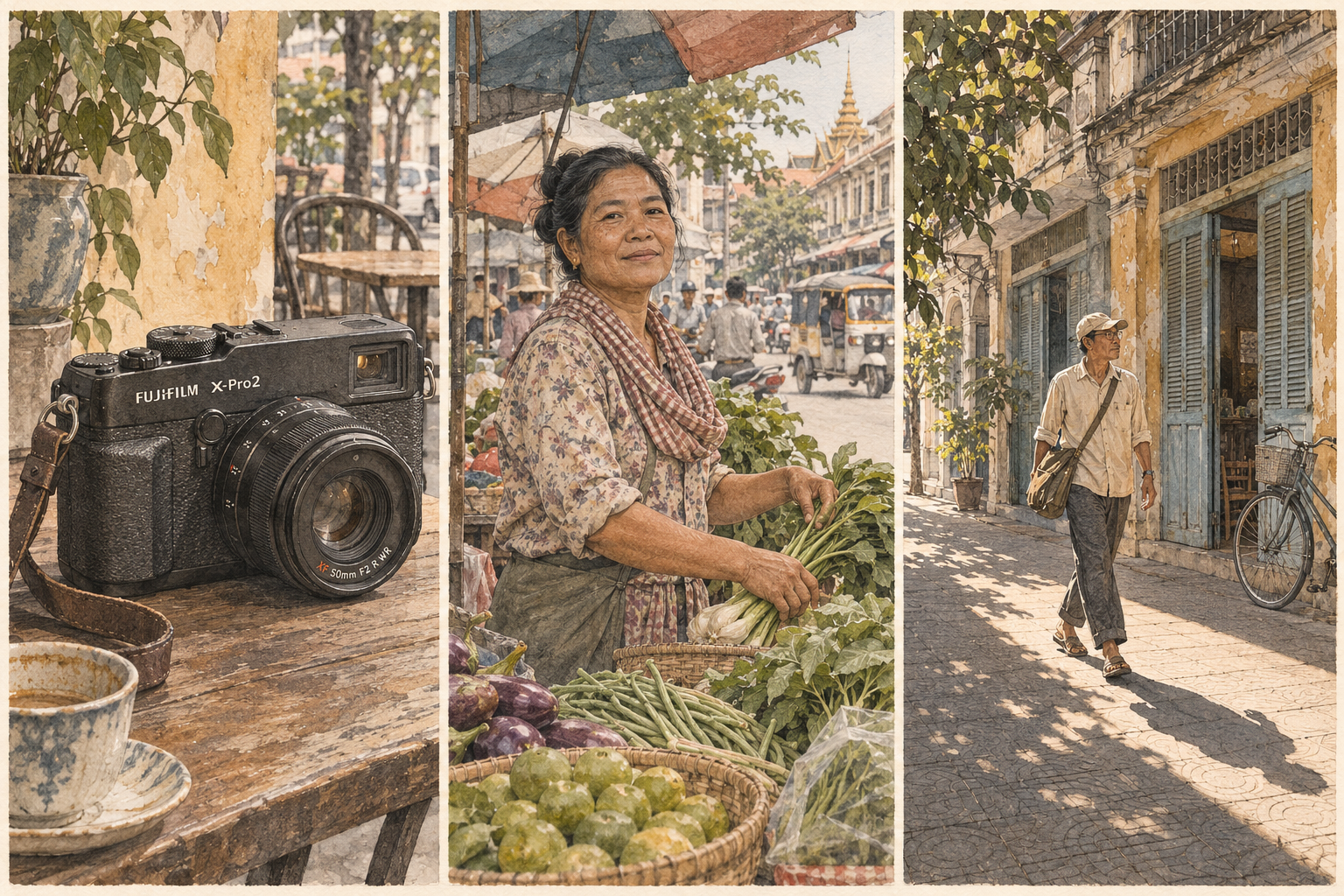
I called it a slick combination for working the street, and that is what I mean. Something manageable, purposeful and pleasant to use. Those qualities deserve more attention than they usually receive. A camera can have magnificent specifications and still become a nuisance after an hour in the heat.
The little fifty, often included under the affectionate “Fujicron” nickname, weighs about 200 grams. On the X-Pro2, its angle of view is equivalent to approximately 76mm on full frame. That second figure matters more to the photographs than the first. This is a short telephoto arrangement, with all the opportunities and restrictions that implies. dl.fujifilm-x.com








It suits the way I often like to look. I have long enjoyed an 85mm lens on full frame for street photography, so there is nothing particularly strange about finding this combination appealing. A slightly narrower view allows me to concentrate on a person without needing to include every parked motorcycle and every unrelated argument taking place nearby.
There are photographers who become surprisingly doctrinaire about focal length. Street photography, apparently, must be done with a wide lens, from close range, preferably while demonstrating sufficient courage to satisfy people who were not there. I have never found that argument especially useful. The distance needs to serve the picture and the encounter. There is no prize for making somebody uncomfortable at twenty inches.

Equally, a longer lens does not grant permission to behave as though people cannot see you. They often can. A camera held at a modest distance remains a camera pointed at somebody. Awareness, acknowledgement and the willingness to stop still matter. Being discreet is a useful working quality; treating another person as an unwitting specimen is a different business altogether.
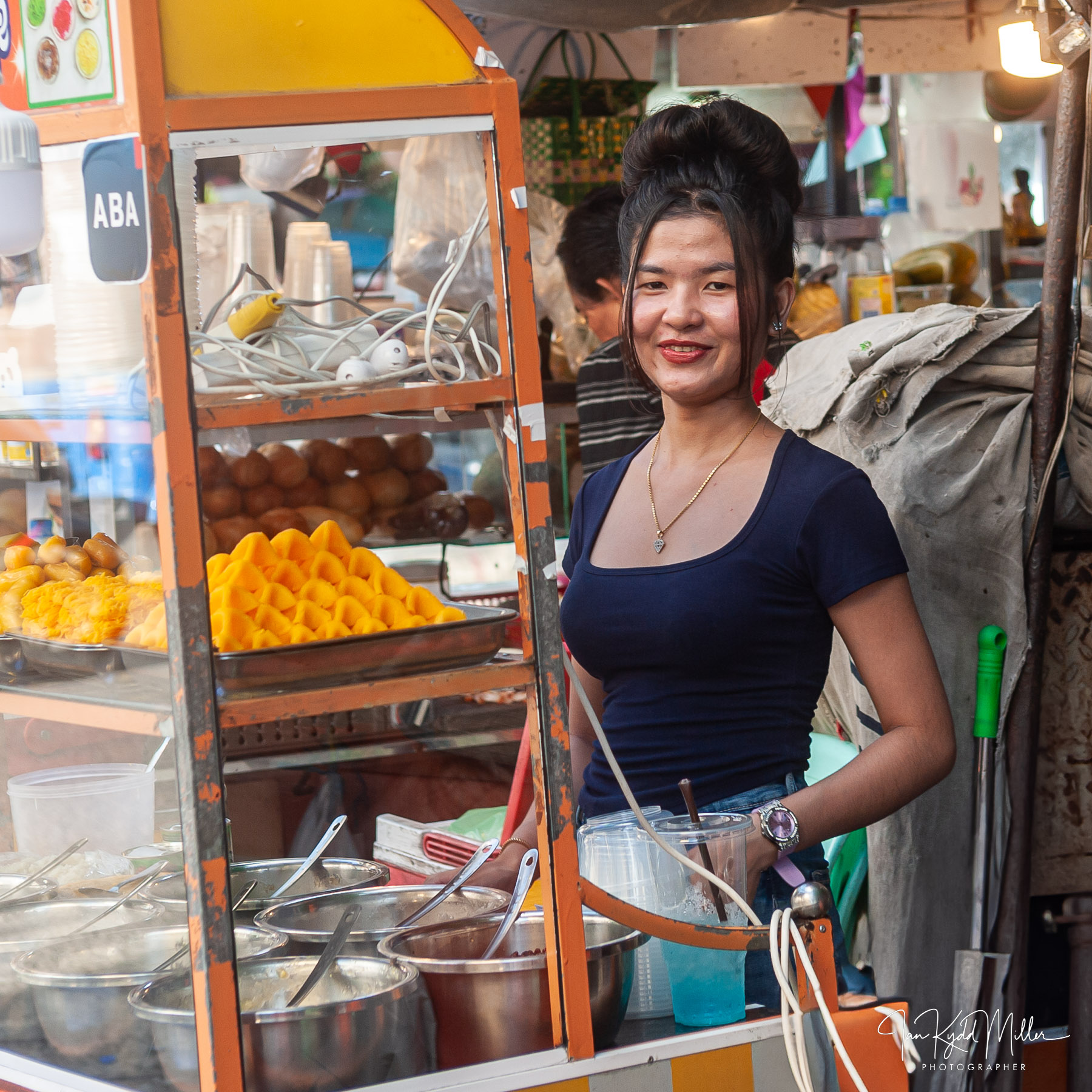
The fifty provides a little breathing room. It can give you space to observe a gesture without standing inside the conversation that produced it. For street portraits, that can be valuable. A person has somewhere to put their hands, somewhere to look, and some room to remain themselves. Whether that happens depends considerably on the photographer’s manner.

But there is a trap here, and it is an attractive one. The lens makes it easy to isolate a face, soften everything behind it and produce a perfectly agreeable portrait. Do that repeatedly and you may return with a collection of heads whose surroundings tell us almost nothing. The street has supplied the people but disappeared from the photographs.
I want the setting to contribute. A shop doorway can establish scale. A hand resting on a counter can connect somebody to their work. Another figure, placed carefully, can introduce a relationship without taking over. The task is deciding how much information the picture needs. Sometimes the answer is very little. Very little still requires thought.
That is where your feet become rather important. Stepping back can make room for the environment, provided you have somewhere to go. Moving sideways can separate a head from a pole or bring a useful stretch of background into view. The lens does not arrange these things. It records your success or failure in arranging yourself.
In crowded streets, you will occasionally run out of pavement before you get the picture you wanted. Accept it. This is not a universal lens, and pretending otherwise would make a poor photograph even less defensible. A wider lens would sometimes be easier. On another occasion, the fifty will let you make sense of a small part of the confusion.
I like that selectivity. One camera and one lens remove a certain amount of internal negotiation. You begin recognising possible pictures before lifting the camera because you have become familiar with the frame. That familiarity is earned through use. Changing lenses every few minutes can postpone it indefinitely, while giving the impression of considerable photographic activity.



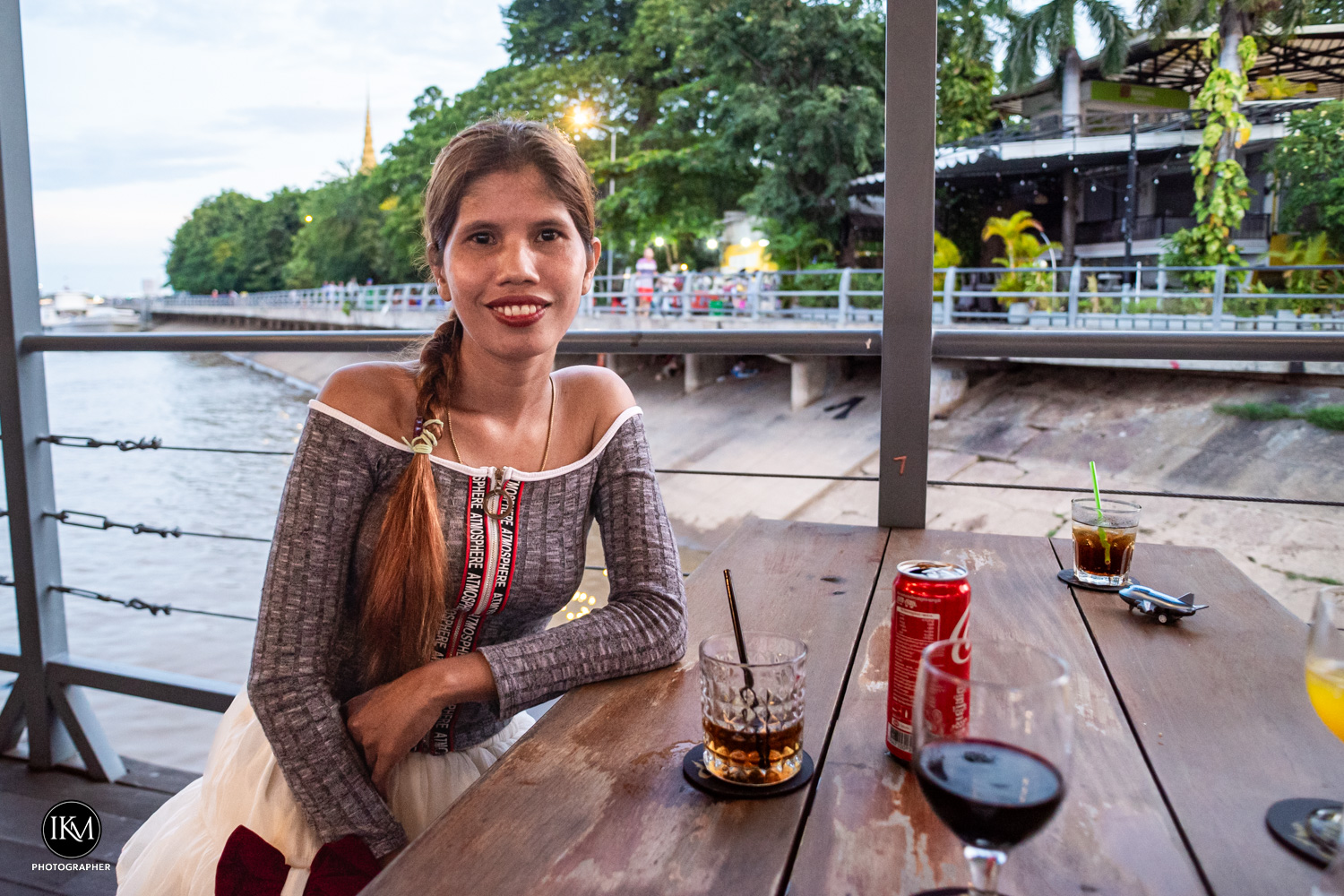
The X-Pro2 brings its own pleasures to the arrangement. The aperture ring and shutter-speed dial offer a direct way of working. I understand the attraction of seeing a setting and changing it with a physical control. That does not make the photograph more authentic. It simply gives some of us a comfortable way to manage the machine.
Then there is the hybrid viewfinder. The optical view allows you to watch beyond the bright frame, which can help when something is about to enter the picture. With the fifty, however, the framed area occupies a relatively small portion of that view. Some photographers enjoy that arrangement. Others will find themselves wanting a closer look.
The electronic finder provides it, along with a view through the lens and a clearer indication of the composition. For precise framing, particularly at shorter distances where optical parallax becomes relevant, it is a sensible choice. I see no reason to turn the choice of viewfinder into a test of character. Use whichever helps you judge the photograph. fujifilm-dsc.com
Focus deserves the same practical approach. Put the focusing area where it needs to be and pay attention to what the camera has actually acquired. A clear eye matters in many portraits; a sharp patch of wall behind the subject rarely compensates for missing it. Familiarity with the controls is more useful than confidence based on the manufacturer’s enthusiasm.
Shutter speed is another place where optimism causes trouble. A person talking, turning or moving a hand may need considerably more speed than a stationary building. Around 1/250 second can be a useful starting point, with 1/500 or faster for brisk movement. These are working suggestions, not guarantees. Watch what people are doing and adjust accordingly.
I would rather accept some grain-like noise than lose the expression to accidental movement. Technical cleanliness has its place, but a remarkably clean file of a missed moment is still a missed moment. Good handling matters too. Lift the camera steadily, settle your grip and press without snatching. Small equipment benefits from the same care as large equipment.
The f/2 aperture is useful when the light falls, or when a little separation will help the subject stand clearly within the frame. It is also easy to become lazy with it. A background reduced to softness may remove distractions, but it may remove the explanation as well. Before opening the lens fully, decide which of those you are losing.
At f/4 or f/5.6, there may be more room for a face, a working hand and enough of the setting to remain legible. Neither aperture is inherently more thoughtful. The thoughtful part is making a decision because the photograph requires it. Owning a fast lens does not oblige anyone to keep proving that it opens fully.
Light can simplify the work before any processing begins. Look for the edge of an awning, where open shade meets a brighter pavement. You may find a face illuminated by reflected light while the space behind remains quieter. Or wait for somebody to cross a patch of sun, allowing room for their next step. These are possibilities to recognise, rather than scenes the equipment supplies. With a tighter view, small changes become conspicuous: a cheek turning towards the light, fingers lifting from a table, a shoulder separating from the background. You need enough patience to notice them, and enough readiness to respond when they happen.
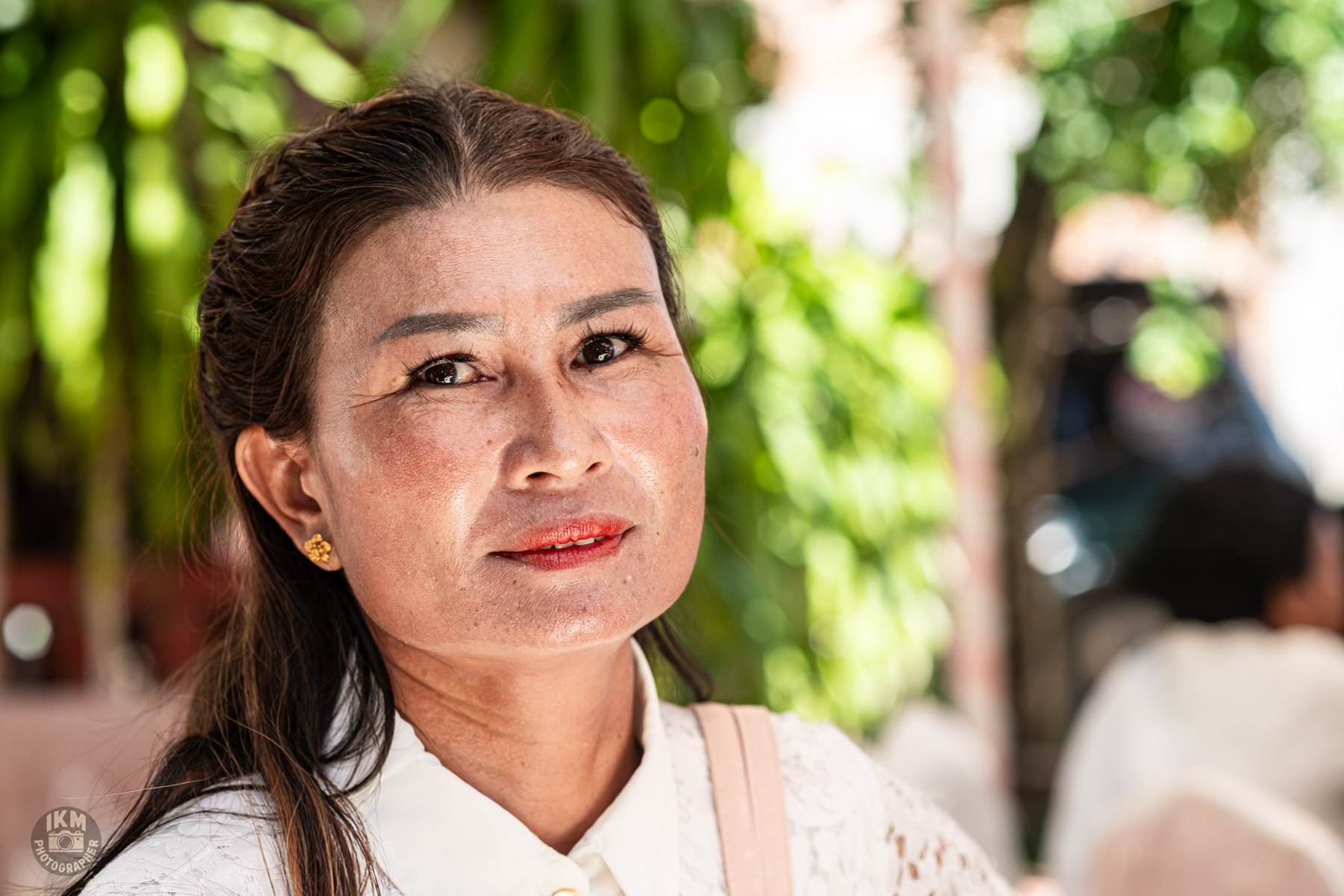
Colour and black and white deserve similar restraint. Phnom Penh gives you colour in abundance, but abundance can become competition. If a bright object at the edge keeps dragging the eye away from the person, changing to monochrome may help, although moving your position would have been better. Conversion is an editorial decision, not a repair service for inattention.
When editing, I would look beyond the face. Check the hands, the edges and the relationships between objects. Ask whether the background contributes anything, whether the gesture carries the picture, and whether the chosen frame represents the encounter fairly. A beautifully rendered expression can distract the photographer from weaknesses that another viewer will notice almost immediately.
Printing helps expose those weaknesses. On paper, an untidy edge remains untidy, and an empty photograph receives no assistance from the attractive camera that made it. This is where the appeal of the X-Pro2 and fifty has to become something more substantial than affection for equipment. The outfit has made carrying a camera agreeable. The rest still requires attention.
That is enough of a promise for me. A manageable camera, a useful working distance and a frame I can learn to anticipate. Leave the fifty attached, take the walk, and see whether the next doorway gives the person standing there enough room.

