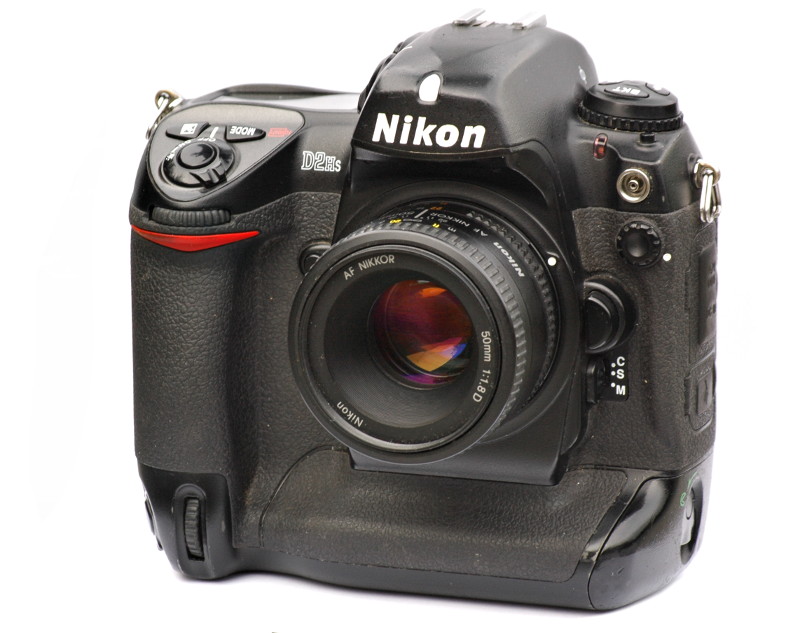

Nikon D3 and 85mm f/1.8D: A Timeless Duo

cameras, Lenses, nikon, opinons, thoughts, photography, pictures, street, Travel

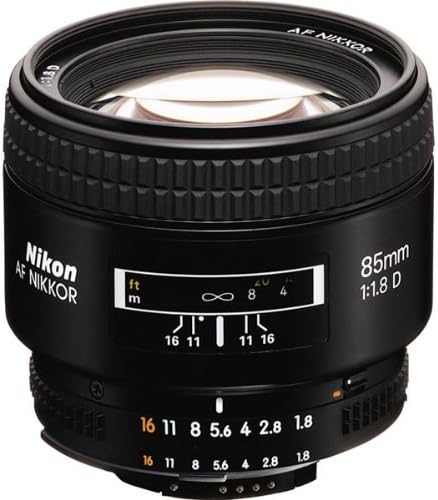
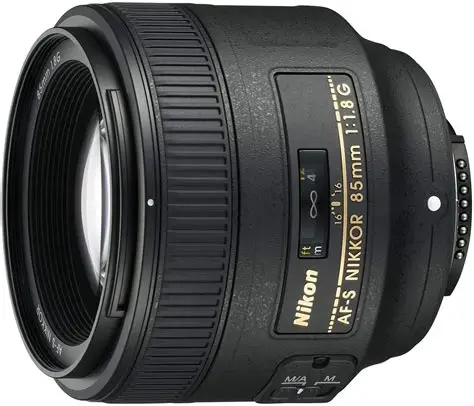
When Nikon introduced the AF Nikkor 85mm f/1.8D in 1994, it quickly became a go-to portrait lens for professionals and enthusiasts alike. Fast forward to the Nikon D3 era (2007), and this lens found a natural partner in Nikon’s first full-frame DSLR. While newer optics have since surpassed it in coatings, autofocus speed, and edge-to-edge sharpness, the 85mm f/1.8D remains a compact, affordable, and character-rich lens that shines on the D3.

🏗️ Build and Handling

  • Compact and lightweight at just 380g, making it easy to carry compared to the heavier 85mm f/1.4.
  • Solid construction with a classic Nikon design—metal mount, smooth focus ring, and a no-nonsense aesthetic.
  • On the D3’s robust body, it balances well, offering a comfortable shooting experience for long sessions.

🔍 Optical Performance

  • Sharpness: Wide open at f/1.8, the center sharpness is already strong, though edges soften slightly. By f/2.8–f/4, sharpness across the frame improves significantly.

  • Bokeh: The 9-blade diaphragm produces smooth, pleasing background blur—ideal for portraits. While not as creamy as the 85mm f/1.4, it still delivers a natural separation between subject and background.


  • Distortion & Vignetting: Very minimal barrel distortion. Vignetting is visible at f/1.8 but reduces quickly when stopped down.
  • Chromatic Aberration: Some longitudinal CA (color fringing) can appear in high-contrast areas wide open, but it’s manageable and often correctable in post.

⚡ Autofocus and Usability

  • The lens uses Nikon’s older screw-drive AF system, meaning autofocus relies on the D3’s in-body motor. On the D3, this results in fast and accurate focusing, though not as silent or refined as modern AF-S lenses.
  • Manual focus is smooth, with a well-damped ring—useful for fine adjustments in portraiture.

🎨 Creative Applications

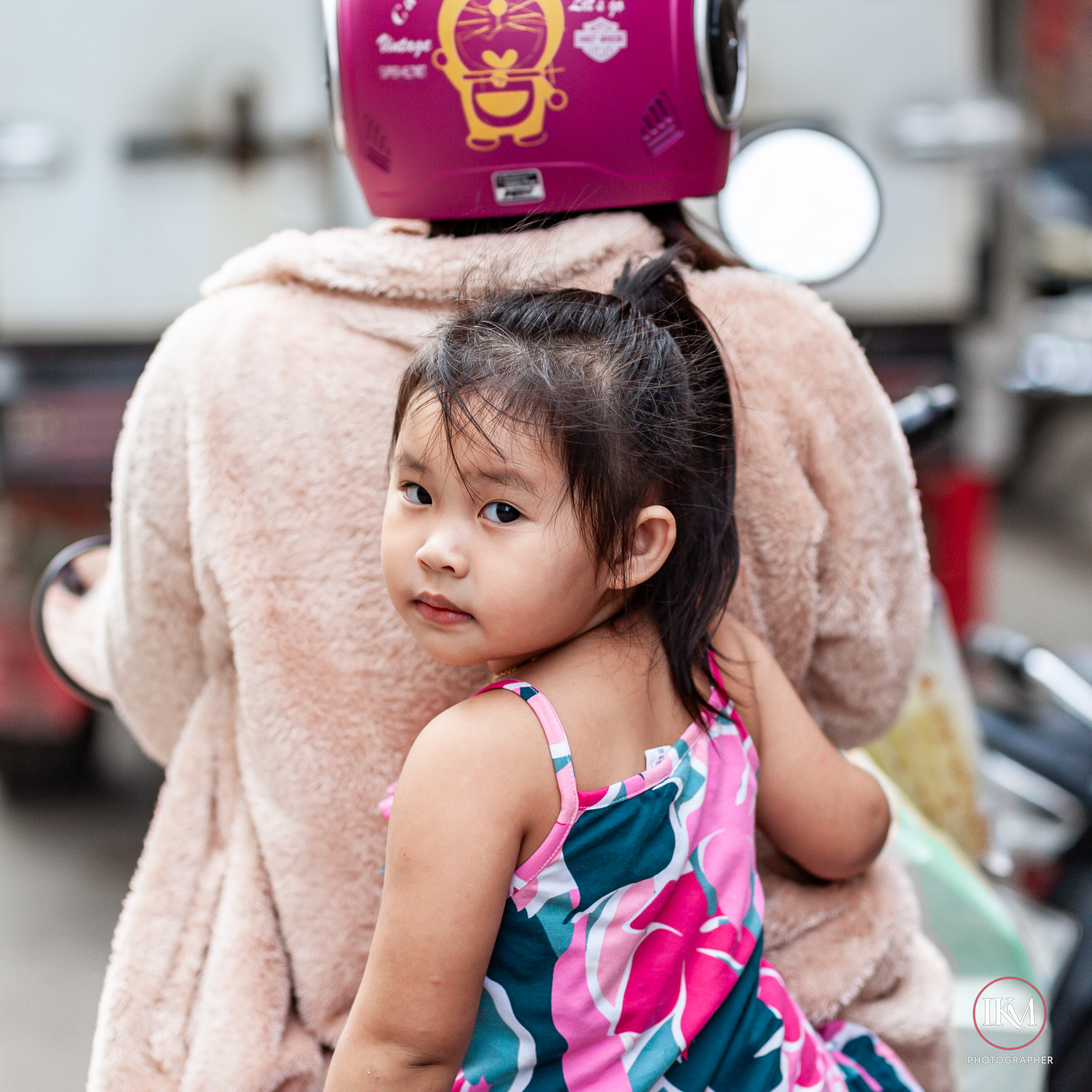
  • Portraits: This is where the lens shines. On the D3’s 12MP full-frame sensor, it produces flattering compression, excellent subject isolation, and a timeless rendering.
  • Low Light: The f/1.8 aperture combined with the D3’s strong high-ISO performance makes it a capable lens for indoor or evening shoots.
  • Versatility: While primarily a portrait lens, it also works well for detail shots, street photography, and even event coverage where discretion and speed matter.

💰 Value Today

  • On the used market, the 85mm f/1.8D is very affordable, often a fraction of the cost of the 85mm f/1.4 or newer AF-S versions.
  • For photographers using a Nikon D3 (or similar FX DSLR), it remains a cost-effective way to achieve professional portrait results without sacrificing too much in optical quality.

✅ Final Verdict

The Nikkor 85mm f/1.8D on the Nikon D3 is a pairing that proves older gear can still deliver professional, emotionally resonant images. While it lacks the modern refinements of newer lenses, its sharpness, bokeh, and reliability make it a classic portrait tool that continues to earn its place in a photographer’s bag.

📸 Understanding the Exposure Triangle

opinons, thoughts, photography, pictures, street, Travel

A beginner-friendly guide to balancing light, motion, and depth in photography

Photography is, at its core, the art of capturing light. Every image you make is shaped by three interdependent settings on your camera: aperture, shutter speed, and ISO. Together, they form what photographers call the exposure triangle. Mastering this triangle is less about memorizing numbers and more about learning how each side influences not just brightness, but also mood, motion, and depth.

🔺 The Three Sides of the Triangle

1. Aperture (the lens opening)

  • What it does: Controls how much light passes through the lens.
  • Measured in: f-stops (f/1.4, f/2.8, f/8, etc.).
  • Creative effect:
    • Wide aperture (low f-number, e.g., f/1.8) → shallow depth of field, creamy background blur (bokeh).
    • Narrow aperture (high f-number, e.g., f/16) → deep focus, more of the scene sharp.

2. Shutter Speed (the time the sensor is exposed)

  • What it does: Determines how long the sensor (or film) is exposed to light.
  • Measured in: Seconds or fractions (1/1000s, 1/60s, 2s).
  • Creative effect:
    • Fast shutter (1/1000s) → freezes motion (sports, street gestures).
    • Slow shutter (1/15s, 2s) → blurs motion (waterfalls, light trails, ghostly figures).

3. ISO (the sensor’s sensitivity to light)

  • What it does: Adjusts how sensitive your sensor is to incoming light.
  • Measured in: ISO values (100, 400, 3200, etc.).
  • Creative effect:
    • Low ISO (100–200) → clean, noise-free images.
    • High ISO (1600–6400+) → brighter in low light but with visible grain/noise.

⚖️ Balancing the Triangle

The magic of the exposure triangle is that changing one side forces you to adjust the others. For example:

  • If you open your aperture wider (f/2.8), you may need a faster shutter speed or lower ISO to avoid overexposure.
  • If you raise ISO for a night scene, you can use a faster shutter speed to avoid blur.
  • If you want silky water with a long exposure, you’ll need a small aperture and low ISO to prevent blown highlights.

It’s a balancing act: exposure is the sum of choices, not a single setting.

🎨 Beyond Exposure: Creative Control

  • Mood: Wide apertures create intimacy; long exposures create dreamlike atmospheres.
  • Storytelling: Freezing a gesture vs. showing its blur changes the narrative.
  • Texture: Noise at high ISO can feel gritty and raw—sometimes that’s exactly the point.

🧭 A Simple Exercise

  1. Find a single subject (a person, a bicycle, a tree).
  2. Photograph it three times:
    • Wide open aperture (f/1.8 or f/2.8).
    • Slow shutter (1/15s or slower, tripod if needed).
    • High ISO (3200+).
  3. Compare the results. Notice how the subject feels different, even though it’s the same object.

✨ Final Thought

The exposure triangle isn’t just about “getting it right.” It’s about choosing how you want your image to look and feel. Once you understand how aperture, shutter speed, and ISO interact, you stop worrying about “correct” exposure and start using light as your language.

📷 The AF-S Nikkor 50mm f/1.4G for Street Photography

cameras, Lenses, opinons, thoughts, photography, pictures, street, Travel

A lens that trades speed for soul

Street photography thrives on presence, timing, and the ability to see. Gear is secondary, but the lens you choose shapes how you move and what you notice. Nikon’s AF-S 50mm f/1.4G, introduced in 2008, is a modern classic prime that has found a home in many street shooters’ bags. Here’s a detailed look at how it performs when the street is your stage.

🛠️ Build and Design

  • Mount: Nikon F, full-frame (FX) coverage; ~75mm equivalent on DX bodies.
  • Weight: 280g — light enough for all-day carry.
  • Construction: 8 elements in 7 groups, with a 9-blade rounded diaphragm.
  • Build quality: Solid plastic barrel with a metal mount and weather-sealing gasket.
  • Filter size: 58mm, compact and affordable for filters.

It balances well on both pro DSLRs (D700, D810) and smaller bodies, making it a discreet companion for the street.

🔍 Optical Performance

  • Wide open (f/1.4): Soft edges, lower contrast, and a dreamy rendering—perfect for isolating a subject in the chaos of the street.
  • Stopped down (f/2.8–f/5.6): Excellent sharpness and contrast, with clean detail across the frame.
  • Bokeh: Smooth and creamy thanks to the rounded diaphragm, especially effective for portraits or isolating gestures.
  • Aberrations: Some longitudinal chromatic aberration (purple/green fringing) in high-contrast areas, especially wide open.
  • Flare resistance: Improved over older designs, though strong backlight can still reduce contrast.

For street work, this lens gives you flexibility: atmospheric at f/1.4, crisp and documentary-like when stopped down.

⚡ Autofocus and Handling

  • Silent Wave Motor (SWM): Works on all Nikon DSLRs, including entry-level bodies.
  • Speed: Slower than the older AF-D 50mm f/1.4, but accurate and quiet.
  • Manual override: Full-time manual focus available, with a smooth focus ring for fine adjustments.

On the street, AF speed is “good enough” for walking subjects and gestures, but not ideal for fast action compared to modern AF-S or Z-mount primes.

🧳 Street Photography Use Cases

  • Low light: f/1.4 aperture allows handheld shooting at night markets, dim alleys, or neon-lit streets.
  • Portraits in context: At 50mm, you can frame a person with enough background to tell their story.
  • Isolation in chaos: Wide open, it cuts through clutter and draws the eye to your subject.
  • Everyday carry: Compact and discreet, it doesn’t draw attention like a large zoom.

✅ Strengths

  • Wide aperture for low-light and shallow depth of field.
  • Smooth bokeh and flattering rendering.
  • Lightweight and discreet for street use.
  • Works on all Nikon DSLRs and adapts well to Z bodies with FTZ.

⚠️ Weaknesses

  • Autofocus slower than AF-D version.
  • Edge softness and CA wide open.
  • Pricier than the 50mm f/1.8G, which is sharper stopped down.

🧭 Final Verdict

The AF-S Nikkor 50mm f/1.4G is not about technical perfection—it’s about character. For street photographers, it offers a balance of mood, versatility, and discretion. If you want a lens that can shift from crisp reportage to atmospheric storytelling with a twist of the aperture ring, this 50mm is a worthy companion.

If speed and sharpness are your only priorities, the 50mm f/1.8G or Z-mount 50mm f/1.8 S may suit you better. But if you want a lens with soul, the 50mm f/1.4G still shines on the street.

Nikkor 50mm f/1.4 — A Full History and Technical Rundown

cameras, Lenses, opinons, thoughts, photography, pictures, street, Travel

Origins and design pedigree (mid‑1960s → 1970s)

  • These lenses were aimed at serious amateurs and professionals who wanted a versatile, fast standard that performed across reportage, portrait, and everyday work.
  • The pre‑Ai and Ai updates in the 1970s modernized aperture coupling and metering compatibility with newer Nikon bodies while retaining the core optical layout.

The D‑series era (AF 50mm f/1.4D) — 1990s design continuity

  • Optical lineage: the AF‑D version carried forward the same basic optical formula as its predecessors, refined for modern coatings and production tolerances.
  • Mechanical character: compact, lightweight, and optically efficient. The D version was built with a focus on speed and simplicity rather than feature density.
  • Autofocus: mechanical‑drive AF that relies on a camera body motor; as a result it performs very well on pro and semi‑pro Nikon bodies with built‑in AF motors but will not autofocus on entry‑level bodies lacking that motor.
  • Rendering: generally snappier and more contrasty than early manual versions, with a slightly busier bokeh compared with later rounded‑blade designs. Strong center performance, usable edges that sharpen when stopped down.

Practical note: the D‑series is beloved for its compactness, price on the used market, and fast, reliable AF on compatible bodies. It’s a classic choice for photographers who want a straightforward, light, and speedy 50.

The AF‑S f/1.4G era (2008 onward) — modernization and different character

  • Introduction of Silent Wave Motor (SWM): internal AF motor provides autofocus on all Nikon DSLRs and produces quieter operation suitable for video and mirrorless adaptation.
  • Optical and aperture design: the G version uses a rounded‑blade diaphragm and coatings tuned for smoother out‑of‑focus highlights and more pleasing bokeh. The optical formula remains related to the historical design but glass and coatings produce a softer, more filmic rendering wide open.
  • Handling and feel: heavier and larger than the D, with a more modern external finish, internal elements arranged for SWM operation, and improved resistance to flare in practical shooting.
  • Rendering tradeoff: the G version is often described as moodier wide open—softer at f/1.4 but more flattering for portraits—while the D version appears a little crisper at the same aperture on bodies that can make full use of its AF motor.

Practical note: the AF‑S f/1.4G appeals to users who need compatibility across Nikon’s entire DSLR line, quieter AF, and a more romantic rendering for portraits and low‑light mood work.

Optical constants that stayed the same

  • Focal length and maximum aperture: 50mm at f/1.4 across all major iterations. This kept the lens squarely in the “normal” class with the same compositional role throughout decades.
  • Core optical layout: all versions use a relatively traditional formula optimized for even illumination, pleasing midtones, and a priority on usable center sharpness at large apertures. Differences between versions are largely the result of updated coatings, diaphragm geometry, motor arrangements, and manufacturing tolerances rather than wholesale optical redesign.

What changed between versions — a practical checklist

  • Autofocus drive: mechanical drive (D) → internal SWM (G). This affects compatibility and AF feel.
  • Diaphragm shape: fewer, more rounded blades in newer models → smoother highlight bokeh.
  • Coatings and glass quality: improved coatings in later models reduce flare and control contrast; subtle changes in microcontrast alter perceived sharpness and subject rendering.
  • Build and weight: later AF‑S bodies are generally heavier and larger to house the SWM and updated mount mechanics.
  • Image character: older designs tend toward slightly more clinical center sharpness wide open; newer G variants favor tonal rendering and smoother defocus at the expense of absolute f/1.4 edge resolution.

Strengths that persisted across the family

  • Versatility: ideal for portraits, street, low‑light, and general use.
  • Speed: f/1.4 aperture gives real low‑light advantage and creative shallow depth of field.
  • Accessibility: historically priced to appeal to a wide range of photographers, and widely available used.
  • Character: each version has a recognizable “50” look—neutral enough for documentary work, characterful enough for portraiture.

Weaknesses and practical trade‑offs

  • Wide‑open edge softening: most versions show less-than‑stellar corner performance at f/1.4; stopping down improves uniformity.
  • Chromatic aberration: fast 50mm designs from earlier eras exhibit longitudinal CA in high‑contrast scenes; modern raw converters reduce the pain but it remains a behavior to watch for.
  • Competing modern optics: newer 50mm designs, especially mirrorless Z‑mount optics, surpass older 50mm f/1.4s in edge resolution, flare control, and aberration correction—tradeoffs that matter for high‑pixel sensors and critical technical work.

Use cases by version (practical guidance)

  • AF‑D 50mm f/1.4: choose if you value compactness, snappy AF on motorized bodies, and a lighter carry‑weight. Great for street, reportage, and photographers on pro DSLRs who appreciate classic handling.
  • AF‑S 50mm f/1.4G: choose if you need full compatibility across Nikon bodies, quieter AF for hybrid use, and a smoother portrait rendering. Better for video work and photographers who prefer more forgiving wide‑open character.

Modern relevance and adaptation

  • On newer mirrorless bodies (with adapter) both lenses remain useful, but the older D version will rely on camera AF‑motor emulation or slower contrast‑based AF performance with some adapters; the AF‑S G version typically adapts more gracefully and often supports faster AF on current bodies.
  • Photographers who prize character and a specific “look” still reach for vintage Nikkor 50 f/1.4s. Those who demand pixel‑level edge performance or want the smallest, lightest option for razor‑sharp editorial work may prefer newer designs or Z‑mount alternatives.

Closing thought

The Nikkor 50mm f/1.4 family is a study in continuity: the same photographic idea—an accessible, fast, characterful “normal” lens—repeated and refined across eras. Each iteration answers slightly different needs while keeping the same creative soul. For photographers who value restraint, presence, and an honest optical character, any 50mm f/1.4 from Nikon’s lineage can be a reliable companion—choose the version whose compromises best serve your practice.

Is Photography All About Emotion?

cambodia, cameras, homelessness, Lenses, opinons, thoughts, photography, pictures, street, Travel, war

A short blog exploring what emotion does — and doesn’t — do for a photograph

Photography is often defined by the feelings it evokes. A single frame can make us ache, laugh, recoil, or remember; emotion is the shorthand that turns an image into an experience. Yet reducing photography to one thing — emotion alone — flattens a far richer practice that mixes craft, context, ethics, and intention.

Emotion as the engine of meaning

Emotion is frequently the element that makes a photograph memorable. Photographs that carry strong feeling connect quickly with viewers, triggering empathy and narrative inference in ways words sometimes cannot. Skilled photographers use light, expression, and timing to amplify mood and create images that resonate long after they’re seen.

Why emotion is necessary but not sufficient

Emotion does not operate in isolation. Composition, exposure, focus, and gesture are the levers photographers use to produce emotional impact. Technical choices shape how feeling reads on the page; poor technique can obscure intent, while strong craft can fail to move if the image lacks purpose or honesty. Emotional resonance without craft risks sentimentality; craft without feeling risks sterility.

The role of context, story, and ethics

Context changes everything. The same image can feel intimate, exploitative, or manipulative depending on how and why it is shown. Ethical witnessing, informed consent, and narrative framing determine whether an emotionally charged photograph honours its subjects or reduces them to spectacle. Responsible photographers treat emotion as a consequence, not as the entire aim.

Where vision and tool meet

Emotion guides choices about tooling and process, but doesn’t erase them. Lenses, shutter speed, and color palette are servants of intention: a long lens for compression, a fast shutter for decisive action, soft light for quiet intimacy. The best photographers let emotion inform technique and let technique refine emotion, arriving at images that are both felt and well made.

Practical takeaway for makers

  • Practice: make sets of images that pursue a single mood using only one lens; compare what changes in composition, depth, and narrative.
  • Critique: assess images first for honesty of feeling, then for craft—ask what you would change technically to better support the emotion.
  • Ethics: name the subject’s agency and the story you’re telling before pressing the shutter.

📸 Robert Capa: The War Photographer Who Hated War

cambodia, opinons, thoughts, photography, war

A Short History of a Photojournalist Who Risked Everything to Show the Truth

Robert Capa’s name is synonymous with frontline photojournalism. He didn’t just photograph war—he lived it, crawled through it, and bore witness to its brutality with a camera in hand. His images are not just records of history; they are emotional testaments to the people caught in its crossfire. He was a legendary war photojournalist whose images captured the raw human cost of conflict.

🧭 Early Life and Identity

Born October 22, 1913, in Budapest, Austria-Hungary, Capa fled political repression as a teenager and moved to Berlin. As Hitler rose to power, he relocated to Paris, where he adopted the pseudonym “Robert Capa” to sound more American and marketable. He partnered with fellow photojournalist Gerda Taro, and together they began documenting the Spanish Civil War.

📰 War Coverage and Iconic Work

Capa covered five major conflicts:

  • Spanish Civil War (1936–1939): His photo The Falling Soldier became one of the most iconic war images ever taken.
  • Second Sino-Japanese War
  • World War II: He landed with American troops on D-Day, capturing blurry, visceral images under fire at Omaha Beach.
  • 1948 Arab–Israeli War
  • First Indochina War: Where he was tragically killed by a landmine in 1954 while on assignment in Vietnam.

His approach was simple: “If your pictures aren’t good enough, you’re not close enough.” He believed in proximity—not just physical, but emotional.

🖋 Magnum Photos and Legacy

In 1947, Capa co-founded Magnum Photos with Henri Cartier-Bresson, David Seymour, and others. Magnum became a cooperative agency that gave photographers control over their work—a revolutionary idea at the time.

Capa’s legacy includes:

  • A new standard for human-centered war photography
  • A commitment to ethical witnessing
  • A body of work that continues to educate and move viewers worldwide

🧭 Final Thought

Robert Capa didn’t glorify war—he exposed it. His images are grainy, imperfect, and often chaotic, but they pulse with truth. He showed that photography could be more than documentation—it could be resistance, empathy, and remembrance.

📸 Lee Miller: From Muse to Witness

opinons, thoughts, photography, war

A Short History of a Photojournalist Who Saw It All

Lee Miller’s life reads like a novel—glamorous, harrowing, and fiercely independent. Born Elizabeth Miller in 1907 in Poughkeepsie, New York, she began her career as a fashion model in the 1920s, gracing the pages of Vogue and becoming a muse to artists like Man Ray. But Miller was never content to be just a subject. She stepped behind the camera and forged a career that would take her from the surrealist salons of Paris to the front lines of World War II.

🎨 Early Career: Surrealism and Studio Work

In Paris, Miller became deeply involved in the Surrealist movement. She collaborated with Man Ray, co-discovering the solarization technique and producing haunting, dreamlike images that blurred the line between reality and imagination. Her early work explored themes of identity, femininity, and psychological tension—often with a bold, experimental edge.

After returning to New York, she opened her own studio and worked as a fashion and portrait photographer. But the outbreak of war would soon shift her focus from art to history.

📰 War Correspondent for Vogue

During World War II, Miller became a correspondent for Vogue, one of the few women accredited to cover combat zones. Her assignments took her across Europe:

  • The London Blitz: She documented the devastation and resilience of civilians under bombardment.
  • Liberation of Paris: Her images captured both celebration and the scars of occupation.
  • Buchenwald and Dachau: Miller was among the first to photograph Nazi concentration camps after liberation—her stark, unflinching images remain among the most powerful visual records of the Holocaust.
  • Hitler’s apartment: In a surreal twist, she famously bathed in Hitler’s tub just hours after his death, a symbolic act of defiance and reclamation.

Her war photography combined journalistic rigor with emotional depth, challenging viewers to confront the human cost of conflict.

🖋 Legacy and Rediscovery

After the war, Miller retreated from public life, struggling with PTSD and the weight of what she had witnessed. Her work was largely forgotten until her son, Antony Penrose, rediscovered her archives and began promoting her legacy.

Today, Miller is celebrated not only for her technical skill and artistic vision but for her courage and complexity. She shattered gender norms, bore witness to history’s darkest chapters, and left behind a body of work that continues to provoke, inspire, and educate.

🧭 Final Thought

Lee Miller’s journey—from fashion icon to frontline documentarian—is a testament to the power of reinvention and the importance of bearing witness. Her images remind us that photography is not just about beauty—it’s about truth, presence, and the courage to look when others turn away.

📷 AF-S Nikkor 50mm f/1.4G vs Nikkor 50mm f/1.4D

Lenses, opinons, thoughts, photography, street, Travel

A Quick Rundown on Nikon’s Classic 50mm

Nikkor 50mm f1.4D

The 50mm f/1.4 lens has long been a staple in Nikon’s lineup—ideal for portraits, low-light shooting, and general-purpose photography. But when choosing between the AF-S 50mm f/1.4G and the older AF 50mm f/1.4D, photographers often ask: which one suits my style better?

Let’s break it down.

🔍 AF-S Nikkor 50mm f/1.4G — Modern Mood Maker

Released in 2008, the AF-S 50mm f/1.4G is Nikon’s update to the classic 50mm formula. It features:

  • Silent Wave Motor (SWM) for autofocus—works on all Nikon DSLRs, including entry-level bodies without built-in motors.
  • Rounded 9-blade aperture for smoother bokeh.
  • Weather-sealed mount and solid build quality.
  • More refined rendering—soft wide open, but with a gentle, filmic character.

👍 Pros

  • Creamy bokeh and subtle tonal transitions.
  • Compatible with all Nikon DSLRs and Z bodies via FTZ adapter.
  • Quiet autofocus, ideal for video and discreet shooting.

👎 Cons

  • Slower autofocus than the D version.
  • Softer wide-open performance—requires stopping down for critical sharpness.
  • Larger and heavier (290g vs 230g).

🔍 Nikkor 50mm f/1.4D — Compact Classic

The 50mm f/1.4D is a legacy lens that still holds its own. It features:

  • Mechanical autofocus—requires a Nikon body with a built-in AF motor (won’t autofocus on D40, D60, D3xxx, or D5xxx series).
  • 7-blade aperture—bokeh is slightly busier than the G version.
  • Compact and lightweight design—great for travel and street work.
  • Snappier AF performance—especially on pro bodies like the D700 or D810.

👍 Pros

  • Fast, responsive autofocus on compatible bodies.
  • Smaller and lighter—easy to carry all day.
  • More affordable on the used market.

👎 Cons

  • No internal motor—limited compatibility.
  • Bokeh is harsher, especially in busy backgrounds.
  • Older optical design—less refined rendering wide open.

🧠 Which One Should You Choose?

  • Choose the AF-S 50mm f/1.4G if you want modern compatibility, smoother bokeh, and quiet AF—especially useful for video or newer DSLR bodies.
  • Choose the 50mm f/1.4D if you shoot on older pro bodies, value compactness, and prefer snappier AF for street or action work.

Both lenses offer the classic 50mm look, but the G version leans toward emotional rendering, while the D version favors speed and simplicity.

Fujinon XF 56mm f/1.2 R WR — Detailed Assessment

cameras, Fujichrome, fujifilm, Lenses, opinons, thoughts, photography, street, Travel

Overview

The Fujinon XF 56mm f/1.2 R WR is Fuji’s short-tele flagship for the X system, offering roughly an 85mm full-frame equivalent perspective on APS-C bodies. It’s engineered for portraiture, intimate documentary work, and any situation that benefits from strong subject isolation, shallow depth of field, and reliable weather resistance.

Key specifications

  • Focal length: 56mm (≈85mm equivalent)
  • Maximum aperture: f/1.2
  • Mount: Fujifilm X
  • Weather resistance: WR (dust and moisture sealed)
  • Optical construction: Multi-element design optimised for sharpness and bokeh control
  • Size/weight: Substantial; built for hand-held stability rather than absolute compactness

Optical character and performance

  • Center sharpness: Exceptional wide open; microcontrast and detail render skin and fabrics with natural dimensionality.
  • Edge performance: Edges and corners improve noticeably when stopped to f/2–f/2.8; wide-open edges are softer but not problematic for the lens’s primary use.
  • Bokeh: One of the lens’s defining strengths; extremely smooth, creamy out-of-focus transition with pleasing highlight shaping and minimal nervousness.
  • Rendering: Filmic and painterly rather than clinical; midtones and highlights roll off in a way that flatters faces and small textures.
  • Aberrations and flare: Well controlled in typical lighting; some care required with strong backlight but coatings and design limit intrusive flare and colour fringing.

Build, ergonomics, and handling

  • Construction: Solid metal build with weather sealing; a premium, reassuring feel.
  • Aperture and focus feel: Smooth aperture ring with well-defined stops; manual focus throw is precise and useful for deliberate focus work.
  • Balance: Heavier than compact primes; balances well on X-T and X-Pro bodies but feels deliberate in the hand.
  • Practicality: Not a grab-and-go lens for every outing; it’s a tool chosen for intent rather than convenience.

Autofocus, low-light, and hybrid use

  • AF performance: Fast and reliable on modern Fuji bodies, particularly with face and eye-detection enabled; suitable for portrait sessions, events, and run-and-gun documentary work when paired with capable bodies.
  • Low-light capability: f/1.2 provides real advantage for handheld shooting in dim environments, allowing lower ISOs or faster shutters while maintaining subject isolation.
  • Video: Minimal focus breathing and smooth transitions make it usable for interviews and cinematic shallow-depth-of-field work, though it’s optimised for stills.

Strengths

  • Outstanding subject isolation and bokeh that flatters faces and creates emotional separation.
  • Robust weather-resistant construction for outdoor sessions in variable conditions.
  • Strong centre sharpness wide open that supports large prints and editorial work.
  • Emotional, film-like rendering that excels in portraiture and intimate documentary imagery.

Trade-offs and caveats

  • Size, weight, and cost: Premium price and substantial heft make it a considered purchase.
  • Narrower framing on APS-C: ≈85mm eq. is ideal for head-and-shoulders but less versatile for environmental storytelling.
  • Very thin depth of field at f/1.2: Technique and reliable AF are essential; missed focus is more obvious.
  • Edge sharpness wide open: If you need edge-to-edge perfection at f/1.2, stopping down is necessary.

Recommended use cases and technique

  • Ideal for: Portraits, engagement and wedding work, editorial headshots, intimate documentary sequences, and low-light portraiture.
  • Shooting tips: Use f/1.2–f/1.8 for dramatic subject separation; stop to f/2.8–f/4 for small groups or increased sharpness. Rely on eye-detection AF for higher keeper rates. Maintain careful focus technique when shooting wide open and favour single-subject compositions where background compression enhances narrative.

Final verdict

The Fujinon XF 56mm f/1.2 R WR is a signature portrait lens that delivers on its promise: creamy bokeh, strong center sharpness, and reliable weather-resistant performance. It’s a lens for photographers who prioritise mood, presence, and tactile control over ultimate compactness or focal flexibility. For anyone focused on portraiture and intimate storytelling on the Fuji X system, it’s a high-impact, expressive tool that earns its place in the bag.

Fujifilm X-Pro2 and the Best Lenses for Street Photography

fujifilm, opinons, thoughts, photography, pictures, street, Travel, viltrox

Lens comparison table — key attributes

LensFocal eq.Why for streetStrengthTrade-off
Fujinon XF 23mm f/235mmVersatile, natural perspective for street scenesCompact; fast; unobtrusiveModerate bokeh
Fujinon XF 35mm f/253mmClassic “normal” for portraits & gesturesExcellent sharpness; weather-sealedRequires slight stepping back for context
Fujinon XF 16mm f/2.824mmEnvironmental street, wide contextVery small and stealthyDistortion at edges
Fujinon XF 18mm f/227mmWide but intimate, great for alleys & marketsLightweight; filmic renderingSofter corners wide open
Fujinon XF 50mm f/275mmTight portraits, compressed backgroundCreamy bokeh; isolationLess contextual information per frame

The X-Pro2 as a Street Camera

The Fujifilm X-Pro2 is a camera designed around presence and intentionality: a rangefinder-style body with a hybrid optical/electronic viewfinder that encourages anticipation and composition rather than reactive shooting. Its tactile dials and manual controls make settings an extension of the photographer’s intent, which suits street work where speed of thought and quiet operation matter.

The X-Pro2 solved many of the usability complaints of earlier rangefinder-style mirrorless models—autofocus performance is markedly improved, making it fast and accurate enough for candid street moments. That combination of responsive AF and an interface that rewards deliberate choices is why many street photographers still choose the X-Pro2 despite newer models being available.

Why lens choice matters on the X-Pro2

Prime lenses pair especially well with the X-Pro2’s design philosophy. The camera’s viewfinder and controls encourage a single-lens mindset—learning a focal length’s “mood” and the ways it frames relationships between subject and context. Choosing a prime narrows options in a productive way: you move with your feet, you compose deliberately, and you build a visual language around that perspective.

Practically, XF primes are small and light, preserving the X-Pro2’s discreet profile on the street. Many XF primes also offer fast apertures, letting you work in low light and control depth subtly for isolation when needed.

Best lenses in practice — how and when to use them

  • Fujinon XF 23mm f/2 (35mm eq): The everyday street lens. Use it when you want natural perspective that includes background context without distortion. It’s excellent for markets, cafe scenes, and quiet portraits where you want to show environment and gesture in one frame.
  • Fujinon XF 35mm f/2 (53mm eq): Reach for this when you want separation and intimacy. It’s a portraitist’s street lens—great for faces, gestures, and composing tighter narratives within a busy street scene. Its weather sealing and reliable AF make it workhorse-ready.
  • Fujinon XF 16mm f/2.8 (24mm eq): The wide storyteller. Use it for alleyways, architectural rhythm, and scenes where foreground-to-background relationships are essential. Be mindful of edge distortion when people are close to frame edges.
  • Fujinon XF 18mm f/2 (27mm eq): A sweet middle ground—wider than 23mm but closer than 16mm. It’s excellent for narrow streets and markets where you want to be close yet preserve intimacy; it renders with a film-like character that suits print and monochrome work.
  • Fujinon XF 50mm f/2 (75mm eq): Use it selectively for environmental portraits that need compression and background separation. It requires more distance but rewards with isolation and graceful bokeh.

Shooting tips with the X-Pro2 and primes

  • Commit to a focal length for a session. Let the lens shape your attention and force you to “see” differently. The X-Pro2’s finder rewards this practice by teaching you the aperture, distance, and timing for that lens.
  • Use the optical finder for anticipation and the EVF for confirmation. The hybrid finder lets you pre-visualize a scene optically and then confirm exposure or focus with electronic feedback when needed.
  • Embrace tactile control. Use the mechanical dials to keep your attention on framing and gesture, not menus. This supports presence—crucial for catching those decisive moments.
  • Balance AF modes. Single-point AF for composed portraits; zone AF or wide tracking when you expect movement. The X-Pro2’s autofocus improvements make both workable in street scenarios.
  • Print often. The X-Pro2’s filmic sensor rendering rewards print output; revisiting images on paper helps refine what lenses and framing best serve your visual voice.

Final thought

The Fujifilm X-Pro2 is more than an aging model—it’s a design philosophy incarnate. It places the photographer’s eye first, supports deliberate practice, and pairs beautifully with a small suite of prime lenses that each teach a different way of seeing. For street work—where presence, anticipation, and quiet clarity matter—the X-Pro2 remains an instrumental, expressive camera that still rewards deep practice and restraint.