When I first picked up a camera, I thought I was learning photography.
I wasn’t. I was learning curiosity.
Back then I was fascinated by the machinery of it all. Cameras, lenses, film, developers, enlargers—everything seemed magical. I wanted to understand how light could be persuaded to leave its mark on a piece of film and somehow preserve a moment that would otherwise disappear forever.
Like most beginners, I assumed there would come a day when I’d finally understand photography.
A day when I’d know enough.
A day when the questions would stop. It never happened. I’m grateful that it didn’t.
Because photography has turned out to be far more generous than I ever imagined.
Every camera has taught me something.
Every lens has shown me the world a little differently.
Every person I’ve photographed has quietly reminded me that there is always another story waiting to be told if I’m prepared to slow down and listen.
When I was younger, I imagined photography would become easier with experience.
In some ways it has. The technical decisions come more naturally.
The cameras have become familiar companions.
I trust my instincts more than I once did.
But the mystery has never gone away. If anything, it’s grown.
The more photographs I make, the more I realise how much I still haven’t seen.
That’s one of the great gifts of photography.
It never allows complacency.
Every morning the light is different.
Every face carries a different story.
Every walk offers the possibility of seeing something I’ve somehow overlooked for years.
After all this time, that’s still enough to make me pick up a camera and head out the door.
Looking back, I realise I never really became the photographer I imagined when I was younger.
I became someone far more fortunate.
Someone who never stopped being fascinated by the world.
And I can’t think of a better way to spend a lifetime than that.
Every year the camera manufacturers tell us the same story.
The new model is faster.
The autofocus is smarter.
The sensor sees further into the shadows.
The dynamic range has improved.
Artificial intelligence now helps the camera recognise people, birds, trains, cars, aeroplanes and almost anything else that moves.
And every year, photographers ask themselves the same question.
“Do I need it?”
Sometimes the answer is yes.
Technology has transformed photography in remarkable ways. There are pictures being made today that would have been impossible when I first picked up a camera. Better equipment has opened doors, removed technical barriers and made photography accessible to more people than ever before.
I’m grateful for that.
Good engineering deserves admiration.
But somewhere along the way I began asking myself a different question.
If cameras continue to evolve every year… Shouldn’t I?
That thought has stayed with me for a long time.
It’s easy to become fascinated by technology because technology changes so visibly. New sensors arrive. Processors become faster. Specifications grow longer. Progress can be measured on a page.
Personal growth is different. It happens quietly. You don’t wake up one morning and suddenly discover you’ve become a better photographer. You simply notice that you’re waiting a little longer before pressing the shutter. You’re listening more carefully when talking to strangers. You’re seeing light that you would once have walked straight past.You’re beginning to recognise moments instead of merely reacting to them.
Those changes don’t come from firmware updates.They come from living.
A camera improves because engineers redesign it.
A photographer improves because life keeps teaching them how to see.
The older I become, the less interested I am in the camera itself.
Not because cameras have stopped fascinating me. Far from it.
I still admire beautiful engineering. I still enjoy handling a well-made camera. I still appreciate thoughtful design, whether it comes from Nikon, Canon, Fujifilm or anyone else.
But I no longer expect a camera to transform my photography. That responsibility belongs to me.
When I was younger, I believed experience came from making thousands of photographs.
Now I think experience comes from paying attention.
The two are not always the same thing.
Some photographers make a hundred thousand exposures and never really learn to see.
Others make relatively few photographs but invest themselves completely in every one.
Photography has taught me patience. It has taught me empathy.
It has taught me that listening often matters more than talking.
It has taught me that conversations sometimes become more valuable than the photographs that prompted them.
No camera could ever have taught me those lessons.
Life did.
Photography simply encouraged me to notice them.
Perhaps that explains why I still enjoy using old cameras.
They’re reminders. Not of the past. Of the person I was when I carried them.
Each one represents a different chapter in my life. One reminds me of youthful enthusiasm.
Another reminds me of growing confidence. Another reminds me that slowing down isn’t the same as standing still.
The cameras haven’t changed.
I have.
That’s the real story.
I sometimes wonder whether photographers spend too much time asking, “What’s the best camera?”
Perhaps the better question is, “How can I become a better observer?”
Those are very different conversations.
The first ends in a camera shop.
The second never really ends at all.
Technology will continue to improve long after I’ve stopped buying cameras.
That’s exactly as it should be.
Innovation keeps photography moving forward.
Experience keeps photographers moving forward.
The mistake is believing they’re the same journey.
One is measured in megapixels.
The other is measured in wisdom.
One can be purchased. The other has to be earned. Slowly. Patiently. One walk at a time.
One conversation at a time. One photograph at a time.
If I could leave one thought with photographers just beginning their journey, it would be this.
Enjoy the new cameras. Celebrate the remarkable engineering. Marvel at what modern technology can do. Then put the camera to your eye and forget about it.
Look at the person standing in front of you. Look at the street. Look at the changing light.
Look at the ordinary moments everyone else is too busy to notice.
Because in twenty years’ time, you probably won’t remember what processor was inside your camera.
You won’t remember how many autofocus points it had.
You may not even remember how many megapixels it recorded.
But you will remember the people. You will remember the places.
You will remember how photography quietly changed the way you looked at the world.
Technology never stops evolving. Neither should you.
The difference is that cameras improve because someone invents a better sensor.
Photographers improve because life never stops teaching them how to see.
And in the end, I think that’s the only evolution that really matters.
If I could slip a single envelope into the camera bag of the photographer I was twenty-five years ago, this is what it would say.
Stop worrying.
Not because everything will work out exactly as you hope—it won’t—but because you’re worrying about almost all the wrong things.
You’re spending too much time wondering whether another camera, another lens or another bag will somehow transform your photography.
It won’t.
Better equipment will certainly make some things easier. Cameras will become faster. Sensors will become cleaner. Autofocus will become astonishing. Technology will continue to improve long after you’ve stopped trying to keep up with it.
Buy good equipment when you can. Look after it. Enjoy it.
But don’t mistake it for photography. Photography happens somewhere between your eyes and your heart.
The camera simply records the outcome.
You’ll spend years reading reviews.
One day you’ll realise you’ve forgotten to read people.
You’ll compare sharpness. One day you’ll discover that the photographs you treasure most are rarely the sharpest ones.
You’ll become fascinated by lenses.
One day you’ll understand that curiosity has always been your most valuable piece of equipment.
Carry it everywhere. Be kinder than you think you need to be.
The people you photograph are not subjects.
They’re people who have trusted you with a tiny piece of their lives.
Never forget that. Treat them with respect. Listen more than you speak.
Sometimes the conversation will become more important than the photograph.
Allow that to happen.
Don’t rush. The world will try to convince you that speed is everything.
It isn’t. Good photographs often belong to patient people.
Stand still. Watch. Wait.
You are under no obligation to fill every memory card you own.
Some days you’ll come home with two photographs.
Some days with none. Neither day is a failure. The walking matters too.
There will be times when you’ll wonder whether you’ve lost whatever it was that first made you pick up a camera. You’ll go for walks and barely raise it to your eye.
That will frighten you.
You’ll think the passion has gone forever. It hasn’t.
Sometimes creativity simply goes quiet for a while.
Leave it alone. Don’t force it.
One day an old camera or a forgotten lens will remind you why you started in the first place.
It will return as quietly as it left.
Print your photographs. Not because anyone else demands it.
Because photographs deserve to exist somewhere other than a screen that will be forgotten tomorrow. A print asks people to stop.
The world needs more stopping. Take more pictures of ordinary days.
At the time they won’t seem important. Years later they’ll become priceless.
Photograph your friends. Photograph your family.
Photograph the streets you walk every day.
One day those streets will have changed beyond recognition.
You’ll be grateful that you noticed them while they were still ordinary.
Don’t become trapped by other photographers’ opinions.
Some will tell you your camera isn’t good enough.
Others will insist your lens is too slow.
Some will dismiss cameras you’ve grown to love.
Smile politely.
Then go out and make photographs anyway.
Remember that every camera has its own character.
Some are loud. Some are quiet. Some demand attention.
Others simply become companions.
You will eventually discover that your favorite cameras aren’t necessarily the newest or the most expensive.
They’re the ones that make you want to leave the house.
Keep them. One day they’ll become old friends.
And here’s something nobody tells you when you’re young.
Photography changes. Not photography itself.
You.
The photographs you make at twenty-five won’t be the photographs you make at fifty or seventy. Nor should they be.
Experience changes the way you see people.
Joy changes it. Loss changes it. Love changes it. Failure certainly changes it.
Let all of those things find their way into your photographs.
Don’t try to photograph like someone else.
You already have enough famous photographers.
The world only gets one version of you.
Trust it.
Finally, remember this.
There will come a day when someone asks why you’re still carrying an old camera that everyone else considers obsolete.
You’ll smile. Not because they’re wrong.
But because you’ve finally learned something that took a lifetime to understand.
The camera was never the important part. It was simply the excuse.
The real gift was that it persuaded you to slow down.
To wander. To notice. To meet people you would otherwise have walked straight past.
To pay attention to a world that is constantly asking you not to.
If you can do that, consistently, over the course of a lifetime, you’ll have succeeded.
Not because you’ll become famous. Not because you’ll own remarkable equipment.
Not because you’ll make perfect photographs. You’ll have succeeded because you’ll have lived as a photographer.
Every photographer has owned a camera they should probably have sold years ago.
Mine are still sitting on the shelf.
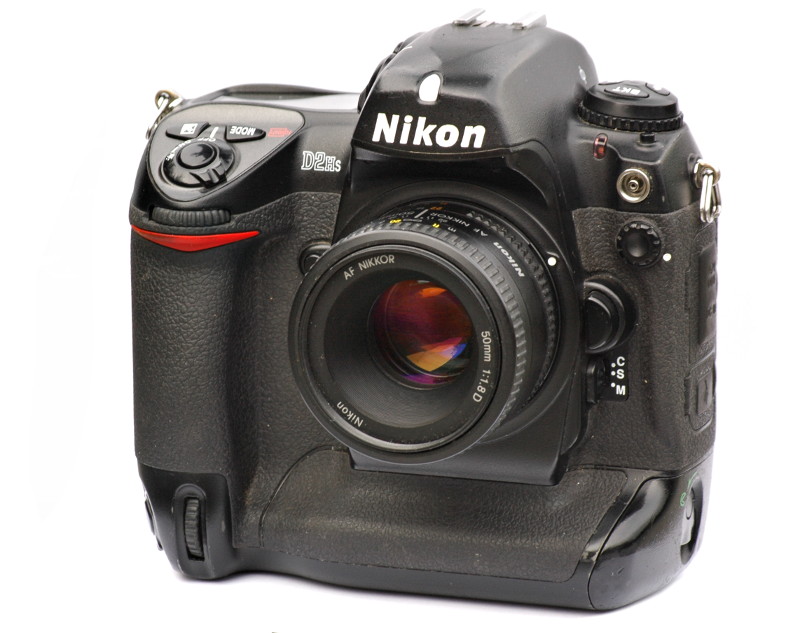
A Nikon D1H. A D2Hs. A D300S. A D3.
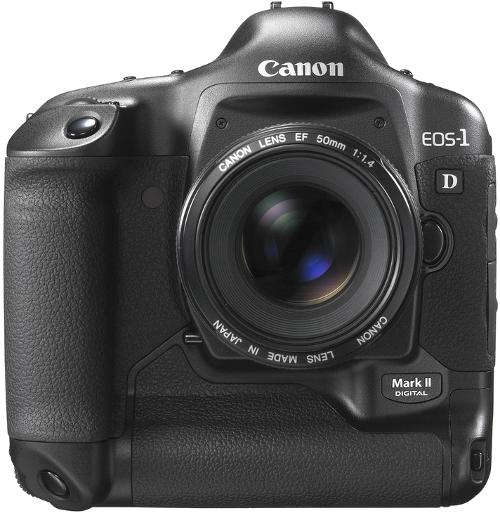
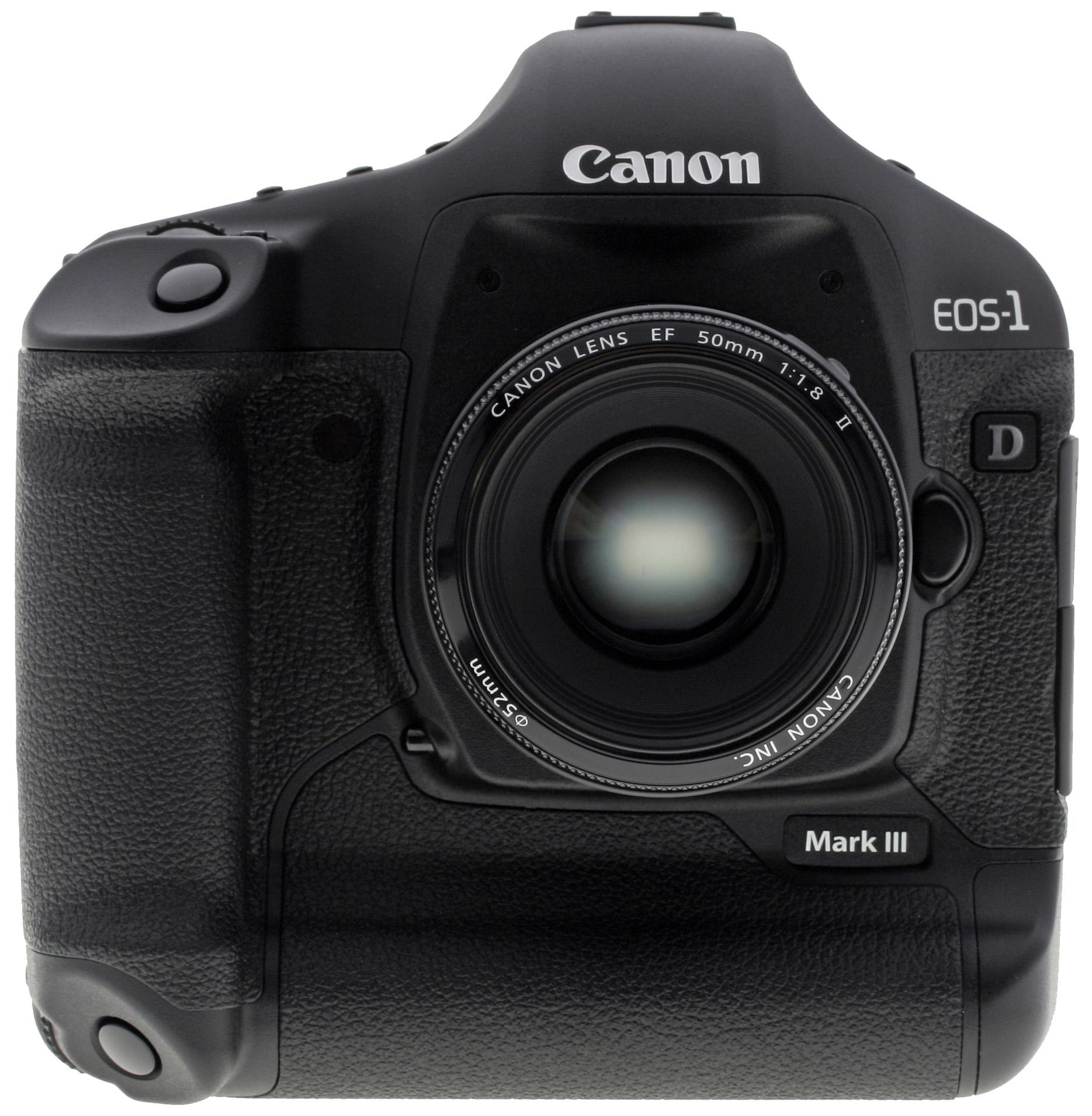
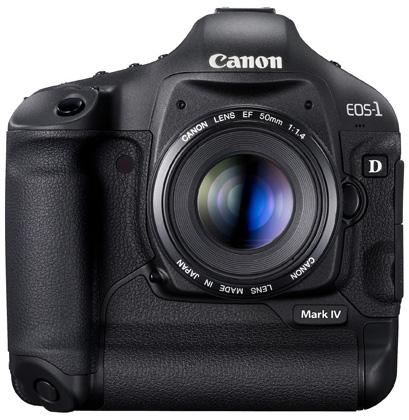
A Canon 1D Mark II, Mark III and Mark IV.
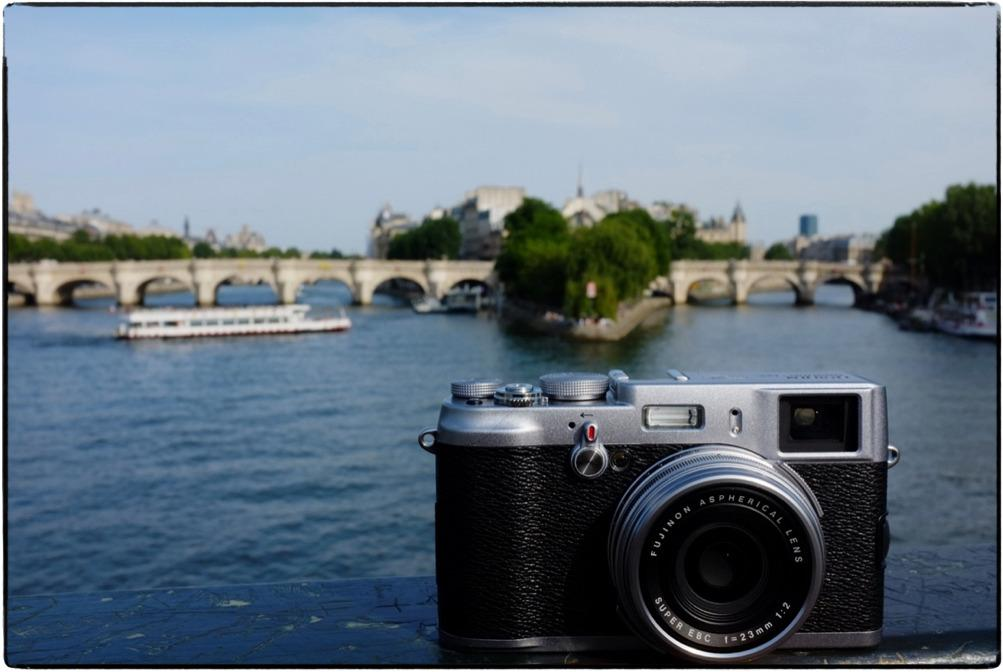
An original Fujifilm X100.
According to the internet, most of them are obsolete. Their sensors are too old, their rear screens too small, their autofocus too slow and their specifications hopelessly outclassed by almost anything you can buy today.
They’re probably right.
I still wouldn’t part with them.
People sometimes ask me why I keep using cameras that have long since disappeared from shop windows.
The answer has very little to do with photography.
I love my old cameras because they have character, personality and soul. They’re not just tools. They’re old friends. Like old friends, each one has its own personality.
The Nikon D2Hs is calm, dependable and quietly confident. It never shouts about what it can do. It simply turns up every morning and gets on with the job.
The D300S is the reliable companion that never lets me down. It doesn’t demand attention or admiration. It simply asks where we’re walking today.
The Nikon D3 feels like that friend who’s seen everything, survived everything and somehow still remains unflappable.
Then there are the Canons.
The 1D series always felt as though they had been built with one purpose in mind: work. No fuss. No drama. Just absolute confidence that whatever happened next, they’d cope with it.
The original Fujifilm X100 was different again.
It was the quiet one.
The camera that persuaded me to slow down, stop fiddling with settings and simply watch the world unfold.
None of these cameras are perfect. Thank goodness.
Perfection has never interested me very much.
Character has.
Perhaps that’s why I’ve never understood the obsession with constantly replacing cameras. Every new model promises to be faster, sharper and cleverer than the one before.
Some of those promises are true.
But none of them explain why I still smile when I wrap my hand around a camera that’s twenty years old.
These cameras have travelled with me through different chapters of my life.
They’ve wandered streets with me.
They’ve waited patiently while I stood watching people.
They’ve shared quiet mornings and long afternoons.
They’ve been there on days when everything seemed to come together and on days when nothing worked at all.
Strange as it may sound, they have become companions.
The best part? They’ve never judged me. Not once.
They’ve never complained about a bad hair day.
They’ve never mentioned my increasingly questionable fashion sense.
They’ve never laughed at mismatched socks or criticised an idea before I’d even tried it.
They’ve simply waited by the door, ready for another walk.
There is something wonderfully reassuring about that kind of friendship.
Over the years I’ve come to realise that the cameras themselves are only part of the story.
The real story is what happens to the photographer.
When we’re young, we chase equipment.
When we’re older, we chase light.
When we’re beginning, we collect cameras.
When we’ve been doing it for decades, we collect moments.
That’s why these old cameras still matter to me.
Not because they’re technically remarkable by today’s standards.
But because every scratch tells a story.
Every polished edge reminds me of somewhere I’ve been.
Every shutter release carries memories that no specification sheet could ever record.
Photography has given me many things over the years.
Pictures. Friendships. Conversations. A reason to wander. An excuse to be curious.
These cameras have quietly accompanied me through all of it.
Perhaps that’s why I still reach for them.
Not because I believe old cameras are better than new ones.
They’re not.
I reach for them because they remind me of something the photographic industry rarely talks about.
The finest camera you’ll ever own isn’t necessarily the newest one.
It’s the one that makes you want to leave the house.
The one that disappears in your hands.
The one that quietly whispers, “Come on… let’s go and see what’s happening today.”
Mine just happen to have a few more wrinkles than they used to.
Then there are cameras that quietly ask you to slow down and see.
The original Fujifilm X100 belonged firmly in the second category.
When it appeared in 2011 it created quite a stir. Here was a small camera with a fixed 35mm equivalent lens, a beautifully designed body and a viewfinder unlike anything most photographers had seen before. It looked as though it had wandered out of another era, yet inside was technology pointing firmly towards the future.
Many people bought it because it looked beautiful.
Some sold it a few months later because it didn’t behave like the cameras they were used to.
I always thought that missed the point.
The X100 wasn’t designed to replace a professional DSLR. It wasn’t trying to be the fastest camera on the market, nor the most versatile. It asked something different of the photographer.
It asked for patience.
By today’s standards the autofocus was leisurely. Sometimes it hunted. Sometimes it made you wait. If you expected it to react like a modern sports camera, disappointment was almost guaranteed.
But if you accepted it for what it was, something rather special happened.
You slowed down.
You stopped firing long bursts at every fleeting movement. You began watching people a little more carefully. You anticipated rather than reacted.
The camera quietly changed your behaviour.
I’ve always believed that street photography isn’t about speed. It’s about awareness.
Anyone can walk through a city with a camera.
Seeing is the difficult part.
The X100 encouraged seeing.
The fixed 35mm equivalent lens removed one decision before I’d even left the house. There was no wondering whether to carry a wide-angle zoom or a telephoto. No temptation to stand further back and zoom in instead of walking a little closer.
The lens became familiar.
Eventually I knew what it would see before I even lifted the camera to my eye.
That’s a liberating feeling.
There is something wonderfully honest about a fixed-lens camera.
It asks you to adapt rather than asking the equipment to adapt for you.
If the composition isn’t right, you move.
If the framing feels awkward, you move again.
The camera quietly insists that you become part of the photograph instead of remaining a distant observer.
I like that.
The X100 also possessed another quality that is becoming increasingly rare.
It was discreet.
Not invisible, because no camera truly is, but unthreatening.
People tended to ignore it.
It didn’t look like the enormous professional cameras that often make strangers nervous. It looked like a camera someone carried because they enjoyed photography rather than because they were working.
That changed the atmosphere.
People relaxed.
Conversations happened more naturally.
Moments unfolded without the camera dominating them.
Street photography has always depended upon trust.
Not just the trust between photographer and camera, but the trust between photographer and subject.
A small camera can sometimes help create that trust.
The X100 wasn’t perfect.
Its autofocus could test your patience.
Its menus occasionally felt awkward.
The write times were slower than many photographers wanted.
If you judged it solely by technical performance, there were better cameras available.
But photography has never been a competition between specification sheets.
The photographs don’t know how quickly the autofocus locked on.
They don’t know how many frames per second the camera could shoot.
They only reveal whether the photographer recognised a moment worth preserving.
That has always seemed the more important question.
The original X100 arrived before social media became obsessed with photographing cameras instead of photographs. It belongs to a period when many photographers were rediscovering the pleasure of carrying something smaller and lighter, something that encouraged walking rather than collecting equipment.
Perhaps that’s why it still occupies such an affectionate place in photographic history.
Not because it was flawless.
Because it reminded people that photography could be enjoyable again.
Today there are newer X100 models with faster processors, sharper viewfinders and autofocus systems that would have seemed almost magical back in 2011.
I’m glad they exist.
Progress is a good thing.
But the original retains a charm that specifications cannot explain.
It was never about having the latest technology.
It was about carrying a camera that invited you to look a little harder at the world around you.
And in street photography, that invitation is worth far more than another list of features.
The older I become, the more I realise that the finest cameras I’ve owned all share one characteristic.
They never tried to impress me.
They simply made me want to go out for another walk.
The original Fujifilm X100 did exactly that.
For a street photographer, I can think of no finer compliment.
There comes a moment in the life of many photographers when something quietly changes.
It doesn’t happen overnight. There isn’t a dramatic announcement or a sudden revelation. In fact, you may not even notice it at first.
One day you realise you’ve stopped reading camera reviews with quite the same enthusiasm.
You no longer spend evenings comparing test charts or worrying whether another lens is a fraction sharper in the corners.
You stop wondering what the next camera might do for your photography.
Instead, you begin asking what your photography can still teach you.
I don’t know exactly when that change happened to me.
Perhaps it was after years of carrying professional cameras through cities, villages and streets where nobody cared what was hanging around my neck.
The people I photographed never once asked how many megapixels the camera had.
They cared whether I treated them with respect.
The photograph never depended on the specification sheet.
It depended on the relationship.
Over the years I’ve owned cameras that many photographers dreamed of owning. The Nikon D3. The Canon 1D series. Cameras built to work in almost any conditions, and built so well that they still inspire confidence today.
I’ve also spent just as much time enjoying cameras that the photographic world has largely left behind. The Nikon D1H. The D2Hs. The D300S. Cameras that many people now dismiss before they’ve even picked one up.
The funny thing is that every one of them has made photographs I’m proud of.
That should probably tell me something.
Photography has an extraordinary ability to convince us that we are one purchase away from becoming the photographer we want to be.
I’ve believed it myself.
Most of us have.
There is always another body with a better sensor, another lens with a wider aperture, another promise that this time everything will be different.
Sometimes the improvements are real.
Modern cameras are remarkable tools.
But there comes a point when the improvements become smaller than the distance we still have to travel as photographers.
No camera has ever taught me patience.
No lens has ever taught me empathy.
No sensor has ever helped me recognise the tiny exchange of glances between two strangers waiting to cross the road.
Those lessons have always come from spending time in the world with a camera in my hands.
Walking. Watching. Waiting. Making mistakes. Learning slowly.
Those are things no manufacturer can sell me.
I still enjoy good equipment. I appreciate thoughtful engineering.
A well-designed camera is a pleasure to use in much the same way that a well-made watch or a beautifully balanced fountain pen is a pleasure to hold.
There is craftsmanship in such things, and I admire it.
But craftsmanship is not creativity.
Owning a fine violin has never made anyone a concert musician.
The same is true of cameras.
Somewhere along the way I stopped trying to own the best equipment.
Instead, I began looking for equipment that encouraged me to leave the house.
That is a very different search.
A camera that feels comfortable after five kilometres of walking.
A lens that never makes me think twice about carrying it.
Controls that disappear beneath my fingers because they have become second nature.
Those things matter.
Not because they improve image quality.
Because they remove distractions.
The less I think about the camera, the more I think about the world in front of it.
And that’s where photographs live.
One afternoon I rediscovered an old kit lens that had been sitting unnoticed in the bottom of a camera bag for years.
By every conventional measure, it was unremarkable.
Plastic. Slow. Inexpensive.
Hardly the sort of lens that sets internet forums buzzing with excitement.
I mounted it on an old Nikon and went for a walk.
Half an hour later I had forgotten I was using a kit lens.
I was simply making photographs.
That small experience reminded me of something I had almost forgotten.
Good photographs are made with attention.
Not price tags.
As photographers we often speak about seeing.
Yet we spend an extraordinary amount of time looking at cameras instead.
Perhaps the greatest freedom comes when those two things finally separate.
When the equipment becomes simply another trusted tool.
No longer exciting. No longer distracting. Just dependable.
There is a quiet confidence in reaching that point.
It doesn’t mean you’ve stopped appreciating cameras.
It means you’ve started appreciating photography more.
These days I still enjoy picking up cameras that most people would consider obsolete.
Not because I’m nostalgic.
Not because I’m making a point.
Simply because they still encourage me to look carefully.
And looking carefully has always been the hardest part of photography.
Long after the specifications have been forgotten.
Long after the batteries no longer hold their charge.
Long after the next generation of technology has replaced them.
The ability to notice the extraordinary hidden inside ordinary moments remains.
That is the only upgrade that has ever truly mattered.
There are cameras that pass through your hands without leaving much of an impression.
Then there are cameras that quietly shape the photographer you become.
Looking back over the years, three Canon cameras stand out for reasons that have very little to do with megapixels, autofocus points or laboratory tests. They arrived at different times in my life, answered different needs and, without my realising it at the time, each taught me something about photography that I still carry with me today.
The Canon 1D Mark II was my introduction to what a truly professional camera felt like.
Until then I had used good cameras, but the 1D Mark II belonged to a different world. It wasn’t designed to impress people in a camera shop. It was built to earn its living. From the moment I picked it up, I understood that.
The weight wasn’t a burden; it was reassuring. The shutter sounded purposeful. Every button felt as though it had been placed exactly where it needed to be. It gave the impression that someone had spent years thinking about photographers before designing the camera.
It didn’t feel clever.
It felt dependable.
There’s a difference.
The first lesson that camera taught me was that confidence is one of the most valuable things a camera can give its owner.
When you trust your equipment, you stop checking it every few minutes. You stop wondering whether the autofocus will cope or whether the exposure will be right. Instead, you start watching people. You begin anticipating moments instead of worrying about settings.
The camera fades into the background. That’s exactly where it belongs.
Then came the Canon 1D Mark III.
If ever there was a camera judged before it had the chance to speak for itself, this was it.
Its autofocus problems became one of photography’s best-known stories, and for many people that was the end of the conversation.
I never found life quite that simple.
Like every camera, it had strengths and weaknesses, but I’ve always believed equipment should be judged by the photographs it helps you make, not by endless debates on internet forums.
The Mark III reminded me that photographers can sometimes become prisoners of other people’s opinions.
It’s easy to dismiss a camera because someone you’ve never met says it isn’t good enough.
It’s much harder—and much more rewarding—to pick it up yourself and find out.
Photography has always been full of accepted wisdom.
“This lens isn’t sharp enough.” “That camera is outdated.” “You need more megapixels.”
Most of those statements contain a grain of truth. Very few contain the whole truth.
The Mark III encouraged me to trust my own experience over popular opinion.
That was a lesson worth learning.
Then there was the Canon 1D Mark IV.
That camera occupies a special place in my memory for one simple reason.
It is the only brand-new camera I have ever bought.
Everything else arrived second-hand, already carrying someone else’s story before becoming part of mine.
The Mark IV was different.
Buying it wasn’t about owning the latest technology.
It was about reaching a point where I knew exactly what I wanted from a camera.
No guesswork.
No wishful thinking.
No chasing fashion. Just confidence.
By then I had spent years making photographs, learning through mistakes and slowly discovering that cameras don’t create vision. They simply support it.
The Mark IV felt like the natural companion to that stage of my life.
Fast when it needed to be. Reliable when it mattered. Strong enough to work all day without complaint.
Most importantly, it never demanded my attention.
Like every great camera I’ve owned, it quietly stepped aside and allowed me to concentrate on the photograph.
Looking back now, I realise these three cameras chart more than the evolution of digital photography.
They chart the evolution of a photographer.
The first taught me confidence.
The second taught me independence.
The third confirmed that experience matters more than specifications.
Today the photographic world moves at extraordinary speed. New cameras appear almost before we’ve learned the menus on the old ones. Marketing departments tell us that everything has changed, while social media encourages us to believe that our equipment is somehow holding us back.
I’m no longer convinced.
The longer I photograph, the less interested I become in owning the newest camera. Instead, I find myself asking a much simpler question. Does this camera make me want to go out for a walk?
If the answer is yes, then it has already done most of its job.
I still enjoy reading about new equipment. I admire good engineering. I appreciate innovation.
But somewhere along the way I stopped believing that photography was about owning the latest technology.
It’s about recognising a fleeting expression. Waiting for the light to fall in just the right place. Seeing relationships between people that exist for only a heartbeat. No camera has ever created those moments. It can only preserve them.
When I think back to the Canon 1D Mark II, the Mark III and the Mark IV, I don’t remember the specifications.
I remember the places they travelled. The people they introduced me to. The confidence they gave me to keep pressing the shutter.
That’s their real legacy.
Not because they were perfect.
No camera ever is.
But because, for a significant part of my photographic life, they became trusted companions rather than pieces of technology.
In the end, that’s all I’ve ever really wanted from a camera.
There are cameras that impress you the day you buy them.
Then there are cameras that quietly earn your respect over the years.
The Nikon D3 belonged firmly in the second category.
When Nikon introduced it in 2007 it wasn’t simply another camera body. It was a statement. For years photographers had accepted that full-frame digital cameras came with compromises. Then along came the D3 and quietly swept many of those compromises away.
For the first time I found myself holding a camera that seemed capable of disappearing completely from my thoughts.
That may sound like an odd compliment.
Most reviews talk about autofocus, dynamic range, high ISO performance or frames per second. Those things matter, and the D3 excelled at every one of them. Its autofocus was astonishingly dependable, its files were beautifully clean at ISO settings that previously seemed unusable, and it possessed the sort of build quality that suggested it would probably survive events that its owner might not.
But those aren’t the reasons I remember it.
The reason I remember the D3 is because I stopped thinking about it.
Photography can be an odd occupation. We spend years learning cameras so that eventually we no longer have to think about cameras at all.
The controls become instinctive. The shutter becomes familiar. The viewfinder feels like an extension of your own eyesight.
The D3 reached that point faster than almost any camera I’ve ever owned.
I trusted it.
That word matters more than any technical specification.
Trust means never wondering whether the autofocus will keep up.
Trust means changing the ISO without taking your eye away from the scene unfolding in front of you.
Trust means walking into fading light knowing the camera will quietly cope while you concentrate on people rather than exposure.
That confidence changes the way you photograph.
You stop making technical decisions. You start making visual ones. There is a freedom in that.
Looking back now, I realise the D3 arrived at exactly the right point in photographic history. It was technologically advanced without becoming technologically intrusive. It offered extraordinary capability while still expecting the photographer to make the important decisions.
It wasn’t trying to think for me. It simply did what I asked.
That’s a quality I value more with every passing year.
Modern cameras are astonishing. Their ability to recognise eyes, faces, birds, animals and vehicles borders on science fiction compared with the equipment many of us learned on.
I admire that progress.
But sometimes I wonder whether, in making cameras ever more intelligent, we’ve accidentally encouraged photographers to become slightly less observant.
The D3 demanded observation.
It rewarded anticipation.
It reminded me that timing has always mattered more than technology.
Perhaps that is why I remember it with such affection.
It never once tried to become the photographer.
It remained a beautifully engineered tool.
Nothing more.
Nothing less.
Over the years I’ve owned cameras that exceeded it on paper.
Higher resolution.
Greater dynamic range.
Better video.
More sophisticated autofocus.
Yet very few of them left me feeling quite so relaxed.
The D3 carried itself with quiet confidence.
It never seemed eager to impress.
It simply got on with the job.
There is something deeply satisfying about equipment that behaves like that.
It encourages the same attitude in its owner.
You stop worrying.
You stop fiddling with menus.
You stop reading forums searching for mythical improvements.
You simply walk. You look. You wait. And when the moment arrives, you press the shutter almost without conscious thought.
That, surely, is what every camera should aspire to become.
Invisible.
The older I become, the more I appreciate that invisibility.
Photography has never been about the camera in my hands.
It has always been about the people standing in front of it.
The expressions that vanish in a heartbeat.
The brief exchange of glances between strangers.
The light that appears for only a few seconds before disappearing behind a cloud.
The D3 never distracted me from those moments.
It quietly helped me preserve them.
That is the highest compliment I can pay any camera.
Eventually newer models arrived.
Technology moved on.
Manufacturers promised even greater miracles.
Some of those promises were fulfilled.
Many of them genuinely improved the photographic experience.
But there remains something quietly reassuring about the Nikon D3.
Not because it is the greatest camera ever made.
History rarely deals in absolutes.
Rather, because it represents a moment when I realised I had stopped thinking about cameras altogether.
I had begun thinking only about photographs.
And looking back now, I cannot imagine a finer legacy for any camera than that.
Every so often I find myself standing in front of the cupboard where I keep my cameras, looking not at the newest body or the lens with the widest aperture, but at the machines that have travelled with me for years. The cameras with worn grips, polished edges and the occasional scratch that reminds me of somewhere I have been rather than something I have owned.
Some people collect cameras.
I seem to collect memories that happen to have cameras attached to them.
Over the years I have been fortunate enough to own equipment that many photographers would have loved to have in their bag. Cameras like the Nikon D3 and the Canon 1D Mark IV represented the very best of their generation. They were built to work, not to decorate shelves. They earned their reputation honestly and I enjoyed every minute I spent using them.
Alongside them sat other cameras that the internet has largely forgotten. A Nikon D1H. A D2Hs. A D300S.
According to modern thinking, these cameras should have been retired years ago. Their sensors are too old. Their screens are too small. They lack the endless list of features that now seem to define whether a camera is considered relevant.
And yet I still reach for them.
Not because I believe they are better than modern cameras.
They are not.
Technology has marched forward at an astonishing pace and anyone pretending otherwise is fooling themselves. Today’s cameras can see in near darkness, focus with uncanny precision and produce files that would have seemed impossible twenty years ago.
That isn’t the point.
The point is that photography has never been a competition between cameras.
Somewhere along the way we confused owning equipment with making photographs. We began reading specifications more often than we studied light. We watched reviews instead of watching people. We convinced ourselves that the next purchase would somehow unlock a level of creativity that had stubbornly remained just beyond our grasp.
I’ve been guilty of it myself.
Most photographers have.
Then one afternoon I picked up an old kit lens that had been lying in the bottom of a camera bag for years.
A humble 18–55mm zoom.
The sort of lens many photographers replace before they’ve really learned what it can do.
I mounted it on an old D300S almost as an afterthought.
Within an hour I found myself smiling.
The photographs looked… good.
Not because the lens possessed some hidden magic. It didn’t suddenly become sharper than lenses costing ten times as much. It hadn’t secretly transformed into a professional zoom while sitting forgotten in the dark.
It simply reminded me of something I had quietly forgotten.
Most of the time the weakest part of the photographic process has never been the equipment.
It’s the photographer’s attention.
Walking with that little lens, I stopped thinking about cameras altogether. I wasn’t wondering whether the corners were sharp enough or whether another stop of aperture would improve the background blur. I found myself doing something much more enjoyable.
I started looking.
Really looking.
Watching people drift through patches of afternoon light. Waiting for expressions that lasted only a fraction of a second. Seeing small relationships between strangers that existed only because I happened to be standing in exactly the right place.
The camera had disappeared.
That’s when photography becomes enjoyable again.
I’ve always believed that the camera should become invisible. Not literally, of course, but mentally. The moment you become preoccupied with the equipment is often the moment you stop paying attention to what is unfolding in front of you.
The best cameras I’ve owned all share one quality.
They get out of the way.
The D2Hs does that beautifully.
So does the D300S.
The old D1H did it before them.
Even the mighty D3, with all its capability, never felt like it was demanding attention. It simply waited patiently for instructions.
Perhaps that’s why I’ve never developed much affection for cameras that try too hard to think on my behalf.
I enjoy making decisions.
Photography has always been, for me, an act of observation rather than automation.
Age has changed the way I photograph.
Not necessarily for the better or worse.
Just differently.
There was a time when I would return from a five-kilometre walk having exposed a couple of hundred frames without giving it much thought. More recently there have been walks where the camera barely left my side. I wondered whether I was losing whatever spark had driven me for so many years.
That thought troubled me more than I cared to admit.
Photography had become part of the rhythm of my life. It wasn’t simply a hobby or a pastime. It was the way I made sense of the world around me. The camera gave me permission to slow down, to notice, to spend time watching rather than rushing.
When that instinct began to fade, I questioned whether it would ever return.
The answer, oddly enough, wasn’t a new camera.
It was an old lens.
Sometimes inspiration arrives in the most unlikely disguise.
The experience reminded me that enthusiasm cannot be bought. It can only be rediscovered.
That rediscovery also forced me to think about why I photograph at all.
Certainly not to impress other photographers.
I’ve reached the stage where opinions about my work matter far less than they once did. I don’t make photographs hoping for admiration or approval. If people enjoy them, I’m grateful. If they don’t, the photographs still served their purpose.
They were never made to satisfy an audience.
They were made because I felt compelled to make them.
Printing has reinforced that belief.
For me, a photograph isn’t complete when it appears on a screen. Screens are temporary. They scroll past with alarming speed before disappearing beneath tomorrow’s distractions.
A print asks something different of the viewer.
It asks them to stop.
To spend a little time.
To notice.
That seems increasingly valuable in a world that encourages us to glance at everything and truly see almost nothing.
Perhaps that is why I continue to enjoy old cameras.
They ask the same thing of me.
Slow down.
Pay attention.
Think before pressing the shutter.
Accept that not every photograph will succeed.
There is an honesty in those limitations.
I don’t pretend that everyone should abandon modern equipment. That would be absurd. Every generation of camera has made certain kinds of photography easier, and there is genuine joy in technological progress.
But there is also joy in realising that the equipment we already own may be capable of far more than we have allowed ourselves to believe.
Some of the most satisfying photographs I’ve made have come from cameras that many people would dismiss without a second glance.
That says more about photography than it does about cameras.
Experience eventually teaches us that memorable photographs are built from curiosity, patience, empathy and timing. None of those qualities can be purchased in a camera shop.
They have to be earned.
Sometimes slowly.
Sometimes painfully.
Always personally.
I still enjoy reading about cameras. I still appreciate beautifully engineered lenses. I’m as susceptible as anyone to admiring well-made tools.
But I no longer confuse those tools with the act of photography itself.
The camera is merely the passport.
The journey is something else entirely.
When I leave home with one of those old Nikons slung over my shoulder, I don’t feel as though I’m carrying obsolete technology.
I feel as though I’m carrying an old friend.
One that has never once suggested that I needed to become someone different in order to make a worthwhile photograph.
It simply asks me to go for a walk.
To keep my eyes open.
To remain curious.
And after all these years, I’ve come to believe that curiosity is the most valuable piece of photographic equipment any of us will ever own.
Cameras will continue to evolve. Sensors will become larger, smaller, faster, sharper and more intelligent. Marketing departments will keep promising that the next generation will change everything.
Perhaps it will.
But I suspect that, years from now, I’ll still find myself reaching into that cupboard, picking up an old camera with a worn grip and a familiar shutter sound, and heading out into the streets.
There it was, sitting quietly in the bottom of an old camera bag. A lens I hadn’t mounted on a camera in years. The Nikon 18–55mm kit lens. The sort of lens many photographers buy by accident because it comes attached to a new camera and then replace at the first opportunity with something faster, heavier and considerably more expensive.
I almost walked past it.
Instead, I clicked it onto my old Nikon D300S.
No expectations. No grand experiment. Just curiosity.
Within half an hour I found myself asking a simple question.
Why on earth had I stopped using this lens?
As photographers, we spend an extraordinary amount of time convincing ourselves that the next piece of equipment will somehow make us better. A sharper lens. A larger sensor. More megapixels. Faster autofocus. We read reviews, compare MTF charts, pixel-peep images until the joy has almost disappeared from the process.
Somewhere along the way we begin to believe that “kit lens” is another way of saying “not good enough.”
Yet here I was, walking with one of the cheapest lenses Nikon ever produced, making photographs that pleased me every bit as much as images made with lenses costing many times more. It was a useful reminder.
Photography has never really cared what was engraved on the front of the lens.
Thinking back, I realised this wasn’t the first time this little zoom had surprised me. If memory serves me correctly, I originally bought it to use on my Nikon D1H many years ago. It worked beautifully then, and I enjoyed using it far more than I expected. Since then it has also found its way onto my D2Hs and now the D300S. Three cameras that most of the photographic world has long since written off as obsolete.
I still enjoy them.
Perhaps that’s because they belong to an era when cameras simply got out of the way. They didn’t try to think for you. They asked you to think instead.
The 18–55mm seems to share that same philosophy.
It isn’t glamorous.
It doesn’t announce itself.
It simply gets on with the job.
Of course, I own better lenses. There are lenses I reach for when I need beautiful background blur, faster apertures, superior edge-to-edge sharpness or weather sealing. Professional tools exist for good reasons, and I wouldn’t pretend otherwise.
But there is an important difference between owning the best lens for a particular assignment and owning the lens that makes you want to go out and photograph.
Those are not always the same thing.
The little Nikon is wonderfully light. After an hour’s walk you barely notice it’s there. Instead of thinking about equipment, you’re watching people, waiting for expressions, noticing light falling across a face or the geometry of a street corner.
The camera almost disappears.
And that’s exactly where I like it.
Street photography has never been about carrying the largest collection of glass. It has always been about observation. Patience. Curiosity. The ability to recognise something ordinary becoming extraordinary for the briefest fraction of a second.
No expensive lens can teach you that.
The longer I photograph, the more suspicious I become of the endless pursuit of technical perfection. Cameras have become astonishingly capable. Lenses are sharper than ever. Yet I’m not convinced photographs have become more interesting because of it.
Some of the most memorable images ever made would fail today’s online obsession with corner sharpness, chromatic aberration and laboratory test charts.
Nobody stands in front of a great photograph asking what aperture was used.
They ask what happened.
They ask who that person was.
They ask why the image makes them feel something.
Those are entirely different questions.
Perhaps age has something to do with it. After decades behind a camera, I’m finding myself drawn back to simplicity. Older cameras. Smaller lenses. Equipment that encourages me to walk a little further and think a little harder rather than impress other photographers.
There is a freedom in that.
Not long ago I wondered whether I was losing my enthusiasm for photography altogether. The camera still came on my walks, but it often stayed by my side. For someone who once happily made fifty, a hundred or even two hundred photographs during a five-kilometre walk, that felt like a genuine change.
Then along came a forgotten little kit lens.
Funny how inspiration sometimes returns from the least likely places.
It reminded me that photography has never really been about owning the finest equipment. It has always been about remaining curious. About looking twice when everyone else walks on. About noticing small moments that most people never see.
Perhaps that is the real value of an inexpensive lens. It strips away the excuses. If the picture fails, it isn’t because the lens wasn’t expensive enough. If it succeeds, it succeeds because you saw something worth photographing.
That’s a comforting thought.
The Nikon 18–55mm won’t become legendary. It won’t appear on lists of the greatest lenses ever made, and it won’t cause collectors to empty their wallets.
It doesn’t need to.
For me, it has quietly become something far more valuable.
A reminder that the best camera equipment isn’t always the newest, the fastest or the most expensive.
Sometimes it’s simply the lens waiting patiently at the bottom of an old camera bag, ready to remind you why you fell in love with photography in the first place.