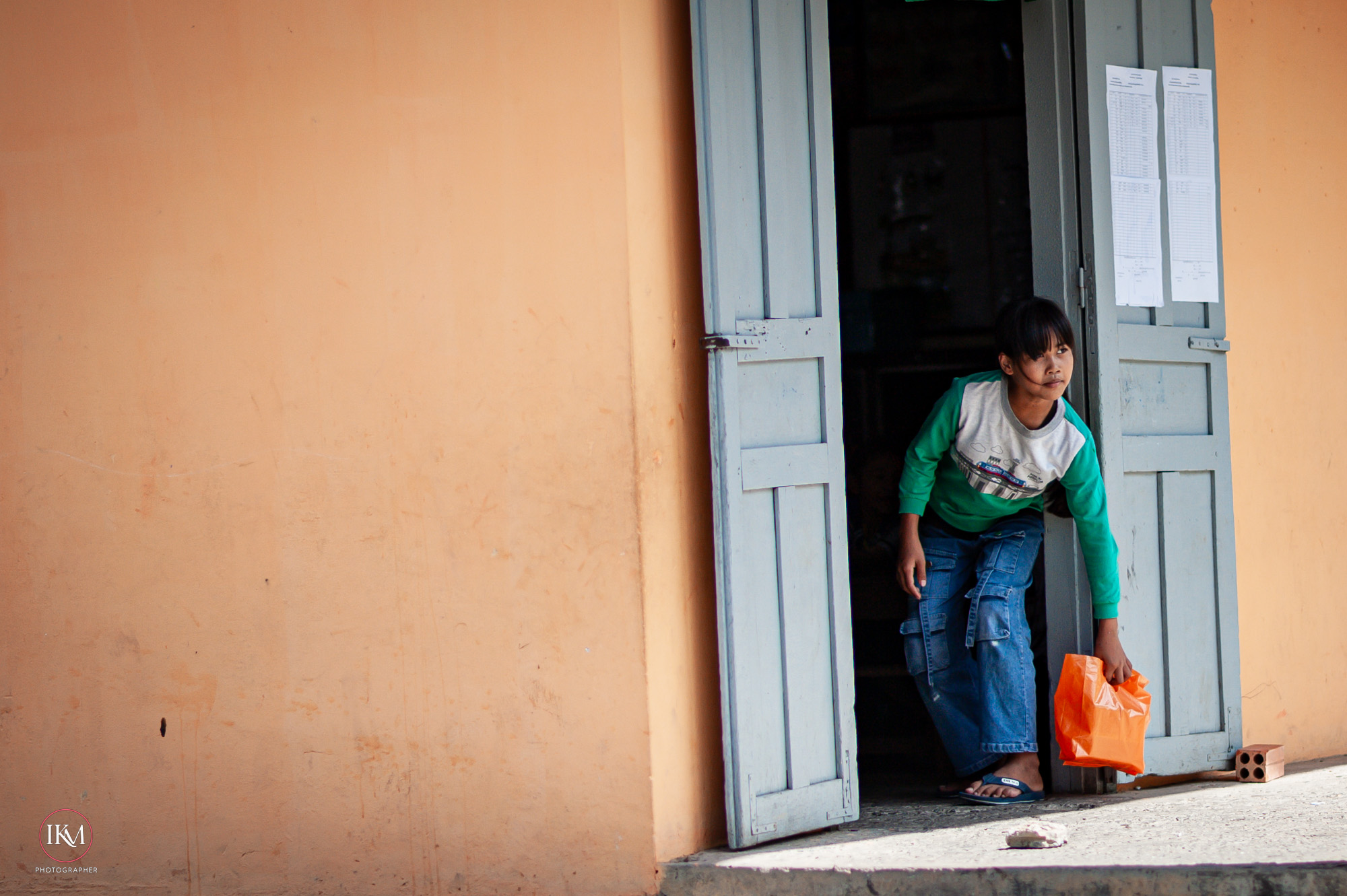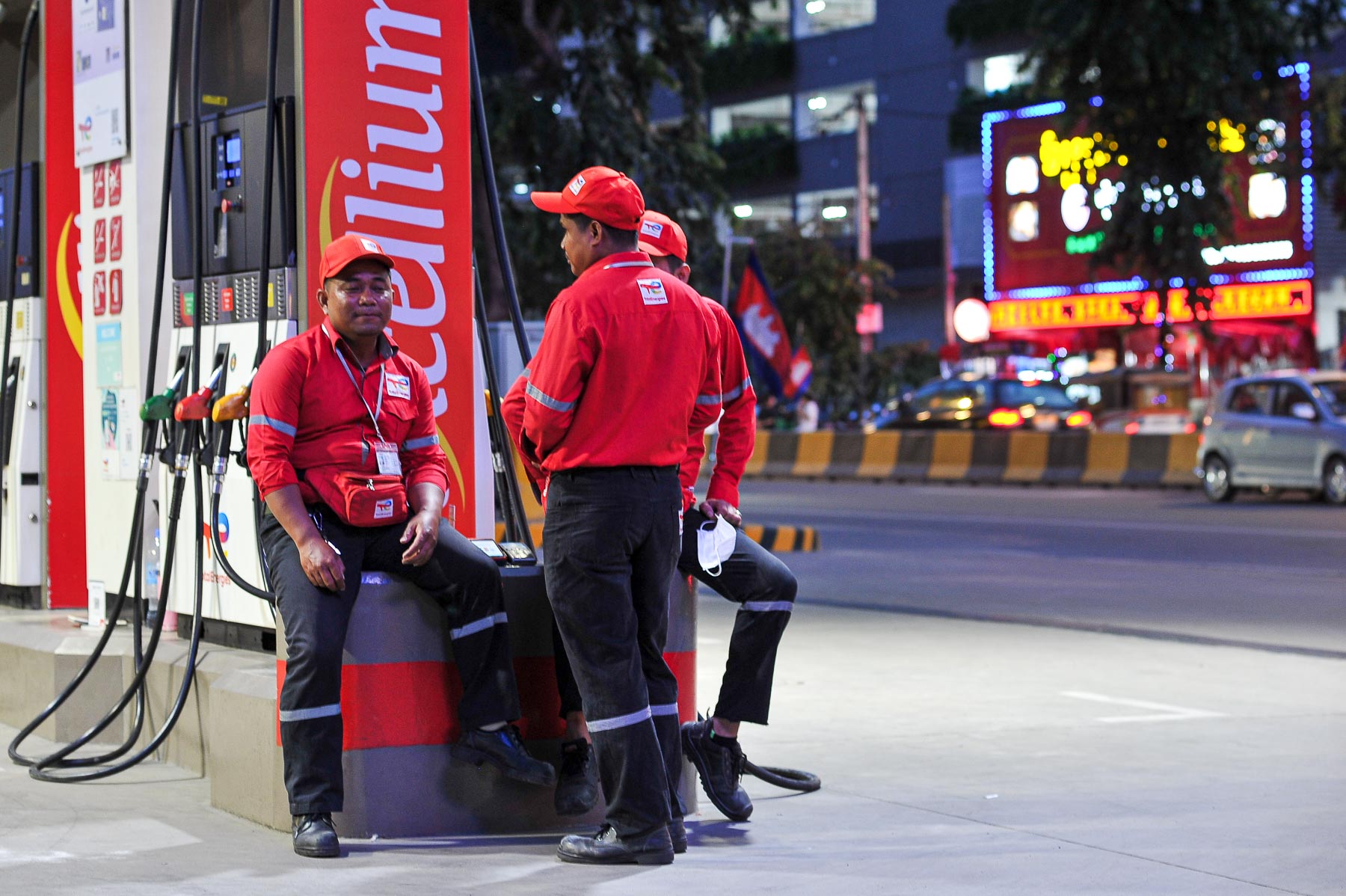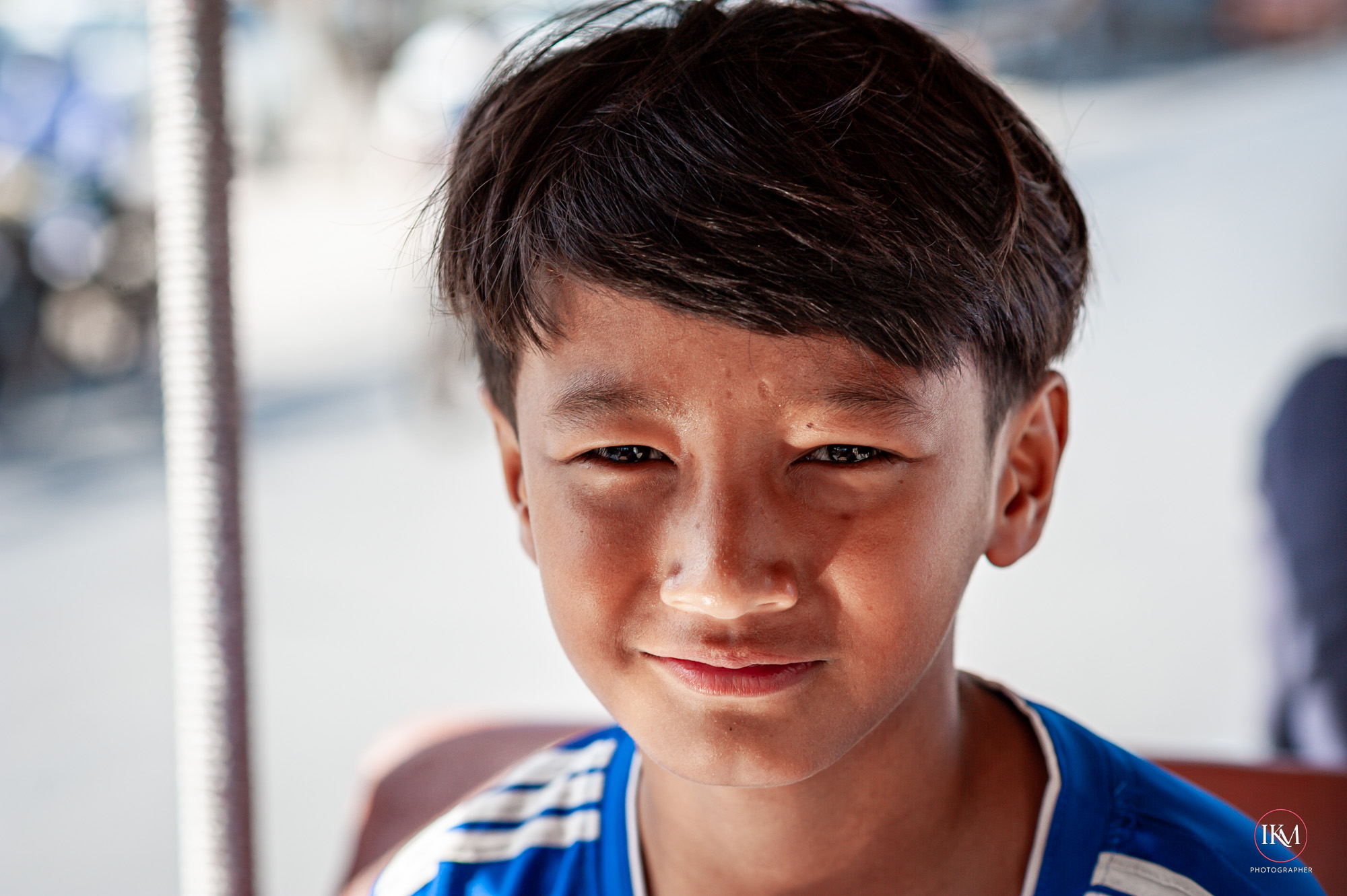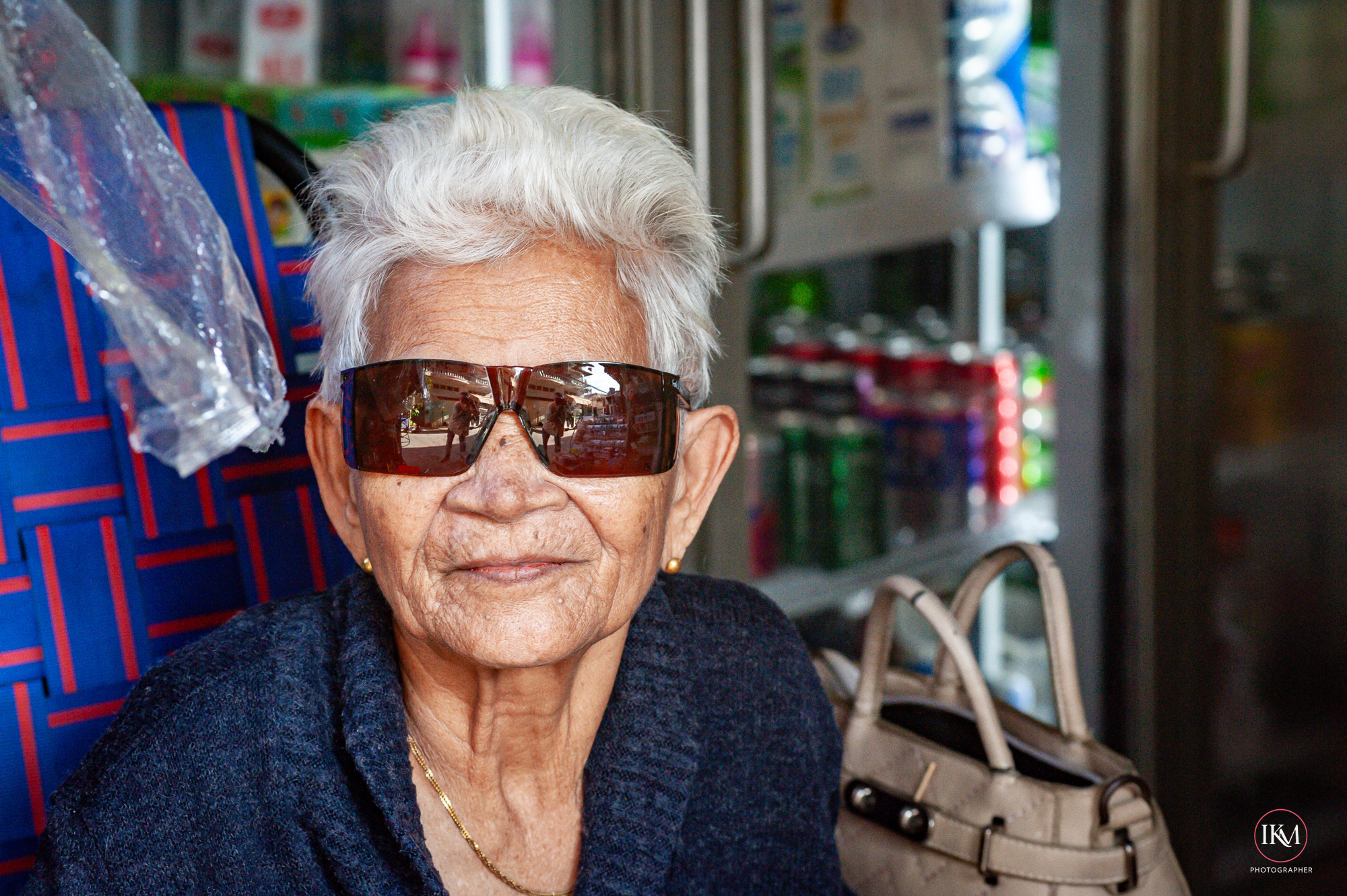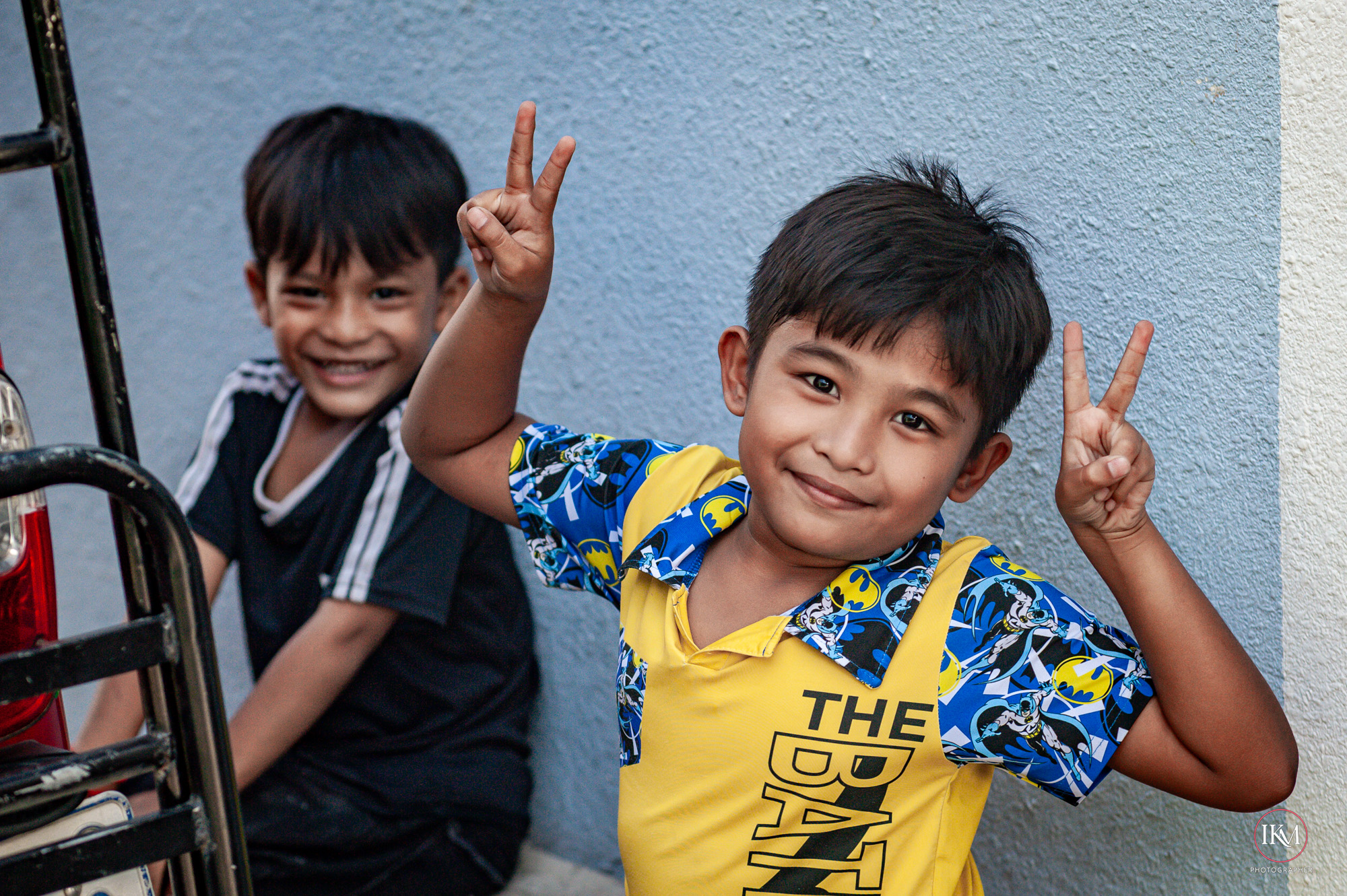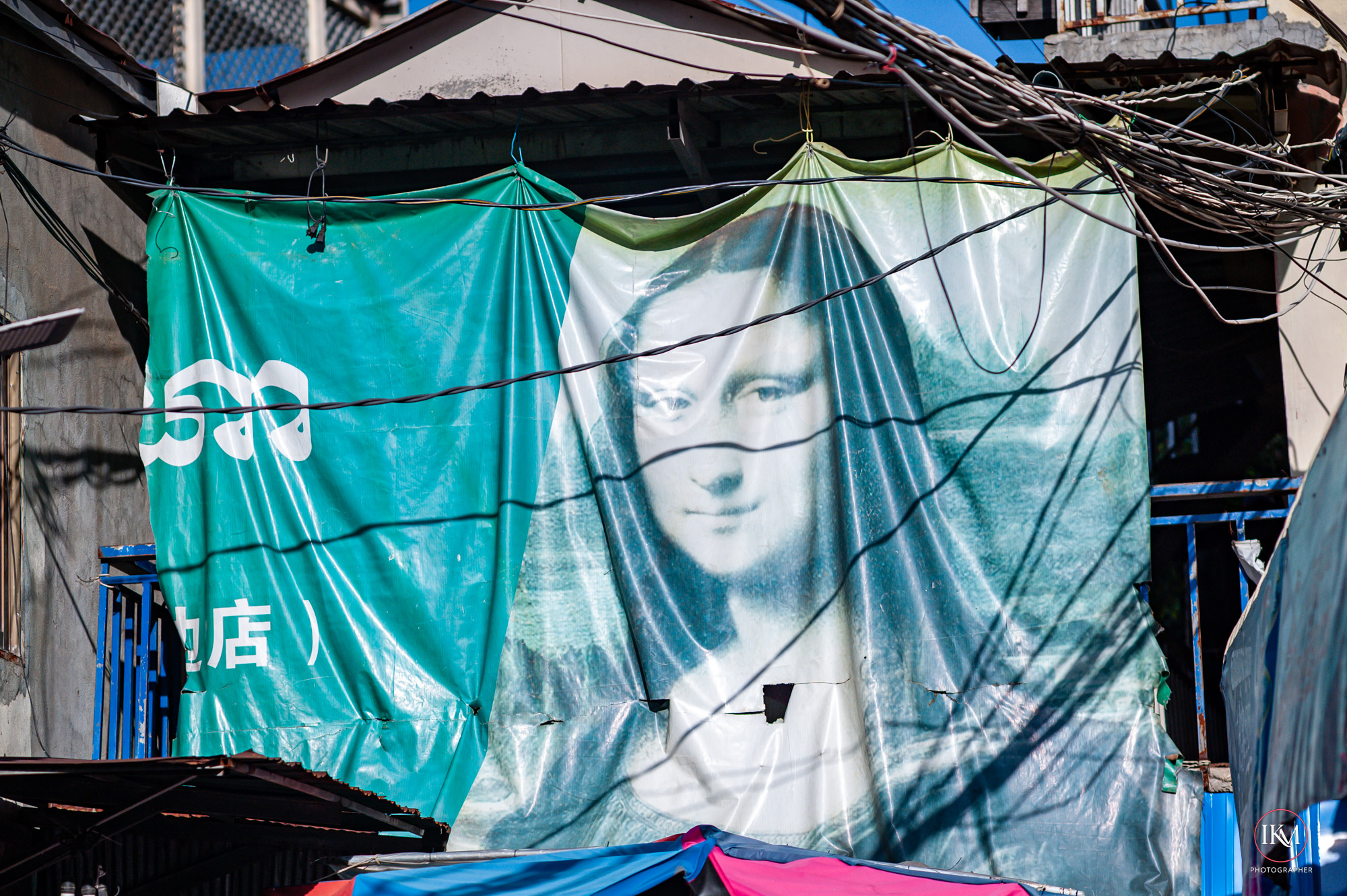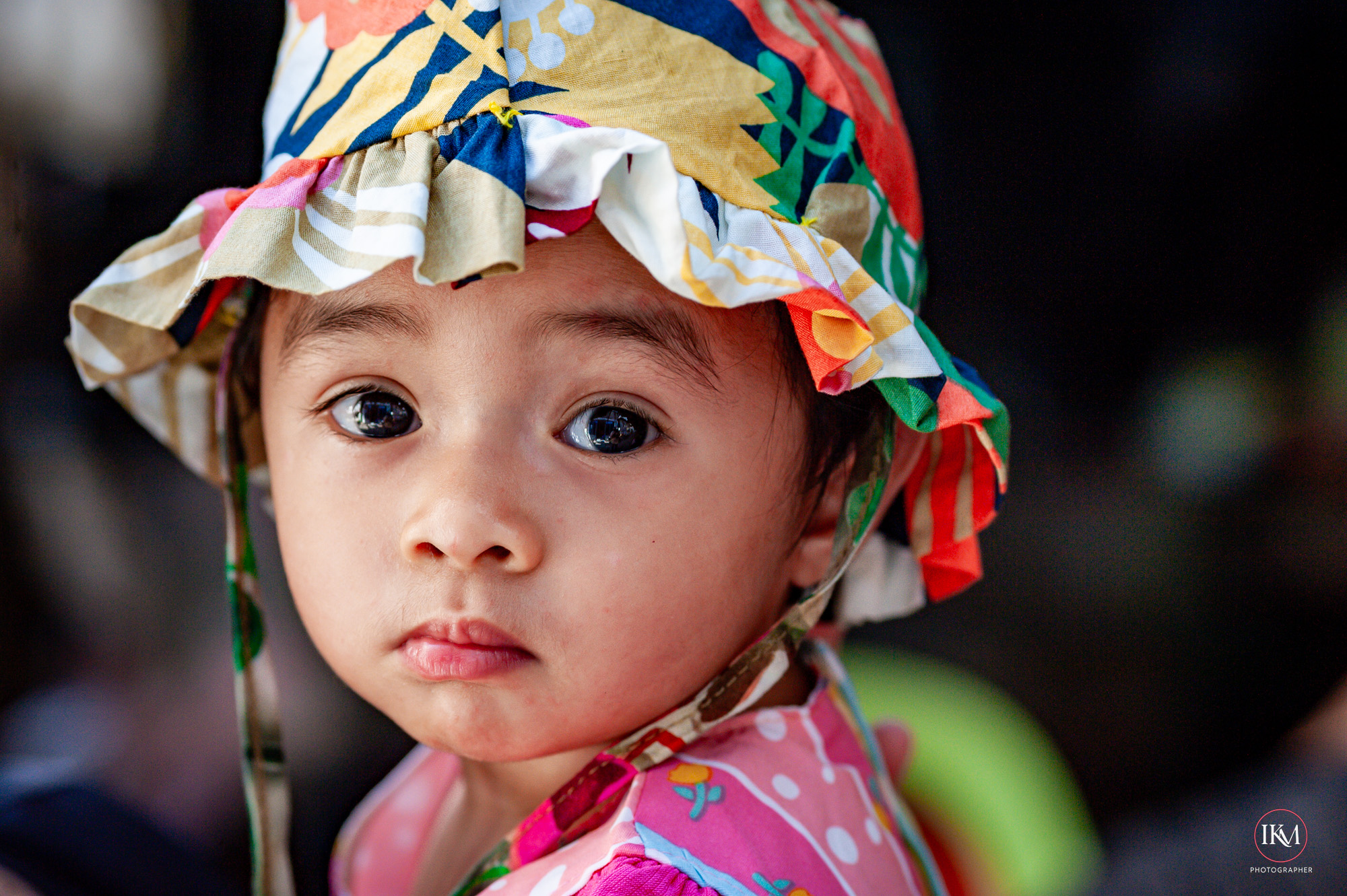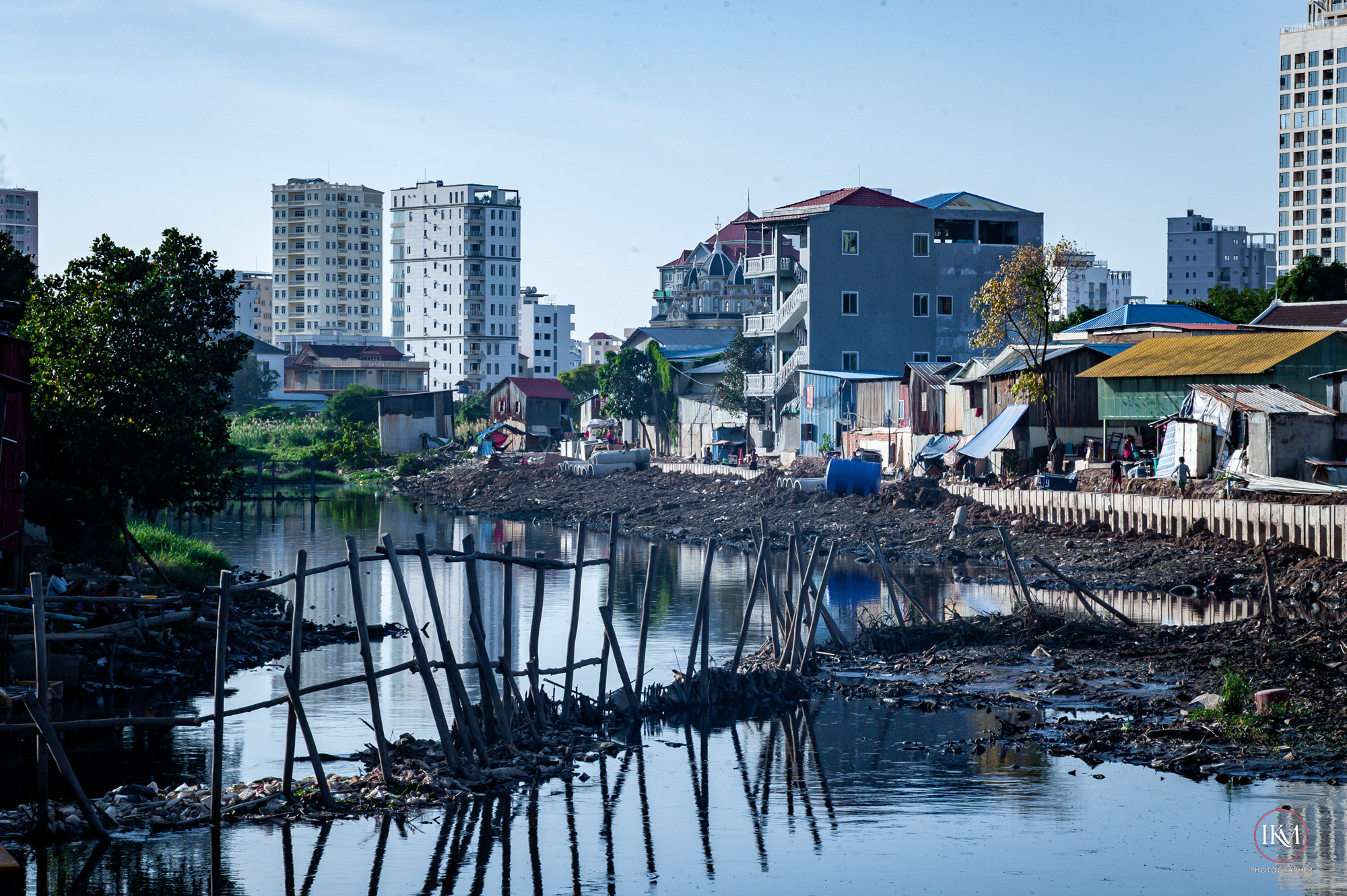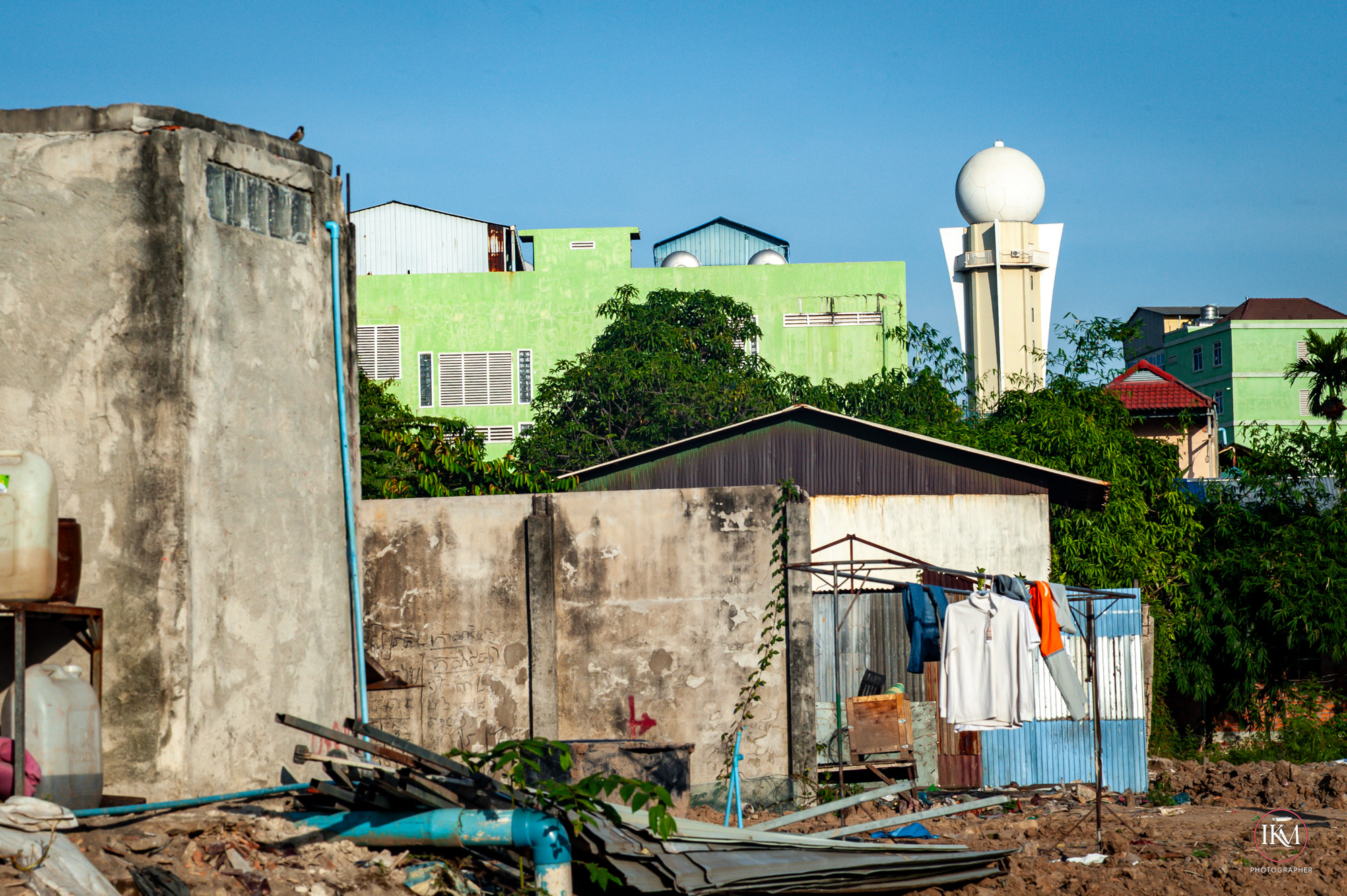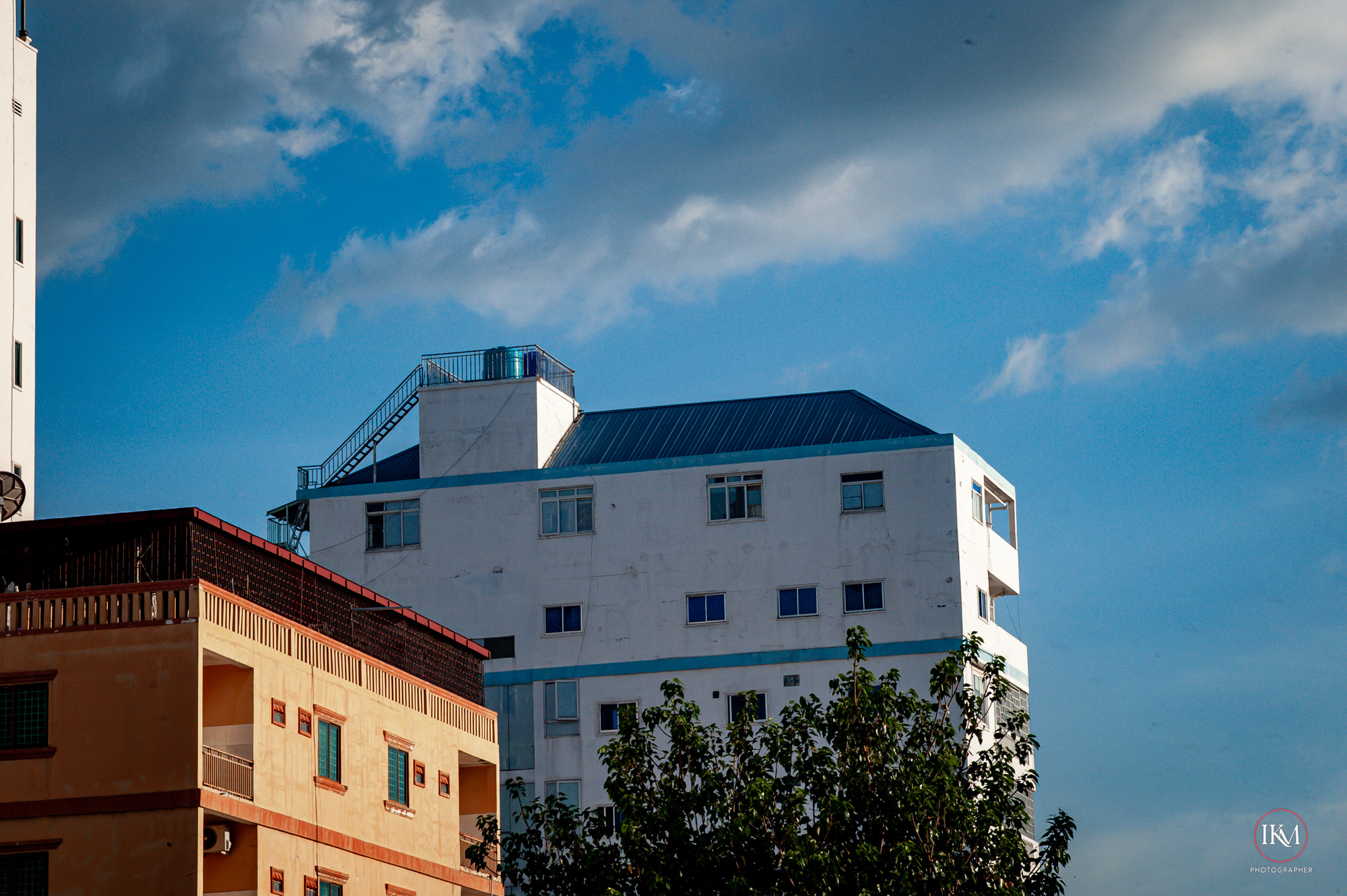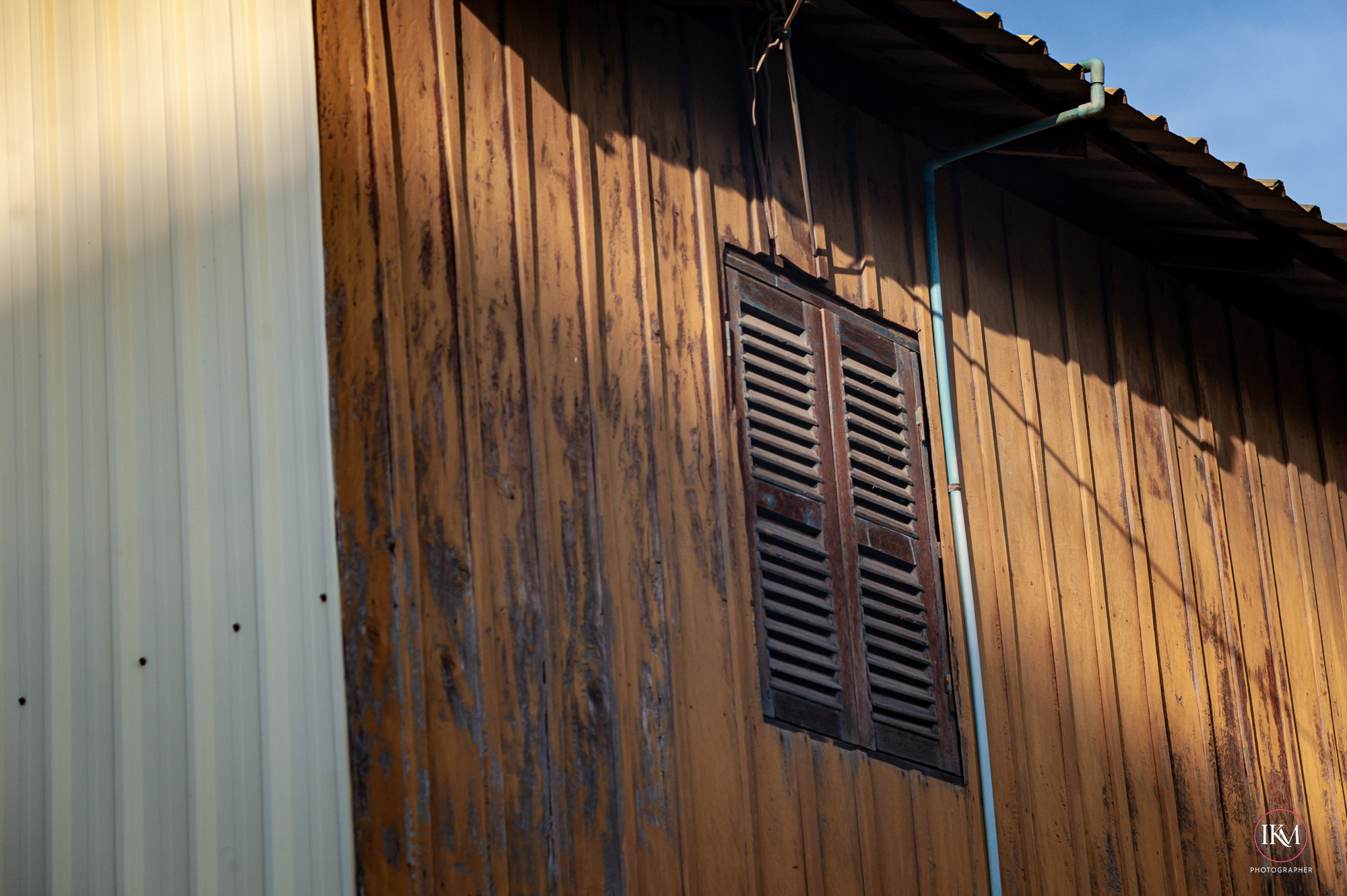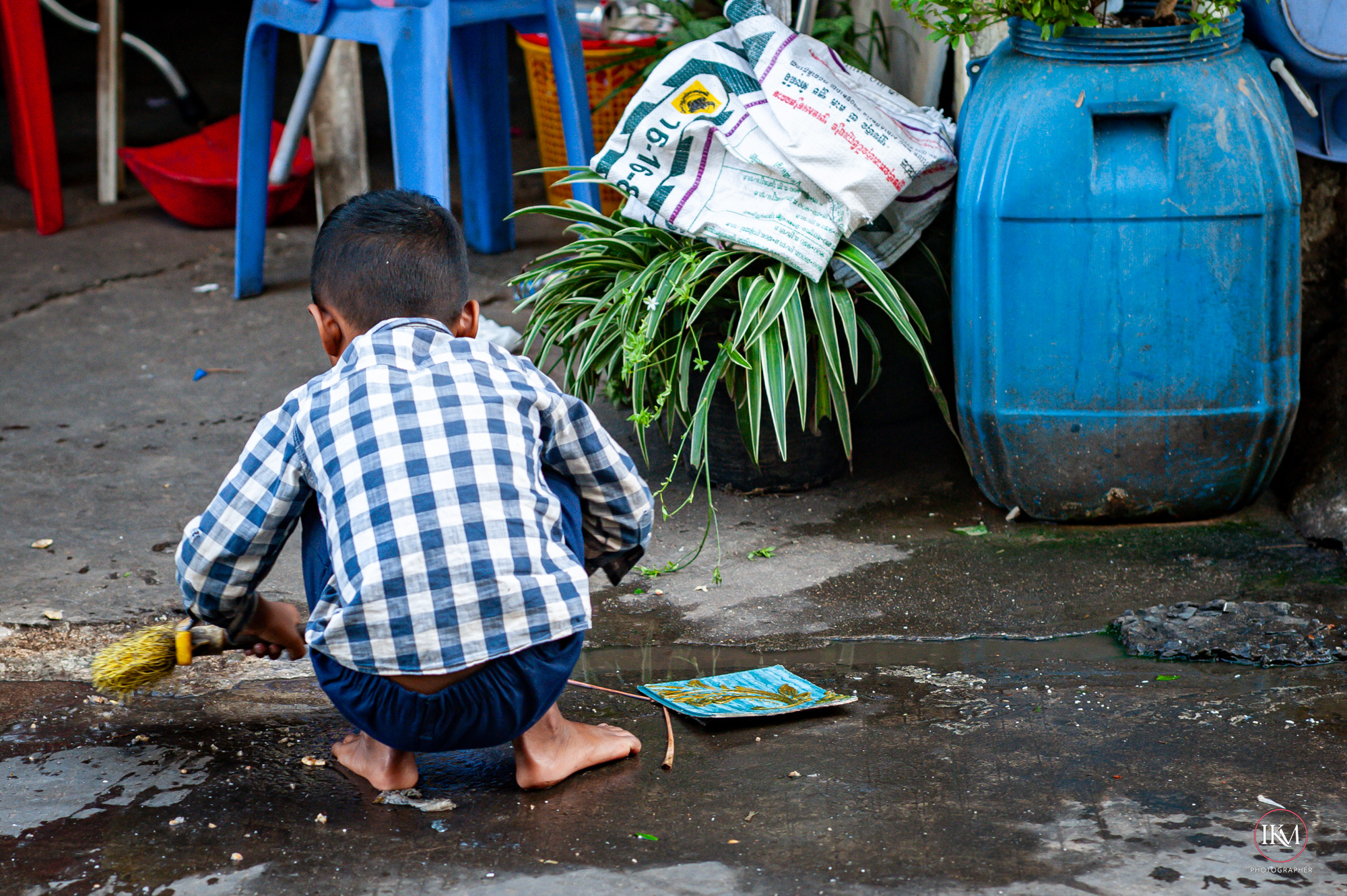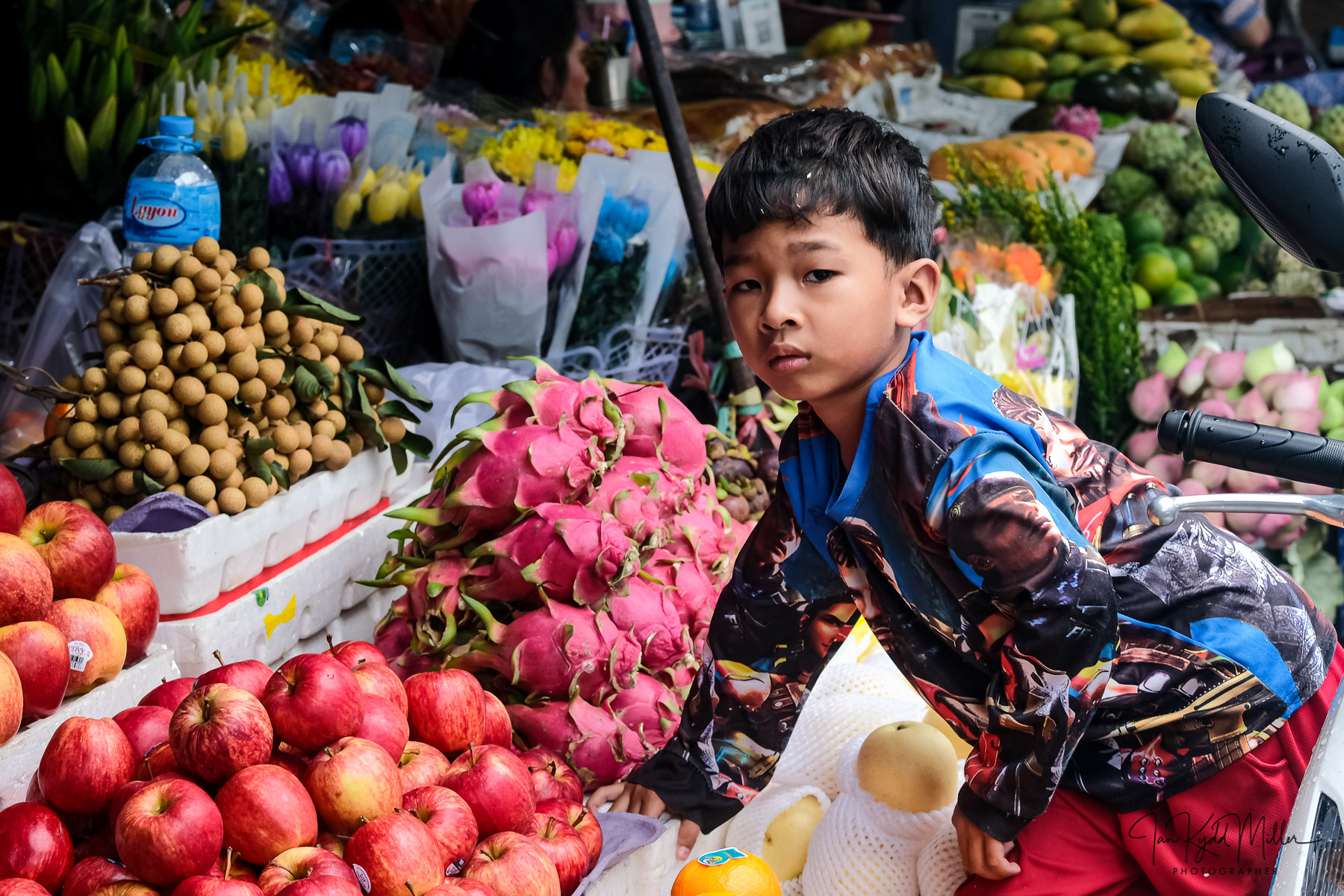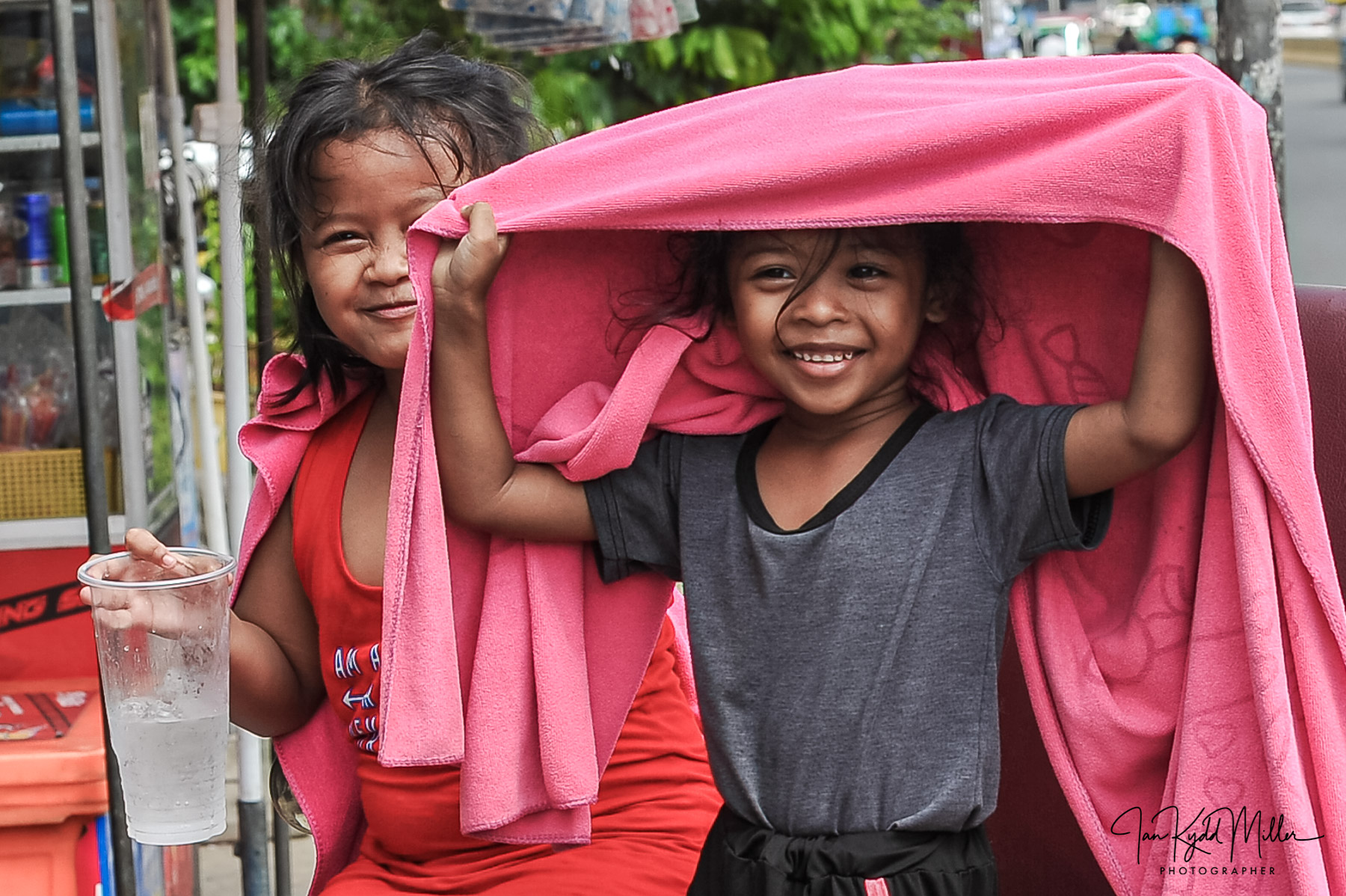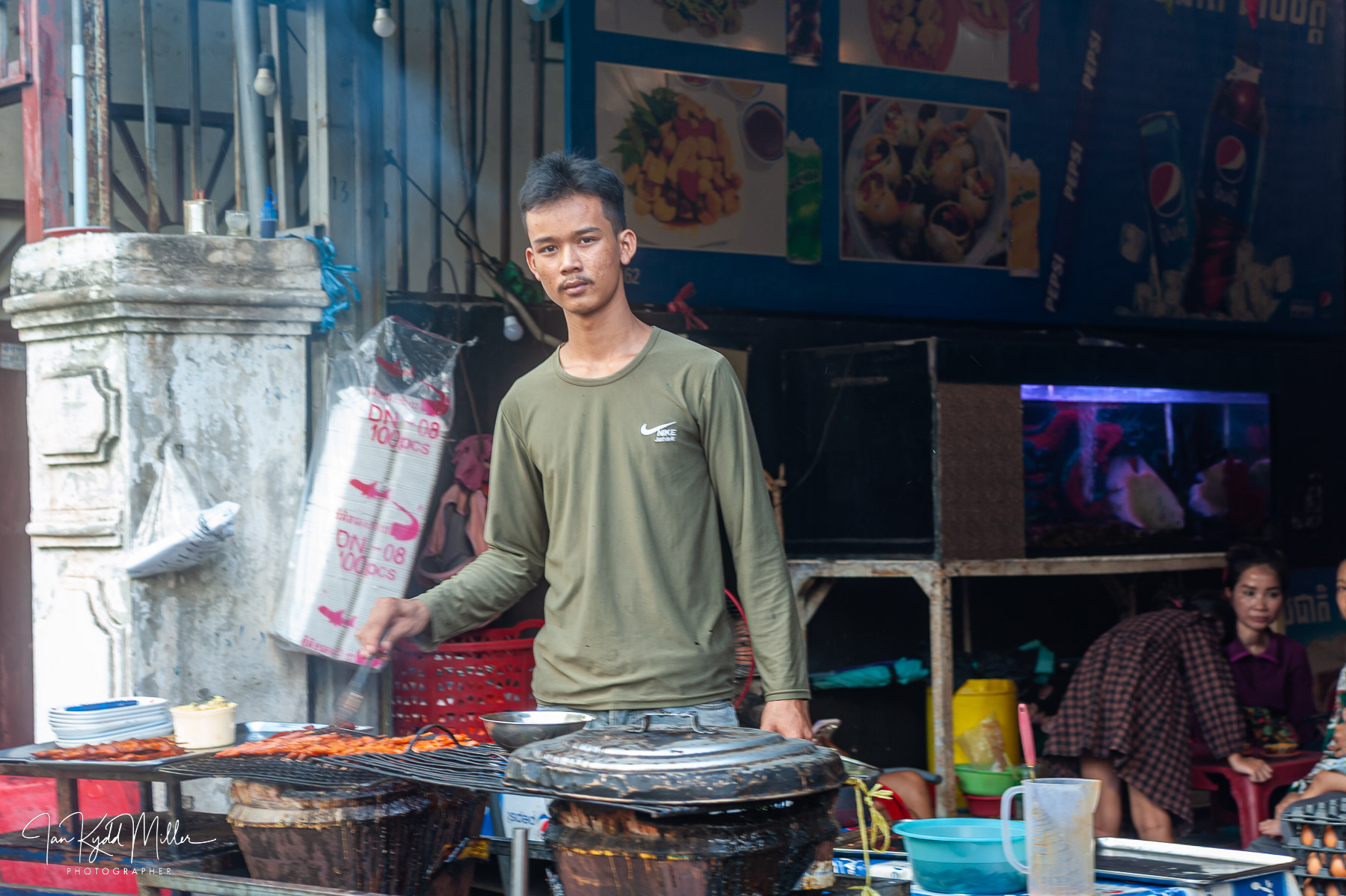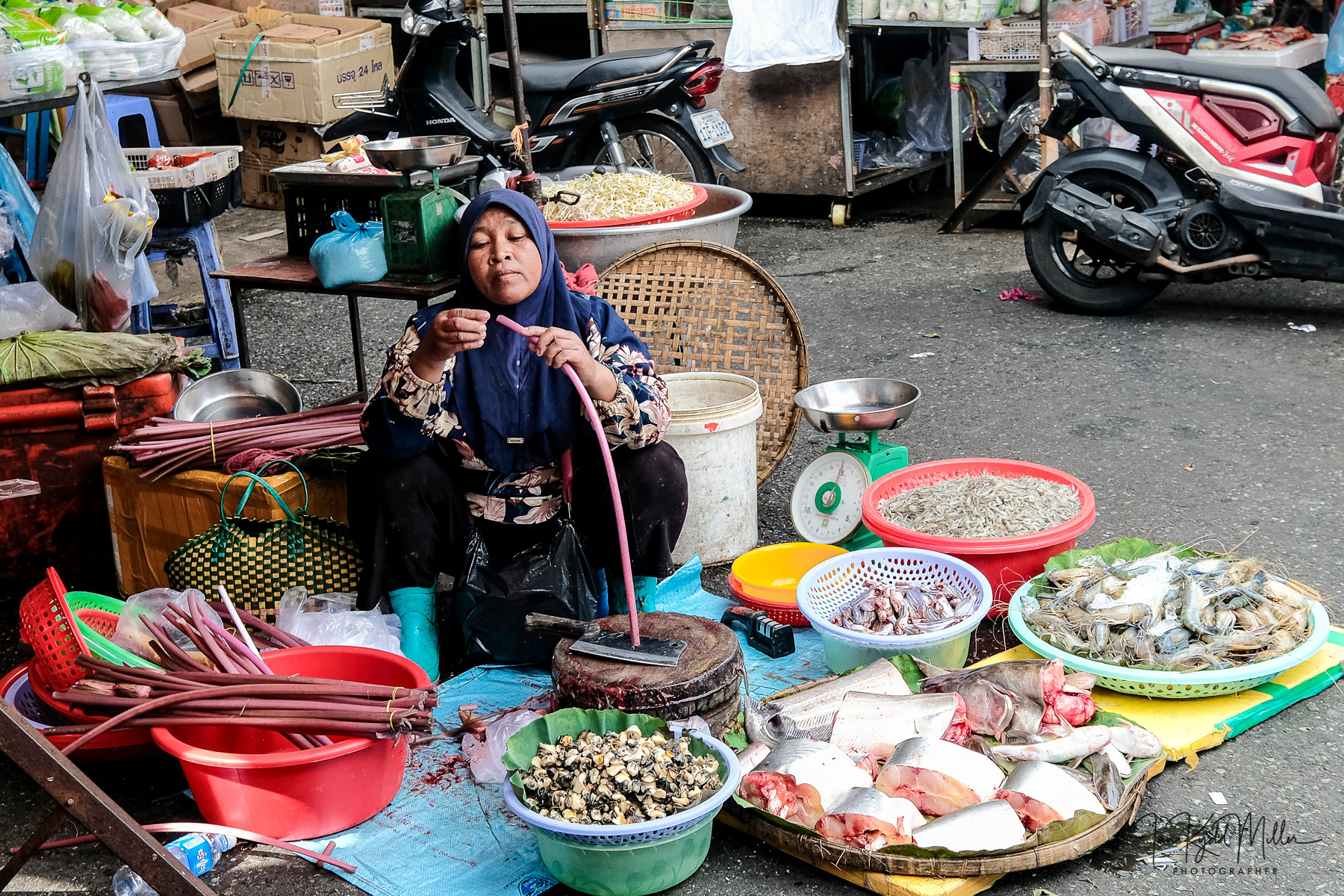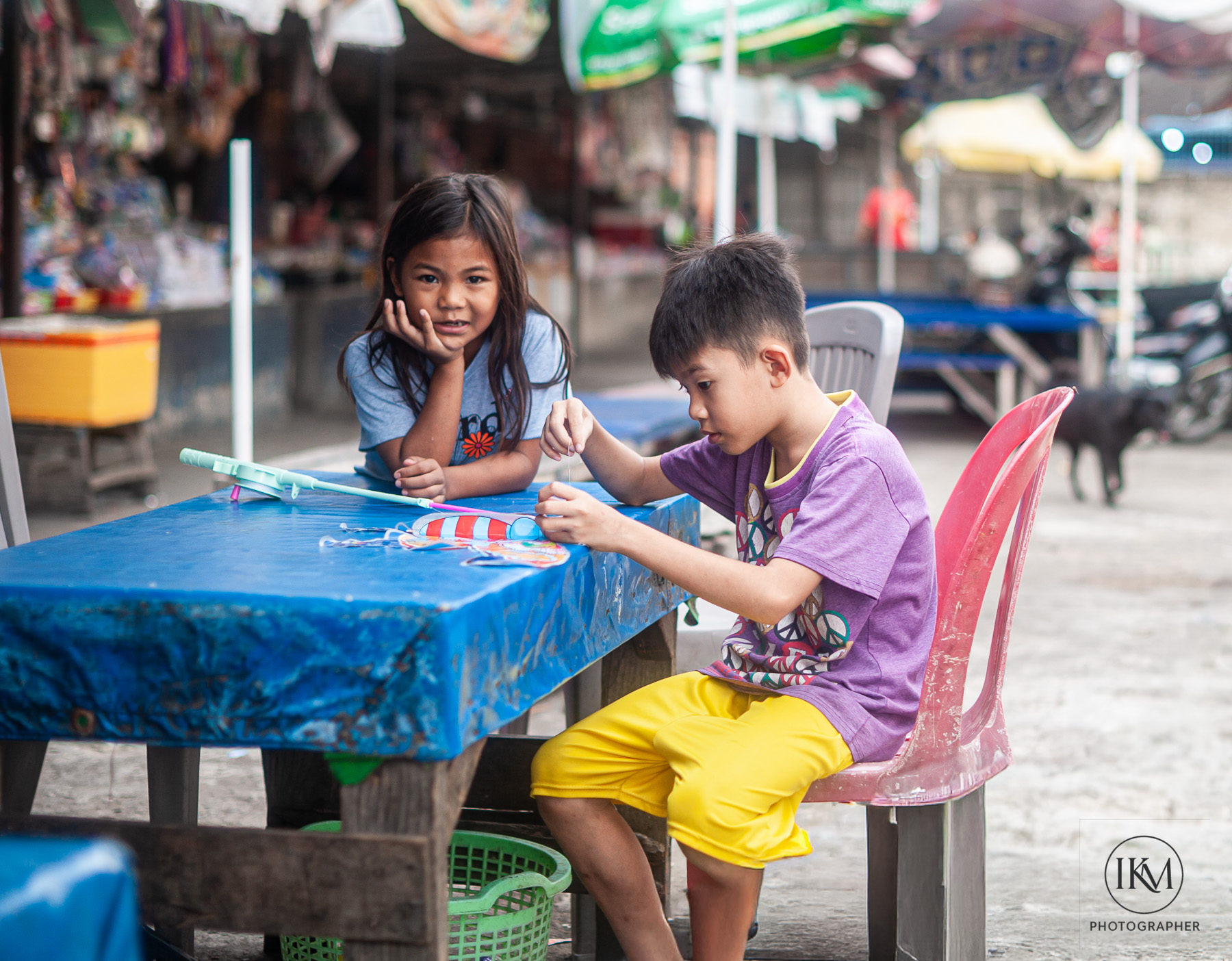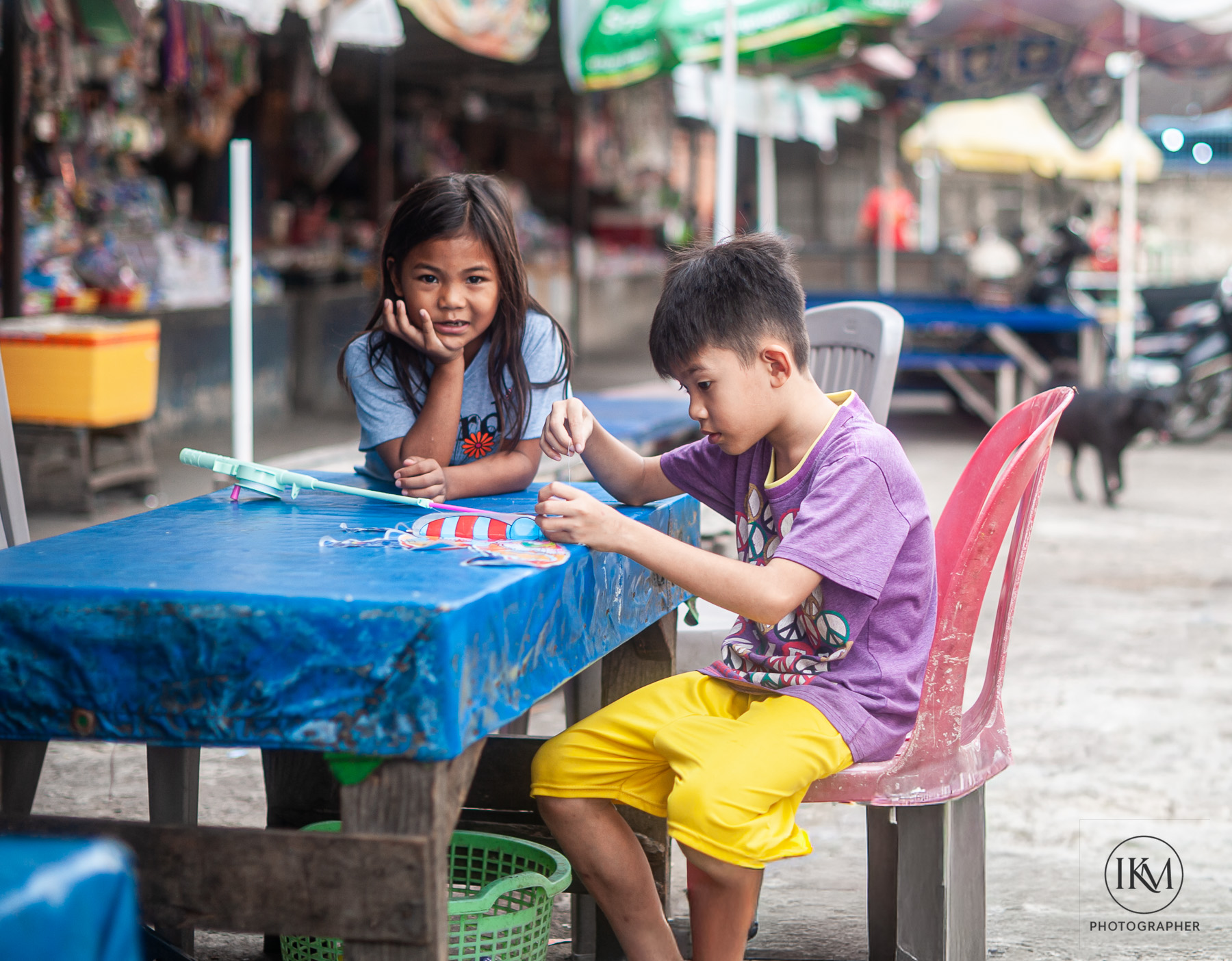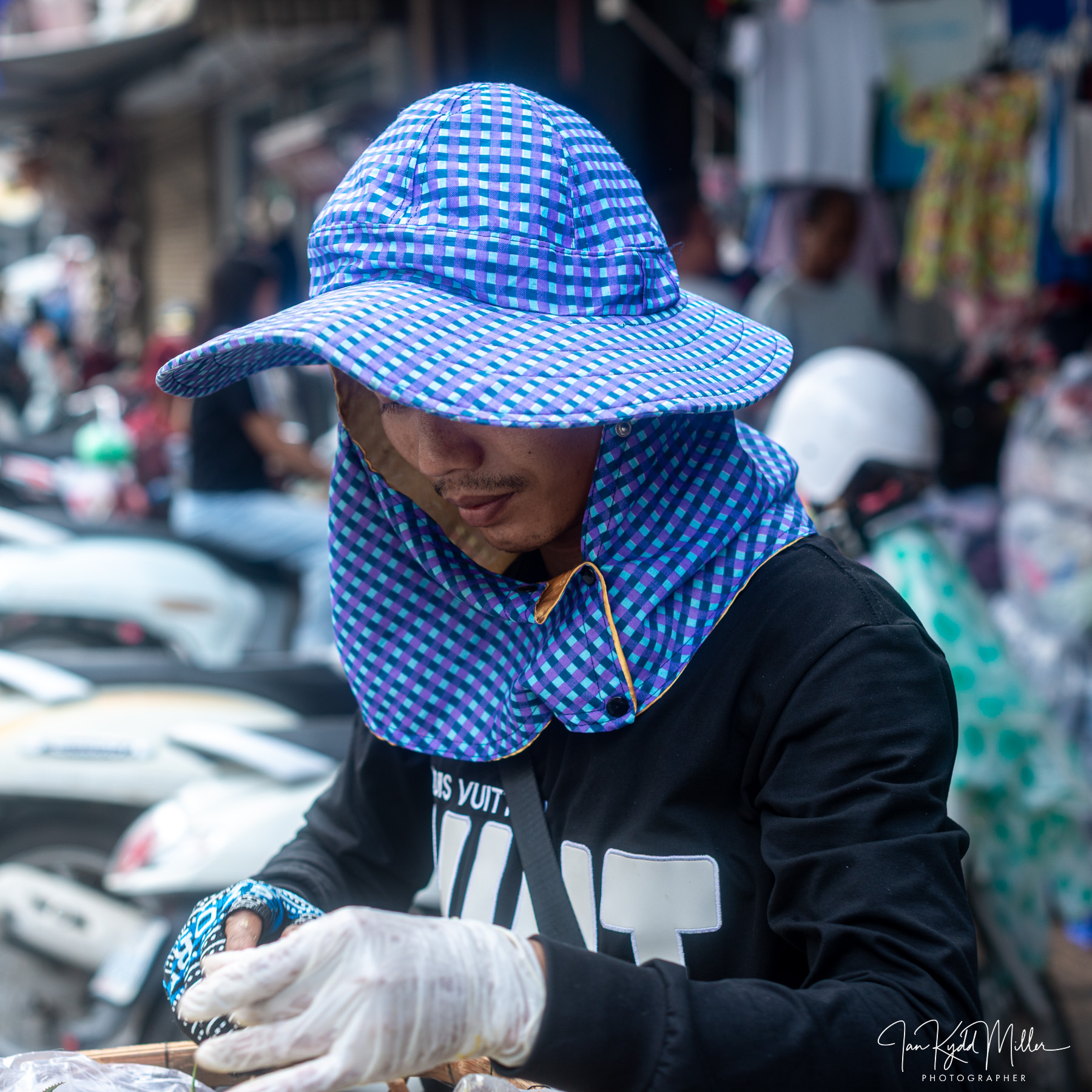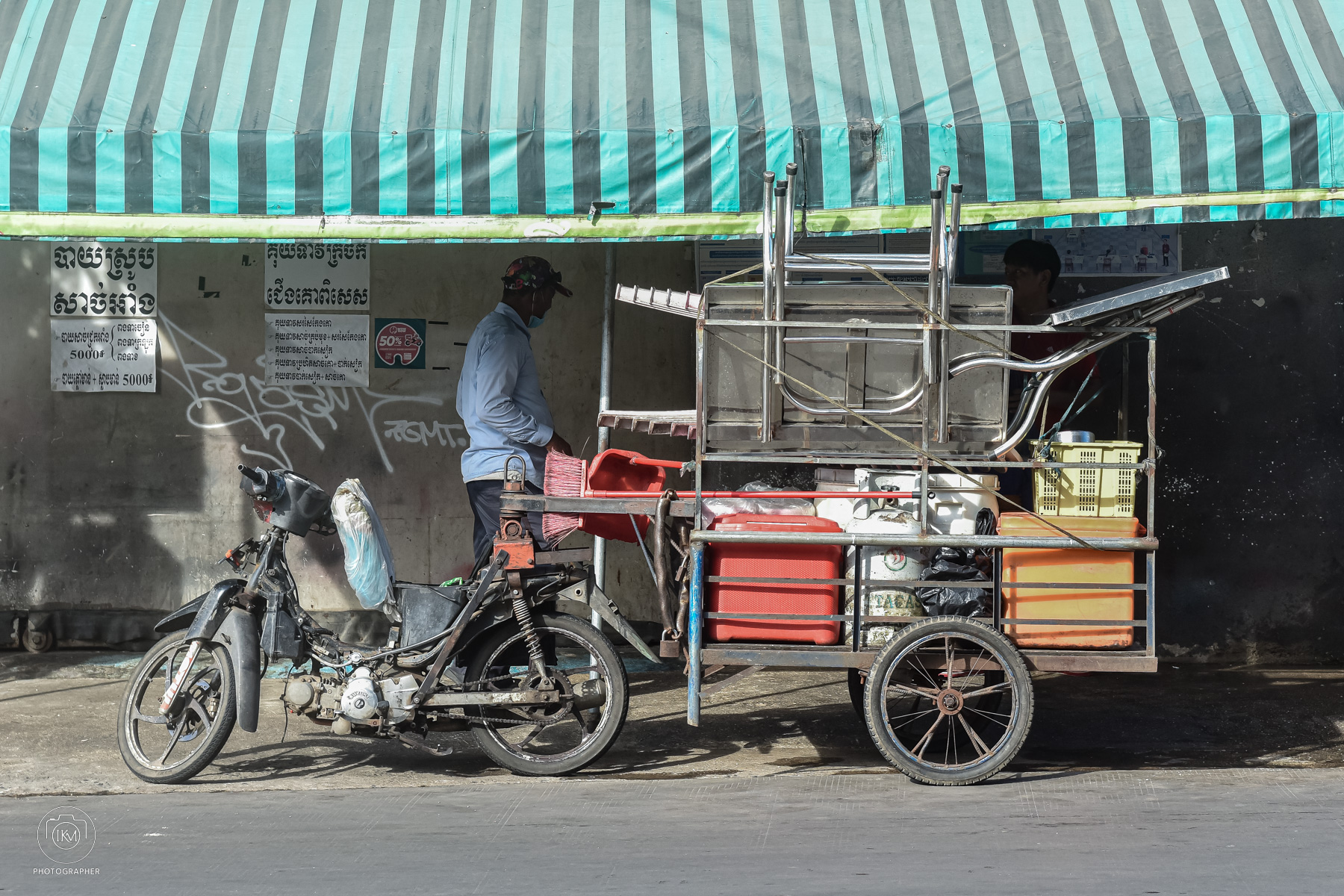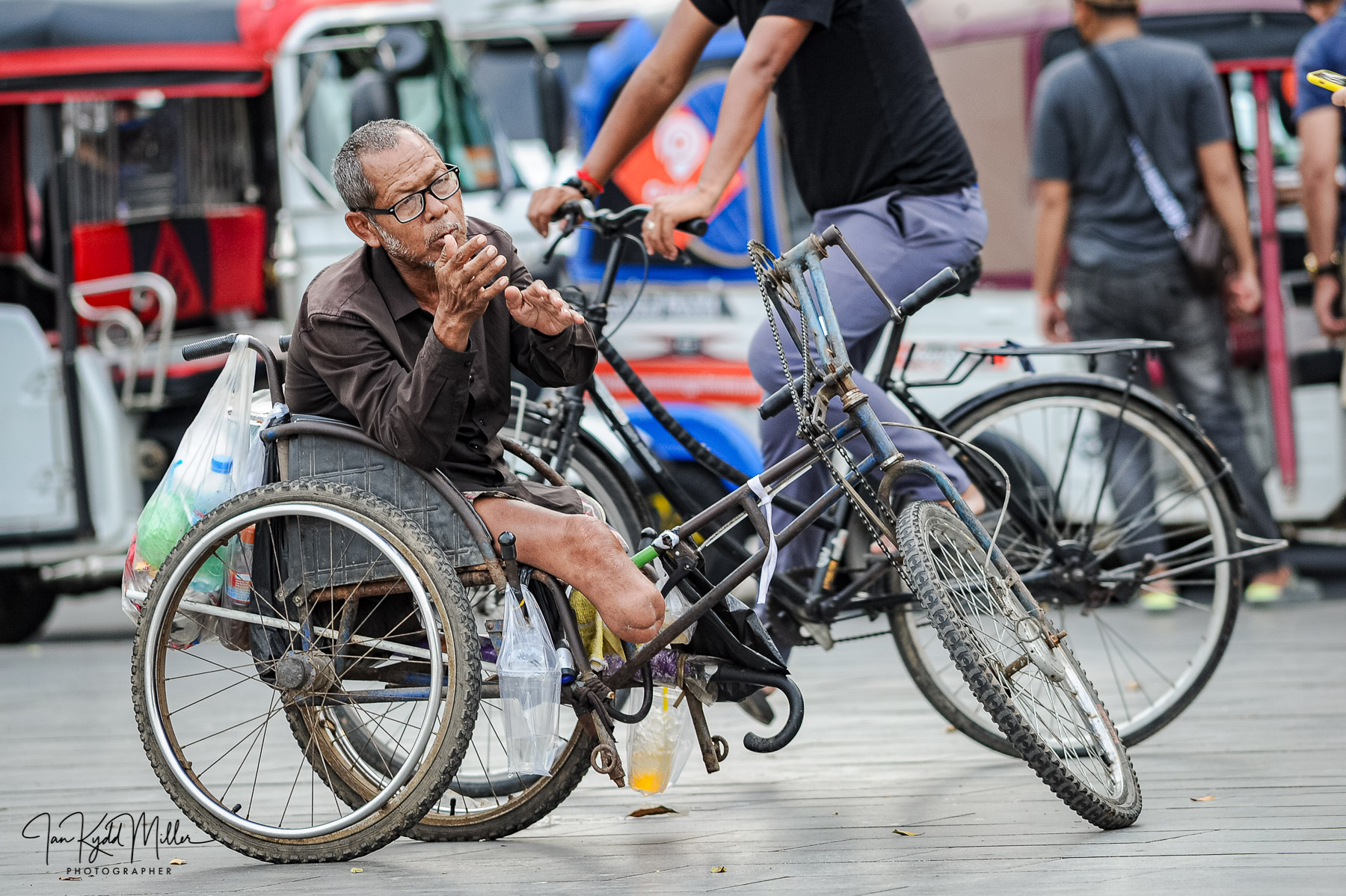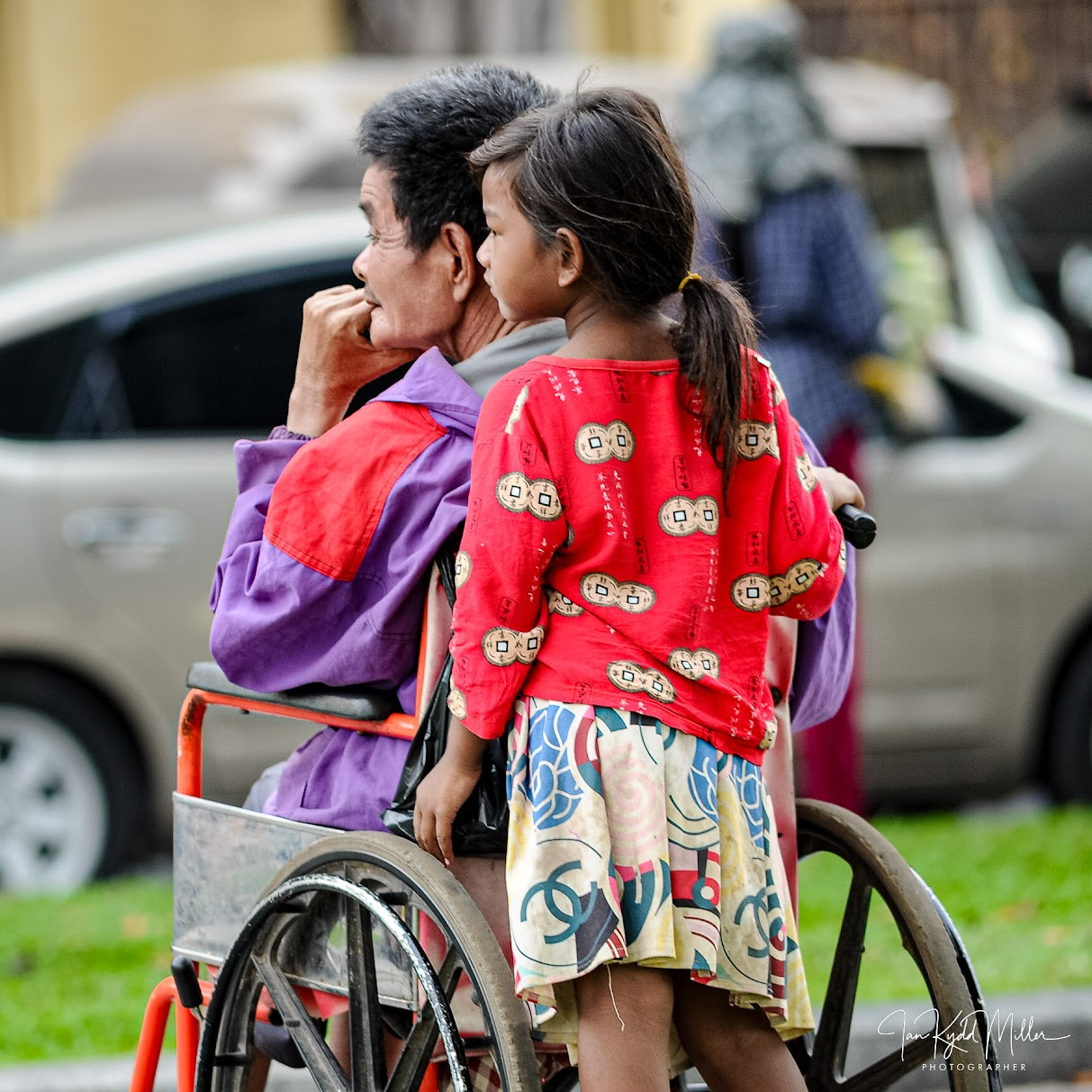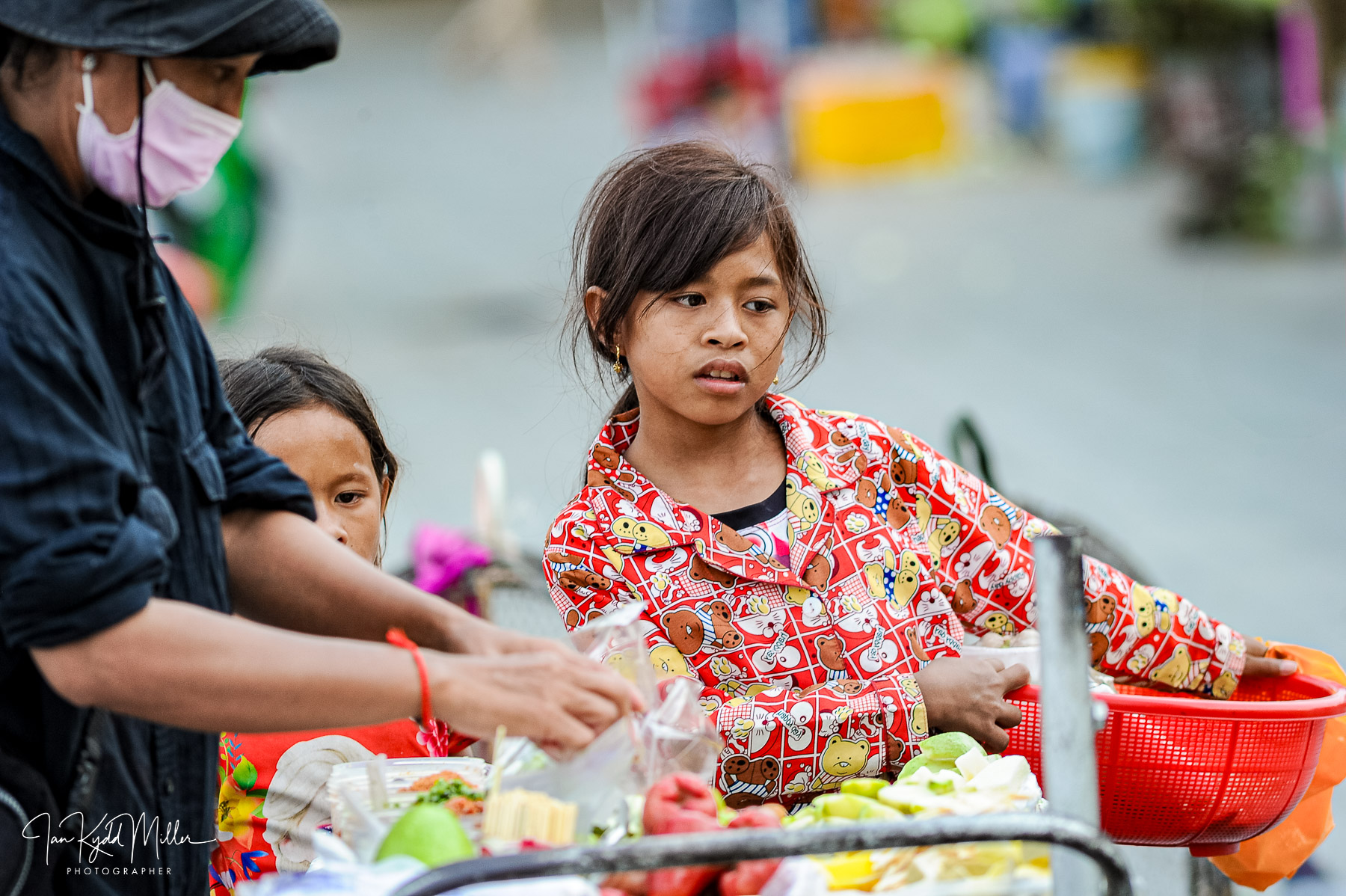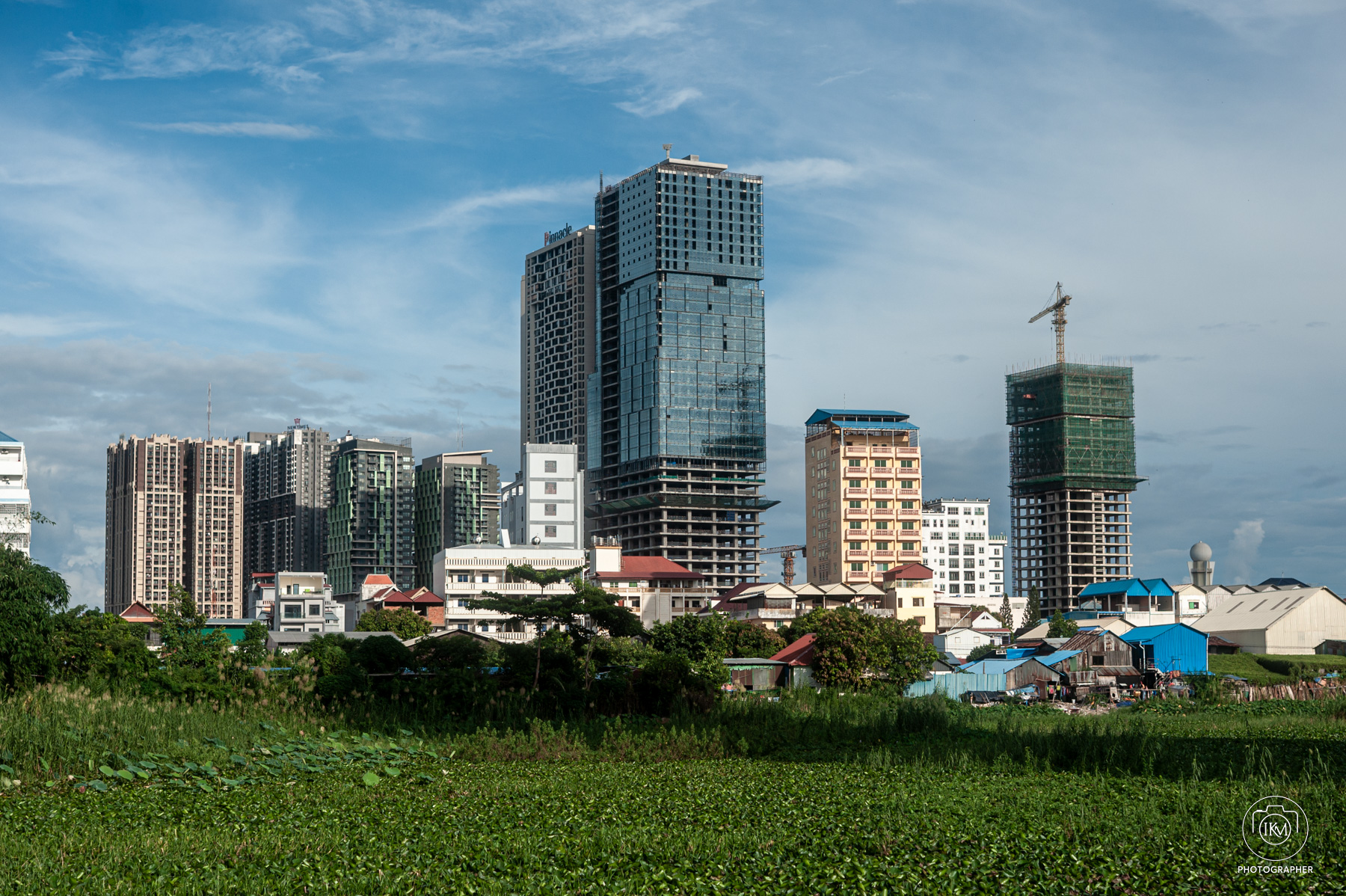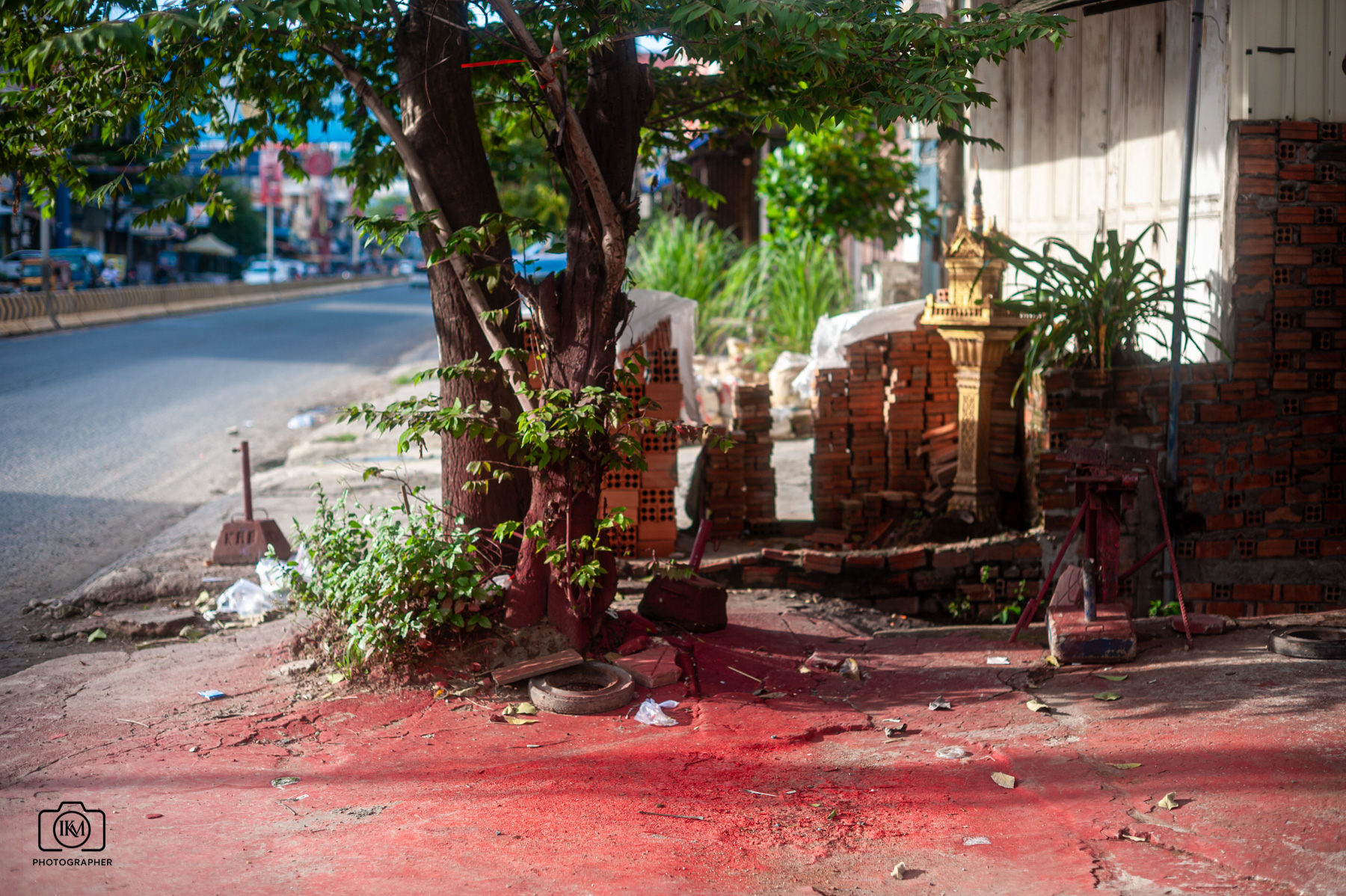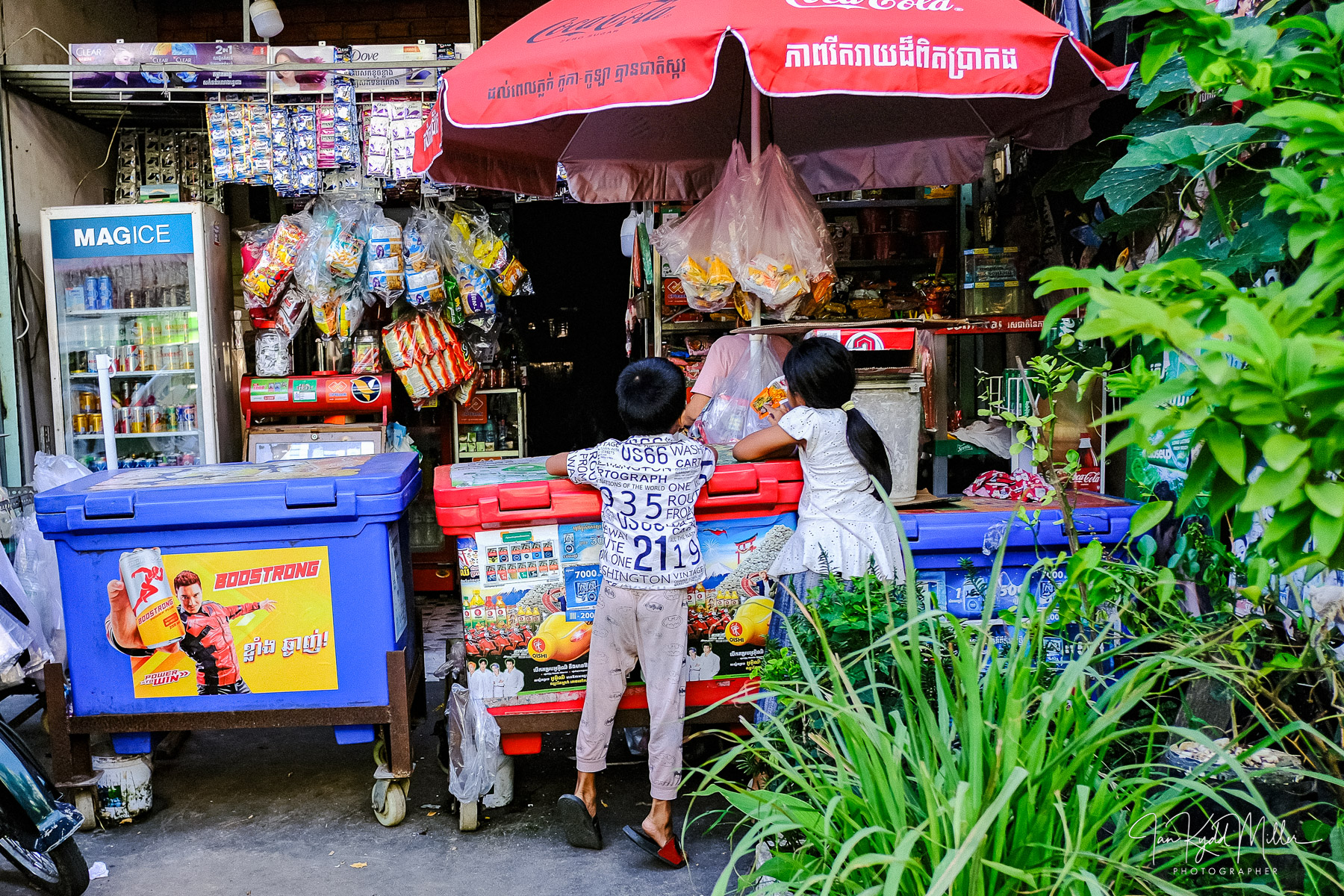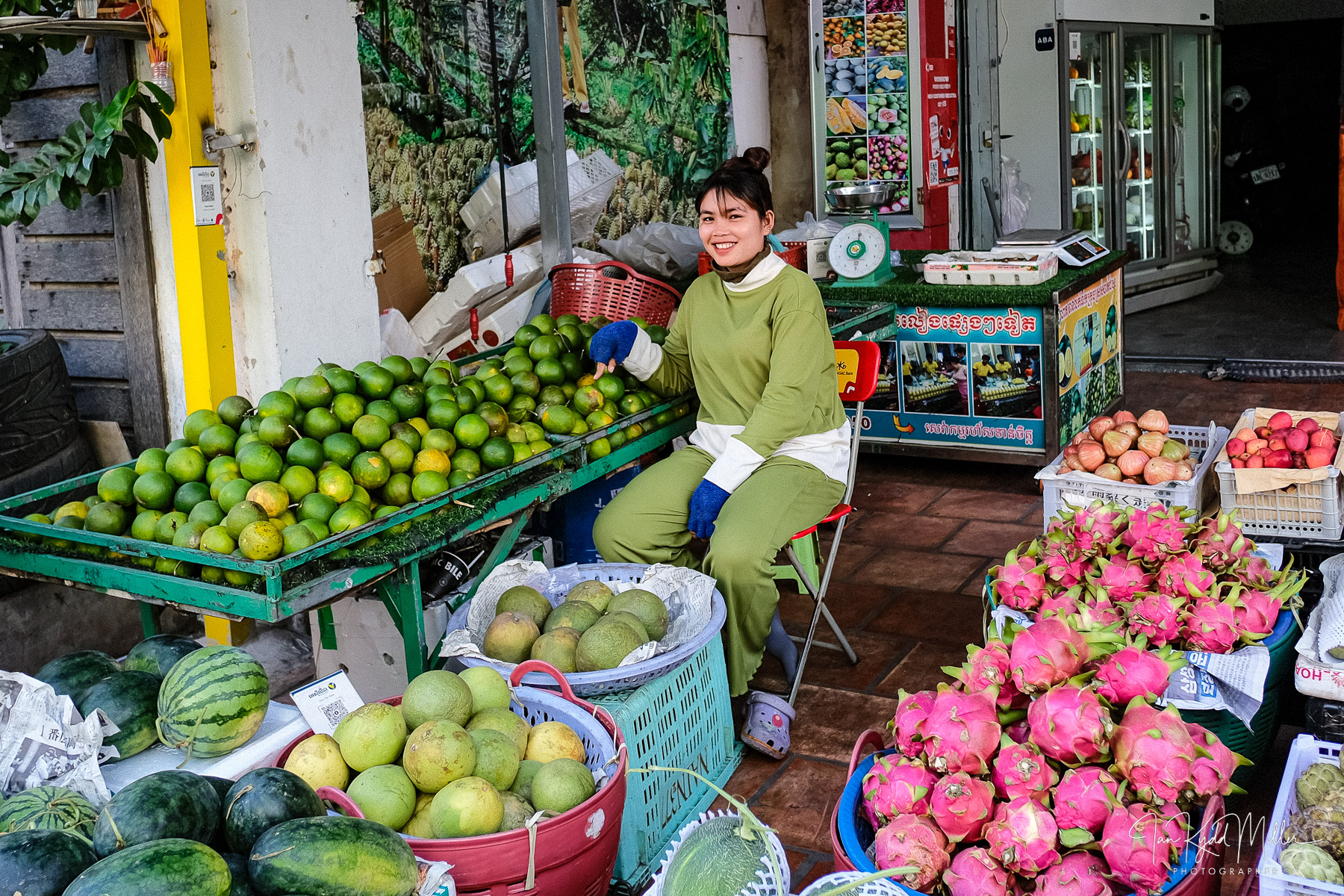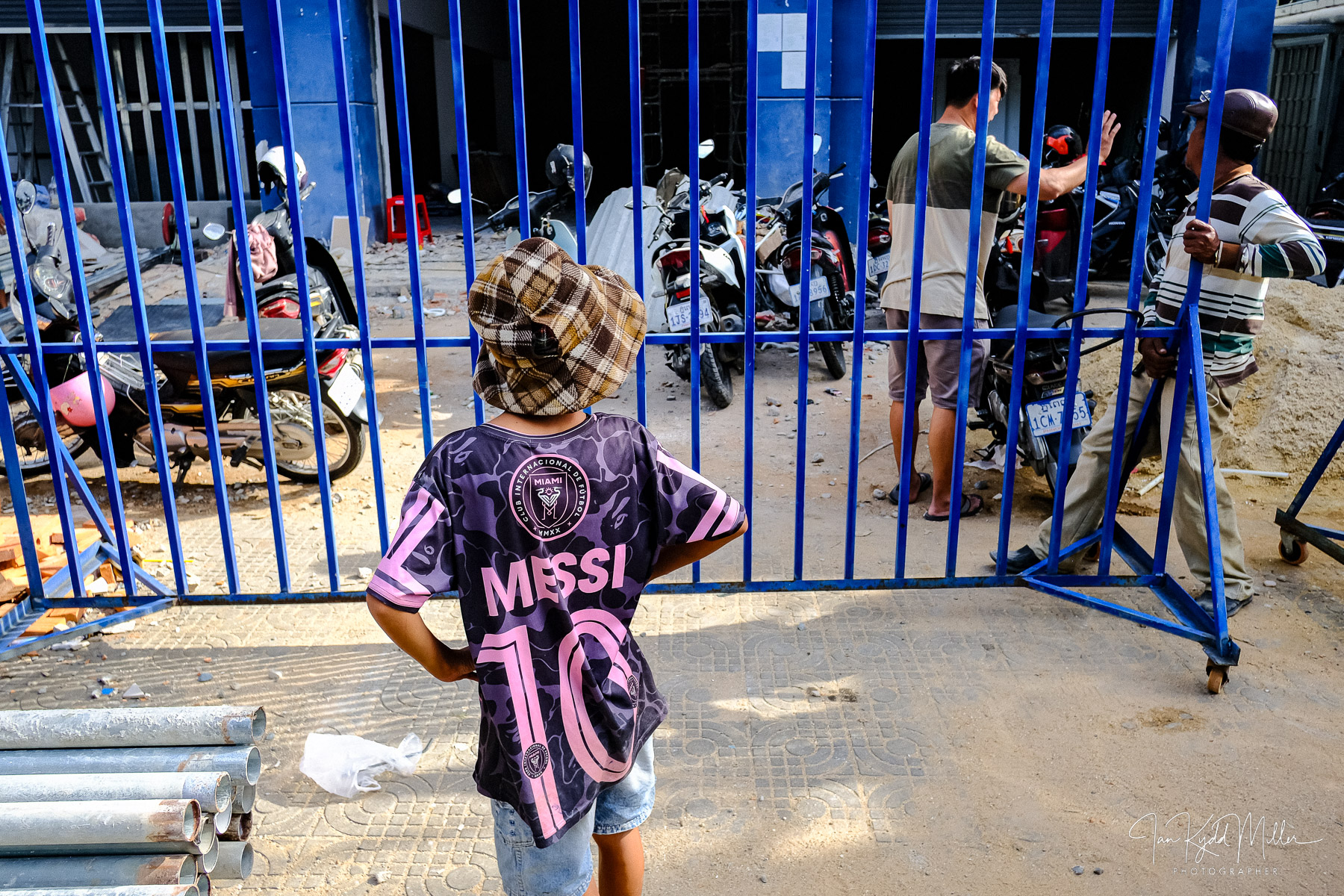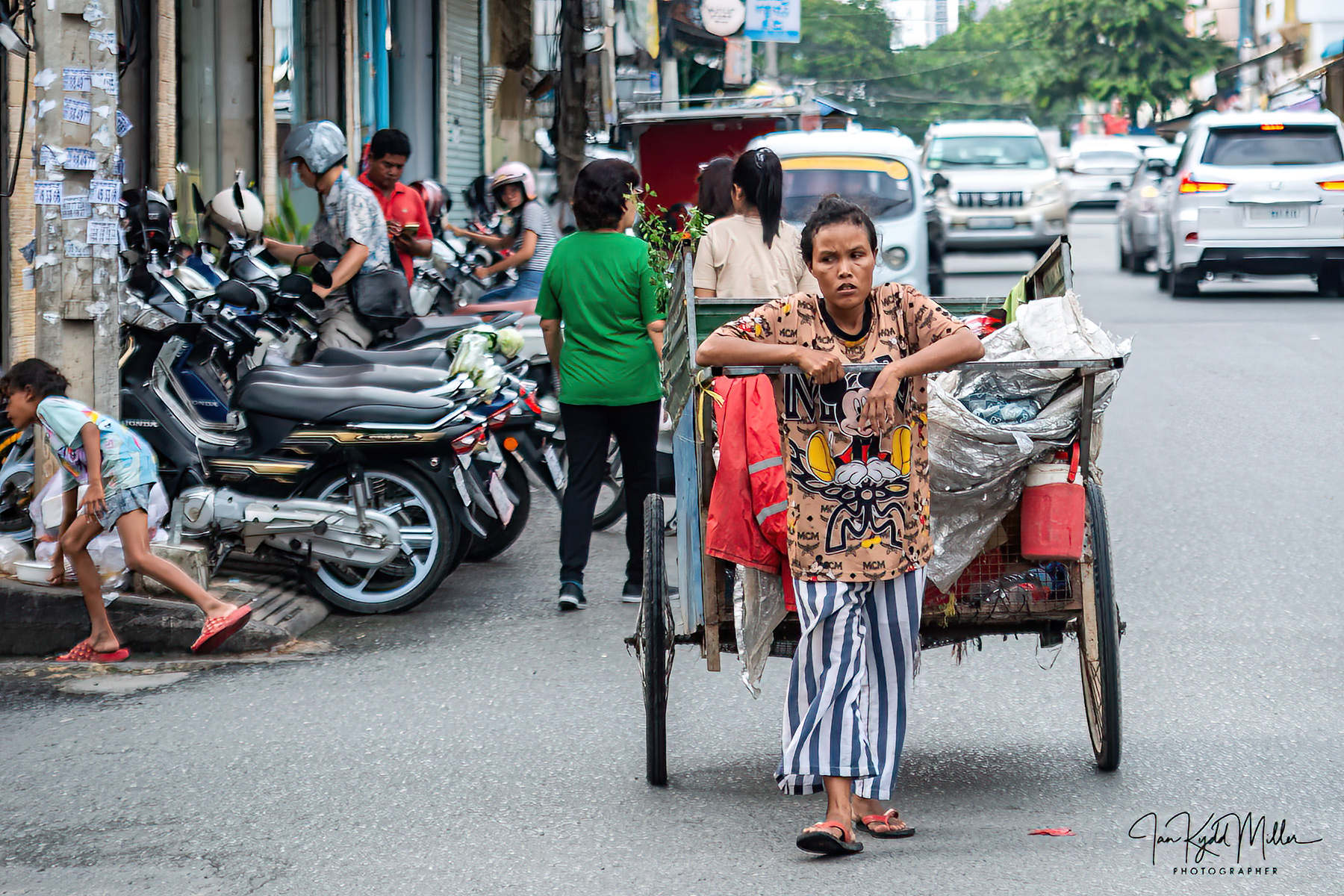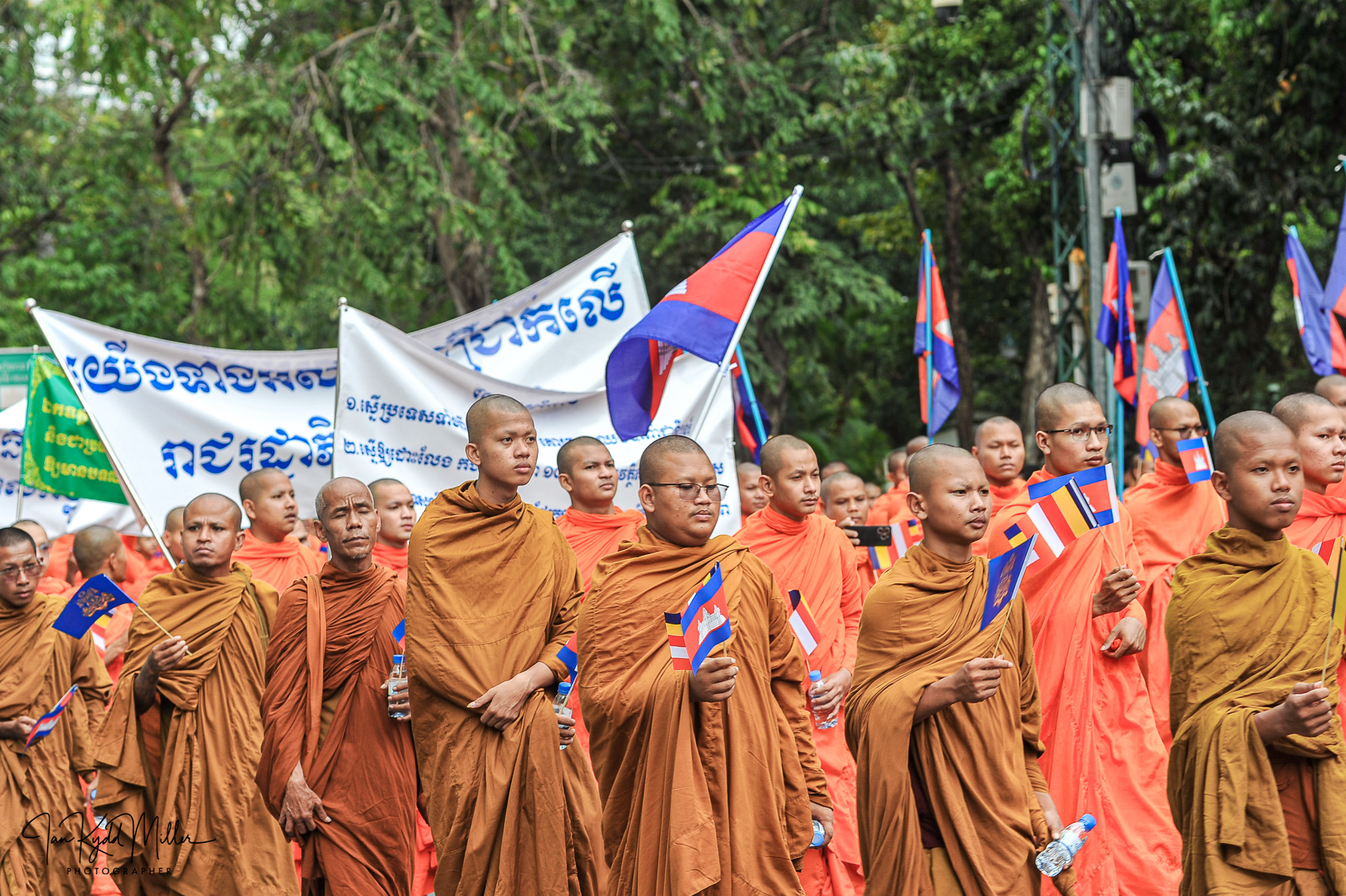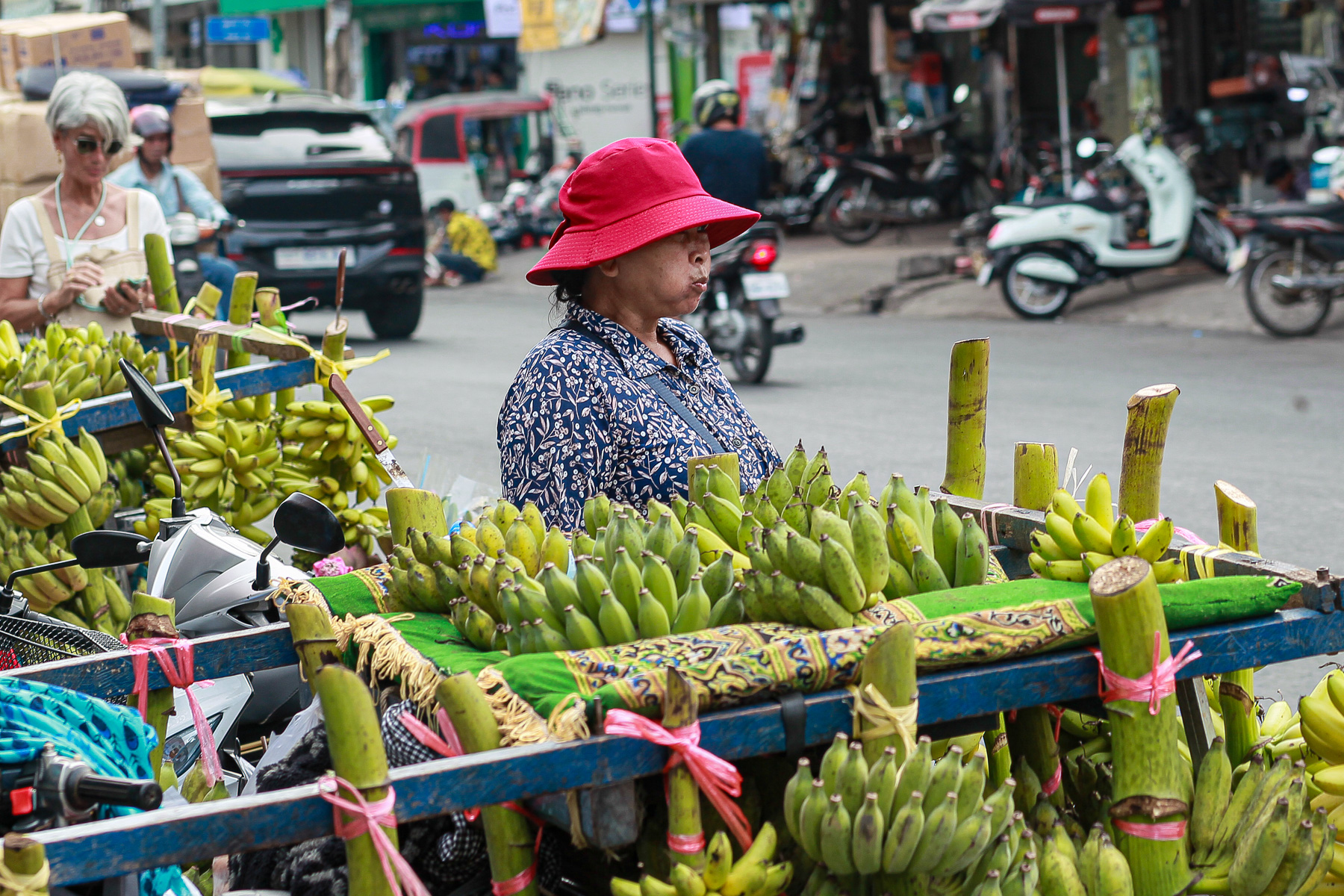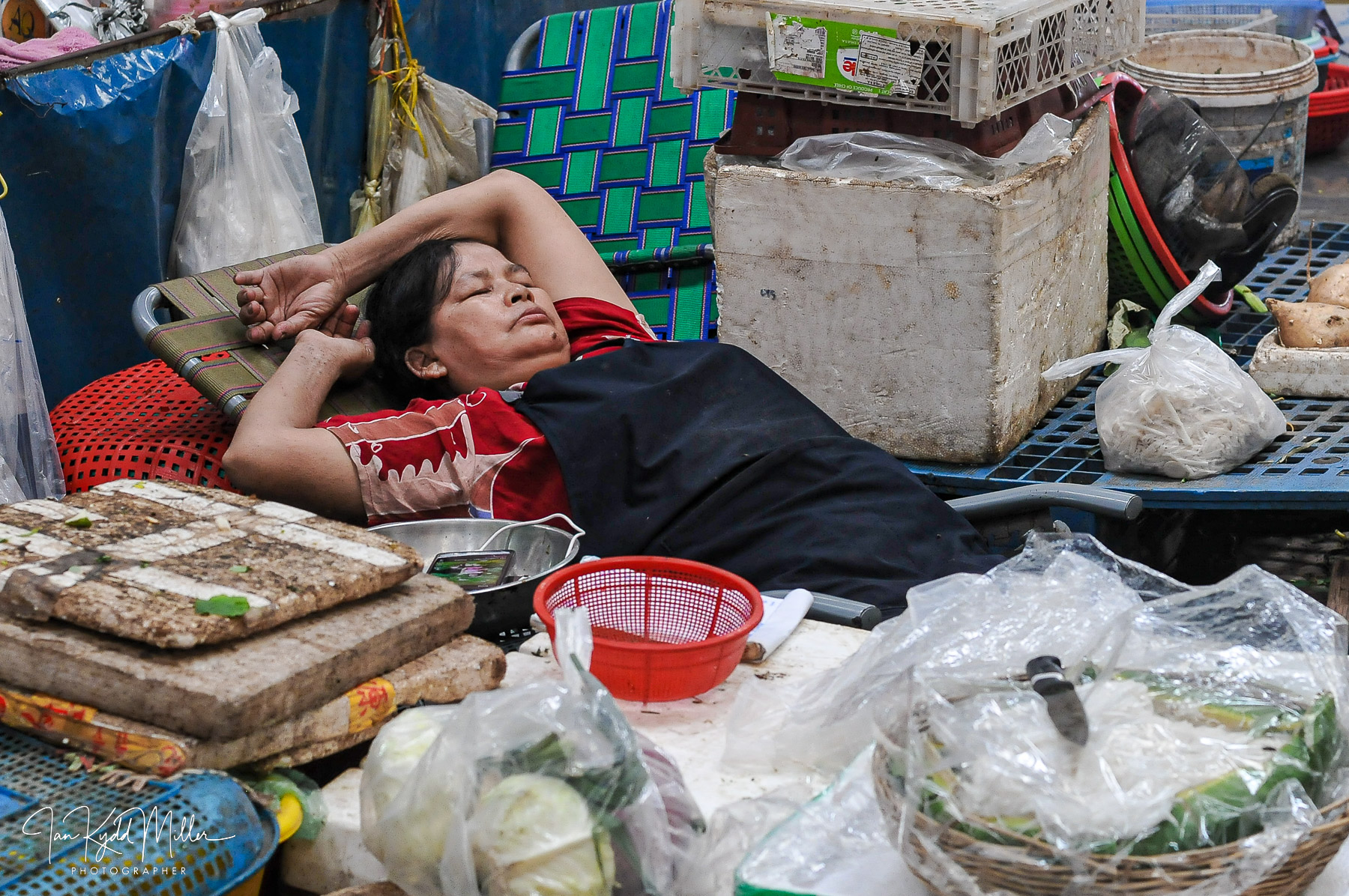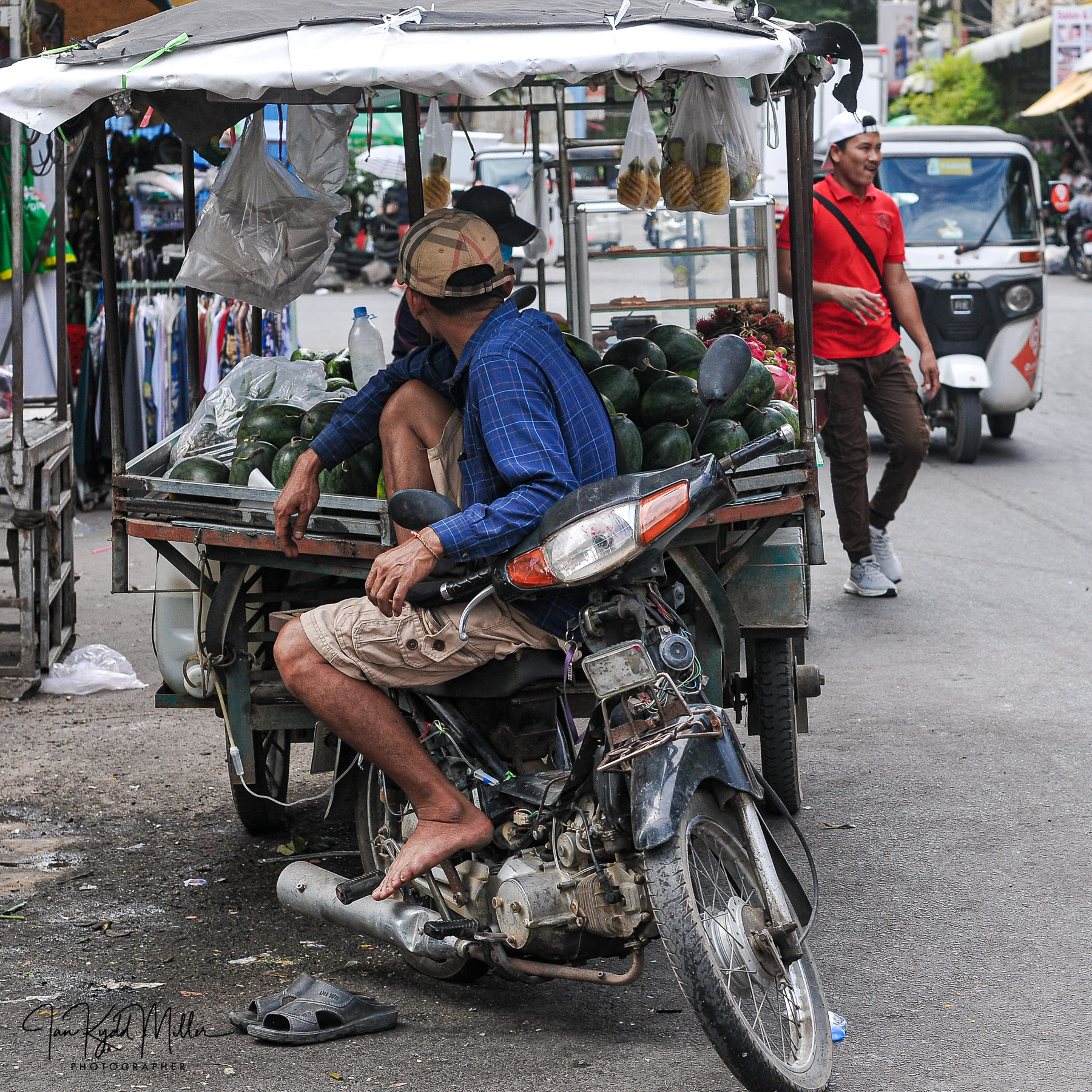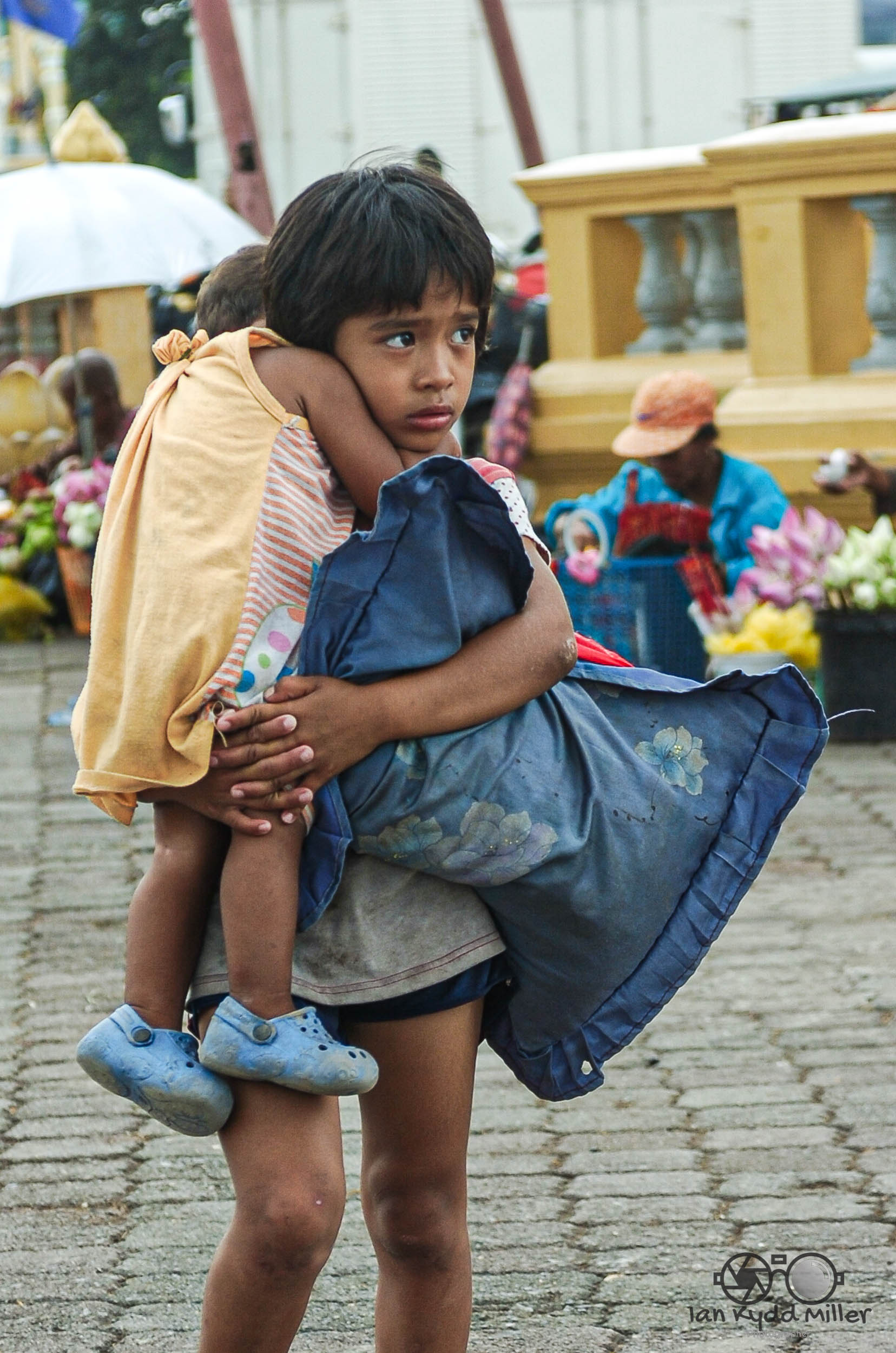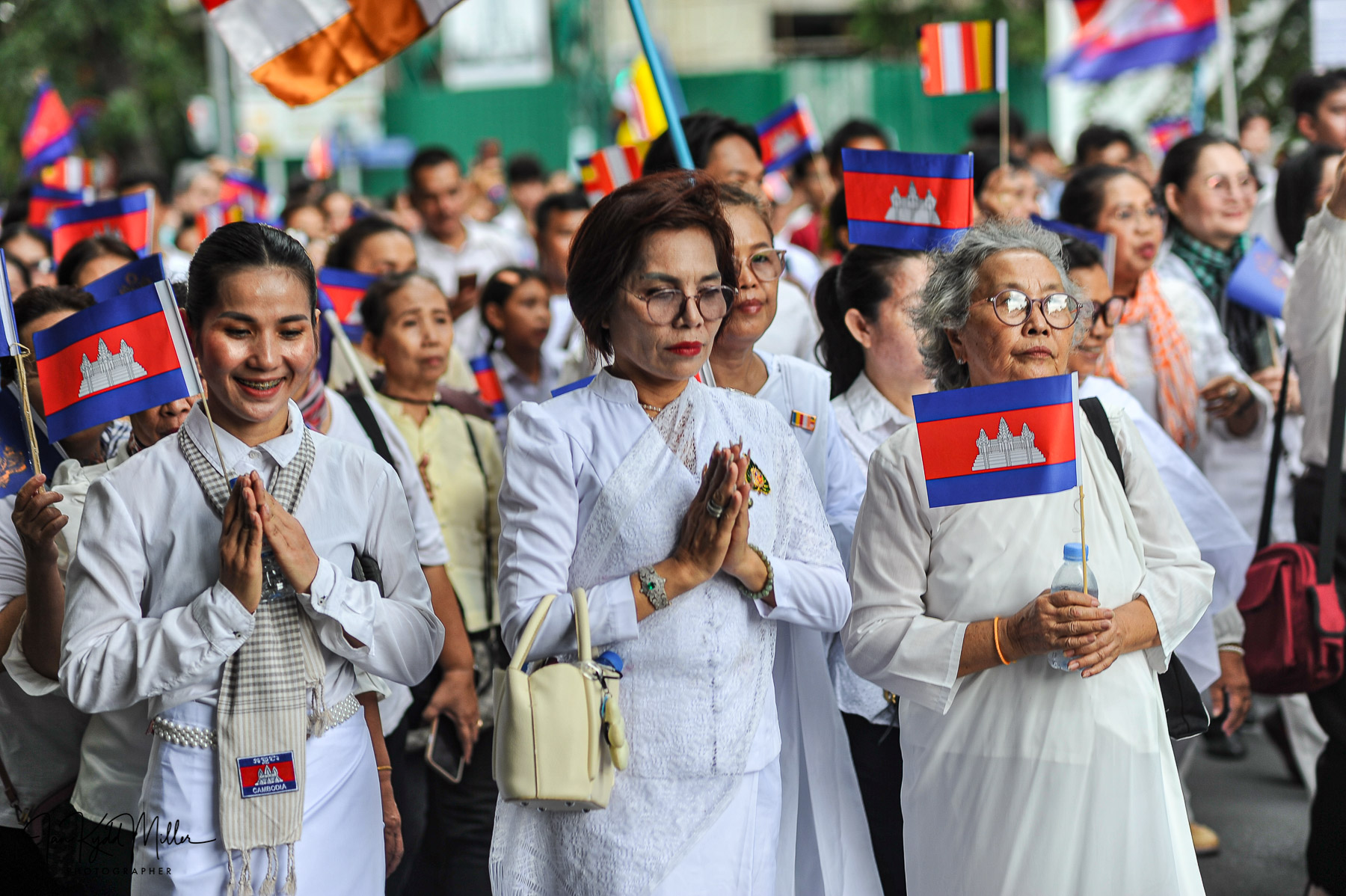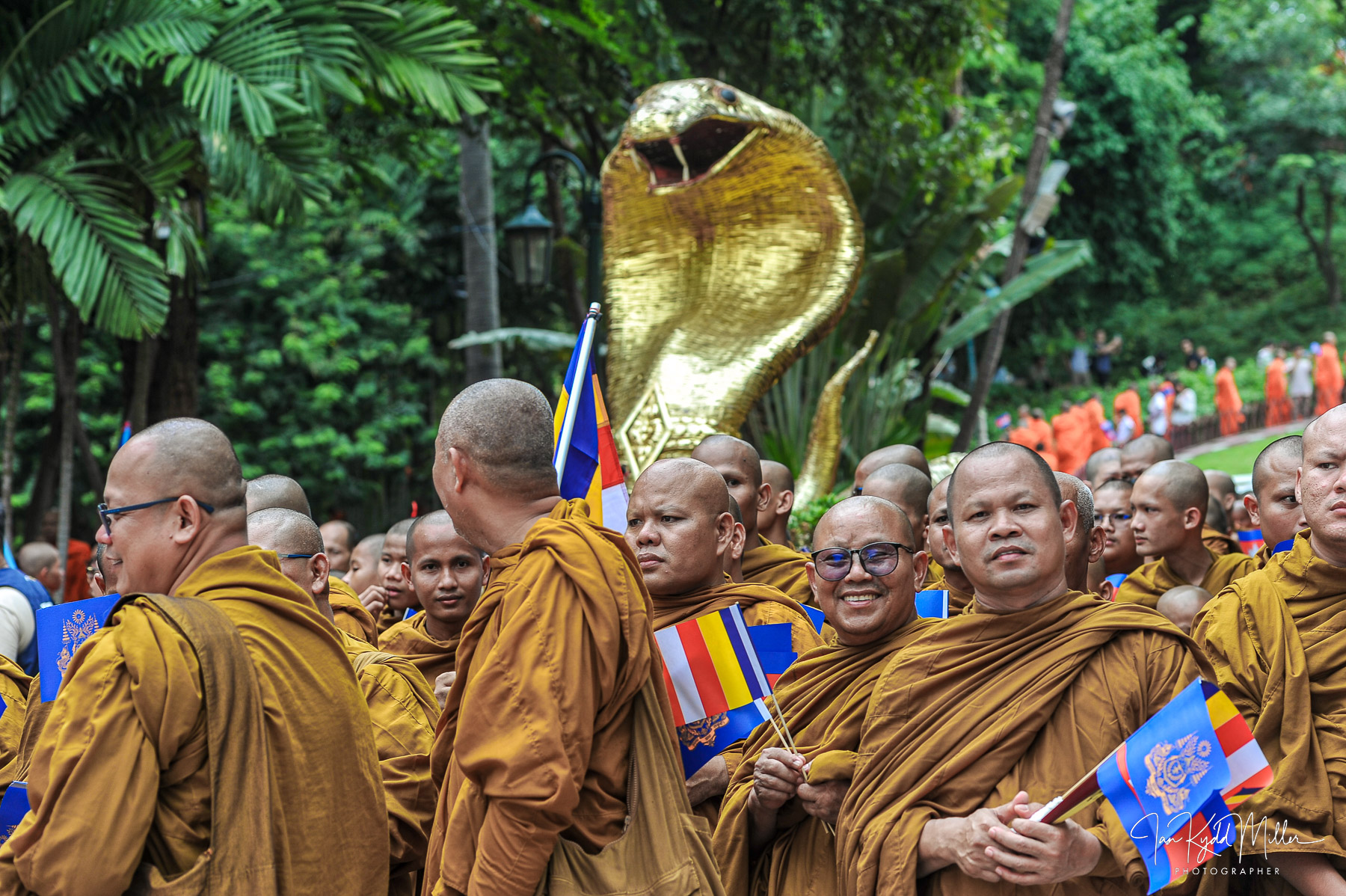
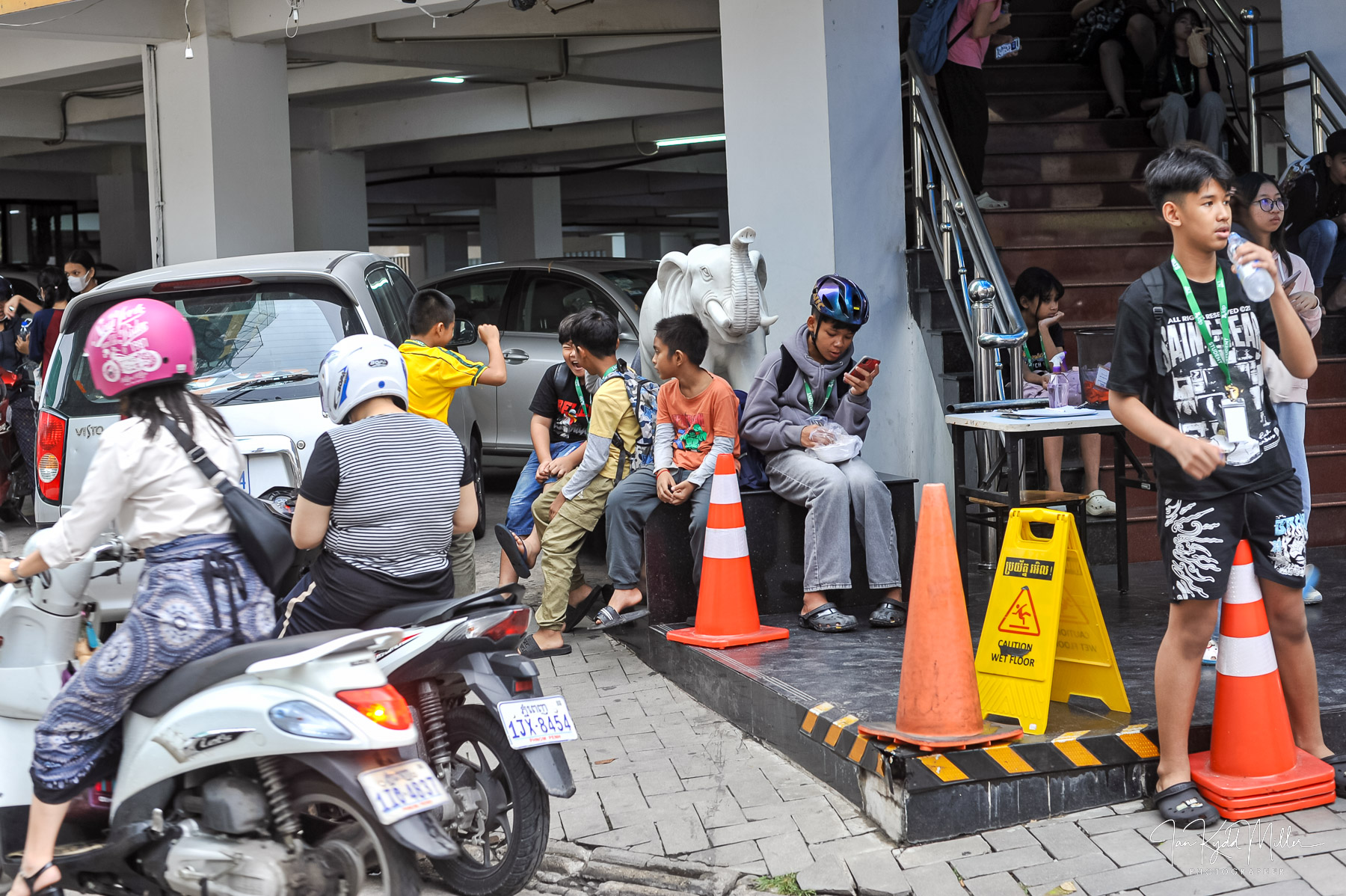
Walking through Phnom Penh is like stepping into a living mosaic of Cambodiaโs culture. The streets are not just roads for transportโthey are markets, kitchens, playgrounds, and social spaces all at once.
๐ Morning Rhythms
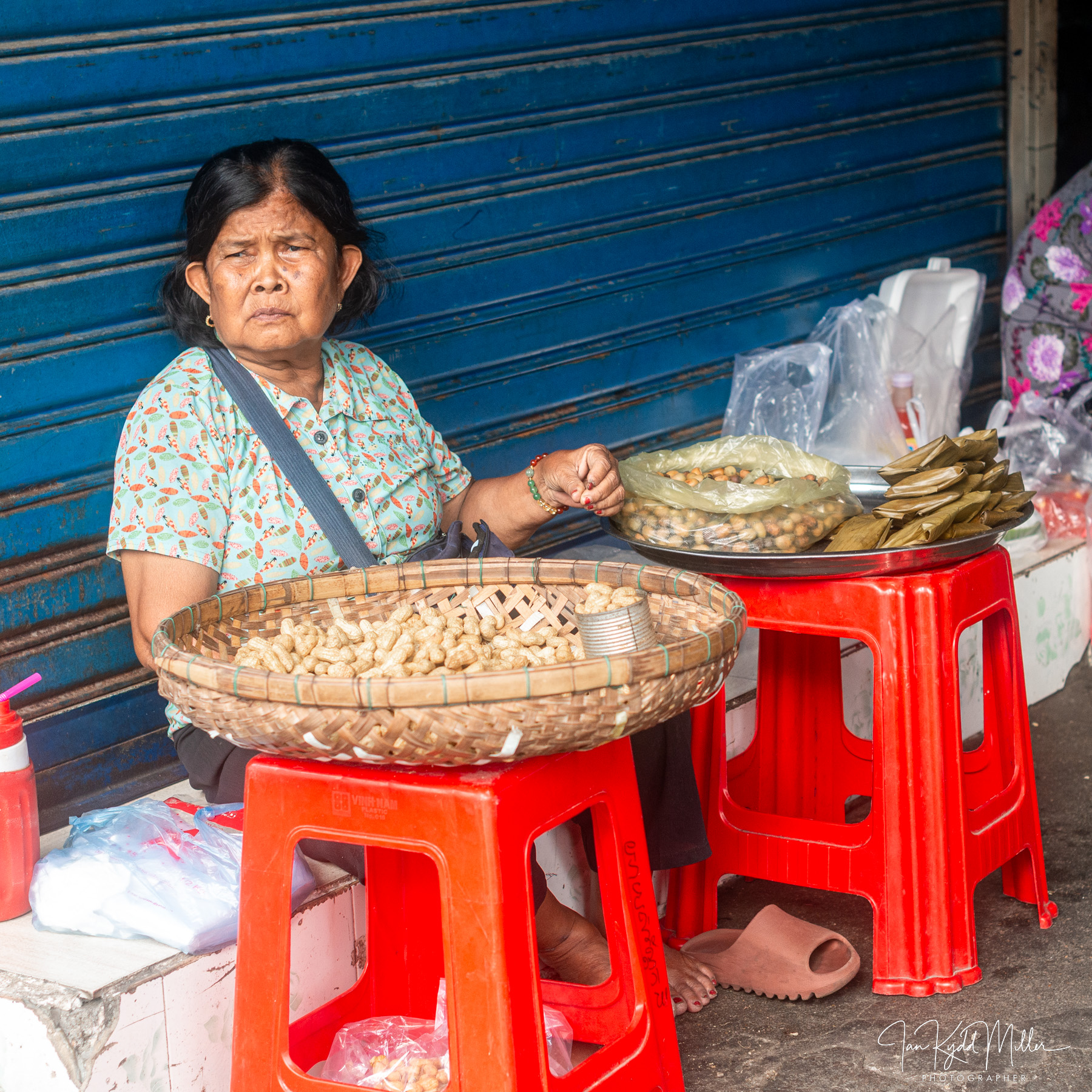
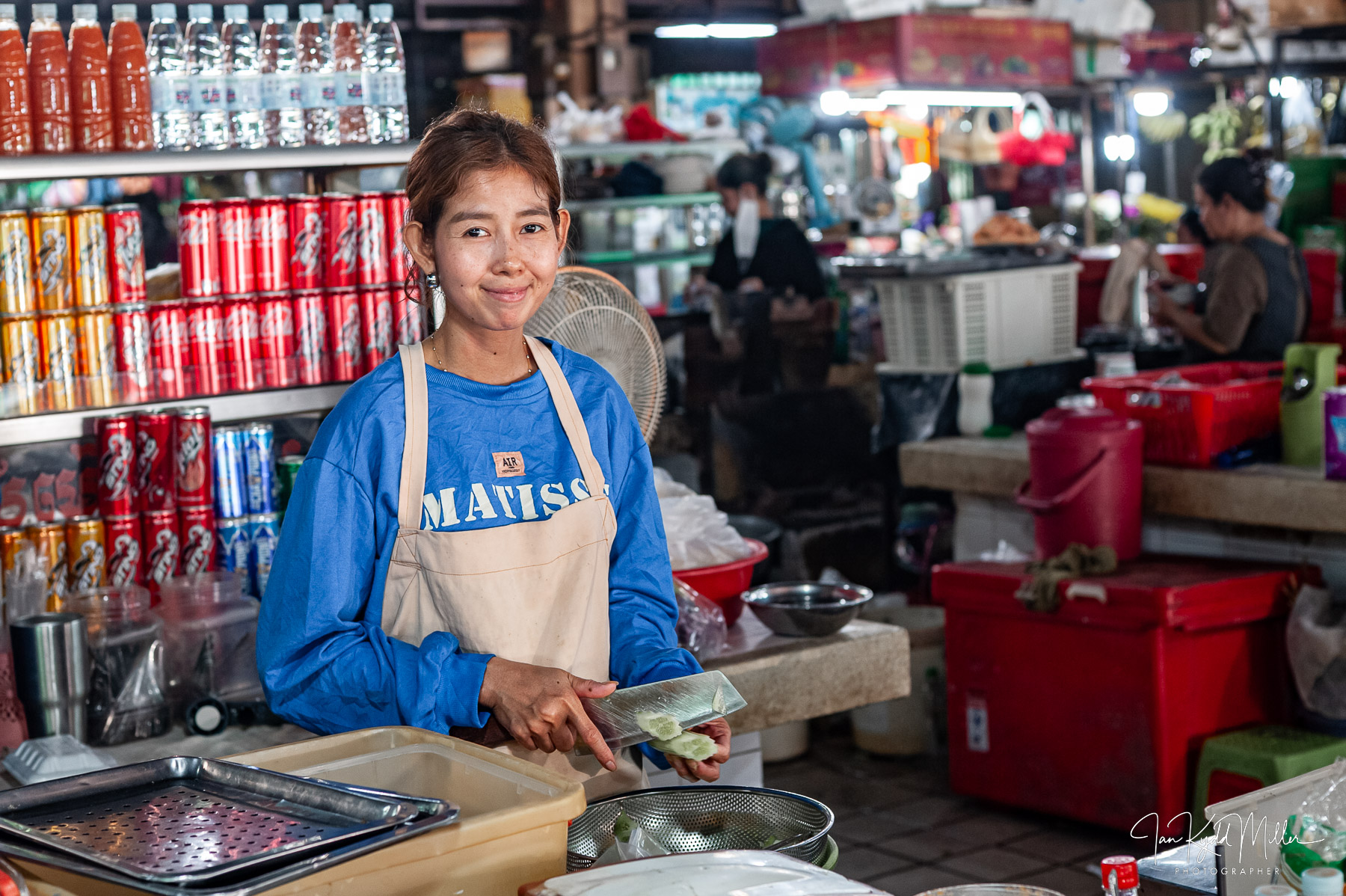
Markets come alive at dawn: wet markets bustle with vendors selling fresh fish, vegetables, and fragrant herbs.
Street-side stalls serve noodle soups, grilled meats, and iced coffee, fueling workers before the day begins.
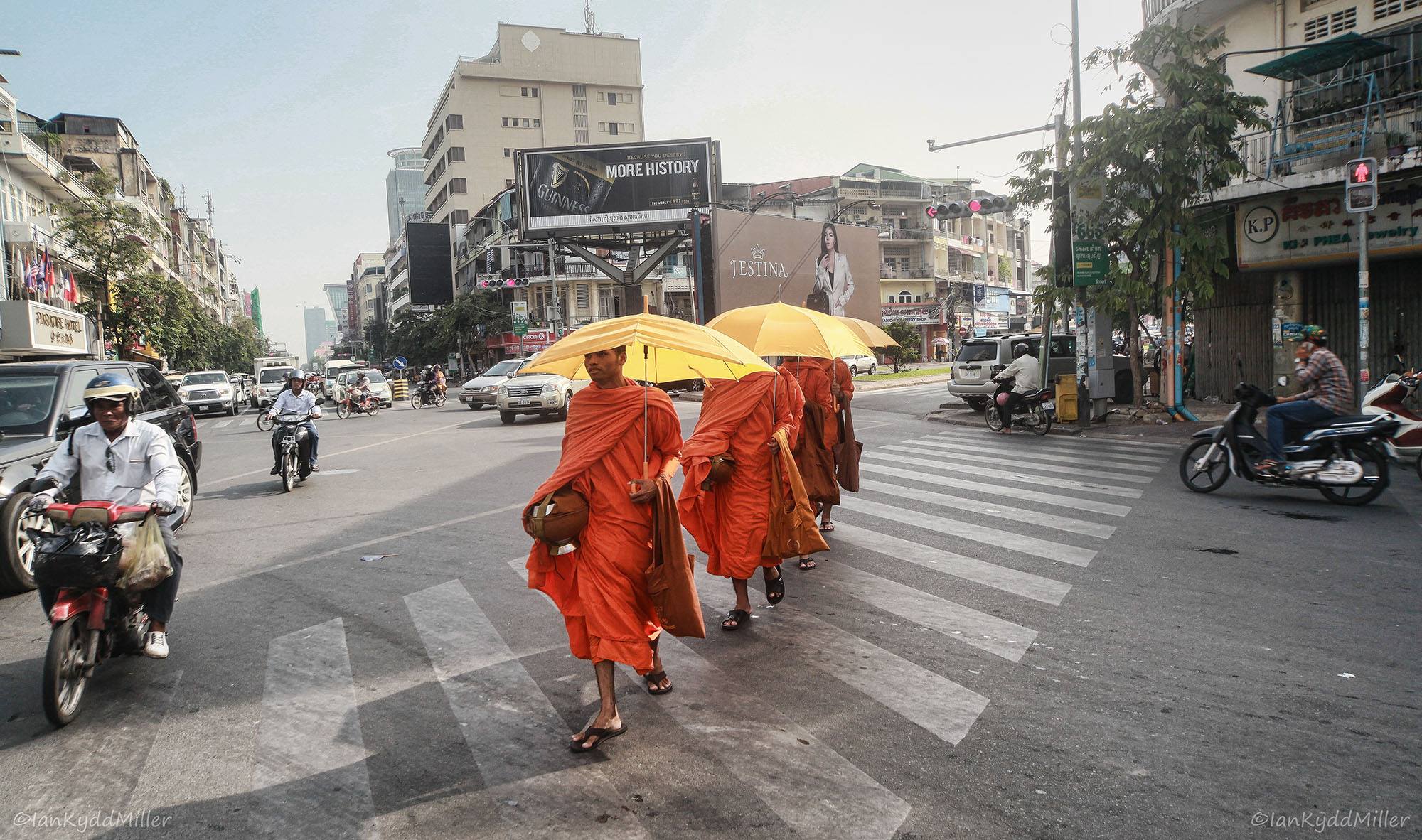
Monks in saffron robes walk barefoot through neighborhoods, collecting alms in a centuries-old ritual.
๐ฆ Midday Hustle
Traffic is a sensory overload: motorbikes weaving between tuk-tuks, bicycles, and the occasional Lexus SUV.
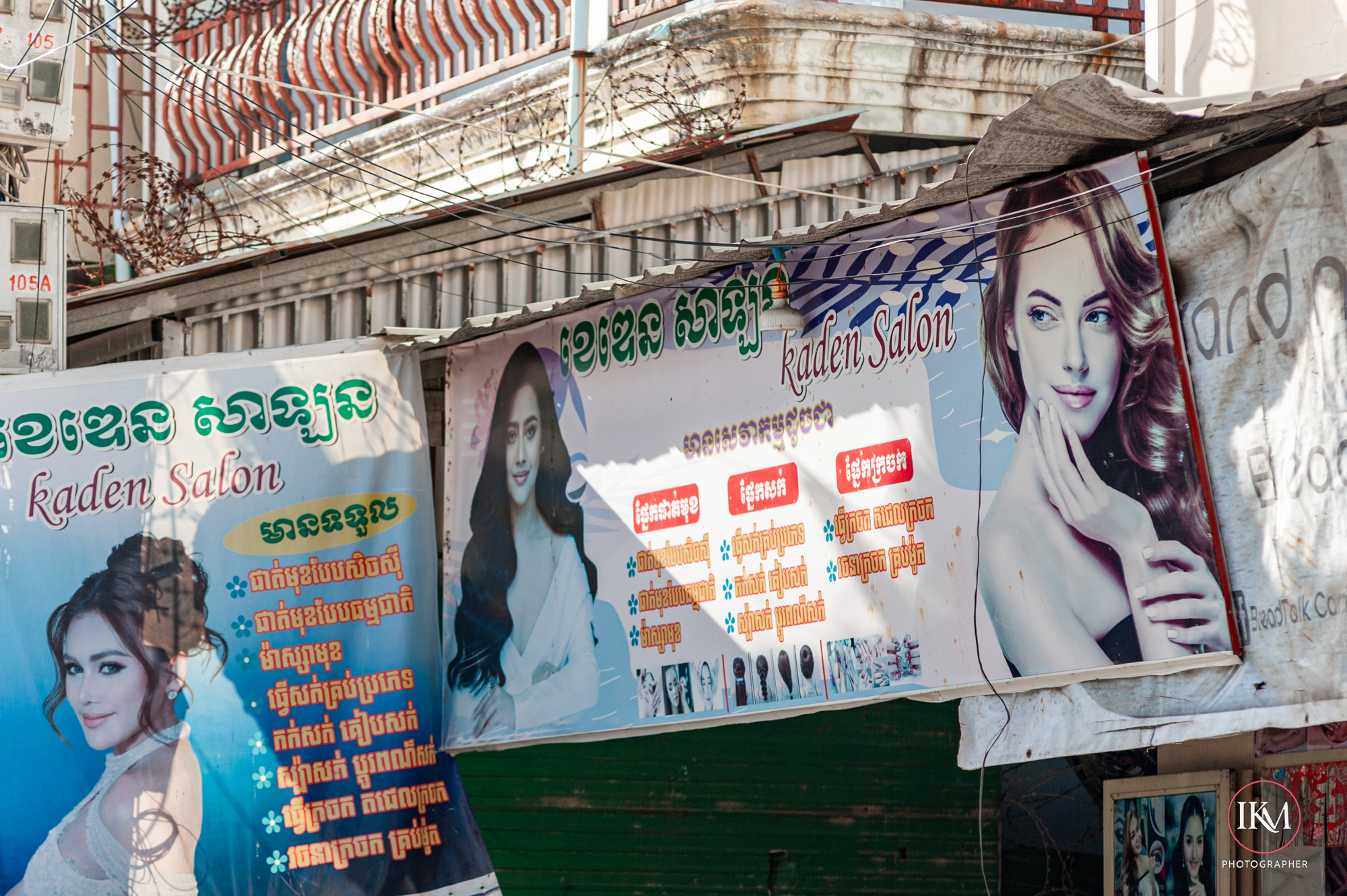
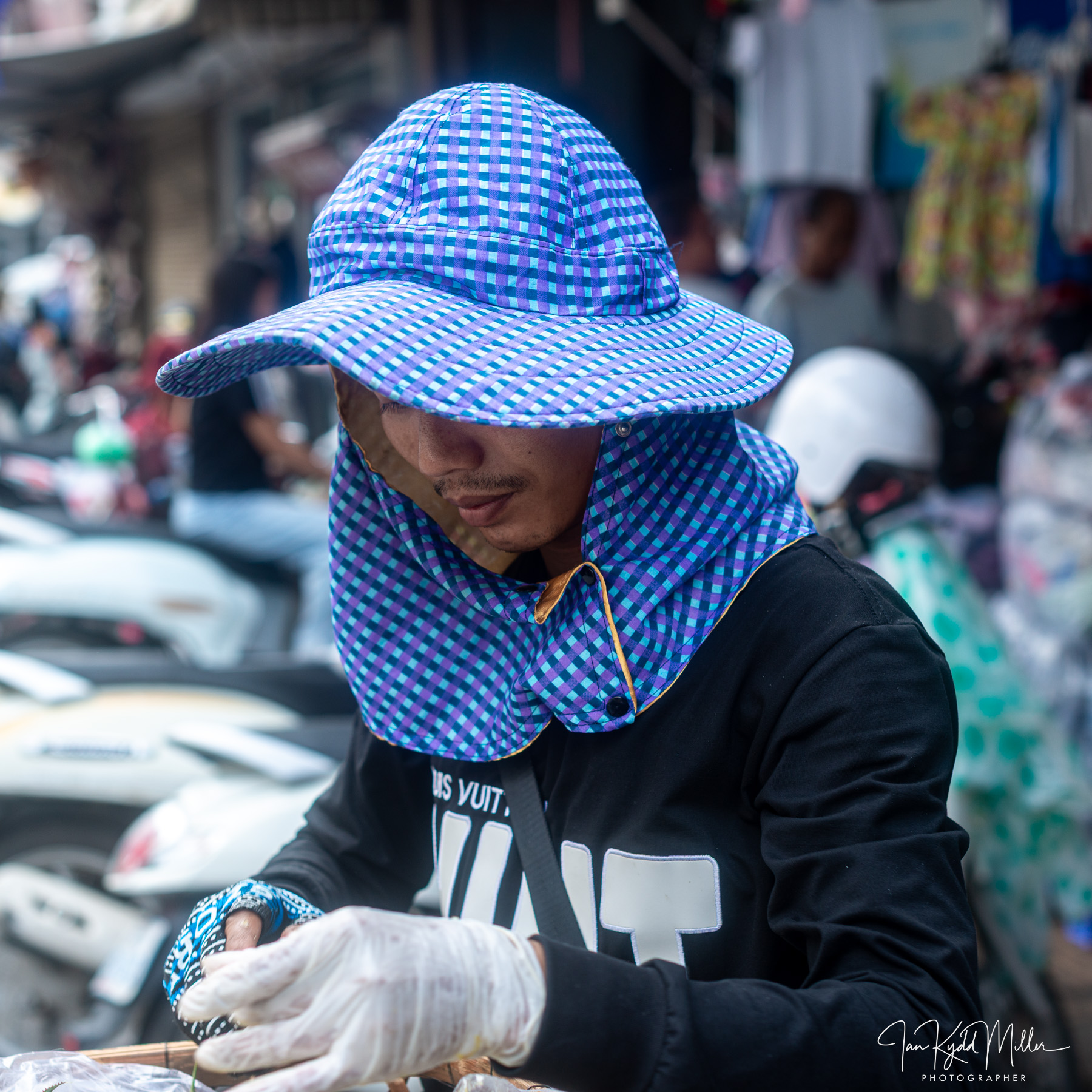
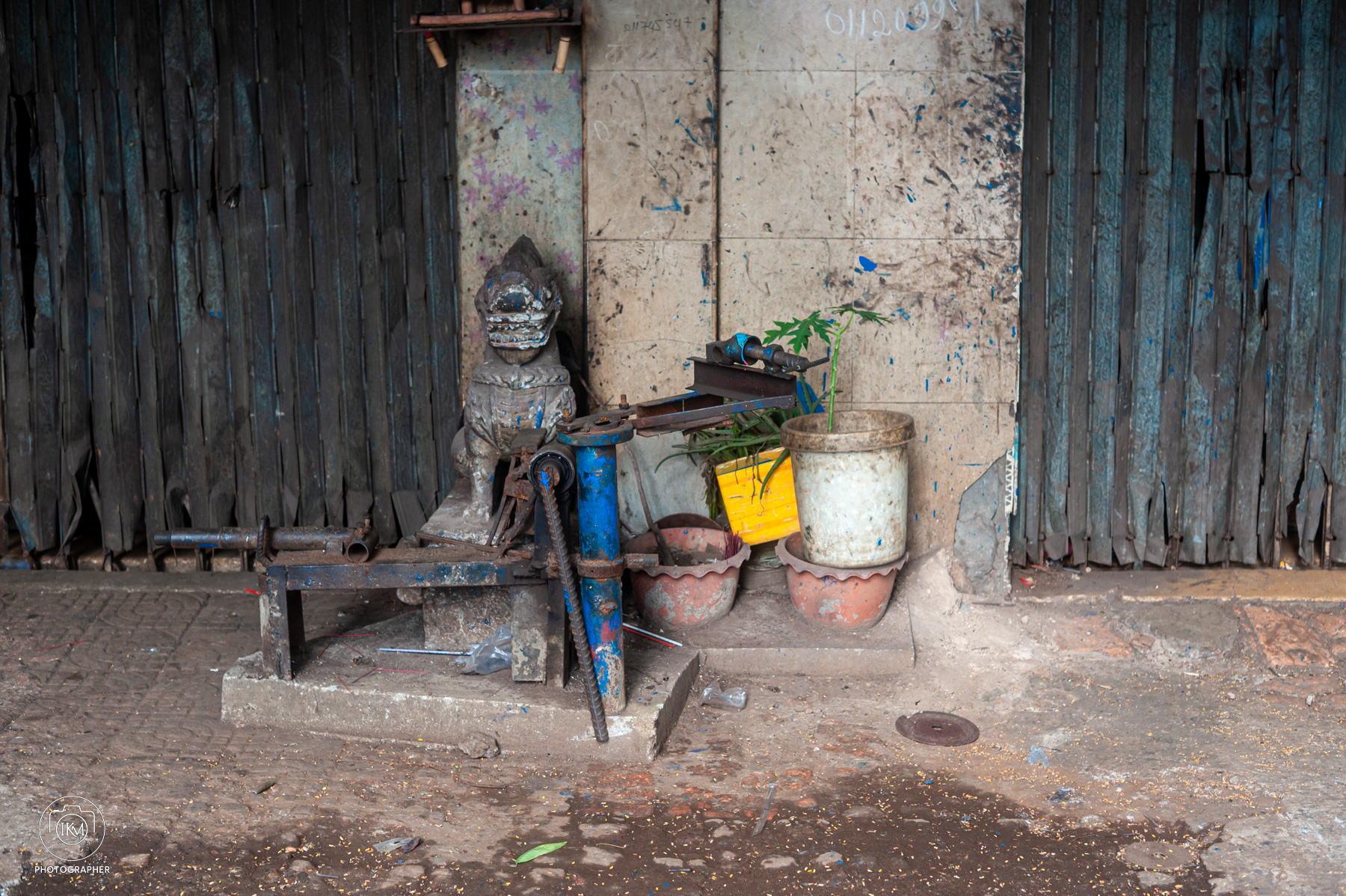
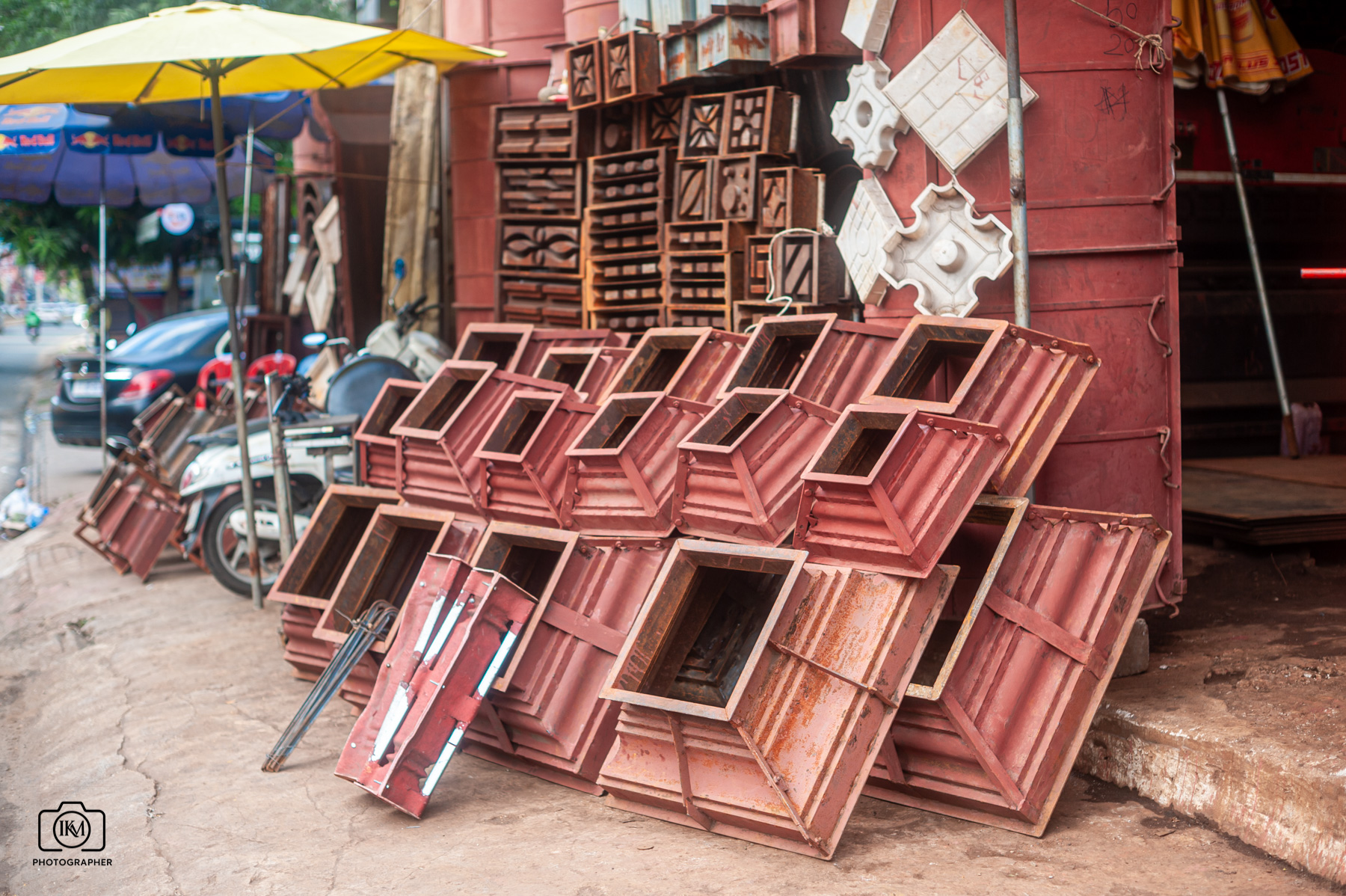
Sidewalks double as workshops and storefrontsโtailors, mechanics, and barbers set up shop in open air.
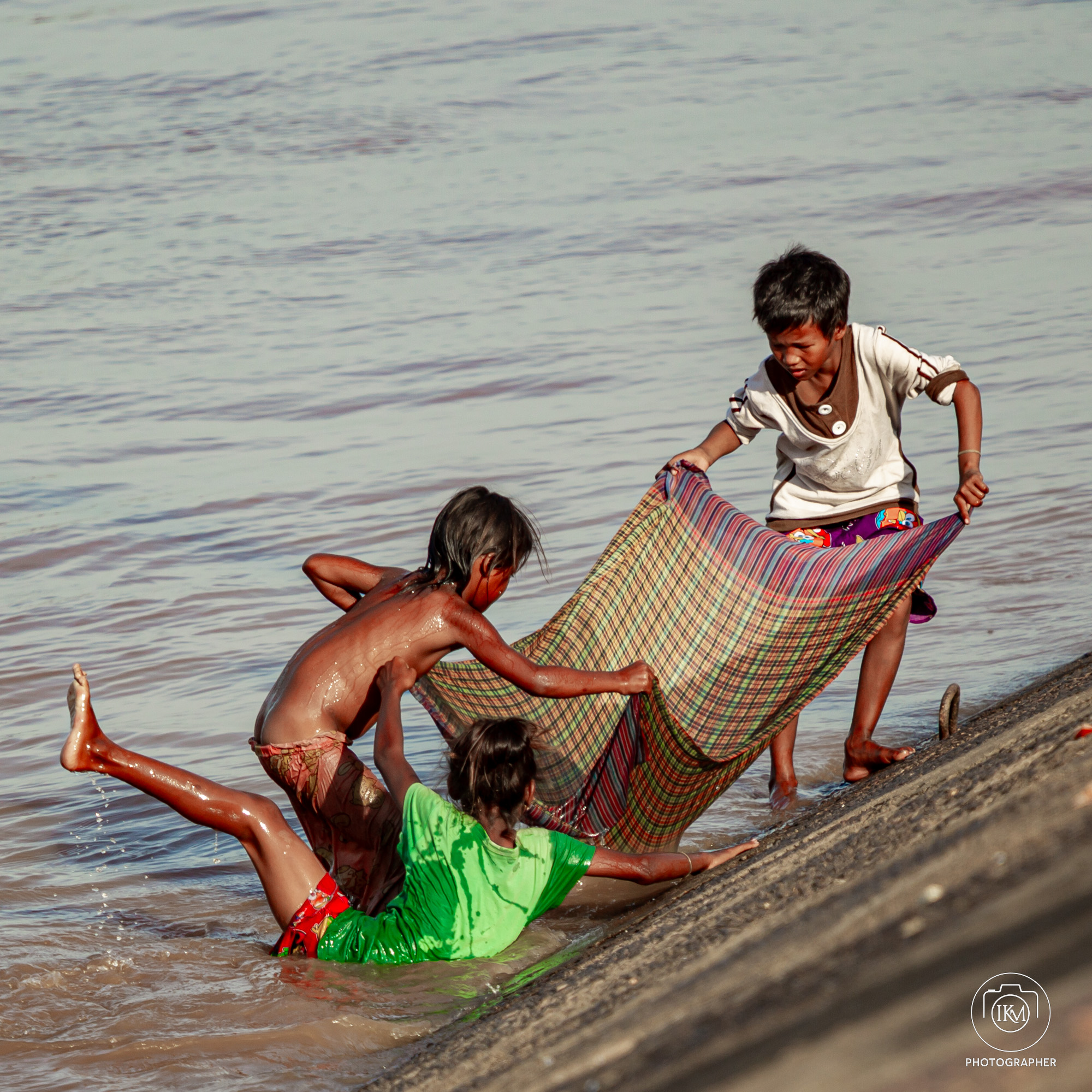
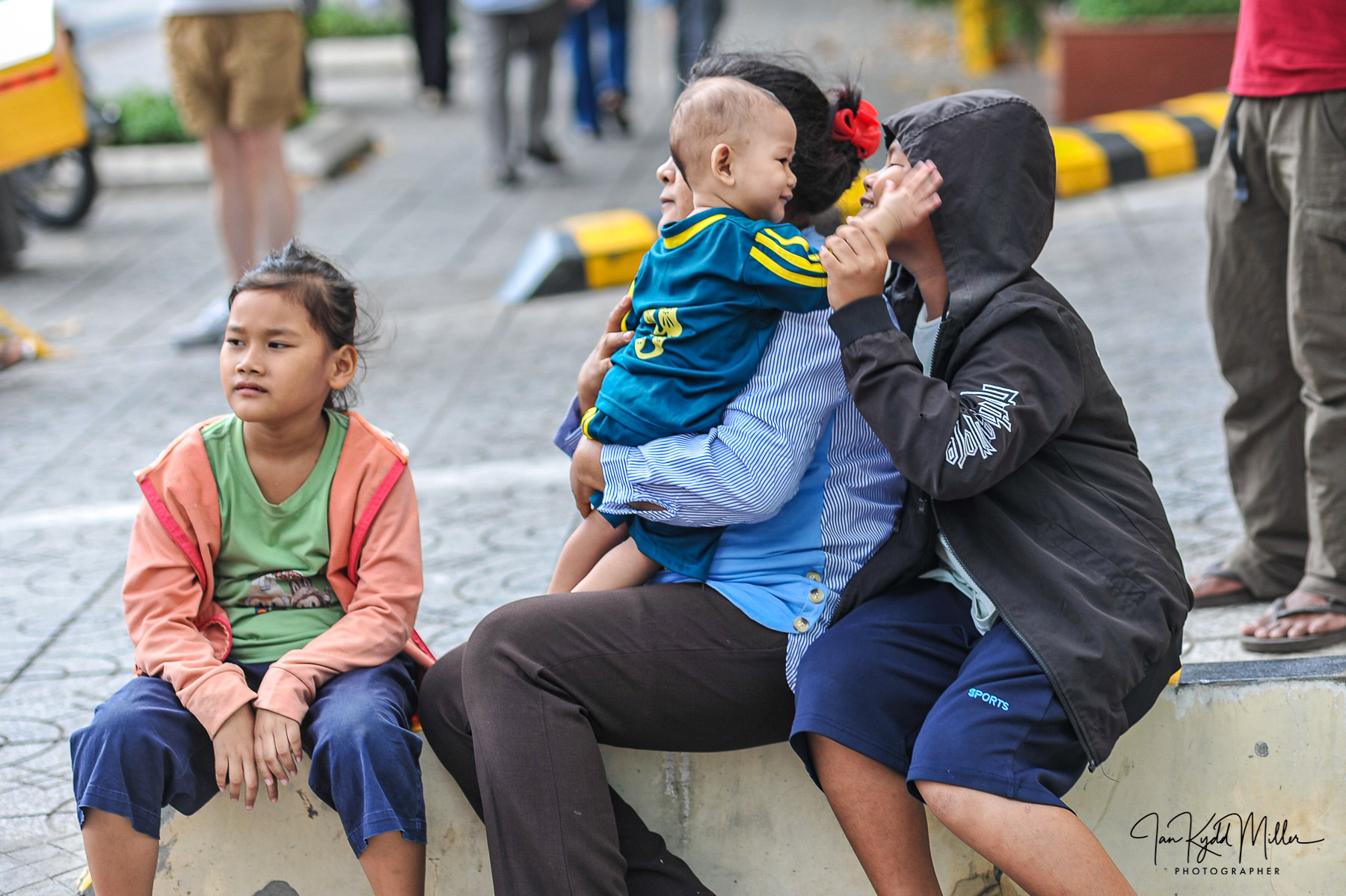
Children play in alleyways, while families gather under umbrellas to escape the midday heat.
๐ Evening Energy
As the sun sets, Phnom Penhโs streets transform into night markets and food havens.
Skewers of beef, fried noodles, and fresh sugarcane juice fill the air with irresistible aromas.
Riverside areas like Sisowath Quay become social hubs, with locals strolling, exercising, or enjoying street performances.
Colours and textures: laundry strung across balconies, neon-lit karaoke bars, and murals reflecting Cambodiaโs youthful creativity.
Community spirit: despite the chaos, thereโs a sense of rhythmโneighbours chatting, vendors calling out, children laughing.
๐ท Why Itโs Photographically Rich
For photographers, Phnom Penhโs street life offers:
Dynamic light and shadow in narrow alleys and open boulevards.
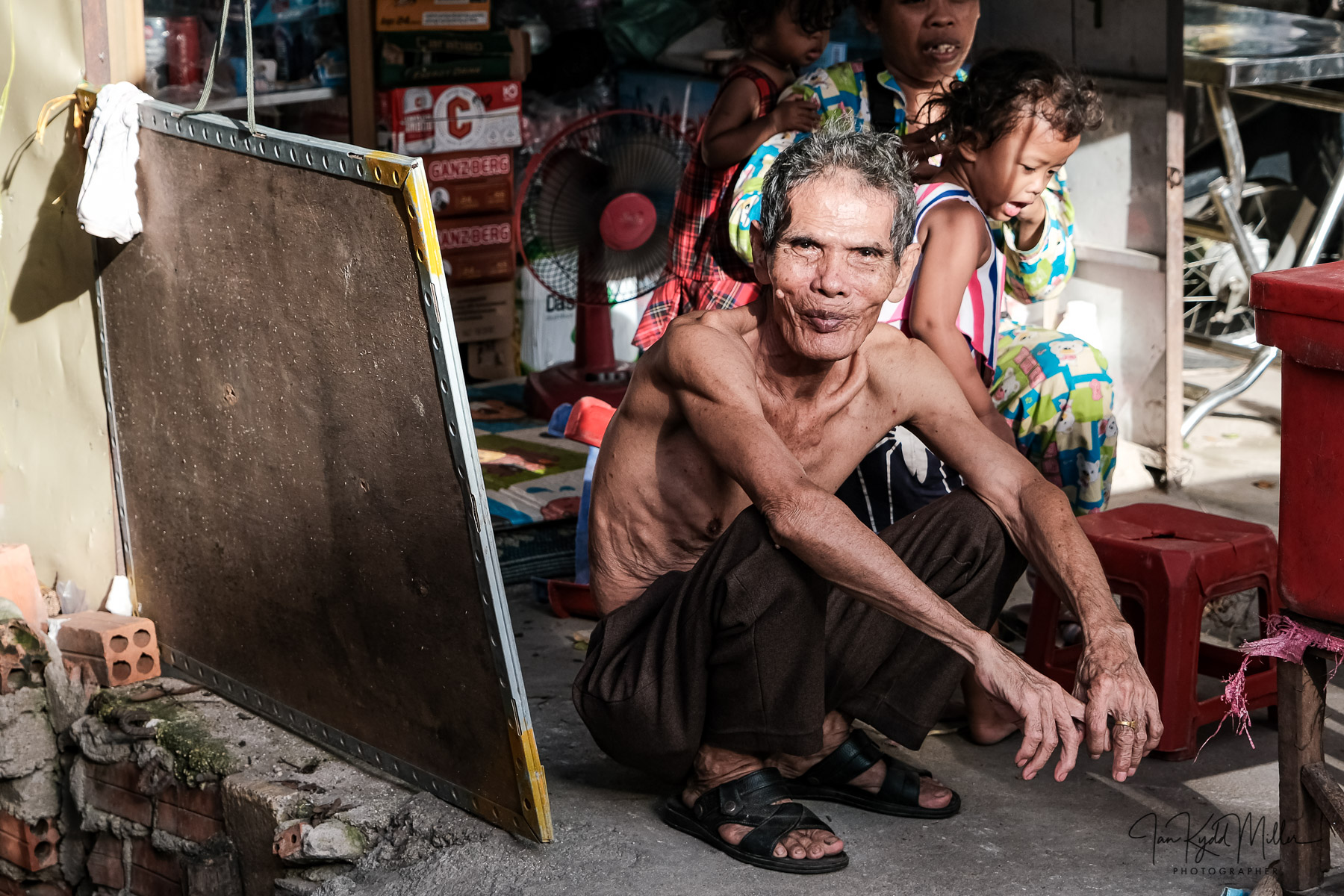
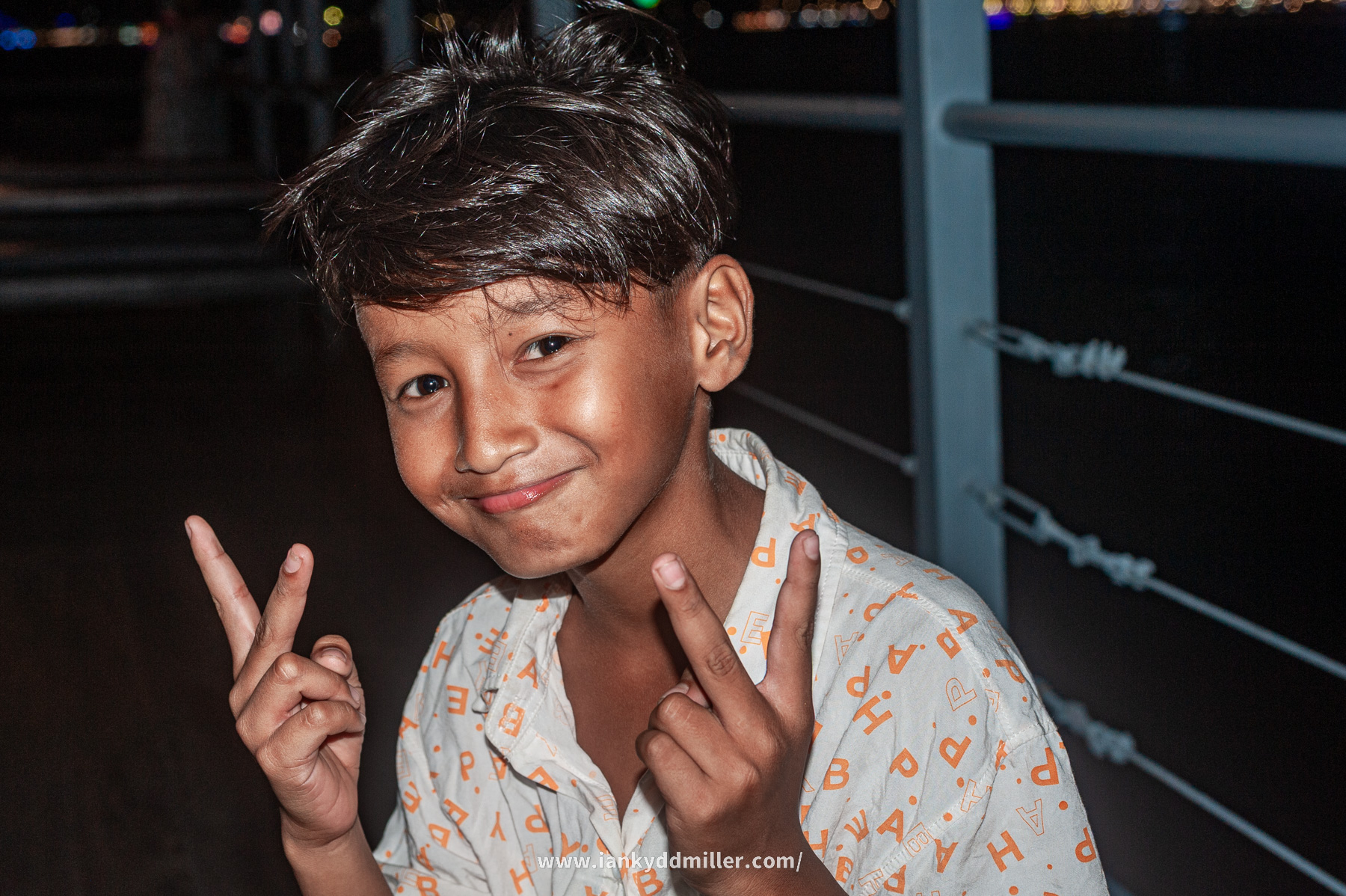
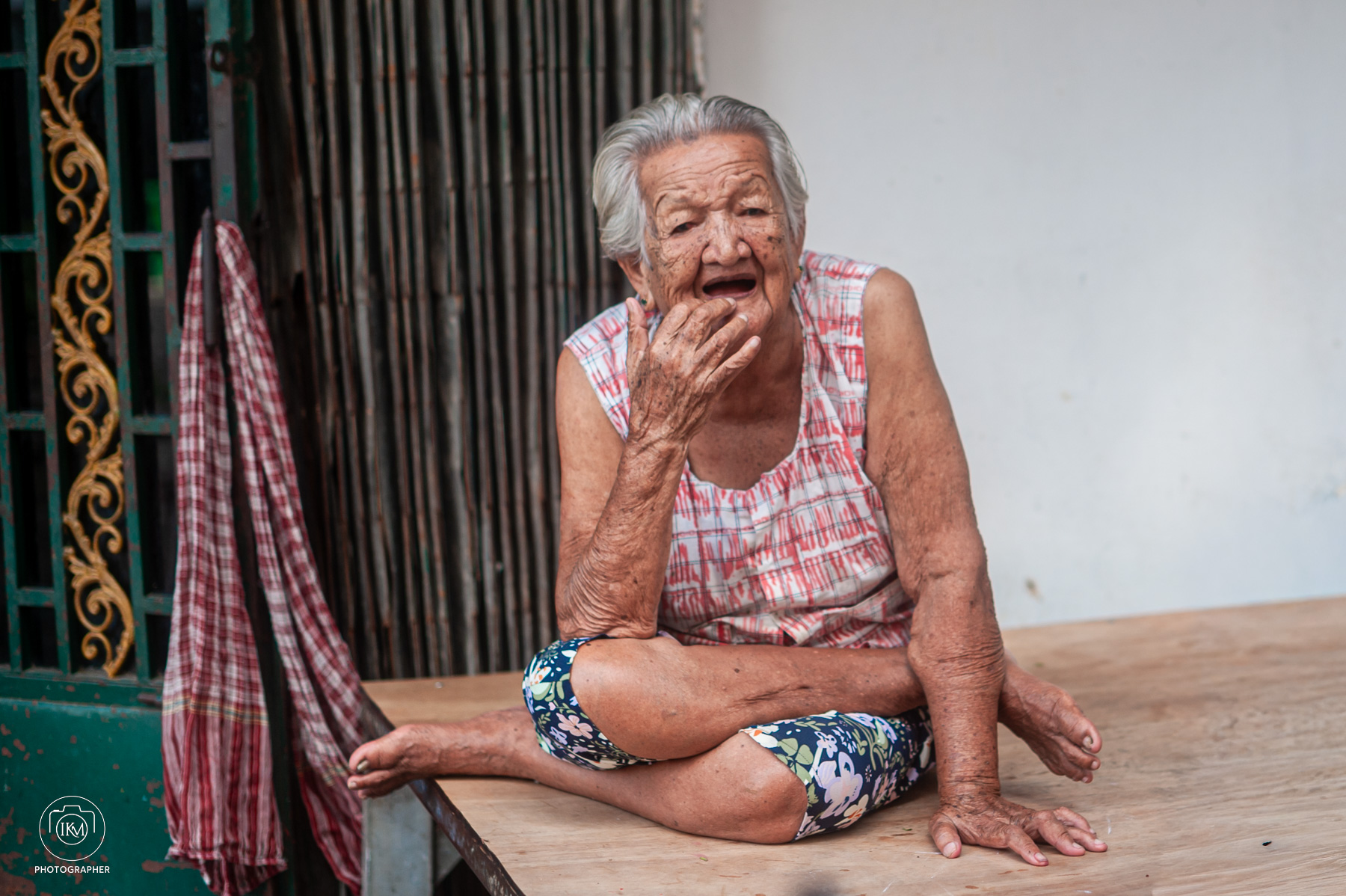
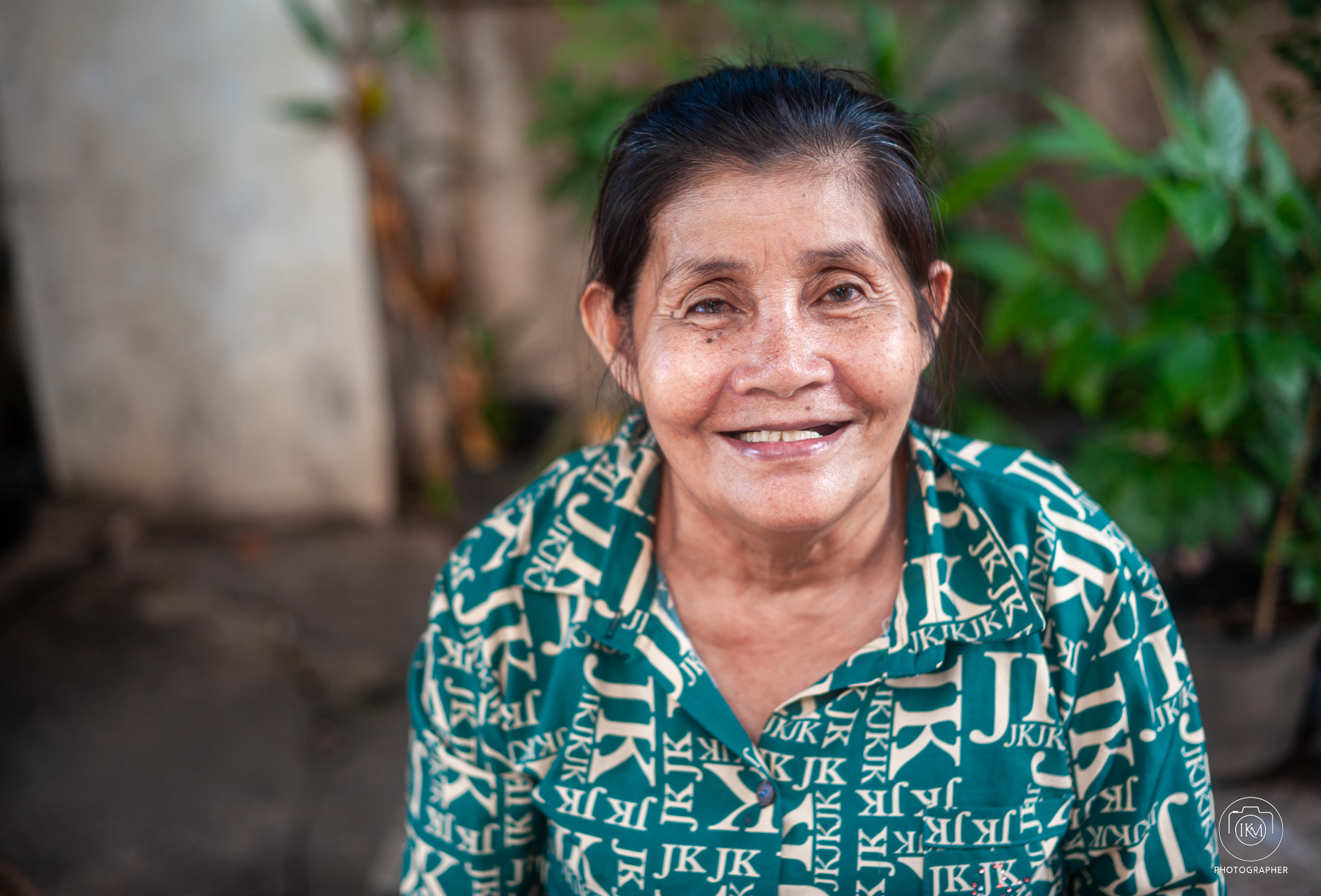
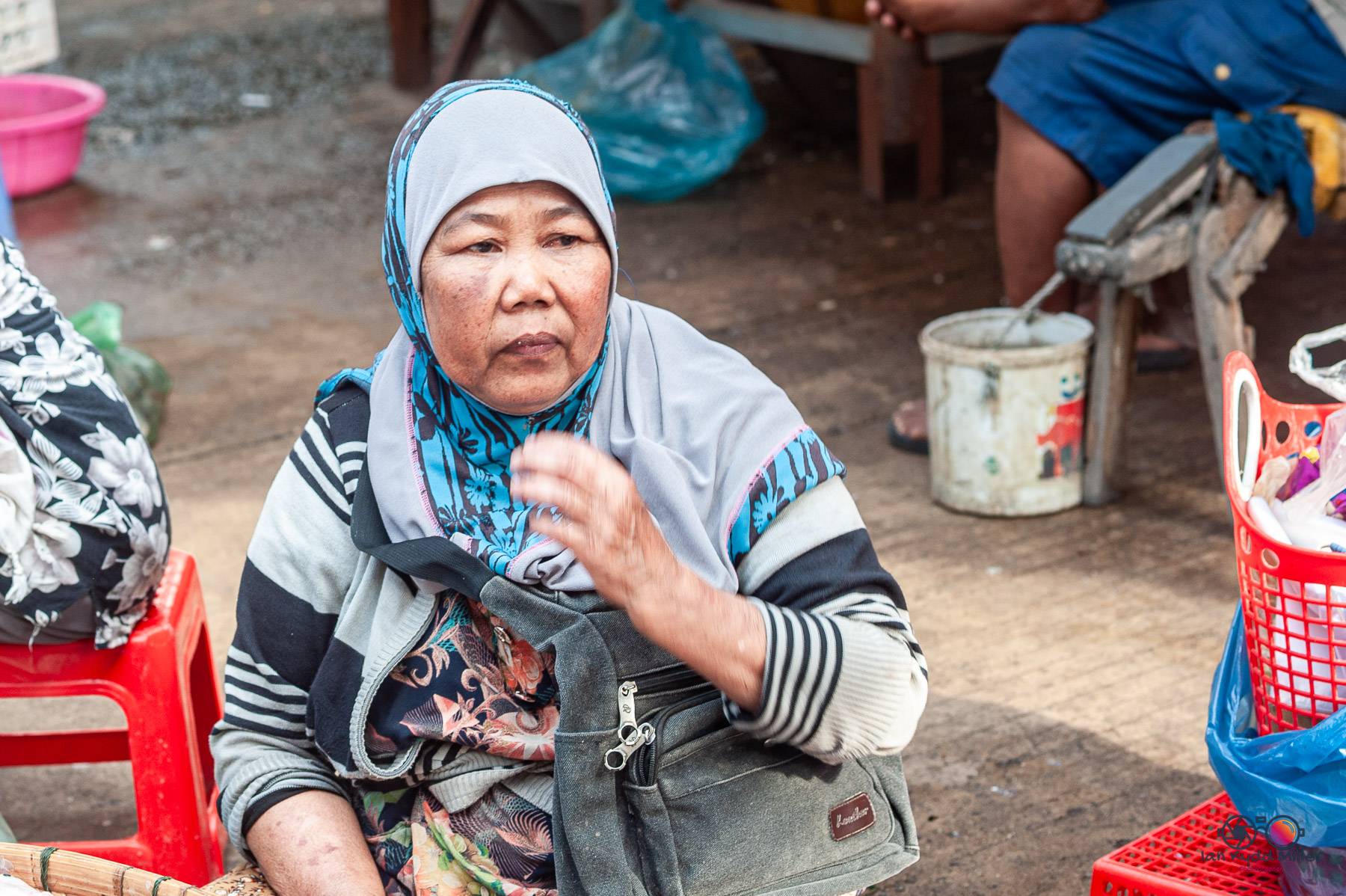
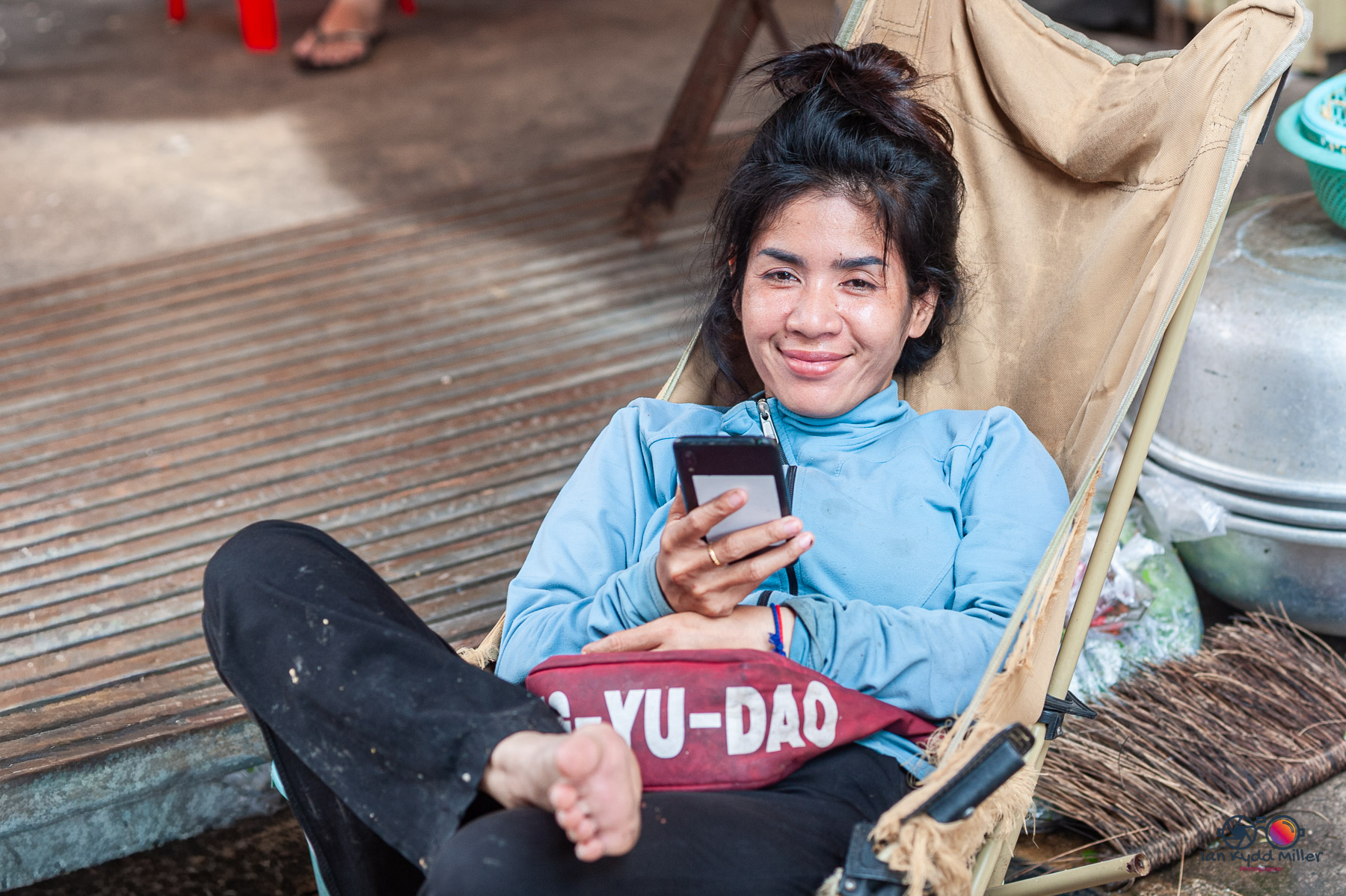
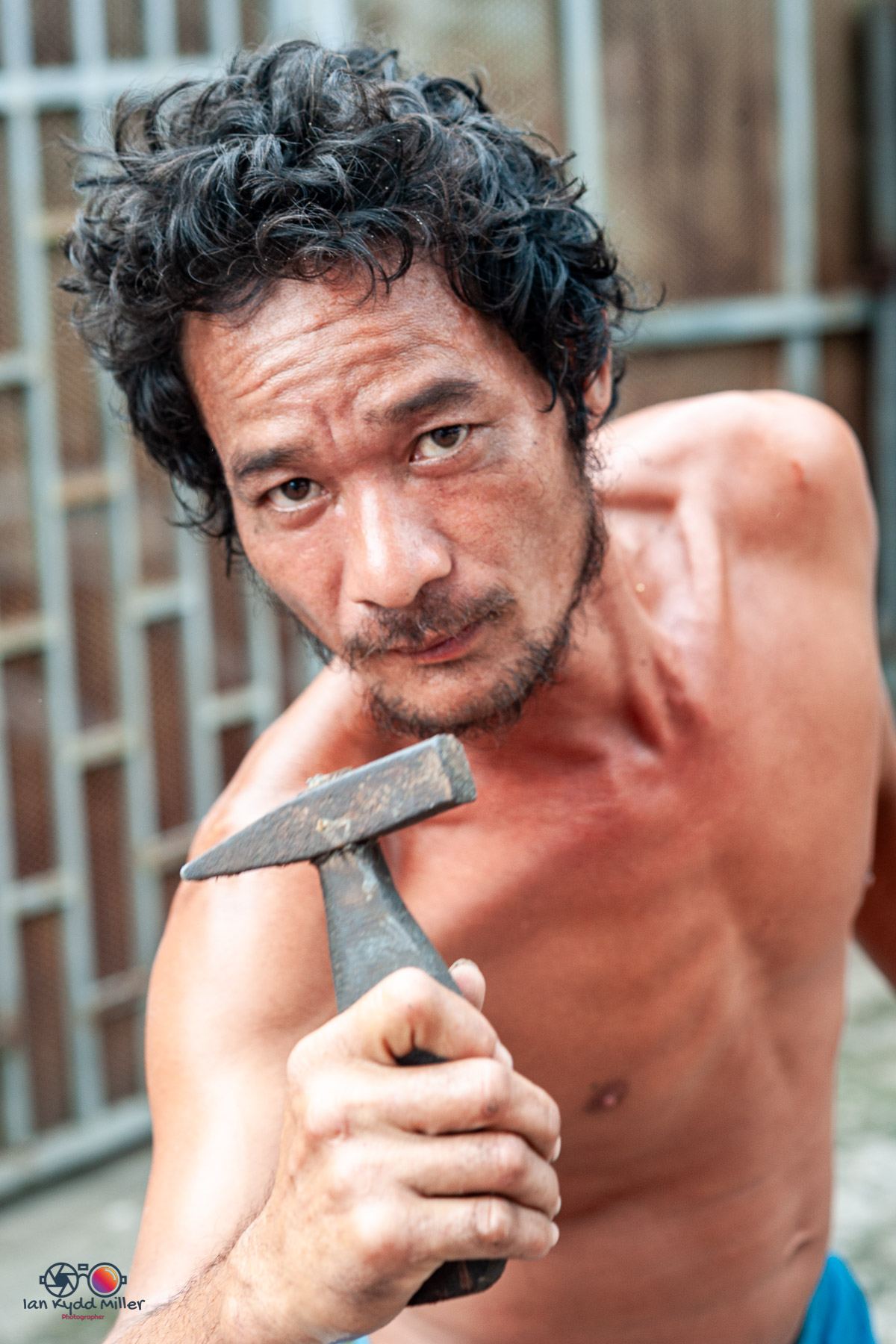
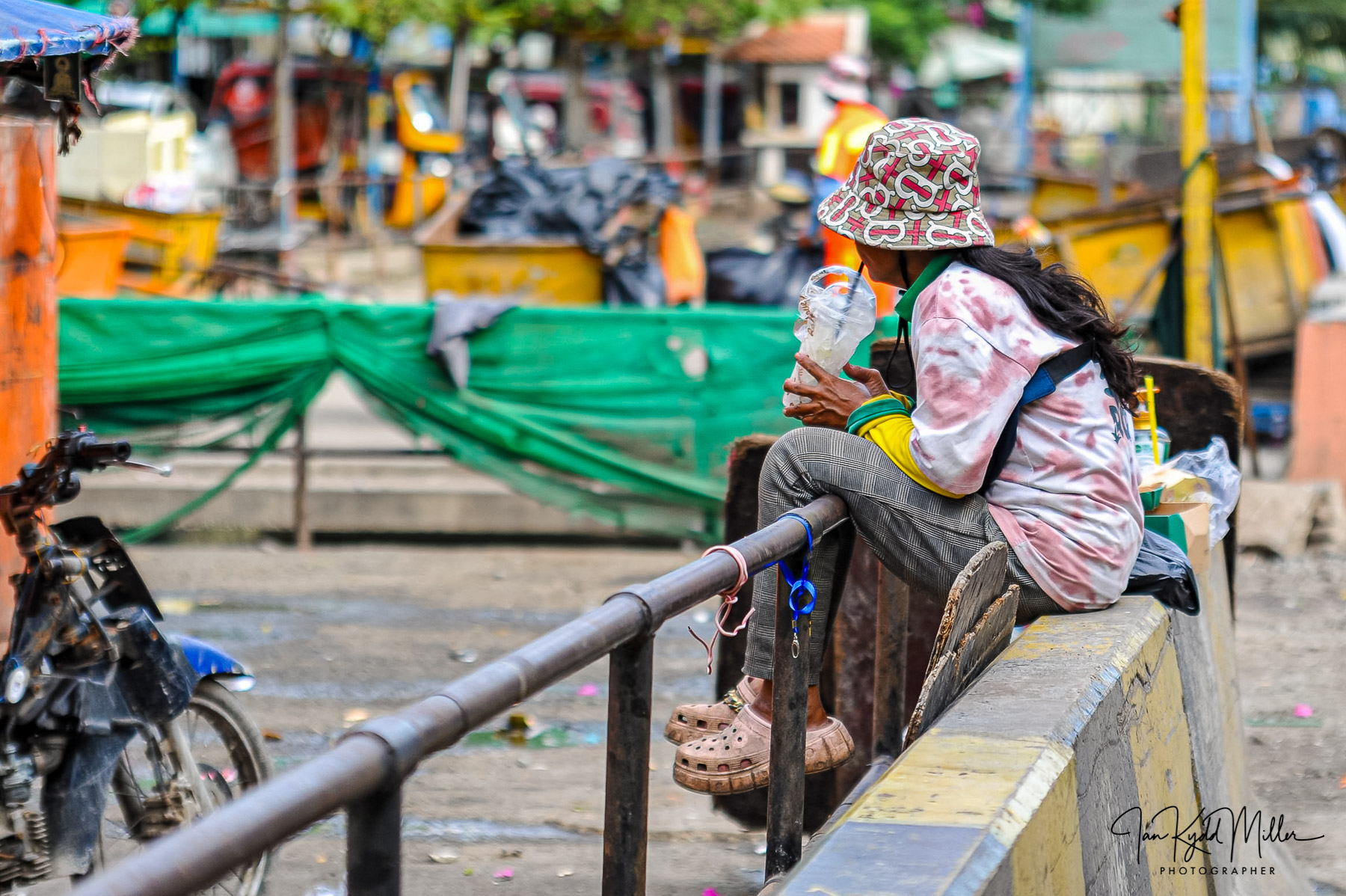
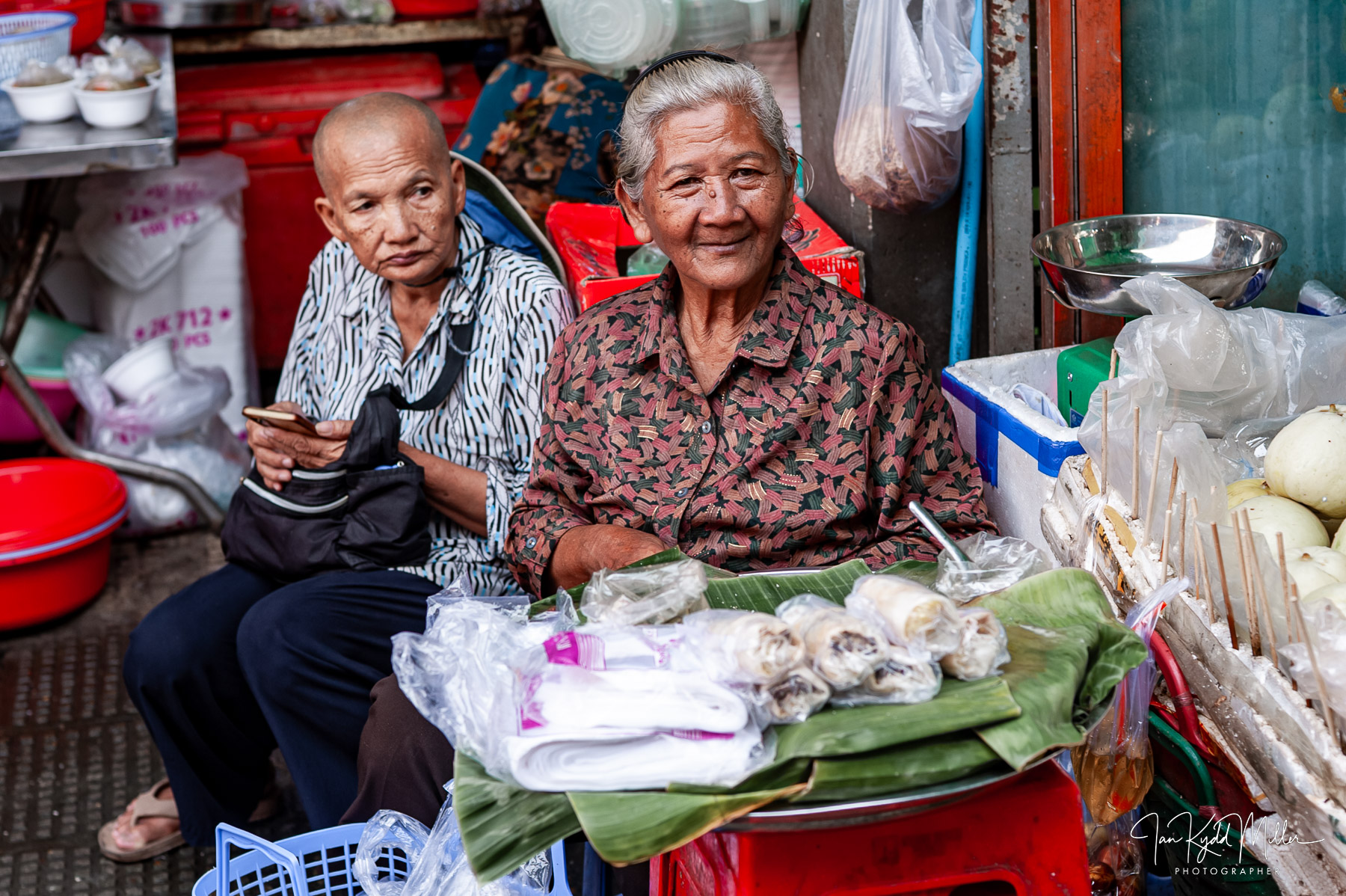
Faces full of character, from weathered elders to energetic youth.
Stories in motionโevery corner reveals a narrative of resilience, adaptation, and joy.
โ In essence: Street life in Phnom Penh is not just about movement and commerceโitโs about connection, survival, and culture lived in public view. Itโs messy, colourful, and endlessly fascinating, making it one of the most compelling urban experiences in Southeast Asia.
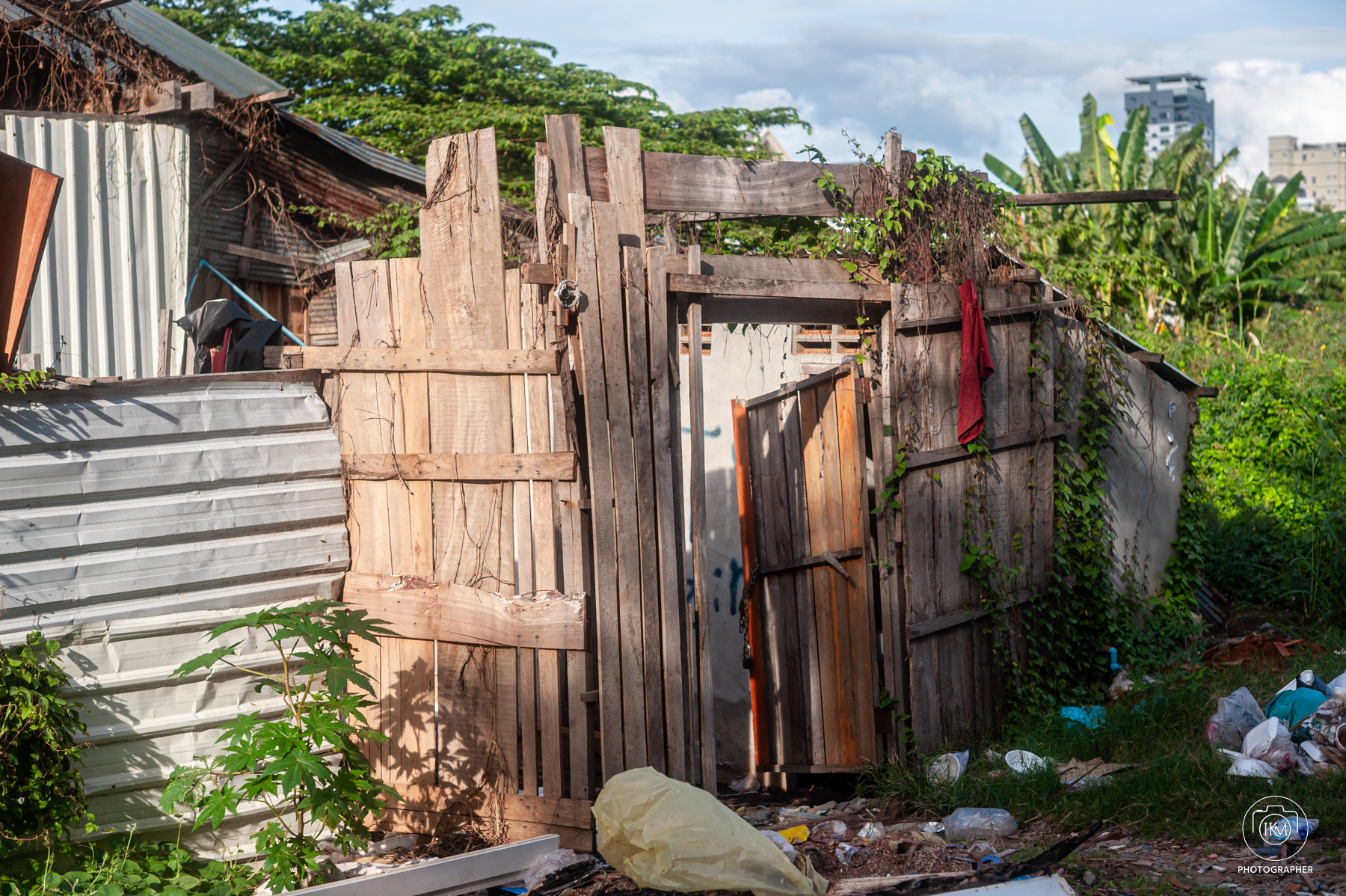
Backstreets of Daun Penh & Toul Kork: Less touristy, more authentic glimpses of daily life.
๐จ Style and Approach
Wide-angle storytelling: Capture the energy of markets and traffic chaos.
Portraits with consent: Many Cambodians are open to being photographed if approached politelyโsmiles go a long way.
Details and textures: Street food, tuk-tuks, signage, and architecture all add layers to your visual story.
Motion blur and panning: Great for showing the constant flow of motorbikes and tuk-tuks.
๐ค Ethical Considerations
Respect privacy: Always ask before photographing children or vulnerable individuals.
Support locals: Buy a coffee or snack from vendors you photographโit builds goodwill.
Be discreet: Avoid being intrusive; blend in and let moments unfold naturally.
Tell the truth: Aim for authenticity, not staged or exaggerated scenes.
๐ ๏ธ Practical Tips
Gear: A 35mm , 50mm or 85mm prime lens is ideal for intimacy; a small zoom (24โ70mm) adds flexibility.
Settings: Use aperture priority (f/2.8โf/5.6) for portraits and shutter priority for motion shots.
Backup: Carry extra batteries and memory cardsโstreet life is unpredictable and fast-moving.
Safety: Keep gear close and minimal; Phnom Penh is generally safe, but petty theft can happen.
โ Final Thought: Phnom Penhโs streets are a living classroom for photographersโfull of light, colour, and human connection. The key is to move slowly, observe deeply, and engage respectfully. The reward is not just strong images, but meaningful encounters.
A Short History of a Photojournalist Who Risked Everything to Show the Truth
Robert Capaโs name is synonymous with frontline photojournalism. He didnโt just photograph warโhe lived it, crawled through it, and bore witness to its brutality with a camera in hand. His images are not just records of history; they are emotional testaments to the people caught in its crossfire. He was a legendary war photojournalist whose images captured the raw human cost of conflict.
๐งญ Early Life and Identity
Born October 22, 1913, in Budapest, Austria-Hungary, Capa fled political repression as a teenager and moved to Berlin. As Hitler rose to power, he relocated to Paris, where he adopted the pseudonym โRobert Capaโ to sound more American and marketable. He partnered with fellow photojournalist Gerda Taro, and together they began documenting the Spanish Civil War.
๐ฐ War Coverage and Iconic Work
Capa covered five major conflicts:
Spanish Civil War (1936โ1939): His photo The Falling Soldier became one of the most iconic war images ever taken.
Second Sino-Japanese War
World War II: He landed with American troops on D-Day, capturing blurry, visceral images under fire at Omaha Beach.
1948 ArabโIsraeli War
First Indochina War: Where he was tragically killed by a landmine in 1954 while on assignment in Vietnam.
His approach was simple: โIf your pictures arenโt good enough, youโre not close enough.โ He believed in proximityโnot just physical, but emotional.
๐ Magnum Photos and Legacy
In 1947, Capa co-founded Magnum Photos with Henri Cartier-Bresson, David Seymour, and others. Magnum became a cooperative agency that gave photographers control over their workโa revolutionary idea at the time.
Capaโs legacy includes:
A new standard for human-centered war photography
A commitment to ethical witnessing
A body of work that continues to educate and move viewers worldwide
๐งญ Final Thought
Robert Capa didnโt glorify warโhe exposed it. His images are grainy, imperfect, and often chaotic, but they pulse with truth. He showed that photography could be more than documentationโit could be resistance, empathy, and remembrance.
The Fujifilm XF 18mm f/2 isnโt perfect. But itโs present. Itโs compact, fast, and quietly capable. It doesnโt demand attentionโit invites it. And for street photographers, documentarians, and those who value rhythm over resolution, itโs a lens worth knowing.
Iโve used it in clinics, on the street, and in quiet corners of care. Itโs not a showstopper. Itโs a companion. And thatโs what makes it special.
โ The Good: Why It Still Matters
๐ง 1. Classic Focal Length
18mm on Fujiโs APS-C sensor gives you a 27mm equivalentโideal for street photography, environmental portraits, and storytelling in context.
Wide enough to breathe, tight enough to feel.
๐ชถ 2. Compact and Featherlight
This lens disappears in your hand. It makes the camera feel invisible.
Perfect for moving quietly, staying present, and photographing without spectacle.
โก 3. Fast f/2 Aperture
Responsive in low light. Lets you isolate gestures and moments without losing the scene.
Great for dusk, clinics, and shadow play.
๐๏ธ 4. Film-Like Rendering
Slight softness at the edges. Gentle contrast. A character that feels felt, not forced.
Prints beautifullyโespecially in black-and-white.
๐งญ 5. Teaches Restraint
No zoom. No overcorrection. Just you, the scene, and the moment.
Ideal for students learning to compose with care.
โ The Quirks: What to Know
๐ง 1. Not the Sharpest Tool
Wide open, itโs soft at the edges. Corner sharpness improves by f/4โf/5.6.
If youโre chasing clinical perfection, this isnโt your lens.
๐ 2. Noisy Autofocus
The AF motor isnโt silent. In quiet settings, youโll hear it.
Not a dealbreaker, but worth noting for documentary work.
๐งฑ 3. Older Design
No weather sealing. No linear motor. No aperture lock.
Itโs part of Fujiโs original lens lineupโquirky, charming, and a little dated.
๐งช 4. Chromatic Aberration
You may see some fringing in high-contrast scenes. Easily corrected in post, but present.
๐ผ How It Prints
This lens isnโt about technical brilliance. Itโs about emotional clarity. The files print with softness, nuance, and tonal depth. Especially in monochrome, the 18mm f/2 feels like a whisperโgentle, grounded, and true.
๐ Final Thought: Character Over Perfection
The Fujinon XF 18mm f/2 isnโt for everyone. But for those who value presence over pixels, itโs a quiet gem. It teaches you to move slowly, see clearly, and photograph with care.
Because sometimes, the best lens isnโt the sharpest. Itโs the one that listens.
The Nikkor 35-135mm f/3.5-4.5 is a versatile zoom lens produced by Nikon for their film SLR cameras. It was first introduced in the late 1980s and was known for its solid build quality and good optical performance.
This lens offers a wide focal length range from 35mm, which is great for capturing landscapes and group shots, to 135mm, suitable for portraits and close-ups. The variable aperture of f/3.5-4.5 provides decent low-light performance and depth of field control.
The lens features multi-coated optics to reduce flare and ghosting, resulting in sharp images with good contrast. It also has a close minimum focusing distance, allowing you to get close-up shots of your subjects.
The Nikkor 35-135mm f/3.5-4.5 is a reliable and versatile lens used for a wide range of photography styles, but it is heavy. Its compatibility with my Nikon D3 camera makes it a great choice for capturing various subjects with a single lens.
The Nikon 35-135mm f/4-5.6 is an older lens, first introduced in the late 1980s. While it may not have all the modern features and technology of newer lenses, it can still be a good option for certain photography needs.
In terms of image quality, it can produce decent results, especially when stopped down a bit from its widest apertures. However, it may not be as sharp or have the same level of optical performance as newer lenses, especially at the extreme ends of its zoom range.
One of the main advantages of this lens is its versatility in offering a wide focal length range, which can be useful for various types of photography such as portraits, landscapes, and even some wildlife or sports photography.
Overall, if you’re looking for a budget-friendly lens with a decent focal length range and can accept some compromises in image quality compared to more modern lenses, the Nikon 35-135mm f/4-5.6 could still be a viable option.
The Kingdom of Cambodia, a nation with a rich cultural heritage and a history that has seen both splendour and hardship, is also a land where fishing is not just an activityโit’s a lifeline. The Mekong River and the Tonle Sap Lake are the beating heart of Cambodia’s fishing industry, a vital source of sustenance, employment, and tradition for millions of Cambodians.
Imagine the serene beauty of the Tonle Sap, Southeast Asia’s largest freshwater lake, teeming with life. Here, the rhythm of the fishing communities’ daily life plays out, as it has for centuries. Fishing in Cambodia is a dance with nature, where the bounty of the waters is respected and relied upon. It’s an industry that employs over 6 million people, nearly half the country’s population and contributes significantly to the nation’s GDP.
The importance of fishing in Cambodia cannot be overstated. It’s not just about the economy; it’s about food security and cultural identity. Fish is the most important source of animal protein in the Cambodian diet, with an astonishing consumption rate of 63 kg per person per year. This isn’t just a statistic; it’s a testament to the role that fish plays in the everyday lives of Cambodians.
The fisheries sector in Cambodia is a complex tapestry woven from various threadsโcapture fisheries, aquaculture, and culture-based fisheries. Each strand is crucial, providing a diverse array of fish and other aquatic organisms that grace the tables of rich and poor alike. The annual yield from all fisheries is estimated to be a staggering 745,065 tonnes, with aquaculture contributing around 120,055 tonnes to this total supply.
But it’s not just about quantity; it’s about the quality of life that fishing affords the Cambodian people. It’s about the smiles of the fishermen as they return with their catch, the laughter of children playing by the riverside, and the shared meals that bring families together. Fishing is woven into the very fabric of Cambodian society, a thread that connects the past to the present and the present to the future.
As the world changes, so too does the fishing industry in Cambodia. Challenges such as climate change, overfishing, and habitat destruction loom on the horizon. Yet, the resilience of the Cambodian people shines through. Efforts to develop sustainable fishing practices, improve aquaculture, and protect precious ecosystems are underway, ensuring that fishing remains a cornerstone of Cambodia’s identity and economy.
So let’s celebrate the spirit of Cambodia’s fishing communitiesโtheir perseverance, their connection to the water, and their contribution to the nation’s rich tapestry. For in the gentle ripples of the Mekong and the vast expanse of the Tonle Sap, lies a story of a people and their fishโa tale as old as time, and as important as ever. Fishing in Cambodia is not just essential; it’s a way of life.
Photography is an art form that captures the essence of a moment, tells a story without words and leaves a lasting impression on the viewer. But what is it that makes a photograph stand out? What transforms a simple snapshot into a potential masterpiece? Let’s dive into the elements that contribute to creating a good picture.
Composition: The Visual Symphony Composition is the backbone of a photograph. It’s the arrangement of elements within the frame that guides the viewer’s eye and evokes emotions. Good composition can turn an ordinary scene into a visual symphony. The Rule of Thirds, leading lines, symmetry, and framing are just a few techniques that photographers use to create a balanced and engaging composition.
Exposure: Painting with Light Exposure is the amount of light that reaches the camera’s sensor, and it’s crucial for setting the mood of the image. A well-exposed photo can highlight textures, contrast, and details that might otherwise be lost. Whether it’s the soft glow of dawn or the harsh shadows of midday, the interplay of light and shadow is what gives a photograph its depth and drama.
Focus: Clarity of Vision Focus determines which part of the image is sharp and clear. It can be used creatively to draw attention to the subject or to create a dreamy background with a shallow depth of field. A good photograph has intention behind its focus, whether it’s the crisp detail of a portrait or the delicate blur of a moving stream.
Subject: The Heart of the Story The subject of a photograph is its beating heart. It’s what captures the viewer’s attention and holds it. A good photograph has a clear subject that resonates with the viewer, whether it’s the raw emotion on a person’s face or the grandeur of a landscape.
Light: The Essence of Photography Light is the essence of photography. It shapes the image, defines the mood, and creates atmosphere. The quality of light can make or break a photograph. Soft, diffused light often yields beautiful, even exposures, while dramatic, directional light can create a powerful impact.
Purpose: The Intention Behind the Lens Every good photograph has a purpose. It’s the intention behind the lens, the reason why the photographer chose to capture that particular scene. It could be to tell a story, to preserve a memory, or to evoke a certain emotion. The purpose is what gives a photograph meaning and makes it memorable.
In conclusion, a good photograph is a blend of technical skill and artistic vision. It’s a moment captured with intention, composed with care, and illuminated with the perfect light. It’s an image that tells a story, touches the heart, and stands the test of time. So, the next time you pick up your camera, remember these elements and let them guide you in creating your own photographic masterpieces. Happy shooting! ๐ธโจ
In 2013, Phnom Penh witnessed significant demonstrations driven by a mix of political and economic grievances. The protests were primarily sparked by allegations of electoral fraud during the Cambodian general election. Many Cambodians felt that the election results did not reflect the people’s true will, leading to widespread discontent.
In addition to political concerns, economic issues also played a crucial role. Garment factory workers, a significant part of the Cambodian workforce, demanded an increase in the minimum wage to $160 per month. This demand was part of a broader call for better working conditions and fair pay.
The demonstrations saw participation from various groups, including opposition party supporters, students, teachers, farmers, and Buddhist monks. The protests were largely peaceful, but there were instances of violence, especially during government crackdowns. Tragically, these crackdowns resulted in several deaths and injuries.
Overall, the 2013 demonstrations in Phnom Penh highlighted the deep-seated issues of political corruption, economic inequality, and the desire for democratic reforms in Cambodia.
The protesters in Phnom Penh in 2013 had several specific demands:
Electoral Reform: They called for an independent investigation into the alleged electoral fraud during the 2013 general election and demanded a re-election.
Minimum Wage Increase: Garment factory workers, a significant part of the protests, demanded an increase in the minimum wage to $160 per month.
Political Reforms: There were calls for broader democratic reforms, including greater transparency and accountability in government.
Resentment of Vietnamese Influence: Some protesters expressed concerns over the perceived influence of Vietnam in Cambodian politics and society.
These demands reflected a mix of political, economic, and social grievances that fueled the widespread demonstrations.
Since 2013, Cambodia has experienced significant changes across various sectors:
Economic Growth: Cambodia’s economy has grown steadily, with an average annual growth rate of 7.6% between 1995 and 2019. Despite a contraction in 2020 due to the COVID-19 pandemic, the economy has been recovering, with growth rates of 3.0% in 2021 and 5.2% in 2022.
Poverty Reduction: Before the pandemic, poverty rates were declining by 1.6 percentage points annually. However, the pandemic increased unemployment and poverty. Efforts to scale up social assistance have helped mitigate income losses, and poverty is expected to decline as the economy recovers.
Foreign Direct Investment (FDI): There has been a surge in FDI inflows, particularly in the manufacturing and tourism sectors. This has contributed to economic growth and job creation.
Political Landscape: The political environment has seen tensions and conflicts, particularly around land grabs, labor exploitation, and environmental degradation. The 2013 national elections led to a political impasse and mass mobilization.
Environmental Impact: Cambodia has seen a significant increase in CO2 emissions, with a 192.69% rise between 2013 and 2019.
Human Capital: Improvements have been made in health outcomes, early childhood development, and primary education, especially in rural areas. However, human capital indicators still lag behind other lower middle-income countries.
These changes reflect Cambodia’s ongoing efforts to address economic, social, and environmental challenges while striving for sustainable development.
Ian Kydd Miller is known for capturing moments that reflect significant periods of change and transformation. His work often provides a unique perspective on historical events and societal shifts. While specific details about a retrospective of his work are not readily available, his photography likely includes powerful images that document these “interesting times.”
Travel photography is an exhilarating and fulfilling pursuit, combining the exploration of new places with the creative expression of capturing moments that tell a story. Whether you’re a seasoned photographer or just starting out, having the right gear can make all the difference in bringing back stunning images from your travels. Here’s a comprehensive guide to the essential equipment for travel photography.
Camera Body
The heart of your travel photography kit is the camera body. The market offers a plethora of choices, from high-end DSLRs to compact mirrorless systems. The key is to find a balance between image quality and portability. For beginners, entry-level mirrorless cameras are a great choice due to their lightweight design and excellent image capabilities.
Lenses
Lenses are the eyes through which you see the world, and having the right selection can cover a wide range of photographic opportunities. A versatile zoom lens, like an 18-300mm, can be invaluable for capturing both wide landscapes and distant subjects. Additionally, a prime wide-angle lens can be perfect for expansive scenes and architectural shots.
Tripod
A sturdy yet portable tripod is essential for sharp images, especially in low light conditions or when making long exposures. Look for one that’s compact enough to fit in your luggage but robust enough to support your camera and lens securely.
Filters
Filters can dramatically enhance your images. A circular polarizing filter can help reduce reflections and enhance skies, while a neutral density filter allows for longer exposure times, even in bright conditions, creating that silky water effect or motion blur in clouds.
Camera Bag
Protecting your gear is paramount, and a good camera bag will do just that. It should be comfortable to carry, provide easy access to your equipment, and offer adequate protection against bumps, scrapes, and the elements.
Accessories
Don’t forget the smaller items that can be just as crucial:
Extra batteries and memory cards to ensure you don’t miss a shot.
A cleaning kit to keep your lens and sensor spotless.
A remote shutter release for those extra-long exposures or self-portraits.
Insurance
Last but not least, consider getting insurance for your gear. Travel can be unpredictable, and having coverage for theft, loss, or damage can give you peace of mind.
By equipping yourself with these travel photography essentials, you’ll be well-prepared to capture the beauty and uniqueness of your destinations. Remember, the best camera is the one you have with you, so choose gear that you’ll feel comfortable carrying and using on your adventures. Happy shooting!
For more detailed information on travel photography gear, you can refer to comprehensive guides and checklists provided by photography experts.
Travel photography planning the trip.
Embarking on a journey to capture the essence of your travels through photography requires meticulous planning and a keen eye for detail. Travel photography is not just about snapping pictures of famous landmarks; it’s about telling a story, capturing emotions, and portraying the unique beauty of a destination.
To plan the ultimate travel photography trip, one must consider several factors that go beyond just the itinerary. Here are some key points to keep in mind:
Research Your Destination: Before setting foot on your adventure, research your destination thoroughly. Understand the geography, the culture, and the people. Look for those unique spots that offer more than just a pretty picture but tell a story about the place.
Know Your Gear: Familiarize yourself with your camera and its capabilities. Practice using different settings and understand how to adjust them for various lighting conditions. Remember, the best camera is the one you know how to use effectively.
Create a Shot List: Plan your shots ahead of time. While spontaneity can lead to great photos, having a shot list ensures you don’t miss out on those must-have images. Include a variety of shots, from wide landscapes to intimate portraits.
Consider the Light: The ‘Golden Hour’โjust after sunrise or before sunsetโoffers the most flattering light for photography. Plan your schedule around these times to capture the most beautiful images.
Pack Smart: Traveling light is essential, but make sure you have all the necessary equipment. A sturdy tripod, extra batteries, and memory cards are just as important as your camera itself.
Tell a Story: Aim to capture photos that convey a narrative. Whether it’s the hustle and bustle of a local market or the serene tranquillity of a secluded beach, your photos should evoke feelings and tell the story of your journey.
Stay Safe: Always prioritize your safety and the security of your gear. Be aware of your surroundings and respectful of local customs and regulations.
Post-Processing: Learn the basics of photo editing to enhance your images. Post-processing can turn a good photo into a great one, but remember to keep it subtle and not overdo the effects.
Backup Your Photos: Regularly back up your images to avoid losing them. Whether it’s to a cloud service or an external hard drive, ensure you have multiple copies of your precious memories.
Enjoy the Experience: While photography is your focus, don’t forget to put down the camera occasionally and soak in the experience. After all, the stories behind the photos are what truly enrich your travel experience.
By following these tips, you’ll be well on your way to planning a travel photography trip that will yield a collection of images you’ll treasure for a lifetime. Remember, travel photography is as much about the journey as it is about the destination. So, plan well, stay curious, and capture the moments that resonate with your adventurous spirit. Happy travels and happy shooting!
Cambodia, with its rich history, stunning landscapes, and vibrant culture, is a haven for photographers. From the majestic temples of Angkor Wat to the bustling streets of Phnom Penh, every corner of this beautiful country offers a unique opportunity to capture moments that tell a thousand stories.
The Temples of Angkor, a UNESCO World Heritage site, are a testament to the grandeur of the Khmer Empire. Photographers from around the world flock to Siem Reap to witness the sun rising over the iconic spires of Angkor Wat or to explore the tree-entwined ruins of Ta Prohm at dawn. The play of light and shadow, the intricate carvings, and the sheer scale of these ancient wonders provide endless inspiration.
Beyond the temples, the floating villages of Tonle Sap Lake present a glimpse into the lives of the Cambodian people, with their houses perched on stilts above the water. Here, you can capture the daily routines of fishermen, the vibrant colors of the floating markets, and the serene sunsets that cast a golden glow over the lake.
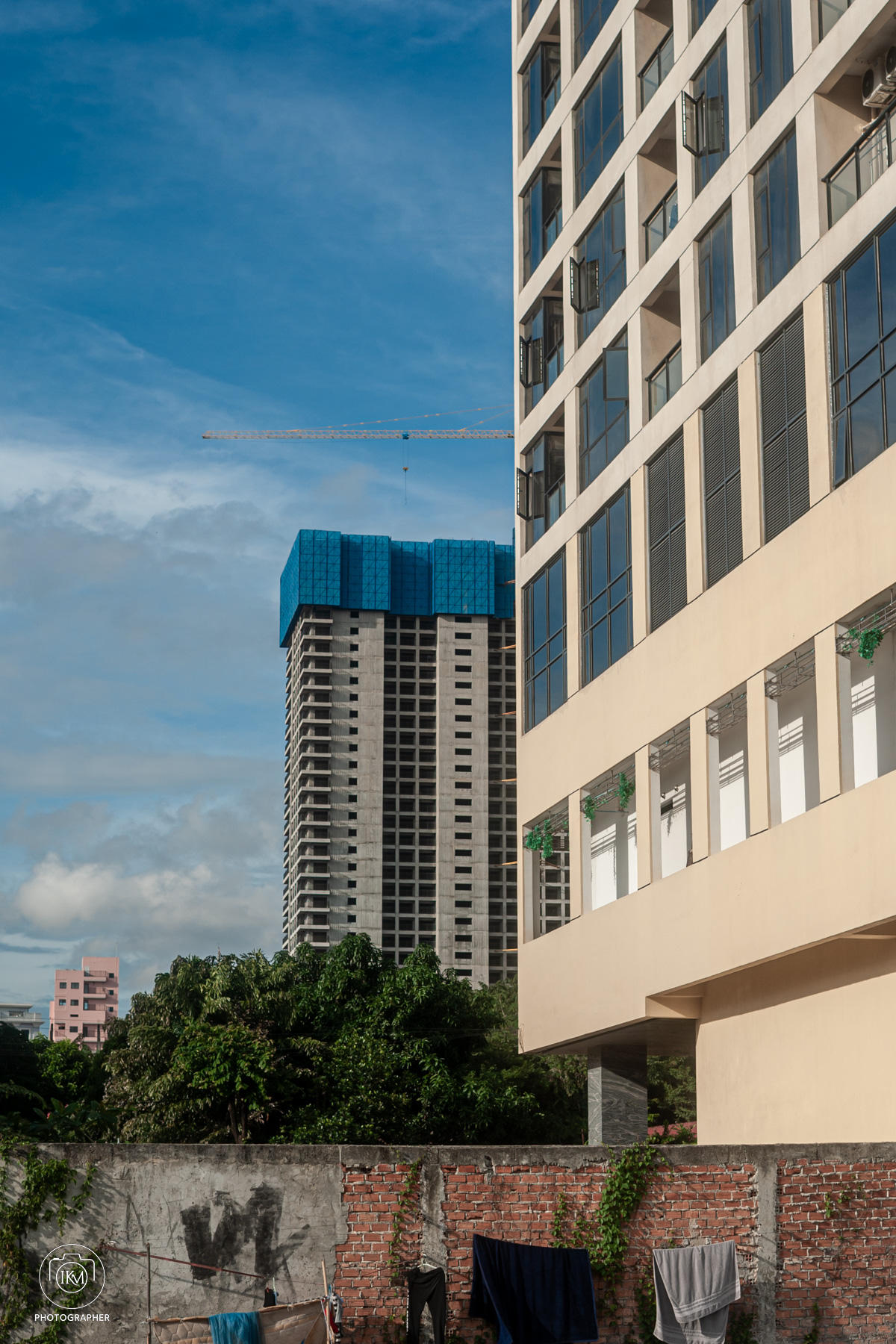
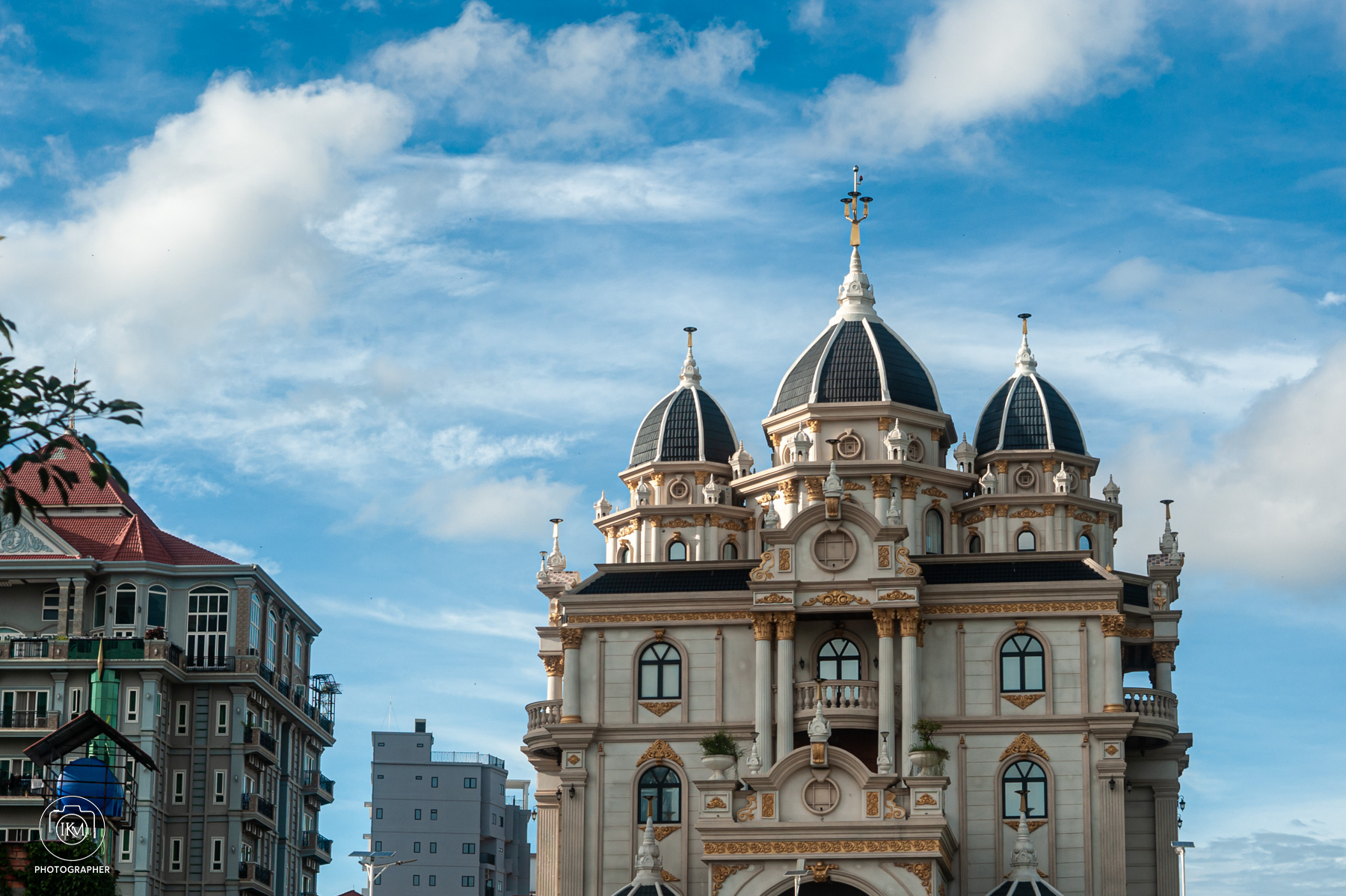
Phnom Penh, the capital city, is a juxtaposition of traditional and modern Cambodia. The Royal Palace, with its classic Khmer roofs and gleaming spires, stands in contrast to the city’s rapidly growing skyline. Street photography enthusiasts will find a wealth of subjects in the city’s lively markets and cafes, where the energy of Cambodia’s urban life is palpable.
For those interested in wildlife and nature photography, the Cardamom Mountains offer untouched landscapes and a chance to photograph rare species in their natural habitat. The lush jungles, cascading waterfalls, and remote villages are a reminder of the country’s diverse ecosystems.
Photography workshops and tours are available for those looking to hone their skills while exploring the country. These guided experiences not only provide practical photography advice but also offer deeper insights into Cambodia’s culture and history.
As a photographer in Cambodia, you are not just a visitor but a storyteller. Each photograph you take contributes to the narrative of this enchanting country, preserving moments of beauty, hardship, joy, and resilience. Whether you are a professional photographer or an enthusiast, Cambodia’s rich tapestry of life will leave you with images and memories that last a lifetime.