


There comes a point in every photographer’s life when he begins staring at expensive lenses on the internet. This usually happens late at night, when common sense has gone to bed and the credit card is still wide awake.
The professional lens promises everything: greater sharpness, richer colour, faster focusing, beautiful background blur and the sort of optical perfection that will apparently transform an ordinary photograph into something worthy of hanging in a gallery.
It is an attractive proposition. It is also only partly true.
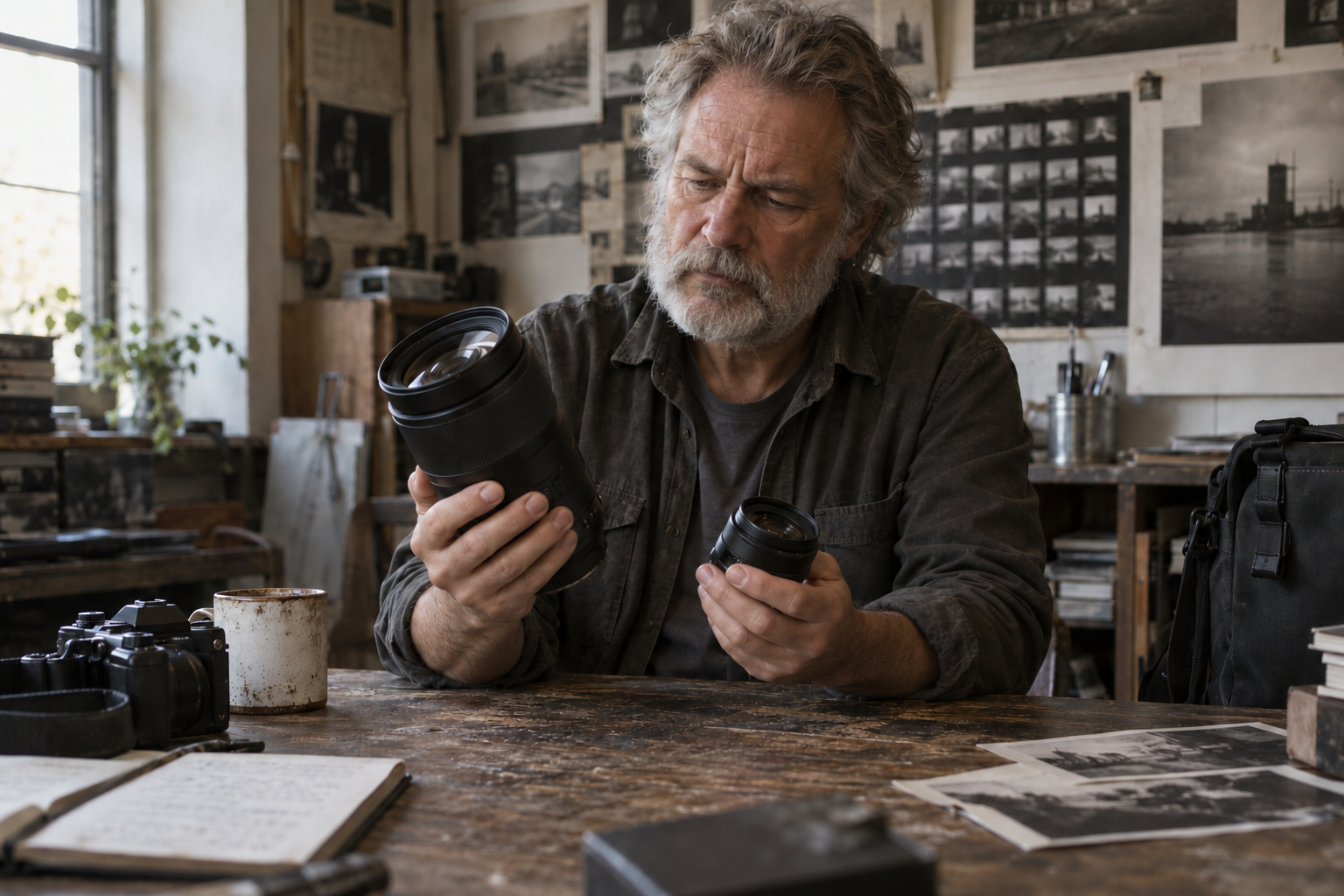
Professional lenses are generally better made. They often have stronger barrels, more metal, better weather sealing and focusing motors designed to survive continuous use. Their maximum apertures tend to be wider and remain constant throughout the zoom range. A 24–70mm f/2.8, for example, will hold that aperture from one end of the zoom to the other, while a cheaper lens may become considerably slower as it is extended.
That difference matters when the light is failing, when the subject is moving or when somebody is paying you to return with the picture.
A professional lens is not merely designed to produce a sharp test chart. It is designed to work reliably, repeatedly and under circumstances in which failure may cost the photographer money. Press photographers, sports shooters, wedding photographers and people working in difficult weather are paying for consistency as much as image quality.
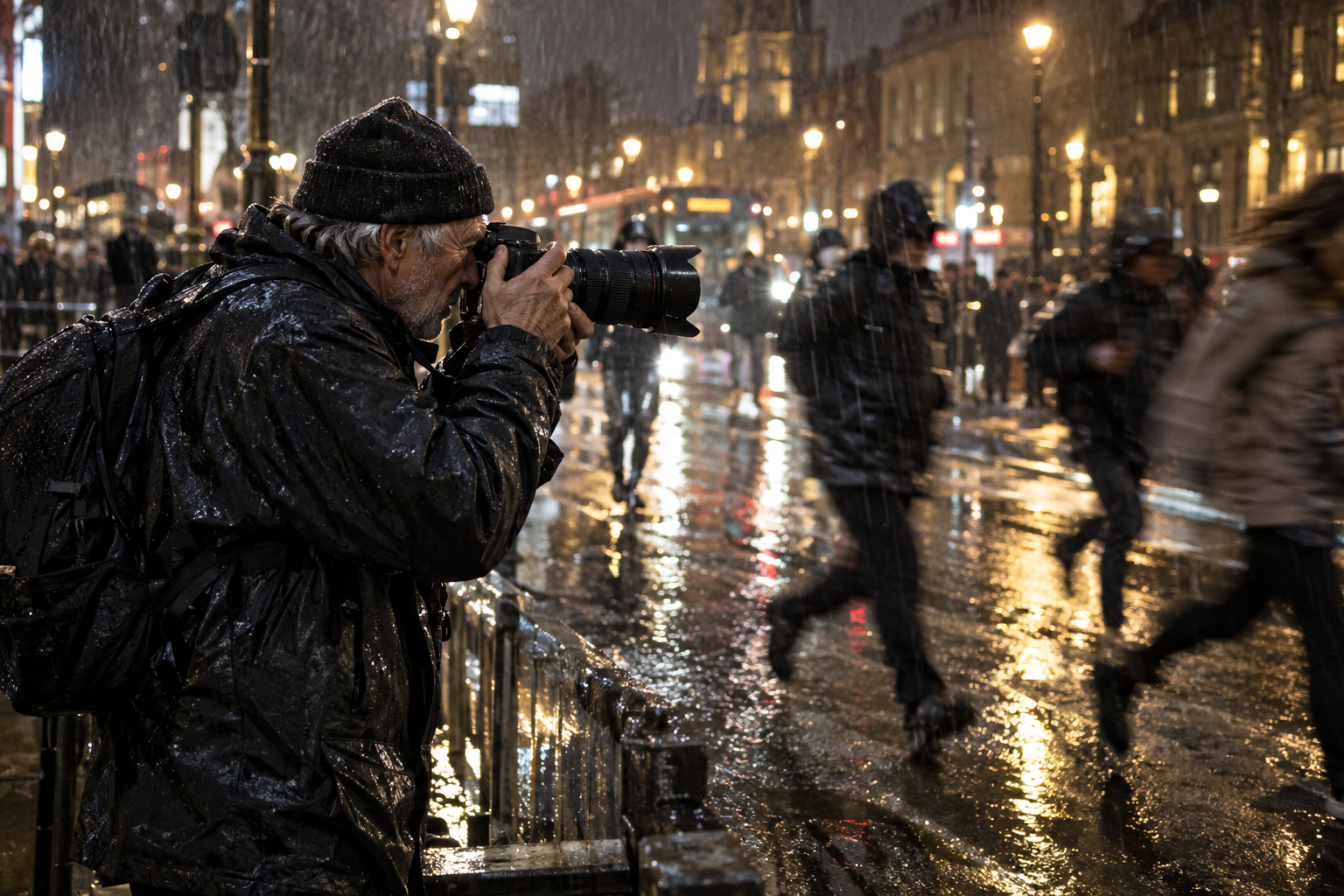
They are buying confidence.
But does the expensive lens produce photographs that are perceptibly better?
Sometimes it does. Just not always in the way the advertising suggests.
At its widest aperture, a professional lens will often be sharper, particularly toward the edges of the frame. It may control flare, distortion, chromatic aberration and unwanted colour fringing more effectively. Contrast can be stronger, focusing more decisive and the transition between sharp and unsharp areas more graceful.
A good 85mm f/1.4 may render a face and its background with a delicacy that a cheap zoom cannot quite imitate. A professional 300mm lens may focus faster and hold detail better when photographing sport, wildlife or breaking news. Under difficult light, those differences can become visible.

But take both lenses outside on a decent day, stop them down to f/5.6 or f/8, make an ordinary photograph and view the result at normal size. The difference may become surprisingly small.
Many modestly priced lenses are excellent when used within their sensible limits. Some are extraordinarily good. The Nikkor 50mm f/1.8G, for instance, is not glamorous or particularly expensive, yet it can produce pictures of considerable sharpness and character. Nobody looking at a strong photograph made with it is going to complain that the photographer should have used a more prestigious piece of glass.
The same applies to the 85mm f/1.8 lenses made by Nikon and Canon. Their more expensive f/1.4 relatives may offer smoother rendering, stronger construction and a little more light, but the cheaper versions can still produce first-class portraits. The difference in price is often far greater than the visible difference in the finished photograph.

That final fraction of performance is expensive.
The closer a lens gets to optical perfection, the more difficult and costly each improvement becomes. Correcting the last traces of distortion, sharpening the extreme corners at maximum aperture and controlling flare under hostile lighting require better glass, more complex designs and tighter manufacturing tolerances.
You may pay twice as much for a lens that is ten per cent better—and that ten per cent may only become visible in demanding situations.
There is also the matter of weight. Professional lenses are frequently large, heavy and conspicuous. The celebrated 24–70mm f/2.8 is a magnificent working tool, but carry it around Phnom Penh for five hours and its magnificence begins to feel rather like a house brick hanging from your shoulder.

A smaller, slower lens may encourage you to walk farther, react more quickly and appear less threatening to the people you photograph. For street work, those advantages can be more valuable than slightly sharper corners.
The lens that stays at home because it is too heavy produces no perceptible improvement whatsoever.
We should also be honest about how photographs are now seen. Much of our work is viewed on phones, tablets and compressed social-media pages. Fine differences in corner resolution and microcontrast are easily lost. Even in a good-sized print, viewers respond first to the subject, expression, light, timing and composition.
Nobody has ever been emotionally moved by excellent corner sharpness.
Photographers notice technical imperfections because we go looking for them. We enlarge files to 100 or 200 per cent and inspect areas of the image that no ordinary viewer would examine. This can be useful when checking focus or technique, but it can also become an expensive form of anxiety.

A lens may look mediocre under extreme magnification while producing perfectly convincing prints.
There is another uncomfortable truth: expensive lenses reveal poor technique just as clearly as they reveal fine detail. A £2,000 lens cannot correct camera movement, misplaced focus, bad light or a lifeless composition. In fact, modern high-resolution cameras are ruthless. Put the finest professional lens on a Nikon D850, handle it carelessly and you will obtain an exquisitely detailed record of your own camera shake.
The professional lens does not make the photographer professional.
I have used enough cameras and lenses over the years to know that equipment matters, but rarely in isolation. It matters when it solves a particular problem. If you regularly work in near darkness, a fast aperture may be worth every penny. If you photograph sport, rapid and dependable autofocus can mean the difference between having the picture and watching it disappear. If you work in rain, dust and physical chaos, stronger construction is not a luxury.












If you mainly photograph in good light, stop down moderately and produce pictures for the web or modest prints, an expensive professional lens may offer very little that your present lens cannot already deliver.
The sensible question is not, “Which lens is best?”
It is, “What is my present lens preventing me from doing?”
If the answer is specific—focusing is too slow, the aperture is too small, the corners are genuinely inadequate for large prints, or the lens cannot survive your working conditions—then an upgrade may be justified.
If the answer is simply that the expensive lens must somehow produce better photographs, keep your money for the moment.
Borrow or rent the lens if possible. Use it on the kind of subjects you normally photograph. Make prints rather than judging everything on a monitor. Compare complete photographs at a reasonable viewing distance, not tiny fragments enlarged until they disintegrate.
You may discover a visible improvement. You may also discover that the greatest difference is in handling, confidence and reliability rather than pure image quality. Those are legitimate reasons to buy a lens—but they should be understood for what they are.
Professional lenses are usually better. They are not magic.
Their extra quality becomes most valuable near the edges of possibility: wide open, in terrible light, against strong flare, during fast action or after years of hard professional use. In normal circumstances, the visible difference can be modest and sometimes almost impossible to detect.
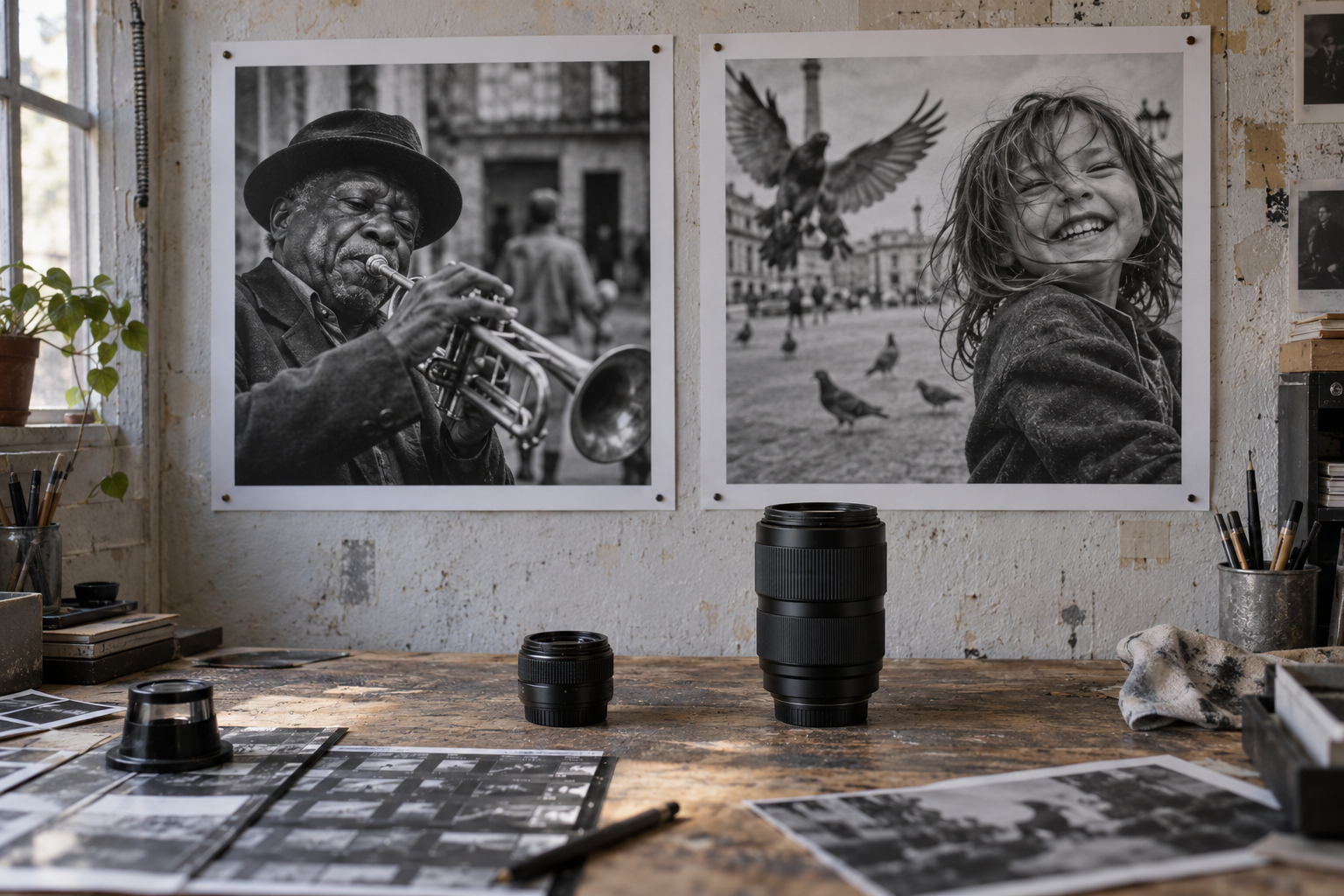
Buy the professional lens because your work demands what it offers. Buy it because it makes difficult pictures possible, because it survives the conditions in which you operate, or because its particular rendering genuinely suits your eye.
Do not buy it in the hope that expensive glass will provide the curiosity, courage, timing or humanity missing from the photograph.
Those things still have to come from the photographer—and fortunately, they cannot be purchased.

