

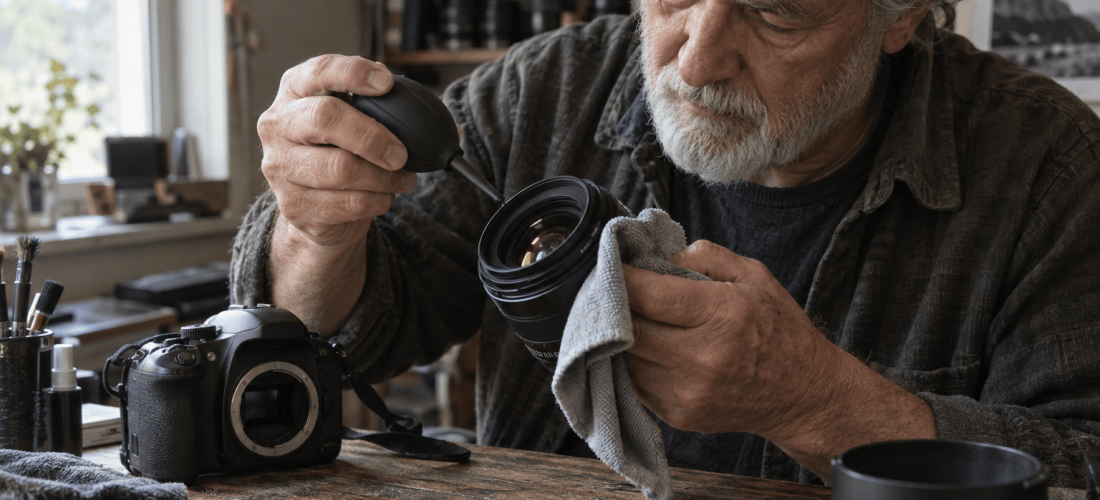
Old Photographer Series
Photographers will argue for hours about sharpness, contrast, autofocus speed and whether one lens has more character than another. Then they will pull a camera from a filthy bag, wipe the front element with the corner of a shirt and wonder why their photographs look as though they were taken through a bus window.
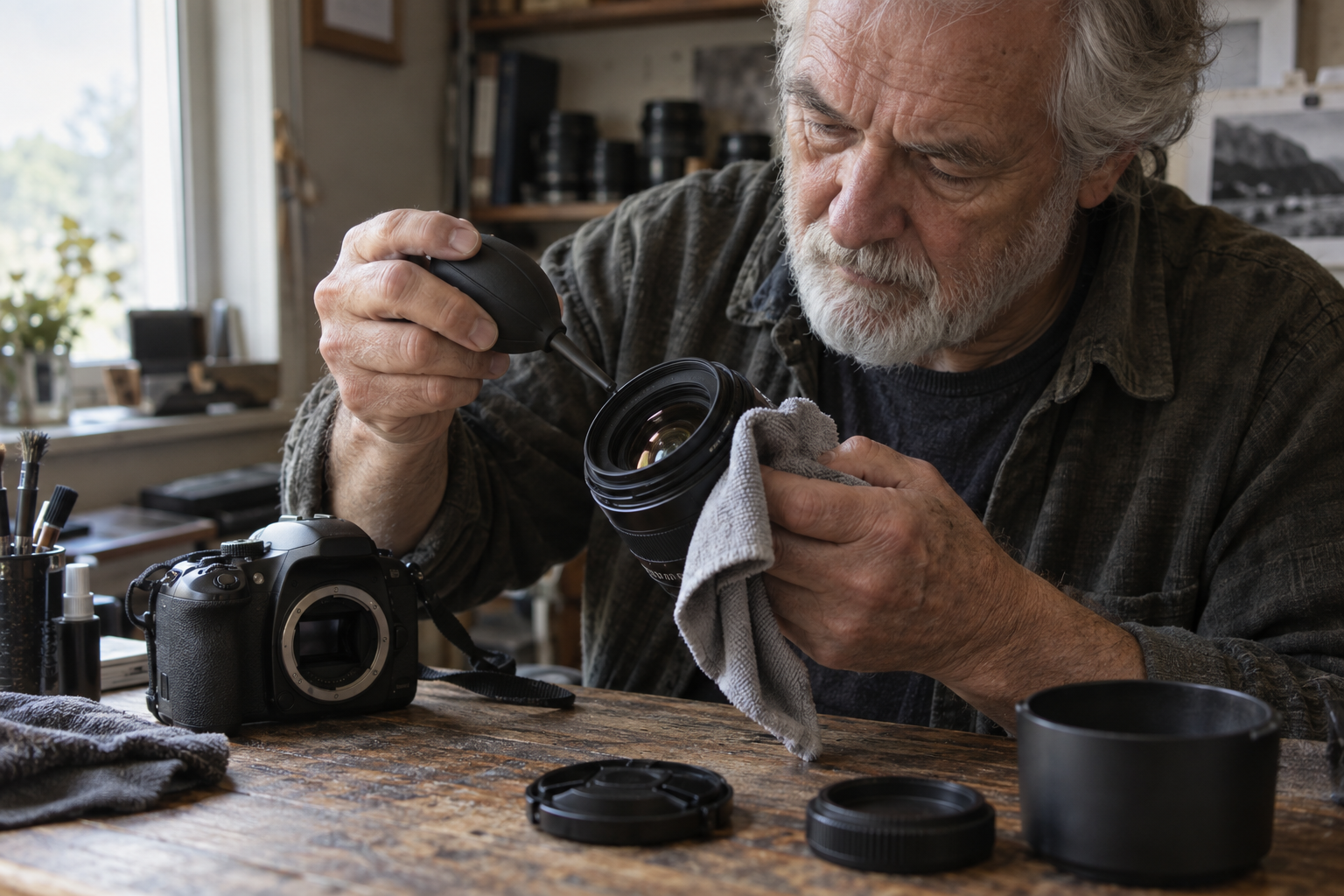
Keeping equipment clean is not glamorous, but neither is spending an afternoon removing dust spots from a clear blue sky.
I have never believed cameras should be treated like museum pieces. A working camera will collect dust, fingerprints, sweat and the occasional splash of something best left unidentified. That is part of using it. Cameras are tools, and tools acquire marks. There is a difference, however, between honest wear and simple neglect.
The first rule is not to clean everything unnecessarily. Constant polishing can cause more trouble than it prevents. A few specks of dust on the front of a lens will rarely affect a photograph, while enthusiastic rubbing with the wrong material can damage the coatings permanently.
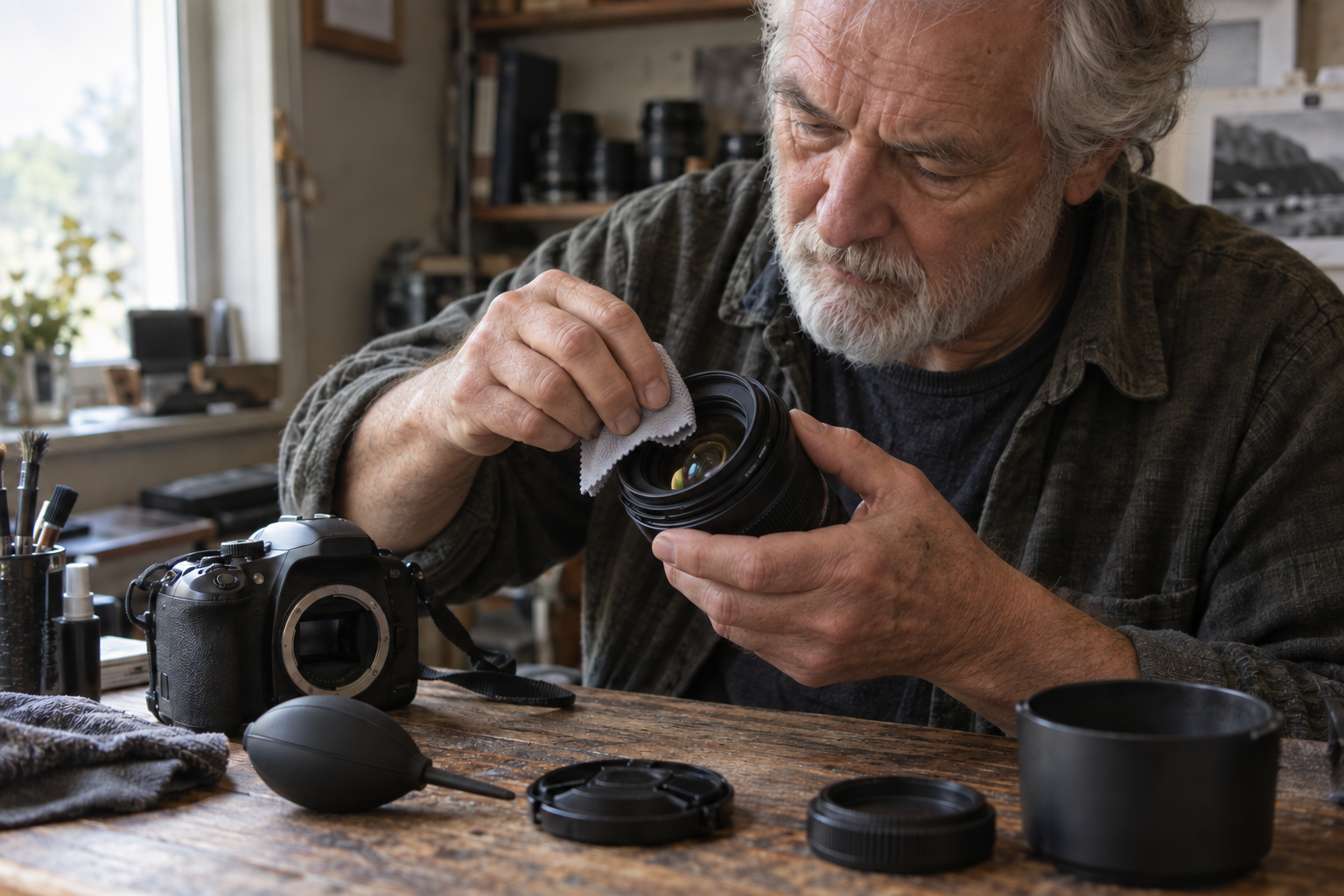
Start with a blower. Hold the camera or lens so that loose dirt can fall away, then use several gentle bursts of air. Never blow on a lens with your mouth. Saliva droplets are harder to remove than dust, and breath leaves moisture behind.
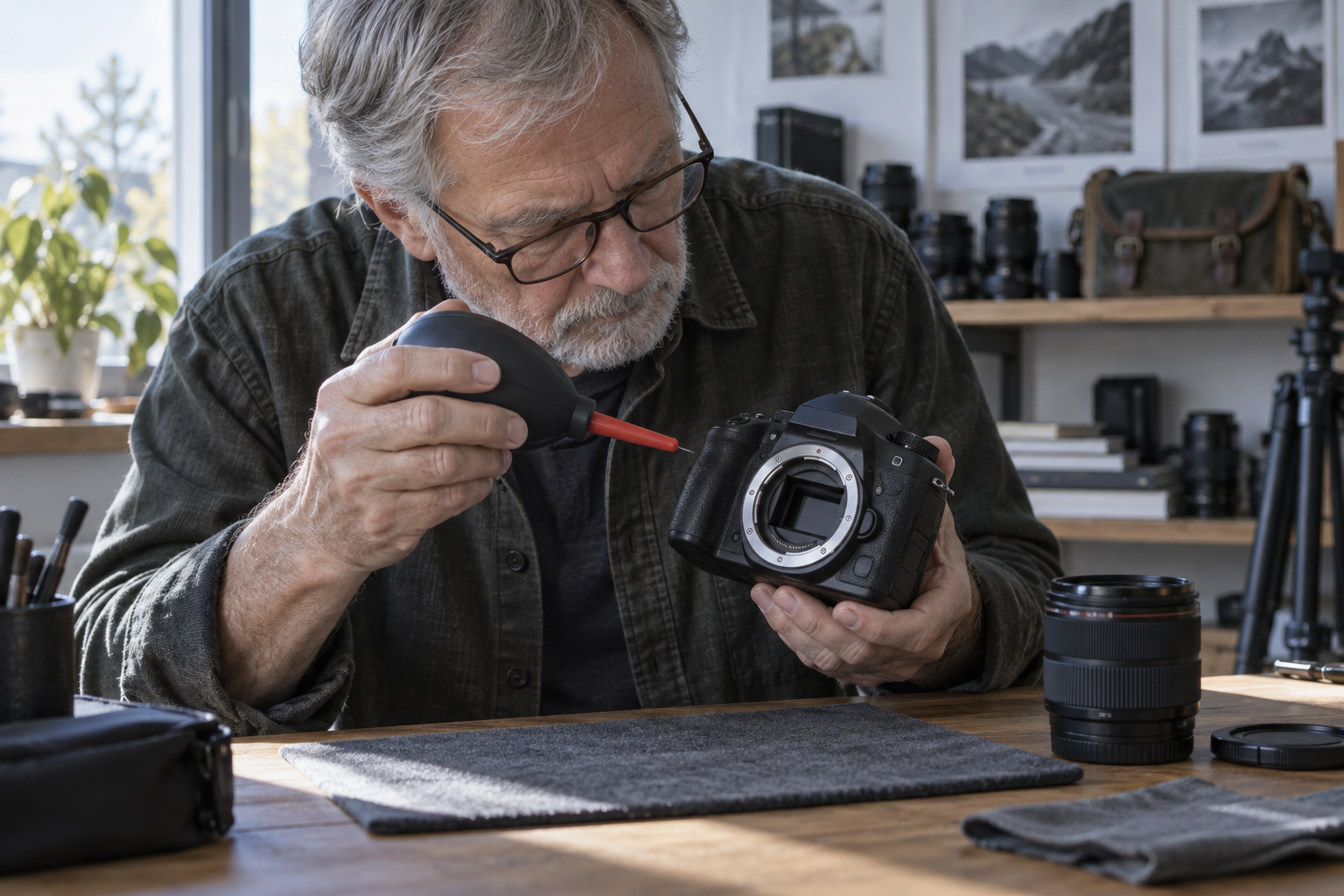
If marks remain, use a clean microfibre cloth or proper lens tissue. Apply a small amount of lens-cleaning fluid to the cloth—not directly to the glass—and wipe gently from the centre outwards. One or two drops are enough. Flooding a lens with liquid risks sending it around the edges of the element or into the barrel.
Fingerprints should be removed reasonably quickly because skin oils can cling stubbornly to lens coatings. Dust can usually wait. Grit and sand cannot. If you have been photographing near a beach, building site or dusty Cambodian road, blow everything thoroughly before touching it with a cloth. Dragging a grain of sand across the glass is an excellent way of turning cleaning into permanent damage.
Lens filters need the same treatment. A filthy protective filter can reduce contrast and produce flare long before the lens behind it becomes a problem. Sometimes the simplest improvement in image quality is to remove a cheap, smeared filter altogether.
The camera body can be cleaned with a soft brush, blower and slightly damp cloth. Pay attention to buttons, control wheels, the viewfinder surround and the rubber grips. These collect sweat and grease, especially in hot weather. Cotton buds can be useful around awkward edges, but they should never be poked inside the camera.
Before changing lenses, switch the camera off and have the replacement ready. Point the lens mount slightly downwards and make the change promptly, without turning it into a panic. A camera does not need to be protected from every molecule of dust, but leaving it open on a table while searching through the bag is asking for trouble.
Sensor dust is different. It usually appears as dark, soft-edged spots, most clearly visible in plain areas photographed at small apertures such as f/11 or f/16. Before blaming the sensor, check whether the same spots appear in several photographs and with different lenses.
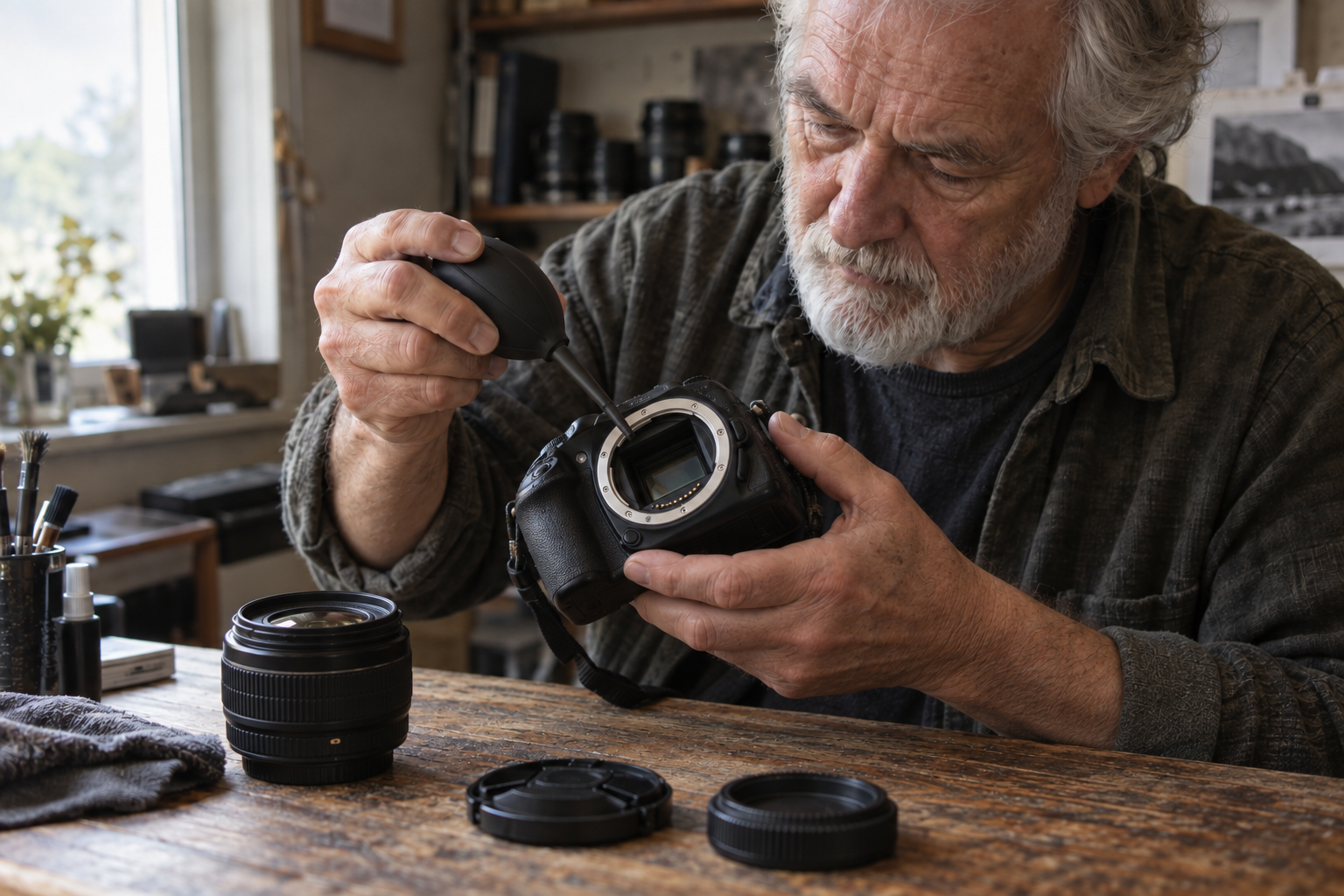
Use the camera’s automatic sensor-cleaning function first. If necessary, remove the lens, hold the mount downward and use a proper hand-operated blower. Do not insert the blower tip deeply into the camera, and never use compressed air. Canned air can release liquid propellant and may damage delicate internal parts.
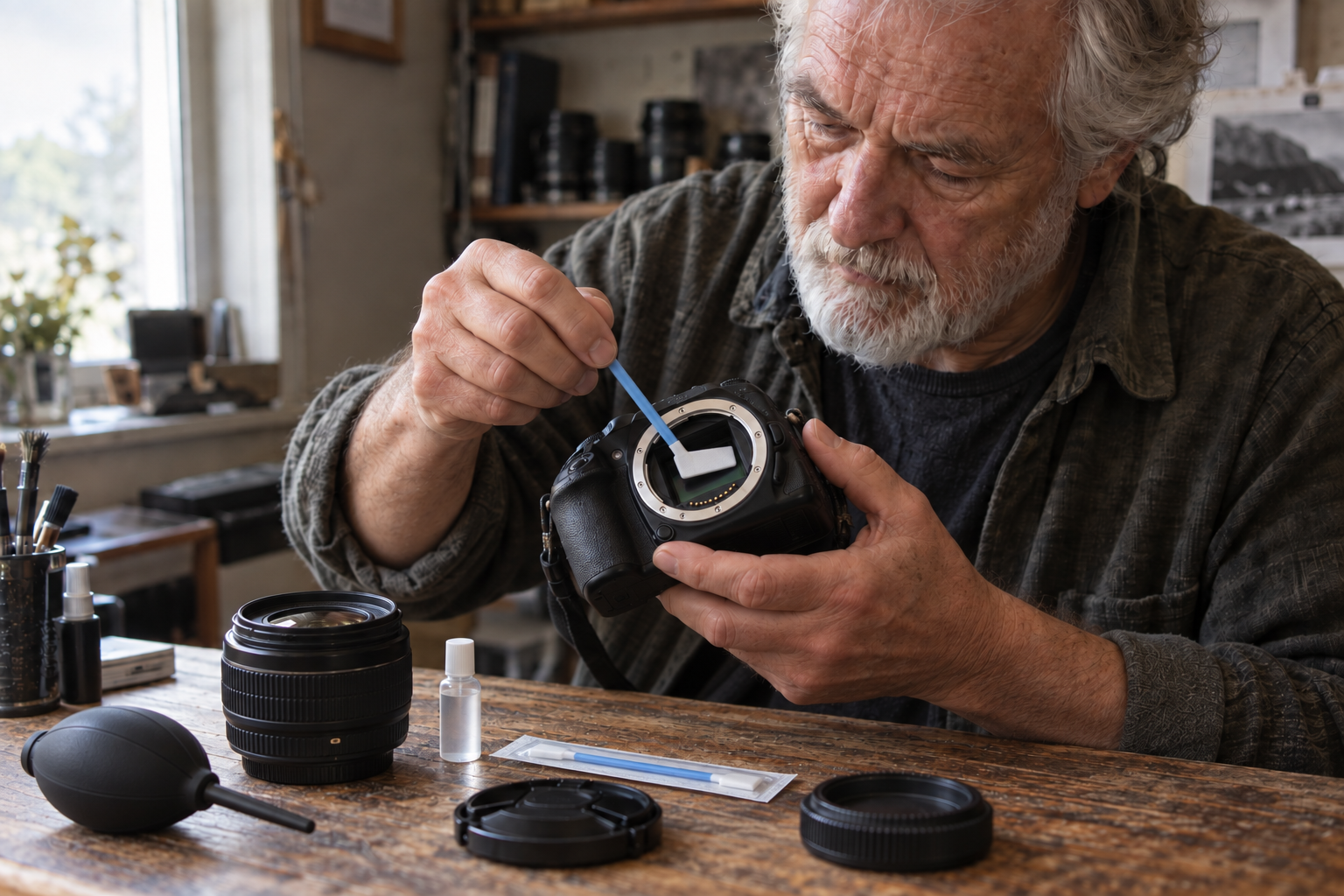
Wet-cleaning a sensor is possible, but it demands the correct swabs, fluid and technique. If you are uncertain, let a competent camera technician do it. A professional cleaning bill is considerably cheaper than a damaged sensor or shutter mechanism.
The contacts on lenses and batteries can occasionally be wiped with a clean, dry cloth. Avoid abrasives, pencils, metal tools and mysterious household chemicals recommended by somebody on the internet. Camera equipment is not a kitchen worktop.
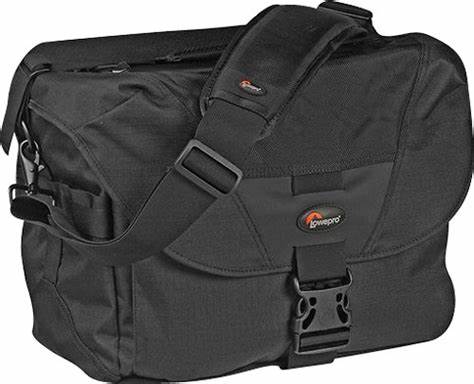
Bags matter too. There is little point cleaning a camera and returning it to a nest of dust, grit and old biscuit crumbs. Empty the bag periodically, vacuum it gently and check the dividers. Lens caps should also be cleaned; otherwise, they simply press dirt back against the glass.
In humid climates, fungus is the greater enemy. Equipment should not be stored damp or sealed away after a wet day. Wipe it down, allow it to dry naturally and store it somewhere with controlled humidity. A dry cabinet is a worthwhile investment in Cambodia, particularly for lenses that may sit unused for weeks. Silica gel can help, but it must be renewed or dried regularly.
Do not leave lenses in direct tropical sunlight in an attempt to “kill” fungus. Heat can damage lubricants, adhesives, rubber and electronics. Once fungus has established itself inside a lens, professional dismantling may be required, and etched coatings cannot always be restored.
Rain, sweat and condensation also deserve attention. Weather sealing is reassurance, not invincibility. After working in rain, pat the equipment dry rather than rubbing water into openings. When moving from an air-conditioned room into hot, humid air, keep the camera inside its bag for a while so it warms gradually. This reduces condensation on—and potentially inside—the equipment.
My own approach is simple: clean when necessary, inspect regularly and avoid fussing. A little dust is part of photography. Grease, grit, salt water and fungus are not.
A battered camera may have character. A dirty sensor has none.

