This story started about 7 weeks ago when a friend of mine mentioned an old lady (Srey Crieat), who lives in the same village as she and had recently been bitten by a snake. What snake was not known but it certainly did some major damage.
She showed me some pictures on her telephone and I was very shocked about the state of her hand and arm. She looked to be in a lot of distress.
I asked her how long ago this had happened and she informed me that it was about two weeks earlier and that Srey Crieat had been seen at the local village hospital who had suggested she be sent to Phnom Penh for the arm to be amputated. She did not want this and was after about a week was sent home, little or nothing was done about the arm, she was given some antibiotics.
At the invite of my friend it was decided that I would go out and see Srey Crieat as soon as possible, initially to assess the damage that could not be seen in the phone pictures and to see if there was more that could be done.
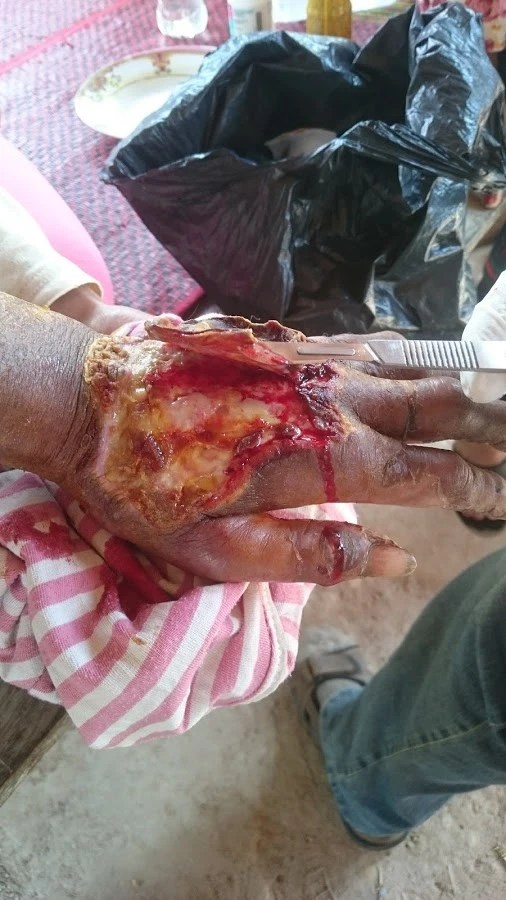
This is what we found the next day. The hand and arm were in a pretty terrible state and to all intents and purposes looked like it had never been cleaned and hand been left exposed since she had left hospital. It was quite badly infected and showed lots of necrosis on both the hand and arm, the primary bite site looked to be the hand although extensive damage up to the elbow could be seen.
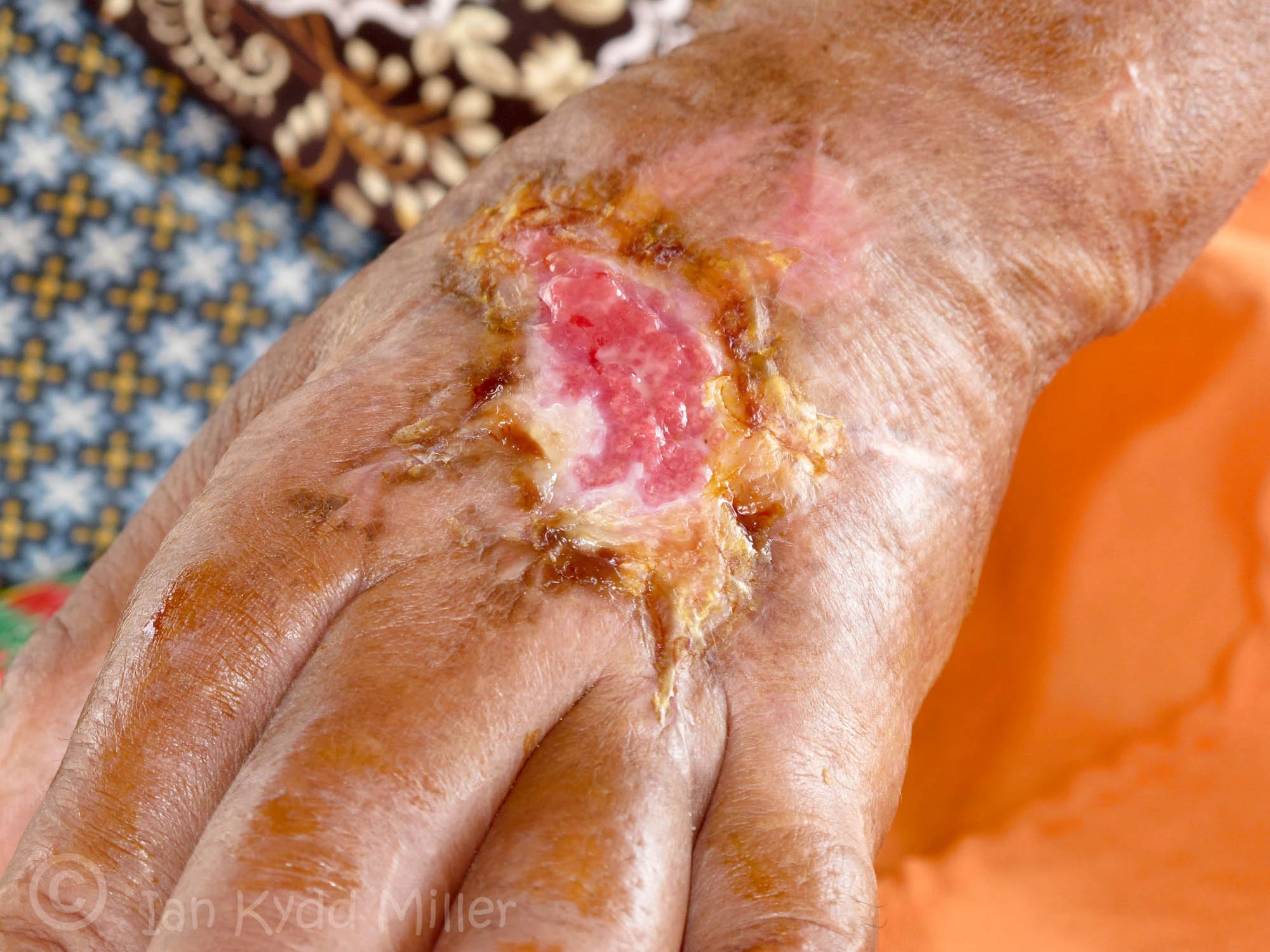
As can be seen in the picture above the upper hand was extremely damaged and with a full thickness skin necrosis. The fingers were extremely swollen and tender but had good pulse showing blood flow present. This certainly was going to take time and commitment if anything was going to be done to improve the situation for this lady. It did not help that it would be a 70Km trip just to get there each time and 70Km back.
There was no way I could leave anyone in this state, the hand was badly infected and damage extended to the elbow. I had to accept that there were risks of further systemic infection and this was discussed with Srey Crieat. She just was so sad and wanted somebody to help and accepted the process may be long and maybe painful. She wanted to go ahead.
First things first I had to get the area clean and with the limited supplies I had with me I began that process.
Using a mixture of Povidone and Hydrogen Peroxide I soaked the hand and removed most of the dirt, that I could see and also many insect eggs. The upper arm I decided to leave until I visited the next day, with the correct equipment to complete the cleaning process. The hand and arm would need more than just cleaning though it was in need of extensive debridement, but I did not have the gear with me to start that process.
A temporary covering was applied to the hand and arm and arrangement made to return the next day giving me time to gather and buy the gear I would need to begin this job. She did not appear to be in much pain, probably due to the damage done by the venom and she was not needing, at this point and analgesia.
Day Two
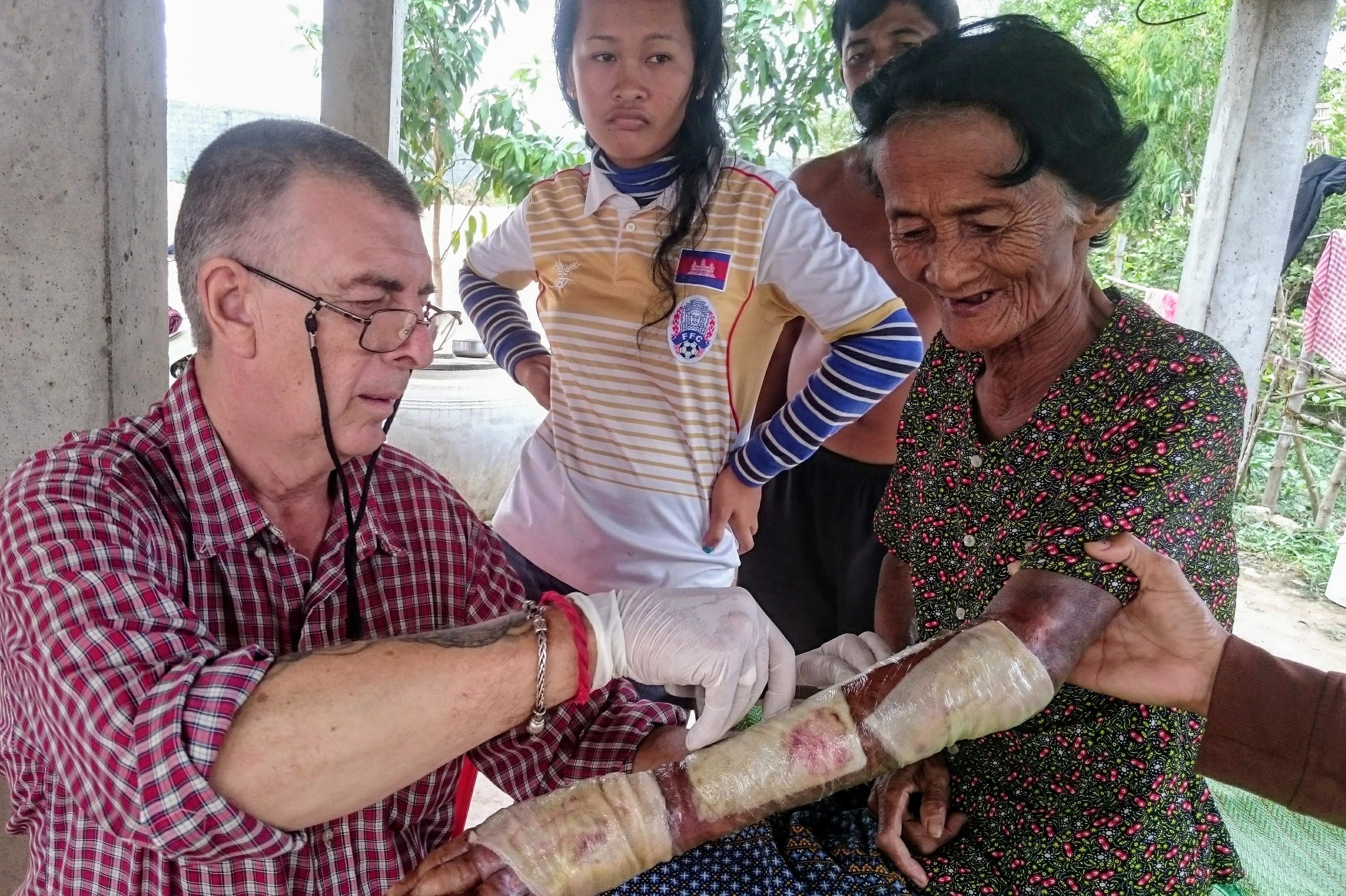
On returning the next day another extensive clean of the whole arm, fingertip to axilla was completed, using the same solution. The hand was in need of a sharp debridement but the necrosis was hard and very difficult to work with so I decided to dress the hand and lower arm in ”fresh wild honey” and dress it with ”cling film” (yes ordinary kitchen film) to soften and clean the areas of necrosis so that they could be more easily dealt with. I arranged to return in three days to begin the debridement.
Day Five
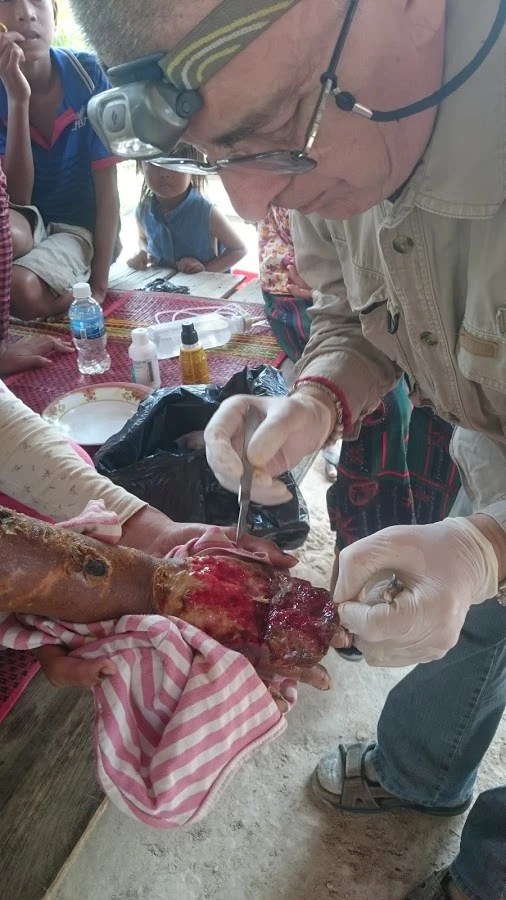
On my return the bandages and cling film were removed (as seen above) and the hand was much more manageable and ready for the necrotic tissue to be removed. It was quite extensive and not going to be a simple job, and care was need not to damage the underlying structures. I was prepared to use local anaesthetic but she said she did not have any real pain and so we went ahead without (slowly).
After about 30 minutes of work, with very little bleeding, we were able to remove the necrosis down to nice pink tissue with good blood flow.
This was enough for her for one day but she showed no pain. The other areas on the arm also need to be removed but there was no rush, the main area of potential infection on the hand was off and I was please to return to the other areas in a few days. The hand and arm were again redressed with Honey (lots of it) and cling film and I would return in three days to continue giving the hand and the lady time to recover.
Day Eight
On returning I set to work removing the other necrotic areas on her forearm. After this we continued for another week (twice weekly visits) with honey and cling film dressings. She was given another course of antibiotics as a precaution and because of the difficult conditions she lives in. After this no more antibiotics were needed.
The improvements began to come quite quickly once the area was fully cleaned of necrosis and other detritus. I used plain white sugar mixed with Vitamin D ointment on the hand for the next week and continued the honey application to the forearm. This seemed a good combination and worked well.
This was the back of her hand after four weeks, showing pretty good healing and no infection present. I continued with sugar and vitamin ointment.
After another three days even more improvement noted.
Day 11
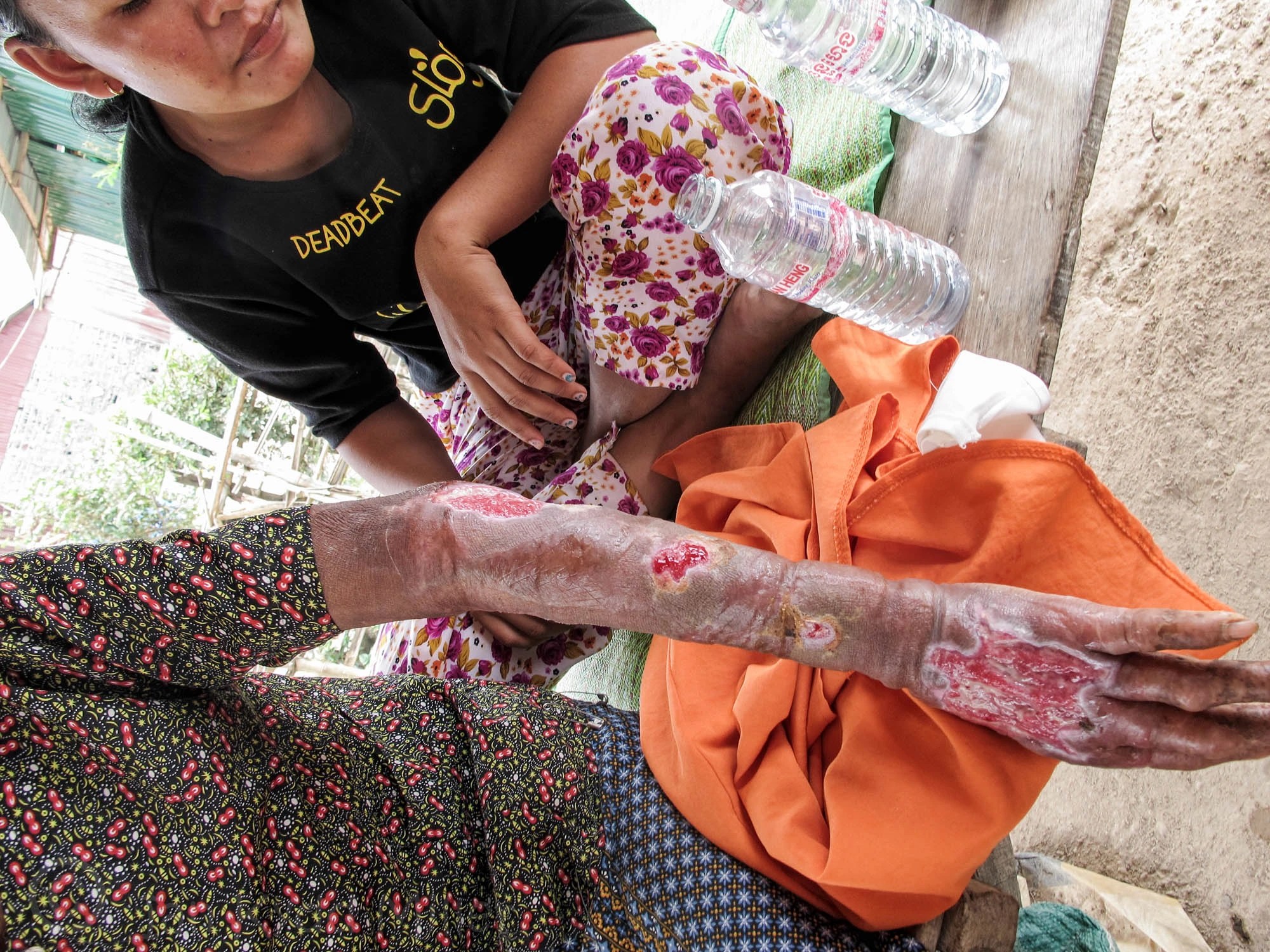
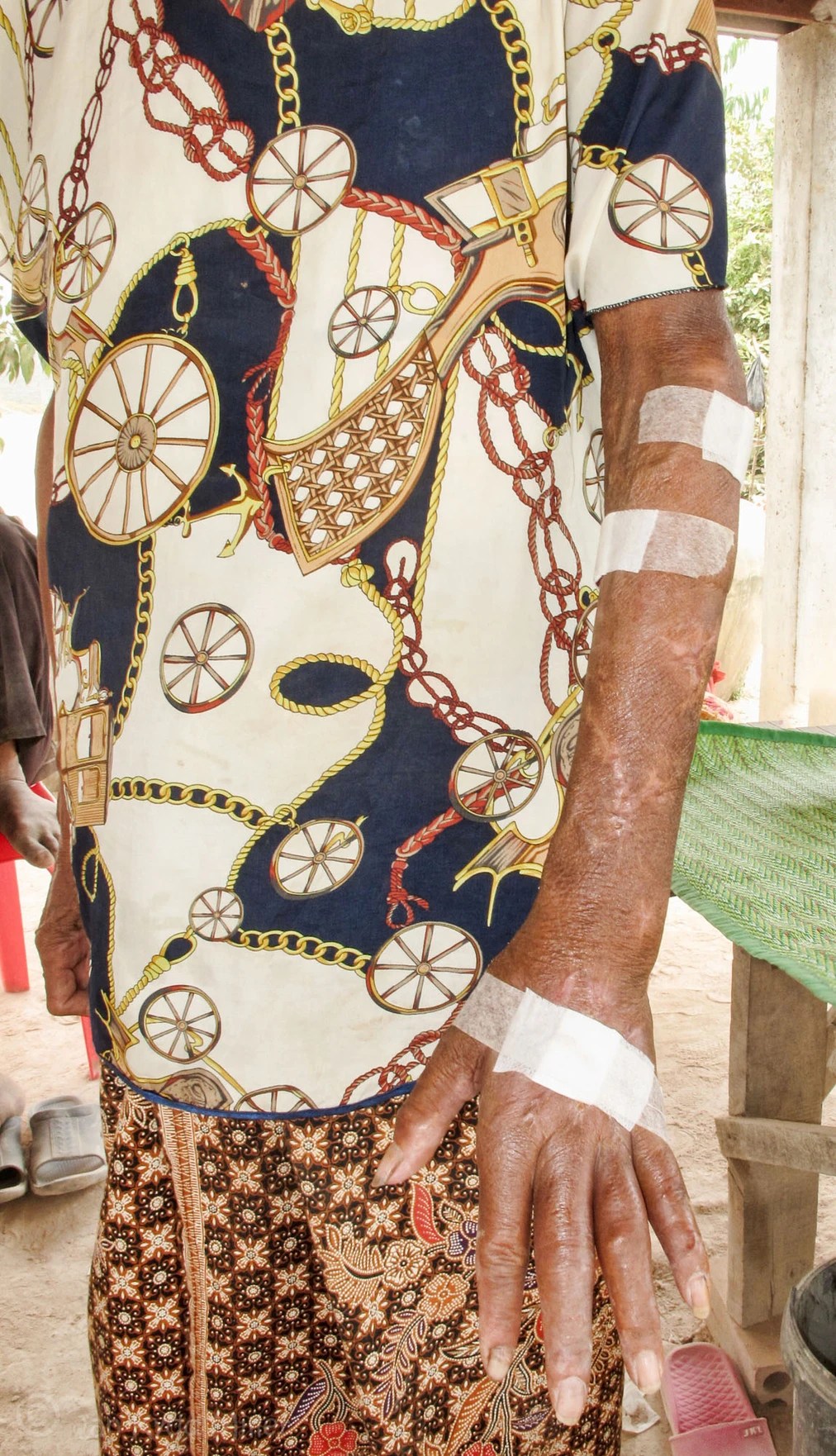
We continued with the same treatment for the next week, the wounds continued to get smaller until the point came over the last two weeks that some of the areas were ready to begin the process of scabbing. For the next week we dressed all areas with no stick dressings brought in by a friend from Bangkok, until such a point than we only needed dry protective dressings.
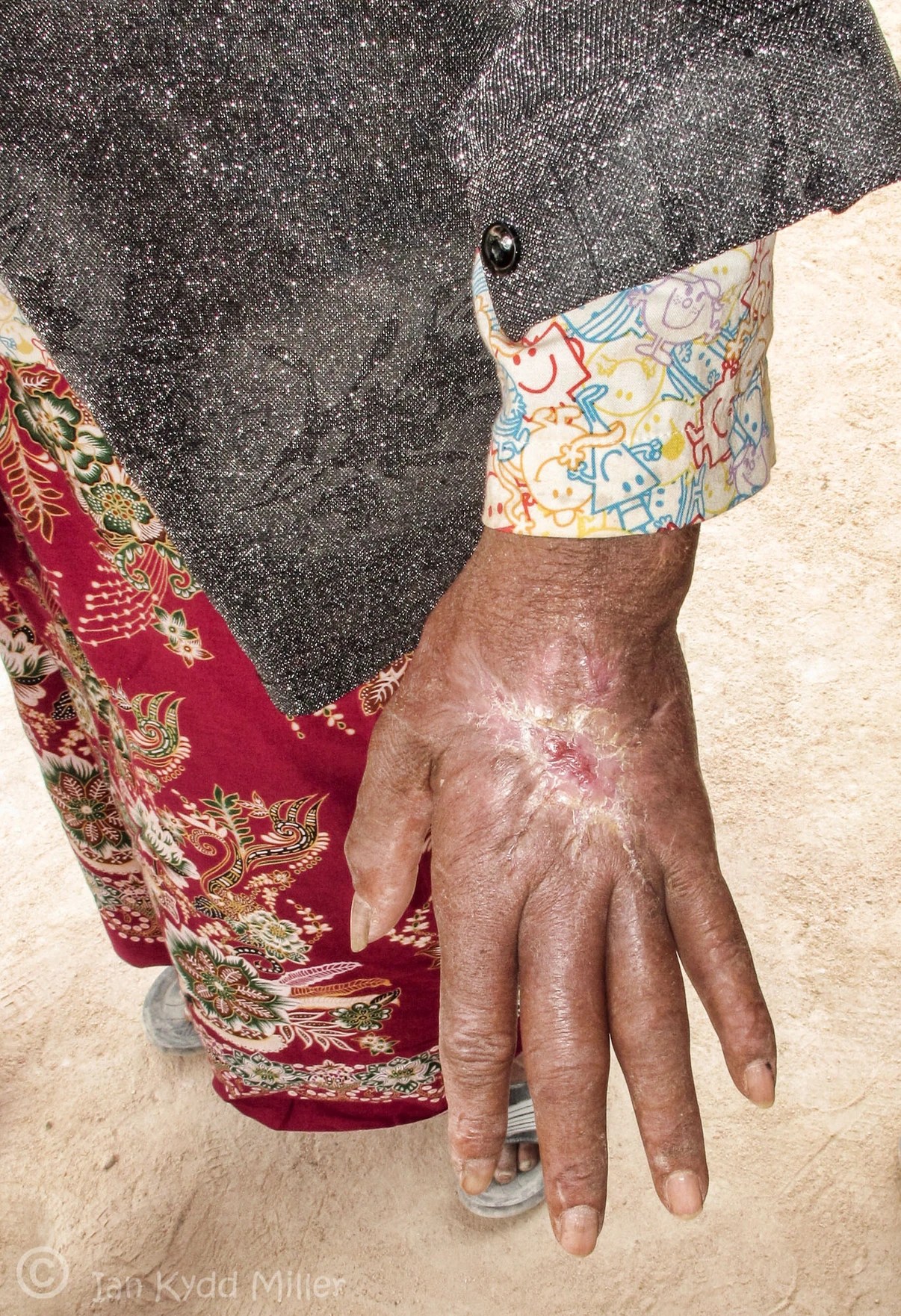
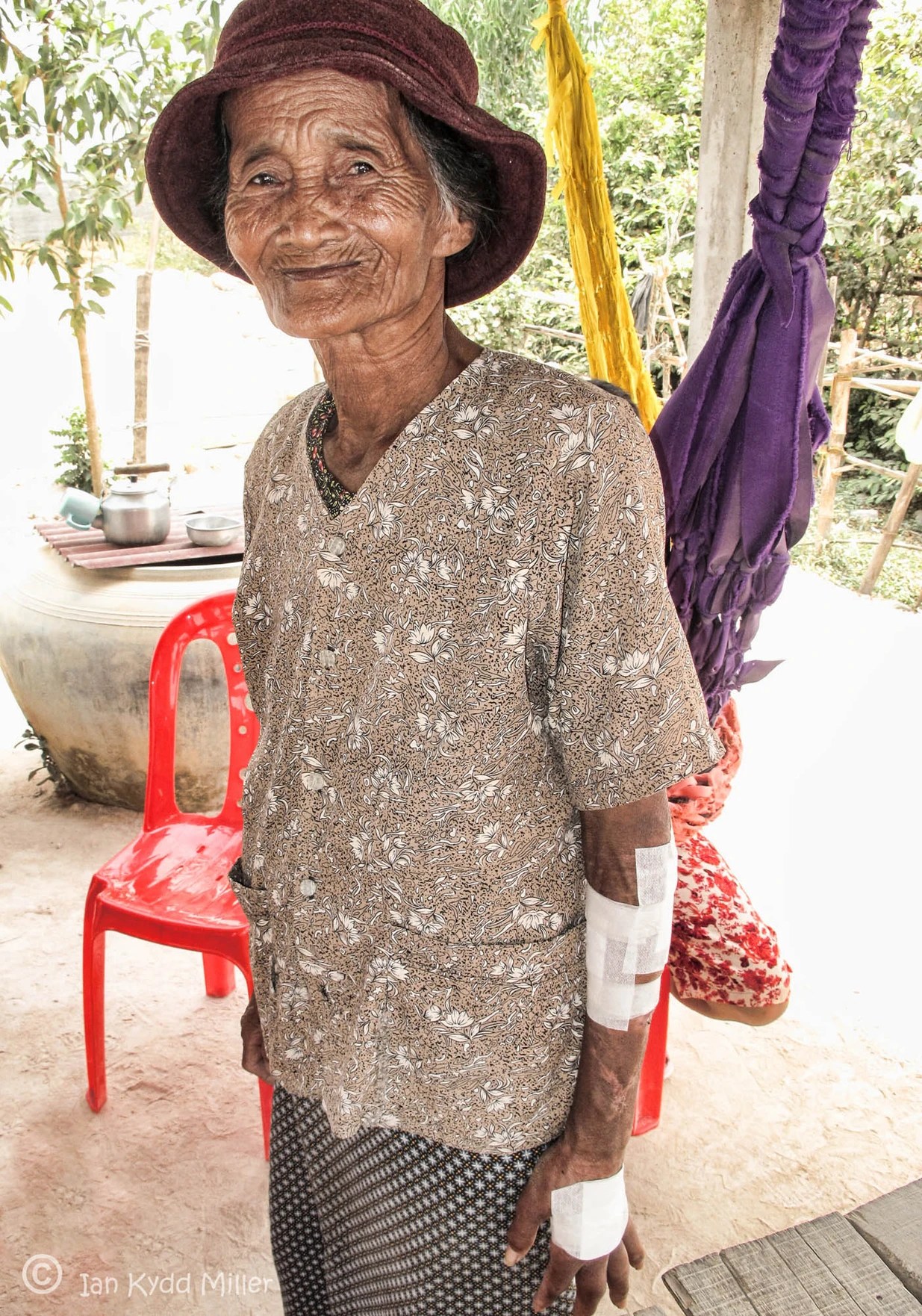
As can be seen on the last pictures there is certainly some scar tissue but much less than I expected. She has a reasonable amount of movement in her hand and her fingers will become less swollen as her hand movement increases.
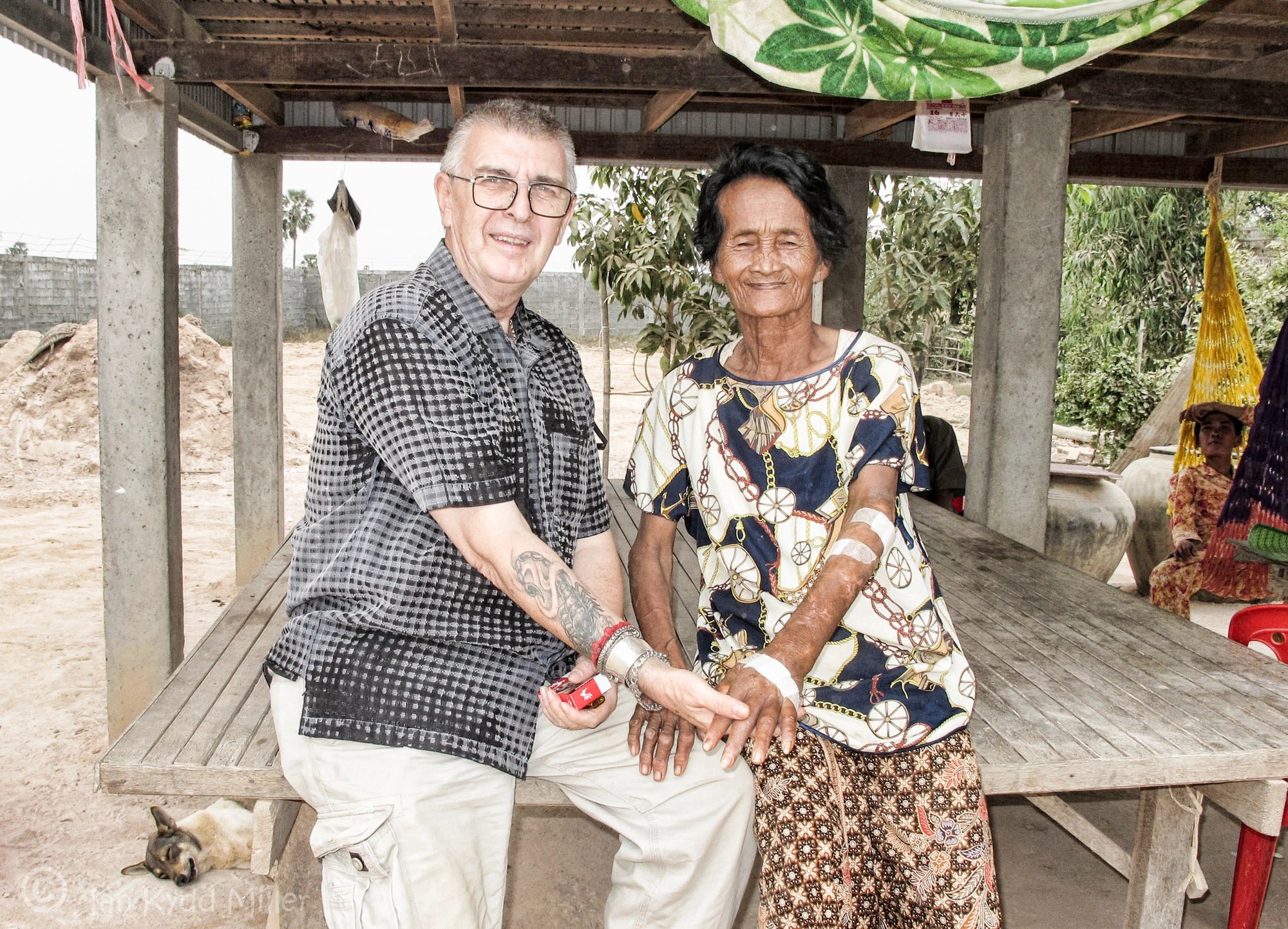
Simple dry dressings now until the remaining areas scab over. One very happy and feisty lady now, such a pleasure to see. Just over seven weeks total to get to this point. Such a brave lady, well done …..
BIG THANKS GO OUT TO BILL FOR HIS GETTING ME SAFELY THERE WHEN NEEDED AND HIS SUPPORT IN GENERAL. TO ALL THOSE WHO MADE THIS POSSIBLE (YOU KNOW WHO YOU ARE) I APPRECIATE IT AND SO DO THOSE IN NEED
#firstaid #asia #medical #sick #charity #snakebite
































































 a world without pictures is like coffee without cream and sugar, bitter