


Criticism of Zionism is not inherently antisemitic. Zionism is a political movement and a set of ideas about Jewish national self-determination; antisemitism is prejudice, discrimination or hostility directed at Jews because they are Jews. Political ideas must remain open to criticism, including fundamental criticism. But describing an argument as “anti-Zionist” does not automatically prevent it from expressing anti-Jewish prejudice.
The distinction matters in both directions. Equating criticism of Zionism with antisemitism can suppress legitimate discussion of Palestinian rights. Treating antisemitism as merely an accusation invented to protect Israel can leave actual hatred of Jews unchallenged.
A serious discussion must preserve the ability to recognise both.

Judaism, Jewish identity, Zionism and Israel are not interchangeable. Judaism is a religious tradition. Jewish identity also encompasses peoplehood, ancestry, culture and secular forms of belonging. Zionism is a modern national movement. Israel is a state, with institutions, citizens, laws and governments whose decisions are open to scrutiny.
Modern political Zionism emerged in the late nineteenth century, partly in response to European antisemitism. It drew on much older Jewish connections to the land of Israel, but those connections and the modern political programme are distinct. The Holocaust subsequently gave the demand for refuge and sovereignty devastating urgency; it did not originate Zionism. Holocaust Encyclopedia
Nor has Jewish political thought ever been unanimous. The Jewish Labour Bund, for example, opposed Zionism while organising explicitly around Jewish working-class life and interests. Jewish disagreement over Zionism is therefore part of Jewish history, rather than evidence that one side has ceased to be Jewish. YIVO Encyclopedia
That history does not mean that the involvement of Jewish critics makes every anti-Zionist argument sound or free of prejudice. The identity of the speaker cannot settle the merits of an argument. But it does make the claim that Zionism and Jewishness are simply the same thing untenable.
The first question should be: what, precisely, is being criticised?
Criticism of an Israeli government is not necessarily criticism of Zionism. Someone can support Israel as a Jewish national home while opposing its government, settlement policies or military conduct. Conversely, someone can oppose Zionism as a political principle without harbouring hostility towards Jewish people.
The term itself needs care. One person uses “Zionism” to mean the continued existence of a secure Jewish homeland. Another uses it to describe a system they believe privileges Jewish national claims over Palestinian rights. If those meanings remain unstated, people can argue past each other: one hears a threat to physical survival where the other intends a demand for political equality.
A useful discussion therefore moves beyond labels. Does the speaker oppose a particular government? Territorial expansion? Unequal citizenship? The principle of an ethnonational state? Any form of Jewish collective life in the region? These are different positions with different implications.
There is nothing inherently antisemitic about arguing that a state should accord equal rights regardless of religion or ancestry, or that Palestinian dispossession deserves recognition and redress. Nor should a political movement’s founding principles be exempt from examination merely because its supporters understand it as a liberation movement.
Understanding why Jews sought safety and self-determination does not require accepting every political arrangement pursued in their name. Equally, recognising Palestinian injustice does not require denying Jewish history or attachment.
The difficult boundary concerns people’s rights, rather than a state’s immunity from criticism.
Consider two propositions:
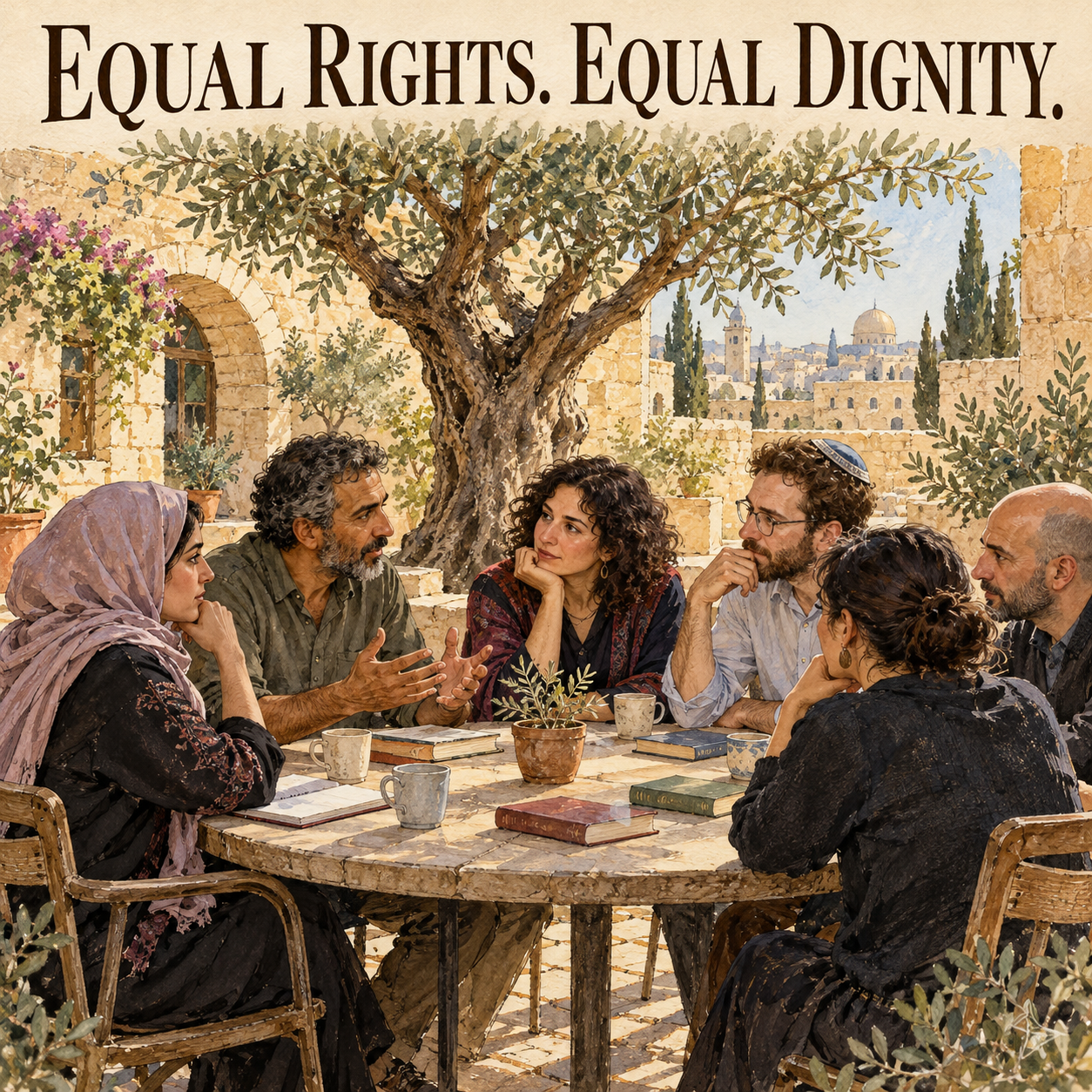
“I support a shared democratic state in which Palestinians and Jews have equal rights, security and political representation.”
“Jews should be expelled from the country.”
These are radically different positions. The first proposes a constitutional arrangement whose practicality and safeguards can be debated. The second advocates persecution.
A credible egalitarian proposal must address more than the language of equality. How would it protect people from violence? How would it secure religious freedom, language, cultural institutions and meaningful political participation? What would prevent a new majority from dominating a new minority? Those questions apply whether the proposed arrangement is one state, two states or a federation.
The Jerusalem Declaration on Antisemitism expressly distinguishes opposition to Zionism from hostility to Jews. It allows advocacy of different constitutional arrangements founded on full equality, while identifying denial of Jewish inhabitants’ ability to live and flourish as Jews as antisemitic. Its approach protects people without requiring endorsement of one constitutional model. jerusalemdeclaration.org
This is also why the phrase “Israel’s right to exist” can obscure rather than resolve a disagreement. It may refer to the safety of its population, recognition of its sovereignty, its borders or the preservation of its present constitutional character. A person should specify which they mean. Questioning a political structure and threatening the people living within it cannot reasonably be treated as identical.
The principal definitions of antisemitism disagree over some of these boundaries.
The International Holocaust Remembrance Alliance’s working definition explicitly says that criticism comparable to criticism of other countries is not antisemitic. Its contextual examples nevertheless include denying Jewish self-determination, describing Israel’s existence as a racist endeavour, and applying certain double standards. Supporters see these examples as necessary for recognising prejudice expressed through discourse about Israel. IHRA working definition
The Jerusalem Declaration was developed partly in response to concerns about those boundaries. It states that criticism of Zionism, evidence-based arguments about discrimination, and boycotts of Israel are not in themselves antisemitic. That is a classification of the speech, not an endorsement of every argument or campaign. jerusalemdeclaration.org
The Nexus Document similarly distinguishes political opposition from anti-Jewish prejudice, while recognising that discussion of Israel can reproduce conspiracy theories, collective blame and discriminatory treatment of Jews. It also cautions against using accusations of antisemitism to suppress political criticism. Nexus Project
There is consequently no honest basis for claiming that every contested case has one universally accepted answer. The disagreements are substantive. Definitions help structure judgment; they cannot replace examination of what someone actually said or did.
Where, then, does criticism cross the line?
A central warning sign is the transfer of responsibility from identifiable political actors to Jews collectively. Holding a Jewish neighbour, student or synagogue answerable for Israeli government actions imposes political liability through identity. The IHRA definition expressly identifies collective responsibility for Israel’s actions as antisemitic. IHRA working definition
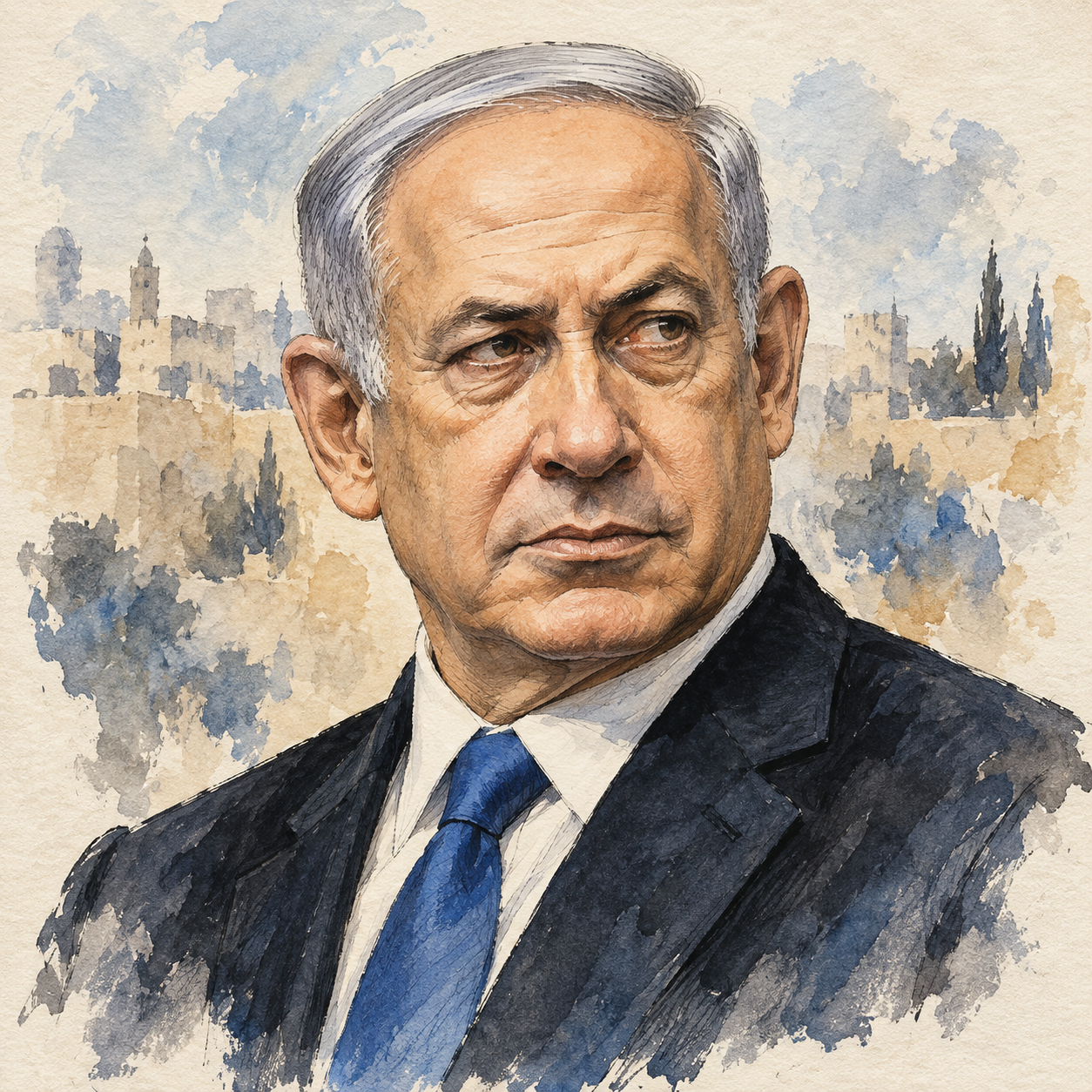
Another warning sign is conspiratorial explanation. Investigating a named lobbying organisation, a donor’s disclosed contributions or a government’s decisions is ordinary political scrutiny. Claiming that an invisible Jewish network controls governments, banking or the press turns scrutiny into an ethnic conspiracy theory. Substituting “Zionists” for “Jews” does not cleanse an argument if the intended target and underlying stereotype remain the same. Nexus explicitly addresses this use of familiar antisemitic accusations in discussion of Zionism and Israel. Nexus Project
The distinction can be made concrete:
| Political scrutiny | Anti-Jewish prejudice |
|---|---|
| Examining the documented influence of a particular organisation | Claiming Jews secretly control public life |
| Criticising an official’s decisions and stated beliefs | Treating Jewish ancestry as evidence of disloyalty |
| Advocating equal political rights for Palestinians and Jews | Demanding Jewish expulsion or subordination |
| Criticising a company’s documented activities | Targeting an unrelated business because its owner is Jewish |
These are illustrative distinctions, not a mechanical test for every dispute. Context matters, especially where words have several meanings or a speaker’s wider conduct contradicts their professed principles.
The same need for precision applies to political images. A caricature can attack a leader’s vanity, cruelty, hypocrisy or appetite for power. But adding imagery of Jewish financial control or collective religious guilt changes the argument. The criticism is then no longer confined to the leader’s conduct.
What about disproportionate attention to Israel? That alone does not establish antisemitism. People concentrate on particular conflicts because of family connections, direct experience, their government’s involvement or the political influence they believe they can exercise. A Palestinian does not owe equal attention to every other conflict before speaking about Palestinian life.
The Jerusalem Declaration accordingly says that excessive criticism or an apparent double standard is not, by itself, sufficient to establish antisemitism. jerusalemdeclaration.org
Yet selective attention should still be open to examination. The useful question is why a different standard is being applied. A specific political connection may explain it. An assumption that Jewish wrongdoing reflects an inherent collective defect would reveal something else.
There is also a distinction between an argument being non-antisemitic and being correct. A claim can be inaccurate, inflammatory, historically shallow or strategically foolish without being anti-Jewish. Rejecting an accusation of antisemitism does not establish the truth of the underlying political claim. Conversely, a valid criticism of Israeli policy does not excuse a prejudiced explanation attached to it.
Terms such as “apartheid”, “colonialism” and “genocide” should therefore be examined through their definitions, evidence and relevant arguments. Their seriousness is a reason for careful scrutiny, not an automatic reason to prohibit their use or accept them without examination.
Finally, accusations of antisemitism should be taken seriously without being treated as conclusive merely because they have been made. Ask for the particular statement, action or pattern, and the reasoning behind the allegation. The same standard should apply to claims that an accusation was made dishonestly: disagreement about a boundary does not, by itself, prove bad faith.
The defensible principle is that criticism of Zionism is not inherently antisemitic, and neither Jewish identity nor Palestinian advocacy should carry a presumption of guilt. Political movements, governments and constitutional arrangements must remain open to challenge. Jewish and Palestinian people must retain their equal claim to safety, dignity and freedom, whatever political settlement someone favours.
Zionism should be neither condemned by reflex nor defended by habit. It deserves the same hard scrutiny as any national movement: what does it promise, whose safety does it protect, whose rights does it limit, and what has been done in its name? Criticism must not turn into hostility toward Jews; support must not become an excuse to ignore Palestinian suffering. Thought is required on both sides.
 Ian Miller