📷 AF-S Nikkor 50mm f/1.4G vs Nikkor 50mm f/1.4D

Lenses, opinons, thoughts, photography, street, Travel

A Quick Rundown on Nikon’s Classic 50mm

Nikkor 50mm f1.4D

The 50mm f/1.4 lens has long been a staple in Nikon’s lineup—ideal for portraits, low-light shooting, and general-purpose photography. But when choosing between the AF-S 50mm f/1.4G and the older AF 50mm f/1.4D, photographers often ask: which one suits my style better?

Let’s break it down.

🔍 AF-S Nikkor 50mm f/1.4G — Modern Mood Maker

Released in 2008, the AF-S 50mm f/1.4G is Nikon’s update to the classic 50mm formula. It features:

  • Silent Wave Motor (SWM) for autofocus—works on all Nikon DSLRs, including entry-level bodies without built-in motors.
  • Rounded 9-blade aperture for smoother bokeh.
  • Weather-sealed mount and solid build quality.
  • More refined rendering—soft wide open, but with a gentle, filmic character.

👍 Pros

  • Creamy bokeh and subtle tonal transitions.
  • Compatible with all Nikon DSLRs and Z bodies via FTZ adapter.
  • Quiet autofocus, ideal for video and discreet shooting.

👎 Cons

  • Slower autofocus than the D version.
  • Softer wide-open performance—requires stopping down for critical sharpness.
  • Larger and heavier (290g vs 230g).

🔍 Nikkor 50mm f/1.4D — Compact Classic

The 50mm f/1.4D is a legacy lens that still holds its own. It features:

  • Mechanical autofocus—requires a Nikon body with a built-in AF motor (won’t autofocus on D40, D60, D3xxx, or D5xxx series).
  • 7-blade aperture—bokeh is slightly busier than the G version.
  • Compact and lightweight design—great for travel and street work.
  • Snappier AF performance—especially on pro bodies like the D700 or D810.

👍 Pros

  • Fast, responsive autofocus on compatible bodies.
  • Smaller and lighter—easy to carry all day.
  • More affordable on the used market.

👎 Cons

  • No internal motor—limited compatibility.
  • Bokeh is harsher, especially in busy backgrounds.
  • Older optical design—less refined rendering wide open.

🧠 Which One Should You Choose?

  • Choose the AF-S 50mm f/1.4G if you want modern compatibility, smoother bokeh, and quiet AF—especially useful for video or newer DSLR bodies.
  • Choose the 50mm f/1.4D if you shoot on older pro bodies, value compactness, and prefer snappier AF for street or action work.

Both lenses offer the classic 50mm look, but the G version leans toward emotional rendering, while the D version favors speed and simplicity.

Fujinon XF 56mm f/1.2 R WR — Detailed Assessment

cameras, Fujichrome, fujifilm, Lenses, opinons, thoughts, photography, street, Travel

Overview

The Fujinon XF 56mm f/1.2 R WR is Fuji’s short-tele flagship for the X system, offering roughly an 85mm full-frame equivalent perspective on APS-C bodies. It’s engineered for portraiture, intimate documentary work, and any situation that benefits from strong subject isolation, shallow depth of field, and reliable weather resistance.

Key specifications

  • Focal length: 56mm (≈85mm equivalent)
  • Maximum aperture: f/1.2
  • Mount: Fujifilm X
  • Weather resistance: WR (dust and moisture sealed)
  • Optical construction: Multi-element design optimised for sharpness and bokeh control
  • Size/weight: Substantial; built for hand-held stability rather than absolute compactness

Optical character and performance

  • Center sharpness: Exceptional wide open; microcontrast and detail render skin and fabrics with natural dimensionality.
  • Edge performance: Edges and corners improve noticeably when stopped to f/2–f/2.8; wide-open edges are softer but not problematic for the lens’s primary use.
  • Bokeh: One of the lens’s defining strengths; extremely smooth, creamy out-of-focus transition with pleasing highlight shaping and minimal nervousness.
  • Rendering: Filmic and painterly rather than clinical; midtones and highlights roll off in a way that flatters faces and small textures.
  • Aberrations and flare: Well controlled in typical lighting; some care required with strong backlight but coatings and design limit intrusive flare and colour fringing.

Build, ergonomics, and handling

  • Construction: Solid metal build with weather sealing; a premium, reassuring feel.
  • Aperture and focus feel: Smooth aperture ring with well-defined stops; manual focus throw is precise and useful for deliberate focus work.
  • Balance: Heavier than compact primes; balances well on X-T and X-Pro bodies but feels deliberate in the hand.
  • Practicality: Not a grab-and-go lens for every outing; it’s a tool chosen for intent rather than convenience.

Autofocus, low-light, and hybrid use

  • AF performance: Fast and reliable on modern Fuji bodies, particularly with face and eye-detection enabled; suitable for portrait sessions, events, and run-and-gun documentary work when paired with capable bodies.
  • Low-light capability: f/1.2 provides real advantage for handheld shooting in dim environments, allowing lower ISOs or faster shutters while maintaining subject isolation.
  • Video: Minimal focus breathing and smooth transitions make it usable for interviews and cinematic shallow-depth-of-field work, though it’s optimised for stills.

Strengths

  • Outstanding subject isolation and bokeh that flatters faces and creates emotional separation.
  • Robust weather-resistant construction for outdoor sessions in variable conditions.
  • Strong centre sharpness wide open that supports large prints and editorial work.
  • Emotional, film-like rendering that excels in portraiture and intimate documentary imagery.

Trade-offs and caveats

  • Size, weight, and cost: Premium price and substantial heft make it a considered purchase.
  • Narrower framing on APS-C: ≈85mm eq. is ideal for head-and-shoulders but less versatile for environmental storytelling.
  • Very thin depth of field at f/1.2: Technique and reliable AF are essential; missed focus is more obvious.
  • Edge sharpness wide open: If you need edge-to-edge perfection at f/1.2, stopping down is necessary.

Recommended use cases and technique

  • Ideal for: Portraits, engagement and wedding work, editorial headshots, intimate documentary sequences, and low-light portraiture.
  • Shooting tips: Use f/1.2–f/1.8 for dramatic subject separation; stop to f/2.8–f/4 for small groups or increased sharpness. Rely on eye-detection AF for higher keeper rates. Maintain careful focus technique when shooting wide open and favour single-subject compositions where background compression enhances narrative.

Final verdict

The Fujinon XF 56mm f/1.2 R WR is a signature portrait lens that delivers on its promise: creamy bokeh, strong center sharpness, and reliable weather-resistant performance. It’s a lens for photographers who prioritise mood, presence, and tactile control over ultimate compactness or focal flexibility. For anyone focused on portraiture and intimate storytelling on the Fuji X system, it’s a high-impact, expressive tool that earns its place in the bag.

🌌 Viltrox 13mm f/1.4 Review: Wide, Fast, and Surprisingly Refined

fujifilm, Lenses, opinons, thoughts, photography, viltrox

A Critical Look at Viltrox’s Ultra-Wide Prime for APS-C

In the world of ultra-wide primes, the Viltrox 13mm f/1.4 stands out—not just for its specs, but for what it represents: a third-party lens that competes confidently with first-party glass. Designed for APS-C mirrorless systems (Fujifilm X, Sony E, Nikon Z), it offers a 20mm full-frame equivalent field of view with a bright f/1.4 aperture. That’s a rare combination, especially at this price point.

But does it live up to the hype?

🔍 Optical Performance

Sharpness is excellent in the centre, even wide open, with only minor softness at the edges that improves by f/2.8. This makes it a strong performer for:

  • Astrophotography: minimal coma and good corner control
  • Architecture and interiors: straight lines stay straight, thanks to well-controlled distortion
  • Street and environmental portraiture: surprisingly usable for creative compositions

Chromatic aberration is minimal, and flare resistance is decent, though not flawless when shooting into strong light sources.

⚙️ Build and Handling

The lens feels premium:

  • All-metal construction with weather sealing
  • Smooth manual focus ring and a clicked aperture ring—a welcome tactile feature for photographers who prefer physical feedback
  • Compact and lightweight for an f/1.4 ultra-wide—ideal for travel and vlogging setups

Autofocus is fast and quiet, with support for eye detection AF and EXIF data transmission. Firmware updates are possible via a USB-C port on the lens mount, a thoughtful touch for long-term usability.

🎯 Real-World Use

This lens shines in:

  • Low-light urban scenes: f/1.4 lets you shoot handheld at night
  • Vlogging and video: wide field of view with minimal focus breathing
  • Creative portraiture: unconventional but effective for environmental storytelling

However, it’s not without trade-offs:

  • No image stabilisation—rely on in-body IS or careful technique
  • Some edge softness wide open, especially on high-resolution sensors
  • No weather sealing on the front element, so use a filter in harsh conditions

🧭 Final Verdict

The Viltrox 13mm f/1.4 is a bold, well-executed lens that punches above its weight. It’s not perfect—but it doesn’t need to be. For photographers and filmmakers who value wide perspectives, fast glass, and creative flexibility, it’s a compelling choice.

Best for: astrophotographers, vloggers, street shooters, and anyone who wants to explore the world at 20mm equivalent. Not ideal for: those needing edge-to-edge perfection or built-in stabilisation

The Nikon D700

cameras, Lenses, Lowepro, opinons, thoughts, photography, pictures, street, Travel, Uncategorized, war
  1. Versatility: The full-frame sensor allows for greater control over depth of field, enabling photographers to achieve beautiful background blur (bokeh) and more creative compositions.

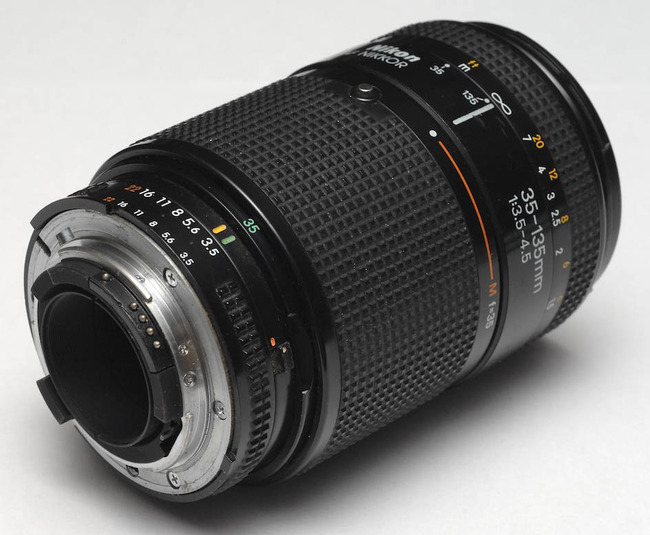
I have been using an interesting older zoom lens on my Nikon D3. The Nikkor 35-135 f3.5/4.5

cambodia, cameras, fujifilm, Lenses, Lowepro, opinons, thoughts, photography, pictures, printing, street, Travel

William G. Biggart (July 20, 1947 – September 11, 2001). In remeberance.

photography, pictures, street, Travel, war

The Art of Photography: Crafting the Perfect Camera Bag

cambodia, cameras, fujifilm, Lenses, Lowepro, opinons, thoughts, pictures, street, Travel, viltrox
Nikon D3S

The Nikon D3 plus Nikkor 35-135 f3.5/4.5 Zoom

Lenses, Lowepro, opinons, thoughts, photography, pictures, street
A cluster of pink and white flowers surrounded by green leaves.
A young boy sitting on a chair, smiling and holding a toy gun, wearing a colorful outfit with a blue and red design.

The Nikon D3: A Love Story. LOL.

Switching Between Camera Giants: A Personal Journey

cambodia, cameras, fujifilm, Lenses, Lowepro, opinons, thoughts, photography, pictures, street, Travel, viltrox

Full Frame or Crop sensor ??

cameras, Lenses, opinons, thoughts, photography, pictures, street, Travel