Exploring the 7Artisans 50mm f0.95 Lens on a Fuji XE2: A Photographer’s Delight

cameras, fujifilm, Lenses, opinons, thoughts, photography, pictures, street

Photography enthusiasts, gather around as we dive into the world of bokeh and low-light performance with the 7Artisans 50mm f0.95 lens mounted on the classic Fuji XE2. This combination is not just about capturing images; it’s about embracing a unique photographic experience.

The 7Artisans 50mm f0.95 lens, often praised for its affordability and solid metal build, brings a new dimension to the Fuji XE2. With a maximum aperture of f0.95, this lens promises to transform the way you capture portraits and low-light scenes. The wide aperture allows for a shallow depth of field, creating that dreamy bokeh effect that makes your subjects pop against a smoothly blurred background.

But what truly sets this lens apart is its manual focus, which offers a tactile and engaging experience. It’s a return to the roots of photography, where the photographer is in complete control. The pleasure of focusing with this lens is often highlighted by users, noting its good throw and the ability to keep up with moving subjects like a slow-moving cat. This level of control is perfect for those who love to take their time, crafting each shot with precision and artistic intent.

The lens’s 13 aperture blades contribute to a pleasing round bokeh, enhancing the aesthetic quality of your photos. And while it’s not a macro lens, the minimum focus distance of about 18 inches allows for decent close-ups, adding versatility to your shooting repertoire.

Now, let’s talk about the Fuji XE2, a camera that has won the hearts of many photographers for its compact size and retro design. When paired with the 7Artisans 50mm f0.95 lens, the XE2 becomes a powerhouse for street and portrait photography. The camera’s classic design, combined with the lens’s modern optical performance, creates a synergy that’s both visually appealing and functionally impressive.

Some users have compared the 7Artisans 50mm f0.95 to other lenses in its category, noting that it holds its own in terms of brightness and optical quality. It’s even been said to be a tad brighter than some of its competitors, which is quite a statement considering its price point. The 7Artisans 50mm f0.95 is not without its quirks, such as some optical flaws like vignetting and chromatic aberration when wide open, but these are often considered part of the lens’s character rather than detriments. For those who enjoy the artistry of photography and the tactile experience of manual focusing, this lens offers a unique opportunity to explore creativity at a relatively low cost.

In conclusion, the 7Artisans 50mm f0.95 lens on a Fuji XE2 is a match made in photography heaven for those who appreciate the art of manual focusing and the beauty of a large aperture. It’s a setup that encourages you to slow down, compose thoughtfully, and immerse yourself in the creative process. Whether you’re a seasoned photographer or someone who’s just starting, this combo is sure to inspire and delight.

Cartier-Bresson

cambodia, cameras, fujifilm, homelessness, Lenses, opinons, thoughts, photography, pictures, street

Henri Cartier-Bresson: The Decisive Moment of Photography

Henri Cartier-Bresson, born on August 22, 1908, in Chanteloup-en-Brie, France, is a name that resonates with profound respect in the world of photography. His legacy as a master of candid photography and an early adopter of 35mm film has left an indelible mark on the art form. Cartier-Bresson’s philosophy of capturing the “decisive moment” – that split second that reveals the essence of an event – has influenced generations of photographers and artists alike.

Cartier-Bresson’s journey into the arts began with painting, which he studied from a young age, and was deeply influenced by Surrealism. However, it was his discovery of the Leica camera that truly shaped his path. The Leica’s compact size and agility allowed him to move through the streets unnoticed, capturing life as it unfolded before him. This unobtrusive approach to photography enabled him to produce images that were natural, spontaneous, and brimming with life.

His work is not just a collection of images; it is a historical document of the 20th century. From the liberation of Paris to the last days of Gandhi, Cartier-Bresson was there, camera in hand, to capture the moments that defined an era. His ability to anticipate and seize the perfect frame is what made his work stand out. He likened this process to a visual ballet, where the photographer must align their intuition, their eye, and their heart to capture the scene before them.

In 1947, Cartier-Bresson co-founded Magnum Photos, a cooperative agency for worldwide freelance photographers, which became a pivotal platform for photojournalism. Through Magnum, he and his colleagues were able to maintain control over their work and distribute it globally, changing the landscape of photography and media.

Later in life, Cartier-Bresson turned away from photography and returned to his first love, drawing and painting. He believed that each artist should follow their creative impulses, whether they lead to the darkroom or the canvas. His artistic vision and dedication to his craft have left a lasting legacy that continues to inspire and challenge photographers to this day.

Henri Cartier-Bresson passed away on August 3, 2004, but his work lives on, housed in galleries and private collections around the world. His contributions to photography are celebrated in numerous exhibitions, books, and documentaries. For those who wish to delve deeper into his life and work, his photographs and the stories behind them offer a timeless exploration of the human condition and the world we inhabit.

Cartier-Bresson’s influence extends beyond photography. His approach to the decisive moment can be applied to various aspects of life and art, teaching us to be present, observant, and ready to capture the essence of the fleeting moments that surround us. His work reminds us that beauty and significance can be found in the everyday, waiting for those with the patience and insight to see it. Henri Cartier-Bresson’s legacy is a testament to the power of seeing, not just looking, and the profound impact of capturing life as it happens.

Henri Cartier-Bresson and the Timeless Leica

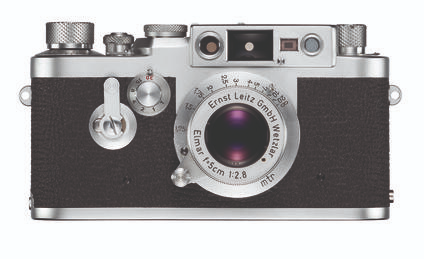
Henri Cartier-Bresson, a name synonymous with the art of street photography, has left an indelible mark on the world with his concept of “the decisive moment.” His weapon of choice? The iconic Leica 35mm camera. This small, unobtrusive piece of technology was not just a tool but an extension of Cartier-Bresson’s vision, allowing him to capture life as it unfolded before him.

The Leica was Cartier-Bresson’s constant companion, its mechanical precision and reliability meshing perfectly with his need for spontaneity and discretion. With a Leica in hand, he traversed the globe, documenting the human condition and etching his view of the world onto film.

Fast forward to today, and one might wonder if Cartier-Bresson would still be loyal to his Leica if he were alive. Given the advancements in camera technology, would he opt for a modern digital Leica, or perhaps something entirely different?

Considering Cartier-Bresson’s philosophy, it’s not the camera but the eye, the mind, and the heart that captures the decisive moment. The Leica, with its simplicity and focus on the essentials, aligns with this philosophy. It’s not about having the latest features but about understanding and connecting with the subject.

So, would Henri Cartier-Bresson still use a Leica today? It’s a question that invites speculation, but one thing is certain: his legacy is not bound by the type of camera but by the timeless moments he captured. Those moments continue to inspire photographers around the world, reminding them that the true essence of photography lies in seeing and feeling, not in the gear they hold.

The Great Camera Debate: DSLR vs. Mirrorless

cambodia, cameras, fujifilm, Lenses, opinons, thoughts, photography, street, viltrox

In the world of photography, the debate between DSLR and mirrorless cameras is a tale as old as time—or at least as old as digital photography. As we stand in 2024, the discussion is more relevant than ever, with technological advancements pushing the boundaries of what’s possible in image capturing. So, let’s dive into the great camera debate: should we move away from mirrorless cameras and go back to DSLRs?

DSLRs, or Digital Single-Lens Reflex cameras, have been the go-to choice for professional photographers for decades. They are known for their robust build, exceptional battery life, and an extensive range of lenses developed over the years. The optical viewfinder in DSLRs gives a true-to-life preview of the image, which many photographers swear by. There’s a certain charm and immediacy to looking through the lens, seeing exactly what the camera sees without any digital translation.

On the flip side, mirrorless cameras have risen in popularity due to their compact size, lighter weight, and cutting-edge features. They boast advanced video capabilities, faster shooting speeds, and a digital viewfinder that can display more information than the traditional optical counterpart. Manufacturers have been heavily investing in mirrorless technology, leading to a surge in the variety and quality of lenses available for these cameras.

But why consider moving back to DSLRs? For starters, DSLRs offer a tactile experience that many photographers find satisfying. The heft and grip of a DSLR can feel more stable and reassuring in the hands. Additionally, the battery life of DSLRs is generally superior because they don’t rely on electronic viewfinders, which can be quite power-hungry. Moreover, the market for DSLRs has become incredibly competitive, making them more affordable than ever.

Canon 1D MkIV with 24-105 lens.

However, it’s not just about nostalgia or the feel of the camera. DSLRs still have a few technical advantages. The phase-detection autofocus system of a DSLR is incredibly fast and reliable, especially in low light conditions. Plus, the absence of a mirror mechanism in mirrorless cameras can sometimes lead to shutter lag, which can be a deal-breaker for action and sports photographers.

Fuji X Pro3 plus Viltox 23mm f1.4

It’s important to note that while the industry seems to be pivoting towards mirrorless systems, DSLRs are not obsolete. They continue to be produced, sold, and loved by many. The choice between DSLR and mirrorless ultimately comes down to personal preference and the specific needs of the photographer. Whether it’s the traditional feel of a DSLR or the modern conveniences of a mirrorless camera, both have their place in the photographer’s bag.

Nikon D800 + 28-85mm f3.5/4.5

As we ponder the future of photography, it’s clear that both DSLRs and mirrorless cameras have their merits. Perhaps the question isn’t about moving away from one to return to the other, but rather understanding which tool best serves your creative vision. In the end, the best camera is the one that allows you to capture the moments that matter most to you, in the way that you envision them.

So, what’s your take on this debate? Are you team DSLR or team mirrorless? Share your thoughts and experiences with us, and let’s continue to explore the ever-evolving landscape of photography together!

Use the best Cameras & Lenses that you can afford

cameras, Lenses, opinons, thoughts, photography, pictures, street, Travel

Absolutely! The essence of photography lies in the photographer’s vision and creativity, not just in the gear. While high-end cameras and lenses can offer more features and better quality, they are not the only path to capturing stunning images. Many professional photographers have created iconic photos with equipment that was considered average at the time. It’s all about understanding light, composition, and moment. So, whether you’re using a smartphone or a DSLR, remember that your perspective is the most powerful tool you have. Keep experimenting, learning, and enjoying the process of making great images! All the images below were taken with different cameras and lenses, some with top-of-the-range and others with just everyday cameras. Can you tell which ??

The Nikon D3S still a viable option in 2024

cameras, conflict, Lenses, opinons, thoughts, photography, pictures, street, Travel

The Nikon D3S stands as a testament to the enduring quality of Nikon’s craftsmanship. Even after nearly two decades since its release, this camera continues to be celebrated for its robustness and reliability.

With its 12.1-megapixel sensor, the D3S may not boast the highest resolution by today’s standards, but it compensates with exceptional low-light capabilities and a rugged build that can withstand the elements.

It’s a camera that proves the photographer’s skill is paramount, with many professionals still achieving remarkable results with the D3S. Whether it’s for sports, wildlife, or any photography that demands speed and durability, the Nikon D3S remains a solid choice for those who value a tried-and-true performer in the field.

Indeed, the D3S is a classic that refuses to bow out to the latest trends, maintaining its place in the camera bags of dedicated photographers around the world.

Will you be remembered when your gone.

opinons, thoughts, photography, pictures, street

The legacy of a photographer, much like any artist, is often preserved through the enduring impact of their work. Photography, as a form of art and expression, captures moments in time that speak to future generations, conveying emotions, experiences, and perspectives that transcend the temporal boundaries.

The photographs taken, the stories they tell, and the emotions they evoke can become part of the collective human experience.

Through exhibitions, publications, and digital archives, a photographer’s work can continue to be discovered and appreciated long after they have left the proverbial ‘darkroom in the sky.’ Moreover, the influence on students, peers, and the photography community can ripple outward, perpetuating their artistic vision and approach.

In this way, the essence of a photographer’s life and passion can be remembered and celebrated, ensuring that their contributions to the art of photography are not forgotten but continue to inspire and resonate. The true measure of a photographer’s remembrance may not solely rest in the recognition of their name, but rather in the lasting significance of their work and its ability to connect with others across time and space.

Zoom or Prime Lens

cameras, Fujichrome, fujifilm, Lenses, opinons, thoughts, photography, street, Travel, viltrox

If you are into photography, you might have wondered whether you should get a zoom lens or a prime lens for your camera. Zoom lenses and prime lenses differ by how long their focal points are. Prime lenses have a unifocal lens (usually between 12mm to 5200mm), while zoom lenses have a variable focal length. This means that prime lenses are better for portrait shots, while zoom lenses are ideal for general photography.

In this blog post, I will explain the pros and cons of each type of lens and help you decide which one is best for your needs.

Prime Lenses: The Pros

One of the main advantages of prime lenses is that they are usually sharper, faster, and cheaper than zoom lenses. Sharper means that they produce images with more detail and clarity. Faster means that they have larger maximum apertures (such as f/1.4 or f/1.8), which allow more light to enter the lens and create a shallow depth of field. This is great for isolating your subject from the background and creating a beautiful bokeh effect. Cheaper means that they are more affordable than zoom lenses of similar quality.

Another benefit of prime lenses is that they are smaller and lighter than zoom lenses, which makes them easier to carry around and use. They also force you to be more creative and move around to get the best shot, rather than relying on the zoom ring to adjust your framing.

Prime Lenses: The Cons

The main drawback of prime lenses is that they are less versatile and convenient than zoom lenses. You can’t change the focal length of a prime lens, so you have to switch lenses if you want a different angle of view or magnification. This can be time-consuming and inconvenient, especially if you are shooting in a fast-paced or changing environment. You also have to carry more lenses with you if you want to cover a wide range of focal lengths.

Another disadvantage of prime lenses is that they may not suit every situation or style of photography. For example, if you want to capture landscapes, wildlife, sports, or events, you might need a zoom lens that can cover a wide or long focal range and give you more flexibility and reach.

Zoom Lenses: The Pros

The main advantage of zoom lenses is that they are more versatile and convenient than prime lenses. You can change the focal length of a zoom lens by simply turning the zoom ring, which gives you more options and controls over your composition and framing. You can also capture different perspectives and effects with one lens, such as wide-angle shots, telephoto shots, or macro shots (if your zoom lens has macro capabilities).

Another benefit of zoom lenses is that they are more suitable for certain situations and styles of photography. For example, if you want to capture landscapes, wildlife, sports, or events, you might need a zoom lens that can cover a wide or long focal range and give you more flexibility and reach. You can also react faster to changing scenes and subjects without having to switch lenses.

Zoom Lenses: The Cons

The main drawback of zoom lenses is that they are usually heavier, bulkier, and more expensive than prime lenses. Heavier and bulkier means that they are harder to carry around and use, especially for long periods. They also tend to attract more attention and may not be ideal for discreet or candid photography. More expensive means that they cost more than prime lenses of similar quality.

Another disadvantage of zoom lenses is that they are usually slower, less sharp, and more prone to distortion and vignetting than prime lenses. Slower means that they have smaller maximum apertures (such as f/3.5-5.6 or f/4-5.6), which limit the amount of light that enters the lens and create a deeper depth of field. This can make it harder to shoot in low-light conditions or achieve a shallow depth of field effect. Less sharp means that they produce images with less detail and clarity than prime lenses. More prone to distortion and vignetting means that they may cause some curvature or darkening at the edges of your images, especially at the wide or telephoto end of their range.

Conclusion

So which type of lens is best for you? It depends on your personal preference, budget, and style of photography. You might prefer a prime lens if you value sharpness, speed, affordability, and portability over versatility and convenience. If you value versatility, convenience, flexibility, and reach over sharpness, speed, affordability, and portability, then you might prefer a zoom lens.

Of course, you don’t have to choose one over the other. You can have both types of lenses in your camera bag and use them according to your needs and mood. The best way to find out which lens type suits you best is to try them out yourself and see what works for you.

Nikon D3 DSLR

cameras, opinons, thoughts, photography, street, Travel, Uncategorized

The Nikon D3 is a camera that was released in 2007, but it can still compete with some of the newer models in terms of image quality and performance. What makes it so good? One of the main features of the D3 is its full-frame sensor, which has 12.1 megapixels and a wide dynamic range. This means that the camera can capture more details in both bright and dark areas of the scene, and produce images with less noise and more color accuracy. Another advantage of the D3 is its fast and accurate autofocus system, which has 51 focus points and can track moving subjects with ease.

The camera also has a high-speed continuous shooting mode, which can take up to 9 frames per second in full resolution, or up to 11 frames per second in cropped mode. This is ideal for capturing action shots or sports events. The D3 also has a robust and durable body, which is weather-sealed and made of magnesium alloy. The camera has a large and bright viewfinder, which covers 100% of the frame, and a 3-inch LCD screen, which has 920,000 dots and a wide viewing angle. The camera also has a dual memory card slot, which can accept both CompactFlash and SD cards, and a long battery life, which can last for up to 4300 shots per charge. The Nikon D3 is a camera that may be old, but it can still deliver great results for professional and enthusiast photographers who value image quality and performance over the latest features and technology.

Cropping in post-processing acceptable or not?

opinons, thoughts, photography, pictures, processing, public, street

Hi everyone! Welcome to my blog where I share my passion for street photography and tips on how to improve your skills. Today I want to talk about a topic that is often debated among street photographers: is cropping in post-processing acceptable or not?

Some people might argue that cropping in post-processing is cheating, that it alters the original composition and vision of the photographer, and that it shows a lack of skill and planning. They might say that a true street photographer should be able to capture the decisive moment with the right framing and perspective, without relying on editing software to fix their mistakes.

Others might disagree and say that cropping in post-processing is a creative tool, that it allows the photographer to enhance their images and express their artistic vision, and that it shows a willingness to experiment and learn. They might say that a true street photographer should be open to new possibilities and techniques, without being constrained by rigid rules and dogmas.

So, who is right and who is wrong? Well, in my opinion, there is no definitive answer to this question. Street photography is a form of art, and art is subjective. What works for one photographer might not work for another. What appeals to one audience might not appeal to another. What matters is that you are happy with your images and that they reflect your personal style and message.

Personally, I don’t have a problem with cropping in post-processing, as long as it doesn’t change the essence and meaning of the image. Sometimes I crop my images to remove distracting elements, to improve the balance and harmony of the composition, or to emphasize the main subject or emotion. Sometimes I don’t crop my images at all, because I like them as they are. It depends on each image and what I want to achieve with it.

I think that cropping in post-processing is acceptable in street photography, as long as it is done with intention and purpose, not with laziness and carelessness. I think that cropping in post-processing is a skill that can be learned and improved, not a shortcut that can be abused and overused. I think that cropping in post-processing is a matter of personal preference and taste, not a matter of right or wrong.

What do you think? Do you crop your images in post-processing or not? Why or why not? Let me know in the comments below. And don’t forget to subscribe to my blog for more street photography content. Thanks for reading and happy shooting!

What camera is best for Street Photography

cameras, Fujichrome, fujifilm, Lenses, opinons, thoughts, photography, street, Travel

If you’re passionate about street photography, you might be wondering which camera is best for capturing candid moments of urban life. Street photography is a challenging and rewarding genre that requires a combination of skill, creativity, and luck. You need a camera that can keep up with your vision, and that won’t draw too much attention to yourself.

In this blog post, I’ll share with you some of the best cameras for street photography in 2023, based on my personal experience and research. Whether you prefer a compact point-and-shoot, a premium compact with a large sensor, or a mirrorless camera with interchangeable lenses, there’s something for everyone on this list.

Let’s get started!

Best Compact Zoom Camera for Street Photography: Panasonic Lumix LX100 II

If you want a compact camera that gives you more flexibility in terms of focal length, the Panasonic Lumix LX100 II might be the one for you. It has a 17MP Four Thirds sensor that performs well in various lighting conditions, and a Leica-branded 24-75mm equivalent f/1.7-2.8 zoom lens that covers a wide range of shooting scenarios.

The Panasonic Lumix LX100 II has an electronic viewfinder that’s bright and clear, and a touch screen that can be used for focus and exposure control. It also has manual dials for aperture, shutter speed, and exposure compensation, which make it easy to adjust settings on the fly. The Panasonic Lumix LX100 II also supports 4K video recording and has Wi-Fi and Bluetooth connectivity.

The Panasonic Lumix LX100 II is not very pocketable, though. It’s larger and heavier than most compact cameras on this list. It also doesn’t have image stabilization or weather sealing, which might be deal-breakers for some people. But if you want a compact zoom camera that offers great image quality and versatility, the Panasonic Lumix LX100 II is worth considering.

Best Premium Compact Camera for Street Photography: Fujifilm X100V

The Fujifilm X100V is another popular choice among street photographers, especially those who love the retro look and feel of classic film cameras. The Fujifilm X100V has a 26MP APS-C sensor that produces stunning images with rich colours and tones, thanks to Fujifilm’s renowned film simulations. It also has a fixed 35mm equivalent f/2 lens that’s fast and sharp.

The Fujifilm X100V has a hybrid viewfinder that lets you switch between an optical and an electronic viewfinder, depending on your preference. It also has a tilting touch screen, a built-in ND filter, and weather sealing. The Fujifilm X100V also supports 4K video recording and has a headphone jack for monitoring audio.

The Fujifilm X100V is not cheap, though. It costs more than some mirrorless cameras with interchangeable lenses. It also has a fixed lens that might limit your creative options. But if you’re looking for a premium compact camera that offers superb image quality and style, the Fujifilm X100V is hard to beat.

Best Compact Camera for Street Photography: RICOH GR III

The RICOH GR III is a cult favourite among street photographers and for good reason. It’s small, discreet, and easy to use, with a minimalist design that won’t attract unwanted attention. It has a 24MP APS-C sensor that delivers excellent image quality and low-light performance and a fixed 28mm equivalent f/2.8 lens that’s sharp and versatile.

The RICOH GR III also has a unique feature called Snap Focus, which lets you pre-set a focus distance and instantly snap a photo without waiting for autofocus. This is perfect for street photography, where you need to be quick and decisive. The RICOH GR III also has in-body image stabilization, a touch screen, and Wi-Fi connectivity.

The RICOH GR III is not without its flaws, though. It doesn’t have a viewfinder or a tilting screen, which some people might miss. It also has a relatively short battery life and slow buffer clearing. But if you can live with these drawbacks, the RICOH GR III is one of the best compact cameras for street photography you can buy.