

The 85mm Lens: Standing Back, Getting Closer :
Old Photographer Series.
There are lenses that show you the world, and there are lenses that ask you to choose something from it.
The 85mm belongs to the second group.
Put one on a full-frame Nikon or Canon and the street immediately becomes a little quieter. The frame tightens, unnecessary clutter falls away and people begin to take precedence over their surroundings. It is not a lens for collecting everything in front of you. It is a lens for deciding what matters.
That is probably why I have always liked it.

The 85mm is usually described as a portrait lens. That is true, but it is only part of the story. On a full-frame camera, it offers a particularly useful balance between intimacy and distance. It lets me photograph somebody closely without having to put the camera inches from their face.
A 35mm lens asks me to step into the scene. A 50mm puts me somewhere near its edge. The 85mm lets me stand back, watch and wait.
That extra distance can make all the difference.
People behave differently when a photographer is almost on top of them. They become conscious of the camera. Faces change, bodies stiffen and natural expressions are replaced by the smile people believe they are supposed to produce for a photograph.
An 85mm gives the subject breathing room. It does not make the photographer invisible, nor should it, but it makes the encounter less physically intrusive. I remain close enough to acknowledge the person, yet far enough away to allow the moment to unfold.
Oddly, standing farther away can sometimes produce a photograph that feels much closer.


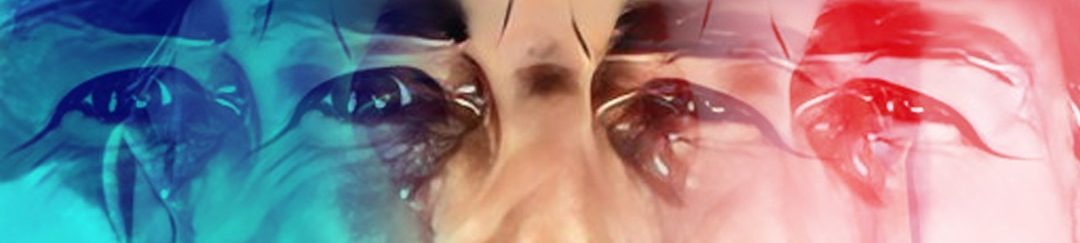
An 85mm also renders faces naturally. Used from a sensible distance, it avoids the exaggeration that comes from moving too close with a wider lens. Noses remain noses rather than becoming architectural features. Ears do not retreat around the back of the head. The proportions of the face appear comfortable and believable.
That is why generations of portrait photographers have trusted this focal length. It does not manufacture beauty, but it gives a face a fair chance.
For street portraiture, its narrow angle of view is just as important. Phnom Penh is a wonderfully untidy city. There are signs, wires, motorbikes, market stalls, plastic chairs, delivery carts and people moving through every available gap. A wider lens collects all of it, whether I want it or not.
The 85mm helps me impose some order.

It allows me to find one face in the confusion, one pair of hands at work or one fleeting expression in a crowded street. By showing less, it often says more.
That does not mean the background must disappear completely. The obsession with blurred backgrounds has become one of modern photography’s more tiresome habits. Open an 85mm lens to f/1.8 or f/1.4 and almost anything behind the subject can be turned into expensive-looking mush.
It can be beautiful, but beauty is not always the same thing as meaning.
The background may tell us where the person works, how they live or what sort of world surrounds them. A market trader without the market can become merely a pleasant face. Sometimes I want that separation; sometimes I want the vegetables, battered shopfront and passing motorbike to remain recognisable.
I do not automatically use an 85mm wide open. At f/2.8 or f/4, it still separates the subject while retaining enough of the surroundings to give the photograph context. At f/5.6, the street may become an active part of the story.


The aperture should serve the photograph. The photograph should not exist merely to demonstrate the aperture.
The lens changes the way I look as well.
With a 35mm, I tend to see complete scenes. With an 85mm, I notice fragments: a glance across a market, a tired hand resting on a counter, the texture of an old face or the moment somebody stops pretending to ignore me.

It encourages patience and selection. I cannot simply point it towards a busy street and hope that everything will somehow arrange itself. I have to identify the picture before I make it.
That is a valuable discipline, particularly after many years of photography. Experience can sharpen the eye, but it can also make us lazy. We begin to rely upon familiar habits. The 85mm demands a decision. It asks a simple question every time I raise the camera:
What exactly are you looking at?
On a Nikon D700, D810 or D850, an 85mm feels wonderfully purposeful. The older D700 produces files with a character I still enjoy, while the resolution of the D810 and D850 records almost frightening amounts of detail. Canon full-frame cameras—from the original 5D and 5D Mark II to the newer mirrorless bodies—give the lens the same natural field of view and portrait-friendly perspective.

The badge on the camera matters far less than the relationship between focal length, photographer and subject.
Nikon’s 85mm f/1.8G is a sensiblely—[Correction: deservedly]—popular because it is sharp, reasonably light and does not require selling a kidney. Canon’s EF 85mm f/1.8 USM has performed the same honest service for generations of Canon photographers. The newer mirrorless versions may focus faster and test better, while the expensive f/1.4 and f/1.2 lenses offer more light and smoother backgrounds.
They are all capable of excellent work.
I have reached an age when carrying a heavy lens all afternoon is no longer evidence of professional commitment. It is simply a good way of acquiring a sore shoulder. The lighter f/1.8 lenses make sense. They are quick, discreet and good enough to expose every weakness in my own technique.
And the 85mm will expose those weaknesses.
It magnifies camera movement more readily than a 35mm or 50mm. On a high-resolution body, the old rule of using a shutter speed close to the focal length is often insufficient. I prefer at least 1/250 second for people, and frequently 1/320 or faster if they are moving.
I would rather increase the ISO than return home with a perfectly clean but slightly blurred photograph.
Image stabilisation can help with my movement, but it cannot stop the person in front of me from blinking, turning or lifting a hand. For street work, shutter speed remains one of the best forms of insurance.
At close distances and wide apertures, depth of field becomes thin. Focus must be deliberate. I concentrate on the nearest eye when the face is the centre of the picture, and I use continuous autofocus if the subject is moving. There is nothing romantic about missing focus. A soft photograph may possess atmosphere, but an accidentally soft eye is usually just an accidentally soft eye.
The lens has its limitations. It can be too tight inside buildings and frustrating in narrow streets. A full-length portrait may require so much backing up that I find myself against a wall, in somebody’s shop or dangerously close to moving traffic.
It is not the lens I would choose when the whole environment carries the story. Sometimes a 28mm or 35mm is the honest choice because the surroundings matter as much as the person.

Nor does using an 85mm absolve the photographer of responsibility. Distance is not permission. Photographing from several metres away does not turn a human being into public property. The same judgement, respect and decency apply regardless of focal length.
For me, the 85mm occupies a useful middle ground. It is not a wide-angle lens pushed aggressively into somebody’s personal space, and it is not a huge telephoto used from the safety of the opposite side of the road.
It keeps me involved without making me overpowering.
After decades of buying, selling and carrying cameras, I no longer believe that equipment creates a photographer’s voice. But certain lenses encourage certain ways of seeing. The 85mm makes me slow down, simplify the frame and pay attention to individuals.


It reminds me that street photography does not always have to be wide, frantic and packed with visual cleverness. Sometimes it can be one person, standing in decent light, giving away something of themselves for a fraction of a second.
The photographer’s job is to notice it.
That is why I use an 85mm on a full-frame Nikon or Canon. Not because it creates fashionable bokeh. Not because somebody on the internet has measured its sharpness. Not because portrait photographers say that I should.
I use it because it gives people space.
It allows me to stand back without becoming detached—and, every now and then, to make a photograph that feels remarkably close.

