

Old Photographer Series
There was a time when we looked at photographs rather than inspected them.
We made a print, held it in our hands and stood back far enough to see the whole picture. We looked at the light, the composition, the expression and the moment. If the photograph moved us, informed us or held our attention, it had done its job.
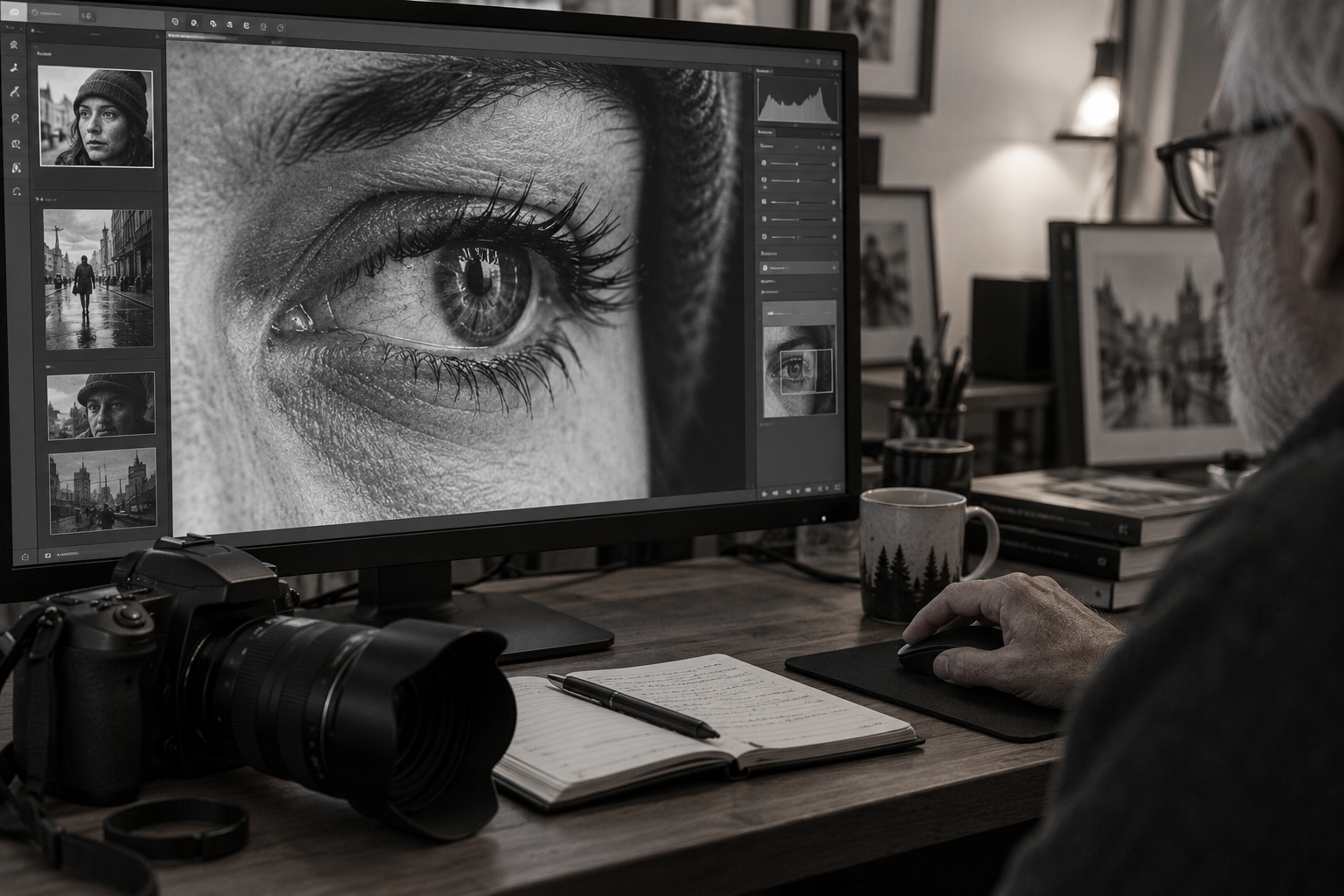
Today, we can enlarge an image until a human eye fills the computer screen. We examine individual eyelashes, count skin pores and search the darkest shadows for traces of noise. We inspect the corners for softness and worry about details that nobody would ever notice in a print.
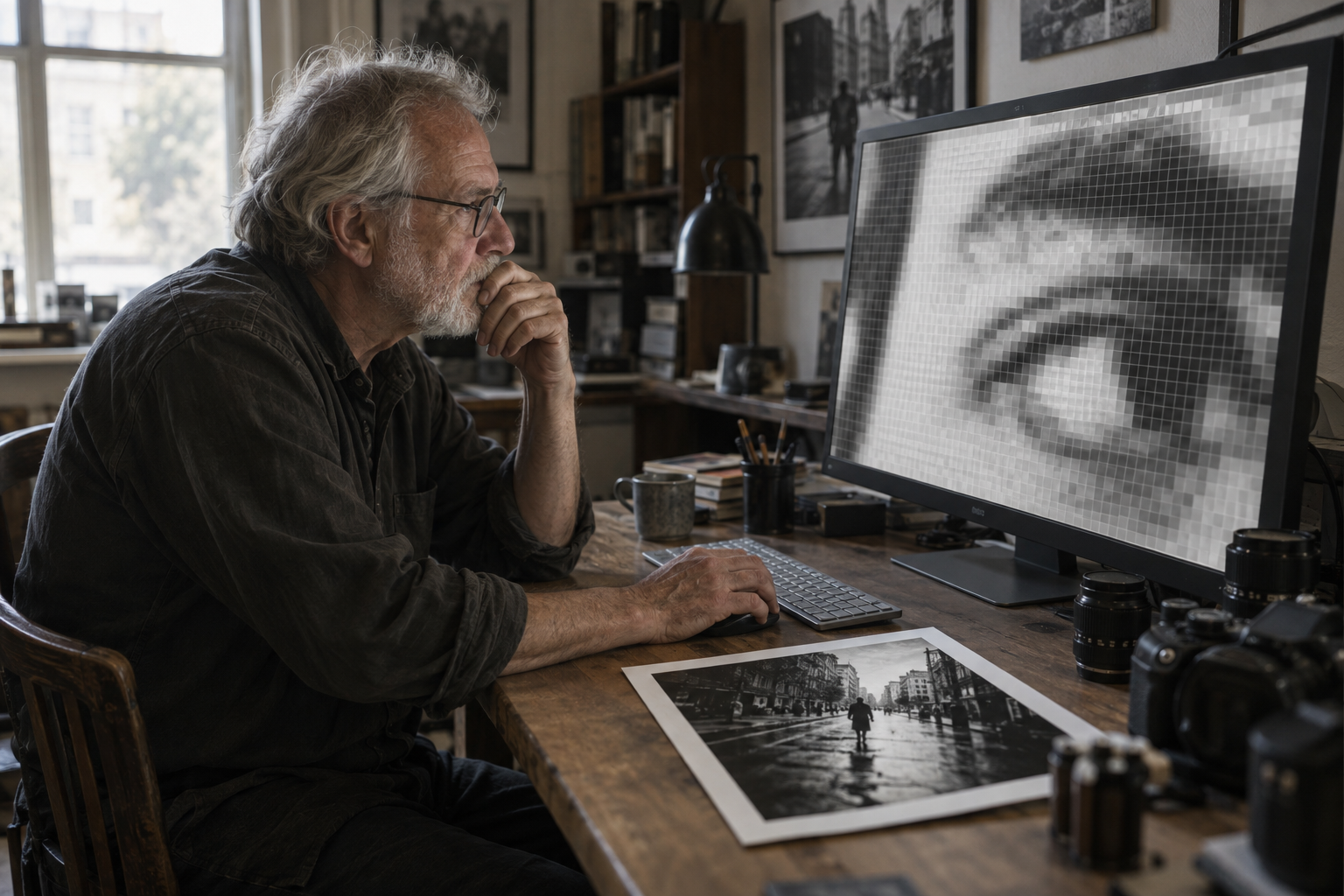
This is pixel peeping, and most photographers have done it.
I certainly have.
There are sensible reasons for looking closely at an image. If I want to know whether I nailed the focus, whether camera shake has crept in or whether a particular lens is behaving properly, viewing the file at 100% can be useful. It can expose poor technique rather quickly.
Modern high-resolution cameras can be unforgiving. Cameras such as the Nikon D810 and D850 record an extraordinary amount of detail, but they also reveal every small mistake. A shutter speed that would once have appeared perfectly adequate may leave the image looking slightly soft when enlarged on a large monitor. Poor handling, careless focusing and excessive noise reduction become much easier to see.
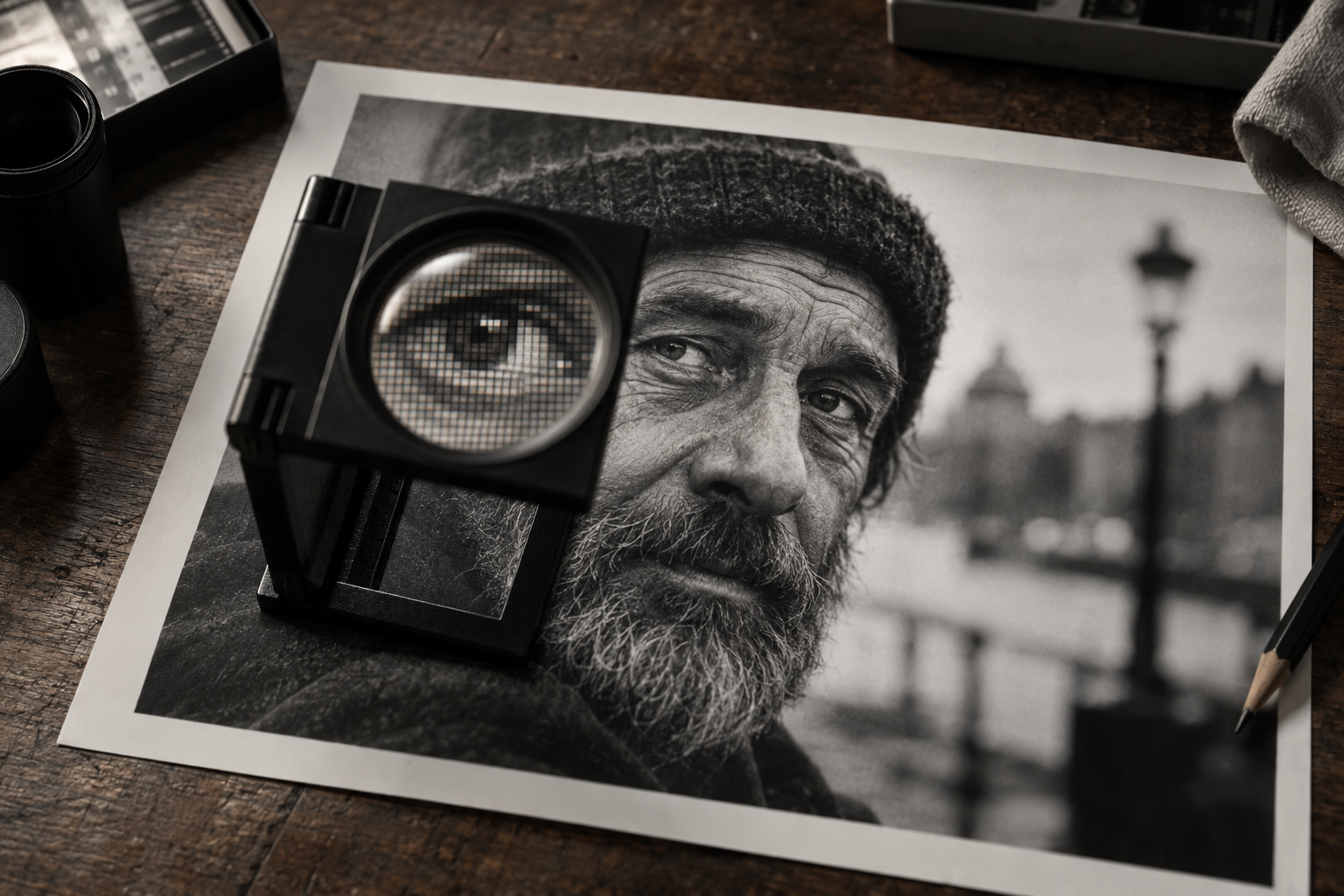
Pixel peeping can therefore teach us something.
If an entire set of photographs is soft, there is probably a reason. Perhaps the shutter speed was too low. Perhaps the autofocus point landed on the ear instead of the eye. Maybe the lens needs adjustment, or perhaps I was simply tired and failed to hold the camera steadily.
That is not obsessive inspection. It is diagnosis.
The problem begins when we stop using magnification as a tool and start using it as the final judge of a photograph.
Photography is not a laboratory test. A photograph does not become important because every hair is sharply resolved. Nor does it automatically fail because the shadows contain a little noise or because the far corner is not clinically sharp.
Some of the most memorable photographs ever made are technically imperfect. They contain grain, blur, missed focus and blocked shadows. Yet nobody cares because the photographs have life. They show something worth seeing.
The history of photography was not made at 200% magnification.
It was made in streets, homes, factories, demonstrations and war zones. It was made by photographers responding to the world in front of them. Many worked with slow film, manual focus and lenses that would probably receive rather ordinary scores in today’s technical reviews.
Their photographs survive because they possess meaning, not because the bricks in the background are sharp from edge to edge.
Street photography makes this especially clear. A gesture can disappear in a fraction of a second. A face changes, two people briefly connect, or a shaft of light falls across somebody passing through the frame. There is rarely time for technical perfection.
If I capture the expression but miss absolute focus by a whisker, I may still have a worthwhile photograph. If I wait until every setting is perfect, the moment will probably be gone.
I would rather have a slightly imperfect photograph of something than a perfectly sharp photograph of nothing.
Sharpness matters, of course. I am not suggesting that we should become careless. Good technique gives us a better chance of bringing home the picture we intended to make. The eyes in a portrait should usually be sharp, and camera shake is rarely attractive unless it contributes something to the image.
But “sharp enough” is not the same as technically flawless.
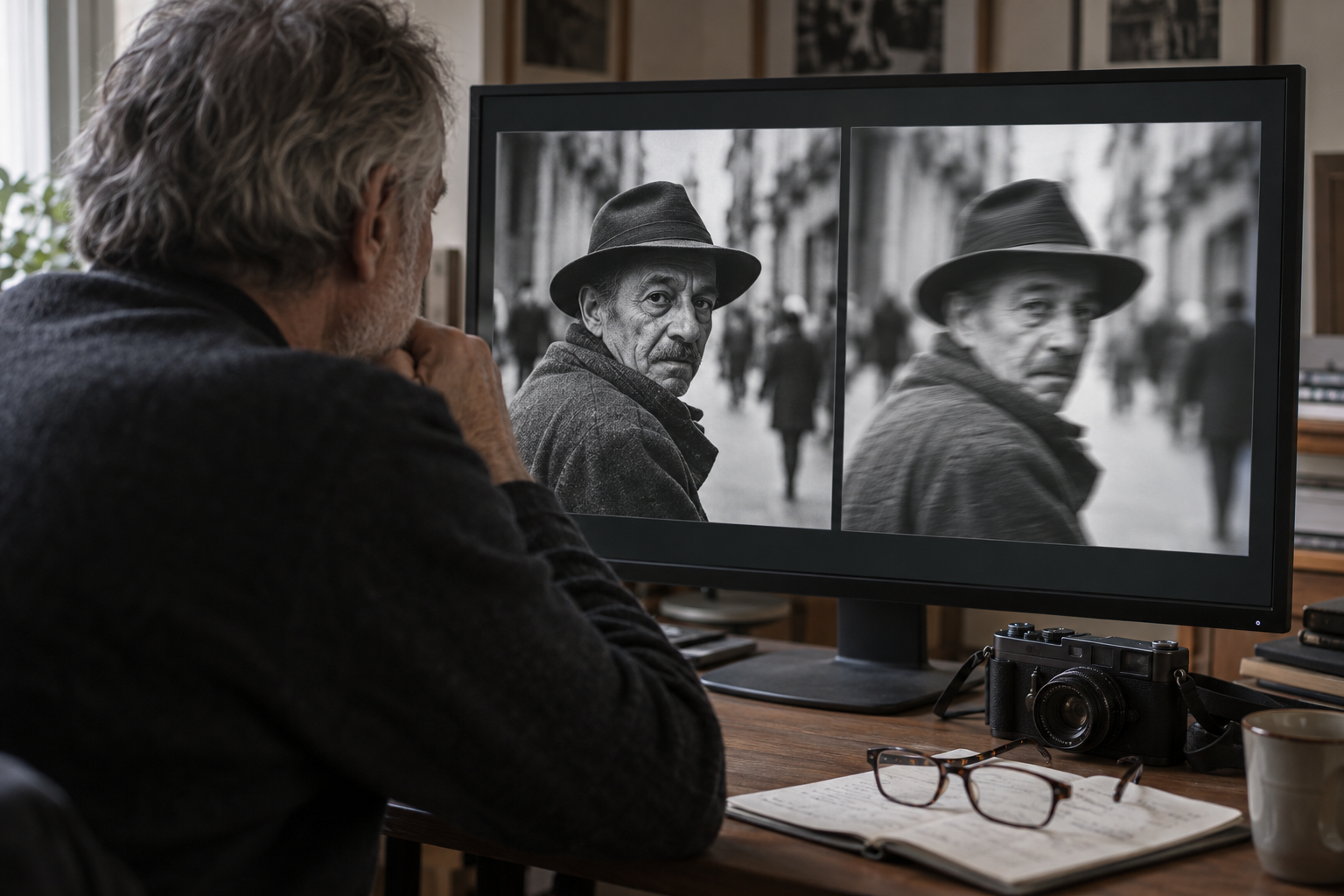
A photograph is normally seen as a complete object. It might appear on a website, in a book, on a wall or as a print held in the hand. Nobody studies a normal-sized photograph with their nose pressed against it, searching the corners for optical weakness.
Viewing a 36- or 45-megapixel image at 100% on a monitor is rather like examining an enormous print from a few inches away. It is not a natural viewing distance. Small faults appear enormous simply because we have enlarged them beyond any reasonable use.
This can become damaging. Photographers begin rejecting perfectly good images because of tiny technical imperfections. They start blaming their cameras and lenses. Before long, they are searching for sharper glass, more megapixels and better autofocus when there was nothing seriously wrong with the equipment they already owned.
The manufacturers must love pixel peeping. It keeps us dissatisfied.
There will always be a newer camera promising more resolution, less noise and smarter focusing. There will always be a lens that measures slightly sharper in the corners. We can spend a small fortune pursuing technical perfection and still fail to make an interesting photograph.
No camera can supply curiosity. No lens can recognise a meaningful moment. No amount of resolution can rescue an empty picture.
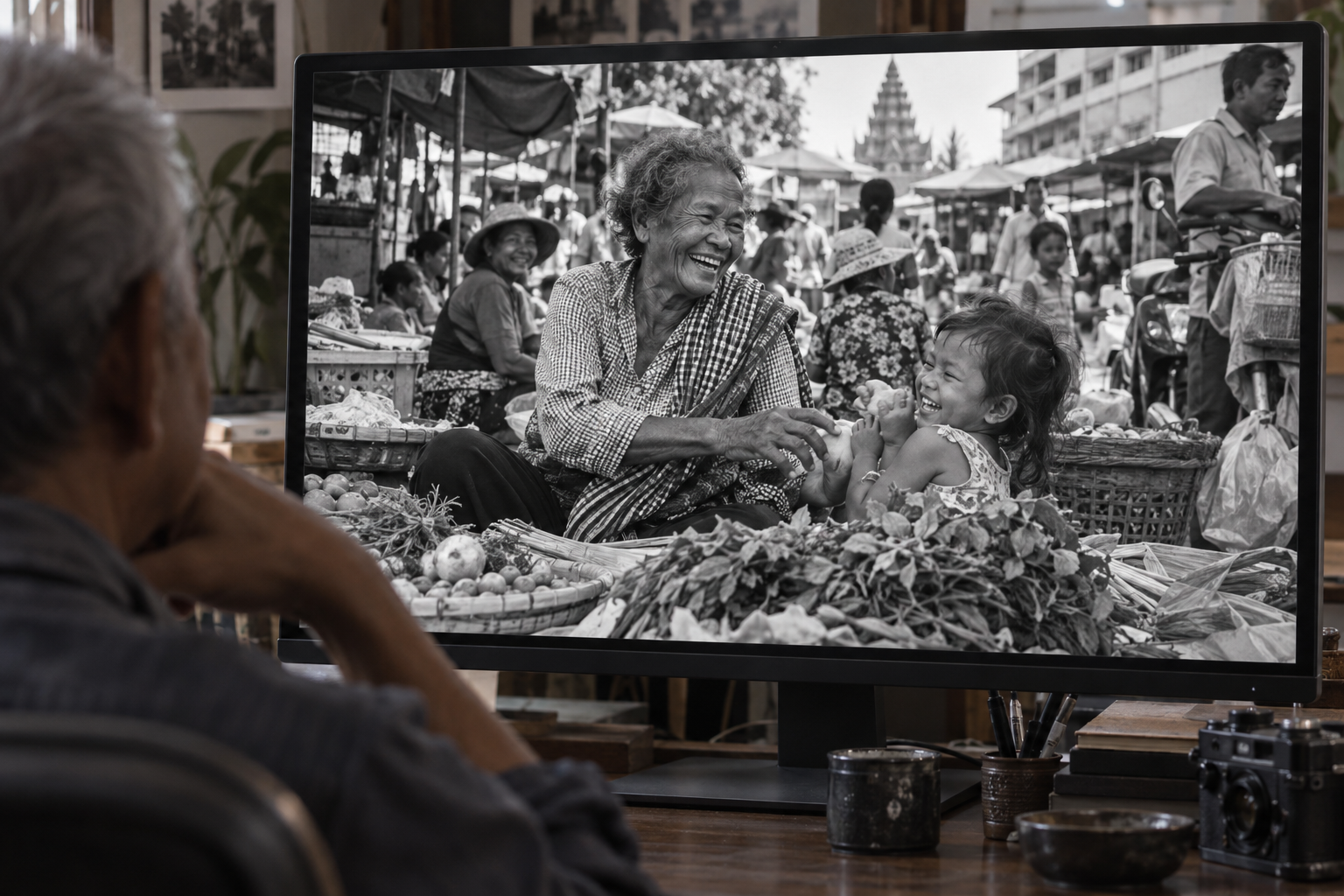
After many years of making photographs, I have learned to look at the complete image first. Before enlarging anything, I ask the important questions.
Does the photograph hold my attention? Is the composition working? Is there emotion, atmosphere or information? Does it show something beyond the simple fact that my camera and lens function correctly?
Only then do I look more closely.
If critical focus is slightly off, I decide whether it genuinely harms the photograph. Sometimes it does, and the image has to go. At other times, the moment is strong enough to carry a little imperfection. That is a judgement, not something software can decide for me.
Printing remains one of the best cures for pixel peeping. A print brings the photograph back into the physical world. It gives the image boundaries, scale and a proper viewing distance. Details that seemed troublesome on the monitor often disappear, while weaknesses in composition become much more obvious.
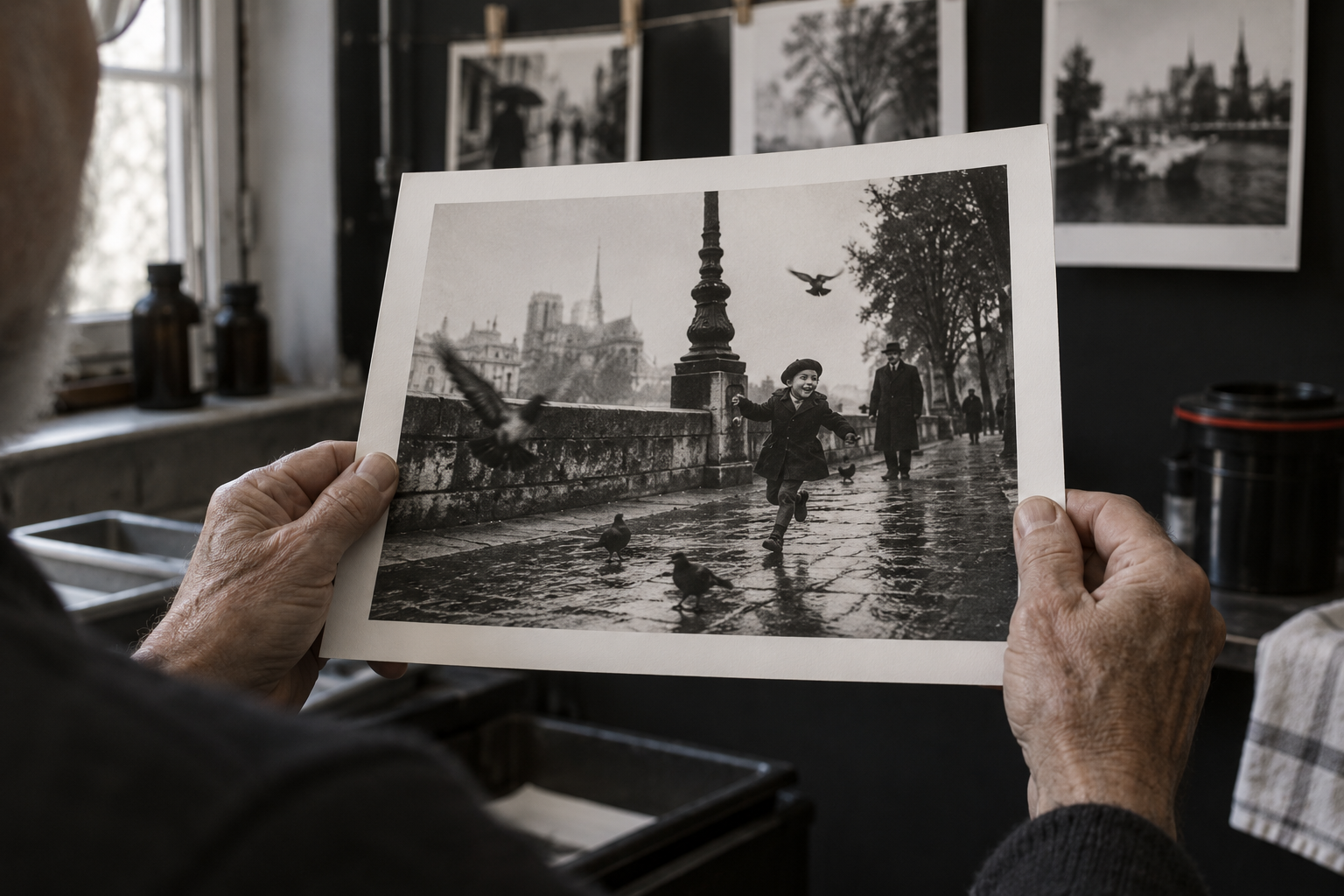
A technically perfect file does not always make a satisfying print. A slightly rough file sometimes makes a wonderful one.
That is because photographs are meant to be experienced, not dissected.
Pixel peeping has its place. Use it to check focus, examine technique, test equipment or prepare a photograph for a large print. Let it help you understand what went wrong and how to improve next time.
Then zoom back out.
Look at the people. Look at the light. Look at the moment you were trying to preserve.
Pixel peeping can tell us whether a lens is sharp. It can tell us whether the autofocus landed in the correct place and whether we selected a sensible shutter speed. What it cannot tell us is whether the photograph has a soul.
After all these years, that remains the part that matters most.

