
Why an 85mm Lens Still Belongs on a Full-Frame Camera

cameras, canon, Lenses, nikon, opinons, thoughts, photography, pictures, street, Travel, viltrox

The 85mm Lens: Standing Back, Getting Closer :

Old Photographer Series.

There are lenses that show you the world, and there are lenses that ask you to choose something from it.

The 85mm belongs to the second group.

Put one on a full-frame Nikon or Canon and the street immediately becomes a little quieter. The frame tightens, unnecessary clutter falls away and people begin to take precedence over their surroundings. It is not a lens for collecting everything in front of you. It is a lens for deciding what matters.

That is probably why I have always liked it.


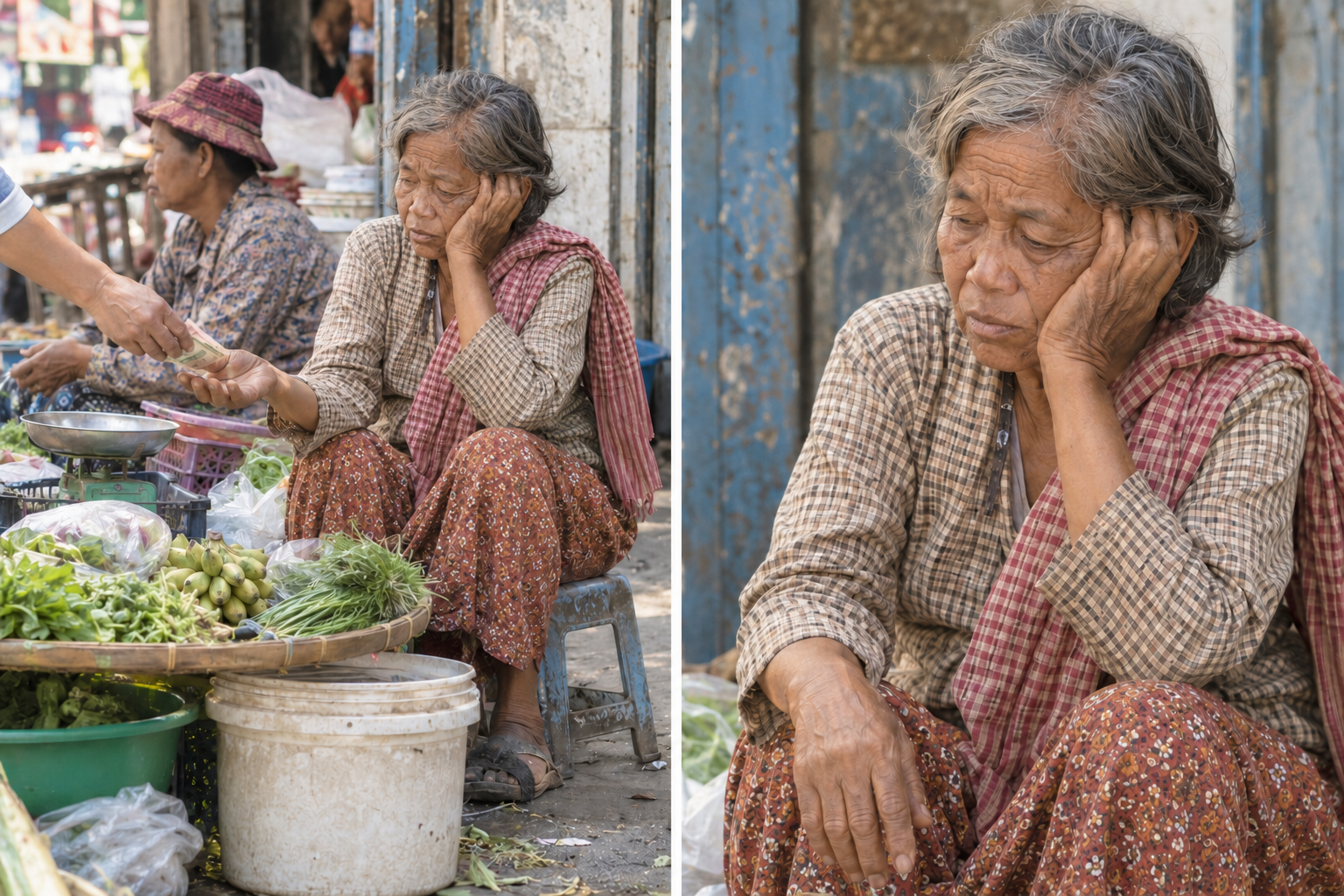
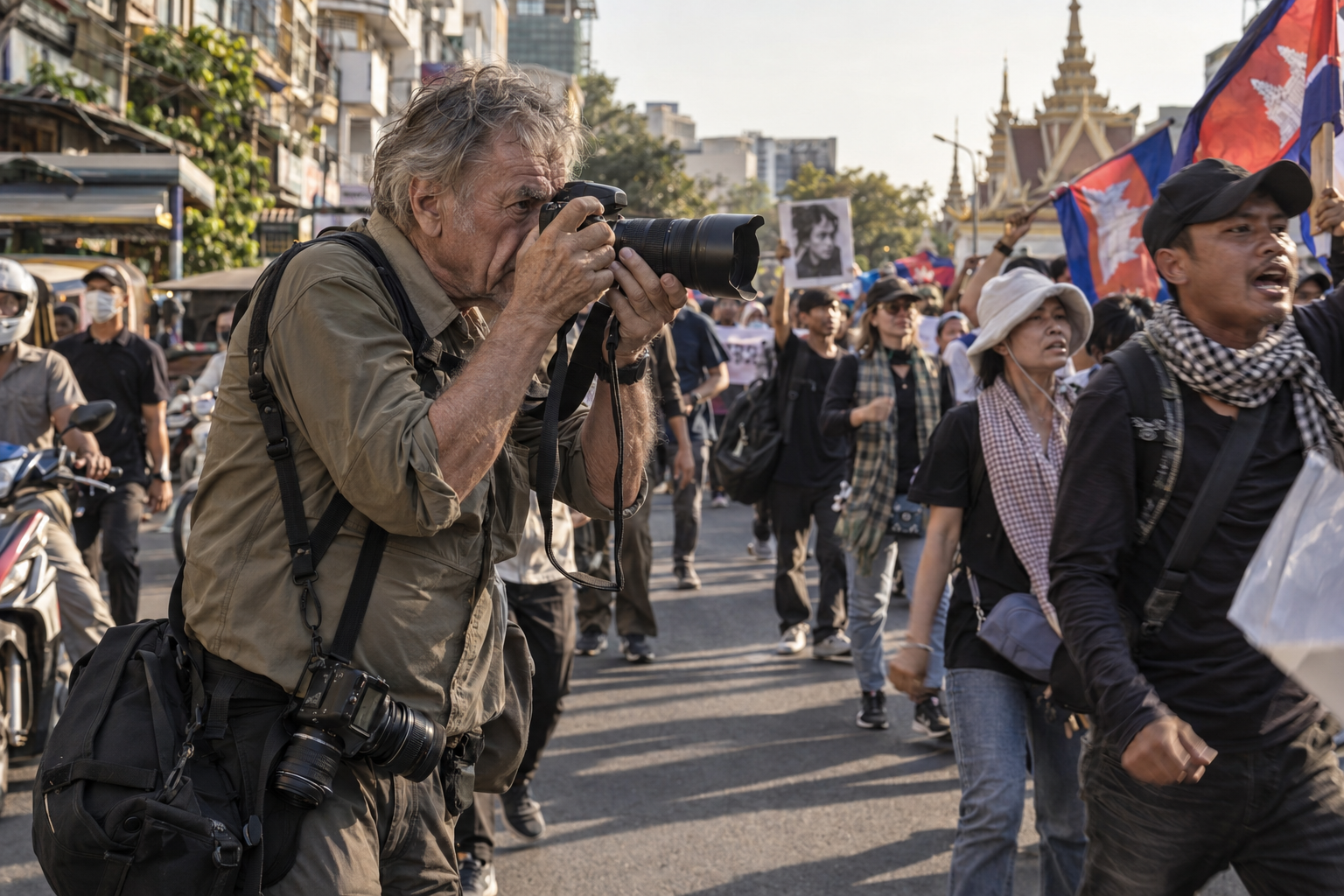
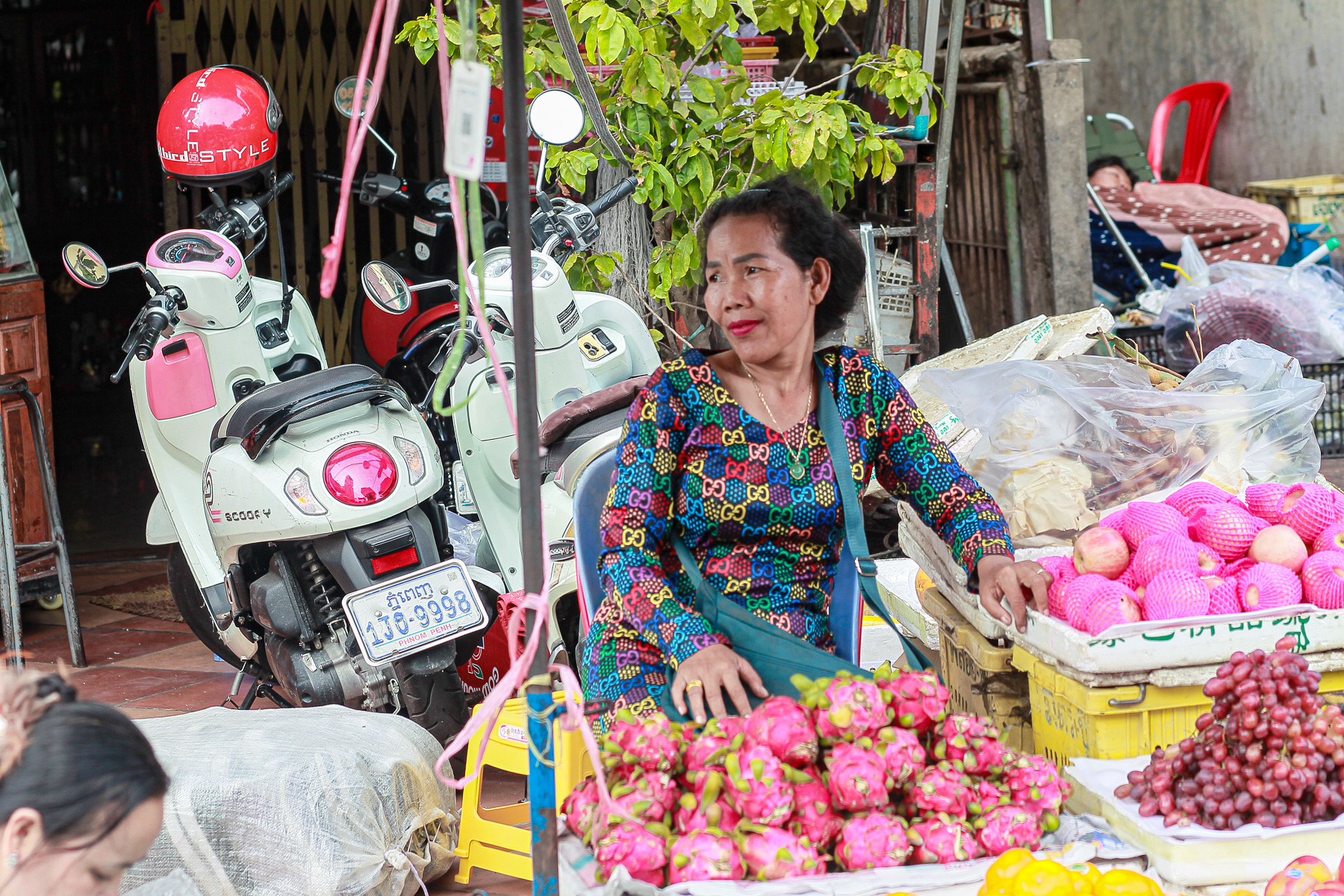
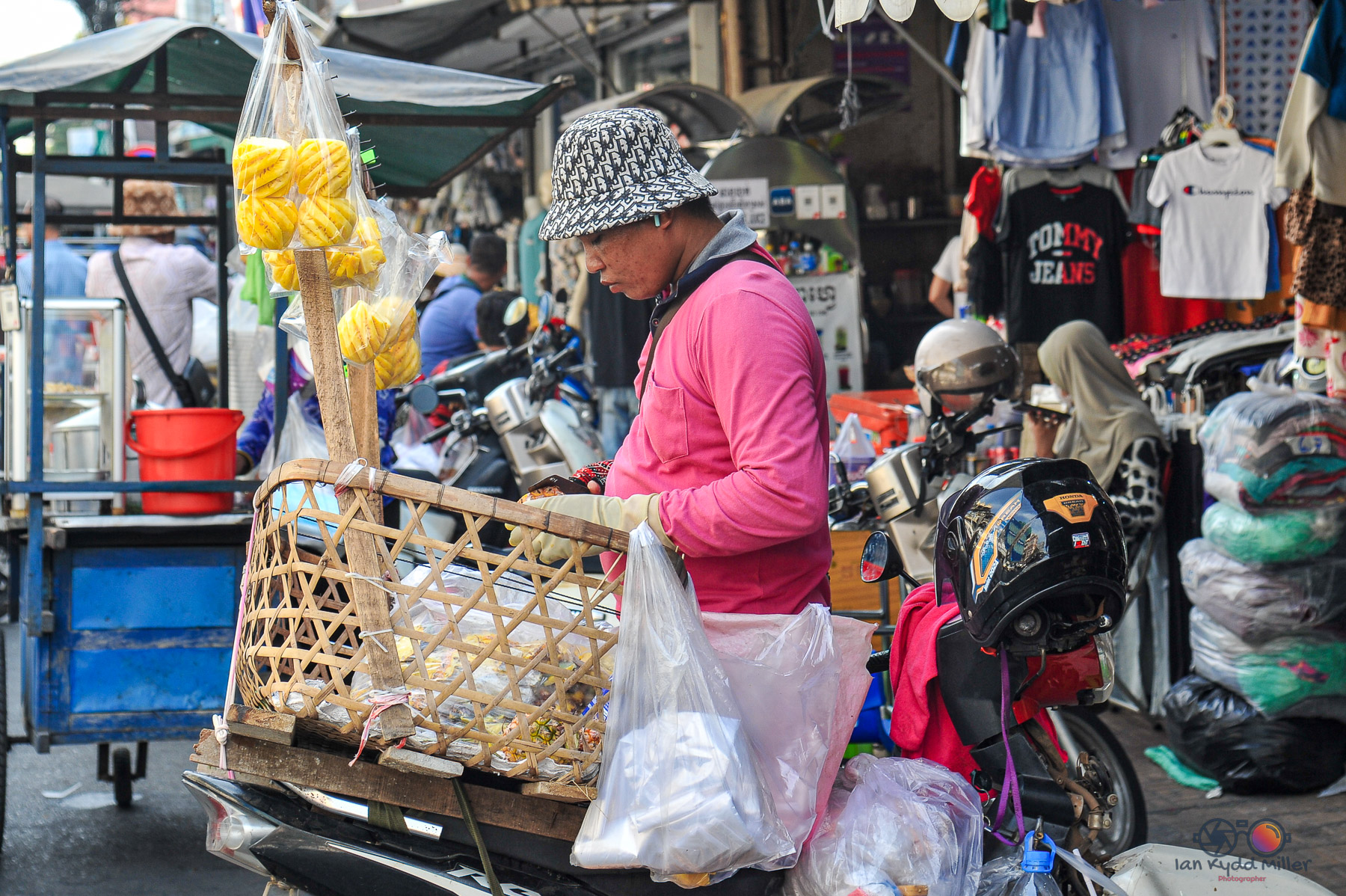
A photographer capturing an image of a woman sitting on a stool beside a fruit stand in a bustling street market during golden hour.

The 85mm is usually described as a portrait lens. That is true, but it is only part of the story. On a full-frame camera, it offers a particularly useful balance between intimacy and distance. It lets me photograph somebody closely without having to put the camera inches from their face.

A 35mm lens asks me to step into the scene. A 50mm puts me somewhere near its edge. The 85mm lets me stand back, watch and wait.

That extra distance can make all the difference.
People behave differently when a photographer is almost on top of them. They become conscious of the camera. Faces change, bodies stiffen and natural expressions are replaced by the smile people believe they are supposed to produce for a photograph.

An 85mm gives the subject breathing room. It does not make the photographer invisible, nor should it, but it makes the encounter less physically intrusive. I remain close enough to acknowledge the person, yet far enough away to allow the moment to unfold.

Oddly, standing farther away can sometimes produce a photograph that feels much closer.


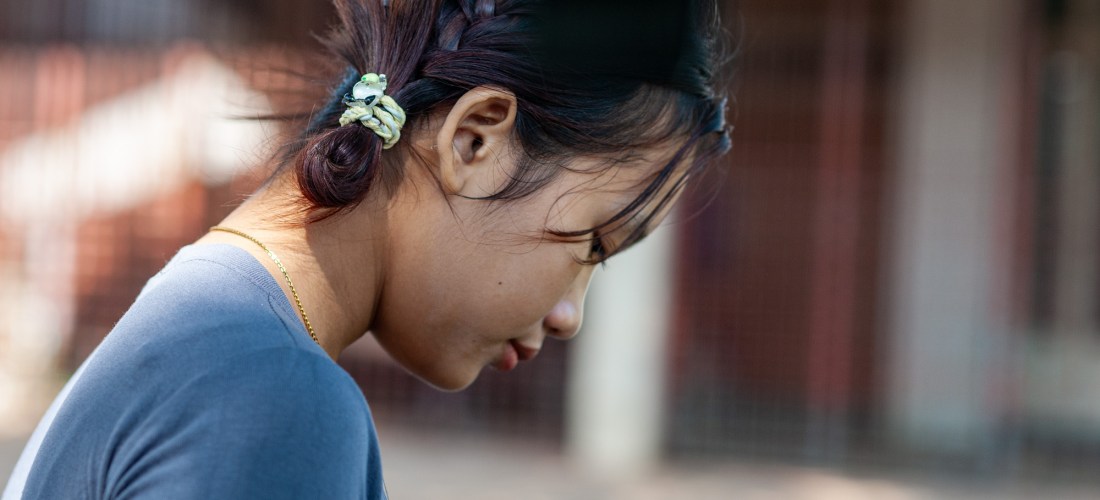
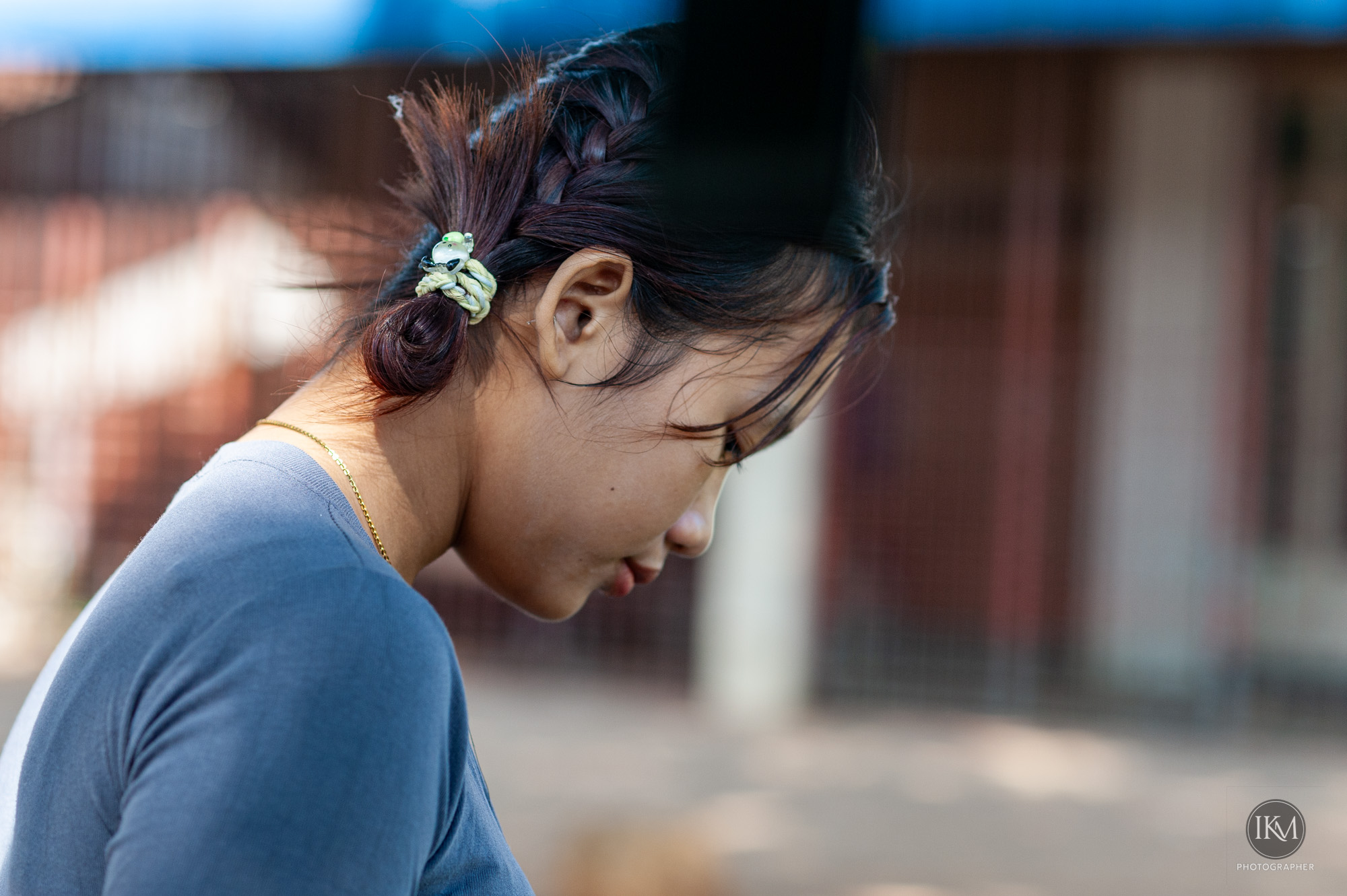
An 85mm also renders faces naturally. Used from a sensible distance, it avoids the exaggeration that comes from moving too close with a wider lens. Noses remain noses rather than becoming architectural features. Ears do not retreat around the back of the head. The proportions of the face appear comfortable and believable.

That is why generations of portrait photographers have trusted this focal length. It does not manufacture beauty, but it gives a face a fair chance.

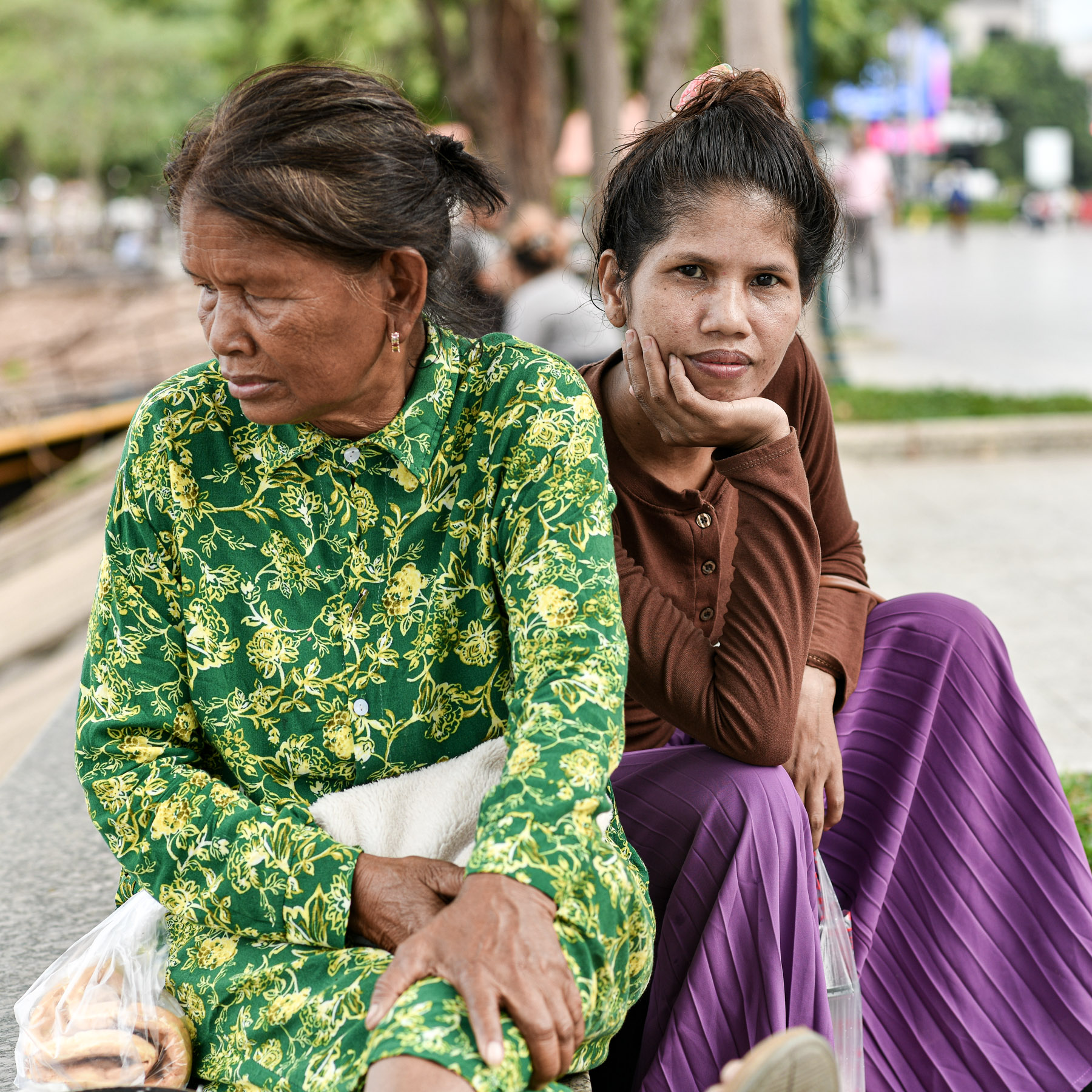
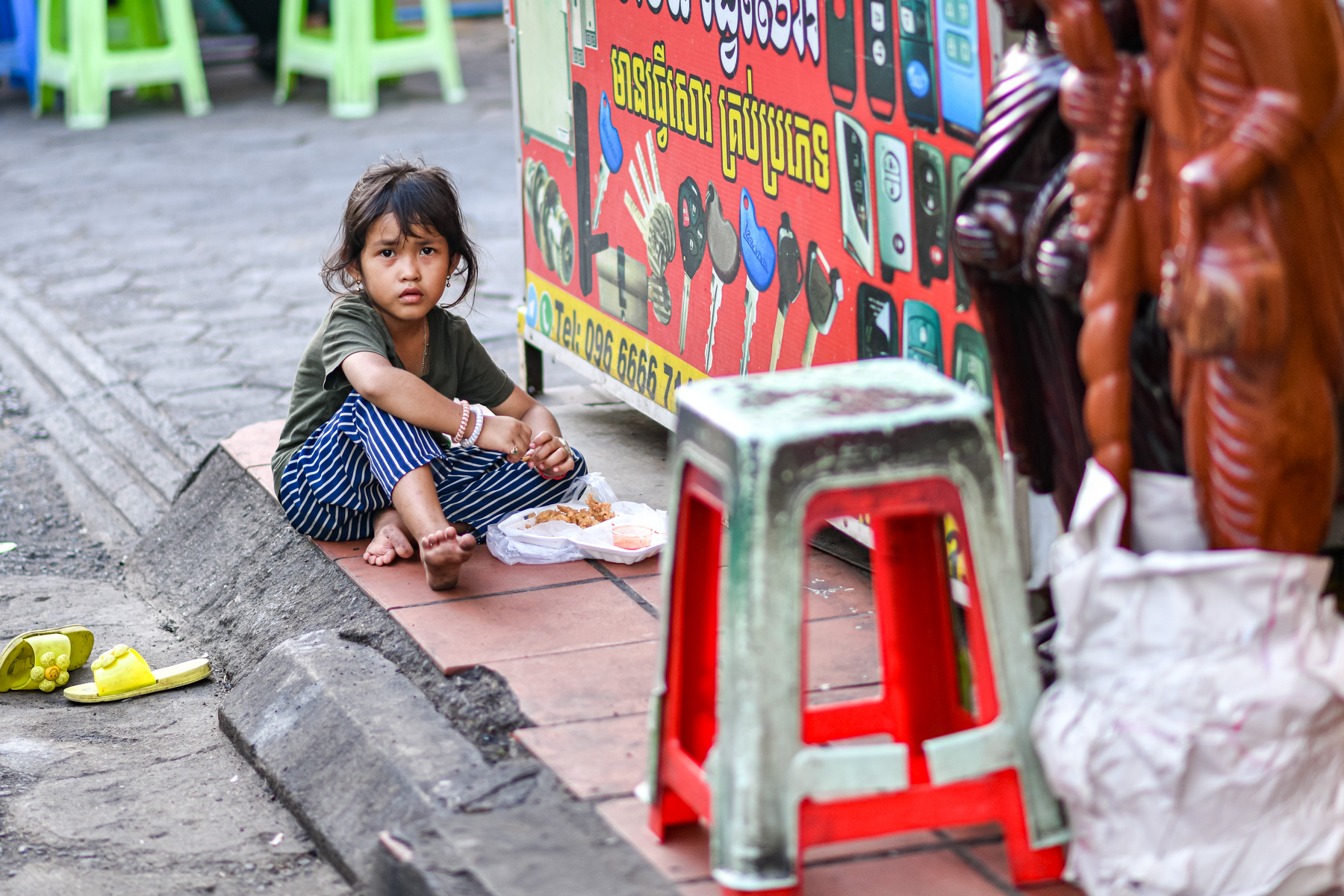
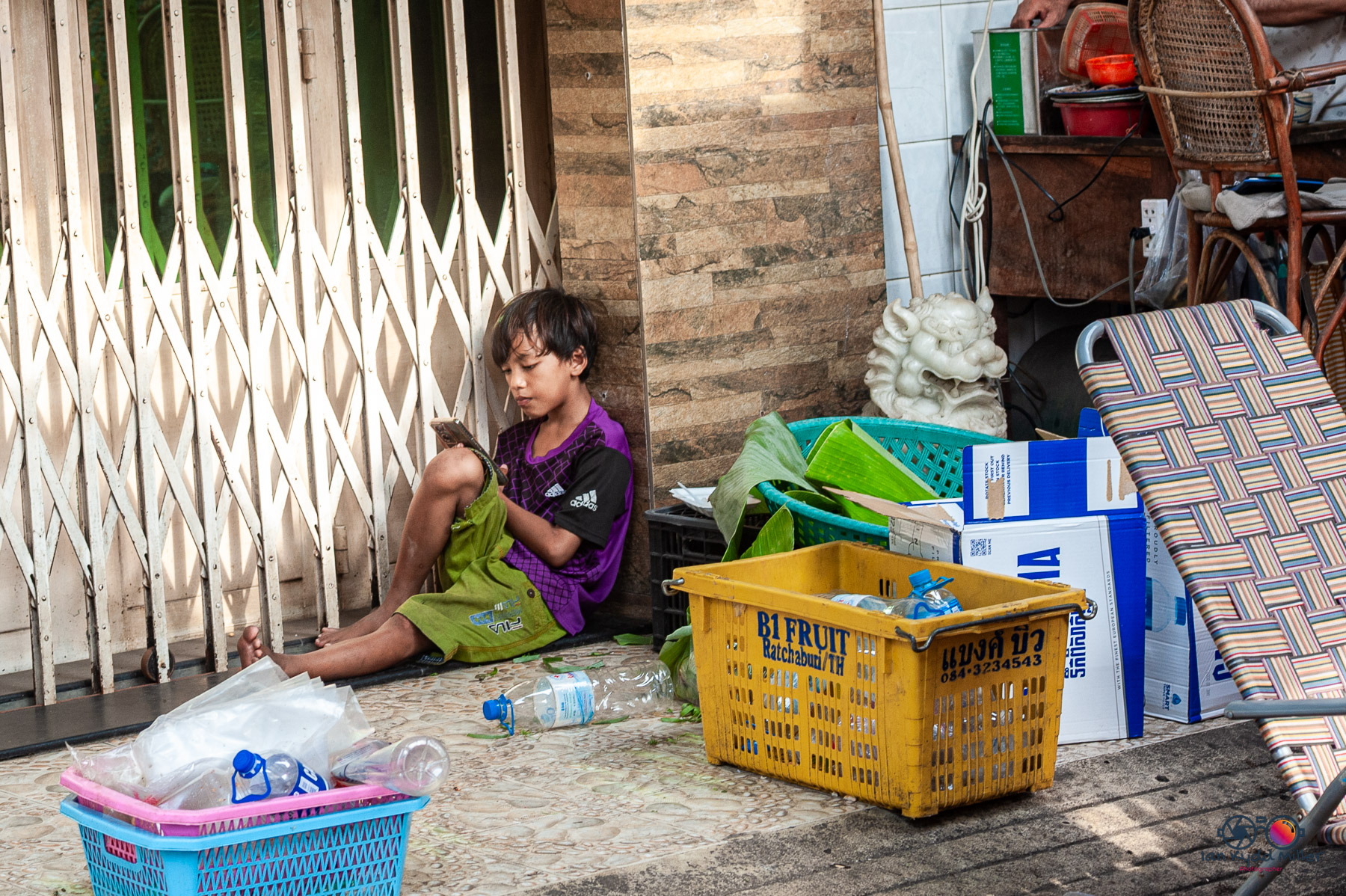
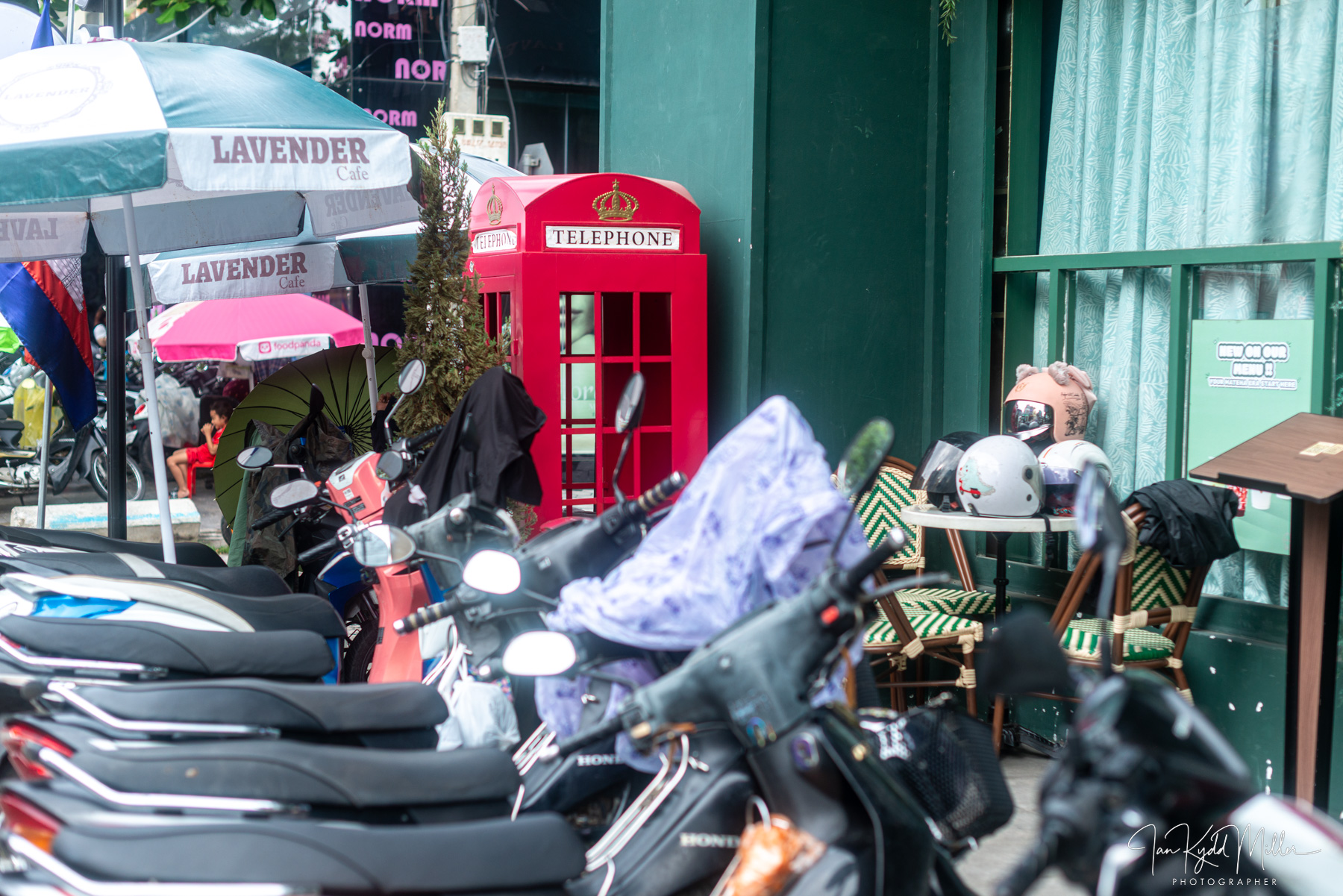
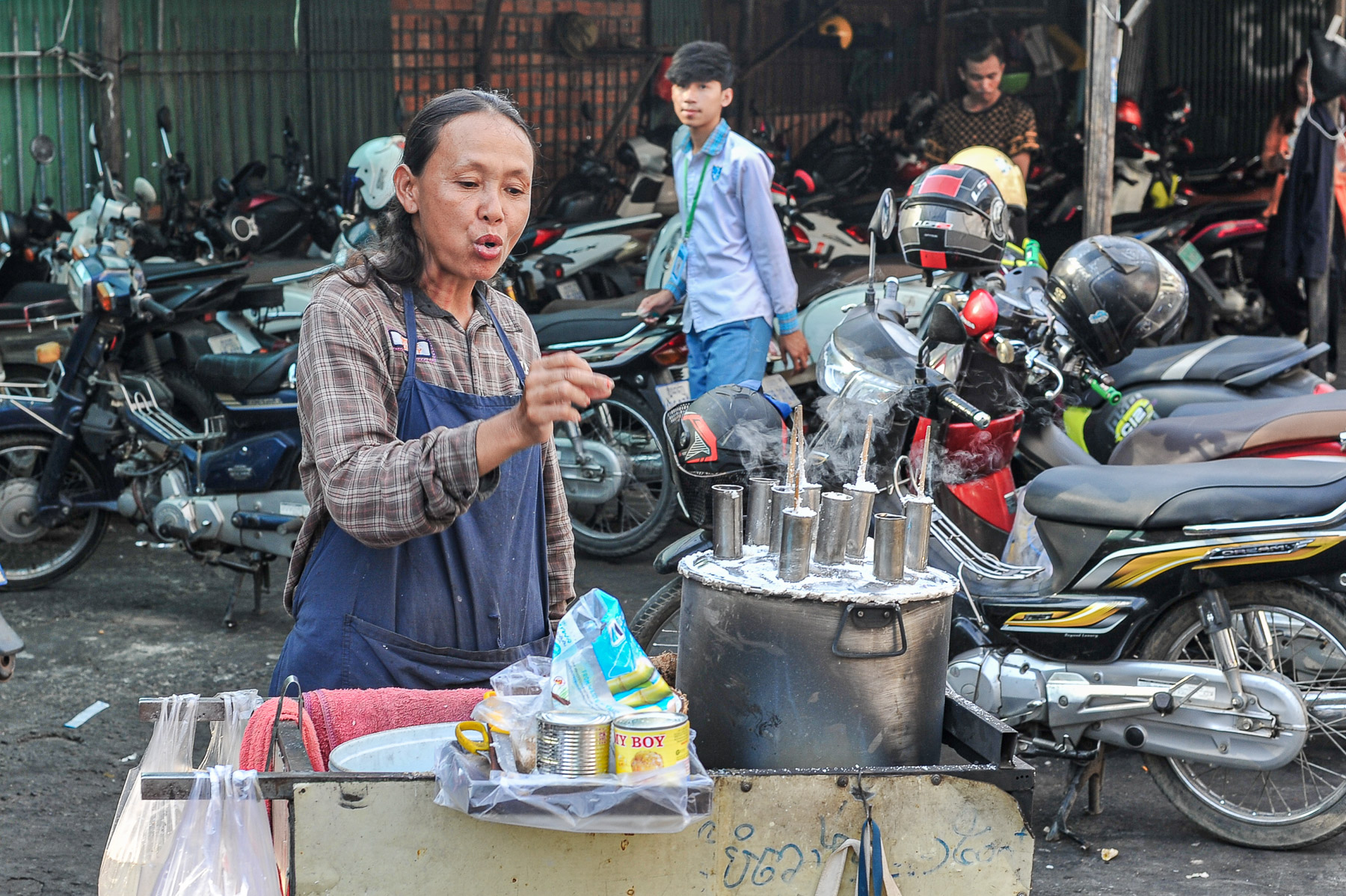
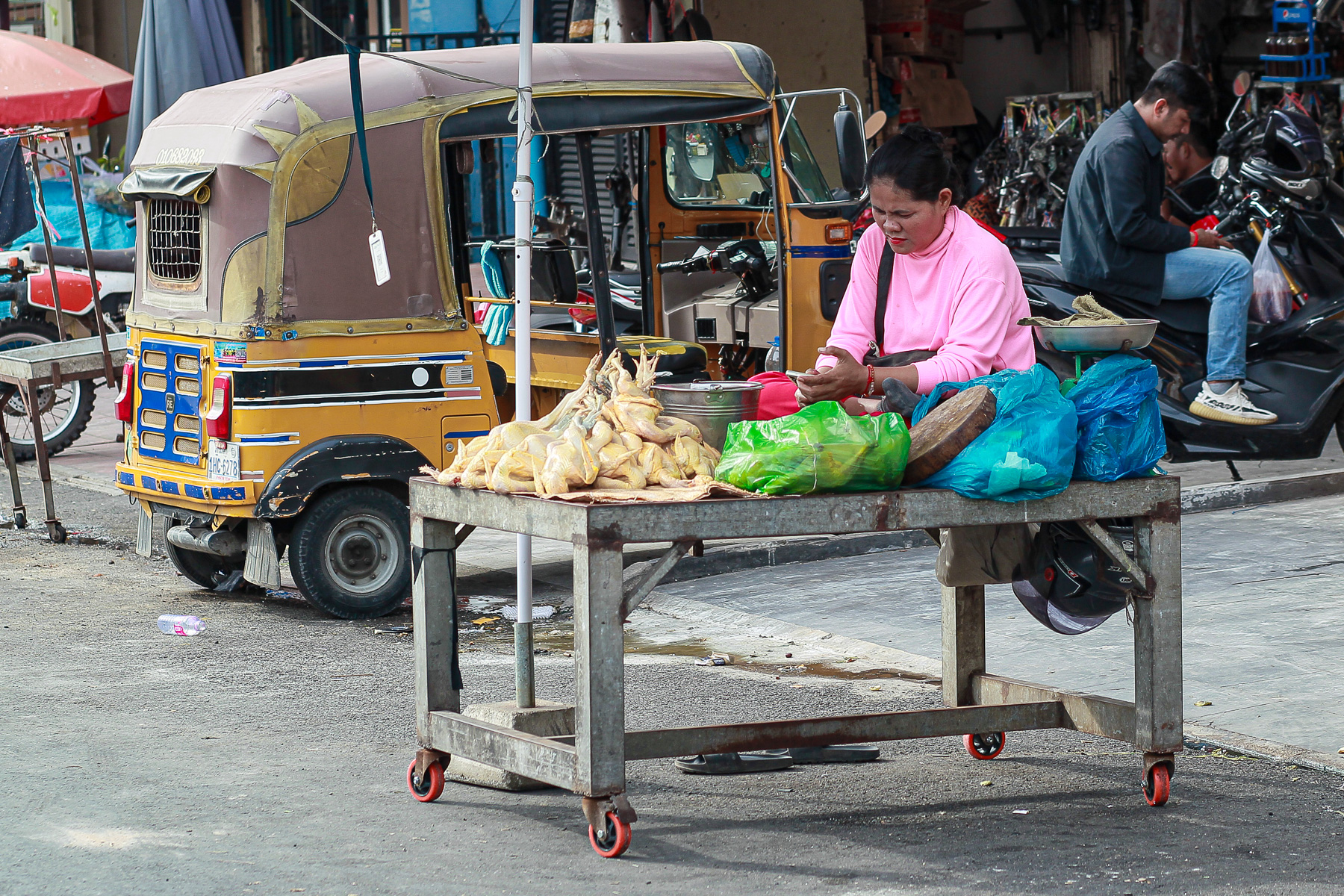
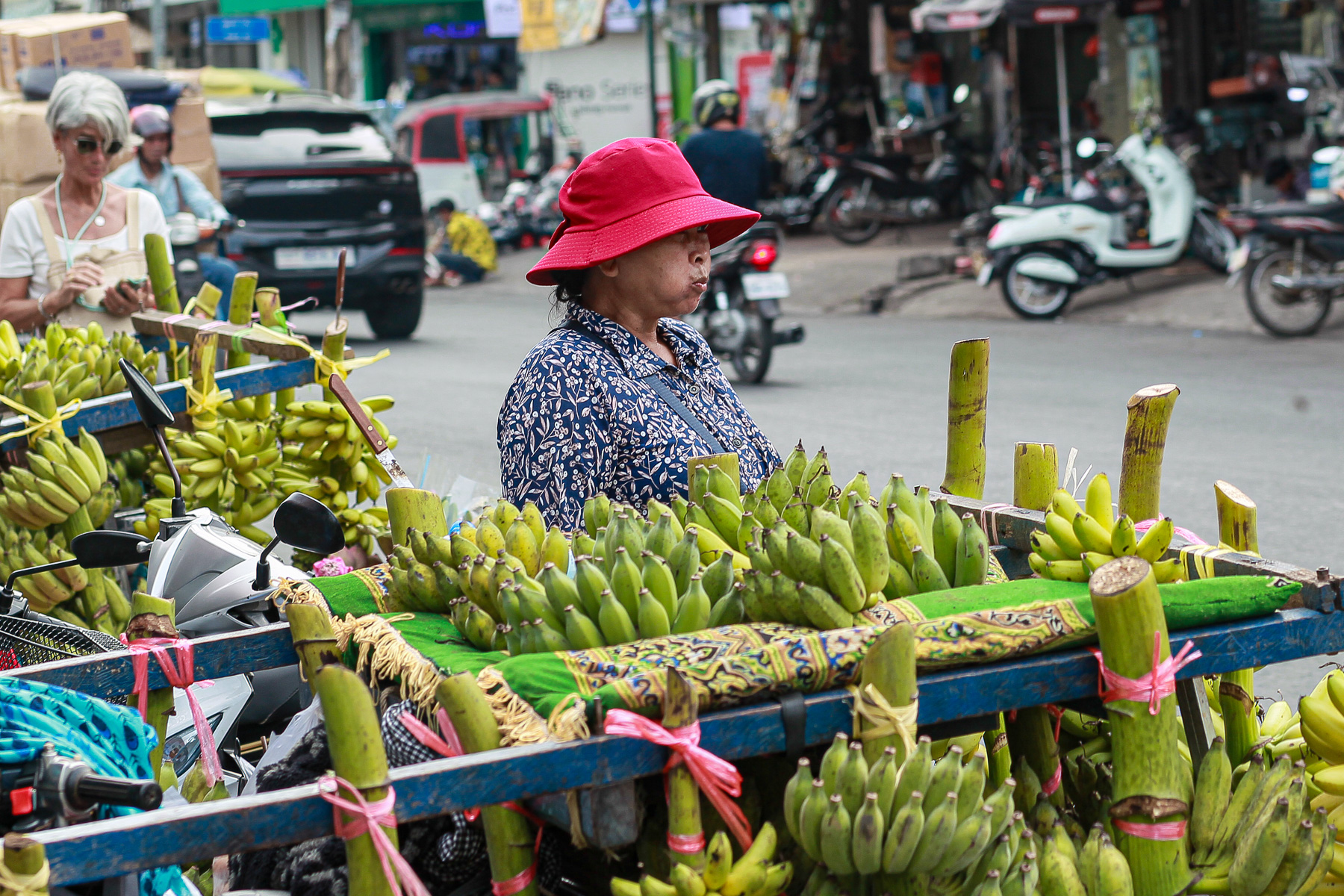
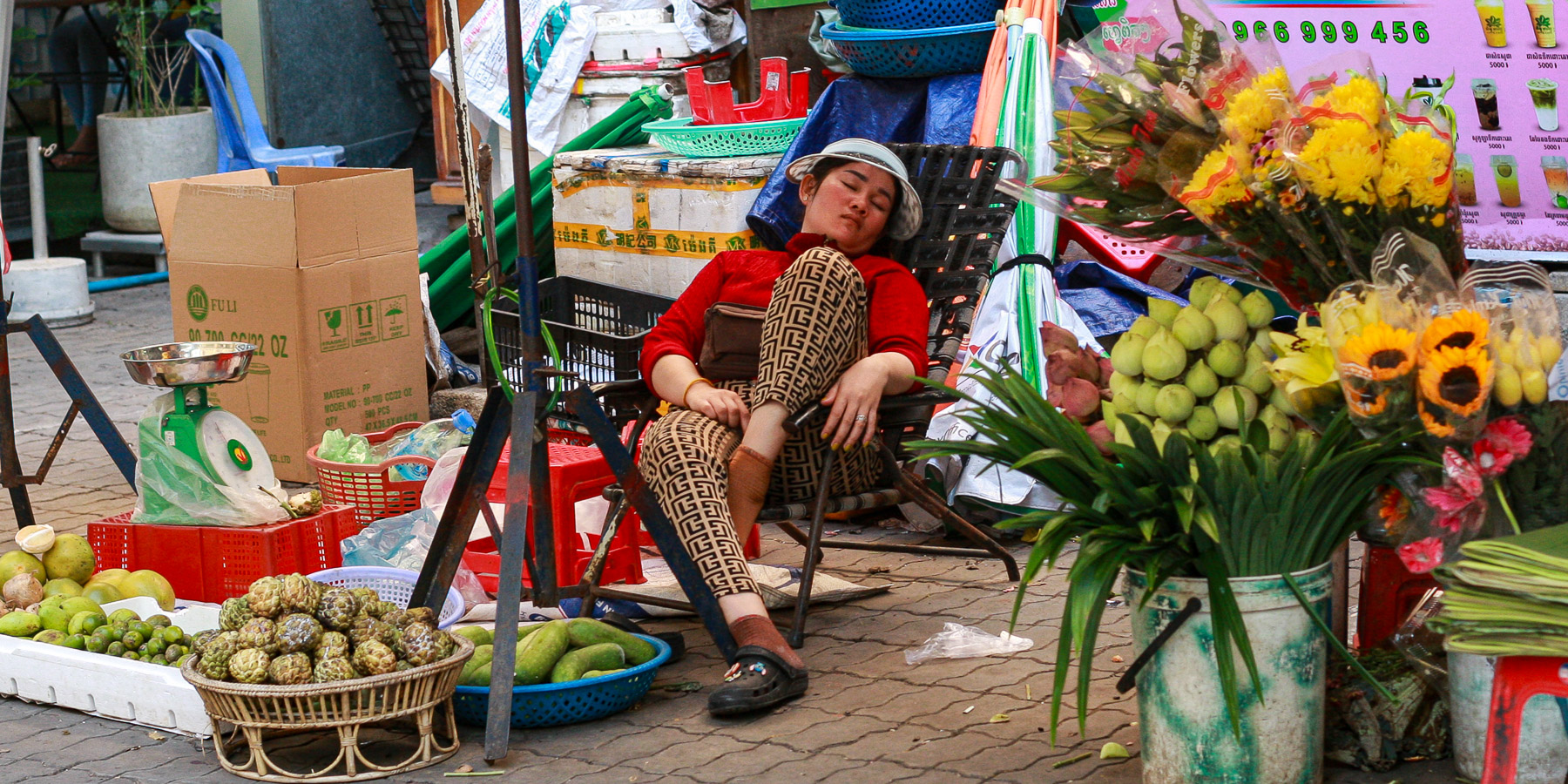
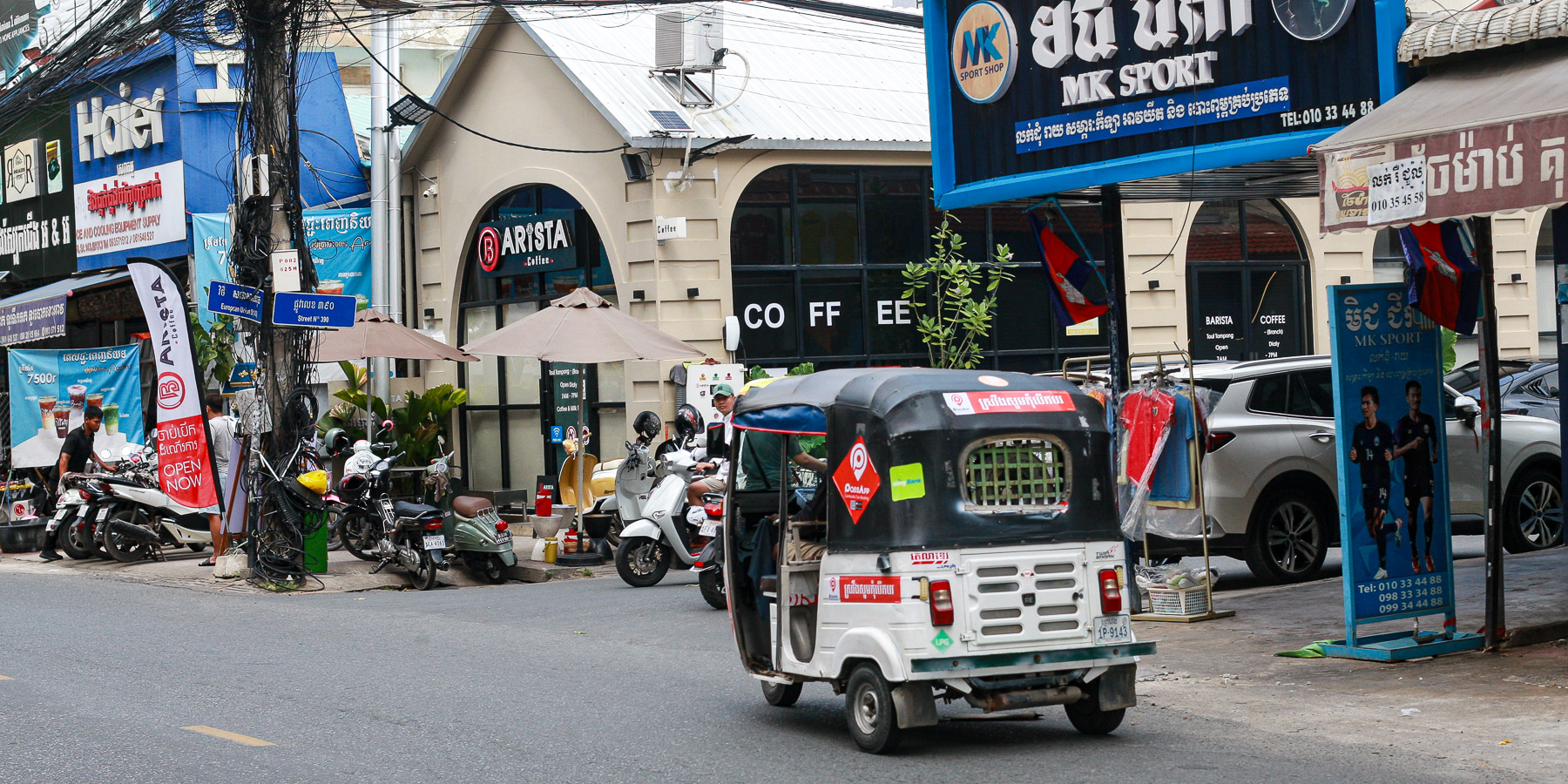
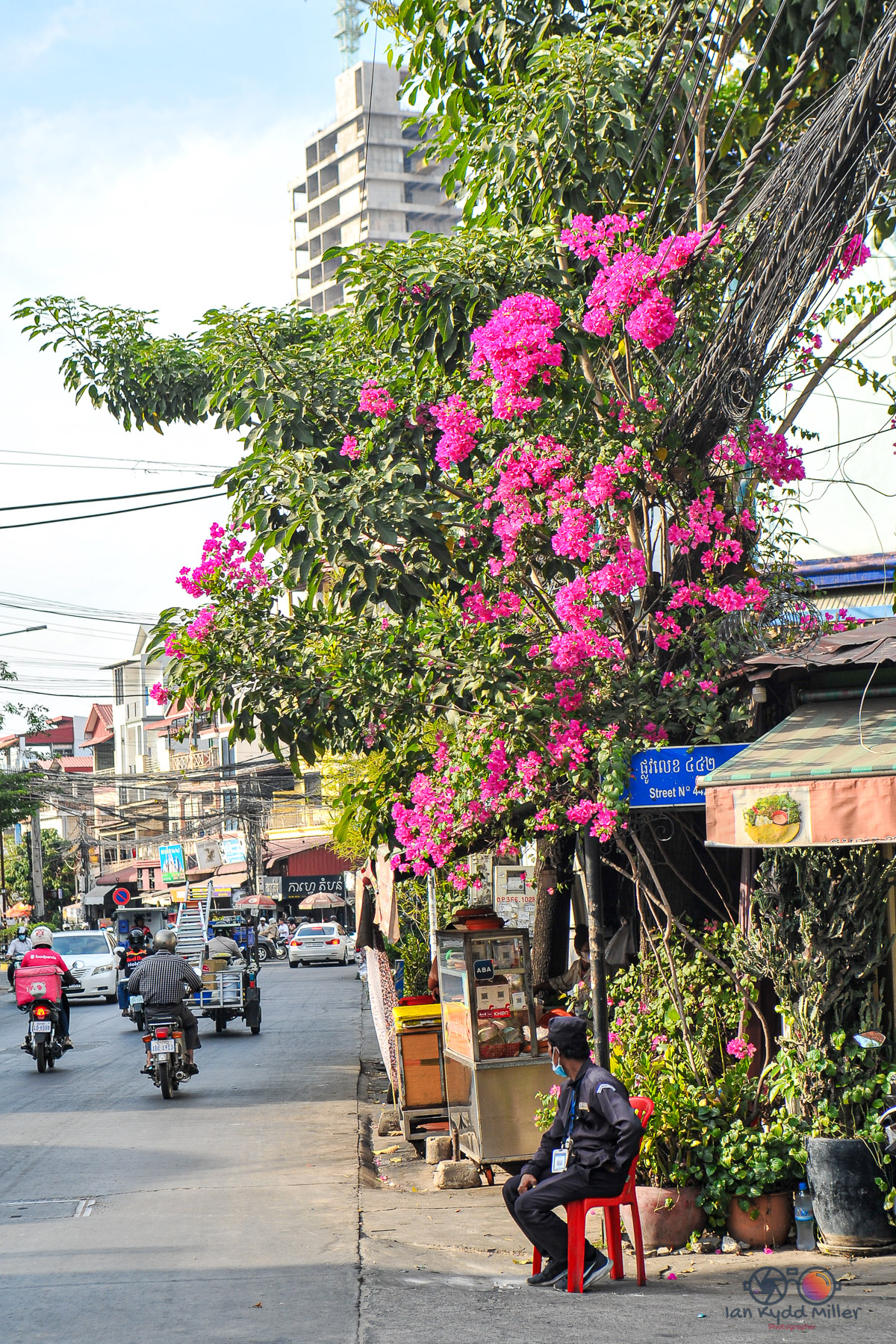
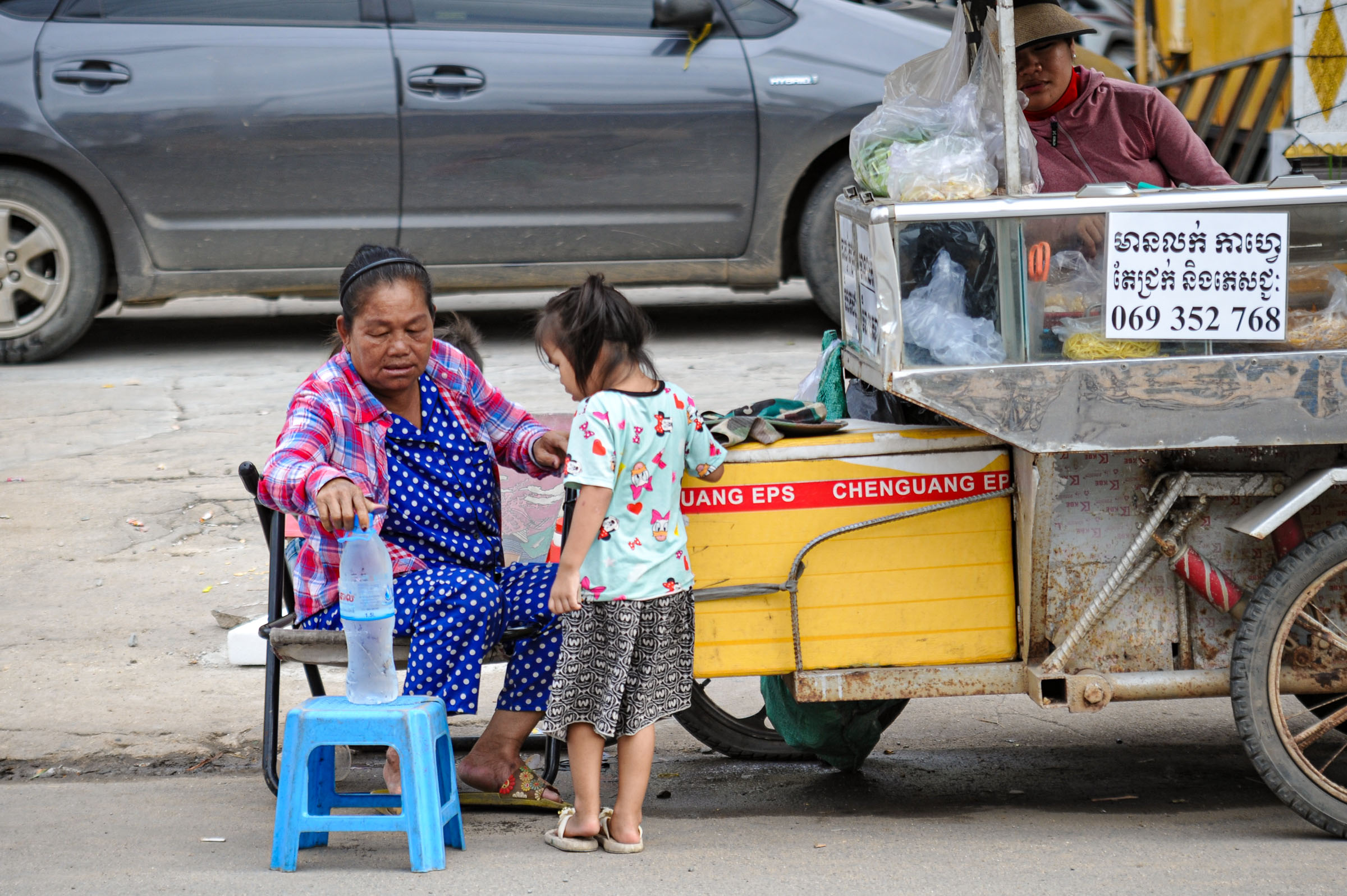
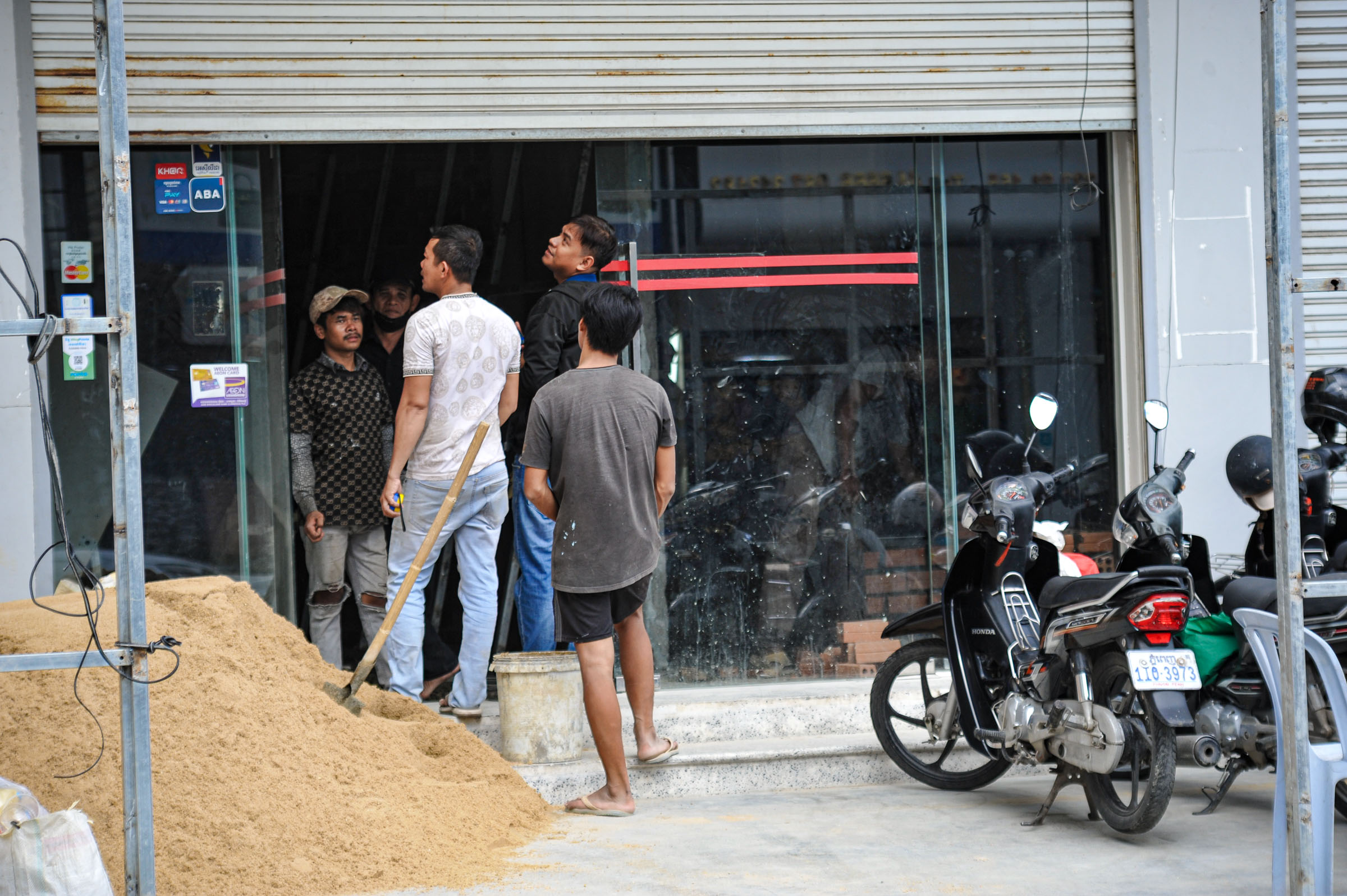
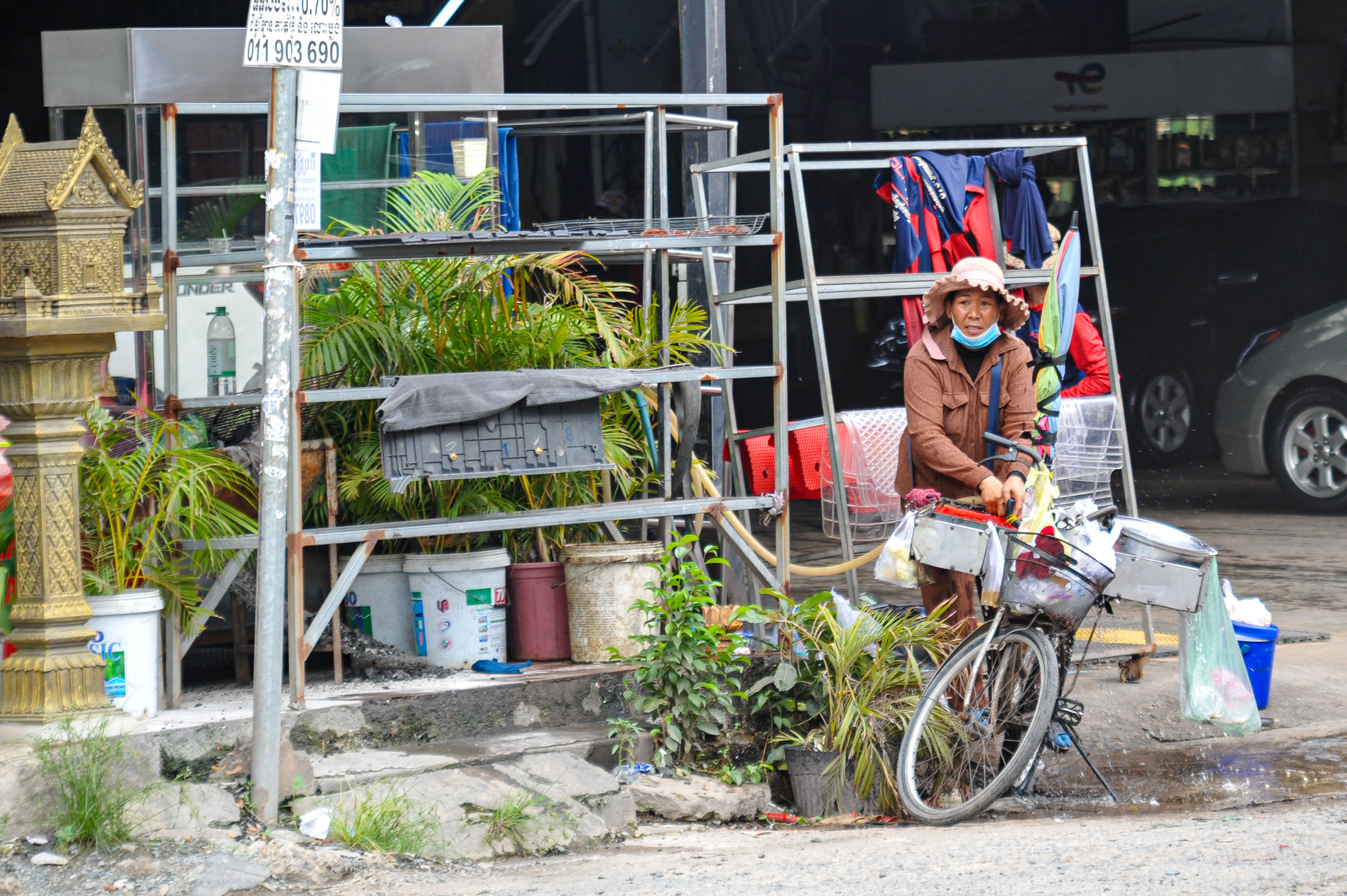
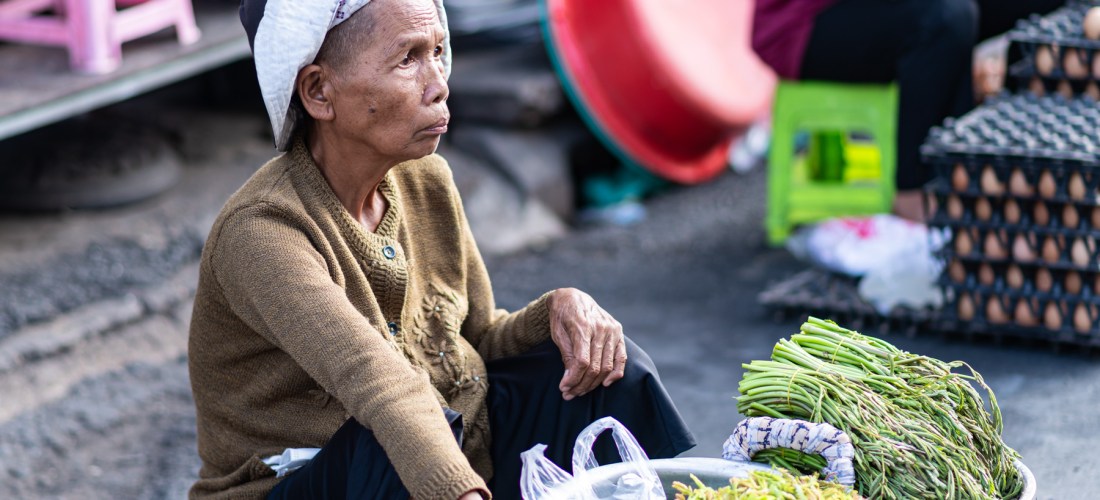
For street portraiture, its narrow angle of view is just as important. Phnom Penh is a wonderfully untidy city. There are signs, wires, motorbikes, market stalls, plastic chairs, delivery carts and people moving through every available gap. A wider lens collects all of it, whether I want it or not.

The 85mm helps me impose some order.


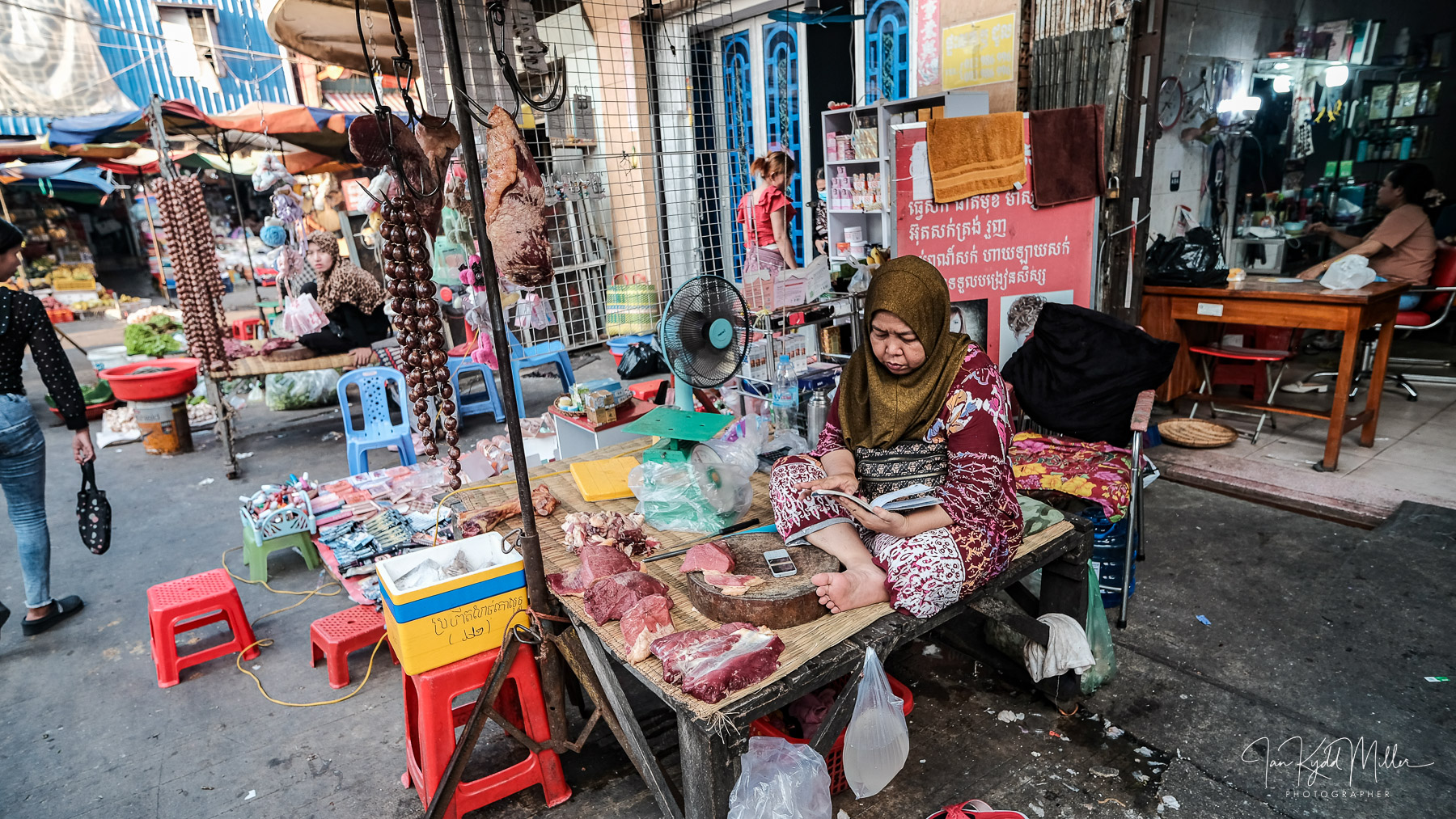
A woman smiling while preparing fresh vegetables at a local market, surrounded by various goods and shoppers in the background.

It allows me to find one face in the confusion, one pair of hands at work or one fleeting expression in a crowded street. By showing less, it often says more.

That does not mean the background must disappear completely. The obsession with blurred backgrounds has become one of modern photography’s more tiresome habits. Open an 85mm lens to f/1.8 or f/1.4 and almost anything behind the subject can be turned into expensive-looking mush.

It can be beautiful, but beauty is not always the same thing as meaning.

The background may tell us where the person works, how they live or what sort of world surrounds them. A market trader without the market can become merely a pleasant face. Sometimes I want that separation; sometimes I want the vegetables, battered shopfront and passing motorbike to remain recognisable.

I do not automatically use an 85mm wide open. At f/2.8 or f/4, it still separates the subject while retaining enough of the surroundings to give the photograph context. At f/5.6, the street may become an active part of the story.


The aperture should serve the photograph. The photograph should not exist merely to demonstrate the aperture.

The lens changes the way I look as well.

With a 35mm, I tend to see complete scenes. With an 85mm, I notice fragments: a glance across a market, a tired hand resting on a counter, the texture of an old face or the moment somebody stops pretending to ignore me.


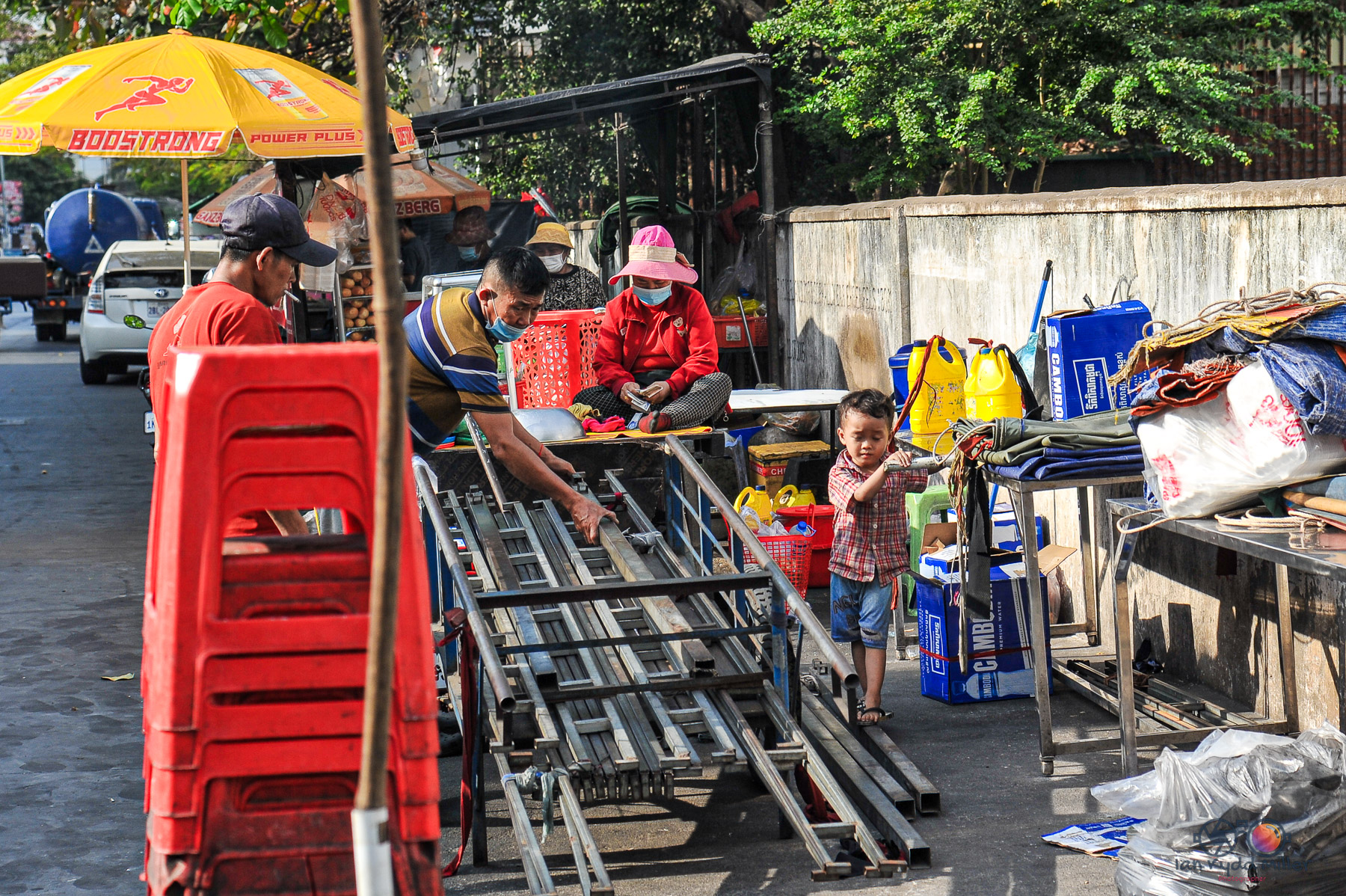
A man in a blue shirt and mask sitting on a chair, holding a hose that sprays water into a bucket and a red basket filled with plastic bottles, in front of a makeshift shop with various items and a red wall in the background.

It encourages patience and selection. I cannot simply point it towards a busy street and hope that everything will somehow arrange itself. I have to identify the picture before I make it.

That is a valuable discipline, particularly after many years of photography. Experience can sharpen the eye, but it can also make us lazy. We begin to rely upon familiar habits. The 85mm demands a decision. It asks a simple question every time I raise the camera:

What exactly are you looking at?

On a Nikon D700, D810 or D850, an 85mm feels wonderfully purposeful. The older D700 produces files with a character I still enjoy, while the resolution of the D810 and D850 records almost frightening amounts of detail. Canon full-frame cameras—from the original 5D and 5D Mark II to the newer mirrorless bodies—give the lens the same natural field of view and portrait-friendly perspective.


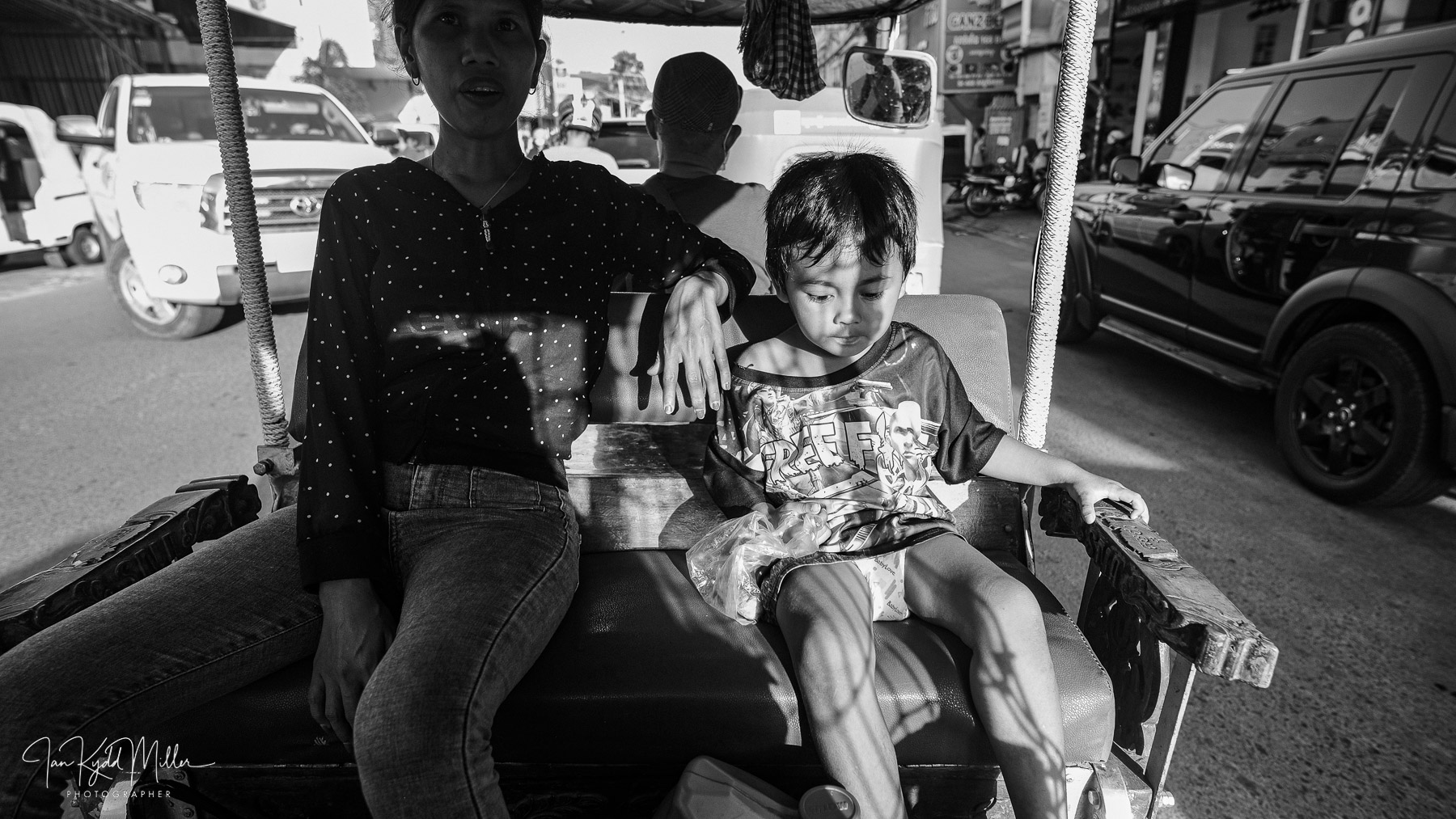
A father helps his daughter with a toy on a scooter while a woman looks on, all in a bustling market filled with fresh fruits.

The badge on the camera matters far less than the relationship between focal length, photographer and subject.

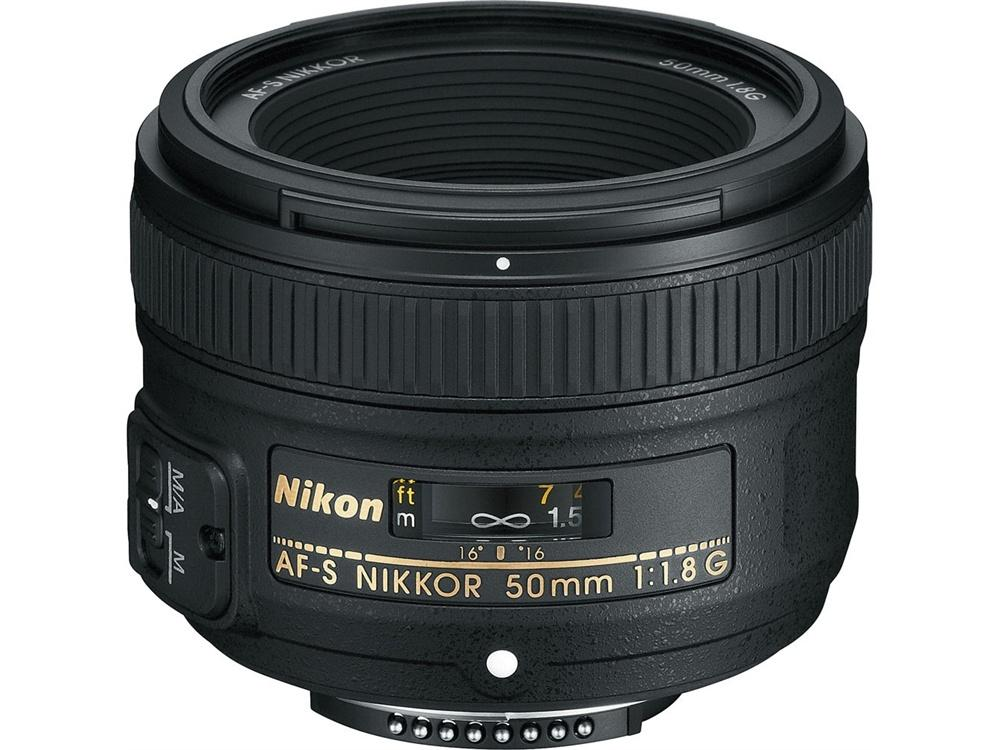
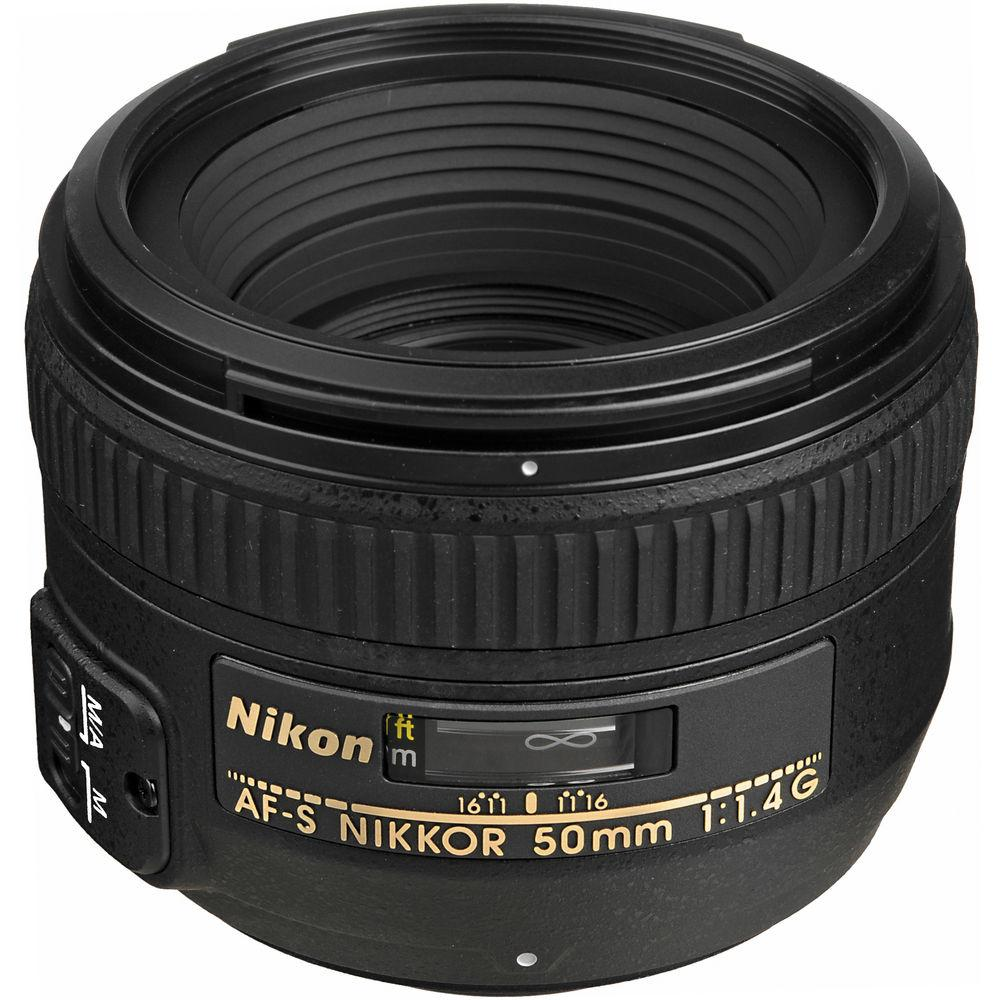
Nikon’s 85mm f/1.8G is a sensiblely—[Correction: deservedly]—popular because it is sharp, reasonably light and does not require selling a kidney. Canon’s EF 85mm f/1.8 USM has performed the same honest service for generations of Canon photographers. The newer mirrorless versions may focus faster and test better, while the expensive f/1.4 and f/1.2 lenses offer more light and smoother backgrounds.

They are all capable of excellent work.

I have reached an age when carrying a heavy lens all afternoon is no longer evidence of professional commitment. It is simply a good way of acquiring a sore shoulder. The lighter f/1.8 lenses make sense. They are quick, discreet and good enough to expose every weakness in my own technique.

And the 85mm will expose those weaknesses.

It magnifies camera movement more readily than a 35mm or 50mm. On a high-resolution body, the old rule of using a shutter speed close to the focal length is often insufficient. I prefer at least 1/250 second for people, and frequently 1/320 or faster if they are moving.

I would rather increase the ISO than return home with a perfectly clean but slightly blurred photograph.

Image stabilisation can help with my movement, but it cannot stop the person in front of me from blinking, turning or lifting a hand. For street work, shutter speed remains one of the best forms of insurance.

At close distances and wide apertures, depth of field becomes thin. Focus must be deliberate. I concentrate on the nearest eye when the face is the centre of the picture, and I use continuous autofocus if the subject is moving. There is nothing romantic about missing focus. A soft photograph may possess atmosphere, but an accidentally soft eye is usually just an accidentally soft eye.

The lens has its limitations. It can be too tight inside buildings and frustrating in narrow streets. A full-length portrait may require so much backing up that I find myself against a wall, in somebody’s shop or dangerously close to moving traffic.

It is not the lens I would choose when the whole environment carries the story. Sometimes a 28mm or 35mm is the honest choice because the surroundings matter as much as the person.


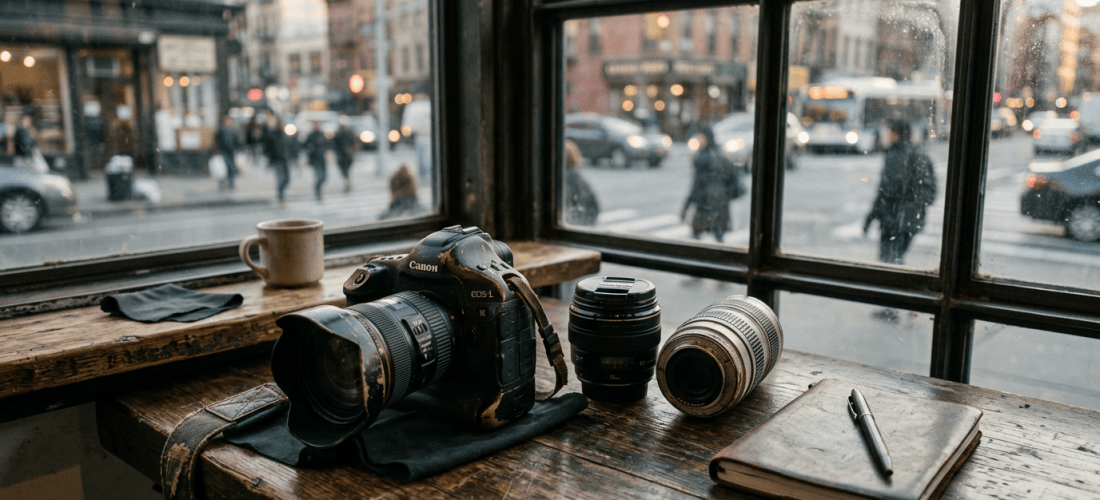
A DSLR camera placed on a wooden table next to a small cup of coffee and glasses, with a street view including vehicles and pedestrians in the background.

Nor does using an 85mm absolve the photographer of responsibility. Distance is not permission. Photographing from several metres away does not turn a human being into public property. The same judgement, respect and decency apply regardless of focal length.

For me, the 85mm occupies a useful middle ground. It is not a wide-angle lens pushed aggressively into somebody’s personal space, and it is not a huge telephoto used from the safety of the opposite side of the road.

It keeps me involved without making me overpowering.

After decades of buying, selling and carrying cameras, I no longer believe that equipment creates a photographer’s voice. But certain lenses encourage certain ways of seeing. The 85mm makes me slow down, simplify the frame and pay attention to individuals.


Bright arcade game featuring a large spinning wheel labeled 'Boardwalk Big Spin' in a lively gaming environment.

It reminds me that street photography does not always have to be wide, frantic and packed with visual cleverness. Sometimes it can be one person, standing in decent light, giving away something of themselves for a fraction of a second.

The photographer’s job is to notice it.

That is why I use an 85mm on a full-frame Nikon or Canon. Not because it creates fashionable bokeh. Not because somebody on the internet has measured its sharpness. Not because portrait photographers say that I should.

I use it because it gives people space.

It allows me to stand back without becoming detached—and, every now and then, to make a photograph that feels remarkably close.


The Canon 5D Mark II: When a Camera Was Built to Make Pictures

cameras, canon, Lenses, opinons, thoughts, photography, street, Travel

Old Photographer Series

I have always had a soft spot for cameras that know what they are. The Canon 5D Mark II is one of them.

It is not a pocket computer pretending to be a camera. It does not recognise every living creature on the planet, track an eye through a crowd or offer fourteen different ways of photographing a sleeping dog. It is a solid, straightforward full-frame DSLR, built at a time when the photographer was still expected to provide most of the intelligence.

A person holding a Canon EOS 5D Mark II camera in front of a café with outdoor seating.

Canon introduced the 5D Mark II in 2008. Its 21.1-megapixel full-frame sensor was considered something rather special then, and I would argue that it remains perfectly adequate now. Twenty-one megapixels will produce a fine large print, allow a reasonable crop and record more detail than most photographs genuinely need.

If I cannot make a worthwhile picture with 21 megapixels, another 30 or 40 million of the little buggers are unlikely to rescue me.

That is something we occasionally forget. Cameras have improved enormously, but photography has not changed nearly as much. We still need light, timing, composition and a reason to press the shutter. The subject must still matter. The photographer must still notice what everybody else walks past.

The 5D Mark II provides everything necessary to do that.

Its autofocus system is modest by present standards. There are nine visible autofocus points, and most photographers quickly discover that the centre point is the one to trust. That was never a serious problem for me. I learned photography when cameras could not detect eyes, faces or animals. We focused on the part of the picture that mattered, recomposed when necessary and got on with the job.

There is nothing wrong with modern autofocus. It is astonishingly clever and genuinely useful. But clever equipment can encourage lazy cameramanship. When a camera promises to find the subject, focus on the correct eye and follow it around the frame, it becomes tempting to stop thinking.

The 5D Mark II makes no such promises. It asks you to participate.

You lift it to your eye and look through a proper optical viewfinder. You see the world as it is, not as an electronic screen thinks you would like it to appear. The camera does not brighten the shadows, simulate the exposure or show the finished photograph before it has been made. You read the light, choose your settings and take responsibility for the result.

Then the mirror rises and the shutter fires with a satisfying mechanical clack.

A photograph has been made. You can hear it and feel it.


A photographer captures a street scene at sunset, featuring people walking and traffic in a busy marketplace.

I like that. Perhaps it is because I am an old photographer, but I enjoy a camera that behaves like a machine. I want buttons I can find without looking, a decent grip and controls that make sense. I do not want to negotiate with pages of menus before taking a picture of somebody standing in good light.

The Canon’s large rear control wheel remains one of the best pieces of camera design ever produced. It falls naturally beneath the thumb, and after a little use, the camera begins to disappear in the hands. That is the point at which a piece of equipment becomes useful. You stop thinking about operating it and begin concentrating on what is happening in front of you.

The files from the 5D Mark II still have a lovely quality. They contain plenty of detail, attractive colour and particularly pleasing skin tones. Faces look warm and human rather than clinically perfect. With a decent lens and sympathetic light, it can produce portraits with depth, subtlety and character.


It does require reasonably accurate exposure. The sensor does not possess the extraordinary dynamic range of more recent cameras. If you badly underexpose a file and then try to drag three or four stops of detail out of the shadows, you may encounter noise or banding. Highlights also need watching.

I consider that a useful lesson rather than a fatal weakness.

Photography was never meant to be an endless exercise in rescuing careless exposures. The 5D Mark II encourages me to look at the light, check the histogram and get the picture close to correct when I take it. The RAW file gives me room to work, but it should not become an ambulance sent to collect every photographic mistake.

Put a 35mm or 50mm prime on the camera and it becomes a straightforward walkabout companion. There is no crop-factor arithmetic and no enormous collection of lenses to carry. A 35mm allows me to work close and include some environment. A 50mm gives a natural view of the street without making everything feel either stretched or compressed.

Fit an 85mm and the 5D Mark II becomes a very capable street-portrait camera. That combination gives me enough working distance to observe without immediately crowding the subject. I can concentrate on the eyes, expression and background. The autofocus may not put on a technological performance, but the central point is dependable. Place it carefully, confirm focus and take the picture.

One accurate focus point is worth more than a hundred dancing in the wrong place.

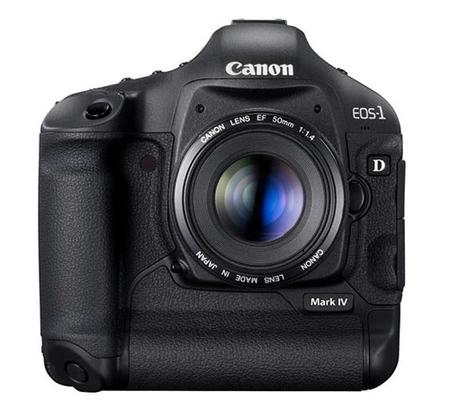
The 5D Mark II is not a lightweight camera, but neither is it the great lump that a Canon 1D-series body can be. It feels substantial without becoming a punishment. Add a small prime lens and it is perfectly manageable for a day on the street—although, at my age, I reserve the right to complain about the weight after several hours.


A Canon EOS 5D Mark II camera is positioned on a wooden desk, surrounded by a notebook, a pair of glasses, and black and white photographs.

The camera is famous for something beyond still photography. Its ability to record Full HD video with a full-frame sensor helped to change filmmaking. Independent filmmakers could suddenly create shallow depth of field and a cinematic look without hiring hugely expensive equipment. It appeared in television productions, documentaries and music videos, and its influence reached far beyond ordinary photography.

That is an important part of its history, but it is not the reason I would carry one.

I would carry it because it makes photographs.

Not photographs processed by computational trickery before I have even seen them. Not perfectly sanitised files scrubbed of every trace of noise, texture and imperfection. Photographs made with a shutter, a mirror, a good lens and a photographer who was paying attention.

Buying a 5D Mark II today requires some care. These are old cameras, and many were worked hard by wedding photographers, studio photographers and filmmakers. A few scratches would not worry me, but I would check the shutter, sensor, card slot, control wheels, buttons and autofocus. I would rather buy a clean, honest example from somebody who used it carefully than save a little money on a camera that has spent fifteen years being hammered.

Its CompactFlash cards feel old-fashioned. The rear screen is dated, live view is slow and video operation is primitive compared with modern machines. There is no in-body stabilisation, no electronic viewfinder and no miraculous autofocus system waiting to save the day.

Good.

Sometimes removing convenience restores concentration.


I would never claim that the Canon 5D Mark II is technically better than a modern mirrorless camera. It is not. New cameras offer cleaner high-ISO images, faster shooting, greater dynamic range and autofocus systems that appear to perform small acts of witchcraft.

But technical superiority does not automatically produce better photographs. Cameras can recognise an eye, but they cannot recognise sadness, dignity, humour or loneliness. They cannot understand why one gesture matters and another does not. They cannot know when an ordinary street scene has briefly become something worth remembering.

That responsibility remains with the person holding the camera.

This is why old cameras still matter to me. They have character, personality and soul. They are not simply tools; after enough years and enough miles, they become companions. We learn their strengths, forgive their weaknesses and stop asking them to be anything other than what they are.

The Canon 5D Mark II comes from a time when a camera was built to make pictures and the photographer was trusted to provide the ideas. It does enough without attempting to do everything. It gives me a full-frame sensor, pleasing files, a clear optical viewfinder and direct control over the exposure.

The rest is up to me.

Charge the battery, insert a card, attach a good lens and take it into the street. Forget its age. Forget the latest specifications. Look through the viewfinder and pay attention to the world.

If I return home with nothing worthwhile, I cannot blame its nine autofocus points or its 21 megapixels.

If I return with one photograph that genuinely matters, the Canon 5D Mark II will have done everything a camera was ever built to do.


Pixel Peeping: When the Photograph Gets Lost in the Pixels

opinons, thoughts, photography, pictures, printers, printing, street, Travel

Old Photographer Series

There was a time when we looked at photographs rather than inspected them.

We made a print, held it in our hands and stood back far enough to see the whole picture. We looked at the light, the composition, the expression and the moment. If the photograph moved us, informed us or held our attention, it had done its job.

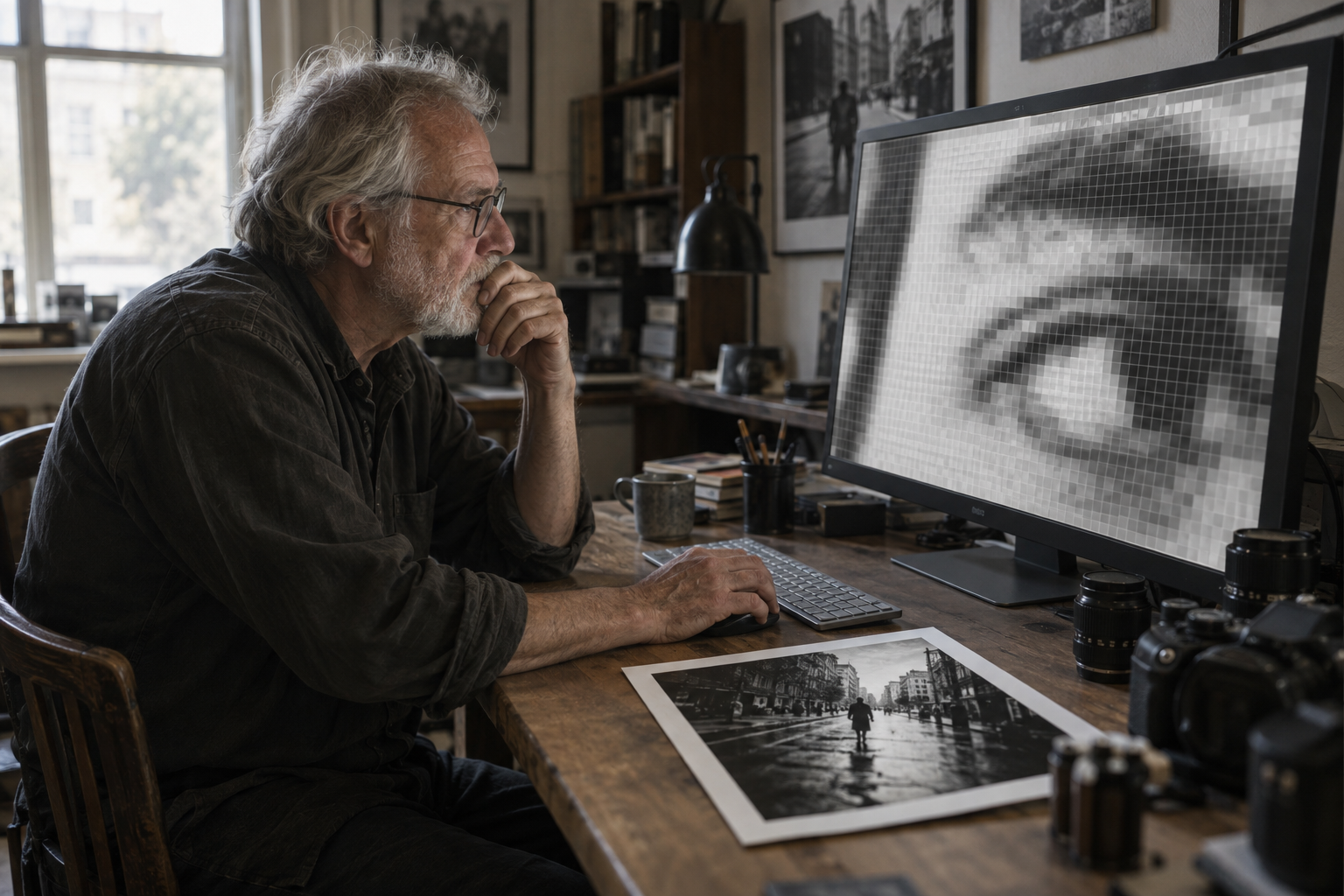
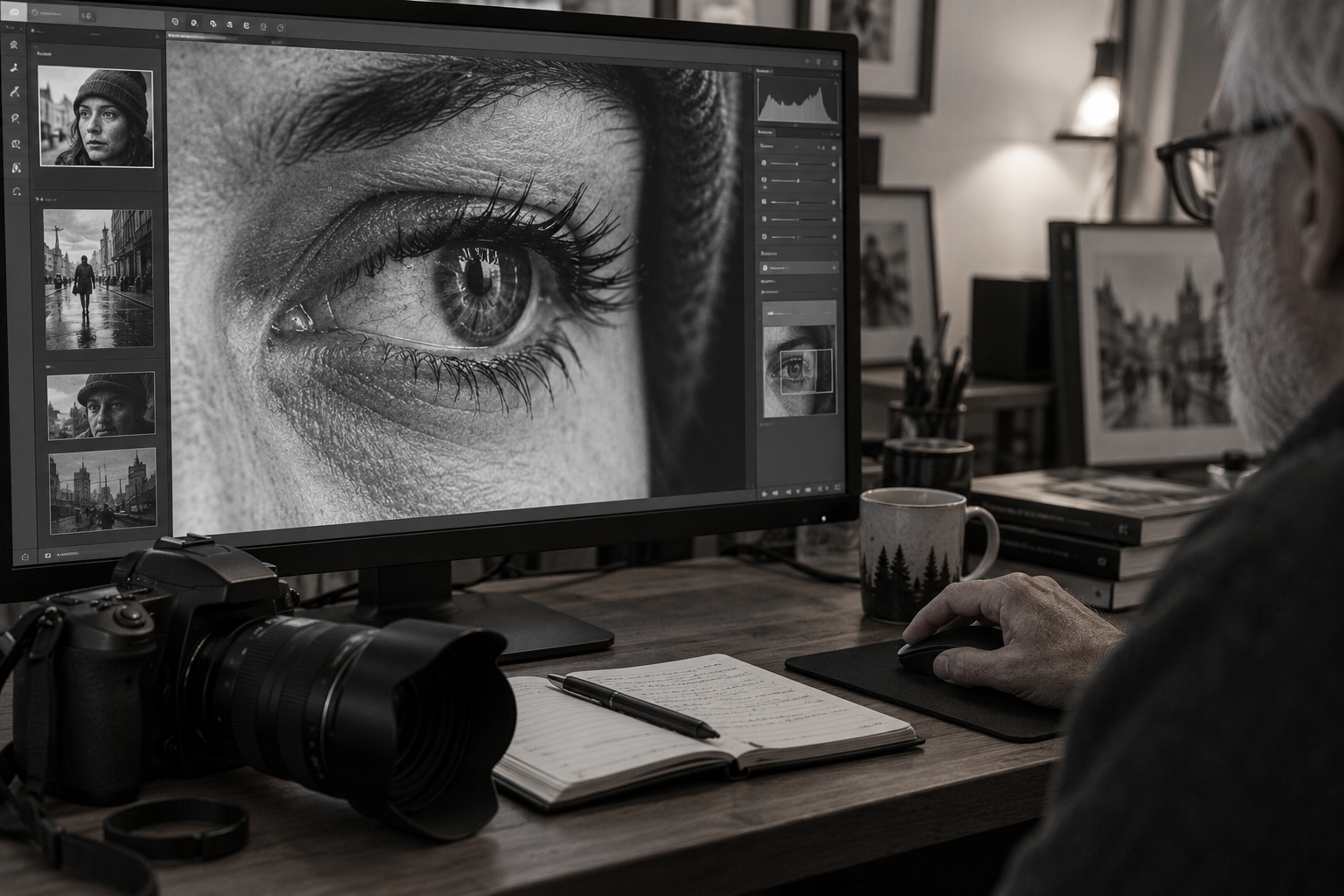
Today, we can enlarge an image until a human eye fills the computer screen. We examine individual eyelashes, count skin pores and search the darkest shadows for traces of noise. We inspect the corners for softness and worry about details that nobody would ever notice in a print.


An older man with glasses thoughtfully gazes at a large computer monitor displaying a pixelated image of an eye, while sitting at a wooden desk cluttered with photography equipment and prints.

This is pixel peeping, and most photographers have done it.

I certainly have.

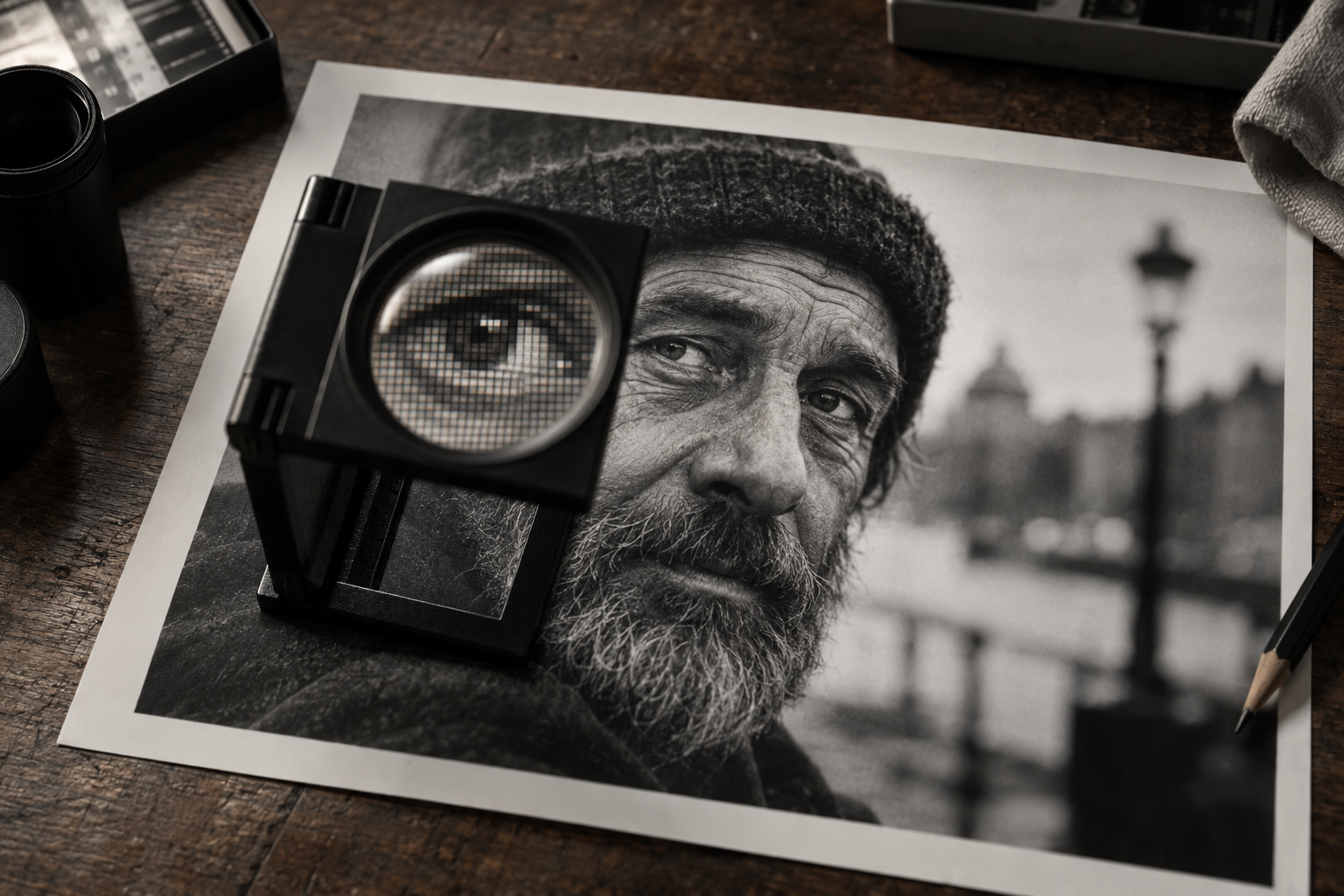
There are sensible reasons for looking closely at an image. If I want to know whether I nailed the focus, whether camera shake has crept in or whether a particular lens is behaving properly, viewing the file at 100% can be useful. It can expose poor technique rather quickly.

Modern high-resolution cameras can be unforgiving. Cameras such as the Nikon D810 and D850 record an extraordinary amount of detail, but they also reveal every small mistake. A shutter speed that would once have appeared perfectly adequate may leave the image looking slightly soft when enlarged on a large monitor. Poor handling, careless focusing and excessive noise reduction become much easier to see.


A close-up of a printed black and white photograph of a man with a beard and hat, accompanied by a magnifying glass placed over the eye in the image, resting on a wooden surface.

Pixel peeping can therefore teach us something.

If an entire set of photographs is soft, there is probably a reason. Perhaps the shutter speed was too low. Perhaps the autofocus point landed on the ear instead of the eye. Maybe the lens needs adjustment, or perhaps I was simply tired and failed to hold the camera steadily.

That is not obsessive inspection. It is diagnosis.


Close-up of a person's eye on a computer screen during photo editing, with a photographer at work, surrounded by a camera, notes, and coffee.

The problem begins when we stop using magnification as a tool and start using it as the final judge of a photograph.

Photography is not a laboratory test. A photograph does not become important because every hair is sharply resolved. Nor does it automatically fail because the shadows contain a little noise or because the far corner is not clinically sharp.

Some of the most memorable photographs ever made are technically imperfect. They contain grain, blur, missed focus and blocked shadows. Yet nobody cares because the photographs have life. They show something worth seeing.

The history of photography was not made at 200% magnification.

It was made in streets, homes, factories, demonstrations and war zones. It was made by photographers responding to the world in front of them. Many worked with slow film, manual focus and lenses that would probably receive rather ordinary scores in today’s technical reviews.

Their photographs survive because they possess meaning, not because the bricks in the background are sharp from edge to edge.

Street photography makes this especially clear. A gesture can disappear in a fraction of a second. A face changes, two people briefly connect, or a shaft of light falls across somebody passing through the frame. There is rarely time for technical perfection.

If I capture the expression but miss absolute focus by a whisker, I may still have a worthwhile photograph. If I wait until every setting is perfect, the moment will probably be gone.

I would rather have a slightly imperfect photograph of something than a perfectly sharp photograph of nothing.

Sharpness matters, of course. I am not suggesting that we should become careless. Good technique gives us a better chance of bringing home the picture we intended to make. The eyes in a portrait should usually be sharp, and camera shake is rarely attractive unless it contributes something to the image.

But “sharp enough” is not the same as technically flawless.


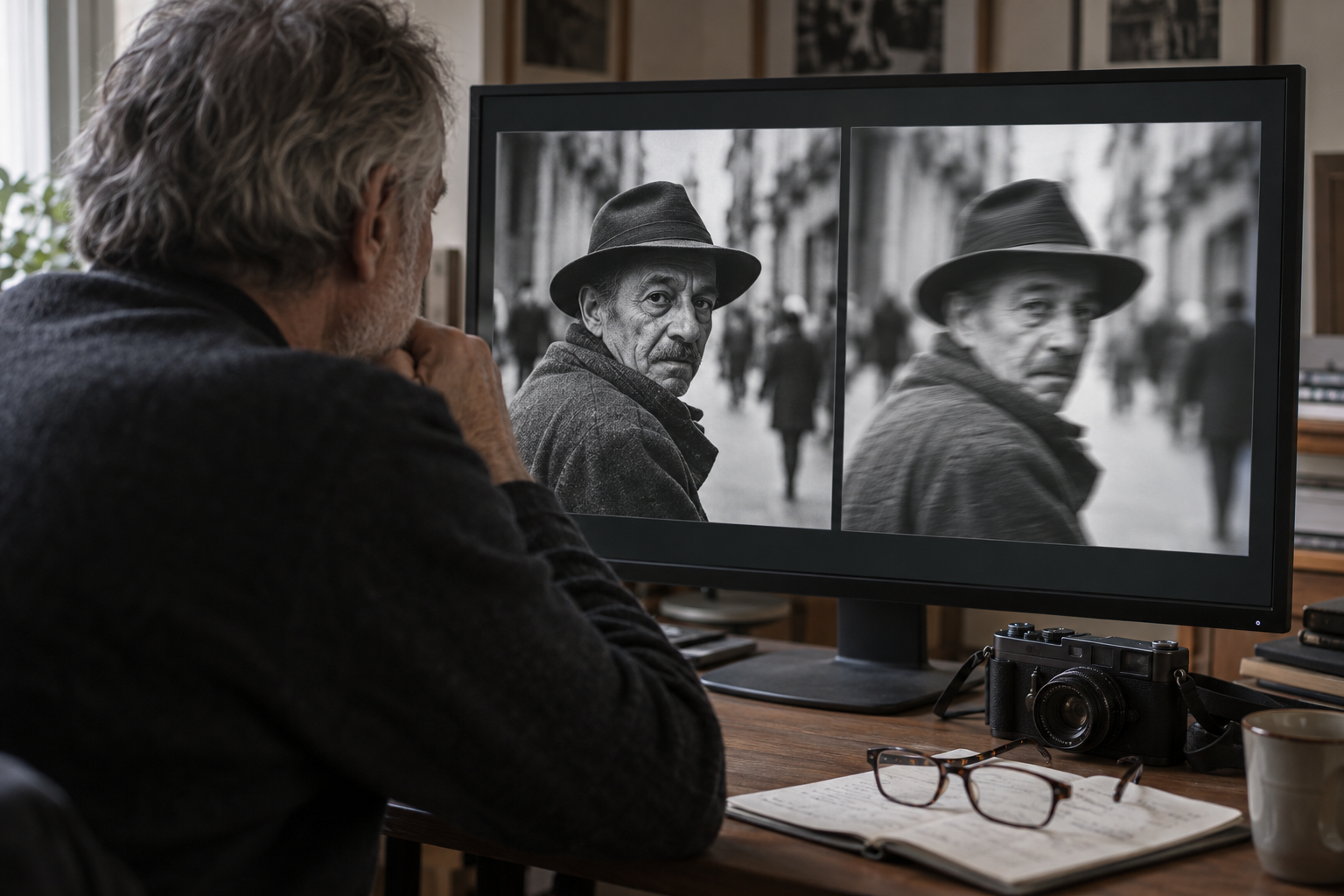
A person sitting at a desk, gazing at a computer screen displaying two black-and-white photos of a man wearing a hat, with an old camera and notebook to the side.

A photograph is normally seen as a complete object. It might appear on a website, in a book, on a wall or as a print held in the hand. Nobody studies a normal-sized photograph with their nose pressed against it, searching the corners for optical weakness.

Viewing a 36- or 45-megapixel image at 100% on a monitor is rather like examining an enormous print from a few inches away. It is not a natural viewing distance. Small faults appear enormous simply because we have enlarged them beyond any reasonable use.
This can become damaging. Photographers begin rejecting perfectly good images because of tiny technical imperfections. They start blaming their cameras and lenses. Before long, they are searching for sharper glass, more megapixels and better autofocus when there was nothing seriously wrong with the equipment they already owned.

The manufacturers must love pixel peeping. It keeps us dissatisfied.

There will always be a newer camera promising more resolution, less noise and smarter focusing. There will always be a lens that measures slightly sharper in the corners. We can spend a small fortune pursuing technical perfection and still fail to make an interesting photograph.

No camera can supply curiosity. No lens can recognise a meaningful moment. No amount of resolution can rescue an empty picture.


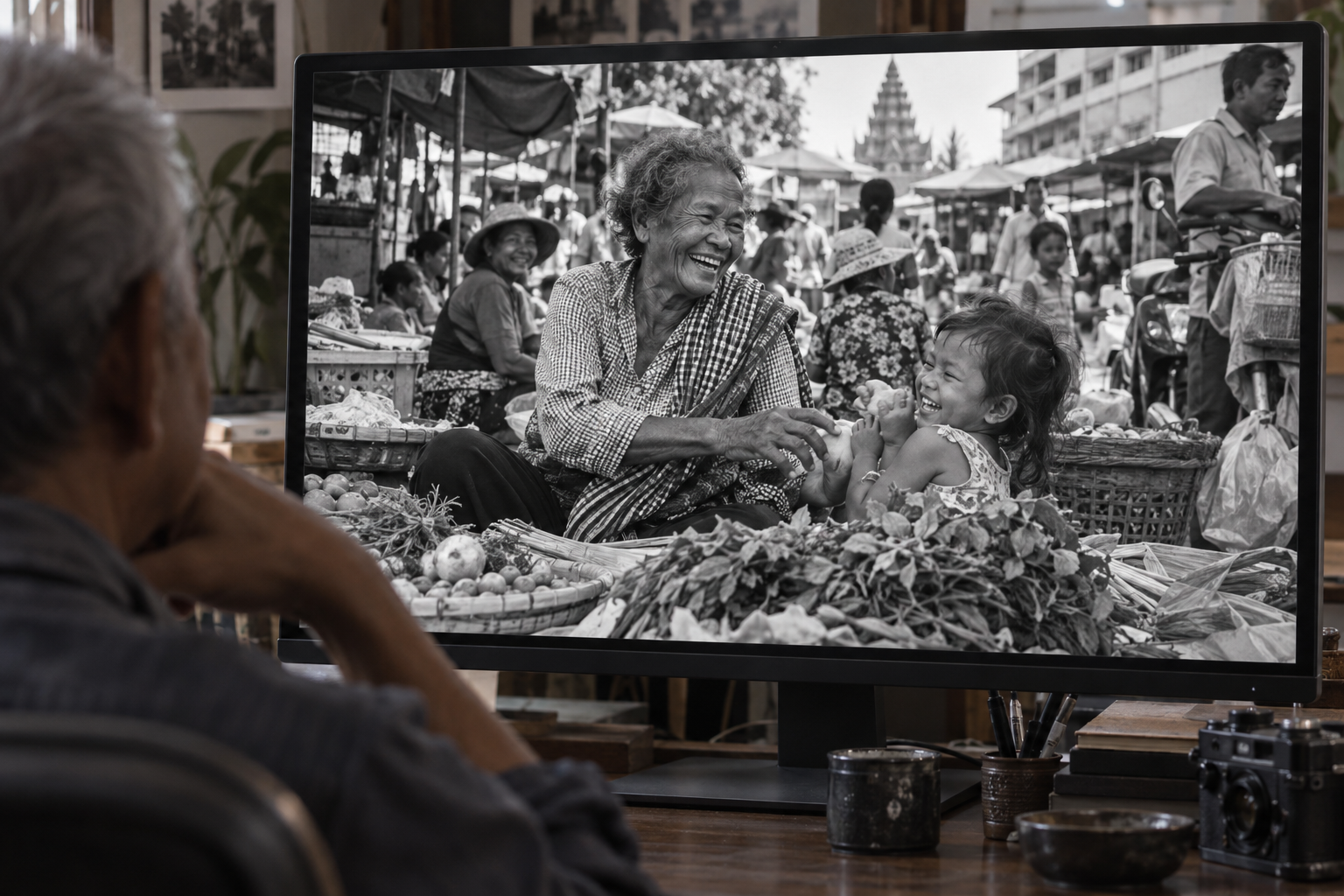
An elderly woman laughing and playing with a young child in a bustling market, captured in black and white. The scene has various baskets of fresh produce in the foreground and other market-goers in the background.

After many years of making photographs, I have learned to look at the complete image first. Before enlarging anything, I ask the important questions.

Does the photograph hold my attention? Is the composition working? Is there emotion, atmosphere or information? Does it show something beyond the simple fact that my camera and lens function correctly?

Only then do I look more closely.

If critical focus is slightly off, I decide whether it genuinely harms the photograph. Sometimes it does, and the image has to go. At other times, the moment is strong enough to carry a little imperfection. That is a judgement, not something software can decide for me.

Printing remains one of the best cures for pixel peeping. A print brings the photograph back into the physical world. It gives the image boundaries, scale and a proper viewing distance. Details that seemed troublesome on the monitor often disappear, while weaknesses in composition become much more obvious.

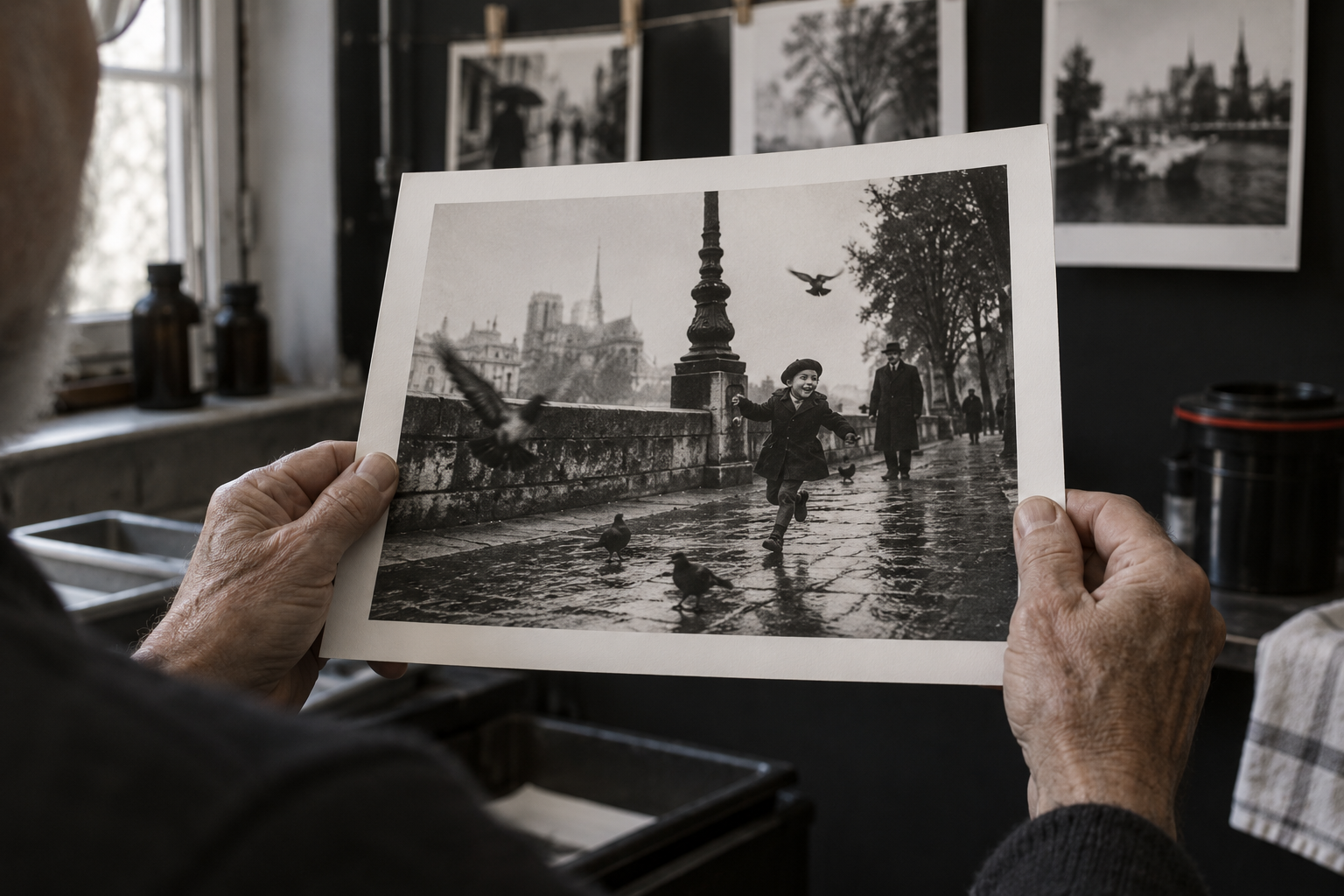
An elderly person holding a black and white photograph of a young child running on a rainy street, surrounded by pigeons and historical buildings in the background.

A technically perfect file does not always make a satisfying print. A slightly rough file sometimes makes a wonderful one.
That is because photographs are meant to be experienced, not dissected.
Pixel peeping has its place. Use it to check focus, examine technique, test equipment or prepare a photograph for a large print. Let it help you understand what went wrong and how to improve next time.

Then zoom back out.

Look at the people. Look at the light. Look at the moment you were trying to preserve.

Pixel peeping can tell us whether a lens is sharp. It can tell us whether the autofocus landed in the correct place and whether we selected a sensible shutter speed. What it cannot tell us is whether the photograph has a soul.

After all these years, that remains the part that matters most.

Nikon D300S and Nikkor 50mm f1.4D: Still There?

cameras, Lenses, nikon, opinons, thoughts, photography, pictures, street, Travel

The Nikon D300S is old. There is no point pretending otherwise. It appeared in 2009, when 12 megapixels were considered quite sufficient and cameras were still expected to be cameras rather than computers with lenses attached.

Today, it is dismissed as obsolete. Too few pixels, too much noise and none of the modern wizardry that identifies eyes, animals, vehicles and possibly the intentions of the photographer. Yet attach a Nikkor 50mm f/1.4, charge the battery and take it into the street, and the old Nikon quietly reminds you that it has not forgotten how to make a photograph.


On the D300S, the 50mm gives roughly the same field of view as a 75mm lens on a full-frame camera. That makes it less of a general-purpose standard lens and more of a short portrait lens. It is particularly well suited to faces, small gestures and those moments on the street that benefit from a little distance.

The f/1.4 aperture gives the camera something its ageing sensor appreciates: light. The D300S is at its best between ISO 200 and 800. ISO 1600 remains useful if the exposure is right, but this is not a camera that enjoys having badly underexposed shadows dragged back from the dead in Lightroom.

You have to expose properly.

That was once considered a normal part of photography.


The 50mm is not perfectly sharp at f/1.4. It can be slightly soft, with lower contrast and a little colour fringing around bright edges. That does not always matter. Used for a portrait, the gentler rendering can be rather attractive. Stop it down to f/2 or f/2.8 and it becomes a different lens—sharper, stronger and still capable of separating the subject from the background.

Both the older 50mm f/1.4D and the newer f/1.4G work properly on the D300S. The camera has its own autofocus motor, so the screw-driven D lens is perfectly at home. Autofocus may not possess modern eye-detection intelligence, but the D300S has Nikon’s excellent 51-point system. Put the focus point over the eye and it will usually do exactly what it is told.

The body still feels magnificent. Solid, purposeful and designed for a photographer’s hands. Important controls have proper buttons and dials. The viewfinder is clear, the shutter response is immediate and the camera will keep working without trying to offer advice.

The files are only 12.3 megapixels, but “only” is doing rather a lot of unnecessary work in that sentence. Twelve megapixels are enough for strong prints, websites, publications and most of the ways photographs are actually viewed. A poor photograph does not improve because it contains 45 million pixels, and a good one does not become irrelevant because it contains twelve.


Naturally, there are limitations. Highlights require care. The shadows cannot be opened endlessly. High ISO files show their age, and the video function is best forgotten. There is no stabilisation, no electronic viewfinder and no autofocus system clever enough to find the subject while you think about something else.

You must hold the camera steadily. You must choose the focus point. You must watch the shutter speed, understand the light and press the button at the right moment.

In other words, you must take the photograph yourself.

Perhaps that is why I still enjoy cameras such as the D300S. They do not attempt to flatter us. They reward good technique and expose lazy habits. When the picture is sharp, properly exposed and alive with something worth seeing, you know that you had a hand in making it.


The D300S and 50mm f/1.4 combination is particularly good for street portraits. The lens gives enough distance to observe without crowding people, while the wide aperture separates a face from the usual confusion of the street. It is a simple combination: one camera, one lens and one way of looking.

Is it obsolete? Not while it still makes the pictures you want to make.


The Nikon D300S does not know that the camera industry has left it behind. Fit the 50mm, walk into decent light and it simply gets on with the job. Quietly, reliably and without fanfare.

Sometimes an old camera is not waiting to be replaced.

It is waiting to be used.


The Travelling Photographer’s Essentials: Old Photographer Series.

cameras, fujifilm, Lenses, Lowepro, nikon, opinons, thoughts, photography, pictures, street, Travel

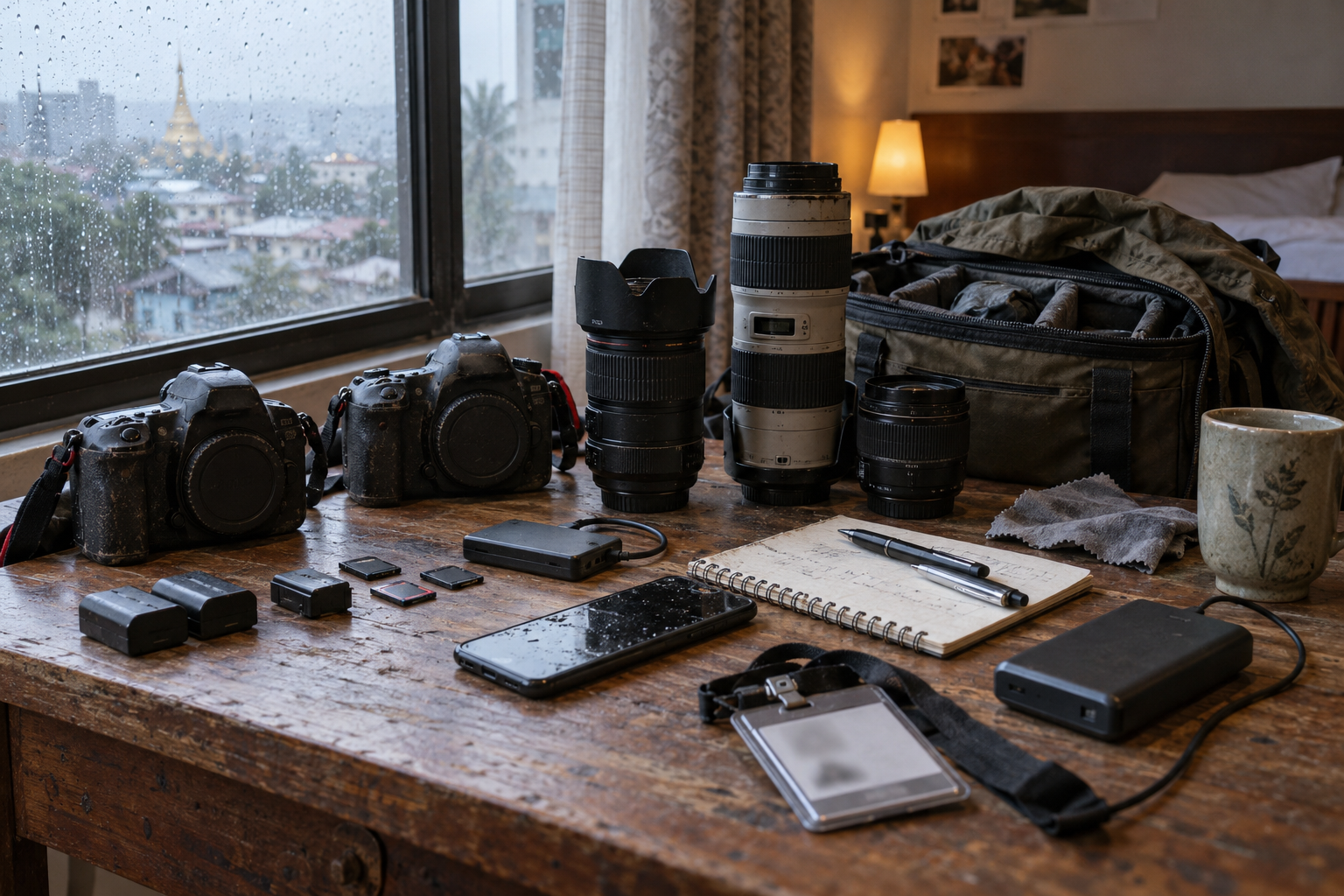
There was a time when I travelled with enough photographic equipment to open a small camera shop. Two camera bodies, several lenses, flashguns, filters, chargers, spare batteries, cleaning equipment and a tripod heavy enough to support a railway bridge.


Age—and several decades of sore shoulders—has taught me differently. The travelling photographer does not need to carry everything. He needs to carry the right things and, more importantly, understand how to use them.

My first essential is a dependable camera. It does not have to be the latest model, possess the most megapixels or arrive with artificial intelligence hiding behind every button. It must simply be a camera I know and trust.

For me, that might be an old Nikon D700, a D3S or the magnificent D850 when I want every last piece of detail. The important thing is familiarity. When something happens in front of me, I do not want to search through menus or wonder which button controls the focus mode. The camera should feel like an old friend—slightly battered perhaps, but always ready.

Then there is the lens.

One good lens is often enough. A 35mm or 50mm prime makes a wonderfully simple travelling companion. A practical zoom such as a 24–70mm or 24–120mm gives greater flexibility without requiring a bag full of glass. If I know that people will be my principal subject, an 85mm may earn its place.

The temptation is to pack a lens for every possibility. Resist it. Too many choices slow the photographer down. You begin changing lenses instead of making pictures.

A spare battery is essential. Two are better if the day will be long. Batteries have a wicked sense of humour and usually expire just as the light becomes beautiful or something interesting begins to happen.

Memory cards should be reliable, sensibly sized and carried somewhere safe. I would rather use several moderate-capacity cards than trust an entire journey to one enormous card. Cards can fail, disappear or be accidentally formatted. Spreading the work across more than one is a small form of insurance.

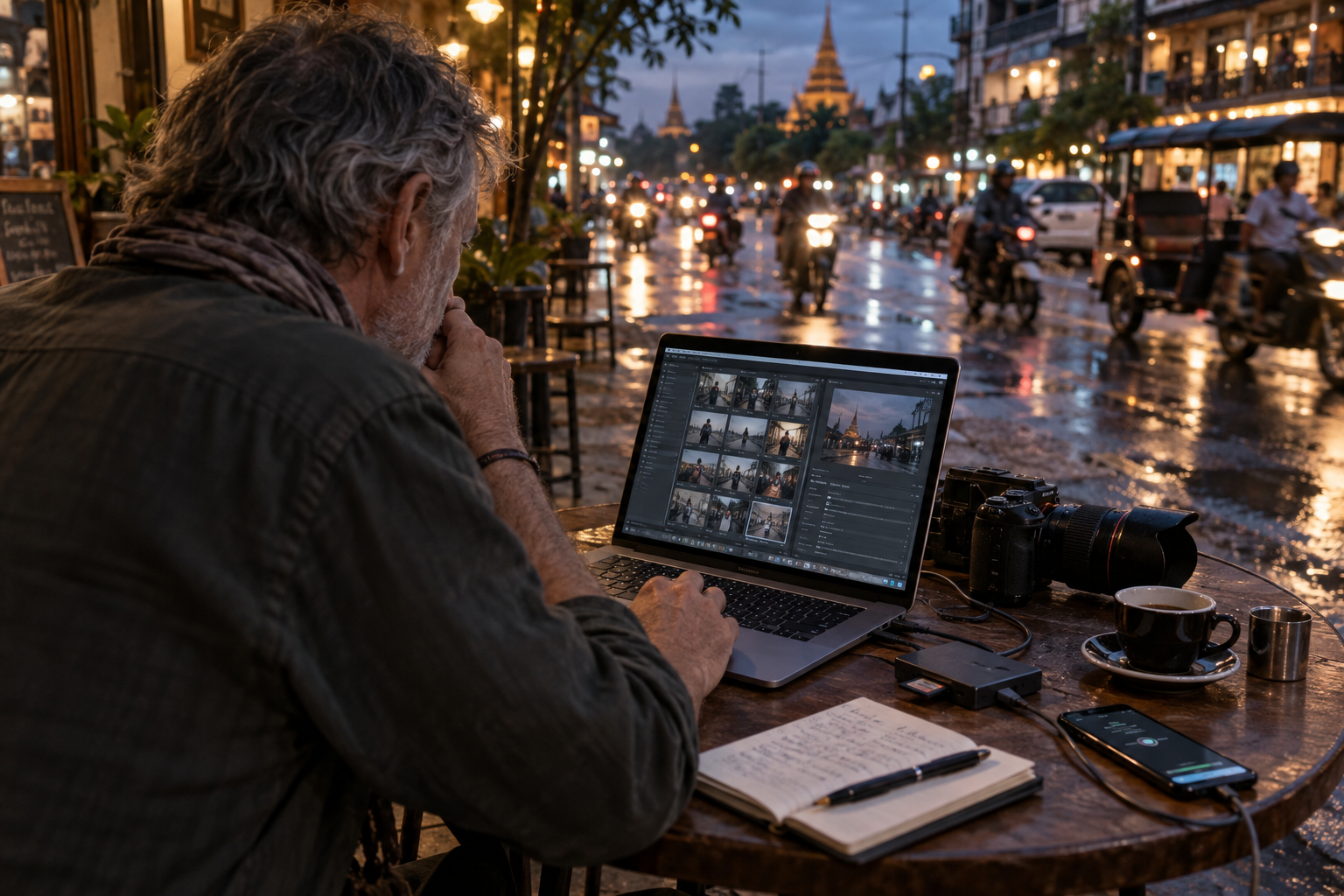
Every evening, whenever possible, I copy the day’s photographs onto a laptop or portable drive. Ideally, I keep two copies in separate places. A camera can be replaced. The photographs from a journey cannot.


A comfortable camera strap matters more than most people realise. The strap supplied with the camera may be adequate for an afternoon, but after eight hours in the heat it can begin to feel like a cheese wire. A good shoulder or wrist strap keeps the camera secure without advertising its value to everybody in the street.

The camera bag should be small, strong and ordinary-looking. I do not need something that resembles military luggage and announces that expensive equipment is inside. It must protect the camera, provide quick access and leave enough room for the unglamorous necessities: water, tissues, a notebook and perhaps something to eat.


Good footwear may be the most important photographic equipment I own. Travelling photography is done with the feet. Interesting pictures are rarely made while sitting in an air-conditioned hotel room complaining about the midday light.

Comfortable, broken-in shoes allow me to keep walking, turn down another street and stay out for another hour. That extra hour is often when the best photograph appears.

Clothing should suit the place rather than the photographer’s imagined appearance. Lightweight, loose clothing works in the Cambodian heat. A hat offers protection from the sun, while a light waterproof layer can save both photographer and camera when the sky suddenly opens.

Water is not optional. Neither is sun protection. An exhausted, dehydrated photographer stops seeing properly and begins making foolish decisions. Travel photography requires enough energy to remain observant, patient and respectful.

A small cleaning cloth and blower are useful, especially in dusty streets or humid conditions. There is no need to carry a laboratory. Most cleaning can wait until the evening. Changing lenses in wind, dust or heavy rain should be avoided whenever possible.


I also carry a notebook. A mobile phone can record names and details, but a notebook never runs out of power and does not distract me with messages. If I photograph somebody and speak with them, I can write down their name, the location and a few details about the encounter. Those notes may later give the photograph its proper meaning.

The phone remains valuable. It provides maps, weather information, translation, emergency communication and a perfectly capable backup camera. I may be an old photographer, but I am not foolish enough to ignore a useful tool simply because it does not have a Nikon badge.

Documents, money and emergency information need careful thought. I keep copies of my passport, insurance details and important telephone numbers separately from the originals. A little local currency should be kept somewhere accessible, with the remainder divided between safer locations.

Respect is another essential, although it weighs nothing.

Learn something about the country. Understand local customs. Notice when a camera is welcome and when it is not. A photograph is never worth humiliating somebody, entering a sacred place improperly or creating trouble for a person who has allowed you into their life.


Finally, carry curiosity.

Equipment may help us record what we find, but curiosity is what leads us towards it. Walk slowly. Look behind you, look up. Leave the obvious tourist route. Sit somewhere and allow life to continue without chasing it. Talk to people without immediately raising the camera.


The travelling photographer’s essentials are not really about preparing for every possible picture. They are about remaining light enough—physically and mentally—to recognise the picture that is actually there.

After all these years, my packing list has become shorter. One trusted camera. One useful lens. Batteries, cards, water, good shoes and somewhere safe to store the photographs.